Hurricane Plant Toxicity and Calcium Oxalate Raphide Injury
Is Hurricane Plant Poisonous to Dogs, Cats, Horses, and Livestock?
Yes—Hurricane Plant, Monstera deliciosa, is poisonous to dogs, cats, horses, livestock, rabbits, birds, and other animals that chew or crush it. Leaves, petioles, stems, nodes, aerial roots, underground roots, sap-bearing reproductive structures, and unripe fruit contain or should be treated as containing insoluble calcium oxalate raphides. These microscopic needle-shaped crystals are released when tissue is bitten, cut, crushed, or broken and can cause immediate burning pain, profuse drooling, pawing or rubbing at the mouth, gagging, vomiting, and swelling of the lips, tongue, mouth, pharynx, or throat.
Most limited exposures remain localized and improve after loose plant material is removed and the animal receives appropriate supportive care. Severe tongue or laryngeal swelling, aspiration, dehydration, a retained stem fragment, and corneal injury are less common but potentially serious complications. Unlike soluble-oxalate poisoning, routine Hurricane Plant exposure is not expected to cause profound hypocalcemia or calcium-oxalate kidney failure.
About this guide: This page provides general pet-poisoning information and cannot diagnose or treat an individual animal. For any suspected exposure, contact a veterinarian or animal poison-control service immediately. Do not induce vomiting, give medication, or attempt home decontamination unless directed by a veterinary professional.
Hurricane Plant
Monstera deliciosa Liebm.
Important botanical synonyms and former names include:
- Tornelia fragrans Gutierrez ex Schott
- Monstera borsigiana K.Koch
- Monstera deliciosa var. borsigiana (K.Koch) Engl.
- Monstera deliciosa var. sierrana G.S.Bunting
- Monstera lennea K.Koch
- Philodendron anatomicum Morsch
- Philodendron fenestratum Linden
- Philodendron pertusum Kunth & C.D.Bouché
Important botanical and horticultural distinctions:
- Monstera borsigiana and Monstera deliciosa var. borsigiana are currently treated as synonyms of Monstera deliciosa, although “Borsigiana” remains common in the houseplant trade.
- Monstera tacanaensis is a closely related but separate accepted species rather than a synonym of Monstera deliciosa.
- Monstera adansonii is a separate species also commonly called Swiss Cheese Plant.
- ‘Thai Constellation’, ‘Albo Variegata’, ‘Aurea’, and similar names identify cultivated forms of Monstera deliciosa rather than toxin-free species.
Araceae Juss. — Arum or Aroid Family
Monstera deliciosa belongs to subfamily Monsteroideae and tribe Monstereae. Monstera, Philodendron, Thaumatophyllum, Rhaphidophora, Epipremnum, Dieffenbachia, and other familiar aroids belong to the same broad family but are separate genera with different accepted species.
Hurricane Plant; Swiss Cheese Plant; Swiss-Cheese Plant; Cheese Plant; Ceriman; Mexican Breadfruit; Fruit Salad Plant; Fruit Salad Tree; Delicious Monster; Windowleaf; Window Leaf; Monstera; Piñanona; Costilla de Adán; Balazo; Cutleaf Philodendron; Cut-Leaf Philodendron; Split-Leaf Philodendron; Monstera deliciosa; Monstera borsigiana; Monstera deliciosa var. borsigiana; Tornelia fragrans; Monstera lennea; Philodendron anatomicum; Philodendron fenestratum; Philodendron pertusum
Cutleaf Philodendron and Split-Leaf Philodendron are misleading common names because Monstera deliciosa is not a true Philodendron.
Split-Leaf Philodendron is also commonly used for the separate self-supporting species Thaumatophyllum bipinnatifidum, formerly Philodendron bipinnatifidum.
Swiss Cheese Plant may also refer to Monstera adansonii, a smaller separate Monstera species.
Monstera borsigiana and Monstera deliciosa var. borsigiana are currently treated as botanical synonyms of Monstera deliciosa rather than separate accepted species.
Insoluble Calcium Oxalate Raphides
The principal established toxic structures in Hurricane Plant are insoluble calcium oxalate crystals arranged as raphides. A raphide is a slender, sharply pointed mineral crystal that resembles a microscopic needle. Many raphides are packed together in specialized plant cells called idioblasts. When a leaf, petiole, stem, node, root, floral structure, or unripe fruit is bitten, cut, crushed, or torn, the idioblast is disrupted and the crystal bundle is released into the surrounding sap and damaged tissue.
The toxic effect is principally local rather than dependent on absorption of a large systemic dose. Raphides can penetrate and abrade the lips, oral mucosa, tongue, gingiva, pharynx, esophagus, skin, conjunctiva, and corneal surface. This direct physical injury produces immediate pain and initiates inflammation, vascular leakage, redness, and edema. The crystals may also create microscopic channels through which other plant constituents enter damaged tissue more readily.
The calcium oxalate in Hurricane Plant should not be confused with the readily soluble oxalates found in plants capable of causing substantial systemic oxalate absorption. Soluble oxalate poisoning can bind circulating calcium, produce hypocalcemia, and contribute to calcium-oxalate deposition in the kidneys. Typical Monstera deliciosa exposure instead produces painful contact-site injury. Profound hypocalcemia, generalized mineral imbalance, and acute oxalate nephropathy are not the expected consequences of an ordinary bite from this plant.
Exact-Species Evidence from Raphide-Forming Cells
H. H. Mollenhauer and D. A. Larson examined raphide-forming cells in Monstera deliciosa and Vanilla planifolia. They found that cells destined to produce raphides differentiate early and develop specialized changes involving plastids, endoplasmic reticulum, vacuoles, and the forming crystal complexes. This work established that the crystals are organized products of highly specialized living cells rather than random mineral deposits scattered accidentally through damaged plant tissue.
Maud A. W. Hinchee later studied the unusual root system of Monstera deliciosa, which includes free aerial roots, aerial roots that eventually enter soil, and lateral subterranean roots. Raphide crystal cells were present in the roots, and aerial roots contained more raphide crystal cells per unit volume of cortex than the root forms growing within soil. This provides exact-species support for treating dangling aerial roots as poisonous plant tissue rather than harmless support cords.
These root studies do not prove that aerial roots contain a greater total toxic burden than every leaf, stem, petiole, flower, or fruit. No dependable modern investigation has quantified the entire plant organ by organ under the same growing conditions. Claims that one vegetative part is always the most poisonous should therefore be avoided unless a direct comparative analysis is available.
Mechanical Injury, Inflammation, and Proposed Additional Irritants
The immediate burning syndrome is consistent with rapid mechanical penetration. An animal commonly reacts while it is still chewing because the crystals do not require digestion, hepatic metabolism, or circulation through the body before causing pain. This explains why a puppy may drop a leaf after one bite, why a cat may begin drooling almost immediately, and why the first clinical findings are concentrated around the mouth.
Inflammatory mediators released from injured tissue can intensify swelling after the original bite has ended. This reaction may resemble an allergy, but ordinary raphide injury does not require previous sensitization and should not automatically be labeled an allergic reaction. True urticaria, generalized facial swelling, hypotension, bronchospasm, or anaphylaxis is clinically distinct and requires emergency assessment.
Proteolytic enzymes and other accompanying irritants have been proposed for several aroids. Broader experimental research has demonstrated that raphides from one plant can enhance delivery of a protease through a needle effect. That work supports a plausible synergistic mechanism but was not an analysis of Monstera deliciosa. A specific clinically important Hurricane Plant proteinase has not been isolated and shown to account for poisoning in dogs, cats, horses, or other animals. Insoluble calcium oxalate raphides remain the confirmed toxic principle.
Poisonous Plant Parts and Practical Exposure Material
Leaves, petioles, stems, nodes, sap, aerial roots, soil-growing roots, spathes, spadices, immature floral structures, unripe fruit, and propagation cuttings should all be treated as irritating. Young leaves and newly cut propagation sections can be especially accessible because they are soft, portable, and frequently left on counters, in glasses of water, or beside a pot during maintenance. Thick stems and nodes can deliver a substantial amount of crushed tissue during a single chewing episode.
Freshly cut or broken material presents both sap and crystal exposure. Drying may reduce free liquid and alter other plant constituents, but it does not reliably dissolve or neutralize the mineral crystals. A brittle dried leaf, old aerial-root fragment, discarded stem section, or dried piece of an inflorescence can therefore remain mechanically irritating when chewed or rubbed into an eye.
Plant material contaminated with insecticide, systemic granules, fertilizer, fungicide, leaf-shine product, rooting hormone, essential-oil mixture, or homemade pest treatment creates a combined exposure. The clinical effects may no longer be limited to calcium oxalate irritation. Product labels, active ingredients, and photographs of the treated plant should be preserved for the veterinarian.
The Narrow Ripe-Fruit Exception
Monstera deliciosa produces an elongated compound fruit formed from many individual berries attached to a central axis. The outer surface is covered by green polygonal scales. Ripening normally begins near the base and advances gradually toward the tip. Scales loosen and lift naturally as the tissue immediately beneath them becomes soft and aromatic. A fruit can therefore contain a ripe basal section and a firm, unripe upper section at the same time.
Peters and Lee described ripe fruit as a climacteric fruit with a large increase in ethylene production during ripening. Their analysis reported 19.1 percent soluble solids and 0.41 percent oxalic acid in ripe fruit and considered the juice suitable for human consumption regarding the measured saponin, hydrocyanic-acid, and oxalic-acid concentrations. Later chemical work comparing unripe, half-ripe, and ripe fruit documented substantial changes in the volatile profile as ripening progressed.
These findings support a limited human-food use for properly ripened pulp; they do not convert the entire plant into an edible species. Firm sections beneath tightly attached scales, green or partially developed fruit, the attached covering, unripe pulp, floral tissue, and the remaining vegetative plant must still be treated as irritating. Scales should not be pried away to expose tissue that has not ripened naturally.
Human food use also does not establish a safe amount for dogs, cats, horses, rabbits, birds, or livestock. Animals do not require Monstera fruit nutritionally, and a pet may consume mixed ripe and unripe portions, attached scales, spoiled tissue, or a large fibrous piece. The safest veterinary recommendation is not to offer the fruit.
Dose, Severity, and Evidence Limitations
No validated safe dose, minimum toxic dose, or lethal dose has been established for Monstera deliciosa in dogs, cats, horses, cattle, sheep, goats, rabbits, guinea pigs, birds, or poultry. Raphides act at the surfaces they contact, so a small bite can produce severe pain without representing a large absorbed dose. Increasing amounts can injure a greater tissue area and increase the likelihood of swelling, vomiting, dehydration, aspiration, or retention of a plant fragment.
Severity depends on the plant part, amount crushed, force and duration of chewing, size of the animal, location of contact, swallowing ability, preexisting airway disease, and whether crystals entered an eye. A brachycephalic dog, an animal with laryngeal disease, or a cat already struggling to breathe may tolerate oral swelling less safely than an otherwise healthy patient.
Most veterinary guidance is derived from the shared insoluble-calcium-oxalate syndrome of aroid plants rather than controlled Hurricane Plant feeding experiments. That evidence supports the expected local mechanism and treatment priorities but does not justify inventing an exact Monstera dose, promising a fixed recovery time, or transferring severe outcomes reported from another aroid as though they occur routinely after Monstera deliciosa exposure.
Immediate Oral Pain and the First Clinical Reaction
Clinical signs usually begin while the animal is biting the plant or within minutes afterward. A dog may recoil from the pot, yelp, drop the leaf, shake its head, rub its muzzle, or paw frantically at the mouth. A cat may jump away, salivate heavily, repeatedly lick its lips, shake its head, hide, or resist examination. The speed of onset reflects direct crystal contact rather than delayed absorption of a circulating poison.
Oral pain may involve the lips, gums, tongue, palate, floor of the mouth, pharynx, or upper esophagus. The exposed tissue can become red, tender, and visibly swollen. Saliva may hang in strings or collect as foam because swallowing is painful and the animal is attempting to clear the irritant. Repeated swallowing, gagging, coughing, retching, and altered vocalization may follow.
Many animals stop chewing after the first painful bite, which limits the amount swallowed. That self-limiting behavior helps explain why most exposures remain mild to moderate. It does not guarantee safety, because one crushed stem, node, or thick petiole can spread crystals over a substantial oral surface, and swelling may continue to increase after the animal leaves the plant.
Dysphagia, Pharyngeal Swelling, and Airway Risk
Pain and edema may make swallowing difficult. Affected animals may refuse food or water, drop food, stretch the neck while swallowing, regurgitate immediately after an attempt to eat, or allow saliva to pour from the mouth. Horses and livestock may quid or drop partially chewed feed, stop grazing, hold the mouth abnormally, or repeatedly work the tongue and jaw.
Marked tongue, pharyngeal, or laryngeal swelling is uncommon but represents the principal life-threatening complication. Warning signs include a rapidly enlarging tongue, noisy inspiration, stridor, wheezing or harsh upper-airway sounds, neck extension, nostril flaring, panic, labored breathing, inability to handle saliva, blue or gray mucous membranes, weakness, and collapse. Open-mouth breathing in a cat is always an emergency.
A normal appearance immediately after the bite does not exclude progression. Swelling can become more apparent during the first several hours. Animals with short muzzles, preexisting laryngeal paralysis, collapsing trachea, brachycephalic airway disease, heart or lung disease, or a previous airway procedure deserve a lower threshold for direct veterinary observation.
Vomiting, Gastrointestinal Irritation, and Aspiration
Plant material that reaches the stomach may provoke nausea, retching, vomiting, reduced appetite, abdominal discomfort, or occasionally diarrhea. Vomiting may also be triggered by severe oral pain and gagging before much material reaches the stomach. Dogs and cats are capable of vomiting; horses, rabbits, guinea pigs, and several other species are not.
Repeated vomiting can worsen dehydration and may draw plant fragments back across already irritated tissue. An animal that cannot swallow normally may aspirate saliva, water, vomit, or food into the respiratory tract. Coughing during drinking, fluid or food coming from the nose, a wet-sounding cough, rapid breathing, fever, or worsening lethargy after the initial oral signs raises concern for aspiration or pharyngeal dysfunction.
A swallowed stem section, node, tough petiole, fruit scale, or wad of fibrous material may also behave as a mechanical foreign body. Persistent gagging, repeated unproductive retching, inability to swallow, regurgitation, abdominal pain, lack of feces, or vomiting that continues after oral swelling has improved requires investigation for retained plant material or gastrointestinal obstruction.
Eye and Skin Exposure
Sap, crushed tissue, or a contaminated paw can introduce raphides into an eye. Signs may begin abruptly and include intense pain, squinting, forceful eyelid closure, heavy tearing, conjunctival redness, light sensitivity, discharge, and persistent rubbing. Crystals can abrade or penetrate the corneal epithelium, producing a corneal ulcer, edema, cloudiness, or apparent visual impairment.
A normal-looking eye after a brief rinse does not exclude microscopic epithelial injury. Continued squinting, rubbing, tearing, redness, cloudiness, an unequal pupil, or reluctance to enter light requires prompt veterinary examination. Corneal injury may remain painful after oral signs have resolved and can worsen if the animal continues rubbing the eye.
Skin contact generally causes a more localized reaction. Sap may produce burning, redness, itching, tenderness, or irritant dermatitis, particularly on thinly haired, abraded, clipped, or already inflamed skin. An animal may transfer sap from its paws or coat to the mouth and eyes during grooming, creating several exposure sites from one damaged leaf.
Species-Specific Presentation
Dogs commonly investigate Hurricane Plant by carrying fallen leaves, chewing thick stems, digging in pots, or taking propagation cuttings. Their signs may be dramatic because pawing, head shaking, salivation, and vomiting are readily visible. Puppies may swallow larger fragments during play before the pain causes them to stop.
Cats may bite leaf margins, climb a support pole, pull on dangling aerial roots, or chew young growth. They may hide rather than display obvious distress. Heavy drooling, repeated lip licking, refusal of food, unusual quietness, vomiting, or pawing at one side of the face may be the first recognized signs. Any open-mouth breathing, abdominal breathing effort, or blue-gray tongue requires immediate emergency care.
Horses and livestock are more likely to be exposed through landscape plants, greenhouse waste, storm-damaged vines, or discarded clippings than through ordinary grazing. Oral pain, salivation, feed dropping, reluctance to drink, and pharyngeal swelling are the principal concerns. Because horses cannot vomit, repeated retching should not be expected; coughing, nasal discharge of feed or water, colic, and inability to swallow require large-animal veterinary assessment.
Rabbits and guinea pigs cannot vomit and may show salivation, reduced eating, painful chewing, quiet behavior, reduced fecal production, or gastrointestinal stasis after oral injury. Birds may shred leaf tissue and develop irritation of the beak, tongue, oral cavity, crop opening, skin, or eye. Species-specific Monstera case data are limited, so small herbivores and birds should be examined promptly when eating or drinking is reduced.
Expected Course, Emergency Findings, and Atypical Signs
Mild oral irritation often begins improving over several hours once loose plant material is removed and the animal stops re-exposing itself. Salivation and mouth sensitivity may persist longer than the initial dramatic reaction. A patient that remains comfortable, breathes normally, swallows water voluntarily, and shows steadily decreasing signs generally has a favorable outlook.
Continuing or increasing swelling, inability to drink, repeated vomiting, coughing after swallowing, dehydration, eye pain, or signs lasting into the following day warrants veterinary reassessment. Severe airway swelling, aspiration pneumonia, a retained foreign body, or corneal ulceration can prolong recovery and requires treatment directed at the specific complication.
Profound hypocalcemia, calcium-oxalate kidney failure, jaundice, generalized tremors, seizures, severe ataxia, paralysis, coma, delayed liver failure, markedly abnormal urination, or a progressive illness lasting many days is not the expected uncomplicated Hurricane Plant syndrome. These findings require investigation for plant misidentification, a soluble-oxalate plant, true lily exposure in a cat, pesticide or fertilizer ingestion, medication, chemical contamination, another poison, or unrelated disease.
Emergency findings include noisy or labored breathing, open-mouth breathing in a cat, rapidly increasing tongue or throat swelling, inability to swallow saliva, blue or gray gums, collapse, severe weakness, persistent choking motions, repeated unproductive retching, suspected aspiration, or any painful eye exposure.
Plant Identity, Native Range, and Modern Taxonomy
Hurricane Plant is Monstera deliciosa, a large evergreen aroid vine native to wet tropical forest in southern Mexico and Guatemala. Current botanical treatment places its natural range in the Mexican states of Veracruz, Oaxaca, and Chiapas and southward into Guatemala. It has been transported widely as an ornamental and may grow outdoors or escape cultivation in humid tropical and subtropical regions far beyond that native range.
Older references frequently described Monstera deliciosa as naturally occurring from Mexico through Costa Rica and Panama. Modern comparison of living plants and herbarium material separates the wild southern populations as Monstera tacanaensis, a closely related species. Cultivated or escaped M. deliciosa may still be found in Costa Rica, Panama, and other countries, but location alone does not prove that a wild plant is M. deliciosa.
Monstera borsigiana, M. deliciosa var. borsigiana, and the informal nursery term “Borsigiana” do not identify a separate pet-safe species. The name is still used horticulturally for certain faster-climbing plants with longer internodes or smaller leaves, but accepted botanical treatments place it within Monstera deliciosa.
How to Recognize Juvenile and Mature Hurricane Plant
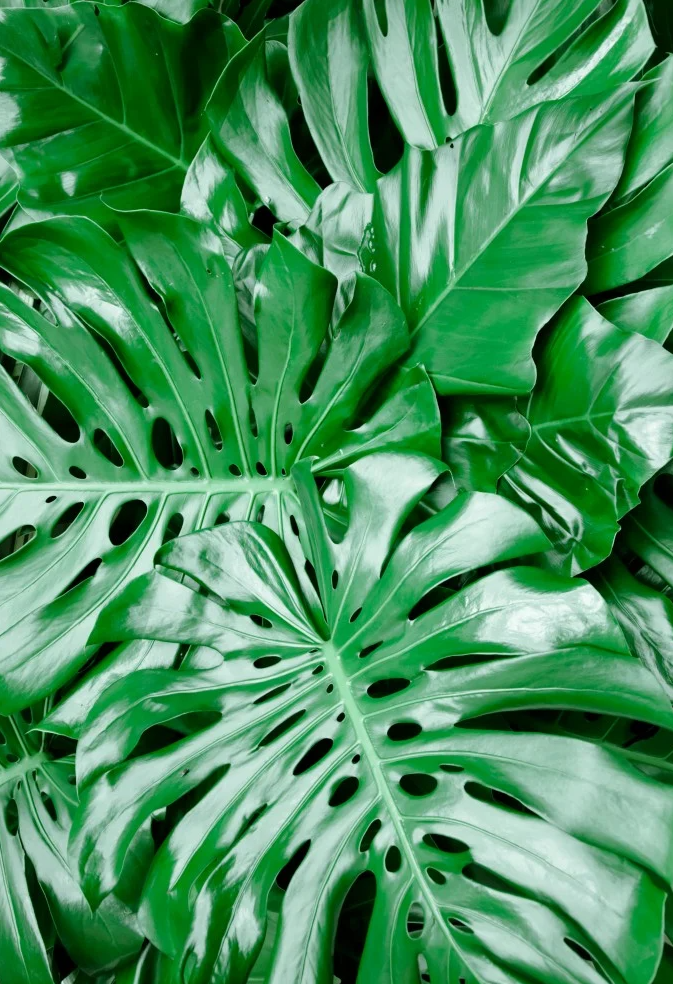
Young plants may be difficult to recognize because juvenile leaves are usually smaller, glossy, heart-shaped, and entire. They may have no internal holes and no deep marginal splits. A juvenile Hurricane Plant can therefore resemble a heartleaf philodendron, pothos, or another ordinary tropical climbing plant.
As the vine matures under suitable conditions, the leaves enlarge and develop two characteristic forms of division. Deep cuts extend inward from the outer margin, while enclosed oval or elongated openings form within the blade. These natural openings are fenestrations rather than insect holes, tears, or disease lesions. A mature leaf may show both inner fenestrations and outer splits.
The plant has thick jointed stems with conspicuous nodes, long petioles, papery remnants of old leaf sheaths, and numerous aerial roots. Indoor specimens may remain several feet tall, but a mature vine outdoors can climb high into trees and produce leaves approaching several feet in length. The larger the plant becomes, the more likely stems, roots, or fallen leaves are to extend into areas that were inaccessible when the pot was first placed.
Aerial Roots, Support Growth, and Pet Exposure
Brown, tan, or greenish aerial roots emerge from stem nodes and may hang freely, attach to a support, or grow downward into soil. They are functional plant organs rather than dead strings. Exact-species anatomical research has documented abundant raphide crystal cells in these roots, with free aerial roots containing more raphide cells per unit volume of cortex than the studied root types growing within soil.
Dangling aerial roots are a common exposure point because they may hang below the pot or support where cats, puppies, rabbits, and birds can reach them. A chewed root may release less conspicuous moisture than a freshly cut stem, but its tissue should not be treated as harmless.
Support poles, boards, trellises, and nearby furniture can allow a vine to place new growth several feet away from the original container. A plant that appears safely elevated may therefore send a stem, leaf, or root into a pet’s path. Fallen leaves and roots caught behind furniture also remain accessible after the owner has stopped noticing them.
Inflorescence, Fruit, and the Ripening Boundary
The flowers are borne on a thick cylindrical spadix surrounded initially by a pale spathe. Flowering is uncommon in many indoor specimens but occurs readily on mature outdoor plants in suitable climates. After pollination, the spadix develops into an elongated compound fruit resembling a green ear of corn covered with polygonal scales.
Ripening is slow and progresses from the base toward the tip. The scales over a ripe section loosen, lift, and fall naturally, revealing soft fragrant pulp. Firm scales that remain attached protect tissue that has not completed ripening and should not be pried away. A partly ripened fruit can contain edible human-use pulp at one end and strongly irritating tissue at the other.
Properly ripened pulp is a documented human food, but the exception is narrow. Green fruit, firm unopened sections, tightly attached scales, unripe pulp, the inflorescence, and the vegetative plant remain unsuitable for animals. There is no validated veterinary-safe serving of ripe pulp, and pets may swallow fibrous material or mixed ripe and unripe sections without discriminating between them.
Common-Name Confusion and Important Look-Alikes
“Swiss Cheese Plant” may refer to Monstera deliciosa, but the same name is widely applied to Monstera adansonii. The latter generally has smaller leaves with many enclosed internal holes and usually lacks the massive combination of internal fenestrations and deep marginal splits seen on mature M. deliciosa.
“Split-Leaf Philodendron” and “Cutleaf Philodendron” are misleading common names for Hurricane Plant. Split-Leaf Philodendron is also used for Thaumatophyllum bipinnatifidum, formerly Philodendron bipinnatifidum. That plant develops a thick self-supporting trunk or crown and deeply lobed leaves but does not climb with the same vine-and-aerial-root growth pattern or form typical Swiss-cheese holes.
Mini Monstera is usually Rhaphidophora tetrasperma, a smaller Southeast Asian climber with divided leaves but few or no enclosed internal holes. Juvenile Epipremnum pinnatum, large pothos, and several true philodendrons may also resemble a young Monstera. Many of these look-alikes are themselves calcium-oxalate-containing aroids, so uncertainty about the exact genus does not make chewing safe.
Monstera tacanaensis is a particularly important modern distinction. Mature plants can resemble M. deliciosa, and reliable separation may require reproductive structures, stem and petiole characters, provenance, and expert botanical examination. Immediate animal first aid remains focused on preventing further aroid exposure while identification is completed.
How Animals Encounter Hurricane Plant
Indoor exposure often occurs when a cat bites a new leaf, a puppy carries away a fallen leaf, an animal chews an aerial root, or a propagation cutting is left in a glass of water. Repotting and pruning create small nodes, stem pieces, root fragments, and leaf trimmings that are easier to carry than the intact plant. Sap may also contaminate a floor, work surface, tool, hand, glove, or pet coat.
Bird cages placed near a vine can allow a bird to pull leaves or roots through the bars. Rabbits and guinea pigs may reach fallen material beneath a plant stand. Cats can climb support poles, shelves, and adjacent furniture, making a nominally elevated pot accessible.
Outdoor exposure is most likely in frost-free landscapes, greenhouses, patios, botanical plantings, and locations where Hurricane Plant is grown against trees or masonry. Horses and livestock may encounter storm-damaged vines, landscape clippings, greenhouse waste, compost, or plants discarded over a fence. Monstera debris should never be placed in a paddock, pasture, stall, poultry run, rabbit pen, or open compost pile accessible to animals.
Potting material and plant treatments may create additional hazards. Fertilizer granules, insecticides, slug bait, systemic pesticides, fungicides, rooting compounds, leaf polish, and homemade pest sprays can cause signs not explained by raphides. The plant exposure and the chemical exposure must be evaluated separately.
Diagnosis and Evidence Collection
No routine blood test, urine test, or poison screen confirms Hurricane Plant exposure. Diagnosis usually depends on a compatible plant, a rapid onset after chewing, oral pain and salivation, visible plant fragments, and localized swelling without the delayed systemic pattern expected from a soluble-oxalate or organ-damaging poison.
Useful evidence includes photographs of the complete plant, juvenile and mature leaves, stem nodes, aerial roots, support structure, pot label, fruit, and the exact piece that was chewed. Record when the exposure occurred, which plant part was involved, whether the plant had been chemically treated, how much appears missing, when signs began, and whether the animal coughed or vomited.
A small clean sample may be sealed for identification when it can be collected safely. Loose sap-bearing plant material should not be carried through a vehicle or veterinary waiting room without containment. Nursery labels are helpful but not conclusive because trade names such as Split-Leaf Philodendron and Swiss Cheese Plant are applied inconsistently.
Blood testing may be unnecessary in a mild, clearly localized case. It becomes more useful when vomiting persists, hydration is impaired, another poison is possible, the animal has concurrent disease, or systemic signs do not match insoluble calcium oxalate irritation. Persistent dysphagia or regurgitation may require imaging or endoscopic examination for a retained plant fragment.
Prognosis and Prevention
The prognosis is generally good to excellent after a limited oral exposure when breathing remains normal, the animal can swallow, and signs steadily improve. Severe airway swelling, aspiration, dehydration, corneal injury, or a lodged stem fragment requires more intensive care and prolongs recovery.
Prevention requires planning for the mature plant rather than the small nursery specimen. Containers, vines, aerial roots, climbing supports, fallen leaves, water-propagation jars, and pruning debris must all remain inaccessible. A shelf is not safe when a cat can jump to it, a vine can grow beyond it, or a root can hang below it.
Prune and repot behind a closed door or in an animal-free work area. Wear gloves, gather every stem, root, node, leaf, fruit scale, and soil fragment, clean tools and surfaces, and inspect the floor before animals return. Secure discarded material in a closed container rather than leaving it in an open wastebasket or compost pile.
Households with persistent plant-chewing animals are safest when Hurricane Plant is removed entirely or kept in a genuinely inaccessible room. Taste deterrents do not reliably protect an animal and may introduce another irritant onto the plant.
Immediate Steps After Exposure
- Stop access immediately: Move the animal away from the plant, fallen leaves, aerial roots, stems, propagation cuttings, fruit, potting debris, and contaminated work surfaces.
- Check breathing before handling the mouth: Look for noisy inspiration, open-mouth breathing, neck extension, rapidly increasing tongue swelling, blue or gray gums, weakness, or collapse. Do not delay emergency transport to continue home cleaning when breathing is abnormal.
- Remove only loose visible pieces: When the animal is calm, alert, and breathing normally, remove plant material resting at the lips or front of the mouth. Do not reach blindly toward the throat or force the jaws open.
- Prevent pawing and grooming: Keep the animal from rubbing crystals into the eyes or licking sap from its coat. Use direct supervision and an appropriately fitted protective collar only when it does not interfere with breathing.
- Protect yourself: Wear gloves when handling fresh sap, chewed plant pieces, vomited material, roots, unripe fruit, or contaminated tools. Wash your hands before touching your face or eyes.
- Preserve identification evidence: Save clear photographs of the complete plant, the damaged portion, the pot label, and any chemical treatment labels. Record the time, amount missing, plant part, and onset of signs.
- Contact a veterinarian: Obtain prompt guidance when swelling, persistent drooling, vomiting, painful swallowing, eye contact, uncertain identification, or meaningful ingestion is present.
Gentle Mouth Cleanup
When the animal is fully alert, breathing normally, and swallowing without gagging or coughing, gently wipe the lips, tongue surface, gums, and front of the mouth with a damp cloth. Use a clean portion of the cloth for each pass so plant residue is not spread repeatedly over the tissue.
A gentle mouth rinse may be attempted only in a cooperative animal with normal swallowing. Keep the head in a natural or slightly downward position and allow liquid to flow out of the mouth rather than toward the throat. Stop immediately if the animal coughs, gags, panics, or struggles to swallow.
Voluntary access to a small amount of cool water may be allowed when swallowing is comfortable. Do not syringe, pour, spray, or drench water into the mouth. Milk, yogurt, oil, bread, or another food is not an antidote and should not be used to delay veterinary assessment.
Do not offer dry kibble, bones, hard treats, abrasive chews, or fibrous food while oral tissue remains painful. Continued inability or unwillingness to drink, repeated swallowing attempts, regurgitation, or saliva pouring continuously from the mouth requires examination.
Do Not Attempt Unsupervised Home Treatment
- Do not induce vomiting: Hydrogen peroxide, salt, mustard, ipecac, detergent, dish soap, manual gagging, and fingers in the throat can cause additional injury and aspiration. Vomiting may drag crystals and plant fragments across the mouth and esophagus again.
- Do not give activated charcoal: Charcoal does not remove raphides embedded in tissue and may be aspirated by an animal that is drooling, vomiting, swollen, or swallowing abnormally.
- Do not force food or liquid: Forced water, milk, yogurt, oil, broth, or food may enter the lungs when swallowing is impaired.
- Do not improvise an antidote: Calcium supplements, antacids, vinegar, citrus juice, baking soda, butter, petroleum products, and essential oils do not extract the crystals safely.
- Do not give human medication: Human pain relievers, numbing gels, throat sprays, antihistamines, corticosteroids, anti-nausea products, and antidiarrheals may be unsafe or may delay airway treatment.
- Do not rely on diphenhydramine: Antihistamines do not remove calcium oxalate needles. A veterinarian may use an antihistamine for a genuine histamine-mediated reaction, but visible throat swelling or breathing difficulty requires airway assessment.
- Do not make horses, rabbits, or guinea pigs vomit: These species cannot vomit and must never receive a home emetic.
When Emergency Examination Is Especially Important
- Abnormal breathing: Noisy, rapid, strained, or open-mouth breathing; gasping; neck extension; flared nostrils; blue-gray gums; panic; weakness; or collapse requires immediate emergency care.
- Progressive oral swelling: A rapidly enlarging tongue, floor-of-mouth swelling, inability to close the mouth, or inability to handle saliva may precede airway obstruction.
- Impaired swallowing: Repeated choking motions, coughing when drinking, nasal discharge of water or feed, regurgitation, or inability to swallow normally requires examination.
- Any eye exposure: Sap, crushed tissue, or a contaminated paw contacting the eye can injure the cornea even when the surface initially appears normal.
- Persistent vomiting or dehydration: Repeated vomiting, inability to retain water, tacky gums, weakness, reduced urination, or continued food refusal may require fluid and nausea support.
- Possible foreign body: A missing node, thick stem segment, petiole, fruit scale, or wad of plant fiber accompanied by persistent gagging, regurgitation, vomiting, abdominal pain, or reduced feces requires investigation.
- Atypical systemic signs: Seizures, jaundice, profound weakness, coma, abnormal urination, or prolonged progressive illness suggests another poison, chemical treatment, plant misidentification, or unrelated disease.
Eye and Skin Decontamination
Flush an exposed eye immediately with sterile saline or clean lukewarm water for approximately 15 to 20 minutes. Direct a gentle stream across the eye rather than forcefully against the cornea. Allow the animal to blink and prevent pawing or rubbing during and after irrigation.
Do not apply redness-relief drops, topical anesthetics, antibiotic ointments, or corticosteroid drops unless prescribed after veterinary examination. Corticosteroids can worsen some corneal ulcers or infections. Continued squinting, tearing, redness, cloudiness, light sensitivity, unequal pupils, or apparent visual impairment requires prompt ophthalmic assessment.
For skin or coat contamination, remove affected collars, harnesses, clothing, or bedding. Wash the area gently with lukewarm water and a mild pet-safe cleanser, rinse thoroughly, and prevent licking until residue has been removed. Persistent redness, swelling, blistering, intense pain, or open skin requires veterinary care.
Veterinary Examination and Treatment
The veterinarian will assess respiratory effort, tongue and pharyngeal swelling, oral pain, swallowing ability, hydration, and the likelihood that a plant fragment remains lodged in the mouth, pharynx, esophagus, or gastrointestinal tract. Sedation may be required for a safe oral examination, but drug choice must account for airway swelling and the patient’s ability to protect the airway.
Further decontamination may include careful oral irrigation and removal of retained material. Professional emesis is not routine for insoluble-calcium-oxalate exposure because the principal injury is local and vomiting can re-expose tissue. Activated charcoal is likewise not standard treatment and does not neutralize crystals already embedded in the mouth or pharynx.
Painful patients may receive veterinarian-selected analgesia. Persistent nausea or vomiting may be treated with an appropriate antiemetic after airway protection and swallowing have been assessed. Intravenous fluids may be needed when vomiting, oral pain, or inability to drink has produced dehydration. Soft nutritional support may be used after swallowing is considered safe.
Animals with significant tongue, pharyngeal, or laryngeal swelling may require oxygen, close respiratory monitoring, sedation chosen to minimize airway risk, intubation, or another emergency airway procedure. Antihistamines and corticosteroids are not antidotes to raphides. Their use depends on whether the veterinarian identifies a true allergic component, severe inflammatory edema, infection risk, gastrointestinal injury, or another contraindication.
Persistent dysphagia, regurgitation, or suspected ingestion of a thick stem or node may justify radiographs, ultrasound, contrast evaluation, endoscopy, or surgery. Plant material is not always visible on ordinary radiographs, so the clinical history and swallowing examination remain important.
Eye exposure may require eyelid eversion, removal of retained fragments, fluorescein staining, magnified corneal examination, repeated irrigation, pain control, lubrication, and topical antimicrobial treatment when epithelial injury is present. Corneal corticosteroids must not be used until ulceration and infection have been excluded.
Horse, Livestock, Rabbit, Guinea Pig, and Bird Exposure
Remove horses and livestock from landscaping, greenhouse waste, clippings, storm debris, compost, or feed contaminated with Monstera. Examine the mouth only when this can be done safely. Drooling, feed dropping, tongue swelling, coughing, nasal discharge, colic, or reluctance to drink warrants large-animal veterinary guidance.
Do not drench an animal with oral swelling, repeated coughing, nasal discharge, weakness, or impaired swallowing. Horses cannot vomit and should never receive an emetic. A veterinarian may need to evaluate the pharynx, esophagus, hydration, and risk of aspiration.
Rabbits and guinea pigs may stop eating because of mouth pain. Reduced appetite and fecal output can progress into gastrointestinal stasis even after the original exposure is over. Prompt examination is appropriate when eating does not resume normally or drooling, grinding of the teeth, swelling, or reduced fecal production is present.
Birds may require examination of the beak, tongue, oral cavity, choanal opening, crop entrance, skin, and eyes. Do not force water into a bird’s beak because aspiration can occur rapidly. Keep the bird calm and warm while arranging avian veterinary care.
Recovery, Prognosis, and Re-Examination
Most limited oral exposures have a good to excellent prognosis. Signs often improve substantially after loose plant material is removed, oral irritation begins settling, and the animal can drink normally. Recovery should be judged by steadily decreasing pain, normal breathing, comfortable swallowing, and return of appetite rather than by a predetermined number of hours.
Airway swelling, aspiration, dehydration, corneal ulceration, or a retained foreign body makes the prognosis more guarded but remains treatable when recognized promptly. Re-examination is needed when signs recur after initial improvement, swelling increases, coughing develops, eating or drinking remains painful, vomiting continues, or eye irritation persists.
Before the animal returns to the area, remove the entire exposure source. Inspect for fallen leaves, nodes, aerial-root pieces, cuttings, fruit scales, contaminated water glasses, and sap on tools or flooring. Relocate or remove the plant when genuine inaccessibility cannot be maintained.
Frequently Asked Questions About Hurricane Plant, Monstera, and Animal Exposure
Why can one small bite cause such a dramatic reaction?
Raphides injure tissue at the exact moment and location of contact. A pet does not have to absorb a large dose before showing pain. One crushed bite may release thousands of microscopic crystals across the lips, tongue, and gums, causing immediate salivation, pawing, gagging, and swelling. The dramatic appearance can therefore reflect intense local pain rather than whole-body organ poisoning. The amount still matters because a larger crushed surface exposes more tissue and increases the risks of swelling, vomiting, dehydration, and swallowing a substantial fragment.
Does a nursery label saying “Swiss Cheese Plant” reliably identify the species?
No. Swiss Cheese Plant is commonly used for both Monstera deliciosa and Monstera adansonii. Split-Leaf Philodendron may refer either to M. deliciosa or to Thaumatophyllum bipinnatifidum, while Mini Monstera usually means Rhaphidophora tetrasperma. Photographs of the whole plant, stem, nodes, aerial roots, juvenile and mature leaves, and any reproductive structure are more useful than the trade name alone. Many of these look-alikes are also irritating aroids, so uncertain identification does not justify delaying mouth cleanup or veterinary consultation.
Is a plant sold as Monstera “Borsigiana” less poisonous?
No evidence supports that conclusion. Monstera borsigiana and Monstera deliciosa var. borsigiana are currently treated as synonyms of Monstera deliciosa. “Borsigiana” remains a horticultural label for some climbing plants with longer internodes or smaller leaves, but it does not identify a toxin-free species. Leaves, stems, nodes, roots, and propagation material should receive the same precautions as any other M. deliciosa.
Is Monstera tacanaensis another name for Hurricane Plant?
No. Monstera tacanaensis is now accepted as a separate closely related species. Older botanical literature often included wild Costa Rican and Panamanian plants within M. deliciosa, but modern comparison concluded that those wild populations generally represent M. tacanaensis. The distinction matters for accurate identification and range information. It does not create a practical pet-safety exception because an unidentified large Monstera or related aroid should not be chewed.
Why are aerial roots and propagation cuttings frequent exposure sources?
Aerial roots often hang below the pot, making them accessible even when the leaves are high above the floor. Exact-species research found abundant raphide crystal cells in Hurricane Plant roots, including a greater number per unit of cortex in free aerial roots than in the studied soil-growing root forms. Propagation cuttings create another practical hazard because a node, short stem section, or young leaf is small enough for a puppy or cat to carry. Cuttings placed in open glasses of water may also bring the plant onto countertops, windowsills, and tables that pets investigate.
Can a completely dried Monstera leaf or old cutting still cause irritation?
Yes. Drying reduces free sap but does not reliably destroy insoluble mineral crystals. A dried leaf or root may become brittle and scatter small pieces, while an old stem or node may still release crystal-bearing tissue when chewed. Dried debris should therefore be collected with the same care as fresh trimmings and kept away from pets, cages, feed, bedding, compost, and livestock areas.
What if the mouth signs improve but the animal swallowed a thick stem or node?
Improvement in oral pain does not prove that the swallowed material has passed safely. A thick node, petiole, fibrous stem section, or fruit scale may lodge in the esophagus or create a gastrointestinal foreign body. Persistent gagging, repeated swallowing, regurgitation, coughing during drinking, vomiting, abdominal pain, food refusal, or reduced fecal output requires veterinary evaluation. Plant material is not always obvious on a routine radiograph, so ultrasound, contrast imaging, or endoscopy may be considered when the history remains concerning.
How can ordinary raphide irritation be distinguished from an allergic reaction?
Raphide irritation normally begins immediately at the contact site and produces intense oral pain, salivation, localized swelling, and dysphagia without requiring previous exposure. A true allergic reaction is more likely to include generalized hives, swelling beyond the contact area, facial edema, bronchospasm, vomiting unrelated to direct throat irritation, weakness, or circulatory collapse. The two processes can overlap clinically, and either can threaten the airway. Rapidly increasing swelling or abnormal breathing should therefore be treated as an emergency rather than tested with a home antihistamine.
Why might a veterinarian observe the airway without ordering extensive blood tests?
Hurricane Plant primarily causes surface injury, so blood work may remain normal in an uncomplicated case and there is no routine laboratory assay that proves Monstera exposure. Direct examination of respiratory effort, tongue and pharyngeal swelling, swallowing, hydration, and the eyes may provide more immediate information. Blood testing becomes more useful when vomiting persists, dehydration develops, the animal has underlying disease, a chemical treatment may also have been swallowed, or the clinical signs suggest a different poison.
Why are vomiting and activated charcoal usually avoided?
The principal toxic structures are sharp crystals already embedded in contacted tissue. Inducing vomiting does not extract them and may drag plant fragments across the mouth, pharynx, and esophagus a second time. Activated charcoal binds many dissolved chemicals in the gastrointestinal tract but cannot pull calcium oxalate needles from tissue. Both procedures also increase aspiration risk in an animal that is drooling, gagging, vomiting, swollen, or swallowing poorly.
Can sap carried on hands, tools, clothing, or another animal cause a second exposure?
Yes. Fresh sap and crushed particles may be transferred from pruning shears, gloves, clothing, floors, counters, collars, fur, or paws. A cat can then groom contaminated fur, or a dog can rub a contaminated paw across an eye. Anyone cleaning the plant should wear gloves, contain the debris, wash tools and work surfaces, and inspect nearby animals before they begin grooming. Contaminated hands should be washed before touching an animal’s mouth or eyes.
What changes when the plant was recently treated with pesticide, fertilizer, or leaf polish?
The exposure must be treated as two separate problems. The plant can cause raphide injury, while the applied product may produce gastrointestinal, neurologic, respiratory, cardiovascular, or skin effects unrelated to calcium oxalate. Save the product container or photograph the complete label, including active ingredients and concentration. Do not assume that unusual signs are caused by Monstera alone, and do not use a generic plant-treatment recommendation when a pesticide or fertilizer is involved.
Does the edible ripe fruit make Hurricane Plant safe around pets?
No. The human-food exception applies only to the properly ripened pulp exposed after the covering scales loosen naturally. Ripening advances gradually from the base upward, so one fruit may contain ripe and unripe sections simultaneously. Firm tissue beneath attached scales remains irritating. Human food history also does not establish a safe veterinary amount, and an animal may swallow scales, unripe pockets, spoiled fruit, or fibrous material. The rest of the plant remains poisonous regardless of whether it has produced fruit.
What should be investigated when symptoms continue for several days?
Several days of progressive illness is not the expected course of a simple limited mouth exposure. Persistent signs may reflect corneal injury, aspiration pneumonia, an esophageal lesion, a retained foreign body, dehydration, secondary infection, pesticide exposure, another plant, or unrelated disease. Kidney failure, jaundice, seizures, profound weakness, abnormal urination, or coma especially requires a broader diagnostic search rather than attributing everything to Hurricane Plant.