PAWS Pet Poison Plant Guide
Is Arum Lily Poisonous to Dogs, Cats, Horses, and Livestock?
Yes—Arum Lily, Zantedeschia aethiopica, is poisonous to dogs, cats, horses, livestock, and other animals that chew or swallow it. Its leaves, fleshy petioles, flower stalks, white spathes, yellow spadices, berries, sap, roots, and thick underground rhizomes contain insoluble calcium oxalate crystals, particularly microscopic needle-shaped raphides. Chewing ruptures specialized crystal-bearing cells and drives these needles into the lips, gums, tongue, oral lining, throat, and other exposed tissues. The usual result is immediate burning pain, excessive drooling, pawing at the mouth, gagging, swelling, painful swallowing, food refusal, and vomiting in animals capable of vomiting.
Most animals stop eating because the pain begins immediately, which usually limits the dose. Serious swelling near the pharynx or larynx is uncommon but can obstruct airflow and become life-threatening. Arum Lily is not a true lily and does not cause the characteristic acute kidney failure produced by Lilium and Hemerocallis exposure in cats. Any plant identified only as a “lily” must nevertheless be treated cautiously until its botanical identity is confirmed.
About this guide: This page provides general pet-poisoning information and cannot diagnose or treat an individual animal. For any suspected exposure, contact a veterinarian or animal poison-control service immediately. Do not induce vomiting, give medication, or attempt home decontamination unless directed by a veterinary professional.
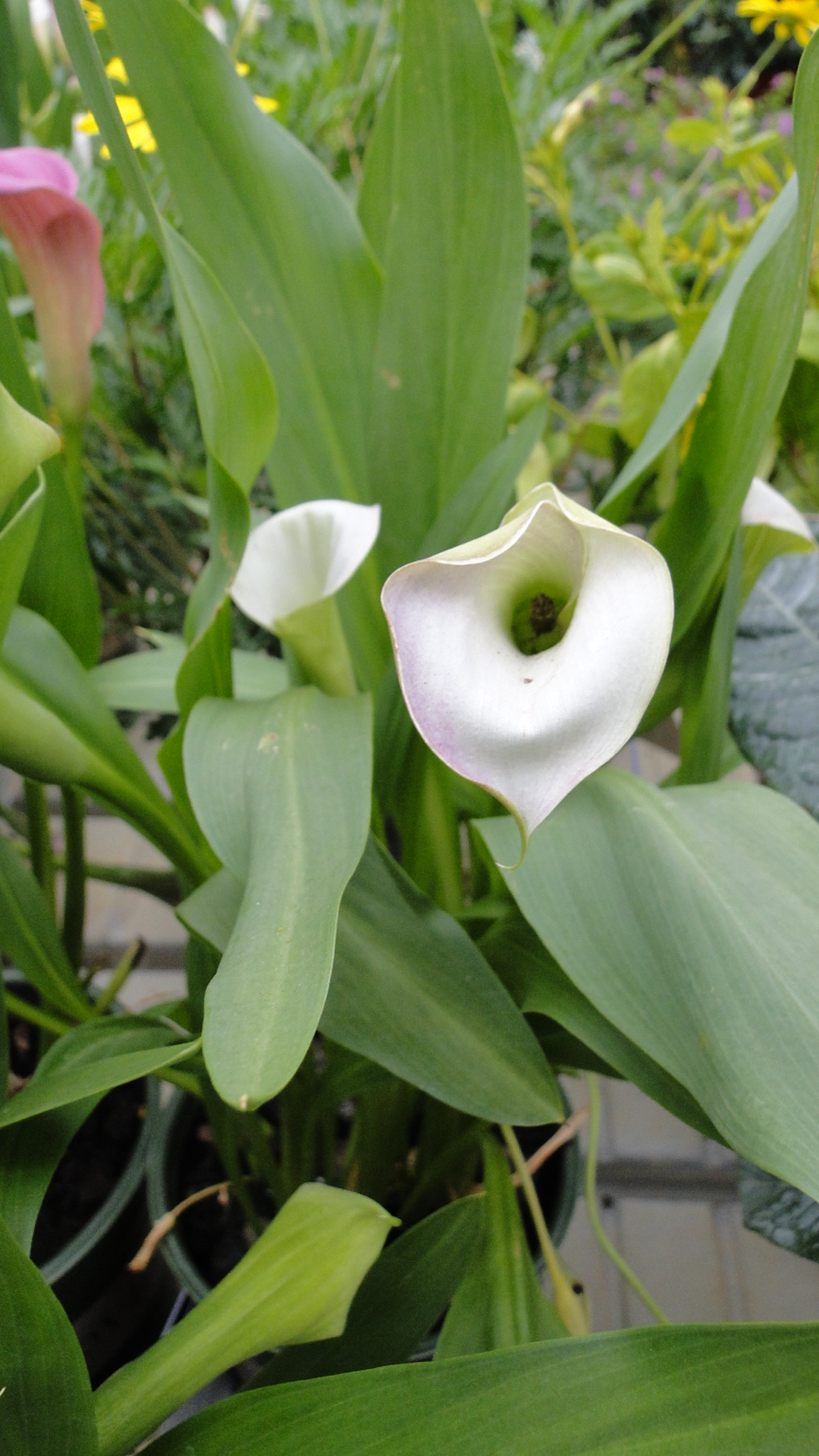
Arum Lily
Zantedeschia aethiopica (L.) Spreng.
Recognized botanical synonyms and historical names include:
Arodes aethiopicum (L.) Kuntze
Calla aethiopica L.
Calla aethiopica var. nana Hovey
Calla ambigua Salisb.
Calla moschata Moench
Colocasia aethiopica (L.) Link
Otosma aethiopica (L.) Raf.
Pseudohomalomena pastoensis A.D.Hawkes
Richardia aethiopica (L.) Spreng.
Richardia africana Kunth
The accepted genus is Zantedeschia. The enduring common name Calla Lily arose from the former name Calla aethiopica, but the plant is not a member of the modern genus Calla. Despite the name Arum Lily, it is also not a member of the genus Arum.
Araceae
Calla Lily, White Calla Lily, White Arum Lily, Common Arum Lily, Giant White Arum Lily, Common Calla, Pig Lily, Trumpet Lily, Florist’s Calla, Garden Calla, Varkoor, Wit Varkoor, Intebe, Ihlukwe
The words “arum” and “lily” are both potentially misleading. Zantedeschia aethiopica is neither a true Arum species nor a true lily of the genus Lilium.
Insoluble Calcium Oxalate Raphides
The principal established toxic material in Arum Lily is insoluble calcium oxalate, particularly bundles of microscopic needle-shaped crystals called raphides. These crystals are stored within specialized plant cells known as idioblasts and remain enclosed until a leaf, petiole, flower stalk, spathe, spadix, berry, root, rhizome, or other fresh tissue is crushed or chewed.
When an animal damages the plant, the idioblasts rupture and release the raphides into the surrounding sap and tissues. The crystals penetrate the lips, gums, tongue, palate, oral lining, pharynx, esophagus, and any other moist surface they contact. This physical injury produces the immediate burning pain, redness, inflammation, swelling, salivation, gagging, and reluctance to swallow characteristic of Calla Lily exposure.
The reaction may appear dramatic even after a limited bite because thousands of microscopic needles can be released from a small amount of damaged tissue. This is primarily a localized contact injury rather than a conventional absorbed poison that must circulate through the bloodstream before signs develop.
Crystal Forms and Why Raphides Matter Most
Calcium oxalate can occur in plants as raphides, druses, prisms, styloids, and fine crystal sand. Botanical reviews, including María Cuéllar-Cruz and colleagues’ 2020 discussion of plant biocrystals, identify Zantedeschia aethiopica among aroids capable of forming multiple calcium oxalate crystal morphologies.
Raphides are the most clinically important form because their elongated pointed structure is especially effective at penetrating moist animal tissue. Rounded druses and other crystal forms may contribute to the plant’s total oxalate storage and defense system, but they do not have the same needle-like mechanical action.
Calcium oxalate crystals serve several plant functions, including calcium regulation, storage, detoxification, structural organization, and defense against herbivory. In a poisoning context, their defensive role is most obvious: the pain begins so quickly that most animals stop chewing before they consume a large quantity.
The Mechanical Needle Effect and Possible Secondary Irritants
Raphides do more than produce a vague chemical burning sensation. They physically puncture epithelial surfaces. The resulting microscopic wounds activate inflammatory pathways, increase tissue permeability, and permit sap constituents to enter tissues more readily.
Veterinary reviews have also described protein-digesting or proteolytic enzymes as possible secondary irritants in Calla Lily. These compounds may intensify inflammation after entering through the pathways created by the crystals and may contribute to histamine and other inflammatory-mediator release.
The evidence for these enzymes is less complete than the direct evidence for insoluble calcium oxalate. Their precise identities, concentrations in individual tissues, and quantitative contribution to naturally occurring dog, cat, horse, and livestock cases remain incompletely characterized.
They should therefore be discussed as possible amplifiers of raphide injury rather than as equally established primary toxins. Insoluble calcium oxalate raphides remain the defensible principal toxin listing for Zantedeschia aethiopica.
Insoluble and Soluble Oxalates Are Different Toxicologic Problems
The word oxalate is used for two clinically different plant-poisoning syndromes. Arum Lily contains insoluble crystals that remain largely at the point of contact and cause local trauma and inflammation of the mouth, throat, skin, eyes, and gastrointestinal tract.
Plants containing substantial soluble oxalates release absorbable oxalate capable of binding circulating calcium. A sufficiently large soluble-oxalate exposure can produce hypocalcemia, weakness, tremors, seizures, cardiac abnormalities, metabolic disturbance, and calcium oxalate deposition within the renal tubules.
That systemic soluble-oxalate syndrome is not the expected result of ordinary Arum Lily chewing. Routine calcium replacement, prolonged kidney monitoring, or treatment for oxalate nephrosis is not indicated solely because a correctly identified Calla Lily caused immediate oral pain and drooling.
Kidney failure, markedly reduced urination, profound hypocalcemic signs, persistent arrhythmias, seizures, or major metabolic abnormalities should prompt investigation for a soluble-oxalate plant, ethylene glycol, medication, household chemical, another toxin, or unrelated disease.
Arum Lily Is Not a Nephrotoxic True Lily
Arum Lily belongs to Araceae. Easter Lily, Tiger Lily, Asiatic Lily, Oriental Lily, Stargazer Lily, and related true lilies belong to Lilium, while Daylilies belong to Hemerocallis.
True lilies and daylilies contain a different, still incompletely identified nephrotoxic principle capable of causing acute kidney failure in cats after very small exposures to leaves, flowers, pollen, or contaminated vase water.
Calla Lily does not share that characteristic feline renal toxicity. Its expected syndrome begins rapidly with mouth pain, drooling, swelling, gagging, and painful swallowing.
This distinction is critical but should not create false reassurance when identification is uncertain. A cat that contacted an unidentified “lily,” mixed bouquet, loose pollen, or vase water must be managed as a possible true-lily exposure until reliable botanical identification excludes Lilium and Hemerocallis.
Poisonous Parts and the Rhizome Hazard
All fresh parts should be treated as poisonous and irritating, including leaves, fleshy petioles, upright flower stalks, white spathes, yellow or orange spadices, sap, developing fruit, ripe berries, roots, and the thick underground rhizome.
The broad white structure commonly called the flower is actually a modified leaf called a spathe. It surrounds the spadix, which bears numerous small true flowers. Both structures contain irritating material and remain capable of releasing sap and crystals when chewed or cut.
The rhizome creates a distinctive exposure risk. A dog digging around a clump, investigating recently disturbed soil, or finding discarded divisions may gain access to a much larger mass of plant tissue than it would during one leaf nibble.
Rhizome exposure does not create a different kidney toxin, but the greater quantity of raphide-containing tissue can produce prolonged oral pain, repeated vomiting, diarrhea, extensive mucosal irritation, and dehydration.
Berries, Cut Flowers, Vase Water, and Cultivars
After flowering, the aging spathe may turn green and surround a cluster of developing fruits. The mature berries become yellowish to orange and can be overlooked during cleanup. No safe berry count has been established.
Cut flowers and pruned stems remain irritating because they contain fresh sap and crystals. Florist arrangements may also contain true lilies, preservatives, fertilizer, wire, floral foam, ribbon, artificial materials, and other plants that change the exposure risk.
Vase water may contain sap, plant debris, preservatives, bacteria, or material from every flower in a mixed arrangement. It should not be accessible to animals. In a cat exposure, the complete bouquet must be identified because true-lily pollen or plant material in vase water creates a much more serious renal emergency.
‘Green Goddess’ remains a form of Zantedeschia aethiopica and should be treated as poisonous. Cream, pink-tinged, variegated, and other white Calla forms remain irritating. Bright yellow, orange, pink, red, or purple florist Callas may represent other Zantedeschia species or hybrids, but they should likewise be treated as potentially raphide-containing aroids.
Skin and Eye Contact
Fresh sap can irritate the skin, particularly where the protective barrier is already damaged or where an animal repeatedly licks and rubs the area. Local redness, burning, itching, or dermatitis may develop.
Eye exposure is more urgent. Raphides and sap beneath an eyelid or on the corneal surface may cause intense tearing, blinking, squinting, redness, eyelid spasm, swelling, light sensitivity, cloudiness, and corneal epithelial injury.
An animal may transfer sap from a contaminated paw, muzzle, or coat into the eye during grooming. Ocular exposure remains a localized contact injury rather than systemic oxalate poisoning, but persistent pain requires direct examination because the depth of corneal injury cannot be judged reliably from external appearance.
No Dependable Safe Dose
No safe leaf amount, petiole length, flower quantity, berry count, rhizome weight, sap volume, crystal concentration, or toxic dose has been established for an individual dog, cat, horse, livestock animal, rabbit, bird, or other pet.
Most animals stop after a limited bite because pain is immediate. Severity depends on the amount and part chewed, location of crystal contact, depth of pharyngeal exposure, animal size, ability to clear plant material, preexisting airway disease, vomiting, and whether sap entered an eye.
The location of contact may be more important than the total swallowed amount. A small amount reaching the laryngeal region can be more dangerous than a larger amount confined to the front of the mouth because localized swelling near the airway may interfere with breathing.
Immediate Oral Pain and Defensive Behavior
Clinical signs usually begin while the plant is being chewed or within minutes because the raphides act directly on contacted tissues. A dog or cat may abruptly drop the plant, cry out, shake the head, paw at the muzzle, rub the face against the floor, retreat from food, or behave as though a sharp object is lodged in the mouth.
Excessive drooling, lip smacking, repeated swallowing, gagging, retching, tongue movements, and reluctance to close the mouth are common. Saliva may become thick, foamy, or stringy because swallowing is painful.
The intensity of distress may seem disproportionate to the amount chewed. This is expected with raphide injury because one bite can release numerous microscopic needles into sensitive oral tissue.
Redness and Swelling of the Mouth and Throat
Inflammation may involve the lips, gums, tongue, palate, oral lining, pharynx, and surrounding facial tissues. The animal may resist opening the mouth or having the muzzle touched.
Painful swallowing can cause food refusal, reluctance to drink, repeated unsuccessful attempts to swallow, or saliva running continuously from the mouth. A bark, meow, whinny, or other vocalization may sound weak or hoarse when tissues near the pharynx or larynx are inflamed.
Most swelling remains localized and begins subsiding as loose crystals are cleared and inflammation decreases. Progressive enlargement of the tongue, throat, face, or neck must not be watched indefinitely at home.
Upper-Airway Obstruction
Severe pharyngeal or laryngeal edema is uncommon but represents the principal immediately life-threatening complication. Airway narrowing can continue to worsen after the animal stops chewing.
Warning signs include harsh or noisy inspiration, rapid or labored breathing, exaggerated chest or abdominal movement, neck extension, inability to settle, panic, open-mouth breathing in a cat, blue-gray mucous membranes, weakness, or collapse.
These signs require immediate emergency transport. Repeated mouth examination, forced swallowing, food, water, or oral medication can increase stress and aspiration risk and should not delay airway management.
Respiratory distress can also result from aspiration, a lodged plant fragment, florist wire, another foreign body, allergic swelling, or caustic exposure. The presence of Arum Lily does not exclude those emergencies.
Vomiting and Gastrointestinal Irritation
Dogs and cats may vomit after swallowing chewed plant material, sap, berries, rhizome fragments, or saliva containing crystals. Vomiting may occur once or become repeated after a larger exposure.
Nausea, abdominal discomfort, reduced appetite, and diarrhea may follow when swallowed material reaches the gastrointestinal tract. These findings reflect local irritation rather than systemic soluble-oxalate absorption.
Repeated vomiting or diarrhea can cause dehydration, dry or tacky gums, reduced urination, weakness, electrolyte disturbance, esophageal irritation, and aspiration. These are secondary complications rather than evidence that the crystals have directly damaged the kidneys.
Repeated bloody vomit, coffee-ground material, black stool, pronounced abdominal enlargement, persistent unproductive retching, or severe focal pain is not expected after an uncomplicated limited exposure. These findings require investigation for gastrointestinal injury, another toxin, a foreign object, or unrelated disease.
Horses and Livestock
Horses, cattle, sheep, goats, pigs, and other grazing animals may develop sudden hypersalivation, head shaking, repeated tongue movements, painful chewing, feed refusal, oral redness, swelling, and difficulty swallowing.
Horses cannot vomit. Persistent drooling, coughing, neck extension, nasal discharge containing feed or saliva, repeated unsuccessful swallowing, or feed refusal must also be differentiated from esophageal choke, dental disease, oral foreign material, pharyngeal trauma, or caustic exposure.
Large grazing-animal exposures are limited by immediate irritation but can occur where dense stands invade damp pasture, clippings are discarded into an enclosure, rhizomes are exposed, or cut plants become mixed with other vegetation.
An animal unable to eat, swallow, or control saliva requires examination even when breathing currently appears normal.
Eye and Skin Signs
Eye exposure may cause immediate blinking, tearing, squinting, redness, eyelid swelling, light sensitivity, pawing at the face, or persistent eyelid closure.
Corneal irritation or ulceration may produce cloudiness, discharge, marked pain, or apparent visual difficulty. The severity of a corneal injury cannot be determined reliably without direct examination and fluorescein staining.
Skin contact may produce localized redness, itching, burning, or irritation, especially on the lips, muzzle, paws, thinly haired skin, or preexisting wounds.
Continued licking and rubbing may intensify inflammation and spread sap from the coat or paws into the mouth and eyes.
Arum Lily and True-Lily Signs in Cats
A correctly identified Arum Lily usually causes immediate mouth pain, drooling, swelling, and dysphagia. True-lily kidney poisoning may initially cause vomiting, depression, or appetite loss without dramatic oral burning.
As feline true-lily poisoning progresses, increased thirst and urination may be followed by dehydration, reduced urine production, anuria, worsening depression, tremors, seizures, and death from acute kidney failure.
The absence of immediate oral irritation does not make an unidentified lily exposure safe. A cat exposed to an uncertain bouquet, loose pollen, petals, leaves, or vase water must receive immediate veterinary guidance while the plant is identified.
Expected Course and Atypical Findings
Most uncomplicated oral exposures begin improving within several hours and resolve within approximately twelve to twenty-four hours. Appetite and drinking should return as pain and swelling subside.
Persistent inability to swallow, continuing food refusal, repeated vomiting, progressive swelling, dehydration, coughing, fever, eye pain, or signs lasting beyond the expected short course requires veterinary reassessment.
Convulsions, coma, systemic hypocalcemia, acute kidney failure, severe liver injury, persistent cardiac abnormalities, or prolonged multisystem illness is not characteristic of uncomplicated Arum Lily poisoning.
Those findings should prompt investigation for a true lily, soluble-oxalate plant, ethylene glycol, pesticide, medication, toxic mushroom, household chemical, another poisonous plant, or mixed exposure.
Identity, Native Range, and Poisoning-Relevant Habitat
Arum Lily, Zantedeschia aethiopica, is a rhizomatous aroid native to South Africa, Eswatini, and Lesotho. It has been introduced widely and is naturalized in portions of Europe, North Africa, North and South America, Australia, New Zealand, Hawaii, and numerous subtropical and temperate islands.
In its native and naturalized range, it forms colonies in marshes, wet pasture, stream and pond margins, drainage channels, creek banks, coastal areas, roadsides, and other damp disturbed ground. These sites create exposure opportunities for livestock, horses, outdoor pets, and animals investigating dumped garden material.
Household exposure commonly involves potted plants, bouquets, cut flowers, discarded stems, vase water, or rhizomes exposed during plant removal. Dogs may investigate disturbed soil or waste piles, while cats may contact flowers and leaves in arrangements placed on tables or counters.
Identification of the Leaves, Spathe, Spadix, Fruit, and Rhizome
The plant produces clumps of glossy dark-green leaves on long fleshy petioles. The blades are broadly arrow-shaped or heart-shaped and may become substantial where moisture is abundant.
The large white funnel-shaped structure is a spathe, not a true petal. It wraps around a central yellow or orange spadix bearing numerous small flowers.
After flowering, the spathe may turn green and partly enclose a compact cluster of berries. Mature fruits become yellowish to orange and may remain hidden within the aging flower structure.
The underground rhizome is thick, fleshy, branching, and capable of producing a large clump. Soil-covered rhizome pieces can resemble chewable roots or tubers to a dog and may remain in discarded soil after the visible plant has been removed.
Calla Lily, Arum Lily, and Misleading Common Names
The accepted genus is Zantedeschia. Linnaeus originally published the species as Calla aethiopica, which explains the enduring common name Calla Lily. Older literature also used Richardia aethiopica.
The plant is not a member of the modern genus Calla, is not a member of Arum, and is not a true lily. All three common-name associations can lead to identification errors.
The specific epithet aethiopica reflects older geographic terminology applied broadly to parts of Africa south of Egypt and Libya. It does not indicate that the accepted native range is modern Ethiopia.
The Critical Difference Between Arum Lily and True Lilies
Arum Lily belongs to Araceae with Peace Lily, Dieffenbachia, Philodendron, Pothos, Arrow-Head Vine, Caladium, Anthurium, and other raphide-containing plants.
True lilies belong to Lilium, and daylilies belong to Hemerocallis. These plants can cause fatal acute kidney injury in cats after very small exposures to leaves, flowers, pollen, or contaminated vase water.
Arum Lily causes immediate oral irritation but is not associated with the same nephrotoxic feline syndrome. Calla Lilies and Peace Lilies are therefore not “safe lilies”; they are poisonous for a different reason.
When a cat’s exposure involves a plant identified only as a lily, the safest approach is to treat it as a possible true-lily emergency until a complete specimen, florist label, or reliable photograph establishes otherwise.
Species-Specific Evidence and Companion-Animal Cases
Botanical studies of Araceae have documented multiple calcium oxalate crystal forms in Zantedeschia aethiopica. The raphides are clinically dominant because their long pointed structure causes direct mucosal penetration.
Altea Bertero and colleagues included Zantedeschia aethiopica in their 2020 review, “Indoor Companion Animal Poisoning by Plants in Europe.” The authors described insoluble calcium oxalate raphides and possible proteolytic enzymes and noted a dog exposure reported to an Italian poison-control center.
The expected findings included oral redness and swelling, hypersalivation, appetite loss, depression, vomiting, diarrhea, abdominal pain, and occasional dermatitis. Signs were generally reported within two hours, although oral pain may begin almost immediately because of the mechanical crystal injury.
A 2023 review by A. L. Nagy and colleagues examined the recurring statement that cats are particularly susceptible to Calla Lily and concluded that no evidence establishes greater feline susceptibility than in other species. The impression appears to arise partly from confusion with the uniquely nephrotoxic true lilies.
Rhizomes, Garden Waste, and Outdoor Exposure
The underground rhizome becomes especially accessible when clumps are divided, uprooted, washed from soil, damaged by machinery, or discarded. Dogs may dig up fresh pieces, while livestock may encounter them in dumped landscape waste.
A rhizome provides access to a larger mass of tissue than a brief leaf bite. The expected mechanism remains insoluble-raphide injury, but the greater amount can cause more persistent oral pain, vomiting, diarrhea, mucosal inflammation, and dehydration.
Wilted or partly dried leaves, flower stalks, and rhizome fragments should not be assumed harmless. The amount of sap may decline, but drying does not provide a dependable household method of removing crystals.
Animals should also be kept away from recently treated invasive stands because herbicide exposure may coexist with or be mistaken for plant irritation.
Floral Arrangements and Vase-Water Exposure
Calla Lilies are common florist flowers. Cut spathes, stalks, leaves, and trimming scraps may fall from bouquets or remain on work surfaces where pets can reach them.
Mixed bouquets may contain true lilies, Lily of the Valley, Daffodils, Tulips, Chrysanthemums, Baby’s Breath, eucalyptus, floral foam, wire, ribbon, preservatives, fertilizer, artificial materials, and other hazards.
Vase water may contain Calla Lily sap and debris, but the more urgent concern in cats is whether true-lily pollen, petals, leaves, or stem material also contaminated the water.
The entire arrangement should be preserved after an exposure. Identifying one Calla Lily does not prove that every flower in the bouquet was the same species.
Cultivars and Other Zantedeschia Species
‘Green Goddess’ is a recognizable form of Zantedeschia aethiopica with a green-and-white spathe and remains poisonous.
Other white forms may have cream, pink, green, or variegated features. Ornamental differences do not establish the absence of calcium oxalate crystals.
Yellow, orange, red, pink, and purple florist Callas frequently represent other Zantedeschia species or cultivated hybrids. These plants should also be treated as potentially raphide-containing aroids rather than assumed safe because they are not the white species described on this page.
Diagnosis and Veterinary Assessment
Diagnosis usually depends on witnessed exposure, accurate plant identification, immediate oral pain, hypersalivation, pawing at the mouth, swelling, and difficulty swallowing.
Useful evidence includes the complete plant, leaves, white spathe, central spadix, berries, rhizome, florist or nursery labels, bouquet packaging, and photographs of every flower in a mixed arrangement.
The veterinarian may examine the lips, gums, tongue, beneath the tongue, palate, pharynx, and visible airway for retained plant material, edema, ulceration, trauma, or another foreign body. Breathing and swallowing safety take priority over an extended oral examination in a distressed animal.
Laboratory testing is not always needed after a mild, clearly identified exposure. Blood and urine testing becomes more important when vomiting is persistent, dehydration develops, signs are atypical, the amount was substantial, or true-lily exposure in a cat cannot be excluded.
Veterinary Treatment, Prognosis, and Prevention
No antidote dissolves raphides already embedded in tissue. Treatment focuses on safely removing remaining plant material, controlling pain and inflammation, treating vomiting and dehydration, examining exposed eyes, and protecting the airway.
Veterinarian-selected analgesics, anti-inflammatory medication, antiemetics, and fluids may be used according to the animal’s examination. Significant pharyngeal or laryngeal swelling may require oxygen, repeated airway assessments, intubation, assisted ventilation, or rarely a temporary surgical airway.
The prognosis is good to excellent for most uncomplicated oral exposures. It remains guarded until the airway is secure in an animal with progressive throat swelling. Aspiration, corneal injury, severe dehydration, or a mixed bouquet exposure may prolong recovery.
Prevent exposure by keeping potted plants, bouquets, loose flowers, vase water, pruning debris, fruit clusters, and exposed rhizomes completely inaccessible. Every plant sold under a lily name should be identified botanically before entering a home with cats.
Immediate Steps After Exposure
- Stop further chewing. Move the animal away from the plant and secure every leaf, petiole, spathe, spadix, berry, flower stalk, rhizome, bouquet, cutting, and piece of garden waste.
- Assess breathing first. Noisy or labored breathing, gasping, neck extension, open-mouth breathing in a cat, rapidly increasing tongue or throat swelling, blue-gray gums, weakness, or collapse requires immediate emergency transport.
- Remove only loose visible material. Carefully lift plant pieces resting at the lips or front of the mouth when this can be done without being bitten. Do not perform a blind finger sweep or reach toward the throat.
- Wipe away accessible sap. Use a damp cloth on the lips, muzzle, and safely reached front portions of the mouth when the animal is alert and swallowing normally.
- Preserve identification evidence. Save an intact leaf, spathe and spadix, berry cluster, rhizome fragment, florist label, bouquet packaging, or clear photographs of the complete plant.
- Record the exposure. Note the time, plant part involved, amount missing, vomiting, swelling, eye contact, vase-water access, and whether the animal has airway or swallowing disease.
- Contact a veterinarian. Obtain guidance for persistent pain, swelling, vomiting, difficulty swallowing, rhizome ingestion, eye exposure, or uncertain identification.
Special Precaution for Cats and Unidentified Lilies
If the plant might be an Easter Lily, Tiger Lily, Asiatic Lily, Oriental Lily, Stargazer Lily, another Lilium, or a Daylily, do not wait for mouth irritation or illness to appear.
True-lily poisoning can cause fatal acute kidney failure in cats, and early decontamination and intravenous fluid treatment are time-sensitive. Bring the plant, bouquet, label, photographs, pollen-contaminated material, and vase-water information directly to the veterinary facility.
The absence of immediate burning, drooling, or mouth swelling does not make an unidentified lily exposure safe. True-lily cases may initially appear mild before renal injury becomes apparent.
Do Not Attempt Unsupervised Home Treatment
- Do not induce vomiting. Returning raphide-containing material through the esophagus and mouth can cause additional injury and creates aspiration risk when swallowing is painful or impaired.
- Do not use hydrogen peroxide at home. It can injure the stomach and esophagus, is particularly unsafe in cats, and is inappropriate for an insoluble-oxalate oral-irritant exposure.
- Do not use salt, mustard, syrup of ipecac, detergent, oil, manual gagging, or fingers in the throat. These methods can cause poisoning, aspiration, or traumatic injury.
- Never attempt to induce vomiting in a horse. Horses cannot vomit.
- Do not force water, milk, yogurt, cheese, food, broth, oil, or electrolyte drinks. Forced swallowing may worsen pain or cause aspiration in an animal with oral or throat swelling.
- Do not give activated charcoal. Charcoal does not neutralize or remove embedded raphides and may be inhaled by an animal with dysphagia or swelling.
- Do not give diphenhydramine, other antihistamines, corticosteroids, pain medication, antacids, bismuth products, sucralfate, antidiarrheals, or leftover prescriptions. These are not universal raphide antidotes and must be selected from the animal’s examination.
Mouth and Swallowing Care
Do not repeatedly manipulate a painful mouth. Excessive handling can increase distress, worsen swelling, push material farther back, or lead to a bite injury.
Gently wipe visible sap and remove loose fragments only when the animal remains calm, alert, breathing normally, and able to swallow. Do not pour or spray water forcefully into the mouth.
Continuous drooling, repeated gagging, painful swallowing, inability to retain water, an altered voice, or persistent unsuccessful swallowing requires examination of the mouth, pharynx, esophagus, and upper airway.
Give nothing by mouth to an animal that is vomiting repeatedly, breathing abnormally, severely swollen, collapsed, seizing, or unable to swallow safely.
Eye and Skin Exposure
If sap entered an eye and no object is embedded, begin gentle irrigation with sterile saline or clean lukewarm water while preventing the animal from rubbing its face.
Do not use tweezers, cotton swabs, cloth, fingers, human redness drops, or leftover eye medication on the eye surface.
Persistent squinting, tearing, redness, cloudiness, discharge, swelling, light sensitivity, or inability to open the eye requires prompt veterinary examination.
Wash sap from exposed skin, paws, or fur with lukewarm water and a mild species-appropriate cleanser. Rinse thoroughly and prevent grooming until residue has been removed.
When Emergency Examination Is Required
- Airway abnormalities: Noisy, harsh, rapid, labored, or open-mouth breathing; gasping; neck extension; blue-gray gums; or collapse requires immediate care.
- Progressive swelling: Increasing enlargement of the tongue, lips, face, throat, or neck should not be monitored at home.
- Inability to swallow: Continuous drooling, repeated choking motions, regurgitation, inability to retain water, or refusal to swallow requires airway and hydration assessment.
- Persistent gastrointestinal illness: Repeated vomiting, inability to keep water down, blood, black stool, marked abdominal pain, or progressive weakness requires examination.
- Rhizome ingestion: A substantial piece of the thick underground stem provides access to a large amount of irritating tissue and warrants prompt consultation.
- Eye injury: Continuing squinting, cloudiness, discharge, bleeding, or eye rubbing requires corneal evaluation.
- Atypical systemic illness: Tremors, seizures, abnormal heart rhythm, profound depression, reduced urination, or kidney abnormalities suggests another or additional exposure.
- Uncertain lily identification in a cat: Possible contact with a true lily, pollen, or contaminated vase water is an immediate veterinary emergency.
Veterinary Examination and Oral Treatment
The veterinarian will assess the lips, tongue, oral lining, palate, beneath the tongue, pharynx, swallowing ability, voice, breathing effort, oxygenation, and degree of swelling.
Remaining plant fragments may be removed under direct visualization, and accessible tissues may be gently cleansed. Sedation may be needed for a complete examination, but airway status must be considered before sedating an animal with throat swelling.
Veterinarian-selected analgesics can control significant oral pain. Anti-inflammatory medication may be used when edema is clinically important, but antihistamines and corticosteroids are not automatic antidotes and should be chosen according to the examination.
A veterinarian may consider a carefully controlled amount of calcium-containing or soothing oral material after confirming that the animal is alert and can swallow safely. This may assist with residual crystal clearance but does not dissolve embedded raphides and must never be forced at home.
Veterinarian-selected antiemetics such as maropitant or ondansetron may be used for continuing vomiting. Subcutaneous or intravenous fluids may be required when painful swallowing or gastrointestinal losses prevent adequate hydration.
Sucralfate may be considered only when repeated vomiting, hematemesis, esophagitis, erosive injury, or documented mucosal damage requires barrier protection. It is not an Arum Lily antidote and can interfere with absorption of other medication.
Airway and Respiratory Treatment
An animal with significant pharyngeal or laryngeal edema may require oxygen, injectable treatment, continuous observation, repeated airway examinations, and hospitalization.
Progressive obstruction may require placement of an endotracheal tube before the airway becomes impossible to access. Assisted ventilation may be necessary when breathing remains inadequate.
A temporary surgical airway may rarely be required when swelling prevents effective airflow or ordinary intubation. Securing oxygen delivery takes priority over oral decontamination.
Coughing, fever, abnormal lung sounds, worsening respiratory effort, or oxygen abnormalities after vomiting may require chest imaging and treatment for aspiration pneumonitis or pneumonia.
Eye Treatment
Veterinary examination may include prolonged irrigation, magnification, eyelid eversion, fluorescein staining, and removal of retained material.
Corneal injury may require species-appropriate pain control, lubrication, topical antimicrobial medication, and follow-up examinations to confirm healing.
Steroid-containing eye medication should not be used when a corneal ulcer is possible because it can delay healing and worsen infection.
True-Lily Treatment When Identification Is Uncertain
If a true lily cannot be ruled out in a cat, the veterinarian may begin time-sensitive decontamination, baseline blood and urine testing, intravenous fluid therapy, urine-output monitoring, and repeated kidney-value assessment while identification continues.
Waiting for azotemia, reduced urine production, or visible illness can greatly worsen the prognosis after true-lily exposure. The absence of raphide-type mouth pain does not justify delaying treatment.
Once reliable identification confirms only Zantedeschia aethiopica, management can remain focused on oral irritation, swelling, hydration, vomiting, airway safety, and any eye exposure.
Horses, Livestock, and Other Animals
Remove every animal from standing plants, clipped material, discarded bouquets, exposed rhizomes, contaminated forage, and garden-waste piles.
Do not drench or force water, oil, charcoal, feed, or medication into an animal that is drooling heavily, coughing, choking, regurgitating, breathing abnormally, or swallowing poorly.
Large-animal examination may include inspection of the mouth and pharynx, assessment for choke, airway evaluation, pain control, fluid therapy, and treatment of aspiration or dehydration.
Rabbits, guinea pigs, companion birds, reptiles, and other exotic species require species-specific advice. Dog and cat treatment should not be improvised for another animal.
Recovery, Prognosis, and Prevention
Most uncomplicated cases improve within several hours and recover within approximately twelve to twenty-four hours. The prognosis is good to excellent when breathing and swallowing remain normal.
Recovery may take longer after extensive oral injury, repeated vomiting, dehydration, corneal injury, aspiration, or significant airway swelling.
Continued drooling, progressive swelling, eye pain, food refusal, vomiting, coughing, or difficulty swallowing should be reassessed rather than accepted as a normal prolonged effect.
Keep potted plants, florist arrangements, loose flowers, vase water, berries, and rhizomes genuinely inaccessible. Collect every fallen leaf, cut stalk, fruit cluster, and disturbed underground piece immediately and place it in a secured container.
Frequently Asked Questions About Arum Lily and Animal Poisoning
How poisonous is Arum Lily to dogs and cats?
Arum Lily causes a painful localized poisoning syndrome rather than the systemic organ failure associated with some highly toxic plants. Chewing releases insoluble calcium oxalate raphides that penetrate the mouth and throat, causing immediate burning, drooling, pawing, gagging, swelling, difficulty swallowing, food refusal, and sometimes vomiting. Most animals recover fully, but swelling that threatens the airway is an emergency.
What is the principal toxin?
The established toxic material is insoluble calcium oxalate arranged in microscopic needle-shaped raphides. These crystals are stored in idioblast cells and are released when the leaves, petioles, flowers, berries, roots, rhizomes, or stems are crushed or chewed.
Are raphides a chemical poison or a physical injury?
They primarily cause physical penetration. The crystals puncture the lips, tongue, oral lining, throat, skin, and eyes and trigger intense inflammation. Sap and possible secondary enzymes may intensify the reaction through those punctures, but the microscopic needle injury remains the best-established mechanism.
Does Arum Lily contain proteolytic enzymes?
Veterinary reviews describe protein-digesting enzymes as possible secondary irritants released from damaged Calla Lily tissue. Their exact identities, concentrations, and contribution to naturally occurring animal cases are less clearly established than the direct action of the calcium oxalate crystals. They should be considered potential amplifiers rather than the principal toxin.
Which parts of Arum Lily are poisonous?
All fresh parts should be treated as poisonous and irritating, including leaves, petioles, white spathes, yellow spadices, flower stalks, sap, developing and mature berries, roots, and thick underground rhizomes. Cut flowers, pruned stems, wilted debris, and discarded rhizome pieces may still release crystals and sap.
Is Arum Lily a true lily?
No. It is an aroid in the family Araceae. True lilies belong to Lilium, and Daylilies belong to Hemerocallis. The distinction is critical because true lilies can cause fatal acute kidney failure in cats, while Arum Lily causes immediate raphide-related mouth and throat irritation.
Can Arum Lily cause kidney failure in cats?
Arum Lily is not associated with the characteristic acute kidney failure caused by true lilies and daylilies. Its insoluble crystals primarily injure contacted tissues. Kidney abnormalities after a supposed Calla Lily exposure require investigation for a true lily, soluble oxalate, ethylene glycol, another toxin, or unrelated disease.
Are cats more susceptible to Calla Lily than dogs?
No convincing evidence establishes that cats are uniquely more susceptible to Calla Lily. Both dogs and cats may develop severe oral irritation. Claims of special feline sensitivity appear partly influenced by confusion with nephrotoxic true lilies, to which cats are exceptionally susceptible.
How quickly do symptoms begin?
Signs usually begin during chewing or within minutes. The animal may drop the plant, cry out, shake the head, paw at the mouth, drool heavily, gag, or refuse to swallow. Swelling and gastrointestinal irritation may become more apparent over the following minutes or hours.
Can one bite cause severe distress?
Yes. One bite can release thousands of microscopic crystals and produce dramatic pain and drooling. Severe systemic poisoning remains unlikely, but a small amount contacting the back of the throat may be more dangerous than a larger amount confined to the front of the mouth because localized swelling can affect the airway.
Can Arum Lily poisoning be fatal?
Death is not typical. The principal life-threatening complication is severe pharyngeal or laryngeal swelling that obstructs airflow. Aspiration, extensive vomiting, corneal injury, a lodged object, or a mixed exposure can also make a case more serious. Noisy breathing, blue-gray gums, collapse, or progressive swelling requires immediate care.
Are the orange berries poisonous?
Yes. Developing and ripe fruits contain irritating plant material and should remain inaccessible. The cluster may be hidden within a green aging spathe and overlooked during cleanup. No safe berry count has been established for a pet or livestock animal.
Is the underground rhizome more dangerous than a leaf?
The mechanism is the same, but the thick rhizome gives an animal access to a much larger mass of raphide-containing tissue than a brief leaf nibble. Dogs may uncover rhizomes while digging or find them in discarded garden waste. A substantial rhizome ingestion warrants prompt veterinary consultation.
Are Green Goddess and colored Calla Lilies safe?
No. ‘Green Goddess’ is a form of Zantedeschia aethiopica and remains poisonous. Yellow, orange, red, pink, or purple Callas may represent other Zantedeschia species or hybrids, but they should also be treated as potentially raphide-containing aroids.
Is Calla Lily vase water poisonous?
Vase water may contain sap, plant fragments, preservatives, fertilizer, bacteria, and material from other flowers in a mixed bouquet. It should not be accessible. For cats, the complete bouquet must be identified because true-lily pollen or plant material contaminating vase water creates a much more serious kidney risk.
Is Arum Lily poisonous to horses and livestock?
Yes. Horses, cattle, sheep, goats, pigs, and other grazing animals may develop oral pain, excessive salivation, head shaking, feed refusal, tongue or throat swelling, and difficulty swallowing. Horses cannot vomit. Persistent feeding difficulty must also be distinguished from choke, dental injury, foreign material, or caustic exposure.
Should I make my pet vomit?
No. Do not induce vomiting or give hydrogen peroxide. Vomiting returns sharp plant material through already injured tissues and may cause aspiration when swallowing is painful or impaired. Home emetics are inappropriate for an insoluble-oxalate oral-irritant exposure.
Should I give milk, yogurt, food, Benadryl, or activated charcoal?
Do not force dairy products, food, fluids, antihistamines, or other medication into an animal with oral or throat swelling. Forced swallowing may be painful or unsafe. Activated charcoal does not neutralize embedded raphides. A veterinarian may choose controlled soothing material or medication only after confirming that breathing and swallowing are safe.
How is Arum Lily poisoning treated?
There is no antidote that dissolves embedded raphides. Veterinary treatment may include removal of plant fragments, gentle oral cleansing, pain control, anti-inflammatory treatment when appropriate, antiemetics, fluids, oxygen, repeated airway examinations, intubation for serious swelling, and eye treatment when sap contacts the cornea. A cat with uncertain lily identification may also require immediate true-lily kidney-protection treatment.
How long do symptoms last, and what is the prognosis?
Uncomplicated oral irritation usually improves within several hours and resolves within approximately twelve to twenty-four hours. The prognosis is good to excellent when breathing and swallowing remain normal. Persistent swelling, food refusal, vomiting, coughing, eye pain, or difficulty swallowing requires reassessment for extensive injury, aspiration, a foreign body, or another exposure.