Marble Queen Pothos Toxicity, Calcium-Oxalate Raphides, and Painful Oral Injury
Is Marble Queen Pothos Poisonous to Dogs, Cats, Horses, and Livestock?
Yes—Marble Queen Pothos, Epipremnum aureum ‘Marble Queen’, is poisonous to dogs, cats, horses, livestock, rabbits, guinea pigs, birds, reptiles, and other animals. Its leaves, petioles, climbing stems, nodes, aerial roots, ordinary roots, new shoots, mature growth, and sap should be treated as containing irritating insoluble calcium-oxalate crystals called raphides. Biting or crushing the plant releases microscopic needle-shaped crystals that penetrate moist tissue and can cause immediate burning of the lips, gums, tongue, palate, throat, and esophagus; excessive drooling; head shaking; mouth pawing; gagging; vomiting; swelling; and difficulty swallowing.
Most exposures remain local rather than developing into a body-wide poison syndrome. The intense pain usually causes an animal to spit out the plant and stop chewing, which limits the amount swallowed. More serious complications can occur when substantial tongue, pharyngeal, or laryngeal swelling interferes with swallowing or airflow, repeated vomiting causes dehydration or aspiration, a long fibrous vine or plant mass is swallowed, or plant sap enters an eye.
‘Marble Queen’ is a cream-and-green variegated cultivar of the same species commonly sold as Golden Pothos or Devil’s Ivy. No study has established that its white leaf sectors contain a predictably lower concentration of clinically important crystals than its green sectors. Every leaf should therefore receive the same precautions regardless of how pale, green, marbled, or reverted it appears.
Exact veterinary case data for this cultivar are limited, and no toxic dose has been validated for any animal species. Direct human evidence confirms that Epipremnum aureum sap and crystal exposure can cause severe ocular injury, while veterinary toxicology consistently associates ingestion with rapid oral pain, salivation, vomiting, swelling, and dysphagia. A credible exposure should be assessed from the amount involved, breathing, swallowing, vomiting, eye contact, and clinical progression rather than from a presumed safe bite count.
About this guide: This page provides general pet-poisoning information and cannot diagnose or treat an individual animal. For any suspected exposure, contact a veterinarian or animal poison-control service immediately. Do not induce vomiting, give medication, or attempt home decontamination unless directed by a veterinary professional.
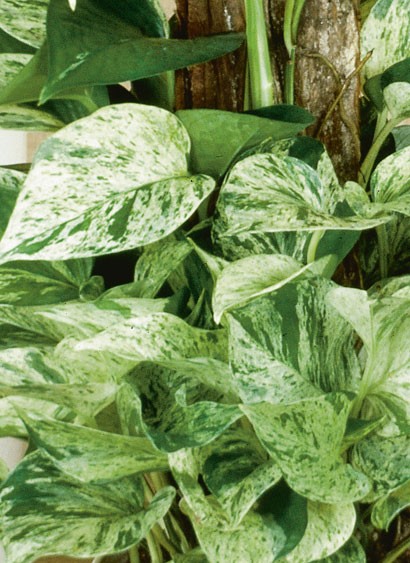
Marble Queen
Epipremnum aureum (Linden & André) G.S.Bunting ‘Marble Queen’
The cultivar epithet is not italicized. In formal horticultural presentation, the species is written in italics and the cultivar follows in single quotation marks: Epipremnum aureum ‘Marble Queen’.
Jean Jules Linden and Édouard André originally published the species as Pothos aureus Linden & André in 1880. George Sydney Bunting transferred it to Epipremnum in 1964, producing the accepted combination Epipremnum aureum (Linden & André) G.S.Bunting.
Important homotypic and historical names for the species include:
- Pothos aureus Linden & André, the basionym
- Scindapsus aureus (Linden & André) Engl.
- Rhaphidophora aurea (Linden & André) Birdsey
Epipremnum mooreense Nadeaud has also appeared in the species’ synonymy. Older horticultural and scientific literature sometimes treated the plant as a form of Epipremnum pinnatum and used combinations such as Epipremnum pinnatum ‘Aureum’ or Epipremnum pinnatum ‘Marble Queen’. The accepted species-level placement is now Epipremnum aureum.
‘Marble Queen’ is a cultivated variegated selection, not a botanical variety, subspecies, or naturally occurring taxon. Research involving tissue culture and cultivar development recognizes ‘Marble Queen’ as a distinct horticultural cultivar and has used it as parental material for additional variegated selections.
Araceae — Arum Family
Marble Queen Pothos; Pothos ‘Marble Queen’; Marble Pothos; Marble Queen Devil’s Ivy; Marble Queen Devil’s Vine; Marble Queen Money Plant; Cream-and-Green Pothos; White-and-Green Pothos; Variegated Pothos; Variegated Devil’s Ivy; Epipremnum aureum ‘Marble Queen’; Epipremnum ‘Marble Queen’
Historical nursery and botanical combinations include Scindapsus aureus ‘Marble Queen’, Pothos aureus ‘Marble Queen’, Rhaphidophora aurea ‘Marble Queen’, and Epipremnum pinnatum ‘Marble Queen’. These names may help identify older labels and publications, but the accepted modern placement is Epipremnum aureum ‘Marble Queen’.
Golden Pothos, Devil’s Ivy, Devil’s Vine, Taro Vine, Ivy Arum, Hunter’s Robe, Ceylon Creeper, Solomon Islands Ivy, and Money Plant are broader common names used for Epipremnum aureum. They are not exclusive to the cream-and-green ‘Marble Queen’ cultivar.
“Snow Queen” is an inconsistent commercial name often applied to unusually pale or heavily white-variegated Marble Queen-type plants. It is not dependable proof of a separately defined cultivar or a different toxin profile. “Satin Pothos” or “Silver Pothos” generally refers to Scindapsus pictus, while Heartleaf Philodendron is Philodendron hederaceum; both are separate aroids that can also cause insoluble-calcium-oxalate irritation.
Exact-Cultivar Evidence and the Principal Toxic Mechanism
The principal confirmed toxic material in Marble Queen Pothos is insoluble calcium oxalate organized into microscopic needle-shaped crystals called raphides. This conclusion is based on established Epipremnum aureum toxicology, direct exact-species ocular evidence, microscopic and clinical research on raphide-bearing Araceae, and the characteristic immediate oral syndrome reported after Pothos ingestion.
No published toxicology study has quantified total raphides, crystal density, crystal dimensions, or soluble and insoluble oxalate separately in ‘Marble Queen’ versus Golden Pothos, ‘Manjula’, ‘N’Joy’, ‘Pearls and Jade’, or other cultivars. The cultivar’s toxicity should therefore be described at the species and mechanism level without inventing a Marble Queen-specific concentration, dose, or severity ranking.
Likewise, no study has demonstrated that a cream-white sector of one Marble Queen leaf is free of raphides or predictably less irritating than its green tissue. Variegation reflects differences in chloroplast development and pigment, not proof that the plant’s defensive crystal system has disappeared from the pale tissue.
Raphides and Insoluble Calcium Oxalate
Raphides are elongated calcium-oxalate crystals stored in bundles within plant cells. Their narrow pointed structure allows them to penetrate moist epithelial surfaces when plant tissue is crushed or chewed. The damaging property is not simply that the crystals contain calcium oxalate, but that the mineral has been formed into sharp microscopic needles capable of producing large numbers of small punctures.
The crystals are insoluble under ordinary physiologic conditions and remain concentrated mainly at the point of exposure. When an animal bites a leaf or vine, raphides can enter the lips, gums, tongue, palate, floor of the mouth, pharynx, and esophagus. Swallowed fragments may continue to irritate the stomach and proximal gastrointestinal tract.
This local penetration explains why signs often begin within seconds or minutes. The toxin does not need to be absorbed, circulated through the bloodstream, metabolized by the liver, or transported to another organ before the characteristic pain and drooling begin.
Idioblasts and Crystal Release
Raphide bundles are stored within specialized plant cells called idioblasts. These cells isolate the crystals from surrounding living tissue and may contain mucilage, proteins, and structural features that help position or release the needles. Cutting, tearing, crushing, or chewing damages the idioblast and exposes its contents.
Some raphide idioblasts function as active ejector structures that propel crystals when mechanically stimulated, while others release them as tissue is compressed and ruptured. The animal’s teeth and tongue then press the exposed crystals directly into sensitive mucosa.
The complete distribution of idioblast types through the leaves, petioles, stems, nodes, aerial roots, subterranean roots, and reproductive tissues of ‘Marble Queen’ has not been mapped quantitatively. Every living portion should remain inaccessible rather than designating an untested structure as safe.
Mechanical Injury and Inflammatory Amplification
The immediate injury is mechanical, but the clinical reaction is not limited to passive puncture wounds. Crystal penetration damages epithelial cells and initiates release of inflammatory mediators, producing redness, pain, edema, salivation, and increased tissue sensitivity. Swelling may continue for a period after loose plant fragments have been removed because the inflammatory response remains active.
Experimental work with raphides from other plants has shown that needle-shaped crystals can intensify the effects of accompanying defensive proteins, including proteases. This provides a credible general explanation for why some raphide-bearing plants cause more inflammation than would be expected from mineral composition alone.
A specific proteinase, protease concentration, or raphide-associated allergen has not been established as a clinically important toxin of Epipremnum aureum ‘Marble Queen’. The broader synergy research should therefore inform mechanism without being presented as direct proof that Marble Queen contains a named secondary enzyme toxin.
Leaves and Variegated Leaf Sectors
Leaves are the most frequent source of pet exposure because they are abundant, accessible, and easily torn. Juvenile houseplant leaves are generally glossy and heart-shaped, with irregular cream, white, pale-green, and dark-green marbling. Every leaf should be treated as poisonous regardless of its degree of variegation.
Highly white leaves contain less functional green tissue and may grow more slowly or deteriorate more readily, but pigment loss does not establish a corresponding loss of calcium-oxalate idioblasts. A reverted green shoot and a very pale shoot both require the same animal-access restrictions.
Stems, Petioles, Nodes, and Aerial Roots
The flexible climbing or trailing structure commonly called a vine is the plant’s stem. Distinct nodes produce leaves, buds, aerial roots, and new shoots. Petioles connect the leaf blades to the stem, while brown or tan aerial roots attach the climbing plant to tree bark, moss poles, walls, planters, and other surfaces.
These structures contain living plant tissue and sap and should not be used as pet toys, cage decorations, browse, or chewing material. Long stems can create more than a toxin exposure: an animal may swallow a fibrous length, become entangled, pull a hanging container down, or ingest potting material and fertilizer with the plant.
Ordinary Roots and Potting Material
Subterranean roots and newly forming roots on propagation cuttings should be treated as irritating plant tissue. Dogs may reach them after overturning a pot, and cats may pull them from a water-propagation container. No exact-cultivar study establishes that roots lack raphides.
Potting soil introduces separate hazards, including fertilizer granules, insecticide, systemic pesticide, mold, bacterial contamination, sharp support material, and swallowed plastic or ceramic fragments. Clinical evaluation should account for the complete knocked-over container rather than attributing every sign automatically to calcium oxalate.
Sap, Skin Contact, and Grooming Exposure
Freshly cut leaves and stems release sap containing suspended plant material and potentially exposed crystals. Sap may cause burning, itching, redness, or dermatitis when it contacts sensitive, damaged, or repeatedly exposed skin. Nursery and propagation workers historically have reported irritant reactions after cutting large quantities of Pothos stems.
Plant residue on a dog’s coat, a cat’s paws, a bird’s feathers, or a reptile’s skin creates continuing exposure. Grooming transfers the material to the mouth, while rubbing can move it into the eyes. External contamination should be removed even when no plant was swallowed initially.
Ocular Toxicity
Eye exposure deserves separate emphasis because direct exact-species evidence demonstrates that Epipremnum aureum sap can cause more than brief conjunctival irritation. A published human case progressed from bilateral epithelial injury to corneal defects, stromal damage, scarring, and eventual corneal transplantation after delayed recognition of the toxic exposure.
The severity of that case does not mean every splash causes permanent injury, but it establishes that Pothos sap should never be dismissed as harmless. Raphides and plant residue may lodge beneath an eyelid, puncture the corneal epithelium, trigger intense inflammation, and mimic infectious keratitis.
Immediate prolonged irrigation is appropriate, followed by veterinary examination when pain, squinting, redness, cloudiness, discharge, eyelid swelling, or inability to open the eye continues. Owners should not attempt to remove microscopic crystals with tweezers, cloth, cotton swabs, or fingernails.
Local Raphide Injury Versus Soluble-Oxalate Poisoning
Insoluble plant raphides are toxicologically different from soluble oxalates that enter the bloodstream, bind circulating calcium, and can deposit in the kidneys. The expected Marble Queen syndrome is dominated by immediate local oral and upper-gastrointestinal injury.
Clinically important hypocalcemia, generalized muscle tremors caused by low calcium, cardiac arrhythmias from systemic oxalate, and acute oxalate nephrosis are not characteristic results of an ordinary Pothos bite. The phrase calcium oxalate should also not be confused with a spontaneous urinary calcium-oxalate stone disorder.
Marked electrolyte abnormalities, reduced urine production, acute kidney failure, seizures, or severe systemic collapse requires investigation for another plant, ethylene glycol, medication, pesticide, metabolic illness, shock, severe dehydration, or mistaken identification. A Pothos plant found nearby does not prove that every abnormality came from raphides.
Fresh, Wilted, Frozen, and Dried Material
Wilting does not dissolve mineral crystals. Fallen leaves, frost-damaged outdoor growth, dried vines, old wreath material, dead propagation cuttings, and pruning debris may continue to irritate the mouth and eyes.
Dry tissue may become brittle and easier to shred into small fragments. Although aging and drying can change sap, moisture, associated proteins, and overall irritancy, no dependable household process converts discarded Pothos into safe forage or enrichment.
Propagation Cuttings and Propagation Water
Cut vines placed in water remain poisonous because the leaf, node, stem, and emerging roots remain living plant tissue. A cat may bat at the cutting, chew a root, overturn the glass, or groom residue from wet paws. Dogs may pull a long cutting and its container onto the floor.
Raphides do not simply dissolve into water like salt or sugar, so clear propagation water should not be described as a concentrated solution of dissolved calcium-oxalate needles. It may nevertheless contain sap, broken tissue, loose plant fragments, fertilizer, algae, bacteria, mold, pesticide residue, or glass-cleaning chemicals. It should not serve as pet drinking water, and exposure assessment should include whatever additives were placed in the container.
Flowers, Fruit, and Mature Growth
Epipremnum aureum is unusually reluctant to flower naturally. Research found deficient gibberellin-related floral signaling and demonstrated that externally applied gibberellic acid could induce flowering. Ordinary household Marble Queen plants therefore almost always expose animals through juvenile leaves and stems rather than through flowers or fruit.
When Pothos climbs in a tropical or greenhouse environment, it undergoes dramatic mature growth. Stems become thicker, leaves become much larger, and blades may develop deep divisions or pinnate splits rather than retaining the familiar small heart-shaped form. Mature material remains the same poisonous species even when it no longer resembles a tabletop houseplant.
Any spathe, spadix, fruiting structure, or seed produced after induced or unusual flowering should remain inaccessible. The rarity of flowering does not establish reproductive tissue as safe.
Toxic-Dose and Severity Limitations
No validated toxic dose exists for Marble Queen Pothos in dogs, cats, horses, cattle, sheep, goats, rabbits, guinea pigs, birds, reptiles, or other animals. No number of leaves, centimeters of vine, body-weight percentage, or volume of sap can be advertised as a dependable threshold.
Severity depends on the tissue, amount chewed, degree of crushing, number of released crystals, animal size, oral sensitivity, swallowing ability, vomiting, eye involvement, and concurrent exposure to soil, fertilizer, pesticides, or foreign material. Immediate pain usually limits intake, but puppies, destructive dogs, plant-chewing cats, and birds that shred foliage may receive repeated exposure before the source is removed.
No specific chemical antidote dissolves crystals already embedded in tissue. Treatment removes loose material, controls pain and vomiting, maintains hydration, assesses the eyes, monitors swallowing and respiration, treats aspiration when present, and protects the airway if swelling becomes clinically important.
Immediate Onset and Expected Progression
Clinical signs usually begin immediately or within minutes after an animal bites, tears, or crushes Marble Queen Pothos. Abrupt onset is a major diagnostic clue because the crystals act directly where the plant contacts moist tissue. An animal may react before it has swallowed a meaningful amount.
Many limited exposures peak quickly. The animal spits out the plant, drools, paws at the mouth, and gradually improves as loose material is removed and inflammation settles. A larger or repeated exposure may progress to tongue and pharyngeal swelling, painful swallowing, vomiting, dehydration, aspiration, or rarely clinically important airway narrowing.
A syndrome that begins only many hours later without earlier mouth pain or salivation is less characteristic. Delayed vomiting may follow swallowed plant material, but a purely delayed neurologic, renal, hepatic, or cardiovascular illness requires broader investigation.
Early Behavioral Signs
Dogs may jerk the head away, shake violently, paw at the muzzle, rub the face on carpet or furniture, cry, whine, gag, or spit out plant pieces. Cats may retreat and hide, lick the lips repeatedly, drool quietly, paw at the face, or stare with the mouth partly open.
Birds may wipe the beak repeatedly, while reptiles may rub the face or repeatedly open the mouth. A painful animal can bite unexpectedly when someone attempts a mouth examination, so breathing and swallowing should be observed before prolonged restraint.
Drooling and Oral Pain
Excessive salivation may range from wet lips to long strings of drool or thick foam. The lips, gums, tongue, palate, and visible oral tissue may become red, tender, and swollen. The animal may hold the mouth open, protrude the tongue, refuse treats, or vocalize when attempting to chew.
Small puncture-like erosions, abrasions, or blood-streaked saliva may follow heavier chewing. Continued mouth pain after the obvious plant fragments are gone may reflect embedded crystals and inflammatory injury rather than a large retained leaf.
Tongue, Throat, and Laryngeal Swelling
The tongue may appear enlarged, reddened, congested, or unusually protruded. Swelling beneath the tongue or around the pharynx may not be fully visible from the front of the mouth. A hoarse bark, altered meow, weak vocalization, repeated gagging, or harsh inspiratory sound may indicate deeper throat involvement.
Severe laryngeal edema is uncommon, but it is the most important immediate life-threatening complication. Warning signs include rapidly increasing swelling, high-pitched or noisy breathing, open-mouth breathing, neck extension, flared nostrils, panic, blue-gray gums, weakness, or collapse.
Difficulty Swallowing
Dysphagia may appear as repeated unsuccessful swallowing, dropping food, extending the neck, refusing water, coughing after drinking, gagging, regurgitation, or allowing saliva to run from the mouth. An animal that cannot swallow its own saliva requires immediate examination.
Forced food or water can enter the lungs when swallowing is painful or poorly coordinated. Coughing after every attempted drink is a warning to stop oral administration and seek veterinary care.
Vomiting and Gastrointestinal Signs
Vomiting may occur when plant fragments and raphides irritate the pharynx, esophagus, or stomach. Vomit may contain recognizable cream-and-green leaf pieces, fibrous stem material, food, foam, bile, or mucus. Repeated episodes can worsen esophageal discomfort and cause dehydration.
Diarrhea and abdominal discomfort are possible after a larger ingestion but are less characteristic than immediate oral signs. Guarding, restlessness, a hunched posture, repeated stretching, or reluctance to lie down may indicate gastrointestinal pain.
Long stem segments or a large wad of leaves may also act as foreign material. Persistent vomiting, repeated unproductive retching, progressive abdominal enlargement, reduced stool, or continuing pain after oral signs improve requires assessment for obstruction or another swallowed object.
Aspiration and Delayed Respiratory Disease
Aspiration may occur when vomit, saliva, water, charcoal, or plant material enters the airway. Immediate coughing or choking may be obvious, but aspiration pneumonia can become apparent later.
Coughing, nasal discharge, fever, rapid breathing, increased respiratory effort, abnormal lung sounds, or renewed lethargy after apparent improvement requires veterinary reassessment. Aspiration may prolong recovery well beyond the short course expected from uncomplicated oral raphide irritation.
Dogs
Dogs commonly show dramatic head shaking, mouth pawing, gagging, drooling, vomiting, and refusal to eat or drink. Puppies and destructive chewers may pull down hanging baskets, shred several vines, swallow potting material, or break a container before the painful reaction stops them.
A dog that carries or plays with a long vine may repeatedly expose the lips and tongue without consuming much tissue. Even so, the maximum missing amount and possibility of swallowed stem material should be recorded.
Cats
Cats may bite dangling vines, chew leaf tips, pull aerial roots, climb into a planter, or investigate propagation glasses. They may drool quietly, hide, repeatedly swallow, paw at the mouth, vomit, stop grooming, or refuse food.
Sap and plant fragments on the paws or coat may be swallowed during grooming and may also reach the eyes. Open-mouth breathing in a cat is an emergency rather than an ordinary expression of mouth discomfort.
Continued refusal to eat matters even after drooling improves. Persistent oral or esophageal pain can prevent intake, and prolonged inadequate nutrition can create serious secondary metabolic complications in cats.
Horses and Livestock
Large-animal exposure is uncommon because Marble Queen is primarily an indoor ornamental, but discarded greenhouse plants, office displays, landscaping vines, and household pruning waste may be thrown into paddocks or pens. Horses, cattle, sheep, and goats may develop salivation, feed refusal, repeated swallowing, tongue swelling, coughing, diarrhea, or respiratory noise.
Horses cannot vomit. Ruminants may regurgitate, especially when distressed or drenched, and poorly swallowing animals are vulnerable to aspiration. The complete group should be removed from contaminated clippings because individual animals may have consumed different amounts.
Rabbits and Guinea Pigs
Small herbivores may drool, grind the teeth, refuse food, sit hunched, develop abdominal discomfort, or produce fewer feces. They cannot vomit, and even limited oral injury may trigger a dangerous interruption of eating and gastrointestinal motility.
Marble Queen should never be offered as forage, browse, bedding, nesting material, or chewing enrichment. Reduced fecal output or refusal of all food requires prompt species-experienced veterinary care.
Birds
Pet birds may shred the leaves and stems rather than swallowing a single intact piece. Possible signs include beak wiping, repeated mouth opening, regurgitation, food refusal, eye irritation, abnormal vocalization, or respiratory distress.
The beak, tongue, oral cavity, eyes, feet, and feathers may all become contaminated. A small bird can receive a substantial exposure relative to body size from a small strip of plant tissue.
Reptiles and Tortoises
Herbivorous reptiles and tortoises may show repeated mouth opening, excess oral mucus, face rubbing, food refusal, regurgitation, abnormal breathing, or reduced activity. Confirmed species-specific clinical data are limited, so mammalian dose and recovery assumptions should not be applied mechanically.
Pothos should not be planted where a reptile can graze on it or where broken leaves can fall into an enclosure. A plant used outside the enclosure with roots extending into water or substrate must also remain inaccessible.
Skin Exposure
Fresh sap and crushed plant material can cause localized itching, burning, redness, or dermatitis. Irritation may be more pronounced on damaged skin or after repeated occupational exposure.
Material trapped beneath a collar, harness, bandage, dense coat, feathers, or enclosure equipment prolongs contact. Contaminated fur or skin should be washed before the animal grooms it.
Eye Exposure
Eye contact can cause immediate tearing, blinking, squinting, redness, eyelid swelling, light sensitivity, and persistent rubbing. More serious injury may include corneal epithelial defects, stromal inflammation, cloudiness, ulceration, and scarring.
Direct human evidence demonstrates that delayed recognition of *Epipremnum aureum* sap exposure can result in prolonged severe keratopathy. An animal that continues squinting or cannot open the eye after irrigation requires examination rather than continued home observation.
Findings That Do Not Fit an Uncomplicated Exposure
Convulsions, coma, profound hypocalcemia, primary acute kidney failure, severe cardiac dysrhythmia, progressive paralysis, jaundice, or permanent liver damage is not characteristic of ordinary insoluble-raphide exposure. Those findings may reflect another toxin, severe hypoxia, aspiration, shock, medication exposure, pesticide, ethylene glycol, or an incorrectly identified plant.
Marked generalized weakness without respiratory compromise or dehydration also deserves a broader evaluation. The presence of Pothos in the home should not terminate diagnostic investigation when the syndrome does not match local oral injury.
Duration and Prognosis
Most limited exposures improve substantially within several hours. Mild mouth tenderness, reluctance to chew hard food, or reduced appetite may continue into the following day, but breathing and swallowing should remain normal and swelling should decrease rather than progress.
Persistent drooling, painful swallowing, repeated vomiting, coughing, blood, eye pain, food refusal, or symptoms lasting several days suggests deeper mucosal injury, retained plant material, aspiration, corneal damage, dehydration, or another diagnosis. Recurrent illness over two weeks is not the expected course of uncomplicated Pothos exposure.
The prognosis is good to excellent for most limited oral exposures. It becomes more serious with progressive laryngeal swelling, aspiration, corneal injury, significant dehydration, obstruction, delayed treatment, or incorrect plant identification.
Plant Identity and Accepted Classification
Marble Queen is a cultivated variegated form of Epipremnum aureum, an evergreen climbing aroid in the tribe Monstereae. Its accepted scientific presentation is Epipremnum aureum (Linden & André) G.S.Bunting ‘Marble Queen’. The cultivar is not a separate species and does not possess its own natural geographic range.
The species was originally described as Pothos aureus, later placed in Scindapsus and Rhaphidophora, and at times treated as a cultivated form of Epipremnum pinnatum. Those older names remain common on labels and in plant collections, but current taxonomy accepts E. aureum as a distinct species.
“Pothos” creates additional confusion because Pothos is also the scientific name of a separate aroid genus. The common houseplant called Pothos is not currently classified in that genus.
‘Marble Queen’ as a Recognized Cultivar
‘Marble Queen’ has been maintained horticulturally for decades and is recognized in scientific plant-propagation and cultivar-development research. Its leaf and petiole tissues have been used in direct somatic embryogenesis, and regenerated variants have been evaluated for differences in growth and variegation.
Recent cultivar-development programs have also used ‘Marble Queen’ as parental material for new Pothos selections. This provides stronger documentation than a temporary retail trade name, although commercial plants may still be mislabeled or confused with pale forms of related cultivars.
The plant’s characteristic appearance consists of irregular cream, white, pale-green, gray-green, and dark-green marbling distributed across glossy juvenile leaves. The precise balance changes among leaves and may also change when a shoot reverts toward greener growth.
Native Range and Global Cultivation
The wild species is native to Mo‘orea in the Society Islands of French Polynesia. ‘Marble Queen’ itself is a cultivated selection and should not be described as a wild Mo‘orean population.
Epipremnum aureum has been transported widely as an ornamental and has naturalized in numerous tropical and subtropical regions. In favorable climates it can escape gardens, spread across the ground, climb trees, form dense growth, and produce adult leaves dramatically larger than those of a household plant.
Outdoor animal exposure is most likely in warm regions where Pothos is used as groundcover, planted on trees or walls, discarded along woodland margins, or allowed to escape cultivation. Indoor exposure remains far more common in temperate areas.
Juvenile Growth
The familiar houseplant form is juvenile. It produces flexible trailing or climbing stems, relatively small glossy heart-shaped leaves, distinct nodes, and aerial roots. Plants hanging from baskets may extend several feet below the container even when the pot itself is inaccessible.
Juvenile shoots often remain smaller when allowed to trail downward. Giving the vine a vertical support can trigger progressively larger leaves and thicker stems as it climbs.
Adult Growth and Leaf Transformation
Mature climbing growth may look so different that it is mistaken for another species. Leaves can become very large and develop deep marginal divisions or pinnate splitting rather than remaining entire and heart-shaped. Stems become thicker, and aerial roots attach firmly to trees and masonry.
Adult morphology does not alter the poisoning category. Large mature leaves, thick stems, roots, and sap remain potentially irritating. Outdoor animals may receive a greater absolute exposure because one mature leaf contains far more tissue than a juvenile houseplant leaf.
Unusual Flowering Biology
Epipremnum aureum is unusually shy-flowering. Research found low or undetectable levels of important bioactive gibberellins and absent expression of key floral genes in ordinary juvenile and adult growth. Exogenous gibberellic acid induced flowering experimentally.
This helps explain why most owners never see a Pothos flower despite keeping the plant for many years. Lack of flowers is normal and does not mean the plant is sterile, artificial, or botanically misidentified.
When flowering occurs, the plant produces the aroid structure of a spadix surrounded by a spathe. Flowers and any later reproductive tissue should receive the same access restrictions as leaves and vines.
Variegation and the White Leaf Sectors
Variegation results from differences in chlorophyll development and chloroplast function among sectors of a leaf. Pale tissue performs less photosynthesis and depends partly on nearby green tissue for carbohydrates. Extremely white shoots may grow slowly or decline because they cannot support themselves efficiently.
No published toxicology study has measured raphide density separately in the green, pale-green, cream, and white sectors of Marble Queen leaves. It is therefore inaccurate to claim either that the white areas are safe because they lack chlorophyll or that they are necessarily more toxic because they appear damaged.
The practical rule is simple: every sector remains part of the same poisonous leaf and should be kept away from animals.
Leaves, Petioles, Stems, and Nodes
The juvenile leaf blade is usually ovate to heart-shaped, glossy, and asymmetrical around the base. A petiole joins each leaf to the flexible stem. Nodes are visible intervals where leaves, buds, and aerial roots emerge.
Long bare sections may remain after leaves fall, but the stem does not become safe. Cats may chew exposed nodes, and dogs may treat a leafless vine as string or a toy. Swallowing a long fibrous piece introduces potential foreign-body complications in addition to raphide irritation.
Aerial Roots and Ordinary Roots
Aerial roots emerge from the nodes and help the vine climb. They may remain as small brown projections or lengthen into a moss pole, bark, soil, water, wall covering, or another moist surface.
Ordinary roots grow within soil or propagation water and absorb moisture and nutrients. Both root types are living parts of the plant, and neither has been established as toxin-free. Roots removed from a propagation jar should not be given to animals to play with.
Where Dogs and Cats Encounter Marble Queen
Common exposure sites include hanging baskets, bookshelves, tabletop pots, floor planters, office displays, reception areas, hotels, shopping centers, planted walls, greenhouses, classrooms, veterinary waiting areas, and propagation stations. Vines may hang into reach even when the main pot appears safely elevated.
Dogs may pull a vine and bring the entire container down. Cats may jump to the shelf, climb a support pole, bite the moving leaf tips, or knock a propagation glass onto the floor. Fallen leaves can land on bedding, furniture, countertops, cages, or drinking bowls.
High placement alone is therefore unreliable. A physically inaccessible room, enclosed cabinet, secure plant case, or pet-free plant area provides more dependable prevention than a long reachable vine suspended from the ceiling.
Propagation Cuttings
Marble Queen is commonly propagated from a stem section containing at least one node. Cuttings may be rooted in water, moss, perlite, soil, or another growing medium. They remain poisonous throughout the process.
Water propagation creates several access points: a cat may chew the new roots, a dog may pull out the cutting, and either animal may drink spilled water or contact fertilizer and microbial growth. Use a stable covered container in a location that animals cannot reach.
Clear water is not proof that no contamination is present. Loose tissue, sap, fertilizer, algae, bacteria, mold, and cleaning products may be present even when no visible leaf fragments remain.
Marble Queen Versus Golden Pothos
Golden Pothos is the same species and usually has yellow or golden variegation on green leaves. Marble Queen tends to have denser cream-white and green marbling, slower growth, and a paler overall appearance.
The cultivar distinction helps identify the plant but does not change first-aid priorities. Both produce the characteristic insoluble-calcium-oxalate syndrome, and no dependable cultivar-specific toxic-dose comparison exists.
Marble Queen Versus ‘Manjula’
‘Manjula’ is another cultivar of Epipremnum aureum. Its leaves are frequently broader, rounder, and more undulating, with cream-colored centers or broad pale fields edged and splashed with green.
Marble Queen usually displays finer marbling distributed more evenly throughout the blade. Retail labels and growing conditions can blur the distinction, but both plants require identical raphide precautions.
Marble Queen, “Snow Queen,” and Reverted Growth
“Snow Queen” is used commercially for extremely pale Pothos, often representing a highly variegated Marble Queen-type selection rather than a consistently documented independent cultivar. The name is applied inconsistently among nurseries and collectors.
Marble Queen shoots may also revert toward greener leaves, particularly when green tissue grows more vigorously than pale tissue. A green reversion does not become nontoxic, and a nearly white shoot does not become pet-safe.
Marble Queen Versus Satin Pothos
Satin Pothos is generally Scindapsus pictus, a separate species with velvety or matte green leaves marked by silvery spots or patches. It lacks the glossy cream-and-green marbling typical of Marble Queen.
Both belong to Araceae and can cause calcium-oxalate-related oral injury. Uncertainty between them does not change the immediate need to assess pain, swelling, swallowing, and breathing.
Marble Queen Versus Heartleaf Philodendron
Heartleaf Philodendron is Philodendron hederaceum. Its leaves are usually thinner and more evenly heart-shaped, and emerging leaves are protected by papery structures called cataphylls. Pothos petioles and growth points differ when examined closely.
Both plants trail or climb and both contain irritating calcium-oxalate crystals. The mistaken use of “Philodendron” as a general label for Pothos does not make the exposure less important.
Marble Queen Versus Other Variegated Pothos Cultivars
‘N’Joy’ generally has smaller leaves with sharper blocks of white and green. ‘Pearls and Jade’ often combines white margins with green and gray-green speckling. ‘Jessenia’ has chartreuse or yellow-green marbling, while ‘Neon’ is predominantly bright chartreuse.
Trade names continue to expand, and some plants are sold under unstable commercial labels. Identification should use the full plant and reputable cultivar documentation rather than one social-media photograph. Every authentic *E. aureum* cultivar remains subject to the same basic poisoning precautions.
Horses and Livestock
Marble Queen is not a normal pasture plant. Large-animal exposure generally results from people discarding household or greenhouse plants into an enclosure, transporting tropical landscaping waste, or allowing livestock access to a conservatory or nursery.
Do not assume that cattle, sheep, goats, or horses can safely process the crystals because they are larger animals. Oral pain, salivation, feed refusal, tongue swelling, coughing, and aspiration remain possible. Cut ornamental plants should never be used as livestock browse.
Rabbits, Guinea Pigs, Birds, and Reptiles
Marble Queen should not be used as forage, bedding, nesting material, chew enrichment, a bird perch, terrarium foliage, or tortoise food. Small body size and species-specific feeding behavior can turn a small cutting into a meaningful exposure.
Even when direct systemic poisoning remains unlikely, secondary food refusal is clinically important. Rabbits and guinea pigs can develop gastrointestinal stasis, birds can stop eating rapidly, and reptiles may have prolonged appetite interruption.
Skin and Coat Contamination
Fresh sap may cause localized skin irritation, especially after repeated contact or when the skin is damaged. Remove visible debris without crushing it farther, wash with lukewarm water and a mild pet-safe shampoo, and prevent grooming until the coat is clean.
Persistent redness, swelling, pain, blistering, open lesions, or facial involvement requires veterinary examination. Fertilizer, pesticide, and cleaning-product contamination must also be considered when a treated houseplant caused the exposure.
Eye Exposure
Begin irrigation immediately with sterile saline or clean lukewarm water. A sustained gentle flow is preferable to a brief splash because crystals and sap may remain beneath the eyelids and across the ocular surface.
Persistent squinting, redness, discharge, cloudiness, eyelid swelling, light sensitivity, or inability to open the eye requires examination for corneal epithelial injury or retained material. Severe exact-species human ocular injury demonstrates that delayed treatment can have lasting consequences.
Diagnosis
Diagnosis is usually based on immediate oral pain after access to an identifiable Pothos or another raphide-bearing aroid. Preserve a complete leaf and stem section, nursery label, propagation cutting, photographs, vomited fragments, and any chemical labels associated with the pot.
The veterinarian evaluates the lips, tongue, floor of the mouth, palate, pharynx, larynx, swallowing ability, breathing, hydration, eyes, skin, and abdomen. Sedated oral examination, laryngoscopy, imaging, or endoscopy may be needed when deeper swelling, a retained stem, aspiration, or obstruction is suspected.
No routine blood test confirms a simple raphide exposure. Laboratory testing is directed toward dehydration, electrolyte disturbance, kidney abnormalities, aspiration, hypoxia, shock, or another toxin when the clinical pattern is atypical.
Differential Diagnosis
Similar immediate oral signs can follow exposure to Philodendron, Monstera, Dieffenbachia, Caladium, Alocasia, Colocasia, Xanthosoma, Syngonium, Peace Lily, Calla Lily, Anthurium, Aglaonema, and Jack-in-the-Pulpit. These plants share a raphide mechanism but differ botanically and sometimes in the severity of associated inflammation.
Caustic cleaners, electrical burns, thermal burns, caterpillar hairs, insect stings, hooks, bones, sticks, dental disease, oral tumors, and foreign bodies may produce overlapping pain and drooling. Severe systemic findings require consideration of a different toxin or disease.
Prognosis
The prognosis is good to excellent after most limited oral exposures because immediate pain discourages continued chewing. Improvement should include declining drooling and swelling, comfortable breathing, safe swallowing, renewed drinking and eating, and return to ordinary behavior.
Progressive laryngeal edema, aspiration, severe corneal injury, retained plant material, gastrointestinal obstruction, repeated vomiting, dehydration, or delayed treatment creates a more serious outlook.
Prevention
Keep Marble Queen in a physically inaccessible pet-free room or enclosed plant area rather than relying only on a high shelf. Secure trailing stems before they grow into reach and inspect the floor, furniture, cages, and bedding for fallen leaves.
Keep propagation jars, cuttings, pruning waste, roots, support poles, fertilizers, pesticides, and discarded plants inaccessible. Never place Pothos in an aquarium, terrarium, aviary, rabbit enclosure, paddock, or livestock pen where an animal can chew it.
Immediate Response
- Stop further exposure: Move the animal away from the plant, fallen leaves, vines, nodes, aerial roots, propagation cuttings, sap, potting material, or discarded debris.
- Preserve the plant: Save a complete leaf and stem section, nursery label, propagation container, photographs, and representative material recovered from vomit.
- Estimate the maximum amount: Determine the greatest number of bites, leaves, stem sections, roots, or cuttings that could be missing.
- Record the time: Note when exposure occurred and when drooling, mouth pawing, gagging, vomiting, swelling, coughing, or difficulty swallowing began.
- Identify mixed hazards: Record potting soil, fertilizer, pesticide, systemic insecticide, mold, broken glass, ceramic fragments, support stakes, and other substances involved.
- Contact a professional: Obtain veterinary or animal poison-control guidance when more than a brief nibble occurred, the amount is uncertain, a long stem was swallowed, eye contact occurred, or any signs persist.
The painful response often limits ingestion, but the amount visible in the mouth may not represent everything swallowed. Continue monitoring breathing, swallowing, vomiting, and awareness while collecting identification information.
Assess the Airway First
- Check breathing: Noisy, high-pitched, rapid, labored, gasping, open-mouth, or weak breathing requires immediate emergency transportation.
- Check tongue and throat swelling: Rapid enlargement of the tongue, lips, floor of the mouth, jaw, or throat may restrict airflow.
- Check swallowing: Inability to swallow saliva, continuous choking, neck extension, or coughing whenever water is offered requires emergency care.
- Check gum color: Pale, gray, or blue-tinged gums can indicate inadequate circulation or oxygenation.
- Check responsiveness: Weakness, collapse, confusion, or reduced responsiveness is not expected after a simple mild nibble and requires urgent evaluation.
- Prioritize stabilization: Airway, breathing, circulation, and safe transport take priority over mouth rinsing or gastrointestinal treatment.
Severe airway obstruction is uncommon but cannot be managed with an oral home remedy. Do not delay transportation while waiting for milk, an antihistamine, or another product to reduce swelling.
Remove Loose Plant Material
- Wear gloves: Sap and crystals may irritate human skin and eyes, and a painful animal may bite unexpectedly.
- Remove visible pieces: Carefully take loose leaf, stem, and root fragments from the lips and front of the mouth when this can be done safely.
- Avoid blind sweeps: Do not reach deeply into the throat or push plant material toward the airway or esophagus.
- Wipe accessible residue: Use a wet cloth to remove loose sap and plant debris from the lips and front of the mouth in a fully alert animal.
- Rinse only when safe: A gentle low-pressure rinse may be considered only when the animal is conscious, breathing normally, swallowing normally, and able to protect the airway.
- Stop if coughing or gagging occurs: Difficulty handling a rinse means further oral decontamination is unsafe without veterinary assessment.
Home cleaning cannot extract every microscopic crystal already embedded in tissue. High-pressure spraying can force liquid and debris backward, while prolonged restraint increases stress and bite risk.
Do Not Induce Vomiting
- Do not give hydrogen peroxide: Vomiting can drag sharp plant fragments across already injured tissue and increase aspiration risk.
- Never give peroxide to a cat: Hydrogen peroxide can cause serious feline stomach and esophageal injury.
- Do not use salt or household emetics: Salt, mustard, ipecac, dish soap, oil, syrup, manual gagging, and fingers in the throat are unsafe.
- Do not induce vomiting after any signs begin: Drooling, gagging, swelling, coughing, vomiting, weakness, abnormal breathing, or poor swallowing makes emesis especially dangerous.
- Do not induce vomiting in horses, rabbits, guinea pigs, birds, reptiles, or symptomatic livestock: These animals either cannot vomit normally or face unacceptable procedural risk.
- Do not assume vomiting is needed: The toxin causes primarily local mechanical injury rather than requiring routine gastric emptying.
Activated Charcoal
- Do not give charcoal routinely: Activated charcoal has little value for insoluble crystals that injure tissue mechanically.
- Use only under veterinary direction: A veterinarian may consider it when another absorbable toxin, pesticide, medication, or mixed exposure is suspected.
- Never force charcoal: Do not administer it to a drooling, vomiting, swollen, coughing, weak, sedated, neurologically abnormal, or poorly swallowing animal.
- Protect the airway: Charcoal aspiration can cause severe and potentially fatal lung injury.
- Do not use household charcoal: Barbecue briquettes, fireplace ash, burned food, and homemade carbon are not veterinary activated charcoal.
- Do not add a cathartic: Sorbitol and other laxatives can worsen diarrhea, dehydration, and electrolyte disturbances.
Do Not Give Household Remedies or Owner-Selected Medication
- Do not force milk or dairy: Milk, yogurt, cheese, cream, and ice cream do not remove embedded crystals and may be aspirated.
- Do not give oil: Cooking oil, coconut oil, and mineral oil do not dissolve raphides and may enter the lungs.
- Do not give bread or bulky food: Food does not pull crystals from tissue and may be painful or unsafe to swallow.
- Do not give acids or alkalis: Vinegar, lemon juice, baking soda, and improvised neutralizing mixtures can worsen irritation.
- Do not give antacids: Human antacids do not remove raphides and may contain inappropriate ingredients.
- Do not give anti-diarrheal medication: Loperamide, bismuth products, and kaolin mixtures should not be owner-selected.
- Do not give sucralfate: Sucralfate is a prescription medication whose indication and administration must be determined by a veterinarian.
- Do not give human pain medication: Ibuprofen, naproxen, acetaminophen, aspirin, and similar drugs can cause additional poisoning.
- Do not give leftover veterinary drugs: Antiemetics, pain medication, steroids, and gastrointestinal products must be selected for the current patient.
Do Not Give Antihistamines Automatically
- Do not give diphenhydramine without direction: It does not remove crystals and may cause sedation that complicates monitoring of swallowing and breathing.
- Do not treat all swelling as allergy: Direct crystal puncture and inflammatory edema occur without an IgE-mediated allergic reaction.
- Do not delay airway treatment: An antihistamine cannot be relied upon to reverse severe tongue, pharyngeal, or laryngeal swelling.
- Avoid combination products: Human allergy, cold, sleep, and sinus products may contain decongestants, acetaminophen, alcohol, caffeine, or xylitol.
- Allow veterinary selection: A veterinarian may use an antihistamine, corticosteroid, or another anti-inflammatory drug when the actual examination supports it.
Inflammation from mechanical penetration is not synonymous with allergy. Airway status and the location of swelling determine treatment more reliably than the assumption that every swollen mouth needs Benadryl.
Food and Water
- Do not force food: Chewing and swallowing may worsen pain, and an animal with swelling or dysphagia can aspirate.
- Offer water cautiously: Small amounts of cool water may remain available only when the animal is fully alert, breathing normally, swallowing normally, and not vomiting.
- Do not force fluids: Syringed, poured, or drenched water can enter the lungs.
- Remove hard food: Dry kibble, bones, chews, and abrasive treats may worsen injured oral tissue.
- Prevent rapid drinking: Gulping a large volume after gagging or vomiting may trigger further vomiting or aspiration.
- Follow veterinary feeding instructions: Soft food may be reintroduced after swallowing is comfortable and airway concerns have resolved.
Recognize an Airway Emergency
- Listen for noise: Whistling, high-pitched inspiration, harsh breathing, or repeated choking may indicate upper-airway narrowing.
- Watch body position: Neck extension, elbows held away from the chest, flared nostrils, or refusal to lie down can indicate respiratory distress.
- Watch the tongue: A rapidly swelling, darkening, or abnormally protruding tongue requires immediate care.
- Watch saliva handling: Inability to swallow saliva indicates significant pharyngeal dysfunction.
- Watch mental status: Panic followed by weakness, confusion, collapse, or reduced responsiveness may indicate inadequate oxygen.
- Transport immediately: Do not wait at home to determine whether substantial throat swelling will resolve.
Vomiting and Gastrointestinal Signs
- Track every episode: Record vomiting, retching, diarrhea, and the presence of leaves, cream-white tissue, fibrous stems, potting soil, blood, or foreign material.
- Save representative fragments: Place plant pieces and suspicious material recovered from vomit in a sealed disposable container.
- Watch for dehydration: Tacky gums, reduced urination, worsening weakness, sunken eyes, or inability to retain water requires care.
- Watch for aspiration: Coughing, fever, nasal discharge, rapid breathing, or renewed lethargy after vomiting may indicate material entered the lungs.
- Watch for obstruction: Persistent vomiting, repeated unproductive retching, abdominal enlargement, pain, or reduced stool may indicate a swallowed plant mass or foreign object.
- Report continued dysphagia: Gagging, regurgitation, blood-streaked saliva, or refusal to drink may indicate pharyngeal or esophageal injury.
Skin and Coat Exposure
- Wear gloves: Avoid transferring sap and crystals to your own eyes and mouth.
- Remove visible debris: Pick plant fragments from the coat without crushing them further.
- Wash the animal: Rinse affected fur and skin thoroughly with lukewarm water and mild pet-safe shampoo.
- Prevent grooming: Stop the animal from licking contaminated fur until the sap and debris have been removed.
- Clean contaminated equipment: Wash collars, harnesses, bedding, carriers, tools, and nearby surfaces.
- Seek care for persistent injury: Continued redness, pain, swelling, blistering, or open lesions requires examination.
Do not use bleach, alcohol, solvents, essential oils, concentrated detergent, or human dermatitis medication on the animal. Fertilizer or pesticide exposure may require additional decontamination instructions.
Eye Exposure
- Begin irrigation immediately: Flush the affected eye with sterile saline or clean lukewarm water for at least fifteen to twenty minutes.
- Flush beneath the eyelids: Allow fluid to reach the inner and outer corners without scraping the ocular surface.
- Prevent rubbing: Stop the animal from scratching the eye or rubbing against furniture, carpet, or the ground.
- Do not use tools: Tweezers, cotton swabs, cloth, and fingernails can worsen corneal injury.
- Do not apply human eye medication: Redness drops, anesthetic drops, ointments, and leftover prescriptions may worsen or obscure injury.
- Obtain prompt examination: Continued squinting, redness, cloudiness, discharge, swelling, light sensitivity, or inability to open the eye requires veterinary care.
Irrigation removes loose material but does not rule out a corneal abrasion, embedded crystal, ulcer, or deeper inflammatory injury. Exact-species evidence supports taking persistent Pothos eye exposure seriously.
Propagation-Water Exposure
- Remove access: Prevent additional drinking or contact with the cutting, roots, and spilled water.
- Preserve the container contents: Record any fertilizer, rooting hormone, pesticide, algaecide, cleaner, or other additive used.
- Do not assume the water contains dissolved needles: Raphides are insoluble, but broken tissue and sap may be suspended in the water.
- Watch for mixed-exposure signs: Vomiting, weakness, tremors, abnormal behavior, or systemic illness may reflect an additive rather than the Pothos alone.
- Report swallowed glass or plastic: A broken propagation container creates a foreign-body emergency independent of plant toxicity.
Safe Transportation
- Keep the animal calm: Excitement increases oxygen demand and can worsen respiratory distress.
- Allow an airway-friendly position: Let the animal sit, stand, or lie in the posture that permits the easiest breathing.
- Do not compress the neck: Remove a tight collar and use a harness, carrier, stretcher, or other support when practical.
- Do not muzzle: A muzzle may interfere with open-mouth breathing, vomiting, and drainage of saliva.
- Prevent falls: Support weak animals and keep them away from stairs, traffic, water, and slippery surfaces.
- Call ahead: Tell the clinic that Pothos raphide exposure with possible oral, airway, ocular, or aspiration injury is suspected.
Veterinary Examination
- Inspect the mouth: The veterinarian may assess the lips, gums, tongue, floor of the mouth, palate, pharynx, and visible plant fragments.
- Assess the larynx: Sedated examination, laryngoscopy, or endoscopy may be necessary when breathing noise, voice change, or inability to swallow suggests deeper swelling.
- Monitor oxygenation: Respiratory rate, effort, pulse oximetry, blood gases, and lung sounds help identify obstruction or aspiration.
- Assess hydration: Repeated vomiting and poor intake may require electrolyte, circulation, and fluid-loss evaluation.
- Examine the eyes: Fluorescein staining, eyelid eversion, magnification, and pressure assessment may be required after sap exposure.
- Consider imaging: Neck, chest, or abdominal imaging may be used when retained material, aspiration, esophageal injury, or obstruction is suspected.
- Investigate atypical signs: Kidney failure, seizures, profound weakness, marked hypocalcemia, or dysrhythmia requires testing for another cause.
Veterinary Treatment
Veterinarian-selected analgesia may be needed because oral and pharyngeal crystal injury can be intensely painful. Anti-nausea medication may reduce vomiting, discomfort, fluid loss, and aspiration risk. Subcutaneous or intravenous fluids may be used when poor intake, vomiting, or diarrhea produces clinically important dehydration.
Clinically significant inflammation may be treated with veterinarian-selected anti-inflammatory medication according to its location, severity, airway involvement, and the patient’s medical history. Antihistamines and corticosteroids are not universal antidotes, and neither removes crystals from tissue.
Oxygen, suctioning, sedation, endotracheal intubation, ventilation, or another airway procedure may be required when tongue or laryngeal swelling interferes with airflow. Retained plant material may need removal under direct visualization.
Persistent vomiting, regurgitation, hematemesis, or swallowing pain may justify esophageal or gastrointestinal treatment selected by the veterinarian. Aspiration may require oxygen, chest imaging, airway management, and additional therapy. A swallowed stem mass or foreign material may require endoscopic or surgical removal.
Ocular treatment depends on the examination and may include repeated irrigation, pain control, corneal protection, anti-inflammatory treatment after infection and ulcer depth are assessed, and close rechecks. Serious corneal injury should not be managed with leftover human or veterinary eye drops.
Horses and Livestock
- Remove the source: Prevent access to discarded household plants, greenhouse debris, landscaping vines, pots, and contaminated forage.
- Do not attempt vomiting: Horses and ruminants should never receive household emetics.
- Do not drench symptomatic animals: Salivating, coughing, regurgitating, swollen, weak, or poorly swallowing animals can aspirate water, oil, charcoal, or medication.
- Check the entire group: Other animals may have consumed the same clippings and should be examined for salivation, feed refusal, swelling, or respiratory changes.
- Retain samples: Preserve complete plants, pots, chemical labels, forage, and photographs of the disposal or exposure location.
- Obtain large-animal veterinary care: Airway assessment, pain control, fluids, respiratory monitoring, and treatment of gastrointestinal complications may be required.
Rabbits, Guinea Pigs, Birds, and Reptiles
- Do not induce vomiting: Household emesis is inappropriate and dangerous in these species.
- Monitor appetite immediately: Oral pain and food refusal can create serious secondary gastrointestinal or metabolic problems.
- Monitor feces or droppings: Reduced output, diarrhea, abnormal droppings, or complete cessation requires species-specific advice.
- Watch the mouth and airway: Beak wiping, repeated mouth opening, excess mucus, regurgitation, or respiratory change requires prompt assessment.
- Remove contaminated habitat material: Replace bedding, substrate, perches, dishes, and enclosure items carrying plant fragments or sap.
- Use a species-experienced veterinarian: Restraint, fluids, pain control, thermal support, and nutritional management differ substantially among these animals.
Monitoring and Recovery
- Monitor breathing: Swelling should not increase, and breathing should remain quiet and effortless.
- Monitor swallowing: The animal should be able to swallow saliva and small amounts of water without coughing, gagging, or regurgitating.
- Monitor swelling: Tongue, lip, jaw, and throat enlargement should decrease rather than progress.
- Monitor eating: Continued refusal may indicate persistent oral, pharyngeal, or esophageal pain.
- Monitor vomiting and hydration: Repeated vomiting, inability to retain water, reduced urination, or worsening weakness requires reassessment.
- Watch for aspiration: Coughing, fever, nasal discharge, rapid breathing, or renewed lethargy may appear after the original oral signs improve.
- Monitor the eyes: Squinting, rubbing, redness, cloudiness, or discharge should not persist after irrigation.
Recovery means that the animal breathes comfortably, swallows normally, maintains water, resumes appropriate eating, urinates and defecates normally, shows no delayed cough, and returns to ordinary behavior. Persistent or recurrent signs should not be attributed indefinitely to a simple Pothos nibble.
Prevention and Prognosis
- Use physical separation: Keep Marble Queen in a pet-free room or enclosed plant area rather than relying solely on height.
- Secure trailing stems: Prevent leaves, nodes, and aerial roots from hanging within reach.
- Secure propagation cuttings: Keep water-filled containers, cut stems, loose roots, and rooting products inaccessible.
- Remove fallen material: Pick up leaves, cuttings, and broken stems promptly.
- Secure chemicals and containers: Keep fertilizers, pesticides, rooting hormones, glass vessels, and potting materials away from animals.
- Typical prognosis: Most limited oral exposures have a good-to-excellent prognosis and improve substantially within hours.
- Guarded circumstances: Progressive airway swelling, aspiration, severe ocular injury, obstruction, major dehydration, or delayed treatment creates a more serious outlook.
Frequently Asked Questions About Marble Queen Pothos and Animal Poisoning
Is Marble Queen Pothos poisonous to dogs and cats?
Yes. Marble Queen contains insoluble calcium-oxalate raphides that can produce immediate burning, mouth pawing, drooling, gagging, vomiting, swelling, and difficulty swallowing. Most limited exposures remain local and improve within several hours because the painful reaction causes the animal to stop chewing. Progressive tongue or throat swelling, inability to swallow saliva, repeated vomiting, noisy breathing, blue-gray gums, or collapse requires immediate care.
Is ‘Marble Queen’ a different species from Golden Pothos?
No. Marble Queen and Golden Pothos are cultivated forms of Epipremnum aureum. Golden Pothos generally has yellow or gold variegation, while Marble Queen has heavier cream-white, pale-green, and dark-green marbling. Their appearance and growth rate differ, but both share the same raphide-based poisoning mechanism. No validated study establishes a clinically meaningful difference in pet toxicity between the two cultivars.
Are the white parts of a Marble Queen leaf less poisonous?
No study has quantified raphides separately in the white and green sectors of Marble Queen leaves, so the pale tissue should not be declared safer. White variegation reflects reduced chlorophyll and altered chloroplast development, not proof that crystal-bearing idioblasts are absent. Extremely pale leaves may grow more slowly, but slow growth is not a toxicity test. Every portion of every leaf should remain inaccessible to animals.
Which parts of Marble Queen Pothos are poisonous?
Leaves, petioles, stems, nodes, aerial roots, ordinary roots, new shoots, mature growth, sap, propagation cuttings, fallen leaves, and dried debris should all be treated as poisonous or irritating. Household exposure most often involves juvenile leaves and trailing stems, but no comprehensive cultivar-level tissue study has established another structure as safe. Flowers and fruit are rare, yet any reproductive material should receive the same precautions. Long stems also present a possible foreign-body risk if swallowed.
What are raphides, and why do symptoms begin so quickly?
Raphides are microscopic needle-shaped calcium-oxalate crystals stored in specialized cells called idioblasts. Chewing or crushing the plant ruptures these cells and exposes bundles of sharp crystals that penetrate the lips, tongue, gums, palate, and throat. Injury occurs at the contact site and does not require absorption or liver metabolism first. This direct mechanism explains why drooling, head shaking, mouth pawing, and gagging may begin within seconds or minutes.
Does Marble Queen contain a proteinase toxin as well as calcium oxalate?
Research involving other raphide-bearing plants shows that sharp crystals can intensify the effects of accompanying defensive proteins, including proteases. A clinically important named protease has not been demonstrated specifically in Epipremnum aureum ‘Marble Queen’. Insoluble calcium-oxalate raphides remain the confirmed principal toxic material. Protein synergy may be discussed as a broader plant-defense mechanism but should not be presented as exact-cultivar proof.
Can Marble Queen Pothos block a pet’s airway?
Severe pharyngeal or laryngeal swelling is uncommon, but it can restrict airflow and become life-threatening. Warning signs include rapidly increasing tongue or throat swelling, high-pitched or harsh breathing, open-mouth breathing, neck extension, inability to swallow saliva, blue-gray gums, panic, weakness, or collapse. Give nothing by mouth when breathing or swallowing is impaired. Emergency treatment may require oxygen, suctioning, sedation, intubation, or another airway procedure.
Can Marble Queen cause kidney failure or low blood calcium?
Primary kidney failure and clinically important hypocalcemia are not characteristic of an ordinary Marble Queen ingestion. The plant’s insoluble raphides act mainly by puncturing tissue locally rather than being absorbed like the soluble oxalates responsible for systemic calcium depletion and renal oxalosis. Reduced urine production can occur secondarily after severe dehydration or shock, but that is a different mechanism. Marked calcium abnormalities, kidney failure, seizures, or cardiac dysrhythmias require investigation for another toxin or illness.
Can one bite of Marble Queen Pothos kill a dog or cat?
A single exploratory bite usually produces temporary local irritation rather than fatal poisoning, but no universal safe bite count exists. Risk depends on the amount, degree of chewing, animal size, swelling, swallowing ability, vomiting, and whether another substance was involved. Life-threatening outcomes are rare and generally involve airway obstruction, aspiration, severe ocular injury, a foreign body, or incorrect plant identification. Every exposure should still be monitored for breathing and swallowing changes.
How long do Marble Queen poisoning symptoms last?
Most limited oral exposures improve substantially within several hours after loose material is removed and inflammation begins to decline. Mild mouth tenderness or reluctance to eat hard food may continue into the following day. Persistent drooling, painful swallowing, repeated vomiting, coughing, eye pain, or food refusal suggests a complication or another diagnosis. Symptoms continuing or recurring for several days or weeks are not the expected course of an uncomplicated Pothos nibble.
Are Marble Queen propagation cuttings poisonous?
Yes. A cut stem, leaf, node, aerial root, and newly forming ordinary roots remain living poisonous plant tissue while rooting in water, moss, perlite, or soil. Cats may bat at the roots or overturn the container, while dogs may pull the entire cutting onto the floor. Keep propagation vessels physically inaccessible and remove fallen plant fragments immediately. Fertilizer, rooting hormone, and broken containers can add separate hazards.
Is water containing a Pothos cutting poisonous?
Raphides are insoluble and should not be described as dissolving into clear propagation water like a chemical solution. The water may nevertheless contain sap, damaged tissue, loose plant fragments, fertilizer, rooting compounds, algae, bacteria, mold, pesticide residue, or cleaning chemicals. It should not be provided as pet drinking water. Preserve the container and report every additive when an animal drinks a significant amount or develops signs beyond ordinary oral irritation.
Is dried or wilted Marble Queen still poisonous?
Yes. Wilting and drying do not reliably destroy mineral calcium-oxalate crystals. Fallen leaves, dried stems, old propagation cuttings, wreath material, frost-damaged outdoor growth, and pruning debris may continue to irritate the mouth and eyes. Dry tissue can become brittle and easy to shred into small fragments. No household aging or drying process should be used to prepare Pothos as pet forage or enrichment.
Can Marble Queen sap permanently damage an eye?
Severe injury is possible. A published human case involving Epipremnum aureum sap progressed to bilateral corneal epithelial defects, stromal injury, scarring, and eventual corneal transplantation after the toxic cause was not recognized promptly. Most splashes will not follow that extreme course, but the report confirms that persistent pain and cloudiness must not be dismissed. Irrigate immediately and obtain veterinary care when squinting, redness, discharge, swelling, cloudiness, or inability to open the eye continues.
Is Marble Queen the same as Satin Pothos, Heartleaf Philodendron, or ‘Manjula’?
No. Satin Pothos is generally Scindapsus pictus, Heartleaf Philodendron is Philodendron hederaceum, and ‘Manjula’ is a separate cultivar of Epipremnum aureum. Their leaf texture, shape, growth structures, and variegation differ, although each is an aroid capable of causing insoluble-calcium-oxalate irritation. Uncertainty among these plants does not change the immediate need to monitor oral pain, swelling, swallowing, and breathing. Preserve a complete plant section and label for identification.
Is “Snow Queen” a less toxic version of Marble Queen?
No evidence supports that conclusion. “Snow Queen” is an inconsistently used commercial name for very pale Marble Queen-type Pothos and may not represent a separately documented cultivar. Increased white variegation does not prove that raphides are absent or that the plant is safer for animals. Treat pale, marbled, reverted, and ordinary green growth with the same precautions.
Should I make my dog vomit or give activated charcoal?
No household vomiting should be attempted. Returning fibrous plant material and sharp crystals across injured tissue can worsen pain and increase aspiration risk, and hydrogen peroxide must never be used in cats. Activated charcoal has little value for insoluble raphides and can cause severe lung injury if forced into a drooling, swollen, vomiting, or poorly swallowing animal. A veterinarian may consider decontamination only when another absorbable toxin or mixed exposure changes the risk-benefit calculation.
Should I give milk, yogurt, Benadryl, antacids, or sucralfate?
Do not force dairy, food, oil, water, antacids, antihistamines, sucralfate, or other medication into an animal with mouth pain, swelling, vomiting, or uncertain swallowing ability. These products do not remove crystals already embedded in tissue and may be aspirated. Diphenhydramine cannot be relied upon to protect a narrowing airway because the swelling is primarily caused by mechanical injury and inflammation rather than a simple allergy. Prescription gastrointestinal or anti-inflammatory treatment should be selected after veterinary examination.
What findings mean my animal needs immediate emergency care?
Noisy or difficult breathing, rapidly increasing tongue or throat swelling, inability to swallow saliva, coughing whenever water is offered, blue-gray gums, repeated vomiting, substantial blood, severe weakness, or collapse requires immediate treatment. Persistent squinting, corneal cloudiness, or inability to open an exposed eye also requires prompt examination. Give nothing by mouth when breathing or swallowing is abnormal. Call ahead and bring the plant, nursery label, photographs, vomited fragments, and information about fertilizer, pesticide, or propagation additives.
How can Marble Queen Pothos be kept safely in a home with pets?
Physical separation is more reliable than placing the pot on a high shelf while long vines remain within reach. Use a pet-free room, enclosed plant cabinet, or secure growing area; trim and contain trailing stems; remove fallen leaves; and keep propagation jars and pruning debris inaccessible. Do not place Pothos in animal enclosures, aquariums, terrariums, aviaries, or livestock areas where leaves or roots can be chewed. Regularly inspect the floor, furniture, cages, and bedding beneath the plant.