Pothos Toxicity and Calcium Oxalate Injury
Is Devil’s Ivy Poisonous to Dogs, Cats, Horses, and Livestock?
Yes, Devil’s Ivy or Golden Pothos, Epipremnum aureum, is poisonous to dogs, cats, horses, and livestock that chew it. Its leaves, stems, vines, roots, aerial roots, sap, and propagation cuttings contain insoluble calcium oxalate crystals called raphides. Chewing releases these microscopic needles into the lips, tongue, mouth, and throat, causing immediate burning pain, heavy drooling, pawing at the mouth, gagging, swelling, difficulty swallowing, and sometimes vomiting. Serious systemic poisoning is uncommon, but progressive tongue or throat swelling can interfere with breathing and requires emergency care.
About this guide: This page provides general pet-poisoning information and cannot diagnose or treat an individual animal. For any suspected exposure, contact a veterinarian or animal poison-control service immediately. Do not induce vomiting, give medication, or attempt home decontamination unless directed by a veterinary professional.
Devils Ivy
Epipremnum aureum (Linden & André) G.S.Bunting
Important botanical synonyms and former classifications include:
Pothos aureus Linden & André
Scindapsus aureus (Linden & André) Engl.
Rhaphidophora aurea (Linden & André) Birdsey
Epipremnum mooreense Nadeaud
The plant was also commonly treated in horticulture as Epipremnum pinnatum ‘Aureum.’ Current botanical treatment recognizes Epipremnum aureum and Epipremnum pinnatum as separate species.
The familiar common name “Pothos” persists from the historical name Pothos aureus. The accepted genus is Epipremnum, not Pothos or Scindapsus.
Araceae Juss. — Arum or Aroid Family
Devil’s Ivy belongs to the order Alismatales, subfamily Monsteroideae, tribe Monstereae, and genus Epipremnum.
Other common insoluble-calcium-oxalate aroids include Aglaonema, Alocasia, Caladium, Colocasia, Dieffenbachia, Monstera, Philodendron, Spathiphyllum, Syngonium, and Zantedeschia.
Devil’s Ivy, Devils Ivy, Pothos, Golden Pothos, Golden Pothos Vine, Devil’s Vine, Devils Vine, Taro Vine, Ivy Arum, Money Plant, Solomon Islands Ivy, Hunter’s Robe, Hunter’s Robe Vine, Epipremnum, Variegated Pothos, Golden Hunter’s Robe, Epipremnum aureum, Pothos aureus, Scindapsus aureus, Rhaphidophora aurea
Common cultivated forms include Golden Pothos, Jade Pothos, Marble Queen, Neon, Manjula, N’Joy, Pearls and Jade, Jessenia, and Global Green. Differences in leaf color or variegation do not remove the calcium oxalate hazard.
“Money Plant” is highly ambiguous and may also refer to Pachira aquatica, Crassula ovata, Lunaria annua, or other unrelated plants. The scientific name should be checked before assigning a poisoning risk.
“Silver Vine” more properly refers to Actinidia polygama and should not be relied upon as a Devil’s Ivy identification name. Satin Pothos or Silver Pothos is usually Scindapsus pictus, a different aroid that can cause a similar calcium oxalate syndrome.
“Solomon Islands Ivy” remains common in horticulture but is not a precise statement of the species’ accepted native origin. Devil’s Ivy is also not a true ivy in the genus Hedera.
Insoluble Calcium Oxalate Raphides
The established toxic structures in Epipremnum aureum are insoluble calcium oxalate crystals called raphides. These narrow microscopic crystals occur in dense bundles inside specialized plant cells known as idioblasts.
Raphide-containing tissue occurs throughout the plant. Leaves, petioles, stems, climbing vines, aerial roots, underground roots, sap, nodes, and propagation cuttings should all be treated as capable of causing injury when chewed, crushed, pruned, or broken.
The crystals act directly at the point of contact. They do not need to be digested, metabolized, or circulated through the bloodstream before signs begin.
How Chewing Releases the Crystals
When an animal bites through Pothos tissue, pressure and tissue damage rupture the idioblasts and release bundles of raphides into the surrounding plant sap.
The crystals penetrate and abrade the lips, gums, tongue, palate, mouth, and pharynx. The animal may immediately drop the leaf, shake its head, paw at its face, salivate heavily, gag, or refuse another bite.
The rapid pain and unpleasant texture usually limit the amount swallowed. This is one reason life-threatening systemic illness is uncommon despite the plant being genuinely poisonous.
Mechanical Injury and Local Inflammation
Raphides produce numerous microscopic punctures that activate pain receptors and trigger local inflammation. Redness, burning, swelling, salivation, and painful swallowing result from the combined mechanical trauma and inflammatory response.
Crystals lodged in tissue may continue causing discomfort after the visible plant material has been removed. Aggressive rubbing or scraping can deepen injury rather than dislodging every crystal.
Possible Contribution from Plant Proteins
Experimental studies involving other raphide-containing plants show that sharp crystals may increase the ability of proteolytic enzymes or other plant compounds to enter damaged tissue and intensify irritation.
A specific clinically important proteinase has not been established adequately in Epipremnum aureum. The toxin field should therefore center on confirmed insoluble calcium oxalate raphides rather than presenting proteinases, histamine, kinins, or free oxalic acid as equally proven Pothos toxins.
Local Oxalate Injury Is Not Systemic Oxalate Poisoning
The crystals in Devil’s Ivy are insoluble. They remain mainly at contacted surfaces and are not absorbed readily in a form that removes substantial calcium from the bloodstream or deposits crystals throughout the kidneys.
This differs from soluble-oxalate plants capable of causing hypocalcemia, muscle tremors, weakness, cardiac instability, and acute renal injury after substantial ingestion.
Primary kidney failure, systemic calcium depletion, seizures, coma, and permanent liver injury are not expected direct consequences of an uncomplicated Pothos exposure. Those findings require investigation for dehydration, hypoxia, another toxin, a mixed houseplant exposure, fertilizer, pesticide, medication, or unrelated disease.
Oral, Esophageal, and Gastrointestinal Effects
The lips, tongue, gums, palate, and pharynx receive the greatest exposure during chewing. Swelling may make swallowing painful and can alter the animal’s bark, meow, or ability to manage saliva.
Swallowed plant fragments can carry crystals into the esophagus and stomach, producing retching, nausea, vomiting, reduced appetite, abdominal discomfort, or diarrhea.
Persistent vomiting, blood in vomit, black stool, severe abdominal pain, or inability to retain water is not expected after a brief nibble and deserves veterinary evaluation.
Rare Upper-Airway Compromise
Most Devil’s Ivy exposures do not obstruct the airway. Rarely, substantial swelling of the tongue, pharynx, or laryngeal region can interfere with airflow.
Progressive tongue enlargement, inability to close the mouth, inability to swallow saliva, noisy inspiration, open-mouth breathing, blue-gray mucous membranes, or increasing respiratory effort requires immediate treatment.
Skin and Eye Exposure
Fresh sap may cause localized redness, itching, burning, or irritant dermatitis, especially on the muzzle, lips, paws, eyelids, abdomen, damaged skin, or sparsely haired areas.
Eye exposure may cause pain, tearing, blinking, conjunctival redness, eyelid swelling, light sensitivity, and corneal epithelial injury. Sap can reach the eye from a broken vine, contaminated paw, pruning tool, or propagation cutting.
No Established Toxic Dose
No dependable leaf quantity, vine length, root mass, sap volume, or gram-per-kilogram threshold has been established for dogs, cats, horses, rabbits, birds, or other animals.
Severity depends on the amount crushed, freshness of the tissue, quantity of sap released, site of contact, animal size, amount swallowed, and whether swelling affects swallowing or breathing.
Immediate Mouth Pain and Drooling
Signs usually begin while the animal is chewing or within minutes. The animal may suddenly release the vine, shake its head, rub its muzzle, paw at the mouth, cry out, or refuse another bite.
Heavy drooling is characteristic. Saliva may appear foamy or hang in ropes because movement of the tongue and swallowing are painful.
The lips, gums, tongue, palate, and inner cheeks may become red, tender, or swollen. The animal may resist oral examination because contact increases the pain.
Gagging, Dysphagia, and Vocal Changes
Gagging, retching, repeated swallowing, coughing, neck extension, or an altered bark or meow may occur when irritation reaches the back of the mouth or throat.
Food or water may fall from the mouth, and the animal may approach a bowl but refuse to drink because swallowing hurts.
A hoarse or weak vocalization can reflect pharyngeal irritation. Progressive swelling, inability to handle saliva, or increasing respiratory noise requires urgent examination.
Vomiting and Gastrointestinal Signs
Swallowed crystals and fibrous plant material may cause nausea, vomiting, appetite loss, abdominal discomfort, or diarrhea. Horses cannot vomit.
Repeated vomiting can produce dehydration, esophageal irritation, electrolyte abnormalities, and aspiration. Blood in vomit, black stool, severe abdominal pain, or persistent inability to retain water suggests more extensive injury or another problem.
Skin and Eye Signs
Sap on the skin may cause localized redness, itching, swelling, or discomfort. Licking contaminated fur can transfer additional plant material to the mouth.
Eye exposure can cause sudden squinting, tearing, eyelid swelling, conjunctival redness, discharge, light sensitivity, rubbing, or corneal cloudiness.
Continuing eye pain after irrigation requires examination for retained plant material, corneal erosion, or ulceration.
Respiratory Difficulty Is Rare but Urgent
Most animals continue breathing normally. Rarely, pharyngeal or laryngeal swelling can produce noisy inspiration, rapid shallow breathing, increased chest effort, gasping, cyanosis, or collapse.
Airway deterioration may progress faster than dehydration or gastrointestinal complications. An animal that cannot swallow its saliva or develops increasing respiratory noise should not be observed casually at home.
Signs in Horses and Livestock
Horses may develop salivation, mouth pain, lip or tongue swelling, feed refusal, abnormal chewing, coughing, dysphagia, and respiratory noise. Horses cannot vomit.
Cattle, sheep, goats, pigs, and other livestock are most likely to encounter Devil’s Ivy through discarded houseplants, greenhouse waste, clippings, or tropical landscaping rather than ordinary pasture grazing.
Signs That Suggest Another Exposure
Generalized seizures, persistent cardiac arrhythmias, primary kidney failure, severe hypocalcemia, paralysis, prolonged coma, or multisystem organ failure is not typical of uncomplicated Devil’s Ivy raphide injury.
Those findings should prompt investigation for fertilizer, pesticide, medication, another plant, aspiration, severe dehydration, or unrelated disease.
Expected Course
Mild oral pain, drooling, and localized swelling commonly begin improving over several hours. Many uncomplicated animals are substantially better within approximately one day.
Recovery may take longer after extensive chewing, repeated vomiting, esophageal irritation, corneal injury, dehydration, or aspiration.
Plant Identity and Growth Habit
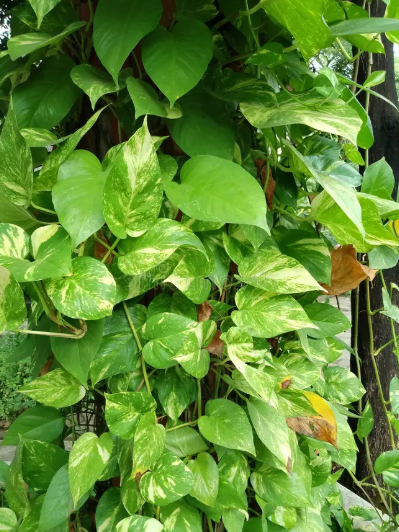
Devil’s Ivy is a tropical evergreen climbing vine. The familiar houseplant has flexible green stems, distinct nodes, short aerial roots, and glossy heart-shaped or broadly oval leaves that are often streaked, splashed, or marbled with yellow, cream, white, lime green, or darker green.
Juvenile plants commonly trail from containers or climb a pole with relatively small entire leaves. When a vine climbs a substantial support under tropical conditions, its stems thicken and the leaves can become dramatically larger and develop deep divisions or openings.
That mature appearance may be mistaken for Monstera or another climbing aroid even though it is the same Pothos species commonly grown in hanging baskets.
Accepted Native Origin
Epipremnum aureum is accepted as native to Mo‘orea in the Society Islands of French Polynesia. It has been introduced widely through tropical and subtropical regions and has become naturalized or invasive in numerous locations.
The common name Solomon Islands Ivy remains widespread in horticulture but should not be interpreted as a precise statement of the species’ accepted native origin.
Outdoor naturalized vines may become much larger than familiar houseplants, with thick climbing stems and mature divided leaves that can complicate identification after landscape removal or storm damage.
Why Devil’s Ivy Is a Frequent Pet-Exposure Plant
Pothos is one of the most widely kept indoor foliage plants because it tolerates variable light, grows rapidly, survives occasional neglect, and roots readily from stem cuttings.
It is frequently displayed in hanging baskets, on bookcases, cabinets, plant stands, refrigerator tops, windowsills, wall planters, office desks, bathroom shelves, and kitchen ledges.
These elevated locations may keep the container away from a dog while allowing vines to extend several feet downward into reach of cats, puppies, rabbits, birds, or other curious animals.
How Cats Encounter Pothos
Trailing stems move when touched or when air circulates through a room, making them attractive play objects. Cats may bat at a vine, pull the entire basket down, bite leaves, chew a node, or climb furniture to reach the container.
A cat may take repeated small bites along several leaves rather than consuming one large piece. Minor damage can be difficult to notice within a dense trailing plant.
Broken vines may release sap onto the face, paws, chest, or coat. Grooming can transfer residue to the mouth or eyes after the cat has moved away from the plant.
How Dogs and Puppies Are Exposed
Dogs may chew low vines, fallen leaves, newly purchased plants placed temporarily on the floor, or branches removed during pruning.
Puppies may pull on a trailing vine and overturn the entire container. This can expose roots, potting soil, fertilizer, decorative stones, water-retaining material, plastic labels, hanging hardware, and broken pottery in addition to the plant.
Dogs may also encounter Devil’s Ivy when houseplants are moved to a porch, patio, garage, greenhouse, or shaded outdoor area during warm weather.
Propagation Cuttings Create a Separate Exposure
Pothos is commonly propagated by cutting a vine below a node and placing the cutting in water. Jars, glasses, vases, and test tubes containing cuttings are often kept on windowsills, counters, desks, or shelves.
The leaf, stem, node, emerging roots, and broken plant tissue remain capable of releasing raphides. A cat may pull a cutting from the jar, while a dog may drink spilled water and then chew the cutting.
Propagation water has not been shown to contain a predictable toxic dose. It may nevertheless contain sap, plant fragments, fertilizer, rooting products, algae treatments, bacteria, or other additives and should not be used as animal drinking water.
The principal plant hazard remains direct chewing of the cutting rather than assuming that every container of clear propagation water contains the same concentration of oxalate crystals.
Pruning and Repotting Exposure
Fast-growing vines are often trimmed to control length or encourage fuller growth. Fresh cuttings may fall behind furniture, remain on a countertop, or be left in an open trash container.
Repotting exposes the root system and produces broken roots, vines, leaves, spilled substrate, and fertilizer residue at floor level. Animals should remain excluded until the area is cleaned completely.
Wilted or dried clippings still contain plant fibers and crystals and should not be left where animals can chew them.
Exact-Species Ocular Injury
A published human case documents that Epipremnum aureum sap can cause substantially more than brief conjunctival irritation. The patient developed severe bilateral keratitis after rubbing both eyes following plant-sap exposure.
The injury progressed from corneal-surface abnormalities to epithelial defects with underlying stromal necrosis. Infectious testing remained negative, and recognition of the earlier Pothos exposure helped identify the condition as toxic keratitis.
The epithelial defects eventually resolved after prolonged supportive ophthalmic treatment, but corneal scarring persisted. One eye subsequently required penetrating keratoplasty.
This human case cannot be converted directly into a predicted veterinary outcome, but it confirms that direct Pothos sap exposure can cause deep and prolonged corneal injury. Persistent squinting, tearing, cloudiness, discharge, light sensitivity, or inability to open the eye requires veterinary examination even when the eye was irrigated promptly.
Direct Veterinary Evidence Is Limited
A large Italian poison-center survey recorded two dog exposures involving Epipremnum aureum. The publication confirms that veterinary exposures occur but does not provide a detailed Pothos-specific dose, individual clinical progression, treatment course, or outcome series.
No controlled feeding study has established a safe or toxic amount for dogs, cats, horses, rabbits, birds, or livestock. Likewise, no dependable study defines how frequently authenticated Pothos exposure produces clinically important airway swelling or esophageal injury.
The expected syndrome remains strongly consistent with the established physical behavior of insoluble calcium oxalate raphides: immediate oral pain, salivation, swelling, gagging, painful swallowing, and occasional gastrointestinal irritation.
Pronounced neurologic, cardiac, renal, or multisystem abnormalities should trigger investigation for another toxic plant, fertilizer, pesticide, medication, foreign material, aspiration, severe dehydration, or unrelated disease.
Common Cultivars Remain Toxic
Golden Pothos has green leaves marbled with yellow. Marble Queen has extensive white or cream marbling, Neon has bright chartreuse foliage, and Jade has mostly solid green leaves.
Manjula, N’Joy, Pearls and Jade, Jessenia, Global Green, and other cultivated forms have different patterns of cream, white, yellow, or contrasting green. Variegation changes appearance but does not remove the raphide hazard.
A cultivar marketed as rare, miniature, highly variegated, tissue-cultured, collector-grade, or patented should still be treated as an insoluble-calcium-oxalate plant.
Pothos Versus Heartleaf Philodendron
Heartleaf Philodendron, Philodendron hederaceum, is frequently confused with Pothos. Both are trailing aroids with heart-shaped leaves, and both can cause an insoluble-calcium-oxalate oral syndrome.
Pothos generally has thicker, waxier leaves, grooved or winged petioles, and stems that often show conspicuous aerial-root nubs. Heartleaf Philodendron commonly has thinner, more symmetrical leaves, rounded petioles, and papery cataphyll remnants around new growth.
The immediate poisoning response is similar, but accurate identification remains useful when evaluating a mixed plant collection or an exposure involving pesticides, fertilizer, roots, or propagation products.
Golden Pothos Versus Satin Pothos
Satin Pothos, Silver Pothos, or Silver Philodendron usually refers to Scindapsus pictus. It has velvety green leaves marked with silvery spots or patches.
Scindapsus pictus is not a cultivar or synonym of Epipremnum aureum, although both belong to Araceae and can cause a similar raphide-associated oral syndrome.
Golden Pothos Versus Cebu Blue and Other Epipremnum
Cebu Blue Pothos is usually Epipremnum pinnatum ‘Cebu Blue,’ a separate species with narrow blue-green juvenile leaves. Mature E. pinnatum foliage may become deeply divided.
Dragon Tail, Baltic Blue, and other plants sold under Pothos names may also belong to Epipremnum pinnatum or another aroid rather than E. aureum.
These distinctions matter botanically, but common ornamental Epipremnum species should all remain inaccessible to chewing animals because of the shared calcium oxalate risk.
Why the Name Pothos Persists
The common name Pothos comes from the plant’s former scientific placement as Pothos aureus. It was later classified as Scindapsus aureus and Rhaphidophora aurea before being placed in Epipremnum.
Epipremnum aureum and Epipremnum pinnatum are currently treated as separate species. A nursery label reading E. pinnatum ‘Aureum’ reflects an older horticultural treatment rather than the currently accepted name for Golden Pothos.
The true genus Pothos still exists botanically and contains different aroids. The household name “Pothos” therefore does not mean that the plant remains classified in that genus.
Devil’s Ivy Versus True Ivy
True ivies belong to the genus Hedera and are woody vines with a different growth structure and toxin profile. English Ivy and related species contain triterpenoid saponins and contact-sensitizing compounds.
Devil’s Ivy is a soft-stemmed tropical aroid whose principal hazard is insoluble calcium oxalate raphides. The word “ivy” alone is not an adequate plant identification.
Mature Pothos Versus Monstera
A mature climbing Pothos may develop very large leaves with deep divisions or openings. This can make an outdoor or greenhouse specimen resemble Monstera deliciosa or another fenestrated aroid.
The two plants are not botanical synonyms. Both can cause a local calcium oxalate injury, so uncertainty between them does not justify delaying oral decontamination or airway assessment.
Photographs of the full vine, nodes, petioles, aerial roots, juvenile foliage, mature foliage, and nursery label are more informative than one detached divided leaf.
Outdoor and Tropical Landscape Exposure
In warm climates, Devil’s Ivy may escape cultivation and grow over trees, walls, fences, groundcover beds, drainage areas, and abandoned landscapes. Mature vines can produce thick stems and large divided leaves unlike the familiar indoor plant.
Outdoor animals may encounter cut vines after landscape removal, storm damage, tree work, or disposal of invasive growth. Large piles of freshly cut material create greater access than an intact climbing vine.
Landscape workers should prevent animals from entering the area until vines, roots, leaves, sap-contaminated equipment, and mixed plant debris have been removed.
Horses, Livestock, Rabbits, and Birds
Horses and livestock rarely encounter Devil’s Ivy as normal forage but may be exposed when houseplants, greenhouse waste, or tropical landscape clippings are dumped into paddocks or pens.
Rabbits and rodents may chew stems and roots, while parrots and other birds may shred leaves or vines during play. Limited species-specific case data do not establish a safe dose.
Houseplant waste should never be fed intentionally or placed in livestock areas, rabbit enclosures, poultry runs, aviaries, or open compost accessible to animals.
Container and Hanging-Basket Hazards
An overturned Pothos container may expose an animal to fertilizer, systemic insecticide, decorative stones, water-retaining polymers, hanging hooks, wire, plastic hangers, plant labels, moldy substrate, or broken pottery.
Persistent vomiting, abdominal enlargement, inability to pass stool, unusual neurologic signs, kidney abnormalities, or illness disproportionate to the oral raphide syndrome requires investigation of the entire container and surrounding area.
Diagnosis
No routine veterinary laboratory test confirms Devil’s Ivy ingestion. Diagnosis usually depends on plant identification, witnessed chewing, fresh plant damage, material in the mouth or vomit, and the rapid appearance of oral pain, drooling, swelling, gagging, or dysphagia.
Preserve photographs of the complete plant, vine, nodes, petiole shape, juvenile and mature leaves, propagation setup, nursery label, and any fragments found in vomit.
Blood testing is usually unnecessary after a mild localized exposure. Persistent vomiting, dehydration, collapse, respiratory abnormalities, neurologic signs, kidney changes, or unexpected laboratory findings may justify broader testing for complications and alternative diagnoses.
Eye examination may include eyelid eversion, removal of retained material, fluorescein staining, tear assessment, magnified corneal examination, and repeat evaluation when pain or epithelial injury persists.
Prevention
Keep Pothos in a room inaccessible to plant-chewing animals rather than relying only on height. Secure or trim trailing vines before they extend into reach.
Keep propagation jars, pruning debris, and repotting material behind a closed door. Pick up fallen leaves and broken stems promptly.
Wear eye protection during extensive cutting or removal of mature vines, wash sap from hands and tools, and avoid touching the eyes after handling damaged plant material.
In homes with cats that repeatedly chew plants, puppies that pull vines, free-roaming birds, or rabbits allowed outside an enclosure, replacing Devil’s Ivy with a verified pet-safer plant is the most dependable prevention.
Immediate Steps After Devil’s Ivy Exposure
- Stop further chewing. Remove the animal from the plant, trailing vines, fallen leaves, aerial roots, propagation cuttings, pruning debris, and spilled potting material.
- Remove only loose visible fragments. If the animal is calm, alert, breathing normally, and able to swallow, take away pieces resting at the lips or front of the mouth. Do not scrape the tongue, probe the throat, or force open the jaws.
- Gently wipe away residue. Use a soft cloth dampened with water to remove visible sap and plant material from the lips, muzzle, tongue tip, and accessible gums. Avoid aggressive rubbing.
- Allow voluntary water only when swallowing is normal. An alert animal that handles saliva comfortably and is not gagging or vomiting repeatedly may drink fresh water on its own. Do not syringe, pour, or spray liquid into the mouth.
- Wash contaminated skin or coat. Wear gloves and use lukewarm water with a mild pet-safe cleanser. Rinse thoroughly and prevent licking until visible residue is gone.
- Irrigate an exposed eye. Use sterile saline or clean room-temperature water. Continuing pain, squinting, cloudiness, or discharge requires veterinary examination.
- Watch swallowing and breathing closely. Monitor tongue size, facial swelling, drooling, gagging, respiratory noise, chest movement, and whether the animal can swallow its saliva.
- Preserve plant identification. Save photographs, the nursery label, a leafy vine with visible nodes, and any material found in vomit.
Do Not Attempt Unsupervised Home Treatment
- Do not induce vomiting. Returning raphide-containing material through an already irritated esophagus and throat provides little benefit and increases pain and aspiration risk.
- Do not forcefully flush the mouth. Spraying or pouring water toward the throat can carry liquid, saliva, and plant fragments into the lungs when gagging or dysphagia is present.
- Do not force milk, yogurt, cheese, food, oil, honey, or another coating remedy. These substances do not remove crystals embedded in tissue and may be aspirated when swallowing is impaired.
- Do not administer activated charcoal routinely. Charcoal does not remove the local insoluble crystals and offers little benefit for the primary mechanism.
- Do not give antihistamines automatically. Most swelling results from direct crystal injury rather than a simple allergic reaction, and sedating medication may interfere with swallowing and airway assessment.
- Do not give corticosteroids, anti-inflammatory drugs, anti-diarrheal medication, or stomach medication without veterinary direction. Their usefulness depends on the actual injury and the animal’s condition.
- Do not give human pain relievers or leftover prescriptions. Ibuprofen, naproxen, acetaminophen, aspirin, and similar medications can create a more serious secondary poisoning.
When Emergency Examination Is Needed
- Possible airway compromise: Increasing tongue or throat swelling, inability to close the mouth, inability to swallow saliva, noisy breathing, open-mouth breathing, blue-gray gums, or increasing respiratory effort requires immediate care.
- Significant swallowing injury: Repeated gagging, neck extension, regurgitation, altered vocalization, blood in saliva, or complete refusal of water may indicate deeper pharyngeal or esophageal involvement.
- Persistent gastrointestinal illness: Repeated vomiting, inability to retain water, substantial diarrhea, severe abdominal pain, weakness, dry gums, reduced urination, or collapse requires treatment.
- Eye exposure: Continuing squinting, tearing, discharge, cloudiness, or inability to open the eye after irrigation may indicate corneal injury.
- Mixed container exposure: Swallowed stones, fertilizer, pesticide, hanging hardware, water-retaining material, glass, or broken pottery may require separate toxicologic treatment or imaging.
- Unexpected systemic signs: Seizures, persistent arrhythmias, kidney abnormalities, profound collapse, or coma is not typical of uncomplicated Pothos irritation and requires investigation for another cause.
Veterinary Treatment
The veterinarian will examine the lips, tongue, gums, floor of the mouth, palate, pharynx, and visible laryngeal region while assessing swallowing, secretion handling, respiratory noise, oxygenation, and progression of swelling.
Veterinary decontamination centers on gently wiping or irrigating the oral cavity and removing retained plant fragments under appropriate restraint. Induced vomiting, activated charcoal, and gastric lavage are generally unnecessary for uncomplicated insoluble-calcium-oxalate exposure.
Significant oral pain may require veterinarian-selected analgesia. Persistent nausea or vomiting may be treated with an antiemetic such as maropitant or ondansetron after foreign material and another toxin have been considered.
Fluids may be provided when drooling, vomiting, diarrhea, pain, or difficulty swallowing causes measurable dehydration. Kidney monitoring is not required merely because the plant contains calcium oxalate; it becomes relevant when dehydration, hypotension, another toxin, uncertain identification, or preexisting disease creates a separate concern.
Sucralfate or acid suppression may be used when painful swallowing, esophagitis, blood in vomit, black stool, or another documented mucosal injury is present. These medications are not antidotes and are not necessary after every exposure.
Antihistamines may be considered when a true allergic or histamine-mediated component is suspected. Corticosteroids or other anti-inflammatory treatment may be selected for substantial edema in individual cases, but they do not replace direct airway assessment.
Progressive pharyngeal or laryngeal swelling may require oxygen, sedation or anesthesia, endotracheal intubation, suction of secretions, and close monitoring. An emergency temporary tracheostomy may be necessary if severe swelling prevents oral intubation.
Horses, Livestock, and Prognosis
Remove horses and livestock from discarded Pothos plants, greenhouse waste, tropical landscape clippings, and mixed ornamental debris. Horses cannot vomit.
Veterinary assessment may include examination of the mouth and pharynx, swallowing evaluation, endoscopy, fluid support, treatment of oral pain, and airway monitoring.
The prognosis is good to excellent for most ordinary exposures. Mild oral pain, drooling, gagging, appetite reduction, and localized swelling commonly improve substantially within several hours.
Recovery may take longer when there is extensive oral inflammation, esophagitis, persistent vomiting, dehydration, corneal injury, or aspiration. Prognosis becomes guarded when severe airway swelling cannot be controlled or prolonged hypoxia occurs.
Frequently Asked Questions About Devil’s Ivy Identification and Exposure
Why is the plant called Pothos when its scientific name is Epipremnum aureum?
The common name survives from the historical scientific name Pothos aureus. The plant was subsequently placed in Scindapsus and Rhaphidophora before being accepted as Epipremnum aureum. The true genus Pothos still exists, so “Pothos” is now a horticultural common name rather than the plant’s accepted genus.
Is Epipremnum pinnatum ‘Aureum’ still the correct name for Golden Pothos?
No. That label reflects an older treatment that placed Golden Pothos within Epipremnum pinnatum. Current botanical treatment recognizes Epipremnum aureum and Epipremnum pinnatum as separate species. Cebu Blue, Baltic Blue, and Dragon Tail plants are commonly associated with E. pinnatum, while Golden, Marble Queen, Neon, Manjula, and similar cultivars belong to E. aureum.
Can a mature Devil’s Ivy look like a Monstera?
Yes. A Pothos vine climbing a large support in a tropical or greenhouse environment may produce thick stems and very large leaves with deep divisions or openings. This mature form can resemble Monstera deliciosa. Photographs of the entire vine, juvenile leaves, nodes, aerial roots, and petioles are more useful than one mature detached leaf.
How much direct veterinary evidence exists for Epipremnum aureum poisoning?
Published case-level veterinary evidence is limited. An Italian poison-center survey recorded two canine Pothos exposures but did not provide a detailed dose-response series or complete individual outcomes. The expected oral syndrome is nevertheless consistent with the established action of insoluble calcium oxalate raphides and extensive clinical experience with raphide-containing aroids.
Can Pothos sap cause serious eye injury?
Yes. An exact-species human case documented severe bilateral keratitis after Epipremnum aureum sap was transferred to the eyes. The injury progressed to corneal epithelial defects, stromal necrosis, prolonged scarring, and corneal transplantation in one eye. Veterinary severity cannot be predicted directly from that case, but persistent squinting, cloudiness, discharge, or pain after irrigation requires examination.
Is propagation water equivalent to chewing a Pothos cutting?
No. Direct chewing ruptures plant cells and releases raphides into contacted tissue. No dependable raphide or toxic-dose concentration has been established for ordinary propagation water. The water may still contain sap, fragments, fertilizer, rooting products, bacteria, or algae treatments, so it should remain inaccessible and the cutting itself should be treated as poisonous.
Are rare or highly variegated Pothos cultivars safer for pets?
No. Golden, Jade, Marble Queen, Neon, Manjula, N’Joy, Pearls and Jade, Jessenia, Global Green, and other cultivated forms remain Epipremnum aureum. White, yellow, cream, lime, or mottled leaves do not demonstrate that raphide-containing tissue has been removed or reduced to a pet-safe level.
Why would seizures, kidney failure, or a persistent abnormal heart rhythm suggest another exposure?
Uncomplicated Pothos injury is primarily local and mechanical. The insoluble crystals irritate contacted mucous membranes rather than producing systemic calcium depletion or widespread renal crystal deposition. Severe systemic findings require investigation for fertilizer, pesticide, medication, another plant, hypoxia, aspiration, dehydration, foreign material, or unrelated disease.
What should be photographed after a suspected Pothos exposure?
Photograph the complete plant, growth habit, nodes, aerial roots, petioles, both surfaces of representative leaves, damaged vines, propagation container, nursery label, hanging hardware, and spilled potting material. Also document fertilizers, pesticides, rooting products, and every other plant within reach. Do not delay urgent veterinary transport when swallowing or breathing is impaired.