Geranium-Leaf Aralia Toxicity, Triterpenoid Saponins, and Contact Irritation
Is Geranium-Leaf Aralia Poisonous to Dogs, Cats, Horses, and Livestock?
Yes—Geranium-Leaf Aralia, Polyscias guilfoylei, is poisonous and irritating to dogs, cats, horses, livestock, rabbits, birds, and other animals when eaten or when fresh sap contacts sensitive tissue. Exact-species chemical investigations have isolated multiple oleanane triterpenoid saponins from its leaves and aerial parts. These soap-like plant glycosides can irritate the mouth, stomach, and intestines and may cause drooling, nausea, vomiting, appetite loss, abdominal discomfort, diarrhea, lethargy, or depression.
The leaf essential oil also contains falcarinol, a polyacetylene known from related Araliaceae as a potent skin irritant and contact allergen. Its precise contribution to natural animal exposures has not been established, but it provides a plausible additional explanation for redness, itching, rash, or swelling after contact with sap or freshly cut foliage. Most limited exposures are expected to remain mild to moderate; repeated vomiting, inability to retain water, marked facial swelling, persistent eye pain, pronounced weakness, or any difficulty swallowing or breathing requires prompt veterinary care.
About this guide: This page provides general pet-poisoning information and cannot diagnose or treat an individual animal. For any suspected exposure, contact a veterinarian or animal poison-control service immediately. Do not induce vomiting, give medication, or attempt home decontamination unless directed by a veterinary professional.
Geranium-Leaf Aralia
Polyscias guilfoylei (W.Bull) L.H.Bailey
Relevant homotypic synonyms and former combinations include:
- Aralia guilfoylei W.Bull — basionym
- Nothopanax guilfoylei (W.Bull) Merr.
- Panax guilfoylei (W.Bull) Cogn. & Marchal
Additional historical synonyms include:
- Aralia laciniata (Rob.) Rafarin
- Aralia maculata W.Bull
- Aralia monstrosa B.S.Williams
- Nothopanax fruticosus var. victoriae (W.Bull) Merr.
- Panax laciniatus Rob.
- Panax victoriae W.Bull
- Polyscias guilfoylei var. laciniata (Rob.) L.H.Bailey
- Polyscias guilfoylei var. monstrosa (B.S.Williams) L.H.Bailey
- Polyscias guilfoylei var. victoriae (W.Bull) L.H.Bailey
Important botanical distinctions:
- Polyscias fruticosa, commonly called Ming Aralia, is a separate accepted species. The polysciosides A–H were isolated principally from P. fruticosa and should not be listed automatically as compounds of P. guilfoylei.
- Polyscias scutellaria, commonly called Shield Aralia or Dinner-Plate Aralia, is a separate species despite similar tropical cultivation and overlapping historical nursery names.
- Schefflera arboricola, commonly called Dwarf Umbrella Tree, is a separate member of Araliaceae. It also contains irritant compounds but should not be treated as a synonym.
- True coffee plants belong to the genus Coffea. “Wild Coffee” and “Coffee Tree” are ambiguous common names rather than evidence that the plant contains coffee beans or caffeine.
Araliaceae
Geranium-Leaf Aralia; Geranium Leaf Aralia; Geranium Aralia; Geranium-Leaf Polyscias; Guilfoyle’s Aralia; Guilfoyle Aralia; Variegated Aralia; Variegated Geranium Aralia; Wild Coffee; Coffee Tree; Coffee-Tree Aralia; Panax Aralia; Polyscias guilfoylei; Aralia guilfoylei; Nothopanax guilfoylei; Panax guilfoylei; Aralia laciniata; Aralia maculata; Aralia monstrosa; Panax laciniatus; Panax victoriae; Polyscias guilfoylei var. laciniata; Polyscias guilfoylei var. monstrosa; Polyscias guilfoylei var. victoriae
“Wild Coffee” and “Coffee Tree” are highly ambiguous. They are also used for unrelated plants including Psychotria species, Kentucky Coffee Tree, Wild Coffee relatives in Rubiaceae, and other tropical shrubs. Polyscias guilfoylei is not a true coffee plant and does not produce coffee beans.
Ming Aralia is Polyscias fruticosa, a separate species. Shield Aralia or Dinner-Plate Aralia is generally Polyscias scutellaria. Dwarf Umbrella Tree is Schefflera arboricola. These plants should not be added as exact synonyms of Geranium-Leaf Aralia.
The historical name Polyscias guilfoylei var. victoriae is associated with strongly variegated cultivated material. Modern taxonomy treats it within Polyscias guilfoylei rather than as a separate accepted variety.
Oleanane Triterpenoid Saponins Confirmed in the Exact Species
The principal established toxic constituents of Geranium-Leaf Aralia are triterpenoid saponins. This classification is supported by several direct phytochemical investigations of Polyscias guilfoylei rather than being inferred only from other members of Araliaceae. Researchers have isolated multiple oleanane-type glycosides from the leaves, stems, and aerial portions of authenticated plant material.
One investigation of the aerial parts isolated three previously undescribed oleanane saponins together with four known glycosides. Additional exact-species work identified five oleanolic-acid glycosides from the leaves, including mono- and bidesmosidic structures containing glucose and glucuronic-acid sugar chains. A separate study of combined leaves and stems isolated three further oleanolic-acid saponins.
These studies confirm a chemically diverse saponin mixture. They were performed to identify structures and explore biological activity, not to establish dog, cat, horse, or livestock toxic doses. No individual glycoside has been demonstrated to reproduce the complete natural veterinary syndrome, and no study shows that every leaf, root, fruit, or cultivar contains an identical concentration.
How Saponins Can Irritate the Digestive Tract
Saponins contain a fat-soluble triterpenoid aglycone attached to one or more water-soluble sugar chains. This amphipathic structure gives many saponins soap-like properties and allows them to interact with cholesterol and other sterols in biological membranes.
The biologic effect varies substantially with the aglycone, number and position of sugar chains, concentration, and surrounding material. Experimental research with selected saponins has shown increased permeability of intestinal mucosal cells and interference with normal nutrient transport. Other saponins are much less disruptive, and results from one purified compound cannot be applied automatically to every glycoside in Geranium-Leaf Aralia.
During natural ingestion, disrupted leaves and stems expose the lips, esophagus, stomach, and intestines to saponin-containing sap and fibrous tissue. The expected result is local irritation expressed as nausea, vomiting, appetite loss, abdominal discomfort, soft stool, or diarrhea. Poor absorption of many intact saponins helps explain why the recognized household syndrome is dominated by gastrointestinal signs rather than predictable failure of distant organs.
Laboratory Hemolysis Does Not Establish Routine Oral Hemolytic Anemia
Some purified saponins can damage erythrocyte membranes when placed directly in contact with blood under laboratory conditions. The strength of this effect depends sharply on chemical structure, concentration, exposure time, membrane composition, and experimental conditions.
Direct blood exposure is not equivalent to an animal chewing a leaf. Gastrointestinal barriers, digestion, metabolism, protein binding, and limited absorption separate the plant material in the stomach from circulating red cells.
No controlled study or clinical series demonstrates that ordinary oral exposure to Polyscias guilfoylei routinely causes Heinz bodies, methemoglobinemia, hemoglobinuria, or systemic hemolytic anemia. Pale gums, dark urine, jaundice, pronounced anemia, or collapse requires investigation for another toxin or disease rather than automatic attribution to this plant.
Falcarinol in Geranium-Leaf Aralia Leaf Oil
Exact-species gas-chromatographic analysis identified fifty constituents in Geranium-Leaf Aralia leaf essential oil. The major components were beta-selinene and alpha-selinene, while the polyacetylene falcarinol accounted for a substantial minority of the analyzed oil.
Falcarinol is a well-established irritant and contact allergen in other members of Araliaceae, including English Ivy and Dwarf Umbrella Tree. Experimental and clinical work with those plants demonstrates that falcarinol can cause both direct irritant dermatitis and delayed allergic contact dermatitis after sensitization.
The detection of falcarinol in P. guilfoylei provides a credible chemical basis for the dermatitis warning. It does not prove that falcarinol alone causes every rash after contact with Geranium-Leaf Aralia, and its concentration in ordinary sap, different cultivars, roots, bark, flowers, and fruit has not been established.
Allergic Contact Versus Direct Irritation
Direct irritant dermatitis can occur when sufficient sap or damaged foliage contacts skin, especially where the skin is already inflamed, abraded, moist, or repeatedly exposed. Redness, itching, burning, swelling, or persistent licking may begin after the first substantial contact.
Allergic contact dermatitis requires immune sensitization. An animal or person may handle the plant previously without a noticeable reaction and then develop a stronger response after later exposure. Repeated contact with a hedge, pruning debris, sap-coated bedding, or contaminated tools may therefore be more important than one brief brush against an intact leaf.
There is no practical household test that identifies which constituent caused a pet’s rash. The plant, pesticides, fertilizer, soaps, insects, environmental allergens, and secondary skin infection may all require consideration.
Other Exact-Species Constituents
Additional investigations of P. guilfoylei leaves have identified sterols, terpenes, fatty-acid derivatives, ceramide-related compounds, panaxydiol, hydroxybenzoic acid, and flavonoid glycosides. Some extracts or isolated compounds have shown antiproliferative, antimicrobial, antioxidant, enzyme-inhibitory, or histamine-release-modifying effects in laboratory systems.
These findings describe chemical presence and experimental pharmacology. They do not establish that each compound is a clinically important dog or cat poison. A substance that inhibits histamine release in cultured cells, for example, should not be presented simultaneously as proof that the plant routinely triggers systemic histamine-mediated anaphylaxis.
The public toxicology description should remain centered on confirmed triterpenoid saponins and plausible falcarinol-associated contact irritation while acknowledging that the full natural sap mixture has not been tested in veterinary patients.
Polysciosides A–H Belong Primarily to a Different Species
Polysciosides A through H are genuine oleanolic-acid saponins, but the named series was isolated from the leaves and roots of Polyscias fruticosa, the Ming Aralia. They should not be transferred automatically to P. guilfoylei merely because both plants belong to the same genus.
Geranium-Leaf Aralia has its own directly characterized oleanane glycosides. Using those exact-species findings avoids a common error in which phytochemical names from several Polyscias species are combined into one unsupported toxin list.
Which Plant Parts Are Hazardous?
Leaves and aerial stems contain directly demonstrated saponins, and leaf oil contains falcarinol. Those findings provide the strongest exact-species evidence. Bark, woody stems, roots, flowers, fruit, seeds, and sap should also be treated as unsuitable for animal consumption because no comprehensive comparative analysis has established a toxin-free organ.
Leaves and fresh clippings create the most likely household and landscape exposures. Roots become accessible during repotting, propagation, uprooting, or when an animal digs in a recently worked container or hedge bed. Flowers and fruit are uncommon on an ordinary indoor specimen but may occur on mature outdoor plants in tropical climates.
Fresh, Wilted, and Dried Material
Wilting does not establish safety. Saponins are nonvolatile glycosides and do not disappear merely because a branch has been cut or a leaf has dried. Falcarinol and volatile-oil composition may change with drying and storage, but that change cannot be relied upon to detoxify the plant.
Fresh pruning debris may release sap more readily than intact standing foliage, while dried fibrous material can still cause gastrointestinal upset or contribute to a physical obstruction if swallowed in quantity.
Leaves, branches, roots, fruit, and hedge clippings should never be placed in animal-accessible compost, paddocks, rabbit enclosures, poultry areas, cages, or bedding.
No Established Safe Dose
No dependable leaf count, stem length, fruit count, saponin concentration, or gram-per-kilogram toxic dose has been established for natural Geranium-Leaf Aralia exposure in dogs, cats, horses, livestock, rabbits, or birds.
Risk depends on the amount and plant part, animal size, repeated exposure, individual sensitivity, gastrointestinal health, and whether pesticide, fertilizer, potting material, mold, or another plant was consumed simultaneously.
Early Oral and Gastrointestinal Signs
The most credible acute syndrome is oral and gastrointestinal irritation. An exposed animal may lick its lips, swallow repeatedly, drool, paw or rub at the mouth, appear nauseated, turn away from food, or drink more frequently after chewing sap-rich leaves or stems.
Vomiting is the most consistently recognized clinical sign. It may occur once or repeatedly and may contain leaf fragments, fibrous material, food, clear fluid, foam, or bile. Abdominal discomfort may cause restlessness, stretching, a tense posture, whining, hiding, reluctance to lie down, or resistance to handling around the abdomen.
Soft stool or diarrhea may follow intestinal irritation. Appetite loss, lethargy, and depression may be more noticeable than vomiting in some animals, particularly when the exposure was unwitnessed or the animal consumed only a modest amount.
Dehydration and Secondary Metabolic Effects
Repeated vomiting or diarrhea can cause tacky gums, sunken eyes, reduced skin elasticity, decreased urination, weakness, poor pulse quality, and worsening lethargy. Rapid unrestricted drinking may trigger another vomiting episode while nausea remains active.
Fluid, sodium, potassium, chloride, glucose, and acid-base abnormalities may become more medically important than the original plant irritation. Small animals, young puppies or kittens, elderly patients, and animals with kidney, endocrine, or cardiovascular disease may deteriorate more quickly.
Marked weakness, collapse, tremors, or altered awareness should not be attributed casually to “saponins.” The veterinarian should assess hydration, glucose, electrolytes, circulation, concurrent chemicals, and unrelated disease.
Skin and Fur Exposure
Contact with sap or freshly cut foliage may cause redness, itching, burning, swelling, rash, hair loss from self-trauma, or small blister-like lesions. The reaction may occur where an animal repeatedly brushes a hedge, lies on clippings, walks through pruning debris, or contacts sap during repotting.
Paws and fur can carry plant residue to the face, mouth, ears, or eyes during grooming. Persistent paw licking, facial rubbing, redness between the toes, or a sharply localized rash may therefore follow an exposure that did not involve deliberate chewing.
Some animals may react more strongly after prior sensitization. A recurrent rash appearing after each pruning event or repeated hedge contact supports the need to prevent future exposure even when the first episode was mild.
Eye Exposure
Sap or small plant fragments entering an eye may cause tearing, blinking, squinting, redness, eyelid swelling, conjunctival irritation, discharge, light sensitivity, or persistent rubbing at the face.
Geranium-Leaf Aralia is not known for the microscopic calcium oxalate needles responsible for the severe crystalline keratopathy associated with certain aroids. Eye pain can still become clinically important when irritating sap or a fibrous fragment remains beneath an eyelid or scratches the corneal surface.
Continued squinting, cloudiness, abnormal discharge, unequal pupils, or inability to open the eye after irrigation requires veterinary examination.
Facial and Oral Swelling
Mild redness or localized swelling may accompany irritation of the lips, gums, muzzle, or contacted skin. Pronounced tongue, throat, or generalized facial swelling is not the usual documented syndrome and should not be presented as an expected result of every ingestion.
A strongly irritated or hypersensitive animal could nevertheless develop clinically important edema or hives. Inability to swallow saliva, repeated gagging, a hoarse voice, noisy breathing, open-mouth breathing, blue-gray gums, weakness, or collapse requires immediate emergency care.
Drooling alone does not prove airway swelling. Nausea and mouth irritation commonly increase salivation without obstructing airflow, but progression must be watched closely.
Fibrous Foreign-Material Complications
A dog may strip and swallow several pinnate leaves, petioles, woody stem pieces, bark, or roots. Most fragments pass or are vomited, but a compact fibrous mass may lodge in the esophagus, remain in the stomach, or contribute to intestinal obstruction.
Repeated unproductive retching, regurgitation, inability to swallow water, persistent vomiting after the expected irritant period, abdominal enlargement, worsening pain, or reduced fecal production requires imaging and examination.
Plant fibers protruding from the mouth or rectum should not be pulled blindly because they may be anchored internally.
Dogs and Cats
Dogs may chew low hedge branches, raid pruning piles, pull a potted plant over, or ingest roots and potting material. Puppies and dogs with pica may swallow a larger plant mass before vomiting begins.
Cats may bite dangling leaflets, rub against foliage, climb the plant, or transfer sap from the paws and coat during grooming. A cat may hide, stop eating, or become unusually quiet rather than showing obvious abdominal discomfort.
Persistent food refusal is medically important in cats even when the plant exposure itself appears mild. Prolonged anorexia can create serious secondary metabolic complications.
Horses and Other Animals
Detailed species-specific reports in horses and livestock are lacking. Exposure is most plausible when hedge clippings, uprooted shrubs, roots, or landscape waste are dumped into an enclosure or when branches grow through a fence.
Possible signs include salivation, reduced appetite, mouth irritation, abdominal discomfort, diarrhea, depression, or weakness. Horses cannot vomit and may instead show feed refusal, dropped feed, colic behavior, reduced manure production, or diarrhea.
Rabbits and guinea pigs may reduce food and fecal production after gastrointestinal distress. Birds may shred leaves and stems and can deteriorate quickly when vomiting, regurgitation, diarrhea, weakness, or dehydration develops.
Unexpected Severe Findings
Severe hemolytic anemia, methemoglobinemia, primary kidney failure, progressive liver failure, seizures, prolonged coma, paralysis, or sudden death is not the established expected syndrome of an ordinary Geranium-Leaf Aralia exposure.
These findings require investigation for pesticide, fertilizer, medication, metal, another poisonous plant, mushroom, foreign body, infection, metabolic disease, or another cause.
Expected Course and Prognosis
Brief nausea, one vomiting episode, mild appetite loss, or localized skin irritation commonly improves after access ends and contaminated skin or fur is washed. Mild cases may resolve within several hours to approximately two days.
More substantial gastrointestinal illness may require anti-nausea treatment and fluid support. Recovery is longer when dehydration, eye injury, allergic dermatitis, secondary skin infection, or a swallowed fibrous mass complicates the exposure.
The prognosis is generally good to excellent. Severe or progressive illness should prompt reconsideration of the plant identification and investigation for a second exposure rather than assuming an unusually destructive form of ordinary saponin poisoning.
Accepted Identity and Taxonomic History
Geranium-Leaf Aralia is Polyscias guilfoylei (W.Bull) L.H.Bailey, an evergreen shrub or small tree in Araliaceae. The species was originally described as Aralia guilfoylei and later appeared under Panax guilfoylei and Nothopanax guilfoylei before placement in Polyscias.
Historical nursery names also described strongly cut, irregular, or variegated forms as separate species or varieties. Modern taxonomy treats names such as Aralia laciniata, Aralia monstrosa, Panax victoriae, and the former varieties laciniata, monstrosa, and victoriae within the accepted species.
These synonyms are useful for searching old labels and records but do not identify plants with separate toxic mechanisms.
Origin as a Pacific Cultigen
The species is regarded as a cultigen originating from eastern Malesia through the southwestern Pacific rather than as a wild plant native to every tropical region where it now grows. Its associated range includes the Maluku Islands, New Guinea, the Bismarck Archipelago, New Caledonia, the Santa Cruz Islands, and Vanuatu.
Human cultivation later spread it widely through tropical and subtropical regions, including parts of the Caribbean, Florida, Southeast Asia, Africa, and numerous Pacific islands.
A plant established outside the Pacific may be cultivated, escaped, or locally naturalized. Wide modern distribution should not be confused with a naturally occurring global native range.
Growth Form and Leaves
Geranium-Leaf Aralia usually develops upright, relatively narrow woody stems with foliage concentrated toward the branch ends. Outdoor plants in warm climates may grow into tall shrubs or small trees, while indoor specimens are commonly maintained at a smaller size through container restriction and repeated pruning.
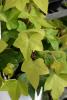
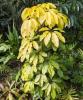
The leaves are alternate and generally once pinnately compound. Several leaflets are attached along a central rachis, although leaflet number, width, tooth pattern, lobing, and degree of division vary markedly among cultivated forms.
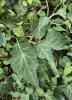
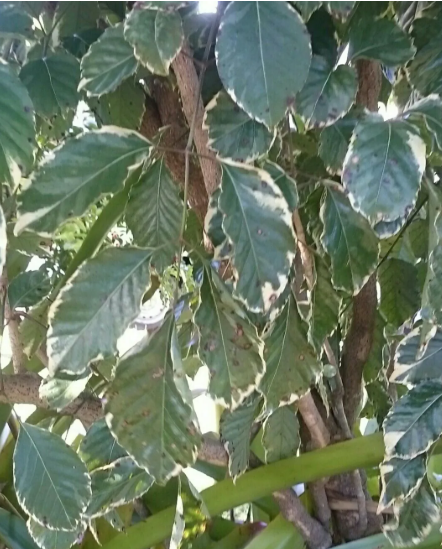
Some plants have broad oval or elliptic leaflets with coarse teeth. Others produce deeply cut, jagged, narrow, or almost parsley-like segments. This variation explains why two plants carrying the Geranium Aralia name may look substantially different.
Variegated and Cutleaf Forms
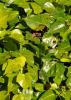
Many cultivated plants have green leaflets edged, splashed, or irregularly patterned with cream, ivory, pale yellow, or white. Historical material associated with the name victoriae is especially strongly variegated.
Other forms corresponding to former names such as laciniata or monstrosa may have narrow, deeply divided, twisted, or unusually jagged foliage.
Variegation and leaf shape do not remove the exact-species saponins or establish a safer cultivar. Pale leaf margins may also attract animals that investigate contrasting or moving foliage.
Flowers and Fruit
The flowers are small and greenish and occur in umbels that may be arranged within larger branching inflorescences. They are visually insignificant compared with the foliage.
Flowering is uncommon on an ordinary indoor specimen but may occur on mature outdoor plants in humid tropical conditions. Dark fruit may follow successful pollination.
Leaves and stems are the portions most often encountered by household animals, but flowers, fruit, seeds, bark, roots, and sap should not be treated as edible because comparative toxin concentrations have not been established.
Wild Coffee Is a Misleading Identification
Wild Coffee and Coffee Tree are established common names for this aralia, but the plant is not a member of the genus Coffea and its fruit does not produce coffee beans.
The same names are used for unrelated species, including Psychotria shrubs, Kentucky Coffee Tree, and other regional plants. Those species differ in chemistry, appearance, and potential severity.
A poisoning investigation should use the complete plant, leaf arrangement, stem form, fruit, nursery label, and scientific name rather than relying on “Wild Coffee” alone.
Geranium-Leaf Aralia Versus Ming Aralia
Ming Aralia is Polyscias fruticosa, a separate accepted species usually recognized by its finely divided, feathery foliage. Geranium-Leaf Aralia generally has broader leaflets, although highly cut cultivated forms can blur the visual distinction.
The distinction matters chemically. Polysciosides A through H were isolated from P. fruticosa, while P. guilfoylei has a separately characterized collection of oleanane saponins.
Both plants should remain inaccessible to animals, but their phytochemical records should not be merged merely because they share a genus and common-name overlap.
Exact-Species Saponin Evidence
Several independent investigations have isolated triterpenoid glycosides directly from P. guilfoylei. One study recovered three new and four known oleanane saponins from aerial portions and determined their structures through nuclear magnetic resonance and mass spectrometry.
Another study isolated five leaf saponins based principally on oleanolic acid and glucuronic-acid-containing sugar chains. Further work on leaf-and-stem material isolated additional oleanane glycosides, including compounds reported for the first time within the genus.
Together, these studies establish the plant’s saponin chemistry securely. They did not administer natural foliage to dogs, cats, or horses and cannot provide a clinical threshold, organ ranking, or cultivar-specific dose.
Falcarinol and the Dermatitis Warning
Gas chromatography of the exact-species leaf essential oil identified beta-selinene and alpha-selinene as the dominant volatile components and falcarinol as another major constituent.
Falcarinol is a potent contact allergen documented in related members of Araliaceae. In Common Ivy and Dwarf Umbrella Tree, chemical and clinical investigations connected falcarinol exposure with irritant and allergic contact dermatitis.
No equivalent series of patch tests or veterinary skin cases has been published specifically for Geranium-Leaf Aralia. The chemical finding supports caution without justifying a claim that every contact causes a falcarinol allergy.
Limits of the Veterinary Evidence
Public poison references consistently associate Geranium-Leaf Aralia with saponins, contact dermatitis, vomiting, appetite loss, and depression. Detailed veterinary case reports identifying the plant botanically, measuring dose, following serial laboratory results, and documenting outcome are notably lacking.
This evidence gap should shape the page’s language. It supports treating the plant as toxic and contacting a veterinarian when illness is significant, but it does not support a fabricated fatal dose or routine claims of seizures, systemic hemolysis, liver destruction, kidney failure, or prolonged coma.
Severe presentations require investigation for another toxicant, a mistaken plant, a pesticide or fertilizer, a foreign body, or unrelated disease.
Pruning and Hedge Exposure
The plant’s upright growth and tolerance of repeated trimming make it popular as a hedge, screen, narrow foundation shrub, or clipped container plant. Pruning creates a larger practical exposure than the undisturbed shrub because numerous sap-bearing branches and loose leaflets become available at ground level.
Dogs may carry branches, rabbits may browse a clipping pile, birds may shred leafy stems, and cats may lie on or walk through fresh debris. Sap may also coat tools, gloves, floors, patios, vehicle beds, and clothing.
Animals should remain outside the work area until clippings have been collected and contaminated surfaces cleaned.
Houseplant and Potting Exposures
Indoor animals may chew low foliage, pull a container over, investigate roots during repotting, or swallow potting material along with the plant. Fertilizer granules, systemic insecticides, fungicides, mold, decorative stone, moss, plastic mesh, and water-retaining crystals may alter the expected clinical picture.
A severe or neurologically abnormal patient should not be assumed to have “strong saponin poisoning” when another product from the container may be responsible.
Preserve every plant-care label and report the date and concentration of recent applications to the veterinarian.
Traditional Food and Medicinal Use
Several Polyscias species have traditional food or medicinal uses in parts of Asia and the Pacific. The uses vary by species, cultivar, plant part, preparation, and cultural practice.
Human use does not establish that raw Geranium-Leaf Aralia is appropriate for dogs, cats, horses, rabbits, birds, or livestock. A prepared food from one Polyscias species cannot be used as evidence that an ornamental cultivar of another species is safe when chewed raw.
Leaves, roots, extracts, teas, tinctures, essential oils, and homemade preparations should not be used as animal supplements, digestive remedies, skin treatments, flea repellents, or appetite stimulants.
Diagnosis
There is no routine blood or urine test that confirms Geranium-Leaf Aralia ingestion or identifies its saponins in a clinical patient. Diagnosis depends on plant identification, exposure history, compatible gastrointestinal or dermal signs, and exclusion of other causes.
Useful evidence includes the complete plant, nursery label, clear photographs, leaves showing both surfaces, stems, flowers or fruit, roots, vomited fragments, potting material, and all pesticide and fertilizer packages.
Testing may include hydration assessment, complete blood count, serum chemistry, electrolytes, glucose, urinalysis, abdominal imaging, skin cytology, or ocular examination according to the clinical presentation.
Marked anemia, jaundice, pigmenturia, major neurologic disease, progressive organ failure, or severe cardiovascular abnormalities should broaden the investigation beyond this plant.
Prevention
Keep both the living shrub and its pruning debris inaccessible. Trim branches before they extend into dog runs, walkways, patios, cages, paddocks, or neighboring animal areas.
Collect clippings immediately, prevent access during repotting, store plant-care products separately, and wash sap from tools, gloves, clothing, flooring, and work surfaces.
In a household with a persistent plant-chewing cat, puppy, rabbit, or bird or an animal with recurrent contact dermatitis, replacing Geranium-Leaf Aralia with a genuinely pet-safer ornamental is more dependable than relying on supervision or deterrent sprays.
Immediate Steps After Geranium-Leaf Aralia Exposure
- Stop further exposure. Move the animal away from leaves, stems, bark, roots, flowers, fruit, sap, pruning debris, and potting material.
- Confirm the plant. Distinguish Polyscias guilfoylei from Ming Aralia, Shield Aralia, Schefflera, true Coffee, Kentucky Coffee Tree, Psychotria Wild Coffee, Geranium, and other ornamentals with overlapping common names.
- Determine what happened. Establish whether the animal briefly mouthed one leaflet, stripped several branches, swallowed fruit or roots, chewed a concentrated extract, or contacted sap during pruning.
- Remove only loose visible material. If the animal is calm, alert, breathing normally, and swallowing normally, use gloves, damp gauze, or a damp cloth to lift plant pieces resting at the lips or front of the mouth.
- Wipe away accessible sap gently. Use a clean damp cloth on the lips and front of the mouth without scraping irritated tissue or reaching blindly toward the throat.
- Prevent grooming. Keep the animal from licking contaminated paws, skin, or fur until washing is complete.
- Preserve evidence. Save the nursery label, complete branch, photographs, fruit, roots, vomited material, potting products, fertilizer, pesticide, and any missing container objects.
- Contact veterinary help when exposure is meaningful. Substantial ingestion, repeated vomiting, persistent diarrhea, inability to retain water, deepening lethargy, eye exposure, or facial swelling warrants professional guidance.
Do Not Attempt Unsupervised Home Decontamination
- Do not induce vomiting. Do not use hydrogen peroxide, salt, mustard, syrup of ipecac, detergent, dish soap, manual gagging, or fingers in the throat.
- Do not force food or water. A nauseated, repeatedly vomiting, weak, swollen, or poorly swallowing animal may aspirate material.
- Do not administer activated charcoal yourself. It is not routinely justified after a small plant exposure and may be inhaled by a vomiting or depressed animal.
- Do not give milk, oil, bread, salt, herbal products, or another supposed antidote. These products do not neutralize triterpenoid saponins or falcarinol.
- Do not give human pain medication, antacids, anti-diarrheal medication, antihistamines, corticosteroids, or leftover veterinary prescriptions. The wrong medication may add toxicity or obscure progression.
- Do not apply essential oils, concentrated vinegar, alcohol, or homemade plant treatments to irritated skin. They may worsen inflammation or create an additional poisoning exposure.
When Emergency Examination Is Required
- Vomiting is repeated or blood appears. Inability to retain water, dark material, black stool, or worsening weakness requires examination.
- Dehydration is developing. Tacky gums, sunken eyes, reduced urination, poor pulse quality, or profound lethargy indicates clinically important fluid loss.
- Facial or oral swelling is progressing. Increasing lip, muzzle, tongue, or throat swelling requires prompt assessment.
- Swallowing or breathing changes. Inability to swallow saliva, repeated gagging, neck extension, noisy breathing, open-mouth breathing, blue-gray gums, or collapse is an emergency.
- The eye remains painful. Continued squinting, redness, cloudiness, discharge, or inability to open the eye after irrigation requires veterinary care.
- A fibrous mass may have been swallowed. Persistent retching, regurgitation, abdominal enlargement, reduced stool, or inability to retain water may indicate obstruction.
- Unexpected systemic signs occur. Seizures, jaundice, dark urine, profound anemia, kidney failure, or severe cardiovascular abnormalities require investigation for another cause.
Skin, Paw, and Fur Decontamination
Wear gloves and prevent grooming. Wash contaminated skin, paws, and fur with mild liquid soap or a pet-appropriate shampoo and generous lukewarm water. Work away from the eyes and mouth and rinse thoroughly.
Do not scrub inflamed skin aggressively. Mechanical friction may intensify irritation and damage the surface barrier. Remove contaminated collars, harnesses, bedding, towels, and clothing until they have been washed.
Persistent redness, swelling, hives, blister-like lesions, open skin, hair loss, or continued licking and scratching requires veterinary examination. An Elizabethan collar or another veterinarian-approved barrier may be needed to prevent self-trauma.
Eye Exposure
Begin irrigation immediately with sterile saline or clean lukewarm water. Flush continuously and gently for at least 15–20 minutes, directing runoff away from the other eye and mouth.
Do not rub the eye or attempt to remove material from beneath an eyelid with tweezers, dry gauze, or a cotton swab. Do not use milk, soap, peroxide, contact-lens cleaner, human redness-relief drops, or leftover eye medication.
Prevent pawing when possible without delaying irrigation or transport. Continued pain, squinting, cloudiness, discharge, abnormal pupils, or apparent visual difficulty requires prompt veterinary examination.
Veterinary Gastrointestinal Assessment
The veterinarian will evaluate hydration, abdominal discomfort, temperature, mucous-membrane color, cardiovascular status, vomiting frequency, stool changes, and the ability to retain water.
Laboratory testing may include a complete blood count, serum chemistry, glucose, electrolytes, kidney and liver-associated values, and urinalysis when vomiting or diarrhea is substantial or the presentation is atypical.
Persistent vomiting may be treated with a veterinarian-selected antiemetic after foreign material and other toxins have been considered. Intravenous fluids may be required to replace losses, support circulation, and correct electrolyte or acid-base abnormalities.
Gastrointestinal protectants may be considered when hematemesis, melena, esophagitis, or erosive injury is documented or strongly suspected. They are not specific saponin antidotes.
Professional Decontamination
Routine vomiting, activated charcoal, and gastric lavage are generally not required after a minor nibble. A veterinarian may consider clinic-induced vomiting after a recent, unusually substantial ingestion only when the patient remains fully alert, stable, neurologically normal, not already vomiting, and able to protect the airway.
Activated charcoal may be considered in selected major or mixed exposures, but its value for the exact Geranium-Leaf Aralia saponins has not been established. Aspiration, dehydration, sodium disturbance, constipation, and ileus must be considered.
Gastric lavage would be reserved for an exceptional recent exposure under anesthesia with endotracheal airway protection. It is not routine treatment for ordinary plant-induced vomiting.
Dermatitis and Facial Swelling
The veterinarian may examine the pattern and distribution of the skin lesions, check for secondary bacterial or yeast infection, and evaluate competing causes such as insects, pesticides, fertilizer, another plant, or environmental allergy.
Treatment may include additional bathing, veterinary anti-inflammatory or antipruritic medication, topical therapy, infection control, and prevention of licking or scratching. Medication selection depends on species, lesion severity, concurrent illness, and whether ingestion also occurred.
Clinically important facial or oral swelling may require injectable medication, oxygen, and airway observation. Antihistamines or corticosteroids may be used when the veterinarian considers them appropriate, but they should not be given automatically at home or allowed to delay emergency transport.
Foreign-Body Evaluation
Tell the veterinarian whether a large wad of leaves, woody stem, bark, root mass, plastic pot material, decorative stone, moss, wire, or plant tie is missing.
Radiographs may identify certain objects or secondary obstruction patterns, while ultrasound can evaluate gastrointestinal motion and plant material that is difficult to see on ordinary radiographs.
Endoscopy may remove material lodged within the esophagus or stomach. Surgery may be required when an object has entered the intestine, caused complete obstruction, or damaged the gastrointestinal wall.
Do not pull a long fiber protruding from the mouth or rectum unless a veterinarian directs it.
Dogs and Cats
A dog or cat that took one small bite, vomited once, and then remains comfortable, hydrated, active, and able to eat and drink may have a favorable course. Continued observation remains important because vomiting or dermatitis may develop after the initial exposure.
Cats that remain anorexic require a lower threshold for veterinary care because prolonged food refusal can produce serious secondary metabolic disease.
Confine a weak, nauseated, or visually uncomfortable animal at ground level away from stairs, balconies, pools, traffic, and high furniture.
Horses, Livestock, Rabbits, and Birds
Remove every exposed animal from living hedges, pruning piles, uprooted shrubs, roots, fruit, and contaminated forage. Horses cannot vomit and should never receive an emetic.
Large-animal evaluation may include appetite and colic assessment, hydration, gastrointestinal motility, electrolyte testing, and review of any chemicals applied to the landscaping.
Rabbits and guinea pigs with reduced appetite or fecal production require prompt care because gastrointestinal stasis can develop after pain or digestive upset.
Birds showing regurgitation, diarrhea, weakness, reduced appetite, or poor balance should be evaluated by an avian veterinarian and should not be force-fed or given water by syringe while weak or poorly coordinated.
Prognosis and Recovery
The prognosis is good to excellent after most limited exposures. Brief nausea, one vomiting episode, or mild contact irritation often improves within several hours after access stops and contaminated skin is washed.
Repeated vomiting or diarrhea may require one or more days of fluid and gastrointestinal support. Dermatitis can persist longer when the animal continues licking, has become sensitized, or develops secondary infection.
The prognosis becomes more guarded when dehydration, substantial facial swelling, aspiration, corneal injury, gastrointestinal obstruction, or another toxic exposure complicates the case.
Frequently Asked Questions About Geranium-Leaf Aralia and Animal Poisoning
Have saponins been isolated directly from Polyscias guilfoylei?
Yes. Multiple exact-species studies isolated oleanane triterpenoid saponins from its leaves, stems, and other aerial material. The compounds include several oleanolic-acid and echinocystic-acid glycosides with different sugar chains. These investigations establish the toxin class but were not veterinary dose studies.
Does Geranium-Leaf Aralia contain polysciosides A through H?
Those named compounds were isolated principally from Polyscias fruticosa, the Ming Aralia. Geranium-Leaf Aralia contains other directly characterized oleanane saponins. The two species share a genus, but their exact compound lists should not be merged without species-specific evidence.
Does the plant contain falcarinol?
Yes. Falcarinol was identified in exact-species leaf essential oil. It is a recognized irritant and contact allergen in related Araliaceae, providing a plausible explanation for dermatitis. Its precise dose and contribution to natural dog, cat, or horse exposures have not been established.
Can the plant cause hemolytic anemia because saponins rupture blood cells in laboratories?
Laboratory hemolysis occurs when selected saponins contact erythrocytes directly at sufficient concentrations. Oral ingestion is different because the digestive tract, metabolism, and limited absorption separate plant material from circulating blood. Routine systemic hemolytic anemia has not been demonstrated after ordinary Geranium-Leaf Aralia ingestion.
Is Wild Coffee actually a coffee plant?
No. Polyscias guilfoylei belongs to Araliaceae and is unrelated to true coffee in the genus Coffea. Wild Coffee and Coffee Tree are shared common names used for several unrelated plants, making the scientific label important during a poisoning investigation.
Is Geranium-Leaf Aralia the same as Ming Aralia?
No. Ming Aralia is Polyscias fruticosa, usually recognized by finely divided feathery foliage. Geranium-Leaf Aralia is P. guilfoylei and commonly has broader, toothed, lobed, or variegated leaflets. Highly cut cultivars can resemble one another, so nursery labels and the complete plant are useful.
Do white or cream-variegated leaves have less toxin?
No evidence establishes a safer variegated portion or cultivar. Variegation changes pigment distribution and does not eliminate the exact-species saponins. Former names associated with highly variegated plants are now treated within the same accepted species.
Can one leaf cause severe poisoning?
No universal leaf count predicts illness. One brief bite may cause no visible sign or only transient nausea, while a larger or repeated ingestion can produce vomiting, diarrhea, appetite loss, and dehydration. Individual sensitivity and exposure to sap, chemicals, or other pot contents also affect the outcome.
Can the sap cause an allergic reaction after earlier harmless contact?
Yes. Allergic contact dermatitis can develop after sensitization, so an animal may react more strongly after repeated hedge or pruning exposure. Direct irritant dermatitis can also occur without prior sensitization. Recurrent redness, itching, or swelling after contact supports strict prevention of future exposure.
Is major throat swelling expected?
No. Pronounced tongue or throat swelling is not the ordinary documented syndrome. Local irritation or a hypersensitivity response could still produce clinically important edema. Inability to swallow saliva, respiratory noise, open-mouth breathing, blue-gray gums, or collapse requires immediate emergency treatment.
Should vomiting be induced after ingestion?
Not at home. Most small exposures do not justify emesis, and a vomiting, weak, swollen, or poorly swallowing animal can aspirate. A veterinarian may consider clinic-induced vomiting only after a substantial recent ingestion while the patient remains completely alert, stable, and able to protect the airway.
Can pruning debris be more hazardous than the standing hedge?
Yes. Cutting produces numerous sap-bearing surfaces and places loose branches at ground level where dogs, rabbits, birds, or livestock can chew them. Sap may also contaminate paws, fur, tools, clothing, floors, and bedding. Animals should remain away until pruning debris and residue have been removed.
How long should signs last?
Mild nausea, one vomiting episode, reduced appetite, or limited dermatitis often improves within several hours to approximately two days. Persistent vomiting, continued food refusal, worsening rash, eye pain, marked weakness, or signs lasting several days requires reassessment for dehydration, infection, foreign material, another toxin, or a mistaken plant identification.