Glory Lily Toxicity, Colchicine Poisoning, and Delayed Bone-Marrow Failure
Is Glory Lily Poisonous to Dogs, Cats, Horses, and Livestock?
Yes—Glory Lily, Gloriosa superba, is highly poisonous to dogs, cats, horses, livestock, birds, other animals, and people. Every part should be treated as dangerous, with the elongated underground tubers and numerous seeds presenting especially serious exposure risks. The plant contains colchicine and related antimitotic alkaloids that disrupt microtubules, cellular transport, and cell division throughout the body.
Poisoning may begin with severe abdominal pain, repeated vomiting, and profuse or bloody diarrhea before progressing to dehydration, shock, abnormal heart rhythms, respiratory failure, liver and kidney injury, coagulation abnormalities, neurologic dysfunction, bone-marrow suppression, overwhelming infection, multiple-organ failure, and death. An animal may appear to improve after the initial gastrointestinal illness and still develop critically low white-cell or platelet counts several days later.
About this guide: This page provides general pet-poisoning information and cannot diagnose or treat an individual animal. For any suspected exposure, contact a veterinarian or animal poison-control service immediately. Do not induce vomiting, give medication, or attempt home decontamination unless directed by a veterinary professional.
Glory Lily
Gloriosa superba L.
Relevant homotypic synonyms and former combinations include:
- Eugone superba (L.) Salisb.
- Methonica superba (L.) Crantz
Additional botanical synonyms include:
- Gloriosa angulata Schumach.
- Gloriosa cirrhifolia Stokes
- Gloriosa doniana Schult. & Schult.f.
- Gloriosa lutea Mast.
- Gloriosa nepalensis G.Don
- Gloriosa rockefelleriana Stehlé & M.Stehlé
- Gloriosa rothschildiana O'Brien
- Gloriosa superba var. angustifolia Baker
- Gloriosa superba f. doniana (Schult. & Schult.f.) T.Durand & Schinz
- Gloriosa verschuurii Hoog
- Methonica doniana (Schult. & Schult.f.) Kunth
- Methonica gloriosa Salisb.
- Methonica senegalensis Poit.
Important botanical and horticultural distinctions:
- Gloriosa rothschildiana is currently treated as a synonym of Gloriosa superba. ‘Rothschildiana’ remains widely used as a cultivar name for strongly colored plants with scarlet, yellow-edged, reflexed tepals.
- ‘Lutea’, ‘Citrina’, ‘Grandiflora’, ‘Nana’, ‘Simplex’, and other horticultural names identify color, size, or growth selections and do not indicate toxin-free plants.
- Gloriosa simplex is a separate accepted species and should not automatically be reduced to a cultivar of G. superba.
- Fire Lily and Flame Lily are shared with unrelated plants, including species of Cyrtanthus, Hippeastrum, and other bulbous ornamentals. The scientific name and complete plant should be preserved for identification.
- Glory Lily is not a true lily in the genus Lilium and is not a daylily in the genus Hemerocallis.
Colchicaceae; older references may place the plant in Liliaceae
Glory Lily; Gloriosa Lily; Glorious Lily; Flame Lily; Fire Lily; Superb Lily; Climbing Lily; Creeping Lily; Climbing Gloriosa; Tiger Claw; Tiger’s Claw; Cat’s Claw; Malabar Glory Lily; Rothschild’s Glory Lily; Rothschildiana Glory Lily; Glory Vine; Gloriosa superba; Gloriosa rothschildiana; Eugone superba; Methonica superba; Methonica gloriosa
Gloriosa rothschildiana is currently treated as a synonym of Gloriosa superba. ‘Rothschildiana’ remains a widely used horticultural cultivar name.
‘Lutea’, ‘Citrina’, ‘Grandiflora’, ‘Nana’, ‘Simplex’, and other cultivar or commercial names may describe yellow, orange, red, dwarf, or large-flowered selections. Flower color and growth form do not remove the colchicine hazard.
Fire Lily and Flame Lily are highly ambiguous names also used for unrelated plants, including Cyrtanthus and Hippeastrum species. Those plants contain different toxins.
Glory Lily is not a true lily in the genus Lilium and is not a daylily in the genus Hemerocallis. It belongs to Colchicaceae and produces colchicine-type poisoning rather than the characteristic feline kidney syndrome of true lilies and daylilies.
Colchicine and Related Antimitotic Alkaloids
The principal established toxin in Glory Lily is colchicine. The plant also contains related colchicine-type alkaloids and analogues that may be described in chemical and toxicologic literature as gloriosine, gloriosine-related compounds, colchicosides, demethylated colchicine derivatives, and other tropolone alkaloids.
Colchicine has legitimate pharmaceutical uses under precisely controlled conditions, but it has a narrow margin between therapeutic and toxic exposure. A medicine manufactured to contain a known amount cannot be compared safely with an unidentified quantity in a tuber, seed, powder, extract, or homemade preparation.
The exact alkaloid mixture varies with plant organ, growth stage, genetics, cultivation, geography, season, storage, and processing. No household quantity of leaf, flower, seed, or tuber should be declared safe for an animal.
Microtubule Disruption and Cellular Failure
Colchicine binds to tubulin, the protein building block required to form microtubules. Microtubules create part of the cell's internal framework and are essential for chromosome movement during mitosis.
When microtubule assembly is disrupted, dividing cells cannot complete normal chromosome separation. Cells may arrest during mitosis, lose structural integrity, malfunction, or die.
Microtubules also transport organelles, proteins, secretory products, signaling molecules, and other material within cells. Colchicine toxicity therefore extends beyond cell division and can interfere with immune-cell movement, secretion, nerve and muscle function, intracellular communication, and the normal operation of multiple organs.
Rapidly Dividing Tissues Are Injured First
The intestinal lining, bone marrow, immune-cell precursors, hair follicles, reproductive tissues, and other rapidly renewing cell populations are especially vulnerable.
Injury to the gastrointestinal epithelium produces severe abdominal pain, vomiting, profuse diarrhea, ulceration, and bleeding. Destruction of the intestinal barrier also allows bacteria and inflammatory products to enter damaged tissue and circulation.
Bone-marrow injury may be delayed because mature circulating blood cells remain temporarily present after production of replacements has stopped. White cells and platelets can decline abruptly several days after the initial exposure.
Tubers and Seeds Present the Greatest Practical Risk
Every part of Glory Lily should be treated as poisonous, including the tubers, roots, new shoots, stems, leaves, tendrils, flowers, pollen, fruit capsules, seeds, sap, cuttings, and dried seasonal growth.
The elongated, fleshy underground tubers and numerous seeds create the greatest practical risk. Direct chemical investigations have confirmed colchicine in both seed and tuber samples, while severe and fatal poisonings have followed ingestion of either structure.
Tubers may be cylindrical, forked, V-shaped, or irregular and can resemble edible roots, yams, or stored garden produce. Dogs may investigate them during planting, lifting, division, repotting, or winter storage. Seeds may be swallowed individually or in large numbers after a mature capsule opens.
Enterohepatic Recirculation and Prolonged Exposure
Colchicine remaining in the gastrointestinal tract may be absorbed, secreted into bile, returned to the intestine, and reabsorbed. This enterohepatic cycling can prolong internal exposure after the original plant material has passed from the stomach.
This is one reason a veterinarian may consider carefully monitored repeated activated-charcoal treatment in an appropriate patient. The treatment decision depends on airway protection, vomiting control, hydration, bowel function, electrolyte status, and the absence of obstruction.
Repeated charcoal is not safe for every patient and must never be forced into a vomiting, weak, seizuring, sedated, poorly coordinated, or inadequately protected animal.
Cooking, Drying, and Traditional Processing Do Not Establish Safety
Drying, boiling, roasting, stewing, freezing, ordinary storage, or seasonal dormancy should not be assumed to make Glory Lily safe. Chemical studies continue to detect colchicine in processed or stored plant material, and poisonings have followed prepared tubers, powders, extracts, and traditional remedies.
A homemade tea, tincture, poultice, powder, paste, reproductive preparation, parasite treatment, or anti-inflammatory remedy may concentrate alkaloids or deliver a larger dose than a brief bite of foliage.
Commercial colchicine-containing medication creates the same fundamental toxic mechanism and may produce a severe or fatal syndrome in dogs when swallowed accidentally or administered incorrectly.
Mechanical and Mixed-Exposure Hazards
A whole tuber or large fragment may lodge in the esophagus, remain within the stomach, or obstruct the intestine. Fibrous stems, tendrils, potting material, plant ties, trellis wire, decorative stone, and broken container pieces may create additional physical hazards.
Gardeners may also use fertilizer, systemic insecticides, fungicides, herbicides, slug bait, rooting products, or treated storage material around the plant. These substances may create neurologic, cardiovascular, renal, hepatic, or respiratory signs that do not follow the expected colchicine course.
No Established Safe Dose
No dependable number of seeds, flower quantity, tuber weight, leaf count, or gram-per-kilogram plant dose has been established for dogs, cats, horses, livestock, birds, or other animals.
Alkaloid concentration varies too widely for a household calculation, and a small patient may receive a substantial toxic burden from a fraction of one tuber. Every credible ingestion should be treated as an emergency rather than compared with a copied human dose threshold.
Early Gastrointestinal Phase
Signs may begin within several hours and commonly include burning or irritation of the mouth and throat, tingling or numbness around the lips, excessive drooling, nausea, severe abdominal pain, repeated vomiting, and profuse watery diarrhea.
Vomiting and diarrhea may become hemorrhagic as the rapidly dividing gastrointestinal lining is damaged. Blood may appear as red streaks, larger quantities of fresh blood, coffee-ground vomit, bloody diarrhea, or black tarry stool.
The animal may refuse food and water, assume a hunched posture, repeatedly stretch, cry during abdominal handling, hide, become profoundly depressed, or appear restless because of intestinal pain.
Dehydration, Shock, and Cardiovascular Collapse
Profuse gastrointestinal loss can rapidly deplete water, sodium, potassium, chloride, bicarbonate, glucose, and circulating blood volume. Tacky gums, sunken eyes, reduced skin elasticity, weak pulses, rapid or slow heart rate, cold extremities, decreased urination, collapse, and altered awareness may follow.
Direct cellular toxicity and severe dehydration can combine to produce persistent low blood pressure, metabolic acidosis, poor tissue perfusion, cardiac-muscle injury, abnormal heart rhythms, and cardiovascular collapse.
An animal may deteriorate even after vomiting slows because absorbed colchicine continues affecting the heart, blood vessels, lungs, liver, kidneys, nervous system, and bone marrow.
Respiratory and Neurologic Complications
Possible respiratory findings include rapid breathing, labored breathing, pulmonary edema, acute respiratory distress, aspiration pneumonia, weakness of the respiratory muscles, inadequate oxygenation, and respiratory failure.
Neurologic and neuromuscular signs may include profound weakness, loss of coordination, tremors, reduced reflexes, ascending weakness, seizures, altered awareness, stupor, coma, and inability to breathe effectively.
Coughing, fever, abnormal lung sounds, or worsening respiratory effort after vomiting may indicate aspiration in addition to direct systemic toxicity.
Liver, Kidney, and Coagulation Injury
Liver injury may produce increasing liver-enzyme values, reduced glucose regulation, low protein, jaundice, impaired synthesis of clotting factors, and worsening metabolic instability.
Kidney complications may result from severe dehydration, shock, direct cellular injury, pigment or muscle breakdown, and multiple-organ dysfunction. Reduced or absent urine, rising kidney values, blood in urine, electrolyte abnormalities, and fluid overload are serious findings.
Platelet depletion, liver dysfunction, vascular injury, and disseminated coagulation abnormalities can produce bruising, pinpoint hemorrhages, bleeding from the nose or gums, blood around catheter sites, bloody urine or stool, and internal hemorrhage.
Delayed Bone-Marrow Suppression
White-cell, platelet, and red-cell production may decline several days after ingestion. An early complete blood count can be normal or show stress-related changes before severe marrow suppression becomes visible.
Neutropenia leaves the patient unable to control ordinary bacterial exposure, especially when the intestinal barrier is already damaged. Fever, low temperature, recurrent weakness, low blood pressure, or renewed deterioration may indicate bacterial translocation and sepsis.
Thrombocytopenia increases bleeding risk, while anemia may result from gastrointestinal blood loss, marrow failure, critical illness, or a combination of causes. Severe cases may progress to pancytopenia.
Apparent Improvement Can Be Misleading
The clinical course is often described in phases. Severe gastrointestinal disease dominates the first hours, followed by systemic organ injury during the next several days and delayed marrow suppression afterward.
An animal that begins eating or stops vomiting has not necessarily cleared the danger. Falling neutrophil and platelet counts, infection, bleeding, cardiac disease, kidney injury, or liver failure may appear after the gastrointestinal phase seems to improve.
Serial laboratory testing and repeated physical examination are essential after a meaningful exposure.
Hair Loss During Recovery
Hair follicles contain rapidly dividing cells and may be injured by colchicine. Survivors of severe poisoning can develop diffuse hair loss days or weeks after the acute crisis.
This delayed alopecia may be dramatic but is not necessarily evidence of a second exposure. Hair often regrows as surviving follicles recover and normal cell division resumes.
Dogs, Cats, Horses, and Livestock
Direct veterinary reports involving botanically confirmed Glory Lily ingestion are limited, but canine colchicine-medication cases confirm severe susceptibility to the same active toxin. Reported canine effects include vomiting, diarrhea, shock, arrhythmias, neurologic complications, neutropenia, and death or prolonged intensive-care treatment.
Cats should be treated with the same emergency urgency. Persistent anorexia creates an additional feline risk, while repeated vomiting and diarrhea can rapidly cause dehydration in a small patient.
Horses cannot vomit. Equine and livestock exposure may present as salivation, abdominal pain, colic, profuse diarrhea, depression, weakness, incoordination, shock, bleeding, respiratory distress, or collapse.
Expected Course and Prognosis
The prognosis depends on the amount absorbed, plant part, treatment delay, severity of gastrointestinal losses, cardiovascular stability, respiratory function, organ injury, and later marrow suppression.
Early treatment before systemic signs develop offers the best chance of survival. Profuse or bloody diarrhea, persistent hypotension, arrhythmias, respiratory failure, acute kidney or liver injury, severe neutropenia, thrombocytopenia, bleeding, or sepsis substantially worsens the outlook.
Fatal poisoning can occur despite aggressive treatment, particularly after tuber or seed ingestion or delayed presentation.
Accepted Identity and Botanical Synonyms
Glory Lily is Gloriosa superba L., a tuberous climbing or scrambling perennial in Colchicaceae. Older botanical and horticultural references may place it in Liliaceae because family boundaries changed over time.
Gloriosa rothschildiana is currently treated as a synonym of G. superba. The name remains common in horticulture as ‘Rothschildiana’, particularly for plants with strongly reflexed scarlet tepals edged or based in yellow.
Additional historical names include Eugone superba, Methonica superba, Gloriosa lutea, G. angulata, and Methonica gloriosa. Those names identify taxonomic history rather than plants with separate poisoning mechanisms.
Range, Habitat, and Growth Cycle
The native range extends through tropical and southern Africa, islands of the western Indian Ocean, the Indian subcontinent, and parts of Southeast Asia. The species is associated primarily with seasonally dry tropical environments.
It grows in forest margins, thickets, scrub, grassland, rocky ground, dunes, and other habitats with a wet growing period followed by a dry dormant season.
Cultivation has spread it beyond the native range, and it has become naturalized or invasive in portions of Australia, Pacific islands, and other warm regions.
Climbing Stems, Tendril-Tipped Leaves, and Flowers
One or more slender stems arise from the underground tuber and scramble through nearby vegetation, fences, trellises, or supports. The plant does not climb by twining its entire stem.
The glossy, parallel-veined leaves end in narrow coiling tendrils that hook around surrounding objects. These tendril-tipped leaves are among the most useful identification features when the plant is not flowering.
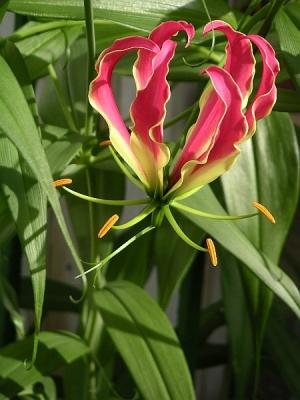
Each flower has six long tepals that curve sharply backward as it matures, exposing six spreading stamens and a prominent outward-projecting style. Colors commonly change from yellow or orange to scarlet and deep red, producing the flame-like appearance behind the names Flame Lily and Fire Lily.
Tubers, Fruit Capsules, and Seeds
The underground storage structure is elongated, fleshy, brittle, and commonly forked or V-shaped. It may be called a tuber, tuberous rhizome, or rootstock in horticultural sources.
One or more growing points can produce new shoots. Broken sections containing viable growing tissue may survive, remain poisonous, and produce additional plants.
Pollinated flowers form elongated three-valved capsules containing numerous rounded red or orange-red seeds. Fallen capsules and spilled seeds should be collected immediately in animal areas.
Glory Lily Is Not a True Lily
Glory Lily belongs to Colchicaceae rather than the true-lily genus Lilium. It is also unrelated to daylilies in Hemerocallis.
True lilies and daylilies cause a distinct acute-kidney-injury emergency in cats. Glory Lily causes colchicine-type gastrointestinal, cardiovascular, respiratory, neurologic, marrow, and multiple-organ toxicity in many animal species.
A bouquet containing both plants creates two independent emergencies. Identifying one Glory Lily flower does not rule out true-lily pollen, petals, leaves, stems, or vase water elsewhere in the arrangement.
What Exact-Plant Research Establishes
Direct high-performance liquid chromatography research has confirmed colchicine in both seed and tuber samples of Gloriosa superba. Separate cultivation studies demonstrate that colchicine content changes with growing conditions and plant treatment.
Those findings explain why the same weight of plant material cannot be assigned a fixed household dose. They also support treating seeds and tubers as concentrated exposure sources.
The term gloriosine appears in toxicologic literature for related plant alkaloids, but colchicine remains the best-established principal toxin. Exact mixtures and concentrations differ among samples.
Published Tuber and Seed Poisonings
A fatal tuber case documented severe gastrointestinal illness followed by respiratory distress, profound leukopenia and thrombocytopenia, liver injury, kidney dysfunction, coagulation abnormalities, and multiple-organ failure despite intensive treatment.
Another tuber case initially resembled an acute infection because fever and blood-count changes emerged after the gastrointestinal phase. The report demonstrates how delayed marrow effects can confuse diagnosis when the exposure history is incomplete.
A seed-poisoning survivor developed profuse vomiting and diarrhea, shock, respiratory distress, kidney impairment, thrombocytopenia, and generalized hair loss during recovery. A separate published seed ingestion resulted in death, confirming that the tuber is not the only potentially fatal plant part.
Additional reports document cardiotoxicity, acute kidney injury, massive alopecia, and delayed anagen effluvium after tuber ingestion.
Veterinary Colchicine Evidence
A young dog that accidentally swallowed colchicine medication developed severe gastrointestinal disease and shock and continued deteriorating despite aggressive treatment. The case established that canine colchicine toxicity can be rapidly progressive and fatal.
A later dog survived a substantial medication overdose after intensive care. Gastrointestinal illness, cardiac arrhythmias, neurologic abnormalities, and neutropenia were documented before recovery.
Medication cases cannot provide a plant dose because the amount in a tablet is known while the alkaloid concentration of one tuber or seed is not. They remain highly relevant to mechanism, monitoring, delayed marrow effects, and prognosis.
Traditional Medicine and Pharmaceutical Colchicine
Glory Lily has been used traditionally for inflammatory conditions, gout, parasitic disease, reproductive purposes, skin disorders, and other indications. It has also been cultivated commercially as a source of colchicine.
Cultural or pharmaceutical use does not establish safety for raw plant material. A regulated medicine contains a measured dose and still requires strict prescribing because the therapeutic margin is narrow.
Homemade teas, powders, tinctures, poultices, extracts, reproductive preparations, parasite remedies, and veterinary treatments are unsafe because the alkaloid concentration cannot be controlled.
Diagnosis and Delayed Monitoring
There is no routine rapid veterinary assay that rules Glory Lily poisoning in or out at the bedside. Diagnosis depends on plant identification, exposure history, gastrointestinal signs, serial laboratory changes, and exclusion of other causes.
Useful evidence includes the complete plant, flowers, tendril-tipped leaves, tubers, fruit capsules, seeds, nursery label, cultivar name, photographs, vomited material, remaining remedy or powder, and every product used around the plant.
Monitoring may include repeated complete blood counts, platelet numbers, blood smears, kidney and liver values, glucose, electrolytes, acid-base status, coagulation tests, cardiac rhythm, blood pressure, oxygenation, urine output, urinalysis, chest imaging, and abdominal imaging.
One normal early blood count does not exclude later neutropenia, thrombocytopenia, anemia, or pancytopenia.
Prevention
Store dormant tubers in sealed, clearly labeled containers inside a locked or genuinely animal-inaccessible room. Do not leave them in open boxes, mesh bags, garages, sheds, mudrooms, or potting areas accessible to dogs.
Exclude animals during planting, lifting, division, repotting, and seasonal storage. Collect every broken tuber fragment, fruit capsule, spilled seed, wilted stem, and pruned flower immediately.
Do not place plant waste in paddocks, poultry areas, rabbit enclosures, kennels, barns, or animal-accessible compost. In a property with persistent digging, free-ranging poultry, livestock access, or plant-chewing pets, complete removal may be the safest option.
Immediate Emergency Response
- Treat every credible ingestion as an emergency. Do not wait for vomiting, diarrhea, weakness, or another symptom before seeking professional help.
- Stop further access. Move every animal away from the vine, tubers, seeds, flowers, leaves, stems, cuttings, powders, extracts, and contaminated garden material.
- Protect yourself. Wear gloves while handling the plant, vomited material, contaminated fur, tools, containers, or stomach contents.
- Remove only loose visible material. When the animal is calm, alert, breathing normally, and swallowing normally, lift pieces resting at the lips or front of the mouth without reaching toward the throat.
- Preserve evidence. Save the tuber, seeds, flowers, leaves, label, packaging, photographs, remaining preparation, and recognizable material found in vomit.
- Estimate the exposure. Record the plant part, number of seeds or tuber pieces missing, time of exposure, repeated access, animal weight, and whether a powder, tincture, or medication was involved.
- Contact emergency veterinary help immediately. Begin transportation as directed by the veterinarian or animal poison-control professional.
- Keep the animal quiet. Restrict exercise because weakness, shock, abnormal heart rhythms, or sudden collapse may develop.
Do Not Attempt Unsupervised Home Treatment
- Do not induce vomiting. Do not use hydrogen peroxide, salt, mustard, syrup of ipecac, detergent, oil, manual gagging, or fingers in the throat.
- Do not administer activated charcoal yourself. Charcoal can be aspirated by a vomiting, weak, sedated, seizuring, unsteady, or poorly swallowing animal.
- Do not give a cathartic or laxative. Colchicine already causes profuse diarrhea, dehydration, electrolyte loss, low blood pressure, and shock.
- Do not force food or fluids. Milk, food, water, electrolyte solution, oil, and large-volume oral drenches do not neutralize colchicine and may be aspirated.
- Do not give human medication or leftover veterinary prescriptions. Pain relievers, antidiarrheal products, heart medication, antibiotics, vitamins, stomach protectants, and herbal products require veterinary selection.
- Do not attempt to flush out the toxin. Salt water, oils, purgatives, and repeated oral fluids can worsen the patient's condition.
Professional Gastrointestinal Decontamination
A veterinarian may consider clinic-induced vomiting after a very recent exposure in a dog that remains fully alert, stable, neurologically normal, symptom-free, able to swallow, and unlikely to have swallowed an obstructing tuber fragment.
Emesis is inappropriate after repeated vomiting begins or when the patient is weak, unsteady, collapsed, seizuring, mentally altered, unable to swallow, breathing abnormally, or unable to protect the airway.
Veterinary activated charcoal may be administered to bind colchicine remaining in the gastrointestinal tract. Carefully selected repeat treatment may be considered because colchicine can return to the intestine through bile and be reabsorbed.
Repeat charcoal requires ongoing assessment of airway protection, hydration, sodium and other electrolytes, gastrointestinal motility, vomiting control, and obstruction risk.
Gastric lavage may be considered after a potentially lethal recent ingestion when emesis is unsafe, unsuccessful, or incomplete. It is performed under anesthesia with endotracheal airway protection.
Large tuber pieces retained in the esophagus or stomach may require endoscopic retrieval. Surgery may be necessary when a fragment obstructs or damages the intestine.
Hospital Stabilization and Intensive Support
There is no routinely available antidote that reverses colchicine already distributed within cells. Treatment must begin immediately and remain focused on circulation, oxygenation, gastrointestinal control, organ support, and delayed complications.
Intravenous fluids may replace gastrointestinal losses and support circulation and kidney perfusion. Fluid selection and rate must be individualized because shock, cardiac dysfunction, pulmonary edema, low urine output, and electrolyte abnormalities may develop together.
Veterinarian-selected antiemetics may be required to control vomiting and reduce aspiration risk. Gastrointestinal protectants, acid-control medication, analgesia, and nutritional support may be used when hemorrhagic or ulcerative injury is present.
Persistent low blood pressure may require vasopressor medication. Abnormal heart rhythms require continuous electrocardiographic monitoring and rhythm-specific treatment.
Supplemental oxygen, intubation, or mechanical ventilation may be required for respiratory distress, pulmonary edema, aspiration, respiratory-muscle weakness, seizures, or severe neurologic depression.
Laboratory and Organ Monitoring
Baseline testing may include a complete blood count, platelet count, blood smear, serum chemistry, glucose, electrolytes, kidney and liver values, muscle enzymes, blood gases, acid-base status, coagulation testing, urinalysis, and blood-pressure measurement.
Cardiac rhythm, oxygenation, temperature, urine output, body weight, abdominal signs, lung sounds, fluid balance, and neurologic status may require continuous or repeated assessment.
One normal early result does not rule out later organ failure or marrow suppression. Testing may need to continue for several days or longer after a serious ingestion.
Dialysis or another renal-replacement technique may support kidney failure, electrolyte control, and fluid balance. It does not reliably remove colchicine that has already distributed extensively into body tissues.
Bone-Marrow Suppression, Infection, and Bleeding
White-cell and platelet counts may fall after apparent improvement. Serial complete blood counts are essential because severe neutropenia and thrombocytopenia may emerge several days after ingestion.
A severely neutropenic animal may require protective isolation, meticulous catheter and wound care, bacterial cultures, and veterinarian-selected broad-spectrum antimicrobial treatment when infection or sepsis is suspected.
A specialist may consider medication that stimulates white-cell production in selected severe cases. Such treatment is not a substitute for infection control, cardiovascular support, or serial blood counts.
Fresh frozen plasma may be used for clinically important coagulation-factor deficiency. Packed red cells or whole blood may be required for severe anemia or hemorrhage, while platelet-containing products may be considered when thrombocytopenia and active bleeding are critical.
Vitamin K is not a general antidote for colchicine poisoning. It may be appropriate only when a specific vitamin-K-responsive coagulation problem is identified.
Colchicine-Specific Antibody Fragments
Colchicine-specific Fab fragments have reversed severe poisoning in experimental work and have been used in an exceptional human overdose. They bind circulating colchicine and promote redistribution away from tissues.
These antibody fragments are not routinely stocked by veterinary hospitals and should not be treated as an available standard antidote. Intensive supportive treatment must not be delayed while attempting to locate them.
Horses and Livestock
Remove the entire exposed group from living plants, uprooted tubers, seeds, hay contamination, garden waste, and discarded flower arrangements. Horses cannot vomit and should never receive an emetic.
Inspect every animal for salivation, abdominal pain, profuse diarrhea, depression, weakness, incoordination, reduced manure, shock, bleeding, or respiratory distress. Animals sharing one source may consume different quantities and become ill at different times.
Provide uncontaminated feed and water after swallowing and abdominal status have been assessed. Do not force drenches, oils, charcoal, laxatives, or large volumes of fluid.
Pregnant animals require urgent assessment because severe maternal shock and organ failure threaten both the mother and fetus, while colchicine interferes directly with dividing cells.
Recovery and Prognosis
Early decontamination and intensive support before systemic toxicity develops provide the best chance of survival. A small exposure treated promptly may have a favorable outcome.
The prognosis becomes guarded to grave with profuse hemorrhagic diarrhea, persistent hypotension, arrhythmias, respiratory failure, kidney or liver injury, seizures, severe neutropenia, thrombocytopenia, hemorrhage, sepsis, or multiple-organ failure.
An apparently improving patient may require hospitalization or repeated testing for a week or longer because marrow suppression and infection can emerge after the gastrointestinal phase ends.
Survivors may need weeks for intestinal tissue, blood-cell production, organ function, strength, appetite, and hair growth to recover.
Frequently Asked Questions About Glory Lily and Animal Poisoning
Is Gloriosa rothschildiana a separate species?
No. It is currently treated as a synonym of Gloriosa superba. ‘Rothschildiana’ remains widely used as a horticultural cultivar name and does not identify a safer plant.
Which parts of Glory Lily are most dangerous?
Every part should be treated as poisonous, but the elongated underground tubers and numerous seeds create the greatest practical risk. Both have directly demonstrated colchicine content and have caused severe or fatal human poisonings.
Is Glory Lily a true lily?
No. It belongs to Colchicaceae and causes colchicine-type systemic poisoning. True lilies in Lilium and daylilies in Hemerocallis cause a different acute-kidney-injury emergency in cats.
How does colchicine cause so many different complications?
Colchicine binds tubulin and prevents normal microtubule formation. Microtubules are required for cell division, cellular structure, intracellular transport, secretion, immune-cell movement, and nerve and muscle function. Their disruption can injure the intestines, marrow, heart, lungs, liver, kidneys, nervous system, and other tissues.
Why can an animal worsen after the vomiting and diarrhea stop?
The early gastrointestinal phase may end before organ injury and marrow suppression reach their greatest severity. White cells and platelets may fall several days later, creating renewed collapse, infection, sepsis, bruising, or hemorrhage after apparent improvement.
Can one normal blood test rule out serious poisoning?
No. An early blood count may be normal or show only stress-related changes. Serial complete blood counts, platelet measurements, chemistry panels, coagulation tests, and organ monitoring may be required for several days.
Can Glory Lily poisoning cause hair loss?
Yes. Delayed diffuse alopecia may occur because colchicine injures rapidly dividing hair-follicle cells. Published survivors have developed dramatic hair loss after the critical illness, with later regrowth as the follicles recovered.
Should vomiting be induced immediately?
Not at home. A veterinarian may consider clinic-induced vomiting after a very recent dog exposure only when the dog remains completely alert, stable, symptom-free, able to swallow, and able to protect the airway. Never use hydrogen peroxide in a cat.
Why might repeated activated charcoal be used?
Colchicine can be secreted into bile, return to the intestine, and be reabsorbed. Carefully monitored repeat charcoal may interrupt that cycle in an appropriate hospitalized patient. It is unsafe when vomiting, weakness, neurologic impairment, poor airway protection, dehydration, electrolyte disturbance, ileus, or obstruction is present.
Should a cathartic or laxative be given with charcoal?
Not at home and not routinely. Colchicine already causes profuse diarrhea, dehydration, electrolyte loss, and shock. A veterinarian may use a cathartic in a carefully selected initial protocol, but repeated cathartics can worsen the poisoning.
Is there a specific antidote?
No routinely available veterinary antidote exists. Colchicine-specific Fab fragments have shown benefit experimentally and in an exceptional human case, but they are not generally stocked. Treatment depends on immediate decontamination when appropriate, intensive supportive care, and delayed monitoring.
Can a tuber cause a physical obstruction as well as poisoning?
Yes. A whole tuber or large fragment may lodge in the esophagus, remain in the stomach, or obstruct the intestine. Persistent gagging, regurgitation, abdominal enlargement, reduced stool, or inability to retain water may require imaging, endoscopy, or surgery.
How dangerous is a credible Glory Lily ingestion?
It is an immediate emergency. Tuber and seed poisonings have caused rapidly progressive shock, cardiotoxicity, respiratory failure, marrow suppression, multiple-organ failure, and death despite intensive treatment. Waiting for symptoms reduces the opportunity for useful early decontamination.