Golden Pothos Toxicity and Insoluble Calcium Oxalate Injury
Is Golden Pothos Poisonous to Dogs, Cats, Horses, and Livestock?
Yes—Golden Pothos, Epipremnum aureum, is poisonous to dogs, cats, horses, livestock, rabbits, birds, and other animals. Chewing a leaf, petiole, vine, node, aerial root, terrestrial root, or fresh cutting releases microscopic needles of insoluble calcium oxalate called raphides. These crystals penetrate the lips, gums, tongue, palate, throat, esophagus, skin, or eyes and cause immediate pain, inflammation, swelling, drooling, gagging, vomiting, and difficulty swallowing.
Most small exploratory bites cause a painful but self-limiting local reaction because the immediate discomfort discourages continued chewing. Significant tongue or pharyngeal swelling, inability to swallow saliva, altered vocalization, abnormal breathing, eye injury, repeated vomiting, dehydration, or ingestion of a long vine or root mass requires veterinary assessment.
About this guide: This page provides general pet-poisoning information and cannot diagnose or treat an individual animal. For any suspected exposure, contact a veterinarian or animal poison-control service immediately. Do not induce vomiting, give medication, or attempt home decontamination unless directed by a veterinary professional.
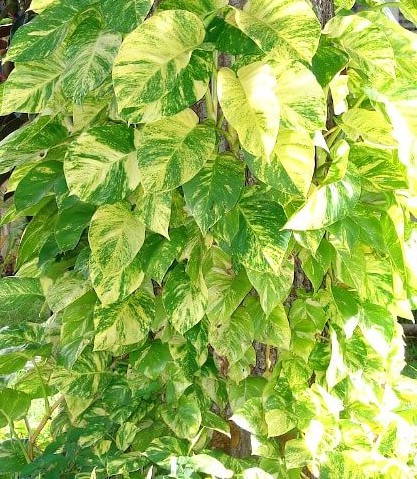
Golden Pothos
Epipremnum aureum (Linden & André) G.S.Bunting
The basionym is Pothos aureus Linden & André.
Important botanical synonyms and former combinations include:
- Scindapsus aureus (Linden & André) Engl.
- Rhaphidophora aurea (Linden & André) Birdsey
- Epipremnum mooreense Nadeaud
Some older horticultural and floristic references have treated the plant as Epipremnum pinnatum ‘Aureum’ or as a form of E. pinnatum. The currently accepted species name is Epipremnum aureum.
Araceae
Golden Pothos; Pothos; Devil’s Ivy; Devil’s Vine; Taro Vine; Ivy Arum; Money Plant; Hunter’s Robe; Hunter’s Robes; Ceylon Creeper; Solomon Islands Ivy; Centipede Tongavine; Centipede Tonga Vine; Epipremnum; Epipremnum aureum; Pothos aureus; Scindapsus aureus; Rhaphidophora aurea; Epipremnum mooreense; Epipremnum pinnatum ‘Aureum’
Golden Pothos is not currently classified in the botanical genus Pothos. The familiar common name survives from the former scientific name Pothos aureus.
Marble Queen, Snow Queen, Neon, Jade, Manjula, N’Joy, Pearls and Jade, Jessenia, Global Green, and other named selections are cultivars of Epipremnum aureum rather than separate toxin-free species.
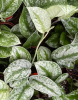
Satin Pothos or Silver Pothos usually refers to Scindapsus pictus. Cebu Blue Pothos and Baltic Blue Pothos are forms of Epipremnum pinnatum. These are different plants, although they are also aroids capable of producing insoluble-calcium-oxalate irritation.
Heartleaf Philodendron is Philodendron hederaceum, not Epipremnum aureum. The two vines are commonly confused and produce a broadly similar raphide-mediated poisoning syndrome.
Insoluble Calcium Oxalate Raphides
The principal established toxic structures in Golden Pothos are microscopic crystals of insoluble calcium oxalate. The clinically important crystals are narrow needle-shaped raphides held in specialized plant cells called idioblasts. Exact-species microscopic research has documented calcium oxalate crystals in the leaves and stems of Epipremnum aureum, directly supporting the mechanism long associated with this plant in veterinary toxicology.
Idioblasts isolate dense crystal bundles from ordinary plant tissue until a leaf, petiole, vine, node, aerial root, terrestrial root, or other structure is crushed, cut, or chewed. Mechanical pressure, tissue rupture, saliva, and plant sap then release the crystals into the mouth. Their shape allows them to penetrate moist epithelial surfaces rather than behaving like harmless grains of mineral material.
The resulting injury has reasonably been compared with countless microscopic splinters. Raphides can become embedded in the lips, gingiva, tongue, palate, pharynx, esophagus, conjunctiva, or cornea. Mechanical penetration damages cells immediately and creates access for sap and inflammatory substances to reach tissue beneath the surface.
The Needle Effect and Unconfirmed Sap Factors
Experimental research using purified raphides from kiwifruit and a cysteine protease demonstrated that needle-shaped crystals can amplify the biological effects of another plant-defense factor. In that study, the combination produced a much stronger effect than either raphides or protease alone. The investigators called this synergistic delivery mechanism the “needle effect.”
That experiment did not use Golden Pothos, dogs, cats, or mammalian oral tissue. It supports a plausible general mechanism in which raphides puncture a protective surface and facilitate entry of other irritating plant constituents, but it does not prove that Epipremnum aureum contains the same protease or that one particular enzyme explains its clinical effects.
A specific proteinase should therefore not be named as the confirmed Golden Pothos toxin without direct species-specific isolation and functional evidence. Insoluble calcium oxalate raphides remain the established toxic principle, while sap constituents and the animal’s local inflammatory response may intensify pain, redness, vascular leakage, and swelling.
Local Raphide Injury Versus Soluble-Oxalate Poisoning
The calcium oxalate in Golden Pothos is predominantly insoluble. These crystals remain chiefly at the surfaces they penetrate and cause local mechanical and inflammatory injury. They do not ordinarily dissolve into a large absorbable oxalate dose capable of removing substantial calcium from the circulation.
This mechanism differs from poisoning by plants containing appreciable soluble oxalates. Soluble oxalates can bind circulating calcium, contribute to systemic hypocalcemia, and produce calcium oxalate deposition in the kidneys. An ordinary Golden Pothos exposure is not expected to cause that syndrome.
Primary renal crystal injury, profound hypocalcemia, seizures from systemic oxalate absorption, direct liver failure, or delayed multiple-organ collapse should not be presented as routine Pothos effects. Kidney abnormalities or neurologic collapse in an exposed animal may instead result from severe dehydration, oxygen deprivation, aspiration, another toxic plant, a pesticide, fertilizer, medication, or unrelated disease.
Plant Parts and Cultivar Differences
Leaves and vines are the most accessible household exposure sources, and exact-species microscopy confirms calcium oxalate crystals in both leaf and stem tissue. All living portions should nevertheless be treated as capable of causing injury, including petioles, nodes, juvenile and mature stems, aerial roots, terrestrial roots, sap, inflorescences, fruit, seeds, and propagation cuttings.
No dependable comparative study establishes which Golden Pothos organ contains the greatest number of clinically active raphides. A thick mature stem or dense root bundle may create a larger practical exposure because more tissue can be crushed, but this does not prove that it has a higher crystal concentration than a leaf.
Green, yellow, cream, white, or chartreuse foliage remains unsafe to chew. Cultivars such as ‘Marble Queen’, ‘Snow Queen’, ‘Neon’, ‘Jade’, ‘Manjula’, ‘N’Joy’, ‘Pearls and Jade’, ‘Jessenia’, and ‘Global Green’ differ in color and growth pattern, not in any demonstrated absence of calcium oxalate crystals.
Wilting or drying does not dissolve the mineral crystals. A fallen leaf, discarded vine, dried cutting, or pruned aerial root may therefore retain mechanical irritant potential even after some fresh sap activity has declined.
Mechanical and Mixed-Exposure Hazards
Golden Pothos also creates physical hazards independent of crystal toxicity. A long vine, thick mature stem, petiole, compact root mass, or bundle of aerial roots may lodge around the tongue, become trapped in the pharynx or esophagus, remain in the stomach, or contribute to an intestinal foreign body.
A knocked-over container may expose the animal to fertilizer granules, systemic insecticides, fungicides, leaf-shine products, mold, decorative stones, plastic plant ties, water-retaining material, or broken pottery. These substances can produce clinical signs unlike the expected local raphide syndrome.
Propagation water may contain sap, detached plant cells, fertilizer, algae, bacteria, or decaying tissue. Clear water alone does not necessarily reproduce the intense injury caused by crushing intact plant tissue, because insoluble raphides are not simply dissolved into solution. Water containing visible plant debris or fresh sap should nevertheless be considered contaminated.
No Established Safe Plant Dose
No dependable number of leaves, vine length, root weight, or gram-per-kilogram dose has been established for dogs, cats, horses, livestock, rabbits, birds, or other animals. The amount of tissue crushed, plant maturity, location of contact, patient size, chewing behavior, and ability to spit out the material all influence severity.
Immediate pain commonly limits further ingestion, which helps explain why most cases remain mild or moderate. That protective response is not guaranteed in a determined chewer, a very young animal, an animal carrying a long vine, or a patient that swallows plant material without prolonged mastication.
Immediate Oral Pain and Defensive Behavior
Signs generally begin while the plant is being chewed or within minutes. A dog may abruptly release the vine, shake its head, rub the muzzle against the floor, paw at the mouth, salivate heavily, gag, retch, or vomit. A cat may hold the mouth partly open, repeatedly swallow, paw at the lips, hide, refuse food, or react aggressively when the head is touched.
The lips, gums, tongue, palate, and oral mucosa may become reddened, tender, swollen, eroded, or ulcerated. Individual crystal punctures are too small to see during an ordinary examination, but the cumulative injury can produce intense burning and visibly inflamed tissue. Saliva may become thick or rope-like because swallowing is painful.
An affected animal may repeatedly approach a water bowl and then pull away, drop food after attempting to chew, or refuse to close the mouth normally. These behaviors reflect painful contact and should not be dismissed as anxiety or bad behavior.
Difficulty Swallowing and Upper-Airway Risk
Swelling and pain may interfere with movement of the tongue and pharynx. Signs include repeated unsuccessful swallowing, coughing while drinking, gagging, reluctance to eat, inability to manage saliva, a weak bark or meow, or temporary loss of normal vocalization.
Most Golden Pothos exposures do not progress to respiratory obstruction. Severe tongue, pharyngeal, epiglottic, glottic, or laryngeal edema remains a biologically plausible and potentially life-threatening complication of substantial raphide injury, particularly when a large amount is chewed deeply within the mouth.
Harsh or noisy inspiration, stridor, neck extension, open-mouth breathing, rapidly increasing respiratory effort, panic, blue-gray gums, weakness, or collapse requires immediate emergency treatment. A normal-looking front portion of the tongue does not exclude swelling farther back in the pharynx or larynx.
Gastrointestinal Irritation and Dehydration
Plant material reaching the esophagus, stomach, or intestine may cause nausea, continued vomiting, reduced appetite, abdominal discomfort, diarrhea, lethargy, or depression. These signs arise from local irritation and swallowed plant material rather than from systemic soluble-oxalate poisoning.
Repeated vomiting can carry acidic stomach contents and additional plant fragments across already injured tissue. It can also produce dehydration, electrolyte disturbances, weakness, and aspiration. Kittens, puppies, toy-breed dogs, elderly animals, and patients with existing kidney, heart, endocrine, or gastrointestinal disease may become unstable more rapidly.
Small red streaks can follow forceful retching or mucosal irritation. Repeated fresh blood, coffee-ground material, black stool, bloody diarrhea, increasing abdominal pain, or pale mucous membranes warrants examination for more substantial gastrointestinal injury, a foreign body, another toxin, or unrelated disease.
Eye and Skin Injury
Sap or plant debris entering an eye can cause intense pain, tearing, blinking, squinting, conjunctival redness, eyelid swelling, corneal edema, abrasion, ulceration, or a crystalline keratopathy. A published Epipremnum aureum case documented calcium oxalate crystals within the corneal tissue, demonstrating that eye exposure can persist after loose surface debris has been washed away.
The animal may keep the eye closed, avoid light, rub the face, or develop visible cloudiness. Continued pain after irrigation requires veterinary examination because an epithelial defect, retained crystal, or ulcer cannot be excluded by external appearance alone.
Sap on intact skin usually produces a less severe reaction than mucosal or ocular exposure. Damaged or sensitive skin may develop burning, redness, itching, swelling, or contact irritation. Sap carried on the coat or paws may later be transferred into the mouth or eyes during grooming.
Vine, Root, and Foreign-Body Complications
Persistent gagging, repeated swallowing, unproductive retching, regurgitation, or inability to swallow water may indicate a vine, petiole, root bundle, or leaf section lodged in the mouth, pharynx, or esophagus. Continuing vomiting after oral pain begins to improve may reflect retained material in the stomach or intestine.
Abdominal enlargement, escalating pain, reduced fecal production, inability to retain water, or worsening depression requires diagnostic investigation. Plant fibers may not be conspicuous on every radiograph, and ultrasound, contrast imaging, or endoscopy may be needed.
A long plant fiber protruding from the mouth or rectum should not be pulled blindly. It may be anchored around the tongue or extend through the gastrointestinal tract, where traction can cause additional injury.
Species Differences and Evidence Limits
An Italian veterinary toxicovigilance survey recorded canine exposure to Epipremnum aureum, but detailed exact-species dog and cat case reports remain limited. The expected companion-animal syndrome is therefore based on the plant’s confirmed calcium oxalate structures, broader aroid toxicology, poison-center experience, and the characteristic rapid onset after chewing.
Cats and dogs are both susceptible. Cats may hide or stop eating rather than displaying dramatic pawing behavior, while dogs may carry and repeatedly chew long vines. Continued anorexia is particularly concerning in cats and should not be attributed indefinitely to a minor mouth injury.
Horses cannot vomit and may instead show salivation, dropped feed, painful chewing, reluctance to swallow, coughing while eating, colic, diarrhea, or depression. Rabbits and guinea pigs also cannot vomit; food refusal, reduced fecal output, facial rubbing, drooling, or abdominal distension requires species-specific veterinary advice.
Seizures, profound coma, primary kidney failure, jaundice, major heart-rhythm disturbances, or delayed organ failure is not the expected uncomplicated course. These signs should prompt investigation for airway-related hypoxia, aspiration, dehydration, a chemical co-exposure, another plant, or an independent disease.
Expected Course and Prognosis
Most limited exposures begin improving within several hours once no further contact occurs. Mild oral discomfort and drooling may resolve during the same day, while moderate inflammation can interfere with eating and drinking into the following day.
The prognosis is good to excellent when the animal breathes and swallows normally and maintains hydration. The outlook becomes more guarded with progressive airway swelling, repeated vomiting, aspiration, significant esophageal injury, corneal ulceration, dehydration, or a retained vine or root mass.
Symptoms continuing for several days should not be accepted automatically as the routine course of Pothos poisoning. Persistent pain, vomiting, inability to eat, cough, eye abnormalities, or recurrent swelling warrants reassessment for a complication or alternative diagnosis.
Accepted Identity and Taxonomic History
Golden Pothos is Epipremnum aureum (Linden & André) G.S.Bunting, an evergreen climbing aroid in the family Araceae. The common name Pothos survives from its original description as Pothos aureus, even though the species is no longer classified in the botanical genus Pothos.
Later combinations included Scindapsus aureus and Rhaphidophora aurea. Epipremnum mooreense is also treated as a synonym. Some older floristic and horticultural authorities placed the plant within Epipremnum pinnatum or used the cultivar-style name E. pinnatum ‘Aureum’, but the currently accepted species is E. aureum.
Native Range and Introduced Distribution
The accepted native range is Mo‘orea in the Society Islands of French Polynesia. The frequently repeated claim that Golden Pothos is native to the Solomon Islands is not consistent with the current accepted distribution.
Human cultivation has introduced the species throughout many tropical and subtropical regions. It has become naturalized in parts of Asia, Australia, Africa, the Pacific, the Caribbean, Central and South America, Hawaii, and Florida. In warm wet environments, discarded cuttings can root, spread across the ground, climb trees, and form large invasive populations.
Indoor exposure occurs in houses, offices, schools, hotels, medical buildings, restaurants, shopping centers, greenhouses, terrariums, and hanging displays. Outdoor exposure becomes more important where the species grows as a landscape vine or escapes cultivation.
Juvenile and Mature Growth
The familiar hanging-basket plant represents the juvenile growth stage. Juvenile leaves are glossy, entire, and broadly oval to heart-shaped, with irregular yellow streaks, splashes, or marbling over green tissue. Trailing stems remain relatively slender and continue producing smaller leaves.
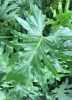
When the vine climbs a tree, wall, pole, or another textured support, its morphology changes markedly. Stems thicken, aerial roots become more substantial, and mature leaves may grow several feet long and develop deep irregular divisions. A mature outdoor plant can be mistaken for a large Philodendron or Monstera even though it originated from an ordinary juvenile Pothos cutting.
Brown aerial roots arise from nodes and attach the vine to bark, masonry, wood, and other surfaces. Some remain short and adhesive, while others elongate toward soil or moisture. These are living plant structures and should be treated as capable of causing raphide injury when chewed.
Flowers, Fruit, and Cultivars
Golden Pothos is notably reluctant to flower, especially in its juvenile indoor form. Mature plants can produce the typical aroid inflorescence consisting of a central spadix surrounded by a spathe, followed by fruit if pollination succeeds. These structures are rarely encountered in homes but should not be treated as edible or toxin-free.
Popular cultivars include ‘Golden’, ‘Marble Queen’, ‘Snow Queen’, ‘Neon’, ‘Jade’, ‘Manjula’, ‘N’Joy’, ‘Pearls and Jade’, ‘Jessenia’, and ‘Global Green’. Light level and growth conditions can alter variegation, and green reversion can occur. Neither pale coloration nor loss of variegation establishes reduced raphide content.
Pothos Look-Alikes and Retail Confusion
Heartleaf Philodendron, Philodendron hederaceum, is frequently confused with Golden Pothos. Pothos usually has thicker waxier leaves, grooved or winged petioles, and conspicuous aerial roots. Heartleaf Philodendron commonly has thinner, more symmetrical foliage and smoother rounded petioles. Both are raphide-containing aroids, so misidentification does not make chewing safe.
Satin Pothos is generally Scindapsus pictus, with matte green leaves marked by silver patches. Cebu Blue and Baltic Blue Pothos are associated with Epipremnum pinnatum. Retail use of “Pothos” extends beyond E. aureum, making the scientific name, label, and complete plant photograph more reliable than the common name alone.
How Animals Encounter Golden Pothos
Cats may chew hanging leaves, climb to a basket, pull cuttings from water, or become exposed when a trailing vine reaches furniture or a cat tree. Dogs may tug a vine from a shelf, carry a detached cutting, shred a root ball, or gain access during pruning and repotting.
Propagation creates concentrated access to freshly cut tissue. Each node-bearing cutting remains toxic, and fresh cuts expose sap. Jars and growing containers may also contain fertilizer, algae, bacteria, or decaying tissue.
Horses, livestock, rabbits, and poultry are more likely to encounter discarded houseplants, landscape clippings, uprooted vines, or open compost than an intact indoor hanging basket. Plant waste should never be thrown into paddocks, feed areas, runs, aviaries, or animal enclosures.
Exact-Species Evidence and Diagnosis
Microscopic research has documented calcium oxalate crystals in Golden Pothos leaves and stems. A published ocular case demonstrated penetrating corneal crystal injury after direct Epipremnum aureum exposure. Veterinary epidemiological research confirms that domestic-animal exposure occurs, but detailed exact-species dose and outcome information remains limited.
There is no routine bedside blood or urine test that confirms Golden Pothos poisoning. Diagnosis relies on plant identification, witnessed chewing, missing leaves or vines, abrupt oral signs, visible plant material, and exclusion of an airway problem, foreign body, or chemical co-exposure.
Useful evidence includes the nursery label, photographs of juvenile and mature foliage, damaged vines, aerial roots, vomited material, and packaging for fertilizers, pesticides, fungicides, or other products associated with the container.
Blood calcium and kidney values are generally not diagnostic because ordinary Golden Pothos exposure causes local insoluble-raphide injury rather than systemic soluble-oxalate poisoning. Testing may still be appropriate when dehydration, organ abnormalities, atypical signs, or another exposure is suspected.
Prognosis and Prevention
Most limited oral exposures have a favorable prognosis. Significant risk arises from progressive tongue or throat swelling, inability to maintain hydration, aspiration, corneal injury, or a retained vine, petiole, or root mass.
Prevention must account for rapid trailing growth. A basket initially outside a pet’s reach may become accessible as vines lengthen toward the floor, furniture, cages, or climbing structures. Trim growth before it enters an animal’s space and remove every cutting immediately.
Use stable containers, secure climbing supports, enclosed propagation areas, and inaccessible disposal containers. In warm climates, bag discarded vines rather than throwing them into natural vegetation or open compost, where individual nodes may establish new plants.
A closed plant room, secure display cabinet, or pet-safer replacement is more dependable than essential oils, hot pepper, concentrated citrus, or harsh deterrent sprays, which may create additional irritation or poisoning.
Immediate Steps After Golden Pothos Exposure
- Stop further access. Move the animal away from leaves, vines, petioles, nodes, aerial roots, terrestrial roots, cuttings, sap, propagation containers, and plant debris.
- Check breathing first. Noisy inhalation, open-mouth breathing, neck extension, blue-gray gums, rapidly increasing effort, weakness, or collapse requires immediate emergency transport.
- Remove only loose visible material. When the animal is calm and breathing normally, lift away plant pieces resting at the lips or front of the mouth. Do not reach behind the tongue or pull blindly on a long vine or fiber.
- Protect your hands and eyes. Wear gloves or use clean gauze when handling sap-covered material, saliva, or vomit.
- Gently clear surface sap. Wipe the lips, gums, and front of the tongue with a cool damp cloth. A gentle forward-directed rinse may be used only when the animal is cooperative and can swallow normally.
- Prevent grooming. Keep the animal from licking sap-covered paws, fur, or skin until washing is complete.
- Save identification evidence. Preserve the label, photographs, representative leaf and vine material, and any recognizable fragments found in vomit.
- Contact a veterinarian. Report the plant part, amount missing, whether a long vine or root mass was swallowed, current swallowing ability, breathing, vomiting, and any eye exposure.
Do Not Attempt Unsupervised Home Treatment
Do not induce vomiting. Golden Pothos causes injury as the plant is crushed in the mouth, and vomiting cannot remove crystals already embedded in tissue. Returning plant fragments and stomach acid across injured mucosa may intensify pain and increase aspiration risk.
- Do not use hydrogen peroxide, salt, mustard, ipecac, detergent, dish soap, manual gagging, or fingers in the throat.
- Do not administer activated charcoal at home. Charcoal cannot extract mineral needles from tissue and may be aspirated by a drooling, gagging, vomiting, weak, or sedated animal.
- Do not give milk, yogurt, cottage cheese, oil, bread, or another supposed antidote. These substances do not remove embedded raphides or neutralize the injury.
- Do not force food or water. Forced swallowing is dangerous when the tongue or throat is swollen or painful.
- Do not give diphenhydramine, corticosteroids, pain medication, antacids, antidiarrheals, calcium, or leftover veterinary medication unless directed by a veterinarian.
- Do not scrub the mouth. Aggressive rubbing can drive crystals deeper and worsen pain or bleeding.
An animal that is fully alert, breathing quietly, swallowing saliva normally, and not gagging or vomiting may be allowed a small voluntary amount of cool water. Stop if coughing, repeated swallowing, regurgitation, or distress occurs. An animal unable to swallow saliva should receive nothing by mouth.
Airway Emergency Signs
- Progressive tongue or facial swelling: Visible enlargement may indicate continuing deeper inflammation.
- Inability to swallow saliva: Continuous drooling with repeated unsuccessful swallowing suggests important pharyngeal involvement.
- Voice change: A hoarse bark, weak meow, unusual cough, or loss of normal vocalization may accompany swelling near the airway.
- Stridor or noisy inhalation: Harsh breathing sounds can indicate upper-airway narrowing.
- Abnormal posture: Neck extension, elbows held away from the body, refusal to lie down, or panic may indicate respiratory distress.
- Blue-gray mucous membranes, weakness, or collapse: These findings indicate inadequate oxygen and require immediate emergency care.
Keep a breathing-impaired animal quiet and minimize handling. Do not repeatedly force the mouth open, press on the tongue, or attempt to place medication into the throat. Struggling raises oxygen demand and can worsen a narrowing airway.
Skin, Coat, and Eye Decontamination
Wash contaminated skin, paws, and fur with lukewarm water and a mild pet-safe shampoo or soap. Rinse thoroughly without aggressive scrubbing, and direct contaminated water away from the face. Avoid bleach, alcohol, peroxide, solvents, concentrated vinegar, essential oils, and abrasive cleaners.
If sap or plant debris enters an eye, begin irrigation immediately with sterile saline or clean lukewarm water. Flush continuously for at least 15 to 20 minutes, allowing the fluid to flow away from the unaffected eye and mouth. Do not rub the eye or attempt to remove crystals with a swab or fingernail.
Continued squinting, tearing, redness, cloudiness, discharge, light sensitivity, or refusal to open the eye requires prompt veterinary examination. Fluorescein staining, magnification, eyelid eversion, and repeat examination may be required because calcium oxalate crystals can penetrate corneal tissue.
Do not use human redness-relief drops, topical anesthetics, or leftover eye medication. Steroid-containing eye medication can worsen an undiagnosed corneal ulcer.
Veterinary Airway, Oral, and Gastrointestinal Care
The veterinarian first determines whether the animal can maintain an open airway and protect it during swallowing. Examination may include respiratory assessment, oxygen measurement, oral inspection, and evaluation of the pharynx and larynx under sedation when necessary.
Clinically significant airway swelling may require oxygen, injectable medication, sedation, endotracheal intubation, assisted ventilation, or an emergency surgical airway. Antihistamines or corticosteroids may be considered in selected patients, but neither removes crystals or substitutes for airway protection.
Veterinary analgesia may be required for severe oral, tongue, pharyngeal, or esophageal pain. Anti-nausea medication and intravenous fluids may be used when vomiting or painful swallowing interferes with hydration. Electrolytes and glucose are corrected according to measured abnormalities rather than through owner-selected supplements.
Gastrointestinal protectants may be considered when repeated vomiting, blood, regurgitation, or suspected esophageal injury is present. Food is reintroduced gradually only after vomiting is controlled and swallowing is safe.
Professional Decontamination
Professional emesis is generally inappropriate because the principal injury is local and most meaningful exposures are already symptomatic by the time assistance is sought. It is contraindicated in animals with drooling, oral swelling, gagging, vomiting, weakness, abnormal breathing, neurologic impairment, or inability to protect the airway.
Activated charcoal is not routinely useful because it does not bind or remove raphides embedded in tissue. Gastric lavage would be reserved for exceptional mixed or massive exposures under anesthesia with a protected airway and does not correct the oral injury.
Loose plant material may be removed during a controlled oral examination. Sedation or anesthesia may be necessary to inspect beneath the tongue or into the pharynx without worsening patient distress or risking injury to the handler.
Vine, Root, and Foreign-Body Treatment
Persistent gagging, regurgitation, repeated vomiting, abdominal enlargement, pain, or reduced stool may prompt radiographs, ultrasound, contrast imaging, or endoscopy. Plant material may not be visible on every routine radiograph.
Endoscopy may permit inspection and removal of a vine, petiole, aerial-root bundle, or leaf mass from the esophagus or stomach. Surgery may be required when material obstructs the intestine or cannot be removed safely through another procedure.
Do not pull a long fiber or vine protruding from the mouth or rectum unless a veterinarian has determined that traction is safe. Anchored linear material can injure the tongue, esophagus, stomach, or intestine.
Horses, Livestock, Rabbits, Birds, and Other Animals
Do not induce vomiting in horses, rabbits, guinea pigs, or other species incapable of vomiting. Remove all animals from the contaminated area and provide uncontaminated feed and water without forcing intake.
Horses and livestock should be monitored for salivation, dropped feed, painful chewing, reluctance to swallow, coughing while eating, colic, diarrhea, depression, or abnormal breathing. Rabbits and guinea pigs require prompt attention for food refusal, reduced fecal output, abdominal distension, or lethargy.
Birds and other small animals may receive a meaningful exposure from an amount that appears minor to a person. Seek advice from a veterinarian familiar with the species rather than applying dog or cat decontamination or medication instructions.
Recovery and Prognosis
Most limited exposures improve substantially within several hours after further contact stops. Mild oral discomfort and drooling may resolve during the same day, while moderate inflammation can interfere with eating and drinking into the following day.
Re-examination is appropriate when the animal cannot eat, cannot drink comfortably, continues vomiting, develops a cough, shows recurrent swelling, or remains markedly painful or depressed. Persistent ocular pain, cloudiness, discharge, or squinting also requires follow-up.
The prognosis becomes more serious when swelling affects breathing, but prompt airway protection can be lifesaving. Recovery from foreign-body ingestion depends on whether the swallowed vine or root material passes normally or requires endoscopic or surgical removal.
Frequently Asked Questions About Golden Pothos and Animal Poisoning
Why can one Golden Pothos have small heart-shaped leaves while another has enormous divided leaves?
Golden Pothos changes form as it matures and climbs. Trailing juvenile vines produce the familiar small heart-shaped foliage. A vine climbing a tree or textured vertical support develops thicker stems, stronger aerial roots, and much larger leaves that may become deeply divided. These forms can look like different species even though both are Epipremnum aureum and retain the same raphide hazard.
Could a plant labeled Epipremnum pinnatum ‘Aureum’ still be Golden Pothos?
Yes. Some older horticultural and taxonomic treatments placed Golden Pothos within Epipremnum pinnatum or used the name E. pinnatum ‘Aureum’. The currently accepted species is Epipremnum aureum. Treatment after chewing should not be delayed over this naming difference because both plants are raphide-containing aroids.
Does a normal blood calcium level rule out Golden Pothos exposure?
No. Golden Pothos primarily causes local injury from insoluble calcium oxalate crystals. It does not ordinarily remove enough calcium from the bloodstream to create the systemic hypocalcemia associated with soluble-oxalate plants. Blood calcium may remain normal despite substantial mouth, throat, or eye pain.
Can a pet sustain a serious eye injury without eating the plant?
Yes. Sap or plant fragments can enter an eye during pruning, play, grooming, or contact with contaminated paws. A published Epipremnum aureum case demonstrated calcium oxalate crystals within corneal tissue. Persistent squinting, cloudiness, tearing, redness, or light sensitivity after irrigation requires veterinary examination even when no plant was swallowed.
Why might gagging continue after the mouth looks less inflamed?
Continuing gagging may reflect deeper pharyngeal or esophageal irritation that cannot be seen at the front of the mouth. It may also indicate a retained vine, petiole, aerial-root bundle, or fibrous leaf section. Persistent swallowing attempts, regurgitation, unproductive retching, or inability to retain water may require sedation, imaging, or endoscopy.
Can drinking clear propagation water cause the same injury as chewing a leaf?
Not necessarily. Insoluble raphides are housed inside plant cells and are released most efficiently when tissue is crushed. Clear water without sap or plant debris may not reproduce the intense mechanical injury of chewing. Propagation water should still be inaccessible because it can contain fresh sap, detached cells, fertilizer, algae, bacteria, or decomposing tissue.
Can a Golden Pothos leaf that has reverted to solid green be safer?
No. Green reversion changes the visible variegation but does not change the plant’s species identity or establish loss of calcium oxalate crystals. Solid-green ‘Jade’ plants and reverted shoots should be treated as capable of producing the same local raphide injury as yellow- or white-variegated cultivars.
How can a veterinarian distinguish Pothos irritation from a soluble-oxalate plant poisoning?
Golden Pothos usually produces immediate local mouth pain, drooling, pawing, gagging, and difficulty swallowing. Soluble-oxalate poisoning is more likely to produce systemic calcium disturbance, muscular weakness, tremors, abnormal heart activity, and kidney injury after sufficient ingestion. Plant identification, exposure history, physical examination, blood calcium, kidney values, urinalysis, and clinical progression help distinguish the syndromes.
Why is there no reliable “one leaf” or vine-length toxic dose?
Severity depends on how much tissue is crushed, where the crystals contact the animal, plant maturity, leaf or stem thickness, patient size, chewing behavior, and whether material is spit out or swallowed. A superficial bite and prolonged chewing of a thick mature vine are not equivalent exposures. Controlled dose-response studies in dogs and cats have not established a safe leaf count or vine length.