Lacy Tree Philodendron Raphide Injury and Airway Risk
Is Lacy Tree Philodendron Poisonous to Dogs, Cats, Horses, and Livestock?
Yes—Lacy Tree Philodendron, Philodendron bipinnatifidum, is poisonous to dogs, cats, horses, livestock, birds, rabbits, guinea pigs, and other animals because its tissues contain bundles of insoluble calcium oxalate crystals called raphides. Biting, tearing, or crushing a leaf, petiole, stem, aerial root, underground root, flower, fruiting structure, or other tissue releases microscopic needle-shaped crystals that penetrate the lips, mouth, tongue, throat, and sometimes the esophagus.
Most animals stop chewing quickly because the pain begins immediately. Typical signs include intense oral burning, head shaking, pawing at the mouth, excessive or foamy drooling, repeated swallowing, gagging, vomiting, lip or tongue swelling, reluctance to eat, and painful swallowing. Insoluble calcium oxalate acts primarily as a localized contact irritant; uncomplicated exposure does not ordinarily cause the profound hypocalcemia, calcium-oxalate kidney injury, or systemic organ failure associated with soluble-oxalate plants.
Severe tongue, pharyngeal, or laryngeal swelling is uncommon but can obstruct the airway. Eye contamination can also produce intense pain and corneal injury, while a swallowed petiole, root segment, pot fragment, decorative stone, wire, or plastic plant label can create a separate foreign-body emergency.
About this guide: This page provides general pet-poisoning information and cannot diagnose or treat an individual animal. For any suspected exposure, contact a veterinarian or animal poison-control service immediately. Do not induce vomiting, give medication, or attempt home decontamination unless directed by a veterinary professional.
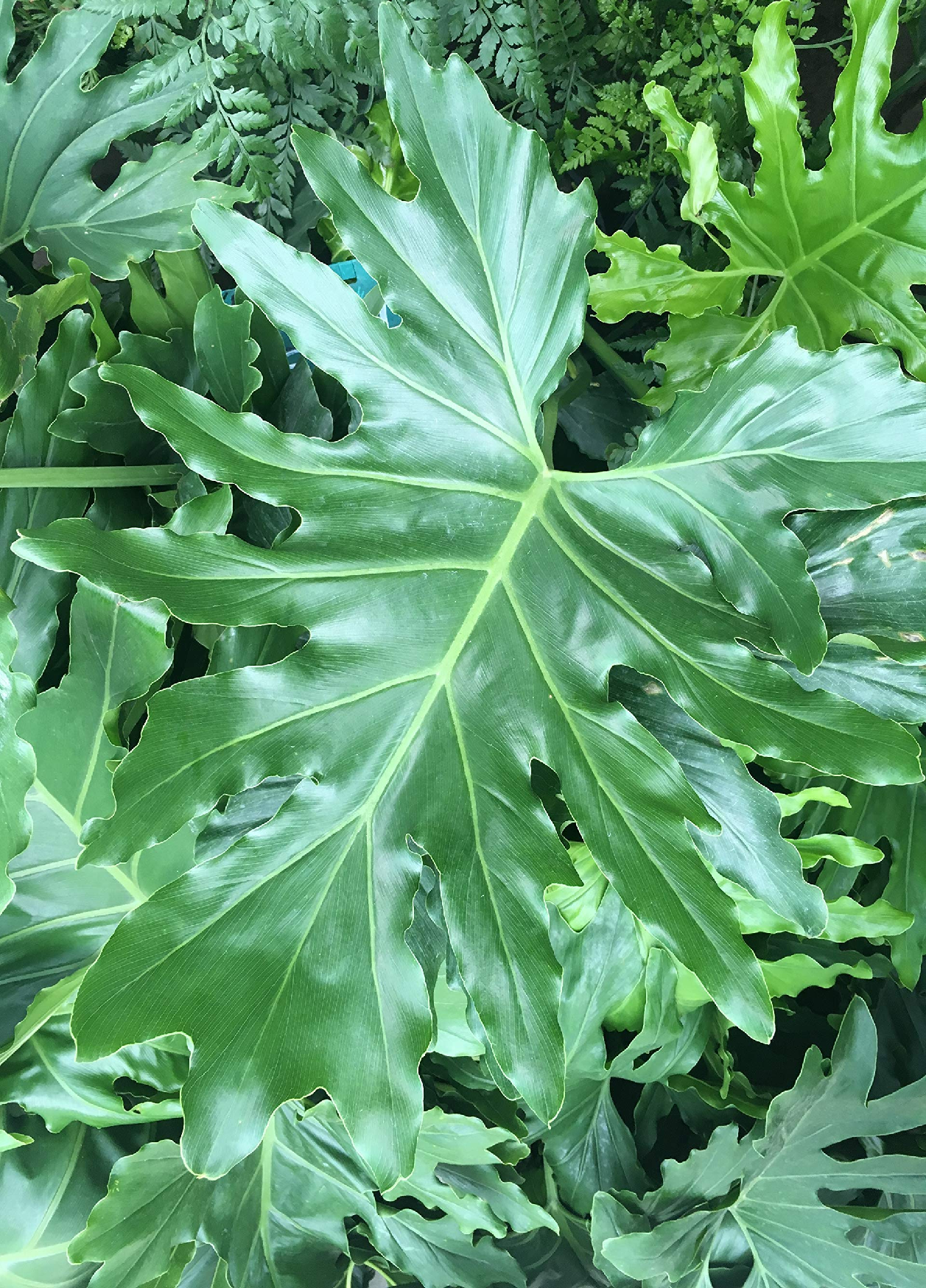
Lacy Tree Philodendron
Philodendron bipinnatifidum Schott ex Endl.
The most important alternative scientific name is:
- Thaumatophyllum bipinnatifidum (Schott ex Endl.) Sakur., Calazans & Mayo
The principal historical synonym is:
- Philodendron selloum K.Koch
A 2018 molecular, morphological, cytological, and nomenclatural study proposed recognizing the former Philodendron subgenus Meconostigma as the separate genus Thaumatophyllum. Under that treatment, Lacy Tree Philodendron is Thaumatophyllum bipinnatifidum.
Not all current taxonomic authorities accept the generic separation. Major databases continue to recognize Philodendron bipinnatifidum as the accepted name while treating Thaumatophyllum bipinnatifidum as a synonym or alternative classification. Both names therefore appear in current botanical, horticultural, veterinary, and nursery literature.
Philodendron selloum is no longer accepted as a separate species but remains extremely important for identification and literature searches. Older poison lists, livestock studies, nursery labels, landscape records, and houseplant references may use Selloum or Philodendron selloum without mentioning Philodendron bipinnatifidum.
Araceae — Arum Family
Lacy Tree Philodendron; Lacy-Tree Philodendron; Lacy Tree; Tree Philodendron; Tree-Philodendron; Selloum; Selloum Philodendron; Philodendron Selloum; Split-Leaf Philodendron; Split Leaf Philodendron; Cut-Leaf Philodendron; Cut Leaf Philodendron; Deeply Cut Philodendron; Lacy-Leaf Philodendron; Guembé; Guembe; Guaimbê; Guaimbe; Imbé; Imbe; Aimbé; Banana-de-Imbé; Banana-de-Imbe; Banana-de-Macaco; Philodendron bipinnatifidum; Thaumatophyllum bipinnatifidum; Philodendron selloum
Selloum, Selloum Philodendron, and Philodendron Selloum refer to the former scientific name Philodendron selloum, now treated as a synonym of Philodendron bipinnatifidum. Those names remain common on nursery labels and in older veterinary and landscape references.
Split-Leaf Philodendron and Cut-Leaf Philodendron are ambiguous trade names. They are also widely applied to Monstera deliciosa, which develops enclosed holes or fenestrations in mature leaves as well as marginal splits. Lacy Tree Philodendron normally develops numerous deep lobes extending inward from the leaf margin without the same pattern of enclosed windows.
Guembé, Guaimbê, Imbé, Aimbé, Banana-de-Imbé, and Banana-de-Macaco are regional names used in South America. Some are also applied to other large aroids, so they should not be treated as uniquely diagnostic without the scientific name or a complete plant specimen.
Horsehead Philodendron is not a dependable exact synonym. That name is more properly associated with Philodendron bipennifolium, a separate climbing species with horse-head- or fiddle-shaped leaves. Nursery and online usage may blur the names, but the two plants should not be treated as botanically identical.
Xanadu, Winterbourn, and Hope Philodendron may refer to related self-heading plants or cultivated selections rather than to an ordinary mature specimen of Philodendron bipinnatifidum. They share the insoluble-calcium-oxalate hazard, but their mature size, leaf form, growth habit, and exact taxonomy differ.
Insoluble Calcium Oxalate Raphides
The principal confirmed hazard in Lacy Tree Philodendron is insoluble calcium oxalate arranged as microscopic needle-shaped crystals called raphides. These crystals are stored in specialized cells called idioblasts. Calcium oxalate deposition serves several functions within plants, including calcium regulation, tissue organization, and defense against herbivory.
Exact-species anatomical research has documented calcium oxalate crystal structures in the floral organs and root tissues of Philodendron bipinnatifidum. The crystal forms and their distribution can vary among tissues. This supports treating the entire plant as irritating while avoiding the unsupported claim that every tissue contains an identical crystal concentration.
Leaves are the most frequent household exposure because their broad lobes hang within reach, but leaf blades are not the only relevant tissue. Petioles, the thick trunk-like stem, aerial or support roots, underground roots, inflorescences, immature fruit, sap-bearing cut surfaces, seedlings, cuttings, and discarded plant material can all expose an animal to crystals or irritating debris.
How Idioblast Damage Releases the Crystals
An intact idioblast encloses its crystal bundle within living plant tissue. Biting, tearing, crushing, cutting, or snapping the plant disrupts the surrounding cells and exposes the raphides. Continued chewing pushes the crystals into the lips, gums, tongue, palate, inner cheeks, pharynx, and sometimes the esophagus.
The injury is mechanical at its core. Numerous sharp crystals create microscopic punctures and abrasions across tissue that contains dense sensory innervation. The resulting pain begins during or immediately after chewing rather than after systemic absorption and metabolism.
Plant sap, mucilage, tissue pressure, saliva, tongue movement, repeated swallowing, and pawing at the mouth can disperse the crystals beyond the original contact point. An animal that continues chewing or attempts repeatedly to swallow a large fibrous piece may injure a wider area than an animal that immediately spits out one small bite.
Inflammation Beyond the Needle Effect
Mechanical penetration initiates inflammation, vascular leakage, redness, pain, and swelling. Experimental work involving other raphide-containing plants indicates that crystal needles can also create pathways for proteases and other biologically active substances to enter tissue, magnifying irritation beyond the physical puncture alone.
A specific protease has not been isolated and established as the principal toxin of Philodendron bipinnatifidum. It is therefore more accurate to describe possible inflammatory cofactors than to claim that Lacy Tree Philodendron contains a particular proven proteinase responsible for the syndrome.
Histamine and other inflammatory mediators may participate in swelling, but the injury is not ordinarily a classic allergy or anaphylactic reaction. This distinction matters because an antihistamine does not remove embedded raphides, reverse mechanical injury, or protect an obstructed airway.
Localized Injury Rather Than Soluble-Oxalate Poisoning
Insoluble calcium oxalate raphides must be distinguished from soluble oxalates. Insoluble crystals remain largely at the tissues they contact and primarily injure the mouth, throat, esophagus, eyes, skin, and upper gastrointestinal tract. They are not readily absorbed in a form that ordinarily binds large amounts of circulating calcium.
Soluble oxalates from certain forage plants can enter the bloodstream, bind ionized calcium, produce muscular tremors or tetany, and combine with calcium in renal tubules. That systemic hypocalcemic and nephrotoxic syndrome is not the expected consequence of an uncomplicated Lacy Tree Philodendron bite.
Primary kidney failure, profound hypocalcemia, calcium-oxalate nephrosis, liver failure, coma, or seizures should not be attributed automatically to this plant. Their presence requires investigation for a true lily, a soluble-oxalate plant, medication, chemical, metabolic disease, urinary obstruction, oxygen deprivation, or a mixed exposure.
Exact-Species Livestock Evidence
A controlled cattle investigation included Lacy Tree Philodendron under the historical name Philodendron selloum as part of a comparison of ornamental aroids. The characteristic findings across the raphide-containing plants were salivation and edema beneath the tongue or lower jaw, supporting direct oral and pharyngeal irritation rather than a delayed systemic oxalate syndrome.
The study did not identify this species among the plants producing the most severe or lethal experimental outcomes. That finding should not be converted into a claim that the plant is safe for livestock. Dose, preparation, animal species, chewing behavior, and exposure to a large root, petiole, or landscaping load can alter the practical risk.
The study is especially useful because it demonstrates that swelling may extend beyond the immediately visible lip or tongue. An apparently modest amount of external swelling does not rule out deeper sublingual, pharyngeal, or laryngeal involvement.
Airway Risk
Most exposures remain localized and self-limiting because the immediate pain discourages continued chewing. Severe airway obstruction is therefore uncommon, but it is the most urgent potential complication.
Swelling of the tongue, floor of the mouth, pharynx, or larynx can narrow the airway. Saliva, plant fibers, vomiting, struggling, and repeated attempts to swallow may add to the obstruction or aspiration risk. A small animal, brachycephalic dog, sedated patient, bird, or animal with pre-existing airway disease may tolerate swelling poorly.
A published dog case involving the related aroid Dieffenbachia documented airway obstruction severe enough to require intensive airway management. That case supports the biologic plausibility of an airway emergency after raphide exposure, but it should not be portrayed as the expected outcome of every Lacy Tree Philodendron bite.
Eye and Skin Contact
Raphides or sap entering the eye can produce immediate pain, tearing, eyelid spasm, redness, swelling, and corneal epithelial injury. Crystals trapped beneath an eyelid can continue abrading the cornea after the plant has been removed.
Detailed published keratopathy has been associated with the related aroid Epipremnum aureum. Similar crystal structure and contact mechanics make prompt irrigation and ophthalmic examination appropriate when ocular signs persist after Lacy Tree Philodendron exposure.
Sap and crushed tissue can also irritate skin, especially when contact is prolonged or occurs through cuts, abrasions, dermatitis, or moist skin. External contact is generally less serious than oral or ocular exposure, but residue on fur, feathers, paws, clothing, gloves, tools, or floors can later be transferred to the mouth or eyes.
Detached, Wilted, and Dried Material
Detachment does not neutralize the mineral crystals. A wilted leaf, dry petiole, cut aerial root, old trunk fragment, discarded plant, or dried landscaping debris can continue causing mechanical injury when chewed or handled.
Dry material may break into smaller sharp fragments and become mixed with compost, bedding, hay, yard waste, or household debris. Fibrous petioles and roots can also create an esophageal or gastrointestinal foreign-body problem independent of their raphides.
Heating, freezing, weathering, or ordinary drying should not be used as a home method to make the plant edible. No practical household preparation has been established as a reliable way to render Lacy Tree Philodendron safe for animal consumption.
No Dependable Pet-Safe Dose
No dependable safe leaf area, bite size, petiole length, root weight, sap volume, or crystal concentration has been established for dogs, cats, birds, horses, livestock, rabbits, or guinea pigs.
Severity depends on how much tissue was crushed, how long the animal chewed, whether the material was spat out or swallowed, the location of crystal contact, the animal’s size and airway anatomy, and whether another object or chemical was consumed with the plant.
A single brief bite that is immediately rejected is more likely to cause transient oral discomfort than severe airway disease. That probability does not justify ignoring increasing swelling, persistent inability to swallow, respiratory noise, eye exposure, or signs inconsistent with localized oral irritation.
Immediate Oral Pain
Clinical signs usually begin while the animal is chewing or within minutes. A dog or cat may stop abruptly, jump away from the plant, cry out, shake its head, paw at the mouth, rub its face, chatter the jaw, lick the lips repeatedly, or act suddenly frightened or panicked.
Pain may involve the lips, gums, tongue, roof of the mouth, floor of the mouth, inner cheeks, pharynx, and upper esophagus. The animal may resist having the mouth examined because movement and pressure drive crystals against already injured tissue.
Some animals become quiet rather than dramatic. A cat may hide, sit with its mouth partly open, keep its head lowered, refuse food, or allow saliva to collect without obvious pawing. Quiet behavior should not be interpreted automatically as mild pain.
Drooling, Gagging, and Difficulty Swallowing
Excessive salivation is one of the most common findings. Saliva may form long strings, drip continuously, or become foamy as the animal repeatedly licks, gags, coughs, or attempts to clear its mouth.
Swelling may affect the lips, tongue, floor of the mouth, tissues beneath the jaw, pharynx, or larynx. Mild swelling produces oral sensitivity and reluctance to eat. More substantial swelling can cause painful swallowing, repeated gagging, a hoarse bark or meow, continuous drooling, or inability to handle normal secretions.
Blood-streaked saliva can occur when raphides, fibrous plant material, vigorous pawing, or rubbing abrade the oral mucosa. Small streaks differ from heavy or persistent bleeding, which warrants examination for a deeper laceration, foreign object, clotting disorder, caustic chemical, or another cause.
Vomiting and Upper Gastrointestinal Irritation
Nausea, retching, vomiting, appetite loss, and occasional diarrhea may follow swallowing of plant tissue and saliva containing crystals. Vomit may contain deeply lobed leaf pieces, fibrous petiole material, roots, potting medium, or foam.
Repeated vomiting can worsen oral and esophageal irritation by bringing abrasive plant fibers back through injured tissue. It can also cause dehydration and create aspiration risk when throat swelling, weakness, or impaired swallowing is present.
Persistent vomiting, abdominal distension, repeated unproductive retching, marked abdominal pain, reduced stool production, or signs returning after initial improvement are not explained adequately by simple mouth irritation. A swallowed petiole, root segment, decorative stone, wire, plastic label, or pot fragment may require imaging, endoscopy, or surgery.
Airway Compromise
Severe airway obstruction is uncommon, but swelling can progress after the initial bite. Early warning signs include increasingly noisy breathing, a change in voice, harsh inspiratory sounds, repeated gagging without clearing the throat, exaggerated swallowing, neck extension, or obvious anxiety associated with breathing.
Open-mouth breathing, rapid shallow respiration, gasping, blue-gray mucous membranes, marked weakness, inability to swallow saliva, collapse, or reduced responsiveness constitutes an immediate emergency. Open-mouth breathing in a cat should never be treated as a routine sign to watch at home.
An animal with substantial swelling may deteriorate during restraint, transportation, sedation, or repeated attempts to inspect the mouth. Calm handling and advance warning to the emergency hospital help the veterinary team prepare oxygen, intubation equipment, and alternative airway procedures.
Eye Exposure
Ocular contact may cause immediate blinking, squinting, tearing, redness, eyelid swelling, light sensitivity, rubbing, or refusal to open the eye. Pain can be severe even when the eye initially appears only mildly red.
Crystals retained beneath the eyelids can continue scratching the corneal surface. Corneal edema, punctate epithelial defects, ulceration, or crystalline deposits may become visible only during a detailed examination with magnification and fluorescein stain.
Persistent squinting, cloudiness, discharge, marked redness, unequal pupils, apparent vision loss, or continued rubbing after irrigation requires prompt veterinary ophthalmic examination.
Skin, Coat, and Paw Exposure
Sap or crushed plant tissue on the skin may cause localized redness, burning, itching, swelling, or dermatitis, particularly where the skin is broken or already inflamed. Animals can transfer residue from the paws or coat to the mouth and eyes during grooming.
A cat that walks through sap or a dog that brushes against freshly cut stems may appear normal until grooming begins. Delayed drooling after pruning or repotting should prompt inspection of the feet, coat, nearby tools, and floor rather than assuming the animal directly bit the plant.
Dogs
Dogs may pull down leaves, carry long petioles like sticks, chew aerial roots, dig around the trunk, overturn a container, or shred discarded landscaping material. Puppies and dogs that investigate objects orally may expose a large area of the mouth before the pain stops them.
Violent head shaking, pawing, gagging, and drooling immediately after biting a leaf are characteristic. Continued vomiting, abdominal enlargement, inability to swallow, respiratory noise, or recurrence after apparent improvement raises concern for deeper injury, aspiration, or a swallowed foreign object.
Cats
Cats often nibble hanging leaf lobes or brush against damaged foliage. They may show repeated lip licking, drooling, hiding, food refusal, reluctance to groom, or sitting quietly with the mouth partly open.
A cat that refuses food after the obvious drooling has stopped may still have painful oral ulceration, tongue swelling, esophageal irritation, nausea, or retained fibers. Prolonged feline anorexia can create serious secondary metabolic disease and should not be dismissed as behavioral annoyance with the plant.
Horses, Livestock, Birds, and Small Mammals
Horses may develop salivation, mouth pain, swelling, feed refusal, repeated attempts to drink, or difficulty swallowing after chewing living plants or landscape debris. Horses cannot vomit, so distress may appear as gagging, coughing, quidding feed, nasal discharge containing swallowed material, or signs of esophageal obstruction.
Cattle, sheep, and goats may show salivation and sublingual or submandibular edema. One affected animal should prompt inspection of the entire group’s access to discarded ornamentals, pruning debris, mixed feed, compost, or landscaping waste.
Birds, rabbits, guinea pigs, and other small animals can develop painful oral injury after chewing leaves, roots, or stems. Their small body size and dependence on continuous food intake make prolonged salivation or refusal to eat clinically important even when airway swelling is absent.
Expected Course and Atypical Findings
Most uncomplicated exposures begin improving after chewing stops, visible material is removed, and inflammation starts to subside. Drooling and obvious distress may decline over several hours, although oral sensitivity and reduced appetite can persist into the following day.
Signs that remain severe, worsen, or continue for more than a day deserve reassessment. Retained plant fibers, oral ulceration, esophageal injury, aspiration, corneal damage, dehydration, infection, dental disease, a foreign body, or another toxin may be responsible.
Profound hypocalcemia, primary kidney failure, liver failure, paralysis, generalized tremors, seizures, coma, or prolonged neurologic dysfunction are not expected direct effects of an isolated uncomplicated Lacy Tree Philodendron exposure. These findings require an expanded investigation rather than attributing every abnormality to insoluble calcium oxalate.
Emergency Warning Signs
Emergency findings include rapidly increasing tongue or throat swelling, inability to swallow saliva, harsh or noisy breathing, open-mouth breathing, neck extension, blue-gray gums, repeated collapse, severe weakness, reduced responsiveness, or any indication that the animal cannot maintain its airway.
Persistent vomiting, substantial blood, marked abdominal distension, suspected esophageal obstruction, severe eye pain, cloudiness of the cornea, or complete refusal of food and water also requires prompt veterinary examination even when breathing remains normal.
Accepted Identity and the Thaumatophyllum Classification
Lacy Tree Philodendron is a large self-supporting tropical aroid currently accepted by major taxonomic authorities as Philodendron bipinnatifidum. It belongs to the former Philodendron subgenus Meconostigma, a distinctive group of robust terrestrial or tree-like philodendrons.
Molecular, morphological, and cytological research published in 2018 proposed restoring the genus Thaumatophyllum for that group. Under this treatment, the plant is Thaumatophyllum bipinnatifidum. Both combinations are scientifically meaningful because taxonomic authorities do not all apply the same generic boundary.
The older name Philodendron selloum remains common in nurseries, landscaping records, veterinary references, and poison lists. A label reading Selloum or Thaumatophyllum does not identify a pet-safe alternative; it may refer to the same raphide-containing plant.
Native Range and Habitat
The species is native from eastern Bolivia through southeastern and southern Brazil to northeastern Argentina. It grows in warm tropical and subtropical regions as a large terrestrial, reclining, scrambling, or partially supported aroid.
Wild plants occur in woodland, forest margins, seasonally dry habitat, river-associated areas, disturbed ground, and other sites where a large stem and extensive support roots can develop. Aerial or prop roots descend toward the soil and help stabilize the expanding plant.
Outside its native range, animals encounter it in homes, offices, greenhouses, conservatories, hotels, shopping centers, botanical collections, patios, courtyards, and outdoor landscapes in frost-free or protected climates.
Growth Form, Stem, and Leaf Scars
Lacy Tree Philodendron develops a thick, semiwody, trunk-like stem rather than remaining a slender climbing vine. Older plants may become several feet tall and spread equally far or farther as the heavy stem reclines or bends outward.
Old leaf bases leave conspicuous oval, circular, or eye-shaped scars along the stem. Fibrous remnants, aerial roots, and dried petiole bases may surround the scars and give mature plants a rough patterned trunk.
The stem and exposed roots remain accessible even when the foliage is high. Dogs may chew the trunk or aerial roots, while landscaping work can leave large stem sections where pets or livestock can reach them.
Leaves and Petioles
Mature leaves are enormous, glossy, dark green, and attached to long smooth petioles. Each blade is divided deeply from the outside margin toward the central midrib, forming many elongated, irregular, wavy lobes.
Young plants may have smaller, less dramatically divided leaves and may be difficult to distinguish from related self-heading philodendrons. Leaf shape also changes with plant age, growing conditions, and cultivar selection.
Cats commonly reach hanging lobe tips, while dogs may pull an entire leaf down by the petiole. Both the blade and its thick fibrous stalk can release irritating crystals when torn or chewed.
Aerial Roots and Underground Roots
The plant produces adventitious roots with different practical functions. Some descend from the stem and anchor the plant, while others enter the soil and absorb water and nutrients. Exact-species anatomical studies demonstrate specialized root structure and calcium oxalate crystal-containing cells.
Aerial roots can resemble cords or woody vines and may attract dogs that chew sticks. Underground roots become accessible when an animal digs in a floor container or when the plant is repotted, divided, removed, or discarded.
A thick root segment may create both raphide injury and a mechanical foreign-body risk. The term “root” should not be interpreted as indicating an edible tuber or safe chew.
Inflorescence, Fruit, and Seeds
Mature specimens may produce a typical aroid inflorescence consisting of a fleshy central spadix surrounded by a modified leaf called a spathe. The reproductive structure may be partly hidden among the foliage and is uncommon on small indoor plants.
Exact-species research has documented calcium oxalate crystals in floral organs. The spathe, spadix, developing fruit, associated sap, and fallen reproductive material should therefore be treated as irritating rather than as exceptions to the plant’s toxicity.
Fruiting material and seeds are less common household exposures than leaves, but botanical collections, greenhouse propagation, and outdoor mature specimens can place them within reach of animals.
Where Dogs and Cats Encounter the Plant
Large floor-level containers create the most obvious household access. Dogs may bite low leaves, chew aerial roots, carry petioles, dig in the soil, or pull the entire specimen over. Cats may climb the trunk, nibble dangling lobes, brush against fresh cuts, or groom sap from the coat.
Pruning, repotting, moving, storm damage, frost injury, and landscape removal create exposure away from the original plant. A leaf left on a garage floor, a stem in an open trash container, or roots placed in an accessible compost pile can remain irritating.
Public interior plantings can expose animals in pet-friendly offices, hotels, shopping centers, apartment lobbies, and veterinary or boarding facilities. The owner may not know the plant’s name when exposure occurs, making photographs of the entire planting especially important.
Mixed Container Exposures
An overturned pot may expose an animal to fertilizer pellets, insecticide granules, systemic pesticide, fungicide, decorative stone, glass, ceramic, wire supports, plastic labels, moisture-retaining crystals, moldy soil, or another plant growing in the same container.
These materials can cause signs that do not fit uncomplicated raphide injury, including delayed neurologic abnormalities, severe persistent gastrointestinal disease, kidney injury, tremors, or obstruction.
The entire scene should be evaluated rather than assuming that every symptom came from the leaf. Save product packaging and photograph spilled material before cleanup when this can be done safely.
Lacy Tree Philodendron and Monstera deliciosa
Monstera deliciosa is commonly sold as Split-Leaf Philodendron even though it belongs to a different genus. Mature Monstera leaves develop enclosed holes or windows as well as divisions extending from the margin.
Lacy Tree Philodendron usually has many deep, narrow, wavy lobes that begin at the outside margin without the characteristic enclosed fenestrations of a mature Monstera leaf. It also develops a self-supporting scarred trunk and extensive prop roots rather than the same climbing habit.
Both plants contain insoluble calcium oxalate raphides and can produce a similar oral-irritation syndrome. Confusion between them does not remove the need for first aid, but correct identification remains useful for the medical record and prevention plan.
Lacy Tree Philodendron, Xanadu, and Hope
Xanadu is a smaller related self-heading plant commonly sold as Philodendron xanadu or Thaumatophyllum xanadu. It forms a compact mound of divided leaves and normally lacks the massive trunk and enormous leaf dimensions of an old Lacy Tree Philodendron.
Hope Philodendron or Hope Selloum may describe a cultivated selection associated with Lacy Tree Philodendron. Nursery usage is inconsistent, and young specimens can look similar.
The practical poison response is similar because related plants in this group contain raphides. The trade name should still be recorded because it may help identify the cultivar or determine whether more than one species was present.
Horsehead Philodendron Is a Different Species
Horsehead Philodendron more properly refers to Philodendron bipennifolium, a climbing species whose mature leaves can resemble a horse’s head, violin, or fiddle. It does not develop the same enormous deeply divided blades and thick scarred self-supporting trunk.
Online lists and plant sellers sometimes apply Horsehead Philodendron broadly or incorrectly. Both plants are unsafe to chew, but the name should not be treated as an exact botanical synonym of Lacy Tree Philodendron.
Not a True Lily
Lacy Tree Philodendron is not a true lily. True lilies belong to Lilium and can cause fatal acute kidney injury in cats after exposure to petals, leaves, pollen, or vase water.
Lacy Tree Philodendron usually causes immediate oral pain, while true-lily poisoning may initially produce only mild vomiting before serious kidney injury develops. A mixed bouquet or uncertain plant identification therefore requires urgent professional guidance even when mouth irritation suggests an aroid.
Exact-Species Cattle Evidence
Experimental cattle exposure to the plant under the name Philodendron selloum produced findings consistent with other raphide-containing aroids, particularly salivation and swelling beneath the tongue or lower jaw.
This evidence supports the localized oral mechanism in a large animal and demonstrates that deeper edema may occur beyond what is visible on the lips. It does not establish a universal safe dose or prove that cattle can consume discarded plants without risk.
Livestock should not receive ornamental clippings, uprooted roots, trunk pieces, landscape waste, or compost containing Lacy Tree Philodendron. One affected animal should prompt removal of the source and examination of other animals with access.
Skin and Eye Exposure
Crushed tissue and sap may irritate sensitive or damaged skin. People handling the plant can transfer crystals from gloves, hands, pruning tools, clothing, floors, or work surfaces to an animal’s eyes or coat.
Eye contamination can be considerably more serious than ordinary skin contact because crystals may lodge beneath the eyelids and abrade the cornea. Immediate prolonged irrigation is appropriate, followed by examination when pain, squinting, redness, cloudiness, or tearing persists.
Animals should not be permitted to groom contaminated fur or paws until all visible sap and plant residue have been washed away.
Diagnosis
Diagnosis is usually based on plant identification and the immediate onset of oral pain, salivation, head shaking, pawing, gagging, swelling, or painful swallowing. Photograph the complete plant, trunk, leaves, aerial roots, damaged tissue, nursery label, container, and surrounding debris.
A mild uncomplicated exposure often does not require extensive laboratory testing. Bloodwork becomes appropriate when dehydration is significant, signs are prolonged, kidney or liver abnormalities are suspected, another toxin may be involved, or the clinical syndrome does not remain localized.
Direct oral and pharyngeal examination may identify plant fibers, ulceration, or edema. Laryngoscopy, oxygen monitoring, radiographs, ultrasound, endoscopy, or other imaging may be required when breathing is abnormal, swallowing remains impaired, or a foreign object may have been consumed.
Eye examination may include eyelid eversion, magnification, irrigation, fluorescein staining, and repeated evaluation for corneal ulceration or retained crystalline material.
Prognosis
The prognosis is good to excellent for most dogs and cats after a small uncomplicated exposure. Immediate pain usually limits the amount consumed, and signs decline as visible material is removed and inflammation subsides.
The outlook becomes more guarded when tongue or laryngeal edema compromises breathing, the animal aspirates vomit or plant material, severe vomiting causes dehydration, a large fibrous segment is retained, or corneal ulceration develops.
Kidney failure, liver failure, generalized seizures, coma, or prolonged neurologic abnormalities are not expected from an isolated localized exposure and should prompt investigation for another cause rather than automatically worsening the prognosis assigned to the philodendron bite.
Prevention
A mature Lacy Tree Philodendron is difficult to make inaccessible because it occupies floor space, spreads widely, produces long petioles, and may shed leaves or require frequent pruning. Moving the pot slightly higher does not prevent cats from climbing or dogs from pulling foliage downward.
Collect fallen leaves, roots, flowers, and cuttings immediately. Place discarded material directly into a closed animal-proof container rather than an open compost pile, yard-waste stack, barn aisle, or livestock feeding area.
Wear gloves when cutting or repotting, wash tools and work surfaces, and inspect clothing, shoes, fur, and paws for sap or fragments before animals are allowed back into the area. Permanent plant removal is the most dependable prevention for persistent plant chewers or free-flying birds.
Immediate Steps After Exposure
- Stop further access: Move the animal away from the living plant, fallen leaves, roots, petioles, flowers, fruiting material, cuttings, sap, potting soil, and contaminated tools or surfaces.
- Check breathing before examining the mouth: Noisy breathing, open-mouth breathing, neck extension, blue-gray gums, rapidly increasing swelling, or collapse requires immediate emergency transportation.
- Assess swallowing: Continuous strings of saliva, repeated choking motions, inability to swallow secretions, or water immediately returning from the mouth requires urgent examination.
- Keep the animal calm: Avoid running, barking, struggling, or repeated forceful mouth inspection while airway swelling is being assessed.
- Preserve identification evidence: Save the nursery label, representative leaves, petiole, roots, flowers, and clear photographs of the entire plant and damaged area.
- Contact a veterinarian: Obtain guidance when pain, drooling, vomiting, swelling, food refusal, or eye irritation is more than mild or fails to begin improving promptly.
Remove Only Loose Visible Plant Material
Wear gloves and approach cautiously because oral pain can cause an otherwise gentle animal to bite. Remove only loose material visible at the lips or front of the mouth when this can be done without force.
A damp cloth may be used to wipe sap and residue from the external lips, front of the gums, or easily reached tongue surface in a fully alert animal that is breathing and swallowing normally.
Do not perform a blind finger sweep, reach deeply toward the throat, pull on material that appears lodged, or pry open the mouth of a panicked, struggling, or respiratory-compromised animal. Fibrous material may be embedded, wrapped around tissue, or extending into the pharynx or esophagus.
Do not pour or syringe water into the mouth. Forced rinsing can carry crystals and fibers toward the airway and can be aspirated by an animal with painful or impaired swallowing.
Do Not Induce Vomiting
Do not give hydrogen peroxide, salt, mustard, ipecac, detergent, dish soap, oil, syrup, or another emetic. Do not use fingers, tools, or manual gagging.
Vomiting does not remove crystals already embedded in the mouth and can drag abrasive plant material back through injured oral and esophageal tissues. Foaming, retching, and vomiting also increase aspiration risk when the tongue or throat is swollen.
Hydrogen peroxide must never be given to cats. It can cause severe gastric and esophageal injury. Horses, rabbits, guinea pigs, and other species incapable of vomiting must never be treated as though emesis were possible.
Activated Charcoal Is Not Routine Treatment
Activated charcoal does not neutralize or reliably bind insoluble calcium oxalate crystals embedded in tissue. It is not routine treatment for an isolated Lacy Tree Philodendron exposure.
Do not force charcoal into an animal that is drooling, gagging, vomiting, swollen, sedated, weak, or swallowing abnormally. Aspiration of charcoal can cause severe lung injury.
A veterinarian may make a different decontamination decision when fertilizer, pesticide, medication, another poisonous plant, or an absorbable toxin was involved in the same incident. Barbecue charcoal, fireplace ash, and burned food are never substitutes for medical activated charcoal.
Do Not Give Food, Milk, Oil, or Medication Automatically
Do not force food, bread, milk, yogurt, cheese, oil, or another household product into a painful mouth. These substances do not remove raphides and can be aspirated when swallowing is impaired.
A fully alert animal that swallows normally and is not vomiting repeatedly may have voluntary access to small amounts of clean water. Do not force drinking and do not delay examination while attempting to make the animal eat or drink.
Do not give diphenhydramine or another antihistamine automatically. Antihistamines do not remove embedded crystals and may cause sedation that complicates evaluation of the airway, swallowing, and mental status.
Do not give ibuprofen, naproxen, acetaminophen, aspirin, oral numbing products, corticosteroids, antidiarrheals, leftover antibiotics, or other human or veterinary medication without direct professional instruction.
Airway Emergency
- Recognize respiratory distress: Harsh inspiratory sounds, gasping, open-mouth breathing, neck extension, blue-gray gums, panic, weakness, or collapse requires immediate critical care.
- Remove neck pressure: Take off a tight collar and avoid pulling against the throat during transportation.
- Position for airflow: Keep the neck in a natural extended position without compressing the chest or forcing the mouth closed.
- Give nothing by mouth: Food, water, charcoal, and medication can be aspirated by an animal with airway or swallowing impairment.
- Call while traveling: Tell the emergency hospital that raphide-associated tongue, pharyngeal, or laryngeal edema is suspected so airway equipment can be prepared.
- Begin CPR when appropriate: If the animal becomes unresponsive and is not breathing normally, begin species-appropriate CPR when trained and safe while emergency help is obtained.
Vomiting and Gastrointestinal Signs
- Track each episode: Record the time, frequency, volume, and presence of leaf pieces, roots, petiole fibers, blood, foam, soil, stones, fertilizer granules, plastic, or ceramic.
- Save representative material: Place recognizable fragments in a sealed disposable container for veterinary inspection.
- Watch for dehydration: Tacky gums, sunken eyes, reduced urination, increasing lethargy, or inability to retain water warrants examination.
- Watch for obstruction: Repeated unproductive retching, abdominal enlargement, pain, reduced stool, or recurrent vomiting may indicate a retained plant or pot-related foreign body.
- Do not force fluids: Oral water cannot correct significant dehydration and may be aspirated.
- Report substantial blood: Repeated blood-streaking, heavy bleeding, coffee-ground material, black stool, pallor, or weakness requires prompt examination.
Eye Exposure
- Begin irrigation immediately: Flush the exposed eye continuously with sterile saline or clean lukewarm water for at least 15 to 20 minutes.
- Flush from the inner corner outward: Direct fluid away from the opposite eye and avoid driving debris across the face.
- Do not rub the eye: Rubbing can press crystals more deeply into the corneal surface.
- Prevent self-trauma: Stop the animal from scratching against paws, carpet, furniture, or the ground.
- Do not apply medication: Human redness drops, numbing drops, ointments, and leftover eye prescriptions may worsen injury or conceal progression.
- Obtain prompt examination: Continued squinting, tearing, redness, swelling, cloudiness, discharge, or inability to open the eye requires fluorescein testing and inspection beneath the eyelids.
Skin, Fur, Feather, and Paw Exposure
- Wear gloves: Avoid transferring sap or crystals from the animal to your own face and eyes.
- Prevent grooming: Keep the animal from licking contaminated fur, feathers, or paws until cleanup is complete.
- Wash external contamination: Use lukewarm water and a mild animal-safe cleanser to remove sap and crushed tissue.
- Rinse damaged skin carefully: Cuts and abrasions may be more painful and deserve professional advice when irritation persists.
- Clean the environment: Wash pruning tools, gloves, floors, counters, carriers, clothing, shoes, and other contaminated surfaces.
Food Refusal After the Initial Drooling Improves
Do not assume recovery is complete merely because salivation has stopped. Oral abrasions, tongue swelling, esophageal pain, nausea, or retained fibers can continue making eating painful.
Offer only the diet and feeding method recommended by the veterinarian. Do not force-feed an animal with painful swallowing or unresolved gagging.
A cat that continues refusing food, a rabbit or guinea pig that stops eating or producing feces, or any small animal that cannot drink normally requires timely examination because secondary metabolic or gastrointestinal complications can develop rapidly.
Veterinary Examination
The veterinarian may inspect the lips, gums, tongue, palate, floor of the mouth, pharynx, and visible esophagus for swelling, plant fibers, abrasions, ulceration, or foreign material. A painful animal may require carefully controlled sedation, but sedation must be planned with the airway risk in mind.
Respiratory rate and effort, oxygen saturation, mucous-membrane color, voice changes, swallowing, hydration, temperature, and cardiovascular status should be evaluated. Increasing swelling or abnormal breathing may require direct laryngeal examination.
Laboratory testing is not routinely necessary after every small bite. Bloodwork becomes appropriate when vomiting or drooling causes dehydration, signs are prolonged or atypical, another toxin is possible, or kidney, liver, electrolyte, or metabolic abnormalities require investigation.
Radiographs, ultrasound, endoscopy, or other imaging may be necessary after ingestion of a thick petiole, root, stem segment, stone, pot fragment, wire, or plastic label.
Veterinary Treatment
Veterinarian-selected analgesia may be required when oral pain prevents rest, drinking, or eating. Medication selection must account for species, hydration, kidney function, gastrointestinal injury, and the ability to swallow safely.
Anti-nausea treatment may control repeated vomiting after obstruction and decontamination questions have been addressed. Subcutaneous or intravenous fluids may be used when drooling, vomiting, diarrhea, or food and water refusal causes clinically important dehydration.
Oxygen, intubation, and mechanical ventilation may be required when pharyngeal or laryngeal edema compromises airflow. If oral intubation is not possible, the critical-care team may need an alternative emergency airway.
Antihistamines or corticosteroids are not antidotes to raphides. A veterinarian may consider an anti-inflammatory medication in a selected patient after evaluating airway swelling, infection risk, gastrointestinal injury, corneal ulceration, and other contraindications. Airway protection must never be delayed while waiting for medication to reduce swelling.
Retained fibers may require removal under sedation or anesthesia. Esophageal injury, aspiration pneumonia, oral ulceration, or secondary infection requires individualized treatment rather than routine antibiotics or home medication.
Veterinary Eye Treatment
The veterinary team may evert the eyelids, irrigate repeatedly, examine the cornea under magnification, and apply fluorescein stain to identify epithelial defects or ulceration.
Corneal injury may require veterinarian-selected pain control, topical medication, protective measures, and repeated examinations. Topical corticosteroids are inappropriate when corneal ulceration is present unless a veterinary ophthalmologist determines otherwise after healing.
Persistent crystalline material, deep ulceration, infection, or reduced vision may require referral to a veterinary ophthalmologist.
Horse and Livestock Response
- Remove the source: Prevent access to living plants, cut stems, roots, leaves, landscape debris, compost, and contaminated feed.
- Inspect the group: Look for salivation, tongue or jaw swelling, feed refusal, coughing, quidding, nasal discharge, or difficulty swallowing in other animals.
- Move animals calmly: Avoid stressful handling of an animal with breathing or swallowing difficulty.
- Do not drench: Never force water, oil, charcoal, feed, or medication into an animal with oral swelling, gagging, respiratory distress, or impaired swallowing.
- Preserve samples: Save the complete plant, discarded landscape material, feed, and photographs of the exposure site.
- Obtain urgent veterinary care: Respiratory noise, marked tongue swelling, esophageal obstruction, weakness, or collapse requires emergency treatment.
Recovery and Prognosis
Most uncomplicated exposures have a good-to-excellent prognosis. Pain, drooling, and mild swelling often begin declining within several hours after exposure stops and supportive care is provided.
Continued food refusal, painful swallowing, vomiting, coughing, eye pain, or swelling into the following day warrants reassessment. Recovery may take longer when oral ulceration, esophageal injury, dehydration, aspiration, or corneal damage has occurred.
Severe laryngeal edema, aspiration pneumonia, prolonged inability to swallow, a retained foreign body, or deep corneal ulceration creates a more guarded outlook but can often be managed successfully when recognized promptly.
Prevention
Large floor specimens remain accessible even when most leaves appear elevated. Cats climb the trunk and dogs can pull long petioles downward. A decorative barrier that leaves aerial roots or fallen leaves exposed is incomplete protection.
Collect cuttings and fallen material immediately and place them directly into a closed container. Do not leave the plant in an open compost pile, landscape-waste stack, barn aisle, garage floor, or livestock feeding area.
For a persistent plant-chewing pet, free-flying bird, or small animal with access to floor plants, permanent removal is more dependable than relying on training or intermittent supervision.
Frequently Asked Questions About Lacy Tree Philodendron and Animal Poisoning
My dog bit one leaf, shook its head, and now seems normal. Is an emergency examination still necessary?
A single brief bite that was immediately rejected is more likely to produce temporary oral irritation than severe swelling. Remove access, inspect the plant for the amount damaged, photograph it, and watch the dog closely for renewed drooling, gagging, vomiting, lip or tongue swelling, reluctance to eat, coughing, or breathing changes.
The recommendation changes when the dog is very small, chewed repeatedly, swallowed a thick petiole or root, has a short or compromised airway, was unattended for an unknown period, or develops any persistent sign. A normal appearance after a few minutes does not exclude deeper oral abrasion or swelling that becomes more apparent later.
The label says Thaumatophyllum rather than Philodendron. Is it a different or safer plant?
Not necessarily. Thaumatophyllum bipinnatifidum is the alternative scientific combination proposed for the plant widely known as Philodendron bipinnatifidum. The difference reflects how botanists define the genus, not removal of the calcium oxalate crystals.
Nursery labels may use Philodendron, Thaumatophyllum, Selloum, or only a cultivar name. Preserve the label because it helps identification, but do not interpret a newer genus name as evidence that the plant is safe for pets.
How can I tell whether my plant is Lacy Tree Philodendron or Monstera, and does the distinction change first aid?
Mature Lacy Tree Philodendron leaves are divided into many deep wavy lobes extending inward from the outer margin. Mature Monstera deliciosa leaves commonly develop enclosed internal holes or windows in addition to marginal divisions. Lacy Tree Philodendron also forms a thick scarred self-supporting trunk, while Monstera is primarily a climbing plant.
Both contain insoluble calcium oxalate raphides, so the immediate oral response is similar: stop access, remove only loose visible pieces, avoid vomiting and forced oral products, and assess breathing and swallowing. Correct identification remains important when signs are atypical or another plant may have been involved.
The sap was on my cat’s paws, but I did not see the cat chew the plant. Can grooming cause poisoning?
Yes. External contamination can become an oral and eye exposure when the cat licks its paws or rubs its face. Prevent grooming and wash the paws and contaminated fur with lukewarm water and a mild animal-safe cleanser while wearing gloves.
Contact a veterinarian when the cat groomed before cleanup, a large amount of sap was present, the skin was damaged, or drooling, vomiting, food refusal, eye pain, facial swelling, or open-mouth breathing develops. Do not induce vomiting after grooming exposure.
I moved the plant, but my pet started drooling again later. Where could the remaining exposure be?
Check the paws, fur, whiskers, feathers, bedding, floor, carrier, pruning tools, gloves, clothing, and any vomited material. Sap or tiny plant fragments can remain after the main plant has been removed and may be swallowed during grooming.
Also inspect for a fragment lodged between the teeth, beneath the tongue, or in the front of the mouth without reaching deeply into the throat. Recurrent drooling can also reflect retained fibers, oral ulceration, dental disease, nausea, or esophageal injury and deserves examination when it persists.
My pet’s eye was exposed while I was pruning the plant. Why can pain continue after a long rinse?
Raphides may lodge beneath the eyelids or create numerous small corneal epithelial injuries before irrigation begins. Rinsing removes loose material but cannot instantly repair an abraded corneal surface.
Continued squinting, tearing, redness, swelling, cloudiness, discharge, rubbing, or refusal to open the eye requires veterinary examination. The clinician may need to evert the eyelids, repeat irrigation, and use fluorescein stain to identify a corneal ulcer.
Is the swelling an allergic reaction, and should I give Benadryl?
The principal injury is mechanical penetration by calcium oxalate raphides with secondary inflammation. Histamine and other mediators may contribute to swelling, but this is not ordinarily a simple allergy that can be reversed by an antihistamine.
Diphenhydramine does not remove embedded crystals and may sedate the animal, making swallowing, mental status, and airway deterioration harder to evaluate. A veterinarian may select an anti-inflammatory medication for a particular patient, but increasing tongue or throat swelling requires airway assessment rather than home antihistamine treatment.
Could a swallowed petiole or aerial root cause trouble after the mouth pain improves?
Yes. Thick petioles and roots are fibrous and may be swallowed in long or irregular pieces. They can lodge in the pharynx or esophagus or contribute to gastrointestinal obstruction independently of their raphides.
Repeated swallowing, regurgitation, coughing, gagging, neck stretching, inability to keep water down, abdominal pain, distension, reduced stool, or recurrent vomiting after apparent improvement warrants imaging or endoscopic evaluation.
My cat stopped drooling but will not eat the next morning. Is that still related?
It can be. Oral abrasions, tongue swelling, esophageal irritation, nausea, or a retained plant fiber may remain painful after visible salivation has stopped. Cats may hide this pain by withdrawing rather than continuing to paw at the mouth.
Continued feline food refusal deserves veterinary attention because prolonged anorexia can produce serious secondary metabolic disease. Do not force-feed a cat that is gagging, swallowing painfully, or resisting because of oral injury.
Why is my pet still sick after 24 hours if most philodendron exposures improve quickly?
Persistent signs may indicate more than uncomplicated surface irritation. Possibilities include retained plant fibers, oral ulceration, esophageal injury, aspiration pneumonia, dehydration, a swallowed foreign object, corneal damage, fertilizer or pesticide exposure, or an incorrectly identified plant.
Kidney abnormalities, severe weakness, tremors, seizures, jaundice, or prolonged neurologic signs are especially atypical and should trigger an expanded diagnostic investigation rather than being attributed automatically to Lacy Tree Philodendron.
Does my cat need kidney testing because the plant contains calcium oxalate?
Not every uncomplicated exposure requires kidney testing. Lacy Tree Philodendron contains insoluble calcium oxalate raphides, which primarily injure the tissues they contact and do not ordinarily produce the kidney-failure syndrome caused by true lilies or substantial soluble-oxalate exposure.
Blood and urine testing becomes appropriate when signs are severe or prolonged, dehydration is present, urination changes, the plant identification is uncertain, another toxicant was accessible, or the veterinarian finds abnormalities inconsistent with localized oral irritation.
The plant was beside a bouquet containing lilies. Which exposure matters most for my cat?
Both matter, but a possible true-lily exposure changes the urgency substantially. True Lilium species can cause acute kidney failure in cats after extremely small exposures, including pollen or vase water, and early signs may be much less dramatic than raphide-associated mouth pain.
Bring photographs and samples of every plant in the area and report access to bouquet water, pollen, petals, and leaves. Do not assume that immediate drooling proves the philodendron was the only plant contacted.
Can a dried leaf or old landscaping debris still injure an animal?
Yes. Calcium oxalate raphides are mineral crystals and do not become harmless merely because the surrounding leaf, petiole, stem, or root has wilted or dried. Dry material can also break into small sharp pieces that are easily scattered.
Discarded plants should be placed directly into closed animal-proof waste containers. Do not leave them in an open compost pile, barn aisle, yard-waste stack, kennel area, or mixed with bedding or livestock feed.
The pot contained fertilizer pellets and insecticide. How can I tell which exposure caused the signs?
Immediate mouth pain, head shaking, and drooling strongly support raphide contact, but they do not exclude a second exposure. Fertilizers, systemic insecticides, fungicides, moisture crystals, moldy soil, stones, wire, and broken pot material can produce additional or delayed signs.
Save all product packaging and photograph the spill. Report the amount missing, application date, ingredients, and whether the animal swallowed soil or container fragments. Neurologic abnormalities, severe persistent vomiting, kidney injury, or obstruction may reflect the associated product rather than the plant alone.
One cow is salivating after landscaping debris was dumped near the pasture. Should the other animals be moved?
Yes. Remove the group from the debris and prevent further access while the source is identified. Other animals may have chewed the same plant without yet showing obvious sublingual or submandibular swelling.
Preserve complete plant material and inspect the load for additional ornamentals, pesticides, fertilizer, wire, plastic, and treated wood. Difficulty swallowing, respiratory noise, marked tongue swelling, weakness, or collapse requires immediate veterinary treatment.
What photographs and samples are most useful to the veterinarian?
Photograph the entire plant, its thick scarred stem, leaf arrangement, both sides of a mature leaf, aerial roots, inflorescence or fruit when present, nursery label, container, damaged area, and the exact scene where exposure occurred.
Save representative leaf, petiole, root, flower, and vomited fragments in a secured container. Also bring fertilizer or pesticide packaging and note when the plant was last pruned, repotted, sprayed, or moved.
Can a very large floor plant realistically be made safe around a persistent plant-chewing pet?
Complete exclusion is difficult. Long petioles can be pulled downward, cats can climb the trunk, aerial roots remain at mouth level, and fallen leaves or pruning scraps create exposure beyond the pot.
A barrier is useful only when it prevents access to every plant part and fallen fragment. For a persistent chewer, free-flying bird, or animal that digs in large containers, permanent removal is more reliable than relying on height, bitter sprays, training, or intermittent supervision.