Horsehead Philodendron Toxicity and Insoluble Calcium Oxalate Injury
Is Horsehead Philodendron Poisonous to Dogs, Cats, Horses, and Livestock?
Yes—Horsehead Philodendron, Philodendron bipennifolium, is poisonous to dogs, cats, horses, livestock, rabbits, birds, and other animals that chew it. Exact-species anatomical research has documented calcium oxalate crystal-containing tissues in this plant, including spindle-shaped raphide idioblasts. Chewing a leaf, petiole, climbing stem, aerial root, terrestrial root, or other tissue can release tightly packed microscopic crystals into the mouth and surrounding sap.
The needle-shaped raphides penetrate and abrade the lips, gums, tongue, palate, throat, and esophagus, causing immediate burning pain, head shaking, pawing at the mouth, heavy drooling, gagging, vomiting, swelling, painful swallowing, and food refusal. Sap and loose crystal material may also injure the skin or eyes. Most limited exposures remain localized and recover completely, but progressive tongue or throat swelling, inability to swallow saliva, altered vocalization, noisy inhalation, open-mouth breathing, blue-gray gums, or collapse requires emergency veterinary treatment.
This is primarily a local mechanical and inflammatory injury rather than the systemic soluble-oxalate syndrome associated with profound hypocalcemia and widespread kidney-crystal deposition. Long vines, fibrous petioles, aerial-root bundles, support ties, moss-pole fibers, potting materials, pesticides, and fertilizers can create additional choking, obstruction, eye-injury, and chemical hazards.
About this guide: This page provides general pet-poisoning information and cannot diagnose or treat an individual animal. For any suspected exposure, contact a veterinarian or animal poison-control service immediately. Do not induce vomiting, give medication, or attempt home decontamination unless directed by a veterinary professional.
Horsehead Philodendron
Philodendron bipennifolium Schott
The accepted scientific name is Philodendron bipennifolium Schott.
Recognized botanical synonym:
- Philodendron wayombense A.M.E.Jonker & Jonker
Philodendron bipinnafolium is a recurring misspelling of Philodendron bipennifolium in horticultural listings and informal plant discussions. It is not the accepted spelling.
Horsehead Philodendron is not Philodendron hederaceum, the Heartleaf Philodendron; Philodendron panduriforme, a separate lobed climbing species; Philodendron pedatum, another divided-leaf climber; or Thaumatophyllum bipinnatifidum, the large self-heading plant historically called Split-Leaf Philodendron or Philodendron bipinnatifidum.
Araceae Juss. — Arum or Aroid Family
Order: Alismatales
Horsehead Philodendron; Horse-Head Philodendron; Horse Head Philodendron; Fiddleleaf Philodendron; Fiddle-Leaf Philodendron; Fiddle Leaf Philodendron; Violin Philodendron; Violin-Leaf Philodendron; Violin Leaf Philodendron; Saddle-Leaf Philodendron; Saddle Leaf Philodendron; Saddleleaf Philodendron; Saddle Leaf; Horsehead Plant; Philodendron bipennifolium; Philodendron wayombense; Philodendron bipinnafolium
Golden Horsehead Philodendron, Golden Violin Philodendron, Golden Violin, Aurea Horsehead Philodendron, and Philodendron bipennifolium ‘Aurea’ are horticultural names used for yellow, chartreuse, or golden-leaved cultivated forms. Their foliage color does not make them safe for animals.
Panda Plant is occasionally applied to Horsehead Philodendron in informal horticultural use, but it is highly ambiguous and is also used for unrelated plants, especially the succulent Kalanchoe tomentosa. A plant identified only as “Panda Plant” should be confirmed by scientific name and appearance.
Heartleaf Philodendron, Sweetheart Plant, Philodendron scandens, Philodendron oxycardium, and many plants sold loosely as Cordatum generally refer to Philodendron hederaceum or related horticultural material, not Philodendron bipennifolium.
Split-Leaf Philodendron commonly refers to Thaumatophyllum bipinnatifidum, formerly Philodendron bipinnatifidum, or is used imprecisely for other large divided-leaf aroids. It is not a dependable synonym for Horsehead Philodendron.
Fruit Salad Plant and Swiss Cheese Plant ordinarily refer to Monstera deliciosa.
Red Emerald, Red Princess, Pink Princess, White Princess, White Wizard, and similar names identify other Philodendron species, hybrids, or cultivar groups and are not synonyms of Philodendron bipennifolium.
Philodendron panduriforme is a separate accepted species frequently confused with Horsehead Philodendron in collections and plant sales. The names should not be treated as interchangeable.
Philodendron pedatum and related hybrids may also develop strongly lobed foliage but are not botanical synonyms of Philodendron bipennifolium.
Exact-Species Calcium Oxalate Evidence
The principal recognized toxic material in Horsehead Philodendron is insoluble calcium oxalate contained within specialized plant tissues. Anatomical studies that included Philodendron bipennifolium directly documented calcium oxalate crystals and crystal-containing cells in its leaves, petioles, and midribs.
Exact-species examination recorded spindle-shaped raphide idioblasts in P. bipennifolium. These specialized cells contained densely packed crystal bundles, and the species produced some of the largest measured spindle-shaped raphide cells and crystal packets among the Philodendrons included in that investigation.
This evidence is more specific than assigning toxicity solely because the plant belongs to the Araceae. It confirms that Horsehead Philodendron itself possesses the crystal structures associated with acute aroid irritation.
Raphides and Crystal-Containing Idioblasts
Raphides are narrow, elongated calcium oxalate crystals arranged in bundles. They develop inside specialized cells called idioblasts, which differ from neighboring plant cells in their structure and stored contents.
When a pet bites, tears, crushes, cuts, or chews a leaf, petiole, climbing stem, root, or reproductive structure, the surrounding cells and crystal idioblasts are disrupted. Pressure, plant sap, and saliva can then move the crystal material across contacted tissue.
The raphides penetrate and abrade the lips, gums, tongue, palate, pharynx, esophagus, skin, and eyes. The injury can reasonably be compared with many microscopic splinters or fine fiberglass fragments contacting soft tissue simultaneously.
Calcium oxalate also occurs in Philodendrons in forms other than raphides, including druses, styloids, and prisms. Needle-shaped raphides are the crystal form most closely associated with immediate oral pain because their geometry allows them to penetrate moist biological surfaces.
Mechanical Injury and the Needle Effect
The initial injury is physical. Large numbers of microscopic crystals puncture epithelial cells and create small channels through the surface barrier. Damaged cells release inflammatory mediators that produce burning pain, redness, swelling, vascular leakage, and increased sensitivity.
Experimental work with purified plant raphides has demonstrated that their needle shape can amplify the effects of accompanying proteases or other defensive substances. The crystals create microscopic openings that allow biologically active compounds to move through protective barriers more efficiently.
This proposed “needle effect” helps explain why irritation from some raphide-containing plants can be more intense than contact with an equivalent quantity of non-needle-shaped calcium oxalate.
The experiment demonstrating this effect did not use Horsehead Philodendron, and it does not prove that P. bipennifolium contains the same cysteine protease or concentration tested in that model. A specific protease, allergen, or proteinaceous toxin has not been established as the defining toxin of this species.
Additional Sap-Associated Irritants
Proteinaceous, enzymatic, phenolic, resinous, or other sap-associated substances may contribute to the inflammatory response after the raphides penetrate tissue. Washing away loose sap can therefore reduce continuing surface exposure even though irrigation cannot extract crystals already embedded in tissue.
The safest evidence-based description is that insoluble calcium oxalate crystals are confirmed and additional plant irritants may contribute. Unverified enzyme names should not be presented as proven Horsehead Philodendron toxins.
The severity of one exposure may differ from another because crystal density, plant tissue, leaf age, damage, sap volume, amount chewed, contact time, and individual sensitivity are not identical in every incident.
All Plant Parts Should Be Treated as Irritating
All portions should be considered unsuitable for ingestion, including juvenile leaves, mature leaves, petioles, climbing stems, nodes, cataphylls, aerial roots, terrestrial roots, sap, inflorescences, spathes, spadices, immature fruit, mature fruit, seeds, propagation cuttings, pruning debris, and discarded plant material.
The best direct anatomical evidence concerns the vegetative tissues studied, particularly leaves, petioles, and midribs. The absence of an organ-by-organ veterinary feeding trial does not establish that the remaining structures are safe.
Freshly cut, broken, or crushed tissue presents an especially practical contact hazard because sap and loose crystal material can be transferred to hands, gloves, pruning tools, floors, countertops, clothing, animal fur, skin, and eyes.
Drying, wilting, freezing, or discarding the plant does not dissolve the calcium oxalate. Dry leaves, broken petioles, old aerial roots, and brittle pruning debris may retain irritating crystal material.
Golden, yellow, chartreuse, or variegated cultivated forms should be treated the same way. Pigment variation does not eliminate raphide-containing tissue.
Local Insoluble-Oxalate Injury Versus Systemic Oxalate Poisoning
Horsehead Philodendron contains principally insoluble calcium oxalate crystals. These structures act primarily where they contact tissue and are absorbed poorly in the form responsible for the acute oral syndrome.
This differs from soluble oxalate poisoning caused by plants that deliver absorbable oxalate salts. Substantial soluble oxalate ingestion can bind circulating calcium, cause hypocalcemia, and contribute to calcium oxalate deposition within the kidneys and other tissues.
Systemic hypocalcemia, primary oxalate nephropathy, widespread kidney-crystal deposition, direct cardiac failure, seizures, coma, and multisystem death are not expected after an ordinary correctly identified Horsehead Philodendron exposure.
Serious illness can still occur through secondary pathways. Airway swelling can reduce oxygen intake, vomiting can cause aspiration, painful swallowing can lead to dehydration, eye exposure can damage the cornea, and a long stem or root bundle can obstruct the digestive tract.
Mechanical and Household Co-Hazards
Long vines, mature petioles, aerial-root bundles, fibrous cataphyll remnants, large leaf sections, moss-pole fibers, coir, sphagnum moss, wire, string, plant clips, support ties, decorative stakes, and container fragments can cause choking or gastrointestinal obstruction independently of the crystal injury.
Commercial plants may be treated with systemic insecticides, foliar pesticides, fungicides, fertilizer, growth regulators, or leaf-shine products. Potting media may contain fertilizer granules, wetting agents, bark, perlite, decorative stones, glass, mold, or foreign material.
Tremors, seizures, marked cardiovascular abnormalities, profound depression, jaundice, abnormal urination, kidney failure, or collapse after an alleged Horsehead Philodendron exposure should prompt investigation for a chemical co-exposure, another plant, aspiration, obstruction, oxygen deprivation, or unrelated disease.
Immediate Oral Pain and Distress
Signs generally begin immediately or within minutes because the injury occurs as the plant is crushed against moist tissue. A dog may bite a leaf, abruptly release it, cry, shake its head, rub its muzzle against the floor, paw frantically at the mouth, or hold the jaws partly open.
A cat may lip-smack, repeatedly swallow, paw at the lips, shake the head, crouch, hide, refuse food, or produce an altered meow. Horses may salivate, drop feed, resist the bit, rub the muzzle, or stop chewing.
Burning, stinging, tingling, or intense pain may affect the lips, gums, tongue, oral mucosa, palate, pharynx, and esophagus. The sudden pain often discourages continued chewing, but puppies, playful dogs, persistent cats, and animals shredding a vine may receive a more extensive exposure.
Heavy drooling may become foamy, thick, or rope-like. Lip licking, repeated swallowing, violent head shaking, gagging, retching, dry heaving, coughing, vomiting, and obvious agitation may occur.
Inflammation, Swelling, and Swallowing Difficulty
Visible oral changes can include redness, swelling, erosions, ulcerated areas, small blister-like lesions, or bleeding from damaged tissue. The tongue, lips, gums, palate, or tissues at the back of the mouth may become visibly enlarged.
Pain and swelling may cause appetite loss, complete food refusal, reluctance to drink, painful swallowing, coughing while drinking, regurgitation, or inability to manage saliva.
An animal may repeatedly approach food or water and then pull away after trying to swallow. Continuous drooling combined with repeated unsuccessful swallowing, neck extension, or coughing after drinking suggests deeper pharyngeal or esophageal involvement.
Irritation around the laryngeal area may produce a weak, hoarse, or altered bark, whine, cry, or meow. Progressive vocal change is particularly concerning when it accompanies tongue swelling, failed swallowing, or noisy breathing.
Airway Compromise
Severe edema involving the back of the tongue, pharynx, epiglottic region, or larynx is uncommon but represents the most urgent complication.
Warning signs include harsh or noisy inhalation, stridor, wheezing, open-mouth breathing, rapid or labored breathing, neck extension, elbows held away from the chest, refusal to lie down, panic, blue-gray gums, profound weakness, collapse, or respiratory failure.
Breathing difficulty may result from inflammatory swelling, a lodged plant fragment, aspiration, severe pain, or a concurrent hypersensitivity response. Emergency airway evaluation is required regardless of which mechanism is responsible.
Gastrointestinal Signs and Dehydration
Swallowed plant material may cause nausea, vomiting, abdominal discomfort, reduced appetite, lethargy, depression, and diarrhea. These findings usually reflect swallowed irritant material and continuing upper gastrointestinal discomfort rather than widespread systemic oxalate absorption.
Repeated vomiting or diarrhea can cause dry or tacky gums, sunken eyes, reduced urination, rapid heart rate, weakness, electrolyte disturbance, and worsening depression.
Puppies, kittens, toy-breed dogs, elderly animals, and patients with heart, kidney, endocrine, or gastrointestinal disease may tolerate fluid loss poorly.
Prolonged appetite refusal is especially important in cats. Oral pain or nausea that prevents eating can contribute to secondary hepatic lipidosis even though direct liver poisoning is not the expected Horsehead Philodendron mechanism.
Skin and Eye Injury
Sap or crushed tissue on the skin may cause burning, redness, itching, swelling, rash, or irritant dermatitis. Damaged, inflamed, recently shaved, or otherwise sensitive skin may react more strongly.
A pet may walk through sap, brush against a freshly cut vine, or lie on pruning debris and later transfer crystal-containing material into the mouth or eyes while grooming.
Eye exposure can cause immediate pain, tearing, rapid blinking, squinting, conjunctival redness, eyelid swelling, light avoidance, repeated pawing, corneal abrasion, corneal edema, cloudiness, ulceration, discharge, or impaired vision.
Loose plant particles may remain beneath the eyelids even after a brief splash. Continued squinting, cloudiness, or apparent visual difficulty after irrigation requires veterinary examination.
Choking, Esophageal Obstruction, and Gastrointestinal Foreign Bodies
Long climbing stems, large petioles, fibrous leaf sections, aerial-root bundles, support ties, moss-pole fibers, string, wire, and plant clips may cause a mechanical emergency independent of the calcium oxalate injury.
Persistent gagging, repeated swallowing, coughing, unproductive retching, regurgitation, neck extension, or inability to swallow water may indicate material lodged in the mouth, pharynx, or esophagus.
Continued vomiting, abdominal enlargement, increasing pain, inability to retain water, reduced stool production, straining, or worsening lethargy raises concern for a gastric or intestinal foreign body.
A long root, vine, string, or support fiber protruding from the mouth or rectum should not be pulled without veterinary direction.
Atypical Systemic Findings and Expected Course
Primary hypocalcemia, generalized convulsions, direct kidney failure, major liver necrosis, dilated pupils, paralysis, cardiac failure, coma, or rapid multisystem deterioration is not the expected course after an uncomplicated correctly identified Horsehead Philodendron exposure.
Marked weakness, tremors, seizures, abnormal urination, jaundice, persistent bloody vomiting or diarrhea, profound depression, or collapse requires investigation for severe secondary complications, oxygen deprivation, aspiration, another toxin, pesticide or fertilizer exposure, obstruction, incorrect plant identification, or unrelated disease.
Most limited oral exposures improve substantially within several hours and resolve within approximately one day. Extensive oral ulceration, painful esophageal injury, corneal damage, aspiration, dehydration, infection, or obstruction can prolong recovery for days or longer.
Symptoms continuing for approximately two weeks are not expected after one uncomplicated bite. Prolonged illness warrants re-examination and a search for another injury or diagnosis.
Plant Identity and Common-Name Confusion
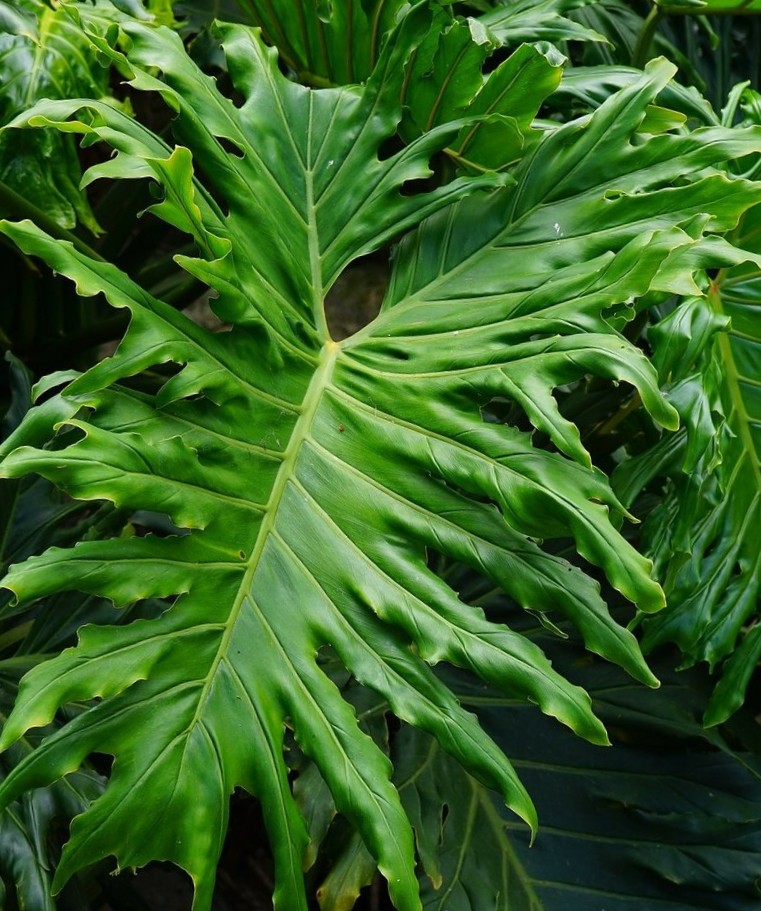
Horsehead Philodendron is Philodendron bipennifolium Schott, an accepted tropical climbing species in the Araceae. Mature leaves develop a distinctive outline compared with a violin, fiddle, saddle, or stylized horse’s head, giving rise to its principal common names.
The accepted synonym Philodendron wayombense was published from Suriname. Philodendron bipinnafolium is a recurring misspelling rather than a separate botanical name.
Heartleaf Philodendron is Philodendron hederaceum. Its familiar juvenile and cultivated leaves are broadly heart-shaped and lack the narrow central region and projecting lobes of mature Horsehead Philodendron foliage.
“Cordatum” is often applied loosely to heart-shaped commercial Philodendrons. It should not be used as a synonym of P. bipennifolium. The accepted species Philodendron cordatum is also distinct.
Split-Leaf Philodendron commonly refers to Thaumatophyllum bipinnatifidum, historically Philodendron bipinnatifidum, or is used imprecisely for other large divided-leaf aroids. That plant is generally self-heading or trunk-forming rather than a slender Horsehead Philodendron vine.
Fruit Salad Plant and Swiss Cheese Plant ordinarily refer to Monstera deliciosa. Red Emerald, Red Princess, Pink Princess, White Princess, and similar names belong to other cultivated Philodendrons or hybrids.
Panda Plant is too ambiguous for emergency identification. It may occasionally be used for Horsehead Philodendron, but it is also widely applied to Kalanchoe tomentosa and other unrelated ornamentals.
Native Range and Wet-Tropical Habitat
Philodendron bipennifolium is native from southern Venezuela through Suriname and into northern, northeastern, and southeastern Brazil. It grows primarily in the wet tropical biome.
The species is a climber rather than a botanical parasite. It uses trees and other upright surfaces for structural support while obtaining water and nutrients through its own roots.
Natural plants climb through humid forest vegetation toward brighter filtered light. Aerial roots emerging from the nodes help anchor the stem to rough bark and maintain contact with a support.
The plant may trail, scramble, or extend across the ground when no vertical support is immediately available. Once it contacts a suitable trunk or structure, upward climbing encourages thicker growth and more mature leaf development.
Climbing Stems, Aerial Roots, and Household Reach
Horsehead Philodendron is an evergreen herbaceous climber with elongated stems rather than a woody self-supporting trunk. Older stems may become thick and brownish or gray-green but remain part of a climbing vine.
Internodes may lengthen when the plant is stretching toward light or searching for support. Aerial roots emerge near the nodes and may remain short in dry indoor air or lengthen when they encounter moist bark, a moss pole, potting media, masonry, or another humid surface.
Some aerial roots primarily anchor the stem, while others may grow downward into soil or moist organic material and assist with water and nutrient absorption. All roots should be considered part of the irritating plant.
A hanging basket or high shelf does not automatically make the plant inaccessible. Long stems can grow down walls, across furniture, behind aquariums, toward cat trees, over cages, and onto floors. An animal may also pull the entire container down by gripping one vine.
Support ties, wire, coir, sphagnum moss, plastic clips, hooks, and decorative poles may become part of the exposure when an animal chews or pulls at a supported plant.
Juvenile and Mature Leaf Development
The leaf shape changes as the plant matures. Juvenile leaves may be comparatively simple, elongated, or only weakly lobed, making a young specimen harder to identify from one leaf alone.
As the plant establishes itself and climbs, newly produced leaves enlarge and develop the projecting lobes responsible for the horsehead, violin, fiddle, and saddle comparisons.
Mature blades are generally glossy, leathery, olive green to deep green, and may reach approximately 18 inches or more under favorable cultivated conditions. A well-rooted greenhouse or tropical specimen may produce larger foliage than a trailing houseplant in a small container.
The central region of a mature blade narrows before widening toward the upper portion, while the projecting basal or side lobes create the characteristic profile. Natural variation, age, viewing angle, and growing conditions can make one leaf appear more horse-shaped and another more violin-shaped on the same plant.
Each leaf is produced alternately and held away from the stem by a long petiole. New foliage emerges rolled within a protective cataphyll. The cataphyll later dries, loosens, and may leave a fibrous remnant or scar near the node.
Dried cataphylls and old leaf material should be removed from animal areas because they may retain crystal material and can be swallowed with other plant debris.
Flowers, Fruit, and Reproductive Structures
Horsehead Philodendron produces the characteristic aroid inflorescence rather than a conventional showy flower. Numerous tiny flowers are crowded onto a fleshy central spadix that is partly enclosed by a modified leaf called a spathe.
The species may produce more than one inflorescence from a leaf axil. Spathes are generally muted or yellowish-white rather than the brightly colored structures seen in some ornamental Anthuriums.
Indoor plants may never flower unless they become mature and receive warm, humid, greenhouse-like conditions. Tropical outdoor specimens are more likely to flower and develop fruit.
Successful pollination produces berries along the spadix. Fruiting is uncommon in ordinary indoor cultivation, and most household plants are propagated vegetatively.
The absence of common fruiting exposures does not establish that the spathe, spadix, berries, or seeds are safe. Fallen reproductive material should be removed from animal-accessible areas.
Exact-Species Crystal Anatomy
Horsehead Philodendron has been included directly in comparative anatomical studies rather than merely inferred from unrelated aroids.
Researchers examined the lamina, midrib, and petiole of P. bipennifolium and documented species-specific epidermal, stomatal, petiole, and internal leaf features. Calcium oxalate crystal forms were included among the anatomical characteristics distinguishing the studied Philodendrons.
A subsequent focused calcium oxalate study recorded one principal raphide-cell form in P. bipennifolium: spindle-shaped raphide idioblasts containing a tightly packed crystal bundle.
The measured spindle-shaped cells in this species reached approximately 152.7 micrometers in length and contained crystal packets reaching approximately 131.8 micrometers. These were among the largest spindle-shaped raphide structures recorded in the sampled Philodendrons.
Crystal structures were also documented in the midrib, including raphide-related and other calcium oxalate forms. The research confirms the presence of substantial microscopic crystal machinery in the exact species.
These measurements do not provide a veterinary toxic dose. They demonstrate anatomical capacity for crystal-associated injury but do not predict how many bites will cause severe swelling in a particular animal.
How Raphide Injury Develops
Raphides form inside crystal idioblasts and are normally isolated from the surrounding environment while plant tissue remains intact. Biting, tearing, crushing, pruning, or breaking the tissue disrupts that separation.
Mechanical pressure, sap, and saliva distribute the released crystal material across the lips, gums, tongue, palate, and throat. The narrow crystals penetrate epithelial surfaces and produce immediate pain.
Microscopic punctures increase vascular leakage and expose deeper tissue to sap and other plant compounds. The body’s inflammatory response then causes redness, edema, and continuing sensitivity.
Experimental research using purified raphides demonstrated that needle-shaped crystals can magnify the activity of accompanying protease by creating pathways through tissue barriers. Amorphous calcium oxalate without the needle shape did not produce the same synergistic effect.
That experiment supports the general needle-effect mechanism but does not identify a Horsehead-specific protease. Public toxicology should distinguish confirmed exact-species crystals from plausible but unconfirmed accompanying irritants.
What Clinical Exposure Evidence Shows
Species-specific veterinary case series for P. bipennifolium are lacking. Clinical recommendations therefore combine its documented crystal anatomy with broader evidence from Philodendron and other insoluble-calcium-oxalate plant exposures.
A poison-center review of 127 reported Philodendron or Dieffenbachia ingestions found predominantly mild outcomes. The findings do not support the routine assumption that every nibble causes catastrophic systemic poisoning.
Severe mucosal injury remains possible. Published clinical cases involving raphide-containing plants document extreme pain, salivation, soft-tissue swelling, dysphagia, loss or alteration of voice, and presentations resembling angioedema or anaphylaxis.
The immediate onset of severe pain after chewing plant tissue helps distinguish raphide injury from many delayed allergic or systemic toxic syndromes. Airway assessment remains essential whenever swelling, voice change, stridor, or failed swallowing develops.
Most animals stop chewing because of the sudden pain. That natural deterrent helps limit many exposures but cannot be relied upon when a puppy shreds a plant, a cat repeatedly returns to leaf tips, a bird tears foliage, or a horse consumes discarded greenhouse material.
Kidney, Liver, and Neurologic Claims
Insoluble calcium oxalate acts mainly at the point of contact. It should not be confused with soluble oxalate salts capable of producing profound systemic calcium binding and kidney deposition.
Primary kidney failure, systemic hypocalcemia, direct liver necrosis, generalized seizures, coma, and cardiac failure are not the expected result of an ordinary Horsehead Philodendron exposure.
Secondary kidney abnormalities could develop after severe dehydration, shock, prolonged vomiting, or another toxin. Liver abnormalities could follow prolonged anorexia, hypoxia, medication, preexisting disease, or chemical exposure.
Seizures or collapse could result from severe oxygen deprivation if airway obstruction is not treated. These secondary pathways are clinically important but should not be misrepresented as routine direct oxalate effects.
Unexpected systemic illness requires confirmation of the plant identity and investigation of pesticides, fertilizers, leaf-shine products, medication, toxic look-alikes, aspiration, foreign bodies, and unrelated disease.
Propagation, Pruning, and Hidden Exposure Sources
Horsehead Philodendron is commonly propagated from stem sections containing at least one viable node. A leaf and petiole without a node cannot normally produce a complete new vine.
A cutting with an established aerial root may root more readily, while layering allows a node to form roots before it is separated from the parent plant.
Every cutting remains irritating. Small propagation sections may be easier for a dog, cat, rabbit, or bird to pick up than a leaf attached high on the parent plant.
Propagation water may contain sap, fertilizer, bacteria, algae, mold, or decaying tissue. It should remain inaccessible even though drinking the water is not identical to crushing a fresh leaf in the mouth.
Fresh pruning can contaminate gloves, tools, tables, floors, clothing, towels, bedding, and pet fur. A pet that steps in sap may later transfer the material into its mouth or eyes while grooming.
Broken stems, aerial roots, old leaves, dried cataphylls, and potting debris should be bagged and discarded promptly rather than left on a floor, porch, greenhouse aisle, paddock, compost pile, rabbit area, or bird enclosure.
Similar Philodendrons and Identification Problems
Philodendron panduriforme is frequently confused with P. bipennifolium in collections and plant sales. Both may produce violin- or pandurate-looking foliage, but they are separate accepted species.
Philodendron pedatum and related hybrids can also develop strongly lobed leaves. Mature leaf architecture, petiole form, stem growth, cataphylls, inflorescences, provenance, and expert botanical examination may be required when labels are unreliable.
Juvenile Horsehead Philodendrons may not yet display the classic outline. Identification based on one immature leaf can therefore be misleading.
Golden or Aurea forms may produce yellow, lime, chartreuse, or golden new foliage that becomes greener with age. Variegated plants may show cream or pale sectors. Color alone cannot confirm or exclude the species.
Immediate first aid for another correctly identified Philodendron is often similar because many members of the genus contain calcium oxalate crystals. Exact identification still matters for accurate public information, exposure history, and exclusion of unrelated plants.
Diagnosis, Prognosis, and Prevention
No routine blood or urine test confirms Horsehead Philodendron ingestion. Diagnosis depends on witnessed chewing, plant identification, immediate oral signs, missing material, and examination of the mouth, throat, eyes, skin, hydration, and abdomen.
Useful evidence includes the complete plant, nursery label, photographs showing juvenile and mature leaves, stem nodes, petioles, aerial roots, representative cuttings, vomited material, potting-medium packaging, pesticide labels, fertilizer information, and an inventory of missing support components.
Persistent gagging, regurgitation, or vomiting may require radiographs, ultrasound, contrast imaging, endoscopy, or direct oral examination to identify a lodged vine or fibrous foreign body.
Eye exposure may require fluorescein staining, magnified examination, eyelid eversion, removal of retained debris, pain control, lubrication, and treatment for corneal abrasion or ulceration.
Prevention must account for the plant’s eventual size and climbing habit. Secure the container and support, control trailing growth, prevent aerial roots from reaching animal areas, and keep propagation and pruning work behind a closed door.
Most limited exposures have a good-to-excellent prognosis. Oral pain, drooling, and pawing often begin improving within several hours after loose material is removed and further contact is prevented.
Recovery may take longer after extensive oral ulceration, painful esophageal injury, dehydration, aspiration, corneal damage, infection, airway compromise, or gastrointestinal obstruction.
Immediate Response After Horsehead Philodendron Exposure
- Stop further access. Move the animal away from leaves, petioles, climbing stems, aerial roots, terrestrial roots, cuttings, sap, propagation water, potting debris, and discarded plant material.
- Confirm the plant. Preserve labels showing Philodendron bipennifolium, Philodendron wayombense, Horsehead Philodendron, Fiddleleaf Philodendron, Violin Philodendron, Saddle-Leaf Philodendron, Golden Violin, or Aurea.
- Remove only loose visible material. When the animal is calm and breathing normally, lift away plant fragments resting at the lips or front of the mouth.
- Do not reach deeply. Do not place fingers, tools, spoons, or cloths into the throat of an animal that is gagging, panicked, painful, struggling, or breathing abnormally.
- Protect your hands. Wear gloves or use gauze or a clean damp cloth when handling sap-covered plant material, saliva, or vomit.
- Gently rinse or wipe the mouth. Use cool water or a clean wet cloth to clear loose sap and fragments from the lips, gums, and front of the tongue.
- Do not pour water toward the throat. Painful swallowing and swelling increase aspiration risk.
- Offer something cool only when swallowing is clearly normal. A fully alert animal breathing normally and not repeatedly vomiting may receive a small amount of cool water, milk, plain yogurt, cottage cheese, or soft food.
- Treat food or dairy as comfort care, not an antidote. It may help clear loose material and soothe tissue temporarily but cannot remove embedded raphides.
- Save evidence. Preserve the plant, label, photographs, vomited fragments, potting-medium information, pesticide labels, fertilizer packaging, and missing support materials.
Airway and Swallowing Emergency
Recheck the lips, tongue, voice, swallowing ability, and breathing throughout the first several hours. Swelling can progress after the first painful reaction.
- Watch for failed swallowing. Continuous drooling with repeated unsuccessful swallowing, neck extension, or coughing after drinking requires examination.
- Listen for vocal changes. A weak, hoarse, or altered bark, cry, or meow may indicate deeper inflammation.
- Listen for stridor. Harsh or noisy inhalation suggests narrowing near the larynx or upper airway.
- Watch body position. Open-mouth breathing, elbows held away from the chest, refusal to lie down, neck extension, or panic indicates respiratory distress.
- Check mucous-membrane color. Blue-gray lips, gums, or tongue indicate inadequate oxygen.
- Minimize stress. Keep the animal quiet and avoid repeated mouth examinations, exercise, and forceful restraint.
- Remove throat pressure. Loosen or remove tight collars and avoid restraints that compress the neck.
- Give nothing by mouth. Do not offer food, water, medication, or charcoal when swallowing or breathing is impaired.
Rapidly increasing swelling, inability to swallow saliva, stridor, open-mouth breathing, blue-gray gums, collapse, or loss of consciousness requires immediate emergency transportation.
Veterinary airway treatment may include oxygen, injectable medication, sedation, laryngoscopic examination, endotracheal intubation, assisted ventilation, or another emergency airway procedure.
Do Not Induce Vomiting or Force Home Remedies
The primary injury occurs as soon as the plant is crushed in the mouth. An emetic cannot remove crystals embedded in the lips, gums, tongue, palate, pharynx, or esophagus.
Vomiting can carry plant fragments and acidic stomach contents back across punctured and inflamed tissue. Drooling, swelling, gagging, and painful swallowing also increase aspiration risk.
- Do not use hydrogen peroxide, salt, mustard, ipecac, detergent, dish soap, oil, or manual gagging.
- Never use hydrogen peroxide as a feline emetic.
- Never attempt to induce vomiting in a horse.
- Do not induce vomiting in an animal with oral swelling, gagging, vomiting, weakness, altered awareness, breathing difficulty, or impaired swallowing.
- Do not force activated charcoal. Charcoal does not extract mineral needles from tissue and may be aspirated.
- Do not administer milk, yogurt, food, or water forcibly. Supportive foods are appropriate only when swallowing is clearly safe.
- Do not use human numbing gels. They can interfere with protective swallowing and may contain ingredients unsafe for animals.
- Do not give diphenhydramine automatically. It cannot remove raphides and must not delay airway assessment.
Oral Pain, Skin, Fur, and Eye Care
Do not scrub the mouth aggressively. Vigorous wiping can increase pain, bleeding, and tissue penetration.
Cool water, a cool damp cloth, or a small amount of refrigerated soft food may provide temporary comfort when the animal is fully alert and swallowing normally.
Monitor whether the animal can swallow saliva, drink without coughing, and retain small amounts of water. Repeatedly approaching a bowl and pulling away may indicate substantial oral or esophageal pain.
Prevent grooming of sap-covered paws, skin, or fur until washing is complete. Wear gloves and wash contaminated areas with mild soap or pet-safe shampoo and lukewarm water.
Rinse thoroughly and direct contaminated water away from the face. Do not use peroxide, alcohol, bleach, solvents, concentrated vinegar, essential oils, or abrasive cleaners.
Flush an exposed eye immediately with sterile saline or clean lukewarm water for at least 15 to 20 minutes.
- Do not rub the eye. Rubbing can drag crystals or debris across the cornea.
- Prevent pawing. Use safe restraint or an Elizabethan collar when available.
- Do not remove an embedded object. Stabilize a penetrating leaf point, twig, support wire, or clip during transport.
- Do not use human redness drops or leftover eye medication. Steroid-containing medication can worsen an undiagnosed corneal ulcer.
- Seek examination for persistent signs. Continued squinting, tearing, redness, cloudiness, discharge, swelling, light sensitivity, or visual difficulty requires care.
Gastrointestinal and Foreign-Body Monitoring
Record each vomiting and diarrhea episode and note whether plant material, foam, blood, coffee-ground material, black stool, string, wire, coir, moss, or potting debris appears.
Monitor appetite, water intake, urination, gum moisture, activity, abdominal comfort, and fecal production.
Dry or tacky gums, sunken eyes, reduced urination, weakness, repeated vomiting, or inability to retain water requires veterinary attention.
Determine whether the animal merely punctured one leaf or whether a vine, mature petiole, aerial-root bundle, moss-pole fiber, string, wire, clip, or large plant mass is missing.
Persistent gagging, repeated swallowing, regurgitation, continued vomiting, abdominal enlargement, increasing pain, reduced stool production, or inability to retain water may indicate obstruction.
Do not pull a long plant fiber, root, string, wire, or support material protruding from the mouth or rectum without veterinary direction.
Veterinary Examination and Treatment
There is no antidote that dissolves or extracts raphides after they penetrate tissue. Veterinary treatment is directed toward airway protection, pain, inflammation, vomiting, hydration, eye injury, and mechanical complications.
The veterinarian may examine the lips, gums, tongue, palate, pharynx, laryngeal area, eyes, hydration, abdomen, breathing, circulation, and neurologic status.
Veterinary treatment may include:
- Airway support. Oxygen, sedation, intubation, assisted ventilation, or an emergency airway procedure may be necessary when swelling compromises breathing.
- Pain control. Veterinarian-selected analgesia may be required for substantial stomatitis, tongue injury, pharyngeal inflammation, eye pain, or esophageal discomfort.
- Anti-inflammatory treatment. Selected medication may be used when clinically important edema is present.
- Antihistamines when appropriate. These may be used in a selected hypersensitivity response but cannot remove crystals and do not replace airway management.
- Anti-nausea treatment. Persistent vomiting may require a veterinarian-selected antiemetic.
- Fluid therapy. Subcutaneous or intravenous fluids may be needed when pain, vomiting, diarrhea, or food refusal causes dehydration.
- Mucosal support. Gastrointestinal protectants may be considered when repeated vomiting, blood, painful swallowing, esophagitis, or documented mucosal injury is present.
- Eye treatment. Fluorescein staining, eyelid examination, removal of retained debris, lubrication, pain control, and corneal-ulcer treatment may be required.
- Foreign-body removal. A lodged vine, petiole, root bundle, support tie, coir fiber, or other material may require endoscopic or surgical removal.
Seizures, profound collapse, kidney failure, jaundice, major arrhythmias, or coma requires investigation for another toxin, chemical co-exposure, severe hypoxia, aspiration, obstruction, or unrelated disease.
Medication Warnings
- Do not give fixed medication doses from older plant-poisoning instructions. Medication selection and dosing must be based on the individual patient.
- Do not give calcium tablets or concentrated calcium supplements. They cannot pull embedded crystals from tissue.
- Do not give human antidiarrheals, antacids, bismuth products, or stomach remedies automatically.
- Do not give ibuprofen, naproxen, aspirin, acetaminophen, or other human pain relievers.
- Do not use essential oils, concentrated citrus, hot pepper, or harsh chemical deterrents as treatment.
- Do not use leftover eye, antibiotic, steroid, sedative, or pain medication without examination and veterinary direction.
Horses, Livestock, Rabbits, Birds, and Other Animals
Remove horses and livestock from live plants, greenhouse clippings, landscape debris, roots, propagation material, and discarded containers.
Horses cannot vomit and may develop salivation, painful chewing, feed dropping, tongue swelling, reluctance to drink, difficulty swallowing, coughing, colic-like discomfort, or diarrhea.
Do not drench or force water, oil, charcoal, feed, or medication into an animal with mouth swelling, repeated coughing, impaired swallowing, or respiratory distress.
Rabbits, guinea pigs, birds, and other small animals may receive a medically important exposure from an amount that appears minor to a person. Reduced eating can quickly become clinically important in species dependent on continuous food intake.
Do not apply dog or cat emesis instructions, oral-fluid recommendations, charcoal use, or medication protocols to another species. Obtain species-specific veterinary advice.
Prevention, Recovery, and Prognosis
Keep containers, hanging vines, supports, fallen leaves, aerial roots, and propagation material beyond realistic animal reach. Account for future growth rather than only the plant’s current size.
Secure the pot and climbing support so a pet cannot pull down the plant by one stem. Prune or redirect growth before it reaches floors, furniture, kennels, cages, aquariums, or cat trees.
Perform pruning, repotting, and propagation in a closed room. Wear gloves, wash tools and hands, clean sap from surfaces, and remove every cutting and broken leaf before animals return.
Most limited exposures have a good-to-excellent prognosis. Drooling, mouth pain, and pawing often begin improving within several hours.
Moderate inflammation may interfere with eating and drinking for a day or longer and may require pain control, anti-nausea medication, softened food, or fluids.
Prognosis becomes more serious when swelling affects the airway, aspiration occurs, the cornea is injured, or a vine causes obstruction. Prompt airway protection and physical removal of foreign material substantially improve the outlook.
Frequently Asked Questions About Horsehead Philodendron and Animal Poisoning
Is Horsehead Philodendron poisonous to dogs, cats, and horses?
Yes. Chewing a leaf, petiole, climbing stem, aerial root, terrestrial root, or cutting can release calcium oxalate crystal material that causes immediate oral pain, drooling, gagging, vomiting, swelling, and difficulty swallowing. Horses may salivate, drop feed, resist drinking, or develop painful swallowing. Severe airway swelling is uncommon but requires emergency treatment.
Has calcium oxalate been demonstrated directly in Philodendron bipennifolium?
Yes. Comparative anatomical studies examined Horsehead Philodendron directly. Researchers documented calcium oxalate crystal-containing tissues and spindle-shaped raphide idioblasts in its leaves, petioles, and midribs. Its measured raphide cells and packed crystal bundles were among the larger examples recorded in the sampled Philodendrons.
Is Horsehead Philodendron the same plant as Fiddleleaf or Violin Philodendron?
Yes. Horsehead Philodendron, Fiddleleaf Philodendron, Violin Philodendron, and Saddle-Leaf Philodendron are established descriptive names for Philodendron bipennifolium. They refer to the distinctive outline of the mature leaves.
Is Horsehead Philodendron the same as Heartleaf Philodendron?
No. Heartleaf Philodendron is Philodendron hederaceum, a separate climbing species with more conventionally heart-shaped foliage. Horsehead Philodendron develops much larger mature leaves with a narrowed central region and projecting lobes.
Is Philodendron panduriforme another name for Horsehead Philodendron?
No. Philodendron panduriforme is a separate accepted species that is frequently confused with P. bipennifolium in collections and plant sales. Both can develop violin-like foliage, so reliable provenance, mature leaf architecture, petiole characteristics, and other botanical features may be necessary for exact identification.
Is Panda Plant a dependable name for Philodendron bipennifolium?
No. Panda Plant is occasionally associated with Horsehead Philodendron, but it is also widely used for unrelated plants, especially the succulent Kalanchoe tomentosa. A plant identified only as Panda Plant must be confirmed by scientific name and appearance before toxicology is assigned.
What exactly makes Horsehead Philodendron poisonous?
The confirmed principal hazard is insoluble calcium oxalate stored in crystal-containing cells. Needle-shaped raphides can penetrate moist tissue when the plant is chewed or crushed. Sap and additional plant constituents may intensify the resulting inflammation, but no specific protease has been established as the defining toxin of this species.
What is the raphide “needle effect”?
Raphides can create microscopic openings in epithelial barriers. Experimental research showed that needle-shaped crystals can intensify the activity of accompanying proteases by helping those substances pass through damaged barriers. This supports a general mechanism for plant defense but does not prove that Horsehead Philodendron contains the exact protease used in that experiment.
What happens if a dog or cat bites only one leaf?
Even one bite may cause sudden pain, drooling, head shaking, pawing at the mouth, gagging, vomiting, or swelling. Many animals stop chewing immediately because of the pain. The mouth, swallowing ability, voice, and breathing should still be monitored because the reaction depends on how much tissue was crushed and where the crystals contacted.
Can Horsehead Philodendron stop an animal from breathing?
Rarely, marked swelling around the tongue, pharynx, epiglottic region, or larynx can restrict airflow. Harsh inhalation, stridor, open-mouth breathing, neck extension, inability to swallow saliva, blue-gray gums, panic, weakness, or collapse requires immediate emergency treatment.
Can Horsehead Philodendron cause kidney failure?
Primary kidney failure is not expected from an ordinary exposure. Horsehead Philodendron contains insoluble crystals that act primarily where they contact tissue. This is different from substantial ingestion of soluble-oxalate plants capable of causing hypocalcemia and widespread kidney-crystal deposition. Kidney abnormalities require investigation for dehydration, shock, another toxin, or unrelated disease.
Can it directly cause liver failure, seizures, or coma?
Those are not expected direct effects of uncomplicated insoluble-calcium-oxalate exposure. Severe airway obstruction could cause oxygen deprivation, and prolonged anorexia or dehydration could cause secondary complications. Seizures, jaundice, coma, or profound collapse requires emergency investigation for another toxin, chemical exposure, aspiration, obstruction, or underlying disease.
Should I induce vomiting or give activated charcoal?
No routine home emesis or charcoal is appropriate. Vomiting cannot remove raphides embedded in the mouth and may carry plant fragments and stomach acid back across injured tissue. Activated charcoal does not extract mineral needles and may be aspirated by an animal that is drooling, gagging, vomiting, or unable to swallow normally.
Can milk, yogurt, or soft food help?
A small amount of cool water, milk, plain yogurt, cottage cheese, or soft food may provide temporary comfort and help clear loose material when the animal is fully alert, breathing normally, swallowing comfortably, and not repeatedly vomiting. It cannot dissolve or remove crystals already embedded in tissue and should never be forced.
Can dried leaves and old cuttings still cause irritation?
Yes. Drying and wilting do not dissolve calcium oxalate crystals. Dried leaves, brittle petioles, aerial roots, old cataphylls, and discarded cuttings should remain inaccessible to animals.
Can a swallowed vine or aerial-root bundle cause an obstruction?
Yes. Long fibrous plant material may lodge in the mouth or esophagus or form a foreign body farther into the gastrointestinal tract. Persistent gagging, regurgitation, repeated vomiting, abdominal enlargement, reduced stool, increasing pain, or inability to retain water requires examination. Do not pull a long fiber protruding from the mouth or rectum without veterinary direction.
What should I do if the sap enters an animal’s eye?
Flush the eye immediately with sterile saline or clean lukewarm water for at least 15 to 20 minutes. Prevent rubbing and do not apply human redness drops or leftover medication. Continued squinting, tearing, redness, cloudiness, discharge, eyelid swelling, light sensitivity, or visual difficulty requires prompt veterinary examination.
How long should Horsehead Philodendron symptoms last?
Most limited oral exposures begin improving within several hours and are substantially resolved within approximately one day. Symptoms continuing for days suggest extensive ulceration, painful esophageal injury, corneal damage, aspiration, dehydration, infection, retained plant material, gastrointestinal obstruction, another toxin, or another diagnosis.
Can Horsehead Philodendron be kept in a home with pets?
The safest placement is one that remains genuinely inaccessible as the plant grows. Horsehead Philodendron is a vigorous climber whose vines and aerial roots can extend beyond the original shelf or support. Containers and poles must be secured, trailing growth controlled, and fallen leaves, pruning debris, propagation cuttings, and contaminated water removed immediately.