Iris Toxicity, Rhizome Irritation, and Bulb Obstruction
Are Iris Plants Poisonous to Dogs, Cats, Horses, and Livestock?
Yes—true irises in the genus Iris are poisonous and irritating to dogs, cats, horses, livestock, rabbits, birds, and other animals that eat them. The expected syndrome is dominated by irritation of the mouth, esophagus, stomach, and intestines. Drooling, nausea, vomiting, diarrhea, abdominal pain, appetite loss, lethargy, and depression are the most likely signs.
Rhizomes, rootstocks, bulbs, and other underground storage structures present the greatest practical concern because they provide a large mass of chemically active plant tissue and are commonly exposed during digging, division, storage, planting, or garden renovation. The genus contains hundreds of species and complex hybrids with substantially different chemical profiles, so no single compound or concentration can be assigned to every iris. A whole bulb, thick rhizome section, fibrous root mass, or wad of leaves can also cause choking, esophageal obstruction, gastric retention, or an intestinal foreign body independently of the plant’s irritant chemistry.
About this guide: This page provides general pet-poisoning information and cannot diagnose or treat an individual animal. For any suspected exposure, contact a veterinarian or animal poison-control service immediately. Do not induce vomiting, give medication, or attempt home decontamination unless directed by a veterinary professional.
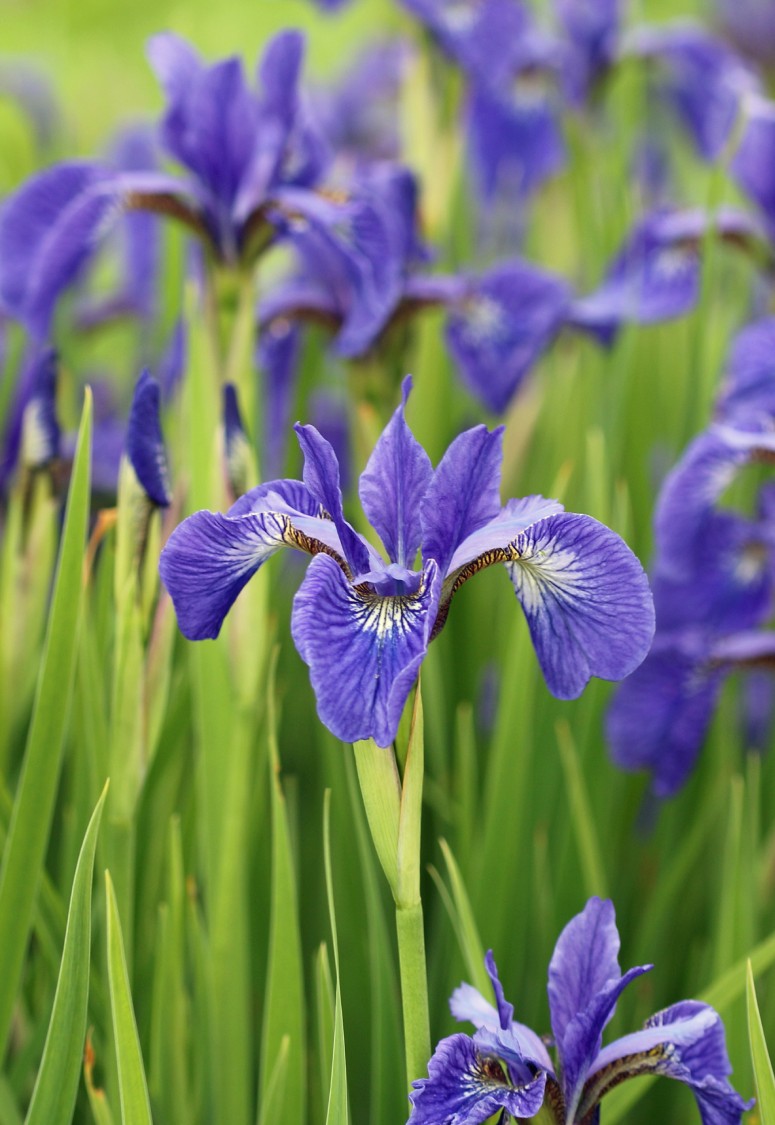
Iris
Iris Tourn. ex L. — genus-level record; commonly written Iris spp. when the exact species or hybrid is unknown
Representative true irises encountered in gardens, landscapes, wetlands, floral arrangements, and poisoning investigations include:
- Iris × germanica L. and related tall, intermediate, dwarf, and historic bearded-iris hybrids
- Iris sibirica L. and Siberian-iris hybrids
- Iris ensata Thunb. and Japanese-iris cultivars
- Iris pseudacorus L. — Yellow Flag Iris
- Iris versicolor L. — Northern Blue Flag
- Iris virginica L. — Southern Blue Flag
- Iris missouriensis Nutt. — Western Blue Flag or Rocky Mountain Iris
- Iris domestica (L.) Goldblatt & Mabb. — formerly Belamcanda chinensis
- Iris xiphium L. — Spanish Iris and an important ancestor of Dutch Iris hybrids
- Iris reticulata M.Bieb. and related reticulated bulbous irises
Important botanical distinctions:
- The broad accepted genus currently includes rhizomatous, bulbous, and tuberous species and former genera such as Belamcanda, Iridodictyum, and Xiphion.
- African Iris usually refers to Dietes species, while Walking Iris usually refers to Neomarica or closely related genera. They belong to Iridaceae but are not true Iris under the accepted taxonomy.
- Iris × germanica is treated as a hybrid taxon, and many modern bearded irises have complex ancestry that cannot be represented accurately by one wild species name.
- Dutch Iris is a horticultural hybrid group derived principally from bulbous species related to Iris xiphium; “Dutch Iris” is not one dependable wild-species identification.
Iridaceae — Iris Family
Iris; Irises; Garden Iris; Flag; Flag Iris; Water Flag; Fleur-de-Lis; Bearded Iris; German Iris; Orris; Siberian Iris; Japanese Iris; Louisiana Iris; Spuria Iris; Crested Iris; Roof Iris; Yellow Flag; Blue Flag; Northern Blue Flag; Southern Blue Flag; Western Blue Flag; Rocky Mountain Iris; Dutch Iris; Spanish Iris; English Iris; Reticulated Iris; Dwarf Iris; Blackberry Lily; Leopard Flower; Iris spp.
Flag, Flag Iris, Water Flag, and Blue Flag are used most often for wetland or moisture-associated species such as Iris pseudacorus, I. versicolor, I. virginica, and I. missouriensis.
Blackberry Lily and Leopard Flower refer to Iris domestica, formerly and still widely labeled Belamcanda chinensis. It is now included within the accepted genus Iris.
African Iris usually refers to Dietes, while Walking Iris usually refers to Neomarica or related genera. They should be identified and evaluated under their actual genus rather than assumed to have an identical toxin profile.
Snake Lily, Sword Lily, Flag Lily, and Water Lily are ambiguous names applied to numerous unrelated plants. Calla Lily, Daylily, Lily of the Valley, African Lily, Blackberry Lily, and true lilies do not share one poisoning mechanism merely because “lily” appears in the common name.
No Single Universal Iris Toxin Has Been Established
The genus Iris contains hundreds of accepted species together with an enormous number of cultivated hybrids. Their roots, rhizomes, bulbs, leaves, flowers, and seeds contain complex mixtures of triterpenoids, iridals, isoflavonoids, flavonoids, xanthones, stilbenes, quinones, benzophenones, steroids, phenolic acids, fatty acids, aromatic compounds, resins, and glycosides.
No controlled veterinary study has isolated one compound, administered it to domestic animals, and demonstrated that it alone reproduces the routine syndrome associated with every garden iris. The most accurate toxicological description is therefore a chemically diverse irritant exposure rather than poisoning by one universal molecule.
Veterinary references frequently name zeorin, missourin, and missouriensin as the principal Iris toxins. Those compounds are chemically legitimate, but the underlying research comes primarily from selected roots of Western Blue Flag, Iris missouriensis. Their discovery confirms potent and biologically active root chemistry within the genus; it does not prove that every species or hybrid contains the same compounds in the same proportions.
Western Blue Flag and the Origin of the Familiar Triterpene List
Research on the roots of Iris missouriensis isolated the known triterpenes zeorin and iso-iridogermanal and identified additional triterpenoid structures. Laboratory testing demonstrated cytotoxic activity against cultured P-388 cells, establishing that these were biologically active molecules rather than chemically inert plant components.
Related investigations characterized missourin and missouriensin from the same species. Missourin is a pentacyclic triterpene, while missouriensin is an acetylated hydroxyhopene-type compound. Betulinic acid and additional secondary metabolites have also been reported from the roots.
These discoveries explain why zeorin, missourin, and missouriensin entered veterinary and poison-plant summaries. They remain exact-species evidence from one western North American iris, not a comprehensive toxicological analysis of the entire genus.
No dog, cat, horse, or livestock toxic dose has been established for purified missourin, missouriensin, zeorin, or iso-iridogermanal. Their precise contribution to naturally occurring vomiting and diarrhea remains unresolved.
Modern Research Confirms Species- and Organ-Specific Chemistry
Modern high-resolution chemical profiling demonstrates that Iris chemistry varies substantially among species, subgenera, organs, cultivars, and growing conditions. A 2025 investigation compared leaves with roots and rhizomes from several cultivated irises and found clear organ-level separation.
Leaves were relatively enriched in several phenolic acids, steroids, and C-glycosyl xanthones, while roots with rhizomes showed greater representation of triterpenoids, stilbenes, and benzophenones. Differences were also detected between major Iris lineages, although cultivars of the same species were often chemically closer to one another.
A separate comparative study profiled leaves, roots, and rhizomes from several species, including Iris germanica, I. versicolor, and I. pallida, and detected approximately 180 compounds. More than 90 were flavonoid- or isoflavonoid-related structures. The investigators emphasized species-specific phytochemical variation rather than one interchangeable genus formula.
These findings support the practical concern surrounding roots and rhizomes while correcting an oversimplification. Underground structures are not dangerous because every iris stores one identical toxin there. They contain a large mass of chemically active storage tissue whose composition varies across the genus.
Blue Flag Chemistry Is Broader Than Three Triterpenes
A 2024 metabolic analysis of Northern Blue Flag, Iris versicolor, detected 106 secondary metabolites, including extensive phenolic and terpenoid chemistry. This species has a long history in herbal preparations and older toxicology literature, but its modern chemical profile cannot be reduced to one purgative constituent.
The detected mixture included compounds from several chemical classes with potential antioxidant, antimicrobial, anti-inflammatory, cytotoxic, or other biological activity in laboratory systems. Detection of such activity does not establish a veterinary poisoning dose or prove that every compound contributes to acute gastrointestinal illness.
Northern Blue Flag evidence should likewise not be transferred silently to Yellow Flag, Japanese Iris, Siberian Iris, Dutch Iris, or a modern bearded hybrid.
Bearded Iris Rhizomes Contain Iridals, Triterpenes, and Isoflavonoids
Research on Iris germanica rhizomes has isolated iridals, triterpenes, steroidal compounds, irones, isoflavones, and glycosides. Reported constituents include irigenin, irigenin S, iridin, irilone, irisolidone, iriside A, stigmasterol-related compounds, and aromatic irones.
Other investigators isolated piscicidal triterpenes from Iris germanica. Piscicidal laboratory activity demonstrates a biologically active extract but does not establish that chewing one garden rhizome causes the same endpoint in a dog, cat, horse, or person.
Orris root, produced principally from aged rhizomes of selected bearded irises such as Iris pallida, I. germanica, and I. florentina, is used in perfumery and flavoring after specialized processing. That commercial use does not make a freshly dug rhizome or concentrated extract appropriate animal food.
Iridin, Irisin, and Irisine Are Frequently Confused
Older medical and toxicological literature used the words iridin, irisin, and irisine inconsistently. Depending on the author and era, the term could refer to a crude resin, a bitter extract, a purgative principle, or a supposedly purified substance obtained from an iris rhizome.
Modern chemically defined iridin is a glycosyloxyisoflavone: irigenin linked to a glucose residue at the 7-position. It is not an alkaloid and should not be described as one.
Iridin has been identified in selected Iris species and medicinal rhizome preparations, including bearded and Blue Flag material. It has not been demonstrated as the sole or universal cause of garden-Iris poisoning.
“Irisin” is also the modern name of a mammalian peptide hormone unrelated to the historical botanical term. Using the word without chemical context creates avoidable confusion.
Rhizomes, Bulbs, Tubers, and Roots Are Not the Same Structure
Many familiar irises grow from rhizomes. A rhizome is a solid modified stem that grows horizontally at or beneath the soil surface and produces buds, leaves, flowering shoots, and true roots. Bearded, Siberian, Japanese, Louisiana, Spuria, Yellow Flag, and Blue Flag irises are principally rhizomatous.
Spanish, Dutch, English, Reticulated, and several Central Asian groups grow from true bulbs or bulb-like underground structures. A true bulb is composed mainly of fleshy storage leaves arranged around a shortened stem.
Other accepted Iris species are described botanically as tuberous geophytes. The anatomical distinction matters for plant identification, but every underground storage structure should remain inaccessible to animals.
Rhizomes and bulbs create the largest practical exposures because one dug or stored structure can provide much more plant mass than a brief bite of a petal or leaf. Their solid size also creates a foreign-body hazard.
Leaves, Flowers, Seeds, and Sap Remain Unsafe
Roots, rhizomes, bulbs, basal crowns, leaves, stems, flowers, sap, ovaries, seed capsules, and seeds should not be offered as forage or enrichment. A flower or leaf usually represents a smaller exposure than an entire underground storage structure, but it is not chemically inert.
Chewing breaks cells and releases sap directly onto the lips, gums, tongue, throat, stomach, and intestinal lining. Local irritation can initiate drooling, nausea, vomiting, cramping, diarrhea, and appetite loss.
Seed chemistry may differ markedly from rhizome chemistry. Blackberry Lily, Iris domestica, produces capsules containing conspicuous clusters of shiny black seeds, while other irises release flatter or papery seeds. No seed type has been established as safe animal feed.
Skin and Eye Irritation
Fresh rhizome juice, crushed roots, sap, seed material, and concentrated extracts can irritate susceptible skin or mucous membranes. Repeated or prolonged exposure may produce localized burning, redness, itching, or dermatitis.
Animals commonly convert an external exposure into an oral exposure by licking sap or soil from their paws and coat. Gardeners may also transfer residue from gloves, tools, clothing, or cut rhizomes to an animal.
Eye exposure may involve both chemical irritation and physical debris. Soil particles, dry bulb scales, fibrous roots, or sharp plant fragments can remain beneath the eyelids after loose sap has been rinsed away.
Drying and Aging Do Not Establish Safety
Dried rhizomes, dormant bulbs, old garden divisions, dead leaves, seed capsules, floral waste, and compost material should not be treated as safe. Many Iris secondary metabolites remain present after drying, even though their concentrations and chemical transformations differ by species and storage method.
Aging selected orris rhizomes changes aromatic iridals into fragrant irones, creating the violet-like odor valued by perfumers. That transformation is a specialized chemical process rather than general detoxification of every constituent.
Dry planting stock may also be easier for a dog to carry and swallow than a rooted living plant.
Treated Commercial Planting Stock Creates a Mixed Exposure
Commercial bulbs and rhizomes may be coated or treated with fungicides, insecticides, preservatives, dyes, mold inhibitors, or other storage chemicals. Garden beds may contain fertilizer, bone meal, blood meal, compost additives, systemic pesticides, herbicides, or slug bait.
These products can cause neurologic, cardiovascular, respiratory, hepatic, renal, hematologic, or corrosive effects that do not fit ordinary Iris irritation. The planting-stock package and every landscape-product label should be preserved.
Moldy stored bulbs or rhizomes can present an additional mycotoxin exposure. Tremors, severe agitation, seizures, profound weakness, or hyperthermia after access to moldy planting stock should not be attributed automatically to the iris itself.
No Established Safe or Lethal Dose
No dependable safe leaf count, flower count, seed count, rhizome weight, bulb number, plant mass, toxic dose, or lethal dose has been established for natural Iris exposure in dogs, cats, horses, livestock, rabbits, guinea pigs, birds, or poultry.
Risk depends on the exact species or hybrid, plant organ, amount, degree of chewing, animal size, gastrointestinal health, hydration, foreign material, chemical treatments, and whether another plant was consumed simultaneously.
A small taste is unlikely to produce life-threatening systemic disease. The absence of a validated dose means that a large underground-structure ingestion cannot be dismissed by applying an invented universal threshold.
Early Oral Irritation
Some animals remain normal after briefly tasting a petal or leaf. Others react immediately to the bitter or irritating sap by dropping the plant, shaking the head, licking the lips, swallowing repeatedly, pawing at the mouth, gagging, or retching.
Salivation may range from mild drooling to obvious foaming. The lips, gums, tongue, palate, and throat may become red or tender after substantial chewing of a rhizome, bulb, rootstock, or freshly cut division.
An affected animal may approach food or water and then pull away because chewing or swallowing is painful. Persistent inability to swallow saliva, pronounced neck extension, altered vocalization, or immediate return of water raises concern for deeper irritation or a lodged plant fragment.
Nausea and Vomiting
Nausea and vomiting are the most expected findings in dogs and cats. Early nausea may appear as lip licking, repeated swallowing, restlessness, grass eating, hiding, loss of interest in food, or hypersalivation.
Vomiting may occur once and stop or become repeated after a larger exposure. Rhizome and bulb material provides a larger irritant load and can remain in the stomach longer than a small piece of leaf or flower.
Repeated retching and vomiting can inflame the esophagus and stomach independently of the original plant. Blood streaks can result from forceful vomiting, while coffee-ground material or substantial fresh blood suggests more serious gastrointestinal injury and requires examination.
Diarrhea and Intestinal Irritation
Soft stool, watery diarrhea, mucus, intestinal cramping, and increased urgency to defecate may follow vomiting or occur without it. Gastrointestinal illness may continue after the stomach has emptied because irritant material has entered the intestine.
Fresh red blood or black tarry stool is not expected after every Iris exposure. Either finding warrants veterinary assessment for substantial mucosal injury, a foreign body, another plant, medication, toxin, parasite, or unrelated gastrointestinal disease.
Persistent diarrhea can produce significant fluid and electrolyte loss even when the plant itself does not cause systemic organ toxicity.
Abdominal Pain and Appetite Loss
Dogs may become restless, whine, stretch repeatedly, assume a hunched or prayer posture, guard the abdomen, or resist being touched. Cats may hide, crouch, stop grooming, or refuse food without showing obvious outward pain.
Appetite loss may be brief or continue because of nausea, oral pain, gastric inflammation, or obstruction. An animal that repeatedly attempts to eat and then withdraws may have mouth, throat, or esophageal discomfort.
Increasing pain, abdominal enlargement, repeated unproductive retching, or inability to settle is more concerning than uncomplicated mild irritation.
Dehydration and Secondary Metabolic Effects
Repeated vomiting and diarrhea can cause dehydration, electrolyte imbalance, acid-base disturbance, reduced circulating volume, and secondary weakness. Dry or tacky gums, sunken eyes, reduced urination, rapid heart rate, weak pulses, cool extremities, and worsening lethargy indicate progression beyond a minor exposure.
Puppies, kittens, toy breeds, birds, rabbits, elderly animals, and patients with kidney, heart, endocrine, or gastrointestinal disease have less physiologic reserve and can deteriorate more rapidly.
Collapse after prolonged gastrointestinal losses may reflect dehydration or shock rather than a direct Iris neurotoxin. It remains an emergency regardless of mechanism.
Choking and Oral Foreign Bodies
A bulb, thick rhizome section, root mass, dry scale, fibrous leaf wad, seed capsule, plant label, or piece of packaging can lodge in the mouth or pharynx.
Choking may cause panic, pawing at the mouth, ineffective respiratory movements, blue-gray gums, weakness, or collapse. A visible object at the front of the mouth may be removable, but blind finger sweeps can push material farther into the airway.
Sharp roots, soil, and dry scales may also become caught between teeth or across the palate and continue causing gagging or mouth rubbing after the animal has stopped eating the plant.
Esophageal Obstruction
A solid rhizome or bulb can lodge in the esophagus. Signs include heavy drooling, repeated swallowing, gagging, neck extension, coughing, regurgitation, discomfort, and immediate return of water or food.
Esophageal obstruction is different from vomiting. Regurgitated material commonly returns without strong abdominal contractions and may appear soon after swallowing.
A lodged plant structure can cause pressure injury, aspiration, perforation, or stricture formation and may require endoscopic removal.
Gastric and Intestinal Obstruction
Material that passes through the esophagus may remain in the stomach or obstruct the intestine. Whole bulbs, large rhizome chunks, fibrous roots, plastic mesh, wire, labels, or fabric from a planting bag are greater mechanical concerns than a few chewed petals.
Persistent or recurrent vomiting, progressive appetite loss, abdominal distention, marked pain, reduced stool production, repeated unproductive retching, or apparent improvement followed by renewed illness warrants imaging.
Anti-nausea medication may temporarily suppress vomiting without removing an obstruction. Clinical improvement after medication does not prove that a swallowed structure has passed.
Skin and Coat Exposure
Fresh rhizome sap, cut rootstock, crushed leaves, seed material, soil amendments, or chemical treatments may cause localized redness, itching, burning, swelling, or repeated licking.
Severe blistering, widespread hives, rapidly progressive facial swelling, or generalized dermatitis is not the expected routine Iris reaction and requires investigation for another plant, pesticide, fertilizer, or allergic exposure.
Residue on the paws or coat may be swallowed during grooming and can prolong oral and gastrointestinal exposure until the animal is washed.
Eye Exposure
Sap, soil, dry bulb scales, root fibers, pollen, or contaminated paws may cause tearing, squinting, conjunctival redness, eyelid swelling, rubbing, light sensitivity, or apparent visual discomfort.
Persistent squinting, cloudiness, discharge, an unequal pupil, or inability to open the eye after irrigation raises concern for a retained fragment, corneal abrasion, or deeper inflammation.
Dogs and Cats
Dogs are commonly exposed while digging freshly planted beds, carrying loose rhizomes, chewing divisions left after garden work, or opening bags of dormant bulbs. A dog may swallow soil, fertilizer, bone meal, plastic packaging, or a plant label during the same incident.
Cats may chew flowers or leaves, investigate floral arrangements, walk through sap or potting debris, and ingest residue while grooming. Persistent feline anorexia deserves attention because prolonged food refusal can cause serious secondary metabolic disease.
Iris does not produce the established acute kidney-failure syndrome caused by true lilies and daylilies. A mixed bouquet must nevertheless be inventoried completely because one dangerous Lilium or Hemerocallis exposure can occur alongside harmless-looking Iris flowers.
Horses and Livestock
Horses cannot vomit. Equine exposure is more likely to produce salivation, feed refusal, diarrhea, mild to severe colic, depression, reduced manure production, or signs of oral and esophageal irritation.
Cattle, sheep, goats, pigs, rabbits, poultry, and other animals may encounter wild wetland colonies, mowed vegetation, contaminated hay, garden waste, discarded divisions, or storm-damaged plants.
Salivation, reduced intake, abdominal discomfort, diarrhea, depression, weakness, or decreased production is compatible with an irritant exposure. Multiple animals showing severe neurologic or cardiovascular disease require investigation of the entire forage, water, pesticide, and plant environment.
Signs That Do Not Fit Uncomplicated Iris Irritation
Profound neurologic depression, marked agitation, generalized tremors, repeated seizures, severe cardiac arrhythmia, acute kidney failure, liver failure, respiratory paralysis, uncontrolled hemorrhage, or sudden group deaths are not the expected routine syndrome of ordinary Iris ingestion.
Possible explanations include a chemically treated bulb, moldy planting stock, slug bait, pesticide, fertilizer, another poisonous plant, medication, toxic mushroom, true lily, Autumn Crocus, Star of Bethlehem, daffodil, Yew, or unrelated disease.
Severe or atypical illness should trigger a broader investigation rather than being forced into an Iris diagnosis simply because an iris was present nearby.
Expected Course and Emergency Warning Signs
Mild drooling, nausea, vomiting, diarrhea, or appetite reduction may begin improving within several hours. A larger exposure may produce gastrointestinal illness through the remainder of the day or longer.
Emergency warning signs include choking, inability to swallow, breathing difficulty, repeated vomiting, blood in vomit or stool, black stool, marked abdominal pain, abdominal swelling, inability to retain water, reduced urination, severe dehydration, collapse, or suspected ingestion of a whole bulb or rhizome.
Continued illness into the following day, recurrence after apparent improvement, or progressive appetite loss requires veterinary reassessment rather than reliance on a fixed recovery deadline.
A Large and Chemically Diverse Genus
Iris is an accepted genus in Iridaceae containing approximately 320 accepted species under the current broad taxonomic treatment. Its native range extends principally across the temperate Northern Hemisphere and into the Philippines, with major centers of diversity in Europe, the Mediterranean region, western and central Asia, and North America.
The broad genus includes plants historically separated as Belamcanda, Iridodictyum, Juno, Limniris, Xiphion, and other genera or subgenera. Alternative botanical classifications continue to divide some of these lineages differently.
A genus-level poisoning page is appropriate because pets encounter unidentified wild irises, named species, old garden forms, modern hybrids, florist material, and bulbs sold only under horticultural group names. It must also acknowledge that those plants do not share one identical chemistry.
How to Recognize a True Iris Flower
Many irises produce six petal-like floral segments arranged in two groups of three. The inner three commonly stand upright and are called standards. The outer three spread or droop and are called falls.
Each fall may carry a fuzzy beard, a raised crest, a ridge, a colored signal, contrasting veins, or a smooth surface depending on the species or horticultural group. The three style branches arch over the falls and form a distinctive part of the flower’s pollination structure.
Flower color cannot determine toxicity or species. Irises occur in white, yellow, orange, bronze, pink, red-purple, violet, blue, nearly black, bicolored, striped, veined, spotted, and broken-color forms.
Leaves and Growth Habit
Many true irises produce narrow sword-shaped leaves arranged in flattened fans. Their parallel veins and overlapping bases distinguish them from numerous broad-leaved ornamentals.
Some species have grass-like leaves, broad arching leaves, evergreen fans, or leaves that disappear during dormancy. Blackberry Lily has flattened iris-like foliage but flowers and seed displays that differ sharply from an ordinary bearded iris.
Leaves alone may be confused with Gladiolus, Crocosmia, Daylily, Acorus, Cattail, ornamental grasses, or other members of Iridaceae. The underground structure, flower, fruit, and planting label improve identification.
Rhizomatous Irises
Most familiar garden irises grow from rhizomes. A rhizome is a modified stem containing nodes, buds, storage tissue, and the ability to generate new shoots and roots.
Bearded irises commonly hold thick rhizomes at or near the soil surface. Siberian, Japanese, Louisiana, Spuria, Yellow Flag, Blue Flag, and many crested irises produce rhizomes or closely related rootstocks that may remain deeper or form dense clumps.
Rhizome division creates one of the most important household exposure periods. Gardeners cut apart large clumps and may leave old centers, trimmed roots, diseased pieces, and surplus divisions lying on the ground.
A dog that normally ignores an established iris may carry and chew a newly exposed division because it is loose, moist, strongly scented, and shaped like a toy or bone.
Bulbous and Tuberous Irises
Bulbous irises include Spanish Iris, Reticulated Iris, and the horticultural Dutch Iris group. Their bulbs may be stored in bags, boxes, garages, sheds, refrigerators, or indoor forcing containers before planting.
Bulbs are often small enough for a dog to swallow whole. Multiple loose bulbs can be consumed rapidly before oral irritation or vomiting begins.
Several accepted Iris lineages have historically been called Juno irises or described as tuberous geophytes. Their underground anatomy differs from both a conventional layered bulb and a thick bearded-iris rhizome, but the structures should still be treated as unsafe.
Bearded Iris and the German-Iris Name
Many plants sold as German Iris are complex bearded hybrids rather than simple representatives of one wild species. The accepted name Iris × germanica reflects a long-cultivated hybrid complex.
Modern tall, intermediate, border, miniature, and dwarf bearded irises have been developed through generations of crossing and selection. A cultivar name does not provide a validated toxin concentration.
The thick exposed rhizomes are particularly accessible to digging dogs. Repeated division also produces substantial discarded material.
Siberian, Japanese, Louisiana, and Spuria Irises
Siberian Iris, Iris sibirica and its hybrids, forms dense clumps of narrow leaves and fibrous roots attached to rhizomatous crowns. Japanese Iris, Iris ensata, produces large flattened flowers and is often planted in moist acidic soil.
Louisiana irises are a horticultural group derived from several southeastern North American species. Spuria irises form tall clumps and substantial underground structures.
Different habitat, flower form, and rhizome shape do not establish that one group is edible. Their exact chemistry is incompletely compared, so all should remain outside animal forage and enrichment.
Yellow Flag and Blue Flag Irises
Yellow Flag, Iris pseudacorus, is a robust wetland species with yellow flowers and large spreading rhizomes. It can form dense invasive colonies along ponds, streams, ditches, marshes, and shorelines.
Northern Blue Flag, Iris versicolor, Southern Blue Flag, Iris virginica, and Western Blue Flag, Iris missouriensis, are separate North American species.
Livestock exposure may occur when wetland vegetation is mowed, dredged, uprooted, dumped on shore, incorporated into hay, or made accessible during drought and low water.
The exact triterpenes reported from Western Blue Flag cannot be transferred automatically to every Blue Flag species, even though the plants share morphology, habitat, and a history of medicinal or emetic use.
Dutch, Spanish, English, and Reticulated Irises
Spanish Iris is associated principally with Iris xiphium, a true bulbous species of the western and central Mediterranean. Dutch Iris represents a horticultural hybrid group involving bulbous species rather than one uniform wild taxon.
English Iris is another horticultural name historically associated with bulbous western European material. The name is botanical shorthand, not proof of origin, species, or toxin concentration.
Reticulated Iris, including Iris reticulata and related cultivars, produces bulbs covered in netted or fibrous tunics and flowers early in the season.
Loose bags of these bulbs create a different exposure from a rooted rhizomatous clump because an animal can swallow multiple structures and packaging material rapidly.
Blackberry Lily Is Now Included in Iris
Blackberry Lily was long known as Belamcanda chinensis. The accepted name is now Iris domestica.
The plant produces orange, yellow-orange, or red-spotted flowers followed by capsules that split and display clusters of shiny black seeds resembling a blackberry. Those exposed seeds can attract birds, cats, and other curious animals.
The older scientific and common names remain widespread in nurseries, seed catalogues, books, and gardens. Both should be preserved during identification.
African Iris and Walking Iris Are Separate
African Iris generally refers to Dietes species. Walking Iris usually refers to Neomarica or related tropical Iridaceae whose flowering stems produce plantlets and bend toward the ground.
They belong to the same family but remain separate genera under current taxonomy. Their exact chemistry should not be assumed to match true Iris.
A meaningful exposure still deserves veterinary advice, but the specimen should be identified correctly rather than forced into this genus-level record.
Iris Is Not a True Lily
True irises belong to Iridaceae. True lilies belong to Lilium, while daylilies belong to Hemerocallis.
This distinction is critical for cats. Exposure to even a small amount of a true lily or daylily—including pollen or vase water—can cause acute kidney failure. Iris poisoning is instead dominated by oral and gastrointestinal irritation and mechanical complications.
A mixed bouquet may contain Iris beside Asiatic, Oriental, Stargazer, Easter, Tiger, or other true lilies. Recognizing the Iris does not clear the entire arrangement.
Iris Is Not Calla Lily, Lily of the Valley, or Autumn Crocus
Calla Lily contains insoluble calcium oxalate crystals capable of causing intense oral pain and swelling. Lily of the Valley contains cardiac glycosides. Autumn Crocus contains colchicine, a potent inhibitor of cell division.
Daffodils contain alkaloids, while Star of Bethlehem contains cardiac glycosides. Tulips and hyacinths produce different bulb-related irritant syndromes.
These plants can grow or be sold near Iris and may have similarly narrow leaves or underground structures. Accurate identification changes emergency treatment and prognosis.
The Western Blue Flag Triterpene Research
Chemical investigations of Iris missouriensis roots isolated zeorin, iso-iridogermanal, missourin, missouriensin, and related triterpenes. Laboratory studies evaluated several of these compounds for cytotoxic activity.
This work is the strongest direct foundation for the named triterpenes repeated in many Iris toxicity summaries. It proves active root chemistry in Western Blue Flag.
It does not establish a pet-toxic dose, demonstrate the complete mechanism of natural poisoning, or prove that every commercial Iris cultivar contains each compound.
Modern Blue Flag Metabolomics
Modern high-resolution analysis of Iris versicolor identified more than one hundred secondary metabolites. Phenolics and terpenoids formed major portions of the profile, with additional compounds from numerous chemical classes.
The study was designed to characterize and isolate potentially useful bioactive constituents rather than to reproduce animal poisoning. Its significance for veterinary toxicology lies in demonstrating chemical breadth and warning against reducing Blue Flag to one old-fashioned “irisin” label.
Modern Multi-Species and Multi-Cultivar Research
Comparative analyses across Iris species show that leaf and underground-organ profiles differ. Roots and rhizomes frequently accumulate triterpenoids, stilbenes, benzophenones, isoflavonoids, and other compounds at patterns distinct from foliage.
Major chemical differences also occur between evolutionary lineages and species. Cultivation method, root-zone environment, plant age, organ, harvest timing, and processing can change the measured profile.
A nursery cultivar cannot therefore be ranked as safe or dangerous solely from flower color, height, beard type, or marketing group.
Foreign-Body Risk May Be More Important Than Systemic Toxicity
A solid underground structure can create prolonged illness even when the chemical irritation would otherwise resolve. Bulbs and rhizome sections can lodge in the esophagus, remain in the stomach, or obstruct the intestine.
Fibrous roots, leaves, planting mesh, wire, plastic labels, and packaging can combine into a larger mass. Soil and small stones may also be swallowed by a digging dog.
Persistent regurgitation, vomiting, pain, abdominal distention, reduced stool, or recurrence after apparent improvement justifies imaging and possible endoscopic or surgical intervention.
Commercial Treatments and Garden Products
Bulbs and rhizomes may arrive coated with colored dusts or liquid treatments. Packaging may identify fungicides, insecticides, preservatives, or storage treatments.
Bone meal and blood meal can attract dogs to newly planted beds and lead them to dig up bulbs or rhizomes. Slug bait, systemic insecticides, fertilizers, herbicides, compost accelerators, and moldy organic material can produce a second poisoning.
Every product associated with the planting area should be inventoried when signs are severe, neurologic, respiratory, cardiac, hepatic, renal, or otherwise inconsistent with uncomplicated gastrointestinal irritation.
Diagnosis
No routine blood test confirms Iris ingestion. Diagnosis depends on plant identity, plant part, estimated amount, timing, clinical course, and evaluation for obstruction or co-exposure.
Useful evidence includes flowers, leaves, rhizomes, bulbs, roots, seed capsules, nursery labels, cultivar names, packaging, photographs of the whole plant and planting area, vomited fragments, and all garden-product labels.
The veterinary examination may evaluate oral injury, swallowing, hydration, abdominal pain, gastrointestinal sounds, temperature, cardiovascular function, breathing, and mental status.
Laboratory testing may include a blood count, electrolytes, glucose, kidney and liver values, acid-base status, and urinalysis after significant gastrointestinal losses or atypical illness. Radiographs, ultrasound, contrast studies, or endoscopy may be required after a whole-structure ingestion.
Prognosis
The prognosis is generally good to excellent when exposure is limited and signs remain confined to temporary drooling, vomiting, diarrhea, appetite reduction, or lethargy.
The outlook becomes more guarded with repeated or bloody gastrointestinal discharge, severe dehydration, aspiration, esophageal obstruction, intestinal obstruction, a chemically treated bulb, moldy planting stock, or another poisonous plant.
Severe systemic disease should trigger diagnostic reconsideration rather than an assumption that the Iris must explain every abnormality.
Prevention
Supervise digging dogs around newly planted beds and recently divided clumps. Cover or fence loose soil until underground structures are secure and attractive fertilizers are no longer accessible.
Store dormant bulbs and rhizomes in closed containers inside a pet-inaccessible room or cabinet. Paper bags and open cardboard boxes are not dog-proof storage.
Collect every division, trimmed root, bulb, seed capsule, leaf, flower, package, label, wire, and treated fragment immediately after garden work.
Keep bouquets, vase water, floral foam, ribbons, wire, plant-food packets, and discarded stems inaccessible. Inspect every arrangement for true lilies and daylilies before bringing it into a home with cats.
Immediate Steps After Iris Exposure
- Stop further access: Move the animal away from the planting bed, loose bulbs, exposed rhizomes, roots, leaves, flowers, seed capsules, cut divisions, garden waste, bouquet, vase water, and packaging.
- Identify the plant: Determine whether it is a true Iris, African Iris, Walking Iris, Gladiolus, Calla Lily, Daylily, true lily, Crocus, Autumn Crocus, daffodil, tulip, hyacinth, Star of Bethlehem, or another plant.
- Identify the plant part: Determine whether the animal briefly chewed foliage or may have swallowed a whole bulb, rhizome section, root mass, capsule, or treated commercial product.
- Preserve evidence: Save flowers, leaves, underground structures, roots, seed material, labels, packaging, product receipts, photographs, vomited fragments, and every garden-chemical container.
- Estimate the amount: Record the animal’s weight, number or size of missing pieces, earliest and latest possible time, and whether vomiting or regurgitation has occurred.
- Remove only loose visible fragments: When the animal is alert, breathing normally, and unlikely to bite, remove pieces resting at the lips or front of the mouth. Do not reach blindly toward the throat.
Do Not Attempt Unsupervised Home Treatment
- Do not induce vomiting: Do not give hydrogen peroxide, salt, mustard, ipecac, dish soap, detergent, syrup, oil, or use fingers or tools to trigger gagging.
- Never give peroxide to a cat: Hydrogen peroxide is not a safe feline emetic.
- Do not force activated charcoal: Charcoal is not routinely indicated for a primarily irritant exposure and may be inhaled by a vomiting, weak, sedated, or poorly swallowing animal.
- Do not force food or liquid: Milk, oil, bread, food, water, broth, or electrolyte solution does not neutralize the plant and may enter the lungs.
- Do not push a suspected obstruction downward: Bread, bulky food, oil, water, fingers, or tools can worsen an esophageal injury or drive material deeper.
- Do not give owner-selected medication: Avoid loperamide, bismuth products, kaolin mixtures, antacids, sucralfate, antihistamines, corticosteroids, anti-nausea medication, or human pain relievers unless prescribed for this exposure.
Mouth Cleaning and Oral Irritation
Use a damp disposable cloth to lift sap, soil, and loose plant fragments from the lips, front gums, and accessible tongue. Do not scrub inflamed tissue or repeatedly force the mouth open.
A gentle rinse may be used only when the animal is fully alert, breathing normally, and swallowing normally. Allow the water to drain outward rather than directing it toward the throat.
Stop immediately if the animal coughs, gags, struggles, becomes weak, or cannot manage saliva. Persistent drooling, mouth rubbing, neck extension, altered voice, food dropping, or refusal of water requires examination.
When Professional Emesis May Be Considered
Veterinary emesis is not routinely necessary after a small leaf or flower exposure. It may be considered after a recent substantial ingestion in a dog that remains completely alert, neurologically normal, breathing normally, swallowing normally, and free from repeated vomiting, oral injury, or obstruction signs.
The veterinarian must consider whether a whole bulb or rhizome could lodge during vomiting. Sharp packaging, wire, caustic chemical coatings, or impaired swallowing may make emesis inappropriate.
Emesis must not be attempted in symptomatic animals or in horses, rabbits, guinea pigs, rodents, birds, and other species unable to vomit safely.
Activated Charcoal and Gastric Decontamination
Activated charcoal is not a routine Iris treatment. The syndrome is primarily irritant, and large plant structures may create a physical problem that charcoal cannot address.
A veterinarian may consider charcoal after a substantial mixed exposure involving an absorbable pesticide, medication, or other toxin, provided the patient can protect the airway and obstruction is not suspected.
Gastric lavage is reserved for unusual serious recent exposures under anesthesia with a protected airway. It is not a home procedure and cannot substitute for retrieval of a lodged bulb or rhizome.
Vomiting, Diarrhea, and Hydration
- Track each episode: Record the timing and appearance of vomit and stool, including rhizome pieces, bulb scales, roots, leaves, foam, blood, coffee-ground material, black stool, plastic, wire, or soil.
- Monitor appetite: A briefly skipped meal can accompany nausea, but continued food refusal requires advice, particularly in cats.
- Offer water only when safe: An alert animal that is swallowing normally and not vomiting repeatedly may have voluntary access to small amounts of fresh water.
- Never force fluids: A gagging, weak, vomiting, painful, sedated, or poorly swallowing animal may aspirate them.
- Watch for dehydration: Tacky gums, sunken eyes, reduced urination, rapid heart rate, weak pulses, cool extremities, or worsening lethargy requires treatment.
- Report blood promptly: Repeated blood, coffee-ground vomit, black stool, bloody diarrhea, pale gums, or collapse requires urgent examination.
Choking and Airway Emergency
Panic, pawing at the mouth, ineffective breathing, blue-gray gums, weakness, or collapse is an immediate emergency.
Remove only an object that is clearly visible at the front of the mouth and can be grasped safely without pushing it deeper. Do not perform blind finger sweeps or use tools.
Call the emergency clinic while arranging transport. A complete obstruction may require immediate physical removal, sedation, intubation, or emergency airway management.
Esophageal Obstruction
Heavy drooling, repeated swallowing, neck extension, gagging, coughing, regurgitation, discomfort, or immediate return of water may indicate a rhizome, bulb, root mass, or foreign object lodged in the esophagus.
Do not offer food, bread, oil, or water to force the object downward. Do not induce vomiting.
Esophageal obstruction requires prompt imaging or endoscopy because prolonged pressure can damage the esophageal wall and increase aspiration or perforation risk.
Gastrointestinal Foreign-Body Warning Signs
Persistent vomiting, repeated unproductive retching, abdominal enlargement, increasing pain, reduced stool production, appetite loss, or renewed illness after temporary improvement may indicate gastric retention or intestinal obstruction.
Do not rely on an anti-nausea medication to prove that the structure has passed. Medication can suppress vomiting while an obstruction remains.
Radiographs, ultrasound, contrast imaging, or endoscopy may be necessary. Endoscopic or surgical removal may be required.
Skin and Coat Decontamination
Wear gloves when handling sap, cut rhizomes, treated bulbs, vomited plant material, or contaminated fur. Remove collars, harnesses, clothing, and bedding that may hold plant residue against the skin.
Brush away loose soil, scales, and dry plant debris before wetting the coat. Wash exposed skin and fur with lukewarm water and a mild pet-safe cleanser, then rinse thoroughly.
Prevent licking until cleanup is complete. Persistent redness, swelling, pain, blistering, widespread hives, or open skin requires veterinary assessment and investigation for another irritant or chemical treatment.
Eye Exposure
Flush the affected eye immediately with sterile saline or clean lukewarm water for approximately 15 to 20 minutes. Direct a gentle stream across the ocular surface and beneath the eyelids rather than forcefully at the cornea.
Prevent rubbing and keep contaminated runoff away from the other eye. Do not apply redness-relief drops, numbing medication, corticosteroid drops, antibiotic ointment, essential oils, milk, or soap.
Continued squinting, tearing, redness, swelling, cloudiness, discharge, unequal pupils, or apparent visual impairment requires prompt veterinary examination.
Mixed Bouquets and the Feline True-Lily Emergency
Inspect every flower, leaf, stem, pollen source, and bulb in an arrangement. Iris may be mixed with true lilies, daylilies, daffodils, tulips, hyacinths, Calla Lilies, or other poisonous plants.
Any possible cat exposure to Lilium or Hemerocallis petals, leaves, stems, pollen, or vase water requires immediate emergency treatment even when the cat appears normal.
Do not delay true-lily care because Iris ingestion usually has a favorable prognosis. The plants require completely different testing and treatment.
Commercial Bulbs, Rhizomes, and Garden Chemicals
Bring the original planting-stock package and every chemical label. Record whether the material was coated, dyed, moldy, or stored near pesticides, fertilizers, rodenticides, slug bait, or medications.
Tremors, seizures, severe agitation, marked heart-rate changes, respiratory distress, jaundice, kidney abnormalities, or profound depression is not the expected uncomplicated Iris syndrome and requires a broader toxicology investigation.
Bone meal, blood meal, compost, and organic fertilizers may attract dogs and cause additional gastrointestinal illness, pancreatitis, obstruction, or mineral disturbance.
Veterinary Examination and Diagnostics
The veterinarian may examine the lips, mouth, tongue, throat, hydration, abdomen, temperature, heart rate, respiratory status, swallowing, neurologic condition, and perfusion.
Blood testing may include a complete blood count, electrolytes, glucose, kidney and liver values, acid-base status, and urinalysis after substantial gastrointestinal losses or atypical signs.
Chest imaging may be appropriate after coughing, regurgitation, or suspected aspiration. Abdominal radiographs, ultrasound, contrast studies, or endoscopy may be needed after a whole bulb, rhizome, root mass, plant label, wire, mesh, or package fragment was swallowed.
Veterinary Treatment
There is no established Iris-specific antidote. Treatment is directed at nausea, vomiting, diarrhea, dehydration, pain, mucosal irritation, aspiration, obstruction, and any chemical co-exposure.
Veterinarian-selected anti-nausea medication may reduce continued vomiting and aspiration risk after decontamination and obstruction decisions are complete. Intravenous or subcutaneous crystalloids may be used to correct dehydration and electrolyte losses.
Gastrointestinal protectants and pain control may be selected when oral, esophageal, gastric, or intestinal inflammation is clinically important. Medication choice depends on the injury, species, hydration, and other drugs being given.
Oxygen, intubation, and respiratory support may be required after aspiration or airway obstruction. Endoscopic or surgical removal may be necessary when a plant structure or associated foreign object is retained.
Horse and Livestock Exposure
Remove the entire group from wild colonies, garden beds, uprooted rhizomes, bulbs, storm debris, cut shoreline vegetation, contaminated hay, and dumped landscape material.
Provide clean water and uncontaminated forage while veterinary assistance is arranged. Inspect every animal because individuals may consume different quantities.
Horses cannot vomit and must never receive an emetic. Do not drench a salivating, colicky, coughing, weak, recumbent, or poorly swallowing animal with oil, water, charcoal, feed, or medication.
Pawing, flank watching, rolling, sweating, feed refusal, diarrhea, reduced manure, abdominal enlargement, difficulty swallowing, or worsening depression requires large-animal veterinary assessment.
Tremors, seizures, paralysis, major cardiovascular abnormalities, jaundice, respiratory failure, or sudden group deaths requires investigation of other plants, chemicals, feed contamination, water, infectious disease, and metabolic disorders.
Recovery and Prognosis
Most limited flower or foliage exposures have a good to excellent prognosis. Mild drooling, nausea, vomiting, diarrhea, appetite reduction, or lethargy often begins improving within several hours.
Rhizome or bulb ingestion may require longer observation because the irritant dose is larger and a physical obstruction may develop.
Recovery should include controlled vomiting and diarrhea, comfortable swallowing, improving appetite, normal hydration and urination, ordinary abdominal comfort, and return of normal activity.
Blood, severe dehydration, coughing, difficulty swallowing, persistent abdominal pain, reduced stool, recurrent vomiting, or symptoms continuing into the following day requires reassessment.
Frequently Asked Questions About Irises and Animal Poisoning
Do all 320 accepted Iris species contain the same toxin?
No. Modern research demonstrates substantial differences among species, evolutionary lineages, cultivars, leaves, roots, and rhizomes. The genus shares broad classes of secondary metabolites, but there is no universal Iris toxin formula or concentration that applies to every garden plant.
Are zeorin, missourin, and missouriensin present in every iris?
That has not been demonstrated. These compounds are documented principally from roots of Western Blue Flag, Iris missouriensis. They support a genus-level concern about biologically active triterpenoids but should not be represented as confirmed constituents of every bearded, Siberian, Japanese, Dutch, or Yellow Flag iris.
Why are rhizomes and bulbs considered the highest-concern parts?
They provide a large mass of chemically active storage tissue and may contain root- or rhizome-enriched triterpenoids, stilbenes, benzophenones, isoflavonoids, and other compounds. They are also more likely than a petal to lodge in the esophagus, stomach, or intestine.
Is an Iris bulb chemically the same as a rhizome?
No. A rhizome is a solid modified stem with nodes and buds, while a true bulb consists mainly of layered storage leaves around a shortened stem. Both can contain irritating plant compounds and both can become foreign bodies when swallowed.
Is iridin the confirmed cause of Iris poisoning?
No. Iridin is a defined isoflavone glycoside found in selected Iris species and extracts. Older authors also used iridin, irisin, and irisine inconsistently for crude medicinal material. The ordinary veterinary syndrome should not be presented as a proven iridin-only poisoning.
Is iridin an alkaloid?
No. Chemically defined iridin is irigenin linked to glucose and belongs to the isoflavonoid family. Calling Iris poisoning “alkaloid poisoning” because of iridin is inaccurate.
Why can one iris cultivar differ chemically from another?
Genetics, ancestry, plant organ, maturity, cultivation system, root environment, climate, harvest timing, and storage can alter secondary-metabolite profiles. Flower color or cultivar name does not reveal the concentration of the compounds relevant to poisoning.
Can one Iris flower make a dog seriously ill?
A brief flower exposure is more likely to cause no signs or temporary drooling, nausea, vomiting, or diarrhea than severe systemic disease. Repeated signs after one reported petal should prompt consideration that more material, another plant, a chemical treatment, or a foreign object was involved.
Can a whole rhizome or bulb obstruct the digestive tract?
Yes. A whole or partly chewed structure may lodge in the throat or esophagus, remain in the stomach, or obstruct the intestine. Heavy drooling, regurgitation, persistent vomiting, abdominal swelling, reduced stool, or recurrence after apparent improvement requires imaging and possible removal.
Why should vomiting not be induced automatically?
Additional vomiting can worsen oral, esophageal, and gastric irritation. A solid bulb or rhizome may lodge during regurgitation, and neurologic impairment or repeated vomiting increases aspiration risk. The decision requires the exact history and a professional assessment of airway and foreign-body risk.
Does activated charcoal treat Iris irritation?
It is not routinely required. Charcoal cannot remove a physical obstruction and may be aspirated by a vomiting or poorly swallowing animal. A veterinarian may consider it when another absorbable toxin or chemical treatment was involved.
Can commercial Iris bulbs cause a different poisoning syndrome?
Yes. Planting stock may carry fungicides, insecticides, preservatives, dyes, or mold. Garden beds may contain fertilizer, bone meal, blood meal, herbicide, systemic pesticide, or slug bait. Neurologic, respiratory, cardiac, hepatic, or renal abnormalities require investigation of these co-exposures.
Is Blackberry Lily now considered a true iris?
Yes. The accepted name is Iris domestica; its older name is Belamcanda chinensis. The spotted flowers and exposed black seed clusters look different from ordinary garden irises, but the plant is included within the accepted genus.
Are African Iris and Walking Iris covered by this page?
Not precisely. African Iris usually belongs to Dietes, while Walking Iris usually belongs to Neomarica or related genera. They are members of Iridaceae but require identification under their own genus rather than automatic assignment of true-Iris chemistry.
Can Iris cause kidney failure in cats like a true lily?
Iris has not been associated with the characteristic acute kidney-failure syndrome caused by Lilium and Hemerocallis. Mixed bouquets must still be inspected carefully because a true lily, its pollen, or its vase water may be present beside the Iris.
What if the animal develops seizures or major heart abnormalities?
Those are not expected findings of uncomplicated Iris gastrointestinal irritation. Investigate treated bulbs, pesticides, slug bait, mold, medication, toxic mushrooms, Autumn Crocus, Star of Bethlehem, Yew, another poisonous plant, metabolic disease, and unrelated neurologic or cardiovascular emergencies.
Can dried or aged Iris rhizomes still be harmful?
Yes. Drying and aging alter parts of the chemical profile but do not establish complete detoxification. Stored bulbs, old divisions, dried rhizomes, orris material, seed capsules, and dead foliage should remain inaccessible to animals.
What evidence is missing from Iris veterinary toxicology?
There is no modern authenticated companion-animal case series defining dose, exact species, plant part, laboratory abnormalities, treatment, and outcome. There is also no universal toxic or lethal dose. Current veterinary assessment must integrate botanical chemistry, broader poison-plant experience, clinical signs, and foreign-body risk.
What is the expected prognosis after Iris ingestion?
The prognosis is generally good to excellent when signs remain limited to temporary oral or gastrointestinal irritation. The major reasons for a worse outcome are dehydration, aspiration, choking, esophageal or intestinal obstruction, treated planting stock, mixed-plant exposure, and delayed veterinary care.