Japanese Holly Toxicity, Ilexoside Saponins, and Gastrointestinal Irritation
Is Japanese Holly Poisonous to Dogs, Cats, Horses, and Livestock?
Yes—Japanese Holly, Ilex crenata, is mildly poisonous to dogs, cats, horses, livestock, rabbits, birds, and other animals that eat it. Exact-species research has isolated numerous triterpenoid saponins called ilexosides from its fresh black fruit and bark. These amphiphilic plant glycosides can irritate the stomach and intestines, making drooling, nausea, vomiting, diarrhea, abdominal discomfort, appetite loss, and temporary lethargy the principal expected signs.
Most small natural exposures cause no illness or a brief gastrointestinal syndrome rather than life-threatening systemic poisoning. Fruit creates the best-documented chemical exposure, while leaves, bark, stems, roots, flowers, seeds, seedlings, dried material, bonsai trimmings, and hedge clippings should also remain inaccessible. Repeated vomiting or diarrhea can still cause important dehydration, particularly in a puppy, kitten, toy-breed dog, senior animal, small mammal, bird, or patient with existing kidney, heart, endocrine, or gastrointestinal disease.
About this guide: This page provides general pet-poisoning information and cannot diagnose or treat an individual animal. For any suspected exposure, contact a veterinarian or animal poison-control service immediately. Do not induce vomiting, give medication, or attempt home decontamination unless directed by a veterinary professional.
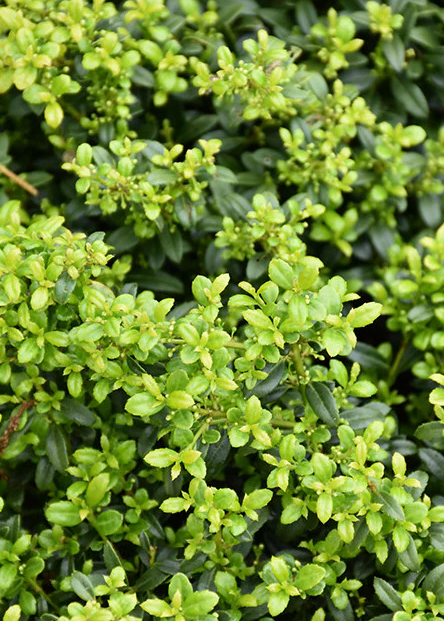
Japanese holly
Ilex crenata Thunb.
Accepted infraspecific taxa include:
- Ilex crenata var. crenata
- Ilex crenata var. radicans (Nakai ex H.Hara) Ohwi
Historical homotypic names include:
- Ilex crenata f. genuina Loes. — not validly published
- Ilex crenata var. typica Loes. — not validly published
Important botanical distinctions:
- Japanese Holly is not Japanese Boxwood, Buxus microphylla var. japonica.
- Inkberry or Gallberry is Ilex glabra, a separate North American black-fruited holly.
- Japanese Winterberry is Ilex serrata, a separate deciduous species with red fruit.
- Yaupon is Ilex vomitoria, Chinese Holly is Ilex cornuta, and Yerba Mate is Ilex paraguariensis.
- Japanese Holly cultivars such as ‘Sky Pencil’, ‘Helleri’, ‘Soft Touch’, ‘Convexa’, ‘Compacta’, ‘Steeds’, and ‘Hoogendorn’ remain selections of Ilex crenata.
Aquifoliaceae — Holly Family
Japanese Holly; Japanese-Holly; Box-Leaved Holly; Boxleaf Holly; Box-Leaved Japanese Holly; Crenate Holly; Crenated Holly; Japanese Box Holly; Japanese Box-Leaved Holly; Inutsuge; Inu-tsuge; Tsuge; Dwarf Japanese Holly; Ilex crenata
Box-Leaved Holly, Boxleaf Holly, and Japanese Box Holly refer to the shrub’s resemblance to Boxwood. Japanese Holly is not a member of the genus Buxus.
Inu-tsuge or Inutsuge is a Japanese common name associated with Ilex crenata. Tsuge by itself can create confusion with true boxwoods and other small-leaved evergreen shrubs.
Inkberry and Gallberry more properly refer to Ilex glabra or, regionally, other North American hollies. They should not be treated as exact common-name synonyms of Japanese Holly.
Japanese Winterberry refers to Ilex serrata, a deciduous red-fruited holly. Yaupon is Ilex vomitoria, Chinese Holly is Ilex cornuta, and Japanese Boxwood is Buxus microphylla var. japonica.
Commercial cultivar names include ‘Sky Pencil’, ‘Helleri’, ‘Soft Touch’, ‘Convexa’, ‘Compacta’, ‘Steeds’, ‘Hoogendorn’, ‘Green Lustre’, and related landscape selections. Cultivar habit, leaf size, and fruit production can differ, but no cultivar has been established as edible or toxin-free.
Exact-Species Ilexoside Saponins
Japanese Holly contains a chemically diverse group of pentacyclic triterpenoid glycosides commonly classified as saponins. These compounds consist of a lipid-soluble triterpenoid aglycone attached to one or more water-soluble sugar chains. That combination gives many saponins amphiphilic or soap-like properties and allows them to interact with biological membranes, digestive secretions, and epithelial surfaces.
Exact-species investigations of fresh Ilex crenata fruit isolated numerous compounds within the ilexoside series. Researchers identified ilexosides A, B, C, and D as 18,19-seco-ursane glycosides and later characterized ilexosides E, F, G, H, and I from the same plant source. Additional studies isolated ilexoside II together with ilexosides III through VIII and then ilexosides IX through XIV from fresh fruit.
Separate bark research isolated ilexosides XV through XIX. The aglycone structures represented within these studies included ordinary and seco-ursane skeletons and derivatives related to pomolic acid, siaresinolic acid, and other pentacyclic triterpenoids. Some compounds were mono- or bisdesmosidic, meaning their sugar chains were attached at one or two positions on the triterpene framework.
This direct chemistry is much stronger than a generic statement that all hollies contain one unidentified toxin. It proves that Japanese Holly fruit and bark contain multiple structurally distinct saponins. It does not prove that every ilexoside is equally irritating, that every cultivar contains the same concentration, or that a compound isolated through solvent extraction reaches the same dose when a dog eats several intact fruits.
How Saponins Can Produce Gastrointestinal Illness
Saponins can associate with membrane lipids and sterols and may alter epithelial permeability or irritate the gastrointestinal lining. After oral plant exposure, this can activate nausea pathways, increase salivation, stimulate vomiting, disturb intestinal fluid movement, and produce cramping or diarrhea.
The same membrane activity allows some saponins to cause hemolysis in laboratory systems when they come into direct contact with red blood cells. That property should not be converted into a prediction of clinical hemolytic anemia after ordinary Japanese Holly ingestion. Intact gastrointestinal barriers, incomplete absorption, metabolism, dose, chemical structure, and binding to food or plant material greatly influence whether an in-vitro membrane effect becomes a systemic animal effect.
The principal veterinary concern is therefore local gastrointestinal irritation rather than circulating saponin poisoning. Repeated vomiting and diarrhea can become medically important through dehydration, electrolyte disturbance, acid-base change, aspiration, and inability to maintain nutrition even when the original plant compounds do not cause direct organ failure.
Saponins are often bitter and may limit continued consumption. That natural deterrent helps explain why many exploratory bites produce no signs or short-lived illness. It is not reliable protection for puppies, indiscriminate scavengers, confined livestock, or animals eating fallen fruit mixed with another food.
Fruit, Bark, Foliage, and Other Plant Parts
Fresh black fruit has the strongest direct chemical evidence because multiple ilexoside series were isolated from that organ. Bark also has exact-species support through the isolation of ilexosides XV through XIX. Fruit is the most likely repeated household exposure because a dog can swallow several fallen drupes quickly while investigating beneath a hedge.
The exact saponin profile of ordinary Japanese Holly leaves has not been characterized as comprehensively in the studies used here. Foliage should nevertheless remain inaccessible because broader holly experience associates leaf ingestion with salivation, vomiting, diarrhea, and depression, and the plant’s chemistry is not confined to the visible fruit.
Stems, woody clippings, bark, roots, flowers, seedlings, seeds, bonsai trimmings, dried branches, and decorative material should not be offered as animal feed, browse, bedding, or enrichment. Lower exposure frequency or incomplete chemical analysis does not establish that an organ is safe.
The fruit is botanically a drupe rather than a true berry. Each drupe contains limited soft tissue surrounding several hard seed-bearing pyrenes. The chemical exposure comes primarily from the fruit tissue, while the hard internal structures and associated twigs create a separate mechanical consideration when many are swallowed.
Lettered and Numbered Ilexosides Are Not a Toxic-Dose Scale
The ilexoside names reflect the sequence in which related compounds were isolated and described. Ilexoside A is not necessarily more abundant or more toxic than ilexoside B, and ilexoside XIX is not a measure of increasing clinical severity.
Several compounds were investigated for anti-allergic or other pharmacological activity in laboratory systems. Biological activity in an experimental assay does not make the fruit medicinal for pets, nor does an anti-inflammatory or anti-allergic result negate its potential to irritate the gastrointestinal tract when swallowed as crude plant material.
A purified compound, solvent extract, bark fraction, and whole fruit are different exposures. Extraction can concentrate minor constituents and remove insoluble plant material, while natural ingestion delivers a mixture whose dose varies with fruit size, ripeness, cultivar, season, mastication, and animal body weight.
Caffeine and Theobromine Are Not Confirmed Primary Toxins
Yaupon, Yerba Mate, Guayusa, and several other hollies contain documented methylxanthines and have histories as prepared stimulant beverages. Their caffeine chemistry cannot be assigned automatically to Japanese Holly merely because the plants share the genus Ilex.
Japanese Holly is not established as a dependable caffeine-bearing beverage species, and caffeine or theobromine should not be listed as the cause of its ordinary gastrointestinal syndrome. Marked agitation, severe tachycardia, hypertension, panting, hyperthermia, tremors, or seizures is inconsistent with a routine Japanese Holly exposure.
Those findings should prompt investigation for coffee, tea, chocolate, energy products, stimulant medication, nicotine, Yaupon, another plant, pesticide, or incorrect identification.
Menisdaurin and the Cyanide Misconception
General holly lists sometimes repeat a long-named nitrile glucoside originally reported from ripe European Holly, Ilex aquifolium, as evidence that all hollies are cyanogenic. Later structural investigation revised that compound to menisdaurin.
The work did not establish menisdaurin as a principal toxin of Japanese Holly and did not demonstrate that ordinary Ilex crenata ingestion releases a clinically important cyanide dose. A correctly identified Japanese Holly exposure should therefore not be managed as an expected cyanide emergency.
Rapid respiratory distress, bright-red mucous membranes, sudden severe neurologic dysfunction, convulsions, or abrupt collapse requires immediate care and investigation for a cyanogenic plant, smoke or combustion exposure, another cellular poison, severe hypoxia, or unrelated disease.
Dried Material, Seasonal Variation, and Landscape Products
Japanese Holly is evergreen, so foliage remains accessible throughout the year. Fruit exposure is greatest when pollinated female shrubs bear mature black drupes and when fallen fruit accumulates beneath dense branches. Pruning creates another exposure period by placing fresh leaves, bark, and small stems at ground level.
Drying should not be assumed to eliminate triterpenoid glycosides. Dried hedge clippings, bonsai waste, decorative branches, storm debris, and compost material remain unsuitable as feed or chew material.
Season, fruit maturity, plant sex, cultivar, environmental stress, soil conditions, and genetic variation can change the amount and mixture of plant metabolites. No study has established a universally most toxic month, fruit color stage, or cultivar.
Fertilizers, systemic insecticides, fungicides, herbicides, treated mulch, slug bait, decorative wire, plastic ties, and landscape fabric may be swallowed during the same event. Severe neurologic, respiratory, cardiac, hepatic, or renal abnormalities may originate from those co-exposures rather than the shrub.
No Established Safe or Lethal Dose
No dependable pet-safe fruit count, leaf count, bark weight, plant mass, toxic dose, or lethal dose has been established for Japanese Holly in dogs, cats, horses, cattle, sheep, goats, rabbits, guinea pigs, poultry, or pet birds.
The lack of a validated dose should not be interpreted as evidence that one fruit routinely causes serious illness. Many animals remain normal after a small taste. It also means that an owner cannot dismiss a large or uncertain ingestion by applying a number developed for another holly species or another animal.
Risk depends on body size, age, plant part, quantity, mastication, stomach contents, individual susceptibility, existing disease, hydration, co-ingested substances, and the accuracy of plant identification.
Expected Onset and Early Gastrointestinal Signs
Many animals remain clinically normal after one exploratory taste. When illness occurs, signs are generally expected within several hours as fruit, bark, or foliage reaches and irritates the stomach and upper intestine.
Early nausea may appear as lip licking, repeated swallowing, grass eating, salivation, restlessness, hiding, reduced interest in food, or an unsettled posture. Drooling after Japanese Holly ingestion is more likely to reflect nausea than the severe immediate oral-burning syndrome caused by calcium oxalate aroids.
Japanese Holly has small, spineless leaves. Pronounced mouth swelling, intense pawing at the face, immediate screaming pain, or inability to swallow after one bite is not characteristic and should prompt evaluation for Boxwood splinters, a caustic substance, insect sting, oral foreign body, electrical injury, or another plant.
Vomiting, Diarrhea, and Abdominal Pain
Vomiting and diarrhea are the principal expected signs. An animal may vomit once and recover or may experience repeated episodes after consuming more fruit, foliage, bark, or clippings. Stool may become soft or watery and may contain mucus as the intestinal lining becomes irritated.
Abdominal discomfort may cause whining, repeated stretching, a hunched posture, prayer position, restlessness, tense abdominal muscles, or reluctance to be touched. Cats may hide, crouch, stop grooming, or refuse food rather than display obvious pain.
Small streaks of fresh blood can occasionally follow forceful vomiting or marked colonic irritation. Repeated fresh blood, coffee-ground vomit, black tarry stool, or substantial bloody diarrhea is not expected after a minor exposure and requires veterinary examination for more severe gastrointestinal injury, a foreign body, medication, another toxin, parasite, or unrelated disease.
Dehydration and Secondary Metabolic Disturbance
The most important complication of an otherwise uncomplicated Japanese Holly exposure is fluid loss. Repeated vomiting and diarrhea can produce dehydration, reduced circulating volume, electrolyte abnormalities, acid-base disturbance, weakness, and poor tissue perfusion.
Dry or tacky gums, sunken eyes, reduced skin elasticity, reduced urination, a rapid heart rate, weak pulses, cool extremities, or worsening depression indicates that gastrointestinal losses have become clinically important.
Puppies, kittens, toy-breed dogs, birds, rabbits, guinea pigs, elderly animals, and patients with kidney, heart, endocrine, or gastrointestinal disease have less reserve. An amount that produces temporary diarrhea in a healthy adult may create a more serious fluid deficit in a small or medically fragile patient.
Fruit, Twigs, and Mechanical Complications
Japanese Holly drupes are small, and obstruction from fruit alone appears uncommon. A puppy or small dog that swallows a large number may nevertheless ingest a compact mixture of fruit, hard pyrenes, leaves, mulch, and small woody pieces.
Panic, pawing at the mouth, ineffective breathing, blue-gray gums, weakness, or collapse may indicate choking. Heavy drooling, repeated swallowing, gagging, neck extension, coughing, or immediate return of water may indicate material lodged in the pharynx or esophagus.
Persistent vomiting, abdominal enlargement, increasing pain, reduced stool, repeated unproductive retching, or illness returning after apparent improvement may indicate gastric retention or intestinal obstruction. Decorative wire, plant tags, plastic ties, landscape fabric, or mulch may be more mechanically dangerous than the fruit itself.
Dogs, Cats, Horses, Livestock, and Small Animals
Dogs are the most likely household patients because they scavenge beneath hedges, chew low branches, investigate freshly cut material, and swallow fallen fruit rapidly. Puppies may consume a larger dose relative to body weight and are more likely to swallow foreign material from the planting bed.
Cats usually consume smaller amounts but can develop salivation, vomiting, diarrhea, appetite reduction, or depression after chewing foliage or contacting clippings. Continued feline food refusal deserves attention because prolonged anorexia can lead to serious secondary metabolic disease.
Horses cannot vomit and may instead show salivation, feed refusal, mild colic, diarrhea, depression, or altered manure production. Cattle, sheep, goats, pigs, and other livestock are most likely to encounter Japanese Holly through discarded hedge clippings, uprooted shrubs, storm debris, or ornamental plantings bordering a confined area.
Rabbits and guinea pigs cannot vomit. Gastrointestinal irritation may appear as salivation, reduced appetite, abdominal discomfort, diarrhea, or reduced fecal output. Food refusal can progress to gastrointestinal stasis. Poultry and pet birds may eat fruit or shred foliage, but no exact-species avian dose has been established.
Signs That Suggest Another Poison or Diagnosis
Marked hyperactivity, severe tachycardia, hypertension, pronounced panting, hyperthermia, tremors, or seizures is not the expected Japanese Holly syndrome. Those findings should prompt investigation for caffeine, chocolate, nicotine, stimulant medication, Yaupon, pesticide, or another toxicant.
Profound weakness, paralysis, major heart-rhythm abnormalities, respiratory failure, acute kidney injury, severe liver injury, coma, or sudden death is likewise inconsistent with an uncomplicated exposure. Boxwood, Yew, Privet, Pokeweed, Nightshade, toxic mushrooms, landscape chemicals, medications, metabolic disorders, and primary neurologic disease should be considered.
Severe signs must not be dismissed merely because Japanese Holly was present nearby. Presence does not prove ingestion, and ingestion does not prove that the holly explains every abnormality.
Expected Duration and Emergency Findings
Mild nausea, one vomiting episode, soft stool, or temporary lethargy may improve within several hours. A more substantial gastrointestinal exposure may continue through the remainder of the day or into the following day.
Persistent vomiting, continued watery diarrhea, inability to retain water, worsening abdominal pain, reduced urination, increasing weakness, or continued appetite loss requires reassessment rather than reliance on a fixed recovery time.
Emergency findings include choking, breathing difficulty, repeated unproductive retching, severe abdominal enlargement, bloody vomit or stool, black stool, collapse, profound weakness, tremors, seizures, abnormal responsiveness, or suspected ingestion of a pesticide, medication, wire, plastic, or incorrectly identified shrub.
Accepted Identity and Native Range
Japanese Holly is Ilex crenata Thunb., a broadleaf evergreen shrub or small tree in Aquifoliaceae. Its accepted native range extends from eastern Nepal and the eastern Himalaya through China, Myanmar, Vietnam, Korea, Taiwan, Japan, the Kuril Islands, and Sakhalin.
Wild plants occur in temperate woodland, forest margins, thickets, mountain slopes, lowland scrub, and other shrubby habitats. Extensive horticultural use has carried the species far beyond its native range, and escaped or naturalized populations occur in parts of North America and Europe.
Most pet exposures occur in managed landscapes rather than wild habitat. Japanese Holly is widely planted around homes, apartment buildings, commercial properties, schools, parks, sidewalks, courtyards, cemeteries, and parking areas and is also trained as bonsai.
Growth Form, Leaves, and Identification
Japanese Holly usually forms a densely branched evergreen shrub, although an unpruned plant can develop into a small tree. Repeated clipping produces the compact hedge or rounded foundation form commonly mistaken for Boxwood.
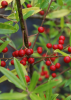
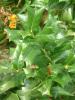
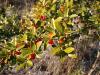
The leaves are alternate, simple, leathery, glossy dark green above, and paler beneath. They are generally elliptic to obovate and commonly less than approximately one and one-quarter inches long. Their margins bear small rounded crenations rather than the large rigid spines associated with English, American, or Chinese Holly.
Alternate leaf arrangement is one of the most useful identification features. One leaf arises at a node, followed by another leaf farther along the stem on a different side. Boxwood leaves occur in opposite pairs, with two leaves arising directly across from one another at the same node.
The specific epithet crenata refers to the shallow rounded teeth along the leaf margin. Cultivars differ in leaf size, color, density, height, and branch habit, but those horticultural differences do not establish a toxin-free form.
Male and Female Plants, Flowers, and Black Drupes
Japanese Holly is normally dioecious, with pollen-producing and fruit-producing flowers borne on separate plants. A male shrub produces pollen but no fruit. A female shrub can form fruit when compatible pollen is available from a male flowering at the same time.
The small greenish-white flowers appear during spring or early summer and can be difficult to see among the dense foliage. Pollinated female flowers develop into rounded black drupes approximately one-quarter to one-third of an inch across.
The fruit ripens during fall and may persist into winter or collect beneath the shrub. Dense foliage can conceal much of the crop from above while fallen drupes remain accessible to a dog searching under the hedge.
Each drupe contains several hard seed-bearing pyrenes surrounded by a modest amount of dark fruit tissue. Exact-species chemical studies isolated numerous ilexoside saponins from fresh fruit, making the fruit the best-documented plant part toxicologically.
Plant sex directly changes exposure. A confirmed male cultivar does not produce fruit, but its foliage, bark, stems, roots, and clippings remain unsuitable for consumption. Female cultivars may fruit sparsely or heavily depending on pollination, weather, pruning, and local growing conditions.
Japanese Holly and Boxwood
Japanese Holly is frequently used as a Boxwood substitute because both plants tolerate close clipping and develop small evergreen leaves. They are unrelated and contain different chemical defenses.
Japanese Holly has alternate leaves with shallow rounded marginal teeth. Boxwood has opposite leaves that are usually smooth-edged. Boxwood foliage may also produce a stronger characteristic odor when crushed.
Boxwood contains steroidal alkaloids and can cause salivation, vomiting, diarrhea, abdominal pain, weakness, neurologic abnormalities, respiratory effects, and potentially more serious systemic illness. A severe syndrome after exposure to a supposed Japanese Holly hedge makes verification of leaf arrangement especially important.
Inkberry and Other True Holly Look-Alikes
Inkberry, Ilex glabra, is a separate North American evergreen holly with black drupes. Inkberry leaves are generally longer and broader, with shallow teeth concentrated mainly toward the tip. It spreads readily through underground suckers and may form expanding colonies.
Japanese Winterberry, Ilex serrata, is deciduous and normally produces red fruit on branches that become bare during winter. Chinese Holly, Ilex cornuta, usually has larger thick leaves with prominent horn-like spines and red fruit.
Yaupon, Ilex vomitoria, is a separate North American species whose leaves contain documented caffeine. It should not be identified or treated as Japanese Holly merely because both can have small evergreen leaves.
Correct identification matters even within Ilex. Related species may share triterpenoid chemistry while differing in methylxanthines, fruit color, leaf form, concentration, exposure history, and research evidence.
Yew, Privet, Euonymus, and Other Dangerous Shrubs
Yew can be clipped into a dense hedge and may grow near Japanese Holly. It has narrow needle-like leaves and red fleshy arils surrounding exposed seeds. Taxine alkaloids can cause sudden cardiac collapse and death with few warning signs.
Privet produces opposite leaves and dark fruit in branching clusters. It can cause gastrointestinal and neurologic illness. Japanese Euonymus has opposite leaves and may produce capsules containing brightly colored seeds.
Pokeweed, Nightshade, Buckthorn, Cherry Laurel, and several other dark-fruited plants may occur near landscape hollies. An animal with severe, rapidly progressive, neurologic, cardiac, or respiratory signs requires examination of the entire planting area rather than identification of one convenient shrub.
Exact-Species Chemistry and Its Clinical Limits
Japanese researchers characterized several overlapping ilexoside series from the plant’s fruit and bark. The fruit yielded ilexosides A through I and Roman-numbered ilexosides II through XIV in separate investigations, while bark yielded ilexosides XV through XIX.
The compounds include ordinary and seco-ursane pentacyclic triterpenoid glycosides with different aglycones, sugar chains, hydroxylation patterns, ester groups, and glycosidic attachment sites. This is one of the more detailed exact-species chemical records available for an ornamental holly.
The studies were chemical-isolation investigations, not veterinary feeding trials. They established molecular structures through chromatography, chemical degradation, mass spectrometry, and nuclear magnetic resonance. They did not feed measured ilexoside doses to dogs or determine how many landscape fruits cause vomiting.
That distinction prevents two opposite errors. Japanese Holly should not be dismissed as chemically inert, but the presence of numerous bioactive molecules should not be exaggerated into a prediction of fatal poisoning after a few fruits.
Authoritative Veterinary Perspective
George E. Burrows summarized the practical difference between a holly containing active compounds and routinely causing severe veterinary disease in Toxic Plants of North America:
“Rarely, digestive tract problems are reported for horses or other animal species (Finance 1987). Effects in pets are usually limited to apparent irritation of the gastrointestinal tract with salivation, vomiting, and perhaps diarrhea in some cases (Volmer 2002). Feeding trials in young calves fed frozen I. myrtifolia (myrtle holly) every third day over 16 days or daily for 35 days produced no adverse clinical or pathologic effects (Pence et al. 2001).”
The feeding experiment involved Myrtle Holly, Ilex myrtifolia, not Japanese Holly. It does not establish that Ilex crenata has an identical dose-response, nor does it prove that every plant part, extract, or animal exposure is harmless.
Its value lies in defining an evidence boundary. Suspected herd association and genus membership did not predict a reproducible severe disease under those tested feeding conditions. That result is compatible with the generally low clinical severity attributed to natural holly ingestion while leaving exact Japanese Holly dosing unresolved.
Caffeine, Menisdaurin, and Common Holly-Toxin Errors
Caffeine chemistry from Yaupon, Yerba Mate, and Guayusa should not be transferred to Japanese Holly. Commercial or botanical use of the word holly does not make every species an interchangeable stimulant beverage.
Japanese Holly leaves should not be brewed as tea or used as a substitute for a known beverage species. Misidentification can introduce caffeine, another methylxanthine profile, pesticide residue, or a completely unrelated plant.
The menisdaurin issue arises from European Holly chemistry. A compound once interpreted as a possible cyanogenic glucoside was later structurally revised. That history does not make Japanese Holly a cyanide-releasing landscape shrub.
How Animals Encounter Japanese Holly
Dogs most often eat fallen fruit, pull at low foliage, retrieve toys or food from beneath a hedge, or investigate pruning debris. Puppies may swallow fruit, leaves, twigs, mulch, and plastic landscape material during the same episode.
Cats usually consume smaller quantities but may nibble foliage, hide beneath shrubs treated with chemicals, or groom residue from the coat. Bonsai trees can create indoor access that would not exist with an outdoor hedge.
Horses and livestock are unlikely to select intact Japanese Holly when adequate forage is available. Exposure becomes more plausible when hedge clippings, uprooted shrubs, storm debris, or landscape waste is dumped into a paddock or when hungry animals are confined beside ornamental plantings.
Rabbits, guinea pigs, poultry, and pet birds should not receive branches, fruit, leaves, or trimmings as forage or enrichment. Wildlife use does not establish a safe quantity for captive or domestic species.
Wildlife Consumption Does Not Establish Pet Safety
Wild birds consume black drupes and help disperse seeds. Dense evergreen growth also provides cover and nesting habitat.
Wildlife species differ in gastrointestinal anatomy, metabolism, feeding rate, seasonal adaptation, and the quantity eaten at one time. A bird taking several fruits during a varied natural diet is not equivalent to a puppy consuming an accumulated pile beneath a clipped hedge.
Wildlife use and plant toxicity can coexist. Fruits often depend on animals for dispersal while retaining bitter, astringent, or membrane-active compounds that limit consumption by nonadapted animals.
Diagnosis
No routine blood assay confirms Japanese Holly ingestion. Diagnosis depends on correct botanical identification, amount and plant part involved, timing, clinical progression, and exclusion of another plant, landscape chemical, medication, food toxin, foreign body, or medical disorder.
Useful evidence includes several attached leaves and stems, fruit, flowers when present, photographs of the complete shrub and planting bed, nursery labels, cultivar information, vomited fragments, and pesticide, fertilizer, herbicide, mulch-treatment, or decorative-product packaging.
Laboratory testing is often unnecessary after a minor exposure in an animal with no signs or one brief vomiting episode. Blood count, electrolytes, glucose, kidney and liver values, acid-base status, and urinalysis may be appropriate when gastrointestinal illness is repeated, dehydration is evident, or findings are more severe than expected.
Persistent gagging, regurgitation, abdominal pain, reduced stool, or recurrent vomiting may justify radiographs, ultrasound, contrast imaging, or endoscopy to evaluate woody fragments, fruit masses, wire, plastic, or another foreign body.
Prognosis and Prevention
The prognosis is generally good to excellent after correctly identified Japanese Holly ingestion. Many animals remain normal, while affected patients usually develop temporary nausea, vomiting, diarrhea, appetite reduction, abdominal discomfort, or lethargy.
The outlook becomes more guarded when repeated fluid losses cause dehydration, vomit is aspirated, foreign material obstructs the digestive tract, or another toxic shrub or landscape chemical was swallowed.
Collect fallen fruit where a dog repeatedly scavenges, remove pruning and bonsai waste immediately, and do not discard clippings into paddocks, kennels, rabbit runs, poultry yards, feed piles, bedding, or accessible compost.
A male plant eliminates fruit production but not the foliage-and-bark hazard. Secure fertilizers, pesticides, herbicides, wire, plastic ties, and treated mulch used around the shrub. Reconsider the plant identification immediately when the clinical syndrome is neurologic, cardiovascular, respiratory, renal, hepatic, or otherwise inconsistent with low-grade gastrointestinal irritation.
Immediate Steps After Japanese Holly Exposure
- Stop further access: Move the animal away from the shrub, fallen fruit, leaves, bark, roots, hedge clippings, bonsai trimmings, mulch, and decorative branches.
- Confirm the plant: Determine whether it is Japanese Holly, Inkberry, Yaupon, Chinese Holly, Japanese Winterberry, Boxwood, Yew, Privet, Euonymus, or another evergreen shrub.
- Preserve evidence: Save attached leaves and stems, fruit, flowers when present, nursery labels, cultivar information, clear photographs, vomited fragments, and every nearby landscape-product label.
- Estimate the amount: Record whether the animal ate one fruit, many fruits, foliage, bark, hedge clippings, a bonsai branch, or an unknown quantity.
- Remove only loose visible material: When the animal is alert, breathing normally, and unlikely to bite, take plant pieces resting at the lips or front of the mouth. Do not reach blindly toward the throat.
- Check for co-exposures: Look for missing wire, plastic ties, plant tags, mulch, fertilizer, pesticide, medication, chocolate, caffeine products, or another plant.
Do Not Induce Vomiting or Force Charcoal
Most limited Japanese Holly exposures do not justify the risks of an owner-administered emetic. The expected syndrome is gastrointestinal irritation rather than a rapidly absorbed poison for which immediate forced vomiting is routinely necessary.
Do not give hydrogen peroxide, salt, mustard, ipecac, dish soap, detergent, syrup, oil, or use fingers or tools to trigger gagging. Hydrogen peroxide can cause prolonged gastritis, esophageal injury, aspiration, and bloody vomiting. It must never be used to make a cat vomit.
Vomiting must not be induced in an animal that is already vomiting, weak, collapsed, trembling, seizing, sedated, breathing abnormally, unable to swallow, neurologically abnormal, or unable to protect the airway.
A veterinarian may consider professionally controlled emesis after an unusually large, recent ingestion in a completely normal dog when the expected benefit exceeds the risks. It is not routine treatment and is not appropriate for horses, rabbits, guinea pigs, birds, or other species incapable of vomiting safely.
Activated charcoal is also usually unnecessary. It has not been shown to improve ordinary Japanese Holly gastrointestinal illness and should not be forced into a vomiting, weak, sedated, or poorly swallowing animal. A veterinarian may consider it when a mixed exposure includes another absorbable toxin.
Vomiting, Diarrhea, and Hydration
- Track every episode: Record the timing and appearance of vomit and stool, including fruit, leaves, twigs, foam, mucus, blood, black material, wire, plastic, or mulch.
- Observe appetite and drinking: Temporary appetite reduction can accompany nausea, but continued refusal of food or water requires advice.
- Offer water only when safe: An alert animal that is swallowing normally and not vomiting repeatedly may have voluntary access to small amounts of fresh water.
- Never force fluids: Pouring or syringing water into the mouth can cause aspiration and does not neutralize saponins.
- Watch for dehydration: Tacky gums, sunken eyes, reduced urination, weakness, rapid heart rate, cool extremities, or worsening depression requires treatment.
- Report blood promptly: Repeated blood, coffee-ground vomit, black stool, substantial bloody diarrhea, pale gums, or collapse requires urgent examination.
Do Not Give Home Medication or Improvised Antidotes
Do not give loperamide, bismuth products, kaolin mixtures, sucralfate, antacids, antibiotics, anti-nausea medication, human pain relievers, or leftover veterinary medication without direct professional instruction.
These products do not neutralize ilexosides. Some can worsen gastrointestinal disease, interact with other medications, obscure clinical progression, or be unsafe in particular animal species.
Milk, oil, bread, food, yogurt, and other household products do not bind or deactivate Japanese Holly saponins reliably. A large meal may worsen nausea or complicate professional decontamination.
Do not give coffee, tea, caffeine tablets, energy products, or chocolate to counteract lethargy. These can create a separate and substantially more dangerous methylxanthine poisoning.
Do not prepare Japanese Holly tea or substitute it for Yaupon, Yerba Mate, Guayusa, or another beverage holly.
Abdominal Pain, Choking, and Foreign-Body Concerns
Monitor for hunching, whining, repeated stretching, prayer posture, restlessness, abdominal guarding, distention, or resistance when touched. Increasing pain deserves veterinary assessment even when vomiting is infrequent.
Panic, pawing at the mouth, ineffective breathing, blue-gray gums, weakness, or collapse may indicate choking. Remove only an object clearly visible at the front of the mouth and safely accessible without pushing it deeper.
Heavy drooling, repeated swallowing, neck extension, coughing, gagging, or immediate return of water may indicate pharyngeal or esophageal lodging. Do not give food, bread, oil, or water to push the material downward.
Persistent vomiting, repeated unproductive retching, abdominal enlargement, reduced stool, or illness returning after temporary improvement may indicate obstruction by fruit, woody stems, wire, plastic, landscape fabric, or another swallowed object.
Unexpected Neurologic, Cardiac, or Respiratory Signs
Marked agitation, severe tachycardia, tremors, seizures, profound weakness, respiratory distress, collapse, or reduced responsiveness is not the expected uncomplicated Japanese Holly syndrome.
Check immediately for coffee, tea, chocolate, nicotine, stimulant medication, pesticides, slug bait, fertilizer, Yew, Boxwood, Privet, Nightshade, Pokeweed, mushrooms, or another unidentified shrub.
Do not delay emergency transportation while attempting to prove which substance was responsible. Bring every available plant and product sample to the clinic.
Skin and Eye Exposure
Japanese Holly is not strongly associated with severe contact injury, but crushed fruit, sap, mold, pesticide residue, fertilizer, or individual sensitivity may irritate the skin or eyes.
Brush loose plant debris from the coat before wetting it. Remove contaminated collars, harnesses, clothing, and bedding. Wash exposed fur and skin with lukewarm water and a mild pet-safe cleanser, then rinse thoroughly and prevent licking until cleanup is complete.
Flush an exposed eye with sterile saline or clean lukewarm water for approximately 15 to 20 minutes. Direct a gentle stream across the ocular surface and beneath the eyelids.
Continued squinting, tearing, redness, swelling, cloudiness, discharge, or apparent vision difficulty requires veterinary examination for retained plant material, corneal injury, or chemical exposure.
Veterinary Examination and Treatment
There is no established Japanese Holly-specific antidote. Treatment is directed at gastrointestinal irritation, nausea, hydration, abdominal pain, aspiration, foreign material, and any accompanying toxic exposure.
The veterinarian may evaluate hydration, abdominal comfort, temperature, heart rate, blood pressure, respiratory status, swallowing, mental state, and the possibility of obstruction or another poison.
Veterinarian-selected anti-nausea medication may be used when vomiting is persistent or threatens hydration. Gastrointestinal protectants or pain control may be selected when clinically important mucosal irritation is present.
Subcutaneous or intravenous crystalloids may be used after repeated vomiting, diarrhea, poor water intake, or measurable dehydration. Fluid choice and volume should account for cardiovascular function, kidney function, urine production, electrolyte status, and underlying disease.
Blood count, electrolytes, glucose, kidney and liver values, acid-base assessment, and urinalysis may be appropriate when illness is prolonged, severe, or inconsistent with ordinary Japanese Holly exposure.
Radiographs, ultrasound, contrast imaging, or endoscopy may be required after ingestion of woody pieces, wire, plastic, decorative material, or many fruits. A retained foreign body may require endoscopic retrieval or surgery.
Horses and Livestock
Remove all animals from the shrub, hedge clippings, uprooted plants, storm debris, contaminated hay, and dumped landscape material. Provide uncontaminated forage and clean water without forcing intake.
Monitor salivation, feed intake, manure production, abdominal comfort, diarrhea, pulse quality, coordination, and breathing. Horses may show colic, reduced manure, depression, or feed refusal rather than vomiting.
Horses, rabbits, guinea pigs, and other species unable to vomit must never receive an emetic. Do not drench a colicky, weak, coughing, recumbent, or poorly swallowing animal with water, oil, charcoal, feed, or medication.
Tremors, paralysis, seizures, severe cardiovascular abnormalities, respiratory failure, or sudden group deaths is not typical Japanese Holly poisoning and requires investigation of the entire feed, water, chemical, and plant environment.
Recovery and Prognosis
The prognosis is good to excellent when signs remain limited to mild vomiting, diarrhea, appetite reduction, or temporary lethargy. Many animals require no treatment beyond removal of access and careful observation.
Recovery should include decreasing gastrointestinal signs, comfortable abdominal movement, normal hydration and urination, return of appetite, and ordinary activity.
Re-examination is needed when vomiting or diarrhea continues into the following day, water cannot be retained, abdominal pain increases, stool production declines, coughing begins, or weakness becomes more pronounced.
The outlook becomes more guarded with severe dehydration, aspiration pneumonia, choking, gastrointestinal obstruction, a co-toxin, or incorrect plant identification.
Frequently Asked Questions About Japanese Holly and Animal Poisoning
Have toxic compounds been isolated directly from Japanese Holly?
Yes. Multiple exact-species studies isolated triterpenoid saponins from fresh Ilex crenata fruit and bark. The compounds include the lettered ilexosides A through I and Roman-numbered ilexosides II through XIX. Isolation proves that the plant contains biologically active saponins but does not establish a pet-toxic dose for every compound.
Why are there both lettered and numbered ilexosides?
The names came from separate chemical-isolation series and publication sequences. Ilexoside A is not automatically more toxic than ilexoside B, and ilexoside XIX is not a severity ranking. The labels identify different molecular structures rather than a clinical dose scale.
Which Japanese Holly plant part has the strongest toxicological evidence?
Fresh fruit has the most extensive exact-species evidence, with several ilexoside series isolated from it. Bark also has direct chemical support. Leaves remain unsuitable for consumption, but their exact saponin profile has not been characterized as completely in the studies used for this page.
Does isolating many saponins prove that Japanese Holly is highly lethal?
No. Chemical diversity does not equal clinical lethality. The studies identified molecular structures from extracts; they did not establish that a few fruits kill dogs or reproduce severe systemic poisoning. Natural veterinary exposures are expected primarily to cause temporary gastrointestinal irritation.
Can Japanese Holly saponins cause hemolytic anemia?
Some saponins can disrupt red-cell membranes in laboratory systems when placed in direct contact with blood. That does not mean ordinary oral Japanese Holly ingestion routinely causes hemolysis. Gastrointestinal absorption, dose, chemical structure, metabolism, and intact tissue barriers greatly limit direct comparison with an in-vitro experiment.
Does Japanese Holly contain caffeine like Yaupon?
Japanese Holly is not established as a dependable caffeine-containing beverage species. Yaupon, Yerba Mate, and Guayusa have their own documented methylxanthine chemistry. Severe stimulation after a supposed Japanese Holly exposure should prompt investigation for another product or plant.
Does Japanese Holly release cyanide?
Ordinary Japanese Holly ingestion is not expected to produce cyanide poisoning. A historical compound claim from European Holly was later structurally revised to menisdaurin and cannot be transferred automatically to Ilex crenata.
How can Japanese Holly be distinguished from Boxwood?
Japanese Holly has alternate leaves with shallow rounded teeth. Boxwood usually has smooth-edged leaves in opposite pairs. This distinction matters because Boxwood contains steroidal alkaloids and can produce a different and potentially more serious syndrome.
How can Japanese Holly be distinguished from Inkberry?
Inkberry generally has longer, broader leaves with most teeth near the outer tip and commonly spreads by underground suckers into colonies. Japanese Holly usually has smaller leaves with crenations extending along more of the margin and is commonly maintained as a distinct clipped shrub.
Is a male Japanese Holly safer than a female?
A male plant does not produce black fruit, eliminating the most concentrated and repeatedly accessible exposure documented chemically. Its leaves, bark, stems, roots, and clippings remain unsuitable for consumption, so it should not be described as non-toxic.
Are ‘Sky Pencil’, ‘Soft Touch’, and ‘Helleri’ poisonous?
Yes. They remain cultivars of Ilex crenata. Differences in shape, leaf texture, density, and fruit production do not establish the absence of triterpenoid saponins or make the foliage safe to eat.
Can one black fruit poison a dog?
One fruit may cause no signs, especially in a larger healthy dog. No validated safe fruit count exists, however, and individual response varies. Remove access and watch for nausea, vomiting, diarrhea, abdominal discomfort, appetite loss, or lethargy.
Can many Japanese Holly fruits cause an intestinal obstruction?
Fruit-only obstruction appears uncommon because the drupes are small. A puppy or small dog may swallow fruit together with hard pyrenes, twigs, mulch, wire, plastic, and landscape fabric. Persistent vomiting, abdominal enlargement, reduced stool, or relapse after temporary improvement requires imaging.
Why can wild birds eat the fruit?
Birds differ in digestive anatomy, metabolism, feeding behavior, and the amount eaten at one time. Fruit consumption and seed dispersal are ecological relationships, not evidence of a safe serving for dogs, cats, horses, poultry, or captive birds.
Should a dog be made to vomit after eating Japanese Holly?
Not routinely. Most limited exposures do not justify the risks of a home emetic. Hydrogen peroxide can cause prolonged gastrointestinal injury and aspiration, and vomiting is unsafe after weakness, repeated vomiting, abnormal breathing, neurologic signs, or impaired swallowing begins.
Does activated charcoal improve Japanese Holly poisoning?
There is no evidence that it is routinely beneficial for an uncomplicated exposure. A veterinarian may consider charcoal when another absorbable toxin was swallowed, but it should never be forced into a vomiting, weak, sedated, or poorly swallowing animal.
What do tremors, seizures, or severe tachycardia suggest?
They suggest that ordinary Japanese Holly irritation may not explain the illness. Caffeine, chocolate, nicotine, stimulant medication, pesticides, Yew, Boxwood, another poisonous plant, metabolic disease, or neurologic illness should be investigated immediately.
What is the expected prognosis?
The prognosis is generally good to excellent. Most affected animals experience temporary gastrointestinal irritation. The principal reasons for a worse outcome are dehydration, aspiration, choking, obstruction, a co-exposure, or incorrect plant identification.