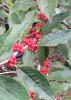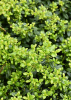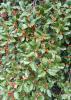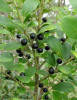
Myrtle Holly Exposure, Low-Severity Gastrointestinal Risk, and Red-Fruited Plant Identification
Is Myrtle Holly Poisonous to Dogs, Cats, Horses, and Livestock?
Yes—Myrtle Holly, Ilex myrtifolia Walter, should be treated as a low-toxicity, potentially irritating plant rather than as a proven cause of severe systemic poisoning. Dogs, cats, horses, livestock, rabbits, guinea pigs, birds, reptiles, and other animals should not be allowed to eat its leaves, twigs, bark, flowers, red or yellow drupes, seeds, roots, or discarded material. A limited natural-plant exposure is most likely to cause no illness or temporary salivation, nausea, vomiting, diarrhea, abdominal discomfort, appetite loss, or lethargy.
The precise species-specific toxic principle has not been established. Saponins are often identified as the likely cause of gastrointestinal irritation after holly ingestion, but the saponin profile of Ilex myrtifolia has not been characterized sufficiently to name an exact compound, concentration, toxic dose, or mechanism for dogs and cats. Caffeine, theobromine, cyanogenic glycosides, pigments, sterols, triterpenes, and other constituents reported from different Ilex species must not be transferred automatically to Myrtle Holly.
The strongest direct veterinary evidence is reassuring. Investigators performed two feeding trials after eleven cattle deaths had been associated circumstantially with Myrtle Holly, yet repeated feeding of harvested leaves, stems, and fruit to young calves produced no compatible clinical illness, significant clinical-pathology abnormalities, gross lesions, or histologic injury under the tested conditions. That result substantially weakens claims that ordinary Myrtle Holly foliage is a highly dangerous cattle poison, although it does not establish unlimited safety for every species, plant population, plant part, chemical treatment, or mixed exposure.
The greatest immediate danger may be incorrect identification or something accompanying the plant. Yew, Nandina, Carolina Cherry Laurel, Nightshade, Coral Ardisia, and other red-fruited plants can produce far more serious syndromes, while recently treated Myrtle Holly may carry pesticides or fertilizer. Hard fruit stones, stems, mulch, wire, plastic labels, mold, contaminated water, or another plant growing beneath the shrub can also change the case completely.
About this guide: This page provides general pet-poisoning information and cannot diagnose or treat an individual animal. For any suspected exposure, contact a veterinarian or animal poison-control service immediately. Do not induce vomiting, give medication, or attempt home decontamination unless directed by a veterinary professional.
Myrtle Holly
Ilex myrtifolia Walter
- Ilex dahoon var. myrtifolia (Walter) Chapm.
- Ilex cassine var. myrtifolia (Walter) Sarg.
- Ilex cassine subsp. myrtifolia (Walter) A.E.Murray
- Ilex myrtifolia f. lowei S.F.Blake — historical name for the yellow-fruited form
- Ilex cassine L. — Dahoon Holly; closely related and historically combined with Myrtle Holly, but not an exact synonym
Aquifoliaceae — Holly Family
Myrtle Holly; Myrtleholly; Myrtle-Leaf Holly; Myrtle Leaf Holly; Myrtleleaf Holly; Myrtle-Leaved Holly; Myrtleleaved Holly; Myrtle Dahoon; Myrtle-Dahoon; Small-Leaf Dahoon; Small-Leaved Dahoon; Yellow-Fruited Myrtle Holly; Yellow Myrtle Holly; Ilex myrtifolia
Historical scientific names include Ilex dahoon var. myrtifolia, Ilex cassine var. myrtifolia, Ilex cassine subsp. myrtifolia, and Ilex myrtifolia f. lowei. “Lowei” may still appear in horticultural references for a yellow-fruited selection. Preserve the original label because trade names, cultivar styling, and treatment as a Dahoon variety have not been consistent.
“Dahoon” alone more properly identifies Ilex cassine, although older references may place Myrtle Holly beneath that species. “Myrtle” is even more ambiguous and may refer to Wax Myrtle, Morella cerifera; Common Myrtle, Myrtus communis; Crape Myrtle, Lagerstroemia species and hybrids; or other unrelated plants. Those names are not botanical synonyms for Ilex myrtifolia.
Myrtle Holly should also not be confused with American Holly, Ilex opaca; English Holly, Ilex aquifolium; Yaupon, Ilex vomitoria; Inkberry, Ilex glabra; Winterberry, Ilex verticillata; Nandina, Nandina domestica; Carolina Cherry Laurel, Prunus caroliniana; or Japanese Yew, Taxus cuspidata. Similar red fruit or the common word “holly” does not establish identical chemistry, risk, or treatment.
Exact-Species Evidence and the Appropriate Toxicity Classification
Myrtle Holly is best classified as a low-toxicity plant capable of causing gastrointestinal irritation, not as a plant with a demonstrated lethal systemic toxin at ordinary natural-exposure amounts. No controlled dog, cat, horse, rabbit, bird, or reptile dose study has established a toxic threshold, and no persuasive companion-animal case series defines a consistent severe syndrome. The most important exact-species animal experiment was instead negative: repeated feeding of harvested Ilex myrtifolia material to young calves failed to reproduce the cattle deaths that had prompted the investigation.
This classification still requires practical caution. “Low toxicity” does not mean that the plant is food, that every animal can ingest an unlimited quantity without illness, or that a dog vomiting beneath a Myrtle Holly necessarily has a simple plant irritation. The correct interpretation is that severe cardiovascular, neurologic, hepatic, renal, or respiratory poisoning has not been established as the expected direct effect of correctly identified, uncontaminated Myrtle Holly.
The Unresolved Species-Specific Toxic Principle
The exact compound responsible for gastrointestinal illness attributed to Myrtle Holly has not been isolated and demonstrated through a species-specific dose-response study. Older and generalized holly references commonly identify saponins as the toxic principle, while some veterinary summaries state explicitly that the toxic principle and mechanism have not been determined. Those positions can be reconciled by treating saponins as a plausible genus-supported explanation rather than as an exact compound proven to cause every I. myrtifolia exposure.
A toxicology page should distinguish between a reasonable working mechanism and completed exact-species proof. Myrtle Holly belongs to a genus rich in triterpenoids, triterpenoid glycosides, phenolic compounds, flavonoids, sterols, and other secondary metabolites. Until leaves, stems, fruits, seeds, bark, and roots are analyzed quantitatively and their fractions tested in clinically relevant models, no individual molecule should be advertised as the confirmed primary Myrtle Holly toxin.
Why Saponins Remain the Most Plausible Working Explanation
Saponins are amphiphilic glycosides composed of a relatively lipid-soluble aglycone joined to one or more sugar chains. Their structure allows interaction with biological membranes and reduction of surface tension in watery solutions. In the gastrointestinal tract, sufficiently concentrated saponins can irritate mucosa, alter membrane permeability, stimulate salivation and nausea, and contribute to vomiting, abdominal discomfort, or diarrhea.
That mechanism fits the low-severity syndrome historically associated with pet ingestion of common holly leaves and fruit. It also fits the absence of a reproducible severe organ-specific syndrome in the Myrtle Holly calf trials. Nevertheless, the page must not claim that a named saponin has been isolated from I. myrtifolia and proven to cause canine or feline disease when that work has not been completed.
Some purified saponins can lyse red blood cells under laboratory conditions. In vitro hemolysis does not establish that natural Myrtle Holly ingestion produces clinically significant intravascular hemolysis, because gastrointestinal absorption, concentration, metabolism, protein binding, and exposure duration differ from a test-tube system. Pallor, jaundice, dark urine, marked anemia, or hemoglobinuria should therefore trigger investigation for another cause rather than being accepted as routine Myrtle Holly toxicosis.
Methylxanthines Are Not Established Myrtle Holly Toxins
Theobromine and caffeine have often appeared in generalized holly toxin lists because certain Ilex species are traditional stimulant beverages. Yaupon, Ilex vomitoria; Yerba Maté, Ilex paraguariensis; and Guayusa, Ilex guayusa, contain measurable purine alkaloids. Their chemistry cannot be assigned automatically to every member of a genus containing hundreds of species.
A modern LC–MS chemotaxonomic investigation examined caffeinated hollies and related taxa, including Myrtle Holly among the comparative species. Purine alkaloids were detected and quantified in the established stimulant species rather than broadly throughout all sampled hollies. That evidence does not support calling theobromine Myrtle Holly’s primary toxin or managing an ordinary I. myrtifolia nibble as though the animal had eaten chocolate or concentrated caffeine.
A genuine methylxanthine syndrome would be expected to emphasize restlessness, hyperactivity, persistent tachycardia, hypertension, increased urination, hyperthermia, tremors, and seizures. Those signs are not the defining pattern attributed to ordinary holly ingestion, which is dominated by gastrointestinal upset and temporary depression. Marked stimulation after access to a landscaped Myrtle Holly should prompt a search for pesticide, stimulant medication, chocolate, coffee products, energy products, toxic mold, or another plant.
Cyanogenic Claims and Why They Should Not Be Transferred
A cyanogenic diglucoside with the historical chemical description 2-β-D-glucopyranosyloxy-p-hydroxy-6,7-dihydromandelonitrile has been reported from English Holly. Repetition of that finding in broad holly summaries has led to the unsupported impression that every Ilex species releases a clinically important cyanide dose. No comparable exact-species evidence establishes Myrtle Holly as a cyanogenic livestock or pet poison.
Clinically important cyanide intoxication is generally rapid and severe, with abrupt respiratory distress, weakness, abnormal mucous-membrane color, collapse, seizures, and possible death before a prolonged gastrointestinal illness develops. That pattern was not produced in the controlled Myrtle Holly calf trials and is not the ordinary syndrome associated with pet holly exposure. Rapid cyanide-like illness near a supposed Myrtle Holly requires urgent reconsideration of Cherry Laurel, another cyanogenic plant, contaminated feed, smoke exposure, or a nonplant source.
Pigments, Triterpenes, Sterols, and Other Listed Constituents
Anthocyanin glycosides such as cyanidin and pelargonidin derivatives contribute to red, purple, and related fruit coloration in many plants. Their names contain the syllable “cyan,” but they are not cyanide and should not be represented as cyanogenic poisons. The red or yellow color of a Myrtle Holly drupe does not reveal its gastrointestinal irritancy or prove a dangerous toxin concentration.
Ursolic acid, oleanolic acid, α-amyrin, β-sitosterol, ergosterol, rutin, caffeic acid, chlorogenic acid, flavonoids, and related plant constituents have been reported from one or more hollies. Their occurrence elsewhere in Ilex does not establish their presence, concentration, bioavailability, or clinical importance in Myrtle Holly. A long phytochemical inventory becomes misleading when it fails to distinguish exact-species detection from genus-level occurrence and chemical presence from demonstrated animal poisoning.
Ilex lactone was isolated from English Holly fruit. It should not be assigned to Myrtle Holly merely because both species bear red drupes. No evidence establishes Ilex lactone as the cause of a predictable I. myrtifolia veterinary syndrome.
Leaves, Twigs, Bark, Roots, Flowers, and Fruit
Every raw plant part should remain inaccessible even though direct evidence indicates low overall toxicity. Leaves and fruit create the most likely pet exposures because they are abundant, persistent, and reachable, while twigs and branches may be chewed after pruning or storm damage. Roots and basal material become accessible when a shrub is transplanted, uprooted, or discarded.
The red or occasionally yellow structures commonly called berries are botanically drupes. Each has a fleshy outer portion surrounding several hard endocarps or stones associated with the seeds. The pulp may contribute to gastrointestinal irritation, while the hard stones and attached stems add physical material that is poorly digestible and may matter more in a very small animal or after ingestion of many fruits.
Myrtle Holly leaves are narrow and usually smooth-edged or only subtly toothed. They are less likely to puncture oral tissues than the stiff, conspicuously spined leaves of some English or American hollies. Twigs, broken stems, stiff leaf tips, contaminated fragments, and hard fruit stones can still abrade the mouth or act as foreign material.
Fresh, Fallen, Frozen, Dried, and Decaying Material
No validated household process converts Myrtle Holly into safe animal forage. Fallen leaves, wet fruit, frozen branches, dried cuttings, wreath material, herbarium specimens, storm debris, and old pruning waste should remain inaccessible. Drying may reduce moisture and change palatability without proving that every irritating constituent has disappeared.
Decaying fruit introduces hazards not present in a freshly picked drupe. Wet pulp beneath a shrub may support mold, bacteria, fermentation, insects, or contamination by wildlife feces and landscape chemicals. An animal consuming a pile of decomposing fruit may therefore develop illness unrelated to, or more serious than, the plant’s intrinsic low toxicity.
Pesticides, Fertilizers, and Mixed Landscape Exposures
A recently purchased or professionally maintained shrub may carry contact or systemic insecticides, fungicides, herbicide drift, fertilizer, growth regulators, horticultural oils, surfactants, or leaf treatments. Fallen fruit may collect fertilizer granules, slug bait, treated mulch, standing water, fuel residue, or chemicals applied to nearby plants. The exact product, concentration, application date, and route may matter more than the Myrtle Holly itself.
Mixed exposure also includes plant ties, plastic labels, wire baskets, irrigation pieces, landscape fabric, decorative stone, bark mulch, potting material, and broken containers. Persistent vomiting, abdominal enlargement, repeated unproductive retching, severe pain, or reduced stool requires consideration of physical obstruction or injury. The animal should not be treated repeatedly for “holly poisoning” while a foreign body remains undiagnosed.
What the Calf Trials Establish
The species-specific feeding investigation began after spatial and temporal patterns of eleven cow deaths created suspicion that Myrtle Holly consumption might be involved. Investigators harvested Ilex myrtifolia material and conducted two trials. One involved intermittent feeding to four-month-old calves for approximately two weeks, and the second involved continuous feeding to two-month-old calves for thirty-five days.
The calves did not develop significant clinical-pathology abnormalities, compatible clinical signs, gross lesions, or histologic lesions. The authors concluded that the tested berries, leaves, and stems were not sufficiently toxic to reproduce clinical effects under those experimental conditions. This is substantially stronger evidence than a field association based only on finding the shrub near dead cattle.
The trials do not prove that every amount is safe. They do not cover all cattle ages and health states, every plant population, all seasonal chemistry, every proportion of fruit and seed, every preparation, or every other animal species. They do show that Myrtle Holly should not be labeled a proven lethal cattle poison without additional evidence explaining why controlled repeated exposure failed to reproduce disease.
Toxic-Dose Limitations
No validated toxic dose exists for dogs, cats, horses, sheep, goats, rabbits, guinea pigs, birds, reptiles, or other companion and domestic animals. A dependable number of fruits, leaves, grams, or branches cannot be calculated from the calf work. The study was designed to investigate a suspected herd problem, not to establish a minimum emetic dose or a universal no-effect threshold.
Risk depends on actual botanical identity, animal size, health, amount swallowed, plant part, chewing, contaminants, pesticides, foreign material, and whether vomiting or diarrhea develops. A single fruit in a healthy medium-sized dog is biologically different from a toy-breed puppy consuming a ground-level accumulation of wet fruit, mulch, and pesticide granules. Clinical decisions should reflect the whole exposure rather than a copied berry count.
No Specific Antidote
No toxin-specific antidote has been established or appears necessary for an uncomplicated Myrtle Holly exposure. Veterinary treatment is directed at controlling clinically important vomiting or diarrhea, restoring hydration, correcting measured electrolyte abnormalities, relieving appropriate discomfort, and evaluating foreign material or co-exposures. Many limited exposures require only source removal and observation under case-specific professional guidance.
Severe neurologic, cardiovascular, respiratory, hematologic, hepatic, or renal illness should not trigger increasingly aggressive treatment for an assumed Myrtle Holly toxin without reassessing the diagnosis. The more severe the syndrome, the greater the need to identify pesticides, medications, mold, another plant, infectious disease, metabolic illness, or a physical gastrointestinal problem.
Expected Clinical Course
Most animals that taste or swallow a limited amount of correctly identified, uncontaminated Myrtle Holly are expected to remain normal or develop mild gastrointestinal illness. Signs may begin within several hours, but no exact onset interval has been validated in dogs, cats, horses, or other species. Timing depends on the amount, plant part, degree of chewing, stomach contents, animal size, and whether another material was swallowed.
A typical limited course may include salivation, lip licking, repeated swallowing, nausea, one or more episodes of vomiting, soft stool or diarrhea, mild abdominal discomfort, reduced appetite, and temporary lethargy. Improvement should be progressive after access ends. Continuing deterioration, severe systemic abnormalities, or illness persisting beyond the expected gastrointestinal period requires a broader diagnosis.
Oral and Early Gastrointestinal Signs
Early oral behavior may include lip smacking, head shaking, repeated swallowing, drooling, gagging, or reluctance to continue chewing. These findings are more consistent with unpleasant taste or mild mucosal and gastrointestinal irritation than with a deep corrosive burn. Myrtle Holly does not contain the insoluble calcium-oxalate raphide mechanism responsible for the immediate severe oral pain of many aroids.
Persistent drooling or obvious mouth pain should not be attributed automatically to holly chemistry. A twig, hard fruit stone, splinter, dental injury, pesticide residue, caustic product, insect sting, or another plant may be lodged in or injuring the mouth. Veterinary examination may be needed when salivation continues after loose plant material has been removed.
Vomiting, Diarrhea, and Abdominal Discomfort
Vomiting and diarrhea are the most plausible clinically important findings after a substantial ingestion. Vomit or stool may contain narrow leaves, red or yellow pulp, fruit stones, seed material, twigs, mulch, soil, or plastic. One or two episodes may resolve, while repeated losses can produce dehydration, electrolyte disturbance, weakness, and aspiration risk.
Abdominal discomfort may appear as restlessness, a tucked posture, stretching, repeated position changes, reduced appetite, or reluctance to be touched. Severe pain, marked abdominal enlargement, repeated unproductive retching, or inability to pass stool is not expected from uncomplicated mucosal irritation. Those findings require investigation for obstruction, bloat, pancreatitis, foreign material, or another disease.
Depression and Appetite Loss
Mild lethargy can accompany nausea, abdominal discomfort, reduced food intake, and fluid loss. Dogs may sleep more, avoid activity, or refuse a meal, while cats may hide, stop grooming, or decline food. This temporary depression is different from stupor, coma, profound weakness, or inability to awaken normally.
Continued food refusal is particularly important in cats and small herbivores. A low-toxicity exposure can still become medically important when nausea or discomfort causes prolonged inadequate intake. Failure to resume species-appropriate eating should not be dismissed simply because Myrtle Holly itself is unlikely to cause severe systemic poisoning.
Dogs and Cats
Dogs most often encounter Myrtle Holly by eating fallen fruit, rooting through wet mulch beneath a female plant, chewing low branches, or investigating storm and pruning debris. Mild salivation, vomiting, diarrhea, appetite loss, and temporary lethargy are the most plausible direct signs. Small dogs may face a greater physical burden from numerous hard fruit stones or foreign material relative to body size.
Cats may chew tender foliage, bat fallen drupes, or groom plant residue from their paws and coat. They may vomit once and then hide, making continued nausea or food refusal less obvious. Repeated vomiting, inability to retain water, ongoing anorexia, weakness, or abnormal behavior requires veterinary evaluation rather than prolonged home observation.
Horses and Livestock
Horses may browse low foliage or receive cut branches placed in a paddock, but a severe equine syndrome has not been established for this species. Possible findings after substantial ingestion include salivation, feed refusal, diarrhea, and mild colic-like discomfort. Horses cannot vomit, so retching or gastric-emptying advice intended for dogs is inappropriate.
The controlled calf trials provide direct evidence against characterizing ordinary Myrtle Holly as a highly toxic cattle plant. Repeated feeding did not produce the disease observed in the original herd. Severe or fatal illness in cattle, sheep, or goats with Myrtle Holly nearby therefore requires a systematic search for toxic neighbors, contaminated feed or water, pesticides, blue-green algae, infectious disease, mineral disturbance, nitrate, cyanide-producing plants, and other causes.
Rabbits, Guinea Pigs, and Other Small Herbivores
Direct species-specific evidence is lacking for rabbits, guinea pigs, chinchillas, and similar herbivores. They should not be offered Myrtle Holly as forage because the plant has no established nutritional safety, and gastrointestinal irritation or appetite interruption could have disproportionate consequences. Rabbits and guinea pigs cannot vomit.
Reduced eating, fewer or smaller feces, complete absence of feces, tooth grinding, diarrhea, abdominal enlargement, weakness, or a hunched posture requires prompt veterinary guidance. Assisted feeding should not begin blindly when obstruction, bloat, severe weakness, or impaired swallowing has not been excluded.
Birds and Reptiles
Wild birds commonly consume holly fruits, but their behavior does not define safety for companion birds. Wild species may swallow fruit whole, consume limited seasonal amounts, or tolerate constituents differently. A pet bird may instead chew leaves and stems extensively or ingest pesticide residue from a nursery or landscape plant.
Regurgitation, continuing diarrhea, food refusal, inability to perch, weakness, tremors, or respiratory change requires avian veterinary attention. Reptile-specific evidence is similarly sparse; repeated mouth opening, regurgitation, weakness, abnormal movement, food refusal, or breathing change after plant access should be evaluated by an exotic-animal veterinarian.
Dehydration and Secondary Complications
Repeated vomiting or diarrhea can produce tacky mucous membranes, sunken eyes, reduced urination, weak pulses, worsening lethargy, and poor circulation. Puppies, kittens, toy-breed dogs, elderly animals, and patients with kidney, heart, endocrine, or gastrointestinal disease may tolerate fluid loss poorly. A plant considered mildly irritating can therefore precipitate a clinically important secondary problem in a vulnerable patient.
Aspiration may occur when a weak or repeatedly vomiting animal inhales plant material, food, forced water, charcoal, or vomit. Coughing, nasal discharge, fever, rapid breathing, increased respiratory effort, or renewed lethargy after the gastrointestinal signs improve may indicate aspiration pneumonia. This complication can extend illness well beyond the expected direct plant effects.
Foreign-Body and Mechanical Concerns
The small fruit contains hard endocarps, and exposure beneath a landscape shrub may include bark mulch, stones, plant labels, wire, plastic, or irrigation pieces. One or several fruit stones usually pass without consequence in a larger animal, but a large cluster of indigestible material can create a different risk in a very small patient. No universal obstruction threshold exists.
Repeated unproductive vomiting, persistent abdominal pain, progressive enlargement, inability to retain food or water, reduced stool, or continuing illness after the expected irritant period warrants imaging or other examination. A foreign body should not be overlooked because the owner also saw holly fruit in the vomit.
Signs That Do Not Fit Uncomplicated Myrtle Holly Exposure
Marked agitation, persistent tachycardia, hyperthermia, severe tremors, or seizures are not the expected presentation of a limited natural-plant exposure. Those findings raise concern for stimulant medication, caffeine, chocolate, pesticide, toxic mold, another poisonous plant, or metabolic and neurologic disease. Treating them as proof of theobromine in Myrtle Holly would delay the correct diagnosis.
Rapid respiratory distress, bright-red mucous membranes, sudden collapse, or peracute seizures is more compatible with cyanide or another rapidly acting emergency than with ordinary Myrtle Holly irritation. Profound bradycardia, major conduction block, jaundice, severe anemia, uncontrolled bleeding, primary kidney failure, or coma likewise requires a broader differential. Incorrect botanical identification becomes increasingly likely as the clinical severity moves away from the low-toxicity gastrointestinal pattern.
Duration and Prognosis
Most uncomplicated cases should improve within several hours to one or two days. Vomiting and diarrhea should become less frequent, hydration should remain adequate, appetite should return, and activity should normalize. Signs that remain static or worsen are not following the expected course.
The prognosis is good to excellent after a limited, correctly identified, uncontaminated exposure. The outlook depends more heavily on dehydration, aspiration, underlying disease, swallowed foreign material, pesticide exposure, mold, another toxic plant, or incorrect identification than on a proven severe Myrtle Holly toxin. Prompt reassessment is warranted whenever the clinical course exceeds what mild gastrointestinal irritation can explain.
Accepted Identity
Myrtle Holly is Ilex myrtifolia Walter, an evergreen or sometimes tardily deciduous shrub or small tree in Aquifoliaceae. It is accepted as a distinct species, although older treatments often placed it beneath Dahoon Holly, Ilex cassine. That taxonomic history explains why older records may use Dahoon, Cassine, or a varietal name rather than I. myrtifolia.
The species name means myrtle-leaved and describes the narrow foliage. Myrtle Holly is not a true myrtle and does not belong to Myrtaceae. Common names containing Myrtle, Dahoon, Holly, or Laurel must therefore be resolved botanically before toxicological conclusions are applied.
Native Range and Habitat
Myrtle Holly is native to the southeastern United States Coastal Plain, with accepted native occurrence in Alabama, Florida, Georgia, Louisiana, Mississippi, North Carolina, and South Carolina. It is strongly associated with wet acidic environments rather than dry upland forests. Plants reported substantially outside that range may be cultivated, introduced, taxonomically intermediate, or misidentified.
Typical habitats include cypress and limesink ponds, pocosins, wet pine savannas, pine flatwoods, bog margins, swamp edges, moist woodland, and other low Coastal Plain depressions. The shrub may grow where seasonal flooding alternates with exposed wet soil. Dogs, hunting animals, livestock, and horses may encounter it at pond margins, rural properties, wetland trails, native landscapes, and the edge of fenced pasture.
Growth Form and Stems
Myrtle Holly usually grows as a shrub or small tree, often remaining below approximately fifteen to twenty feet. It may develop multiple slender trunks or stems from the base. Cutting, fire, storm damage, and other disturbance can stimulate resprouting.
The relatively low growth places foliage and fruit within reach of dogs, livestock, and browsing animals. Storm-broken branches and pruning debris create greater ground-level access than the standing shrub. Bark, twigs, plant ties, and woody fragments also create physical exposure even when intrinsic toxicity is low.
Leaves
The leaves are persistent, narrow, leathery, and generally linear-lanceolate, narrowly elliptic, or oblong. They are commonly no more than about four centimeters long and less than one centimeter wide in current North American keys. Their margins are usually smooth or only subtly toothed, and the leaf blade is much narrower than that of typical Dahoon Holly.
Myrtle Holly does not have the broad, stiff, dramatically spined foliage commonly pictured for English or American Holly. That reduces the likelihood of obvious puncture injury from the leaf margin. A twig, stiff tip, broken stem, or contaminated plant fragment can still cause oral irritation or lodge between the teeth.
Flowers and Separate Male and Female Plants
The flowers are small and greenish-white to white. Myrtle Holly is normally dioecious, meaning male and female flowers occur on separate plants. A female plant generally requires compatible pollen from a nearby male holly to produce a substantial fruit crop.
A shrub without fruit is not necessarily a different species or a nontoxic plant. It may be male, immature, poorly pollinated, or growing beyond effective pollen transfer. Flower structure, leaf dimensions, habitat, and complete branching material are more useful than fruit presence alone.
Red and Yellow Drupes
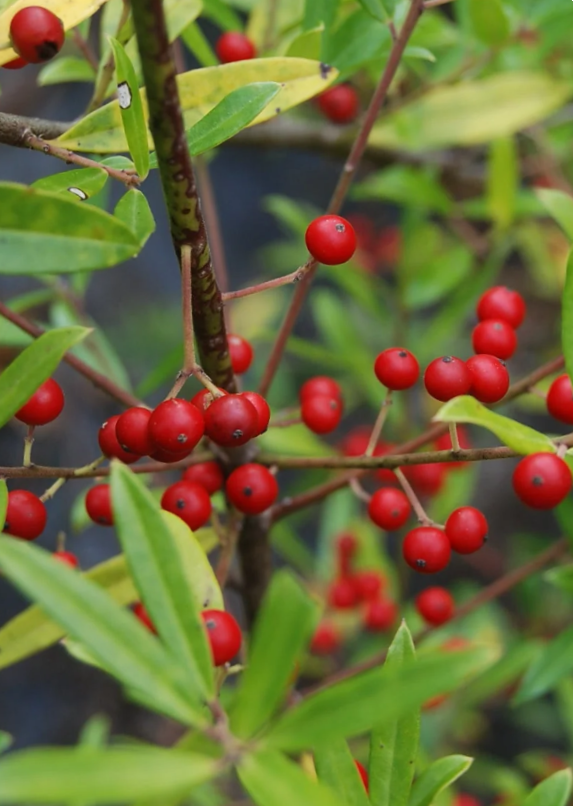
Female plants produce small rounded drupes, usually red but occasionally yellow. The historical form Ilex myrtifolia f. lowei was named for yellow-fruited plants, which are now included within the species. Yellow fruit therefore does not indicate ripeness failure, a separate species, or a different poisoning mechanism.
The structures are commonly called berries, but each has a fleshy outer layer surrounding several hard endocarps or stones. Fruit may persist into winter or fall into wet leaf litter and mulch beneath the shrub. A ground-level accumulation can make the total amount eaten much larger than the owner first recognizes.
Relationship to Dahoon Holly
Dahoon Holly is Ilex cassine. It generally grows larger and has broader, longer leaves and larger fruit than Myrtle Holly, but the distinction is not absolute in every specimen. Intermediate populations involving hybridization and introgression are frequently encountered where the species grow together.
That complexity matters because the reassuring calf trials involved material identified as I. myrtifolia. A cultivated or wild intermediate should not be assigned automatically to that exact evidence base. Preserve complete specimens, habitat information, and labels when species-level interpretation matters.
Published Calf-Feeding Investigation
The most important direct veterinary study followed the deaths of eleven cows in a herd where spatial and temporal patterns led investigators to suspect Myrtle Holly consumption. Harvested plant material was used in two feeding trials. Four-month-old calves received intermittent plant material for approximately two weeks, while two-month-old calves received continuous plant feeding for thirty-five days.
The investigators found no significant clinical-pathology changes, no compatible clinical signs, and no gross or histologic lesions. Their results suggested that the tested berries, leaves, and stems were not sufficiently toxic to produce clinical effects under those experimental conditions. The original field association therefore was not reproduced experimentally.
George E. Burrows and Ronald J. Tyrl summarized the veterinary context as follows:
“Rarely, digestive tract problems are reported for horses or other animal species (Finance 1987). Effects in pets are usually limited to apparent irritation of the gastrointestinal tract with salivation, vomiting, and perhaps diarrhea in some cases (Volmer 2002). Feeding trials in young calves fed frozen I. myrtifolia (myrtle holly) every third day over 16 days or daily for 35 days produced no adverse clinical or pathologic effects (Pence et al. 2001).”
This is a particularly important negative result. Finding a plant near dead livestock is not enough to prove causation when the exposure has not been confirmed and the disease cannot be reproduced. The study redirects attention toward more plausible infectious, nutritional, environmental, chemical, and botanical causes of a serious herd event.
Limits of the Negative Study
The calf work does not convert Myrtle Holly into a recommended forage. It tested particular harvested material, animal ages, feeding schedules, and experimental conditions. It cannot establish the safety of unlimited fruit, seeds, every seasonal population, concentrated extracts, pesticide-treated shrubs, moldy debris, or another animal species.
The study also cannot define the dose that might produce temporary salivation, soft stool, or mild appetite change. A trial designed to reproduce deaths and significant clinicopathologic injury may not be optimized to detect every brief or subtle gastrointestinal response. Its strongest conclusion is that severe cattle toxicity was not demonstrated under repeated controlled exposure.
Why Myrtle Holly Toxicity Has Been Overstated
The genus Ilex contains hundreds of species distributed across many environments and evolutionary lineages. Chemical investigations of English Holly, Yaupon, Yerba Maté, Guayusa, Chinese medicinal hollies, and other species have identified different triterpenoids, glycosides, phenolics, flavonoids, sterols, and purine alkaloids. Copying every compound into a Myrtle Holly toxin list creates an appearance of precision without exact-species proof.
A second source of exaggeration is the repeated use of one generic “holly toxicity” description for every species. The ordinary pet syndrome associated with common holly exposure is generally mild gastrointestinal irritation, but even that syndrome has not been connected to a single proven I. myrtifolia compound. The correct page must preserve the clinical precaution while being honest about the sparse direct evidence.
Methylxanthine Evidence and Beverage Hollies
Yaupon, Yerba Maté, and Guayusa have long histories as caffeinated beverages. Myrtle Holly has sometimes been called Cassena or confused historically with Dahoon and Yaupon, encouraging unsupported claims that its leaves contain a clinically important caffeine or theobromine dose. Ethnobotanical name overlap is not analytical proof.
Modern LC–MS comparison of caffeinated hollies and related taxa detected purine alkaloids in the recognized stimulant species rather than throughout the entire genus. Myrtle Holly should not be brewed as tea or treated as a substitute for a properly identified beverage species. A wild or landscaped plant also may carry pesticide, mold, animal waste, or another species mixed into the material.
Dogs
Dogs may eat fallen drupes, chew low branches, carry cuttings, dig around roots, or root through wet mulch beneath a female plant. The most likely direct consequences are no signs or temporary drooling, vomiting, diarrhea, reduced appetite, abdominal discomfort, and lethargy. Risk increases when repeated access makes the total ingestion larger than one observed episode suggests.
Evaluate the entire ground area rather than the shrub alone. Fruit may be mixed with fertilizer pellets, slug bait, mushrooms, mold, trash, wildlife feces, treated mulch, plastic, wire, and fruit from a neighboring plant. Severe or persistent illness should not be assigned to Myrtle Holly until those alternatives are investigated.
Cats
Cats may chew tender leaves, bat small fruits, climb into a wet planter, or groom residue from their paws and coat. Most correctly identified natural-plant exposures should be mild, but a cat may hide nausea and reduced intake. Repeated vomiting or continued food refusal deserves early attention.
The absence of a severe proven Myrtle Holly toxin does not make prolonged feline anorexia harmless. Dehydration and secondary metabolic complications can outlast the original gastrointestinal irritation. Owners should monitor eating, drinking, urination, behavior, and vomiting rather than judging recovery from the disappearance of visible plant material.
Horses, Cattle, Sheep, and Goats
Large animals may browse Myrtle Holly where wetland vegetation meets pasture, reach over a fence, or receive cut branches in a paddock. Horses may develop salivation, feed refusal, diarrhea, or mild colic after substantial gastrointestinal irritation, although direct species-specific case evidence is sparse. Horses cannot vomit and should never receive household emetics.
The negative calf trials make Myrtle Holly an unlikely explanation for severe systemic or fatal cattle disease by itself. Sheep and goats have not received equivalent controlled testing, so the calf findings should not be converted into universal ruminant safety. Nevertheless, tremors, severe weakness, respiratory distress, photosensitization, jaundice, sudden death, or a large herd outbreak requires examination for causes more credible than ordinary Myrtle Holly exposure.
Rabbits and Other Small Herbivores
Myrtle Holly should not be collected as rabbit, guinea-pig, or chinchilla forage. The plant has no established nutritional role or validated safe feeding amount for these species. Small body size and dependence on continuous gastrointestinal intake make appetite disruption clinically important even when the plant is only mildly irritating.
Fewer feces, diarrhea, abdominal enlargement, tooth grinding, food refusal, weakness, or abnormal posture requires prompt exotic-animal advice. Plant identification remains essential because a browse bundle may contain several species. Do not use wildlife consumption as evidence that a branch is appropriate domestic-animal forage.
Birds
Wild birds consume Myrtle Holly fruit and help disperse the seeds. They may swallow fruits whole and encounter the plant at a seasonal stage selected through normal foraging behavior. This ecological relationship does not prove that pesticide-treated ornamental branches are safe as pet-bird perches or chewing enrichment.
A companion bird may shred leaves and bark, ingest residue repeatedly, or receive a larger relative exposure. Regurgitation, diarrhea, appetite loss, weakness, poor balance, or inability to perch requires avian veterinary advice. Preserve treatment records for any nursery or landscape plant placed near the enclosure.
Wet, Moldy, and Fermenting Fruit
Fallen fruit may accumulate in wet Coastal Plain soil, landscape mulch, patios, drains, animal runs, and standing water. Softened pulp can support microbial growth or fermentation, while the surrounding material may collect fertilizer, pesticide, wildlife waste, or toxic mushrooms. The resulting exposure is no longer simply fresh Myrtle Holly fruit.
An animal that becomes markedly ataxic, tremulous, unusually stimulated, or neurologically depressed after eating decomposing ground material may have encountered mold toxins, fermentation products, pesticides, or another item. Save a representative sample from the exact location rather than collecting clean fruit from the shrub later.
Dangerous Red-Fruited Look-Alikes
Japanese Yew may bear red arils surrounding a hard seed and can cause sudden fatal cardiac poisoning. Nandina produces clusters of red fruit containing cyanogenic glycosides and is particularly associated with bird poisoning after large ingestions. Carolina Cherry Laurel carries dark fruit and cyanogenic foliage, while Nightshade species may produce gastrointestinal and neurologic disease.
Other possible confusions include American Holly, Yaupon, Dahoon Holly, Winterberry, Inkberry, Coral Ardisia, Cotoneaster, Pyracantha, Beautyberry, and numerous cultivated shrubs. Fruit color alone is not enough. Leaf arrangement, margins, fruit structure, flower structure, branching, bark, habitat, and the complete plant must be considered together.
Diagnosis
Diagnosis begins with exact plant identification, the amount and part consumed, the condition of the material, and the timing and character of the illness. Preserve a complete fruiting branch rather than a handful of loose drupes. Photographs should show the entire plant, leaves attached to stems, both leaf surfaces, flowers or fruit, trunk or stems, habitat, and the ground beneath it.
No routine blood or urine test confirms Myrtle Holly ingestion. Laboratory testing is used to evaluate dehydration, electrolyte loss, organ function, hypoglycemia, infection, pesticide exposure, or another differential when illness is persistent or severe. Vomited fruit pulp proves exposure to some red-fruited material only when the source plant is known confidently.
Veterinary Evaluation and Differential Diagnosis
A mildly affected patient may require only physical examination and monitoring. Repeated vomiting, diarrhea, dehydration, abdominal pain, prolonged anorexia, weakness, or a medically fragile history may justify blood chemistry, electrolytes, glucose, urinalysis, imaging, or additional testing. The diagnostic plan should be proportionate to the animal rather than to a generic holly label.
Important alternatives include dietary indiscretion, spoiled food, parasites, infection, pancreatitis, obstruction, foreign material, stimulant medication, chocolate, caffeine products, pesticides, fertilizer, toxic mold, Nandina, Yew, Cherry Laurel, Nightshade, and primary gastrointestinal disease. Severe signs make these alternatives increasingly important. A veterinarian should not stop investigating merely because Myrtle Holly was present.
Prognosis
The prognosis is good to excellent after most limited natural-plant exposures. Expected recovery includes cessation of vomiting or diarrhea, maintained hydration, return of appetite, normal activity, and no developing respiratory or abdominal abnormality. Most uncomplicated patients should not require prolonged hospitalization.
The outlook becomes dependent on the complication when dehydration, aspiration, foreign-body obstruction, pesticide exposure, underlying disease, or a more dangerous plant is involved. Persistent or recurrent illness is not evidence that an undefined Myrtle Holly toxin remains active indefinitely. It is a reason to reassess the original diagnosis.
Prevention
Collect fallen red and yellow drupes from dog yards, patios, animal enclosures, and paddock edges before they accumulate. Place pruning, storm debris, roots, and uprooted shrubs directly into closed or otherwise inaccessible disposal. Do not use the branches as browse, cage decoration, perches, bedding, wreath material within pet reach, or livestock forage.
Document every pesticide, fertilizer, fungicide, herbicide, oil, and other treatment applied to the plant or surrounding ground. Teach landscapers and maintenance workers not to throw ornamental cuttings over animal fences. Where red-fruited shrubs grow together, label them permanently so an emergency does not depend on identifying a damaged loose fruit.
Immediate Response
- Stop further exposure: Move the animal away from the shrub, fallen fruit, leaves, branches, roots, mulch, pruning waste, standing water, and treated landscape area.
- Preserve the complete plant: Save a fruiting branch, both leaf surfaces, flowers when available, whole-plant photographs, nursery labels, and material recovered from vomit or stool.
- Estimate the maximum possible amount: Determine whether the animal tasted one fruit, repeatedly grazed fallen fruit, chewed leaves, swallowed branches, or accessed an entire debris pile.
- Record the time and progression: Note when access occurred and when drooling, vomiting, diarrhea, abdominal pain, appetite loss, weakness, or another sign began.
- Check the whole exposure site: Look for fertilizer pellets, pesticide granules, slug bait, mushrooms, mold, plastic, wire, irrigation parts, other fruiting plants, and animal waste.
- Contact a professional when the case is not clearly trivial: Seek veterinary or poison-control advice for a large or unknown amount, repeated signs, a small or medically fragile animal, a treated shrub, or uncertain identification.
Confirm the Plant Before Assuming Low Toxicity
- Do not identify from fruit color alone: Numerous harmless, irritating, cyanogenic, neurotoxic, and cardiotoxic plants produce red fruit.
- Photograph the plant in place: Include the whole growth form, leaf arrangement, fruit attachment, flowers, bark, and surrounding plants.
- Preserve labels and landscape plans: Nursery receipts, plant maps, and maintenance records may resolve the identity faster than a damaged specimen.
- Report hard seeds, arils, or fleshy cherries accurately: Those structures may direct the assessment toward Yew, Cherry Laurel, Nandina, Nightshade, or another plant.
- Use the more serious plausible diagnosis until resolved: Do not delay emergency stabilization because Myrtle Holly is one possibility.
A correctly identified Myrtle Holly exposure ordinarily carries a favorable prognosis. That reassurance depends on correct identification. When only loose red fruit is available, the case cannot be downgraded safely until more dangerous look-alikes have been considered.
Assess the Animal
- Check responsiveness: Mild quietness may accompany nausea, but profound weakness, confusion, collapse, or reduced responsiveness is not expected.
- Check breathing: Rapid, labored, shallow, gasping, or weak breathing requires immediate emergency care.
- Check coordination: Staggering, tremors, inability to stand, or seizures suggests another toxin, severe complication, or unrelated illness.
- Check the abdomen: Marked enlargement, repeated unproductive retching, severe pain, or absent stool may indicate obstruction or bloat.
- Check hydration: Tacky gums, sunken eyes, worsening weakness, reduced urination, or inability to retain water may indicate significant fluid loss.
- Check food intake: Continued refusal matters particularly in cats, rabbits, guinea pigs, birds, and small or medically fragile patients.
Remove Loose Plant Material
- Wear gloves: Gloves reduce exposure to vomit, feces, mold, pesticide residue, and unidentified plant material.
- Remove only visible loose pieces: Carefully take accessible leaves, fruit, twigs, and stones from the lips and front of the mouth when handling is safe.
- Avoid blind finger sweeps: Do not reach deeply into the throat or push plant material toward the airway.
- Wipe accessible residue: A damp cloth may be used on the lips and front of the mouth in a fully alert, cooperative animal.
- Rinse only when swallowing is normal: A gentle low-pressure rinse may be considered only in an alert animal breathing and swallowing normally.
- Stop if coughing, gagging, or distress occurs: Further oral cleaning is unsafe when airway protection is uncertain.
Home mouth cleaning does not justify delaying identification or professional advice. Hard stones, splinters, and pesticide residue may remain despite removal of visible pulp. Persistent drooling or mouth pain requires examination for lodged or chemically irritating material.
Do Not Induce Vomiting at Home
- Do not give hydrogen peroxide: It may cause prolonged vomiting, gastric or esophageal injury, aspiration, and unnecessary distress after a generally low-toxicity exposure.
- Never give peroxide to a cat: Feline gastric and esophageal injury can be severe.
- Do not use salt, mustard, ipecac, soap, oil, fingers, or manual gagging: These methods can cause an additional poisoning or physical injury.
- Never attempt emesis after signs begin: Vomiting, coughing, weakness, tremors, collapse, abnormal breathing, sedation, or poor swallowing greatly increases aspiration risk.
- Do not attempt vomiting in horses, rabbits, guinea pigs, birds, reptiles, or other species for which household emesis is impossible or unsafe: Species physiology must guide treatment.
Professional emesis is rarely justified for an uncomplicated Myrtle Holly nibble because the expected toxicity is low and spontaneous vomiting may already occur. A veterinarian may consider controlled emesis in an asymptomatic dog only when an unusual large or mixed ingestion creates a greater hazard than the procedure. That decision belongs in a case-specific veterinary or poison-control assessment.
Activated Charcoal
- Do not administer charcoal at home: It is not routinely indicated for an uncomplicated Myrtle Holly exposure.
- Never force charcoal into a symptomatic animal: Vomiting, coughing, weakness, neurologic abnormalities, or poor swallowing creates severe aspiration risk.
- Do not use household charcoal: Briquettes, fireplace ash, burned food, and homemade carbon are not medical activated charcoal.
- Reserve it for a justified co-exposure: A veterinarian may consider properly prepared charcoal when pesticide, medication, concentrated extract, or another absorbable toxin was also swallowed.
- Do not repeat doses yourself: Repeated charcoal can worsen dehydration, electrolyte imbalance, constipation, and gastrointestinal dysfunction.
Do Not Give Household Remedies or Owner-Selected Medication
- Do not give milk, yogurt, cheese, bread, or oil: These do not neutralize an unidentified holly constituent and may worsen nausea or aspiration risk.
- Do not give caffeine or stimulants: Coffee, tea, energy products, decongestants, and stimulant medication can create a more serious poisoning.
- Do not give antidiarrheals: Loperamide, bismuth products, kaolin mixtures, and similar products should not be owner-selected.
- Do not give antacids or sucralfate automatically: Their need depends on the patient, diagnosis, and ability to swallow safely.
- Do not give human pain medication: Ibuprofen, naproxen, aspirin, acetaminophen, and similar drugs may cause an additional poisoning.
- Do not give leftover veterinary medication: Antiemetics, antibiotics, steroids, sedatives, pain medication, and gastrointestinal drugs must be selected for the present illness.
Food and Water
- Do not force food: A nauseated, vomiting, weak, painful, or poorly swallowing animal may choke or aspirate.
- Do not force water: Syringed, poured, or drenched fluid can enter the lungs.
- Prevent rapid gulping during active vomiting: Large volumes may trigger further vomiting or aspiration.
- Follow veterinary feeding instructions: Reintroduction of food should reflect species, hydration, vomiting control, abdominal findings, and underlying disease.
- Do not use flavored human electrolyte drinks: They may contain excessive sugar, sodium, artificial sweeteners, caffeine, or xylitol.
Vomiting and Diarrhea
- Record every episode: Note frequency, volume, blood, mucus, fruit pulp, stones, leaves, twigs, mulch, plastic, or chemical granules.
- Save representative material: Place recognizable plant or contaminant fragments in a closed disposable container.
- Watch for dehydration: Tacky gums, sunken eyes, reduced urination, weakness, or inability to retain water requires veterinary care.
- Watch for blood: Red vomit, substantial bloody diarrhea, black stool, or unexplained bruising is not expected from a minor exposure.
- Watch for aspiration: Coughing, fever, nasal discharge, rapid breathing, or renewed lethargy after vomiting may indicate lung injury.
- Watch for obstruction: Continuing vomiting, severe pain, abdominal enlargement, unproductive retching, or reduced stool warrants prompt examination.
Fruit, Stones, and Foreign Material
- Do not panic over one confirmed fruit in a healthy larger animal: Severe poisoning is unlikely, although case-specific monitoring remains appropriate.
- Count the remaining ground fruit: Repeated access may produce a much larger total ingestion than the witnessed event.
- Consider patient size: Numerous hard stones and attached stems represent a greater physical burden in a very small animal.
- Inspect for mulch and plastic: Bark pieces, labels, ties, wire, stones, and irrigation parts may accompany the fruit.
- Reconsider the plant when fruit structure differs: A red aril, fleshy cherry, pod, or cluster from another shrub can indicate a much more dangerous exposure.
Pesticides, Fertilizers, and Mold
- Find every product label: Preserve insecticide, herbicide, fungicide, fertilizer, slug bait, horticultural oil, and growth-regulator information.
- Record treatment dates: Note recent spraying, granular application, systemic treatment, landscape renovation, or nearby chemical use.
- Sample the exact ground material: Wet or decaying fruit may contain mold, fermentation products, wildlife waste, and residues absent from clean fruit still on the shrub.
- Do not apply a household neutralizer: Vinegar, baking soda, bleach, oil, and chemical mixtures can cause additional injury.
- Report unexpected signs immediately: Tremors, seizures, extreme salivation, abnormal pupils, marked stimulation, severe weakness, or respiratory distress suggests more than ordinary plant irritation.
Safe Transportation
- Call ahead: Tell the clinic that Myrtle Holly, another red-fruited plant, pesticide, fertilizer, mold, or foreign material may be involved.
- Prevent falls: Use a carrier, stretcher, rigid board, sling, or blanket for a weak or uncoordinated animal.
- Keep the airway clear: Position the patient so saliva and vomit can drain without compressing the chest.
- Do not muzzle a vomiting or breathing-impaired animal: A muzzle may trap vomit or restrict breathing.
- Bring the evidence: Take the plant sample, photographs, fruit, labels, chemical containers, and recovered material.
Horses and Livestock
- Remove the source: Prevent further access to foliage, fruit, cut branches, mixed brush, contaminated hay, and treated landscape waste.
- Examine the entire exposed group: Different animals may have consumed different plants or amounts.
- Do not induce vomiting: Horses cannot vomit, and household emetics are inappropriate in ruminants.
- Do not drench symptomatic animals: Salivating, weak, coughing, bloated, neurologic, or poorly swallowing livestock can aspirate oral fluids and medication.
- Preserve environmental samples: Save branches, fruit, forage, water, feed, algae, pesticides, and neighboring plants before the site is cleared.
- Investigate severe illness broadly: The negative calf trials make Myrtle Holly alone an inadequate explanation for many serious or fatal herd syndromes.
Rabbits, Guinea Pigs, Birds, and Reptiles
- Do not attempt vomiting: Household emesis is unsafe or impossible in these species.
- Monitor food intake immediately: Reduced eating can become clinically important before other signs appear.
- Monitor feces and urine: Reduced fecal production, diarrhea, absent feces, abnormal urination, or continuing weight loss requires veterinary advice.
- Do not force-feed a compromised animal: Bloat, obstruction, severe weakness, or impaired swallowing must be excluded first.
- Monitor breathing and posture: Open-mouth breathing, repeated mouth opening, inability to perch, collapse, or abnormal posture requires urgent care.
- Use a species-experienced veterinarian: Fluids, restraint, temperature support, analgesia, and nutrition differ substantially from dog and cat treatment.
Veterinary Evaluation
- Confirm botanical identity: Distinguishing Myrtle Holly from Yew, Nandina, Cherry Laurel, Nightshade, and other red-fruited plants can change treatment completely.
- Assess hydration and perfusion: Repeated gastrointestinal loss may require electrolyte, glucose, kidney, and acid-base evaluation.
- Examine the mouth: Persistent salivation may reflect a twig, fruit stone, chemical residue, dental injury, or another plant.
- Evaluate the abdomen: Imaging may be appropriate when numerous stones, mulch, plastic, wire, or other foreign material was swallowed.
- Investigate severe signs: Tremors, seizures, tachycardia, respiratory distress, profound weakness, collapse, or coma requires a broader toxicologic and medical differential.
- Consider exposure testing: Product-specific pesticide analysis, toxicology screening, imaging, or infectious and metabolic testing may be more useful than pursuing an undefined Myrtle Holly toxin.
Veterinary Treatment
Many limited exposures require no gastrointestinal decontamination beyond source removal and safe elimination of loose oral material. Veterinarian-selected anti-nausea medication may be used when vomiting is persistent or causing discomfort, fluid loss, or aspiration risk. Gastrointestinal protectants and analgesia are selected according to examination findings rather than given automatically for every exposure.
Subcutaneous or intravenous fluids may be appropriate when vomiting, diarrhea, reduced intake, or underlying disease causes clinically important dehydration. Electrolytes and glucose should be corrected according to measured abnormalities. Patients with heart or kidney disease require an individualized fluid plan rather than automatic aggressive administration.
Imaging, endoscopy, or surgery may be needed when the exposure includes a large indigestible mass, numerous hard stones in a very small patient, wire, plastic, bark, or another foreign object. Pesticides, fertilizers, toxic mold, stimulant products, and more dangerous plants require toxin-specific management. Treatment should follow the confirmed or most clinically plausible hazard, not the reassuring Myrtle Holly label.
Aspiration may require oxygen, airway support, chest imaging, and additional treatment. Antibiotics are not routine plant-poison treatment and are selected when bacterial aspiration pneumonia or another infection is supported. Severe neurologic or cardiovascular signs require stabilization and diagnostic expansion rather than treatment directed at an unproven Myrtle Holly methylxanthine or cyanide mechanism.
Monitoring and Recovery
- Monitor vomiting and diarrhea: Episodes should become less frequent and then stop.
- Monitor hydration: Gum moisture, urination, circulation, and ability to retain water should remain adequate.
- Monitor eating: Appetite should return, with especially close attention to cats and small herbivores.
- Monitor the abdomen: Pain, enlargement, repeated retching, or reduced stool should not develop.
- Watch for delayed aspiration: Coughing, fever, nasal discharge, rapid breathing, or renewed lethargy requires reassessment.
- Reconsider the diagnosis when recovery stalls: Persistent or worsening illness suggests another plant, co-exposure, foreign body, underlying disease, or complication.
Recovery means that the animal is alert, hydrated, breathing comfortably, eating appropriately, urinating and defecating normally, and no longer vomiting or showing abdominal discomfort. Temporary improvement followed by renewed illness is not the expected course of uncomplicated Myrtle Holly irritation. Recurrent signs should not be attributed indefinitely to the original exposure without another examination.
Prevention and Prognosis
- Collect fallen fruit: Remove red and yellow drupes from dog yards, patios, paddocks, rabbit runs, and animal enclosures.
- Secure pruning and storm debris: Place every branch and uprooted plant directly into closed or inaccessible disposal.
- Document chemical treatments: Keep permanent records of pesticides, fertilizers, and other products used on the shrub and nearby soil.
- Do not use branches as animal material: Myrtle Holly is not appropriate forage, bedding, browse, cage decoration, or a pet-bird perch.
- Typical prognosis: Correctly identified, limited natural-plant exposures usually carry a good-to-excellent prognosis.
- More serious circumstances: Dehydration, aspiration, foreign-body ingestion, pesticide exposure, toxic mold, underlying disease, or plant misidentification creates a more guarded outlook.
Frequently Asked Questions About Myrtle Holly and Animal Poisoning
My dog swallowed one confirmed Myrtle Holly fruit. Is an emergency visit always necessary?
One confirmed fruit is unlikely to cause severe poisoning in an otherwise healthy medium or large dog, but the correct response depends on more than the fruit count. Remove all remaining ground fruit, verify that the shrub truly is Ilex myrtifolia, and check whether the dog also swallowed mulch, fertilizer granules, pesticides, plastic, wire, mushrooms, or decaying material. Contact a veterinarian or poison-control service when the dog is very small, medically fragile, already symptomatic, or likely to have eaten more than the witnessed fruit.
How can I tell Myrtle Holly fruit from a more dangerous red-fruited plant?
Do not identify an exposure from a loose red fruit alone. Myrtle Holly has narrow, usually smooth-edged leaves and small drupes attached to a wetland or landscape shrub, while Yew has red fleshy arils around exposed seeds, Nandina carries conspicuous branched clusters, and Cherry Laurel develops fleshy cherry-like fruit with broader leaves. Photograph the entire plant, leaf arrangement, fruit attachment, bark, flowers, and growing site, and preserve a complete branch for a qualified identifier.
Clinical signs cannot always correct a poor plant identification before dangerous treatment delays occur. Sudden collapse may suggest Yew, rapid respiratory distress may suggest a cyanogenic plant, and marked neurologic disease may point toward Nandina, Nightshade, pesticide, or another cause. Emergency stabilization should begin while identification is being resolved whenever the animal is seriously ill.
Does yellow fruit make a Myrtle Holly plant more or less toxic?
No toxicological difference has been established between ordinary red-fruited plants and the yellow-fruited form historically called Ilex myrtifolia f. lowei. The color difference reflects fruit pigmentation and is now included within the accepted species rather than treated as a separate poisonous plant. Yellow fruit should still remain inaccessible because no color-specific toxic dose or feeding safety has been established.
Why does it matter whether the shrub was recently sprayed or fertilized?
The plant’s intrinsic toxicity appears low, but a recently treated shrub may carry a much more important chemical exposure. Contact and systemic insecticides, fungicides, horticultural oils, herbicide drift, fertilizer granules, growth regulators, surfactants, and slug bait can produce syndromes that Myrtle Holly itself does not explain. Preserve every product label, application date, concentration, and treatment record so veterinary advice addresses the actual chemical rather than only the plant.
Residue may be concentrated on fallen fruit, wet leaves, mulch, or soil where a dog investigates repeatedly. Do not wash the area with bleach, vinegar, detergent, or another improvised neutralizer because chemical mixing can create additional hazards. Block access until the product-specific reentry instructions and veterinary assessment are understood.
Can wet, fermented, or moldy fruit beneath the shrub be more dangerous than fresh fruit?
Yes, because the exposure is no longer limited to intact Myrtle Holly tissue. Wet fruit and organic debris can support mold, bacteria, fermentation, insects, and contamination by wildlife waste or landscape chemicals. Marked incoordination, tremors, unusual stimulation, profound depression, or seizures after eating decomposing ground material should prompt investigation for mold toxins, fermentation products, pesticides, or another item rather than being assigned automatically to holly.
Could the hard stones inside many Myrtle Holly fruits obstruct a small dog?
A few small stones are likely to pass through many animals, but no universal safe number exists. A toy-breed dog or puppy swallowing a large accumulation of fruit, stems, bark mulch, and plastic has a different physical risk from a large dog eating one drupe. Persistent vomiting, repeated unproductive retching, abdominal pain or enlargement, inability to retain water, or reduced stool requires examination for foreign material or obstruction.
Why can wild birds eat the fruit when it is not recommended for pet birds?
Wildlife use describes an ecological relationship, not a controlled safety trial for every captive species. Wild birds may swallow fruits whole, consume limited seasonal amounts, select fruit at a particular ripening stage, and metabolize plant constituents differently. A companion bird may shred foliage and bark extensively or ingest pesticide residue from an ornamental shrub, so wild-bird feeding does not validate Myrtle Holly as a perch, browse source, or enrichment plant.
Can I use Myrtle Holly branches as rabbit browse because the calf study was negative?
No. The calf investigation showed that the tested material did not reproduce significant illness or pathology in young cattle under those particular feeding conditions. It did not establish nutritional suitability, a rabbit-safe dose, freedom from gastrointestinal irritation, or safety from pesticides, mold, and mixed plant material.
Rabbits depend on continuous food intake and can deteriorate when nausea or discomfort interrupts eating. A branch gathered from a wetland or landscape site may also include another plant that looks similar after cutting. Use established rabbit-safe forage rather than converting a negative cattle toxicity study into a feeding recommendation.
My cat vomited once and now refuses food. Can I assume the exposure is already over?
No. The original plant irritation may be mild, but continuing feline food refusal can become medically important even after vomiting stops. Monitor drinking, urination, activity, hiding, grooming, and whether any additional vomiting occurs, and obtain veterinary guidance when appetite does not return promptly.
Do not force-feed a nauseated cat or give peroxide, charcoal, antacids, sucralfate, or leftover anti-nausea medication. The plant may also have been misidentified, or the cat may have swallowed pesticide, foreign material, or an unrelated item. Persistent anorexia deserves assessment on its own merits rather than being dismissed because Myrtle Holly is considered low in toxicity.
Why would tremors, a very rapid heartbeat, or seizures make Myrtle Holly a less convincing diagnosis?
Those signs are not the expected pattern of a limited, uncontaminated Myrtle Holly ingestion. They are more compatible with stimulant medication, chocolate, concentrated caffeine, pesticide, toxic mold, another poisonous plant, metabolic disease, or a neurologic emergency. The old claim that theobromine is Myrtle Holly’s primary toxin should not be used to make severe stimulation appear plant-specific when modern comparative chemistry does not support that conclusion.
What should I preserve when several red-fruited shrubs grow in the same yard?
Preserve material from each candidate plant separately and label where every sample was collected. Photograph the complete shrubs, fruit attachment, leaves on their stems, both leaf surfaces, bark, flowers, ground debris, and the path the animal used. Save nursery labels, landscape plans, pesticide records, vomited fragments, and a map or wide photograph showing which plants were within reach.
Do not place several loose fruits and leaves together in one bag because that can destroy the link between specimen and source plant. Keep clean reference material separate from vomited or contaminated material. The goal is to establish which plant the animal reached, not merely to demonstrate that multiple red fruits exist on the property.
Eleven cows originally died near Myrtle Holly, so why is the plant now considered low in toxicity?
The original herd pattern created a reasonable hypothesis, but proximity and timing do not prove causation. Investigators then performed the essential next step by harvesting the suspected plant and feeding its berries, leaves, and stems to young calves under two repeated-exposure schedules. They did not reproduce the herd’s clinical disease, significant clinicopathologic abnormalities, gross lesions, or histologic lesions.
The negative result does not prove absolute safety, but it greatly weakens Myrtle Holly as the explanation for those deaths. A livestock owner facing severe illness should investigate toxic plants growing nearby while also examining feed, water, minerals, pesticides, algae, infectious disease, and metabolic causes. Experimental failure to reproduce disease is evidence that the original field association may have been coincidental or incomplete.
How should a veterinarian approach a red-fruited plant exposure when the botanical identity remains uncertain?
Initial management should be based on the patient’s condition and the most dangerous plausible exposure rather than on the owner’s common name. Stabilize airway, breathing, circulation, neurologic abnormalities, and glucose while obtaining a complete specimen and exposure history. Red-fruited differentials should include Yew, Nandina, cyanogenic Prunus, Nightshade, and other regional plants in addition to low-toxicity hollies.
The veterinarian should document fruit structure, seed or stone anatomy, leaf arrangement, margins, sap, branching, habitat, and any chemical treatment. Vomited fragments can support identification but may be distorted by chewing and digestion. Consultation with a botanist, herbarium, extension specialist, or poison service can proceed without delaying critical treatment.
When should a veterinarian expand testing beyond routine gastrointestinal support?
Diagnostic escalation is appropriate when vomiting or diarrhea is repeated, dehydration is clinically important, abdominal pain is severe, food refusal persists, or the patient has significant underlying disease. Blood chemistry, electrolytes, glucose, urinalysis, imaging, and additional testing should be selected according to the abnormalities rather than ordered to confirm an undefined Myrtle Holly toxin. A foreign body becomes increasingly important when stones, mulch, wire, plastic, or continuing obstructive signs are present.
Neurologic, cardiovascular, respiratory, hematologic, hepatic, or renal abnormalities also exceed the expected low-severity syndrome. Those findings justify pesticide investigation, broader toxicology, infectious and metabolic testing, and reconsideration of plant identification. The more severe the presentation, the less satisfactory Myrtle Holly becomes as a complete diagnosis.
When is gastrointestinal decontamination unlikely to benefit a Myrtle Holly patient?
Decontamination is generally unnecessary after a small, correctly identified exposure in an asymptomatic or mildly affected animal because the expected intrinsic toxicity is low. It becomes actively hazardous when the patient is vomiting, weak, coughing, neurologically abnormal, sedated, or unable to protect the airway. Owner-administered peroxide and charcoal expose the patient to gastric injury, prolonged vomiting, aspiration, and treatment delay without a demonstrated plant-specific benefit.
A different calculation applies when the animal swallowed pesticide, medication, concentrated extract, or another toxic plant with the Myrtle Holly. Professional emesis or activated charcoal may then be considered according to the specific co-exposure, timing, species, and airway status. The procedure is justified by the additional toxicant, not by an automatic holly protocol.
How should severe illness be interpreted when Myrtle Holly is the only plant the owner recognizes?
Recognition is not the same as complete exposure reconstruction. A familiar Myrtle Holly may draw attention away from a smaller poisonous plant, chemical granules, moldy debris, medication, contaminated water, or foreign material in the same area. Severe findings should be interpreted through the clinical syndrome and objective testing rather than forced to match the one plant the owner can name.
The veterinarian should revisit the site history, treatment records, neighboring vegetation, landscaping work, feed, water, and access to household substances. A clean reference branch from the shrub does not prove that the material swallowed from the ground came from that shrub. Reassessment is especially important when the animal develops seizures, collapse, respiratory distress, major rhythm disturbance, profound weakness, organ failure, or persistent deterioration.
What did the calf study establish scientifically, and what questions did it leave unanswered?
The study directly established that the harvested berries, leaves, and stems used in two repeated-feeding protocols did not cause the clinical, clinicopathologic, gross, or histologic disease necessary to reproduce the suspected herd problem. It provided exact-species evidence in young cattle and challenged a field attribution involving eleven deaths. Negative controlled evidence of that kind is unusually valuable in veterinary botanical toxicology.
It did not determine a minimum gastrointestinal-irritant dose, compare fresh and frozen chemistry quantitatively, test every season or population, or establish safety in dogs, cats, horses, sheep, goats, rabbits, and birds. It also did not identify the plant’s full chemical profile or test concentrated extracts. The study narrows the claim from “dangerous cattle poison” to “serious toxicity not demonstrated under the tested conditions,” which is a substantial but not unlimited conclusion.
What does modern LC–MS research imply about caffeine and theobromine claims for Myrtle Holly?
Modern chemotaxonomic work compared recognized caffeine-containing hollies with related Ilex taxa, including Myrtle Holly in the comparative set. Purine alkaloids were detected and quantified in Guayusa, Yerba Maté, and Yaupon rather than broadly across every sampled holly. That distribution supports treating stimulant chemistry as species-dependent rather than a universal property of the genus.
The study was not designed as a veterinary Myrtle Holly dose trial, so it cannot prove that every individual plant contains absolutely zero methylxanthine under every circumstance. It does show that the evidence is inadequate for naming theobromine as I. myrtifolia’s primary toxin. Veterinary interpretation should follow the expected gastrointestinal syndrome and investigate another source when a true stimulant presentation occurs.
Which proposed Myrtle Holly toxins have actually been demonstrated in the exact species?
The exact-species veterinary literature does not currently provide a completed toxin inventory that links one isolated compound to clinical poisoning. Saponins are a plausible genus-supported explanation for gastrointestinal irritation, but a named I. myrtifolia saponin has not been established as the causal canine or feline toxin. Theobromine, caffeine, the English Holly cyanogenic diglucoside, Ilex lactone, and long lists of triterpenes or sterols should not be treated as exact-species clinical proof merely because they occur elsewhere in Ilex.
This distinction does not imply chemical emptiness. Myrtle Holly undoubtedly contains numerous secondary metabolites, pigments, structural compounds, and defensive chemicals. The missing step is a rigorous connection among exact plant part, verified compound, measured concentration, clinically relevant exposure, and reproducible animal effect.
What research would be needed to define Myrtle Holly’s real veterinary toxicology?
A strong program would begin with authenticated specimens collected across geography, season, sex, fruit color, developmental stage, and possible hybrid zones. Leaves, stems, bark, flowers, fruit pulp, endocarps, seeds, and roots should be analyzed separately with quantitative LC–MS and complementary structural methods. Candidate saponins and other fractions would need identification rather than assignment from another holly.
Clinical relevance would then require physiologically appropriate gastrointestinal and toxicokinetic work, not merely cell-culture cytotoxicity or laboratory hemolysis. Prospective poison-center surveillance and well-documented veterinary cases should record confirmed plant identity, estimated amount, animal species, clinical course, laboratory findings, co-exposures, treatment, and outcome. Only that combined chemical and clinical evidence could establish a dependable toxic dose, plant-part ranking, mechanism, or species-specific prognosis.