Lily of the Valley Cardenolides and Cardiac-Glycoside Poisoning
Is Lily of the Valley Poisonous to Dogs, Cats, Horses, and Livestock?
Yes—Lily of the Valley, Convallaria majalis, is highly poisonous to dogs, cats, horses, livestock, rabbits, birds, and other animals. Every part of the plant contains biologically active steroidal glycosides, including the cardiac glycoside convallatoxin and numerous related cardenolides. Ingestion can cause vomiting and diarrhea before progressing to dangerous abnormalities of heart rate, cardiac conduction, blood pressure, potassium balance, circulation, and neurologic function.
Early signs may include drooling, nausea, repeated swallowing, vomiting, abdominal pain, diarrhea, appetite loss, depression, or weakness. More serious poisoning can cause an abnormally slow, rapid, or irregular heartbeat, atrioventricular block, weak pulses, pale or gray gums, low blood pressure, hyperkalemia, fainting, tremors, seizures, collapse, coma, or cardiac arrest. A normal-looking animal or apparently normal home pulse does not exclude early or intermittent cardiac toxicity.
Leaves, flowers, pollen, berries, seeds, rhizomes, roots, sap, bouquets, dried arrangements, herbal products, and water that has held the plant should all be treated as potentially dangerous. Dogs that dig into a colony may expose connected underground rhizomes, while cats may nibble flowers, bat at berries, groom plant residue from the coat, or drink contaminated vase water. No dependable safe number of leaves, bells, berries, or root pieces has been established.
About this guide: This page provides general pet-poisoning information and cannot diagnose or treat an individual animal. For any suspected exposure, contact a veterinarian or animal poison-control service immediately. Do not induce vomiting, give medication, or attempt home decontamination unless directed by a veterinary professional.
Lily of the Valley
Convallaria majalis L.
Convallaria majalis is the accepted name for the European and western Asian Lily of the Valley most widely cultivated and naturalized outside its native range. The botanical author abbreviation “L.” refers to Carl Linnaeus, who published the name in 1753.
Important botanical synonyms and historical combinations include:
- Convallaria fragrans Salisb., an illegitimate superfluous name
- Convallaria latifolia Mill.
- Convallaria linnaei Gaertn.
- Lilium-convallium majale (L.) Moench
- Polygonatum majale (L.) All.
- Lilium convallium Garsault
The eastern North American plant formerly treated as Convallaria majalis var. montana is currently accepted as the separate species Convallaria pseudomajalis W.Bartram. The East Asian plant formerly treated by some authors as Convallaria majalis var. keiskei is accepted as Convallaria keiskei Miq. These related species should also be treated as potentially cardiotoxic rather than assumed safe because their taxonomy differs from European C. majalis.
Asparagaceae — Asparagus Family; historically classified in Liliaceae or Convallariaceae
Lily-of-the-Valley; European Lily of the Valley; Common Lily of the Valley; May Lily; May Bells; May Bell; May-Bells; Muguet; Muguet Commun; Muguet des Bois; Mugget; Convall Lily; Conval Lily; Lily Constancy; Liriconfancy; Ladder-to-Heaven; Ladder of Heaven; Our Lady’s Tears; Lady’s Tears; Mary’s Tears; Glovewort; Apollinaris; Male Lily
American Lily of the Valley, Mountain Lily of the Valley, Appalachian Lily of the Valley, and Wild Lily of the Valley may refer to Convallaria pseudomajalis, a separate eastern North American species. Japanese Lily of the Valley, Asian Lily of the Valley, and East Asian Lily of the Valley may refer to Convallaria keiskei. Related Convallaria species should receive the same initial animal-safety precautions until their chemistry and the actual exposure are evaluated.
False Lily of the Valley is used for several species of Maianthemum, while Solomon’s Seal usually refers to species of Polygonatum. May Lily is also used regionally for unrelated plants, and the word Lily alone is not botanically specific. Preserve the entire growth form, flowers, fruit, underground parts, nursery label, and photographs rather than relying on a shared common name.
Cardenolide Cardiac Glycosides
Lily of the Valley contains numerous steroidal cardiac glycosides called cardenolides. Convallatoxin is the principal and best-characterized cardioactive constituent, but the plant’s toxicity reflects a mixture of related glycosides rather than exposure to one chemically uniform compound. Reported cardenolides include convallatoxin, convalloside, convallatoxol-related compounds, convallatoxoloside, neoconvalloside, glucoconvalloside, majaloside, convallatoxon, and additional glycosides based on strophanthidin, cannogenol, sarmentogenin, and related steroidal aglycones. The number and proportion of individual constituents can vary among tissues, plant populations, seasons, preparations, and analytical methods.
Exact-species phytochemical research has continued to identify cardenolides and other steroidal glycosides from whole Convallaria majalis plants. These investigations demonstrate that Lily of the Valley is chemically more complex than a plant containing convallatoxin alone. Laboratory isolation confirms biological activity but does not establish a household toxic dose or prove that every individual plant contains identical concentrations. Public veterinary guidance should therefore name the dominant compound while retaining the importance of the complete glycoside mixture.
Convallatoxin and Sodium-Potassium ATPase Inhibition
Convallatoxin is a digitalis-like cardenolide composed of the aglycone strophanthidin joined to a sugar. It binds to and inhibits sodium-potassium ATPase in cell membranes, an ion pump that normally moves sodium out of cells and potassium into them while maintaining the electrical and chemical gradients required for normal heart, nerve, and muscle function. Pump inhibition causes intracellular sodium to rise and alters the sodium-calcium exchange system. Calcium consequently accumulates within cardiac muscle cells, initially increasing contraction strength while making impulse formation and conduction increasingly unstable.
The positive inotropic effect that historically made cardiac glycosides medically interesting is inseparable from their poisoning risk. Excess intracellular calcium can promote abnormal automaticity and triggered electrical activity, while increased vagal influence and direct conduction effects can slow the sinus and atrioventricular nodes. The result may be bradycardia, tachycardia, premature complexes, junctional rhythms, different degrees of atrioventricular block, ventricular tachycardia, ventricular fibrillation, or cardiac arrest. One exposed animal may move through several rhythm patterns as absorption, potassium concentration, circulation, and treatment change.
Heart Block, Ventricular Irritability, and Hyperkalemia
Cardiac-glycoside poisoning can delay or completely interrupt conduction from the atria to the ventricles. First-degree atrioventricular block prolongs conduction, second-degree block prevents some atrial impulses from reaching the ventricles, and third-degree block electrically separates atrial and ventricular activity. In complete block, the ventricular escape rhythm may be too slow to maintain adequate blood flow to the brain and other organs. Weakness, fainting, altered awareness, hypotension, shock, or death can follow even when the atria continue to contract.
The same poisoning can also produce ventricular premature complexes and rapidly organized or disorganized ventricular rhythms. A rhythm that is initially slow may later become fast or irregular, particularly as calcium handling, potassium, catecholamine activity, dehydration, and perfusion change. This is why a single home pulse check cannot establish safety or select treatment. Continuous ECG monitoring is more useful than assigning one expected rhythm to the plant.
Hyperkalemia is an important marker of severe acute cardiac-glycoside poisoning. When sodium-potassium ATPase is inhibited, potassium movement into cells is impaired and extracellular potassium can rise. Severe hyperkalemia contributes to muscle weakness, slowed conduction, widening electrical complexes, ventricular arrhythmias, and cardiac arrest. Potassium must be measured repeatedly because an owner cannot determine its concentration from visible signs.
Additional Cardenolides and Historical Chemical Names
Convalloside, glucoconvalloside, neoconvalloside, majaloside, convallatoxoloside, and other compounds contribute to the broader cardiac-glycoside mixture. Their absorption, potency, metabolism, and immunoassay cross-reactivity may not be identical to convallatoxin. Visual characteristics such as flower color, variegation, colony density, or berry production cannot predict the combined concentration. A white-flowered, pink-flowered, double-flowered, or variegated cultivar should not be considered a chemically safe form.
Convallarin and convallamarin are historical names found in older medicinal and poison literature. Early extraction methods did not always separate one uniform pure compound from the plant’s mixture of cardenolides, saponins, and other glycosides, and the names were not used consistently among authors. Convallarin may have represented a variable glycosidic fraction, while materials called convallamarin have included steroidal glycosides or saponin-like constituents. Modern toxicology is more accurate when it describes a cardenolide mixture led by convallatoxin rather than treating convallarin as the sole toxin.
Steroidal Saponins and Other Steroidal Glycosides
Lily of the Valley also contains steroidal saponins and related steroidal glycosides that are chemically distinct from the heart-active cardenolides. Exact-species research has isolated numerous spirostanol and related glycosides from whole plants, roots, and rhizomes, including convallasaponin A and additional polyhydroxylated compounds. These constituents have demonstrated cytotoxic or other biological activity in laboratory systems. Their direct contribution to natural veterinary poisoning is less clearly defined than the cardiac effects of convallatoxin.
Saponins may contribute to gastrointestinal irritation, nausea, vomiting, abdominal pain, and diarrhea, particularly after root or rhizome ingestion. Their presence does not convert the exposure into an ordinary irritant-plant case because the accompanying cardenolides can destabilize cardiac conduction and potassium balance. A vomiting animal may therefore have both local gastrointestinal effects and systemic cardiac-glycoside toxicity. Treatment must continue to prioritize ECG, blood pressure, perfusion, and electrolytes.
All Plant Parts and Preparations Are Potentially Dangerous
Leaves, flowers, pollen, flower stalks, orange-red berries, seeds, rhizomes, roots, sap, fresh cuttings, dried material, powders, teas, tinctures, extracts, herbal products, pressed specimens, and water contaminated with plant material should all be treated as poisonous. A lack of flowers or fruit does not make a vegetative colony safe because leaves and underground structures remain chemically active. Dogs digging through connected rhizomes may expose far more tissue than one visible shoot suggests. Cut bouquets and vase water create additional indoor exposure pathways for cats, dogs, birds, and small mammals.
Drying, wilting, freezing, pressing, storing, or aging does not reliably destroy the cardenolides. Dried wedding flowers, wreaths, pressed collections, old floral debris, herbal powders, and discarded rhizomes remain inappropriate for animal access. Grinding or extracting the plant can remove the physical limit imposed by chewing intact vegetation and produce a more concentrated exposure. An herbal dose or laboratory concentration cannot be converted into a safe number of garden leaves.
Toxic-Dose and Evidence Limitations
No validated safe or toxic dose has been established for intact Lily of the Valley in dogs, cats, horses, cattle, sheep, goats, rabbits, guinea pigs, birds, or other animals. Risk depends on the amount swallowed, plant part, glycoside concentration, animal size, health status, stomach contents, vomiting, retained dose, and whether the material was fresh, dried, extracted, or mixed with another toxin. Cardiac glycosides have a narrow margin between biological activity and dangerous toxicity. Any credible ingestion therefore warrants urgent professional assessment rather than a home calculation based on the number of leaves or flowers.
The veterinary literature contains both a fatal canine ingestion and a suspected canine exposure associated with severe third-degree atrioventricular block. These cases demonstrate that natural plant contact can cause clinically important disease, but they do not provide a universal dose-response curve. Minor exposures may produce no signs or limited gastrointestinal illness, while a rhizome mass, concentrated preparation, or highly susceptible animal may develop life-threatening cardiovascular effects. The absence of immediate signs cannot be used to guarantee that absorption or electrical instability has not begun.
Expected Onset and Early Gastrointestinal Signs
Clinical signs commonly begin during the first several hours after ingestion, although the timing and progression depend on the amount, plant part, preparation, animal species, body size, stomach contents, vomiting, and retained dose. Early effects often include lip licking, drooling, repeated swallowing, nausea, vomiting, abdominal discomfort, intestinal cramping, diarrhea, appetite loss, depression, or lethargy. These gastrointestinal findings can precede a detectable rhythm abnormality and must not be dismissed as a stomach-only reaction. A symptomatic animal requires cardiac and electrolyte assessment even when vomiting appears to be the dominant problem.
Vomiting can temporarily reduce the amount of plant material retained but does not establish that the animal is safe. Cardiac glycosides may already have been absorbed, and leaves, berries, rhizome fragments, floral wire, or other bouquet material can remain in the stomach. Repeated vomiting can also cause dehydration, aspiration, acid-base disturbance, and electrolyte changes that worsen cardiovascular instability. Coughing, nasal discharge, fever, rapid breathing, or increased respiratory effort after vomiting raises concern for aspiration.
Bradycardia, Tachycardia, and Changing Cardiac Rhythms
The heartbeat may become markedly slow, rapid, irregular, weak, or intermittently difficult to detect. Bradycardia can result from increased vagal influence, suppression of sinus-node activity, or delayed atrioventricular conduction. Tachycardia can arise through ventricular irritability, low blood pressure, dehydration, pain, stress, or compensatory sympathetic activity. The rhythm can change repeatedly as glycosides are absorbed and as potassium, hydration, blood pressure, and treatment evolve.
Possible abnormalities include sinus bradycardia, sinus tachycardia, atrial or ventricular premature complexes, junctional rhythms, first- or second-degree atrioventricular block, complete third-degree block, ventricular tachycardia, ventricular fibrillation, and asystole. Owners may feel only an irregular or weak pulse and cannot determine the underlying electrical pattern reliably. Even a normal-feeling pulse between episodes does not exclude intermittent block or ventricular ectopy. Continuous ECG monitoring may be required after a credible ingestion.
Heart Block, Hypotension, and Cardiovascular Collapse
Atrioventricular block prevents electrical impulses from traveling normally from the atria to the ventricles. In third-degree block, atrial and ventricular activity become independent and the ventricular escape rhythm may be too slow to maintain circulation. The animal may become weak, unable to stand, faint, disoriented, obtunded, or profoundly hypotensive. Medication may not restore adequate conduction, and temporary cardiac pacing can become necessary in selected cases.
Low blood pressure and inadequate cardiac output can cause weak pulses, pale or gray mucous membranes, cold ears or limbs, delayed capillary refill, reduced urination, profound lethargy, fainting, shock, or collapse. An animal lying quietly after vomiting may be experiencing poor perfusion rather than simply resting. Blue-gray gums, gasping, severe weakness, or reduced responsiveness indicates advanced compromise. Normal rhythm alone does not guarantee adequate blood pressure or tissue perfusion.
Hyperkalemia and Other Metabolic Complications
Severe acute cardiac-glycoside poisoning may cause hyperkalemia as sodium-potassium ATPase inhibition prevents normal potassium movement into cells. Rising potassium can worsen muscle weakness, conduction delay, bradycardia, ventricular irritability, and cardiac arrest. The concentration may continue changing after the animal first arrives for treatment. Repeated electrolyte measurements must therefore accompany ECG and perfusion monitoring in a significant exposure.
Vomiting and diarrhea can produce additional abnormalities involving sodium, chloride, magnesium, glucose, hydration, and acid-base balance. Some changes may partially oppose or obscure the potassium pattern expected from acute glycoside poisoning. Kidney perfusion can decline during hypotension, further complicating electrolyte regulation and toxin elimination. Laboratory results must be interpreted as a changing clinical picture rather than one isolated value.
Neurologic and Respiratory Effects
Neurologic abnormalities can include weakness, apparent dizziness, ataxia, confusion, altered behavior, disorientation, visual disturbance, twitching, tremors, seizures, stupor, coma, or loss of normal responsiveness. These findings may arise through direct cardiac-glycoside effects, poor cerebral perfusion, electrolyte disturbance, low cardiac output, hypoxia, or another concurrent toxin. Neurologic impairment makes oral decontamination more dangerous because swallowing and airway protection may be compromised. A weak or disoriented animal should not be forced to eat, drink, or walk.
Breathing may become rapid, shallow, labored, irregular, or weak because of hypotension, heart failure, aspiration, seizure activity, shock, or central nervous system depression. Open-mouth breathing in a cat, blue-gray gums, gasping, weak respiratory movement, or collapse requires immediate emergency transport. Respiratory signs after vomiting can appear later even when the original gastrointestinal illness seems to improve. Aspiration pneumonia may therefore extend the clinical course beyond the period of obvious cardiac toxicity.
Dogs and Cats
Dogs may initially vomit or develop diarrhea and then become lethargic, weak, faint, or markedly bradycardic. Digging behavior can expose connected rhizomes and roots, allowing ingestion of more tissue than the visible leaves suggested. Dogs may also raid bouquets, wedding-flower waste, compost, or uprooted colonies. Vomiting followed by profound quietness, a weak pulse, inability to stand, or collapse should be treated as possible cardiac-glycoside poisoning.
Cats may nibble leaves or flowers, bat at orange-red berries, drink contaminated vase water, or groom pollen and sap from the coat. Hiding, food refusal, vomiting, inability to jump normally, unusual stillness, weakness, or reduced responsiveness warrants urgent evaluation. Lily of the Valley is not a true Lily and does not produce the characteristic *Lilium*-associated kidney syndrome, but it can be fatal through cardiac toxicity. Open-mouth breathing, fainting, tremors, or seizures is an immediate emergency.
Horses and Livestock
Horses cannot vomit and may present with salivation, repeated swallowing, feed refusal, colic, diarrhea, sweating, weakness, an abnormal pulse, low blood pressure, ataxia, fainting, or recumbency. Exposure most often follows access to ornamental beds, cemetery flowers, dumped bouquets, uprooted colonies, or contaminated feed areas. A horse with cardiovascular instability should not be forced to exercise or walk unnecessarily. Transport and treatment require large-animal veterinary direction.
Cattle, sheep, and goats may develop salivation, gastrointestinal distress, weakness, staggering, tremors, an abnormally slow or irregular pulse, hypotension, collapse, or sudden death after substantial exposure. Concentrated yard waste or floral debris can overcome the protection normally provided by unpalatability or adequate forage. Group exposure may produce different signs and onset times because individual intake varies. Every animal with access should be evaluated or observed according to veterinary instructions.
Rabbits, Guinea Pigs, Birds, and Other Animals
Rabbits and guinea pigs may show appetite refusal, abdominal discomfort, diarrhea, reduced fecal production, weakness, tremors, altered behavior, or collapse. Reduced intake can also precipitate gastrointestinal stasis, creating an additional emergency even when direct cardiac findings are not obvious. These species cannot vomit and must never receive an emetic. Oral fluids, charcoal, or food should not be forced into a weak or poorly swallowing animal.
Pet birds may shred leaves, flowers, berries, dried arrangements, or rhizomes and expose the beak, mouth, eyes, feet, and gastrointestinal tract. Regurgitation, diarrhea, weakness, loss of balance, tremors, seizures, or unusual quietness requires avian veterinary guidance. Small animals can receive a substantial exposure relative to body size from plant material that appears minor. Species-specific dose information is unavailable, so clinical condition and credible access determine urgency.
Duration, Recurrence, and Prognostic Indicators
Cardiac and electrolyte abnormalities may persist or recur after an initial period of apparent improvement. Plant material can remain within the gastrointestinal tract, and some cardiac glycosides may have prolonged absorption or recirculation. Continued ECG, potassium, blood-pressure, perfusion, and neurologic monitoring may therefore be necessary for more than one day in a significant case. Discharge should not be based solely on cessation of vomiting.
The prognosis is most favorable when exposure is recognized and treated before arrhythmia, high-grade heart block, hyperkalemia, or cardiovascular collapse develops. Complete heart block, ventricular tachyarrhythmia, severe hyperkalemia, refractory hypotension, repeated seizures, aspiration, coma, and respiratory failure worsen the outlook. Death can result from ventricular fibrillation, complete conduction failure, shock, aspiration, or cardiac arrest. Access to advanced ECG-guided treatment and pacing can materially affect survival in a severe case.
Plant Identity
Lily of the Valley, Convallaria majalis, is a low rhizomatous perennial in Asparagaceae. It commonly forms connected colonies rather than isolated individual plants because horizontal underground rhizomes produce repeated upright shoots. Its delicate leaves, fragrant bells, and ornamental berries do not reflect the seriousness of its cardiac-glycoside chemistry. Leaves, flowers, fruit, and underground tissues all require animal-safety precautions.
Current Family Classification
Modern botanical systems place Convallaria majalis in Asparagaceae, usually within the subfamily Nolinoideae. Older books and articles may place it in Liliaceae or recognize a separate family called Convallariaceae. Those historical placements continue to appear in veterinary records, herbals, poison lists, floras, and nursery material. The family-name difference reflects changing botanical classification rather than a different or nontoxic plant.
Native and Introduced Range
The accepted native range of Convallaria majalis extends through Europe into Türkiye, the Caucasus, Kazakhstan, and portions of central or northern Asia. Ornamental and medicinal cultivation introduced it widely into temperate North America and other regions. Escaped colonies may persist around homes, cemeteries, parks, historic properties, woodland margins, paths, stream terraces, abandoned gardens, and sites where rhizomes or floral waste were discarded. A poisoning exposure may therefore occur far from an actively maintained garden.
Where Animals Encounter It
Dogs and cats most often encounter Lily of the Valley in shaded residential beds, parks, public landscaping, cemeteries, old homesites, bouquets, wedding flowers, corsages, seasonal arrangements, and discarded yard waste. Connected colonies may spread beneath fences or beyond the bed where the plant was originally installed. Horses and livestock are more likely to be exposed when uprooted clumps, bouquets, cemetery flowers, rhizomes, or yard waste are discarded into paddocks, pasture, feed areas, manure piles, or open compost. Indoor exposure may involve fallen bells, berries, vase water, floral foam, wire, preservatives, or dried keepsakes.
Growth Form
The plant grows from horizontal rhizomes that produce upright shoots and fibrous roots. A mature colony may contain many apparently separate leaf pairs that remain connected beneath the soil. Dogs digging into one area can expose several rhizome sections and obtain a larger plant mass than the visible shoots suggest. Removing only the leaves can leave poisonous underground pieces accessible in loosened soil.
Leaves
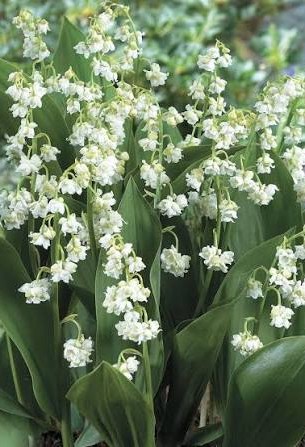
Each shoot commonly carries two, and occasionally three, broad lance-shaped to elliptic leaves with smooth margins, pointed tips, and strong parallel veins. The leaves may reach approximately five to ten inches long and emerge tightly folded before expanding. Their broad spring appearance can be confused with Ramps, Wild Garlic, Solomon’s Seal, or other woodland plants. Complete identification should include the flower stalk, colony structure, odor, rhizomes, and surrounding growth rather than one detached leaf.
Flowers
The flowering stalk rises separately between or beside the leaves and bears a one-sided row of small nodding bell-shaped flowers. The bells are usually white, although pink-flowered cultivars occur, and each flower has six fused tepals ending in small outward-curving tips. Their strong sweet fragrance makes them popular in small bouquets and wedding arrangements. Flowers remain poisonous whether attached, fallen, cut, wilted, pressed, or dried.
Fruit and Berries
Pollinated flowers may develop into round orange-red or scarlet berries containing several seeds. The fruit can remain visible after the flowers have disappeared, creating a later-season exposure that looks very different from the familiar white-bell stage. Bright berries may attract dogs, birds, children, or animals that investigate small moving objects. The fruit and seeds should never be treated as edible woodland produce.
Rhizomes and Roots
Underground rhizomes spread horizontally and generate new shoots, while roots develop along the connected structure. Freshly dug rhizomes, divided clumps, old root balls, and soil containing broken underground pieces should remain inaccessible. Exact-species research also confirms steroidal saponins and other glycosides in underground tissue. Dogs that dig, livestock given uprooted garden waste, and animals entering a freshly disturbed bed can receive a concentrated exposure.
All Parts Are Dangerous
Leaves, flowers, pollen, stalks, berries, seeds, rhizomes, roots, sap, cuttings, dried material, herbal preparations, and contaminated water should all be treated as poisonous. The absence of flowers or berries does not make a colony safe because leaves and underground structures remain toxic throughout the growing cycle. No visually identifiable part can be offered as forage, bedding, enrichment, or a chew item. Cultivar color and variegation do not create a pet-safe form.
Convallatoxin
Convallatoxin is the principal cardioactive cardenolide associated with Lily of the Valley. It is a strophanthidin glycoside with digitalis-like effects on sodium-potassium ATPase, intracellular calcium handling, cardiac contraction, automaticity, and conduction. Its historical medicinal use arose from the same narrow range between desired cardiac action and dangerous poisoning. Uncontrolled ingestion can destabilize the heart rather than safely strengthen it.
Other Cardenolides
The plant contains numerous related glycosides in addition to convallatoxin. Reported compounds include convalloside, convallatoxol derivatives, convallatoxoloside, neoconvalloside, glucoconvalloside, majaloside, convallatoxon, and glycosides based on strophanthidin, cannogenol, sarmentogenin, and related aglycones. Their amount and mixture may differ among tissues, seasons, geographic populations, and preparations. The complete toxic effect cannot be predicted from one measured compound or one photograph of the plant.
Convallarin and Convallamarin
Convallarin and convallamarin are historical names that arose before modern separation and structural analysis of the plant’s steroidal glycosides. Early preparations were not always chemically uniform, and different authors may have applied the names to different glycosidic fractions. Convallarin may have included mixed glycosidic material, while convallamarin has been used for steroidal glycosides or saponin-like components. Modern veterinary toxicology is clearer when it identifies convallatoxin and the broader cardenolide mixture directly.
Steroidal Saponins
Roots, rhizomes, and whole plants also contain polyhydroxylated steroidal saponins and related glycosides. These compounds are distinct from cardenolides and may contribute to gastrointestinal irritation, vomiting, abdominal discomfort, or diarrhea. Laboratory studies demonstrate additional biological activity, but their exact contribution to natural animal poisoning is incompletely defined. Their presence reinforces rather than reduces concern about underground material.
How Sodium-Potassium ATPase Inhibition Works
Sodium-potassium ATPase maintains sodium and potassium gradients across cell membranes by moving sodium outward and potassium inward. Those gradients support electrical impulses, muscle function, transport processes, and normal cardiac activity. Cardenolide binding inhibits the pump, allowing intracellular sodium to rise and disrupting sodium-calcium exchange. Intracellular calcium subsequently increases, strengthening contraction while creating electrical instability and abnormal impulse formation.
Why Heart Rate Can Be Slow or Fast
Increased vagal influence and impaired sinus or atrioventricular conduction can cause bradycardia and heart block. At the same time, altered calcium handling can make atrial, junctional, or ventricular cells fire abnormally. Dehydration, pain, low blood pressure, stress, and catecholamine release can produce compensatory tachycardia. A patient may therefore move between slow, rapid, and irregular rhythms during one poisoning episode.
Heart Block
Atrioventricular block occurs when electrical signals formed in the atria are delayed or fail to reach the ventricles. First-degree block delays conduction, while second-degree block prevents selected impulses from passing. In third-degree block, atrial and ventricular activity become electrically independent and the ventricular escape rhythm may be dangerously slow. Inadequate cardiac output can cause weakness, fainting, obtundation, shock, or death and may require temporary pacing.
Hyperkalemia
Severe acute cardiac-glycoside poisoning can increase blood potassium because the inhibited sodium-potassium pump cannot move potassium into cells normally. Hyperkalemia is both an indicator of severe pump inhibition and a contributor to muscle weakness, slowed conduction, ventricular arrhythmia, and cardiac arrest. Potassium may continue changing as absorption and circulation evolve. Repeated laboratory and ECG monitoring is necessary because visible signs cannot determine the concentration.
Gastrointestinal Effects
Nausea, drooling, vomiting, abdominal pain, and diarrhea are common early manifestations. These signs may arise from direct gastrointestinal effects, central nausea pathways, and accompanying steroidal saponins. Vomiting can reduce the retained plant mass but does not remove glycosides already absorbed. Gastrointestinal signs must not be treated as a harmless stomach reaction because serious arrhythmia may develop afterward.
Neurologic Effects
Weakness, ataxia, confusion, visual disturbance, altered awareness, tremors, seizures, stupor, and coma may develop during severe poisoning. These effects can reflect direct glycoside activity, inadequate blood flow to the brain, electrolyte disturbance, hypoxia, or abnormal cardiac output. Neurologic impairment increases aspiration risk and can make oral decontamination unsafe. Persistent abnormalities should also prompt investigation for an additional toxin or underlying disease.
Dogs
Dogs may chew leaves, swallow berries, pull up connected shoots, dig out rhizomes, raid floral waste, or drink from a bouquet container. One disturbed shoot may be attached to a much larger underground network, so the amount missing can be underestimated. Vomiting followed by profound lethargy, a slow or irregular pulse, fainting, inability to stand, or collapse should be treated as possible cardiac-glycoside poisoning. Preserve the entire disturbed plant and any rhizomes recovered from the soil.
Cats
Cats may nibble leaves or flowers, bat at berries, drink vase water, or groom pollen and sap from the coat. A bouquet can bring Lily of the Valley into an otherwise controlled indoor environment. The plant does not cause the classic true-Lily kidney syndrome, but its cardenolides can produce fatal rhythm and conduction abnormalities. Hiding, vomiting, food refusal, weakness, inability to jump, fainting, or open-mouth breathing requires urgent evaluation.
Horses
Horses may encounter Lily of the Valley through ornamental beds, cemetery flowers, bouquets, uprooted colonies, nursery waste, or contaminated forage areas. Because horses cannot vomit, exposure may appear as salivation, repeated swallowing, colic, diarrhea, weakness, sweating, an abnormal pulse, ataxia, fainting, or recumbency. A symptomatic horse should not be driven or forced to walk because exertion increases cardiac demand. Large-animal veterinary assessment should include the entire exposure area and nearby look-alikes.
Cattle, Sheep, and Goats
Livestock exposure is most likely when floral or garden waste is discarded into pasture, feed areas, manure piles, or open compost. Hungry animals and browsing goats may investigate plant material that well-fed livestock would normally avoid. Salivation, gastrointestinal distress, weakness, staggering, tremors, an abnormal heart rate, hypotension, collapse, or sudden death requires immediate veterinary attention. The full herd or flock may have been exposed even when only one animal is initially ill.
Rabbits and Guinea Pigs
Lily of the Valley should never be offered as forage, bedding, nesting material, or enrichment. Small herbivores can consume a substantial amount relative to body weight and may show appetite loss, abdominal discomfort, diarrhea, reduced fecal output, weakness, tremors, or altered behavior. Reduced intake can also precipitate gastrointestinal stasis. These species cannot vomit and should not receive household emetics or forced oral treatment.
Birds
Pet birds may shred leaves, flowers, berries, dried arrangements, or rhizomes and expose the beak, tongue, eyes, feet, skin, and gastrointestinal tract. Regurgitation, diarrhea, weakness, loss of balance, tremors, seizures, or unusual quietness requires avian veterinary guidance. Fallen plant material can also enter a cage, aviary, water cup, or food dish from a nearby arrangement. Remove contaminated food and water but do not force medication or charcoal.
Cut Flowers and Bouquets
Lily of the Valley is used in small fragrant bouquets, wedding flowers, corsages, table arrangements, and seasonal designs. Cut stems, detached bells, berries, pollen, ribbons, floral wire, foam, preservatives, and other flowers may all be involved in one exposure. The plant remains poisonous after cutting and should not be left on floors, tables, dressing-room counters, or waste bins accessible to animals. Preserve the florist information and complete arrangement when identification is needed.
Vase Water
Water that has held Lily of the Valley should be treated as contaminated. It may contain sap, microscopic plant fragments, floral preservatives, fertilizer residue, bacteria, and compounds released by other flowers in the arrangement. The concentration of cardiac glycoside cannot be judged from color, odor, or immersion time. Pets should not drink from the container even after visible flowers are removed.
Dried Material
Drying does not reliably neutralize cardenolides. Dried wedding flowers, wreaths, pressed specimens, herbarium material, herbal preparations, and discarded stems remain dangerous. Powdering, tincturing, or extracting the plant can increase the delivered dose by concentrating compounds and removing the physical limit imposed by chewing intact vegetation. Old material should be secured and disposed of where animals cannot reach it.
Historical Medicinal Use
Lily of the Valley preparations were historically used as cardiac medicines, diuretics, and substitutes for Digitalis. Extracts were intended to increase contraction strength while influencing heart rate and fluid balance. The same sodium-potassium ATPase inhibition that created medicinal interest also created a narrow safety margin and serious poisoning risk. Historical use does not provide a safe veterinary dose or justify home administration.
1989 Fatal Canine Case
A published 1989 report described apparent Lily-of-the-Valley toxicosis in a dog after natural ingestion. Plant material was identified within the intestinal tract, and gross and microscopic findings were considered consistent with cardiac shock. The case provides direct evidence that ordinary environmental access can result in fatal disease rather than only theoretical pharmacologic effects. It does not establish the dose that would produce the same outcome in another animal.
2008 Beagle Case
A two-year-old male Beagle was evaluated after vomiting, lethargy, severe bradycardia, and third-degree atrioventricular block. The rhythm did not respond to atropine, and the dog later became obtunded as the ventricular escape rate failed to maintain adequate function. Temporary noninvasive transthoracic pacing was used before placement of a permanent transvenous pacemaker. Lily of the Valley was identified in the environment, and serum testing detected digoxin or an immunologically cross-reactive plant compound, making the diagnosis strongly suspected rather than chemically proven by direct convallatoxin measurement.
Digoxin Immunoassays
Convallatoxin and some related plant glycosides can cross-react with laboratory immunoassays designed to measure digoxin. A measurable apparent digoxin result can support the suspicion of plant cardiac-glycoside exposure when the animal had no access to digoxin medication. Cross-reactivity varies considerably among assay platforms, and some methods detect convallatoxin much more readily than others. The numerical value is not an exact convallatoxin concentration and should not be used alone to calculate severity or treatment.
A negative result does not exclude poisoning because the local assay may have little sensitivity to convallatoxin or other plant glycosides. A positive result can also be affected by assay interference, time since ingestion, and the mixture of cardenolides present. The result must be interpreted with the plant identification, ECG, blood pressure, potassium, exposure history, and clinical progression. Treatment should never be delayed while waiting for an immunoassay.
Digoxin-Specific Antibody Fragments
Digoxin-specific Fab fragments are established antidotal therapy for severe digoxin poisoning and have been used or considered for several plant-derived cardiac glycosides. Direct evidence involving convallatoxin is conflicting. One laboratory study found that Digibind bound convallatoxin in vitro, while another study using digoxin immune Fab found no measurable binding. Differences in product, method, concentration, or assay design may help explain the disagreement, but clinical effectiveness in Lily-of-the-Valley-poisoned animals has not been established.
Fab should therefore not be described as a guaranteed Lily-of-the-Valley antidote or administered according to an owner-calculated plant dose. A veterinary toxicologist or critical-care specialist may consider it during life-threatening progressive cardiac-glycoside poisoning when potential benefit outweighs uncertainty, particularly if another Fab-responsive glycoside cannot be excluded. ECG findings, potassium, perfusion, progression, product availability, and alternative interventions all matter. Cardiac pacing and rhythm-specific supportive care may remain essential even when Fab is considered.
Why Lidocaine Is Not Universal Treatment
Lidocaine can suppress selected ventricular arrhythmias but does not correct every cardiac-glycoside rhythm. It will not restore atrioventricular conduction in an animal with complete heart block, and inappropriate administration can worsen hypotension or conduction abnormalities. Bradyarrhythmias, premature ventricular complexes, ventricular tachycardia, and complete block require different treatment strategies. Medication must follow the actual ECG rather than the plant name alone.
Lily of the Valley Is Not a True Lily
True Lilies belong to Lilium, while Daylilies belong to Hemerocallis. Those plants can cause acute kidney injury in cats after very small exposures. Lily of the Valley belongs to Convallaria and is primarily cardiotoxic through cardenolides. Both exposures are emergencies, but their diagnostic monitoring and treatment priorities differ substantially.
American Lily of the Valley
The eastern North American plant historically called Convallaria majalis var. montana or Convallaria montana is accepted as Convallaria pseudomajalis. It occurs naturally in portions of the Appalachian region and is botanically separate from Eurasian C. majalis. Its native status does not establish that it is edible or safe for animals. Until species-specific toxicologic evidence proves otherwise, it should be treated as a potentially cardiotoxic member of the same genus.
Asian Lily of the Valley
East Asian Lily of the Valley is accepted as Convallaria keiskei. Older references may place it within C. majalis or use names such as Japanese Lily of the Valley or Manchurian Lily of the Valley. Species separation improves identification and distribution accuracy but does not create a safe edible Convallaria. Preserve labels and geographic information when an imported or wild-collected plant is involved.
Lily of the Valley and Wild Garlic or Ramps
Young Lily-of-the-Valley leaves may be confused with Wild Garlic or Ramps. True Ramps and Wild Garlic belong to Allium and release a strong onion or garlic odor when damaged, while Lily of the Valley lacks that characteristic scent and commonly produces paired leaves from connected rhizomes. No plant should be tasted to confirm identification. Allium species are themselves poisonous to dogs and cats through an entirely different oxidative red-blood-cell mechanism.
Lily of the Valley and False Lily of the Valley
Several Maianthemum species are called False Lily of the Valley. They usually carry small star-shaped flowers in a terminal cluster rather than a one-sided row of hanging bells on a separate leafless stalk. Fruit color, leaf arrangement, and rhizome structure also vary among species. Common-name similarity is not enough for poison assessment, so preserve flowers, fruit, leaves, and underground parts.
Lily of the Valley and Solomon’s Seal
Solomon’s Seal species have an arching leafy stem with flowers hanging from the underside at leaf axils. Lily of the Valley has broad basal leaves and a separate largely leafless flowering stalk. Both may occur in shaded woodland or garden settings and may be confused after flowers are removed. Photographs of the complete standing growth pattern are more useful than one loose leaf.
Diagnosis
Diagnosis uses reliable plant identification, the amount and part consumed, time of exposure, vomiting, heart rate and rhythm, blood pressure, potassium, neurologic condition, and exclusion of other cardiotoxic plants or medications. Preserve leaves, flowers, berries, rhizomes, roots, bouquet material, nursery tags, vase water, herbal packaging, and vomited fragments. Photograph the original patch or arrangement before disturbing it further. Report access to digoxin, other heart medication, Oleander, Foxglove, Kalanchoe, Yew, Milkweed, Star-of-Bethlehem, and similar plants.
Veterinary Evaluation
Evaluation may include continuous ECG, repeated blood-pressure measurements, potassium and other electrolytes, blood glucose, kidney and liver measurements, acid-base status, blood gases, complete blood count, urinalysis, and neurologic and respiratory examinations. Pulse quality, gum color, capillary refill, limb temperature, urine output, and mental status help determine whether the rhythm is maintaining circulation. Chest imaging may be needed after vomiting or suspected aspiration. Abdominal imaging or endoscopy may be considered when a large rhizome mass, floral wire, foam, or another foreign object may remain.
Differential Diagnosis
Other causes of vomiting and arrhythmia include Foxglove, Oleander, Yellow Oleander, Kalanchoe, Star-of-Bethlehem, Milkweed, Dogbane, Desert Rose, Yew, cardiac medication, electrolyte disease, and primary heart disease. True-Lily exposure in a cat, Allium exposure, pesticide ingestion, mushroom poisoning, and gastrointestinal obstruction may initially produce overlapping nonspecific signs but require different priorities. A positive digoxin-like immunoassay can support but not definitively identify the plant. The complete clinical and environmental picture must remain central.
Prognosis
The prognosis is most favorable when a credible exposure is recognized and treated before cardiovascular abnormalities or hyperkalemia develop. The outlook becomes guarded to poor with complete heart block, ventricular tachyarrhythmia, severe hyperkalemia, refractory hypotension, repeated seizures, aspiration, coma, or lack of access to advanced cardiac support. The 2008 canine case demonstrates that pacing can restore adequate function when medication fails, while the 1989 case confirms that fatal natural poisoning can occur. Individual outcome depends on dose, retained plant material, speed of care, rhythm, electrolyte status, and complications.
Prevention
Keep Lily of the Valley outside dog runs, cat enclosures, rabbit areas, horse paddocks, livestock pasture, aviaries, and locations where flowers or berries can fall into food or water. Secure bouquets, wedding flowers, vase water, dried arrangements, herbal products, uprooted colonies, rhizomes, and yard waste. Collect every underground section after digging and prevent animals from entering disturbed soil until loose pieces are removed. Never discard the plant into open compost, pasture, feed areas, or garbage accessible to animals.
Immediate Response
- Stop all further exposure: Remove the animal from leaves, flowers, berries, rhizomes, roots, bouquets, vase water, dried material, herbal products, or contaminated feed and yard-waste areas.
- Treat every credible ingestion as urgent: Contact a veterinarian or animal poison-control service immediately because dangerous conduction defects, arrhythmias, or hyperkalemia may begin before an owner can recognize them.
- Preserve complete plant evidence: Save leaves, flowering stalks, berries, seeds, rhizomes, roots, nursery tags, florist records, photographs, herbal packaging, and representative vomited fragments.
- Estimate the maximum possible amount: Report the largest quantity that could be missing, the plant part, exposure time, animal’s weight, symptoms, and whether the material was fresh, dried, powdered, extracted, or in vase water.
- Identify other cardiac exposures: Report digoxin or other heart medication and access to Oleander, Foxglove, Kalanchoe, Star-of-Bethlehem, Milkweed, Dogbane, Desert Rose, Yew, or unidentified bouquets.
- Report foreign material: Identify missing floral wire, pins, ribbon, foam, glass, plastic, preservative packets, mulch, or other objects that may have been swallowed with the plant.
Do Not Wait for Cardiac Signs
- Do not wait for collapse: Vomiting, diarrhea, drooling, or weakness may appear before an obvious rhythm abnormality.
- Do not rely on a home pulse check: A normal-feeling heartbeat does not exclude intermittent arrhythmia, early pump inhibition, high-grade block, or rising potassium.
- Do not assume vomiting removed the toxin: Cardiac glycosides may already have been absorbed, and plant material can remain in the stomach.
- Do not rely on normal behavior: An animal can appear stable before its rhythm, blood pressure, or potassium deteriorates.
- Arrange professional monitoring: A credible ingestion may require ECG, blood-pressure, potassium, and perfusion assessment even before severe weakness develops.
Cardiac-glycoside toxicity can evolve as more material is absorbed and as intracellular and extracellular ion concentrations change. The animal’s rhythm may shift from apparently normal to slow, blocked, irregular, or ventricular without a predictable home warning. Early veterinary assessment provides the best opportunity for decontamination before neurologic or cardiovascular instability makes it unsafe. Treatment should begin from the exposure history rather than waiting for the most dramatic endpoint.
Remove Loose Material Safely
- Remove only visible loose pieces: Carefully take accessible leaves, flowers, berries, or rhizome fragments from the lips and front of the mouth when this can be done safely.
- Avoid blind finger sweeps: Do not reach deeply into the throat or push plant or bouquet material toward the airway.
- Wipe accessible residue: A damp cloth may remove loose sap, pollen, and fragments from the lips and front of the mouth in a fully alert animal.
- Do not force rinsing: Pouring or syringing water into the mouth can cause aspiration when nausea, weakness, tremors, or poor swallowing is present.
- Wash contaminated fur: Wear gloves, remove plant fragments, and wash pollen or sap from the coat with lukewarm water and mild pet-safe shampoo.
- Prevent grooming: Keep the animal from licking the coat until plant residue has been removed.
Do Not Induce Vomiting at Home
- Do not give hydrogen peroxide automatically: Whether emesis is appropriate depends on species, time, amount, symptoms, rhythm, neurologic condition, and aspiration risk.
- Never give peroxide to a cat: Hydrogen peroxide is not a safe feline emetic and can cause severe gastric and esophageal injury.
- Do not use salt or household emetics: Mustard, oil, ipecac, syrup, dish soap, detergent, manual gagging, and fingers in the throat can cause additional poisoning or aspiration.
- Never induce vomiting after signs begin: Do not attempt emesis in an animal that is vomiting repeatedly, weak, faint, lethargic, trembling, seizuring, collapsed, breathing abnormally, or swallowing poorly.
- Never induce vomiting in horses, rabbits, or guinea pigs: These species cannot vomit and must not receive an emetic.
- Reserve emesis for veterinary direction: A veterinarian may consider controlled emesis after an appropriate recent exposure when the patient remains fully alert, stable, asymptomatic, and capable of protecting the airway.
A recent high-risk ingestion may justify professional emesis, but stabilization takes priority when bradycardia, hypotension, ventricular arrhythmia, neurologic depression, or respiratory compromise is already present. Floral wire, sharp stems, glass, pins, or other foreign material may also make vomiting undesirable. Spontaneous vomiting should not be followed by repeated owner attempts to empty the stomach. The decision must account for both toxicology and mechanical injury risk.
Activated Charcoal
- Use activated charcoal only under veterinary direction: A veterinarian may administer it after an appropriate recent ingestion when the patient and airway are stable.
- Never force charcoal: Do not give it to a vomiting, weak, sedated, trembling, seizuring, collapsed, breathing-impaired, or poorly swallowing animal.
- Protect the airway: Endotracheal intubation may be required before gastrointestinal decontamination when awareness or swallowing is impaired.
- Do not use household charcoal: Barbecue briquettes, fireplace ash, burned food, and homemade products are not veterinary activated charcoal.
- Do not repeat doses at home: Additional charcoal may cause aspiration, dehydration, constipation, or electrolyte abnormalities.
- Allow the veterinarian to assess delayed absorption: Repeated charcoal may be considered only in selected hospitalized cases when continued gastrointestinal toxin exposure is plausible.
Activated charcoal is not an antidote and does not reverse glycoside already bound to sodium-potassium ATPase. Its potential value is limited to reducing gastrointestinal absorption under appropriate conditions. Repeated administration is not automatic because the specific absorption and recirculation behavior of the entire Lily-of-the-Valley glycoside mixture is not fully established. ECG, blood pressure, hydration, sodium, and airway safety must remain part of the decision.
Do Not Give Home Cardiac Treatment
- Do not give lidocaine: Lidocaine is appropriate only for selected ventricular arrhythmias and can be ineffective or harmful when the rhythm is slow, blocked, or otherwise inappropriate.
- Do not give atropine: Atropine may be selected for particular symptomatic bradyarrhythmias but can fail in complete heart block and must be guided by an ECG.
- Do not give digoxin: Digoxin and related cardiac glycosides can intensify the poisoning.
- Do not give potassium: Severe acute poisoning may already be causing hyperkalemia, and unsupervised potassium can worsen a fatal rhythm.
- Do not give calcium: Calcium should not be owner-administered during suspected cardiac-glycoside poisoning and requires specialist judgment when measured abnormalities are present.
- Do not give stimulants: Caffeine, decongestants, energy products, and other stimulants can increase cardiac irritability and oxygen demand.
- Do not use another animal’s medication: Antiarrhythmics and cardiovascular drugs must match the exact rhythm, blood pressure, electrolytes, and species.
A slow pulse, ventricular premature complexes, complete heart block, and ventricular tachycardia require different interventions. Treating the wrong rhythm can worsen conduction, blood pressure, or ventricular irritability. The 2008 canine case did not respond to atropine and required pacing, demonstrating why treatment cannot be selected from the plant name alone. Continuous ECG and perfusion assessment should guide every cardiac medication.
Do Not Give Household Remedies
- Do not give milk, yogurt, bread, or oil: These products do not neutralize convallatoxin or related cardenolides.
- Do not give human antacids: Antacids do not prevent cardiac toxicity and may contain inappropriate ingredients.
- Do not give antidiarrheal medication: Loperamide, bismuth, kaolin-pectin products, and other owner-selected remedies may be unsafe or delay recognition of severe illness.
- Do not give human pain medication: Ibuprofen, naproxen, acetaminophen, and aspirin can create additional poisoning.
- Do not give antihistamines or corticosteroids as antidotes: They do not neutralize cardiac glycosides and are not universal treatment for poisonous-plant exposure.
- Do not give herbal remedies: Teas, tinctures, supplements, and extracts can add another active or cardiotoxic exposure.
Food and Water
- Do not force food: A nauseated, weak, faint, trembling, or poorly responsive animal may vomit or aspirate.
- Offer water only when safe: Small amounts may remain available only when the animal is fully alert, swallowing normally, and not vomiting repeatedly.
- Do not force oral fluids: Syringed or poured water cannot correct severe dehydration, hypotension, or electrolyte abnormalities and may enter the lungs.
- Remove all vase water: Prevent access to floral containers that may contain dissolved plant material, preservatives, bacteria, or other flower toxins.
- Follow veterinary feeding instructions: Food may be withheld temporarily or reintroduced according to vomiting, swallowing, circulation, and neurologic status.
Recognize a Cardiac Emergency
- Watch for sudden weakness: Repeated lying down, inability to stand, fainting, or collapse can indicate inadequate cardiac output.
- Check gum color: Pale, gray, or blue-tinged mucous membranes require immediate emergency care.
- Observe the pulse: A markedly slow, rapid, irregular, weak, or intermittently absent pulse may indicate a dangerous rhythm.
- Feel the extremities: Cold ears, feet, or limbs can accompany poor peripheral perfusion.
- Watch awareness: Confusion, disorientation, unusual stillness, reduced responsiveness, stupor, or coma may result from poor brain perfusion.
- Monitor urination: Reduced output can accompany dehydration, hypotension, or impaired kidney perfusion.
- Watch breathing: Rapid, labored, irregular, gasping, or weak breathing requires immediate transport.
Do not attempt to distinguish simple lethargy from low cardiac output at home. An animal that becomes very quiet after vomiting may be hypotensive, bradycardic, or intermittently blocked. Pale gums, cold extremities, weak pulses, and altered awareness strengthen concern, but their absence does not establish safety. Veterinary measurement is necessary.
Vomiting and Diarrhea
- Track every episode: Record the frequency and appearance of vomit and stool and whether leaves, flowers, berries, rhizomes, mucus, red blood, or black material is present.
- Save representative fragments: Place plant material recovered from vomit or stool in a sealed disposable container.
- Watch for dehydration: Tackiness of the gums, reduced urination, weakness, or inability to retain water requires veterinary treatment.
- Watch for aspiration: Coughing, gagging, nasal discharge, fever, rapid breathing, or worsening respiratory effort after vomiting may indicate material entered the lungs.
- Report persistent signs: Repeated vomiting, frequent diarrhea, blood, abdominal pain, progressive weakness, or inability to retain water requires emergency evaluation.
Vomiting can coexist with serious rhythm disturbance, so gastrointestinal treatment must not replace cardiac monitoring. Persistent fluid loss can worsen hypotension and alter electrolytes, while aspiration can create a separate respiratory emergency. Plant fragments in vomit support ingestion but do not quantify the amount absorbed. The remaining patch, bouquet, or rhizome mass should still be inspected.
Tremors and Seizures
- Do not put anything in the mouth: Keep hands, spoons, cloth, food, water, and medication away from the mouth during a seizure.
- Do not hold the tongue: Dogs and cats do not swallow their tongues, and attempting to hold it can cause severe injury.
- Protect without pinning: Clear nearby objects and use folded blankets as barriers without restraining the limbs.
- Reduce stimulation: Lower light and noise when possible without delaying transport.
- Time the episode: Record when each seizure begins and ends and whether normal awareness returns.
- Seek immediate care: Any seizure, continuous tremors, collapse, or loss of consciousness is an emergency.
Seizures may accompany severe electrolyte disturbance, poor cerebral perfusion, hypoxia, or advanced systemic toxicity. Treatment must correct the underlying circulation, oxygenation, glucose, temperature, and electrolytes as well as stop the seizure activity. Oral products are unsafe when awareness or swallowing is impaired. Continued seizure activity can worsen acidosis, temperature, and cardiac instability.
Safe Transportation
- Keep the animal quiet: Limit walking, excitement, barking, struggling, and heat because exertion increases cardiac demand.
- Prevent falls: Keep a weak or uncoordinated animal away from stairs, pools, traffic, furniture edges, and hard obstacles.
- Carry when safe: Use a carrier, stretcher, rigid board, or blanket rather than forcing a weak animal to walk.
- Do not muzzle a vomiting animal: A muzzle can obstruct breathing and prevent vomit from leaving the mouth.
- Position carefully: Maintain a natural neck position and avoid compressing the chest or abdomen.
- Call ahead: Tell the emergency clinic that Lily-of-the-Valley cardenolide poisoning with possible heart block or hyperkalemia is suspected.
- Bring all evidence: Take the plant, rhizomes, bouquet, vase-water sample, labels, photographs, and recovered fragments.
Veterinary Decontamination
A veterinarian may consider controlled emesis after a recent ingestion when the patient remains alert, stable, asymptomatic, and able to protect the airway. Emesis becomes unsafe or lower priority when bradycardia, block, ventricular arrhythmia, hypotension, neurologic depression, repeated vomiting, or respiratory compromise is present. A major recent exposure in a nonvomiting or unstable patient may occasionally justify gastric lavage after stabilization, anesthesia, and endotracheal intubation. The procedure must be selected according to risk rather than applied automatically.
Activated charcoal may be administered when the airway and gastrointestinal tract permit. Additional doses may be considered by a veterinarian or toxicologist when ongoing gastrointestinal exposure is suspected, but repeated administration is not a routine owner procedure. Fluid and sodium balance, bowel function, aspiration risk, and clinical progression require monitoring. Cardiovascular stabilization always takes priority over aggressive decontamination.
Veterinary Cardiac Monitoring
- Use continuous ECG: Monitoring may identify changing bradycardia, heart block, premature complexes, junctional rhythms, or ventricular tachyarrhythmia.
- Measure blood pressure repeatedly: Rhythm alone does not show whether circulation is adequate.
- Check potassium serially: Hyperkalemia may develop or worsen as glycoside absorption continues.
- Assess perfusion: Pulse quality, gum color, capillary refill, limb temperature, awareness, and urine output help determine cardiovascular stability.
- Evaluate glucose and other electrolytes: Metabolic abnormalities can worsen weakness, arrhythmia, or seizure activity.
- Consider a digoxin immunoassay cautiously: A cross-reactive result may support exposure, but assay sensitivity varies and the number is not an exact convallatoxin concentration.
Continuous monitoring is particularly important because the rhythm can change from slow to rapid or from apparently stable conduction to high-grade block. One normal tracing does not guarantee that the patient will remain stable as additional glycoside is absorbed. Blood pressure and potassium can deteriorate even when vomiting has stopped. Monitoring duration should follow the exposure and clinical trend rather than a fixed household timetable.
Veterinary Treatment
Intravenous fluids may be used carefully to correct dehydration and support blood pressure and organ perfusion. Fluid administration must account for the rhythm, cardiac function, potassium, urine production, and respiratory status so that inadequate resuscitation and unnecessary cardiac volume stress are both avoided. Veterinarian-selected anti-nausea medication may reduce continuing fluid loss and aspiration risk after decontamination decisions are complete. Oxygen, airway suctioning, intubation, or assisted ventilation may be required for aspiration, seizures, shock, or respiratory failure.
Clinically important bradycardia may be treated with atropine or glycopyrrolate when the ECG and perfusion indicate an appropriate vagally mediated or nodal target. Complete third-degree block may not respond because no atrial impulse is reaching the ventricles. Temporary transcutaneous, transthoracic, or transvenous pacing may be required when the escape rhythm cannot maintain circulation. Pacing serves as direct support for inadequate ventricular rate rather than attempting to neutralize the plant.
Ventricular arrhythmias require rhythm-specific treatment. Lidocaine may be appropriate for selected ventricular tachyarrhythmias, while another antiarrhythmic may be chosen according to ECG morphology, blood pressure, potassium, and response. Lidocaine is not useful for every rhythm and does not correct complete heart block. Repeated ECG reassessment is necessary because the dominant abnormality can change.
Severe hyperkalemia requires emergency ECG-guided treatment and repeated laboratory assessment. Therapy is selected according to potassium concentration, ECG changes, glucose, acid-base status, kidney function, and overall cardiovascular condition. Owners must never give potassium or calcium in response to suspected poisoning. Professional electrolyte treatment is intended to stabilize the myocardium and redistribute or remove potassium while the underlying glycoside toxicity is managed.
Digoxin-Specific Fab: Specialist Use and Evidence Limitations
Digoxin-specific Fab may be discussed during severe progressive plant cardiac-glycoside poisoning, particularly when life-threatening arrhythmia, hyperkalemia, or collapse is present and another Fab-responsive glycoside cannot be excluded. Its value for convallatoxin specifically is uncertain. One in vitro study found that Digibind bound convallatoxin, while another found no binding by the tested digoxin immune Fab. A positive digoxin-like assay also cannot be used as though it measured a known digoxin body burden.
Fab should therefore be considered only through veterinary toxicology or critical-care consultation, not described as a guaranteed antidote or administered according to an owner-calculated number of leaves. Product availability, the suspected glycoside mixture, assay behavior, rhythm, potassium, progression, and alternative support all matter. Pacing, ECG-guided antiarrhythmic therapy, electrolyte management, ventilation, and perfusion support may still be required. Failure to obtain Fab should not delay proven stabilization measures.
Horses and Livestock
- Remove the source: Prevent access to colonies, bouquets, cemetery flowers, cuttings, uprooted rhizomes, contaminated hay, feed, compost, and landscaping waste.
- Do not force exercise: Animals with unstable rhythms or low cardiac output may collapse when driven, chased, or loaded unnecessarily.
- Do not attempt vomiting: Horses cannot vomit, and household emetics are unsafe for livestock.
- Do not drench a symptomatic animal: Weak, salivating, trembling, recumbent, or poorly swallowing animals can aspirate water, oil, charcoal, or medication.
- Keep weak ruminants sternal when safe: Lateral recumbency can worsen bloat and aspiration risk.
- Examine the whole group: Other animals may have eaten the same material and can develop signs at different times.
- Retain representative samples: Preserve foliage, flowers, berries, rhizomes, feed, bouquet material, and nearby look-alikes.
- Obtain large-animal veterinary care: ECG monitoring, fluids, electrolyte correction, rhythm-specific treatment, and supportive care may be required.
Large-animal treatment follows the measured cardiovascular and metabolic abnormalities rather than an assumed plant dose. The veterinarian may need to assess colic, dehydration, potassium, rumen or intestinal function, pulse quality, rhythm, blood pressure, and respiratory condition. Sudden death in one animal should trigger immediate removal of the suspected source and evaluation of every exposed animal. Do not use unaffected herd members to test whether the plant is palatable or safe.
Monitoring and Recovery
- Continue ECG observation: Rhythm abnormalities may recur or change as glycosides are absorbed and eliminated.
- Repeat electrolytes: Potassium and other abnormalities should remain stable before discharge.
- Monitor blood pressure and perfusion: A normal rhythm does not guarantee adequate circulation.
- Monitor eating, strength, and urination: Persistent nausea, weakness, reduced intake, or low urine output requires reassessment.
- Watch for delayed aspiration: Coughing, fever, nasal discharge, rapid breathing, or renewed lethargy may develop after vomiting improves.
- Restrict activity: Keep recovering animals quiet until rhythm, blood pressure, potassium, strength, appetite, breathing, and coordination are normal.
- Report recurrent signs: Renewed vomiting, fainting, an abnormal pulse, tremors, seizures, breathing difficulty, or collapse requires immediate reassessment.
Prevention and Prognosis
- Remove access to colonies: Keep Lily of the Valley outside dog runs, cat enclosures, rabbit areas, aviaries, horse paddocks, and livestock pasture.
- Secure floral material: Keep bouquets, wedding flowers, detached bells, berries, vase water, floral waste, and dried arrangements inaccessible.
- Secure underground pieces: Collect every rhizome and root segment after digging and prevent animals from entering disturbed soil.
- Protect food and water: Prevent plant material from falling into dishes, troughs, feed storage, hay, or bedding.
- Dispose of debris securely: Do not place cuttings or uprooted colonies in open compost, pasture, manure piles, or accessible garbage.
- Typical prognosis: Outcome is most favorable when exposure is treated before arrhythmia, high-grade block, hyperkalemia, or shock develops.
- Guarded prognosis: Complete heart block, ventricular arrhythmia, severe hyperkalemia, refractory hypotension, seizures, aspiration, coma, or respiratory failure creates a guarded-to-poor outlook without advanced care.
Frequently Asked Questions About Lily of the Valley and Animal Poisoning
Can a small Lily-of-the-Valley exposure affect the heart before symptoms are obvious?
Yes. Gastrointestinal signs may appear first, and intermittent rhythm or conduction abnormalities may not be detectable without an ECG. A pet may also appear quiet rather than obviously distressed while blood pressure or cardiac output is declining.
No dependable safe number of leaves, flowers, berries, or rhizome pieces has been established. Any credible ingestion deserves urgent professional assessment rather than waiting for fainting or collapse.
Why can Lily of the Valley cause either a slow or fast heartbeat?
Cardenolides increase vagal effects and interfere with sinus and atrioventricular conduction, which can cause bradycardia or heart block. Altered calcium handling can simultaneously make other cardiac cells fire abnormally and produce premature beats or ventricular rhythms.
Dehydration, pain, hypotension, and stress may also increase the heart rate. The rhythm can therefore change during one poisoning episode, making continuous ECG monitoring more useful than one pulse count.
Can Lily of the Valley cause complete heart block?
Yes. A published canine case involved third-degree atrioventricular block with a ventricular escape rate too slow to maintain normal function. The rhythm did not respond to atropine.
The dog required temporary noninvasive transthoracic pacing followed by placement of a permanent transvenous pacemaker. The case demonstrates that severe conduction failure can require mechanical cardiac-rate support rather than medication alone.
Why is high potassium important in this poisoning?
Cardenolides inhibit sodium-potassium ATPase, reducing the movement of potassium into cells. During severe acute poisoning, extracellular potassium can rise and contribute to muscle weakness, conduction delay, ventricular arrhythmia, and cardiac arrest.
Hyperkalemia is also an important indicator of poisoning severity. It cannot be diagnosed from visible signs and requires repeated laboratory and ECG assessment.
Can a digoxin blood test confirm Lily-of-the-Valley poisoning?
Some digoxin immunoassays cross-react with convallatoxin and may report an apparent digoxin concentration when no digoxin medication was involved. That finding can support a suspected exposure.
Assay sensitivity varies substantially, so a negative result does not exclude poisoning and a positive number is not an exact convallatoxin concentration. The result must be interpreted with plant identification, ECG, potassium, blood pressure, and clinical progression.
Is digoxin-specific Fab a proven antidote for Lily of the Valley?
No. Direct laboratory findings conflict: one study reported that Digibind bound convallatoxin in vitro, while another found no binding by the tested digoxin immune Fab. Clinical effectiveness specifically for naturally occurring Lily-of-the-Valley poisoning has not been established.
A veterinary toxicologist or critical-care specialist may still consider Fab in a life-threatening plant cardiac-glycoside case when the potential benefit outweighs the uncertainty. It should not be presented as guaranteed treatment or dosed from an owner’s estimate of plant material.
Why is lidocaine not automatically given for this poisoning?
Lidocaine treats selected ventricular arrhythmias. It does not correct sinus-node suppression or complete atrioventricular block and can be inappropriate when the underlying rhythm is slow or conduction is already impaired.
The veterinarian must identify the exact ECG abnormality before selecting an antiarrhythmic. A patient with inadequate ventricular escape may require pacing instead.
Does atropine always correct Lily-of-the-Valley bradycardia?
No. Atropine may improve selected vagally mediated bradyarrhythmias, but complete heart block may not respond because atrial impulses are not reaching the ventricles. The documented Beagle case remained in third-degree block despite atropine.
Failure to respond does not justify repeated owner dosing. ECG-guided treatment and possible temporary pacing are required when circulation is inadequate.
Does vomiting mean the cardiac glycosides have been removed?
No. Cardiac glycosides may already have been absorbed, and plant material can remain within the stomach after vomiting. Continued vomiting can also cause dehydration, aspiration, and electrolyte abnormalities that worsen cardiovascular instability.
The animal still requires professional assessment after a credible ingestion. Stopping vomiting does not prove that the rhythm, potassium, or blood pressure is normal.
Are Lily-of-the-Valley berries more dangerous than the flowers?
The orange-red berries are poisonous and may be attractive because they resemble small fruit or toys. Flowers, leaves, seeds, and underground tissues are also dangerous, and no dependable comparative household dose has been established.
The practical risk depends on the amount swallowed and retained, not merely the color or plant part. Preserve the berry stalk, seeds, and remaining colony after an exposure.
Can a dog be poisoned by digging up the rhizomes?
Yes. Lily of the Valley forms connected underground rhizomes, allowing a digging dog to expose and chew a much larger mass than the visible shoots suggested. Roots and rhizomes also contain steroidal glycosides and saponins.
Recently divided clumps, loosened soil, discarded root balls, and broken rhizome pieces should remain inaccessible. Account for underground fragments after removal work.
Is water from a Lily-of-the-Valley bouquet dangerous?
It should be treated as contaminated. Vase water may contain sap, plant fragments, cardiac glycosides, floral preservatives, fertilizer residue, bacteria, and toxins released from other flowers.
The concentration cannot be judged from color, odor, or how long the stems were immersed. Preserve the bouquet and prevent further access to the container.
Is dried Lily of the Valley still poisonous?
Yes. Drying, pressing, wilting, freezing, or long-term storage does not reliably destroy the cardenolides. Dried wedding flowers, wreaths, pressed specimens, powders, and herbal material remain dangerous.
Extracts and powders can create greater exposure by concentrating compounds and removing the physical limit imposed by chewing intact vegetation.
Is Lily of the Valley a true Lily, and does it cause kidney failure in cats?
No. Lily of the Valley belongs to Convallaria in Asparagaceae and causes cardiac-glycoside poisoning. It is not a true Lilium or a Daylily of the genus Hemerocallis.
The classic true-Lily syndrome in cats involves acute kidney injury, while Lily of the Valley threatens cardiac rhythm, conduction, blood pressure, and potassium balance. Both exposures require immediate veterinary attention.
Are American and Asian Lily of the Valley safe alternatives?
No safe alternative should be assumed. American Lily of the Valley is accepted as Convallaria pseudomajalis, while Asian Lily of the Valley is Convallaria keiskei.
They belong to the same genus and should be treated as potentially cardiotoxic until reliable species-specific evidence establishes otherwise. Native status or a different geographic range does not prove edibility.
How can Lily of the Valley be distinguished from Ramps?
Ramps are Allium species and normally produce a strong onion or garlic odor when damaged. Lily of the Valley lacks that characteristic smell and commonly has paired broad leaves arising from connected rhizomes with a separate one-sided flower stalk.
Do not taste the plant to identify it. Ramps are also poisonous to dogs and cats through an oxidative red-blood-cell mechanism, so either identification requires animal precautions.
Should I make my dog vomit after Lily-of-the-Valley ingestion?
Do not induce vomiting unless a veterinarian or animal poison-control specialist specifically directs it after evaluating the dog. Timing, amount, rhythm, symptoms, neurologic status, foreign material, and aspiration risk all affect the decision.
Never give peroxide to a cat, and never attempt vomiting in an animal that is already vomiting, weak, faint, trembling, seizuring, collapsed, breathing abnormally, or swallowing poorly. Horses, rabbits, and guinea pigs cannot vomit.
What findings require immediate emergency care?
Any credible ingestion already warrants urgent professional contact. Vomiting, profound weakness, pale or gray gums, weak pulses, fainting, a markedly slow, rapid, or irregular heartbeat, cold extremities, reduced urination, continuous tremors, any seizure, breathing difficulty, collapse, or reduced responsiveness requires immediate emergency care.
Coughing, fever, nasal discharge, or rapid breathing after vomiting may indicate aspiration. Do not delay transport while attempting home cardiac treatment or repeated decontamination.