Mountain Laurel Grayanotoxin Poisoning, Bradycardia, Hypotension, and Livestock Browse Risk
Is Mountain Laurel Poisonous to Dogs, Cats, Horses, and Livestock?
Yes—Mountain Laurel, Kalmia latifolia, is highly poisonous to dogs, cats, horses, cattle, sheep, goats, camelids, pigs, rabbits, guinea pigs, birds, reptiles, and other animals. All parts should be treated as unsafe because the plant contains grayanotoxins, a group of highly active grayanoid diterpenes that interfere with voltage-gated sodium channels in nerves, skeletal muscle, smooth muscle, and heart muscle. Poisoning may begin with drooling, vomiting, diarrhea, abdominal pain, appetite loss, depression, weakness, or poor coordination before progressing to low blood pressure, a slow or irregular pulse, heart block, tremors, collapse, paralysis, seizures, coma, or death.
Mountain Laurel is especially dangerous because early gastrointestinal signs can appear before the cardiovascular problem is obvious to an owner. A dog, cat, horse, goat, sheep, or cow that initially seems only nauseated or weak may already be developing bradycardia, hypotension, or conduction abnormalities that require electrocardiographic and blood-pressure monitoring. Owners cannot safely rule out heart involvement with a home pulse count.
Leaves, flowers, buds, stems, bark, roots, nectar, pollen, fruit capsules, seeds, fresh cuttings, dried leaves, storm debris, wreath material, contaminated hay, and landscape trimmings should all remain inaccessible. The evergreen foliage creates a seasonal hazard for livestock during winter, early spring, drought, snow cover, overgrazing, transport, or confinement, when safer forage is limited. Sheep and goats may browse the plant more readily than horses.
Bees may also collect grayanotoxin-containing nectar from Mountain Laurel and related Ericaceae plants, creating a possible toxic-honey exposure. Honey poisoning and plant ingestion share the same sodium-channel mechanism, but the exposure routes differ: honey contains nectar-derived toxin, while plant ingestion may include leaves, stems, fiber, retained gastric material, and additional plant compounds.
Mountain Laurel must not be confused with Texas Mountain Laurel, Cherry Laurel, English Laurel, Bay Laurel, California Laurel, Spurge Laurel, or other plants called laurel. Those plants belong to different families and may contain cytisine alkaloids, cyanogenic glycosides, essential oils, daphnane-type toxins, or other hazards. Scientific identification matters because emergency priorities change with the plant.
About this guide: This page provides general pet-poisoning information and cannot diagnose or treat an individual animal. For any suspected exposure, contact a veterinarian or animal poison-control service immediately. Do not induce vomiting, give medication, or attempt home decontamination unless directed by a veterinary professional.
Mountain Laurel
Kalmia latifolia L.
Kalmia latifolia L. is the accepted scientific name for Mountain Laurel. Linnaeus published the species in Species Plantarum in 1753, and the genus Kalmia honors Pehr Kalm.
Important botanical synonyms and historical names include:
- Cistus chamaerhododendros Garsault
- Kalmia lucida K.Koch
- Kalmia myrtifolia Salisb.
- Kalmia latifolia var. myrtifolia (Salisb.) Rehder
- Kalmia latifolia var. ferruginea Rehder
- Kalmia latifolia var. polypetala Koehne
These names refer to Mountain Laurel or historical treatments of the same species and do not change the toxicologic concern. Plants sold under cultivar names, regional selections, white-flowered forms, pink-flowered forms, dwarf forms, or named landscape varieties should still be treated as Kalmia latifolia unless a reliable botanical identification shows otherwise.
The genus Kalmia also includes related poisonous species such as Kalmia angustifolia, commonly called Sheep Laurel or Lambkill, and Kalmia polifolia, commonly called Bog Laurel. These related plants also contain grayanotoxins and should not be treated as safer substitutes.
Ericaceae — Heath or Heather Family
Mountain Laurel; American Mountain Laurel; American Laurel; Broadleaf Laurel; Broad-Leaved Laurel; Calico Bush; Calico-Bush; Ivy Bush; Ivy-Bush; Mountain Ivy; Spoonwood; Spoon Wood; Kalmia; Broadleaf Kalmia; Laurel; Laurelwood; Calico Laurel; Clamoun; Lambkill Laurel
“Sheepkill,” “Lambkill,” “Sheep Laurel,” “Dwarf Laurel,” and “Narrow-Leaved Laurel” usually refer more specifically to Kalmia angustifolia, a related grayanotoxin-containing species. Misidentifying one poisonous Kalmia as another does not make the exposure safe.
Mountain Laurel is not the same plant as Texas Mountain Laurel, Mescal Bean, Cherry Laurel, English Laurel, Carolina Cherry Laurel, Skip Laurel, Bay Laurel, California Laurel, Spurge Laurel, Portugal Laurel, or true laurels in Lauraceae. The shared word “laurel” is a common-name trap, not a botanical diagnosis.
Named landscape cultivars of Mountain Laurel may be sold under many ornamental selections for flower color, banding, compact habit, or cold tolerance. A cultivar name does not remove grayanotoxins from the plant.
Grayanotoxins Are the Principal Hazard
Mountain Laurel contains grayanotoxins, a group of highly oxygenated grayanoid diterpenes found in several poisonous members of Ericaceae. Direct work on Kalmia latifolia leaves identified multiple grayanoids, including grayanotoxin II, grayanotoxin III, grayanotoxin XVIII, lyoniol-A, and several kalmitoxins.
Older literature may use names such as andromedotoxin, acetylandromedol, rhodotoxin, asebotoxin, lyoniol, or grayanoid diterpenes. These names are not always interchangeable with modern chemical precision. Public pet guidance should use the broader term grayanotoxins while recognizing that individual plants contain mixtures rather than one uniform molecule.
Arbutin has also been reported from Mountain Laurel and related Ericaceae plants. It is a legitimate hydroquinone glucoside, but it is not considered the principal cause of the rapid sodium-channel, cardiac, neurologic, muscular, and gastrointestinal syndrome. The medically important acute poisoning mechanism is grayanotoxin activity.
How Grayanotoxins Affect Sodium Channels
Voltage-gated sodium channels allow nerves and muscles to produce electrical impulses. Under normal conditions, these channels open briefly, allow sodium to enter, and then inactivate so the cell can reset.
Grayanotoxins bind to these channels and prevent normal inactivation. The channel opens at an abnormally low membrane potential and remains open longer than it should. Sodium continues entering the cell, creating sustained depolarization.
That sustained depolarization disrupts nerve signaling, skeletal-muscle function, smooth-muscle tone, gastrointestinal motility, vascular control, and cardiac conduction. Calcium entry into cells may also be facilitated during this abnormal electrical state.
Published FDA Explanation of the Toxic Mechanism
The United States Food and Drug Administration’s historical discussion of grayanotoxin explained the cellular mechanism as follows:
“Grayanotoxins work by binding to sodium channels in cell membranes. The binding unit is the group II receptor site, localized on a region of the sodium channel that is involved in the voltage-dependent activation and inactivation. These compounds prevent inactivation; thus, excitable cells (nerve and muscle) are maintained in a state of depolarization, during which entry of calcium into the cells may be facilitated. This action is similar to that exerted by the alkaloids of veratrum and aconite. All of the observed responses of skeletal and heart muscles, nerves, and the central nervous system are related to the membrane effects.”
In practical veterinary terms, the toxin prevents electrically active tissues from resetting normally. This explains why one plant can cause vomiting, weakness, tremors, abnormal gait, bradycardia, heart block, hypotension, collapse, seizures, and coma.
Cardiac Effects
The heart is a major target because cardiac rhythm depends on coordinated electrical conduction. Grayanotoxins can increase vagal influence and disturb the sinus node, atrioventricular node, and surrounding conduction system.
Possible findings include sinus bradycardia, first-degree atrioventricular block, second-degree atrioventricular block, third-degree atrioventricular block, junctional or nodal rhythm, low blood pressure, poor peripheral perfusion, fainting, collapse, and changing rhythm patterns. Tachycardia and other arrhythmias may also occur, especially as a patient destabilizes or recovers.
A slow pulse is common but not universal. A normal-looking home heart rate does not exclude heart block, premature beats, intermittent arrhythmia, poor blood pressure, or inadequate tissue perfusion.
Wolff-Parkinson-White Syndrome Is Not a Toxic Effect
Wolff-Parkinson-White syndrome is a congenital condition involving an accessory electrical pathway present in the heart’s anatomy. Mountain Laurel poisoning does not create that pathway.
Grayanotoxin poisoning can produce conduction blocks, junctional rhythms, bradyarrhythmias, tachyarrhythmias, and ECG abnormalities, but these are functional toxic effects on sodium-channel behavior and autonomic tone. They should not be described as WPW.
Neuromuscular and Central Nervous System Effects
Disrupted sodium-channel behavior also affects skeletal muscle and the nervous system. Weakness, trembling, muscle twitching, poor coordination, inability to stand, leg paralysis, altered mentation, seizures, stupor, coma, and death can occur in severe cases.
People poisoned by grayanotoxins may describe tingling, burning, prickling, numbness, blurred vision, dizziness, or altered sensation. Animals cannot report those sensations, but face rubbing, paw licking, abnormal limb placement, reluctance to walk, exaggerated responses to touch, or apparent disorientation may be compatible with sensory disturbance.
Gastrointestinal Effects
Drooling, nausea, vomiting, diarrhea, repeated defecation, abdominal pain, colic, and loss of appetite are common early signs. These effects may result from direct gastrointestinal stimulation, autonomic disturbance, smooth-muscle dysfunction, nausea from systemic intoxication, or retained plant material in the stomach.
Vomiting can be protective when it occurs spontaneously in a stable animal, but it also creates dehydration and aspiration risk. Horses cannot vomit, and ruminants may instead show regurgitation, cud-related changes, abdominal pain, rumen stasis, or bloat.
Plant Parts That Must Be Considered Poisonous
Leaves, flowers, flower buds, stems, bark, roots, nectar, pollen, fruit capsules, seeds, fresh cuttings, dried leaves, dead branches, storm debris, and landscape waste should all be considered poisonous. The relative concentration may vary by tissue, plant, season, and environmental condition, but no part should be offered to animals.
The evergreen leaves are a major livestock hazard because they remain available when pasture forage is sparse. Spring flowers and buds create another exposure pathway for dogs, goats, sheep, and animals investigating fallen clusters.
Drying, wilting, frost damage, or inclusion in wreaths does not make the plant safe. Dried leaves, hay contamination, dead branches, brush piles, and old clippings should remain inaccessible.
Mad Honey and Nectar-Derived Exposure
Bees may collect grayanotoxin-containing nectar from Mountain Laurel, Rhododendrons, Azaleas, Sheep Laurel, and related Ericaceae plants. Honey made from a substantial proportion of toxic nectar can produce grayanotoxin poisoning.
Honey risk varies widely. Floral source, season, region, toxin concentration, hive location, honey processing, and blending with nontoxic honey all influence risk. Small-batch or local honey dominated by toxic Ericaceae nectar may be more concerning than heavily blended commercial honey.
Honey poisoning and direct plant ingestion share the same toxin mechanism, but plant ingestion may involve retained leaves, stems, fiber, bloat, aspiration of vomit or regurgitated material, and a different absorption pattern.
Reported Toxic Amounts Are Rough Estimates, Not Safe Cutoffs
Veterinary and livestock references have used rough toxic-quantity estimates in the range of tenths of a percent of body weight for fresh grayanotoxin-containing foliage. These values differ by plant, species, source, and report.
Such estimates are useful only to show that a relatively small amount of green foliage can matter. They must not be treated as a minimum toxic dose or a reason to observe at home after a smaller exposure.
The real risk depends on plant species, toxin concentration, plant part, season, chewing, amount retained in the stomach or rumen, animal species, body weight, cardiovascular health, pregnancy, hydration, and accuracy of the exposure estimate.
Retained Plant Material Can Continue Releasing Toxin
Tough leaves and stems may remain in the stomach or rumen and continue releasing grayanotoxins. A published canine case required surgical removal of retained Mountain Laurel material after supportive treatment alone did not resolve the problem adequately.
Retained plant material is one reason veterinary decontamination may remain relevant even when more time has passed than would normally be expected after a small food ingestion. Decisions about emesis, lavage, endoscopy, rumenotomy, gastrotomy, charcoal, or surgery require professional assessment of stability, airway, neurologic status, and cardiovascular function.
No Household Antidote
No household antidote neutralizes grayanotoxins. Milk, oil, salt, electrolytes, caffeine, charcoal given by an owner, herbal preparations, antidiarrheals, pain medication, and human heart drugs can worsen the situation or delay needed monitoring.
Veterinary treatment may include safe decontamination, intravenous fluids, ECG monitoring, blood-pressure support, atropine for selected clinically important bradycardia, rhythm-specific medication, treatment of tremors or seizures, oxygen, temperature support, bloat management, aspiration care, and prolonged observation until heart rate, rhythm, blood pressure, breathing, mentation, and coordination are stable.
Expected Onset and Progression
Signs often begin within a few hours after ingestion, but onset can vary with the amount, plant part, chewing, retained material, stomach contents, species, and individual cardiovascular health. An animal that initially appears normal after a meaningful exposure still needs professional guidance because cardiac abnormalities may develop after the first gastrointestinal signs.
Early illness commonly involves salivation, nausea, vomiting, diarrhea, frequent defecation, abdominal pain, colic, appetite loss, depression, weakness, or reluctance to move. Serious poisoning can progress to hypotension, bradycardia, heart block, abnormal rhythm, staggering, tremors, collapse, paralysis, seizures, coma, and death.
No fixed 24-hour recovery promise is appropriate. Mild cases may improve within hours, while severe cases can require prolonged hospitalization or remain weak, recumbent, or neurologically abnormal for days.
Early Gastrointestinal Signs
An affected animal may drool, lick the lips, swallow repeatedly, gag, vomit, pass diarrhea, strain, show abdominal pain, refuse food, or stop drinking. Vomit or stool may contain leaves, petals, woody stems, flower clusters, capsules, mulch, or other plant fragments.
Hypersalivation should not automatically be described as a chemical burn. It may result from nausea, altered autonomic function, mouth discomfort, impaired swallowing, or gastrointestinal stimulation.
Repeated vomiting or diarrhea can rapidly create dehydration and electrolyte disturbance. Tacky gums, sunken eyes, reduced urination, weak pulses, worsening depression, or inability to retain water requires veterinary fluid support.
Cardiovascular Signs
Cardiovascular involvement is the main reason Mountain Laurel exposure is an emergency. Possible signs include a slow pulse, weak pulse, irregular pulse, pale or muddy mucous membranes, cold extremities, weakness, fainting, collapse, low blood pressure, and poor peripheral circulation.
Sinus bradycardia and atrioventricular block are common concerns, but tachycardia and changing rhythms can also occur. A rhythm that appears slow at one point may change during poisoning, treatment, or recovery.
Owners should not rely on a home pulse count to determine safety. Electrocardiography and blood-pressure monitoring are needed when a meaningful ingestion is suspected or systemic signs appear.
Neurologic and Muscular Signs
Neurologic and muscular signs may include dizziness-like behavior, apparent disorientation, depression, profound lethargy, weakness, twitching, tremors, wide-based stance, poor coordination, staggering, inability to rise, limb paralysis, seizures, stupor, coma, or death.
Animals may also show behaviors that suggest altered sensation, such as face rubbing, paw licking, exaggerated response to touch, abnormal limb placement, reluctance to walk, or sudden lying down. These observations are not diagnostic by themselves but fit the grayanotoxin mechanism.
Respiratory Signs
Rapid breathing, shallow breathing, labored breathing, open-mouth breathing, neck extension, grunting, blue-gray gums, or weak respiratory effort may occur in serious cases. Causes include cardiovascular collapse, aspiration, bloat, seizures, profound weakness, or central nervous system depression.
Coughing, nasal discharge, fever, rapid breathing, or renewed lethargy after vomiting or regurgitation may indicate aspiration pneumonia. Forced oral fluids and owner-administered medications increase this risk in weak or poorly swallowing animals.
Dogs
Dogs may chew leaves, carry sticks, investigate fallen flowers, dig around roots, or eat pruning waste. Puppies and plant-chewing dogs are at particular risk when flowering branches or storm debris are at ground level.
Possible signs include drooling, vomiting, diarrhea, bloody stool, abdominal pain, depression, weakness, ataxia, bradycardia, low blood pressure, collapse, tremors, seizures, and reduced responsiveness. A published dog case showed that Mountain Laurel material can remain in the stomach and continue causing illness until removed.
Cats
Detailed feline Mountain Laurel case reports are limited, but related grayanotoxin plants are considered toxic to cats. Cats may bite low landscape branches, fallen flower clusters, or indoor decorative cuttings.
Possible signs include drooling, vomiting, hiding, weakness, poor coordination, slow pulse, collapse, tremors, seizures, or reduced responsiveness. A cat that seems only quiet after suspected exposure should still be treated seriously because cats often hide illness.
Horses
Horses may avoid the bitter foliage when adequate forage is available, but hunger, transport, overgrazing, storm damage, fence-line access, or thrown landscape clippings can overcome normal avoidance.
Horses cannot vomit. Signs may include salivation, repeated swallowing, feed refusal, colic, diarrhea, sweating, depression, weakness, weak pulse, poor coordination, recumbency, paralysis, coma, or death.
Do not walk, chase, or exercise a weak or staggering horse. Exertion can worsen collapse risk when blood pressure and rhythm are unstable.
Sheep and Goats
Sheep and goats may browse Mountain Laurel and related Kalmia species more readily than horses. Evergreen foliage, spring flowers, and dumped trimmings are especially dangerous.
Possible signs include salivation, regurgitation, retching, abdominal pain, diarrhea, bloat, grinding of the teeth, depression, weakness, tremors, cardiac abnormalities, recumbency, seizures, coma, and death.
Multiple animals may be affected from one clipping pile or pasture edge. The entire group must be removed from the source and monitored, not just the first animal that looks sick.
Cattle, Camelids, Pigs, Donkeys, and Other Livestock
Cattle and other grazing animals may be exposed through evergreen branches, wooded pasture edges, hay contamination, storm debris, or landscaping waste. Pigs and camelids may investigate discarded ornamental material or mixed yard waste.
Signs may include salivation, appetite loss, abdominal pain, diarrhea, weakness, tremors, abnormal breathing, collapse, or death. In ruminants, bloat can become a life-threatening complication separate from the direct toxin effect.
Rabbits, Guinea Pigs, and Other Small Herbivores
Mountain Laurel must never be collected as browse, bedding, cage decoration, nesting material, or chewing enrichment. A small amount of foliage can be large relative to a rabbit, guinea pig, chinchilla, or other small herbivore’s body weight.
Possible signs include drooling, food refusal, abdominal discomfort, diarrhea, reduced fecal output, weakness, tremors, abnormal posture, collapse, seizures, or death. These animals cannot vomit, and food refusal itself may become a serious emergency.
Birds and Reptiles
Birds may chew flowers, leaves, twigs, or decorative branches. Possible signs include regurgitation, diarrhea, weakness, abnormal balance, tremors, seizures, respiratory difficulty, or reduced responsiveness. Species-specific data are limited, so meaningful exposure warrants prompt avian veterinary advice.
Reptiles and tortoises should not be offered Mountain Laurel as browse or enclosure planting. Possible concerns include food refusal, regurgitation, weakness, abnormal posture, tremors, reduced fecal output, or collapse. Temperature and species differences may alter how quickly signs become visible.
Mad-Honey Signs
Grayanotoxin-contaminated honey may cause nausea, vomiting, salivation, sweating, weakness, dizziness-like behavior, fainting, low blood pressure, bradycardia, altered mentation, or collapse. Animals may also aspirate if they vomit after honey ingestion.
The absence of leaves or flowers does not rule out grayanotoxin when suspicious honey is involved. Preserve the container, source information, and any remaining honey.
Signs Suggesting Another Plant or Co-Exposure
Immediate severe mouth burning suggests a calcium-oxalate plant or chemical injury rather than the classic Mountain Laurel syndrome. Bright-red seeds suggest Texas Mountain Laurel, crushed cherry-like leaves suggest Prunus laurel cyanide risk, and extreme salivation with muscle fasciculations may indicate pesticide exposure.
Severe neurologic signs, unusual pupil changes, respiratory failure, uncontrolled bleeding, or sudden death should trigger investigation for mixed landscaping waste, toxic feed, medication, pesticides, mushrooms, cardiac drugs, organophosphates, metaldehyde, cyanogenic plants, or another emergency.
Prognosis
The prognosis is generally favorable when exposure is small, treatment begins early, gastrointestinal signs are controlled, and cardiovascular monitoring remains stable. Survival through the acute rhythm and blood-pressure period is encouraging.
The prognosis is guarded with persistent hypotension, heart block, serious arrhythmias, severe dehydration, repeated vomiting, aspiration, bloat, tremors, paralysis, seizures, coma, delayed treatment, or prolonged recumbency. Large-animal cases may be complicated by rumen dysfunction, aspiration, pressure injury, and the challenge of supporting a recumbent patient.
Plant Identity
Mountain Laurel is Kalmia latifolia, a broadleaf evergreen shrub or small tree in the Heath family, Ericaceae. It is native to eastern North America and is one of the best-known poisonous evergreen shrubs in Appalachian and eastern woodland landscapes.
It is not a true laurel and is not closely related to culinary Bay Laurel or other members of Lauraceae. The common name “laurel” is shared by many unrelated plants with different toxic principles.
Native Range and Habitat
Mountain Laurel grows naturally across much of the eastern United States, extending from New England and the Appalachian region southward and westward into portions of the Midwest and Southeast. It is associated with acidic soils, rocky or sandy woods, mountain slopes, woodland margins, thickets, balds, cool meadows, and stream-associated forests.
In suitable habitat it can form dense evergreen understory stands. These thickets place large amounts of foliage at browsing height for goats, sheep, deer, cattle, horses, and wildlife, especially along fence lines and wooded pasture edges.
Growth Form
Mountain Laurel is usually a dense multi-stemmed shrub but may develop into a small gnarled tree. Landscape plants commonly remain in the five- to fifteen-foot range, while old wild specimens can grow taller under favorable conditions.
The branching structure can become irregular and woody with age. Lower limbs, storm-broken branches, and cut trimmings often place leaves and flowers within reach of animals that normally would not browse the upper shrub.
Leaves
The leaves are alternate, simple, leathery, and evergreen. They are usually elliptic, oblong, or lance-shaped, with smooth margins, pointed tips, and glossy dark-green upper surfaces.
Evergreen foliage is central to the livestock hazard. During winter, drought, snow cover, feed shortage, or overgrazing, Mountain Laurel may remain green and accessible when safer forage is reduced.
Flowers
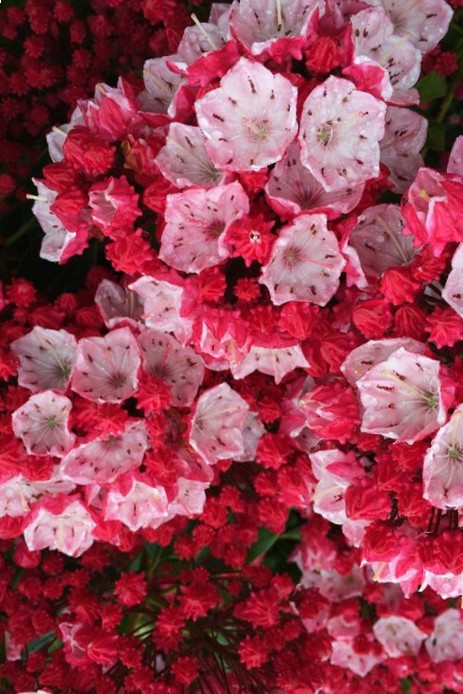
Mountain Laurel produces rounded clusters of white, pale pink, rose, or patterned flowers in late spring or early summer. Each flower has a shallow bowl or cup shape with fused petals and darker dots or markings.
The flowers have an unusual spring-loaded stamen mechanism. Ten stamens are held under tension in small pockets in the corolla; when an insect touches them, the stamens release and fling pollen onto the visitor. This feature helps distinguish Mountain Laurel from unrelated plants called laurel.
Fallen flower clusters remain poisonous. Dogs may investigate them, while goats and sheep may browse flowering branches readily.
Fruit and Seeds
After flowering, Mountain Laurel forms small rounded woody capsules containing numerous fine seeds. Dry capsules may remain on the shrub or fall with clipped branches.
The capsules and seeds should be treated as poisonous. Dried seed-bearing branches should not be used in animal enclosures, aviaries, cages, wreaths, or chewing enrichment.
All Parts Are Poisonous
Leaves, flowers, buds, nectar, pollen, stems, bark, roots, fruit capsules, seeds, fresh cuttings, dried leaves, and plant debris should all be considered poisonous.
Concentration may vary among tissues and seasons, but that variation does not create a safe plant part. Do not feed Mountain Laurel as forage, browse, enrichment, bedding, nesting material, perches, floral decoration, or chewing branches.
How Grayanotoxin Affects Sodium Channels
Grayanotoxins act on voltage-gated sodium channels in cell membranes. These channels are essential for the electrical impulses used by nerves and muscles.
Normally, a sodium channel opens briefly and then inactivates so the cell can reset. Grayanotoxin prevents normal inactivation, leaving excitable cells in a prolonged depolarized state. Nerve, skeletal-muscle, smooth-muscle, and cardiac-muscle function becomes abnormal.
Published FDA Explanation of the Toxic Mechanism
The United States Food and Drug Administration’s historical discussion of grayanotoxin explained the cellular mechanism as follows:
“Grayanotoxins work by binding to sodium channels in cell membranes. The binding unit is the group II receptor site, localized on a region of the sodium channel that is involved in the voltage-dependent activation and inactivation. These compounds prevent inactivation; thus, excitable cells (nerve and muscle) are maintained in a state of depolarization, during which entry of calcium into the cells may be facilitated. This action is similar to that exerted by the alkaloids of veratrum and aconite. All of the observed responses of skeletal and heart muscles, nerves, and the central nervous system are related to the membrane effects.”
In practical terms, the toxin prevents electrically active cells from resetting normally after stimulation. That continuing depolarization disrupts nerve signaling, muscle contraction, blood pressure, heart rate, and cardiac conduction.
Historical Toxin Names
Andromedotoxin is an older name historically applied to grayanotoxins from poisonous Ericaceae plants. Acetylandromedol is an older chemical name associated especially with grayanotoxin I.
Rhodotoxin, asebotoxin, lyoniol, and related names appear in older literature discussing Rhododendron, Pieris, Kalmia, and other Ericaceae toxins. These terms should not be used casually as if every plant contained the same purified compound in the same concentration.
Arbutin
Arbutin is a hydroquinone glucoside found in several Ericaceae plants and may occur in Mountain Laurel. It has sometimes been listed beside andromedotoxin or grayanotoxins in poison-plant references.
Arbutin is not the principal explanation for the acute Mountain Laurel syndrome. The rapid gastrointestinal, cardiovascular, neuromuscular, and neurologic effects are best explained by grayanotoxins acting on sodium channels.
Mad Honey
Bees can collect grayanotoxin-containing nectar from Mountain Laurel, Rhododendrons, Azaleas, Sheep Laurel, Bog Laurel, and related toxic Ericaceae plants. The resulting honey may cause the syndrome historically called mad-honey poisoning.
Grayanotoxin concentration in honey varies widely. Honey from many floral sources may contain too little toxin to cause illness, while small-batch honey dominated by toxic nectar can remain clinically dangerous.
Xenophon’s Historical Account
The earliest famous written account of grayanotoxin-associated honey poisoning appears in Xenophon’s Anabasis. It describes Greek soldiers in 401 BC who ate honey while marching near the Black Sea:
“The number of bee hives was extraordinary, and all of the soldiers that ate of the honey combs lost their senses, vomited and were affected with purging, and none of them was able to stand upright; such as had eaten only a little were like men greatly intoxicated, and such as had eaten much were like mad men and some like persons at the point of death. They lay upon the ground, in consequence, in great numbers, as if there had been a defeat; and there was general dejection. The next day, no one of them was found dead; and they recovered their senses about the same hour they had lost them on the preceding day.”
The honey in Xenophon’s account is generally associated with grayanotoxin-producing Rhododendrons of the Black Sea region rather than Mountain Laurel itself. The passage remains medically relevant because it describes dose-related gastrointestinal, neurologic, and motor effects consistent with grayanotoxin exposure.
Why Honey Poisoning and Plant Poisoning Differ
Honey contains toxin extracted through nectar and concentrated by bees, while plant poisoning involves leaves, flowers, stems, roots, or other tissues along with fiber and additional plant compounds.
The two exposure routes share the same sodium-channel mechanism but may differ in dose, absorption, vomiting, gastrointestinal retention, aspiration risk, and the relative prominence of cardiac or neurologic signs.
Documented Canine Mountain Laurel Poisoning
A published dog developed vomiting, bloody stool, bradycardia, weakness, and ataxia after Mountain Laurel ingestion. The dog did not improve adequately with initial supportive treatment.
Mountain Laurel material was eventually identified after gastrotomy was performed to remove retained stomach contents. Supportive treatment continued, and the dog recovered completely.
This case demonstrates that plant material may remain in the stomach for an extended period and continue releasing toxin. It also shows that complete recovery is possible after significant poisoning when the exposure is recognized and treated aggressively.
Reported Toxic Quantity
Veterinary and livestock sources have used approximate toxic-quantity estimates in the range of tenths of a percent of body weight for fresh grayanotoxin-containing foliage. More recent animal summaries have reported an estimated ruminant dose around 0.1% body weight, while older references vary by plant and species.
These estimates are useful for perspective only. They are not safety thresholds and should never be used to justify home observation after a smaller exposure.
The actual risk depends on grayanotoxin concentration, season, plant part, chewing, retained material, animal species, body size, cardiovascular health, pregnancy, hydration, and whether the amount has been estimated accurately.
Seasonal Exposure
Mountain Laurel is evergreen. Poisoning risk may increase in winter and early spring when snow, drought, overgrazing, feed shortage, confinement, or transport reduces access to preferred forage.
Spring flowers and buds create another seasonal risk. Dogs may investigate fallen flower clusters, while goats and sheep may browse fresh growth and blooms.
Storm and Landscaping Exposure
Storm-damaged branches and pruning waste can place large amounts of foliage at ground level. Animals that normally cannot reach the shrub may consume leaves, flowers, capsules, and stems.
Landscapers should never throw Mountain Laurel branches into horse paddocks, livestock pens, goat yards, poultry areas, rabbit runs, tortoise enclosures, aviaries, compost piles, or brush piles accessible to animals.
Dogs
Dogs may chew leaves, carry sticks, investigate fallen flowers, dig around roots, eat landscape waste, or mouth spring flower clusters. Puppies and dogs with plant-eating behavior face particular risk.
A dog can initially show only vomiting, drooling, abdominal discomfort, or lethargy before bradycardia, weakness, ataxia, hypotension, or collapse becomes apparent. Preserve every plant fragment and the entire clipping source.
Cats
Cats may bite leaves or flowers from low landscape branches or indoor cut arrangements. Detailed feline Mountain Laurel reports are limited, but related grayanotoxin plants are toxic to cats.
Drooling, vomiting, hiding, weakness, poor coordination, slow pulse, tremors, collapse, or reduced responsiveness after possible exposure requires urgent veterinary care.
Horses
Mountain Laurel is usually unpalatable to horses when adequate safe forage is available. Hunger, overgrazing, transport, storm debris, and intentional feeding of hedge clippings can overcome normal avoidance.
Horses cannot vomit. Salivation, repeated swallowing, colic, diarrhea, depression, sweating, weakness, weak pulse, poor coordination, recumbency, paralysis, coma, and death may occur.
Sheep and Goats
Sheep and goats may browse Mountain Laurel more readily than horses. Historic names such as Sheepkill and Lambkill are associated particularly with related Kalmia angustifolia, but they reflect the broader livestock danger presented by poisonous Kalmia foliage.
Salivation, regurgitation, diarrhea, bloat, abdominal pain, weakness, tremors, cardiac abnormalities, recumbency, seizures, and death are possible.
Cattle and Other Livestock
Cattle, donkeys, pigs, camelids, and other grazing or browsing animals may be exposed when evergreen branches are available during poor forage conditions or when landscape material is dumped into an enclosure.
Multiple animals may develop signs after sharing one pile of trimmings. The entire group should be removed from the source and monitored rather than treating only the first visibly affected animal.
Rabbits and Small Herbivores
Mountain Laurel must not be collected as browse for rabbits, guinea pigs, chinchillas, or other small herbivores. Even a relatively small amount may be significant in proportion to body weight.
Drooling, food refusal, diarrhea, abdominal discomfort, weakness, reduced fecal output, tremors, abnormal posture, collapse, or seizures requires immediate exotic-animal veterinary advice.
Birds
Birds may chew flowers, leaves, twigs, berries, or decorative branches. Possible signs include regurgitation, diarrhea, weakness, abnormal balance, tremors, seizures, respiratory signs, or reduced responsiveness.
Species-specific data are limited. Any meaningful avian exposure should be treated seriously because small body size and rapid toxin absorption can reduce the margin for delay.
Mountain Laurel Versus Sheep Laurel
Sheep Laurel is usually Kalmia angustifolia, a lower-growing shrub with narrower leaves and flower clusters that often form around the stem below the newest leaves.
Both species contain grayanotoxins and should be considered highly poisonous. Identification to the wrong Kalmia species does not make an exposure safe.
Mountain Laurel Versus Texas Mountain Laurel
Texas Mountain Laurel is generally Dermatophyllum secundiflorum, formerly Sophora secundiflora. It is a legume with fragrant purple flower clusters and hard bright-red seeds.
Its principal concern is cytisine and related quinolizidine alkaloids rather than grayanotoxins. The plant parts of greatest concern and poisoning pattern differ substantially.
Mountain Laurel Versus Cherry Laurel and English Laurel
Cherry Laurel and English Laurel belong to the genus Prunus. Damaged leaves and seeds can release cyanide.
Mountain Laurel has bowl-shaped clustered flowers and dry capsules rather than cherry-like fruit. Both are poisonous, but their toxin mechanisms and emergency treatment priorities differ.
Mountain Laurel Versus Bay Laurel
Bay Laurel, Laurus nobilis, is the culinary bay-leaf tree in Lauraceae. It is botanically unrelated to Mountain Laurel.
A common name or the word laurel alone is not enough to determine toxicity. Preserve flowering or fruiting material and a nursery label whenever possible.
Mountain Laurel Versus Rhododendron, Azalea, and Pieris
Rhododendrons, Azaleas, Japanese Pieris, Fetterbush, Staggerbush, and several related Ericaceae plants also contain grayanotoxins. Their flowers, leaves, and growth habits differ, but the core sodium-channel poisoning mechanism overlaps.
Uncertain exposure to Mountain Laurel, Rhododendron, Azalea, Pieris, Sheep Laurel, Bog Laurel, or another grayanotoxin-containing Ericaceae plant should be handled as a serious poisoning risk.
Diagnosis
Diagnosis depends on plant identification, access history, estimated amount, plant part, onset of gastrointestinal signs, cardiovascular examination, neurologic findings, blood pressure, and electrocardiography.
Preserve complete leafy and flowering branches, fruit capsules, nursery labels, photographs of the whole shrub and habitat, landscape debris, suspected honey, and any fragments recovered from vomit, stool, stomach contents, feed, or rumen material.
Veterinary Testing
No routine rapid blood test confirms Mountain Laurel poisoning in ordinary veterinary practice. Specialized laboratories may detect grayanotoxins, but treatment generally begins from the exposure history and clinical syndrome.
Veterinarians may monitor electrolytes, glucose, kidney and liver values, acid-base status, hydration, blood pressure, heart rhythm, oxygenation, lactate, muscle injury, bloat, and evidence of aspiration.
Differential Diagnosis
Similar signs may follow Rhododendron, Azalea, Pieris, Sheep Laurel, Staggerbush, Aconite, Veratrum, cardiac medication, organophosphate or carbamate pesticide, metaldehyde, cannabis, mushrooms, cyanogenic laurel, toxic feed, or another poisonous plant.
Bradycardia, hypotension, vomiting, weakness, ataxia, and collapse can also result from primary heart disease, electrolyte disturbance, gastrointestinal obstruction, Addison’s disease, internal bleeding, severe dehydration, anaphylaxis, or systemic illness.
Prognosis
Small exposures producing gastrointestinal signs alone carry a better prognosis when evaluation and monitoring begin promptly. The outlook becomes guarded with bradycardia, hypotension, heart block, serious arrhythmias, tremors, paralysis, seizures, aspiration, severe bloat, prolonged recumbency, coma, or delayed treatment.
Survival through the acute cardiovascular and neurologic period is encouraging, but recovery time varies. Some animals improve within hours, while seriously affected livestock may remain recumbent for several days before improving or deteriorating.
Prevention
Do not plant Mountain Laurel inside dog runs, goat yards, horse paddocks, livestock pens, rabbit enclosures, aviaries, tortoise pens, or other areas where animals can reach it.
Provide adequate safe forage, inspect fence lines and wooded pasture edges, collect fallen flowers and storm debris, secure pruning waste immediately, and tell landscapers never to place Mountain Laurel trimmings where animals graze, browse, nest, perch, or chew.
Immediate Response
- Remove the source: Move the animal away from Mountain Laurel leaves, flowers, stems, roots, branches, landscape trimmings, contaminated forage, wreath material, storm debris, and suspected grayanotoxin-containing honey.
- Contact a professional urgently: Call a veterinarian or animal poison-control service rather than waiting for cardiovascular or neurologic abnormalities to appear.
- Keep the animal calm: Prevent running, chasing, struggling, unnecessary walking, and excessive handling because hypotension or an abnormal rhythm can make exertion dangerous.
- Preserve evidence: Save complete leafy and flowering branches, fruit capsules, nursery labels, photographs, honey containers, landscape waste, and material recovered from vomit, stool, feed, or rumen contents.
- Protect other animals: Remove every animal sharing the same pasture, clipping pile, hay, enclosure, brush pile, floral material, or honey source.
- Assume the largest plausible exposure: Report missing branches, chewed stems, scattered leaves, shared access, and uncertainty about the amount rather than minimizing the incident.
Mountain Laurel exposure should be treated as urgent even when the animal initially shows only drooling, vomiting, diarrhea, or mild weakness. Grayanotoxin poisoning can progress from gastrointestinal illness to low blood pressure, bradycardia, heart block, abnormal coordination, collapse, tremors, paralysis, or seizures. Stop further access immediately, minimize stress and exertion, and obtain professional guidance rather than waiting for the animal to appear critically ill. Animals sharing the same source may consume different amounts and develop signs at different times, so the absence of illness in one member of a group does not establish safety for the others.
Recognize an Emergency
- Cardiovascular warnings: A slow, fast, weak, irregular, or intermittently absent pulse, cold limbs, fainting, pale or muddy gums, or collapse may indicate poor cardiac output or hypotension.
- Neurologic warnings: Staggering, repeated falling, inability to stand, tremors, paralysis, seizures, stupor, or reduced responsiveness requires immediate treatment.
- Respiratory warnings: Rapid, shallow, labored, gasping, open-mouth, grunting, or weak breathing may reflect cardiovascular collapse, aspiration, bloat, or neuromuscular failure.
- Gastrointestinal warnings: Repeated vomiting, profuse diarrhea, severe colic, abdominal enlargement, or ruminant bloat requires urgent veterinary assessment.
- Do not wait for every sign: Mountain Laurel can become dangerous before the complete poisoning pattern is visible.
Mountain Laurel poisoning becomes an emergency when grayanotoxin begins interfering with circulation, cardiac conduction, breathing, muscle control, or consciousness. Owners may notice weakness, staggering, repeated lying down, an abnormal pulse, pale or muddy gums, or an animal that appears unusually quiet before dramatic collapse occurs. A slow pulse is common but not universal, and a normal-looking rate does not exclude heart block, intermittent rhythm disturbance, or dangerously low blood pressure. Meaningful exposure should be discussed with a veterinarian before these advanced signs develop.
Remove Loose Plant Material
- Wear gloves: Handle the plant, vomit, stool, regurgitated material, contaminated feed, and honey containers carefully.
- Remove only loose visible pieces: Take accessible leaves, flowers, stems, and capsules from the lips and front of the mouth without reaching deeply into the throat.
- Avoid blind finger sweeps: Do not probe the back of the mouth or push plant material toward the airway.
- Rinse only when safe: A gentle low-pressure rinse may be used only when the animal is fully alert, breathing normally, swallowing normally, and able to protect its airway.
- Stop if coughing or gagging begins: Further mouth cleaning becomes unsafe when swallowing or airway protection is impaired.
- Do not struggle with a weak animal: Excessive restraint and stress may worsen collapse, poor circulation, or an abnormal heart rhythm.
Loose leaves, petals, stems, and capsules remaining at the front of the mouth may continue to be swallowed or chewed, but removal must not create an airway emergency. A weak, frightened, nauseated, or neurologically abnormal animal may bite unexpectedly or aspirate water and plant material during aggressive cleaning. Remove only material that is clearly visible and easily accessible. Deep probing, forceful flushing, and repeated struggling can push debris farther into the throat or destabilize an already compromised patient.
Do Not Induce Vomiting at Home
- Do not give hydrogen peroxide automatically: Peroxide may worsen gastrointestinal injury and create severe aspiration risk in a weak or vomiting animal.
- Never give peroxide to a cat: Hydrogen peroxide can cause serious feline stomach and esophageal injury.
- Never induce vomiting after signs begin: Do not attempt emesis in an animal that is drooling heavily, vomiting, weak, staggering, trembling, collapsed, seizing, breathing abnormally, or swallowing poorly.
- Do not induce vomiting in horses or livestock: Household emesis is inappropriate or physiologically impossible in horses and ruminants.
- Do not induce vomiting in rabbits, guinea pigs, birds, or reptiles: Household emesis is inappropriate and dangerous in these species.
- Do not use household emetics: Salt, mustard, ipecac, dish soap, cooking oil, syrup, fingers in the throat, and manual gagging are unsafe.
- Allow professional selection: A veterinarian may consider controlled emesis only in an appropriate stable, asymptomatic patient that can protect its airway.
Home-induced vomiting is particularly dangerous after Mountain Laurel exposure because the toxin itself may cause vomiting, weakness, bradycardia, hypotension, poor coordination, tremors, seizures, and impaired swallowing. An animal that loses airway control can inhale plant fragments, stomach contents, peroxide, salt water, or another emetic into the lungs. A veterinarian must weigh the exposure timing and potential benefit against the patient’s neurologic condition, circulation, breathing, swallowing, and likelihood of retained plant material. Once systemic signs begin, stabilization generally takes priority over emesis.
Activated Charcoal
- Do not give charcoal yourself: Never force it into a vomiting, weak, staggering, trembling, sedated, recumbent, seizing, or poorly swallowing animal.
- Allow veterinary assessment: Charcoal use depends on airway protection, neurologic status, blood pressure, exposure timing, and the expected benefit.
- Do not repeat doses without direction: Repeated charcoal can contribute to dehydration, electrolyte abnormalities, constipation, intestinal obstruction, or aspiration.
- Do not use household charcoal: Barbecue briquettes, fireplace ash, burned food, and homemade carbon are not medical activated charcoal.
- Do not rely on charcoal as treatment: It cannot correct hypotension, bradycardia, heart block, seizures, bloat, breathing failure, or retained plant material.
Activated charcoal may reduce absorption of some unabsorbed grayanotoxin in an appropriate patient, but it is not a harmless home remedy. Mountain Laurel poisoning commonly causes vomiting, weakness, poor coordination, altered mentation, and impaired swallowing, all of which increase the chance of charcoal entering the lungs. Its use should follow veterinary assessment of the airway, neurologic status, circulation, exposure timing, and likelihood that meaningful toxin remains available for binding. Cardiovascular and neurologic stabilization must not be delayed merely to administer charcoal.
Do Not Give Household Remedies or Owner-Selected Medication
- Do not give milk or oil: Dairy products, cooking oil, coconut oil, and mineral oil do not bind or neutralize grayanotoxins.
- Do not give salt or electrolytes blindly: Unmeasured supplementation can worsen cardiovascular, neurologic, and fluid instability.
- Do not give heart or blood-pressure medication: Atropine, beta agonists, antiarrhythmics, stimulants, and human cardiovascular drugs require professional monitoring.
- Do not give anti-diarrheal medication: Loperamide, bismuth products, kaolin mixtures, and similar remedies should not be owner-selected.
- Do not give human pain medication: Ibuprofen, naproxen, aspirin, acetaminophen, and similar drugs can create an additional poisoning or complicate shock.
- Do not give caffeine or stimulants: Coffee, tea, energy products, decongestants, and stimulants may worsen arrhythmias, agitation, and blood-pressure instability.
- Do not give herbal antidotes: Teas, extracts, essential oils, cannabis products, and additional plant remedies can complicate the original poisoning.
No household product neutralizes grayanotoxin or safely corrects the electrical disturbance affecting nerves, muscles, blood pressure, and the heart. Milk, oil, salt, electrolyte drinks, coffee, herbal preparations, and gastrointestinal remedies may delay treatment, worsen vomiting, alter electrolytes, or increase aspiration risk. Cardiovascular drugs are especially dangerous without an ECG because a medication useful for one rhythm may worsen another. Give only medication selected specifically for that patient by a veterinarian who knows the animal’s rhythm, blood pressure, species, weight, and clinical condition.
Food and Water
- Do not force food: A nauseated, weak, vomiting, bloated, or poorly swallowing animal may choke or aspirate.
- Do not force water: Syringed, poured, or drenched water can enter the lungs.
- Offer water only when stable: Small amounts of plain water may remain available only when the animal is alert, swallowing normally, breathing normally, and not vomiting repeatedly.
- Avoid human electrolyte drinks: Sports drinks may contain unsuitable sugar, sodium, caffeine, flavorings, artificial sweeteners, or xylitol.
- Follow veterinary instructions: Food and water may need to be withheld when emesis, anesthesia, lavage, endoscopy, surgery, intubation, or another procedure is anticipated.
A nauseated, weak, bloated, vomiting, or poorly swallowing animal should not be forced to eat or drink. Syringed water, drenches, food, milk, medication, and electrolyte solutions can enter the lungs when swallowing is impaired. Food and water may also complicate anesthesia or procedures intended to remove retained plant material. The timing of reintroducing oral intake depends on vomiting control, cardiovascular stability, swallowing ability, hydration, species, and the veterinary treatment plan.
Vomiting and Diarrhea
- Track every episode: Record the frequency, volume, and appearance of vomit and stool and whether leaves, flowers, stems, capsules, blood, mucus, honey, or other material is visible.
- Save representative material: Place plant fragments or suspicious material in a sealed container for veterinary identification when this can be done safely.
- Prevent re-ingestion: Keep other animals away from vomit, stool, regurgitated cud, and expelled plant fragments.
- Watch for dehydration: Tacky gums, sunken eyes, worsening weakness, reduced urination, poor skin elasticity, or inability to retain water requires veterinary fluid support.
- Watch for aspiration: Coughing, nasal discharge, fever, rapid breathing, increased respiratory effort, or renewed lethargy after vomiting may indicate aspiration pneumonia.
- Do not muzzle a vomiting animal: A muzzle can trap vomit, obstruct drainage, and interfere with breathing.
Vomiting and diarrhea are common early manifestations of Mountain Laurel poisoning, but they also create secondary risks through dehydration, electrolyte loss, esophageal irritation, aspiration, and continued exposure to expelled plant material. Documenting the number and character of each episode helps the veterinarian judge progression and fluid loss. Plant fragments, blood, mucus, honey, mulch, and other recovered material may also help confirm the exposure or reveal a mixed ingestion. Improvement in vomiting does not establish that the cardiac danger has passed.
Weakness, Collapse, and Cardiac Signs
- Restrict movement: Do not walk, run, exercise, chase, or repeatedly reposition an animal that is weak, faint, staggering, or suspected of having an abnormal rhythm.
- Prevent falls and trauma: Block access to stairs, pools, traffic, furniture edges, fencing, glass, slopes, and slippery flooring.
- Do not rely on a home pulse count: A normal-looking rate cannot exclude heart block, junctional rhythm, premature beats, hypotension, or intermittent arrhythmia.
- Allow the easiest breathing position: Avoid compressing the neck, chest, abdomen, or rumen while the animal rests.
- Transport urgently: Pale or muddy gums, cold limbs, weak pulse, fainting, collapse, or reduced responsiveness may indicate severe hypotension or poor cardiac output.
Weakness after Mountain Laurel exposure may reflect low blood pressure, bradycardia, heart block, another arrhythmia, dehydration, neurologic dysfunction, or several of these problems at once. Walking a weak patient to keep it awake or repeatedly standing a recumbent animal can increase oxygen demand and trigger collapse. A home pulse check cannot identify every clinically important rhythm or determine whether blood pressure is adequate. Keep the animal quiet, prevent falls, and arrange transport with as little exertion as possible.
Tremors, Paralysis, or Seizures
- Treat these signs as an emergency: Muscle twitching, whole-body tremors, limb weakness, paralysis, rigidity, or seizures requires immediate veterinary treatment.
- Clear the surroundings: Move furniture, tools, buckets, water containers, sharp objects, and other hazards away from the animal.
- Do not put anything in the mouth: Keep hands, food, water, and medication away during a seizure.
- Do not restrain the limbs: Protect the patient from impact without pinning it down or placing yourself near the mouth.
- Record seizure activity: Note the duration, number of episodes, and whether awareness returns between them.
- Reduce stimulation: Keep noise, bright light, crowding, handling, and movement to the minimum needed for safe transport.
Muscle twitching, whole-body tremors, limb weakness, paralysis, rigidity, or seizures indicates serious neuromuscular or central nervous system involvement. These signs can increase body temperature, interfere with breathing, cause traumatic injury, and eliminate the animal’s ability to protect its airway. The goal during transport preparation is to prevent impact and reduce stimulation rather than physically stopping every movement. Prolonged or repeated seizures require immediate anticonvulsant and supportive treatment.
Ruminant Bloat
- Watch the left abdomen: Progressive enlargement, discomfort, repeated rising and lying down, grunting, salivation, or increasing breathing effort may indicate bloat.
- Do not drench: A weak, salivating, regurgitating, bloated, or poorly swallowing animal can inhale oral fluids or medication.
- Keep the animal upright when safe: Sternal positioning may reduce aspiration and pressure risk in a recumbent ruminant while help is arranged.
- Minimize movement: Do not chase or drive a severely weak, hypotensive, or bloated animal.
- Request immediate large-animal care: Rumen decompression, cardiovascular support, toxin management, and airway protection may be required.
Mountain Laurel poisoning can disrupt rumen function and swallowing while increasing salivation, regurgitation, weakness, and recumbency. Gas accumulation may enlarge the left side of the abdomen and begin compressing the lungs and major blood vessels. A severely bloated animal can die from respiratory and circulatory compromise even before the direct grayanotoxin effects resolve. Professional decompression and rumen management may be needed in addition to treatment of the poisoning itself.
Safe Transportation
- Call ahead: Tell the clinic that Mountain Laurel, Kalmia, Rhododendron, Azalea, Pieris, Sheep Laurel, Bog Laurel, or another grayanotoxin exposure is suspected.
- Keep the animal quiet: Reduce exertion, noise, restraint, struggling, and unnecessary handling.
- Prevent falls: Use a padded carrier, sling, stretcher, rigid board, or blanket for a weak or uncoordinated animal.
- Keep the airway clear: Position the head so saliva and vomit can drain from the mouth when this can be done safely.
- Do not compress breathing: Avoid positions that press on the neck, chest, abdomen, or rumen.
- Bring the evidence: Take the plant, nursery label, photographs, honey container, chemical records, vomit fragments, stool material, and exposure timeline.
Transport should minimize exertion, aspiration, falls, and additional cardiovascular stress. Calling ahead allows the clinic to prepare for ECG monitoring, blood-pressure assessment, oxygen, airway support, seizure treatment, bloat management, or large-animal unloading. A weak animal should be moved with support rather than forced to walk. The animal should be allowed to remain in the position that permits the easiest breathing and drainage of saliva or vomit.
Veterinary Evaluation
- Confirm plant identity: Mountain Laurel must be distinguished from Texas Mountain Laurel, Cherry Laurel, English Laurel, Bay Laurel, Rhododendron, Azalea, Pieris, and other plants.
- Begin ECG monitoring: Sinus bradycardia, atrioventricular block, junctional rhythms, premature beats, tachyarrhythmias, and changing conduction abnormalities may occur.
- Measure blood pressure: Hypotension may be severe even when the animal remains conscious.
- Assess hydration and electrolytes: Vomiting, diarrhea, cardiovascular instability, and treatment may alter fluid, glucose, electrolyte, and acid-base balance.
- Evaluate respiration: Aspiration, bloat, pulmonary complications, seizures, and neuromuscular weakness may require imaging, oxygen, airway support, or ventilation.
- Assess retained material: Leaves and stems may remain in the stomach or rumen and continue releasing toxin.
Veterinary assessment must look beyond vomiting and diarrhea because the most consequential effects may involve cardiac conduction, blood pressure, breathing, neurologic function, or retained plant material. Electrocardiography and blood-pressure measurement are central because clinically important rhythm changes may not be detectable from appearance or a brief pulse check. Diagnostic testing is selected to assess hydration, perfusion, electrolytes, glucose, acid-base balance, kidney function, aspiration, muscle injury, bloat, and other complications. Plant identification also helps distinguish grayanotoxin poisoning from cyanide, cytisine, essential-oil, or other laurel-associated toxicities.
Veterinary Decontamination
- Stabilize before aggressive decontamination: Bradycardia, hypotension, airway compromise, severe weakness, tremors, seizures, aspiration, and bloat take priority.
- Induce emesis only in an appropriate patient: Veterinary emesis may be considered after a recent exposure when the patient remains stable, asymptomatic, neurologically normal, and able to protect the airway.
- Use activated charcoal selectively: Veterinary administration depends on airway protection, exposure timing, cardiovascular stability, and expected benefit.
- Investigate retained material: Persistent signs may indicate leaves or stems remaining in the stomach or rumen.
- Use advanced removal when justified: Endoscopy, gastric lavage, gastrotomy, rumen evacuation, rumenotomy, or another procedure may be considered for substantial retained material.
Decontamination is individualized according to the time since ingestion, amount consumed, species, cardiovascular status, neurologic condition, vomiting, airway protection, and likelihood that plant material remains in the stomach or rumen. Emesis becomes unsafe once weakness, bradycardia, hypotension, tremors, seizures, altered mentation, repeated vomiting, abnormal breathing, or poor swallowing develops.
Veterinarian-administered activated charcoal may be useful when the anticipated benefit exceeds the risks, but charcoal cannot remove large leaves or stems. It should not delay treatment of cardiovascular instability, respiratory compromise, bloat, seizures, or severe weakness.
Retained Mountain Laurel material may continue releasing toxin and may require physical removal when it cannot be cleared safely by less invasive methods. The decontamination plan may change as the patient’s rhythm, blood pressure, breathing, and neurologic status evolve.
Veterinary Cardiovascular Treatment
- Support circulation: Carefully selected intravenous fluids may support blood pressure, hydration, kidney perfusion, and tissue oxygen delivery.
- Treat clinically important bradycardia: Atropine or another veterinarian-selected anticholinergic may be used in appropriate patients.
- Treat the documented rhythm: Antiarrhythmic therapy must be based on the current ECG abnormality rather than the plant name alone.
- Monitor repeatedly or continuously: Heart rate, conduction, rhythm, perfusion, and blood pressure may change during poisoning and recovery.
- Escalate support when needed: Persistent hypotension may require additional cardiovascular support selected for the individual patient.
Cardiovascular treatment is directed by the documented rhythm, blood pressure, perfusion, hydration, electrolyte results, respiratory status, and affected species. Intravenous fluids may support circulation and kidney perfusion, but fluid selection and administration must account for heart function, pulmonary condition, and continuing gastrointestinal losses. A patient with hypotension and bradycardia may require a different approach from one with tachyarrhythmia, heart block, or fluid-overload risk.
Atropine is not a universal antidote. It may improve selected vagally mediated bradycardias, but its use should be guided by ECG and blood-pressure findings. Other rhythm disturbances may require different treatment or careful observation rather than the same medication.
Continuous or repeated monitoring is important because the cardiac pattern can change during poisoning, decontamination, treatment, and recovery. A medication that benefits one rhythm may worsen another, increase oxygen demand, or aggravate hypotension.
Veterinary Neurologic and Respiratory Treatment
- Control severe tremors: Veterinarian-selected muscle relaxants may reduce sustained tremoring, overheating, exhaustion, and muscle injury.
- Control seizures: Standard veterinary anticonvulsants may be required when seizure activity occurs.
- Provide oxygen support: Hypotension, aspiration, bloat, seizures, abnormal rhythm, and neuromuscular weakness may reduce oxygen delivery.
- Protect the airway: Suction, intubation, or assisted ventilation may be required in a comatose, aspirating, repeatedly vomiting, or poorly breathing patient.
- Evaluate for aspiration: Coughing, fever, nasal discharge, low oxygenation, rapid breathing, or renewed lethargy may require thoracic imaging and respiratory treatment.
Severe tremors can produce exhaustion, hyperthermia, muscle injury, low blood sugar, and increased oxygen demand. Temperature, glucose, oxygenation, electrolytes, and acid-base status may require repeated evaluation during prolonged neurologic activity. Seizures must be controlled promptly to reduce brain injury, aspiration, trauma, and further cardiovascular stress.
Oxygen and airway support may be needed when hypotension, aspiration, bloat, neuromuscular weakness, seizures, or abnormal cardiac function reduces oxygen delivery. A comatose or repeatedly vomiting patient may be unable to protect its airway even when spontaneous breathing continues.
Aspiration pneumonia may become apparent after the initial gastrointestinal or cardiovascular crisis. Respiratory findings can therefore require continued monitoring after the animal appears to be recovering from the immediate poisoning.
Horses and Livestock
- Remove shared exposure: Block access to infested pasture, evergreen browse, landscape waste, contaminated hay, toxic honey, and ornamental plantings.
- Examine the whole group: Animals that consumed smaller quantities may develop signs later than the first visibly affected patient.
- Preserve the source: Save branches, hay, feed, trimmings, flowers, and other material for identification rather than discarding all evidence.
- Provide known-safe forage: Adequate palatable feed reduces continued browsing of toxic evergreen plants.
- Do not force movement: Weak, staggering, hypotensive, bloated, or recumbent animals should not be chased, driven, or forced to walk.
- Do not drench: Salivating, regurgitating, weak, bloated, or poorly swallowing livestock may aspirate oral fluids.
- Request large-animal treatment: Cardiovascular monitoring, fluids, rumen management, bloat relief, tremor control, airway care, and recumbency support may be necessary.
Large-animal Mountain Laurel exposure frequently involves several animals and a shared source such as a clipping pile, storm-damaged branch, contaminated hay, wooded pasture edge, or discarded ornamental plant. Removing and examining the whole group is therefore more appropriate than treating only the first animal that looks sick. Weak or recumbent livestock may also develop aspiration, pressure injury, muscle damage, bloat, and secondary complications during prolonged recovery. Large-animal management must address both the toxin and the practical consequences of rumen dysfunction and recumbency.
Rabbits, Guinea Pigs, Birds, and Reptiles
- Do not attempt vomiting: Household emesis is inappropriate and dangerous in these species.
- Monitor appetite immediately: Continued food refusal can become a serious gastrointestinal or metabolic emergency.
- Monitor feces or droppings: Diarrhea, reduced output, abnormal color, blood, or cessation requires species-specific advice.
- Do not force feed before assessment: Poor swallowing, regurgitation, obstruction, abdominal distension, severe weakness, or neurologic dysfunction must be excluded first.
- Remove contaminated habitat material: Replace exposed food, water, bedding, substrate, perches, toys, branches, and enclosure decorations.
- Maintain species-appropriate temperature: Avoid chilling or overheating a weak bird, reptile, rabbit, or small mammal during transport.
- Use a species-experienced veterinarian: Fluids, temperature support, nutrition, cardiovascular treatment, anticonvulsants, and restraint differ substantially among species.
Small herbivores, birds, and reptiles may have a narrow margin for delay because a small piece of Mountain Laurel can represent a meaningful exposure relative to body weight. Rabbits and guinea pigs cannot vomit, and their first visible sign may be food refusal, reduced fecal output, weakness, or abnormal posture rather than dramatic gastrointestinal evacuation. Birds may develop regurgitation, abnormal balance, tremors, weakness, or reduced responsiveness. Reptile signs may be subtle or delayed because metabolic rate and toxin processing are influenced by environmental temperature.
Monitoring and Recovery
- Monitor heart rate and rhythm: Cardiac abnormalities may persist or appear after vomiting or diarrhea begins to improve.
- Monitor blood pressure and perfusion: Weakness, cold extremities, and collapse may continue until circulation stabilizes.
- Monitor coordination and strength: Ataxia, limb weakness, paralysis, or inability to rise should improve progressively rather than worsen.
- Monitor breathing: Coughing, fever, nasal discharge, rapid breathing, or renewed lethargy may indicate aspiration.
- Monitor gastrointestinal function: Appetite, hydration, fecal output, abdominal pain, rumen motility, and bloat require continued attention.
- Expect variable recovery: Mild cases may improve within hours, while severely affected animals may remain hospitalized, weak, or recumbent for several days.
Improvement in vomiting or diarrhea does not prove that the cardiovascular danger has passed. Heart rhythm, blood pressure, coordination, breathing, hydration, gastrointestinal function, and mental status may recover at different rates. Aspiration pneumonia, recurrent rhythm changes, bloat, rumen stasis, pressure injury, or prolonged weakness may become apparent after the initial crisis. Discharge and return to normal activity should be based on stable clinical findings rather than a fixed recovery time.
Prevention and Prognosis
- Keep Mountain Laurel outside animal areas: Do not plant it within dog yards, paddocks, livestock pens, rabbit runs, aviaries, tortoise enclosures, or other accessible spaces.
- Secure every piece of plant waste: Place branches, leaves, flowers, capsules, roots, wreaths, and trimmings directly into a closed animal-inaccessible container.
- Inspect seasonal forage and fence lines: Risk increases during winter, drought, snow cover, storm damage, transport, feed shortage, and overgrazing.
- Provide adequate safe forage: Hungry or newly confined livestock are more likely to investigate poisonous evergreen browse.
- Warn landscapers and neighbors: Mountain Laurel clippings should never be thrown into grazing, browsing, poultry, rabbit, bird, compost, or brush-pile areas accessible to animals.
- Recognize favorable circumstances: Small exposures limited to gastrointestinal signs carry a better prognosis when treatment and monitoring begin promptly.
- Recognize guarded circumstances: Persistent hypotension, heart block, serious arrhythmias, tremors, paralysis, seizures, aspiration, severe bloat, coma, delayed treatment, or prolonged recumbency worsens the outlook.
The prognosis depends on the amount consumed, speed of treatment, cardiovascular involvement, aspiration, bloat, neurologic severity, retained plant material, and the animal’s underlying health. Small exposures producing gastrointestinal signs alone generally carry a favorable outlook when professional guidance and monitoring begin promptly. Persistent hypotension, major conduction disturbance, serious arrhythmias, tremors, paralysis, seizures, aspiration, severe bloat, coma, delayed treatment, or prolonged recumbency creates a guarded prognosis. Prevention must focus on eliminating access because evergreen foliage, attractive flowers, storm debris, wreaths, and discarded landscape trimmings can expose animals in several different settings.
Frequently Asked Questions About Mountain Laurel Poisoning
Why is Mountain Laurel more dangerous than many irritating houseplants?
Mountain Laurel contains grayanotoxins that affect voltage-gated sodium channels in nerves, muscles, blood vessels, and the heart. The syndrome is not limited to mouth or stomach irritation. Vomiting and diarrhea may be followed by low blood pressure, bradycardia, heart block, weakness, collapse, tremors, paralysis, seizures, coma, or death. That cardiac and neuromuscular risk makes meaningful exposure an urgent veterinary problem.
Can an animal look only mildly sick at first?
Yes. Early signs may be drooling, vomiting, diarrhea, abdominal discomfort, appetite loss, or lethargy. Those signs can appear before a slow pulse, heart block, hypotension, or collapse is obvious to an owner. A patient that seems “just nauseated” after Mountain Laurel exposure may still need ECG and blood-pressure monitoring.
Which Mountain Laurel parts are most dangerous?
All parts should be treated as poisonous, including leaves, flowers, buds, nectar, pollen, stems, bark, roots, fruit capsules, seeds, fresh cuttings, and dried debris. Leaves are a major livestock hazard because they remain evergreen during seasons when safer forage may be limited. Spring flowers and fallen clusters are also important exposure sources for dogs and browsing animals.
Does drying or wilting make Mountain Laurel safe?
No. Drying, wilting, frost damage, or inclusion in a wreath does not make the plant suitable as hay, browse, bedding, perches, cage decoration, floral material, or chewing enrichment. Dried leaves and trimmings should be collected and secured just as carefully as fresh branches.
How little Mountain Laurel can cause poisoning?
No universally safe number of leaves exists. Veterinary references use rough estimates in the range of tenths of a percent of body weight for fresh grayanotoxin-containing foliage, but those figures vary by plant, animal species, and source. They are warning estimates, not safe cutoffs. A smaller quantity can still matter when the animal is small, susceptible, or the plant is toxin-rich.
Why are sheep and goats at high risk?
Sheep and goats may browse evergreen shrubs more readily than horses, especially when grass, hay, or preferred browse is scarce. Mountain Laurel remains green in winter and early spring, and discarded trimmings may deliver a concentrated exposure to an entire group. Goats and sheep also face complications such as rumen dysfunction, bloat, aspiration, tremors, recumbency, and death.
Can horses be poisoned if the plant tastes bad?
Yes. Horses may avoid Mountain Laurel when adequate safe forage is available, but hunger, overgrazing, transport, confinement, storm debris, or thrown landscape clippings can overcome normal avoidance. Horses cannot vomit, so poisoning may appear as salivation, colic, diarrhea, depression, weakness, poor coordination, weak pulse, recumbency, paralysis, coma, or death.
What makes Mountain Laurel poisoning a heart emergency?
Grayanotoxins can disturb the sinus node, atrioventricular conduction, vagal tone, blood pressure, and cardiac rhythm. Sinus bradycardia, AV block, junctional rhythm, hypotension, fainting, collapse, tachyarrhythmias, or changing rhythm patterns may occur. The actual rhythm must be evaluated with an ECG, because a medication that helps one rhythm may worsen another.
Does Mountain Laurel cause Wolff-Parkinson-White syndrome?
No. Wolff-Parkinson-White syndrome is a congenital accessory electrical pathway in the heart. Mountain Laurel poisoning can cause conduction abnormalities, bradyarrhythmias, junctional rhythms, tachyarrhythmias, and ECG changes, but it does not create the anatomical pathway responsible for WPW.
Can Mountain Laurel plant material remain in the stomach?
Yes. A published canine case showed retained Mountain Laurel material in the stomach, and the dog improved after surgical removal and supportive care. Tough leaves and stems may continue releasing toxin when they remain in the stomach or rumen. This is one reason veterinary decontamination or physical removal may still be considered after a serious exposure.
Can Mountain Laurel honey poison animals?
Honey can contain grayanotoxins when bees collect nectar from Mountain Laurel, Rhododendron, Azalea, Sheep Laurel, or related Ericaceae plants. Risk varies by floral source, season, region, toxin concentration, and blending. Honey exposure and plant ingestion share the same sodium-channel mechanism, but plant ingestion adds fiber, retained leaves, stems, and possible bloat or aspiration concerns.
What is mad-honey poisoning?
Mad-honey poisoning is grayanotoxin intoxication from honey made with nectar from toxic Ericaceae plants. Signs may include nausea, vomiting, salivation, sweating, weakness, dizziness-like behavior, low blood pressure, bradycardia, fainting, confusion, collapse, or altered responsiveness. Preserve the honey container and source information if an animal has access to suspicious honey.
Is Mountain Laurel the same as Sheep Laurel?
No. Sheep Laurel is usually Kalmia angustifolia, a related lower-growing species with narrower leaves. Both contain grayanotoxins and should be treated as highly poisonous. Confusing one Kalmia species for another does not reduce the emergency.
Is Mountain Laurel the same as Texas Mountain Laurel?
No. Texas Mountain Laurel is usually Dermatophyllum secundiflorum, formerly Sophora secundiflora. It is a legume with fragrant purple flowers and hard red seeds. Its principal toxins are cytisine-related alkaloids, not grayanotoxins. The plant parts of greatest concern and the poisoning syndrome differ.
Is Mountain Laurel the same as Cherry Laurel or English Laurel?
No. Cherry Laurel and English Laurel are Prunus species. Damaged leaves and seeds can release cyanide. Mountain Laurel is Kalmia latifolia in Ericaceae and contains grayanotoxins. Both are dangerous, but cyanide poisoning and grayanotoxin poisoning require different emergency considerations.
Should I make my dog vomit after Mountain Laurel ingestion?
Do not induce vomiting at home. A veterinarian may consider controlled emesis only when the exposure was recent and the animal remains stable, asymptomatic, neurologically normal, breathing normally, swallowing normally, and able to protect its airway. Hydrogen peroxide must never be used in cats, and salt, mustard, oil, dish soap, ipecac, syrup, or manual gagging is unsafe.
Does activated charcoal help?
A veterinarian may administer activated charcoal to an appropriate patient, but it must not be forced into an animal that is vomiting, weak, staggering, trembling, collapsed, sedated, seizing, or swallowing poorly. Aspiration can be fatal. Charcoal also does not replace ECG monitoring, blood-pressure support, treatment of bloat, oxygen, or control of tremors and seizures.
Why might a veterinarian use atropine?
Atropine can reduce excessive vagal influence and may improve clinically important bradycardia in selected patients. It must be used under veterinary supervision with ECG and blood-pressure monitoring. Not every rhythm abnormality benefits from atropine, and owner-selected heart medication can worsen hypotension or rhythm instability.
When does Mountain Laurel exposure require emergency care?
Emergency signs include repeated vomiting, severe diarrhea, abdominal distension, bloat, marked weakness, staggering, inability to stand, a slow, fast, weak, or irregular pulse, pale or muddy gums, difficult breathing, tremors, paralysis, collapse, seizures, coma, or reduced responsiveness. Meaningful exposure should be discussed with a veterinarian before these signs appear.