Naked Lady Toxicity, Amaryllidaceae Alkaloids, Lycorine-Associated Vomiting, and Bulb Exposure
Is Naked Lady Poisonous to Dogs, Cats, Horses, and Livestock?
Yes—Naked Lady, Amaryllis belladonna L., is poisonous to dogs, cats, horses, livestock, rabbits, guinea pigs, birds, reptiles, and other animals. Its bulb, basal plate, roots, offsets, strap-shaped leaves, flower stalks, flowers, developing capsules, seeds, sap, cut material, and discarded plant debris should remain inaccessible. Ingestion most often causes salivation, repeated swallowing, nausea, vomiting in species capable of vomiting, diarrhea, abdominal discomfort, appetite loss, depression, and lethargy.
Naked Lady contains a chemically diverse mixture of Amaryllidaceae alkaloids rather than one uniform toxin. Lycorine is strongly associated with nausea and vomiting, but exact-species bulb studies have identified many additional lycorine-, crinine-, haemanthamine-, homolycorine-, and related alkaloids. The proportions can differ among plant samples and growth stages, so no fixed concentration, number of flowers, fraction of a bulb, or universal animal toxic dose can be stated.
The bulb presents the greatest practical exposure concern because it is a compact mass of alkaloid-bearing tissue that a dog may uncover and consume during digging, planting, division, storage, landscaping, or disposal. This does not prove that every bulb has the same concentration or that leaves and flowers are harmless. A chewed bulb also introduces fibrous scales, soil, fertilizer, pesticides, mold, storage products, packaging, wire, and other possible co-exposures.
Naked Lady is not a true Lily in Lilium and is not a Daylily in Hemerocallis. A correctly identified Amaryllis belladonna exposure is not expected to produce the characteristic acute renal tubular failure caused by true-Lily and Daylily exposure in cats. Because “Naked Lady,” “Belladonna Lily,” “Resurrection Lily,” and “Amaryllis” are used for several different bulbs, any uncertain lily exposure involving a cat must be treated as a possible true-lily emergency until the plant is positively identified.
About this guide: This page provides general pet-poisoning information and cannot diagnose or treat an individual animal. For any suspected exposure, contact a veterinarian or animal poison-control service immediately. Do not induce vomiting, give medication, or attempt home decontamination unless directed by a veterinary professional.
Naked Lady
Amaryllis belladonna L.
- Coburgia belladonna (L.) Herb. — homotypic synonym
- Leopoldia belladonna (L.) M.Roem. — homotypic synonym
- Amaryllis blanda Ker Gawl. — historical synonym
- Amaryllis longipetala Lem. — historical synonym
- Amaryllis pallida Redouté — historical synonym
- Amaryllis pudica Ker Gawl. — historical synonym
- Amaryllis regalis Salisb. — historical synonym
- Amaryllis rosea Lam. — historical synonym
- Brunsvigia rosea (Lam.) L.S.Hannibal — former generic placement encountered in horticultural literature
- Callicore rosea (Lam.) Link — historical generic placement
- Amaryllis paradisicola Snijman — separate accepted species and not a synonym of Amaryllis belladonna
- Hippeastrum species and hybrids — commonly sold as “amaryllis,” but botanically separate from true Amaryllis
Amaryllidaceae
Naked Lady; Naked Ladies; Naked Lady Lily; Naked-Lady Lily; Belladonna Lily; Belladonna-Lily; Belladonna Amaryllis; Cape Belladonna; Cape Belladonna Lily; Jersey Lily; March Lily; Cape March Lily; Amaryllis Lily; True Amaryllis; August Lily; Saint Joseph Lily; St. Joseph Lily; Amarillo; Pink Naked Lady
“Amaryllis” is used commercially for many large indoor winter-flowering bulbs that are actually Hippeastrum species or hybrids. True Naked Lady is Amaryllis belladonna, a South African species with a solid flowering scape and a seasonal pattern in which the leaves normally disappear before the flower stalk emerges. Common-name confusion does not make Hippeastrum safe, because those bulbs also contain Amaryllidaceae alkaloids.
“Resurrection Lily” and “Surprise Lily” more commonly identify Lycoris squamigera or another Lycoris species in many parts of North America. “Naked Ladies” may also be used for Colchicum autumnale and related autumn-flowering colchicums, which contain colchicine-type alkaloids and can cause a radically different, potentially fatal multisystem poisoning. Preserve the complete plant rather than assuming that every leafless pink flower is Amaryllis belladonna.
Belladonna Lily must not be confused with Deadly Nightshade, Atropa belladonna. Atropa belongs to Solanaceae and contains tropane alkaloids capable of producing an anticholinergic syndrome. The shared word “belladonna” is historical naming, not evidence that the two plants contain the same toxins.
Naked Lady is also not an Easter Lily, Asiatic Lily, Tiger Lily, Oriental Lily, Stargazer Lily, Daylily, Lily of the Valley, Calla Lily, or Peruvian Lily. Those common-name plants belong to different genera and may cause renal failure, cardiac glycoside poisoning, calcium-oxalate injury, gastrointestinal irritation, or other syndromes. Scientific identification determines the toxicological assessment.
Exact-Species Chemistry and the Principal Toxicological Evidence
Naked Lady contains characteristic Amaryllidaceae alkaloids produced through specialized biosynthetic pathways derived from aromatic amino-acid precursors. The exact-species evidence comes primarily from chemical examination of Amaryllis belladonna bulbs rather than from controlled feeding of whole plants to dogs, cats, horses, or livestock. The chemistry is therefore well documented, while the clinical dose-response relationship for naturally chewed plant material remains poorly defined.
Lycorine is the best-supported contributor to nausea and vomiting after Amaryllidaceae ingestion. It should not be described as the plant’s only toxin or automatically assumed to be the most abundant compound in every bulb. Whole-plant exposure delivers a variable mixture whose components may differ in concentration, absorption, metabolism, and biological activity.
The 26-Alkaloid Bulb Investigation
A detailed 2017 analysis identified 26 Amaryllidaceae alkaloids in the A. belladonna bulb material examined. Fourteen were reported from the species for the first time, demonstrating that its chemical diversity was substantially greater than older short toxin lists suggested. The compounds belonged to several recognized structural groups, including lycorine-, crinine-, haemanthamine-, and related alkaloid classes.
In that sample, 1-O-acetylcaranine was the most abundant detected alkaloid, and crinine-type compounds were the most represented structural group. No galanthamine-type alkaloids were detected in the analyzed material, although older literature had listed galanthamine among compounds previously reported from the species. Differences among plant populations, analytical methods, growth conditions, developmental stages, and detection limits can explain why one investigation does not reproduce every historical chemical report.
Other alkaloids identified in the study included ismine, trisphaeridine, buphanisine, anhydrolycorine, caranine, 8-O-demethylmaritidine, vittatine, O-methylnorbelladine, 11,12-dehydroanhydrolycorine, 6-methoxybuphanidrine, 3-O-acetylvittatine, powelline, buphanidrine, lycorine, buphanamine, 1-O-acetyllycorine, hippadine, ambelline, 6-hydroxybuphanidrine, 11-O-acetylambelline, undulatine, 3-O-acetylhamayne, crinamidine, and distichamine. Chemical detection does not establish that every compound contributes equally to clinical poisoning.
Amarbellisine and Growth-Stage Variation
Earlier research on Egyptian-grown A. belladonna bulbs isolated a newly described lycorine-type alkaloid named amarbellisine. The same work also isolated lycorine, pancracine, vittatine, 11-hydroxyvittatine, and hippeastrine. These exact-species findings remain relevant because they confirm several alkaloid classes directly in the bulb rather than extrapolating from daffodils, Hippeastrum, Clivia, or another member of the family.
The investigators compared relative and total alkaloid content at two stages of plant growth and found differences. That result supports the broader conclusion that one bulb analysis cannot define every plant throughout the year. Seasonal physiology, leaf growth, flowering, dormancy, bulb storage, geography, soil, water availability, genetics, and propagation history may influence the mixture available during an exposure.
Lycorine and Dose-Dependent Nausea and Vomiting
Purified lycorine has been studied experimentally in Beagle dogs. Subcutaneous administration produced dose-dependent nausea and vomiting beginning at 0.5 milligrams per kilogram, reaching statistical significance at 1 milligram per kilogram, with vomiting in all tested dogs at 2 milligrams per kilogram. In that experimental model, nausea and emesis were short-lived, occurred within approximately two and one-half hours, and were accompanied by linear plasma kinetics.
The investigators estimated oral bioavailability at approximately 40%, but this number cannot be converted into a bulb-ingestion calculator. A pet does not receive purified lycorine in a measured injection; it chews an unknown mass containing numerous alkaloids within fibrous plant tissue. The amount extracted during digestion, proportion swallowed, vomiting, stomach contents, individual sensitivity, and concentrations within the particular plant remain unknown.
The experimental biochemical and hematologic safety measurements did not show pathologic changes under the study conditions. That supports lycorine’s importance as an emetic compound but does not prove that large whole-bulb exposure is limited to brief vomiting. Other alkaloids, prolonged gastrointestinal losses, aspiration, foreign material, and co-exposures may change the natural clinical course.
Neurokinin-1 and Serotonin Pathways
A second controlled dog study examined receptor pathways involved in lycorine-associated nausea and vomiting. Maropitant completely blocked vomiting in the experimental model, supporting a predominant role for neurokinin-1 receptors in the emetic response. Ondansetron reduced vomiting, delayed its onset, and was the tested drug that also significantly reduced measured nausea, supporting involvement of serotonin 5-HT3 pathways.
Diphenhydramine, scopolamine, and the tested dopamine-directed approach did not provide the same effect, suggesting that histamine H1, muscarinic, and dopamine D2 receptors were not the principal pathways in that model. These findings help veterinarians select antiemetic strategies rationally, but they do not create an automatic medication protocol for every plant exposure. Patient species, spontaneous vomiting, cardiovascular status, aspiration risk, obstruction, and the possibility of another toxin remain essential.
Lycorine Is Not the Entire Poisoning Syndrome
Lycorine’s experimental emetic action is the strongest mechanistic bridge between exact plant chemistry and common clinical signs. It does not establish that every neurologic, cardiovascular, or respiratory abnormality attributed broadly to “amaryllis” is caused by lycorine alone. The bulb contains many compounds that have not undergone comparable whole-animal toxicokinetic and dose-response testing.
Some Amaryllidaceae alkaloids have shown cytotoxic, antimicrobial, antiparasitic, enzyme-inhibiting, or other pharmacologic activity in laboratory research. An isolated-cell or parasite assay does not demonstrate that ordinary plant ingestion causes generalized tissue necrosis, cancer treatment, antimicrobial benefit, or a predictable organ-specific poisoning syndrome. Experimental model, concentration, route, metabolism, and exposure duration must be considered before assigning clinical meaning.
Bulb, Basal Plate, Roots, and Offsets
Naked Lady grows from a true bulb composed of fleshy storage scales attached to a basal plate. Roots emerge from the basal plate, and daughter bulbs or offsets may develop beside the main bulb. These underground structures can persist for years after flowers and leaves have disappeared or after an old garden is abandoned.
The bulb presents the greatest practical risk because one object contains a large mass of alkaloid-bearing tissue that can be uncovered and chewed rapidly. No comparative study has established that every bulb contains a higher alkaloid concentration per gram than every leaf, flower, or seed. The concern is the compact available dose, ease of swallowing pieces, and frequent exposure during digging, planting, division, storage, and disposal.
Dogs may mistake a bulb for a toy, root vegetable, or edible garden object. Bone meal, blood meal, compost, fertilizer, and recently disturbed soil can increase interest in the planting area. A chewed bulb may therefore represent both plant alkaloid exposure and ingestion of horticultural products.
Leaves, Flowering Scapes, Flowers, Capsules, and Seeds
Strap-shaped leaves emerge during the vegetative season and usually die back before flowering. The apparently leafless flowering stalk is a scape rather than an ordinary leafy stem. Flowers, scapes, leaves, developing capsules, seeds, and sap should all remain inaccessible because exact plant-part toxic doses have not been established.
A bite of flower tissue usually provides less total plant mass than consumption of a bulb, but it cannot be declared harmless. Cats may chew flowers or leaves, dogs may pick up fallen scapes, and birds may shred blossoms. Seed capsules and soft fleshy seeds can also be investigated by animals after flowering.
Fresh, Dried, Stored, Frozen, and Discarded Material
No validated household process makes Naked Lady safe for animal consumption. Dry bulbs, dormant bulbs, cut flowers, wilted stalks, dried leaves, frozen garden material, and old bulb scales should remain inaccessible. Alkaloids do not necessarily disappear when visible growth stops or tissue loses moisture.
Stored bulbs may present additional hazards from fungicide dust, pesticide treatment, desiccants, mold, shipping material, wax coatings, decorative glitter, adhesives, plastic mesh, and cardboard. A bulb found in a garage or gift kit should be evaluated together with every product applied to or packed around it.
True Amaryllis Versus Commercial Holiday “Amaryllis”
Most large red, white, pink, striped, or double-flowered bulbs sold for indoor winter display are Hippeastrum hybrids rather than Amaryllis belladonna. The genera are botanically distinct: true Amaryllis is South African, while Hippeastrum belongs to an American lineage. A solid versus hollow flower stalk can help with mature material, but a bare bulb without provenance may remain difficult to identify.
Both genera contain Amaryllidaceae alkaloids and should be treated as poisonous. Misidentification between them usually does not create a false assurance of safety, but it affects exact-species chemistry, expected flowering pattern, citation accuracy, and interpretation of a research paper. A holiday-bulb exposure should not be represented as confirmed A. belladonna unless the label or plant history supports that identification.
True Amaryllis Versus True Lilies
Amaryllis belladonna belongs to Amaryllidaceae. Easter Lilies, Asiatic Lilies, Tiger Lilies, Oriental Lilies, Stargazer Lilies, and related true lilies belong to Lilium in Liliaceae, while Daylilies belong to Hemerocallis. The shared flower shape and common word “lily” do not indicate a shared toxin.
True-Lily and Daylily exposure in cats can cause rapidly progressive renal tubular injury after ingestion of leaves, petals, stems, pollen, or contaminated vase water. Naked Lady instead produces an alkaloid-associated syndrome dominated by gastrointestinal effects. When the plant is uncertain, a cat must receive true-lily precautions until Lilium and Hemerocallis are excluded.
No Validated Whole-Plant Toxic Dose
No validated toxic amount exists for A. belladonna bulbs, flowers, leaves, scapes, seeds, or roots in dogs, cats, horses, cattle, sheep, goats, rabbits, guinea pigs, birds, reptiles, or other animals. Purified lycorine studies cannot supply that number because the route, preparation, and chemical composition differ from natural ingestion. No number of bites, grams, bulb scales, flowers, or seeds should be advertised as universally safe.
Severity depends on actual identity, plant part, swallowed mass, alkaloid mixture, chewing, animal size, species, health, stomach contents, vomiting, hydration, and co-exposures. A tiny fragment in a large healthy dog is not equivalent to a small puppy consuming several bulb scales, but neither scenario can be interpreted from a validated household threshold.
No Specific Alkaloid Antidote
No specific antidote neutralizes the alkaloid mixture after absorption. Treatment prevents further exposure, removes material when the risk-benefit assessment supports decontamination, controls nausea and vomiting, replaces fluid and electrolyte losses, monitors circulation and rhythm, treats neurologic or respiratory complications, and investigates another toxin when the clinical course is atypical.
Activated charcoal is not a universal antidote and may be dangerous in a vomiting, weak, sedated, tremoring, or poorly swallowing animal. Antihistamines, antacids, milk, oil, bread, and owner-selected heart or gastrointestinal medications do not neutralize lycorine or the broader alkaloid mixture. Veterinary management must be based on the patient rather than on a single compound name.
Expected Onset and Clinical Progression
Salivation, nausea, vomiting, abdominal discomfort, or food refusal may begin within a relatively short period after ingestion, but no exact onset interval has been validated for whole Amaryllis belladonna exposure in every animal species. Purified lycorine produced nausea and vomiting within hours in experimental dogs, while plant tissue may release its alkaloids differently. Bulb size, chewing, stomach contents, absorbed mixture, spontaneous vomiting, and co-exposures can alter the timeline.
A limited exposure may cause several gastrointestinal signs followed by progressive improvement. A more substantial bulb ingestion can produce repeated vomiting, diarrhea, dehydration, electrolyte disturbance, weakness, and aspiration risk. Clinical deterioration despite control of vomiting requires reconsideration of the amount retained, another alkaloid effect, foreign material, pesticide, another bulb, or an unrelated disease.
Salivation, Nausea, and Oral Behavior
Early behavior may include lip licking, repeated swallowing, drooling, restlessness, hiding, refusal of treats, grass eating, or an unsettled posture. Salivation is often a manifestation of nausea rather than proof that the plant has chemically burned the mouth. Some animals may gag or paw at the muzzle after chewing fibrous bulb scales or plant debris.
Persistent mouth pain, marked tongue swelling, blistering, inability to swallow, or substantial facial edema is not the defining Naked Lady syndrome. Those findings require examination for a lodged bulb fragment, caustic bulb treatment, calcium-oxalate plant, insect sting, electrical injury, allergic reaction, or another cause. Difficulty breathing or swallowing is an emergency regardless of mechanism.
Vomiting and Diarrhea
Vomiting is the best-supported clinically important effect because purified lycorine has produced a clear dose-dependent emetic response in dogs. Episodes may contain bulb scales, flower tissue, leaves, roots, soil, foam, bile, food, or packaging. Spontaneous vomiting may reduce retained plant material but does not prove that the stomach is empty or that absorption has ended.
Diarrhea may occur with gastrointestinal irritation and can compound fluid and electrolyte loss. Repeated vomiting and diarrhea can cause tacky gums, sunken eyes, weak pulses, reduced urination, worsening lethargy, and poor circulation. Blood, black stool, severe straining, or persistent gastrointestinal signs are not adequately explained by a minor nibble and warrant broader evaluation.
Abdominal Pain and Retained Plant Material
Abdominal discomfort may appear as a tucked posture, repeated stretching, restlessness, guarding, whining, tooth grinding, flank watching, or reluctance to move. Fibrous bulb scales, roots, basal plate material, packaging, wire, stones, and pot fragments can create physical complications separate from alkaloid irritation. A large bulb piece may remain in the stomach despite vomiting.
Repeated unproductive retching, progressive abdominal enlargement, severe pain, inability to retain water, or reduced fecal production raises concern for obstruction, gastric dilation, pancreatitis, or another gastrointestinal disease. Imaging or endoscopy may be appropriate when the missing material was substantial or the animal fails to improve as expected.
Depression, Weakness, and Incoordination
Mild lethargy can accompany nausea, poor intake, abdominal discomfort, and dehydration. An affected dog or cat may sleep more, hide, decline activity, or appear reluctant to stand. This common nonspecific depression should improve as vomiting resolves and hydration is restored.
Marked weakness, inability to walk, repeated falling, staggering, abnormal responsiveness, or collapse exceeds the expected course of a limited exposure. Such findings may reflect severe fluid loss, hypotension, electrolyte disturbance, hypoglycemia, another alkaloid effect, aspiration, pesticide exposure, or incorrect plant identification. They require prompt examination rather than continued home observation.
Cardiovascular and Neurologic Findings
Hypotension, abnormal heart rate, dysrhythmia, tremors, seizures, and profound neurologic depression are repeatedly listed in broad Amaryllidaceae and poison-control descriptions, but exact A. belladonna clinical documentation is limited. They should therefore be presented as serious possible findings after substantial exposure or as signs requiring investigation, not as routine consequences of every flower or leaf bite. No reliable frequency can be assigned.
Weak pulses, pale mucous membranes, cold extremities, fainting, tremors, seizures, or an irregular heartbeat requires emergency care. Electrolyte losses from repeated vomiting and diarrhea can contribute to weakness and rhythm disturbance even when direct cardiac toxicity is uncertain. Stimulant-like agitation, marked hyperthermia, or a strongly anticholinergic presentation should prompt consideration of another plant or medication.
Respiratory Complications and Aspiration
Repeated vomiting creates a risk that plant fragments, food, forced water, charcoal, or gastric contents will enter the airway. Immediate coughing or choking may occur, but aspiration pneumonia can emerge after the original gastrointestinal signs have begun to improve. Fever, nasal discharge, rapid breathing, increased effort, oxygen difficulty, or renewed lethargy requires reassessment.
True respiratory depression has not been quantified specifically for natural A. belladonna ingestion. Weak or irregular breathing may instead result from severe dehydration, shock, seizures, aspiration, sedation, another toxin, or advanced systemic illness. Blue-gray gums, gasping, open-mouth breathing, or reduced responsiveness requires immediate airway and oxygen support.
Dogs
Dogs face the greatest practical bulb risk because they dig, carry objects, chew fibrous material, and investigate freshly disturbed soil. Exposure may occur when old clumps are divided, new bulbs are planted, a landscape bed is renovated, or loose bulbs are stored in a garage or shed. Salivation, nausea, vomiting, diarrhea, abdominal discomfort, appetite loss, and temporary depression are the most expected signs.
Puppies and determined diggers may consume multiple bulb scales before the unpleasant effects stop them. Bone meal, fertilizer, compost, pesticide, fungicide-treated bulbs, plastic mesh, labels, and storage materials must be considered. Severe weakness, tremors, collapse, abnormal breathing, or failure to improve should not be attributed automatically to uncomplicated lycorine-associated vomiting.
Cats and the Lily-Identification Emergency
Cats are more likely to chew leaves or flowers than to excavate a deeply planted bulb, although loose stored bulbs and indoor containers remain accessible. Drooling, vomiting, hiding, reduced appetite, and lethargy may follow ingestion. Continued food refusal deserves attention even when vomiting has stopped.
A correctly identified Naked Lady does not produce the characteristic true-lily renal syndrome. The danger is an owner or florist using “lily,” “amaryllis,” or “Naked Lady” for the wrong plant. When a cat encountered an uncertain flower or bouquet, preserve pollen, petals, leaves, stems, vase water, labels, and photographs and treat the case as possible Lilium or Hemerocallis exposure until identification is secure.
Horses and Livestock
Horses cannot vomit, so poisoning may present as salivation, repeated swallowing, feed refusal, colic-like discomfort, diarrhea, depression, weakness, or altered gastrointestinal motility. Ornamental garden waste, uprooted bulbs, contaminated hay, and landscaping debris are more plausible exposure routes than normal pasture grazing. A horse with significant suspected bulb ingestion requires veterinary advice even when classic canine vomiting is absent.
Cattle, sheep, and goats may reach discarded bulbs, flower-bed waste, or ornamental material thrown into an enclosure. Direct exact-species livestock evidence is sparse, so the syndrome should not be predicted mechanically from dogs. Multiple sick animals, severe neurologic disease, sudden death, photosensitization, jaundice, or respiratory collapse requires investigation for other poisonous plants, pesticides, feed contamination, metabolic disease, and infectious causes.
Rabbits, Guinea Pigs, and Other Small Herbivores
Rabbits and guinea pigs cannot vomit. Exposure may instead produce salivation, food refusal, tooth grinding, diarrhea, reduced feces, abdominal discomfort, weakness, or abnormal posture. Even modest nausea or oral discomfort can interrupt the continuous food intake required for normal gastrointestinal function.
Reduced or absent feces, progressive abdominal enlargement, continued anorexia, weight loss, or weakness requires prompt exotic-animal veterinary care. The plant should not be collected as forage or used as bedding or chewing enrichment. Assisted feeding should not begin until obstruction, bloat, severe weakness, and unsafe swallowing have been considered.
Birds and Reptiles
Companion birds may shred flowers, leaves, scapes, bulb scales, packaging, or treated plant material. Possible signs include regurgitation, food refusal, diarrhea, weakness, poor balance, altered vocalization, inability to perch, tremors, or abnormal breathing. A small amount can represent a substantial exposure relative to body size.
Herbivorous reptiles and tortoises should not graze on Naked Lady leaves or flowers. Repeated mouth opening, excess oral mucus, regurgitation, food refusal, weakness, abnormal movement, or breathing change requires species-experienced care. Household emesis is inappropriate in both birds and reptiles.
Kidney Findings and True-Lily Differentiation
Acute renal tubular failure is not the characteristic syndrome of correctly identified A. belladonna. Dehydration from prolonged vomiting and diarrhea can cause reduced renal perfusion or transient laboratory abnormalities, but that is different from the potent feline nephrotoxicity of true Lilies and Daylilies. A cat developing azotemia after an uncertain “lily” exposure requires urgent reconsideration of the plant identity.
Dark urine, complete renal failure, or a fixed fatal timeline should not be listed as routine Naked Lady findings. Kidney abnormalities may reflect severe dehydration, shock, a co-exposure, pre-existing disease, urinary obstruction, true-lily ingestion, or another nephrotoxin. The diagnostic interpretation must follow the actual clinical data.
Findings That Require a Broader Differential
Profound anticholinergic signs such as very dry mucous membranes, markedly dilated pupils, urinary retention, extreme agitation, and persistent tachycardia suggest Deadly Nightshade or another tropane-alkaloid source rather than ordinary A. belladonna ingestion. Severe multisystem gastrointestinal, marrow, renal, and cardiovascular failure may suggest Colchicum. Rapid true-lily renal injury, cardiac glycoside poisoning, calcium-oxalate oral injury, pesticides, and stimulant medications also require consideration.
Marked jaundice, uncontrolled bleeding, severe hemolysis, rigid paralysis, or illness beginning days later without earlier gastrointestinal signs is not a typical Naked Lady pattern. The more atypical or severe the course, the less appropriate it becomes to rely on the common name alone. Plant re-identification and expanded toxicologic and medical investigation are necessary.
Duration and Prognosis
Many limited exposures should improve as nausea and vomiting resolve and hydration is maintained. The purified-lycorine dog model produced a short emetic course, but that experimental result cannot guarantee that a whole-bulb exposure will resolve within the same period. Fibrous retained material, multiple alkaloids, dehydration, aspiration, and co-exposures can prolong illness.
The prognosis is generally good after a small, promptly recognized exposure that remains limited to manageable gastrointestinal signs. It becomes more guarded with substantial bulb ingestion, persistent vomiting or diarrhea, inability to maintain hydration, marked weakness, aspiration, seizures, cardiovascular abnormalities, respiratory compromise, foreign material, or delayed treatment. Recovery should include normal breathing, hydration, eating, urination, defecation, coordination, and behavior without recurrent vomiting.
Correct Botanical Identity
Naked Lady is Amaryllis belladonna L., the conserved type species of the genus Amaryllis. Linnaeus published the name in 1753. The genus currently contains two accepted living species: the widespread cultivated A. belladonna and the much more restricted A. paradisicola.
Amaryllis paradisicola is not an alternate scientific name for Naked Lady. It was described in 1998 from the Richtersveld region of South Africa and differs in leaf, flower, stigma, habitat, and distribution. Its inclusion beside A. belladonna in the previous Scientific Name field incorrectly converted a separate species into an apparent synonym.
Historical Names and the Amaryllis–Hippeastrum Confusion
The name Amaryllis was historically applied broadly to numerous bulbous plants that are now placed in several genera. Horticultural literature may therefore use older combinations such as Brunsvigia rosea, Coburgia belladonna, or Leopoldia belladonna for true Naked Lady. Other old “Amaryllis belladonna” combinations were applied incorrectly to plants now recognized as Hippeastrum.
Most winter-flowering gift bulbs sold today as amaryllis are Hippeastrum hybrids. True Amaryllis belladonna usually grows outdoors in climates with mild wet winters and warm dry summers and flowers after a seasonal leafless interval. The commercial common name should not override the scientific label.
Native Range and Habitat
Amaryllis belladonna is native to the southwestern Cape region of South Africa. It occurs in winter-rainfall environments on rocky slopes, hillsides, riverbanks, and other sites that are not excessively dry during the vegetative season. Its underground bulb permits survival through the warm dry summer dormancy period.
The species has been cultivated widely and has naturalized in several Mediterranean-type and mild coastal regions. Established colonies can persist around old homes, roadsides, abandoned gardens, cemeteries, parks, ranches, and former ornamental beds long after the original planting history has been forgotten. A dog may uncover bulbs where no current owner realizes a toxic ornamental remains underground.
Growth Cycle and the “Naked” Flowering Stalk
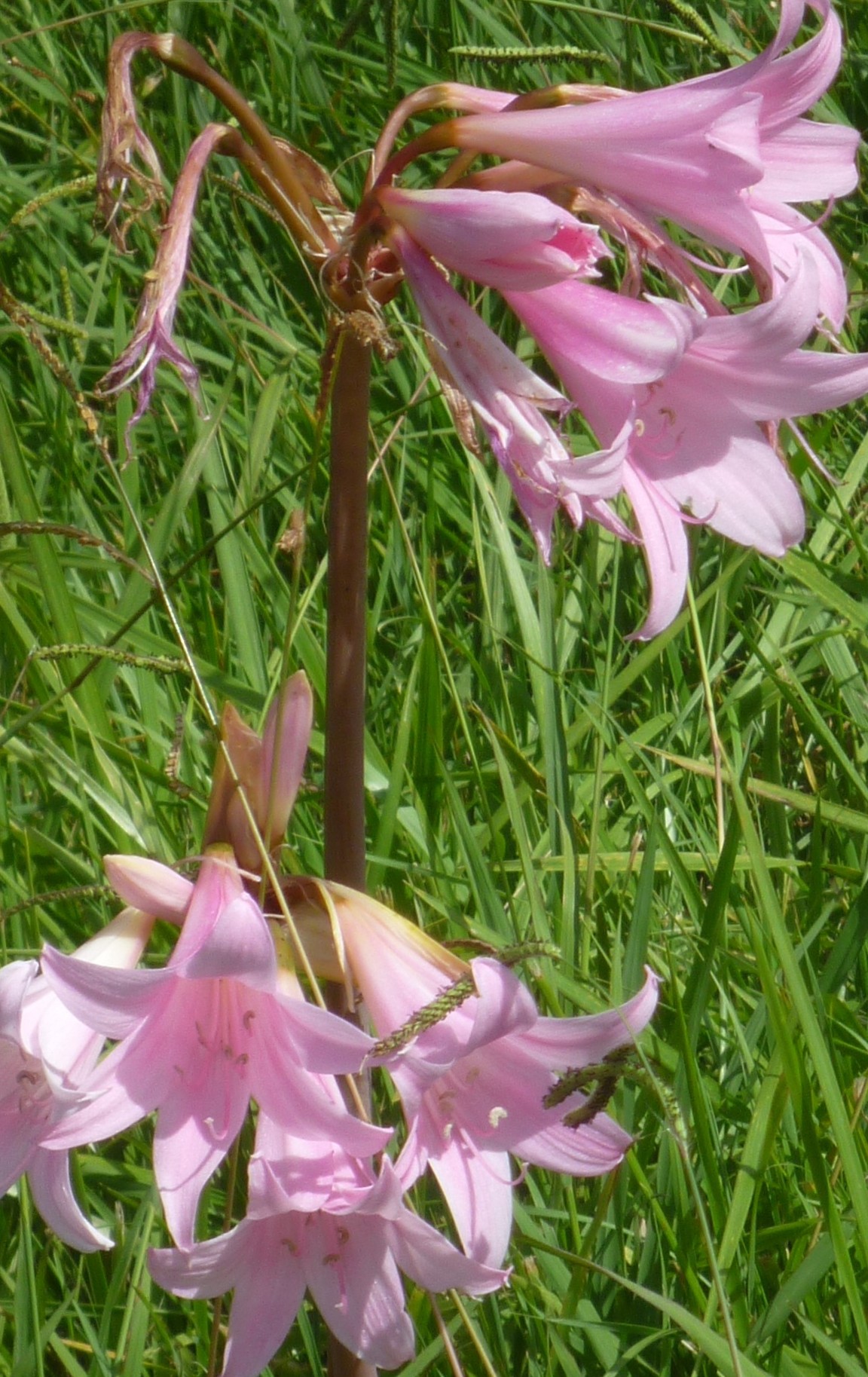
Naked Lady is hysteranthous: leaves and flowers are separated seasonally rather than displayed together in the usual way. Strap-shaped leaves emerge during the cool wet growing period, perform photosynthesis, and then die back. After a dormant interval, one or more leafless flowering scapes emerge from apparently bare ground.
The flowers are therefore carried on a “naked” stalk, which explains the principal common name. This growth cycle can obscure exposure history because an owner seeing bare soil in summer may not recognize that a large persistent bulb is present below. Later, flowers may appear without leaves that would help connect them to the earlier vegetative growth.
Bulb Structure and Persistent Underground Exposure
The underground organ is a true bulb, not a corm, tuber, rhizome, or ordinary root. It consists of fleshy storage scales attached to a basal plate, with roots beneath and offsets developing around mature plants. Old clumps may contain many bulbs of different sizes in a relatively small area.
Removing flower stalks does not remove the poisoning source. Bulbs can remain viable and chemically active beneath the soil for years, and fragments or offsets may persist after incomplete excavation. Landscape renovation should therefore include immediate collection of every exposed bulb, basal plate, scale, offset, and root mass.
Leaves
The leaves are strap-shaped, smooth, and arranged in two ranks from the bulb. They generally appear during the cooler growing season and disappear before flowering. A leaf-only plant may be confused with Agapanthus, Clivia, daffodils, Hippeastrum, Crinum, Lycoris, or another bulbous monocot.
Leaves should remain inaccessible even though they present less compact plant mass than a bulb. Cats may chew leaf tips, rabbits may graze a clump, and dogs may pull leaves while digging. Grass clippings and garden trimmings containing leaves should not be fed to livestock or small herbivores.
Flowers, Scapes, Capsules, and Seeds
The solid flowering scape commonly bears a cluster of fragrant funnel-shaped flowers in shades of pink, although cultivated selections and hybrids may vary toward white, deeper rose, or patterned forms. Each flower has six tepals and prominent reproductive structures. The absence of foliage at bloom is one of the most useful field clues.
Pollinated flowers may develop capsules containing soft, fleshy, pale seeds rather than the hard black seeds familiar from many commercial Hippeastrum hybrids. Flower stalks, spent blossoms, capsules, and seeds should be discarded where animals cannot reach them. Cut-flower material remains plant exposure even after separation from the bulb.
Amaryllis paradisicola Is a Separate Species
Amaryllis paradisicola was described from a small number of populations in the Richtersveld. It has broader, tongue-shaped leaves with short spreading hairs, produces a larger ring of flowers, and differs in several floral characters from A. belladonna. Its restricted cliff habitat and limited horticultural availability make it far less likely to be involved in an ordinary pet exposure.
No equivalent chemical or veterinary evidence base should be assumed for A. paradisicola. Close relationship within one genus does not establish an identical alkaloid profile, concentration, plant-part ranking, or toxic dose. A page about Naked Lady should retain A. belladonna as the focal species while mentioning A. paradisicola only to prevent taxonomic confusion.
Naked Lady Versus Holiday Hippeastrum
Holiday “amaryllis” usually flowers indoors from a large partly exposed bulb and produces broad leaves and large showy flowers. The flowering scape of Hippeastrum is hollow, while the true Amaryllis belladonna scape is solid. Flower timing, seed type, geographic origin, and label history also help distinguish the genera.
Both should be regarded as poisonous. From an emergency perspective, uncertainty between true Amaryllis and Hippeastrum does not justify waiting for symptoms. From a scientific perspective, however, a Hippeastrum case cannot be cited as exact evidence for A. belladonna.
Naked Lady Versus Lycoris Resurrection Lilies
Lycoris squamigera and related Lycoris species are frequently called Resurrection Lily, Surprise Lily, Magic Lily, or Naked Lady. They also produce leafless flower stalks after their foliage has disappeared, creating genuine field confusion. Lycoris belongs to a separate Eurasian lineage within Amaryllidaceae.
Lycoris species also contain Amaryllidaceae alkaloids and should not be treated as safe. Identification still matters because the exact chemistry, seasonal timing, flower arrangement, geographic occurrence, and available evidence differ. Preserve the bulb, leaves, flowers, label, and original planting location whenever possible.
Naked Lady Versus Autumn Crocus
Colchicum autumnale and related colchicums may be called Naked Ladies because pink flowers emerge without visible foliage. They are not Amaryllidaceae and do not contain the same alkaloid mixture. Their colchicine-type toxins can cause severe gastrointestinal injury followed by marrow suppression, shock, organ failure, and death.
A leafless pink flower should never be identified from the common name alone. Colchicum flowers generally arise individually or in small groups directly from the ground rather than from the same robust umbel-like scape characteristic of A. belladonna. A substantial uncertain bulb or flower exposure requires emergency assessment under the more dangerous plausible identification.
Naked Lady Versus True Lilies and Daylilies
True Lilium plants generally grow from scaled bulbs and produce upright leafy stems bearing large six-tepaled flowers with prominent stamens and pollen. Daylilies in Hemerocallis grow from crowns with fibrous or thickened roots and carry flowers above persistent grasslike foliage. Their feline nephrotoxicity is distinct from Naked Lady alkaloid poisoning.
A mixed floral arrangement may contain several plants called lilies. Naked Lady flowers in a vase do not make accompanying true lilies safe, and vase water must be evaluated for every plant and additive present. Florist records, labels, pollen-bearing anthers, leaves, stems, and photographs should be preserved.
Naked Lady Is Not Deadly Nightshade
Deadly Nightshade is Atropa belladonna, a branching herb in Solanaceae with purple-brown bell-shaped flowers and dark berries. It contains atropine, hyoscyamine, and scopolamine-type tropane alkaloids that produce dry mucous membranes, dilated pupils, tachycardia, agitation, urinary retention, delirium, and neurologic abnormalities.
Naked Lady is a bulbous monocot with strap-shaped leaves and pink flowers on a leafless scape. It does not produce the classic anticholinergic syndrome merely because its species name is belladonna. A common-name or epithet match is not chemical evidence.
Where Dogs Encounter Naked Lady
Dog exposures commonly occur during digging, bulb planting, division of crowded clumps, landscape demolition, irrigation work, moving house, or disposal of old garden material. Freshly loosened soil, compost, bone meal, blood meal, and fertilizer may attract an animal before the bulb itself is visible. A dog may carry the bulb away and consume it in another location, complicating estimation of the missing amount.
Stored bulbs in sheds, garages, boxes, paper bags, mesh sacks, or open buckets create another route. Dormant bulbs may resemble onions or edible garden produce to an owner or pet sitter. Every unidentified stored bulb should remain secured until correctly labeled or discarded.
Where Cats Encounter Naked Lady
Cats may chew leaves, flowers, or cut arrangements and may investigate loose bulbs in indoor pots or storage areas. Sap and small fragments can be transferred to the paws or coat during play and swallowed during grooming. Cats may hide after vomiting, making continued nausea and reduced intake difficult to recognize.
Common-name uncertainty is especially important for cats because a mistaken true-lily identification can cost the early renal-protective treatment window. A cat should not remain at home while an owner attempts to distinguish several lilies from online photographs. Complete plant evidence should accompany prompt veterinary consultation.
Horses and Livestock
Naked Lady is primarily an ornamental rather than a normal pasture plant. Horses and livestock are most likely to receive it when gardeners, landscapers, cemetery workers, greenhouse staff, or property owners discard bulbs and leaves into a paddock, mix garden waste with forage, or leave uprooted clumps beside a fence.
Do not place ornamental bulb waste in hay, silage, bedding, compost accessible to livestock, or brush piles within an enclosure. Hungry or curious animals may consume plants they normally avoid. The entire exposed group should be checked when one animal develops salivation, feed refusal, diarrhea, colic-like discomfort, weakness, or neurologic change.
Rabbits, Guinea Pigs, Birds, Reptiles, and Other Exotics
Naked Lady should not be offered as forage, nesting material, chewing enrichment, cage decoration, perch material, or enclosure landscaping. Rabbits and guinea pigs may experience dangerous appetite interruption without vomiting, while birds can shred plant tissue and receive a substantial exposure relative to body size. Herbivorous reptiles may graze leaves or flowers placed in an enclosure.
Species-specific exact evidence is sparse, so dog recovery timelines and decontamination protocols should not be transferred mechanically. Exotic-animal patients require individualized restraint, thermal support, fluids, gastrointestinal care, analgesia, nutrition, and monitoring. Any plant material collected outdoors should be identified before it enters an enclosure.
Bulb Planting, Division, and Landscape Renovation
The highest-risk household periods are often brief human-created events rather than normal plant growth. Dividing a clump places dozens of bulbs and offsets on the ground, while landscape removal exposes basal plates, roots, fertilizer, irrigation pieces, landscape fabric, and wire. A dog may consume material during the few minutes before cleanup is complete.
Count and contain bulbs as they are lifted. Place every scale and offset directly into a closed animal-inaccessible container rather than an open wheelbarrow or compost pile. Inspect the excavation area again before allowing animals to return.
Cut Flowers, Bouquets, and Vase Water
Cut Naked Lady flowers remain plant material and should not be chewed. Fallen tepals, stamens, pollen, capsules, and pieces of scape can land on tables, floors, animal bedding, or water bowls. A cat or bird may access a flower that appeared safely elevated when the arrangement was first placed.
Vase water may contain sap, detached plant fragments, bacteria, floral preservatives, fertilizer residue, and toxins from other flowers. No exact dose of A. belladonna alkaloids in vase water has been established, so it should not be presented as equivalent to true-lily vase-water nephrotoxicity. The complete mixed arrangement must nevertheless be evaluated plant by plant.
Dried, Dormant, and Long-Abandoned Bulbs
Dormancy is a normal survival phase, not detoxification. A firm dormant bulb remains living tissue containing stored chemical constituents even when it has no roots, leaves, or flowers. Old dried outer tunics may surround fleshy inner scales that remain available to a chewing animal.
Abandoned beds can persist for decades and may be rediscovered only during excavation. Property owners should not assume that an unidentified bulb is harmless because no one planted it recently. Photograph and isolate unfamiliar bulbs before allowing pets into the disturbed area.
Diagnosis
Diagnosis depends on exposure history, botanical identification, amount and plant part missing, clinical progression, and exclusion of more dangerous look-alikes or co-exposures. No routine clinic test confirms that an animal swallowed A. belladonna or measures the total Amaryllidaceae alkaloid dose. Vomited bulb scales support exposure only when the source bulb is identified correctly.
Photographs should show the entire plant in its original location, bulb shape, basal plate, roots, offsets, leaves, scape cross-section when available, flower cluster, individual flower, capsule, and seed. Preserve nursery labels, receipts, storage packaging, fertilizer, pesticide, wax, glitter, and floral-preservative information. Keep clean reference material separate from vomited or contaminated specimens.
Veterinary Evaluation
Evaluation may include hydration, pulse quality, blood pressure, heart rate and rhythm, body temperature, respiratory status, neurologic examination, abdominal palpation, blood glucose, electrolytes, acid-base balance, kidney and liver measurements, and urinalysis. Testing is directed at the patient’s condition rather than at a presumption that Naked Lady routinely causes kidney or liver failure.
Abdominal imaging may be appropriate when a large bulb piece, packaging, wire, stone, pot fragment, or other foreign material may remain. Chest imaging and oxygen assessment may be needed after aspiration. ECG monitoring is reasonable when weakness, collapse, electrolyte disturbance, or an abnormal rhythm is present.
Differential Diagnosis
Botanical differentials include Hippeastrum, Lycoris, Colchicum, Narcissus, Crinum, Clivia, Nerine, Brunsvigia, true Lilium, Hemerocallis, and Atropa belladonna. Several contain Amaryllidaceae alkaloids, while others cause colchicine poisoning, feline renal failure, anticholinergic disease, or different gastrointestinal and neurologic syndromes.
Nonplant differentials include fertilizer, pesticide, mold, gastrointestinal foreign material, dietary indiscretion, pancreatitis, infection, medication, stimulant exposure, primary cardiac disease, electrolyte disturbance, hypoglycemia, and neurologic disease. Severe or atypical findings should expand the investigation rather than strengthen an unsupported exact-species claim.
Prognosis
The prognosis is generally good after a limited exposure that produces controllable gastrointestinal signs and is recognized promptly. Improvement should include decreasing nausea and vomiting, maintained hydration, return of appetite, comfortable abdomen, normal coordination, and ordinary behavior. A normal recovery should not include progressive weakness, respiratory distress, seizures, or continued inability to retain water.
The outlook becomes guarded when a substantial bulb mass was swallowed, vomiting or diarrhea is prolonged, aspiration develops, the animal is very small or medically fragile, severe neurologic or cardiovascular abnormalities occur, or another plant or chemical remains possible. Delayed treatment and incomplete identification increase uncertainty.
Prevention
Keep Naked Lady out of dog runs, cat enclosures, aviaries, tortoise areas, rabbit runs, paddocks, and locations used to collect forage. Physical exclusion is more dependable than bitter taste or owner supervision. Mark old bulb beds so future landscaping does not expose unknown plants unexpectedly.
Secure loose bulbs, offsets, cut flowers, seed capsules, trimmings, and storage packages. Clean planting and division areas before animals return, and place waste directly into closed disposal. Do not bring any plant sold simply as a “lily” into a cat-accessible household until its scientific identity has been established.
Immediate Response
- Stop further exposure: Move the animal away from the plant, exposed bulbs, leaves, flowers, seeds, roots, cuttings, storage area, compost, and disturbed soil.
- Preserve complete plant evidence: Save the bulb with basal plate and roots, loose scales, offsets, leaves, scape, flowers, capsules, seeds, labels, photographs, and representative fragments recovered from vomit or stool.
- Estimate the maximum amount: Determine how much bulb, leaf, flower, stalk, or seed material could be missing and whether the animal swallowed or merely mouthed it.
- Record the timeline: Note when access occurred and when salivation, vomiting, diarrhea, abdominal pain, weakness, wobbling, tremors, or breathing changes began.
- Check for co-exposures: Identify fertilizer, bone meal, pesticide, fungicide, wax, glitter, mold, potting mix, packaging, wire, plant ties, floral preservative, and other bulbs present.
- Contact a professional promptly: Seek veterinary or animal poison-control guidance after bulb ingestion, a substantial or unknown amount, persistent signs, a high-risk patient, or uncertain plant identification.
Uncertain Lily Identification in a Cat
- Treat uncertainty as urgent: An unidentified plant called Naked Lady, Belladonna Lily, Resurrection Lily, or Amaryllis must not be assumed to be correctly identified.
- Do not wait for kidney signs: True Lilium and Hemerocallis exposures require early treatment before renal failure develops.
- Preserve the entire arrangement: Save flowers, pollen-bearing anthers, leaves, stems, bulbs, vase water, wrapping, florist labels, receipts, and photographs.
- Report every plant present: A mixed bouquet may contain Naked Lady and a true Lily at the same time.
- Call immediately: The favorable renal distinction applies only after Amaryllis belladonna is identified confidently.
Naked Lady alkaloid poisoning and true-lily feline nephrotoxicity require different monitoring and treatment priorities. An owner should not use immediate vomiting, flower color, or the word “amaryllis” as proof that the plant is not a true Lily. Positive botanical identification must protect the early treatment window rather than consume it.
Assess Breathing, Circulation, and Responsiveness
- Check breathing: Rapid, shallow, labored, gasping, weak, or open-mouth breathing requires emergency care.
- Check gum color: Pale, gray, or blue-tinged mucous membranes may indicate poor circulation or oxygenation.
- Check strength and coordination: Marked weakness, repeated falling, staggering, inability to stand, or collapse is not a mild gastrointestinal sign.
- Check responsiveness: Confusion, stupor, seizures, or reduced awareness requires immediate transportation.
- Check the abdomen: Severe pain, progressive enlargement, or repeated unproductive retching may indicate retained material or another emergency.
- Prioritize stabilization: Airway, breathing, circulation, and safe transport take priority over mouth cleaning or gastrointestinal decontamination.
Remove Loose Plant Material
- Wear gloves: Gloves reduce contact with sap, vomit, pesticide residue, mold, soil, and unidentified bulb material.
- Remove visible pieces carefully: Take loose bulb scales, leaves, flowers, roots, or packaging from the lips and front of the mouth only when handling is safe.
- Avoid blind sweeps: Do not reach deeply into the throat or push fibrous material toward the airway.
- Wipe accessible residue: Use a damp cloth on the lips and front of the mouth in a fully alert and cooperative animal.
- Rinse only when swallowing is normal: A gentle low-pressure rinse may be considered only in an alert animal breathing and swallowing normally.
- Stop if coughing or gagging occurs: Further oral cleaning is unsafe when airway protection is uncertain.
Home cleaning cannot remove absorbed alkaloids or retrieve a large piece already swallowed. Forceful mouth opening, high-pressure spraying, and prolonged restraint can cause aspiration or handler injury. Persistent drooling or swallowing difficulty requires examination for lodged fibrous material, chemical treatment, or another plant.
Do Not Induce Vomiting at Home
- Do not give hydrogen peroxide: Naked Lady can already cause repeated vomiting, and additional induced emesis can worsen gastric injury, dehydration, electrolyte loss, and aspiration risk.
- Never give peroxide to a cat: It can cause serious feline gastric and esophageal injury.
- Do not use salt, mustard, ipecac, dish soap, oil, fingers, or manual gagging: These methods can create another poisoning or physical injury.
- Never attempt emesis after signs begin: Vomiting, weakness, wobbling, tremors, collapse, seizures, abnormal breathing, sedation, or poor swallowing makes aspiration especially dangerous.
- Do not induce vomiting in horses, rabbits, guinea pigs, birds, reptiles, or nonvomiting species: Household emesis is physiologically impossible or unsafe in these animals.
- Leave case selection to professionals: A veterinarian may consider controlled emesis in a recently exposed, fully alert, asymptomatic dog only when timing, retained amount, cardiovascular stability, and airway protection make the benefit greater than the risk.
Activated Charcoal
- Do not give charcoal routinely at home: Its benefit for the complete Naked Lady alkaloid mixture has not been established sufficiently to justify owner-forced administration.
- Never force charcoal into a symptomatic animal: Vomiting, coughing, weakness, tremors, sedation, neurologic abnormalities, or poor swallowing creates serious aspiration risk.
- Do not use household charcoal: Barbecue briquettes, fireplace ash, burned food, and homemade carbon are not medical activated charcoal.
- Allow veterinary assessment: A veterinarian may consider properly prepared charcoal after a recent substantial exposure when the patient is stable and the airway can be protected.
- Do not repeat doses yourself: Repeated charcoal can worsen dehydration, electrolyte abnormalities, constipation, and gastrointestinal dysfunction.
Do Not Give Household Remedies or Owner-Selected Medication
- Do not give milk, yogurt, cheese, bread, or oil: These do not neutralize lycorine or the broader alkaloid mixture and may worsen vomiting or aspiration.
- Do not give antacids or sucralfate automatically: Their need depends on examination findings, vomiting control, and safe swallowing.
- Do not give antidiarrheals: Loperamide, bismuth products, kaolin mixtures, and similar medications should not be owner-selected.
- Do not give antihistamines or steroids automatically: The principal syndrome is not a routine allergic reaction, and sedation can complicate monitoring.
- Do not give human pain medication: Ibuprofen, naproxen, aspirin, acetaminophen, and similar products may cause an additional poisoning.
- Do not give leftover veterinary drugs: Antiemetics, sedatives, anticonvulsants, heart drugs, antibiotics, and gastrointestinal medications must be selected for the current patient.
Food and Water
- Do not force food: A nauseated, vomiting, weak, painful, or poorly swallowing animal may choke or aspirate.
- Do not syringe or pour water: Forced fluids can enter the lungs.
- Prevent rapid drinking during active vomiting: Gulping a large volume may trigger another episode or aspiration.
- Follow veterinary feeding instructions: Food should be reintroduced according to vomiting control, hydration, abdominal findings, species, and underlying disease.
- Do not use human electrolyte drinks: They may contain excessive sugar or sodium, caffeine, artificial sweeteners, or xylitol.
Vomiting, Diarrhea, and Dehydration
- Record every episode: Note frequency, volume, blood, bulb scales, flowers, leaves, roots, soil, packaging, or chemical granules.
- Save representative material: Place identifiable fragments in a closed disposable container for botanical and veterinary examination.
- Watch for dehydration: Tacky gums, sunken eyes, reduced urination, weak pulses, worsening lethargy, or inability to retain water requires care.
- Watch for blood: Significant bloody vomit, bloody diarrhea, or black stool is not expected from a minor exposure.
- Watch for aspiration: Coughing, fever, nasal discharge, rapid breathing, or renewed lethargy after vomiting may indicate lung injury.
- Watch for retained material: Continued vomiting, severe pain, abdominal enlargement, or reduced stool may justify imaging or endoscopic assessment.
Bulb Ingestion
- Treat a meaningful bulb ingestion as higher risk: The bulb can deliver a much larger plant mass than an exploratory flower or leaf bite.
- Count scales and offsets: Reconstruct the greatest amount missing rather than relying only on the fragment found beside the animal.
- Inspect the planting or storage area: Look for additional bulbs, fertilizer, bone meal, pesticide, fungicide, mold, wire, mesh, wax, glitter, and packaging.
- Do not assume chewing without swallowing is harmless: Small fragments may be missing even when most of the bulb remains.
- Seek prompt professional assessment: Delaying until repeated vomiting develops can reduce safe decontamination options.
Skin, Coat, and Eye Exposure
- Remove visible debris: Pick plant fragments from the coat without crushing them further.
- Wash contaminated fur or skin: Use lukewarm water and mild pet-safe shampoo and prevent grooming until the area is clean.
- Flush exposed eyes: Use sterile saline or clean lukewarm water in a sustained gentle flow.
- Do not use tools or human eye medication: Tweezers, cotton swabs, redness drops, anesthetic drops, and leftover prescriptions may worsen injury.
- Seek examination for persistent signs: Continuing redness, pain, swelling, squinting, cloudiness, discharge, or inability to open the eye requires veterinary care.
Tremors, Seizures, and Collapse
- Do not put anything in the mouth: Keep hands, food, liquid, medication, spoons, and cloth away during a seizure.
- Do not hold the tongue: Attempting to do so can cause severe injury.
- Protect without pinning: Clear hard objects, stairs, water, traffic, and sharp edges and use folded blankets as barriers when safe.
- Time the episode: Record its duration, recurrence, breathing, and whether awareness returns.
- Seek immediate emergency care: Tremors that prevent standing, any seizure, collapse, or reduced responsiveness requires stabilization and investigation for a severe or different exposure.
Safe Transportation
- Keep the animal calm: Excitement and forced exercise can worsen weakness, oxygen demand, and collapse risk.
- Prevent falls: Keep weak or uncoordinated animals away from stairs, pools, traffic, trailers, and hard obstacles.
- Carry rather than force walking: Use a carrier, stretcher, rigid board, blanket, sling, or other species-appropriate support.
- Keep the airway clear: Allow saliva and vomit to drain without compressing the neck or chest.
- Do not muzzle a vomiting or breathing-impaired animal: A muzzle may trap vomit or restrict breathing.
- Call ahead: Tell the clinic that an Amaryllidaceae bulb, possible true Lily, or uncertain leafless-flowering plant is involved.
Horses and Livestock
- Remove the source quietly: Prevent continued access without strenuous driving or crowding of weak animals.
- Do not induce vomiting: Horses cannot vomit, and household emetics are inappropriate in ruminants.
- Do not drench symptomatic animals: Salivating, coughing, weak, bloated, neurologic, or poorly swallowing livestock can aspirate oral fluids and medication.
- Check the entire group: Other animals may have consumed different amounts or another plant in the same waste pile.
- Preserve environmental samples: Save bulbs, leaves, flowers, feed, hay, water, fertilizer, pesticides, and neighboring plants before clearing the site.
- Obtain large-animal veterinary care: Colic, profuse diarrhea, marked weakness, tremors, collapse, or abnormal breathing requires species-appropriate evaluation.
Rabbits, Guinea Pigs, Birds, and Reptiles
- Do not attempt vomiting: Household emesis is unsafe or impossible in these species.
- Monitor food intake immediately: Nausea, pain, or weakness can interrupt essential feeding.
- Monitor feces and urine: Reduced fecal production, diarrhea, absent feces, altered urination, or continuing weight loss requires veterinary advice.
- Do not force-feed a compromised animal: Bloat, obstruction, severe weakness, regurgitation, or impaired swallowing must be considered first.
- Monitor breathing and posture: Open-mouth breathing, repeated mouth opening, inability to perch, collapse, or abnormal posture requires urgent care.
- Use a species-experienced veterinarian: Restraint, thermal support, fluids, analgesia, gastrointestinal treatment, and nutrition differ substantially among species.
Veterinary Examination
- Confirm botanical identity: Distinguish Amaryllis belladonna from Hippeastrum, Lycoris, Colchicum, true Lilies, daffodils, and Deadly Nightshade.
- Assess hydration and circulation: Repeated vomiting or diarrhea may require blood pressure, electrolytes, glucose, acid-base, and organ-function evaluation.
- Assess respiratory status: Oxygenation, breathing effort, lung sounds, swallowing, and aspiration risk require monitoring.
- Evaluate the abdomen: Imaging may be appropriate when a large bulb fragment, wire, mesh, plastic, stone, or other foreign material was swallowed.
- Monitor rhythm when indicated: ECG evaluation is appropriate for collapse, abnormal pulse, major electrolyte disturbance, or suspected dysrhythmia.
- Expand the differential for atypical signs: Severe anticholinergic, colchicine-like, nephrotoxic, cardiac-glycoside, or stimulant findings require investigation for another plant or toxin.
Veterinary Treatment
Professional gastrointestinal decontamination is selected according to time since ingestion, plant part, amount, spontaneous vomiting, cardiovascular stability, neurologic condition, and airway protection. Controlled emesis may be considered in an early, asymptomatic, neurologically normal dog, while gastric lavage requires anesthesia and endotracheal intubation. Endoscopy or surgery may be appropriate when a large retained bulb piece or foreign material is present.
Veterinarian-selected antiemetic treatment may reduce nausea, vomiting, fluid loss, and aspiration risk. Experimental lycorine research supports an important role for neurokinin-1 pathways in vomiting and 5-HT3 pathways in nausea, so maropitant, ondansetron, or another appropriate antiemetic may be selected according to the patient. Those studies do not eliminate the need to evaluate obstruction, retained material, or another toxin before suppressing clinically important vomiting.
Subcutaneous or intravenous fluids may be used when gastrointestinal losses and reduced intake cause clinically important dehydration. Electrolyte, glucose, and acid-base abnormalities should be corrected according to measured values. Fluid selection and rate must be individualized in patients with cardiac disease, reduced urine production, pulmonary edema, or other conditions limiting routine replacement.
Oxygen, suctioning, intubation, and assisted ventilation may be required for aspiration, severe weakness, altered awareness, or respiratory failure. Tremors and seizures may require veterinarian-selected muscle relaxants, anticonvulsants, or anesthetic support. Rhythm-specific cardiac treatment and vasopressor support may be needed when objective cardiovascular abnormalities persist after appropriate volume correction.
Monitoring and Recovery
- Monitor vomiting and diarrhea: Episodes should become less frequent and then stop.
- Monitor hydration: Gum moisture, circulation, urination, and the ability to retain water should remain adequate.
- Monitor eating: Appetite should return, with especially close attention to cats and small herbivores.
- Monitor coordination and awareness: Weakness, wobbling, tremors, confusion, or collapse should not develop or recur.
- Monitor breathing: Coughing, fever, nasal discharge, rapid respiration, or renewed lethargy may indicate delayed aspiration.
- Reconsider the diagnosis when recovery stalls: Persistent illness suggests retained plant material, another bulb, pesticide, foreign body, complication, or unrelated disease.
Recovery means that the animal breathes comfortably, remains hydrated, swallows safely, resumes species-appropriate eating, urinates and defecates normally, walks normally, and has no recurrent vomiting or neurologic signs. A temporary quiet period after vomiting is not sufficient evidence of recovery. Discharge and home monitoring should reflect sustained clinical stability.
Prevention and Prognosis
- Use physical exclusion: Keep Naked Lady outside pet enclosures, paddocks, aviaries, tortoise areas, and forage-collection sites.
- Secure loose bulbs: Store bulbs, offsets, and planting material in closed animal-inaccessible containers.
- Control landscaping waste: Place bulbs, roots, leaves, scapes, flowers, and seed capsules directly into secure disposal.
- Mark dormant beds: Prevent future excavation from exposing forgotten toxic bulbs without warning.
- Typical prognosis: Limited exposures recognized promptly and confined to manageable gastrointestinal signs generally have a good prognosis.
- Guarded circumstances: Major bulb ingestion, prolonged gastrointestinal loss, aspiration, seizures, cardiovascular abnormalities, respiratory compromise, foreign material, or incorrect identification creates a more serious outlook.
Frequently Asked Questions About Naked Lady and Animal Poisoning
My dog dug up a bulb from an old flower bed, but no leaves or flowers are present. How can I tell whether it is Naked Lady?
A dormant bulb alone can be difficult to identify because Amaryllis, Hippeastrum, Lycoris, daffodils, Crinum, Brunsvigia, and other ornamentals may appear similar after excavation. Preserve the complete bulb with its basal plate, roots, offsets, outer tunics, planting location, and any old labels, and photograph neighboring plants and the entire bed. Do not cut the only specimen apart before an identifier examines it, because internal structure and attachment of the scales may be useful. Treat the unknown bulb as poisonous while botanical identification proceeds.
Why is a chewed bulb more concerning than a bite from one flower?
The bulb is a compact storage organ containing far more plant tissue than an exploratory flower bite. A dog can remove and swallow several fleshy scales in a short period, while the bitter or nauseating effects may not stop ingestion immediately. The bulb may also carry fertilizer, pesticide, fungicide, mold, wax, soil, mesh, wire, or packaging. Greater practical dose and more possible co-exposures make bulb ingestion a higher-priority assessment even though no universal toxic fraction has been established.
The bulb is mostly intact, but it has tooth marks. How should I estimate the exposure?
Do not estimate solely from whether the bulb still looks whole. Compare it with intact bulbs from the same planting, inspect for missing outer and inner scales, collect fragments from the ground, and check the animal’s mouth, vomit, bedding, and travel path. A dog may tear off thin pieces that are difficult to notice or carry part of the bulb elsewhere. Report the greatest plausible missing amount rather than the smallest amount you can prove was swallowed.
Could a waxed holiday “amaryllis” bulb actually be Naked Lady?
Most waxed and boxed winter-flowering amaryllis bulbs are Hippeastrum hybrids rather than Amaryllis belladonna. The wax, decorative coating, glitter, adhesive, metal stand, and packaging may create additional hazards that are absent from an outdoor Naked Lady bulb. Both genera contain Amaryllidaceae alkaloids, so uncertainty between them does not make the exposure safe. Preserve the product label, packaging, remaining bulb, wax fragments, and seller information for the veterinary assessment.
My cat contacted a flower called Naked Lady. How do I avoid missing a true-lily emergency?
Assume that the common name may be wrong until the complete plant is examined. Preserve the flower, pollen-bearing anthers, leaves, stem or scape, bulb if available, vase water, wrapping, label, florist information, and photographs of the original plant. Do not wait for kidney abnormalities or use immediate mouth irritation as the deciding test, because true Lilies may not cause the same early syndrome. Veterinary care should proceed under the more dangerous Lilium or Hemerocallis possibility until those genera are excluded.
Is a Resurrection Lily automatically the same species as Naked Lady?
No. Resurrection Lily commonly refers to Lycoris squamigera, while Naked Lady most commonly refers to Amaryllis belladonna. Both can send up flowers after their leaves have disappeared, and both belong to Amaryllidaceae, but they are botanically and chemically distinct lineages. Other regions may apply the same names to additional bulbs, including colchicums. A common-name match should therefore begin identification rather than finish it.
Does vomiting soon after bulb ingestion mean that most of the toxin has been removed?
Vomiting may remove some plant material, but it does not reveal how much alkaloid was absorbed or whether a large scale remains in the stomach. Fibrous bulb tissue may be fragmented, swallowed again, or absent from the visible vomit even when retained material remains. Repeated vomiting also creates dehydration, electrolyte, and aspiration risks that can become more important than the original dose. Professional advice should be based on the original maximum exposure and current patient, not on the apparent amount recovered.
Can a dormant, dry, or decades-old Naked Lady bulb still be poisonous?
Yes. Dormancy is a normal part of the plant’s life cycle and does not mean that the fleshy storage scales have lost their alkaloids. Old colonies may persist underground for decades, and dried outer tunics can surround living inner tissue. Storage, drought, frost, or absence of visible leaves does not provide a validated detoxification process. Any unidentified old bulb uncovered during excavation should remain inaccessible to animals.
Could bone meal or fertilizer in the flower bed be more important than the Naked Lady bulb?
Yes, and the exposures may occur together. Bone meal and blood meal can attract dogs to freshly disturbed soil and may cause gastrointestinal illness or contribute to a dense obstructive mass, while fertilizers and pesticides have product-specific toxic effects. The animal may also swallow landscape fabric, wire, plastic labels, stones, or treated mulch while digging. Preserve every product label and describe the entire excavation site rather than reporting only the plant.
Are cut Naked Lady flowers and their vase water as dangerous as a bulb?
Cut flowers generally contain less total plant mass than a bulb, but they should not be chewed and no safe amount has been established. Vase water may contain sap, pollen, fragments, floral preservatives, bacteria, fertilizer residue, and compounds from every other plant in the arrangement. It should not be described automatically as having the same feline nephrotoxicity as true-lily vase water, because that mechanism belongs to Lilium and Hemerocallis. The complete bouquet still requires plant-by-plant evaluation.
Why might severe agitation, very dilated pupils, or urinary retention indicate the wrong “belladonna” plant?
Those findings are more consistent with an anticholinergic syndrome from Deadly Nightshade, Atropa belladonna, than with ordinary Amaryllis belladonna ingestion. The two species share the epithet belladonna but belong to different families and contain different alkaloids. Deadly Nightshade is a branching herb with dark berries, while Naked Lady is a bulbous plant with strap-shaped leaves and leafless pink-flowering scapes. Plant re-identification is essential when the clinical pattern does not fit gastrointestinal Amaryllidaceae alkaloid exposure.
What evidence should I preserve when a landscaping crew has already removed the plants?
Collect bulbs, scales, basal plates, roots, leaves, flower stalks, flowers, seed capsules, and clean reference material from any remaining clump. Save photographs taken before removal, landscape plans, invoices, nursery labels, disposal piles, and the crew’s description of where each plant grew. Keep material from different plants in separately labeled containers and do not mix clean specimens with vomited fragments. The goal is to preserve the connection between each sample and its original location.
How should a veterinarian interpret the purified-lycorine dog dose study in a whole-bulb case?
The study demonstrates that lycorine can produce dose-dependent nausea and emesis in dogs and supplies useful toxicokinetic and mechanistic evidence. It does not establish how many grams or scales of A. belladonna will produce the same effect because the experimental compound was purified, measured, and administered by controlled routes. Natural bulb material contains numerous alkaloids in an unknown matrix, and the amount released and absorbed varies with chewing, digestion, vomiting, and plant chemistry. The experimental values should remain research data rather than a bedside conversion formula.
How do the NK1 and 5-HT3 findings inform antiemetic selection?
The controlled Beagle study found that maropitant completely blocked lycorine-induced vomiting, supporting a predominant NK1-mediated emetic pathway. Ondansetron reduced vomiting, delayed its onset, and also reduced measured nausea, supporting an important 5-HT3 contribution to nausea and part of the vomiting response. This provides a rational basis for selecting one or both pathways according to the patient. It does not justify suppressing vomiting without first considering retained bulb material, obstruction, decontamination timing, aspiration, and another toxin.
When does decontamination become more dangerous than useful?
Risk rises sharply after spontaneous vomiting begins or when the patient is weak, ataxic, tremoring, sedated, collapsed, coughing, breathing abnormally, or unable to swallow safely. In those circumstances, induced vomiting or oral charcoal can convert a gastrointestinal poisoning into severe aspiration lung injury. Stabilization and airway protection take priority. Endoscopic retrieval or another controlled hospital procedure may be preferable when a large bulb piece remains physically retained.
Which monitoring findings support safe discharge after a substantial bulb ingestion?
Vomiting and diarrhea should be controlled, hydration and electrolyte status should be stable, and the patient should retain water and appropriate food without recurrent nausea. Blood pressure, pulse, rhythm, respiratory status, coordination, mentation, urine production, and abdominal findings should remain satisfactory without rescue treatment. The veterinarian should also be comfortable that a large retained bulb fragment, aspiration, or foreign material is not being missed. One quiet interval after an antiemetic is not equivalent to complete recovery.
Which alkaloids have been demonstrated directly in Amaryllis belladonna bulbs?
Exact-species studies have identified a chemically broad mixture rather than one toxin. Reported compounds include lycorine, amarbellisine, pancracine, vittatine, 11-hydroxyvittatine, hippeastrine, 1-O-acetylcaranine, caranine, trisphaeridine, buphanisine, anhydrolycorine, powelline, buphanidrine, buphanamine, hippadine, ambelline, undulatine, crinamidine, distichamine, and numerous acetylated or hydroxylated congeners. The 2017 study identified 26 alkaloids in its analyzed material and reported 14 from the species for the first time. Detection establishes chemical presence, not equal contribution to veterinary poisoning.
Why should 1-O-acetylcaranine not replace lycorine as the declared “main toxin” simply because it was most abundant in one study?
Abundance in one bulb extract does not automatically establish clinical potency, absorption, metabolism, target-organ effect, or consistency across plant populations. Lycorine has direct whole-animal evidence for producing nausea and vomiting, while 1-O-acetylcaranine has not undergone an equivalent veterinary dose-response program. The most accurate formulation separates analytical abundance from demonstrated clinical action. Additional samples and pharmacological studies would be required before one compound could be declared the dominant toxin of every Naked Lady exposure.
What do the reported growth-stage differences mean for toxicological interpretation?
They demonstrate that alkaloid content is biologically dynamic rather than permanently fixed. Vegetative growth, flowering, dormancy, bulb storage, geography, soil, water, temperature, genetics, and propagation may alter the relative and total amounts measured in a sample. The available research does not define which stage is most hazardous to every animal species. A result from one location and collection date should therefore not be converted into a universal seasonal safety claim.
Can Amaryllis paradisicola toxicology be inferred directly from Amaryllis belladonna?
No. The two plants share a genus, but A. paradisicola is a separate species with different morphology, habitat, distribution, and evolutionary history. Comparable alkaloid profiling, plant-part quantification, veterinary cases, and controlled toxicology have not established an identical risk profile. A precautionary assumption that an unidentified Amaryllis bulb may be poisonous is reasonable, but exact A. belladonna compounds and experimental findings should not be relabeled as direct A. paradisicola evidence.
What research is still needed to define a reliable Naked Lady toxic dose and plant-part ranking?
Authenticated plants would need to be sampled across native and naturalized populations, seasons, growth stages, cultivars, and storage conditions. Bulbs, individual scales, basal plates, roots, leaves, scapes, flowers, capsules, and seeds should be quantified separately with validated analytical methods rather than pooled into one extract. Toxicokinetic and clinically relevant gastrointestinal studies would then need to connect measured compounds with absorbed dose and reproducible effects. Prospective veterinary cases should document confirmed identity, amount, plant part, co-exposures, clinical course, laboratory findings, treatment, and outcome before a dependable species-specific threshold can be proposed.