Spotted Dumb Cane Raphide Injury, Proteolytic Irritation, Mouth and Throat Swelling, Dysphagia, and Rare Airway Obstruction
Is Spotted Dumb Cane Poisonous to Dogs, Cats, Horses, and Livestock?
Yes—Spotted Dumb Cane, Dieffenbachia seguine (Jacq.) Schott, including plants historically sold or listed as Dieffenbachia amoena, Dieffenbachia maculata, or Dieffenbachia picta, is poisonous to dogs and cats and should be treated as dangerous to horses, livestock, rabbits, guinea pigs, birds, reptiles, and other animals that chew it. Damaged leaves, petioles, thick cane-like stems, roots, cuttings, sap, inflorescences, flowers, fruits, and propagation pieces can release insoluble calcium oxalate raphides and irritating proteolytic activity. The result is usually immediate mouth pain, intense drooling, foaming, pawing at the mouth, face rubbing, gagging, vomiting in species capable of vomiting, tongue swelling, difficulty swallowing, and temporary voice changes.
Most exposures remain localized and recover well with careful supportive care, but Spotted Dumb Cane deserves more respect than many mild houseplants because thick stem chewing can squeeze a large amount of sap into the back of the mouth. Rare severe pharyngeal, glottic, or laryngeal edema can narrow or obstruct the airway, and fatal asphyxiation has been documented after intense dumb-cane stem chewing. This is not soluble oxalate kidney poisoning, and ordinary exposure is not expected to cause primary kidney failure, liver failure, direct heart poisoning, coma, or seizures unless secondary complications such as airway obstruction, aspiration, dehydration, hypoxia, another plant, or chemical contamination are involved.
About this guide: This page provides general pet-poisoning information and cannot diagnose or treat an individual animal. For any suspected exposure, contact a veterinarian or animal poison-control service immediately. Do not induce vomiting, give medication, or attempt home decontamination unless directed by a veterinary professional.
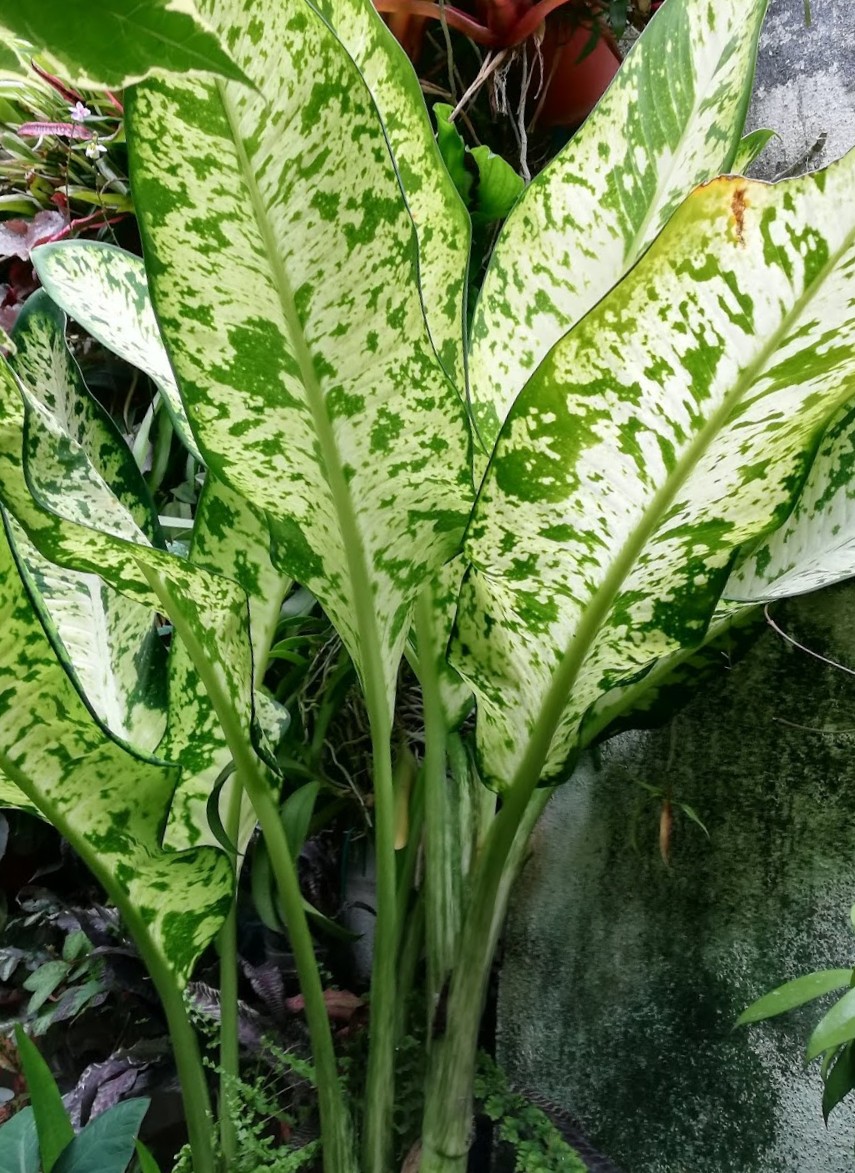
Spotted Dumb Cane
Dieffenbachia seguine (Jacq.) Schott
Historical synonyms include:
- Arum seguine Jacq.
- Caladium seguine (Jacq.) Vent.
- Caladium maculatum G.Lodd.
- Dieffenbachia amoena W.Bull
- Dieffenbachia maculata (G.Lodd.) Sweet
- Dieffenbachia picta Schott
- Dieffenbachia gigantea Verschaff. ex Regel
- Dieffenbachia barraquiniana Verschaff. & Lem.
- Dieffenbachia candida H.J.Veitch
- Dieffenbachia imperialis W.Bull
- Dieffenbachia jenmanii Veitch ex Engl.
- Seguinum maculatum (G.Lodd.) Raf.
Historical variety, form, and subvariety names include:
- Dieffenbachia seguine var. seguine
- Dieffenbachia seguine var. maculata (G.Lodd.) E.J.Lowe & W.Howard
- Dieffenbachia seguine f. barraquiniana (Verschaff. & Lem.) Engl.
- Dieffenbachia seguine f. picta (Schott) G.S.Bunting
- Dieffenbachia picta var. angustior Engl.
- Dieffenbachia picta var. bowmannii Engl.
- Dieffenbachia picta subvar. memoria Engl.
Important cultivar and horticultural names include:
- Dieffenbachia seguine ‘Tropic Snow’
- Dieffenbachia seguine ‘Exotica’
- Dieffenbachia seguine ‘Arvida’
- Dieffenbachia seguine ‘Perfection’
- Dieffenbachia “Exotica Perfection” — unstable horticultural or trade designation, not an accepted botanical synonym
Important non-synonym confusion names:
- Aglaonema spp. — Chinese Evergreens; related-looking Araceae houseplants with insoluble calcium oxalate injury but different identification features
- Epipremnum aureum (Linden & André) G.S.Bunting — Pothos; separate raphide-containing aroid
- Philodendron spp. — separate raphide-containing aroids
- Spathiphyllum spp. — Peace Lilies; separate raphide-containing aroids, not true lilies
- Dracaena trifasciata (Prain) Mabb. — Snake Plant or Mother-in-Law’s Tongue; unrelated Asparagaceae plant with steroidal saponins, not dumb cane
- Solanum spp. and true lilies in Lilium and Hemerocallis — unrelated plants sometimes confused through common names, flower names, or household plant placement
Araceae
Commonly called the Arum or Aroid Family.
Spotted Dumb Cane; Spotted Dumbcane; Dumb Cane; Dumbcane; Giant Dumb Cane; Giant Dumbcane; Charming Dieffenbachia; Variable Dieffenbachia; Gold Dieffenbachia; Leopard Lily; Tuftroot; Dieffenbachia; Tropic Snow; Exotica; Exotica Perfection.
Scientific and botanical search names include Dieffenbachia seguine (Jacq.) Schott, Dieffenbachia amoena W.Bull, Dieffenbachia maculata (G.Lodd.) Sweet, Dieffenbachia picta Schott, Caladium maculatum G.Lodd., Caladium seguine (Jacq.) Vent., Arum seguine Jacq., and Seguinum maculatum (G.Lodd.) Raf.
‘Tropic Snow’ is a large, heavily variegated cultivar historically selected and patented under the name Dieffenbachia amoena. ‘Exotica,’ also sold as ‘Arvida,’ and ‘Perfection’ are cultivated forms historically associated with Dieffenbachia maculata. Those former species names are now included within Dieffenbachia seguine. “Exotica Perfection” or Dieffenbachia “Exotica Perfection” is an unresolved horticultural or trade designation rather than an accepted botanical synonym. “Mother-in-Law’s Tongue” is occasionally applied to dumb cane but more commonly identifies Snake Plant, Dracaena trifasciata, which has different toxins and should not be identified by that ambiguous common name alone.
Mechanical and Chemical Injury Work Together
The toxic effect of Spotted Dumb Cane comes from a combined mechanical and chemical injury rather than one simple absorbed poison. The most visible components are water-insoluble calcium oxalate crystals, especially long needle-shaped raphides stored in specialized crystal cells called idioblasts. When an animal bites through a leaf, petiole, cane-like stem, root, inflorescence, or other tissue, jaw pressure tears or compresses these cells and releases bundles of mineral needles into the sap, saliva, and exposed tissues of the lips, tongue, gums, palate, pharynx, and esophagus.
The raphides produce immediate puncture, abrasion, and foreign-body irritation. Plant sap and enzymatic activity can then intensify the injury through the microscopic channels created by the crystals. This is why the clinical syndrome is rapid, painful, and local: intense drooling, mouth pain, gagging, dysphagia, tongue swelling, and sometimes upper-airway edema rather than a slow systemic poisoning that begins days later.
Raphides, Idioblasts, Biforines, Druses, and Prisms
Dieffenbachia seguine has been studied anatomically in unusual detail. Its tissues contain raphides, clustered druses, and prismatic calcium oxalate crystals distributed through both vegetative and reproductive organs. Raphide bundles differ by approximately an order of magnitude in size and range from tightly organized packets to looser crystal groups. Biforines and biforine-like idioblasts capable of crystal expulsion occur in nearly every examined organ and are particularly abundant in leaves, spathes, and anthers.
A biforine is an elongated crystal-bearing cell with structurally distinct ends and internal mucilage surrounding the raphide bundle. When tissue is damaged and water or saliva reaches the cell, osmotic pressure and mechanical compression can drive crystals through an opening. Earlier microscopic observations described raphides leaving damaged idioblasts in rapid succession. The result is not one puncture but exposure to numerous microscopic needles, some of which have grooves, ridges, or barblike features that can increase tissue penetration and retention.
Raphide Size, Grooves, and Barbs
Older microscopic work on cultivated material then called Dieffenbachia maculata ‘Rudolph Roehrs’ identified more than one raphide type. Larger crystals occurred in distinctive spindle-shaped idioblasts, while smaller raphides measuring approximately 25 micrometers long and 0.4 micrometers wide were found in cells resembling ordinary surrounding tissue. The smaller crystals had grooves and barblike projections.
Because D. maculata is now included within the modern D. seguine concept, this research remains relevant to Spotted Dumb Cane while also demonstrating that not every crystal-bearing cell looks or behaves identically. Grooves may carry sap or dissolved constituents into punctured tissue, while barblike surfaces can resist easy removal. Thousands of crystals released from multiple cells can expose a large mucosal surface even when an animal bites only a small amount of plant.
Proteolytic Activity and “Dumbcain”
The raphides are only part of the toxic complex. Chemical investigations of plants identified as D. seguine, D. amoena, and D. picta reported L-asparagine and proteolytic activity. An older protein fraction was called “dumbcain,” and some experiments found that digestion with trypsin reduced or eliminated the inflammatory activity of plant extracts. Other investigators recovered active nitrogen-free fractions whose effects were not eliminated by protease treatment.
The evidence therefore supports proteolytic enzymes as contributors without proving that one protein alone causes every dumb-cane reaction. Proteases can damage proteins in exposed tissue and intensify the effect of raphide punctures. Microscopic channels created by crystals may allow enzymes and other plant constituents to penetrate beneath the surface, while damaged animal tissue releases kinins, histamine, prostaglandins, and additional inflammatory mediators. Histamine is part of the animal’s response, but the injury is not simply an allergy and cannot be fully reversed by an antihistamine.
Calcium Oxalate Concentration Varies
The amount of calcium oxalate can differ substantially among genetically related plants. In an older study of seedlings from a Dieffenbachia picta ‘Exotica’ hybrid, dry-leaf calcium oxalate concentrations ranged from approximately 31.6 to 66.0 milligrams per gram, while the parent plant contained approximately 55.2 milligrams per gram. Visible leaf color and variegation did not reliably predict the concentration.
A pale, heavily variegated cultivar therefore should not be assumed safer than a darker green plant. These measurements are botanical concentrations, not pet-dose thresholds. They do not tell an owner how many square inches of leaf a dog or cat can chew safely because sap release, crystal-cell density, chewing force, tissue type, animal size, and individual susceptibility all affect the clinical exposure.
Insoluble Raphides Are Not Soluble Oxalate Poisoning
Insoluble raphides must be distinguished from soluble oxalate poisoning. Soluble oxalate salts can enter the circulation, bind calcium, contribute to hypocalcemia, and form crystals in renal tubules. Dumb-cane raphides act primarily at the point of contact and are poorly absorbed as intact mineral needles. The typical injury is painful local mucosal trauma, not systemic oxalosis.
Primary kidney failure, permanent liver damage, and systemic oxalate poisoning are not expected effects of an ordinary Dieffenbachia seguine exposure. Kidney values may change secondarily if an animal becomes severely dehydrated, hypoxic, shocked, or aspirates plant material, but that is a complication of the clinical course rather than the defining toxin mechanism.
Poisonous Parts
No dependable study establishes a harmless plant part. Leaves and thick stems cause most household exposures because they are accessible and release abundant sap when crushed, but roots, petioles, inflorescences, flowers, fruits, seeds, propagation cuttings, and broken cane sections should also be treated as toxic. Reproductive tissues contain crystal idioblasts and should not be considered safe merely because they are less commonly present on indoor plants.
A thick cane can create a more substantial exposure than one brief bite of a leaf because vigorous chewing squeezes a larger volume of sap directly into the mouth and toward the throat. The fatal canine report involved intense chewing of a thick stem rather than casual contact with an intact leaf. Wilted, cut, or dried material should not be assumed harmless. Calcium oxalate crystals are mineral structures and can persist after plant tissue loses water, and freshly cut cane sections may remain wet with irritating sap for an extended period.
Skin and Eye Exposure
Sap can cause skin redness, itching, pain, or contact dermatitis, especially when it reaches broken or sensitive skin. An animal may transfer sap from its mouth or paws to the face and eyes, or a person may transfer sap from a cutting tool to the animal’s coat, bedding, or feeding area. Skin exposure is usually less dangerous than oral or airway exposure, but grooming can turn contaminated fur into an oral exposure.
Eye exposure is a separate concern. Sap and raphides can cause tearing, blinking, squinting, conjunctival redness, light sensitivity, corneal epithelial defects, and crystalline keratopathy. Persistent pain, cloudiness, reluctance to open the eye, or continued squinting after rinsing requires veterinary examination because mineral crystals or corneal abrasion may remain after the plant is gone.
Immediate Oral Pain and Early Signs
Clinical signs usually begin while the animal is chewing Spotted Dumb Cane or within a few minutes afterward. Dogs and cats may abruptly drop the plant, jerk or shake the head, paw violently at the mouth, rub the muzzle, lick repeatedly, drool in long strings, foam at the lips, gag, retch, or run away from the source. The animal may cry, hide, resist examination of the mouth, or approach food and water and then withdraw because moving the tongue and swallowing are painful.
The lips, gums, tongue, palate, oral lining, and back of the throat may become intensely red, tender, blistered, eroded, or swollen. Observable veterinary findings include hypersalivation, tongue edema, oral ulceration, repeated swallowing attempts, difficulty swallowing, and inability to handle normal saliva. Human patients describe burning, stinging, numbness, and a sensation resembling embedded needles, but those subjective sensations must be inferred in animals from behavior and physical examination.
Voice Changes, Dysphagia, and Throat Involvement
The name dumb cane refers to temporary impairment of speech after sap exposure. In animals, corresponding signs may include a weak or hoarse bark, altered meow, abnormal vocalization, coughing, gagging, or reluctance to open the mouth. Voice changes suggest that inflammation has extended toward the pharynx or larynx.
Difficulty swallowing is one of the most important signs to watch. Repeated swallowing attempts, saliva pooling, water falling from the lips, coughing after drinking, nasal discharge after attempted swallowing, or reluctance to eat may indicate painful oral injury, pharyngeal swelling, esophageal irritation, choke, or aspiration risk. These signs become substantially more concerning when accompanied by neck extension, stridor, open-mouth breathing, rapid shallow respirations, blue or gray gums, or progressive inability to swallow saliva.
Vomiting, Diarrhea, and Secondary Gastrointestinal Signs
Vomiting may occur in dogs, cats, pigs, and other species capable of vomiting after plant material and sap irritate the pharynx, esophagus, and stomach. Diarrhea, abdominal discomfort, depression, and temporary food refusal are possible when material is swallowed. Severe vomiting can produce dehydration and electrolyte disturbance, while regurgitation or forced oral treatment can lead to aspiration.
Those complications are secondary to local injury, nausea, and fluid loss rather than evidence that the plant directly destroys the liver or kidneys. Blood in vomit, repeated retching, persistent vomiting, inability to keep water down, or severe abdominal pain requires veterinary care and reassessment for esophageal injury, aspiration, another plant, chemical contamination, foreign material, or unrelated gastrointestinal disease.
Rare but Dangerous Airway Edema
Dangerous upper-airway edema is uncommon but real. Swelling of the tongue, glottis, pharynx, or larynx can narrow or close the airway. Warning signs include noisy inspiration, worsening hoarseness, open-mouth breathing, pronounced neck extension, inability to swallow saliva, blue or gray mucous membranes, agitation, weakness, or collapse.
A documented fatal canine case involved intense chewing of a thick stem, severe erosive and ulcerative glossitis, acute dyspnea, and fatal asphyxiation from glottic edema within hours of the first signs. That case should not be used to imply that every leaf bite is fatal, but it does justify urgent airway-focused advice after vigorous cane chewing or progressive throat swelling.
Eye Signs
Eye exposure can produce immediate tearing, blinking, squinting, conjunctival redness, light sensitivity, and severe pain. Calcium oxalate crystals may lodge within the corneal epithelium or deeper corneal layers and create a crystalline keratopathy. The animal may rub the eye, hold it closed, avoid light, or resist examination.
Persistent squinting, cloudiness, inability to open the eye, discharge, swelling, or continuing pain after rinsing requires prompt ophthalmic examination. Eye injury may last longer than uncomplicated oral irritation, and leftover human eye drops, steroid drops, herbal rinses, essential oils, or old veterinary medication can worsen the situation if used without examination.
Dogs
Dogs commonly show rapid oral pain, drooling, pawing, face rubbing, gagging, foaming, and food refusal. Vomiting may follow when sap or plant material reaches the pharynx, esophagus, or stomach. Puppies may chew thick canes during play or teething and can receive a larger sap exposure than an adult dog that merely mouths one leaf edge.
Foaming at the mouth can appear dramatic because large amounts of saliva mix with air. Foaming alone does not prove a seizure or systemic poisoning. Breathing effort, swallowing ability, tongue and throat swelling, alertness, and progression of signs are more useful indicators of severity. A dog that intensely chewed a thick cane deserves particular caution even if it initially appears stable.
Cats
Cats may bite leaf edges, chew variegated foliage, dig in the pot, pull on a hanging leaf, or contact sap during pruning. Expected signs include drooling, pawing at the mouth, face rubbing, gagging, vomiting, food refusal, hiding, irritability, and reluctance to drink. Cats may also spread sap from paws to eyes during grooming.
A cat that cannot swallow saliva, breathes with the mouth open, has noisy breathing, keeps one eye closed, vomits repeatedly, or refuses food beyond the initial irritation needs veterinary attention. Persistent food refusal is especially important in cats because prolonged anorexia can cause secondary complications even after the mouth pain begins to improve.
Horses, Ponies, and Donkeys
Horses cannot vomit. A horse that chews dumb cane may show salivation, repeated chewing motions, mouth pain, feed refusal, coughing, neck extension, or difficulty swallowing. Feed or water coming from the nostrils raises concern for choke, pharyngeal dysfunction, or aspiration. A horse with airway noise, labored breathing, severe dysphagia, or signs of colic requires prompt large-animal evaluation.
Because horses are unlikely to encounter Spotted Dumb Cane in ordinary pasture, exposure usually involves tropical landscaping, greenhouse waste, stable-office plants, nursery debris, botanical displays, or discarded houseplant clippings. The entire debris pile should be inspected because other ornamentals may be present and may create different hazards.
Goats, Sheep, Cattle, Camelids, and Pigs
A published goat case involving material identified as Dieffenbachia amoena confirms that browsing livestock can be affected when ornamental plant material becomes accessible. Goats and pigs may chew fresh clippings, cane sections, or potted plant waste more readily than cattle or horses. Possible signs include salivation, tongue protrusion, mouth pain, feed refusal, gagging, coughing, diarrhea, depression, and difficulty swallowing.
Weak, gagging, coughing, choking, or dysphagic livestock must never be drenched. Forced water, milk, oil, charcoal, electrolyte mixtures, or medication can enter the respiratory tract when swallowing is impaired. Group exposure should prompt removal of every animal from the plant source and identification of all dumped ornamental material.
Rabbits, Guinea Pigs, Birds, and Other Small Pets
Rabbits, guinea pigs, rats, and several other small mammals cannot vomit and may instead show drooling, tooth grinding, facial rubbing, reduced appetite, reluctance to chew, or smaller and fewer fecal pellets. Prolonged food refusal can lead to gastrointestinal hypomotility or stasis, turning a local mouth injury into a more serious secondary illness.
Birds may shred leaves or canes with the beak and expose the tongue, oral lining, and choana repeatedly to sap and raphides. Beak wiping, repeated tongue movements, oral redness, regurgitation, food refusal, altered droppings, poor perching, or respiratory noise requires avian veterinary advice. Reptiles and tortoises should not be offered dumb-cane foliage or potted houseplants as enclosure greenery or browse.
Atypical or Severe Systemic Signs
Convulsions, coma, primary renal failure, primary liver failure, and direct cardiac poisoning are not expected manifestations of ordinary dumb-cane exposure. Seizures or loss of consciousness may occur secondarily if severe airway obstruction produces hypoxia, and kidney values may change after dehydration or shock. These severe findings require emergency treatment and investigation for airway failure, aspiration, chemical contamination, another plant, medication exposure, soluble oxalates, ethylene glycol, or another medical disorder.
Most limited exposures improve substantially within several hours, and uncomplicated cases often recover within approximately 12 to 24 hours. More extensive oral ulceration or esophageal injury may require several days of treatment, while severe eye exposure can remain symptomatic longer. Reports of symptoms continuing for weeks involve unusually substantial human mucosal or ocular exposures and should not be presented as the normal course of a pet biting one leaf.
Dieffenbachia amoena Is Now Included Within Dieffenbachia seguine
The plant historically called Dieffenbachia amoena is now included within the accepted species Dieffenbachia seguine. The former name remains important because ASPCA records, older veterinary articles, nursery labels, plant patents, and houseplant books still use it for the tall, large-leaved dumb canes commonly sold as Giant Dumb Cane or Spotted Dumb Cane.
The accepted species has accumulated a large synonymy because variegated plants from different regions and cultivated forms were repeatedly described as separate species, varieties, forms, and subvarieties. Important former names include D. amoena, D. maculata, and D. picta, all of which appear in toxicological research that remains relevant under the modern species concept.
Cultivar Names Are Not Universal Synonyms
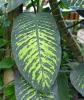
‘Tropic Snow’ is a large cultivar historically selected from material called Dieffenbachia amoena. It commonly develops a single stout cane and broad dark green leaves with extensive cream or pale green variegation along the midrib and lateral veins. ‘Exotica,’ also sold as ‘Arvida,’ was traditionally classified under Dieffenbachia maculata. Its leaves are heavily cream-variegated with green splashes and narrow green margins. ‘Perfection’ is another compact, heavily variegated cultivated form.
“Exotica Perfection” appears in horticultural and poison-control usage but has not become a stable accepted botanical name. It may refer to a trade combination involving ‘Exotica,’ ‘Perfection,’ or historical material called Dieffenbachia exotica. A cultivar label should be recorded during an exposure, but every cultivated form should be treated as capable of causing the same raphide injury.
Native Range and Natural Habitat
Dieffenbachia seguine is native from the Caribbean through tropical South America. Its accepted native distribution includes Cuba, Jamaica, Puerto Rico, Hispaniola, the Lesser Antilles, Trinidad and Tobago, Colombia, Venezuela, Guyana, Suriname, French Guiana, Ecuador, Peru, Bolivia, and several regions of Brazil. The species grows primarily in wet tropical forest, forest margins, streamside vegetation, and other humid shaded environments.
It has been introduced into numerous tropical islands and parts of Asia through cultivation. In temperate regions, animal exposure occurs almost entirely indoors or through greenhouse and nursery waste. In tropical and subtropical climates, dieffenbachia may also be planted outdoors in shaded landscapes, courtyards, protected borders, hotel interiorscapes, botanical displays, and large containers.
How to Identify Spotted Dumb Cane
Spotted Dumb Cane is an erect evergreen perennial with a fleshy, cylindrical, cane-like stem marked by old leaf scars. Mature plants commonly grow approximately three to eight feet tall, although large cultivated forms may become taller under tropical or greenhouse conditions. The leaves are alternate, broad, glossy, and elliptic-oblong to oblong-ovate, with entire margins and pointed tips.
Cream, white, yellow, pale green, or silvery patches and streaks commonly follow the midrib and lateral veins. Variegation differs substantially among cultivars. Dieffenbachia usually has many conspicuous lateral veins, often approximately 20 or more, while superficially similar Aglaonema commonly has fewer obvious main lateral veins. Older dieffenbachia also develops a visible aerial cane, helping distinguish it from stemless rosettes of peace lily.
The inflorescence consists of a fleshy spadix partly enclosed by a greenish or cream spathe. Flowers and fruits are uncommon on ordinary indoor plants, but reproductive tissues also contain crystal idioblasts and should not be treated as safe. A photograph showing the whole plant, mature cane, leaf venation, variegation, pot label, and chewed area is much more useful than a close-up of one leaf.
Where Animal Exposures Occur
Dogs and cats most often encounter dieffenbachia as a floor plant in homes, offices, hotels, apartment lobbies, shopping centers, schools, clinics, and other interiorscapes. Puppies may bite the thick cane during play or teething, while cats may chew a leaf edge, climb into the container, or pull down foliage from nearby furniture. A high shelf does not reliably protect cats if leaves hang downward or broken pieces fall.
Pruning and propagation create particularly concentrated exposure opportunities. Fresh cane sections, leafy tops, rooted cuttings, sap-covered tools, dropped plant fragments, and discarded soil may remain accessible after the main pot has been moved. Horses, goats, sheep, cattle, camelids, pigs, rabbits, poultry, and zoo animals are more likely to encounter dieffenbachia through greenhouse waste, botanical displays, tropical landscaping, stable-office plants, or discarded ornamental clippings than through ordinary pasture grazing.
Every Part Should Be Treated as Toxic
Leaves and thick stems are involved most often because they are accessible and release abundant sap when crushed. Roots, petioles, inflorescences, flowers, fruits, seeds, stem cuttings, and broken cane sections also contain or may contain crystal-bearing cells and irritating constituents. A thick cane may create a more substantial exposure than one brief bite of a leaf because vigorous chewing squeezes a larger volume of sap directly into the mouth.
Wilted, cut, or dried material should not be assumed harmless. Calcium oxalate crystals are mineral structures and can persist after plant tissue loses water. Freshly cut cane sections may remain wet with irritating sap for an extended period, and dried pieces may still irritate the mouth or eyes mechanically.
Dieffenbachia Has Specialized Crystal-Ejecting Cells
Crystal idioblasts are specialized cells that differ from neighboring plant tissue by storing mineral crystals in a mucilage-filled compartment. In dumb cane, the most clinically important idioblasts contain bundles of needlelike calcium oxalate raphides. Detailed study of Dieffenbachia seguine found raphides, druses, and prisms throughout stems, leaves, roots, and reproductive structures.
Biforines or biforine-like cells were found in nearly all examined organs, with especially frequent occurrence in leaves, spathes, and anthers. A biforine can expel its raphide bundle when tissue damage, osmotic water entry, and pressure disrupt the cell. The needles may leave rapidly through a structurally weakened end. Chewing adds mechanical compression and pushes released crystals directly into moist mucosa.
Raphide Size, Grooves, and Barbs
Microscopic work on material historically called Dieffenbachia maculata documented both large and small raphides. Smaller crystals measured approximately 25 micrometers long and 0.4 micrometers wide and possessed grooves and barblike structures. These features increase the biological importance of a crystal far beyond its small size.
Grooves may carry sap or dissolved constituents into punctured tissue, while barblike surfaces can resist easy removal. Thousands of crystals released from multiple cells can expose a large mucosal surface even when the animal bites only a small amount of plant. This explains why one brief chew can produce a dramatic reaction and why thick cane chewing is more concerning than a superficial brush against an intact leaf.
Proteolytic Activity and “Dumbcain”
Chemical investigations of D. seguine, D. amoena, and D. picta reported L-asparagine and proteolytic activity. An older protein fraction was named “dumbcain” and was proposed as an important cause of edema and tissue injury. Some experiments showed that trypsin digestion reduced or eliminated the activity of plant extracts, supporting a protein component.
Other studies isolated active fractions that contained no detectable nitrogen and were not inactivated by trypsin or chymotrypsin. The full toxic effect therefore appears to involve raphides, enzymes, inflammatory mediators, and possibly other compounds rather than one universal toxin. This is why a public page should say insoluble calcium oxalates and proteolytic activity, not pretend that raphides alone or one enzyme alone explains every case.
Calcium Oxalate Concentrations Vary Among Plants
An older study measured calcium oxalate in seedlings derived from a Dieffenbachia picta ‘Exotica’ hybrid. Concentrations ranged from approximately 31.6 to 66.0 milligrams per gram of dry leaf material. The parent plant contained approximately 55.2 milligrams per gram. The wide range among related seedlings demonstrates that genetics can affect crystal concentration substantially.
Visible differences in foliage did not provide a dependable prediction of oxalate level, so leaf color, amount of white variegation, or cultivar appearance cannot identify a pet-safe plant. These measurements are botanical concentrations, not toxic-dose thresholds. They do not tell an owner how many square inches of leaf a dog or cat can chew safely.
Human Poison-Center Evidence Shows Most Exposures Are Mild
A retrospective review identified 188 human exposures involving philodendrons or dieffenbachias in which the integrity of a leaf had been broken. Dieffenbachia accounted for approximately one-third of the cases, and only four patients, 2.1 percent of the entire group, were symptomatic. Later evidence reviews found oral irritation, dermal pain, vomiting, erythema, throat irritation, dermal edema, itching, ocular irritation, rash, and cough or choking among reported dieffenbachia exposures.
These percentages reflect human poison-center reports and should not be treated as exact veterinary probabilities. They nevertheless demonstrate that ordinary accidental contact frequently produces no sign or limited local irritation, while serious airway events represent a small but clinically important minority. The correct public balance is calm but not dismissive.
A Documented Fatal Canine Case
In 2003, Alexandre Paulino Loretti, Marcia Regina da Silva Ilha, and Rita Elaine Streda Ribeiro reported the accidental fatal poisoning of a nine-year-old female Poodle by a plant identified as Dieffenbachia picta, a name now included within D. seguine. The dog had intensely chewed the thick stem of a large potted plant.
Severe, locally extensive erosive and ulcerative glossitis developed with acute marked dyspnea. Emergency efforts did not relieve the respiratory distress, and fatal asphyxiation followed edema of the glottis and occlusion of the laryngeal airway. The report is important because it shows that death is possible without proving that dumb cane routinely causes fatal poisoning. Most cases recover uneventfully, but progressive airway swelling is never a wait-and-see sign.
Livestock Exposure Is Possible
A 2017 veterinary report documented poisoning in a goat after exposure identified as Dieffenbachia amoena. The case confirms that browsing livestock can develop clinically important illness when ornamental plant material becomes accessible. Exact horse, cattle, sheep, camelid, and pig toxic doses have not been established.
The raphide mechanism can injure any species that crushes the plant, but the observable syndrome differs according to whether the animal can vomit and how it handles oral pain. Weak, gagging, coughing, choking, or dysphagic livestock must never be drenched. Forced water, milk, oil, charcoal, or medication may enter the respiratory tract when swallowing is impaired.
Why the Plant Is Called Dumb Cane
The common name refers to the temporary inability to speak that may follow severe tongue, oral, pharyngeal, and laryngeal inflammation. The word “dumb” reflects older terminology for inability to speak rather than an effect on intelligence. In animals, the closest observable equivalents are a weak or hoarse bark or meow, abnormal vocalization, painful swallowing, and difficulty handling saliva.
Historical accounts describe deliberate use of dumb-cane sap to silence, punish, or abuse people. These accounts demonstrate the plant’s powerful local effects but do not establish a medicinal use or justify intentional exposure. Dumb cane should never be used as a prank, training deterrent, punishment, folk remedy, or animal treatment.
Dogs, Cats, and Household Exposure
Dogs and cats commonly show rapid oral pain, drooling, pawing, face rubbing, gagging, and food refusal. Vomiting may follow when sap or plant material reaches the pharynx, esophagus, or stomach. Foaming at the mouth can appear dramatic because large amounts of saliva mix with air. Foaming alone does not prove a seizure or systemic poisoning.
Breathing effort, swallowing ability, tongue and throat swelling, alertness, and progression of signs are more useful indicators of severity. A pet that intensely chews a thick cane deserves particular caution even when it initially appears stable. Large volumes of sap can be squeezed into the back of the mouth, and airway edema may progress after the animal has stopped chewing.
Horses, Birds, Rabbits, and Other Animals
Horses may show salivation, mouth pain, feed refusal, coughing, repeated swallowing attempts, neck extension, or respiratory noise. Horses cannot vomit, so nasal reflux or feed and water coming from the nostrils raises concern for choke, aspiration, or pharyngeal dysfunction. Goats and other browsing animals may be more likely to chew fresh ornamental clippings. Cattle, sheep, camelids, and pigs may also be exposed when greenhouse or landscape waste is mixed with ordinary forage.
Parrots and other birds may shred a leaf or cane with the beak and expose the tongue and oral lining repeatedly to sap and raphides. Beak wiping, mouth manipulation, regurgitation, food refusal, oral redness, and altered breathing require prompt attention. Rabbits and guinea pigs cannot vomit. Drooling, tooth grinding, facial rubbing, reluctance to chew, reduced appetite, and declining fecal output may be the principal signs. Food refusal can progress to gastrointestinal stasis even after the original oral injury begins to improve.
Diagnosis and Differential Diagnosis
Diagnosis usually depends on witnessed chewing, rapid development of compatible signs, and accurate plant identification. Photographs should show the entire plant, cane-like stem, leaves, variegation, pot label, and chewed area. The veterinarian will assess the lips, tongue, oral cavity, pharynx, breathing, voice, swallowing, hydration, and degree of pain.
A complete oral and laryngeal examination may require sedation or anesthesia, but airway status must be considered carefully before sedating a patient with progressive swelling. Routine blood testing may not be necessary in a mild, rapidly improving case. Laboratory testing, imaging, oxygen monitoring, laryngoscopy, endoscopy, or hospitalization may be appropriate when swallowing is impaired, breathing is abnormal, vomiting persists, aspiration is suspected, eye injury is present, or the clinical pattern exceeds local irritation.
Philodendrons, pothos, monsteras, peace lilies, aglaonemas, syngoniums, caladiums, calla lilies, and other insoluble-oxalate aroids can produce a similar oral syndrome. Caustic cleaners, electrical-cord burns, insect stings, snakebite, foreign material lodged in the mouth, dental disease, choke, allergic reactions, and chemical-contaminated plant material may also cause drooling, edema, dysphagia, or respiratory distress. Soluble-oxalate plants and ethylene glycol intoxication are different systemic disorders capable of causing hypocalcemia and kidney injury.
Veterinary Treatment, Prognosis, and Prevention
No antidote instantly dissolves or removes raphides already embedded in tissue. Treatment begins by stopping exposure, removing loose plant material, gently wiping or rinsing the mouth when safe, controlling pain and vomiting, and monitoring the airway closely. An alert patient that is breathing comfortably and swallowing normally may be allowed a small amount of water or may receive a veterinarian-approved small amount of milk or another calcium-containing food to help clear residual crystals. Nothing should be forced into an animal that is gagging, choking, vomiting, weak, sedated, or unable to swallow.
Veterinary care may include analgesics, antiemetic medication, intravenous or subcutaneous fluids, gastrointestinal support, and treatment of skin or eye injury. Persistent esophageal pain or ulceration may require additional diagnostic and supportive care. Progressive pharyngeal, glottic, or laryngeal edema may require oxygen, injectable medication, continuous airway monitoring, endotracheal intubation, or an emergency surgical airway. Airway protection takes priority over oral medication or gastrointestinal decontamination. Activated charcoal generally provides little benefit for mineral needles acting through local tissue injury and may be aspirated by a drooling or dysphagic animal. Gastric lavage is not routine, and inducing vomiting may bring crystal-bearing material back across the already injured esophagus and mouth.
Most limited exposures have a good-to-excellent prognosis. Marked improvement often occurs within several hours, and uncomplicated cases commonly resolve within approximately 12 to 24 hours. The prognosis becomes more guarded when swelling threatens the airway, the eye is injured, repeated vomiting causes dehydration, plant material is aspirated, or extensive oral and esophageal ulceration develops. Rare fatal asphyxiation is documented after intense stem chewing, but permanent liver and kidney damage is not expected from an uncomplicated exposure.
Keep dumb cane in a room animals cannot enter or inside a secure plant enclosure. A high shelf alone may not protect a cat, and a large floor specimen remains accessible to dogs and puppies. Collect every leaf, cane section, root cutting, and dropped fragment after pruning or propagation. Clean sap from tools, floors, furniture, hands, and animal fur before it can reach the mouth or eyes. Never discard dieffenbachia clippings in horse paddocks, goat pens, livestock pasture, rabbit areas, aviaries, poultry runs, tortoise enclosures, or accessible compost. Label the plant with both Dieffenbachia seguine and former names such as Dieffenbachia amoena so it can be identified quickly during an emergency.
Immediate Steps After Exposure
Stop further chewing. Move the animal away from the plant and collect every fallen leaf, cane section, root cutting, chewed fragment, sap-covered tool, and propagation piece before another animal reaches it. Keep the animal calm and assess breathing before attempting any mouth cleaning. Airway status matters more than forcing a rinse.
- Remove loose pieces carefully: If the animal is alert and cooperative, take visible plant fragments from the lips and front of the mouth. Do not reach deeply into the throat or place your fingers near the teeth of a frightened or painful animal.
- Gently clear the mouth when safe: Wipe the lips and front of the mouth with a damp cloth or permit a small amount of clean water to rinse loose residue only when breathing and swallowing are normal. Do not force water into the mouth.
- Prevent face rubbing: Keep sap-covered paws away from the eyes and prevent the animal from grooming contaminated fur.
- Preserve identification evidence: Photograph the full plant, cane, leaves, variegation, pot label, cultivar name, and chewed area. Save a representative sample in a secure bag.
- Contact a veterinarian or animal poison-control service: Report the species, weight, plant part chewed, intensity and duration of chewing, time of exposure, current breathing and swallowing, vomiting, and possible eye contact.
Skin or Eye Exposure
Rinse sap from skin and fur with lukewarm water to remove visible residue and prevent grooming until the contaminated area is clean. Use a mild pet-safe shampoo if sticky sap remains on fur. Do not apply alcohol, peroxide, essential oils, topical anesthetics, steroid creams, antibiotic ointments, or human anti-itch products unless a veterinarian directs it.
Flush an exposed eye promptly with sterile saline or clean lukewarm water and allow it to flow gently across the eye. Do not rub the eye, apply pressure, or attempt to remove crystals with tweezers. Continuing squinting, tearing, redness, cloudiness, pain, light sensitivity, swelling, or reluctance to open the eye may indicate corneal injury and requires veterinary examination.
Do Not Attempt Unsupervised Home Treatment
- Do not induce vomiting: Hydrogen peroxide, salt, mustard, syrup of ipecac, and manual gagging may cause additional injury or aspiration. Horses, rabbits, guinea pigs, rats, and several other species cannot vomit.
- Do not force milk, yogurt, cheese, food, or water: A veterinarian may sometimes recommend a small amount for an alert animal that swallows normally, but forced material can enter the lungs when the mouth or throat is swollen.
- Do not give diphenhydramine automatically: An antihistamine does not remove embedded crystals or neutralize proteolytic activity, and sedation may complicate airway assessment.
- Do not give activated charcoal: Charcoal does not extract raphides from oral tissue and creates an aspiration risk in a drooling, gagging, vomiting, or dysphagic patient.
- Do not give Kapectolin, Kaopectate, sucralfate, antidiarrheal medication, antiemetics, or human pain relievers: Medication must be selected for the animal’s species, weight, medical history, and current condition.
- Do not drench horses or livestock: Never force water, oil, milk, charcoal, electrolytes, or medication into an animal that is coughing, choking, gagging, regurgitating, weak, or unable to swallow normally.
When Emergency Examination Is Especially Important
- A thick cane or large amount of tissue was chewed: Vigorous stem chewing can squeeze a substantial volume of sap into the mouth and has been associated with fatal glottic edema.
- Breathing becomes noisy or difficult: Stridor, hoarse breathing, open-mouth breathing, neck extension, rapid shallow gasps, blue or gray gums, or increasing respiratory effort may indicate airway obstruction.
- The animal cannot swallow normally: Repeated swallowing attempts, choking, gagging, coughing, saliva pooling in the mouth, water falling from the lips, or nasal discharge after drinking requires urgent assessment.
- Swelling is increasing: Progressive tongue, lip, facial, pharyngeal, or throat swelling can worsen after chewing has stopped.
- Vomiting is repeated: Persistent vomiting may increase esophageal irritation and lead to dehydration or aspiration.
- The eye may have been exposed: Significant pain, cloudiness, marked redness, light sensitivity, or continued squinting requires prompt corneal examination.
- A rabbit, guinea pig, bird, or other small animal stops eating: Food refusal can lead to gastrointestinal stasis, weakness, and other secondary complications.
Veterinary Treatment
The veterinarian will assess the lips, tongue, oral cavity, pharynx, larynx, breathing, voice, and swallowing while minimizing stress. Loose plant material may be removed and the mouth gently wiped or rinsed. Pain control is often more useful than aggressive gastrointestinal decontamination. A complete oral or laryngeal examination may require sedation or anesthesia, but airway status must be evaluated carefully before sedation in a patient with progressive swelling.
An alert patient that can swallow normally may receive a small veterinarian-approved amount of water, milk, yogurt, or another calcium-containing food to help clear residual insoluble oxalate. This is avoided when swelling, gagging, vomiting, weakness, sedation, or impaired swallowing creates an aspiration risk. Veterinary care may include analgesics, antiemetic medication, fluid therapy, gastrointestinal support, oxygen monitoring, and treatment of skin or eye injury.
Eye exposure may require topical anesthetic for examination, extended irrigation, fluorescein staining, pain control, and treatment for corneal abrasion or crystalline keratopathy. Substantial pharyngeal, glottic, or laryngeal edema may require oxygen, injectable veterinarian-selected medication, continuous observation, endotracheal intubation, or an emergency surgical airway. Airway intervention should not be delayed while waiting to see whether an oral antihistamine takes effect.
Activated charcoal, gastric lavage, and induced vomiting are not routine treatments because the principal injury occurs when crystals and sap contact the mouth and throat. Bringing plant material back across injured tissue may worsen pain and swelling, and charcoal can be aspirated by a patient that is drooling, gagging, vomiting, sedated, or unable to swallow normally.
Dogs and Cats
Dogs should be monitored for drooling, pawing, face rubbing, gagging, vomiting, swelling, voice change, swallowing ability, breathing noise, eye exposure, hydration, and appetite. A dog that intensely chewed a thick cane should be treated more cautiously than one that briefly bit a leaf edge. Cats should be monitored for hiding, drooling, vomiting, pawing at the mouth, eye rubbing, refusal to eat, and any open-mouth or noisy breathing.
If the exposure occurred during pruning or repotting, check for sap-covered tools, cuttings, soil additives, fertilizer, and other houseplants. Mixed plant exposure can change the emergency priority. Cats that continue refusing food after oral pain begins improving need veterinary guidance because prolonged anorexia can cause secondary complications.
Horses and Livestock
Horses, goats, sheep, cattle, camelids, pigs, and other livestock should be moved away from greenhouse waste, tropical landscaping, stable-office plants, botanical displays, discarded pots, and mixed ornamental clippings. Provide safe forage and clean water so animals are not forced to chew unfamiliar material. Save representative samples from the entire debris pile because other plants may be present.
Do not drench affected livestock. Oil, water, milk, charcoal, electrolyte mixtures, or medication can be aspirated when an animal is weak, coughing, gagging, regurgitating, bloated, or poorly coordinated. Horses cannot vomit, so mouth and throat injury may appear as salivation, feed refusal, coughing, repeated swallowing, neck extension, nasal reflux, or respiratory noise rather than vomiting.
Rabbits, Guinea Pigs, Birds, Reptiles, and Small Pets
Rabbits and guinea pigs cannot vomit. Drooling, tooth grinding, facial rubbing, reluctance to chew, reduced appetite, reduced fecal output, soft stool, weakness, or quiet behavior after exposure requires prompt veterinary guidance because gastrointestinal hypomotility or stasis can become serious. Do not offer dumb-cane leaves, stems, roots, or cuttings as hay, browse, bedding, chew material, or enrichment.
Birds with beak wiping, repeated tongue movements, oral redness, regurgitation, altered droppings, food refusal, weakness, poor perching, or abnormal quietness need avian veterinary advice. Reptiles and tortoises should not be offered dumb cane as enclosure greenery or browse. Anorexia, drooling, mouth irritation, diarrhea, weakness, abnormal posture, or respiratory change after exposure should be handled by a veterinarian familiar with the species.
Recovery and Prognosis
Most animals recover completely after a limited exposure. Marked improvement often occurs within several hours, and uncomplicated cases commonly resolve within approximately 12 to 24 hours. Continue monitoring until the animal is swallowing normally, breathing comfortably, eating, drinking, and behaving normally.
Continuing mouth pain, food refusal, vomiting, coughing, swallowing difficulty, respiratory noise, or eye pain deserves reassessment. Extensive oral, esophageal, or ocular injury may require treatment for several days or longer. Rare fatal asphyxiation has occurred after intense stem chewing, but primary liver and kidney damage is not expected from insoluble calcium oxalate raphides. Evidence of systemic organ injury, seizures, coma, or severe cardiovascular abnormalities should prompt investigation for hypoxia, aspiration, another plant, chemical contamination, or another medical disorder.
Prevention After the Incident
Keep the plant in a room animals cannot enter or inside a secure plant enclosure. Do not rely on a high stand when cats can climb or leaves can fall. Collect every cane section, leaf, root cutting, and propagation fragment, and clean sap from tools, floors, furniture, hands, and fur. Do not leave cuttings in sinks, trash bags, potting trays, counters, windowsills, or greenhouse benches accessible to animals.
Never discard dieffenbachia clippings in horse paddocks, goat pens, livestock pasture, rabbit areas, aviaries, poultry runs, tortoise enclosures, dog yards, or accessible compost. Label the plant with both Dieffenbachia seguine and former names such as Dieffenbachia amoena, Dieffenbachia maculata, or Dieffenbachia picta so it can be identified quickly during an emergency.
Frequently Asked Questions About Spotted Dumb Cane and Animal Poisoning
Is Dieffenbachia amoena still the accepted scientific name?
No. Major modern taxonomic authorities treat Dieffenbachia amoena as a synonym of Dieffenbachia seguine. The former name remains important because it appears on nursery labels, ASPCA records, plant patents, veterinary case reports, and older toxicology references. Both names should be recorded during an exposure, but D. seguine is the accepted species name.
Are Dieffenbachia maculata and Dieffenbachia picta still separate from Dieffenbachia seguine?
They are now generally treated within the broad Dieffenbachia seguine species concept rather than as separate accepted species for this page. The names remain important because older toxicology, anatomy, cultivar, and veterinary case literature used them. Material identified under those former names can still be relevant when it clearly refers to the same dumb-cane complex.
Are Tropic Snow, Exotica, Perfection, and Exotica Perfection all the same plant?
They are cultivated names within the broad horticultural complex now included in Dieffenbachia seguine, but they are not interchangeable cultivar names. ‘Tropic Snow’ was historically selected under D. amoena; ‘Exotica’ and ‘Perfection’ were commonly associated with D. maculata. “Exotica Perfection” remains an unstable or unresolved trade designation rather than a universal synonym.
What makes Spotted Dumb Cane toxic?
The toxic injury results from insoluble calcium oxalate raphides combined with proteolytic activity and the animal’s inflammatory response. Raphides puncture and abrade the mouth and throat, while enzymes and other constituents can intensify tissue injury through the microscopic channels. The result is immediate pain, drooling, swelling, gagging, vomiting, and difficulty swallowing.
Does Dieffenbachia really shoot calcium oxalate crystals?
Specialized crystal cells capable of forceful raphide release have been documented in Dieffenbachia seguine. Biforines and biforine-like cells occur throughout the plant, especially in leaves and reproductive tissues. Chewing also crushes and compresses the cells, so crystal exposure occurs even when every individual raphide is not actively ejected.
What is dumbcain, and is it a confirmed toxin?
“Dumbcain” was the name given to an older proteolytic protein fraction isolated from dumb cane and proposed as a contributor to edema and tissue injury. Some experiments supported an important protein component because protease digestion reduced extract activity, while other studies found active nitrogen-free fractions. Proteolytic activity is well supported, but one enzyme does not explain the entire toxic syndrome.
Do heavily variegated cultivars contain less calcium oxalate?
Visible variegation does not provide a reliable toxicity measurement. An older ‘Exotica’ hybrid study found substantial variation in dry-leaf calcium oxalate among related seedlings, but foliage appearance did not provide a dependable prediction of oxalate concentration. A pale or heavily variegated plant should not be assumed safer than a darker green plant.
Which parts of Spotted Dumb Cane are poisonous?
Leaves, thick canes, petioles, roots, flowers, fruits, seeds, sap, and propagation cuttings should all be treated as toxic. Thick stem chewing may be particularly hazardous because it can release a large volume of sap directly into the mouth. Wilted and dried pieces may still contain persistent mineral crystals.
How quickly do symptoms begin?
Signs usually begin immediately or within minutes because the crystals and sap injure tissue as soon as the plant is chewed. Drooling, head shaking, pawing at the mouth, gagging, food refusal, and voice changes are common early signs. Airway swelling may progress after chewing stops, so an animal that intensely chewed a cane should not be considered safe solely because it initially appears stable.
Why is it called dumb cane?
The name refers to temporary inability to speak after severe inflammation affects the tongue, mouth, pharynx, or larynx. In animals, the closest observable equivalents are a weak or hoarse bark or meow, abnormal vocalization, painful swallowing, and difficulty handling saliva. The term does not refer to intelligence.
Can dumb cane actually block an animal’s airway or cause death?
Yes, although this outcome is rare. A documented Poodle case involved intense chewing of a thick dumb-cane stem, severe ulcerative tongue injury, acute respiratory distress, and fatal asphyxiation from glottic edema. Most exposures recover with conservative care, but progressive throat swelling or noisy breathing is an emergency.
Can Spotted Dumb Cane cause kidney or liver failure?
Primary kidney and liver failure are not expected effects of insoluble calcium oxalate raphides. The crystals cause primarily local traumatic injury and differ from soluble oxalates or ethylene glycol metabolites that can damage the kidneys. Abnormal organ values may result secondarily from dehydration, shock, hypoxia, aspiration, another plant, or another toxic exposure.
Does dumb cane cause the same poisoning as soluble oxalate plants?
No. Dumb-cane raphides are insoluble mineral needles that act mainly where they contact tissue. Soluble oxalate plants can create systemic calcium and kidney problems after absorption. This distinction matters because ordinary dieffenbachia exposure is an oral, throat, eye, and gastrointestinal irritation problem, not a classic systemic oxalate nephrosis case.
Is Spotted Dumb Cane dangerous to horses and livestock?
It should be treated as unsafe for all animals that may chew it. A veterinary case report documents poisoning in a goat after exposure identified as Dieffenbachia amoena. Horses cannot vomit and may show salivation, feed refusal, coughing, neck extension, or swallowing difficulty; they should never be drenched when dysphagia is present.
Is Spotted Dumb Cane dangerous to birds?
Yes. Birds may shred leaves or canes with the beak and repeatedly expose the tongue and oral lining to sap and raphides. Beak wiping, repeated tongue movement, regurgitation, food refusal, oral redness, abnormal droppings, poor perching, or respiratory noise after exposure requires avian veterinary advice. Dumb cane should not be placed near cages or play stands.
Is Spotted Dumb Cane dangerous to rabbits or guinea pigs?
Yes. Rabbits and guinea pigs cannot vomit and may show drooling, tooth grinding, facial rubbing, reluctance to chew, reduced appetite, or reduced fecal output instead. Food refusal can progress to gastrointestinal stasis even after the mouth injury begins to improve, so prompt veterinary guidance is important.
What should be done if sap gets into an animal’s eye?
Flush the eye gently with sterile saline or clean lukewarm water and prevent rubbing. Continuing squinting, redness, tearing, cloudiness, pain, swelling, or light sensitivity requires prompt veterinary examination. Dieffenbachia crystals can lodge in the cornea and produce abrasions or crystalline keratopathy that lasts longer than ordinary mouth irritation.
Should vomiting be induced after Dieffenbachia ingestion?
No, not unless a veterinarian specifically directs it. Vomiting can bring crystal-bearing material back across the already injured mouth, throat, and esophagus. Hydrogen peroxide, salt, mustard, syrup of ipecac, and manual gagging can worsen injury or cause aspiration. Horses, rabbits, guinea pigs, rats, and several other species cannot vomit.
Should activated charcoal be given?
Not routinely. Activated charcoal does not remove embedded raphides from oral tissue and usually provides little benefit for a local crystal-and-sap injury. It can also be aspirated by an animal that is drooling, gagging, vomiting, sedated, or unable to swallow normally. It should not be given at home unless a veterinarian directs it.
Will milk, yogurt, or cheese treat the poisoning?
None should be forced or administered automatically. A veterinarian may recommend a small amount of a calcium-containing food for an alert animal that is breathing comfortably and swallowing normally, but it is unsafe during gagging, swelling, vomiting, or dysphagia. Forced material can enter the lungs when swallowing is impaired.
Will diphenhydramine stop the swelling?
Diphenhydramine does not remove embedded crystals or neutralize proteolytic activity. Histamine may participate in the inflammatory response, but the injury is not simply an allergy. Sedation can also complicate airway monitoring. Antihistamines, steroids, and injectable medication decisions should be made by a veterinarian after assessing the airway.
What signs mean the airway may be threatened?
Noisy breathing, stridor, open-mouth breathing, neck extension, rapid shallow breaths, blue or gray gums, worsening hoarseness, progressive tongue or throat swelling, inability to swallow saliva, marked weakness, or collapse are emergency signs. Airway obstruction can progress after chewing stops, especially after thick cane chewing.
How long does dumb-cane poisoning last?
Most limited exposures improve substantially within several hours and uncomplicated cases commonly resolve within approximately 12 to 24 hours. More extensive oral, esophageal, or ocular injury may require treatment for several days or longer. Continuing mouth pain, swallowing difficulty, vomiting, coughing, respiratory noise, or eye pain deserves reassessment.
Can symptoms last for weeks?
Weeks-long symptoms are not the normal course after a pet briefly bites one leaf. Prolonged problems have been described after unusually substantial human mucosal or ocular exposures and after more serious tissue injury. Persistent signs in an animal should trigger veterinary reassessment for oral ulcers, esophageal injury, aspiration, eye damage, another plant, chemical contamination, or another diagnosis.
What treatment might a veterinarian use?
Veterinary treatment may include gentle removal of plant fragments, mouth rinsing when safe, pain control, antiemetic medication, fluids, oxygen monitoring, eye examination, fluorescein staining, and supportive gastrointestinal care. Severe throat or laryngeal swelling may require injectable medication, oxygen, intubation, or an emergency surgical airway. Airway protection comes before routine stomach treatment.
What other plants cause similar mouth pain?
Other insoluble-oxalate aroids include pothos, philodendron, monstera, peace lily, aglaonema, syngonium, caladium, alocasia, colocasia, and calla lily. These can all produce rapid oral pain, drooling, pawing, and difficulty swallowing. Caustic cleaners, electrical-cord burns, insect stings, snakebite, choke, dental disease, and foreign material can also look similar.
What signs do not fit ordinary dumb-cane exposure?
Seizures, coma, primary kidney failure, primary liver failure, severe cardiac abnormalities, jaundice, or progressive systemic illness do not fit an uncomplicated raphide exposure. These findings may occur secondarily after severe airway obstruction, hypoxia, dehydration, or aspiration, but they also require investigation for soluble oxalates, ethylene glycol, another plant, medication exposure, chemical contamination, or another medical disorder.
What research gaps remain for Spotted Dumb Cane poisoning?
The main gaps are modern veterinary case series under the accepted Dieffenbachia seguine name, cultivar-by-cultivar crystal and enzyme measurements, species-specific data for cats, horses, rabbits, birds, reptiles, and livestock, and clearer separation of raphide injury, proteolytic activity, and other plant constituents. Existing research strongly supports the immediate local injury model, but not a precise safe dose.
What is the usual prognosis?
The prognosis is good to excellent for most limited exposures, with substantial improvement often occurring within several hours and recovery commonly occurring within approximately 12 to 24 hours. The outlook becomes more guarded when airway edema, aspiration, severe eye injury, extensive oral ulceration, esophageal injury, or persistent vomiting develops. Intense cane chewing deserves more caution than brief contact with an intact leaf.
How can repeat exposure be prevented?
Keep the plant in a room animals cannot enter or inside a secure plant enclosure, and do not rely on a high stand when cats can climb or leaves can fall. Collect every cane section, leaf, root cutting, and propagation fragment, and clean sap from tools, floors, hands, and fur. Label the plant with both Dieffenbachia seguine and former names such as Dieffenbachia amoena so it can be identified quickly during an emergency.