Taro Vine Raphide Injury, Golden Pothos Name Confusion, Mouth and Throat Swelling, Propagation-Cutting Exposure, and Eye-Keratitis Risk
Is Taro Vine Poisonous to Dogs, Cats, Horses, and Livestock?
Yes—Taro Vine, Epipremnum aureum (Linden & André) G.S.Bunting, is poisonous to dogs, cats, horses, livestock, rabbits, guinea pigs, birds, reptiles, and other animals that chew, shred, mouth, or swallow it. This plant is the common houseplant better known as golden pothos or devil’s ivy. It is not true taro, Colocasia esculenta, even though both plants belong to Araceae and both can expose animals to insoluble calcium oxalate crystals. Taro Vine’s leaves, stems, nodes, sap, aerial roots, ordinary roots, propagation cuttings, flowers, fruits, seeds, and discarded plant material should all be treated as irritating.
The principal toxic structures are insoluble calcium oxalate raphides: microscopic needle-shaped crystals stored inside specialized plant cells. Chewing breaks the tissue and releases the crystals into the lips, gums, tongue, mouth, throat, esophagus, skin, or eyes, causing immediate burning pain, drooling, swelling, gagging, vomiting, pawing at the mouth, food refusal, and difficulty swallowing. Most limited exposures are painful but not life-threatening. Progressive tongue or throat swelling, inability to swallow saliva, noisy breathing, open-mouth breathing, severe eye pain, repeated vomiting, profound weakness, collapse, or food refusal in a rabbit, guinea pig, bird, or other small animal requires urgent veterinary care.
About this guide: This page provides general pet-poisoning information and cannot diagnose or treat an individual animal. For any suspected exposure, contact a veterinarian or animal poison-control service immediately. Do not induce vomiting, give medication, or attempt home decontamination unless directed by a veterinary professional.
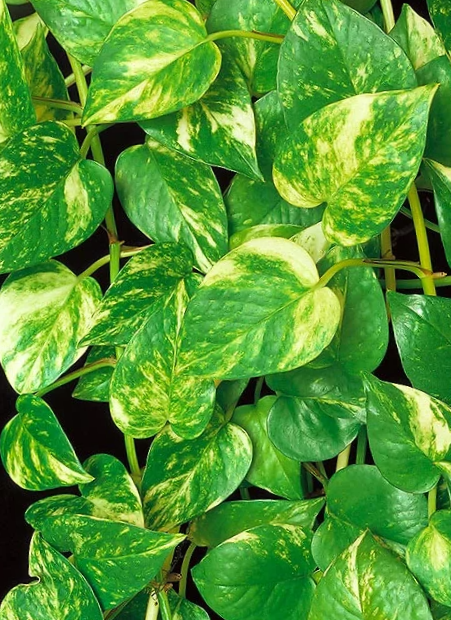
Taro Vine
Epipremnum aureum (Linden & André) G.S.Bunting
Historical synonyms include:
- Pothos aureus Linden & André
- Scindapsus aureus (Linden & André) Engl.
- Rhaphidophora aurea (Linden & André) Birdsey
- Epipremnum mooreense Nadeaud
Important former horticultural usage includes:
- Epipremnum pinnatum ‘Aureum’ — older nursery and houseplant treatment; Epipremnum aureum is currently accepted as a distinct species
- Scindapsus aureus — persistent older houseplant and florist-label name
- Pothos aureus — source of the common houseplant name pothos, although true Pothos is a separate aroid genus
Important cultivar and trade names include:
- Epipremnum aureum ‘Golden’
- Epipremnum aureum ‘Jade’
- Epipremnum aureum ‘Marble Queen’
- Epipremnum aureum ‘Snow Queen’
- Epipremnum aureum ‘Neon’
- Epipremnum aureum ‘Lime’
- Epipremnum aureum ‘N’Joy’
- Epipremnum aureum ‘Pearls and Jade’
- Epipremnum aureum ‘Manjula’
- Epipremnum aureum ‘Global Green’
- Epipremnum aureum ‘Jessenia’
- Epipremnum aureum ‘Hawaiian’
Important non-synonym confusion names:
- Colocasia esculenta (L.) Schott — true Taro; edible corm crop after proper preparation, separate from Taro Vine
- Epipremnum pinnatum (L.) Engl. — Cebu Blue Pothos, Baltic Blue Pothos, and related forms; separate accepted species, though older labels may confuse it with golden pothos
- Scindapsus pictus Hassk. — Satin Pothos, Silver Pothos, or Silk Pothos; separate aroid species
- Philodendron hederaceum (Jacq.) Schott — Heartleaf Philodendron; separate aroid with similar heart-shaped juvenile leaves
- Monstera deliciosa Liebm. — Monstera or Swiss Cheese Plant; mature pothos vines can resemble it after developing large divided leaves
- Rhaphidophora tetrasperma Hook.f. — Mini Monstera; separate climbing aroid
- Pachira aquatica Aubl., Crassula ovata (Mill.) Druce, and Lunaria spp. — unrelated plants also called Money Plant in some regions
- Lilium spp. and Hemerocallis spp. — true lilies and daylilies; unrelated plants that can cause acute kidney failure in cats
Araceae
Taro Vine; Golden Pothos; Golden Pothos Vine; Pothos; Devil’s Ivy; Devil’s Vine; Ivy Arum; Hunter’s Robe; Golden Hunter’s Robe; Money Plant; Solomon Islands Ivy; Ceylon Creeper; Marble Queen Pothos.
Scientific and historical search names include Epipremnum aureum (Linden & André) G.S.Bunting, Pothos aureus Linden & André, Scindapsus aureus (Linden & André) Engl., Rhaphidophora aurea (Linden & André) Birdsey, Epipremnum mooreense Nadeaud, and older horticultural use of Epipremnum pinnatum ‘Aureum’.
“Taro Vine” is misleading because this plant is not true taro, Colocasia esculenta. “Pothos” is also botanically imprecise because true Pothos is a different aroid genus. “Money Plant” may identify unrelated plants such as Pachira aquatica, Crassula ovata, or Lunaria species. “Satin Pothos,” “Silver Pothos,” and “Silk Pothos” usually refer to Scindapsus pictus, while Cebu Blue and Baltic Blue pothos are generally forms of Epipremnum pinnatum. Popular cultivated forms of Taro Vine include ‘Golden,’ ‘Jade,’ ‘Marble Queen,’ ‘Snow Queen,’ ‘Neon,’ ‘Lime,’ ‘N’Joy,’ ‘Pearls and Jade,’ ‘Manjula,’ ‘Global Green,’ ‘Jessenia,’ and ‘Hawaiian’; differences in leaf color, variegation, or size do not establish reduced toxicity.
Insoluble Calcium Oxalate Raphides Are the Principal Hazard
The confirmed toxic structures in Taro Vine are bundles of water-insoluble calcium oxalate crystals called raphides. These crystals are long, narrow, needle-shaped mineral structures stored inside specialized plant cells called idioblasts. When a dog, cat, horse, rabbit, parrot, goat, or other animal bites, crushes, pulls, shreds, or chews the vine, the crystal-bearing cells open and release raphides into sap and saliva. The crystals are then pressed into the lips, gums, tongue, palate, pharynx, esophagus, skin, or eye surface.
This is an immediate local injury, not a delayed systemic poison that must first be digested and circulated through the bloodstream. The animal may react dramatically after one bite because the crystals strike sensitive mucous membranes at once. A single small bite can cause obvious pain if the needles contact the tongue or back of the throat, while repeated chewing, grinding a stem, pulling a vine apart, or biting through a thick node can expose a larger surface to more crystals and sap.
Idioblasts, Raphide Release, and the Aroid Mechanism
Raphide-bearing idioblasts are widespread and important in Araceae. Taro Vine belongs to that family, which explains why its poisoning pattern resembles other aroids such as dumb cane, philodendron, monstera, anthurium, peace lily, calla lily, caladium, alocasia, colocasia, and nephthytis. The clinical overlap is useful for first aid because the immediate priorities are removing plant access, protecting the airway, avoiding forced oral treatment, and treating mouth, throat, skin, or eye injury.
The exact crystal abundance and release behavior may vary by plant part, cultivar, age, growing conditions, maturity, and whether the plant is a juvenile houseplant or a mature outdoor vine. The safest public description is evidence-bound: Taro Vine is a raphide-containing aroid, and damaged plant tissue can cause painful oral, throat, skin, eye, and upper gastrointestinal irritation. The page should not invent an exact veterinary dose or claim that every Epipremnum cultivar has been measured tissue by tissue.
Raphide Injury Is Not Simply Allergy
Raphides injure tissue mechanically and trigger inflammation. Punctured tissue releases mediators that increase blood flow, vascular permeability, pain, redness, and swelling. Histamine may participate in that inflammatory response, but the syndrome is not simply an allergic reaction. That matters because an antihistamine cannot remove raphides already embedded in tissue, inspect the throat, prevent aspiration, treat corneal injury, correct dehydration, or secure an airway.
A veterinarian may choose medications for swelling, pain, nausea, or secondary inflammation after examining the animal. Owner-administered diphenhydramine should not be used as a substitute for assessment when an animal is drooling heavily, gagging, vomiting, unable to swallow, swelling rapidly, weak, uncoordinated, or breathing abnormally. Sedation from an antihistamine can also complicate interpretation of weakness, airway function, and neurologic status.
Proteinaceous Co-Irritants Should Be Kept Evidence-Bounded
Some raphide-bearing plants contain proteinaceous or proteolytic co-irritants that may intensify crystal injury. Experimental work in other species supports a “needle effect,” in which sharp crystals help defensive proteins cross tissue barriers through microscopic puncture channels. This concept is important in aroid toxicology and helps explain why some raphide injuries produce more inflammation than simple inert grit would.
A clinically important protease has not been established specifically enough in Epipremnum aureum to list it as a confirmed principal toxin equal to calcium oxalate on this page. Protease language should remain qualified. The confirmed and treatment-driving hazard is insoluble calcium oxalate raphide injury. Possible co-irritants may contribute, but they do not change the first-aid priorities: do not induce vomiting, do not force liquids, do not assume allergy alone, protect the eyes, and seek care when swallowing or breathing is impaired.
Insoluble Oxalate Is Not Soluble-Oxalate Kidney Poisoning
The word oxalate is often treated as if it describes one poisoning syndrome. It does not. Water-soluble oxalates can be absorbed, bind calcium, lower blood calcium, and contribute to calcium oxalate deposition in the kidneys. Insoluble calcium oxalate raphides in Taro Vine act mainly at the point of contact and are not expected to produce systemic hypocalcemia, primary renal tubular crystal deposition, or the classic kidney syndrome associated with soluble-oxalate plants or ethylene glycol metabolism.
Primary kidney failure and permanent liver injury are not expected after an uncomplicated Taro Vine bite. Abnormal kidney values, reduced urination, jaundice, seizures, coma, severe cardiac abnormalities, or organ failure should prompt investigation for another plant, true lilies in cats, soluble oxalates, medications, pesticides, fertilizer, severe dehydration, shock, aspiration, preexisting disease, or mistaken plant identity.
Poisonous Parts and Exposure Forms
Leaves cause most household exposures because trailing foliage is easy for dogs, cats, birds, and small pets to reach. No plant part should be considered safe for chewing, however. Petioles, stems, nodes, sap, aerial roots, ordinary roots, propagation cuttings, flowers, fruits, seeds, water-rooted cuttings, and discarded plant material can all expose an animal to irritating tissue. Cut surfaces and crushed nodes are especially important because sap and crystal-bearing tissue are already exposed.
Wilted, dried, frozen, or water-rooted material should not be treated as detoxified. Calcium oxalate crystals are stable minerals and do not disappear merely because a leaf dries, a cutting sits in water, or a vine is pruned. Dry material may contain less fresh sap, but chewing can still release crystals and plant debris into the mouth. Propagation jars, aquarium-rooted pothos, moss poles, potting media, pruning waste, and discarded vines should all be kept away from animals.
Fresh Cuttings, Propagation Jars, and Aquarium Use
Taro Vine roots readily from stem cuttings placed in water. The propagation habit creates a distinct pet-exposure route: jars on windowsills, countertops, aquariums, plant shelves, and desks may place freshly cut nodes, submerged roots, dangling leaves, or standing water within reach. The water itself is not established as a major calcium-oxalate poisoning route when it merely holds an intact cutting, but it may contain plant debris, sap, fertilizer, microbial growth, algae, or chemicals from the container.
Pothos is sometimes grown with roots in aquarium or filtration water while the foliage stays above the waterline. Fish and aquatic animals may be exposed if cut stems, sap, fertilizer, treated plant material, decaying leaves, or soil residues enter the aquarium. Cats, parrots, reptiles, and small mammals may also reach the vine from the edge of the tank. Aquarium use does not make the plant animal-safe; it only changes the exposure pathway.
No Reliable Toxic Dose
No dependable toxic dose has been established for dogs, cats, horses, cattle, sheep, goats, pigs, camelids, rabbits, guinea pigs, birds, reptiles, fish, or other animals. Immediate pain often causes an animal to release the plant before swallowing a large amount, but that deterrent is not reliable. Puppies, habitual plant-chewing cats, parrots, rabbits, goats, animals with pica, animals playing with cuttings, and animals chewing pruned vines may receive more exposure than expected.
Risk assessment should focus on the animal’s species and size, the plant part chewed, whether the tissue was fresh or cut, how much appears missing, whether sap contacted the eye, whether swallowing remains normal, whether breathing is noisy, whether vomiting or diarrhea persists, whether a small herbivore or bird has stopped eating, and whether another plant, fertilizer, pesticide, or bouquet component was involved.
Onset and Early Progression
Signs usually begin while the animal is chewing Taro Vine or within minutes afterward. Dogs and cats may suddenly drop the leaf, shake the head, paw at the mouth, rub the muzzle, lick repeatedly, drool heavily, foam at the lips, gag, retch, vomit, or vocalize. The animal may approach food or water and then back away because tongue movement and swallowing are painful.
This rapid onset is a useful clue. A raphide-containing aroid usually causes immediate local irritation rather than delayed systemic illness. A dramatic early response does not prove that a large amount was swallowed, but it does show that crystal-bearing plant tissue contacted sensitive surfaces. Monitoring should focus on swelling, swallowing, breathing, vomiting, hydration, eye exposure, appetite, and whether the animal returns to normal behavior.
Oral Pain, Drooling, and Mouth Swelling
The lips, gums, tongue, palate, and oral lining may become red, tender, and swollen. Larger or more forceful exposures can produce abrasions, erosions, or small blister-like lesions. Saliva may pool around the mouth because swallowing hurts. A dog’s bark, a cat’s meow, a horse’s vocalization, or a bird’s normal calls may sound weak, hoarse, or reduced if inflammation extends toward the throat or larynx.
Repeated pawing at the mouth, rubbing the face on the floor, head shaking, and licking can spread sap and crystals across the muzzle, paws, skin, or eyes. Plant fragments lodged between the teeth, under the tongue, or toward the back of the mouth may continue releasing irritant material after chewing has stopped. An animal that cannot close the mouth comfortably, cannot swallow saliva, or develops increasing tongue or facial swelling needs prompt veterinary assessment.
Gagging, Vomiting, Diarrhea, and Dehydration
Dogs, cats, pigs, and other species capable of vomiting may vomit after plant material irritates the pharynx, esophagus, stomach, or upper intestinal tract. Gagging and retching can be triggered by throat pain even when little material reached the stomach. Reduced appetite, temporary lethargy, abdominal discomfort, and diarrhea may follow a more substantial exposure.
Repeated vomiting or diarrhea can cause dehydration and electrolyte abnormalities. These are secondary complications rather than proof of systemic oxalate poisoning. Tacky gums, weakness, sunken eyes, reduced urination, inability to retain water, or worsening depression requires veterinary care. Owner-induced vomiting can worsen the exposure by dragging irritating material back across the mouth and esophagus and by increasing aspiration risk.
Throat Swelling and Airway Risk
Progressive swelling of the tongue, pharynx, glottis, or larynx can interfere with swallowing and, rarely, breathing. Repeated choking, neck extension, noisy inspiration, open-mouth breathing, rapid respiratory effort, saliva pooling, inability to swallow, blue-gray mucous membranes, weakness, or collapse requires emergency care. Airway obstruction is uncommon, but it is the most immediately dangerous complication of severe raphide exposure.
An animal with throat swelling should not be forced to drink, eat, swallow milk, take pills, receive charcoal, or accept any oral remedy. Forced material can enter the lungs when swallowing is impaired. The first priority is veterinary assessment of airway stability, pain, swelling, hydration, and possible aspiration.
Eye Signs and Keratitis Risk
Taro Vine sap or crushed plant debris transferred into an eye can cause sudden tearing, blinking, squinting, redness, light sensitivity, and significant pain. Exact-species human literature documents Epipremnum aureum keratopathy, supporting the warning that eye exposure may be more than minor irritation. A pet that paws at the mouth and then rubs the face may move sap from the muzzle or paws into the eye.
Persistent squinting, cloudiness, continued tearing, discharge, light sensitivity, swelling, or inability to open the eye after gentle flushing requires veterinary examination. Household redness-relief drops, leftover antibiotic drops, steroid drops, essential oils, herbal rinses, and old veterinary medication should not be used without professional direction because they can worsen or mask a corneal injury.
Skin and Fur Contact
Sap contacting damaged or sensitive skin can produce localized burning, redness, itching, swelling, licking, or dermatitis. Skin exposure may occur during pruning, repotting, propagation, aquarium maintenance, contact with cut vines, or when fallen leaves are crushed into bedding, carpet, furniture, or fur. Animals may worsen the irritation by licking or scratching, converting a mild contact reaction into an open or secondarily infected lesion.
Grooming also transfers crystals from the coat or paws into the mouth. Skin signs are usually less urgent than swallowing or breathing signs, but persistent redness, swelling, moist lesions, open skin, or infection needs veterinary assessment. People handling fresh cuttings should wash hands and tools before touching an animal’s face, mouth, eyes, food bowls, or medications.
Dogs and Puppies
Dogs may bite trailing leaves, pull vines from a shelf, chew cuttings in water, carry pruned stems, dig in potting media, or play with moss poles and aerial roots. Puppies may shred long vines as toys, and plant fragments may be scattered before the owner realizes exposure occurred. Expected signs include drooling, head shaking, mouth pawing, gagging, vomiting, reduced appetite, and temporary lethargy.
Concern increases when swelling progresses, vomiting is repeated, the dog cannot swallow, breathing becomes noisy, the eye is painful, weakness develops, or a swallowed length of vine raises a mechanical foreign-body concern. A dog that chewed pothos from a mixed planter, florist display, or outdoor tropical planting should be evaluated for every plant and chemical in the exposure, not only golden pothos.
Cats and Kittens
Cats may reach trailing vines from hanging baskets, bookshelves, refrigerators, windowsills, bathrooms, plant stands, aquariums, and propagation shelves. A high pot is not enough if long stems hang downward. Fallen leaves and freshly pruned cuttings may remain accessible even after the main plant is moved.
Expected signs include drooling, foaming, mouth pawing, hiding, gagging, vomiting, food refusal, and discomfort around the face or eyes. Cats also groom contaminated paws and fur, turning skin exposure into oral exposure. Persistent food refusal is important because cats tolerate prolonged anorexia poorly. A cat exposed to a bouquet or plant area that also includes true lilies or daylilies needs immediate veterinary care for the lily risk, even if pothos is also present.
Horses, Livestock, and Browsing Animals
Horses cannot vomit. Possible signs include salivation, repeated chewing motions, muzzle rubbing, feed refusal, coughing, painful swallowing, oral redness, diarrhea, or abnormal respiratory noise. Water or feed material coming from the nostrils raises concern for impaired swallowing, choke, or aspiration and requires prompt veterinary examination.
Horses and livestock are most likely to encounter Taro Vine through tropical landscaping, greenhouse waste, interiorscape disposal, event decorations, discarded houseplants, compost, or ornamental clippings. Goats and other browsers may sample vines, leaves, aerial roots, and moss-pole growth more readily than cattle or horses. Group illness after ornamental waste exposure should trigger inspection of every plant, pesticide, fertilizer, soil additive, and piece of foreign material in the debris.
Rabbits, Guinea Pigs, Birds, Reptiles, and Other Small Animals
Rabbits, guinea pigs, rats, and several other small mammals cannot vomit. They may show drooling, tooth grinding, facial rubbing, reluctance to chew, food refusal, diarrhea, reduced fecal production, lethargy, or abdominal discomfort. Even localized oral pain can become serious when it prevents eating and leads to gastrointestinal hypomotility or stasis.
Parrots and other birds may shred the vine with the beak, exposing the tongue, mouth, crop, and eyes directly to sap and crystals. Possible signs include repeated beak wiping, tongue movements, oral redness, regurgitation, reduced appetite, altered droppings, weakness, poor perching, or breathing change. Reptiles and tortoises should not be offered pothos as enclosure greenery or browse. Fish and aquatic animals should be protected from cut stems, decaying leaves, fertilizer, and sap entering aquarium water.
Atypical or Severe Systemic Signs
Seizures, coma, primary kidney failure, permanent liver damage, clinical hemolysis, severe cardiac abnormalities, and sudden death are not ordinary effects of uncomplicated Taro Vine raphide exposure. Rare severe collapse could occur secondarily from airway obstruction, aspiration, shock, dehydration, or oxygen deprivation, but the plant does not have a recognized primary seizure, liver-failure, kidney-failure, or cardiac-toxin syndrome.
When severe systemic signs occur, veterinarians should investigate true-lily exposure in cats, soluble oxalates, pesticides, medications, electrical injury, aspiration, hypoxia, potting-soil additives, fertilizer, mold, another poisonous plant, a mixed bouquet, foreign material, infection, metabolic disease, or an unrelated emergency. Most limited exposures improve substantially within several hours and resolve within approximately 12 to 24 hours, although eye injury, oral ulceration, esophageal irritation, dehydration, aspiration, or laryngeal swelling can prolong recovery.
Taro Vine Is Golden Pothos, Not True Taro
The page name Taro Vine should stay because that is the node’s title and a real common-name route for the plant. The scientific plant on this page is Epipremnum aureum, better known as golden pothos, pothos, or devil’s ivy. It is not true taro, Colocasia esculenta, the large-leaved aroid grown for edible corms after proper preparation.
The distinction matters because the two plants share a family and a broad insoluble-calcium-oxalate hazard, but they look and grow very differently. True taro grows from a corm and produces enormous shield-shaped leaves on upright petioles. Taro Vine is a climbing or trailing vine with leaves arranged individually along flexible stems and with aerial roots at the nodes. A poison page should use the title as the owner search route while keeping the scientific identity clear.
Accepted Taxonomy and Native Range
The accepted botanical name is Epipremnum aureum (Linden & André) G.S.Bunting. Older botanical and horticultural names include Pothos aureus, Scindapsus aureus, Rhaphidophora aurea, and Epipremnum mooreense. For many years, golden pothos was also treated in horticulture as Epipremnum pinnatum ‘Aureum’, and that older name may still appear on labels, plant books, nursery catalogs, or older toxicology lists.
Current botanical treatment identifies E. aureum as native to Moʻorea in the Society Islands of French Polynesia. Older houseplant sources often claimed a Solomon Islands origin, which explains the common name Solomon Islands Ivy. The plant has been introduced widely across tropical and subtropical regions. In warm, humid climates it can escape cultivation, climb tree trunks, blanket ground layers, and become invasive.
Juvenile Houseplants and Mature Outdoor Vines Look Different
The familiar indoor plant is usually the juvenile form. Juvenile Taro Vine has flexible trailing or climbing stems with alternate, glossy, heart-shaped leaves. Golden forms are irregularly marbled, streaked, or splashed with yellow, while other cultivars may be mostly green, chartreuse, cream, white, speckled, or heavily variegated. Leaf size, color, and pattern vary with cultivar, light, maturity, nutrition, and pruning.
When the vine climbs a tree, wall, moss pole, or other substantial support in warm humid conditions, the stems thicken and the leaves can become dramatically larger. Mature blades may develop deep divisions and natural openings, causing an established outdoor vine to resemble Monstera or another large tropical aroid. A hanging-basket pothos and a tree-climbing tropical pothos can therefore be the same species even though they look different to an owner.
How to Identify Taro Vine
The vine has distinct nodes where leaves, aerial roots, and new shoots develop. Brown aerial roots form along the stem and attach to bark, moss poles, walls, aquarium edges, and other surfaces. Juvenile leaves are alternate, glossy, broadly heart-shaped, and often somewhat asymmetrical at the base. The petiole is grooved and partly winged or sheathing where it joins the stem.
Indoor plants rarely flower. Mature tropical vines may eventually produce an aroid inflorescence consisting of a spadix surrounded by a spathe, but flowers and fruit are not normally available for household identification. Pets are exposed overwhelmingly to leaves, stems, nodes, aerial roots, ordinary roots, sap, pruning material, and propagation cuttings rather than to flowers or fruit.
Cultivars Remain Toxic
‘Golden’ has green leaves marbled or streaked with yellow. ‘Jade’ is largely solid dark green, while ‘Neon’ or ‘Lime’ has bright chartreuse foliage. ‘Marble Queen’ and ‘Snow Queen’ have extensive cream or white marbling. ‘N’Joy’ and ‘Pearls and Jade’ have smaller leaves with white, cream, gray-green, or speckled variegation. ‘Manjula’ often has broader leaves with irregular cream, white, and green patterning. ‘Global Green,’ ‘Jessenia,’ ‘Hawaiian,’ and other selections differ in shade, size, and pattern.
No cultivar has been established as free of raphides or safe for animal chewing. White, cream, yellow, chartreuse, dark green, heavily variegated, or mostly solid foliage should all be treated as poisonous. Mature leaves, juvenile leaves, reverted green shoots, pruning material, cut stems, and rooted cuttings all remain part of the same toxic exposure problem.
How Raphide Injury Develops
Calcium oxalate raphides form inside specialized idioblast cells. These structures help the plant regulate calcium and defend against herbivory. When the plant is chewed, cut, crushed, or torn, the idioblasts release microscopic needles through sap and saliva. Tongue movement, repeated swallowing, chewing, gagging, and attempts to spit out the plant press the crystals into moist tissue.
The syndrome develops quickly because it is traumatic and inflammatory rather than dependent on systemic absorption. This explains why an animal may react before swallowing a meaningful amount. It also explains why vomiting, charcoal, or forced milk does not solve the core problem: the crystals are already injuring tissue at the point of contact.
Why Kidney Failure Is Not the Expected Syndrome
Taro Vine contains insoluble calcium oxalate raphides rather than large quantities of readily absorbed soluble oxalate salts. Its characteristic syndrome is localized injury of the mouth, throat, esophagus, eyes, skin, and upper gastrointestinal tract. Primary hypocalcemia, calcium oxalate kidney deposition, permanent liver damage, and primary renal failure are not expected consequences of an uncomplicated bite.
Abnormal kidney values may occur secondarily if an animal becomes severely dehydrated, aspirates, develops shock, or has another toxin or preexisting disease. In cats, the distinction from true lilies and daylilies is especially important. Taro Vine is an aroid and does not cause the acute feline kidney failure associated with Lilium or Hemerocallis, but mixed bouquets and plant areas should still be checked for lily exposure.
Eye Exposure Can Be More Than Minor Irritation
Sap-covered paws, freshly cut stems, pruning debris, and airborne or splashed plant material can expose the eye. Raphides and plant debris may irritate the conjunctiva and corneal surface, producing pain, tearing, redness, squinting, cloudiness, and light sensitivity. Exact-species human case literature documents Epipremnum aureum keratopathy, which supports prompt irrigation and examination when discomfort persists.
Eye exposure should not be treated with casual household drops. Human redness-relief drops, leftover veterinary eye medication, essential oils, steroid drops, antibiotic ointments, and herbal rinses can be inappropriate, especially if a corneal ulcer or embedded material is present. Persistent squinting, cloudiness, discharge, or refusal to open the eye deserves veterinary examination.
Propagation Jars, Aquarium Growth, and Water Exposure
Taro Vine roots easily in water, so propagation jars are common on counters, windowsills, shelves, desks, bathrooms, and aquariums. Leaves, stems, cut nodes, roots, and fresh cut surfaces remain irritating. A puppy may pull a cutting from the jar, a cat may drink from the container, and a bird may shred the exposed vine above the waterline.
The water itself is not established as a major calcium-oxalate poisoning route when it simply holds an intact cutting, but it may contain plant fragments, sap, fertilizer, bacterial growth, algae, or residues from the container. Pets should not be encouraged to drink it. Aquarium arrangements should keep foliage, cut stems, decaying leaves, treated material, and fertilizer out of the tank and should prevent cats, birds, reptiles, and small mammals from reaching the plant.
Dogs and Cats
Dogs and cats generally react immediately, which often limits the swallowed amount. Drooling, head shaking, mouth pawing, gagging, vomiting, and temporary food refusal are the most recognizable signs. Dogs may chew fallen leaves, pruned stems, moss poles, rooted cuttings, or vines pulled down from furniture. Puppies may treat trailing stems like toys.
Cats may reach hanging baskets, plant shelves, refrigerator tops, bookcases, windowsills, aquarium growth, and propagation jars. Long vines can grow downward into reach even when the pot itself is elevated. Fallen leaves and discarded stem sections remain capable of causing oral irritation. Persistent plant chewing may reflect boredom, pica, stress, dental discomfort, gastrointestinal disease, or a behavioral issue that should be addressed after the acute event.
Horses, Livestock, Birds, and Small Mammals
Horses and livestock are most likely to encounter Taro Vine through tropical landscaping, greenhouse waste, discarded interiorscape plants, event decorations, or ornamental clippings. It is not a typical temperate forage plant, and immediate irritation discourages continued grazing. Goats and other browsers may sample vines, leaves, and aerial roots more readily than cattle or horses. Horses cannot vomit and should never be drenched after an exposure, particularly when drooling, coughing, choking, or abnormal swallowing is present.
Parrots may shred the vine with the beak and expose the tongue directly to sap and crystals. Rabbits and guinea pigs may stop eating because of oral pain, creating a secondary risk of gastrointestinal stasis. Reptiles and tortoises should not be offered pothos as enclosure greenery or browse. Fish and aquatic animals need protection from decaying pothos material, fertilizers, cut stems, and sap entering aquarium water.
Important Look-Alikes and Naming Confusion
Heartleaf philodendron, Philodendron hederaceum, has similarly shaped leaves but different petiole and new-growth structures. It also contains insoluble calcium oxalate and produces a comparable oral-irritation syndrome. Satin pothos or silver pothos, Scindapsus pictus, has matte green leaves marked with silver and is a separate species. Cebu Blue pothos and Baltic Blue pothos are generally forms of Epipremnum pinnatum. Mature outdoor golden pothos can resemble Monstera because the leaves enlarge and split.
Correct identification remains useful for records, duplicate-page control, cultivar notes, and long-term prevention, but first aid is similar when the unknown plant is a raphide-containing aroid. Useful photographs show the whole vine, leaf shape, variegation, petiole, stem nodes, aerial roots, support structure, roots, cultivar label, and chewed material.
Diagnosis, Treatment, Prognosis, and Prevention
Diagnosis usually depends on a witnessed exposure, rapid onset of compatible signs, and plant identification. The veterinarian will assess the lips, tongue, oral cavity, pharynx, breathing, swallowing, hydration, vomiting, diarrhea, abdominal comfort, eyes, and possible aspiration. Sedation may be required for a thorough oral examination, but airway stability must be considered first when swelling is progressing.
No antidote removes crystals already embedded in tissue. Treatment may include removal of loose plant fragments, gentle oral cleansing, pain control, antiemetic medication, fluids, eye treatment, and monitoring of swallowing and respiration. Significant pharyngeal or laryngeal edema may require oxygen, intubation, or an emergency surgical airway. Most limited exposures have a good to excellent prognosis, with marked improvement often occurring within several hours and uncomplicated recovery expected within approximately one day. Airway obstruction, aspiration, serious corneal injury, extensive oral ulceration, or severe dehydration makes the prognosis more guarded.
Prevent exposure by keeping Taro Vine in a room or secure plant enclosure animals cannot enter. Hanging baskets alone are not reliable when vines trail downward or a cat can reach the pot from nearby furniture. Collect every leaf, stem section, root, aerial root, and propagation cutting after pruning or repotting. Clean sap from floors, counters, tools, hands, clothing, aquarium equipment, and moss poles before animals regain access. Do not place pothos clippings in horse paddocks, goat pens, livestock enclosures, aviaries, rabbit areas, tortoise enclosures, poultry runs, dog yards, or accessible compost.
Immediate Steps After Exposure
Stop further chewing. Move the animal away from the plant, fallen leaf, propagation cutting, aerial root, pruned stem, aquarium-grown vine, moss pole, potting debris, or discarded plant material. First aid should focus on preventing more contact, protecting the eyes, preserving plant identification, and avoiding forced oral treatments that can worsen aspiration risk.
- Remove loose fragments safely: If the animal is alert and cooperative, take visible plant pieces from the lips and front of the mouth. Do not reach deeply into the throat or place your fingers near the teeth of a frightened or painful animal.
- Gently clear residue when swallowing is normal: Wipe the lips and front of the mouth with a damp cloth or allow a small amount of clean water to rinse loose material. Do not pour, spray, or force water into the mouth.
- Prevent eye contamination: Stop the animal from rubbing sap-covered paws, muzzle, or fur into the eyes.
- Preserve identification evidence: Photograph the whole vine, leaves, nodes, aerial roots, roots, cultivar label, propagation jar, aquarium setup, moss pole, and chewed material.
- Contact a veterinarian or animal poison-control service: Report the animal’s species, weight, plant part, estimated amount, time of exposure, breathing, swallowing, vomiting, diarrhea, food intake, and possible eye contact.
Skin or Eye Exposure
Rinse sap from skin and fur with lukewarm running water to remove visible residue and prevent grooming until the contaminated area is clean. Wear gloves when handling plant material, sap-covered fur, cut stems, propagation water, aquarium equipment, or repotting debris. Do not apply alcohol, peroxide, essential oils, topical anesthetics, steroid creams, antibiotic ointments, human anti-itch products, or herbal rinses unless a veterinarian directs it.
Flush an exposed eye promptly with sterile saline or clean lukewarm water and allow it to flow gently across the eye. Do not rub the eye or attempt to remove microscopic crystals with fingers, cotton swabs, or tweezers. Continuing squinting, tearing, redness, cloudiness, light sensitivity, swelling, discharge, or refusal to open the eye may indicate corneal injury and requires veterinary examination.
Do Not Attempt Unsupervised Home Treatment
- Do not induce vomiting: Hydrogen peroxide, salt, mustard, syrup of ipecac, and manual gagging can cause additional injury or aspiration. Vomiting can bring irritating plant material back across the mouth and esophagus.
- Do not force milk, yogurt, cheese, food, or water: Dairy does not remove crystals already embedded in tissue, and forced material can enter the lungs when the throat is swollen or swallowing is painful.
- Do not give diphenhydramine automatically: An antihistamine does not remove raphides, and sedation can complicate assessment of swallowing, weakness, and airway function.
- Do not administer activated charcoal without veterinary direction: Charcoal does not extract insoluble crystals from tissue and may be aspirated by a drooling, gagging, vomiting, weak, or poorly swallowing animal.
- Do not give Kapectolin, Kaopectate, bismuth products, loperamide, sucralfate, antacids, antiemetics, antibiotics, corticosteroids, or human pain medication: Treatment must be selected for the animal’s species, weight, symptoms, and medical history.
- Do not drench horses or livestock: Never force water, oil, milk, charcoal, electrolytes, or medication into an animal that is coughing, choking, salivating heavily, weak, recumbent, bloated, or unable to swallow normally.
When Emergency Examination Is Especially Important
- Breathing becomes noisy or difficult: Stridor, open-mouth breathing, neck extension, rapid respiratory effort, blue-gray gums, or increasing distress may indicate airway swelling.
- The animal cannot swallow normally: Repeated swallowing attempts, choking, gagging, saliva pooling in the mouth, water falling from the lips, or nasal reflux requires urgent assessment.
- Swelling is increasing: Progressive tongue, facial, pharyngeal, or throat swelling can worsen after chewing has stopped.
- Vomiting or diarrhea is persistent: Continuing fluid loss can cause dehydration and electrolyte abnormalities.
- The eye may have been exposed: Significant pain, cloudiness, marked redness, light sensitivity, or persistent squinting requires prompt corneal examination.
- Severe systemic signs develop: Tremors, seizures, collapse, coma, abnormal heart rhythm, dark urine, jaundice, or profound weakness does not fit an uncomplicated Taro Vine exposure and requires immediate investigation.
- A small animal stops eating: Food refusal in a rabbit, guinea pig, bird, reptile, or other small pet can lead to gastrointestinal stasis, weakness, and other secondary complications.
- A mixed bouquet or plant area was involved: True lilies, sago palm, dieffenbachia, philodendron, monstera, pesticides, fertilizer, foreign material, or potting additives may change the emergency priorities.
Veterinary Treatment
The veterinarian will assess the lips, tongue, oral cavity, pharynx, breathing, swallowing, hydration, abdominal comfort, vomiting, diarrhea, and eyes. Loose plant material may be removed and the mouth gently wiped or rinsed when this can be done safely. Pain relief and airway monitoring are generally more useful than aggressive gastrointestinal decontamination.
Veterinary care may include analgesics, antiemetic medication, fluid and electrolyte therapy, gastrointestinal support, oxygen, and treatment of skin or eye injury. Significant pharyngeal or laryngeal edema may require close observation, injectable medication, intubation, or an emergency surgical airway. Blood testing is not usually required after a mild exposure, but persistent vomiting, substantial dehydration, weakness, respiratory distress, abnormal mentation, or findings inconsistent with localized irritation may justify electrolytes, serum chemistry, blood gas, imaging, or investigation for another toxin.
Veterinarian-induced vomiting, activated charcoal, or gastric lavage is not routine for local insoluble-raphide injury and may be unsafe once drooling, gagging, vomiting, weakness, or swallowing impairment is present. These decisions belong to the veterinarian after species, timing, amount, airway protection, and the possibility of another toxin are considered.
Dogs and Cats
Dogs should be monitored for drooling, mouth pain, gagging, vomiting, diarrhea, swelling, swallowing ability, breathing noise, hydration, eye exposure, and possible swallowed vine sections. Puppies may chew leaves, roots, cut stems, propagation jars, potting debris, or moss poles. A dog that chewed a mixed planter or plant display should be evaluated according to every plant and chemical involved.
Cats should be monitored for hiding, drooling, foaming, vomiting, mouth pawing, eye rubbing, food refusal, and any open-mouth or noisy breathing. Cats exposed to a bouquet or plant area that also contained true lilies or daylilies need immediate veterinary care because that kidney risk is separate and more dangerous than Taro Vine’s local raphide injury. Never give hydrogen peroxide to a cat as a home emetic.
Horses and Livestock
Horses, goats, sheep, cattle, camelids, pigs, poultry, and other livestock should be moved away from tropical landscaping, greenhouse waste, event decorations, discarded houseplants, interiorscape plants, aquarium trimmings, and mixed ornamental clippings. Provide safe forage and clean water so hungry animals are not tempted to browse unfamiliar material. Save representative samples from the entire debris pile because another plant may be responsible for severe illness.
Do not drench affected livestock. Oil, water, milk, charcoal, electrolyte mixtures, or medication can be aspirated when an animal is weak, coughing, gagging, regurgitating, bloated, recumbent, or poorly coordinated. Horses cannot vomit, so mouth and throat injury may appear as salivation, feed refusal, coughing, repeated swallowing, nasal reflux, diarrhea, depression, or respiratory noise rather than vomiting.
Rabbits, Guinea Pigs, Birds, Reptiles, Fish, and Small Pets
Rabbits and guinea pigs cannot vomit. Drooling, tooth grinding, facial rubbing, reluctance to chew, reduced appetite, reduced fecal output, diarrhea, weakness, or quiet behavior after exposure requires prompt veterinary guidance because gastrointestinal hypomotility or stasis can become serious. Do not offer Taro Vine leaves, stems, roots, aerial roots, propagation cuttings, or potting scraps as forage, bedding, chew material, or enrichment.
Birds with beak wiping, repeated tongue movements, oral redness, regurgitation, altered droppings, food refusal, weakness, poor perching, or abnormal breathing need avian veterinary advice. Reptiles and tortoises should not be offered Taro Vine as enclosure greenery or browse. Fish and aquatic animals should not be exposed to cut stems, decaying leaves, fertilizer, soil, pesticide residues, or sap in aquarium water.
Recovery and Prognosis
Most animals recover completely after a limited exposure. Marked improvement often occurs within several hours, and uncomplicated cases commonly resolve within approximately 12 to 24 hours. Continue monitoring until the animal is swallowing normally, breathing comfortably, eating, drinking, urinating, passing stool or feces appropriately for the species, and behaving normally.
Continuing mouth pain, food refusal, vomiting, coughing, swallowing difficulty, respiratory noise, reduced fecal output, dehydration, or eye pain deserves reassessment. Extensive oral, esophageal, or ocular injury may require treatment for several days. Primary kidney failure and permanent liver damage are not expected from an uncomplicated Taro Vine bite; evidence of organ injury, seizures, coma, cardiovascular instability, dark urine, jaundice, or collapse should prompt investigation for another toxin, severe secondary complication, or unrelated disease.
Prevention After the Incident
Keep Taro Vine in a room or secure plant enclosure animals cannot enter. A hanging basket alone is not sufficient when vines trail downward or a cat can reach the pot from nearby furniture. Trim long vines before they enter pet reach, but collect every leaf, stem section, root, aerial root, and propagation cutting after pruning or repotting.
Clean sap from floors, counters, tools, hands, clothing, aquarium equipment, and plant supports before animals regain access. Do not place pothos clippings in horse paddocks, goat pens, livestock enclosures, aviaries, rabbit areas, reptile enclosures, tortoise areas, poultry runs, dog yards, or accessible compost. Retain the nursery label and cultivar name for emergency identification.
Frequently Asked Questions About Taro Vine and Animal Poisoning
Is Taro Vine really a type of taro?
No. Taro Vine is a common name for golden pothos, Epipremnum aureum. True taro is Colocasia esculenta, a large-leaved aroid grown from an underground corm. Both plants belong to Araceae and both can contain insoluble calcium oxalate crystals, but they are separate species with different growth forms, uses, and identification features.
What is the accepted scientific name for Taro Vine?
The accepted scientific name is Epipremnum aureum (Linden & André) G.S.Bunting. Older names include Pothos aureus, Scindapsus aureus, Rhaphidophora aurea, and Epipremnum mooreense. Older nursery labels may also use Epipremnum pinnatum ‘Aureum’, but current treatment recognizes E. aureum as a distinct species.
What toxin makes Taro Vine poisonous?
The confirmed toxic structures are insoluble calcium oxalate crystals, especially needle-shaped raphides stored in specialized idioblast cells. Chewing releases the crystals into the lips, tongue, mouth, throat, and esophagus. The result is immediate pain, inflammation, drooling, gagging, swelling, vomiting, and difficulty swallowing.
Does Epipremnum aureum contain a proteinase toxin?
Proteases can intensify raphide injury in certain plants, but a clinically important protease has not been demonstrated specifically in Epipremnum aureum. Insoluble calcium oxalate remains the confirmed principal toxin and the best-supported explanation for the immediate oral syndrome. Possible proteinaceous co-irritants should be mentioned cautiously, not treated as a proven equal toxin.
Which parts of Taro Vine are poisonous?
Leaves, petioles, stems, sap, nodes, aerial roots, ordinary roots, flowers, fruits, seeds, and propagation cuttings should all be treated as irritating. Leaves cause most household exposures because they are easy to reach, but no plant part has been established as safe for chewing. Cut nodes, rooted cuttings, and pruning waste are common overlooked exposure sources.
Are Neon, Marble Queen, N’Joy, Manjula, and other pothos cultivars toxic?
Yes. Golden, Jade, Neon, Marble Queen, Snow Queen, N’Joy, Pearls and Jade, Manjula, Global Green, Jessenia, Hawaiian, and other cultivated forms should all be treated as calcium-oxalate plants. Variegation, white leaf tissue, yellow marbling, chartreuse leaves, or darker green foliage does not establish reduced toxicity.
Is Golden Pothos native to the Solomon Islands?
Older horticultural references frequently describe a Solomon Islands origin, which explains the common name Solomon Islands Ivy. Current botanical treatment identifies the native range as Moʻorea in the Society Islands of French Polynesia. The plant has been introduced widely across tropical and subtropical regions, including areas where it can become invasive.
How quickly do symptoms appear?
Signs usually begin immediately or within minutes because the crystals injure tissue as soon as the plant is chewed. An animal may suddenly release the leaf, shake its head, paw at the mouth, drool, gag, foam, or refuse food and water. Swelling can continue after chewing has stopped, so early improvement should not replace monitoring.
Can Taro Vine block an animal’s airway?
Severe airway obstruction is uncommon but possible when tongue, pharyngeal, glottic, or laryngeal swelling becomes substantial. Noisy breathing, open-mouth respiration, neck extension, inability to swallow saliva, blue-gray gums, weakness, or collapse requires immediate emergency treatment. Do not force food, water, milk, charcoal, or medication into an animal with these signs.
Can Taro Vine sap injure an animal’s eyes?
Yes. Sap and crystal-containing plant debris can cause tearing, redness, squinting, light sensitivity, and corneal injury. Exact-species medical literature has reported Epipremnum aureum keratopathy. Flush the eye gently with sterile saline or clean lukewarm water, prevent rubbing, and seek veterinary examination if pain, cloudiness, redness, or refusal to open the eye persists.
Can Taro Vine cause kidney or liver failure?
Primary kidney failure and permanent liver damage are not expected from an uncomplicated Taro Vine exposure. Its insoluble raphides cause localized tissue injury rather than the hypocalcemia and renal deposition produced by soluble oxalates. Organ abnormalities suggest severe dehydration, shock, aspiration, another toxin, true-lily exposure in cats, preexisting disease, or an unrelated disorder.
Is water from a pothos propagation jar poisonous?
The principal hazard is chewing the leaves, stems, cut nodes, or roots rather than drinking clean water that merely holds an intact cutting. However, propagation water may contain sap, plant fragments, fertilizer, bacterial growth, algae, or other additives. Pets should not be encouraged to drink it, and cuttings should remain inaccessible.
Can Taro Vine be grown in aquariums safely?
It is sometimes grown with roots in aquarium or filtration water while the leaves remain above the surface, but that setup is not risk-free. Fish may be exposed if cut stems, sap, fertilizer, treated material, or decaying leaves enter the water. Cats, birds, reptiles, and small mammals may also reach the vine at the tank edge. Aquarium use should keep all foliage and cut tissue away from animals.
Should milk or yogurt be given after ingestion?
Do not force dairy products. Milk or yogurt does not remove crystals already embedded in tissue, and forced material may enter the lungs when the animal is gagging, vomiting, weak, choking, or swollen in the throat. A veterinarian may sometimes allow a small voluntary amount of cool water or appropriate food only when breathing and swallowing are clearly normal.
Should I make my pet vomit or give activated charcoal?
No, unless a veterinarian specifically directs treatment after assessing the case. Vomiting can expose the mouth and esophagus to irritating plant material again. Activated charcoal does not remove insoluble crystals from tissue and may be aspirated by a drooling, gagging, vomiting, weak, or poorly swallowing animal.
Can diphenhydramine treat Taro Vine swelling?
Diphenhydramine should not be given automatically. Taro Vine swelling starts with crystal penetration and local tissue injury, not simply a conventional allergy. An antihistamine cannot remove embedded raphides, evaluate swallowing, protect the airway, or treat eye injury. A veterinarian should decide whether any medication is appropriate.
Is Taro Vine poisonous to dogs?
Yes. Dogs may develop immediate drooling, mouth pain, pawing, gagging, vomiting, food refusal, and swelling after chewing leaves, stems, roots, aerial roots, or cuttings. Puppies may pull vines down or chew propagation material. Difficulty swallowing, repeated vomiting, progressive swelling, noisy breathing, eye pain, collapse, or suspected foreign-body ingestion requires veterinary care.
Is Taro Vine poisonous to cats?
Yes. Cats may chew trailing stems, fallen leaves, or cuttings and may groom sap from their paws or fur. Drooling, foaming, mouth pawing, vomiting, hiding, and food refusal are common concern signs. Persistent food refusal matters in cats, and possible true-lily exposure from a mixed bouquet or plant display is a separate emergency.
Can Taro Vine poison a horse?
Yes, it can irritate a horse’s lips, mouth, tongue, throat, and esophagus. Horses cannot vomit, so signs may include salivation, repeated chewing, feed refusal, coughing, swallowing difficulty, diarrhea, or respiratory noise. Nasal discharge containing feed or water raises concern for choke or impaired swallowing and requires urgent veterinary attention. Do not drench an affected horse.
Is Taro Vine dangerous to rabbits, guinea pigs, or birds?
Yes. Any animal that crushes the plant can expose oral tissue to raphides. Rabbits and guinea pigs may drool, stop eating, grind their teeth, or produce fewer feces, while birds may wipe the beak, manipulate the mouth, stop eating, regurgitate, or develop weakness. Food refusal can create serious secondary complications in small herbivores and birds.
Is Taro Vine safe for reptiles or tortoises?
No. It should not be offered as enclosure greenery, browse, shade cover, or decorative live foliage for herbivorous reptiles or tortoises. Species-specific safe doses are not established, and chewing can expose the mouth and digestive tract to irritating raphides. Mouth opening, face rubbing, excess mucus, food refusal, regurgitation, weakness, or abnormal behavior after exposure requires veterinary guidance.
Can touching Taro Vine irritate the skin?
Sap can cause localized redness, itching, burning, swelling, or dermatitis, especially on damaged skin or after repeated contact. Wash the animal’s coat or skin and prevent licking until residue is removed. People should wear gloves when pruning, propagating, or repotting the vine and should wash hands before touching an animal’s mouth or eyes.
Are dried pothos leaves still toxic?
They should still be treated as irritating. Calcium oxalate crystals are stable minerals and do not disappear simply because a leaf dries or wilts. Dry leaves may release less sap, but chewing can still expose the mouth to raphides and plant debris. Dried leaves, pruning waste, and compost should remain inaccessible.
Is satin pothos the same as Taro Vine?
No. Satin pothos or silver pothos usually refers to Scindapsus pictus, while Taro Vine or golden pothos is Epipremnum aureum. Both are aroids capable of causing calcium-oxalate oral irritation, but they are different botanical species and should not be listed as synonyms.
Is Taro Vine the same as heartleaf philodendron?
No. Heartleaf philodendron is Philodendron hederaceum. Taro Vine has grooved petioles and lacks the conspicuous free cataphylls associated with new philodendron growth. Both plants contain insoluble calcium oxalate, so the immediate poisoning syndrome and first-response precautions are similar even though the plants are different.
What signs do not fit an uncomplicated Taro Vine exposure?
Seizures, coma, jaundice, dark urine, primary kidney failure, liver failure, severe cardiovascular signs, or prolonged systemic illness does not fit the ordinary Taro Vine raphide syndrome. These findings require investigation for oxygen deprivation, severe dehydration, true lilies in cats, medications, pesticides, soluble oxalates, another poisonous plant, or an unrelated medical disorder.
What is the usual prognosis?
The prognosis is good to excellent after most limited exposures. Pain, drooling, and food refusal often improve within several hours, with uncomplicated recovery in approximately 12 to 24 hours. Airway swelling, aspiration, severe eye injury, extensive ulceration, persistent vomiting, or significant dehydration makes the case more serious.
How can Taro Vine exposure be prevented?
Keep potted plants, hanging baskets, propagation jars, aquarium growth, and cuttings in rooms animals cannot enter or inside secure plant enclosures. Trim vines before they trail into reach, collect pruning debris immediately, and dispose of roots, leaves, and cut stems in closed trash. Do not place Taro Vine waste in paddocks, livestock pens, aviaries, rabbit areas, reptile enclosures, poultry runs, dog yards, or accessible compost.