Florist’s Calla Toxicity and Calcium Oxalate Raphide Injury
Is Florist’s Calla Poisonous to Dogs, Cats, Horses, and Livestock?
Yes—Florist’s Calla, Zantedeschia aethiopica, is poisonous and intensely irritating when chewed by dogs, cats, horses, livestock, rabbits, birds, or other animals. Exact-species anatomical research has confirmed calcium oxalate raphides and other crystal forms within its leaves. Crushing a leaf, petiole, rhizome, root, spathe, spadix, berry, or other living tissue can release microscopic crystal needles that penetrate the lips, gums, tongue, throat, skin, or eyes.
Most brief chewing exposures produce immediate localized pain, profuse drooling, head shaking, gagging, vomiting, or difficulty swallowing rather than systemic oxalate poisoning. Rapidly increasing tongue or throat swelling, inability to swallow saliva, persistent vomiting, significant eye pain, or any noisy or difficult breathing requires urgent veterinary examination.
About this guide: This page provides general pet-poisoning information and cannot diagnose or treat an individual animal. For any suspected exposure, contact a veterinarian or animal poison-control service immediately. Do not induce vomiting, give medication, or attempt home decontamination unless directed by a veterinary professional.
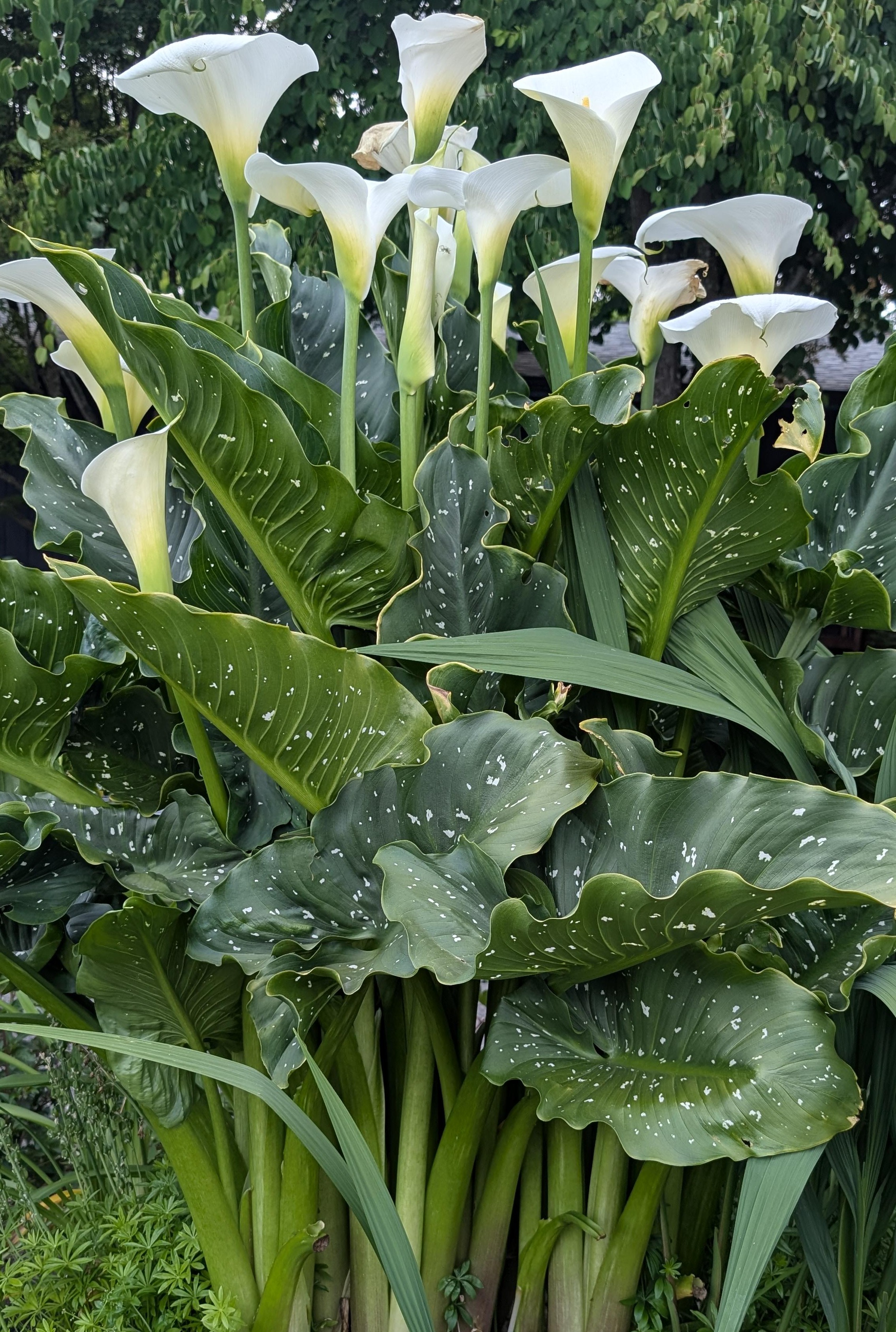
Florist’s Calla
Zantedeschia aethiopica (L.) Spreng.
Relevant botanical synonyms and historical combinations include:
- Arodes aethiopicum (L.) Kuntze
- Calla aethiopica L. — basionym
- Calla moschata Moench — illegitimate name
- Colocasia aethiopica (L.) Link
- Otosma aethiopica (L.) Raf.
- Richardia aethiopica (L.) Spreng.
- Richardia africana Kunth — illegitimate superfluous name
- Calla aethiopica var. nana Hovey
- Calla ambigua Salisb.
- Pseudohomalomena pastoensis A.D.Hawkes
Important botanical exclusions:
- Calla palustris L. is the separate Bog Arum or Water Arum and is the only accepted species in the genus Calla.
- Arum species are separate aroids despite the common name Arum Lily.
- Lilium species are true lilies capable of causing acute kidney failure in cats.
- Hemerocallis species are daylilies and share the true-lily renal warning for cats.
- Colored florist callas may involve other Zantedeschia species or complex hybrids rather than Zantedeschia aethiopica.
Araceae
Florist’s Calla; Florist Calla; Calla Lily; Calla; Garden Calla; Common Calla; White Calla; White Calla Lily; Arum Lily; White Arum; White Arum Lily; Cape Arum Lily; Common Arum Lily; Pig Lily; Pig’s Ear; Varkoor; Wit Varkoor; Trumpet Lily; Lily of the Nile; Altar Lily; Bridal Calla; Zantedeschia aethiopica; Calla aethiopica; Richardia aethiopica; Richardia africana; Colocasia aethiopica
“Calla Lily” and “Florist’s Calla” may also be used for colored Zantedeschia species and hybrids. Those plants share a calcium oxalate hazard but are not exact botanical synonyms of Zantedeschia aethiopica.
Arum Lily is botanically imprecise because Zantedeschia is not a member of the genus Arum. Calla Lily is also imprecise because the genus Calla contains the separate wetland plant Calla palustris.
Easter Lily, Asiatic Lily, Oriental Lily, Tiger Lily, Stargazer Lily, and other Lilium species are not synonyms. They present a different and potentially fatal kidney hazard to cats.
Peace Lily refers to Spathiphyllum species. It is another calcium oxalate-containing aroid but is not Florist’s Calla.
Calcium Oxalate Crystals Confirmed in the Exact Species
The principal toxic structures in Florist’s Calla are insoluble calcium oxalate crystals. Direct microscopic examination of Zantedeschia aethiopica leaves identified raphides, druses, prismatic crystals, and crystal sand distributed through the leaf tissues. The presence of needle-shaped raphides in the exact species therefore rests on anatomical evidence rather than solely on the general reputation of Araceae.
Raphides are the crystal form most important to acute animal exposure. They are long microscopic needles packed together inside specialized plant cells called crystal idioblasts. Druses are rounded aggregates of numerous crystals, while prismatic crystals and crystal sand have different shapes and tissue distributions. Their individual contribution to natural poisoning has not been quantified, but the penetrating geometry of raphides makes them the principal cause of immediate mouth and throat pain.
Crystal Idioblasts and Release During Chewing
Crystal idioblasts differ from the surrounding plant cells because they accumulate mineral crystals within specialized vacuoles. In aroid leaves, raphide idioblasts are often elongated or spindle-shaped and may occur in the spongy mesophyll and other internal tissues.
Chewing, tearing, cutting, crushing, digging, or dividing the plant disrupts these cells and suspends the crystals in sap and saliva. The needles are then pressed into the lips, gums, tongue, palate, pharynx, skin, or ocular surface. The animal can experience severe pain without absorbing a conventional systemic poison because the injury begins at the exact point of contact.
A small bite can therefore produce dramatic drooling, head shaking, gagging, and pawing. The visible reaction may appear disproportionate to the amount swallowed because one damaged piece of succulent tissue can release many microscopic crystals directly into highly sensitive oral tissue.
The Mechanical Needle Effect
The defining injury is mechanical penetration followed by inflammation. Raphides puncture superficial cells, create numerous microscopic channels, stimulate sensory nerves, and promote vascular leakage and tissue edema. The resulting reaction can include burning, redness, swelling, painful swallowing, salivation, and superficial erosion.
Experimental research with other raphide-bearing plants demonstrates that crystal needles may also intensify the effects of coexisting plant constituents by carrying them into damaged tissue. This is sometimes described as the needle effect.
The crystals are not equivalent to ordinary dietary calcium oxalate dispersed harmlessly through food. Their size, shape, arrangement, sudden release, and contact with moist tissue determine the acute irritant response.
Proteases and Other Possible Sap Constituents
Proteolytic enzymes and other inflammatory substances have been proposed as contributors to the severity of injury from certain aroids. In experimental systems involving other raphide-bearing plants, cysteine proteases can act synergistically with crystal needles.
No particular protease, histamine-releasing protein, bradykinin-forming enzyme, or other accessory toxin has been established as the principal species-specific toxicant of Zantedeschia aethiopica. The public description should therefore center on confirmed insoluble calcium oxalate crystals while recognizing that sap constituents may intensify local pain or swelling.
This distinction prevents a general aroid mechanism from being presented as though a particular protein has been isolated, quantified, and proven responsible for natural Florist’s Calla poisoning.
Insoluble Oxalates Are Different from Soluble Oxalates
The calcium oxalate crystals in Florist’s Calla are poorly soluble and act mainly where the plant touches tissue. They are not expected to dissolve readily, enter the circulation in a large dose, remove substantial calcium from the blood, or precipitate throughout the kidneys.
This differs from poisoning by plants containing absorbable soluble oxalate salts, which may cause systemic hypocalcemia, muscle fasciculation, tetany, cardiac instability, and renal calcium oxalate deposition.
Primary kidney failure, severe systemic hypocalcemia, widespread crystal nephrosis, or generalized tetany is not the expected direct result of an ordinary Calla Lily chewing exposure. Kidney abnormalities may occur secondarily if vomiting, inability to drink, shock, hypoxia, or another illness causes dehydration and impaired renal perfusion.
Which Plant Parts Are Hazardous?
Leaves have direct exact-species crystal evidence, and no part of the living plant should be considered safe. Petioles, short stems, roots, rhizomes, sap, white spathes, yellow spadices, minute flowers, developing fruit, ripe berries, seeds, divisions, and propagation debris should all be kept away from animals.
The underground rhizome creates a particular practical risk because dogs may dig it from soil or chew divisions left exposed during planting. Its fleshy texture may permit substantial crushing before the animal stops.
The colorful structure commonly called the flower is the spathe, a modified leaf surrounding the spadix. Both remain living aroid tissue. The yellow berries that develop after pollination should also be considered irritating despite their fleshy appearance and use as food by some wild birds.
Cut Flowers, Vase Water, and Florist Materials
Cut stems and flower structures continue to contain sap and mineral crystals after removal from the rooted plant. Fallen pieces can produce oral, skin, or eye exposure, while freshly cut stem ends may contaminate tables, floors, cloth, and hands.
Calla Lily vase water is not associated with the distinctive renal toxin found in true-lily arrangements, but it should not be treated as safe drinking water. It may contain sap, fertilizer, floral preservative, microorganisms, pesticide residue, or material from other flowers in a mixed bouquet.
Wire, ribbon, floral foam, glass beads, decorative stones, picks, glue, and packet preservatives may create choking, obstruction, or chemical hazards separate from the plant crystals.
Fresh, Wilted, Dried, and Processed Material
Wilting or drying does not dissolve calcium oxalate crystals. A fallen leaf, dry spathe, old berry, trimmed root, or discarded rhizome can still release rigid particles when crushed or chewed.
Traditional processing methods have sometimes rendered selected aroid tissues edible by prolonged cooking, drying, washing, or other preparation. That history does not establish a safe household method for pets and should not be interpreted as permission to feed cooked or processed Florist’s Calla.
No validated preparation makes garden clippings, rhizome divisions, floral waste, or cut-flower material appropriate as animal food, forage, enrichment, or bedding.
No Established Toxic Dose
No dependable leaf count, berry count, rhizome weight, crystal concentration, or gram-per-kilogram toxic dose has been established for Zantedeschia aethiopica in dogs, cats, horses, livestock, rabbits, or birds.
Severity depends on the plant part, amount of tissue crushed, duration and force of chewing, tissues contacted, animal size, swallowing ability, pre-existing airway disease, and whether fertilizer, pesticide, floral preservative, potting material, or another toxic plant was swallowed at the same time.
Immediate Oral Pain and Defensive Behavior
Clinical signs usually begin while the plant is being chewed or within minutes. The animal may suddenly release the tissue, cry out, shake the head, run from the plant, rub the muzzle on the floor, paw at the mouth, or resist anyone attempting to examine the face.
Salivation may become profuse and stringy enough to soak the chin, chest, forelegs, bedding, or floor. The lips, gums, tongue, palate, and visible oral mucosa may become reddened, tender, or swollen.
Extensive chewing may produce punctate erosions, abrasions, small hemorrhages, superficial ulceration, or localized tissue sloughing. Plant fibers and rhizome fragments may remain beneath the tongue, between the teeth, along the gingiva, or farther back in the pharynx and prolong irritation.
Gagging, Vomiting, and Painful Swallowing
Repeated swallowing, gagging, coughing, retching, nausea, and vomiting may follow oral exposure. Vomiting can result from pharyngeal stimulation, swallowed plant fibers, pain, gagging, or direct irritation of the esophagus and stomach.
Odynophagia means painful swallowing, while dysphagia means swallowing is mechanically or functionally difficult. An affected animal may approach food or water, attempt to take it, and then drop or refuse it because tongue and throat movement is painful.
Additional warning signs include coughing while drinking, food falling from the mouth, repeated neck extension, nasal reflux, holding the mouth partly open, abnormal tongue movement, or inability to swallow saliva. A bark, meow, whinny, or other vocalization may become hoarse or weak when movement of the mouth, pharynx, or laryngeal region is painful.
Tongue, Pharyngeal, and Upper-Airway Swelling
Most Calla Lily exposures remain localized and do not obstruct the airway. Inflammation can nevertheless continue after the plant has been released as fluid accumulates in the tongue, floor of the mouth, pharynx, or tissues surrounding the upper airway.
Emergency warning signs include increasing tongue size, continuous drooling because saliva cannot be swallowed, stertor, stridor, harsh inspiration, wheezing, open-mouth breathing, repeated neck extension, panic, blue-gray gums, weakness, or collapse.
Severe airway obstruction is documented more often with highly irritating relatives such as Dieffenbachia than with exact-species Florist’s Calla reports. Those cases establish that major aroid edema is biologically possible but should not be used to imply that one Calla Lily nibble commonly causes respiratory failure.
Gastrointestinal Effects
Swallowed plant material may cause nausea, vomiting, reduced appetite, soft stool, diarrhea, abdominal discomfort, and lethargy. These signs are generally secondary to the same local irritant process rather than evidence of a toxin attacking distant organs.
Repeated vomiting or prolonged refusal to drink may cause dehydration, electrolyte abnormalities, weakness, reduced urination, poor pulse quality, and impaired circulation. Small, young, elderly, or medically fragile animals may deteriorate more quickly.
Persistent vomiting, repeated unproductive retching, severe abdominal pain, abdominal enlargement, blood in vomit or feces, or inability to retain water requires evaluation for deeper mucosal injury, aspiration, obstruction, rhizome fragments, floral materials, or another toxicant.
Skin and Fur Exposure
Sap on the skin may produce burning, redness, itching, localized swelling, or irritant dermatitis. An exact-species report has also documented contact dermatitis after handling cut Zantedeschia aethiopica, demonstrating that not every skin reaction is merely theoretical.
Exposure is particularly likely while cutting stems, dividing clumps, digging rhizomes, removing old foliage, arranging bouquets, or clearing invasive stands. Damaged or repeatedly exposed skin may react more strongly.
Sap transferred to paws or fur may later reach the mouth or eyes during grooming. Persistent licking, paw chewing, facial rubbing, redness between the toes, or a sharply localized rash may be the first evidence of an unwitnessed exposure.
Eye Exposure
Sap or crushed material entering an eye can cause immediate pain, tearing, intense squinting, eyelid spasm, redness, conjunctival swelling, discharge, light sensitivity, corneal haze, or apparent visual difficulty.
Detailed ocular case reports specifically involving Zantedeschia aethiopica are limited. Closely related raphide-bearing aroids have caused corneal epithelial defects, keratitis, stromal inflammation, and crystalline deposits that persist after loose surface material has been irrigated away.
Continued squinting, cloudiness, abnormal discharge, unequal pupils, persistent rubbing, or impaired vision after irrigation requires prompt veterinary examination.
Dogs and Cats
Dogs may chew garden foliage, uproot newly planted rhizomes, investigate divisions waiting to be replanted, or pull apart wedding and funeral arrangements. Puppies may continue chewing longer than an adult animal despite the immediate discomfort.
Cats may bite broad leaves or cut-flower stems and can reach arrangements placed on tables, counters, or shelves. A cat exposed to a plant labeled only “lily” requires prompt identification because true-lily ingestion creates a very different renal emergency.
A cat that continues refusing food after the oral pain should be examined. Prolonged anorexia can create serious secondary metabolic complications even when the initial plant injury was localized.
Horses, Livestock, Rabbits, and Birds
Horses and livestock are most likely to encounter Florist’s Calla when garden clumps, rhizomes, floral waste, or landscape debris are discarded into an enclosure. Horses cannot vomit and may instead show salivation, dropped feed, painful chewing, dysphagia, feed refusal, colic, diarrhea, or depression.
Rabbits and guinea pigs may stop eating because of mouth pain. Reduced fecal output, tooth grinding, abdominal distention, or abnormal quietness requires prompt treatment because gastrointestinal stasis may develop.
Birds may shred leaves, spathes, spadices, or stems and expose the tongue, choana, glottis, facial skin, and eyes. Even modest swelling can become serious in a small avian airway.
Unexpected Systemic Findings
Systemic hypocalcemia, primary kidney failure, permanent liver injury, major cardiac arrhythmias, seizures, coma, and generalized organ failure are not the expected direct consequences of ordinary Florist’s Calla raphide exposure.
These findings require confirmation of the plant and investigation for true lilies, soluble-oxalate plants, pesticides, fertilizers, medications, ethylene glycol, hypoxia, aspiration, severe dehydration, metabolic disease, or another poison.
Expected Course and Prognosis
Mild oral pain and drooling often begin improving within several hours after further access stops. Appetite may remain reduced for the rest of the day or longer when the tongue or oral mucosa is substantially inflamed.
The prognosis is good to excellent when breathing and swallowing remain normal. It becomes more guarded with progressive edema, dehydration, persistent vomiting, aspiration, esophageal injury, corneal ulceration, airway compromise, or ingestion of florist and garden materials.
Accepted Identity and Native Range
Florist’s Calla is Zantedeschia aethiopica (L.) Spreng., a rhizomatous perennial in Araceae. It is native to southern Africa, including South Africa, Eswatini, and Lesotho, and has been introduced widely into temperate, subtropical, and tropical regions.
The species grows naturally in marshes, wet grassland, drainage channels, stream margins, damp slopes, and other locations with reliable moisture. It may remain evergreen where water remains available or become seasonally dormant under drought, cold, or regional rainfall patterns.
Established plants spread through thick branched underground rhizomes and may form extensive colonies. Rhizome pieces left after digging can regenerate, which makes both horticultural division and invasive-plant control important exposure periods.
Historical Botanical Names
Linnaeus originally published the species as Calla aethiopica. It was later transferred to Zantedeschia, and older literature may use combinations including Richardia aethiopica, Richardia africana, Colocasia aethiopica, Arodes aethiopicum, or Otosma aethiopica.
These names explain why older florist, medical, botanical, and agricultural records may appear to discuss different plants. They should not be confused with the currently accepted genus Calla, which contains the separate species Calla palustris.
The epithet aethiopica does not mean the plant originated specifically in modern Ethiopia. Early botanical usage applied similar geographic terms broadly to African regions south of the classical Mediterranean world.
Growth Form and Leaves
Florist’s Calla commonly forms clumps approximately two to four feet tall, although mature plants in deep shade or highly favorable wet conditions may become larger. Each leaf rises from the rhizome on a thick, upright, succulent petiole.
The leaf blades are broad, glossy, dark green, and generally arrow-shaped or shield-like. Some horticultural forms have white spotting, green-and-white flower structures, or other selected characteristics.
Leaves may discharge droplets of excess water through hydathodes at their tips, a process known as guttation. These droplets should not be treated as animal drinking water because they arise from the living plant and may be accompanied by residue from fertilizer, pesticide, or contaminated surfaces.
The Spathe, Spadix, and True Flowers
The white trumpet-like structure is not a single flower. It is a modified leaf called the spathe. The upright yellow column within it is the spadix.
Numerous small true flowers are arranged directly on the spadix. Female flowers occupy the lower portion, while male flowers generally develop above them. Their differing maturation helps promote cross-pollination.
After pollination, the spathe may turn green and close around the developing fruit. As it deteriorates, fleshy yellow to orange-yellow berries become visible along the fruiting structure.
Florist’s Calla Versus Colored Callas
The large white Florist’s Calla is usually Zantedeschia aethiopica. Smaller yellow, pink, red, purple, orange, or spotted florist callas may involve Z. elliottiana, Z. rehmannii, Z. albomaculata, or complex hybrids.
All should be treated as calcium oxalate-containing aroids, but a colored cultivar should not automatically be entered under the exact scientific name Z. aethiopica.
Nursery labels, photographs of the whole plant, leaf markings, tuber or rhizome form, flower color, and cultivar name help determine whether an exposure belongs on this page or another Zantedeschia record.
Calla Lily Is Not a True Lily
Florist’s Calla belongs to Araceae and produces a spathe-and-spadix inflorescence. True lilies belong to Lilium, while daylilies belong to Hemerocallis.
True lilies and daylilies can cause acute kidney failure in cats after small exposures to leaves, flowers, pollen, or vase water. Florist’s Calla is not associated with that characteristic feline renal syndrome.
The common-name distinction cannot be relied upon when the plant is uncertain. A cat exposed to a bouquet labeled only “lily” should be managed according to the most dangerous plausible identification until a florist, botanist, veterinarian, or complete specimen confirms the plant.
Exact-Species Crystal Anatomy
A comparative anatomical study examined the leaves of fourteen Araceae species, including Zantedeschia aethiopica. Researchers used chemical localization tests and microscopy to identify calcium oxalate crystals within the leaf blade.
Across the examined aroids, calcium oxalate occurred as raphides, druses, prismatic crystals, and crystal sand. Raphides appeared commonly in spongy mesophyll, while druses were more frequent in palisade tissues. Specialized spindle-shaped crystal idioblasts were present in several of the species.
The study confirms the leaf hazard directly. It does not provide a toxic dose, compare every rhizome and reproductive structure, or demonstrate identical crystal concentrations among all cultivars and growing conditions.
Skin Contact and the Exact-Species Dermatitis Case
Florists, gardeners, nursery workers, and pet owners may be exposed while cutting stems, dividing rhizomes, or clearing old foliage. An exact-species case report described itching, redness, and swelling after handling cut Zantedeschia aethiopica.
The reaction was evaluated as contact dermatitis rather than simply assumed from the presence of oral raphides. This supports wearing gloves and washing contaminated skin promptly, while recognizing that mechanical irritation and true hypersensitivity may not be identical processes.
Repeated occupational contact may produce a different pattern from one brief pet exposure. Persistent or recurrent human skin reactions deserve medical evaluation.
Berries, Seeds, and Wildlife
Ripe berries are succulent and yellow to orange-yellow. Birds may eat and disperse them without displaying the same syndrome expected in dogs, cats, horses, or other mammals.
Wildlife use does not prove mammalian safety. Species differ in oral anatomy, feeding behavior, gastrointestinal physiology, and tolerance of defensive plant structures.
Fallen fruit should be collected from patios, gardens, animal runs, poultry areas, and containers. Seeds and berries should not be offered as treats or included in homemade animal food.
Rhizomes and Digging Exposure
The thick rhizomes remain below ground during dormancy and allow the plant to regrow. Dogs may uncover and chew them during planting, division, transplanting, or removal.
Freshly cut rhizomes expose moist internal tissue without requiring the animal to bite through an intact outer surface. Divisions awaiting replanting should be stored in closed containers or inaccessible rooms.
Discarded rhizomes should be sealed and removed. Leaving them in an open compost heap or beside a garden bed creates both poisoning and reinfestation risks.
Cut Flowers and Mixed Bouquets
Florist’s Calla is widely used in wedding arrangements, funeral displays, hotel decorations, and commercial bouquets. Cut stems remain irritating and can release sap onto hands, tables, floors, cloth, and vase rims.
Mixed bouquets may also contain true lilies, daffodils, tulips, chrysanthemums, eucalyptus, or chemically treated foliage. A pet that reaches one arrangement may therefore have several simultaneous exposures.
Save the florist receipt, plant list, sleeve, and photographs. A visual assumption based on one white flower may overlook pollen, leaves, or vase water from a true lily elsewhere in the arrangement.
Invasive and Naturalized Populations
Florist’s Calla has escaped cultivation in several regions and may form dense colonies in wetland, riparian, drainage, and coastal habitats. Its rhizomes and seeds allow it to persist after superficial cutting.
Mowing, chopping, digging, or mechanical clearing can create large amounts of freshly damaged sap-rich plant material. Animals should be excluded from the area during control work and until all fragments have been collected.
Herbicide use introduces a separate chemical concern. Follow the product label, grazing restrictions, environmental requirements, and local invasive-species guidance rather than allowing animals to consume treated or wilting plants.
Traditional Food or Medicinal Use Does Not Establish Pet Safety
Southern African traditions have included carefully processed use of selected plant parts. Raw tissue is recognized as acrid and capable of causing throat swelling because of its crystals.
Traditional preparation may involve prolonged heating or other processing intended to reduce irritation. Those methods are culturally specific and do not provide a validated veterinary feeding protocol.
Raw or processed Florist’s Calla should not be offered as food, tea, poultice, emetic, supplement, or home remedy for an animal.
Diagnosis
There is no routine blood test that confirms Florist’s Calla exposure. Diagnosis depends on plant identification, immediate onset of mouth signs, examination of contacted tissues, and exclusion of a true lily, soluble oxalate, foreign body, or chemical exposure.
Useful evidence includes the whole plant, leaves, rhizome, white spathe, yellow spadix, berries, nursery label, florist documentation, bouquet photographs, vase additives, vomited fragments, and all chemicals used in the garden or pot.
Severe oral pain may prevent a complete awake examination. Sedation or anesthesia may be needed to inspect beneath the tongue, remove retained fibers, evaluate deeper pharyngeal swelling, or examine the larynx safely.
Laboratory testing may evaluate hydration, electrolytes, kidney perfusion, inflammation, glucose, and competing disease. Marked hypocalcemia, progressive kidney failure, jaundice, or persistent neurologic abnormalities should broaden the investigation.
Respiratory signs after vomiting may require thoracic imaging. Persistent vomiting, missing rhizome pieces, wire, floral foam, stones, or pot fragments may require abdominal radiographs, ultrasound, endoscopy, or surgery.
Prevention
Secure both rooted garden plants and cut-flower arrangements. Cats may climb to reach bouquets, while dogs may dig rhizomes even when they ignore the standing foliage.
Remove fallen spathes, spadices, berries, leaves, and stem ends promptly. Store rhizome divisions in sealed containers and keep pets out of active potting and garden-work areas.
In a household with a persistent plant-chewing cat, puppy, rabbit, bird, or digging dog, replacing Florist’s Calla with a genuinely pet-safer ornamental is more dependable than relying on supervision.
Immediate Steps After Florist’s Calla Exposure
- Stop further chewing. Move the animal away from leaves, petioles, roots, rhizomes, spathes, spadices, berries, cut flowers, vase water, garden debris, and plant divisions.
- Identify the plant. Confirm whether it is Zantedeschia aethiopica, another Zantedeschia, a Peace Lily, Bog Arum, true lily, daylily, Lily of the Valley, or another plant carrying the word “lily.”
- Determine what was damaged. Establish whether the animal took one leaf bite, chewed a rhizome, swallowed berries, pulled apart a bouquet, or consumed soil, floral foam, wire, fertilizer, or pesticide.
- Remove only loose visible fragments. If the animal is calm, alert, breathing normally, and swallowing normally, use gloves, damp gauze, or a damp cloth to lift plant material resting at the lips or front of the mouth.
- Wipe accessible oral surfaces gently. A damp cloth can be used on the lips, front gums, and front of the tongue without scraping inflamed tissue.
- Do not reach blindly toward the throat. Deep handling may worsen panic, push material farther back, interfere with breathing, or result in a bite.
- Prevent grooming after sap exposure. Keep the animal from licking contaminated paws, skin, or fur until washing is complete.
- Preserve identification evidence. Save the nursery label, florist tag, complete flower structure, rhizome, berries, photographs, vase additives, and any missing decorative material.
- Monitor breathing and swallowing continuously. Do not leave an animal unattended when tongue swelling, repeated gagging, voice change, or difficulty swallowing is present.
Do Not Induce Vomiting or Give Home Antidotes
- Do not induce vomiting. Do not use hydrogen peroxide, salt, mustard, syrup of ipecac, detergent, dish soap, manual gagging, or fingers in the throat.
- Vomiting cannot remove embedded crystals. The primary injury occurs in the lips, mouth, and pharynx while the plant is being chewed.
- Do not administer activated charcoal at home. Charcoal does not extract mineral needles from tissue and may be inhaled when swallowing is painful or impaired.
- Do not give milk, yogurt, cottage cheese, oil, bread, ice cream, or food as an antidote. These products do not dissolve embedded crystals and may be aspirated if dysphagia is developing.
- Do not force water. Pouring or syringing liquid toward the throat may cause aspiration in a gagging, swollen, panicked, weak, or poorly swallowing animal.
- Do not give owner-selected antihistamines or corticosteroids. They do not remove the crystals, may delay airway evaluation, and require species-appropriate veterinary judgment.
- Do not give human pain relievers, antacids, anti-diarrheal medication, sucralfate, or leftover prescriptions. The wrong medication may add gastrointestinal, kidney, liver, or airway complications.
When Emergency Examination Is Required
- Breathing is changing. Stridor, stertor, wheezing, harsh inspiration, open-mouth breathing, neck extension, blue-gray gums, increasing respiratory effort, weakness, or collapse requires immediate emergency care.
- Swelling is progressing. Increasing enlargement of the tongue, lips, floor of the mouth, throat, or face can precede airway obstruction.
- Saliva cannot be swallowed. Continuous drooling, pooling saliva, repeated gagging, coughing while swallowing, or inability to drink indicates clinically important dysphagia.
- Vomiting is persistent. Repeated vomiting, inability to retain water, blood, severe lethargy, reduced urination, or abdominal pain requires examination.
- The eye was exposed. Continued squinting, pain, redness, cloudiness, discharge, or visual difficulty after irrigation warrants prompt care.
- Foreign material may have been swallowed. Missing wire, floral foam, ribbon, glass, stones, pot fragments, fertilizer, or plant labels may require imaging or removal.
- The plant may be a true lily. Any uncertain lily exposure involving a cat requires immediate veterinary contact even when the cat appears normal.
Skin, Paw, and Fur Decontamination
Wear gloves and prevent grooming. Wash contaminated skin, paws, and fur with mild liquid soap and generous lukewarm water. Work away from the eyes and mouth and rinse thoroughly.
Do not use alcohol, peroxide, bleach, solvents, essential oils, or abrasive cleaners. Remove contaminated collars, harnesses, bedding, towels, and clothing until they have been washed.
Persistent redness, swelling, pain, blistering, open skin, or continued licking and chewing requires veterinary examination.
Eye Exposure
Begin irrigation immediately with sterile saline or clean lukewarm water. Flush continuously and gently for at least 15–20 minutes, directing runoff away from the other eye and mouth.
Do not rub the eye or attempt to remove embedded particles with fingers, tweezers, dry gauze, or a cotton swab. Do not use milk, soap, peroxide, contact-lens cleaner, human redness-relief drops, or leftover eye medication.
Prevent pawing with an Elizabethan collar when one is readily available and can be placed without delaying irrigation or transport. Continued pain, squinting, cloudiness, discharge, abnormal pupils, or impaired vision requires prompt veterinary care.
Veterinary Oral and Airway Examination
The veterinarian will assess respiratory effort, oxygenation, mucous-membrane color, tongue and pharyngeal edema, ability to handle saliva, vocal changes, hydration, lung sounds, and aspiration risk.
The lips, gums, tongue, floor of the mouth, and visible pharynx may be examined for retained plant material, erosions, ulceration, hemorrhage, and swelling. Sedation or anesthesia may be necessary when pain prevents safe and complete examination.
Progressive edema may require intravenous access, oxygen, continuous respiratory observation, and preparation for controlled endotracheal intubation. Advanced airway intervention is uncommon but should not be delayed when airflow is deteriorating.
Pain, Inflammation, and Nausea Control
Veterinary analgesia may be required when oral pain prevents drinking, eating, grooming, or rest. Medication selection should account for hydration, gastrointestinal condition, kidney and liver function, species, and swallowing safety.
Antihistamines or corticosteroids may be considered when clinically important edema is present, but their benefit depends on the mechanism and stage of inflammation. Neither removes raphides or replaces airway monitoring.
Persistent vomiting or retching may be treated with a veterinarian-selected antiemetic after retained material, foreign-body ingestion, and useful diagnostic procedures have been considered.
Hydration, Nutrition, and Gastrointestinal Care
Intravenous fluids may be required when oral pain prevents drinking, vomiting causes fluid loss, or dehydration is already present. Subcutaneous fluids may be appropriate only in selected stable patients.
Food and water should be withheld temporarily when dysphagia, repeated gagging, marked swelling, sedation, vomiting, or airway instability makes oral intake unsafe.
Once swallowing is normal and pain and nausea are controlled, water and an appropriate soft diet may be reintroduced gradually. Force-feeding is inappropriate in a painful, nauseated, weak, sedated, or poorly swallowing animal.
Gastrointestinal protectants may be considered when painful swallowing, hematemesis, melena, esophagitis, or erosive gastric injury is documented or strongly suspected. They are not raphide antidotes.
Professional Gastrointestinal Decontamination
Routine emesis, activated charcoal, and gastric lavage are generally not useful for an uncomplicated Florist’s Calla exposure because the principal injury occurs during chewing and immediate pain usually limits ingestion.
A different plan may be necessary when the animal also swallowed fertilizer, pesticide, floral preservative, medication, potting material, wire, glass, or another poisonous plant. Decontamination should address the complete exposure rather than the Calla Lily alone.
Imaging, endoscopy, or surgery may be necessary when foreign material is missing or obstruction is suspected.
Veterinary Eye Treatment
The eye may require additional irrigation, fluorescein staining, magnified corneal examination, eyelid eversion, and assessment of pupil function and intraocular pressure when appropriate.
Treatment may include veterinary ocular analgesia, lubrication, topical antimicrobial medication when an epithelial defect creates infection risk, and an Elizabethan collar.
Topical corticosteroids require ophthalmic judgment and should not be used blindly when an untreated corneal ulcer, infection, or impaired epithelial healing may be present.
Fine corneal particles or inflammation may persist after surface irrigation. Follow-up should continue until pain resolves, the corneal epithelium is intact, and vision remains normal.
Cat-Specific Lily Identification
Calla Lily is Zantedeschia. Renal-toxic true lilies belong to Lilium, while daylilies belong to Hemerocallis.
Immediate drooling, mouth pain, pawing, and difficulty swallowing support an insoluble-calcium-oxalate exposure, but symptoms alone do not replace botanical identification.
If the plant might be an Easter Lily, Asiatic Lily, Oriental Lily, Tiger Lily, Stargazer Lily, or daylily, the cat requires immediate true-lily evaluation even when no signs have developed.
Horses, Livestock, Rabbits, and Birds
Horses and livestock should be removed from discarded garden plants, bouquets, rhizomes, clippings, and root balls. Horses cannot vomit and should never receive an emetic.
Rabbits and guinea pigs with drooling, reduced appetite, tooth grinding, reduced fecal output, or abnormal quietness require prompt care because oral pain can precipitate gastrointestinal stasis.
Birds may expose the tongue, choana, glottis, face, and eyes while shredding tissue. Keep an affected bird quiet, do not force-feed or syringe water, and obtain avian veterinary care promptly when swelling, respiratory effort, or eye pain is present.
Prognosis and Recovery
The prognosis is good to excellent after most brief exposures. Mild drooling and mouth discomfort often begin improving within several hours.
Moderate oral inflammation may interfere with eating or drinking for a day or longer and may require analgesia or fluid support. Recovery is longer when ulcers, esophagitis, aspiration, foreign-body ingestion, or corneal injury occurs.
The prognosis becomes guarded when airway swelling, prolonged hypoxia, aspiration pneumonia, severe dehydration, persistent anorexia, or another toxic exposure complicates the case.
Frequently Asked Questions About Florist’s Calla and Animal Poisoning
Have calcium oxalate crystals been demonstrated directly in Zantedeschia aethiopica?
Yes. A comparative anatomical study directly examined its leaves and identified calcium oxalate crystal forms including raphides and druses. The crystals occurred within specialized plant tissues and idioblasts. The exact-species evidence supports the mouth-irritation warning independently of general statements about the Araceae family.
Is Florist’s Calla actually a species of Calla?
No. Its accepted genus is Zantedeschia. The name Calla aethiopica is the historical basionym, but the modern genus Calla contains the separate wetland species Calla palustris. The familiar common name Calla Lily has survived despite the botanical reclassification.
Is Florist’s Calla an Arum?
It belongs to the aroid family Araceae but is not a member of the genus Arum. The common name Arum Lily refers to the similar spathe-and-spadix appearance. Zantedeschia, Arum, Calla, and Spathiphyllum are separate genera.
Why is a Calla Lily exposure different from a true-lily exposure in a cat?
Florist’s Calla causes immediate local injury from insoluble calcium oxalate crystals. True lilies and daylilies can cause acute kidney failure in cats after small exposures, including pollen or vase water. An uncertain plant labeled only “lily” should be treated urgently until its genus has been confirmed.
Does Florist’s Calla contain a proven proteinase toxin?
No particular proteinase has been established as the principal toxin unique to Zantedeschia aethiopica. Research in other raphide-bearing plants shows that proteases may intensify crystal injury, but the confirmed exact-species hazard remains insoluble calcium oxalate crystals rather than one named enzyme.
Why can one bite cause so much drooling and distress?
The animal does not need to absorb a systemic toxin before reacting. Crushing a small area can release many microscopic needles directly into densely innervated oral tissue. Immediate pain stimulates salivation, gagging, head shaking, pawing, and refusal to continue chewing.
Can throat swelling worsen after the animal has already dropped the plant?
Yes. Mechanical penetration occurs during chewing, but inflammatory fluid may continue accumulating afterward. Increasing tongue size, inability to swallow saliva, voice change, respiratory noise, neck extension, or worsening breathing effort requires emergency assessment even when the original bite was brief.
Why are milk, yogurt, or soft food not recommended as first aid?
They do not dissolve or chemically neutralize crystals embedded in tissue. An animal developing painful swallowing or throat swelling may also inhale food or liquid. Removing only loose visible material, gently wiping accessible surfaces, monitoring the airway, and obtaining veterinary pain control are safer priorities.
Can Florist’s Calla cause kidney failure?
Primary kidney failure is not the recognized direct syndrome of its insoluble crystals. Kidney values may worsen secondarily after severe dehydration, hypotension, or another toxin. Acute renal injury in a cat should immediately raise concern about true-lily exposure or another cause.
Can a blood-calcium test show how severe the exposure was?
No. The crystals remain primarily at the contact site and are not expected to produce a predictable fall in circulating calcium. Blood calcium does not measure oral pain, edema, or the number of embedded raphides. Marked hypocalcemia suggests another plant, toxin, or metabolic disorder.
Are the yellow berries safe because birds eat them?
No. Birds that disperse the seed have different feeding behavior and physiology from dogs, cats, livestock, and companion birds. The berries remain living aroid tissue and should be treated as irritating. Their size may also create a choking concern for a small animal.
Can dogs be poisoned by digging up the rhizomes?
Yes. Fresh rhizomes contain succulent tissue and can be crushed extensively by a digging dog. Divisions waiting to be replanted and roots discarded after thinning are often more accessible than the standing foliage and should be stored or disposed of securely.
Is Calla Lily vase water as dangerous as true-lily vase water?
It is not associated with the distinctive feline kidney toxin of true lilies. Pets should still not drink it because it may contain sap, fertilizer, floral preservatives, bacteria, pesticides, or material from another flower in a mixed bouquet.
Can eye exposure last longer than mouth irritation?
Yes. Saliva continually washes the mouth, while crystals entering the eye may abrade the corneal epithelium or remain within corneal tissue. Immediate irrigation is important, but continued squinting, pain, or cloudiness requires veterinary examination.
Should seizures, coma, or severe organ failure be blamed on the Calla Lily?
Not automatically. Those are not the expected direct effects of a localized insoluble-calcium-oxalate exposure. Severe systemic illness should trigger confirmation of the plant and investigation for a true lily, soluble oxalates, pesticides, medications, ethylene glycol, hypoxia, aspiration, dehydration, metabolic disease, or another toxin.