PAWS Pet Poison Plant Guide
Is Baby’s Breath Poisonous to Dogs, Cats, Horses, and Livestock?
No—not in the sense of a major systemic poison. Annual Baby’s Breath, Gypsophila elegans, is classified as non-toxic by ASPCA, although eating it may still cause mild gastrointestinal irritation in dogs, cats, horses, livestock, birds, and other animals. The plant contains triterpenoid saponins, particularly in its roots, and animals that chew flowers, leaves, stems, roots, or dried material may develop nausea, vomiting, diarrhea, reduced appetite, abdominal discomfort, or temporary lethargy.
Kidney failure, liver failure, cardiac injury, paralysis, and severe neurologic poisoning are not expected after an uncomplicated exposure. Greater concern arises when vomiting or diarrhea causes dehydration, a tangled mass of stems or floral material is swallowed, or the arrangement also contains ribbon, wire, floral foam, preservatives, pesticides, or a more dangerous flower. Any possible true-lily exposure in a cat requires immediate emergency care.
About this guide: This page provides general pet-poisoning information and cannot diagnose or treat an individual animal. For any suspected exposure, contact a veterinarian or animal poison-control service immediately. Do not induce vomiting, give medication, or attempt home decontamination unless directed by a veterinary professional.
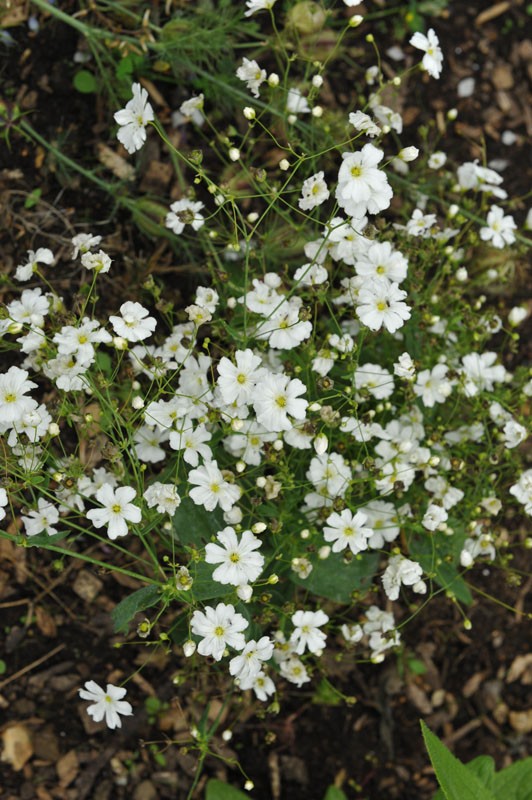
Baby’s Breath
Gypsophila elegans M.Bieb.
This annual species is distinct from Gypsophila paniculata, the perennial Baby’s Breath used more frequently in commercial bouquets.
Caryophyllaceae
Baby’s Breath, Annual Baby’s Breath, Annual Baby’s-Breath, Showy Baby’s Breath, Showy Baby’s-Breath, Maiden’s Breath, Maidens Breath, White Baby’s Breath, Annual Gypsophila
“Baby’s Breath” is also widely used for Gypsophila paniculata and other Gypsophila species. Soapwort usually refers to Saponaria officinalis, a separate saponin-containing species, and should not be treated as an exact alternate name for Gypsophila elegans.
A Low-Risk Plant with Gastrointestinally Irritating Saponins
Annual Baby’s Breath is not associated with a recognized systemic toxin capable of predictably damaging the kidneys, liver, heart, nervous system, or blood-forming tissues. Its primary toxicological concern is a chemically diverse group of triterpenoid saponins capable of irritating the gastrointestinal tract.
This distinction explains why veterinary sources use different labels. One source may classify the plant as non-toxic because it lacks a major organ-damaging poison, while another may call it mildly toxic because vomiting, diarrhea, appetite loss, and lethargy can occur after ingestion.
Those classifications are not meaningfully contradictory. Both describe a plant expected to cause no illness or short-lived digestive upset rather than life-threatening systemic poisoning.
How Triterpenoid Saponins Interact with Membranes
Saponins are glycosides composed of a lipid-compatible aglycone, or sapogenin, attached to one or more water-compatible sugar chains. This amphipathic structure allows them to associate with sterols and other lipids in biological membranes.
The compounds are sometimes described as natural surfactants or detergents. That comparison refers to their molecular behavior and should not be interpreted to mean that Baby’s Breath acts like bleach, drain cleaner, concentrated detergent, or another corrosive household chemical.
When fresh or dried plant material is swallowed, contact between saponins and the gastrointestinal lining may provoke nausea, vomiting, abdominal discomfort, reduced appetite, altered intestinal motility, and diarrhea.
The bitter or unpleasant character of saponin-containing material may limit continued consumption in some animals. It does not prevent illness when a pet repeatedly chews bouquet stems, consumes discarded flowers, or digs up and eats roots.
Gyposenin and Gypsogenin Are Not Interchangeable Terms
Pet Poison Helpline uses the term gyposenin for the saponin or saponin fraction associated with gastrointestinal irritation from Baby’s Breath and related Gypsophila species.
The precise chemical identity represented by that broad veterinary term is not clearly defined in the primary Gypsophila elegans studies. It should not be presented as though one purified molecule named gyposenin has been proved to cause every veterinary case.
Gypsogenin is a defined pentacyclic oleanane-type sapogenin that forms the non-sugar core of numerous Gypsophila saponins. Gypsogenic acid and quillaic acid are related sapogenins encountered in the chemistry of the genus.
Modern phytochemical studies generally characterize individual saponins according to the structure of the aglycone and the arrangement of attached sugar chains rather than treating all Baby’s Breath activity as the effect of one uniform toxin.
Gevrenova and Colleagues’ Root-Culture Study
Reneta Gevrenova, Tanya Stancheva, Yulian Voynikov, Dominique Laurain-Mattar, and Max Henry published “Root in Vitro Cultures of Six Gypsophila Species and Their Saponin Contents” in 2010.
The researchers established excised root cultures from six Gypsophila species and compared their growth and triterpenoid-saponin profiles. The species included G. elegans, G. paniculata, G. glomerata, G. trichotoma, G. scorzonerifolia, and G. viscosa.
The chromatographic profile of cultured G. elegans roots contained as many as approximately 30 detectable saponins. Individual root lines accumulated gypsogenin 3-O-glucuronide equivalents at concentrations reaching approximately 65.42 milligrams per gram of dry weight.
That result confirms that the species is chemically rich in triterpenoid saponins, particularly in cultured roots. It does not mean that flowers and thin stems contain the same concentration or that a pet chewing several blossoms receives an equivalent dose.
Why Cultured-Root Concentrations Cannot Be Applied to Bouquets
The 2010 experiment used roots grown under controlled in-vitro conditions and expressed concentrations relative to dried root biomass. Household exposures usually involve fresh flowers, slender stems, narrow leaves, or dried decorative material.
Saponin concentration may vary with tissue type, genetics, root line, plant age, soil, light, water, developmental stage, cultivation method, and analytical procedure.
A numerical concentration measured in a selected cultured root cannot be converted into a safe flower count, toxic stem length, bouquet weight, or animal dose.
The research is most useful for establishing that the species is not chemically inert and that roots may contain a substantially richer saponin mixture than the aerial material commonly encountered by pets.
The 2018 Triterpene Gene-Delivery Study
Simko Sama, Gerold Jerz, Peter Schmieder, Jan Felix Joseph, Matthias F. Melzig, and Alexander Weng published “Plant Derived Triterpenes from Gypsophila elegans M.Bieb. Enable Non-Toxic Delivery of Gene Loaded Nanoplexes” in 2018.
The researchers investigated selected plant-derived triterpenoid saponins as agents capable of improving the intracellular delivery of gene-loaded nanoplexes. Their work focused on the ability of particular compounds to assist cargo in escaping intracellular endosomal compartments.
This membrane-modifying activity is consistent with the broader biological behavior of certain Gypsophila saponins. It does not establish that an animal swallowing untreated flowers experiences widespread membrane destruction or systemic cell death.
The concentrations, purified compounds, delivery systems, cultured cells, and experimental purpose differ fundamentally from a natural pet exposure.
The 2025 Engineered Hairy-Root Study
Elia Lacchini, Tongtong Qu, Tessa Moses, Alexander N. Volkov, and Alain Goossens published “Engineering Gypsophila elegans Hairy Root Cultures to Produce Endosomal Escape-Enhancing Saponins” in 2025.
The researchers modified hairy-root cultures to study and enhance production of saponins with properties useful for intracellular delivery systems.
This work provides further evidence that the plant produces structurally specialized, biologically active triterpenoid saponins. It remains biotechnology research rather than a veterinary poisoning experiment.
Neither the 2018 nor the 2025 study established a canine, feline, equine, livestock, avian, or small-mammal toxic dose or demonstrated that ordinary plant ingestion causes severe systemic injury.
Roots and Aerial Material Present Different Exposures
The strongest quantitative saponin evidence concerns cultured roots. Dogs may encounter roots while digging in a flower bed, pulling up a plant, or accessing discarded garden material.
Most indoor exposures involve flowers and stems from bouquets. These aerial tissues may still cause gastrointestinal irritation, but their saponin concentration should not be assumed to match selected laboratory root cultures.
Soil, fertilizer, pesticide, mulch, stones, plastic plant markers, irrigation products, and other materials may accompany outdoor root ingestion and alter the expected clinical picture.
Fibrous and Dried Material Can Cause Physical Irritation
Chemistry is not the only possible cause of illness. Long, tangled fresh stems may trigger gagging or vomiting, while brittle dried stems can scratch the mouth or become difficult to swallow.
A sufficiently large mass of plant material can behave as a gastrointestinal foreign body. This is uncommon after a few flowers but becomes more plausible when an animal consumes an entire arrangement, wreath, bundle of dried stems, or material combined with ribbon and floral supplies.
Coughing, repeated unproductive gagging, continuous drooling, inability to swallow, recurrent vomiting, abdominal enlargement, or reduced stool production requires assessment for retained or obstructing material.
Decorative Treatments May Change the Risk
Fresh Baby’s Breath may be dyed, bleached, painted, glittered, perfumed, preserved, or treated with pesticides and fungicides. Dried arrangements may contain adhesives, fixatives, fragrance products, dust, or mold.
These substances can cause signs not expected from untreated G. elegans. Severe salivation, mouth burns, tremors, marked incoordination, abnormal heart activity, breathing difficulty, seizures, or collapse should raise concern for a coating, chemical, another plant, or a mixed exposure.
The florist, supplier, treatment label, preservative package, or product safety information may be necessary to evaluate the complete risk.
No Established Hemolytic, Renal, Hepatic, Cardiac, or Neurologic Syndrome
Saponins can damage red blood cells in certain laboratory systems when cells are exposed directly to sufficiently active compounds. Routine Baby’s Breath ingestion has not been established as a cause of clinically important hemolytic anemia in dogs, cats, horses, or livestock.
Acute kidney failure, liver failure, severe arrhythmia, paralysis, tremors, seizures, coma, and progressive multisystem deterioration are not characteristic expected effects of an uncomplicated exposure.
Pale gums, jaundice, dark urine, reduced urination, abnormal heart rhythm, profound weakness, collapse, or neurologic abnormalities require investigation for another plant, medication, pesticide, chemical, disease, or foreign object.
No Dependable Safe Dose
No safe flower count, stem length, root weight, dried-material amount, saponin concentration, gypsogenin dose, or gyposenin dose has been established for an individual animal.
Risk depends on the amount and form of material, animal size and health, plant part, additional bouquet plants, floral treatments, foreign objects, and whether vomiting or diarrhea continues long enough to cause dehydration.
The available evidence supports a low inherent poisoning risk and a predominantly gastrointestinal syndrome. It does not support intentional feeding or dismissal of persistent, bloody, obstructive, respiratory, or otherwise atypical illness.
Many Animals Develop No Signs
Many dogs, cats, horses, and other animals that chew a small amount of untreated Baby’s Breath remain completely well.
The discovery of several missing flowers does not automatically mean that poisoning will occur. Observation should focus on vomiting, diarrhea, appetite, abdominal comfort, hydration, swallowing, breathing, and the possibility that another bouquet plant or foreign object was also involved.
Early Nausea and Mild Gastrointestinal Irritation
When signs occur, they are generally mild and begin within several hours. Early nausea may appear as lip licking, repeated swallowing, mild drooling, grass eating, restlessness, reduced interest in food, or temporary quietness.
A cat may hide, stop grooming, approach food and turn away, or become less interactive. A dog may pace, repeatedly change resting positions, stretch, or refuse a normally desirable treat.
These signs are nonspecific and can also result from another bouquet plant, dietary indiscretion, foreign material, medication, infection, pancreatitis, or unrelated gastrointestinal disease.
Vomiting
Vomiting may occur once or several times and can contain food, foam, flowers, leaves, or stem fragments.
One episode followed by normal behavior, appetite, water intake, and stool is less concerning than continuing vomiting or an inability to retain water.
Repeated vomiting increases the risk of dehydration, electrolyte abnormalities, esophageal irritation, and aspiration. An animal that vomits every time it drinks may require injectable antiemetic medication and professionally planned fluid therapy.
Diarrhea and Abdominal Discomfort
Diarrhea may range from one soft bowel movement to repeated watery stool. Mucus, urgency, straining, intestinal cramping, or repeated requests to go outside may accompany it.
Abdominal discomfort may appear as pacing, repeated stretching, a hunched posture, guarding of the abdomen, reluctance to be picked up, or reduced activity.
Severe focal pain, marked abdominal enlargement, repeated unproductive retching, or inability to become comfortable is not expected from a small uncomplicated exposure and requires urgent assessment.
Appetite Loss and Temporary Lethargy
Reduced appetite and temporary lethargy generally reflect nausea or abdominal discomfort rather than severe systemic poisoning.
A healthy adult animal may skip one meal and then improve as the gastrointestinal irritation resolves. Continued food refusal is more concerning in kittens, puppies, toy breeds, elderly animals, diabetic animals, and pets with chronic disease.
Cats require particular attention because prolonged food refusal can contribute to serious metabolic complications even when the original plant exposure was mild.
Dehydration Is the Main Medical Complication
Repeated vomiting and diarrhea can cause clinically important dehydration even when the plant itself has low inherent toxicity.
Warning signs include dry or tacky gums, sunken eyes, reduced skin elasticity, worsening weakness, increased thirst, reduced urination, rapid heart rate, and inability to retain water.
Puppies, kittens, toy-breed dogs, elderly animals, and patients with kidney, heart, endocrine, or chronic gastrointestinal disease may deteriorate more rapidly.
Blood Is Not a Characteristic Sign
Blood in vomit or stool is not a characteristic Baby’s Breath effect. A small fresh streak can follow forceful retching or repeated straining, but bleeding should not be accepted automatically as routine plant irritation.
Clots, coffee-ground vomit, black tarry stool, substantial red blood, pale gums, rapid breathing, severe weakness, or collapse requires veterinary examination.
Possible causes include mucosal injury, another poisonous plant, medication, foreign material, infection, parasites, clotting disease, pancreatitis, or unrelated gastrointestinal illness.
Gagging, Coughing, and Swallowing Difficulty
Thin fresh stems, brittle dried stems, wire, wooden floral picks, ribbon, string, or a mass of plant material can become lodged in the mouth, pharynx, or esophagus.
Warning signs include repeated gagging without producing vomit, continuous drooling, coughing, frantic pawing at the mouth, repeated swallowing, regurgitation, inability to swallow saliva, neck extension, noisy breathing, or panic.
These findings represent a possible mechanical emergency rather than the ordinary saponin syndrome.
Skin and Eye Irritation
Fresh sap, pollen, dust, dye, preservatives, pesticides, glitter, fragrance products, or another floral treatment may cause localized skin or eye irritation in a sensitive animal.
Skin findings may include redness, itching, repeated licking, localized swelling, bumps, or hair loss caused by self-trauma.
Eye exposure may cause tearing, squinting, redness, eyelid spasm, light sensitivity, cloudiness, or pawing at the face.
Severe facial swelling, widespread oral blistering, inability to swallow, or breathing difficulty is not the expected Baby’s Breath syndrome and requires immediate assessment for another plant, chemical, insect sting, foreign body, or allergic reaction.
Horses and Livestock
Substantial ingestion may cause reduced appetite, soft stool, diarrhea, abdominal discomfort, or temporary depression in horses and livestock. Severe systemic poisoning has not been established.
Horses cannot vomit. Continuing colic, profuse diarrhea, feed refusal, weakness, fever, abnormal heart activity, or illness affecting several animals requires investigation for another plant, contaminated forage, pesticide, infection, or a different digestive disorder.
Pet Poison Helpline applies a mild-toxicity classification to cattle and horses at the genus level, while ASPCA classifies G. elegans as non-toxic to horses. Both assessments support low inherent risk rather than complete edibility.
Rabbits, Guinea Pigs, Rodents, and Birds
Species-specific clinical reports are limited. These animals should not be intentionally offered Baby’s Breath.
Rabbits and guinea pigs cannot vomit. Appetite loss, reduced fecal production, a hunched posture, abdominal discomfort, tooth grinding, or lethargy can indicate gastrointestinal stasis or another serious disorder.
Birds may show reduced appetite, altered droppings, regurgitation, weakness, poor balance, or reduced activity. Because small animals can deteriorate quickly, continuing signs warrant prompt consultation with an appropriate veterinarian.
Atypical Signs Suggest Another Hazard
Kidney failure, liver failure, severe anemia, abnormal heart rhythm, tremors, seizures, profound incoordination, coma, and collapse are not characteristic expected effects of untreated Baby’s Breath.
These findings require investigation of every other plant, flower treatment, pesticide, preservative, medication, chemical, food, foreign object, and medical condition available to the animal.
Expected Course
Mild gastrointestinal signs commonly begin improving within several hours and generally resolve within approximately twelve to twenty-four hours.
Repeated vomiting, continuing diarrhea, blood, inability to retain water, severe abdominal pain, marked depression, coughing, gagging, reduced stool production, or signs persisting beyond the expected short course requires veterinary reassessment.
Annual Baby’s Breath and Its Native Range
Gypsophila elegans is an annual flowering plant in Caryophyllaceae. Its accepted native range extends from southern Ukraine through Türkiye, the Caucasus, and western and northern Iran.
The species has been introduced into numerous temperate regions and may occur in cultivated flower beds, cutting gardens, escaped ornamental plantings, roadsides, disturbed ground, and wildflower mixtures.
It develops slender branching stems, narrow leaves, and numerous small five-petaled flowers that may be white, pale pink, or deeper pink depending on the selection.
Baby’s Breath Is Not One Botanical Species
The common name Baby’s Breath is applied to several species within Gypsophila.
Annual or Showy Baby’s Breath is Gypsophila elegans. Perennial Baby’s Breath, Gypsophila paniculata, is a larger perennial species widely cultivated for commercial cut-flower production and dried arrangements.
Other species may appear in gardens, floristry, seed mixtures, and regional plant lists under the same broad common name.
A bouquet label stating only “Baby’s Breath” may therefore identify the genus accurately without confirming the exact species.
Baby’s Breath Is Not Soapwort
Soapwort most commonly refers to Saponaria officinalis, another member of Caryophyllaceae with substantial saponin chemistry.
Baby’s Breath and soapwort may produce broadly similar gastrointestinal irritation because both contain saponins, but they are separate genera and should not be presented as botanical synonyms.
Correct identification matters when reconstructing an exposure and when interpreting plant-specific research.
Where Dogs and Cats Encounter It
Dogs and cats most often encounter Baby’s Breath in fresh bouquets, dried arrangements, wreaths, table displays, wedding decorations, craft projects, floral trash, or arrangements knocked to the floor.
Cats may pull at thin moving stems or chew flowers hanging over the side of a vase. Dogs may eat discarded arrangements, raid a trash container, or swallow flowers together with wrapping and decorative material.
Outdoor exposure may occur in flower beds, cutting gardens, seed mixtures, roadside plantings, or compost containing removed plants.
Roots, Flowers, Stems, and Dried Material
All parts should remain inaccessible, including flowers, leaves, stems, roots, sap, seeds, and dried material.
The strongest quantitative saponin evidence concerns cultured roots. Household bouquet exposures generally involve flowers and stems and are therefore not equivalent to the concentrations measured in selected dry root cultures.
Drying does not establish that saponins have been removed. Dried stems may also become brittle and mechanically irritating.
The practical risk depends on the plant part, amount, animal size, physical form of the material, and every decorative or chemical product present.
Why ASPCA and Pet Poison Helpline Use Different Labels
ASPCA classifies Gypsophila elegans as non-toxic to dogs, cats, and horses while acknowledging that vomiting and diarrhea may occur after ingestion.
Pet Poison Helpline classifies Baby’s Breath and related Gypsophila species as mildly toxic because gastrointestinally irritating saponins may cause vomiting, anorexia, diarrhea, and lethargy.
The difference reflects terminology rather than a major disagreement about clinical severity. “Non-toxic” is being used to indicate the absence of a recognized systemic poison, while “mildly toxic” emphasizes that ingestion can still produce clinical signs.
The clearest owner-facing conclusion is that the plant has low inherent toxicity but should not be treated as edible.
Gevrenova and Colleagues’ 2010 Research
Gevrenova and colleagues compared cultured roots from six Gypsophila species and found marked differences in growth and chemical profiles.
Some chromatograms contained approximately 30 detectable saponins. Selected G. elegans root lines accumulated gypsogenin 3-O-glucuronide equivalents at concentrations reaching approximately 65.42 milligrams per gram of dry weight.
The authors found that certain cultured G. elegans roots produced saponin concentrations comparable to or higher than those reported from intact perennial Baby’s Breath roots.
The work demonstrates substantial root chemistry but does not determine the toxicity of ordinary fresh flowers or establish a veterinary dose.
The 2018 Gene-Delivery Research
Sama and colleagues investigated triterpenoid compounds obtained from G. elegans as agents capable of improving intracellular gene delivery.
The study identified membrane-related activity useful for moving gene-loaded nanoplexes from intracellular compartments into the surrounding cell environment.
The term “non-toxic delivery” in the publication title describes the research system and comparative cellular compatibility under those experimental conditions. It does not classify the whole plant as edible or eliminate its potential to cause gastrointestinal irritation.
The 2025 Engineered Hairy-Root Research
Lacchini, Qu, Moses, Volkov, and Goossens engineered G. elegans hairy-root cultures to investigate production of endosomal escape-enhancing saponins.
The research advances understanding of how specialized plant saponins are produced and how their structures influence membrane-related biotechnology applications.
It does not demonstrate severe whole-animal poisoning, identify a household toxic dose, or predict the clinical outcome after a dog or cat eats bouquet material.
Mixed Bouquets Require Complete Identification
A mixed bouquet may contain plants much more dangerous than Baby’s Breath. Identifying only the visible filler flower is not sufficient.
This is especially critical for cats. True lilies in the genera Lilium and Hemerocallis can cause fatal acute kidney injury after very small exposures to flowers, leaves, pollen, stems, or contaminated vase water.
Tulips, daffodils, chrysanthemums, hydrangeas, eucalyptus, foxglove, oleander, autumn crocus, and numerous other ornamental plants create different toxicological concerns.
Owners should preserve the entire arrangement, florist label, purchase record, and photographs rather than discarding everything except the Baby’s Breath.
Floral Foam, Ribbon, String, Wire, and Picks
Floral foam, ribbon, string, wire, pins, wooden picks, tape, plastic clips, cellophane, and broken vase fragments can cause choking, puncture injury, or gastrointestinal obstruction independently of plant chemistry.
Ribbon and string are especially dangerous to cats because they can form a linear foreign body. One portion may become anchored beneath the tongue or within the stomach while the remaining length advances through the intestines.
Material extending from the mouth or rectum must never be pulled. Traction can cut or bunch the intestines and cause perforation.
Wire, pins, broken glass, and wooden picks may penetrate the mouth, esophagus, stomach, or intestines.
Vase Water and Floral Preservatives
Vase water may contain decomposing vegetation, bacteria, sugar, acidifying compounds, fertilizer, fungicide, or commercial preservative.
A small drink of ordinary vase water may cause no signs or mild gastrointestinal upset. Water containing bleach, essential oils, aspirin, medication, concentrated fertilizer, or an unknown homemade recipe requires separate assessment.
Vase water from a mixed bouquet may also contain pollen or plant debris from a more dangerous flower.
Dyed, Bleached, Glittered, Scented, and Preserved Flowers
Commercial and craft Baby’s Breath may be dyed, bleached, painted, glittered, scented, preserved, or sprayed with fixatives.
The exact formulation determines the additional risk. Severe salivation, mouth burns, neurologic abnormalities, breathing difficulty, or collapse is inconsistent with ordinary untreated Baby’s Breath and may indicate a chemical exposure.
Retain the product container, florist information, receipt, or manufacturer details whenever treated flowers are involved.
Rabbits, Guinea Pigs, Rodents, and Birds
Published species-specific case evidence remains limited. Baby’s Breath should not be offered as forage, enrichment, nesting material, or a decorative cage plant.
Rabbits and guinea pigs are vulnerable to gastrointestinal stasis when pain, stress, or illness causes food intake to decline. Reduced appetite or fecal production requires prompt attention regardless of the plant’s low systemic toxicity.
Birds and small rodents may receive a proportionally larger exposure from a small amount of plant material. Persistent gastrointestinal or behavioral changes warrant species-appropriate veterinary guidance.
Diagnosis
No routine veterinary test confirms Baby’s Breath ingestion or measures a clinically useful gyposenin or saponin concentration.
Diagnosis depends on exposure history, reliable plant identification, the expected mild gastrointestinal course, and exclusion of another plant, foreign object, chemical, medication, or disease.
Useful evidence includes the complete bouquet, representative stems and flowers, seed packets, florist or nursery labels, receipts, photographs, vase-water ingredients, preservative packaging, and information about dyes or coatings.
Bloodwork, urinalysis, fecal testing, radiographs, ultrasound, endoscopy, or surgery may be appropriate when vomiting or diarrhea continues, dehydration develops, blood is present, abdominal pain is severe, stool production decreases, or another object may have been swallowed.
Prognosis and Prevention
The prognosis is excellent for an uncomplicated Baby’s Breath exposure. Most animals remain asymptomatic or recover from mild gastrointestinal signs within approximately twelve to twenty-four hours.
A severe or prolonged course suggests dehydration, another bouquet plant, chemical treatment, foreign-body ingestion, or unrelated disease.
Keep fresh bouquets, dried arrangements, wreaths, vase water, floral foam, ribbons, and discarded stems outside animal access.
Remove fallen flowers promptly, inspect mixed bouquets before bringing them into a home with cats, and discard plant and floral material in a closed container.
Immediate Steps After Ingestion
- Remove the entire source. Secure the plant, complete bouquet, dried arrangement, fallen flowers, stems, roots, vase water, and floral trash.
- Identify every plant involved. Do not assume that the visible Baby’s Breath was the only flower chewed. Preserve the full arrangement and florist information.
- Check for missing foreign material. Determine whether ribbon, string, wire, floral foam, wooden picks, pins, tape, plastic clips, cellophane, or broken vase pieces may have been swallowed.
- Remove only loose visible material. Carefully lift pieces resting at the lips or front of the mouth when the animal remains calm. Do not reach blindly toward the throat.
- Allow voluntary access to fresh water. An alert animal swallowing normally may drink on its own. Do not pour, syringe, spray, or force fluid into the mouth.
- Preserve evidence. Save the plant, bouquet, label, receipt, seed packet, preservative packaging, photographs, and any product used to dye, scent, glitter, bleach, or preserve the flowers.
- Monitor carefully. Watch for vomiting, diarrhea, appetite loss, abdominal pain, lethargy, coughing, gagging, reduced stool production, or evidence that another plant or object was swallowed.
Do Not Attempt Unsupervised Home Treatment
- Do not induce vomiting. Hydrogen peroxide, salt, mustard, syrup of ipecac, detergent, oil, manual gagging, and fingers in the throat can cause aspiration, gastrointestinal injury, sodium poisoning, or trauma.
- Never give hydrogen peroxide to a cat. It can cause severe feline esophagitis, gastritis, ulceration, and bleeding.
- Never attempt to induce vomiting in a horse. Horses cannot vomit.
- Do not force mouth flushing. Pouring or spraying water into the mouth may cause aspiration, especially when an animal is gagging, vomiting, weak, or resisting.
- Do not give activated charcoal at home. It is generally unnecessary for uncomplicated Baby’s Breath ingestion and may cause vomiting, constipation, dehydration, or aspiration.
- Do not force food or fluids. Forced administration does not neutralize saponins and may trigger vomiting or enter the lungs.
- Do not give owner-selected medication. Antihistamines, bismuth products, antacids, antidiarrheal medication, sucralfate, pain relievers, and human or leftover veterinary prescriptions must be selected according to the animal’s actual condition.
- Do not pull ribbon or string. Material extending from the mouth or rectum may be anchored internally and can damage the intestines if pulled.
After Skin or Coat Contact
If sap, pollen, dye, preservative, pesticide, glitter, fragrance, or another floral product is present on the coat, prevent grooming.
Wear gloves and wash the affected area with lukewarm water and a mild species-appropriate cleanser. Rinse thoroughly.
Do not apply solvents, oils, alcohol, vinegar, baking soda, essential oils, or another household neutralizer.
Persistent redness, swelling, itching, repeated licking, pain, discharge, or hair loss requires veterinary guidance.
Eye Exposure
If loose plant debris or another floral substance entered an eye and no object is embedded, begin gentle irrigation with sterile saline or clean lukewarm water while preventing rubbing.
Do not use tweezers, cotton swabs, cloth, human redness drops, or leftover eye medication on the eye surface.
A wire, pick, glass fragment, or other object that appears to penetrate the eye should remain in place during transport rather than being removed at home.
Continuing squinting, tearing, redness, cloudiness, discharge, bleeding, light sensitivity, or inability to open the eye requires prompt examination.
When Veterinary Examination Is Especially Important
- Repeated vomiting or diarrhea: Continuing fluid loss can cause dehydration and electrolyte abnormalities.
- Inability to retain water: An animal that vomits after drinking may require injectable antiemetic medication and fluid support.
- Blood in vomit or stool: Bleeding is not expected after a minor uncomplicated exposure.
- Marked weakness, depression, or severe abdominal pain: These findings may indicate dehydration, obstruction, another toxin, or unrelated disease.
- Coughing, gagging, or difficulty swallowing: A stem, wire, floral pick, ribbon, or another object may be lodged in the mouth, throat, or esophagus.
- Reduced or absent stool: This may indicate gastrointestinal obstruction, especially when vomiting or abdominal pain is also present.
- Possible true-lily exposure in a cat: Contact with a Lilium or Hemerocallis flower, leaf, pollen, stem, or contaminated vase water requires immediate emergency care.
- Possible ribbon, string, wire, foam, or glass ingestion: These materials can cause choking, puncture injury, linear foreign-body damage, or obstruction.
- Persistent facial swelling or breathing difficulty: These signs are not characteristic of mild Baby’s Breath irritation and require immediate assessment.
- Continuing illness in a rabbit, guinea pig, bird, horse, or livestock animal: Appetite loss and gastrointestinal dysfunction may become serious quickly in some species.
Veterinary Decontamination
Professional emesis is rarely necessary after a small confirmed Baby’s Breath exposure because the inherent poisoning risk is low and many symptomatic animals have already vomited.
A veterinarian may consider emesis after a recent substantial exposure in a fully alert, stable dog or cat that is breathing and swallowing normally and has not swallowed sharp, caustic, linear, or obstructing material.
Activated charcoal is not routinely indicated. It cannot remove ribbon, wire, floral foam, glass, or another foreign object and may be aspirated by a vomiting or poorly swallowing animal.
Gastric lavage is not routine treatment and requires anesthesia, intubation, airway protection, and a compelling clinical indication.
Veterinary Evaluation and Supportive Care
The veterinarian will assess hydration, abdominal comfort, vomiting and diarrhea, appetite, swallowing, breathing, and possible exposure to another flower, chemical, or foreign object.
Veterinarian-selected antiemetics may control continuing nausea or vomiting. Subcutaneous or intravenous fluids may correct dehydration and measured electrolyte abnormalities.
Dietary management and temporary nutritional support may be used when gastrointestinal irritation interferes with normal eating.
Sucralfate or acid-suppressive medication may be considered under veterinary care when documented esophageal, gastric, or ulcerative mucosal injury warrants protection. Neither is a Baby’s Breath antidote.
Foreign-Body Treatment
Radiographs, ultrasound, contrast imaging, endoscopy, or surgery may be required when ribbon, string, wire, floral foam, wooden picks, glass, plastic, tangled stems, or another object was swallowed.
A foreign body may not be visible directly on every ordinary radiograph. Clinical signs and additional imaging may be necessary even when the first image is inconclusive.
Linear material may require surgical treatment when it becomes anchored and damages the intestines. Delay increases the risk of perforation, peritonitis, and sepsis.
Rabbits, Guinea Pigs, Birds, Horses, and Livestock
Do not force food, water, oil, charcoal, or medication into an animal that is weak, coughing, bloated, recumbent, or swallowing poorly.
Rabbits and guinea pigs with reduced appetite or fecal production require prompt assessment for gastrointestinal stasis and other causes of digestive shutdown.
Horses with continuing colic, diarrhea, feed refusal, weakness, or signs of choke require large-animal veterinary examination.
Several affected animals suggest contaminated forage, another plant, chemical exposure, or infection and require investigation of the complete environment.
Recovery, Prognosis, and Prevention
The prognosis is excellent after a small confirmed exposure involving untreated Baby’s Breath alone.
Mild vomiting or diarrhea generally improves within approximately twelve to twenty-four hours.
Persistent or worsening signs require reassessment because dehydration, another flower, chemical treatment, foreign material, or unrelated disease may be responsible.
Keep bouquets, dried arrangements, wreaths, vase water, floral foam, ribbon, wire, and discarded plant material in areas animals cannot access.
Frequently Asked Questions About Baby’s Breath and Animal Poisoning
Is Baby’s Breath poisonous to dogs and cats?
Annual Baby’s Breath is not considered a major systemic poison. ASPCA classifies Gypsophila elegans as non-toxic to dogs and cats, while acknowledging that vomiting and diarrhea may occur. Other poison services describe the genus as mildly toxic because its saponins can cause vomiting, appetite loss, diarrhea, and lethargy. The practical risk is usually mild gastrointestinal irritation.
Why do veterinary sources classify Baby’s Breath differently?
The difference is largely one of terminology. “Non-toxic” emphasizes that the plant lacks a recognized kidney, liver, heart, blood, or neurologic poison. “Mildly toxic” emphasizes that ingestion can still produce clinical signs. Both classifications describe a low-risk digestive irritant rather than a plant expected to cause fatal systemic poisoning.
Is Baby’s Breath poisonous to horses or livestock?
Severe systemic poisoning is not expected. A substantial ingestion may cause reduced appetite, soft stool, diarrhea, abdominal discomfort, or temporary depression. Continuing colic, profuse diarrhea, feed refusal, weakness, fever, or illness affecting several animals requires investigation for another plant, contaminated forage, pesticide, infection, or a different gastrointestinal disorder.
What is the correct scientific name for annual Baby’s Breath?
The accepted name is Gypsophila elegans M.Bieb. It is an annual species in Caryophyllaceae. The common name Baby’s Breath is also used for other species, so the scientific name is important when identifying a garden plant or interpreting research.
Is annual Baby’s Breath the same as the florist Baby’s Breath used in bouquets?
Not always. Gypsophila elegans is annual or showy Baby’s Breath. The larger perennial species Gypsophila paniculata is especially common in commercial bouquets. Both belong to the same saponin-containing genus and are expected to present a similarly low gastrointestinal risk, but they are separate species.
Is Baby’s Breath the same as soapwort?
No. Soapwort usually refers to Saponaria officinalis, a separate plant in the same family. Both genera contain saponins and may cause gastrointestinal irritation, but they should not be treated as botanical synonyms or assumed to have identical chemistry and potency.
What toxins are present in Baby’s Breath?
The principal concern is a diverse mixture of triterpenoid saponins. Important sapogenin cores found across the genus include gypsogenin, gypsogenic acid, and quillaic acid. No single compound has been proved to cause every veterinary case, and no toxic animal dose has been established.
What is gyposenin?
Gyposenin is the term used in some veterinary poison summaries for the saponin or saponin fraction associated with Baby’s Breath gastrointestinal irritation. The precise chemical identity represented by that broad term is not clearly defined in the primary G. elegans literature and should not be treated as one fully characterized toxin with a known animal dose.
What is gypsogenin?
Gypsogenin is a defined pentacyclic triterpenoid sapogenin that forms the non-sugar core of numerous Gypsophila saponins. Sugar chains attached to this core create different saponin molecules with different biological properties. Gypsogenin and gyposenin are related terms but are not alternate spellings of one compound.
Which parts contain the most saponins?
The strongest quantitative evidence concerns cultured roots. Selected G. elegans root cultures accumulated complex saponin mixtures and reached approximately 65.42 milligrams of gypsogenin 3-O-glucuronide equivalents per gram of dry root. This does not establish the concentration in fresh flowers or bouquet stems.
Does the root study mean one Baby’s Breath flower is highly toxic?
No. The study used selected roots grown under controlled laboratory conditions and measured concentrations relative to dried biomass. Household exposures usually involve fresh flowers and thin stems. Tissue type, moisture, genetics, growth conditions, and analytical methods differ too greatly to convert the root result into a flower count or pet dose.
What did the gene-delivery studies show?
The 2018 and 2025 studies investigated selected G. elegans saponins because of their ability to assist intracellular delivery systems by influencing endosomal membranes. These are biotechnology findings involving purified compounds and engineered cultures. They do not demonstrate severe whole-animal poisoning after ordinary ingestion.
Which symptoms are most likely?
The most likely signs are nausea, vomiting, diarrhea, reduced appetite, abdominal discomfort, and temporary lethargy. Many animals remain completely well. Repeated fluid loss may cause dehydration, particularly in young, elderly, very small, or medically fragile animals.
How quickly do symptoms begin?
Nausea, vomiting, appetite reduction, or diarrhea may begin within several hours. Mild signs should generally begin improving after access ends and commonly resolve within approximately twelve to twenty-four hours. A delayed or prolonged course raises concern for another flower, foreign material, chemical treatment, or unrelated disease.
Can Baby’s Breath cause blood in vomit or stool?
Blood is not a characteristic sign. A tiny fresh streak can follow forceful retching or straining, but clots, coffee-ground vomit, black tarry stool, substantial red blood, pale gums, rapid breathing, weakness, or collapse requires veterinary examination for more significant gastrointestinal injury or another cause.
Can Baby’s Breath cause kidney, liver, heart, or neurologic failure?
Those are not expected effects of an uncomplicated exposure. Reduced urination, jaundice, abnormal heart rhythm, profound weakness, tremors, seizures, coma, or collapse requires investigation for another plant, medication, pesticide, chemical, foreign body, or medical disease.
Are dried Baby’s Breath flowers safe?
Dried material should still remain inaccessible. Drying does not prove that saponins have been removed, and brittle stems may cause mouth or throat irritation. Dried arrangements may also contain dyes, bleach, glitter, adhesives, fragrances, preservatives, wire, ribbon, or mold.
Are dyed, bleached, glittered, or preserved flowers more dangerous?
They can be. The risk depends on the exact coating, preservative, dye, solvent, fragrance, adhesive, or pesticide. Severe salivation, mouth injury, tremors, abnormal coordination, breathing difficulty, seizures, or collapse is not the expected untreated-plant syndrome and requires product-specific assessment.
What if my cat chewed Baby’s Breath from a mixed bouquet?
Identify every flower immediately. Baby’s Breath itself is expected to cause no illness or mild gastrointestinal irritation, but true lilies in the genera Lilium and Hemerocallis can cause fatal acute kidney injury in cats after very small exposures to flowers, leaves, pollen, stems, or contaminated vase water.
Is Baby’s Breath vase water poisonous?
Plain vase water is not a Baby’s Breath toxin, but it may contain bacteria, decomposing plant material, sugar, fertilizer, preservatives, fungicide, pollen from another flower, or a homemade additive. Preserve the ingredient label or recipe when an animal becomes ill after drinking it.
Can floral foam, ribbon, string, or wire be more dangerous than the plant?
Yes. These materials may cause choking, puncture injury, or gastrointestinal obstruction. Ribbon and string can form a linear intestinal foreign body, especially in cats. Material extending from the mouth or rectum must never be pulled because it may be anchored internally.
What about rabbits, guinea pigs, rodents, and birds?
Species-specific evidence is limited, and these animals should not be offered Baby’s Breath. Appetite loss or reduced fecal production can become serious quickly in rabbits and guinea pigs. Birds and small rodents may receive a proportionally larger exposure from a small amount of plant material. Continuing signs require species-appropriate veterinary guidance.
Should I make my pet vomit?
No home vomiting method should be used. Hydrogen peroxide, salt, mustard, ipecac, detergent, and manual gagging can cause gastrointestinal injury or aspiration. Professional emesis is rarely necessary for a small confirmed exposure and may be unsafe when another flower, wire, glass, ribbon, or caustic substance was swallowed.
Should I give activated charcoal or stomach medicine?
Do not give activated charcoal, bismuth products, antacids, antidiarrheal medication, sucralfate, or another stomach remedy without veterinary direction. Charcoal is generally unnecessary for this low-risk plant and may be aspirated. Sucralfate is reserved for documented mucosal injury and is not a Baby’s Breath antidote.
How is Baby’s Breath ingestion treated?
There is no specific antidote. Veterinary treatment is supportive and may include anti-nausea medication, fluid therapy, dietary management, and treatment of documented gastrointestinal injury. Imaging, endoscopy, or surgery may be necessary when ribbon, wire, floral foam, glass, tangled stems, or another object was swallowed.
What is the prognosis?
The prognosis is excellent for a small confirmed exposure involving untreated Baby’s Breath alone. Most affected animals recover within approximately one day. A severe or prolonged course suggests dehydration, another toxic flower, a chemical treatment, foreign-body ingestion, or unrelated illness.