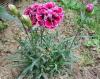
Sweet William Mild Saponin Irritation, Bouquet and Garden Exposure, Dermatitis Risk, and Carnation Name Confusion
Is Sweet William Poisonous to Dogs, Cats, Horses, and Livestock?
Yes—Sweet William, Dianthus barbatus L., is mildly poisonous to dogs, cats, horses, livestock, rabbits, guinea pigs, birds, and other animals that eat it or have repeated skin contact with it. The expected poisoning pattern is usually mild: vomiting, diarrhea, reduced appetite, oral discomfort, drooling, temporary quietness, or localized skin irritation. Serious systemic poisoning is not expected after an ordinary Sweet William exposure, but the plant should not be treated as pet-safe browse, bouquet enrichment, rabbit food, bird shredding material, or livestock forage.
Sweet William is a true Dianthus species and is closely related to carnations and garden pinks, but it is not the same plant as carnation, Dianthus caryophyllus. Sweet William typically produces dense, flat-topped clusters of many smaller flowers, while carnations usually produce larger individual or loosely grouped flowers on longer stems. Exact-species research on Dianthus barbatus has identified triterpenoid saponins called barbatosides, which support the page’s mild irritant-saponin framing. Mixed bouquets remain more dangerous than Sweet William alone because lilies, daffodils, tulips, chrysanthemums, eucalyptus, floral preservatives, dyes, wire, ribbon, and floral foam may create separate hazards.
About this guide: This page provides general pet-poisoning information and cannot diagnose or treat an individual animal. For any suspected exposure, contact a veterinarian or animal poison-control service immediately. Do not induce vomiting, give medication, or attempt home decontamination unless directed by a veterinary professional.
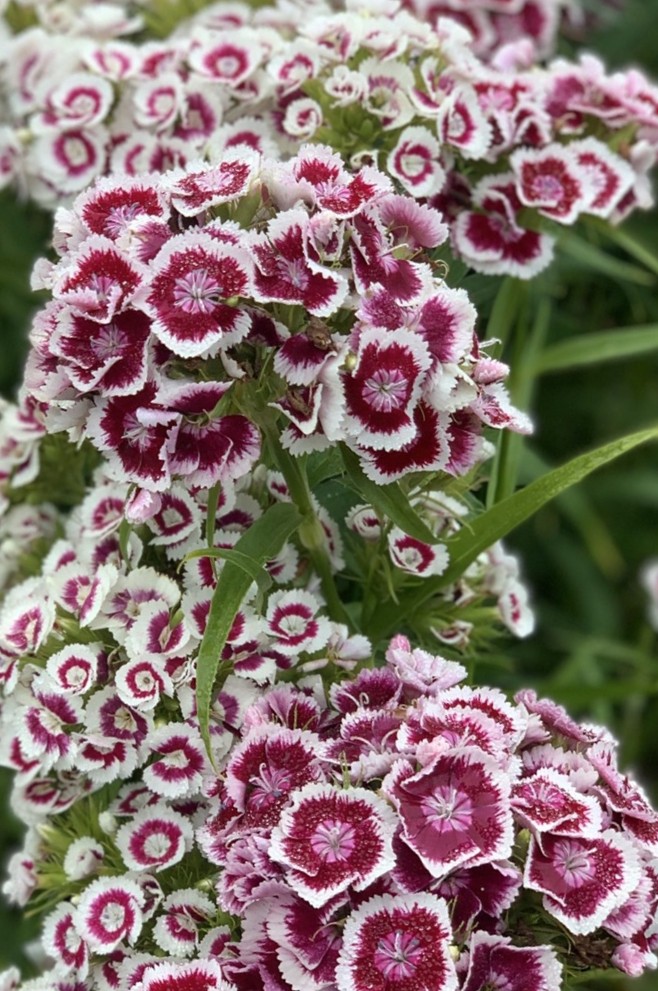
Sweet William
Dianthus barbatus L.
Accepted infraspecific taxa include:
- Dianthus barbatus var. barbatus
- Dianthus barbatus var. asiaticus Nakai
- Dianthus barbatus var. compactus (Kit.) Heuff.
Historical synonyms include:
- Caryophyllus barbatus (L.) Moench
- Cylichnanthus barbatus (L.) Dulac
- Dianthus fimbriatus subsp. barbatus (L.) Bonnier
- Silene barbata (L.) E.H.L.Krause
- Tunica barbata (L.) Scop.
Important cultivated and trade names include:
- Dianthus barbatus ‘Green Ball’
- Dianthus barbatus ‘Nigrescens’
- Dianthus barbatus ‘Sooty’
- Dianthus barbatus ‘Dash’ series
- Dianthus barbatus ‘Amazon’ series
- Dianthus barbatus ‘Barbarini’ series
Important non-synonym confusion names:
- Dianthus caryophyllus L. — Carnation or Clove Pink; separate Dianthus species often confused with Sweet William in florist, nursery, and poison-list naming
- Dianthus plumarius L. — Garden Pink; separate Dianthus species
- Dianthus deltoides L. — Maiden Pink; separate Dianthus species
- Dianthus chinensis L. — China Pink; separate Dianthus species
- Dianthus gratianopolitanus Vill. — Cheddar Pink; separate Dianthus species
- Dianthus chinensis × Dianthus barbatus — interspecific garden hybrids sometimes sold under Dianthus or Sweet William-type trade names
- Gypsophila paniculata L. — Baby’s Breath; separate Caryophyllaceae bouquet plant, not Sweet William
- Lilium spp. and Hemerocallis spp. — true lilies and daylilies; unrelated bouquet plants that create a severe kidney emergency in cats
Caryophyllaceae
Commonly called the Carnation or Pink Family.
Sweet William; Sweet-William; Sweetwilliam; Bunch Pink; Bearded Pink; Bearded Dianthus; London Pride; Sweet William Pink; Cluster-Head Dianthus; Clustered Pink; Dianthus; Pink; Pinks.
Scientific and historical search names include Dianthus barbatus L., Dianthus barbatus var. barbatus, Dianthus barbatus var. asiaticus Nakai, Dianthus barbatus var. compactus (Kit.) Heuff., Caryophyllus barbatus (L.) Moench, Cylichnanthus barbatus (L.) Dulac, Silene barbata (L.) E.H.L.Krause, and Tunica barbata (L.) Scop.
“Carnation,” “Common Carnation,” “Wild Carnation,” and “Clove Pink” refer more properly to Dianthus caryophyllus, a separate Dianthus species with larger individual or loosely grouped flowers on longer stems. Sweet William usually produces many smaller flowers in a dense, flat-topped cluster. “Pinks” may refer broadly to numerous Dianthus species and hybrids, including Garden Pink, Maiden Pink, China Pink, Cheddar Pink, Carnation, and Sweet William. A cultivar label or scientific identification is needed before assuming that every plant called a pink is D. barbatus.
Triterpenoid Saponins Are the Best-Supported Toxic Constituents
The best-supported toxic constituents in Sweet William are triterpenoid saponins and related mild irritant compounds. Saponins consist of a lipid-compatible non-sugar portion joined to one or more water-compatible sugar chains. This amphiphilic structure allows them to interact with biological membranes and helps explain the mild gastrointestinal irritation and occasional dermatitis associated with Dianthus exposures.
Exact-species phytochemical research on Dianthus barbatus cv. “China Doll” isolated two saponins called barbatosides A and B. The aglycone of each was identified as quillaic acid, a pentacyclic triterpene sapogenin. The sugar chains contained combinations of rhamnose, arabinose, fucose, xylose, galactose, glucose, mannose, and unidentified sugar components. This confirms that Sweet William contains defined triterpenoid saponins rather than only a vague unknown irritant.
Barbatosides and Chemical Boundaries
Barbatoside A and barbatoside B demonstrate that the plant’s chemistry is more specific than a generic “mild irritant” label. They do not, however, establish a veterinary toxic dose, prove which exact compound causes vomiting in a dog or cat, or show that every cultivar contains the same concentration. The original phytochemical work was designed to isolate and characterize compounds, not to reproduce pet poisoning.
Sweet William should also not be described as having the exact same chemistry as carnation. Carnation, Dianthus caryophyllus, has its own exact-species saponin evidence built around gypsogenic-acid glycosides. Sweet William’s key exact-species saponin evidence involves quillaic-acid barbatosides. Both belong to Caryophyllaceae and both fit a mild saponin-irritant pattern, but they are not botanical or chemical synonyms.
How Saponins May Cause Mild Gastrointestinal Signs
Saponins can irritate the lining of the stomach and intestines. Membrane interaction may stimulate nausea-like behavior, salivation, vomiting, abdominal discomfort, intestinal secretion, and diarrhea. Many plant saponins are absorbed inefficiently from an intact gastrointestinal tract, which helps explain why Sweet William poisoning is usually mild and localized to the digestive tract rather than producing a predictable systemic toxicosis.
Plant fiber, stem texture, and swallowed floral material can add mechanical irritation, but the page should not dismiss the plant as merely indigestible greenery. The exact-species saponin evidence supports a true mild toxic principle. A few petals may cause no signs, while eating multiple leaves, stems, flowers, seed heads, or repeated bouquet material can produce more noticeable vomiting or diarrhea.
Laboratory Membrane Effects Do Not Equal Clinical Hemolysis
Saponins can disrupt red-blood-cell membranes under certain laboratory conditions when concentrated compounds are placed directly in contact with blood. That property does not establish clinical hemolytic anemia after an animal eats Sweet William. A swallowed saponin must survive digestion, be absorbed, reach the bloodstream, and occur at sufficient concentration before laboratory membrane activity becomes clinically relevant.
Anemia, jaundice, dark urine, unusual bruising, bleeding, kidney failure, liver failure, seizures, coma, and cardiac arrhythmia are not expected effects of ordinary Sweet William exposure. Those findings should prompt investigation for another poisonous plant, medication, chemical exposure, onion or garlic exposure, acetaminophen, zinc, parasites, immune-mediated disease, or another medical disorder.
Other Plant Constituents
Sweet William also contains flavonoids, phenolic compounds, pigments, volatile aromatic constituents, carbohydrates, proteins, and other ordinary plant metabolites. Some may contribute to taste, color, plant defense, mucosal irritation, or contact sensitivity. Identifying a chemical group in the plant does not automatically prove that it causes clinical poisoning in animals at ordinary exposure amounts.
The clinically useful conclusion is that Sweet William contains a mild irritant mixture in which triterpenoid saponins are chemically supported. Laboratory findings about analgesic, anti-inflammatory, antimicrobial, antioxidant, pigment, or extract activity should not be converted into unsupported claims of medicinal benefit or severe organ toxicity in exposed pets.
Skin Irritation and Dermatitis
Veterinary references describe mild dermatitis as part of the practical Dianthus exposure pattern. Skin reactions may result from direct irritation, grooming of plant residue, repeated contact with foliage, sap, pollen, or florist material, or allergic sensitization in an individual animal. The muzzle, lips, paws, face, sparsely haired abdomen, and areas that contact garden plants or bouquets are likely sites.
Florist and greenhouse exposures can be complicated by pesticide residues, preservatives, mites, molds, dyes, glitters, perfumes, and other plant species. A dermatitis case after a bouquet should therefore not be blamed on Sweet William alone unless the whole exposure has been considered. Washing plant residue from the coat is useful because grooming can convert a skin exposure into an oral exposure.
Poisonous Parts and Exposure Forms
No plant part has been established as harmless for unrestricted animal consumption. Leaves, stems, flowers, sap, roots, seeds, seed heads, and cut-flower material should all be treated as potentially irritating. The aerial portions are the most realistic source for pets because they are accessible in garden beds, containers, bouquets, dried arrangements, and florist waste.
Dried Sweet William should not be assumed safe because nonvolatile saponins can persist after the tissue loses water. Fallen petals, cut stems, seed heads, dried bouquets, spent flower clusters, vase water, and compostable florist scraps should not be used as chew material, bedding, bird enrichment, rabbit forage, tortoise browse, poultry treats, or livestock feed.
No Reliable Toxic Dose
No dependable toxic dose has been established for dogs, cats, horses, cattle, sheep, goats, pigs, rabbits, guinea pigs, birds, reptiles, or other animals. Risk depends on the animal’s size, species, amount consumed, plant tissue, cultivar, chemical treatment, individual sensitivity, and whether the animal repeatedly returns to the plant.
The absence of symptoms after one small exposure should not be used as proof that future access is safe. Cats that chew bouquets repeatedly, puppies that eat stems, rabbits that stop eating after mild stomach irritation, and birds that shred flowers relative to small body size deserve more caution than a single adult dog that mouthed one petal and stayed normal.
Onset and Early Progression
Most Sweet William exposures cause no signs or mild gastrointestinal illness. A dog or cat may lick its lips, drool, lose interest in food, vomit, pass loose stool, or appear temporarily quiet and uncomfortable. Clinical signs generally develop within several hours, although an exact onset interval has not been established for this species. Plant fragments may be visible in vomit or stool, but their absence does not exclude ingestion.
The expected course is mild and self-limiting when the exposure is limited to Sweet William and the animal remains bright, hydrated, and able to keep water down. The case becomes more concerning when vomiting is repeated, diarrhea is profuse, blood appears, the animal refuses food, or the exposure involved a mixed bouquet, floral foam, ribbon, wire, preservative, dye, pesticide residue, or unidentified plant.
Vomiting, Diarrhea, and Dehydration
Vomiting is usually limited and self-resolving. Repeated vomiting can irritate the esophagus, cause dehydration, and produce small streaks of fresh blood after forceful retching. Frequent bloody vomit, dark coffee-ground material, marked abdominal pain, pale gums, or inability to retain water is not consistent with an uncomplicated mild exposure and requires veterinary examination.
Diarrhea may occur alone or with vomiting. Continuing fluid loss can produce tacky gums, weakness, reduced skin elasticity, sunken eyes, and decreased urination. Puppies, kittens, toy breeds, elderly animals, and pets with kidney, heart, endocrine, or gastrointestinal disease can become dehydrated more quickly than healthy adults after the same apparent exposure.
Oral Discomfort and Bouquet-Related Irritation
Some animals show mild oral discomfort after chewing stems, leaves, flowers, or seed heads. Signs may include lip licking, drooling, pawing lightly at the mouth, chewing motions, reluctance to eat, or briefly turning away from food and water. Sweet William does not produce the severe raphide-type mouth injury expected from dumb cane, pothos, or calla lily, but mild irritation is plausible.
Mixed bouquets complicate the picture. A cat that chewed Sweet William may also have contacted lily pollen, daffodil stems, tulip bulbs, chrysanthemum foliage, eucalyptus, baby’s breath, floral preservative, dyed water, or foreign material. More severe drooling, mouth pain, collapse, kidney signs, neurologic signs, or systemic illness should not be attributed automatically to Sweet William.
Skin and Contact Signs
Mild contact dermatitis may develop after an animal lies in, rubs against, or repeatedly handles Sweet William foliage, flowers, pollen, or sap. Possible signs include redness, itching, licking, rubbing, localized swelling, small papules, scaling, or hair loss. Irritation commonly affects the muzzle, lips, face, paws, sparsely haired abdomen, or another area that contacted plant material.
Persistent licking or scratching can convert a minor reaction into an open, moist, or infected lesion. A sensitized animal could theoretically develop a more pronounced allergic response, although severe reactions are not the usual Sweet William syndrome. Rapid facial swelling, hives, swollen eyelids, wheezing, noisy breathing, weakness, blue or gray mucous membranes, or collapse requires emergency care.
Dogs and Cats
Dogs may eat fallen petals, stems, garden plants, container plants, discarded florist waste, or arrangements placed within reach. Expected signs are mild vomiting, diarrhea, reduced appetite, drooling, oral discomfort, or temporary quietness. Dogs that swallow ribbon, wire, plastic picks, floral foam, or woody stems may develop signs that reflect a foreign body or obstruction rather than Sweet William toxicity.
Cats may chew leaves, pull flowers from a vase, play with fallen petals, or drink bouquet water. A possible true-lily exposure in a cat is an emergency even if the Sweet William itself is only mildly toxic. Cats with repeated vomiting, persistent food refusal, dehydration, weakness, or any suspicion of lily exposure should be examined promptly.
Horses and Livestock
Horses cannot vomit. An exposed horse may show reduced appetite, mild abdominal discomfort, soft stool or diarrhea, salivation, or irritation where the plant contacted the muzzle or skin. Exact equine case reports are limited, and severe colic, profuse diarrhea, weakness, neurologic signs, fever, or collapse should prompt investigation for other plants, pesticides, spoiled feed, intestinal disease, or mixed ornamental clippings.
Cattle, sheep, goats, camelids, and pigs may encounter Sweet William through greenhouse waste, florist refuse, event decorations, garden access, or ornamental clippings. The expected risk is mild digestive or skin irritation. Group illness or severe disease after consuming ornamental waste requires identification of every plant and evaluation for pesticides, fertilizers, floral preservatives, plastic ties, wire, ribbon, spoiled material, and other toxins.
Rabbits, Guinea Pigs, Birds, and Other Small Animals
Rabbits, guinea pigs, and several other small mammals cannot vomit. Possible signs include appetite loss, tooth grinding, abdominal discomfort, diarrhea, lethargy, and reduced fecal production. Even mild mouth or stomach irritation can lead to gastrointestinal hypomotility when a rabbit stops eating, making persistent food refusal more important than the plant’s generally low toxicity rating.
Bird-specific evidence is limited. A parrot or other bird may shred flowers, leaves, seed heads, or bouquet stems and develop regurgitation, reduced appetite, altered droppings, beak wiping, or weakness. Cut-flower preservatives, floral dyes, pesticide residues, wire, floral foam, and other bouquet plants may produce signs more serious than those expected from Sweet William itself.
Atypical or Severe Signs
Systemic neurologic disease, kidney failure, liver failure, severe anemia, cardiac arrhythmia, coma, and death are not established features of ordinary Sweet William ingestion. Their presence should not be attributed automatically to Dianthus barbatus. Severe illness is more likely to reflect another bouquet plant, pesticide, preservative, foreign object, spoiled vase water, infection, pancreatitis, metabolic disease, or another medical disorder.
Most uncomplicated cases improve within several hours and recover within approximately one or two days after further exposure ends. Continuing vomiting, appetite loss, diarrhea, weakness, extensive dermatitis, eye pain, or symptoms lasting beyond the expected mild course deserves reassessment rather than prolonged home medication.
How Sweet William Differs from Carnation
Sweet William generally produces many smaller flowers packed into a broad, dense, flat-topped terminal cluster. The individual flowers are commonly about one-half to one inch wide and may be red, pink, purple, white, bicolored, eyed, ringed, or patterned. The stems are upright, and plants are often grown as biennials, short-lived perennials, bedding plants, border plants, or cut flowers.
Carnation usually produces larger individual or loosely grouped flowers on longer stems, often with strongly fringed petals and narrow blue-green leaves. Both species have opposite leaves and Dianthus-type flowers, and modern cultivars and hybrids can blur the distinction. A nursery tag, seed packet, whole-plant photograph, and view of the flowering cluster are more reliable than flower color alone.
Accepted Taxonomy and Native Range
Dianthus barbatus L. is an accepted species in Caryophyllaceae, the Carnation or Pink Family. Historical literature may use Caryophyllus barbatus, Cylichnanthus barbatus, Silene barbata, or Tunica barbata. Accepted infraspecific taxa include var. barbatus, var. asiaticus, and var. compactus.
Current botanical treatment places the native range across European mountains and eastward into portions of the southern Russian Far East to northern Korea. Sweet William has also been widely cultivated and introduced in many temperate regions. In practical animal-exposure terms, it is most often encountered in garden beds, containers, seed-grown borders, greenhouse stock, florist bunches, event flowers, and mixed bouquets.
How to Identify Sweet William
Sweet William is usually an herbaceous biennial or short-lived perennial, although it may be grown as an annual in bedding production. Plants form leafy clumps and then produce upright flowering stems. Leaves are opposite, lance-shaped to narrowly oval, smooth-edged, and green to slightly blue-green depending on cultivar and growing conditions.
The key field feature is the flowering head. Many small five-petaled flowers are clustered together at the stem tip, often forming a dense, flat or slightly rounded head. The petals may be toothed or fringed at the edge. Some cultivars, such as green ball types, have unusual dense, fuzzy, green inflorescences that look very different from classic open-petaled Sweet William but still belong to Dianthus barbatus.
Cut Bouquets Are a Common Exposure Source
Cats may chew leaves, pull flowers from a vase, play with fallen petals, or drink bouquet water. Dogs may consume discarded stems, flower heads, ribboned arrangements, or bouquets placed within reach. Sweet William itself generally causes mild illness, but a mixed bouquet may also contain true lilies, tulips, daffodils, chrysanthemums, eucalyptus, baby’s breath, hydrangea, oleander, or other plants with different toxicological profiles.
Vase water may contain floral preservative, bacterial growth, fertilizer residue, dye, or sap from several species. Illness after drinking bouquet water should not be attributed automatically to Sweet William saponins. Every flower and foliage species in the arrangement should be identified, especially when a cat is involved.
Exact-Species Saponin Evidence
Phytochemical research on aerial parts of Dianthus barbatus cv. “China Doll” identified two saponins, barbatosides A and B. Both used quillaic acid as the aglycone, with complex sugar chains attached. This exact-species evidence supports the use of triterpenoid-saponin language on the Sweet William page.
These findings do not establish a clinical toxic dose for dogs, cats, horses, rabbits, birds, or livestock. They do not prove that one barbatoside causes every vomiting or dermatitis case. They do, however, make the page stronger than a generic “unknown irritant” description because the plant’s mild irritant chemistry is at least partly characterized.
How Saponins May Produce Mild Gastrointestinal Illness
Saponins contain both water-compatible sugars and lipid-compatible triterpene structures. This allows them to interact with membranes and create foam when shaken in water. Within the digestive tract, this membrane activity can irritate epithelial surfaces and stimulate vomiting, intestinal secretion, abdominal discomfort, and diarrhea.
The amount absorbed from the gastrointestinal tract is often limited, reducing the likelihood of severe systemic effects. A concentrated laboratory extract is not equivalent to an animal chewing a flower. Extraction methods can produce concentrations far beyond those present in an ordinary accidental exposure.
Dermatitis and Contact Exposure
Veterinary poison references for Dianthus plants include mild dermatitis among expected effects. Sweet William foliage, flowers, pollen, sap, and florist residues may cause localized skin irritation in some animals. Repeated contact, contaminated fur, grooming, or self-trauma can make a mild reaction more noticeable.
A severe allergic reaction is not the usual Sweet William syndrome, but any rapid facial swelling, hives, swollen eyelids, wheezing, noisy breathing, blue-gray gums, weakness, or collapse should be treated as an emergency. Florist pesticides, mites, molds, preservatives, dyes, and other bouquet materials may be responsible for signs that appear more severe than ordinary Sweet William exposure.
Dogs and Cats
The most likely effects in dogs and cats are mild vomiting, diarrhea, reduced appetite, oral discomfort, or dermatitis. An animal may chew the plant once and show no signs, or may vomit after consuming several flowers, leaves, and stems. Repeated exposure can occur when a cat habitually chews bouquets or a dog has access to garden borders.
Persistent plant eating may also reflect boredom, pica, gastrointestinal disease, stress, compulsive behavior, or a dietary issue. Preventing access is important, but repeated plant-chewing behavior may also warrant behavioral or medical evaluation. In cats, the most important bouquet distinction is whether true lilies or daylilies were present because that risk is entirely different from Sweet William toxicity.
Horses and Livestock
Sweet William is not an ordinary forage plant, but horses and livestock may encounter it through garden access, greenhouse waste, florist refuse, event decorations, or ornamental clippings discarded near an enclosure. The expected risk is mild digestive or skin irritation. A horse may show reduced appetite, salivation, mild abdominal discomfort, soft stool, diarrhea, or muzzle irritation after contact.
Severe colic, profuse diarrhea, weakness, neurologic signs, collapse, or group illness suggests another plant, spoiled material, pesticide, fertilizer, floral preservative, wire, ribbon, plastic tie, or mixed ornamental waste and requires investigation. Discarded Sweet William should not be thrown into paddocks, poultry runs, goat pens, livestock lots, rabbit areas, tortoise enclosures, or accessible compost.
Rabbits, Birds, and Other Small Animals
Small herbivores may eat a larger dose relative to body weight and may stop eating because of digestive discomfort. Rabbits and guinea pigs cannot vomit. Appetite loss, tooth grinding, abdominal discomfort, diarrhea, lethargy, or reduced fecal production requires prompt veterinary attention even when the original plant is considered only mildly toxic.
Pet birds may shred stems, flowers, seed heads, and bouquet greenery during play. Regurgitation, reduced appetite, altered droppings, weakness, beak wiping, or abnormal quietness after exposure requires avian veterinary advice. Bouquet wire, floral foam, pesticide residue, dyed plant material, glitter, and other flowers can create hazards separate from the Sweet William itself.
Diagnosis, Differential Diagnosis, Treatment, and Prognosis
Diagnosis usually depends on a credible exposure, identification of the plant, and a mild gastrointestinal or dermatologic syndrome. Useful photographs show the whole plant, dense flower cluster, leaves, stems, labels, vase water, preservative packet, and every other species in a bouquet. No routine clinical test detects Sweet William saponins. Testing is usually unnecessary when signs are mild and resolve promptly.
Carnation and other Dianthus species may cause a similar mild irritant syndrome, but exact identification remains important for accurate records. Chrysanthemums, daisies, tulips, daffodils, lilies, baby’s breath, eucalyptus, hydrangea, oleander, and other common bouquet plants have different toxins and clinical risks. True lilies in a bouquet create a fatal kidney risk for cats that is entirely unlike Sweet William toxicity. Vomiting and diarrhea may also result from floral preservatives, pesticides, fertilizer, spoiled vase water, foreign material, dietary indiscretion, parasites, infection, pancreatitis, or another gastrointestinal disorder.
No specific antidote is necessary or available. Treatment is based on symptoms and may include veterinarian-selected antiemetic medication, fluid therapy, gastrointestinal support, and treatment of skin inflammation or secondary infection. Most limited exposures have an excellent prognosis. Mild vomiting, diarrhea, appetite loss, and skin irritation commonly improve within several hours and resolve within one or two days. Severe illness is more likely to reflect another plant, floral chemical, foreign object, or unrelated disease than Sweet William saponins alone.
Prevention
Keep Sweet William and mixed bouquets where pets cannot reach the flowers, leaves, stems, fallen petals, seed heads, or vase water. A high table may not protect a climbing cat. Collect discarded flowers and stems promptly, and place florist waste in a closed container. Remove wire, tape, ribbon, plastic picks, and floral foam before disposal.
Label garden plants accurately. A plant labeled Sweet William should use Dianthus barbatus, while carnation should use Dianthus caryophyllus. Mixed bouquets should be treated as unidentified multi-plant exposures until all plants are known, especially in homes with cats.
Immediate Steps After Ingestion
Prevent further access. Move the animal away from the Sweet William plant, bouquet, fallen petals, garden bed, vase water, seed heads, or discarded florist material. Sweet William exposure is usually mild, but mixed bouquets can contain much more dangerous plants and foreign materials, so identification of the whole exposure matters.
- Remove loose pieces safely: If the animal is alert and cooperative, clear visible leaves, petals, flower heads, or stems from the lips and front of the mouth. Do not reach deeply into the throat or risk being bitten.
- Gently clear plant residue: Wipe the lips and front of the mouth with a damp cloth. An alert animal swallowing normally may have access to clean water, but nothing should be forced.
- Identify the entire arrangement: Photograph the Sweet William, every other flower and foliage species, the florist label, preservative packet, vase, and any material found in vomit.
- Check for additional hazards: Determine whether the animal could have swallowed ribbon, wire, floral foam, plastic picks, pesticide-treated foliage, dyed plant material, glitter, concentrated flower preservative, or spoiled vase water.
- Contact a veterinarian when symptoms develop: Report the animal’s species, weight, amount eaten, time of exposure, vomiting, diarrhea, appetite, skin reaction, and every other bouquet plant involved.
After Skin, Fur, or Eye Contact
Rinse plant residue from the coat with lukewarm water and a veterinarian-approved mild cleanser when needed. Wear gloves if your own skin is sensitive to flowers. Prevent licking and scratching because grooming can increase oral exposure, while repeated scratching can turn mild dermatitis into an open or infected wound.
Flush an exposed eye gently with sterile saline or clean lukewarm water. Do not use medicated human eye drops, essential oils, old veterinary eye medication, steroid drops, or herbal rinses unless directed by a veterinarian. Continued squinting, cloudiness, marked redness, swelling, discharge, or refusal to open the eye requires veterinary examination.
Do Not Attempt Unsupervised Home Treatment
- Do not induce vomiting: Hydrogen peroxide, salt, mustard, syrup of ipecac, and manual gagging can cause stomach injury or aspiration. Cats should never receive hydrogen peroxide as a home emetic.
- Do not administer activated charcoal automatically: Sweet William usually causes local gastrointestinal irritation, and charcoal may offer little benefit while creating an aspiration risk in a vomiting or weak animal.
- Do not force water, milk, oil, food, or broth: Forced material may trigger additional vomiting or enter the lungs.
- Do not give diphenhydramine without veterinary direction: Skin swelling is not always allergic, and sedation may obscure weakness or delay treatment for airway involvement.
- Do not give Kapectolin, Kaopectate, bismuth products, loperamide, sucralfate, antacids, antiemetics, or human pain medication: These are not universal antidotes and may be unsafe for the animal or its underlying condition.
- Do not drench horses or livestock: Forced oral treatment may be aspirated by an animal that is weak, salivating, coughing, or swallowing abnormally.
When Veterinary Examination Is Especially Important
- Vomiting is repeated or contains blood: Continuing vomiting can cause dehydration and may indicate a more serious gastrointestinal injury or another bouquet component.
- The animal cannot retain water: Repeated vomiting after drinking increases the need for professional fluid support.
- Diarrhea is profuse or bloody: Significant fluid or blood loss is not expected after a trivial Sweet William exposure.
- Facial swelling or breathing difficulty develops: Swollen lips or eyelids, hives, wheezing, blue-gray gums, weakness, or collapse may indicate a serious allergic or airway reaction.
- The skin reaction is extensive: Blistering, open sores, severe itching, spreading inflammation, or signs of infection require treatment.
- A foreign object may have been swallowed: Ribbon, wire, floral foam, plastic picks, and woody stems can cause obstruction or internal injury.
- The bouquet contained lilies or unidentified flowers: A possible true-lily exposure in a cat is an immediate emergency regardless of whether Sweet William itself is only mildly toxic.
- A rabbit, guinea pig, bird, or other small animal stops eating: Appetite loss can lead to serious secondary complications in small species.
Veterinary Treatment
The veterinarian will assess hydration, abdominal comfort, vomiting and diarrhea frequency, mouth and skin irritation, and the possibility of another toxic plant, chemical, or foreign material. Mild cases may require no treatment beyond removal from the source and monitoring. More symptomatic animals may receive veterinarian-selected antiemetic medication, oral or injectable fluids, electrolyte correction, gastrointestinal support, and treatment for dermatitis.
Skin lesions may require cleansing, protection from self-trauma, and treatment of secondary bacterial or yeast infection. Veterinarian-induced vomiting or activated charcoal is rarely necessary for Sweet William alone and is considered only after a case-specific assessment. These procedures may be more relevant when another toxic bouquet plant, preservative, medication, or foreign material was involved.
Dogs and Cats
Dogs should be monitored for vomiting, diarrhea, appetite, water intake, stool quality, abdominal discomfort, energy level, and any evidence of swallowed ribbon, wire, floral foam, or plastic. Cats should be monitored for vomiting, appetite loss, hiding, drooling, dehydration, and any possible lily exposure. A cat exposed to a bouquet containing true lilies or daylilies needs immediate veterinary care even before signs appear.
Repeated plant chewing should be addressed after the acute incident. Move bouquets into rooms animals cannot enter, discard fallen petals promptly, and consider whether boredom, stress, dietary issues, gastrointestinal disease, or pica may be contributing to repeated plant-eating behavior.
Horses and Livestock
Horses, cattle, sheep, goats, camelids, pigs, and other livestock should be moved away from garden clippings, florist refuse, event decorations, greenhouse waste, and mixed ornamental debris. Provide safe forage and clean water so animals are not tempted to browse unfamiliar material. Save representative samples from the entire waste pile because another plant may be responsible for severe illness.
Do not drench affected horses or livestock. Forced oral fluids or medication can be aspirated when an animal is weak, coughing, choking, salivating, or swallowing abnormally. Severe colic, profuse diarrhea, neurologic signs, collapse, or group illness is not typical of mild Sweet William exposure and requires broader investigation.
Rabbits, Guinea Pigs, Birds, Reptiles, and Small Pets
Rabbits and guinea pigs cannot vomit. Appetite loss, tooth grinding, abdominal discomfort, diarrhea, lethargy, or reduced fecal production after exposure requires prompt veterinary guidance because gastrointestinal hypomotility or stasis can become serious. Do not offer Sweet William stems, leaves, petals, flower heads, bouquet waste, or florist scraps as browse, bedding, chew material, or enrichment.
Birds with regurgitation, beak wiping, reduced appetite, altered droppings, weakness, poor perching, or abnormal quietness after shredding flowers or bouquet material need avian veterinary advice. Reptiles and tortoises should not be offered Sweet William or florist waste as enclosure greenery because species-specific safe doses and chemical residues are not predictable.
Recovery and Prognosis
Most animals with uncomplicated Sweet William exposure recover completely. Mild gastrointestinal signs generally improve within several hours and resolve within approximately one or two days. Contact dermatitis may take longer to settle, especially after repeated exposure, allergic sensitization, or self-trauma from licking and scratching.
Continued vomiting, appetite loss, diarrhea, weakness, skin inflammation, eye pain, or signs lasting beyond the expected mild course deserves reassessment. Severe illness is more likely to reflect another plant, floral chemical, foreign object, or unrelated disease than Sweet William saponins alone.
Prevention After the Incident
Keep Sweet William and mixed bouquets where pets cannot reach flowers, leaves, stems, fallen petals, vase water, or florist accessories. A high table may not protect a climbing cat. Dispose of flowers and stems in a closed container and remove wire, tape, ribbon, plastic picks, and floral foam before disposal.
Label garden plants accurately and keep the distinction between Sweet William, Dianthus barbatus, and carnation, Dianthus caryophyllus, clear. Treat every mixed bouquet as unidentified until all plants are known, especially in homes with cats.
Frequently Asked Questions About Sweet William and Animal Poisoning
What is the correct scientific name for Sweet William?
The correct scientific name for true Sweet William is Dianthus barbatus L. Carnation is Dianthus caryophyllus, a separate species. Both belong to Caryophyllaceae and may cause mild irritant signs, but they should not be treated as botanical synonyms.
Why was the earlier carnation wording wrong for this page?
The page title controls this record, and this page is Sweet William. Because true Sweet William is Dianthus barbatus, the scientific name, AKA field, toxins, symptoms, additional information, first aid, and FAQ should be rebuilt around that species. Carnation belongs in this page only as a related Dianthus look-alike and name-confusion note.
How can Sweet William be distinguished from carnation?
Sweet William usually produces many smaller flowers in a dense, broad, flat-topped cluster. Carnations usually produce larger individual or loosely grouped flowers on longer stems. Sweet William leaves are opposite and usually green to slightly blue-green, while carnations often have narrower, more gray-green or blue-green leaves. A plant tag or whole-plant photograph is more reliable than flower color alone.
What toxin has actually been found in Sweet William?
Exact-species research on Dianthus barbatus cv. “China Doll” isolated two saponins called barbatosides A and B. Both had quillaic acid as the aglycone and complex sugar chains. This supports a triterpenoid-saponin irritant explanation, although no single compound has been proven to cause every case of vomiting or dermatitis.
Are Sweet William saponins steroidal saponins?
No. The exact-species compounds described from Sweet William are triterpenoid saponins built on quillaic acid. Steroidal saponins have a different underlying chemical skeleton. Both groups can interact with membranes, but they should not be described as chemically identical.
Is Sweet William highly poisonous to dogs and cats?
No. Sweet William should be treated as mildly toxic. The expected effects are vomiting, diarrhea, reduced appetite, oral discomfort, drooling, or mild dermatitis. Serious systemic poisoning is not expected after an ordinary exposure, but persistent vomiting, dehydration, blood, weakness, or breathing difficulty requires veterinary care.
Which parts of Sweet William are toxic?
Leaves, stems, flowers, sap, roots, seeds, seed heads, and cut-flower material should all be treated as potentially irritating. The exact saponin research involved aerial plant tissue, and most pet exposures involve the accessible aboveground plant. No plant part has been established as completely safe for unrestricted animal consumption.
Can Sweet William cause an allergic skin reaction?
It can cause mild dermatitis or localized irritation after contact. A pet may develop redness, itching, swelling, licking, or hair loss where the plant touched the muzzle, paws, face, or belly. Severe facial swelling, hives, wheezing, blue-gray gums, weakness, or collapse is uncommon but requires emergency treatment.
Is water from a Sweet William vase dangerous?
A small amount of water from a vase containing only Sweet William is unlikely to cause severe poisoning, but vase water may contain plant sap, floral preservative, bacteria, fertilizer residue, dye, or material from other flowers. A mixed bouquet may include plants substantially more dangerous than Sweet William, so the entire arrangement should be identified.
Are dyed or florist Sweet William stems more dangerous?
The plant’s inherent saponin toxicity does not depend on flower color. Artificial dyes, glitter, paint, preservatives, fragrance products, or other decorative treatments may add separate irritants or chemicals. The florist should be asked what was applied, and packaging or product labels should accompany the animal to the veterinarian when signs develop.
Is Sweet William poisonous to horses and livestock?
Sweet William should not be offered to horses or livestock, but the expected severity is low compared with major pasture poisons. Possible effects include appetite loss, mild digestive discomfort, diarrhea, salivation, or skin irritation. Severe colic, weakness, neurologic signs, collapse, or group illness suggests another plant, spoiled material, pesticide, floral preservative, or mixed ornamental waste and requires investigation.
Is Sweet William dangerous for rabbits or guinea pigs?
It should not be offered as food or enrichment. Rabbits and guinea pigs cannot vomit, and even mild digestive irritation can become important if they stop eating. Appetite loss, tooth grinding, diarrhea, lethargy, or reduced fecal production after exposure requires prompt veterinary guidance.
Is Sweet William dangerous for birds?
Bird-specific evidence is limited, but Sweet William and florist waste should not be offered to pet birds. A bird may shred stems, flowers, or seed heads and receive a relatively large dose for its body size. Regurgitation, reduced appetite, altered droppings, weakness, beak wiping, or abnormal quietness after exposure warrants avian veterinary advice.
Should I make my pet vomit after eating Sweet William?
No. Hydrogen peroxide and other home emetics can injure the stomach and cause aspiration, and cats should never receive hydrogen peroxide as an owner-administered emetic. Sweet William poisoning is usually mild and does not justify automatic vomiting. A veterinarian or poison-control specialist should decide whether any decontamination is appropriate.
Is activated charcoal necessary?
Usually not for Sweet William alone. Activated charcoal is not a universal antidote and may provide little benefit for local gastrointestinal irritation. It can be aspirated by an animal that is vomiting, weak, sedated, or swallowing poorly. Its use is a veterinary decision, particularly when another bouquet toxin may have been consumed.
Can I give diphenhydramine for a skin reaction?
Do not give diphenhydramine unless a veterinarian directs it. Skin swelling is not always allergic, dosing is species- and weight-dependent, and sedation can obscure weakness or delay care for airway involvement. Facial swelling, hives, wheezing, blue-gray gums, weakness, or collapse should be treated as an emergency.
What signs mean the exposure may be more than mild Sweet William irritation?
Repeated vomiting, blood in vomit or stool, inability to retain water, marked weakness, collapse, breathing difficulty, extensive skin inflammation, persistent eye pain, neurologic signs, or severe abdominal pain is not typical of a trivial Sweet William exposure. These signs require veterinary assessment and investigation for another plant, chemical, foreign body, or disease.
Why are mixed bouquets more dangerous than Sweet William alone?
Mixed bouquets may contain true lilies, tulips, daffodils, chrysanthemums, eucalyptus, baby’s breath, hydrangea, oleander, or other plants with different toxins. They may also contain preservative packets, dyed water, floral foam, ribbon, wire, plastic picks, glitter, or pesticide residues. The whole arrangement must be identified, not only the Sweet William.
What if a cat chewed a bouquet that included Sweet William and lilies?
Treat the case as a possible lily exposure until proven otherwise. True lilies and daylilies can cause life-threatening kidney failure in cats, and early treatment is critical. The mild Sweet William risk should not distract from identifying every plant in the bouquet and contacting a veterinarian immediately.
Can old, dried, or fallen Sweet William petals still irritate animals?
Yes. Drying may reduce appeal and change the plant, but nonvolatile saponins and other residues can persist. Fallen petals, old stems, dried bouquets, and florist waste should not be treated as safe chew material, bedding, browse, or enrichment.
What is the usual prognosis?
The prognosis is excellent for most uncomplicated exposures. Mild vomiting, diarrhea, appetite loss, or oral irritation commonly improves within several hours and resolves within one or two days. Dermatitis may take longer, especially after repeated contact, allergic sensitization, or self-trauma from licking and scratching.
How can Sweet William exposure be prevented?
Keep Sweet William and mixed bouquets where pets cannot reach flowers, leaves, stems, fallen petals, seed heads, or vase water. A high table may not protect a climbing cat. Dispose of florist waste in a closed container and remove wire, ribbon, tape, plastic picks, and floral foam before disposal. Label garden plants accurately so Sweet William and carnation are not confused.