PAWS Pet Poison Plant Guide
Is Black Calla Poisonous to Dogs, Cats, Horses, and Livestock?
Yes, Black Calla, Arum palaestinum, is poisonous and intensely irritating to dogs, cats, horses, livestock, and other animals that chew or swallow it. The plant contains insoluble calcium oxalate crystals called raphides that penetrate tissues when the plant is damaged. Exposure typically causes immediate mouth pain, drooling, pawing at the muzzle, gagging, difficulty swallowing, reduced appetite, vomiting, and localized swelling. Serious airway compromise is uncommon, but progressive tongue or throat swelling, noisy breathing, inability to swallow, weakness, or collapse requires emergency veterinary care.
About this guide: This page provides general pet-poisoning information and cannot diagnose or treat an individual animal. For any suspected exposure, contact a veterinarian or animal poison-control service immediately. Do not induce vomiting, give medication, or attempt home decontamination unless directed by a veterinary professional.

Black Calla
Arum palaestinum Boiss.
Araceae
Black Calla, Black Calla Lily, Solomon’s Lily, Solomon's Lily, Palestine Arum, Palestinian Arum, Black Arum, Priest’s Hood, Arum palaestinum, Arum magdalenae, Arum sanctum, Richardia sancta
Arum palestinum is a common misspelling of the accepted name Arum palaestinum. “Wild Arum” is a broad name applied to several Arum species. “Wild Calla” more properly refers to Calla palustris, while ornamental calla lilies belong to Zantedeschia. Black Calla is not a true lily in the genus Lilium.
Insoluble Calcium Oxalate Crystals Are the Principal Irritants
The principal toxic agents in Black Calla are insoluble calcium oxalate crystals. The most clinically important form is the raphide, a long, narrow, needle-shaped crystal stored in specialized plant cells called idioblasts.
These crystals are not conventional poisons that must first be absorbed into the bloodstream. They cause injury mainly by direct mechanical penetration of the tissue that contacts the damaged plant. When an animal bites, crushes, tears, or digs into Black Calla, idioblasts rupture and release bundles of raphides into the plant sap, saliva, skin, eye, or gastrointestinal contents.
The lips, gums, tongue, palate, pharynx, and other exposed mucosal surfaces may be punctured by large numbers of microscopic crystals. The resulting response can include immediate burning or stinging pain, redness, inflammation, edema, drooling, gagging, and reluctance to swallow.
Direct Research Found Raphides Throughout the Plant
Lama Nadeem Jdeed, Dina Ali Haddad, and Samir Mohamad Tabash published a detailed anatomical investigation of calcium oxalate crystals in Arum palaestinum, Arum dioscoridis, and Arisarum vulgare. Their 2024 study examined transverse sections of tubers, leaves, spathes, the spadix appendix, male flowers, and female flowers.
The investigators identified five calcium-oxalate crystal forms: raphides, star-shaped crystals, prismatic crystals, styloids, and crystal sand. Raphides were consistently present in every examined organ of all three species, including the tubers and reproductive structures.
The study also documented several shapes of idioblasts and several raphide-bundle arrangements, including simple, compound, and obliquely overlapping bundles. Some plant surfaces carried crystals that had become detached from the surrounding tissue.
This exact-species research provides stronger support than the older statement that only the leaves and seeds contain needle-shaped oxalates. Tubers, leaves, the spathe, the spadix appendix, and male and female flowers should all be regarded as capable of causing mechanical irritation.
The study was anatomical rather than toxicological. It did not compare the number or mass of crystals among organs, establish the most dangerous plant part, measure the dose delivered by chewing, or determine a toxic quantity for any animal species.
How Idioblasts Release the Crystals
Raphides develop within membrane-bound vacuoles in specialized idioblast cells. The crystals are commonly packed into bundles within mucilaginous material. When the cell is crushed, internal pressure and tissue disruption can release or eject the crystals into surrounding moisture.
Chewing is particularly effective at producing exposure because it ruptures many idioblasts while pressing the plant against the tongue, gums, and palate. A dog grinding a tuber or a horse repeatedly chewing contaminated vegetation may release more sap and more crystal bundles than an animal that briefly touches one intact leaf.
The immediate aversive pain often limits the amount swallowed. Many animals stop chewing, spit out the plant, shake the head, or retreat. This rapid deterrent effect helps explain why most ordinary exposures remain localized even though the first reaction can appear dramatic.
Raphide Shape Matters More Than Calcium Oxalate Alone
The irritation is not caused simply by the chemical presence of calcium and oxalate. Needle shape, length, sharpness, orientation, and delivery into tissue are central to the defensive effect.
An experimental study by Kotaro Konno, Takashi A. Inoue, and Masatoshi Nakamura compared purified needle-shaped raphides with amorphous calcium oxalate. Raphides intensified the activity of a cysteine protease, while amorphous calcium oxalate did not produce the same synergism. The investigators described this as a “needle effect” in which microscopic punctures facilitate penetration of another biologically active substance.
That experiment used raphides purified from kiwifruit and an insect model. It did not study Black Calla, dogs, cats, horses, livestock, or oral tissue. It supports a general delivery mechanism but cannot prove that Arum palaestinum contains the same protease or that an enzymatic toxin makes a major contribution to natural poisoning.
Possible Protein and Enzyme Cofactors
Many aroid discussions refer to proteolytic enzymes, inflammatory proteins, or other sap constituents that may accompany calcium oxalate crystals. Grooves along some raphides may allow sap constituents to travel with the crystal into punctured tissue.
This hypothesis can help explain why intact calcium oxalate crystals alone may not reproduce the full pain and inflammation of fresh plant sap. However, a specific clinically active protease has not been isolated from Arum palaestinum and linked directly to poisoning in an animal or human patient.
The correct conclusion is therefore that raphides are directly confirmed and sufficient to explain the immediate mechanical syndrome, while synergistic proteins or enzymes remain possible but unproven species-specific contributors.
The Exact-Species Poisoning Series
Aus Maree, Saar Hashavya, Itai Gross, Yaakov Asaf, and Yedidia Bentur reviewed 53 exposures to Arum palaestinum reported to the Israel National Poison Information Center during 2017. The patients ranged from nine months to fifteen years of age.
Oral or gastrointestinal contact accounted for 89% of exposures, dermal contact for 9%, and combined oral and dermal exposure for 2%. Eighteen patients, representing 34%, remained asymptomatic. Thirty-five patients, representing 66%, developed minor manifestations.
Oral-cavity irritation occurred in 40%, throat pain or irritation in 9%, drooling in 4%, vomiting in 4%, localized skin erythema in 11%, perioral edema in 2%, and agitation in 4%. Some patients had more than one finding.
No severe poisoning, upper-airway compromise, or death occurred. The authors concluded that pediatric exposure was generally mild, self-limited, and confined to the exposed mucosa.
This is the strongest direct clinical evidence for the raw species, but it does not establish a veterinary dose. Small children and animals differ in chewing behavior, body structure, ability to spit out material, airway anatomy, and the plant parts they can access. Dogs may grind a tuber, cats may chew foliage repeatedly, and horses may consume material mixed with waste or forage.
Why Severe Airway Injury Remains Possible but Uncommon
Marked swelling of the tongue, pharynx, larynx, or glottis can theoretically obstruct airflow after intense chewing of an aroid that releases a large amount of sap. Severe airway injury has been documented with other members of Araceae.
A fatal canine case involving Dieffenbachia picta described severe ulcerative glossitis, acute respiratory distress, and fatal asphyxiation from glottic edema after a dog intensely chewed a thick stem. Human reports involving Dieffenbachia and related aroids also demonstrate that severe upper-airway injury can occur.
Those cases are relevant to emergency planning but are not direct Black Calla cases. The exact Arum palaestinum series found no airway compromise in 53 reported exposures. The page should therefore warn clearly about progressive swelling and breathing changes without presenting suffocation as the expected outcome of every nibble.
Local Gastrointestinal Irritation
Raphides, plant fibers, and sap swallowed after chewing may irritate the pharynx, esophagus, stomach, and intestines. This can produce throat discomfort, gagging, retching, vomiting, reduced appetite, abdominal discomfort, or diarrhea.
Much of the apparent gastrointestinal response may originate in the mouth and throat. Painful swallowing, accumulated saliva, repeated gagging, and nausea from oral irritation can trigger vomiting even when little plant material reaches the stomach.
Persistent vomiting, abdominal distension, inability to swallow, or repeated regurgitation should not be attributed automatically to crystal irritation. A stem, berry cluster, tuber fragment, or unrelated object may be lodged in the mouth, pharynx, or esophagus.
Insoluble Raphides Are Not the Same as Soluble Oxalate Poisoning
Black Calla’s raphide syndrome must be separated from poisoning by plants containing high concentrations of soluble oxalate salts. Soluble oxalates can be absorbed, bind circulating calcium, produce hypocalcemia, and contribute to renal calcium-oxalate deposition.
Insoluble calcium oxalate raphides are poorly soluble and act primarily at the site of contact. Uncomplicated Black Calla chewing is therefore not expected to produce the classic systemic syndrome of profound hypocalcemia, generalized tetany, widespread oxalate nephropathy, or acute renal failure.
This distinction does not mean that every systemic sign can be ignored. Severe dehydration, aspiration, airway compromise, prolonged inability to eat, or another simultaneous exposure can create systemic illness. It means that kidney failure, seizures, coma, or major electrolyte collapse should not be attributed to insoluble raphides without additional evidence.
Skin and Eye Exposure
Crushed plant material may irritate skin, especially where sap remains trapped against the muzzle, paws, abdomen, or another sensitive site. Repeated licking can extend exposure from the skin to the mouth.
The eye is particularly vulnerable because raphides and plant debris can become embedded in the conjunctiva or abrade the corneal surface. Exposure may produce immediate pain, tearing, eyelid spasm, redness, swelling, and persistent rubbing.
Corneal injury may not be visible without fluorescein staining and magnified examination. Continuing squinting, haze, cloudiness, discharge, or inability to open the eye warrants prompt veterinary care.
Every Raw Part Should Be Treated as Irritant
The tuber, leaves, leaf stalks, spathe, spadix and its appendix, male and female flowers, berries, seeds, sap, and remaining plant tissues should all remain inaccessible to animals.
The 2024 anatomical study did not examine every possible developmental stage or quantify each organ, but it directly confirmed raphides across the major vegetative, underground, and reproductive structures.
Berries and tubers create particular practical concerns. Berries may be visually attractive and can be swallowed in multiples, while a compact tuber allows a digging dog to chew a substantial mass before the exposure is discovered.
Fresh, Wilted, Dried, and Processed Material
Wilting and ordinary drying should not be assumed to eliminate the crystals. Calcium oxalate remains a solid mineral structure after plant tissues lose moisture.
Drying may change how readily idioblasts rupture, how the material breaks during chewing, and how much sap remains, but no veterinary study has established that dried Black Calla is safe.
Traditional human food preparation involving certain Arum species uses prolonged, specialized processing. That cultural practice does not establish that raw, briefly cooked, household-prepared, dried, or discarded Black Calla is safe for animals. No part should be offered as food or browse.
No Dependable Animal Toxic Dose
No dependable toxic dose has been established for dogs, cats, horses, cattle, sheep, goats, rabbits, guinea pigs, birds, reptiles, or other animals.
Clinical severity depends on the part chewed, amount of tissue crushed, quantity of sap released, duration of oral contact, presence of retained fragments, animal size, airway anatomy, ability to spit out the material, and underlying oral, respiratory, or gastrointestinal disease.
The absence of a numeric threshold should not be replaced by claims that one bite is invariably fatal or that a certain number of berries is safe. Most exploratory exposures are expected to remain mild, but every symptomatic animal must be assessed according to its actual swallowing, breathing, pain, and hydration.
Immediate Oral Pain and Aversion
Clinical signs usually begin immediately or within minutes because the raphides act as soon as damaged plant tissue contacts the mouth. The syndrome does not require delayed absorption or metabolism.
An animal may abruptly stop chewing, drop the plant, shake the head, lick the lips, swallow repeatedly, paw at the muzzle, rub the face, gag, vocalize, or retreat from the plant.
The suddenness of the reaction is diagnostically useful. Delayed weakness, seizures, kidney failure, or neurologic collapse without preceding oral irritation is less consistent with an uncomplicated Black Calla exposure.
Drooling and Foamy Saliva
Excessive salivation is one of the most recognizable signs. Saliva may become thick, stringy, or foamy as the animal attempts to dilute the sap and remove plant fragments and crystals.
Dogs may pace, paw at the mouth, or repeatedly drink and then pull away. Cats may crouch, hide, vocalize, shake the head, resist facial examination, or stop grooming.
Drooling alone does not establish severity. It may reflect severe pain despite limited tissue damage, but it can also precede swelling, dysphagia, vomiting, or airway difficulty. The animal’s ability to breathe and swallow must be assessed separately.
Redness, Burning, and Localized Swelling
The lips, gums, tongue, palate, and pharynx may become red, painful, and edematous. Individual punctures are microscopic and usually cannot be seen, although the exposed tissue may appear abraded or inflamed.
The animal may approach food or water and then withdraw, drop food, chew cautiously, refuse hard food, or react painfully when swallowing. Severe tongue pain can resemble paralysis even when motor function is intact.
Perioral or facial swelling is possible but was uncommon in the exact-species pediatric series. Only one of the 53 reported patients had perioral edema, and no upper-airway compromise occurred.
Throat Pain and Difficulty Swallowing
Raphide exposure to the back of the mouth and pharynx may cause throat pain, repeated swallowing, gagging, retching, coughing, hoarse vocalization, or reluctance to swallow.
Dysphagia can result from pain, edema, a retained plant fragment, or a combination of these factors. An animal that cannot swallow saliva may drool continuously or allow water and food to fall from the mouth.
Repeated regurgitation shortly after attempting to swallow may indicate esophageal irritation or obstruction rather than ordinary nausea. Persistent dysphagia warrants oral examination and possible imaging or endoscopy.
Vomiting and Gastrointestinal Signs
Vomiting may occur after swallowed sap, plant fibers, crystals, or accumulated saliva irritates the upper gastrointestinal tract. Vomit may contain food, foam, fluid, leaves, berry material, spathe fragments, or pieces of tuber.
Only 4% of patients in the exact-species pediatric series vomited, supporting the conclusion that vomiting is possible but not the defining manifestation of every exposure.
Diarrhea and abdominal discomfort can occur after plant material reaches the intestines, but they are less characteristic than immediate mouth pain and salivation.
Repeated vomiting, hematemesis, marked abdominal distension, severe focal pain, or continuing diarrhea should prompt evaluation for dehydration, a retained foreign body, corrosive exposure, infection, pancreatitis, or another poisonous plant.
Airway Warning Signs
Serious airway obstruction is uncommon after Black Calla exposure, but it cannot be dismissed when swelling progresses. Warning signs include noisy breathing, stridor, neck extension, open-mouth breathing, rapid shallow respiration, inability to swallow saliva, worsening tongue enlargement, blue-gray mucous membranes, extreme anxiety, weakness, or collapse.
Airway injury may result from pharyngeal or laryngeal edema, a lodged plant fragment, aspiration, or another simultaneous exposure. An animal with respiratory signs should not be forced to drink, fed, or medicated by mouth.
A normal appearance during the first moments after exposure does not guarantee that swelling will not progress. The animal should be watched closely until oral discomfort and swallowing clearly improve.
Aspiration and Respiratory Complications
Vomiting, forced mouth flushing, owner-administered liquids, and impaired swallowing can allow fluid or plant material to enter the airway.
Coughing during or after vomiting, increased respiratory effort, abnormal lung sounds, fever, lethargy, blue-gray gums, or progressive breathing difficulty may indicate aspiration pneumonitis or pneumonia.
Aspiration can become clinically apparent after the original oral irritation has started to resolve. Respiratory decline should never be dismissed because the mouth looks better.
Skin Contact
Crushed tissue or sap on the skin may produce localized redness, itching, pain, swelling, repeated licking, rubbing, or hair contamination.
The muzzle and paws are common sites because animals contact the plant while chewing or digging. The lower abdomen may be exposed when a dog lies or rolls in cut vegetation.
Persistent blistering, ulceration, marked swelling, discharge, or hair loss is not the expected mild response and warrants veterinary evaluation for retained plant material, secondary infection, another irritant, or an unrelated dermatologic condition.
Eye Injury
Eye exposure can cause sudden squinting, forceful eyelid closure, tearing, redness, eyelid spasm, swelling, pawing at the face, or refusal to open the eye.
Corneal abrasion or ulceration may produce haze, blue-gray cloudiness, surface irregularity, light sensitivity, or apparent visual difficulty. Crystals or plant fibers may remain trapped beneath the eyelids or within the conjunctival sac.
An animal that continues to squint after irrigation needs veterinary examination. Corneal damage can progress even when the original visible debris has been removed.
Dogs
Dogs may chew leaves, bite the inflorescence, swallow fallen berries, or dig up and grind the tuber. Tuber chewing may expose the mouth to a compact mass containing raphides throughout the tissue.
Expected signs include immediate oral pain, drooling, head shaking, pawing at the mouth, gagging, reduced appetite, dysphagia, and occasional vomiting.
Dogs that intensively chew thick aroid tissue can release substantial sap. Although the severe fatal airway case reported in a dog involved Dieffenbachia rather than Black Calla, it demonstrates why progressive swelling or respiratory distress requires emergency treatment.
Cats
Cats are more likely to nibble leaves or the inflorescence than to consume a large fibrous tuber, although digging or play behavior can still expose them to underground material or berries.
Affected cats may drool, hide, shake the head, paw at the mouth, resist swallowing, vomit, or refuse food. A cat may appear subdued because opening the mouth and swallowing are painful.
Continued food refusal deserves attention even after oral irritation begins to improve. Prolonged anorexia can create serious secondary metabolic complications in cats.
Horses
Horses cannot vomit. After chewing Black Calla or contaminated garden debris, they may show salivation, head shaking, repeated swallowing, feed refusal, mouth pain, dysphagia, coughing, or colic.
Persistent salivation, neck extension, feed or saliva at the nostrils, coughing, repeated attempts to swallow, or anxiety raises concern for choke or pharyngeal obstruction.
Force-feeding, drenching, or syringing fluids into a horse with impaired swallowing can cause aspiration and should not be attempted.
Cattle, Sheep, Goats, and Other Livestock
Livestock may be exposed when ornamental plants, cut flower stalks, berries, tubers, or garden waste are discarded into paddocks, pens, pastures, or open compost piles.
Possible signs include salivation, mouth pain, feed refusal, repeated swallowing, tongue or facial swelling, diarrhea, and reduced rumination.
Ruminant digestion does not make direct oral raphide injury irrelevant. The crystals can injure the mouth and pharynx before the plant reaches the rumen.
Several affected animals require examination of all shared feed, plants, fertilizers, pesticides, and discarded landscaping material rather than automatic attribution to Black Calla.
Rabbits and Guinea Pigs
Rabbits and guinea pigs cannot vomit. They may stop eating because chewing and swallowing are painful and can deteriorate from gastrointestinal stasis, dehydration, and reduced caloric intake.
Warning signs include reduced appetite, smaller or fewer fecal pellets, a hunched posture, tooth grinding, drooling, reluctance to chew, abdominal distension, weakness, or reduced responsiveness.
Waiting for vomiting is inappropriate because these species are incapable of vomiting. Appetite and fecal output are more useful monitoring signs.
Birds and Other Exotic Animals
Species-specific evidence is limited. Birds may show regurgitation, repeated beak wiping, abnormal swallowing, reduced appetite, head shaking, oral redness, weakness, or respiratory effort.
Small body size can make dehydration, inadequate nutrition, and respiratory compromise important within a short period. Symptomatic exotic animals require species-appropriate veterinary care.
Signs Not Typical of Uncomplicated Black Calla Exposure
Generalized tremors, seizures, major cardiac arrhythmias, coma, jaundice, profound hypocalcemia, kidney failure, reduced urine production, or sudden unexplained collapse are not characteristic of ordinary insoluble-r aphide irritation.
Such findings require investigation for another plant, medication, pesticide, household chemical, metabolic disorder, aspiration, shock, urinary obstruction, or unrelated disease.
The presence of Black Calla in the environment should not prevent a complete diagnostic evaluation when the clinical pattern does not match immediate local irritation.
Expected Course
Many uncomplicated exposures improve over several hours as loose plant material is cleared and inflammation subsides. The exact-species clinical series characterized the syndrome as mild and self-limited.
No dependable veterinary rule guarantees full recovery within a fixed twelve- or twenty-four-hour period. Recovery depends on the amount chewed, tissue involved, swelling, retained fragments, vomiting, hydration, eye injury, and the animal’s ability to resume eating and drinking.
Persistent pain, continuing drooling, repeated vomiting, inability to eat or drink, progressive swelling, eye abnormalities, respiratory signs, or failure to improve requires veterinary examination.
Plant Identity and Native Range
Black Calla is Arum palaestinum Boiss., a tuberous perennial geophyte in the family Araceae. Its accepted native range extends from western Syria and Lebanon through Palestine and Israel to Jordan.
The plant survives unfavorable dry periods through its underground tuber and produces new foliage and flowering growth when seasonal conditions become suitable.
It has also been introduced into California, where it may occur in cultivation and in localized naturalized populations. Outside its native range, animals are most likely to encounter it in botanical collections, specialty gardens, Mediterranean-style plantings, containers, or discarded ornamental material.
Scientific-Name and Common-Name Confusion
The accepted spelling is Arum palaestinum. The frequently encountered spelling Arum palestinum omits the second “a” and is a misspelling rather than a separate species.
Historical names include Arum magdalenae, Arum sanctum, and Richardia sancta. Older plant labels, botanical literature, or horticultural records may use one of these names.
“Black Calla” and “Black Calla Lily” do not make this plant a true lily. True lilies belong to Lilium. Ornamental calla lilies belong to Zantedeschia, and wild calla is Calla palustris.
Those plants share some broad aroid characteristics, and several also contain calcium oxalate crystals, but they are not taxonomic synonyms and should not be treated as one species.
How to Recognize Black Calla
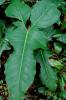
The plant arises from a rounded underground tuber. Upright green leaves grow individually from the base on distinct stalks and are generally arrow-shaped, spear-shaped, or sagittate.
The inflorescence consists of a central spadix surrounded by a hooded spathe. In Black Calla, the visible spathe and spadix appendix are dark maroon, deep purple-brown, or nearly black.
The male and female flowers are small and clustered lower on the spadix rather than forming the showy structure commonly mistaken for the flower. The dark hood and appendix are the most recognizable aboveground features during flowering.
After flowering, the plant can produce a compact upright cluster of berries that mature toward orange or red. The foliage and spathe may die back while the berry stalk remains, making identification more difficult and leaving an attractive fruit cluster exposed.
Distinguishing Black Calla from Other Arums and Callas
Italian arum, Arum italicum, usually has a pale green or whitish spathe and may have conspicuous pale leaf veins. Lords-and-ladies, Arum maculatum, generally has a pale spathe with a purple or yellowish spadix appendix and occurs naturally much farther west in Europe.
Ornamental calla lilies, Zantedeschia species and hybrids, commonly have larger trumpet-like spathes in white, yellow, pink, red, purple, or near-black forms. A nearly black ornamental calla lily should not be assumed to be Arum palaestinum from flower color alone.
Wild calla, Calla palustris, is a wetland plant with a white spathe and a short yellow-green spadix. It is unrelated at the genus level despite the shared family and common name.
Photographs used for identification should show the entire plant, the leaves, the spathe and spadix, the berry cluster when present, and any underground structure recovered after digging.
Where Dogs and Cats Encounter It
Dogs and cats may encounter Black Calla in ornamental gardens, patio containers, courtyards, conservatories, botanical collections, cut displays, or areas where the plant has escaped cultivation.
Cats may nibble leaves, brush the inflorescence, or investigate cut plant material brought indoors. Dogs may bite the flowering structure, pick up fallen berries, dig into newly planted beds, or chew a tuber exposed during gardening.
Seasonal dieback does not remove the exposure. A tuber may remain underground after the leaves disappear, while berry stalks, dead foliage, or discarded planting material may remain accessible.
Where Horses and Livestock Encounter It
Black Calla is not ordinary forage. Large-animal exposure is more likely when garden trimmings, uprooted tubers, cut stalks, berry clusters, or ornamental waste are thrown into a pasture, paddock, pen, stall, or open compost pile.
Animals with limited forage or access to unfamiliar landscaping material may chew plants they would normally avoid. A pile of pulled plants creates a more concentrated and accessible exposure than an intact ornamental bed.
Cut plant material should never be offered as browse or allowed to contaminate hay, feed, bedding, or enrichment vegetation.
Poisonous Parts and Relative Practical Risk
Raphides have been demonstrated directly in the tuber, leaves, spathe, spadix appendix, male flowers, and female flowers of Arum palaestinum. Berries, seeds, stalks, sap, and remaining raw plant material should also be treated as unsafe.
No study has established one universally most toxic organ or measured a companion-animal crystal dose. The plant part still matters because it affects how much tissue can be crushed and swallowed.
A brief leaf bite may be abandoned immediately because of pain. A dog grinding a compact tuber may crush a larger mass and release more crystals and sap before stopping. A berry cluster may permit ingestion of several small units and can also create a choking or foreign-body concern.
Fresh, Wilted, Dried, and Discarded Material
Wilted, frost-damaged, dried, or discarded plant material should not be assumed safe. Loss of moisture does not automatically eliminate mineral calcium-oxalate crystals.
Dry tissue may break into sharp fragments or expose crystals on damaged surfaces. Tubers and berry clusters can remain intact after the more obvious foliage has disappeared.
Traditional food processing of certain Arum plants should not be copied for animals. No casual household cooking, soaking, drying, or leaching process has been validated as a dependable veterinary detoxification method for Black Calla.
Associated Soil, Garden, and Container Hazards
An animal that digs up Black Calla may ingest more than the plant. Potting soil, fertilizer granules, systemic insecticides, herbicides, fungicides, slug bait, mulch, decorative stone, plastic mesh, wire, labels, water-retaining polymers, and broken ceramic may create separate toxic or obstructive hazards.
Severe tremors, seizures, hemorrhage, profound depression, or rapid collapse following a garden exposure should prompt investigation of every nearby chemical and plant rather than automatic attribution to calcium-oxalate crystals.
The complete exposure area should be photographed before it is cleaned when doing so does not delay urgent care.
Species-Specific Evidence and Its Limitations
The strongest direct clinical evidence involves children rather than animals. The 53 reported exposures were predominantly mild and involved oral irritation rather than severe systemic disease.
A primary Italian toxicovigilance investigation recorded two dog exposures involving Arum species, but the report did not establish that the plants were Arum palaestinum or provide a controlled species-specific toxic dose.
Veterinary recommendations therefore combine the exact-species human data, direct anatomical confirmation of raphides throughout the plant, documented animal exposure to the genus, and broader aroid toxicology.
This evidence supports a generally favorable prognosis while preserving emergency caution for extensive chewing, airway swelling, aspiration, eye injury, or retained plant material.
Diagnosis
There is no routine blood test that confirms Black Calla ingestion or measures a clinically useful raphide burden.
Diagnosis depends on identifying the plant, documenting immediate oral pain or irritation after contact, determining the plant part and amount involved, evaluating swallowing and breathing, and excluding another irritant, caustic chemical, foreign body, or toxic plant.
Owners should preserve clear photographs, the nursery label, leaves, the inflorescence, berries, and any safely recovered tuber fragments. A complete sample is particularly valuable because several unrelated plants are called calla, arum, or lily.
Oral and Airway Examination
Veterinary examination may include careful inspection of the lips, gums, tongue, hard and soft palate, tonsillar area, pharynx, and visible upper airway.
Pain, fear, or swelling may prevent a complete conscious examination. Sedation or anesthesia may be required when the airway is stable and the expected benefit outweighs the risk.
Persistent gagging, coughing, regurgitation, or dysphagia may justify radiography, ultrasound, laryngoscopy, or endoscopy to identify a retained stem, berry cluster, tuber fragment, or unrelated foreign object.
Eye Examination
Ocular assessment may include prolonged irrigation, eversion of the eyelids, examination of the conjunctival sacs, fluorescein staining, tear-film assessment, and measurement of intraocular pressure when indicated.
Magnification can help identify retained plant debris. A corneal ulcer, foreign material, uveitis, or deeper injury requires treatment beyond simple home irrigation.
Prognosis
The prognosis is good to excellent after most uncomplicated exploratory exposures. The exact-species clinical evidence supports a predominantly minor and self-limiting syndrome.
The outlook becomes more guarded when substantial tissue was crushed, swelling progresses, swallowing remains impaired, repeated vomiting causes dehydration, aspiration occurs, an eye is injured, or plant material becomes lodged.
Recovery time should be based on the individual animal rather than a guaranteed twelve- or twenty-four-hour rule. Normal eating, drinking, swallowing, breathing, activity, and eye comfort should return before the case is considered resolved.
Exposure Prevention
Keep Black Calla inaccessible to plant-chewing animals. Prevent dogs from digging in planted containers or beds, and do not leave dormant tubers in open bags, boxes, sheds, garages, or potting areas.
Remove fallen berries and dead plant material promptly. Collect the entire tuber and loose fragments when the plant is removed.
Place trimmings and uprooted plants in closed waste containers rather than open compost, pasture, paddock, pen, stall, kennel, rabbit run, or poultry enclosure.
Immediate Steps After Exposure
- Prevent further chewing: Move the animal away from the plant and secure the leaves, inflorescence, berries, seeds, stalks, tuber, and all loose fragments.
- Identify the plant: Preserve photographs, the nursery label, a representative leaf, the spathe and spadix when available, berries, and any recovered tuber material.
- Remove only loose visible pieces: If the animal is calm and this can be done safely, remove material resting near the lips or at the front of the mouth. Do not scrape inflamed tissue or reach blindly toward the throat.
- Allow only voluntary water intake: An alert animal that is breathing and swallowing normally may drink or lick fresh water. Do not pour, spray, syringe, or force water into the mouth.
- Prevent self-trauma: Stop the animal from pawing aggressively at the mouth or rubbing an exposed eye. A veterinarian-approved protective collar may be needed.
- Monitor swallowing and breathing: Watch for worsening tongue or facial swelling, inability to swallow saliva, repeated gagging, hoarse vocalization, noisy breathing, neck extension, open-mouth breathing, or blue-gray gums.
- Contact a veterinarian when signs exceed a brief mild reaction: Prompt guidance is appropriate after substantial tuber or berry ingestion, pronounced pain, persistent vomiting, abnormal swallowing, eye exposure, progressive swelling, or any respiratory change.
After Skin or Coat Contact
Prevent the animal from grooming contaminated fur. Wearing gloves, gently wash the affected coat or skin with lukewarm water and a mild species-appropriate cleanser, then rinse thoroughly.
Do not scrub inflamed tissue. Friction can worsen irritation and drive plant debris into damaged skin.
Clean contaminated collars, harnesses, bedding, brushes, towels, carriers, and other surfaces before the animal contacts them again.
Persistent redness, pain, swelling, blistering, discharge, repeated licking, or hair loss warrants veterinary guidance.
Eye Exposure
If sap or loose plant debris entered an eye and no object appears embedded, begin gentle prolonged irrigation with sterile saline or clean lukewarm water when the animal tolerates this safely.
Do not rub the eye, press on it, or use tweezers, cotton swabs, human redness-relief drops, topical anesthetics, leftover antibiotics, or corticosteroid-containing eye medication.
Continuing squinting, tearing, cloudiness, eyelid spasm, redness, swelling, discharge, or pawing at the face requires prompt veterinary examination for retained crystals, abrasion, or corneal ulceration.
Do Not Attempt Unsupervised Home Treatment
- Do not induce vomiting: Hydrogen peroxide, salt, mustard, syrup of ipecac, detergent, oil, manual gagging, and fingers in the throat can re-expose damaged tissues, worsen swelling, or cause aspiration.
- Never give hydrogen peroxide to a cat: It can cause severe esophageal and stomach irritation, ulceration, and bleeding.
- Never attempt to induce vomiting in a horse, rabbit, or guinea pig: These animals cannot vomit.
- Do not force mouth flushing: Pouring or spraying water into the mouth can drive material toward the pharynx or enter the lungs when swallowing is painful or impaired.
- Do not give milk, yogurt, cheese, or food as an antidote: These do not remove crystals already embedded in tissue and may be aspirated by an animal with dysphagia.
- Do not administer activated charcoal: Charcoal does not neutralize or capture embedded insoluble calcium-oxalate needles and can worsen gagging, vomiting, or aspiration risk.
- Do not give owner-selected antihistamines: Raphide injury is primarily direct mechanical irritation rather than a routine histamine-mediated allergy. Antihistamines do not remove the crystals.
- Do not give owner-selected corticosteroids: Corticosteroids are not a universal antidote and may be inappropriate when infection, gastrointestinal injury, or corneal ulceration is present.
- Do not give human pain medication: Ibuprofen, naproxen, acetaminophen, aspirin, topical anesthetics, and other human products can be toxic or interfere with treatment.
- Do not give stomach or diarrhea medicines automatically: Antacids, bismuth products, loperamide, sucralfate, and leftover prescriptions do not treat the embedded raphides and may complicate swallowing or diagnosis.
When Emergency Examination Is Especially Important
- Progressive tongue, throat, mouth, or facial swelling: Increasing edema may interfere with swallowing or airflow.
- Noisy, rapid, shallow, labored, or open-mouth breathing: Any respiratory change requires immediate emergency treatment.
- Inability to swallow saliva or water: The animal may need airway assessment, injectable pain control, and fluid support.
- Repeated choking, gagging, or regurgitation: A plant fragment or another object may be lodged in the pharynx or esophagus.
- Persistent vomiting: Continuing fluid loss and impaired swallowing increase dehydration and aspiration risk.
- Marked weakness, tremors, seizures, or collapse: These are not characteristic of uncomplicated local raphide irritation and require investigation for another cause.
- Blue-gray, very pale, or poorly perfused gums: Respiratory compromise, shock, or another serious problem may be present.
- Continuing eye pain or cloudiness: Corneal injury can threaten vision without prompt care.
- Failure to eat or drink: Persistent pain or dysphagia can produce dehydration and serious secondary complications, particularly in cats, rabbits, guinea pigs, birds, and very small animals.
- Continuing signs in a horse or livestock animal: Choke, pharyngeal obstruction, aspiration, or substantial oral injury may be present.
Veterinary Assessment
The veterinarian will assess airway patency, respiratory effort, tongue and pharyngeal swelling, ability to swallow, hydration, pain, vomiting, eye involvement, and the possibility of retained plant material or another toxin.
A brief mild exposure in an animal that is comfortable, swallowing normally, and breathing normally may require observation rather than aggressive intervention.
Substantial tuber chewing, progressive edema, inability to swallow, repeated vomiting, respiratory change, or ocular injury requires a more intensive examination and monitoring plan.
Oral and Pharyngeal Examination
The mouth should be examined for plant fragments, abrasions, ulceration, tongue edema, palate injury, and swelling extending toward the pharynx.
Pain or distress may prevent a complete conscious examination. Sedation or anesthesia may be considered after the airway and cardiovascular status are assessed.
Blind probing of the throat should be avoided. Laryngoscopy or endoscopy may be needed when a retained fragment, laryngeal edema, or esophageal obstruction is suspected.
Professional Gastrointestinal Decontamination
Veterinary emesis is generally of limited value once an animal is showing immediate oral pain, drooling, gagging, or dysphagia. Vomiting can force irritating material back across the mouth and pharynx and can increase aspiration risk.
A veterinarian may consider decontamination differently after an unusual, very recent ingestion of a substantial intact berry or tuber mass in an asymptomatic, fully alert patient, but airway safety and expected benefit must be evaluated first.
Activated charcoal is not expected to remove mechanically embedded raphides and is not routine treatment. Gastric lavage is also not routine and would be reserved for an exceptional mixed or massive exposure under anesthesia with a protected airway.
Pain Control and Nausea Treatment
Veterinarian-selected analgesia may be needed when oral pain prevents normal eating or drinking. The treatment should provide meaningful relief without excessively impairing swallowing or airway protection.
Injectable anti-nausea medication such as a veterinarian-selected antiemetic may be used when vomiting or nausea persists. Oral medication may be unsuitable when swallowing is painful or unsafe.
Topical oral anesthetics are not routine owner treatments because they can impair protective sensation, swallowing, or airway reflexes and may be toxic if swallowed.
Fluid and Nutritional Support
Fluid therapy may be appropriate when drooling, vomiting, or refusal to drink causes dehydration. The route depends on hydration, circulation, vomiting, species, and the animal’s ability to swallow safely.
Intravenous crystalloids are appropriate for clinically important dehydration, poor perfusion, repeated vomiting, or an animal unable to take fluids orally.
Food should be reintroduced only after swallowing is comfortable and safe. Soft food may be easier to manage than dry or abrasive food, but force-feeding an animal with dysphagia or ongoing gagging can cause aspiration.
Airway Monitoring and Respiratory Support
An animal with meaningful tongue, pharyngeal, or laryngeal swelling should be monitored where oxygen, intubation equipment, and emergency airway support are immediately available.
Supplemental oxygen may be used for respiratory distress. Progressive obstruction may require endotracheal intubation, assisted ventilation, or an emergency surgical airway when ordinary intubation cannot maintain airflow.
Veterinarian-selected anti-inflammatory medication may be considered in selected patients with clinically significant edema, but it does not remove the crystals and must not delay airway protection.
Antihistamines may be appropriate when a separate hypersensitivity reaction is suspected, but they are not a specific antidote for mechanical raphide injury.
Foreign-Body Evaluation
Persistent gagging, coughing, regurgitation, neck extension, repeated swallowing, or inability to eat may indicate a retained plant stalk, berry cluster, tuber piece, or unrelated object.
Radiographs, contrast studies, ultrasound, or endoscopy may be needed. Plant material is not always visible on ordinary radiographs, so a normal image does not automatically exclude obstruction.
Endoscopic removal may prevent ongoing injury when material remains in the esophagus or stomach.
Eye Treatment
Veterinary eye care may include further irrigation, removal of retained debris, fluorescein staining, assessment of the conjunctiva and cornea, pain control, and repeated examinations.
A corneal abrasion or ulcer may require veterinarian-selected topical antimicrobial medication and lubrication. Painful inflammation inside the eye may require additional specific treatment.
Corticosteroid-containing eye medication is contraindicated when a corneal ulcer or infection is present. No leftover ophthalmic medication should be used without examination.
Horses and Livestock
Remove the animal from the plant and all contaminated waste. Do not drench, tube, or force feed an animal showing dysphagia, coughing, nasal discharge containing feed, severe salivation, or respiratory difficulty.
Large-animal evaluation may include examination of the mouth and pharynx, passage of an appropriate nasogastric tube when safe, endoscopy, fluid support, pain control, and treatment of choke or aspiration.
Several affected animals require inspection of every shared plant, feed source, garden-waste pile, fertilizer, pesticide, and water source.
Rabbits, Guinea Pigs, Birds, and Other Small Animals
Small animals that stop eating require prompt attention. Pain control, hydration, temperature support, and nutritional planning may be necessary while swallowing and gastrointestinal function are assessed.
Do not force food or water into a weak, poorly swallowing, regurgitating, or respiratory-compromised animal.
Rabbits and guinea pigs may require treatment for gastrointestinal stasis when reduced eating and fecal production continue after the immediate oral irritation.
Recovery and Prognosis
Most uncomplicated Black Calla exposures have a good to excellent prognosis. The exact-species clinical evidence indicates that ordinary exploratory exposure is usually mild and confined to the affected mucosa.
Improvement should include less drooling, comfortable swallowing, normal breathing, return of appetite, normal water intake, and absence of new swelling.
Recovery may take longer when substantial tissue was chewed, vomiting caused dehydration, swelling interfered with eating, an eye was injured, aspiration occurred, or a plant fragment remained lodged.
Persistent or worsening signs require reassessment rather than continued home observation based on a fixed expected recovery time.
Frequently Asked Questions About Black Calla and Animal Poisoning
Is Black Calla poisonous to dogs and cats?
Yes. Arum palaestinum contains insoluble calcium oxalate crystals, especially needle-shaped raphides. Chewing can produce immediate mouth pain, drooling, head shaking, pawing at the muzzle, gagging, difficulty swallowing, reduced appetite, localized swelling, and occasional vomiting. Most exploratory exposures are expected to remain mild and localized, but progressive swelling or any breathing change is an emergency.
What is the correct scientific spelling?
The accepted name is Arum palaestinum Boiss. The spelling Arum palestinum is a common error that omits the second “a.” Historical names include Arum magdalenae, Arum sanctum, and Richardia sancta.
Is Black Calla a true calla lily?
No. Black Calla belongs to the genus Arum. Ornamental calla lilies belong to Zantedeschia, while wild calla is Calla palustris. Their common names overlap, but they are distinct plants.
Is Black Calla a true lily?
No. True lilies belong to Lilium. That distinction is especially important for cat owners because true lilies can cause acute kidney injury in cats, while Black Calla ordinarily causes immediate local raphide irritation rather than the characteristic true-lily renal syndrome.
Where is Black Calla native?
Its native range extends from western Syria and Lebanon through Palestine and Israel to Jordan. It is a tuberous perennial adapted to the seasonal conditions of the Levant and has also been introduced into California.
How can I recognize Black Calla?
The plant has upright arrow- or spear-shaped green leaves arising from an underground tuber. Its inflorescence consists of a dark maroon, purple-brown, or nearly black hooded spathe around a dark spadix appendix. It can later form an upright cluster of orange or red berries.
What are calcium oxalate raphides?
Raphides are microscopic needle-shaped calcium oxalate crystals stored in specialized plant cells called idioblasts. When the plant is crushed, the cells release bundles of crystals that puncture the lips, gums, tongue, palate, throat, skin, or eye and create immediate mechanical irritation.
Which parts of Black Calla contain raphides?
Direct anatomical research found raphides in the tuber, leaves, spathe, spadix appendix, male flowers, and female flowers. Berries, seeds, stalks, sap, and remaining raw tissue should also remain inaccessible. The study did not establish that every organ contains an identical concentration.
Are the underground tubers dangerous?
Yes. Raphides have been demonstrated directly in the tuber. A dog that digs up and grinds a compact tuber may crush a larger mass of tissue than an animal taking one quick leaf bite, creating greater practical exposure even though no tuber-specific animal dose has been established.
Are the berries poisonous?
The berry cluster should be treated as poisonous and kept inaccessible. Berries can attract animals visually and may be swallowed in multiples. They can expose the mouth and gastrointestinal tract to irritant plant tissue and may also present choking or foreign-body concerns.
What did the 53-patient Black Calla study find?
Researchers reviewed 53 pediatric exposures reported in Israel. Thirty-four percent remained asymptomatic and 66% had only minor effects. Oral irritation was the most frequent manifestation. No severe poisoning, upper-airway compromise, or death was documented. The study supports a generally mild exact-species syndrome but does not define an animal toxic dose.
Can Black Calla cause severe throat swelling?
Localized swelling is possible, but severe airway compromise appears uncommon for this exact species. No airway obstruction occurred in the 53-patient series. Severe upper-airway edema has been documented with other aroids, so progressive tongue or throat swelling, noisy breathing, inability to swallow saliva, or blue-gray gums still requires emergency care.
Why does the animal react so quickly?
The crystals act directly when they contact tissue. They do not need to be absorbed and metabolized first. Chewing ruptures the idioblasts and releases raphides into the mouth, so pain, drooling, and head shaking commonly begin immediately or within minutes.
Do plant enzymes make the reaction worse?
Possibly, but this has not been demonstrated specifically in Black Calla. Experimental research with kiwifruit raphides found that the needle-shaped crystals greatly intensified the effect of a cysteine protease in an insect model. That supports a general needle-delivery mechanism but does not prove that Arum palaestinum contains the same clinically important enzyme.
Can Black Calla cause kidney failure?
Acute kidney failure is not characteristic of ordinary Black Calla raphide exposure. The crystals are insoluble and act mainly through local mechanical injury. Kidney injury is more characteristic of substantial soluble-oxalate exposure or another nephrotoxin. Reduced urination or abnormal kidney values require investigation for another cause or a complicated exposure.
Can it cause low blood calcium or seizures?
Profound hypocalcemia and seizures are not expected from an uncomplicated insoluble-r aphide exposure. Those findings are associated more strongly with absorbed soluble oxalates or other systemic disorders. Tremors, seizures, weakness, or collapse after a suspected Black Calla exposure requires immediate diagnostic evaluation rather than assumption that the plant alone explains everything.
Can touching the plant irritate the skin?
Yes. Crushed tissue or sap may cause localized redness, pain, itching, swelling, or repeated licking. Wash contaminated fur gently, prevent grooming, and seek veterinary guidance if irritation persists or becomes severe.
Can Black Calla damage an animal’s eye?
Yes. Raphides and plant debris can irritate or abrade the conjunctiva and cornea. Tearing, squinting, eyelid spasm, redness, haze, or continued pawing requires prompt examination. Fluorescein staining may be needed to identify a corneal ulcer.
Is dried Black Calla still dangerous?
It should be treated as unsafe. Loss of plant moisture does not automatically destroy solid calcium-oxalate crystals. No study has established that dried leaves, berry stalks, flowers, or tuber fragments are safe for animals.
Does cooking make Black Calla safe for pets?
No household cooking method should be used to prepare it for an animal. Traditional human use of some Arum plants involves specialized prolonged preparation, but this does not establish veterinary safety or eliminate the risk of incomplete processing.
Is Black Calla poisonous to horses?
It should be kept out of horse-accessible areas. Horses may develop salivation, mouth pain, repeated swallowing, feed refusal, dysphagia, coughing, or colic. Because horses cannot vomit, persistent gagging, nasal discharge containing feed or saliva, neck extension, or difficulty swallowing requires examination for choke or pharyngeal injury.
Is it poisonous to cattle, sheep, and goats?
Yes. The plant should not be offered as forage or discarded into livestock areas. Direct oral contact can injure the mouth and pharynx before plant material reaches the rumen. Salivation, feed refusal, repeated swallowing, facial swelling, or breathing changes warrants veterinary assessment.
What about rabbits and guinea pigs?
No safe dose has been established. Rabbits and guinea pigs cannot vomit and may stop eating because chewing and swallowing are painful. Reduced appetite, fewer fecal pellets, drooling, a hunched posture, tooth grinding, abdominal distension, or weakness requires prompt veterinary guidance.
What about pet birds and other exotic animals?
Species-specific evidence is limited, so no part should be offered as food, browse, cage decoration, or enrichment. Regurgitation, repeated beak wiping, abnormal swallowing, reduced appetite, weakness, or respiratory effort requires species-appropriate care.
Should I make my dog or cat vomit?
No. Vomiting can drag irritating material across already damaged tissues and increases aspiration risk when swallowing is painful or impaired. Hydrogen peroxide, salt, mustard, ipecac, detergent, oil, and manual gagging should not be used.
Should I give milk or yogurt?
No dairy product should be treated as a home antidote. Milk or yogurt cannot remove crystals already embedded in tissue and may be aspirated by an animal with impaired swallowing. An alert animal that swallows normally may have voluntary access to fresh water, but liquids should never be forced.
Should I give activated charcoal?
No. Activated charcoal does not neutralize or remove insoluble crystals embedded in oral tissue. It may worsen gagging, vomiting, and aspiration risk and is not routine treatment for an uncomplicated raphide exposure.
Will an antihistamine stop the swelling?
Not reliably. The main injury is direct mechanical penetration rather than an ordinary allergic reaction. A veterinarian may use specific medication when clinically significant edema or a separate hypersensitivity reaction is present, but antihistamines are not a Black Calla antidote.
Are corticosteroids the standard treatment?
No. Corticosteroids do not remove the raphides and are not necessary for every exposure. A veterinarian may consider them in selected cases involving important edema, but their risks and the presence of infection, gastrointestinal disease, or corneal ulceration must be evaluated first.
How is significant Black Calla poisoning treated?
Treatment is based on the actual findings and may include oral and airway examination, veterinarian-selected pain control, anti-nausea medication, intravenous fluids, oxygen, airway monitoring, removal of retained plant material, endoscopy, and appropriate eye treatment. Severe obstruction may require intubation or emergency airway support.
When is emergency veterinary care needed?
Emergency care is required for progressive tongue or throat swelling, noisy or difficult breathing, inability to swallow saliva, repeated choking or regurgitation, blue-gray gums, collapse, severe weakness, continuing eye pain, or an animal that cannot eat or drink safely.
How long do symptoms last?
Many mild exposures improve over several hours, but no exact veterinary recovery time applies to every animal. Continued pain, drooling, vomiting, dysphagia, swelling, eye signs, or respiratory abnormalities beyond a brief improving course requires examination.
What is the prognosis?
The prognosis is good to excellent for most uncomplicated exposures. It becomes more guarded when swelling threatens the airway, vomiting causes dehydration, aspiration occurs, an eye is injured, or plant material remains lodged in the mouth or esophagus.
How can future exposure be prevented?
Keep the plant inaccessible, remove fallen berries, prevent digging around tubers, store unplanted tubers in closed rigid containers, and dispose of all trimmings and uprooted material in closed waste rather than open compost or animal enclosures.