PAWS Pet Poison Plant Guide
Is Caladium Poisonous to Dogs, Cats, Horses, and Livestock?
Yes, Caladium, principally Caladium bicolor and cultivated plants sold as Caladium hortulanum or Caladium × hortulanum, is poisonous to dogs, cats, horses, livestock, and other animals that chew it. Its leaves, petioles, underground tubers, sap, flowers, and other tissues contain bundles of insoluble calcium oxalate crystals called raphides. Chewing releases these microscopic needles into the lips, mouth, tongue, throat, and gastrointestinal lining, causing immediate burning pain, drooling, pawing at the mouth, swelling, difficulty swallowing, vomiting, and appetite loss. Most exposures remain localized and recover well, but rare upper-airway swelling, aspiration, severe dehydration, or an unidentified mixed exposure can become life-threatening.
About this guide: This page provides general pet-poisoning information and cannot diagnose or treat an individual animal. For any suspected exposure, contact a veterinarian or animal poison-control service immediately. Do not induce vomiting, give medication, or attempt home decontamination unless directed by a veterinary professional.
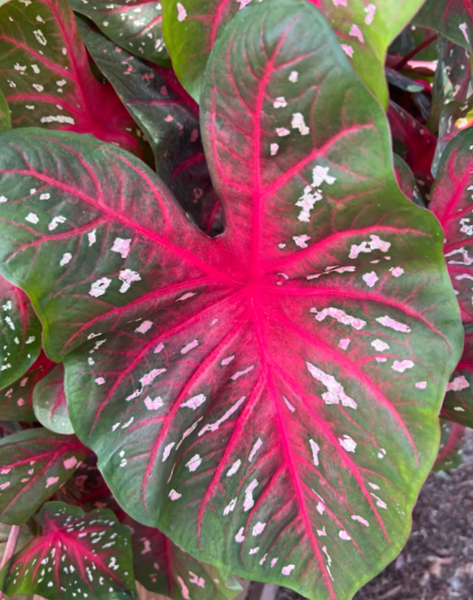
Caladium
Caladium bicolor (Aiton) Vent.
Caladium hortulanum Birdsey is treated as a botanical synonym of Caladium bicolor. The horticultural expression Caladium × hortulanum is also widely used for cultivated fancy-leaved caladiums, especially when their exact species ancestry is uncertain or includes complex hybrid breeding.
Important botanical and historical names include:
Arum bicolor Aiton — basionym
Cyrtospadix bicolor (Aiton) Britton & P.Wilson
Caladium hortulanum Birdsey
Caladium pictum DC.
Caladium argyrospilum Lem.
Caladium chantinii Lem.
Caladium marmoratum L.Mathieu ex Bosse
Caladium splendens K.Koch & Fintelm.
Caladium verschaffeltii Lem.
Caladium wightii Lem.
Other accepted species of Caladium exist, and some cultivated plants may contain ancestry from species other than Caladium bicolor. A nursery label identifying only “Caladium” therefore establishes the genus and expected raphide hazard more reliably than it establishes one exact species.
Araceae Juss. — Arum or Aroid Family
Caladium belongs to the order Alismatales. Other familiar Araceae genera include Alocasia, Colocasia, Dieffenbachia, Philodendron, Syngonium, and Xanthosoma. Many contain insoluble calcium oxalate raphides, but the exact plant and additional toxic constituents should still be identified whenever possible.
Caladium, Caladiums, Fancy-Leaved Caladium, Fancy-Leaf Caladium, Fancy Leaf Caladium, Angel Wings, Angel-Wings, Angel’s Wings, Heart of Jesus, Painted Caladium, Painted Leaf, Painted-Leaved Caladium, Strap-Leaf Caladium, Lance-Leaf Caladium, Caladium bicolor, Caladium hortulanum, Caladium × hortulanum
Named cultivars and horticultural selections associated with this page include ‘Candidum,’ ‘Exposition,’ ‘Pink Cloud,’ ‘Seagull,’ ‘Stoplight,’ and ‘Texas Wonder.’ Cultivar names should not be treated as separate botanical species.
“Elephant Ear,” “Elephant’s Ear,” and “Elephant Ears” are broad horticultural names also used for Alocasia, Colocasia, and Xanthosoma. “Malanga” more commonly refers to edible aroids such as Xanthosoma or Colocasia, while “Taro” properly refers most often to Colocasia esculenta. These names are therefore identification clues rather than true synonyms of every Caladium.
“Mother-in-Law Plant” is especially ambiguous and more often refers to Snake Plant, Dracaena trifasciata. Pai, Ape, Cape, Via, and Via Sori appear in some poison-control name lists associated with plants labeled Caladium hortulanum, but regional use may instead involve another edible or ornamental aroid.
Insoluble Calcium Oxalate Crystal Injury
Caladium is an insoluble calcium oxalate plant. Its principal toxic structures are raphides: narrow needle-shaped crystals of calcium oxalate arranged in dense bundles within specialized plant cells called crystal idioblasts.
The crystals normally remain enclosed within intact tissue. Chewing, biting, cutting, crushing, digging, or breaking the plant ruptures crystal-containing cells and releases raphides into the surrounding sap and animal tissue.
The resulting injury begins during or shortly after contact. Raphides penetrate moist epithelial surfaces of the lips, gums, tongue, inner cheeks, floor of the mouth, pharynx, and upper gastrointestinal tract. This is principally a direct local mechanical and inflammatory injury rather than a delayed poisoning syndrome that depends on widespread absorption into the bloodstream.
Exact-Species Evidence from Caladium bicolor
Direct anatomical research on four variants of Caladium bicolor confirmed that the plant contains more than one calcium oxalate crystal form. Both druses and raphides occurred in every examined variant.
The measured raphides were approximately 21 to 68 micrometers long. Raphide bundles were especially prominent in the petiole, while both raphides and rounded druse crystals occurred in the midrib and petiole tissues. Druses were also embedded within portions of the leaf mesophyll.
These findings demonstrate that the exact species contains abundant calcium oxalate structures within readily chewed foliage and petioles. They also show why Caladium toxicology should not describe every crystal simply as a raphide: several crystal morphologies occur, although the penetrating raphide bundles are the structures most directly associated with acute oral pain.
Crystals in Reproductive Tissues
A comparative study of floral organs in Araceae also documented calcium oxalate structures in the reproductive tissues of Caladium bicolor. Observed structures included irregular raphide bundles or biforine-like crystal-containing cells in connective tissue and prismatic crystals associated with anther tissues.
This exact-species evidence supports treating the inflorescence as irritating rather than limiting concern to the ornamental leaf blade. The spathe, spadix, pollen-bearing structures, petioles, and other freshly damaged reproductive tissues should remain inaccessible to animals.
The floral study examined crystal anatomy rather than animal poisoning. It does not establish that one flower contains a predictable veterinary dose or that every cultivar possesses identical crystal density.
How Raphides Produce Pain and Swelling
The microscopic-needle comparison is appropriate, but the injury is more complex than a superficial scratch. The narrow crystal shape allows raphides to penetrate and remain within moist tissue, producing numerous small areas of epithelial trauma.
Tissue injury activates local inflammatory and pain pathways. Redness, edema, burning pain, excessive salivation, pawing at the mouth, painful swallowing, vomiting, and appetite loss may continue after visible plant fragments have been removed because crystals can remain embedded within tissue.
Mechanical injury may also permit other sap constituents to reach tissue more effectively. The identity, concentration, and clinical importance of those additional constituents have not been established adequately across Caladium bicolor, other accepted Caladium species, complex hybrids, and named cultivars.
Protein and Protease Claims Require Qualification
Experimental research outside Caladium has shown that needle-shaped raphides can act synergistically with a cysteine protease. In that study, purified kiwifruit raphides or protease alone produced comparatively limited effects in an insect model, while their combination produced much stronger defensive activity.
That experiment demonstrates a biologically plausible needle-assisted delivery mechanism. It does not prove that Caladium contains the same protease, that a named Caladium protein is responsible for oral swelling, or that protease activity is required for Caladium poisoning in dogs, cats, horses, or livestock.
Caladium should therefore be described as a proven raphide-containing irritant with possible additional sap-mediated inflammatory effects. Statements identifying an unspecified “proteolytic enzyme” as a confirmed second Caladium toxin go beyond the direct evidence.
Druses, Prisms, and Raphides Have Different Practical Importance
Calcium oxalate occurs in several crystal morphologies within aroids. Druses are rounded aggregates of many crystals, prisms are more block-like structures, and raphides are elongated needles held in bundles.
All forms confirm calcium oxalate biomineralization within the plant, but they do not necessarily produce identical tissue injury. Raphides are particularly important in acute poisoning because their shape favors penetration of the oral lining.
The presence of druses or prismatic crystals should not be converted into a separate systemic poisoning mechanism. Their direct contribution to natural Caladium poisoning has not been quantified.
Insoluble and Soluble Oxalates Are Different Hazards
Caladium’s characteristic syndrome should not be confused with soluble-oxalate toxicosis. Insoluble calcium oxalate crystals act primarily where they contact tissue and are not readily absorbed in the manner responsible for the systemic calcium binding caused by substantial soluble-oxalate exposure.
Plants containing large quantities of soluble oxalates can reduce circulating ionized calcium and contribute to tremors, tetany, seizures, cardiac abnormalities, and calcium oxalate deposition in the kidneys. Those findings are not expected consequences of an uncomplicated Caladium chewing exposure.
Normal calcium concentrations and kidney values are expected in most ordinary cases. Confirmed hypocalcemia, widespread calcium oxalate crystalluria, acute kidney injury, generalized tremors, seizures, major rhythm abnormalities, coma, or profound depression requires investigation for another cause.
Important alternatives include soluble-oxalate plants, ethylene glycol, severe dehydration, shock, fertilizer or pesticide exposure, medication ingestion, metabolic disease, and another toxic plant within a mixed container or landscape bed.
Leaves and Petioles
Leaves and petioles are the plant parts most commonly available to dogs, cats, birds, and other household animals. Exact-species anatomical work confirms raphides and druses within these tissues.
A single painful bite may cause an animal to stop chewing, which often limits the swallowed amount. The immediate rejection response reduces risk but does not prevent oral injury or guarantee that no material reached the pharynx, esophagus, or stomach.
Freshly broken petioles may expose substantial sap-covered tissue. Cut foliage, florist material, frost-damaged leaves, and loose garden debris may be easier to carry or chew than leaves attached to an intact plant.
Underground Tubers
Caladium grows from an underground stem tuber commonly sold as a bulb. Dogs may uncover tubers from pots or garden beds or gain access while the tubers are being planted, divided, lifted, dried, or stored.
A tuber can provide a larger and more persistent chewing exposure than one leaf because it resembles a portable root, bulb, or toy. It may also be swallowed in pieces and produce gastrointestinal irritation after the first oral pain has occurred.
Direct comparative measurements have not established the raphide density or toxic dose of every cultivated Caladium tuber. The absence of that measurement does not make tubers safe; standard veterinary experience and the known whole-plant raphide hazard support treating them as poisonous.
Sap, Skin, and Eye Contact
Sap from crushed leaves, petioles, inflorescences, or tubers may transfer loose crystals to the skin, coat, eyelids, and ocular surface.
Skin exposure can produce localized stinging, redness, swelling, or dermatitis, especially where wet plant material remains trapped against thin skin or beneath a collar, harness, blanket, bandage, or grooming equipment.
Coat contamination creates a second oral exposure when the animal grooms. Eye contact may produce tearing, squinting, conjunctival inflammation, and corneal pain. Persistent eye discomfort requires examination because mechanical epithelial injury or retained material cannot be assessed reliably at home.
Upper-Airway Swelling
Most Caladium exposures remain limited to the mouth and upper gastrointestinal tract. Complete airway obstruction in dogs and cats is considered rare because the available pharyngeal space usually tolerates moderate localized swelling.
Rare does not mean impossible. Progressive tongue, floor-of-mouth, pharyngeal, or laryngeal edema can interfere with swallowing, airway protection, or ventilation. Brachycephalic animals and patients with existing airway disease may have less reserve.
Noisy inspiration, a changed voice, inability to swallow saliva, extended-neck posture, open-mouth breathing, pale or blue mucous membranes, respiratory fatigue, or collapse requires immediate emergency treatment.
Fresh, Wilted, and Dried Material
Calcium oxalate crystals are stable mineral structures rather than an unstable organic toxin that disappears rapidly when a plant wilts.
Drying may reduce moisture, sap flow, palatability, and the ease with which crystals are discharged from fresh cells, but it does not chemically dissolve the calcium oxalate already present.
Fallen leaves, dried petioles, dormant tubers, divided tuber pieces, seasonal planting waste, discarded container plants, and material in accessible compost should therefore remain unavailable to animals.
Burning plant material is not a safe disposal method around animals. Smoke, ash, dust, and airborne plant particles create hazards different from ordinary chewing and have not been established as a means of neutralizing all exposure risk.
Why Most Exposures Remain Localized
The immediate burning pain and unpleasant oral sensation usually make an animal release the plant before consuming a large amount. This self-limiting effect is the principal reason most cases remain mild to moderate.
Continuing salivation, vomiting, diarrhea, painful swallowing, or refusal to drink can nevertheless cause secondary dehydration, electrolyte abnormalities, weakness, and poor perfusion.
These secondary complications should not be mistaken for evidence that insoluble raphides routinely circulate through the bloodstream or deposit throughout the kidneys.
No Established Safe or Toxic Dose
No validated safe leaf count, petiole length, tuber weight, crystal concentration, or gram-per-kilogram toxic dose exists for dogs, cats, horses, cattle, sheep, goats, rabbits, birds, reptiles, or other animals.
Risk depends on the animal’s size, plant part, amount chewed, duration of contact, ability to swallow, presence of airway disease, and whether fertilizer, pesticide, potting additives, another plant, or a foreign object was consumed at the same time.
A brief bite that is immediately rejected is less concerning than prolonged tuber chewing or consumption of several leaves, but no numerical threshold can guarantee that an individual exposure will remain mild.
Immediate Oral Pain and Irritation
Caladium usually produces signs during chewing or within minutes. A dog or cat may suddenly drop the plant, shake the head, lick the lips, rub the face, paw at the mouth, gag, retch, or begin salivating heavily. This rapid onset reflects direct raphide penetration into oral tissue rather than delayed systemic absorption.
Oral pain can be intense. The lips, gums, tongue, floor of the mouth, and inner cheeks may become reddened, tender, or swollen, and small erosions may form where plant tissue was crushed. An affected animal may approach food but refuse to take it, drop partially chewed food, vocalize when attempting to eat, or repeatedly extend the head and neck because swallowing has become painful.
Excessive drooling is one of the most recognizable signs. Saliva may hang in strings or soak the chin, chest, and forelimbs. The animal may make repeated swallowing or chewing motions without food, gag intermittently, or produce a hoarse bark, meow, or other altered vocalization when the pharynx or tissues around the larynx are irritated.
Difficulty Swallowing and Upper-Airway Risk
Difficulty swallowing can range from mild reluctance to take food or water to an inability to handle saliva. Dysphagia is clinically important because forced food, water, medication, or home remedies may enter the airway. Persistent gagging, coughing, regurgitation, nasal discharge containing food or fluid, or repeated attempts to swallow raise concern for significant pharyngeal or esophageal irritation and possible aspiration.
Upper-airway swelling is rare, but it is the most urgent recognized complication. Progressive enlargement of the tongue, floor of the mouth, lips, face, pharynx, or tissues surrounding the larynx can produce noisy breathing, an extended-neck posture, increasing respiratory effort, rapid shallow breathing, open-mouth breathing, pale or blue mucous membranes, panic, weakness, or collapse. These findings require immediate emergency care because a previously stable animal can deteriorate as swelling progresses.
Gastrointestinal Signs and Dehydration
Vomiting may occur after plant material and crystals reach the stomach, and some animals may dry-heave or retch without producing much material. Nausea, appetite loss, abdominal discomfort, and diarrhea are possible, especially after more than a brief taste or after a tuber or substantial quantity of foliage has been swallowed.
The original toxin acts locally, but continuing vomiting, diarrhea, drooling, painful swallowing, and refusal to drink can create important secondary problems. Dehydration, electrolyte disturbance, weakness, and poor perfusion may develop when gastrointestinal losses continue or the animal cannot replace fluids voluntarily.
Skin and Eye Exposure
Contact with sap from broken leaves, petioles, or tubers can cause localized redness, stinging, itching, swelling, or dermatitis. Contaminated fur may create delayed oral exposure when the animal grooms, so signs can continue until the coat and skin have been washed thoroughly.
Eye exposure may cause immediate squinting, tearing, conjunctival redness, rubbing, light sensitivity, or corneal pain. Persistent squinting, cloudiness, discharge, or inability to open the eye may indicate corneal erosion or ulceration rather than simple surface irritation.
Signs in Horses and Other Animal Species
Horses may salivate, shake the head, resist the bit, chew cautiously, refuse feed, or develop swelling of the lips or tongue. More substantial exposure may cause colic, diarrhea, coughing, abnormal swallowing, nasal discharge, feed material at the nostrils, respiratory noise, or reduced manure production. Horses cannot vomit, so retching or productive vomiting should not be expected and may indicate another disorder.
Published Caladium-specific evidence in cattle, sheep, goats, rabbits, guinea pigs, pet birds, reptiles, and other species is limited. The same physical raphide mechanism supports concern in any animal that chews the plant, but a separate syndrome should not be invented for every species without evidence. Food refusal and dehydration may become consequential more quickly in rabbits, guinea pigs, birds, and other small animals because of their limited reserves and high metabolic requirements.
Expected Recovery and Signs of a More Serious Problem
Most uncomplicated exposures begin improving within several hours after plant residue has been removed and the oral inflammation starts to subside. Drooling, oral sensitivity, and reduced appetite may continue intermittently for approximately 12–24 hours. Oral ulceration, esophagitis, dermatitis, aspiration injury, or eye damage can take longer to resolve and may require continued treatment.
Convulsions, dilated pupils, marked cardiac abnormalities, coma, renal failure, or sudden profound depression are not expected findings from a straightforward insoluble-raphide exposure. Their presence should trigger immediate evaluation for severe secondary dehydration, aspiration, airway obstruction, anaphylaxis, another toxic plant, fertilizer or pesticide exposure, ethylene glycol, medication ingestion, hypoglycemia, electrolyte disturbance, or unrelated neurologic or systemic disease.
Emergency warning signs include inability to swallow saliva, rapidly progressive mouth or throat swelling, noisy or labored breathing, coughing after vomiting, repeated vomiting, blood in vomit, severe diarrhea, marked dehydration, weakness, abnormal mucous-membrane color, collapse, persistent eye pain, or failure to improve within the expected period.
Accepted Identity and Cultivated Caladiums
Caladium bicolor is the accepted name most directly associated with the colorful ornamental caladiums grown in homes, containers, and landscape beds. It is a tuberous tropical American geophyte in Araceae. Caladium hortulanum is now treated as a synonym, although that name remains common in veterinary poison lists, nursery catalogs, plant labels, and older horticultural references.
The notation Caladium × hortulanum is also widely used for cultivated fancy-leaved caladiums. Many ornamental lines have been selected and crossed for generations, and some may contain ancestry from more than one Caladium species. This breeding history does not reduce the practical safety conclusion: unidentified cultivated Caladium foliage and tubers should be treated as raphide-containing irritants.
How to Recognize Caladium
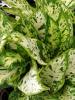
Caladiums grow from an underground tuber commonly sold as a “bulb.” Leaves arise individually on long petioles from the tuber rather than from a conspicuous upright woody stem. The plant usually forms a clump of thin, often translucent-looking leaves.
Fancy-leaved types have broad heart-shaped, arrow-shaped, or shield-shaped blades. Strap-leaved and lance-leaved types are narrower, shorter, and often more ruffled along the margins. Leaf color may include green, white, cream, pink, rose, red, burgundy, or combinations of contrasting veins, margins, speckles, blotches, and translucent panels.
The inflorescence, when present, consists of a central spadix surrounded by a greenish or pale spathe. It is usually much less conspicuous than the leaves. An animal may therefore encounter the toxic plant even when no obvious flower is visible.
Elephant Ear, Taro, and Malanga Confusion
“Elephant Ear” is used for several large-leaved aroids. Caladium leaves are generally thinner and more brightly patterned than those of many Alocasia, Colocasia, and Xanthosoma, but common-name use is inconsistent enough that appearance and a nursery label should be considered together.
Taro is usually Colocasia esculenta, while Malanga commonly refers to Xanthosoma species or other cultivated aroids. Those plants may also contain insoluble calcium oxalate when raw, but their plant-part chemistry, food use, and exposure circumstances are not identical to ornamental Caladium.
The name “Mother-in-Law Plant” creates another identification problem because it frequently refers to Snake Plant, Dracaena trifasciata. Snake Plant produces a different, usually gastrointestinal, saponin-associated syndrome rather than the classic immediate raphide pain of Caladium.
Where Pets Encounter It
Caladium is grown as a seasonal landscape plant, patio container, hanging or tabletop ornamental, greenhouse plant, and houseplant. Dogs may chew low leaves, investigate broken stems, dig up tubers, or find discarded plants after frost. Cats may reach indoor leaves from furniture, windowsills, shelves, or neighboring plants.
Garden planting and seasonal removal create concentrated exposure opportunities. Loose tubers, divided tuber pieces, trimmed petioles, wilted leaves, and bags of discarded plants may be easier for a dog to carry and chew than an intact planted specimen.
Indoor exposure may involve more than the plant. Potting soil, slow-release fertilizer pellets, systemic insecticides, pesticide granules, decorative moss, plastic plant tags, broken ceramic, and irrigation additives can create separate risks. The exact products used in the pot should be preserved after an unexplained or unusually severe illness.
Toxic Parts and Exposure Forms
Leaves, petioles, inflorescences, sap, roots, and underground tubers should all be considered irritating. The tuber deserves special attention because it remains accessible during dormancy and may be mistaken for a chewable object by a dog digging in a pot, storage box, or garden bed.
Freshly broken tissue releases sap and loose raphides readily, but dried plant material is not reliably harmless. The mineral crystals do not disappear merely because foliage wilts. Burning plant debris can create smoke and particulate hazards unrelated to ordinary chewing and should never be used as a method of making animal-accessible waste safe.
Animal-Species Risk
Dogs and cats are the animals most often represented in companion-animal poison guidance. Their expected signs are immediate oral pain, salivation, swelling, dysphagia, vomiting, and appetite loss. Most stop chewing rapidly, which limits the amount swallowed.
Horses and livestock are less likely to seek out ornamental Caladium when adequate forage is available, but garden clippings, greenhouse waste, storm debris, or access to ornamental beds can create exposure. Large animals may consume more plant material before the source is recognized, and swelling or painful oral lesions can interfere with feed and water intake.
Rabbits, guinea pigs, rodents, pet birds, and reptiles should not be allowed access. Published Caladium-specific case series are limited, but the raphide mechanism is capable of injuring oral tissue in any animal that chews the plant. A short period of food refusal can be especially consequential in rabbits, guinea pigs, and small birds.
Diagnosis and Important Distinctions
There is no routine blood test that identifies Caladium raphides as the cause of illness. Diagnosis usually depends on immediate oral signs, evidence of fresh chewing, plant identification, and exclusion of other irritants or poisons.
A useful plant sample includes a complete leaf with its petiole, a photograph of the whole clump, the underground tuber if available, the plant label, and photographs showing the leaf pattern. Cultivar names alone may not identify the species ancestry, but they can confirm that the plant was sold as Caladium.
Differential diagnoses include Dieffenbachia, Philodendron, Alocasia, Colocasia, Xanthosoma, Syngonium, calla lily, cleaning chemicals, caustic products, electrical burns, foreign bodies, oral trauma, insect stings, anaphylaxis, and primary dental or pharyngeal disease.
Kidney injury, hypocalcemia, tremors, or seizures require a broader evaluation. Soluble-oxalate plants, ethylene glycol, severe dehydration, shock, medications, metabolic disease, and another toxin should be considered rather than attributing those signs automatically to Caladium’s insoluble crystals.
Prevention
Keep Caladium outside the reach of pets that chew foliage or dig in containers. Height alone may not protect cats, birds, or climbing animals, and fallen leaves remain accessible after the plant itself is moved.
Store dormant tubers in closed containers. Collect broken leaves, planting debris, and divided tuber pieces immediately, and dispose of them in closed waste rather than open compost accessible to animals.
Retain the nursery label and a record of fertilizers, pesticides, and systemic treatments used in the pot. Accurate identification and product information can prevent a mild raphide exposure from being confused with a more dangerous mixed poisoning.
Immediate Steps After Ingestion
- Stop further exposure. Move the animal away from Caladium leaves, petioles, tubers, sap, discarded plants, potting material, and garden debris. Prevent other animals from entering the area while the plant and any secondary products are identified.
- Remove only loose material that is safely reachable. If the animal is calm and swallowing normally, remove visible leaf or tuber fragments resting at the lips or front of the mouth. Do not force the jaws open, reach blindly toward the throat, or scrape reddened tissue because raphides may already be embedded.
- Gently clear surface residue. Use a soft damp cloth to wipe plant sap and fragments from the lips, gums, tongue tip, and muzzle when this can be done without being bitten. Gentle wiping is safer than spraying water toward the back of the mouth.
- Allow voluntary water only when swallowing is normal. An alert animal that is breathing comfortably and handling saliva normally may have access to fresh water. Do not force drinking or syringe liquid into the mouth.
- Give nothing by mouth when dysphagia is present. Food, water, milk, medication, or another substance can enter the airway when the animal is gagging, coughing, repeatedly vomiting, excessively drooling, weak, sedated, or unable to swallow saliva.
- Check the breathing immediately. Listen for noisy inspiration, wheezing, stertor, or a change in the bark or meow. Look for progressive tongue, lip, facial, or throat swelling, open-mouth breathing, extended-neck posture, pale or blue mucous membranes, or increasing respiratory effort.
- Preserve identification evidence. Save a complete leaf, petiole, tuber fragment, plant label, cultivar name, photographs of the whole plant, and the packaging for any fertilizer, pesticide, systemic insecticide, or potting additive used with it.
- Contact a veterinarian when the exposure is more than trivial. Prompt guidance is warranted after tuber ingestion, extensive chewing, an unknown amount, continuing oral pain, inability to eat or drink, repeated vomiting, or any swelling that may affect swallowing or breathing.
After Skin, Coat, or Eye Contact
Wear gloves before handling wet Caladium sap. Rinse contaminated skin or coat with lukewarm water and wash gently with a mild pet-safe cleanser. Avoid vigorous rubbing because friction can increase penetration of raphides into already irritated skin.
Prevent grooming until the coat is clean and dry. Wash collars, harnesses, bedding, grooming tools, carriers, towels, or tack that contacted broken leaves or tuber sap. Persistent redness, swelling, blistering, pain, or self-trauma requires veterinary examination.
For eye exposure, begin gentle irrigation with room-temperature water or sterile saline. Continue for approximately 15 minutes when this can be done safely, without forcing the eyelids open or directing a high-pressure stream at the cornea. Persistent squinting, tearing, cloudiness, discharge, light sensitivity, or rubbing requires prompt veterinary care.
The veterinarian may examine beneath the eyelids and apply fluorescein stain to identify corneal erosion or ulceration. Lubricants, pain control, and topical antimicrobials may be used when indicated. Ophthalmic corticosteroids are unsafe until a corneal ulcer has been excluded because they can delay healing, worsen infection, and contribute to corneal breakdown.
Do Not Attempt Unsupervised Home Treatment
- Do not induce vomiting at home. Hydrogen peroxide, salt, mustard, syrup of ipecac, manual gagging, and similar methods can worsen oral and esophageal injury, cause gastric inflammation, and draw saliva, plant material, or vomit into the lungs.
- Do not forcefully flush the mouth. Pouring or spraying water toward the throat can cause aspiration when the animal is gagging, drooling, swollen, frightened, or swallowing abnormally.
- Do not give milk, yogurt, cheese, ice cream, or another dairy product automatically. Some veterinary references discuss calcium-containing dairy for selected insoluble-oxalate exposures, but it is not a universal antidote, does not remove embedded raphides, may worsen gastrointestinal upset, and is unsafe when swallowing is impaired.
- Do not administer activated charcoal yourself. Charcoal does not dissolve or reliably bind mineral raphides embedded in tissue. It can be aspirated and can complicate vomiting, dehydration, and interpretation of dark stool.
- Do not give oil, butter, mineral oil, honey, syrup, pectin, or another coating remedy. These substances do not neutralize calcium oxalate crystals and can increase nausea or aspiration risk when swallowing is painful.
- Do not give Kapectolin, Kaopectate, bismuth, or loperamide. These products do not treat the oral injury and may mask continuing gastrointestinal disease, alter motility, or create species-specific medication risks.
- Do not give sucralfate or antacids without veterinary direction. Sucralfate may protect documented esophageal or gastric injury, but it does not neutralize Caladium. Antacids and acid suppressants are not automatically helpful for damage caused primarily by penetrating crystals.
- Do not give antihistamines or corticosteroids as routine antidotes. Most Caladium swelling results from direct mechanical and inflammatory injury rather than a simple allergy. These medications cannot replace airway assessment, removal of residue, oxygen, or controlled airway support.
- Do not give human pain relievers or leftover veterinary medication. Ibuprofen, naproxen, acetaminophen, aspirin, topical anesthetics, and other drugs can create a second poisoning, worsen gastrointestinal injury, or obscure the animal’s ability to swallow safely.
When Emergency Examination Is Especially Important
- Progressive oral or airway swelling: Enlargement of the tongue, lips, floor of the mouth, face, pharynx, or throat can interfere with swallowing and, rarely, ventilation. Noisy breathing, open-mouth breathing, extended-neck posture, pale or blue mucous membranes, or severe anxiety requires immediate transport.
- Inability to handle saliva: Continuous drooling combined with choking, repeated gagging, nasal regurgitation, or inability to swallow indicates more than mild mouth irritation and creates a substantial aspiration risk.
- Persistent vomiting or aspiration concern: Repeated vomiting, coughing after vomiting, fever, abnormal lung sounds, increasing respiratory effort, or reduced oxygenation may indicate esophageal injury or aspiration pneumonia.
- Severe gastrointestinal losses: Inability to retain water, profuse diarrhea, blood in vomit or stool, marked abdominal pain, tacky gums, weakness, reduced urination, or collapse may reflect dehydration, electrolyte disturbance, bleeding, shock, or another exposure.
- Large or concentrated exposure: Chewing an underground tuber, consuming multiple leaves, swallowing substantial plant material, or ingesting Caladium together with fertilizer, pesticide, potting additives, or another toxic plant warrants prompt professional assessment.
- Unexpected systemic signs: Tremors, seizures, dilated pupils, marked rhythm abnormalities, coma, or kidney dysfunction are not expected from uncomplicated insoluble raphides and require immediate investigation for another toxin or severe secondary complication.
- Persistent eye injury: Continuing squinting, cloudiness, discharge, or rubbing after irrigation may indicate corneal ulceration.
- High-risk patients: Very young, small, elderly, pregnant, brachycephalic, medically fragile, dehydrated, or respiratory-compromised animals may deteriorate more quickly or have less tolerance for oral swelling and fluid loss.
Veterinary Examination and Diagnostic Priorities
The veterinarian must determine whether the patient has uncomplicated oral irritation or clinically important injury involving the pharynx, larynx, esophagus, stomach, intestines, eyes, skin, respiratory tract, or circulation. Airway patency, ability to swallow, oral swelling, pain, hydration, respiratory effort, mucous-membrane color, pulse quality, blood pressure, abdominal comfort, and mentation are immediate priorities.
No routine clinical assay identifies Caladium raphides in a living animal. Diagnosis depends on a compatible exposure, plant identification, immediate oral signs, and exclusion of other hazards. Testing is selected according to the severity and unexpected findings rather than performed identically in every patient.
- Oral and airway evaluation: Careful examination of the lips, tongue, floor of the mouth, pharynx, voice, swallowing, respiratory sounds, and ability to handle secretions. Sedation or endoscopic examination may be necessary when swelling or pain prevents a complete assessment.
- Laboratory assessment: A complete blood count, serum chemistry, glucose, sodium, potassium, chloride, bicarbonate, calcium, phosphorus, magnesium, total protein, kidney values, and urinalysis may be appropriate after substantial vomiting, diarrhea, weakness, or suspected mixed exposure.
- Respiratory monitoring: Pulse oximetry, repeated lung examination, blood-gas analysis, capnography after intubation, and thoracic radiographs may be required when aspiration or airway compromise is suspected.
- Specialized assessment: Fluorescein eye staining, abdominal imaging, esophageal evaluation, electrocardiography, blood-pressure monitoring, or testing for ethylene glycol and other toxins may be used when the presentation is not consistent with simple oral irritation.
Normal kidney values and calcium concentrations are expected in most uncomplicated cases. Hypocalcemia, calcium oxalate crystalluria, acute kidney injury, tremors, or seizures should prompt a search for soluble oxalates, ethylene glycol, severe dehydration, another toxicant, or pre-existing disease.
Professional Oral and Gastrointestinal Decontamination
The most useful decontamination is usually local: removal of retained plant fragments, gentle wiping or controlled irrigation of the mouth, washing contaminated skin and coat, and preventing additional chewing. Embedded raphides cannot simply be dissolved or neutralized after they have entered tissue.
Veterinary-induced vomiting is generally unattractive for Caladium because the plant already causes oral and esophageal pain. Emesis can return irritating plant material across injured tissue and increases aspiration risk in an animal with drooling, gagging, dysphagia, oral swelling, or spontaneous vomiting. It should not be attempted once clinical signs are present.
An individualized toxicology consultation might consider clinic-induced emesis after an exceptional, very recent, substantial tuber or leaf ingestion in a completely asymptomatic dog with normal swallowing and no oral injury. Even in that circumstance, the likely local mechanism and the risk of re-exposure must be weighed carefully. Emesis is contraindicated in cats at home and in any weak, sedated, brachycephalic, vomiting, neurologically abnormal, or respiratory-compromised patient.
Gastric lavage is rarely justified. It may be considered only after an extraordinary ingestion when substantial solid material remains in the stomach, the expected benefit exceeds the risk, and the animal is anesthetized with a cuffed endotracheal tube protecting the airway. Lavage can cause aspiration, trauma, hypothermia, and additional movement of irritating material.
Activated charcoal is not routinely indicated because the principal toxin consists of insoluble mineral crystals producing local injury. Charcoal does not remove raphides embedded in the mouth or esophagus and is unlikely to provide the benefit expected with an absorbable organic toxin. It may be considered only when another charcoal-bindable substance was ingested with the plant and the airway can be protected safely.
Some veterinary references describe small amounts of milk or another calcium-containing dairy product as a means of binding loose insoluble oxalate remaining in the mouth or esophagus. This is a professionally selected supportive measure rather than an antidote. It should be considered only when the animal is alert, not vomiting, and demonstrably able to swallow without aspiration. It does not remove crystals already embedded in tissue.
Pain Control, Vomiting, and Mucosal Injury
Pain relief is often the most meaningful medical treatment. An opioid analgesic may be selected when oral or esophageal pain is substantial, especially if the animal is dehydrated, vomiting, hypotensive, or at risk of kidney injury. Nonsteroidal anti-inflammatory drugs may be inappropriate until hydration, renal function, gastrointestinal integrity, and swallowing are assessed.
Persistent nausea or vomiting may be controlled with veterinarian-selected antiemetics such as maropitant or ondansetron after obstruction and other causes have been considered. Continuing vomiting increases dehydration, esophageal exposure, aspiration risk, and reluctance to eat or drink.
Sucralfate may be considered when painful swallowing, repeated vomiting, hematemesis, suspected esophagitis, or erosive gastritis indicates mucosal injury. It adheres to damaged surfaces and creates a temporary protective barrier; it does not neutralize calcium oxalate. Because it can interfere with absorption of other medications, dosing may need to be separated from food and other drugs.
Omeprazole, famotidine, or another acid-reducing medication is not a universal Caladium treatment. Acid suppression may be appropriate when esophagitis, erosive gastritis, hematemesis, melena, or another acid-related complication is present, but the original raphide injury is mechanical and inflammatory rather than a disorder of excessive acid production.
Kapectolin, Kaopectate, bismuth, and loperamide are not substitutes for hydration and diagnosis. A veterinarian may instead prioritize fluid replacement, electrolyte correction, antiemetic treatment, mucosal protection, nutritional planning, and investigation for hemorrhage, infection, obstruction, ileus, or another toxin.
Food can be reintroduced in small amounts of a soft, easily swallowed diet once pain and vomiting are controlled and swallowing is normal. Force-feeding a drooling, dysphagic, sedated, or nauseated animal is unsafe. Severe pharyngeal or esophageal injury may require temporary assisted nutrition after the lesion location has been evaluated.
Airway Swelling, Direct Irritation, and Anaphylaxis
Most swelling after Caladium exposure is direct inflammatory edema caused by raphide penetration. It is not automatically an allergic reaction, and routine antihistamines or corticosteroids should not be expected to reverse a mechanical injury.
The patient should be observed for progression because laryngeal or pharyngeal edema, although rare, can restrict airflow. Oxygen may be supplied while the airway is assessed. Marked respiratory noise, falling oxygen saturation, fatigue, cyanosis, or inability to protect the airway may require endotracheal intubation and assisted ventilation. An emergency surgical airway may be necessary when severe swelling prevents conventional intubation.
A veterinarian may use an antihistamine when hives, generalized itching, soft-tissue swelling, or another histamine-mediated component accompanies the direct irritation. Corticosteroids may be considered in selected severe inflammatory or hypersensitivity reactions after gastrointestinal ulceration, infection, corneal injury, and other contraindications are considered. Neither medication removes embedded crystals.
True anaphylaxis is a separate emergency. Sudden generalized swelling, hives, vomiting or diarrhea accompanied by collapse, severe hypotension, weak pulses, respiratory distress, or altered awareness may require epinephrine, oxygen, intravenous access, crystalloid resuscitation, airway protection, and intensive blood-pressure monitoring.
Fluid Therapy, Hypotension, and Electrolyte Support
Most mild Caladium exposures do not require intravenous fluids. Fluid therapy becomes relevant when drooling, vomiting, diarrhea, painful swallowing, or refusal to drink produces measurable dehydration or poor perfusion.
Fluid selection and rate should account for the hydration deficit, maintenance needs, continuing losses, blood pressure, kidney function, urine production, body size, and respiratory status. Oral fluids may be sufficient after pain and nausea resolve, while moderate to severe dehydration, collapse, or inability to swallow generally requires intravenous isotonic crystalloids.
Hypotension is not expected as a direct routine effect of insoluble calcium oxalate, but it can develop from severe fluid loss, hemorrhage, vasodilation during anaphylaxis, aspiration-related illness, or another toxin. The veterinarian may administer calculated crystalloid boluses while reassessing pulse quality, capillary refill, mucous-membrane color, mentation, blood pressure, urine production, lung sounds, and lactate.
If hypotension persists despite appropriate volume replacement, continuing losses, anaphylaxis, sepsis, cardiac dysfunction, occult bleeding, and another poison must be investigated. Veterinarian-directed vasopressor support, such as norepinephrine or another selected agent, may be required when vascular tone remains inadequate after circulating volume has been reasonably restored.
Atropine, antiarrhythmics, seizure medication, and calcium administration are not routine Caladium treatments. They should be used only when monitoring identifies a separate bradyarrhythmia, clinically important dysrhythmia, seizure disorder, confirmed hypocalcemia, or another indication. Their automatic use would treat a syndrome that insoluble raphides do not ordinarily produce.
Skin and Eye Treatment
Persistent dermatitis may require further washing, analgesia, topical therapy, or protective dressings. Antihistamines may help an accompanying itchy hypersensitivity response but do not remove mineral crystals. Corticosteroids require individualized assessment because they can delay wound healing or worsen infection.
Eye treatment depends on the corneal examination. Continued irrigation may be followed by lubricants, systemic or topical pain management, and antimicrobial medication if an epithelial defect is present. Repeated examination may be needed because a painful animal may not permit complete assessment initially.
Horses and Grazing Animals
Remove horses, cattle, sheep, goats, and other grazing animals from ornamental beds, clippings, greenhouse waste, discarded tubers, or contaminated forage. Preserve the plant and any chemical-treatment records rather than assuming that Caladium alone explains severe group illness.
Horses cannot vomit. Veterinary assessment may include oral and pharyngeal examination, nasogastric evaluation when swallowing or esophageal passage is uncertain, monitoring of respiratory sounds and intestinal motility, pain control, and fluid therapy when reduced drinking or diarrhea causes dehydration.
Ruminants may require assessment of rumen motility, hydration, abdominal distention, appetite, fecal output, and other plants in the feed. Rumen evacuation is not a routine response to Caladium but may be considered after an exceptional large ingestion when retained material and continuing exposure outweigh the procedural risks.
Several affected animals require a broader environmental investigation for pesticides, herbicides, fertilizers, contaminated water, feed toxins, and other poisonous plants. Profound neurologic disease, renal failure, or sudden deaths are not characteristic enough of insoluble Caladium raphides to end that investigation.
Recovery and Prognosis
The prognosis is good to excellent in most ordinary chewing exposures. Animals with signs confined to oral pain, drooling, mild swelling, one or two episodes of vomiting, or temporary appetite loss often improve substantially within several hours and recover within approximately 12–24 hours.
Recovery may take longer when oral ulceration, esophagitis, repeated vomiting, dermatitis, corneal injury, aspiration pneumonia, or clinically important dehydration develops. Improvement should include decreasing drooling, easier swallowing, voluntary drinking, return of appetite, comfortable breathing, and normal activity.
Before routine home monitoring is appropriate, the animal should be able to handle saliva, swallow water safely, breathe without abnormal noise or effort, remain adequately hydrated, and show no progression of facial, tongue, or throat swelling.
The prognosis becomes guarded with prolonged airway obstruction, severe aspiration, persistent hypotension, uncontrolled gastrointestinal losses, anaphylaxis, or delayed treatment of substantial oral or esophageal injury. Renal failure, seizures, coma, or major cardiac abnormalities should worsen the prognosis while also prompting a search for another toxicant or underlying disease rather than being accepted as routine Caladium poisoning.
Frequently Asked Questions About Caladium and Animal Poisoning
Is Caladium poisonous to dogs and cats?
Yes. Chewing Caladium releases insoluble calcium oxalate raphides that penetrate the mouth and throat. Dogs and cats may develop immediate oral pain, drooling, pawing at the mouth, swelling, gagging, vomiting, difficulty swallowing, and appetite loss. Rare upper-airway swelling can become an emergency.
Is the accepted scientific name Caladium hortulanum or Caladium bicolor?
Caladium bicolor (Aiton) Vent. is the accepted species name. Caladium hortulanum Birdsey is treated as a synonym, while Caladium × hortulanum remains common in horticulture for cultivated fancy-leaved plants and hybrids. The older name remains important because it appears on nursery labels and veterinary poison lists.
Which parts of Caladium are poisonous?
Leaves, petioles, sap, inflorescences, roots, and underground tubers should all be considered irritating. The tuber can be especially accessible to dogs during planting, seasonal storage, or digging, but no plant part should be treated as safe to chew.
Are Caladium tubers more dangerous than the leaves?
A tuber can provide a larger, concentrated amount of plant tissue and may be chewed repeatedly like a toy. No reliable comparison dose has been established, but tuber ingestion deserves prompt veterinary or poison-control guidance because the animal may swallow substantially more material than it would from one painful bite of a leaf.
Is Caladium the same plant as Elephant Ear, Taro, or Malanga?
Not necessarily. Elephant Ear is used for Caladium, Alocasia, Colocasia, and Xanthosoma. Taro usually refers to Colocasia esculenta, while Malanga commonly refers to Xanthosoma or related edible aroids. These plants may share a raphide hazard when raw, but the common names do not identify one species reliably.
How quickly do Caladium poisoning signs begin?
Oral pain, head shaking, drooling, and pawing at the mouth often begin during chewing or within minutes. Gagging, difficulty swallowing, vomiting, appetite loss, or diarrhea may follow over the next several minutes to hours. Most uncomplicated cases begin improving within the same day.
Can Caladium cause kidney failure or hypocalcemia?
Kidney failure and systemic hypocalcemia are not expected from an ordinary exposure to Caladium’s insoluble raphides. Those complications are associated more strongly with soluble oxalates, ethylene glycol, or another disease process. Kidney abnormalities, tremors, seizures, or profound weakness require a broader diagnostic investigation.
Can Caladium make a pet stop breathing?
Severe upper-airway swelling is very rare, but it can interfere with breathing when it occurs. Progressive tongue or throat swelling, noisy breathing, open-mouth breathing, extended-neck posture, pale or blue mucous membranes, or collapse requires immediate emergency treatment.
Should I make my dog vomit after it chews Caladium?
No home vomiting attempt should be made. Caladium already injures the mouth and esophagus, and vomiting can bring irritating material back across those tissues while increasing aspiration risk. Hydrogen peroxide can also cause gastric injury. A veterinarian should decide whether any professional gastric decontamination offers more benefit than risk.
Should I give milk or yogurt after Caladium exposure?
Do not give dairy automatically. Some veterinary references discuss a small amount of calcium-containing dairy for selected insoluble-oxalate exposures, but it is not an antidote and will not remove crystals embedded in tissue. It should be considered only under professional direction when the animal is alert, not vomiting, and swallowing normally.
Does activated charcoal help Caladium poisoning?
Activated charcoal is not routinely useful because the principal toxic structures are insoluble mineral crystals causing local tissue injury rather than an absorbable organic poison. Charcoal may add aspiration and dehydration risks. A veterinarian might consider it only when another charcoal-bindable substance was ingested at the same time.
Can Caladium sap injure the skin or eyes?
Yes. Broken leaves and tubers can release sap containing raphides. Skin exposure may cause redness, stinging, or dermatitis, while eye exposure may cause tearing, squinting, redness, and corneal pain. The eye should be gently irrigated, and persistent discomfort or cloudiness requires veterinary examination and fluorescein staining.
Is Caladium poisonous to horses and livestock?
Yes. Horses and livestock can develop salivation, painful oral swelling, difficulty eating, reduced water intake, colic, or diarrhea after chewing the plant. Exposure is most likely through ornamental beds, discarded greenhouse plants, garden clippings, or accessible stored tubers rather than ordinary pasture grazing.
What is the prognosis after Caladium ingestion?
The prognosis is usually good to excellent when signs remain limited to oral irritation, drooling, mild swelling, or short-lived gastrointestinal upset. It becomes more guarded with airway obstruction, aspiration pneumonia, severe dehydration, persistent hypotension, anaphylaxis, or extensive esophageal injury.