Gold Dieffenbachia Toxicity and Insoluble Calcium Oxalate Injury
Is Gold Dieffenbachia Poisonous to Dogs, Cats, Horses, and Livestock?
Yes—Gold Dieffenbachia, Dieffenbachia seguine, is poisonous to dogs, cats, horses, livestock, birds, rabbits, and other animals. Chewing a leaf, petiole, fleshy cane, root, flower structure, fruit, or fresh cutting ruptures specialized plant cells containing microscopic needles of insoluble calcium oxalate. These raphides penetrate the lips, mouth, tongue, throat, esophagus, skin, or eyes while proteolytic and inflammatory sap constituents intensify the local injury.
Most small exploratory bites cause immediate oral pain, drooling, pawing at the mouth, gagging, vomiting, and reluctance to eat or drink. Severe tongue, pharyngeal, glottic, or laryngeal swelling is uncommon, but direct canine case reports show that intensive chewing of a thick cane can obstruct the airway and may be fatal without rapid veterinary treatment.
About this guide: This page provides general pet-poisoning information and cannot diagnose or treat an individual animal. For any suspected exposure, contact a veterinarian or animal poison-control service immediately. Do not induce vomiting, give medication, or attempt home decontamination unless directed by a veterinary professional.
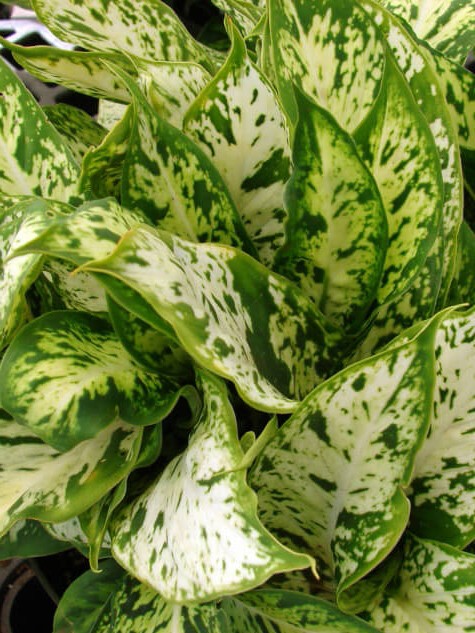
Gold Dieffenbachia
Dieffenbachia seguine (Jacq.) Schott
The basionym is Arum seguine Jacq.
Important botanical synonyms and former names include:
- Dieffenbachia picta Schott
- Dieffenbachia maculata (G.Lodd.) Sweet
- Dieffenbachia amoena W.Bull
- Caladium pictum G.Lodd.
- Caladium maculatum G.Lodd.
- Caladium seguine (Jacq.) Vent.
“Gold Dieffenbachia” is a horticultural common name rather than a consistently defined botanical cultivar. It may be applied to several yellow-, cream-, ivory-, or pale-green selections of Dieffenbachia seguine and to commercially named cultivars historically sold under D. picta or D. maculata.
Araceae
Gold Dieffenbachia; Golden Dieffenbachia; Gold Dumb Cane; Golden Dumb Cane; Dumb Cane; Dumbcane; Spotted Dumb Cane; Variable Dieffenbachia; Spotted Dieffenbachia; Dieffenbachia; Leopard Lily; Dieffenbachia seguine; Dieffenbachia picta; Dieffenbachia maculata; Dieffenbachia amoena; Arum seguine; Caladium pictum; Caladium maculatum
Gold Dieffenbachia is not one consistently defined cultivar. The name may be used for yellow-, cream-, ivory-, or white-variegated Dieffenbachia seguine selections, including plants sold under older D. picta or D. maculata labeling. Cultivar and trade names such as ‘Camille’, ‘Rudolph Roehrs’, ‘Exotica’, ‘Perfection’, ‘Tropic Marianne’, ‘Tropic Snow’, and other commercial selections do not identify toxin-free plants.
Mother-in-Law Plant and Mother-in-Law’s Tongue are occasionally applied to Dieffenbachia but are highly ambiguous. Those names more commonly refer to the unrelated Snake Plant, Dracaena trifasciata, formerly Sansevieria trifasciata.
Leopard Lily is also ambiguous and may be used for unrelated ornamental plants. Treatment and identification should rely on the scientific name, a nursery label, and photographs of the complete plant rather than the common name alone.
Insoluble Calcium Oxalate Raphides
The principal confirmed injurious structures in Gold Dieffenbachia are microscopic crystals of insoluble calcium oxalate. Many are arranged as narrow needle-like raphides within specialized cells called idioblasts. These cells are not passive containers. When a leaf, petiole, fleshy cane, root, flower structure, fruit, or other living tissue is bitten, crushed, cut, or torn, pressure and contact with moisture can discharge bundles of crystals into the surrounding sap and animal tissue.
Direct microscopic research on Dieffenbachia seguine has demonstrated that the plant produces several forms of calcium oxalate crystals and distributes them differently among organs and tissues. Raphides are especially important toxicologically because their elongated shape permits penetration of moist mucosal surfaces. Other crystal forms may serve structural, mineral-regulation, reproductive, or defensive functions within the plant, but the penetrating raphide bundles are most closely associated with the abrupt oral and ocular syndrome.
The crystals act like innumerable microscopic splinters. They puncture epithelial cells of the lips, gums, tongue, palate, pharynx, esophagus, conjunctiva, or cornea and disrupt the protective surface through which sap constituents can enter. The resulting pain is immediate because mechanical penetration, local cellular damage, and inflammation begin as soon as the plant is chewed or sap contacts vulnerable tissue.
Proteolytic Sap and the Combined Injury
Raphides do not fully explain every feature of Dieffenbachia injury. Chemical investigations by Walter and Khanna found proteolytic activity in plant material then identified as Dieffenbachia seguine, D. amoena, and D. picta. Older literature applied the names “dumbcain” or “dumbain” to a proposed Dieffenbachia protease, while later reports have discussed several other enzymes and inflammatory constituents.
A modern clinical investigation involving Dieffenbachia seguine identified a plant metalloproteinase after guttation fluid entered a pre-existing fingertip fissure and produced progressive soft-tissue necrosis and bone injury. That report provides direct evidence that protein-degrading activity can contribute to tissue destruction. It does not establish that one identical enzyme occurs at the same concentration in every leaf, cultivar, organ, growing condition, or exposure.
The most defensible mechanism is therefore a combined injury. Raphides breach the epithelial barrier and deposit sap within tissue; proteolytic activity and other inflammatory constituents then amplify pain, vascular leakage, swelling, cellular injury, and mucosal erosion. Histamine, kinins, prostaglandins, and other inflammatory mediators may participate after tissue is damaged, but Dieffenbachia poisoning should not be described as a simple allergy or as poisoning by one universally confirmed enzyme.
L-asparaginase is frequently repeated in later summaries as an active Dieffenbachia constituent. The available exact-plant evidence does not justify presenting it as the sole toxin or as the principal explanation for every poisoning. The established clinical model remains insoluble calcium oxalate raphides acting together with proteolytic and inflammatory sap activity.
Why This Is Not Systemic Soluble-Oxalate Poisoning
The calcium oxalate in Dieffenbachia is predominantly insoluble. The crystals remain largely at the site of contact and cause direct physical and inflammatory injury rather than dissolving into a large absorbable oxalate load. This differs fundamentally from poisoning by plants containing substantial soluble oxalates, which can bind circulating calcium, produce hypocalcemia, and contribute to renal calcium oxalate deposition.
Ordinary Gold Dieffenbachia exposure is therefore not expected to cause primary systemic hypocalcemia, widespread mineral imbalance, direct oxalate nephrosis, or the classic metabolic collapse associated with soluble-oxalate forage plants. Kidney abnormalities can still develop secondarily in an unusually severe patient through dehydration, shock, oxygen deprivation, or another simultaneous exposure, but renal failure is not the characteristic direct action of Dieffenbachia raphides.
The same distinction applies to seizures, coma, major liver injury, and profound cardiovascular abnormalities. These findings are not expected after an uncomplicated local raphide exposure and should prompt investigation for airway-related hypoxia, aspiration, a retained foreign body, severe dehydration, pesticide or fertilizer contamination, another plant, medication exposure, or an unrelated medical disorder.
Plant Parts, Cultivars, and Practical Dose
Every part of Gold Dieffenbachia should be treated as injurious, including leaves, petioles, cane-like stems, roots, sap, inflorescences, fruit, seeds, fresh cuttings, broken shoots, pruning debris, and plant material contaminated with fresh sap. Exact comparative toxin concentrations have not been established for all of these structures, so one organ should not be declared harmless merely because most household exposures involve leaves.
Thick cane sections create a particularly important practical hazard. A dog chewing vigorously through a fleshy stem may rupture a large volume of sap-containing tissue in a short period while holding the material deep in the mouth. Direct canine reports of severe and fatal airway obstruction followed intensive cane or stem exposure, making the physical manner of chewing as important as the visible amount missing from the plant.
Yellow, white, cream, or pale-green variegation does not remove idioblasts or establish reduced toxicity. “Gold Dieffenbachia” may describe multiple cultivars and commercial selections, and no dependable toxicological ranking exists among ‘Camille’, ‘Rudolph Roehrs’, ‘Exotica’, ‘Perfection’, ‘Tropic Snow’, ‘Tropic Marianne’, or unnamed yellow-variegated plants.
Drying or wilting may reduce some fresh sap and enzyme activity, but insoluble mineral crystals do not become harmless merely because a leaf or cane has dried. Pruning waste, old leaves, discarded canes, and dried plant fragments should therefore remain inaccessible to animals. No controlled pet study has established that dried Dieffenbachia has a predictable safe exposure level.
Mechanical Hazards and the Absence of a Safe Dose
Dieffenbachia poisoning is not purely chemical. Broad leaf strips, fibrous petioles, thick cane segments, root masses, plant ties, potting material, and broken container pieces may lodge in the mouth or pharynx, obstruct the esophagus, remain in the stomach, or contribute to intestinal obstruction. Continued gagging, dysphagia, retching, or vomiting after the initial oral pain begins to improve may therefore indicate retained material rather than continuing crystal activity alone.
No dependable number of bites, leaf area, cane length, or plant weight has been established as safe for dogs, cats, horses, livestock, rabbits, birds, or other animals. Immediate pain often limits continued consumption, which explains why many exploratory bites remain mild, but that protective response is not reliable. A small animal, a determined chewer, a large sap-rich cane, or plant material held at the back of the mouth can create a disproportionate exposure.
Immediate Oral Pain and Defensive Behavior
Clinical signs usually begin during chewing or within minutes. The animal may abruptly release the plant, shake its head, paw or rub at the muzzle, hold the mouth partly open, repeatedly lick the lips, drool heavily, gag, retch, or appear to choke. Saliva may become thick or rope-like because oral pain and swelling make normal swallowing difficult.
The lips, gingiva, tongue, palate, and other oral surfaces may become reddened, inflamed, swollen, eroded, or ulcerated. Small punctures produced by individual raphides are not ordinarily visible without magnification, but their cumulative effect can create severe burning, tenderness, and diffuse tissue injury. Affected animals may refuse food, approach water and then pull away, cry during oral handling, hide, become restless, or resist having the head touched.
Altered vocalization is especially important. A dog may bark weakly or hoarsely, while a cat may produce an abnormal meow or stop vocalizing. This can reflect painful tongue and pharyngeal movement, but a progressive voice change can also indicate deeper edema involving the glottic or laryngeal region.
Pharyngeal and Upper-Airway Progression
Most brief exposures remain confined to oral irritation, but swelling may extend into the back of the mouth, pharynx, epiglottic region, glottis, or larynx. Warning signs include inability to swallow saliva, continuous drooling with repeated unsuccessful swallowing, neck extension, harsh or noisy inspiration, stridor, open-mouth breathing, rapidly increasing respiratory effort, panic, blue-gray mucous membranes, weakness, and collapse.
A normal-looking lip or front portion of the tongue does not rule out deeper injury. The most dangerous swelling may be situated behind the visible oral cavity, where it cannot be assessed safely by an owner. Repeatedly forcing the mouth open or reaching toward the throat may increase distress, worsen oxygen demand, or provoke a defensive bite.
Direct canine evidence confirms that this risk is rare but real. Loretti and colleagues described a nine-year-old female Poodle that intensely chewed a thick Dieffenbachia picta stem. Severe erosive and ulcerative glossitis was followed by marked respiratory distress and fatal asphyxiation from glottic edema within hours. In another report, Peterson and colleagues treated an eight-year-old Labrador Retriever with dysphagia and airway obstruction using temporary tracheostomy and supportive care. These cases support immediate emergency assessment when substantial cane chewing, progressive swelling, voice change, or abnormal breathing is reported.
Gastrointestinal and Esophageal Injury
Plant fragments and sap that are swallowed may irritate the esophagus, stomach, and upper intestinal tract. Nausea, repeated swallowing, vomiting, reduced appetite, abdominal discomfort, lethargy, and diarrhea may accompany the oral syndrome. Repeated vomiting can pass acid and plant material back across already injured mucosa and may contribute to dehydration, electrolyte loss, aspiration, or further esophageal inflammation.
Severe or persistent dysphagia may reflect edema, painful esophageal injury, or a physically retained fragment. Long strips of leaf, thick petioles, fibrous cane pieces, or root material may become lodged even when the visible plant has been removed from the mouth. Persistent gagging, regurgitation, unproductive retching, repeated attempts to swallow, inability to retain water, abdominal enlargement, reduced stool production, or vomiting that continues after oral pain subsides requires examination for a foreign body.
Blood-streaked saliva, vomit, or stool can follow substantial mucosal injury, forceful retching, or ulceration, but hemorrhage is not expected after every small bite. Large quantities of blood, coffee-ground material, black stool, abdominal distension, or progressive weakness warrant urgent veterinary evaluation.
Eye and Skin Exposure
Sap transferred directly into an eye, splashed during pruning, or carried from contaminated fur or paws can produce intense pain, tearing, blinking, squinting, conjunctival redness, eyelid swelling, light sensitivity, corneal edema, abrasion, or ulceration. Published ophthalmic cases have demonstrated fine needle-like calcium oxalate crystals within the corneal epithelium and stroma, producing a transient crystalline keratopathy that may remain visible after the initial surface irritation begins to improve.
An eye may appear less red after irrigation while embedded crystals, an epithelial defect, or corneal inflammation persists. Ongoing squinting, cloudiness, unequal pupil appearance, discharge, repeated rubbing, or reluctance to open the eye requires fluorescein staining and a complete veterinary ocular examination.
Skin contact usually causes a more localized syndrome because intact skin provides greater protection than mucous membrane or corneal tissue. Fresh sap may nevertheless produce burning, redness, itching, swelling, dermatitis, blister-like irritation, or persistent pain, particularly when it enters a cut, fissure, abrasion, or other damaged area. A published D. seguine exposure involving guttation fluid and a fingertip fissure progressed to severe tissue necrosis, demonstrating that contact through broken skin should not be dismissed.
Expected Course and Evidence from Exposure Series
A retrospective poison-center review by Pedaci and colleagues identified 188 human exposures involving Dieffenbachia or Philodendron in which the plant tissue had been damaged. Only four patients were symptomatic, including three Dieffenbachia exposures; all signs began within five minutes, remained minor, and were short-lived. Although human exposure data cannot define the veterinary course, the findings help explain why many brief exploratory contacts resolve without severe complications.
Mild drooling and oral discomfort often begin decreasing over several hours once loose plant material is removed and no further exposure occurs. More substantial stomatitis, tongue injury, esophagitis, vomiting, or painful swallowing can interfere with food and water intake for a day or longer. Continued deterioration, recurrence after apparent improvement, or inability to resume drinking suggests a complication rather than an ordinary resolving exposure.
Airway edema generally develops early, but respiratory signs may worsen as inflammation progresses. Aspiration pneumonia may appear later after vomiting or impaired swallowing and can cause coughing, fever, rapid breathing, abnormal lung sounds, lethargy, or renewed respiratory distress. Eye injury may also outlast oral signs because crystals can remain within corneal tissue while the surface heals.
Species Differences and Atypical Findings
Dogs have the strongest direct veterinary case evidence. Cats are expected to experience the same raphide-mediated oral and ocular injury, but they may show less obvious distress by hiding, refusing food, salivating quietly, or holding the mouth open. Prolonged anorexia is an additional concern in cats and should not be attributed indefinitely to a minor mouth irritation.
Horses and livestock cannot be evaluated by vomiting behavior in the same way as dogs and cats. Horses cannot vomit and may instead show salivation, dropped feed, painful chewing, reluctance to swallow, repeated attempts to drink, coughing while eating, colic, diarrhea, depression, or respiratory distress. Exposure is most likely when an ornamental plant, cut cane, root mass, or pruning waste is discarded into a paddock, barn lot, feed area, or accessible compost pile.
Rabbits and guinea pigs cannot vomit. Birds, rabbits, and other small animals may receive a meaningful exposure from a relatively small fragment because of their body size and narrow airway. Drooling may be difficult to recognize in some species, making food refusal, repeated beak or mouth movements, facial rubbing, altered breathing, or sudden quietness important warning signs.
Convulsions, profound coma, primary kidney failure, jaundice, major heart-rhythm abnormalities, or delayed multiple-organ failure are not characteristic direct effects of uncomplicated Dieffenbachia raphides. These findings require evaluation for hypoxia, aspiration, severe dehydration, pesticides, fertilizers, medications, another toxic plant, or a separate disease process.
Prognosis
The prognosis is good to excellent after most limited exposures when the animal remains able to breathe and swallow normally. The outlook becomes more guarded with progressive tongue or pharyngeal swelling, glottic or laryngeal involvement, aspiration, substantial esophageal injury, persistent vomiting, dehydration, corneal ulceration, or a retained plant fragment.
Intensive cane chewing deserves particular caution because direct canine reports include both successful treatment requiring a temporary tracheostomy and fatal asphyxiation. Rapid recognition and protection of a narrowing airway are more important than attempting additional oral home treatment.
Accepted Identity and the Meaning of “Gold Dieffenbachia”
Gold Dieffenbachia is a horticultural name applied to yellow-, cream-, ivory-, white-, or pale-green forms of Dieffenbachia seguine (Jacq.) Schott. It does not identify one consistently defined cultivar, chemical profile, or registered clone. Two visually similar plants may be labeled Gold Dieffenbachia, Spotted Dumb Cane, Dieffenbachia picta, D. maculata, D. amoena, or simply Dieffenbachia even though current botanical treatment places them within the broad and variable species D. seguine.
Arum seguine Jacq. is the basionym. Important historical names include Dieffenbachia picta Schott, Dieffenbachia maculata (G.Lodd.) Sweet, Dieffenbachia amoena W.Bull, Caladium pictum G.Lodd., and Caladium maculatum G.Lodd. These names explain why older poison reports and nursery labels appear to describe several plants even when they concern material now treated as Dieffenbachia seguine.
Named selections such as ‘Camille’, ‘Rudolph Roehrs’, ‘Exotica’, ‘Perfection’, ‘Tropic Snow’, ‘Tropic Marianne’, and other commercial varieties may differ in height, leaf size, color pattern, and growth habit. No dependable evidence establishes a toxin-free Gold Dieffenbachia cultivar.
Native Range, Habitat, and Cultivated Distribution
Dieffenbachia seguine is native from the Caribbean into tropical South America and grows primarily in wet tropical environments. Wild populations occur as understory or edge vegetation in humid forest, disturbed vegetation, shaded margins, stream-associated sites, and other warm habitats where moisture and filtered light support persistent leafy growth.
Human cultivation has carried Dieffenbachia far beyond its native range. It is now encountered in houses, offices, schools, shopping centers, restaurants, hotels, hospitals, greenhouses, conservatories, covered patios, and frost-free landscapes. Indoor cultivation is the dominant exposure setting for dogs and cats, while outdoor landscape specimens and discarded houseplants create risks for horses, livestock, poultry, rabbits, and wildlife.
How to Recognize Gold Dieffenbachia
The plant is an erect or leaning evergreen subshrub with thick, fleshy, cylindrical stems. As lower leaves age and fall, the stem develops rings and scars that create the cane-like appearance responsible for the name Dumb Cane. Older plants may become several feet tall, top-heavy, and leafless along the lower stem while retaining a crown of large foliage near the top.
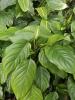
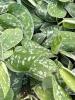
Leaves are broad, glossy, oval to oblong, and attached by substantial petioles that partially sheath the stem. Numerous lateral veins extend from the central midrib toward the margin. Gold forms may display yellow speckling, broad ivory centers, cream blotches, pale-green brush marks, white midribs, darker margins, or complex marbling. Variegation pattern alone is unreliable for exact cultivar identification because commercial selections overlap and growing conditions can alter coloration.
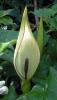
Dieffenbachia produces the characteristic aroid inflorescence: a fleshy spadix partly surrounded by a greenish, cream, or pale spathe. Flowering is uncommon in many indoor plants but occurs more readily in mature tropical specimens. Pollinated plants may produce berry-like fruit. The spathe, spadix, fruit, and seeds should not be treated as safer than the foliage or cane.
Common-Name and Look-Alike Problems
Chinese Evergreen species in Aglaonema are frequent look-alikes because both groups have broad variegated leaves and tolerate indoor shade. Dieffenbachia generally develops a more evident aerial cane with conspicuous leaf scars, while many Chinese Evergreens remain more basal or clustered. The distinction is botanically useful, but both groups contain insoluble calcium oxalate raphides and can cause immediate oral irritation.
Mother-in-Law Plant and Mother-in-Law’s Tongue are unreliable names. They are occasionally applied to Dieffenbachia because of its historical association with temporary speech impairment, but they more commonly refer to Snake Plant, Dracaena trifasciata, formerly Sansevieria trifasciata. Snake Plant contains saponins and more often causes gastrointestinal upset than the intense immediate raphide injury associated with Dieffenbachia.
Leopard Lily is likewise shared by unrelated ornamentals. A common name should not determine treatment when the plant can be photographed, labeled, or examined. Preserve the complete plant, pot label, fallen material, and close photographs of the leaf, stem, petiole attachment, and inflorescence whenever identification is uncertain.
How Animals Are Exposed
Dogs most often bite hanging leaves, pull over a top-heavy pot, carry a detached cane, or gain access during pruning, repotting, division, or seasonal disposal. Fresh cane sections are especially attractive as chewable objects and release large amounts of sap when crushed. Root masses and potting material become accessible when a plant is uprooted or a container breaks.
Cats may chew leaf margins, climb furniture to reach a plant, rub against damaged foliage, walk through sap, or transfer residue from the paws and coat to the mouth and eyes during grooming. A plant positioned beyond floor level is not necessarily inaccessible to a climbing cat.
Propagation creates a concentrated exposure period. Top cuttings, cane sections, freshly cut stumps, knives, pruning shears, gloves, work surfaces, and rooting containers may all carry sap. Water holding a fresh cutting may also contain plant residue, fertilizer, bacteria, or decomposing tissue and should not be available as drinking water.
Horses, livestock, poultry, and rabbits are unlikely to seek out a standing indoor plant but may consume discarded houseplants, landscape trimmings, root balls, fallen canes, or ornamental waste placed in a paddock, barn lot, run, or open compost pile. Pruned material lying at ground level may be easier to investigate than an intact upright specimen.
Diagnosis and Differential Diagnosis
Diagnosis is based on the abrupt onset of oral pain after a compatible exposure, characteristic plant material, and examination of the mouth, pharynx, airway, eyes, skin, and gastrointestinal tract. There is no routine rapid blood test that confirms Dieffenbachia exposure, and ordinary laboratory values may remain normal after a mild local injury.
Animals with progressive swelling or abnormal breathing require direct airway assessment. Sedation, laryngoscopy, or endoscopic examination may be needed when the back of the mouth cannot be evaluated safely. Radiographs, ultrasound, endoscopy, or surgery may be considered when a thick cane, fibrous petiole, root mass, pot fragment, or other foreign material could have been swallowed.
Persistent respiratory signs may reflect laryngeal edema, aspiration pneumonia, a lodged object, or another pulmonary disorder. Continued vomiting may result from mucosal irritation but can also indicate obstruction or a second toxin. Eye pain requires fluorescein staining and examination beneath the eyelids because corneal crystal penetration or ulceration may not be apparent during a routine external inspection.
Atypical systemic findings should broaden the investigation. Fertilizer, pesticide, systemic insecticide, fungicide, slug bait, contaminated potting material, human medication, another houseplant, or a broken container may be involved in the same event. Severe hypocalcemia, renal crystal injury, jaundice, persistent seizures, or multiple-organ failure does not fit an uncomplicated insoluble-raphide syndrome.
Prognosis and Prevention
Most animals recover completely after limited chewing, particularly when they remain able to breathe, swallow, and maintain hydration. Recovery is slower when extensive oral ulceration, esophagitis, aspiration, corneal injury, dehydration, or a retained foreign body develops. Airway obstruction is uncommon but can become fatal rapidly if glottic or laryngeal swelling is not recognized and treated.
Prevention requires more than placing a young plant on a low shelf. Mature Dieffenbachia can extend leaves beyond the container, become top-heavy, and drop or lose lower growth. Use a genuinely inaccessible plant room, enclosed display, or pet-safer replacement when an animal persistently chews foliage or climbs to reach plants.
Exclude animals during pruning, division, repotting, and propagation. Wear gloves, wash hands before touching the eyes or face, clean tools and work surfaces, collect every cane section and root fragment, and remove sap-contaminated material before animals return. Plant waste should be bagged or placed in a secure container rather than discarded into an open compost pile, livestock area, poultry run, rabbit enclosure, or yard accessible to pets.
Immediate Steps After Gold Dieffenbachia Exposure
- Stop access immediately. Move the animal away from the plant, fallen leaves, cane sections, roots, cuttings, sap, propagation water, potting material, and contaminated tools or surfaces.
- Check breathing before examining the mouth. Noisy inhalation, open-mouth breathing, neck extension, blue-gray gums, collapse, or rapidly increasing effort requires immediate emergency transport without additional oral treatment.
- Remove only loose visible material. When the animal is calm, breathing normally, and not likely to bite, remove plant pieces lying at the lips or front of the mouth. Do not reach behind the tongue or pull blindly on a long fiber.
- Protect your hands and face. Wear gloves or use clean gauze when handling sap-covered plant material, saliva, or vomit. Avoid touching your eyes.
- Gently clear surface sap. Wipe the lips, gums, and front of the tongue with a cool damp cloth, or allow a gentle forward-directed rinse that drains out of the mouth. Do not force water toward the throat.
- Prevent secondary grooming exposure. Keep the animal from licking sap-covered paws, fur, or skin until the contamination has been washed away.
- Preserve identification evidence. Save the nursery label, cultivar name, representative leaf or cane, photographs of the complete plant, and recognizable material found in vomit.
- Contact a veterinarian. Describe the plant part, amount missing, whether a thick cane was chewed, the animal’s current swallowing and breathing, and any eye or skin exposure.
Do Not Attempt Unsupervised Home Treatment
Do not induce vomiting. Dieffenbachia injures tissue immediately during chewing, and vomiting cannot remove crystals already embedded in the lips, tongue, pharynx, or esophagus. Bringing plant fragments and stomach acid back across damaged mucosa can intensify pain and increase aspiration risk.
- Do not use hydrogen peroxide, salt, mustard, ipecac, dish soap, detergent, manual gagging, or fingers in the throat. These methods add injury and are particularly dangerous when swallowing or airway protection is impaired.
- Do not administer activated charcoal at home. Charcoal cannot extract raphides from tissue and is not routinely useful for this local irritant syndrome. It may be aspirated by a drooling, gagging, vomiting, sedated, or breathing-impaired animal.
- Do not force food, water, milk, yogurt, oil, bread, or another substance. None is an antidote, and forced swallowing may lead to aspiration when the tongue or throat is swollen.
- Do not give diphenhydramine, corticosteroids, pain medication, antacids, antidiarrheals, calcium, or leftover veterinary medication unless a veterinarian directs their use. These treatments do not remove the crystals and may delay airway evaluation or create additional complications.
- Do not scrub the mouth. Aggressive rubbing may drive crystals deeper, worsen bleeding, or increase pain.
If the animal is fully alert, breathing quietly, swallowing saliva normally, and not gagging or vomiting, it may be allowed a small voluntary amount of cool water after loose material has been cleared. Stop immediately if coughing, repeated swallowing, regurgitation, or distress occurs. An animal unable to swallow saliva should receive nothing by mouth.
When Emergency Examination Is Especially Important
- Progressive mouth or tongue swelling: Increasing edema may extend beyond the visible oral cavity.
- Inability to swallow saliva: Continuous drooling with repeated unsuccessful swallowing suggests important pharyngeal injury.
- Voice change: A hoarse bark, weak meow, unusual cough, or loss of normal vocalization may accompany deeper swelling.
- Abnormal breathing: Stridor, harsh inhalation, neck extension, open-mouth breathing, rapidly increasing effort, blue-gray mucous membranes, weakness, or collapse is an airway emergency.
- Substantial cane chewing: Thick stems can release a large sap volume and have been associated with severe and fatal canine airway obstruction.
- Persistent gagging or retching: A cane fragment, petiole, leaf strip, root mass, or other foreign object may be lodged.
- Repeated vomiting or inability to retain water: The animal may require anti-nausea treatment, fluid support, and evaluation for esophageal or gastrointestinal injury.
- Eye exposure: Continued squinting, tearing, redness, cloudiness, discharge, light sensitivity, or rubbing requires prompt examination.
- Unexpected systemic illness: Seizures, jaundice, profound collapse, kidney abnormalities, or severe neurologic signs suggest hypoxia, another toxin, or a concurrent disease.
Keep a breathing-impaired animal quiet and minimize handling during transport. Do not repeatedly open the mouth, press on the tongue, or attempt to place medication into the throat. Struggling increases oxygen demand and may worsen a critically narrowed airway.
Skin, Coat, and Eye Decontamination
Wash sap from exposed skin, paws, and fur with lukewarm water and a mild pet-safe shampoo or soap. Rinse thoroughly without aggressive scrubbing, and direct contaminated water away from the eyes and mouth. Do not use bleach, alcohol, hydrogen peroxide, concentrated vinegar, solvents, essential oils, or abrasive cleaners.
For eye exposure, begin irrigation immediately with sterile saline or clean lukewarm water. Flush continuously for at least 15 to 20 minutes, allowing the fluid to flow away from the unaffected eye and mouth. Do not rub the eye or attempt to remove crystals with a swab or fingernail.
Persistent pain or squinting requires veterinary examination even when the eye looks clearer after irrigation. Fluorescein staining, magnification, eyelid eversion, and repeat examination may be necessary to identify an epithelial defect, ulcer, retained plant debris, corneal edema, or crystalline keratopathy. Do not use human redness-relief drops, topical anesthetics, or leftover eye medication. Steroid-containing eye medication can worsen an undiagnosed corneal ulcer.
Veterinary Airway and Oral Treatment
The first professional priority is determining whether the animal can maintain an open airway and protect it during swallowing. Examination may include pulse oximetry, respiratory assessment, inspection of the oral cavity, and evaluation of the pharynx and larynx. Sedation or anesthesia may be required when pain, swelling, or patient resistance prevents a safe examination.
Animals with clinically important airway edema may require oxygen, carefully selected injectable medication, sedation, endotracheal intubation, assisted ventilation, or an emergency surgical airway. A published canine survivor required a temporary tracheostomy. Treatment should not be delayed while waiting to see whether an antihistamine will reverse the obstruction.
Veterinary analgesia may be needed for severe stomatitis, glossitis, pharyngeal pain, or esophageal irritation. Anti-nausea medication, intravenous fluids, electrolyte assessment, and nutritional support may be used when vomiting, painful swallowing, or food refusal interferes with hydration and recovery. Softened food may be introduced only after swallowing is safe.
Antihistamines or corticosteroids may be considered for selected patients with clinically significant inflammation or edema, but neither is a specific antidote. Their use depends on airway findings, infection risk, gastrointestinal injury, eye involvement, and the animal’s overall condition. Corticosteroids are inappropriate in some patients and must not be placed in an eye until corneal ulceration has been excluded.
Foreign-Body, Esophageal, and Respiratory Complications
Persistent dysphagia, gagging, regurgitation, vomiting, abdominal pain, or inability to retain water may require radiographs, ultrasound, endoscopy, or surgical exploration. Thick cane sections and root masses may not be clearly visible on every radiograph, so a normal initial image does not always exclude plant material.
Endoscopy can permit examination of the pharynx, esophagus, and stomach and may allow removal of retained material. Surgery may be required for a large gastric or intestinal mass, obstruction, perforation, or plant material that cannot be retrieved safely by another method.
Aspiration pneumonia should be considered after repeated vomiting or impaired swallowing. Coughing, fever, rapid breathing, reduced oxygenation, abnormal lung sounds, or worsening lethargy may prompt chest imaging, oxygen support, airway suctioning, antimicrobial treatment when bacterial infection is suspected, and additional hospitalization.
Horses, Livestock, Rabbits, and Birds
Do not attempt to induce vomiting in horses, rabbits, guinea pigs, or other species incapable of vomiting. Remove all animals from the contaminated area, provide access to clean uncontaminated forage and water without forcing intake, and inspect every animal that could have reached the discarded plant.
Salivation, dropped feed, repeated chewing movements, reluctance to swallow, coughing while eating, colic, diarrhea, altered vocalization, facial rubbing, or abnormal breathing warrants veterinary contact. Small mammals and birds may be difficult to examine at home and can deteriorate rapidly when oral pain prevents eating or when a narrow airway begins to swell.
Save representative leaves, canes, roots, flowers, fruit, and photographs. Also identify any fertilizer, pesticide, fungicide, systemic insecticide, slug bait, or potting product that may have accompanied the ornamental material.
Recovery and Prognosis
Most limited exposures improve substantially after loose material is cleared and no further contact occurs. Mild drooling and oral discomfort may decrease within several hours, while moderate stomatitis or painful swallowing may interfere with eating and drinking for a day or longer.
Re-examination is appropriate when the animal remains unable to eat, cannot drink comfortably, continues vomiting, develops a cough, becomes more lethargic, or shows recurrent swelling after apparent improvement. Persistent eye pain, cloudiness, discharge, or squinting also requires follow-up because corneal injury may outlast the oral syndrome.
The prognosis becomes guarded when the glottis or larynx is involved, but survival is possible when the airway is protected promptly. Fatal asphyxiation has been documented after intensive cane chewing, so progressive breathing or swallowing abnormalities should never be managed by home observation alone.
Frequently Asked Questions About Gold Dieffenbachia and Animal Poisoning
Why can a pet appear to be choking after the visible plant piece is gone?
Dieffenbachia can create choking behavior through pain, gagging, thick saliva, tongue swelling, pharyngeal edema, or laryngeal narrowing even when no fragment remains visible. A second possibility is that a long leaf strip, petiole, or cane piece has lodged deeper in the pharynx or esophagus. Because edema and physical obstruction can look similar from outside the mouth, persistent gagging, inability to swallow saliva, voice change, or abnormal breathing requires veterinary examination rather than repeated blind attempts to retrieve material.
Does a normal-looking tongue rule out dangerous throat swelling?
No. The lips and front of the tongue may look only mildly affected while swelling progresses farther back in the pharynx, around the epiglottic region, or at the glottis and larynx. These structures cannot be evaluated safely during a forced home examination. A progressively hoarse voice, repeated unsuccessful swallowing, neck extension, stridor, or open-mouth breathing is more important than the visible appearance of the tongue.
Why is chewing a thick Dieffenbachia cane more concerning than taking one small bite from a leaf edge?
A thick fleshy cane can release a large volume of sap while the animal repeatedly crushes it deep within the mouth. It may also produce a substantial fibrous fragment capable of lodging in the throat or gastrointestinal tract. The two most important direct canine reports involved severe stem or cane exposure, including one fatal case of glottic edema and another case requiring a temporary tracheostomy. A tiny leaf-edge bite often ends immediately because of pain, but that pattern should not be assumed after intensive cane chewing.
How can a veterinarian distinguish swelling from a retained cane or leaf fragment?
The distinction may require more than looking at the front of the mouth. A veterinarian may examine beneath the tongue and into the pharynx under sedation, evaluate the larynx, obtain radiographs or ultrasound images, or use endoscopy to inspect the esophagus and stomach. Plant material is not equally visible on every imaging study, so persistent dysphagia or retching may justify additional evaluation even when an initial radiograph is inconclusive.
Can a pet be exposed later from sap left on fur, paws, tools, or furniture?
Yes. A cat or dog can transfer fresh residue from the coat or paws into the mouth and eyes during grooming. Sap may also remain on pruning shears, gloves, floors, counters, pots, clothing, or a detached cane. Wash contaminated fur and skin, clean the work area, and remove every cutting before allowing animals back into the room. Continued signs after the plant has been moved may reflect secondary transfer rather than a new episode of deliberate chewing.
Why can an eye remain painful after the mouth has improved?
Oral crystals are gradually cleared as damaged surface tissue heals, but raphides entering an eye may penetrate the corneal epithelium and remain visible within the corneal layers. Published cases describe needle-like crystals, epithelial defects, corneal edema, and crystalline keratopathy. The eye may therefore continue squinting or become cloudy after drooling and mouth pain have resolved. Persistent ocular signs require fluorescein staining and magnified examination rather than additional home rinsing alone.
When is it safe to offer food again?
Food should be withheld while the animal is gagging, repeatedly vomiting, unable to swallow saliva, breathing abnormally, or showing major tongue or throat swelling. Once breathing is quiet, swallowing is clearly normal, and vomiting has stopped, a veterinarian may recommend small amounts of soft food. Do not force-feed. A pet that wants food but repeatedly drops it, cries while chewing, coughs during swallowing, or cannot drink comfortably needs examination for oral, pharyngeal, or esophageal injury.
What should owners of rabbits, guinea pigs, or pet birds know?
These animals can develop the same local raphide injury, but signs may be subtle and their smaller airway makes swelling potentially important. Rabbits and guinea pigs cannot vomit, so home emesis must never be attempted. Food refusal, unusual chewing movements, facial rubbing, wetness around the mouth, regurgitation in a bird, reduced droppings, altered vocalization, or abnormal breathing warrants prompt veterinary advice. Prolonged inability to eat is itself dangerous in small herbivores.
Could fertilizer or pesticide on the plant cause a different poisoning syndrome?
Yes. Systemic insecticides, fertilizer concentrates, fungicides, slug bait, leaf-shine products, potting amendments, and household chemicals may accompany the same plant exposure. Seizures, severe tremors, jaundice, profound cardiovascular abnormalities, primary kidney failure, or delayed multiple-organ disease is not the expected uncomplicated Dieffenbachia pattern. Preserve every product used around the plant and report it to the veterinarian rather than assuming all signs came from the raphides.
Should other animals in the home or enclosure be checked after one animal is affected?
Yes. More than one animal may have contacted a fallen cane, pruning pile, spilled root ball, or contaminated work area, and each may have consumed a different amount. Examine the surroundings, remove all accessible material, and observe every exposed animal for drooling, altered swallowing, food refusal, facial rubbing, vomiting, coughing, voice change, or abnormal breathing. Horses, rabbits, and some other species will not vomit, so the absence of vomit does not prove that they were not exposed.