Cuckoo-pint Toxicity and Calcium Oxalate Injury
Is Cuckoo-pint Poisonous to Dogs, Cats, Horses, and Livestock?
Yes—Cuckoo-pint, Arum maculatum, is poisonous to dogs, cats, horses, and livestock. Its leaves, petioles, flower structure, berries, stems, sap, roots, and underground tuber contain insoluble calcium oxalate crystals called raphides. Chewing or crushing the plant releases these microscopic needles into contacted tissue, causing immediate burning pain, heavy drooling, pawing at the mouth, gagging, swelling, painful swallowing, and sometimes vomiting or diarrhea.
Most exposures remain localized because the intense pain discourages continued chewing. Berry spikes and dug-up tubers deserve additional concern because an animal may swallow a larger mass of tissue before the plant is identified. Progressive tongue or throat swelling, inability to manage saliva, noisy breathing, repeated vomiting, or eye exposure requires prompt veterinary assessment.
About this guide: This page provides general pet-poisoning information and cannot diagnose or treat an individual animal. For any suspected exposure, contact a veterinarian or animal poison-control service immediately. Do not induce vomiting, give medication, or attempt home decontamination unless directed by a veterinary professional.
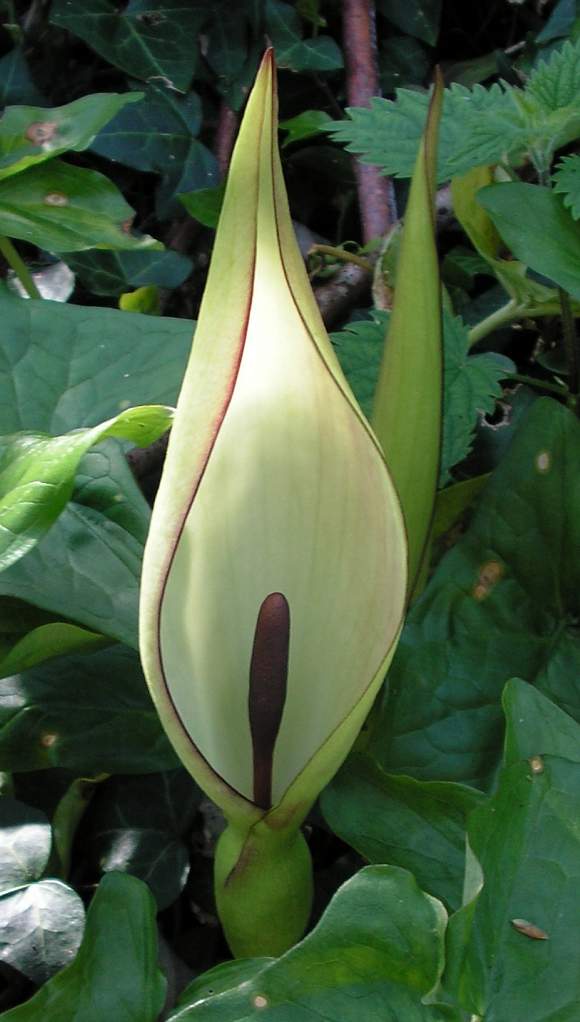
Cuckoo-pint
Arum maculatum L.
Important botanical synonyms and historical names include:
Arisarum maculatum (L.) Raf.
Arum byzantinum Blume
Arum immaculatum (Rchb.) Rchb.
Arum heldreichii Orph. ex Boiss.
Arum pyrenaeum Dufour
Arum vernale Salisb. — illegitimate historical name
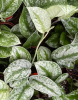
Arum italicum Mill., commonly called Italian Arum, is a separate accepted species. It frequently has conspicuous pale or silvery leaf veins and is often cultivated in gardens. Both plants contain insoluble calcium oxalate raphides and can produce a similar oral-irritation syndrome.
Araceae Juss. — Arum or Aroid Family
Cuckoo-pint belongs to the order Alismatales and the genus Arum. Other insoluble-calcium-oxalate aroids include Aglaonema, Alocasia, Arisaema, Caladium, Colocasia, Dieffenbachia, Epipremnum, Monstera, Philodendron, Spathiphyllum, Syngonium, and Zantedeschia.
Cuckoo-pint, Cuckoo Pint, Wild Arum, Wild Arum Lily, Lords and Ladies, Lords-and-Ladies, Lord-and-Ladies, Adam and Eve, Adam-and-Eve, Devils and Angels, Cows and Bulls, Naked Boys, Bobbins, Cuckoo Plant, Friar’s Cowl, Lamb-in-a-Pulpit, Snakeshead, Adder’s Root, Adder’s Meat, Starch-Root, Starchwort, Wake Robin, Arum maculatum, Arisarum maculatum, Arum immaculatum
“Arum Lily” is ambiguous and is more commonly applied to Zantedeschia species, including Calla Lily. Those plants are also aroids containing insoluble calcium oxalate crystals, but they are not Arum maculatum.
“Wake Robin” and “Jack-in-the-Pulpit” are also used for several Arisaema species. “Lords and Ladies” may occasionally be applied loosely to Italian Arum, Arum italicum. Accurate identification should rely on the leaves, spathe, spadix, berry spike, season, habitat, and scientific name rather than one common name.
Insoluble Calcium Oxalate Raphides
The established toxic structures in Cuckoo-pint are insoluble calcium oxalate crystals called raphides. These long, narrow, sharply pointed crystals occur in bundles inside specialized plant cells known as idioblasts.
Raphide-containing cells occur throughout the plant. Leaves, petioles, flower structures, developing and ripe berries, stems, roots, sap, and the underground tuber should all be treated as capable of causing injury when chewed, crushed, broken, cut, or dug from the soil.
The crystals are not a poison that must circulate through the bloodstream before signs begin. They act immediately at the surface where plant tissue contacts the lips, tongue, gums, mouth, pharynx, esophagus, skin, or eyes.
How Chewing Releases the Crystals
When an animal bites through fresh plant tissue, chewing pressure ruptures the idioblasts and releases bundles of raphides into the surrounding sap. The crystals penetrate and abrade the lips, tongue, gums, palate, inner cheeks, and other contacted tissue.
The animal may react during the first bite by dropping the plant, shaking its head, pawing at the mouth, salivating heavily, gagging, or refusing to continue chewing. This immediate pain usually limits the total amount swallowed.
Raphides are often described as being forcefully ejected from their cells. Pressure, hydration, sap movement, chewing, and direct tissue contact all contribute to dispersal. Regardless of the exact release mechanics, the clinically important result is rapid microscopic puncture injury.
Mechanical Injury and Local Inflammation
The needle-shaped crystals create numerous small punctures and abrasions. These injuries activate pain receptors and produce redness, edema, burning, salivation, and painful swallowing.
Raphide penetration may also allow proteins and other plant constituents to reach tissue beneath the intact mucosal surface. Exact-species research has isolated a mannose-binding tuber lectin known as Arum maculatum agglutinin. In experimental rat and cell-culture models, the purified lectin produced dose-dependent neutrophil migration and direct chemotactic activity, confirming that Cuckoo-pint contains a constituent capable of promoting inflammation.
That study did not reproduce a dog, cat, horse, or livestock animal chewing fresh plant tissue, and it did not establish the lectin as the principal cause of natural poisoning. The ordinary clinical syndrome should remain centered on insoluble calcium oxalate raphides and direct local injury. The lectin may help explain why inflammation can exceed simple mechanical scratching, but proteases, histamine, kinins, free oxalic acid, cyanogenic glycosides, and unidentified alkaloids should not be presented as proven primary toxins without stronger exposure-specific evidence.
Local Injury Is Different from Soluble-Oxalate Poisoning
The calcium oxalate in Cuckoo-pint is present predominantly as insoluble crystals. These crystals remain mainly at contacted surfaces and are not absorbed readily in a form capable of removing large amounts of calcium from the circulation.
This mechanism is fundamentally different from poisoning by soluble-oxalate plants, which can cause systemic hypocalcemia, muscle tremors, cardiac instability, renal calcium oxalate deposition, and acute kidney injury after a substantial ingestion.
Primary renal failure, systemic calcium depletion, persistent cardiac arrhythmias, dilated pupils, seizures, coma, liver failure, and widespread organ damage are not expected direct effects of an uncomplicated Cuckoo-pint exposure. Such findings require investigation for severe hypoxia, dehydration, another poisonous plant, pesticide, medication, fertilizer, or unrelated disease.
Oral, Pharyngeal, and Esophageal Injury
The lips, tongue, floor of the mouth, gums, palate, and pharynx receive the greatest exposure during chewing. Local swelling is usually mild to moderate but may make swallowing painful.
Salivation increases because the mouth hurts and because movement of the tongue and throat becomes uncomfortable. Repeated swallowing, gagging, altered vocalization, or refusal of food and water may occur when irritation extends toward the pharynx.
Swallowed fragments can carry raphides into the esophagus and stomach. This may produce painful swallowing, retching, nausea, vomiting, appetite loss, abdominal discomfort, or diarrhea.
Rare Upper-Airway Compromise
Most Cuckoo-pint exposures do not obstruct the airway. Rarely, substantial inflammation of the tongue, pharynx, or laryngeal region can interfere with airflow.
Progressive tongue enlargement, inability to close the mouth, inability to manage saliva, noisy inspiration, open-mouth breathing, blue-gray mucous membranes, or increasing respiratory effort requires immediate veterinary treatment.
A documented substantial tuber ingestion in a person produced severe angioedema-like swelling requiring emergency airway-focused treatment. Although human and veterinary cases cannot be equated directly, the report confirms that concentrated underground-tissue ingestion can produce more than minor oral discomfort.
Berries and the Underground Tuber
Bright orange-red berries create one of the most realistic exposure risks. They become conspicuous after the leaves and flower structure have withered, leaving an upright fruit spike that may attract dogs, children, poultry, or other curious animals.
The berries should not be described as harmless wildlife food merely because birds may consume and disperse them. Bird tolerance does not establish safety for dogs, cats, horses, livestock, or people.
The horizontal underground tuber is another higher-concern exposure because a digging dog, rooting pig, or animal encountering garden waste may consume a larger mass of tissue than it would tolerate from one painful leaf bite.
No dependable species-specific comparison proves that every berry or tuber contains a fixed higher crystal concentration than every leaf. Their greater practical concern comes from accessibility, attractiveness, and the possibility of swallowing a more concentrated amount of plant tissue.
Skin and Eye Exposure
Fresh sap can cause localized skin irritation, redness, itching, or dermatitis, particularly on the muzzle, lips, paws, eyelids, and areas of thin or damaged skin.
Eye exposure can cause immediate pain, tearing, blinking, conjunctival redness, eyelid swelling, light sensitivity, and corneal epithelial injury. Sap may reach the eye from a broken stem, contaminated paw, gardening tool, or freshly disturbed tuber.
No Established Toxic Dose
No dependable berry count, leaf quantity, tuber weight, plant mass, or gram-per-kilogram toxic threshold has been established for dogs, cats, horses, cattle, sheep, goats, pigs, poultry, rabbits, or other animals.
Severity depends on the amount crushed and chewed, plant part, freshness, quantity swallowed, location of tissue contact, animal size, ability to manage saliva, and whether airway swelling or persistent gastrointestinal signs develop.
Immediate Burning and Mouth Pain
Clinical signs usually begin while the animal is chewing or within minutes. The animal may abruptly drop the plant, jerk its head away, shake its head, rub its muzzle, paw at the mouth, whine, yelp, or refuse another bite.
The lips, gums, tongue, palate, and inner cheeks may become red, tender, or swollen. An affected animal may resist oral examination because even gentle contact with the irritated tissue is painful.
Heavy Drooling, Foaming, and Gagging
Hypersalivation is one of the most characteristic signs. Saliva may hang in ropes or appear foamy as the animal avoids swallowing.
Repeated gagging, retching, dry heaving, coughing, neck extension, and repeated swallowing attempts may occur. Food or water may be approached and then abandoned because tongue and throat movement increases the pain.
Lip, Tongue, and Throat Swelling
Edema may involve the lips, tongue, floor of the mouth, palate, pharynx, or nearby facial tissue. Most swelling remains localized and does not prevent breathing.
Progressive tongue enlargement, inability to close the mouth, inability to swallow saliva, rapidly increasing facial swelling, noisy breathing, or open-mouth breathing suggests more serious pharyngeal or laryngeal involvement.
Difficulty Swallowing and Voice Changes
Pain and swelling may make swallowing difficult. Water or food may fall from the mouth, and the animal may repeatedly attempt to swallow without moving saliva normally.
A hoarse bark, altered meow, weak vocalization, or reluctance to make sound may occur when irritation involves the back of the mouth or pharyngeal region.
Regurgitation, repeated coughing during drinking, or fluid emerging from a horse’s nostrils raises concern for significant swallowing dysfunction, aspiration, or an esophageal obstruction occurring at the same time.
Vomiting and Gastrointestinal Irritation
Swallowed crystals and plant fragments may cause nausea, vomiting in species capable of vomiting, dry heaving, appetite loss, abdominal discomfort, or diarrhea. Most gastrointestinal effects remain mild.
Repeated vomiting increases the risk of dehydration, esophageal inflammation, electrolyte disturbance, and aspiration. Blood in vomit, black stool, severe abdominal pain, progressive distention, or persistent inability to retain water is not expected after a brief bite.
Skin and Eye Signs
Skin contact may produce localized redness, itching, swelling, or discomfort. Licking contaminated fur can transfer additional sap and crystals to the mouth.
Eye exposure may cause sudden squinting, tearing, eyelid swelling, conjunctival redness, discharge, rubbing, light sensitivity, or corneal cloudiness. Continued rubbing can deepen a superficial injury.
Respiratory Difficulty Is Uncommon but Urgent
Most animals retain a normal airway. Rarely, swelling extending toward the pharynx or larynx can cause noisy inspiration, rapid shallow breathing, increased chest effort, gasping, cyanosis, or collapse.
Airway deterioration may progress faster than dehydration or other complications. An animal that cannot swallow its own saliva or develops increasing respiratory noise should not be monitored casually at home.
Signs in Cats
Cats may develop sudden mouth pain, pawing at the face, heavy drooling, gagging, vomiting, appetite refusal, and localized lip or tongue swelling.
Cuckoo-pint does not cause the acute kidney-failure syndrome associated with true lilies and daylilies. Kidney abnormalities after an accurately identified exposure would require investigation for dehydration, hypotension, another plant, medication, or underlying disease.
Signs in Horses and Livestock
Horses may develop salivation, mouth pain, lip or tongue swelling, feed refusal, abnormal chewing, coughing, dysphagia, and respiratory noise. Horses cannot vomit.
Cattle, sheep, goats, and pigs may show salivation, mouth rubbing, reduced feed intake, difficulty swallowing, abdominal discomfort, or diarrhea after access to uprooted plants, berry spikes, garden waste, or contaminated forage.
Severe illness affecting several animals suggests mixed plant material or another shared exposure and warrants examination of all clippings, feed, water, pesticides, and fertilizers.
Signs That Do Not Fit Ordinary Cuckoo-pint Poisoning
Primary kidney failure, generalized convulsions, persistent arrhythmias, dilated pupils, paralysis, liver failure, prolonged coma, or multisystem organ failure is not the expected result of uncomplicated insoluble-calcium-oxalate injury.
Those abnormalities should prompt investigation for hypoxia caused by airway obstruction, severe dehydration, aspiration, soluble oxalates, another poisonous plant, pesticide, medication, contaminated soil, or an unrelated medical emergency.
Expected Course and Warning Signs
Mild oral pain, drooling, and localized swelling commonly improve substantially within several hours. Many uncomplicated animals are near normal within approximately one day.
Recovery may take longer when the exposure causes extensive oral inflammation, painful swallowing, persistent vomiting, dehydration, eye injury, esophagitis, or aspiration.
Emergency warning signs include progressive tongue or throat swelling, inability to manage saliva, noisy or labored breathing, repeated vomiting, coughing after vomiting, eye cloudiness, marked weakness, or collapse.
Plant Identity and Native Range
Cuckoo-pint is a short, tuberous woodland perennial native from Europe to northern Türkiye and the western Caucasus. It commonly grows in deciduous woodland, hedgerows, shaded banks, ditches, forest margins, old gardens, churchyards, and other moist, fertile, partly shaded ground.
The plant dies back seasonally and survives underground through a horizontal tuber. Small tuber fragments can regenerate, and birds disperse the seeds after feeding on the fruits.
Leaves
The leaves emerge from the ground in spring on separate stalks. They are glossy, arrow-shaped or spear-shaped, with two backward-pointing basal lobes.
Some plants have dark purple or blackish spots on the leaf blades, reflecting the species name maculatum, meaning spotted. Other accepted plants have entirely unspotted leaves, historically contributing to the name Arum immaculatum.
The absence of spots does not make a plant safe and does not automatically identify another species.
Spathe and Spadix
The flower structure normally appears in spring. A pale yellow-green, sometimes purple-marked hood called a spathe partly surrounds a central club-shaped spadix.
The small true flowers are hidden near the base of the spadix. The plant attracts small flies into the floral chamber, where temporary trapping helps accomplish pollination.
The spathe and leaves later wither, which can make the plant difficult to recognize when only the fruiting spike remains.
Bright Orange-Red Berries
After pollination, the lower portion of the spadix develops into a tight upright cluster of berries. The fruits mature from green through orange to bright red during late summer or autumn.
The berry spike may stand alone after the surrounding foliage has disappeared. This creates a significant identification and exposure problem because an owner may see attractive red fruit without recognizing the earlier arrow-shaped leaves and hooded flower.
Fallen berries and cut fruiting stalks should be removed promptly from dog yards, livestock areas, children’s play spaces, and animal-accessible garden waste.
Cuckoo-pint Versus Italian Arum
Italian Arum, Arum italicum, is a separate species often cultivated in gardens. Its leaves commonly have prominent cream or silvery veins and may emerge during autumn or winter, remaining visible through colder weather.
Cuckoo-pint leaves more commonly emerge in spring and are plain green or dark-spotted rather than strongly marbled with pale veins. Both species eventually produce upright orange-red berry spikes.
Leaf patterns and seasonal growth can vary, so exact identification should not depend on one feature alone. Both plants should be managed as insoluble-calcium-oxalate hazards.
Cuckoo-pint Versus Calla or Arum Lily
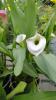
Calla Lily or Arum Lily usually refers to Zantedeschia species native to southern Africa. Those plants have larger ornamental spathes, frequently white or brightly colored, and are grown as garden or container plants.
Zantedeschia and Arum maculatum are related aroids but are not the same plant. Both can cause immediate raphide-mediated oral irritation when chewed.
Cuckoo-pint Is Not a True Lily
True lilies belong to the genus Lilium, and daylilies belong to Hemerocallis. Exposure to those plants can cause rapidly progressive acute kidney failure in cats.
Cuckoo-pint belongs to Araceae and produces a local insoluble-calcium-oxalate syndrome. It does not create the classic feline nephrotoxic lily emergency.
Correct identification prevents both errors: underestimating a true lily exposure or inaccurately predicting inevitable kidney failure after Cuckoo-pint chewing.
Cuckoo-pint Versus Jack-in-the-Pulpit
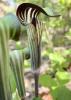
Jack-in-the-Pulpit generally refers to Arisaema triphyllum and related Arisaema species. These plants also produce a hooded spathe, central spadix, underground storage structure, and berry cluster.
Jack-in-the-Pulpit leaves are usually divided into separate leaflets rather than forming the single arrow-shaped blade typical of Cuckoo-pint.
Both contain insoluble calcium oxalate raphides and cause a similar immediate oral-irritation syndrome.
Historical Starch Use Does Not Establish Safety
The names Starch-Root and Starchwort reflect historical attempts to process starch from the underground tuber. Raw or inadequately processed tissue remains intensely irritating and poisonous.
Historical food or folk-medicine use involved repeated washing, heating, drying, or other preparation intended to reduce irritating constituents. It does not establish that a pet, horse, pig, or person can safely chew the fresh tuber.
Wildlife Consumption Does Not Prove Pet Safety
Blackbirds, thrushes, and other birds may consume the berries and disperse the seeds. Their ecological use of the fruit does not establish a safe dose for mammals.
Birds and mammals differ in oral anatomy, digestion, feeding behavior, metabolism, body size, and tolerance of plant structures. Bright berries should remain inaccessible to companion animals and livestock.
Common Animal Exposure Settings
Dogs may mouth berry spikes during walks, dig up tubers in shaded gardens, carry uprooted plants, or chew material left after weeding. Sap and plant fragments may also remain on gardening gloves, tools, shoes, or clothing.
Outdoor cats may brush against damaged plants or chew young leaves. Indoor exposure can occur when fruiting stems or wild plants are brought home for identification or decoration.
Horses, cattle, sheep, goats, and pigs are most likely to encounter the plant through hedge clearance, garden waste, uprooted tubers, woodland-edge grazing, or discarded ornamental material.
Diagnosis
No routine laboratory test confirms Cuckoo-pint ingestion. Diagnosis usually depends on plant identification, witnessed chewing, and the rapid development of intense oral pain, drooling, swelling, gagging, and difficulty swallowing.
Preserve photographs of the standing plant, arrow-shaped leaves, spathe and spadix when present, berry spike, tuber, and habitat. Wear gloves and place samples in a sealed container away from animals and children.
Blood testing is usually unnecessary after a mild localized exposure. Persistent vomiting, dehydration, collapse, respiratory abnormalities, neurologic signs, or kidney changes may justify broader testing for complications and alternative diagnoses.
Prevention
Remove ripe berry spikes from areas used by pets or children while wearing gloves. Collect dropped berries and do not leave fruiting stems in open compost or garden waste accessible to animals.
When digging out plants, remove the entire tuber and as many fragments as possible. Secure the excavated material immediately so dogs, pigs, poultry, horses, and livestock cannot investigate it.
Wash gloves, footwear, tools, containers, and contacted surfaces after removal. Prevent animals from licking contaminated hands, clothing, or equipment.
Immediate Steps After Cuckoo-pint Exposure
- Stop further chewing. Remove the animal from the standing plant, berry spike, leaves, flower structure, tuber, roots, fresh clippings, garden waste, or contaminated soil.
- Remove only loose visible fragments. If the animal is calm, alert, breathing normally, and able to swallow, take away plant pieces resting at the lips or front of the mouth. Do not scrape the tongue, probe the throat, or force open the jaws.
- Gently wipe away plant residue. Use a soft cloth dampened with water to remove visible sap and fragments from the lips, muzzle, tongue tip, and accessible gums. Avoid aggressive rubbing because crystals may already be embedded in the tissue.
- Allow voluntary water only when swallowing is normal. An alert animal that manages saliva comfortably and is not gagging or vomiting repeatedly may have access to fresh water. Do not syringe, spray, or pour liquid into the mouth.
- Watch swallowing and breathing continuously. Monitor tongue size, facial swelling, drooling, gagging, vocalization, respiratory noise, chest movement, and the ability to swallow saliva.
- Protect the eyes. Prevent rubbing. Begin gentle irrigation if sap or plant fragments may have reached an eye and arrange veterinary examination when pain persists.
- Preserve identification material. Save photographs and a safely contained sample showing leaves, berries, the flower structure, or tuber. Do not delay emergency care to collect the plant.
- Contact a veterinarian for more than mild transient irritation. Prompt guidance is appropriate after berry or tuber ingestion, continuing mouth pain, marked swelling, repeated vomiting, abnormal swallowing, eye exposure, or illness in a small, young, elderly, or medically fragile animal.
Skin and Coat Exposure
Wear gloves before handling sap-contaminated fur. Wash affected skin and coat gently with lukewarm water and a mild pet-safe cleanser, then rinse thoroughly.
Avoid forceful scrubbing because friction may worsen the irritation and spread plant residue. Prevent licking and grooming until the coat is clean and dry.
Wash collars, harnesses, bedding, towels, grooming tools, carriers, footwear, and gardening equipment that contacted the plant. Persistent redness, swelling, blistering, intense itching, or self-trauma requires veterinary examination.
Eye Exposure
Begin gentle irrigation promptly with sterile saline or clean room-temperature water. Direct the liquid across the ocular surface rather than using a forceful stream.
Persistent squinting, tearing, conjunctival redness, eyelid swelling, discharge, cloudiness, light sensitivity, or inability to open the eye requires prompt examination.
The veterinarian may evert the eyelids to remove retained plant material and use fluorescein stain to identify corneal erosion or ulceration.
Treatment may include continued irrigation, lubrication, pain control, and topical antimicrobial medication when corneal epithelial injury is present. Ophthalmic corticosteroids must not be used until ulceration and infection have been excluded.
Do Not Attempt Unsupervised Home Treatment
- Do not induce vomiting. Returning raphide-containing plant material through an already injured esophagus and pharynx provides little benefit and increases pain and aspiration risk.
- Do not forcefully flush the mouth. Spraying or pouring water toward the throat can carry liquid, saliva, and plant fragments into the lungs when gagging or dysphagia is present.
- Do not force milk, yogurt, cheese, food, oil, honey, or another coating remedy. These products do not remove crystals already embedded in tissue and may be aspirated when swallowing is painful or impaired.
- Do not administer activated charcoal. Charcoal does not remove local insoluble crystals and offers little benefit for this mechanism. It can be aspirated by a drooling, gagging, vomiting, or dysphagic animal.
- Do not give antihistamines automatically. Most swelling results from direct crystal injury rather than a simple allergic reaction. Sedating medication can also interfere with assessment of swallowing and breathing.
- Do not administer corticosteroids or anti-inflammatory medication without examination. Their use depends on the location and severity of swelling, airway findings, eye involvement, hydration, and concurrent disease.
- Do not give anti-diarrheal medication routinely. Loperamide, bismuth, kaolin-pectin products, and similar remedies do not treat the crystal injury and may interfere with evaluation of continuing gastrointestinal signs.
- Do not give human pain relievers or leftover prescriptions. Ibuprofen, naproxen, acetaminophen, aspirin, and similar medications can create a more dangerous secondary poisoning.
When Emergency Examination Is Especially Important
- Possible airway compromise: Increasing tongue, mouth, or throat swelling; inability to close the mouth; inability to swallow saliva; noisy inspiration; open-mouth breathing; blue-gray gums; or increasing respiratory effort requires immediate care.
- Significant swallowing injury: Repeated gagging, neck extension, regurgitation, altered vocalization, blood in saliva or vomit, or complete refusal of water may indicate deeper pharyngeal or esophageal involvement.
- Berry or tuber ingestion: Swallowing multiple berries, a piece of tuber, or an unknown quantity may expose a larger tissue mass than a brief leaf bite and warrants professional guidance.
- Aspiration concern: Coughing during drinking, coughing after vomiting, nasal discharge, fever, abnormal lung sounds, or worsening lethargy raises concern for material entering the lungs.
- Continuing gastrointestinal loss: Repeated vomiting, inability to retain water, substantial diarrhea, weakness, dry gums, reduced urination, or collapse can indicate clinically important dehydration.
- Persistent eye pain: Continuing squinting, cloudiness, discharge, or inability to open the eye after irrigation may indicate corneal injury.
- Unexpected systemic findings: Seizures, persistent arrhythmias, profound collapse, kidney abnormalities, liver abnormalities, or coma is not typical of uncomplicated Cuckoo-pint irritation and requires investigation for hypoxia, shock, another toxin, or unrelated disease.
Veterinary Examination and Airway Assessment
The veterinarian will examine the lips, tongue, gums, floor of the mouth, palate, pharynx, and visible laryngeal region while assessing swallowing, secretion handling, respiratory noise, oxygenation, and progression of edema.
Severe pain or swelling may make a complete conscious examination difficult. Carefully selected sedation may be needed, but the clinician must account for the possibility that sedation will reduce airway tone or protective reflexes.
Pulse oximetry, respiratory-rate trends, blood-gas analysis, chest auscultation, temperature, blood pressure, and repeated airway examinations may be used when obstruction or aspiration is possible.
Endoscopic examination may help define pharyngeal, laryngeal, or esophageal injury in a stable patient.
Professional Decontamination
Veterinary decontamination focuses on removing plant material from contacted surfaces. The oral cavity may be gently wiped or irrigated, and retained fragments may be removed under appropriate restraint or sedation.
Clinic-induced vomiting is generally inappropriate because the clinically important injury occurred during chewing, pain usually limits the quantity swallowed, and emesis re-exposes the mouth, pharynx, and esophagus to crystals and sap.
Activated charcoal does not have a routine role because the principal toxic structures act locally rather than as an absorbed charcoal-responsive poison. Gastric lavage is likewise inappropriate for an uncomplicated exposure.
A mixed exposure involving another toxic plant, pesticide, fertilizer, medication, or contaminated garden product may require a different decontamination plan.
Pain Control and Oral Support
Significant oral pain may require veterinarian-selected analgesia. An opioid or another appropriate medication may be used when discomfort prevents swallowing, resting, or eating.
Medication must be selected with continued airway and respiratory assessment in mind. Heavy sedation may reduce airway tone and protective swallowing or coughing reflexes.
Cool water or soft food may be offered later when swelling is receding and swallowing has been evaluated as safe. Nothing should be forced into an animal that cannot manage saliva or water normally.
Temporary nutritional support may be required after severe glossitis, pharyngitis, esophagitis, or prolonged food refusal.
Vomiting and Gastrointestinal Injury
Persistent nausea or vomiting may be treated with a veterinarian-selected antiemetic such as maropitant or ondansetron after airway safety, obstruction, foreign material, and another toxin have been considered.
Sucralfate may be useful when painful swallowing, blood in vomit, suspected esophagitis, gastric erosion, or another documented mucosal injury is present. It creates a protective barrier over damaged tissue rather than neutralizing the crystals.
Acid suppression may be considered when repeated vomiting has produced reflux esophagitis, hematemesis, melena, or another acid-related complication. Direct raphide injury alone does not justify routine acid suppression.
Fluid and Electrolyte Support
Most animals with localized oral signs do not require intravenous fluids. Fluid support becomes relevant when drooling, vomiting, diarrhea, pain, or inability to swallow prevents adequate hydration.
Oral, subcutaneous, or intravenous support should be selected according to measured dehydration, perfusion, continuing losses, body weight, kidney function, electrolyte values, urine production, and cardiopulmonary condition.
Kidney monitoring is not required merely because the plant contains calcium oxalate. Kidney values and urine production become relevant when severe dehydration, hypotension, another toxin, uncertain identification, or preexisting kidney disease creates a separate concern.
Direct Irritation Versus Allergy
Most Cuckoo-pint swelling results from raphide penetration and direct local inflammation. Antihistamines may offer limited benefit when mechanical tissue injury is the dominant mechanism.
A veterinarian may use an antihistamine when generalized hives, widespread itching, facial swelling beyond the direct contact area, or another histamine-mediated component is present.
True anaphylaxis is a separate emergency characterized by generalized swelling or hives accompanied by respiratory distress, low blood pressure, severe gastrointestinal signs, altered awareness, or collapse. Treatment may require epinephrine, oxygen, airway protection, intravenous fluids, and cardiovascular support.
Oxygen and Airway Management
Supplemental oxygen may be used when swelling, aspiration, respiratory fatigue, or hypoxemia impairs oxygenation. Oxygen alone cannot overcome a mechanically obstructed airway.
Endotracheal intubation may be necessary before edema becomes too severe to pass a tube. The animal may require sedation or anesthesia, oxygen, suction of secretions, and close monitoring until swelling subsides.
If oral intubation cannot be achieved because the laryngeal opening is obstructed, an emergency temporary tracheostomy may be required. Mechanical ventilation may be necessary when severe hypoxia, exhaustion, aspiration, or anesthesia prevents effective breathing.
Aspiration and Pulmonary Complications
Coughing, nasal discharge, fever, abnormal lung sounds, increased respiratory effort, falling oxygen saturation, or worsening lethargy after gagging or vomiting raises concern for aspiration.
Thoracic radiographs may initially be normal and may need to be repeated if signs progress. Treatment may include oxygen, airway suction, nebulization, coupage, fluid therapy adjusted to pulmonary status, and assisted ventilation in severe cases.
Antimicrobial treatment is appropriate when bacterial aspiration pneumonia is established or strongly suspected rather than automatically after every coughing or vomiting episode.
Horses and Livestock
Remove horses, cattle, sheep, goats, pigs, poultry, and other animals from Cuckoo-pint plants, berry spikes, uprooted tubers, woodland-clearance debris, and garden waste.
Horses cannot vomit. Veterinary assessment may include examination of the mouth and pharynx, swallowing evaluation, endoscopy, nasogastric assessment when esophageal obstruction or gastrointestinal complications are suspected, fluid support, and airway monitoring.
Ruminants may require assessment of oral injury, salivation, rumen motility, abdominal distention, manure production, hydration, and the complete plant mixture.
Several animals developing severe signs together should prompt examination of all shared plants, feed, water, pesticides, fertilizers, and chemicals rather than assumption that one Cuckoo-pint plant is the only exposure.
Recovery and Prognosis
The prognosis is good to excellent for most ordinary Cuckoo-pint exposures. Mild oral pain, drooling, gagging, appetite reduction, and localized swelling commonly begin improving within several hours.
Many uncomplicated cases recover within approximately one day. Recovery may take longer when there is extensive oral inflammation, ulceration, esophagitis, persistent vomiting, dehydration, corneal injury, or aspiration.
Improvement should include decreasing swelling and salivation, comfortable swallowing, normal breathing, voluntary drinking, return of appetite, and restoration of normal activity.
The prognosis becomes guarded when severe airway swelling cannot be controlled, aspiration pneumonia becomes extensive, prolonged hypoxia occurs, or deep ocular injury threatens vision. Primary renal failure is not an expected consequence of the plant’s insoluble raphides.
Frequently Asked Questions About Cuckoo-pint Identification and Exposure
How can Cuckoo-pint be identified when only the red berry spike remains?
The leaves and hooded flower structure often disappear before the fruits mature, leaving a short upright stalk covered with tightly packed orange-red berries. Photograph the fruit spike, surrounding habitat, any remaining arrow-shaped leaves, the base of the stalk, and nearby plants. Do not rely on the berries alone because Italian Arum and several unrelated ornamentals can produce superficially similar fruit displays.
Can an unspotted plant still be Arum maculatum?
Yes. Although maculatum refers to spotting, many accepted Cuckoo-pint plants have completely unspotted green leaves. The historical name Arum immaculatum reflects this variation. Identification should use the complete arrow-shaped leaf, spathe, spadix, berry spike, underground structure, season, and habitat rather than the presence or absence of dark leaf spots.
Why is a dug-up tuber more concerning than one exploratory leaf bite?
The underground tuber allows a digging dog, rooting pig, or animal investigating garden waste to swallow a larger compact mass of tissue. A modern human case involving a substantial tuber ingestion produced marked oral and upper-airway swelling. That case does not define an animal toxic dose, but it supports prompt veterinary guidance whenever a piece of tuber or an unknown underground structure was swallowed.
Does Cuckoo-pint cause cyanide poisoning?
Cyanogenic glycosides, particularly triglochinin, have been mentioned in some secondary descriptions and one pediatric case report. However, the reported children developed local burning and swallowing difficulty without a documented cyanide syndrome, and direct analytical evidence establishing clinically important cyanide release from an ordinary Arum maculatum exposure is inadequate. The best-supported practical mechanism remains insoluble calcium oxalate injury.
Do actual poisoning reports show that every exposure becomes severe?
No. Modern reports include self-limited oral burning, numbness, swelling, and difficulty swallowing, while a much larger intentional tuber ingestion produced substantial airway-focused concern. These reports support immediate decontamination and airway observation without implying that one leaf bite routinely causes respiratory obstruction, seizures, kidney failure, or death.
How can Cuckoo-pint be distinguished from Italian Arum?
Italian Arum, Arum italicum, commonly has conspicuous cream or silvery veins and often produces foliage during autumn or winter. Cuckoo-pint more commonly develops plain-green or dark-spotted spring leaves without strong pale marbling. Both can produce orange-red berry spikes, and variable plants may require expert identification. The immediate animal-safety response is the same because both are raphide-containing aroids.
Why would seizures, major arrhythmias, or kidney failure suggest another problem?
Those findings are not the expected direct result of uncomplicated insoluble-calcium-oxalate injury. They may reflect prolonged hypoxia from airway obstruction, severe dehydration, aspiration, a soluble-oxalate plant, pesticide, medication, another poisonous species, or unrelated disease. Treatment should address the emergency while the original plant identification and complete exposure environment are reassessed.
What should be saved for plant identification?
Take clear photographs of the whole plant, both surfaces of a leaf, the spathe and spadix when present, the berry spike, the base of the stem, and the surrounding habitat. A securely contained specimen may be useful when safe to collect, but emergency treatment should never be delayed to dig up a tuber or retrieve additional plant material.