Dog Hobble Poisoning and Grayanotoxin Toxicosis
Is Dog Hobble Poisonous to Dogs, Cats, Horses, and Livestock?
Yes, Dog Hobble, Leucothoe spp., is poisonous to dogs, cats, horses, goats, sheep, cattle, and other animals. Its foliage, flowers, nectar, stems, and landscape clippings should be treated as sources of grayanotoxins—diterpene poisons that prevent normal sodium-channel inactivation in nerves and muscles. Ingestion can cause heavy salivation, vomiting or regurgitation, diarrhea, abdominal pain, profound weakness, low blood pressure, slow or abnormal heart rhythm, atrioventricular block, tremors, inability to stand, breathing difficulty, collapse, coma, and death. Even a few leaves may cause serious illness in a companion animal.
About this guide: This page provides general pet-poisoning information and cannot diagnose or treat an individual animal. For any suspected exposure, contact a veterinarian or animal poison-control service immediately. Do not induce vomiting, give medication, or attempt home decontamination unless directed by a veterinary professional.
Dog Hobble
Leucothoe spp.
Accepted species currently placed in the genus include:
Leucothoe axillaris (Lam.) D.Don — Coastal Doghobble, Coastal Leucothoe
Leucothoe davisiae Torr. — Sierra Laurel, Western Leucothoe, Black Laurel
Leucothoe fontanesiana (Steud.) Sleumer — Mountain Doghobble, Drooping Leucothoe
Leucothoe griffithiana C.B.Clarke
Leucothoe keiskei Miq.
Important synonyms of Leucothoe fontanesiana include:
Andromeda fontanesiana Steud.
Leucothoe editorum Fernald & B.G.Schub.
Leucothoe axillaris var. editorum (Fernald & B.G.Schub.) H.E.Ahles
Leucothoe catesbaei var. rollisonii Bean
Several familiar doghobble or leucothoe names now belong to other accepted genera:
Leucothoe racemosa — currently Eubotrys racemosus (Swamp Doghobble, Sweetbells, White Osier)
Leucothoe recurva — currently Eubotrys recurvus (Red-twig Doghobble)
Leucothoe populifolia — currently Agarista populifolia (Florida Hobblebush, Florida Leucothoe)
Leucothoe grayana — currently Eubotryoides grayana
The genus-level field is appropriate because several accepted Leucothoe species are sold or encountered under the same overlapping names and share the practical grayanotoxin warning.
Ericaceae Juss. — Heath, Heather, or Blueberry Family
Dog Hobble belongs to the order Ericales and the tribe Gaultherieae.
Ericaceae includes edible blueberries, cranberries, and huckleberries as well as poisonous grayanotoxin-containing shrubs such as Rhododendron, Azalea, Mountain Laurel, Sheep Laurel, Japanese Pieris, Agarista, Lyonia, Eubotrys, Eubotryoides, and Leucothoe.
Family membership does not mean every Ericaceae species contains the same toxins or presents the same risk. The grayanotoxin-containing genera require a distinct cardiovascular and neurologic poisoning response.
Dog Hobble, Doghobble, Dog Laurel, Dog-laurel, Fetter Bush, Fetterbush, Black Laurel, Sierra Laurel, Mountain Doghobble, Highland Doghobble, Upland Doghobble, Drooping Leucothoe, Coastal Doghobble, Coastal Leucothoe, Swamp Dog-laurel, Western Leucothoe, Switch Ivy, Leucothoe, Leucothoe spp., Leucothoe fontanesiana, Leucothoe axillaris, Leucothoe davisiae
Sweetbells, Sweet Bells, Swamp Sweetbells, Swamp Doghobble, White Osier, Pepper Bush, and Deciduous Fetterbush commonly refer to Eubotrys racemosus, formerly Leucothoe racemosa. That plant remains an Ericaceae poisoning concern but is no longer placed in the accepted genus Leucothoe.
Red-twig Doghobble commonly refers to Eubotrys recurvus, formerly Leucothoe recurva. Florida Leucothoe or Florida Hobblebush commonly refers to Agarista populifolia, formerly Leucothoe populifolia.
“Fetterbush” is highly ambiguous and may also refer to species of Lyonia, Agarista, or Eubotrys. “Black Laurel” and “Mountain Laurel” are also applied to unrelated poisonous plants. A scientific name, clear photograph, and complete branch sample are preferable to a common name alone.
Grayanotoxins
The principal poisons in Dog Hobble are grayanotoxins, a group of polyhydroxylated grayanane diterpenes produced by several genera within Ericaceae. These compounds do not contain nitrogen and should not be described as alkaloids.
Grayanotoxin I has historically been called andromedotoxin, acetylandromedol, rhodotoxin, and asebotoxin. Those terms are sometimes used as though they describe every toxic molecule in every Dog Hobble plant, but individual species may contain different grayanane compounds and concentrations.
The exact grayanotoxin profile has not been mapped comprehensively for every accepted Leucothoe species, cultivar, season, or plant part. The genus-level clinical warning is nevertheless appropriate because accepted Dog Hobble species belong to the same closely related group of toxic Ericaceae and are recognized as animal-poisoning hazards.
The Name Grayanotoxin Has a Leucothoe Connection
Grayanotoxins were named through historical chemical work involving the Japanese plant formerly called Leucothoe grayana. Current taxonomy places that species in a separate genus as Eubotryoides grayana.
Researchers working with the former Leucothoe grayana demonstrated the biosynthesis of grayanotoxin III from diterpene precursors. Additional chemical investigation isolated iso-grayanotoxin II from its leaves, determined its structure, and evaluated its acute toxicity in mice.
Earlier research also isolated additional physiologically active grayanane diterpenoids from the same plant. These studies confirm the historical chemical connection between the name Leucothoe and grayanotoxins.
The nomenclatural change does not prove that every accepted modern Leucothoe species contains the same compounds at the same concentration. It also does not alter the practical toxicologic warning for true Dog Hobble shrubs.
Voltage-Gated Sodium Channels
Normal nerve and muscle activity depends on sodium channels opening briefly and then inactivating so the cell can repolarize and prepare for the next electrical signal.
Grayanotoxins bind preferentially to activated voltage-gated sodium channels and interfere with their normal fast inactivation. Sodium continues entering the cell, leaving nerve and muscle membranes persistently depolarized.
Experimental research using squid axonal membranes demonstrated that grayanotoxin acts from the internal surface of the sodium channel and stabilizes its open state.
This electrical disruption affects the gastrointestinal tract, vagus nerve, heart, skeletal muscles, blood vessels, and central nervous system. It explains why one exposure can produce vomiting, severe weakness, bradycardia, hypotension, atrioventricular block, tremors, recumbency, and respiratory compromise.
Attributed Mechanism Description
The U.S. Food and Drug Administration Center for Food Safety and Applied Nutrition described the grayanotoxin mechanism as follows:
“Grayanotoxins work by binding to sodium channels in cell membranes. The binding unit is the group II receptor site, localized on a region of the sodium channel that is involved in the voltage-dependent activation and inactivation. These compounds prevent inactivation; thus, excitable cells (nerve and muscle) are maintained in a state of depolarization, during which entry of calcium into the cells may be facilitated. This action is similar to that exerted by the alkaloids of veratrum and aconite. All of the observed responses of skeletal and heart muscles, nerves, and the central nervous system are related to the membrane effects.”
In practical terms, affected cells fire abnormally and cannot reset normally. The resulting syndrome may appear gastrointestinal at first but can progress rapidly into cardiovascular and neuromuscular failure.
Increased Vagal Activity
Persistent sodium-channel activation can increase vagal influence on the heart. This contributes to sinus bradycardia, low blood pressure, nodal rhythms, and varying degrees of atrioventricular block.
The heart may beat slowly but regularly, or conduction between the atria and ventricles may become intermittent or fail. Some patients develop more complex or rapidly changing rhythm abnormalities.
A slow heart rate is clinically important when it produces weak pulses, pale mucous membranes, delayed capillary refill, low blood pressure, fainting, cold extremities, or collapse.
Gastrointestinal and Smooth-Muscle Effects
Grayanotoxins stimulate the gastrointestinal and autonomic nervous systems, producing salivation, nausea, vomiting, retching, regurgitation, diarrhea, abdominal pain, and altered intestinal or rumen motility.
Dogs and cats may vomit repeatedly. Horses cannot vomit, while goats and other ruminants may retch or regurgitate forcefully despite the common assumption that ruminants do not vomit.
Confirmed goat cases involving grayanotoxin-containing Ericaceae have included profuse regurgitation, bloat, depression, head pressing, and muscle tremors.
Rumen dysfunction, recumbency, and impaired eructation may lead to bloat. Weakness and repeated regurgitation increase the risk of inhaling plant material or rumen contents into the lungs.
Neuromuscular Effects
Persistent depolarization interferes with normal control of skeletal muscle and sensory nerves. Animals may develop twitching, tremors, paresthesia-like discomfort, incoordination, progressive weakness, inability to stand, rigid posture, convulsions, or paralysis-like recumbency.
Some animals appear intoxicated, visually confused, dizzy, or unable to place their feet normally. Severe weakness may reflect both direct neuromuscular dysfunction and inadequate blood flow caused by hypotension and bradycardia.
Pet pigs with confirmed grayanotoxin I exposure have developed hypersalivation, tremors, ataxia, pale oral mucous membranes, rapid breathing, cardiovascular abnormalities, and progression to lateral recumbency.
Leaves, Flowers, Nectar, and Other Plant Material
Leaves are the most important practical source because they are persistent, accessible, and abundant. Flowers and nectar associated with grayanotoxin-containing Ericaceae must also be treated as potentially hazardous.
Stems, buds, freshly cut branches, and mixed landscape clippings should be treated as poisonous because they may carry leaves, flowers, sap, and incompletely characterized grayanane compounds.
Evergreen foliage remains available during winter, when ordinary forage may be scarce. Wilted, dried, storm-damaged, or pruned material should not be assumed safe.
Direct measurements comparing every plant part of every accepted Leucothoe species are not available. The safest response is to prevent access to the entire plant rather than attempting to rank leaves, flowers, stems, or nectar by an unproven universal concentration.
Arbutin Is Not the Primary Acute Poison
Arbutin is a hydroquinone glucoside found broadly in Ericaceae and may occur in some related plants. Its presence and concentration have not been established sufficiently across Dog Hobble species to make it a useful primary toxin for this page.
The acute vomiting, hypotension, bradycardia, heart block, weakness, and collapse syndrome is explained by grayanotoxins. Arbutin should not distract from the sodium-channel poisoning emergency.
No Safe Leaf Count
Animal poison references warn that only a few leaves may cause serious problems in a companion animal. No dependable number of leaves, flower clusters, stem length, or gram-per-kilogram threshold has been established specifically for dogs, cats, or horses eating Dog Hobble.
A generalized estimate near 0.1% of body weight in fresh foliage appears in the ruminant grayanotoxin literature. Experimental and clinical reports underlying that estimate have primarily involved Pieris, Rhododendron, and other Ericaceae rather than an authenticated Dog Hobble feeding study.
The estimate is not a safe threshold and must not be transferred to dogs, cats, horses, rabbits, birds, pigs, or other species. Plant chemistry, leaf size, species, season, animal size, gastrointestinal physiology, and amount actually swallowed vary too widely for a visual bite count to rule out poisoning.
Onset
Signs may begin within minutes or may be delayed for two or more hours. The onset depends on the plant part, quantity, stomach or rumen contents, animal species, and rate of absorption.
A pet that appears normal immediately after ingestion may still develop clinically important vomiting, bradycardia, hypotension, and weakness as absorption progresses.
Salivation, Mouth Discomfort, and Nausea
Early signs may include lip licking, repeated swallowing, heavy salivation, foamy saliva, nasal discharge, reluctance to eat, and apparent mouth or abdominal discomfort.
Older descriptions refer to a burning or tingling sensation around the mouth and extremities. Animals cannot describe paresthesia directly, but muzzle rubbing, paw lifting, agitation, abnormal licking, or unusual sensitivity may reflect sensory disturbance.
Vomiting, Regurgitation, and Diarrhea
Dogs and cats may vomit repeatedly, sometimes bringing up recognizable leaves. Diarrhea, abdominal pain, and appetite refusal may accompany the vomiting.
Goats, sheep, cattle, and other ruminants may develop retching or forceful regurgitation. Horses cannot vomit and are more likely to show salivation, colic, feed refusal, depression, or weakness.
Repeated gastrointestinal losses can cause dehydration, electrolyte disturbance, aspiration, and circulatory compromise.
Bradycardia and Atrioventricular Block
The heart rate often becomes abnormally slow as vagal activity increases. The pulse may feel weak, irregular, or difficult to detect.
Electrocardiographic abnormalities may include sinus bradycardia, varying degrees of atrioventricular block, nodal rhythms, conduction delays, and other rhythm disturbances.
An affected animal may faint, collapse briefly, become cold at the paws or limbs, or remain unable to rise because the heart is not maintaining adequate circulation.
Low Blood Pressure and Cardiovascular Collapse
Hypotension is a defining feature of clinically important grayanotoxin poisoning. Mucous membranes may become pale or gray, capillary refill may slow, pulses may weaken, and the animal may become increasingly unresponsive.
Vomiting and diarrhea can worsen the hypotension by reducing circulating fluid volume. Severe bradycardia and conduction block further reduce cardiac output.
Untreated cardiovascular collapse can lead to brain, kidney, liver, gastrointestinal, and respiratory injury even when the plant toxin itself is eventually eliminated.
Weakness, Incoordination, and Recumbency
Progressive muscular weakness is common. The animal may sway, stumble, cross its limbs, lower its head, lie down repeatedly, or become unable to stand.
Some affected animals appear profoundly intoxicated or dizzy. Impaired vision, abnormal pupil responses, or poor visual tracking may occur but are not sufficiently specific to diagnose Dog Hobble poisoning alone.
Twitching, Tremors, and Convulsions
Muscle twitching, shivering, tremors, rigid posture, and convulsions may occur after larger exposures.
Seizure-like activity can be worsened by hypoxia, hypotension, electrolyte abnormalities, aspiration, hyperthermia, or another plant in a mixed clipping pile.
Sweating and Autonomic Signs
Horses may sweat visibly. Dogs and cats may show moisture around the nose or foot pads, panting, abnormal salivation, altered pupil size, and changes in gastrointestinal or urinary function.
These signs reflect autonomic nervous-system disturbance but are less diagnostically reliable than the combination of plant access, vomiting, bradycardia, hypotension, and weakness.
Respiratory Complications
Breathing may become rapid, shallow, labored, or weak because of neuromuscular dysfunction, hypotension, aspiration, bloat, seizure activity, or prolonged recumbency.
Coughing after vomiting or regurgitation, nasal discharge, fever, abnormal lung sounds, falling oxygen levels, or increasing respiratory effort raises concern for aspiration pneumonitis or pneumonia.
Bloat in Ruminants
Rumen stasis, recumbency, weakness, and impaired belching can allow gas to accumulate. The left side of the abdomen may enlarge, breathing may become difficult, and the animal may show increasing distress.
Severe bloat can impair circulation and ventilation and requires immediate veterinary decompression rather than continued oral dosing.
Coma and Death
Large exposures can progress to prostration, loss of responsiveness, coma, respiratory failure, cardiovascular collapse, and death.
Fatal cases may deteriorate within hours or over the following one to two days, particularly when severe hypotension, aspiration, bloat, heart block, or prolonged recumbency is not corrected.
Expected Course
Animals receiving timely treatment may improve substantially within several hours as the toxin is metabolized and eliminated. Cardiovascular and neurologic signs often resolve within approximately one day in uncomplicated survivors.
Recovery takes longer when aspiration pneumonia, dehydration, gastrointestinal injury, pressure injury, or another secondary complication develops.
What Dog Hobble Looks Like
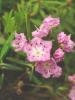
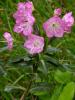
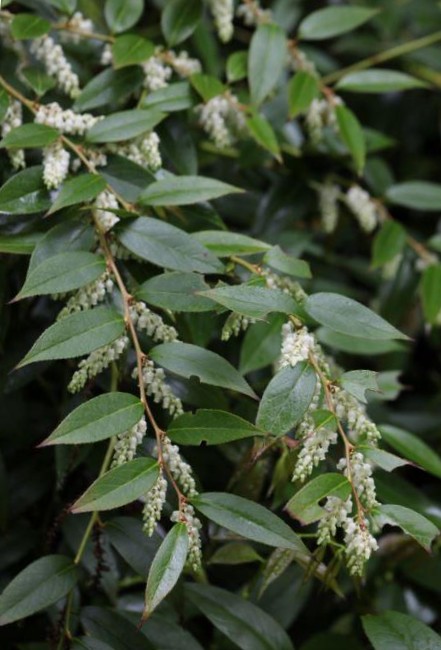
True Leucothoe species are shrubs with alternate simple leaves and clusters of small white or pinkish urn-shaped flowers. Many are evergreen, although leaf retention and growth habit vary among species.
Mountain Doghobble, Leucothoe fontanesiana, commonly grows three to six feet tall with long arching branches, glossy lance-shaped leaves, and drooping flower racemes arising from the leaf axils.
Coastal Doghobble, Leucothoe axillaris, is generally lower and more compact, with glossy evergreen foliage and flower clusters positioned in the leaf axils. Sierra Laurel, Leucothoe davisiae, occurs in wet mountain habitats of California and Oregon.
Why It Is Called Dog Hobble
Several Dog Hobble species form dense colonies of low, arching, interlaced stems. Dogs, livestock, hunters, and hikers moving through the thicket may have their legs caught or “hobbled” by the branches.
The name therefore describes a physical growth habit as well as identifying a poisonous shrub. A hunting dog can be exposed both mechanically and toxicologically while forcing its way through dense growth.
Native Habitat and Natural Exposure
Mountain Doghobble is native to the southeastern United States and is strongly associated with moist acidic woods, Appalachian ravines, shaded slopes, streambanks, waterfalls, and Rosebay Rhododendron thickets.
Coastal Doghobble occurs in moist coastal-plain environments including swamps, pocosins, floodplains, wet woodland, and stream margins. Sierra Laurel occupies wet sites in parts of California and Oregon.
Dogs used for hiking, hunting, search work, or field training may encounter the plants far from residential landscaping. Natural thickets may include several poisonous Ericaceae species growing together.
How Dogs Come in Contact with Dog Hobble
Dogs may chew low evergreen leaves while exploring a shaded yard, woodland trail, streambank, or foundation planting. Puppies may pull flexible branches during play or carry freshly cut stems.
Exposure becomes more likely after pruning, storm damage, brush clearing, trail maintenance, or landscape removal because large quantities of foliage are brought to ground level.
A dog may also investigate leaves in vomit or regurgitated material from another animal. Contaminated material should be removed before other animals gain access.
How Cats Come in Contact with Dog Hobble
Outdoor cats may pass through or shelter beneath low arching shrubs and occasionally bite foliage. Indoor exposure is more likely when ornamental branches are brought inside, nursery plants are stored in a garage or sunroom, or pruning debris is left near a doorway.
Cats may also investigate water, plant fragments, or mixed decorative arrangements containing Leucothoe foliage.
Ornamental Landscape Exposure
Leucothoe is valued for shade tolerance, glossy evergreen foliage, reddish or bronze new growth, winter color, deer resistance, and pendulous spring flowers.
It may be planted beneath windows, along foundations, beside shaded paths, around ponds, on moist slopes, under trees, in rain gardens, or among Rhododendron, Azalea, Pieris, Mountain Laurel, Ferns, and other woodland ornamentals.
The use of several grayanotoxin shrubs in one landscape creates an identification problem. An animal may have eaten a mixed branch pile rather than one isolated species.
Pruning and Yard-Waste Exposure
Pruned Dog Hobble branches should never be thrown into a dog yard, paddock, goat pen, cattle pasture, sheep enclosure, rabbit run, poultry area, or open compost accessible to animals.
Clippings can be more dangerous than an intact shrub because animals are presented with a concentrated pile of fresh leaves without having to browse through dense woody growth.
Wilted leaves may become more palatable or simply easier to consume. Drying should not be relied upon to destroy grayanotoxins.
Evergreen Winter Risk
Mountain and Coastal Doghobble retain foliage through winter in much of their range. Leaves remain available when grass, browse, and ordinary forage are dormant or covered.
Hungry goats, sheep, cattle, and horses are more likely to investigate normally avoided shrubs when forage is scarce. Evergreen landscape clippings placed over a fence create an especially preventable exposure.
Goats, Sheep, and Cattle
Goats and sheep are among the livestock species most often associated with Leucothoe and related Ericaceae poisoning. Their browsing behavior brings them into contact with woody ornamental foliage that cattle or horses may initially avoid.
Ruminants may develop salivation, retching, regurgitation, diarrhea, abdominal pain, grinding of the teeth, weakness, bradycardia, hypotension, bloat, recumbency, tremors, and respiratory distress.
Several animals can become ill simultaneously when a clipping pile, hedge, contaminated hay, or newly accessible woodland edge serves as the source.
Directly confirmed reports more commonly involve Rhododendron or Pieris than authenticated modern Leucothoe. These cases remain clinically relevant because the responsible grayanotoxins share the same sodium-channel mechanism.
Horses
Horses generally avoid bitter ornamental shrubs when adequate forage is available, but hunger, confinement, storm debris, clipping disposal, and access to ornamental plantings can overcome normal selectivity.
Horses cannot vomit. Early illness may therefore appear as salivation, colic, feed refusal, depression, sweating, weakness, abnormal pulse, incoordination, or collapse rather than repeated vomiting.
Rabbits, Poultry, Pigs, and Other Animals
Rabbits and poultry may encounter small leaves and flowers placed in an enclosure with mixed garden waste. Pigs may root through discarded branches or compost.
Grayanotoxin poisoning has been reported across a broad range of domestic and captive species, including pigs, rabbits, tortoises, dogs, cats, goats, sheep, cattle, donkeys, alpacas, and horses after exposure to Ericaceae plants.
Confirmed grayanotoxin I poisoning in two pet miniature pigs caused sudden pale oral mucous membranes, cardiovascular and respiratory abnormalities, hypersalivation, tremors, ataxia, and lateral recumbency after Pieris japonica ingestion.
Limited case data for a particular species does not establish safety.
Dog Hobble and Other Plants Called Fetterbush
The common name Fetterbush is used for several Ericaceae shrubs. Accepted Leucothoe, Eubotrys, Lyonia, and Agarista species may all be labeled Doghobble or Fetterbush in different regions.
Many of these plants are themselves poisonous, but they are not all botanical synonyms. The scientific name should be recorded whenever possible.
Sweetbells, White Osier, and Pepper Bush
Sweetbells, White Osier, Pepper Bush, and Swamp Doghobble most commonly refer to Eubotrys racemosus, formerly known as Leucothoe racemosa.
This deciduous or semi-evergreen shrub produces white bell-shaped flowers in racemes and occurs in wet coastal-plain habitats. It remains an animal-poisoning concern but should not be listed as one of the currently accepted Leucothoe species.
Red-Twig Doghobble
Red-twig Doghobble commonly refers to Eubotrys recurvus, formerly known as Leucothoe recurva.
Its former placement explains why older horticultural, livestock, and poison references may continue to list it under Leucothoe. The older name remains useful identification context but should not be presented as the currently accepted genus.
Florida Leucothoe
Florida Leucothoe or Florida Hobblebush is Agarista populifolia, formerly Leucothoe populifolia. It is a larger evergreen southeastern shrub with arching branches and white urn-shaped flowers.
It shares the practical grayanotoxin warning but belongs to a different accepted genus.
Dog Hobble Versus Rhododendron and Azalea
Rhododendrons and azaleas usually produce more conspicuous terminal flower clusters. Dog Hobble commonly bears smaller urn-shaped flowers in racemes along or beneath arching branches.
All are Ericaceae plants capable of producing grayanotoxin toxicosis. Exact identification remains botanically useful, but the same emergency cardiovascular response is appropriate when a symptomatic animal ate an uncertain member of this group.
Dog Hobble Versus Mountain Laurel
Mountain Laurel, Kalmia latifolia, produces broad clusters of distinctive shallow cup-shaped flowers with fused petals and pocket-like structures around the stamens.
Dog Hobble produces smaller hanging urn-shaped flowers. Both contain grayanotoxins, so confusion between them does not reduce the urgency of an exposure.
Dog Hobble Versus Japanese Pieris
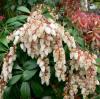
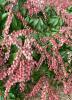
Japanese Pieris, Pieris japonica, commonly has dense terminal clusters of white bell-shaped flowers and conspicuous red or bronze new leaves.
Leucothoe flowers more often arise in axillary or drooping racemes along arching stems. Both are shade-tolerant ornamentals frequently planted with azaleas, and both can cause severe grayanotoxin poisoning.
Grayanotoxin Dose Estimates
Older generalized references sometimes cite a serious-exposure estimate near 0.2% of body weight in green Ericaceae foliage. At that percentage, a 60-pound dog would correspond mathematically to approximately 1.92 ounces, or about 54 grams, of plant material.
More recent summaries cite an estimated toxic exposure near 0.1% of body weight in fresh foliage for ruminants. At that percentage, 60 pounds would correspond mathematically to approximately 0.96 ounce, or about 27 grams.
The lower estimate is based principally on broader ruminant experience involving plants such as Pieris and Rhododendron, not a controlled Dog Hobble dose study in dogs.
Neither calculation is a safe Dog Hobble threshold. Toxin concentration, leaf chemistry, animal susceptibility, chewing, stomach or rumen contents, and the actual species vary substantially. A visibly small companion-animal exposure still requires prompt professional guidance.
Mad Honey and the Ancient Xenophon Account
Bees collecting nectar from some grayanotoxin-containing Ericaceae plants may produce toxic “mad honey.” Direct evidence involving commercial honey made specifically from North American Dog Hobble is limited, and eating plant foliage or clippings remains the more realistic animal exposure.
The best-known historical account appears in Xenophon’s Anabasis, describing soldiers poisoned by honey during the campaign of Cyrus the Younger:
“The number of bee hives was extraordinary, and all of the soldiers that ate of the honey combs lost their senses, vomited and were affected with purging, and none of them was able to stand upright; such as had eaten only a little were like men greatly intoxicated, and such as had eaten much were like mad men and some like persons at the point of death. They lay upon the ground, in consequence, in great numbers, as if there had been a defeat; and there was general dejection. The next day, no one of them was found dead; and they recovered their senses about the same hour they had lost them on the preceding day.”
The description captures several enduring features of grayanotoxin poisoning: vomiting, purging, intoxication-like neurologic dysfunction, profound weakness, inability to stand, collapse, and potentially rapid recovery after the toxin is cleared.
The historical honey episode should not be interpreted as proof that Dog Hobble commonly contaminates honey or that every grayanotoxin exposure follows the same benign course. Plant ingestion in animals can cause fatal cardiovascular, respiratory, bloat, and aspiration complications.
Diagnosis
No routine veterinary test confirms Dog Hobble poisoning. Diagnosis depends on plant identification, witnessed access, leaves or flowers in vomit or rumen contents, compatible gastrointestinal signs, bradycardia, hypotension, conduction abnormalities, weakness, and exclusion of other causes.
Specialized liquid chromatography-mass spectrometry has confirmed grayanotoxin exposure in animal urine and fecal samples in published cases, but such analysis is not routinely available rapidly enough to guide emergency stabilization.
Veterinary testing may include electrocardiography, blood-pressure measurement, pulse and perfusion assessment, electrolytes, glucose, kidney and liver values, acid-base status, lactate, oxygenation, chest imaging after aspiration, and evaluation of rumen function or bloat.
Preserve photographs of the complete shrub, leaves, flowers, stems, growing site, nursery label, clipping pile, and neighboring Ericaceae plants. Do not delay treatment to obtain a perfect specimen.
Prevention
Remove or securely fence Dog Hobble in yards where dogs chew shrubs and in pasture margins accessible to goats, sheep, cattle, or horses.
Never dispose of branches over an animal fence. Tell neighbors, landscapers, tree crews, gardeners, and stable workers that ornamental clippings must not be offered as browse.
Provide adequate forage before animals enter woodland margins or unfamiliar paddocks. Inspect shaded foundation beds, streambanks, ravines, rain gardens, and naturalized landscapes for Dog Hobble and related grayanotoxin shrubs.
Immediate Steps After Dog Hobble Ingestion
- Treat the exposure as potentially serious. Contact an emergency veterinarian, livestock veterinarian, or animal poison-control service immediately and begin arranging transport.
- Prevent further ingestion. Remove the animal or herd from the shrub, thicket, clipping pile, landscape bed, pasture edge, contaminated hay, vomit, or regurgitated material.
- Identify every possible plant. Check for Rhododendron, Azalea, Mountain Laurel, Sheep Laurel, Pieris, Lyonia, Agarista, Eubotrys, and other Ericaceae growing or discarded nearby.
- Remove only loose visible fragments. If the animal is calm, alert, breathing normally, and swallowing normally, take away leaves or flowers resting at the lips or front of the mouth. Do not reach blindly toward the throat.
- Do not force a mouth rinse. A weak, vomiting, regurgitating, or poorly coordinated animal can inhale water and plant material. A damp cloth may be used on accessible lips or gums only when this can be done safely.
- Preserve identification material. Bring photographs, a safely contained leafy and flowering branch, the nursery label, and any plant material recovered from vomit or rumen contents.
- Reduce movement. Keep a weak or hypotensive animal quiet, warm, and protected from stairs, traffic, water, steep terrain, and additional exertion.
- Contain vomit and regurgitated material. Wear gloves and prevent other animals from eating recovered leaves.
Do Not Attempt Unsupervised Home Treatment
- Do not induce vomiting at home. Hydrogen peroxide, salt, mustard, syrup of ipecac, and manual gagging can cause aspiration, gastric injury, electrolyte disturbance, and dangerous delay.
- Do not induce vomiting after signs begin. Weakness, bradycardia, hypotension, tremors, abnormal breathing, repeated vomiting, collapse, or impaired swallowing creates an unacceptable aspiration risk.
- Do not administer activated charcoal yourself. Charcoal can be inhaled by a vomiting, recumbent, bloated, sedated, or neurologically abnormal animal.
- Do not force milk, oil, food, water, antacids, or laxatives. These substances do not neutralize grayanotoxins and may worsen aspiration, bloat, diarrhea, or cardiovascular instability.
- Do not give atropine or other heart medication at home. A slow pulse, heart block, ventricular rhythm, and low blood pressure require electrocardiographic and perfusion assessment before treatment.
- Do not give human medications or leftover prescriptions. Antidiarrheals, antiemetics, pain relievers, beta agonists, antiarrhythmics, and sedatives can worsen the poisoning or obscure the rhythm.
- Do not walk or exercise a weak animal. Exertion can worsen hypotension, collapse, hypoxia, and injury.
When Emergency Examination Is Required
Every credible ingestion deserves immediate professional guidance. The following findings indicate an advanced emergency:
- Persistent gastrointestinal signs: Repeated vomiting or regurgitation, profuse diarrhea, severe abdominal pain, blood in vomit or stool, or inability to retain water.
- Cardiovascular abnormalities: A slow, irregular, or weak pulse; pale or gray mucous membranes; cold extremities; fainting; low blood pressure; or collapse.
- Neurologic and muscular signs: Twitching, tremors, staggering, progressive weakness, inability to stand, convulsions, stupor, or coma.
- Respiratory complications: Labored breathing, rapid shallow respiration, coughing after vomiting, nasal discharge, blue-gray mucous membranes, or loss of airway reflexes.
- Ruminant bloat: Progressive left-sided abdominal enlargement, distress, repeated unsuccessful belching, breathing difficulty, or recumbency.
- Group exposure: Several livestock animals becoming ill after access to one clipping pile, hedge, hay source, or woodland edge requires immediate herd-level intervention.
Initial Veterinary Stabilization
The veterinarian will assess airway protection, breathing, oxygenation, heart rate and rhythm, blood pressure, pulse quality, capillary refill, temperature, hydration, mental status, muscle function, gastrointestinal motility, and the likelihood of aspiration or bloat.
Electrocardiography and blood-pressure monitoring are especially important because a patient may appear merely weak while clinically important bradycardia or atrioventricular block is present.
Intravenous access, oxygen, warming, antiemetic treatment, and cardiovascular stabilization may take priority over gastrointestinal decontamination in an already symptomatic animal.
Professional Gastrointestinal Decontamination
A veterinarian may induce vomiting after a recent ingestion when a dog or cat remains alert, asymptomatic, cardiovascularly stable, neurologically normal, and able to protect its airway.
Emesis is contraindicated after repeated spontaneous vomiting or when bradycardia, hypotension, weakness, tremors, respiratory abnormalities, collapse, or impaired swallowing is present.
Activated charcoal may be administered professionally after airway, hydration, and gastrointestinal-motility assessment. One dose may be considered after a meaningful recent ingestion.
Repeat charcoal is not automatic. Grayanotoxin evidence does not establish that every Dog Hobble case benefits from repeated dosing, while vomiting, ileus, dehydration, sodium disturbance, recumbency, and aspiration can make additional doses dangerous.
Gastric lavage is reserved for an exceptional recent, substantial ingestion when emesis is unsafe or unsuccessful and the patient can be anesthetized and intubated with a protected airway.
Fluids and Blood-Pressure Support
Intravenous balanced crystalloids may be used to correct dehydration, replace vomiting and diarrhea losses, and support circulation during hypotension.
Fluid treatment must be individualized according to body weight, hydration, pulse quality, blood pressure, heart rhythm, urine output, lung sounds, and underlying cardiac or renal disease.
A veterinarian-selected vasopressor may be necessary when hypotension persists after appropriate volume assessment and correction of clinically important bradycardia.
Bradycardia and Atrioventricular Block
Atropine or glycopyrrolate may be used when excessive vagal activity produces clinically important bradycardia accompanied by hypotension, weak pulses, poor perfusion, or collapse.
The response should be assessed through ECG, blood pressure, pulse quality, and mental status rather than heart rate alone.
Some conduction abnormalities may not respond completely because grayanotoxins affect sodium-channel behavior as well as vagal tone.
Temporary cardiac pacing may be considered in a rare patient with persistent high-grade atrioventricular block and inadequate circulation despite appropriate medical treatment.
Other Rhythm Abnormalities
The ECG should identify the rhythm before an antiarrhythmic drug is selected. Electrolytes, oxygenation, temperature, acid-base status, and blood pressure should be corrected when they contribute to electrical instability.
Ventricular arrhythmias require rhythm- and species-specific treatment. A medication appropriate for ventricular tachycardia is not interchangeable with treatment for sinus bradycardia or atrioventricular block.
Unmonitored isoproterenol, sodium-channel blockers, beta blockers, or other cardiac medication should not be used as a standard Dog Hobble protocol.
Vomiting, Diarrhea, and Gastrointestinal Care
A veterinarian-selected antiemetic such as maropitant or ondansetron may be used after decontamination decisions are complete.
Persistent vomiting and diarrhea require fluid and electrolyte replacement. Food may be reintroduced gradually when nausea is controlled, perfusion is stable, and swallowing is normal.
Sucralfate or acid suppression may be appropriate when hematemesis, melena, painful swallowing, esophagitis, or documented erosive injury is present. These medications do not neutralize grayanotoxins and are unnecessary after every exposure.
Tremor and Seizure Management
A tremoring or poorly coordinated animal should be kept in a quiet padded area and protected from falls, water, and hard objects.
Clinically important tremors or seizures may require benzodiazepines, veterinarian-selected muscle relaxants, or additional anticonvulsant treatment.
Glucose, electrolytes, oxygenation, blood pressure, temperature, and acid-base status should be assessed because abnormalities in these variables can worsen neurologic signs.
Respiratory Support and Aspiration
Repeated vomiting, regurgitation, profound weakness, recumbency, seizures, and rumen dysfunction create a substantial aspiration risk.
Treatment may include oxygen, airway suction, intubation, positive-pressure ventilation, nebulization, coupage, thoracic imaging, and serial oxygen monitoring.
Antimicrobial medication is appropriate when bacterial aspiration pneumonia is established or strongly suspected rather than automatically after every vomiting event.
Ruminant Decontamination and Bloat
Goats, sheep, and cattle require species-specific assessment of rumen contents, contractions, abdominal distention, regurgitation, hydration, and aspiration risk.
Activated charcoal may be administered through an appropriately placed tube when the animal can be managed safely and the airway risk is acceptable.
Rumen evacuation or rumenotomy may be considered after a substantial recent ingestion when a large amount of recoverable foliage remains and the animal is stable enough for the procedure.
Bloat may require passage of a stomach tube, trocarization, or another emergency decompression method selected by the veterinarian. Oral drenching of a weak or regurgitating animal can be fatal if material is aspirated.
Intravenous Lipid Emulsion
Intravenous lipid emulsion has been used as an adjunct in some severe grayanotoxin-associated livestock cases, including goats poisoned by Japanese Pieris.
Evidence remains limited, and improvement in an uncontrolled case series cannot prove that lipid therapy caused recovery. It is not a home treatment or a replacement for decontamination, fluids, ECG monitoring, atropine when indicated, and respiratory support.
Horses
Horses cannot vomit. Veterinary treatment may include nasogastric examination, activated charcoal when appropriate, intravenous fluids, ECG and blood-pressure monitoring, treatment of colic, correction of rhythm abnormalities, and respiratory support.
Mineral oil, cathartics, or repeated oral treatments should not be administered automatically to a weak horse because gastrointestinal motility and aspiration risk must be evaluated first.
Prognosis and Recovery
The prognosis is often favorable when exposure is recognized promptly and bradycardia, hypotension, dehydration, and aspiration are controlled before prolonged organ injury develops.
Many surviving animals improve markedly within several hours and may recover clinically within approximately 24 hours as grayanotoxins are metabolized and eliminated.
The prognosis becomes guarded with profound hypotension, high-grade heart block, prolonged recumbency, severe bloat, aspiration pneumonia, recurrent convulsions, coma, respiratory failure, or delayed treatment.
Animals recovering from uncomplicated toxicosis may return to normal completely. Aspiration pneumonia, muscle injury, pressure sores, or secondary organ dysfunction can extend recovery well beyond the period of direct toxin activity.
Frequently Asked Questions About Dog Hobble and Animal Poisoning
Can only a few Dog Hobble leaves seriously poison a dog or cat?
Yes. The amount required varies, but ASPCA specifically warns that a few leaves can cause serious problems. A small companion animal may develop vomiting, profound weakness, low blood pressure, bradycardia, heart block, or collapse after an exposure that does not look large. There is no reliable leaf count that permits safe home observation.
Which plants are actually included under the name Dog Hobble?
The name commonly applies to accepted Leucothoe species such as Mountain Doghobble, L. fontanesiana, Coastal Doghobble, L. axillaris, and Sierra Laurel, L. davisiae. It is also used regionally for plants now placed in Eubotrys and Agarista. Because several of these related shrubs are poisonous, the scientific name clarifies taxonomy but does not reduce the urgency of a suspected exposure.
Are Sweetbells, White Osier, and Florida Leucothoe true Leucothoe species?
Not under current taxonomy. Sweetbells, White Osier, and Swamp Doghobble usually refer to Eubotrys racemosus, formerly Leucothoe racemosa. Florida Leucothoe is Agarista populifolia, formerly Leucothoe populifolia. They remain related Ericaceae poisoning concerns but should not be listed as accepted species of the modern genus Leucothoe.
How much Dog Hobble is toxic?
No safe dog, cat, or horse dose has been established. A recent veterinary review cites approximately 0.1% of body weight in fresh grayanotoxin foliage as an estimated toxic exposure for ruminants, while older sources sometimes use 0.2%. These generalized figures cannot be applied safely to an individual Dog Hobble plant or companion animal because toxin concentration and species sensitivity vary substantially.
How quickly do Dog Hobble poisoning signs begin?
Drooling, vomiting, regurgitation, diarrhea, weakness, or cardiovascular signs may begin within minutes, but onset can be delayed for two or more hours. A normal appearance immediately after ingestion does not rule out poisoning. Bradycardia, hypotension, heart block, tremors, and recumbency may emerge after the initial gastrointestinal phase.
Why does Dog Hobble slow the heart and lower blood pressure?
Grayanotoxins prevent normal inactivation of voltage-gated sodium channels, leaving excitable cells persistently depolarized. This disrupts cardiac conduction and increases vagal influence on the heart, which can produce sinus bradycardia, atrioventricular block, weak cardiac output, and hypotension. The same sodium-channel effect also contributes to vomiting, weakness, tremors, and neurologic dysfunction.
Should I make my dog vomit after it eats Dog Hobble?
Do not attempt home vomiting. Grayanotoxin poisoning can cause weakness, slow heart rate, low blood pressure, repeated vomiting, and impaired coordination, all of which increase aspiration risk. A veterinarian may induce vomiting after a recent ingestion only when the dog remains alert, stable, asymptomatic, and able to protect its airway.
Does activated charcoal help?
A veterinarian may administer activated charcoal after a meaningful recent ingestion when the animal’s airway, hydration, neurologic status, and gastrointestinal motility permit it. Charcoal should not be given by an owner to a vomiting, weak, recumbent, bloated, or poorly coordinated animal. Repeat doses are case-specific rather than an automatic Dog Hobble protocol.
Why are goats and sheep at particular risk?
Goats and sheep readily browse woody vegetation and may consume ornamental clippings tossed into a pen or pasture. Poisoned ruminants can develop forceful regurgitation, abdominal pain, bradycardia, hypotension, weakness, bloat, recumbency, and aspiration pneumonia. Several animals may become ill together after one shared clipping-pile exposure.
Are dried or wilted Dog Hobble clippings still poisonous?
They should be treated as poisonous. Wilting or drying does not provide a dependable method of destroying grayanotoxins, and discarded branches may be easier for an animal to consume than foliage attached to a dense shrub. Fresh, wilted, dried, and storm-damaged material should all be kept out of animal areas.
What is the prognosis after Dog Hobble poisoning?
Many animals recover completely when treatment begins promptly and blood pressure, heart rhythm, hydration, and breathing are supported. Improvement may occur within several hours, with uncomplicated cases often recovering within about one day. Severe heart block, cardiovascular collapse, bloat, aspiration pneumonia, convulsions, coma, or delayed treatment makes the prognosis more guarded.