Japanese Pieris Grayanotoxins and Sodium-Channel Poisoning
Is Lily-of-the-Valley Bush Poisonous to Dogs, Cats, Horses, and Livestock?
Yes—Lily-of-the-Valley Bush, Pieris japonica, is highly poisonous to dogs, cats, horses, livestock, pigs, camelids, rabbits, birds, tortoises, and other animals. Every part of the shrub should be treated as toxic because it contains grayanotoxins and related grayanane diterpenoids that interfere with voltage-gated sodium channels in nerves, skeletal muscle, smooth muscle, and cardiac muscle.
Ingestion commonly begins with drooling, repeated swallowing, nausea, vomiting or regurgitation, abdominal pain, diarrhea, appetite refusal, dizziness-like behavior, depression, or weakness. More serious poisoning can cause profound hypotension, a dangerously slow, rapid, or irregular heartbeat, atrioventricular block, tremors, incoordination, recumbency, seizures, pulmonary complications, coma, cardiovascular collapse, and death.
The glossy evergreen leaves create year-round risk, while red or bronze new growth, hanging flower clusters, fallen branches, fresh clippings, nursery plants, uprooted shrubs, and contaminated hay or browse can provide concentrated access. Vomiting or regurgitation does not mean the exposure has resolved because toxin may already have been absorbed, plant material may remain in the gastrointestinal tract, and aspiration can become a separate life-threatening complication.
About this guide: This page provides general pet-poisoning information and cannot diagnose or treat an individual animal. For any suspected exposure, contact a veterinarian or animal poison-control service immediately. Do not induce vomiting, give medication, or attempt home decontamination unless directed by a veterinary professional.
Lily-of-the-Valley Bush
Pieris japonica (Thunb.) D.Don ex G.Don
The accepted scientific name was published in its current combination in 1834. The parenthetical author “Thunb.” identifies Carl Peter Thunberg, who originally described the plant under a different genus, while D.Don and G.Don are associated with the accepted transfer into Pieris.
The principal botanical synonym is:
- Andromeda japonica Thunb.
The older name explains the common names Japanese Andromeda and Andromeda Japonica. It does not make Japanese Pieris the same plant as Bog Rosemary, Andromeda polifolia, which remains a separate accepted species in the heath family.
Two accepted infraspecific taxa are recognized:
- Pieris japonica var. japonica
- Pieris japonica var. yakushimensis T.Yamaz.
Pieris formosa, sometimes historically treated as Pieris japonica subsp. formosa, is currently accepted as a separate species. Several ornamental plants sold under hybrid names, including some marketed as Forest Flame, may contain parentage from more than one Pieris species and should still be treated as potentially grayanotoxin-containing.
Ericaceae — Heath Family
Lily of the Valley Bush; Lily-of-the-Valley Shrub; Lily of the Valley Shrub; Japanese Pieris; Japanese Andromeda; Andromeda Japonica; Pieris; Japanese Fetterbush; Fetterbush; Asebi; Ashibi; Asebo; Asemi; Horse-Intoxicating Tree
The historical scientific name Andromeda japonica remains common on older nursery tags, poison lists, herbarium records, botanical books, and regional plant references. Japanese names may be transliterated as Asebi, Ashibi, Asebo, or Asemi. The traditional interpretation of these names is associated with livestock or horses appearing intoxicated after eating the plant, although the exact linguistic history varies among sources.
Common nursery and cultivar search names include Mountain Fire Pieris, Flaming Silver Pieris, Cavatine Pieris, Prelude Pieris, Valley Valentine Pieris, Katsura Pieris, Dorothy Wyckoff Pieris, Temple Bells Japanese Andromeda, Little Heath Pieris, Mountain Fire Japanese Andromeda, and Forest Flame Pieris. Temple Bells is a cultivar name rather than a synonym for every *Pieris japonica* plant, and Forest Flame may refer to an ornamental hybrid rather than genetically pure *P. japonica*.
Fetterbush is ambiguous and may also refer to Pieris floribunda or species of Lyonia. Mountain Andromeda and Mountain Fetterbush commonly refer to Pieris floribunda, while Bog Rosemary is Andromeda polifolia. Scientific identification and a complete plant specimen are more reliable than any of these shared common names.
Grayanotoxins and Grayanane Diterpenoids
Japanese Pieris contains a diverse group of poisonous polyhydroxylated diterpenoids commonly called grayanotoxins, grayanoids, or grayanane diterpenoids. These compounds are the principal toxic agents responsible for the plant’s gastrointestinal, cardiovascular, muscular, autonomic, respiratory, and neurologic effects. Poisoning does not reflect exposure to one uniform molecule because exact-species studies have isolated numerous structurally related compounds from the leaves. Their potency and relative concentration can differ substantially.
Historically important *Pieris japonica* toxins include grayanotoxin I, grayanotoxin II, grayanotoxin III, asebotoxins I through IV, pieristoxins, and related diterpenoids. Grayanotoxin I has also been called andromedotoxin, acetylandromedol, rhodotoxin, or asebotoxin in older literature, although historical usage was not always chemically consistent. Grayanotoxin III was formerly called desacetylandromedotoxin. These terms should be interpreted as part of the developing chemical history of grayanane toxins rather than as completely unrelated poison classes.
Direct leaf research isolated asebotoxins I and II and later clarified their stereostructure. Additional work identified asebotoxin III, grayanotoxin III, pieristoxin C, pieristoxin F, pieristoxin G, deacylpieristoxin B, and other poisonous components. In one exact-species leaf investigation, grayanotoxin III was recovered as the principal poisonous constituent of the tested extract. Modern research has continued to expand the known chemistry, including the isolation of thirteen new grayanane diterpenoids and fifteen known analogues from a single *P. japonica* leaf extract.
Why the Toxin Mixture Varies
An individual shrub should not be assumed to contain every diterpenoid reported from the species or to contain each compound at the same concentration. Plant genetics, population, geographic origin, cultivar, hybrid parentage, age, leaf maturity, season, environmental stress, tissue, extraction method, and storage can all influence the measured profile. A laboratory extract can also concentrate compounds in a way that does not reproduce ordinary chewing of an intact leaf. Chemical studies establish the presence and diversity of active toxins but do not provide a guaranteed household dose.
Mature green leaves, red or bronze new foliage, flowers, buds, stems, bark, capsules, roots, and other tissues may not contain identical mixtures. No reliable evidence shows that red new growth, pink flowers, white flowers, variegation, dwarf stature, or a named nursery cultivar is safer. The appearance of a shrub cannot be used to estimate grayanotoxin concentration. Ornamental selection has focused on color and growth form rather than toxicologic standardization.
Voltage-Gated Sodium-Channel Binding
Voltage-gated sodium channels normally open briefly when an excitable cell reaches its activation threshold. Sodium enters the cell, the membrane depolarizes, and the channel then rapidly inactivates so that the cell can repolarize and prepare for the next coordinated impulse. Grayanotoxins preferentially interact with activated or open sodium channels and interfere with normal inactivation. Sodium permeability remains abnormally prolonged, leaving the cell persistently depolarized.
This effect disrupts the normal firing and recovery of peripheral nerves, autonomic nerves, central nervous-system pathways, skeletal muscle, smooth muscle, respiratory muscle, and cardiac muscle. The channels are not destroyed permanently; function may recover as toxin concentration falls and the compounds dissociate or are eliminated. During active poisoning, however, affected tissues cannot generate and transmit impulses normally. The resulting syndrome may combine weakness, tremors, altered sensation, gastrointestinal dysfunction, hypotension, conduction defects, and abnormal automaticity.
Autonomic and Cardiovascular Effects
Grayanotoxin exposure can increase vagal influence and disturb autonomic regulation of the cardiovascular system. Sinus bradycardia, nodal or junctional rhythms, delayed atrioventricular conduction, and varying degrees of heart block may follow. Reduced heart rate and impaired conduction can lower cardiac output and blood pressure, causing weak pulses, pale mucous membranes, cold extremities, fainting, recumbency, and collapse. Vomiting-related fluid loss may further reduce effective circulating volume.
A rapid or irregular heartbeat is also possible. Pain, stress, dehydration, compensatory responses to hypotension, and abnormal cardiac automaticity can produce tachycardia, premature complexes, or ventricular rhythms. One animal may move between slow, rapid, and irregular patterns during the same episode. A single pulse count cannot identify the underlying mechanism, and a rapid rate should not be interpreted automatically as improvement.
Grayanotoxin poisoning does not create the congenital accessory electrical pathway responsible for true Wolff-Parkinson-White syndrome. Toxic sodium-channel disturbance can nevertheless produce transient conduction or pre-excitation-like electrocardiographic patterns that may resemble another rhythm disorder. Treatment must follow the actual ECG pattern and the patient’s blood pressure rather than a presumed label. An antiarrhythmic appropriate for ventricular ectopy may be unsuitable for bradycardia or heart block.
Neurologic, Muscular, and Gastrointestinal Effects
Persistent sodium-channel activation disrupts sensory and motor nerve function as well as skeletal muscle activity. Animals may develop weakness, twitching, fasciculations, shivering, tremors, stiffness, altered gait, poor coordination, paddling, recumbency, seizures, stupor, or coma. Apparent dizziness or altered sensation may appear as circling, a wide-based stance, face rubbing, head shaking, pawing, unusual licking, panic, or sudden refusal to continue eating. Animals cannot describe tingling, numbness, or paresthesia directly, so these behaviors must be interpreted cautiously.
Salivation, nausea, retching, vomiting, regurgitation, abdominal pain, diarrhea, ruminal stasis, and appetite refusal are frequent early manifestations. Smooth-muscle and autonomic effects can disrupt gastrointestinal motility, while central nausea pathways and local plant exposure may contribute further. In ruminants, reduced rumen activity and impaired eructation can produce bloat. In reptiles, retained plant material and prolonged gastrointestinal transit may extend the illness well beyond the initial cardiovascular phase.
Pulmonary and Respiratory Effects
Respiratory compromise can arise through several separate mechanisms. Profound muscle weakness, central nervous-system depression, seizures, severe hypotension, cardiac dysfunction, pulmonary congestion, pulmonary edema, aspiration, and bloat may all impair breathing. Severe pulmonary congestion and edema were major findings in the fatal alpaca case, demonstrating that respiratory failure cannot always be attributed solely to aspiration or weakness. A patient with respiratory distress requires oxygen assessment and rapid stabilization rather than an assumption that breathing will improve when vomiting stops.
Vomiting, regurgitation, profuse salivation, altered consciousness, recumbency, oral charcoal, and forced fluids create a major aspiration hazard. Aspiration pneumonia may not become obvious until after the initial toxic signs have begun improving. Coughing, fever, nasal discharge, rapid breathing, increased respiratory effort, or renewed depression requires reassessment. The aspiration risk is especially important in goats, sheep, cattle, camelids, pigs, and neurologically impaired companion animals.
Arbutin and Other Secondary Constituents
Japanese Pieris contains additional non-grayanane phytochemicals, including triterpenoids, flavonoids, phenolic compounds, and other secondary metabolites identified in phytochemical investigations. Arbutin is a hydroquinone glucoside associated broadly with several Ericaceae plants and has sometimes been mentioned in general descriptions of heath-family chemistry. It is not the best-supported explanation for the acute salivation, vomiting, hypotension, conduction disturbance, tremors, recumbency, or coma characteristic of Japanese Pieris poisoning.
The defining acute syndrome is attributed primarily to grayanotoxins and related grayanane diterpenoids acting on sodium channels. Secondary constituents may contribute to taste, gastrointestinal effects, or other biological activity, but they should not displace the established mechanism. Japanese Pieris also should not be described as containing a toxin chemically equivalent to turpentine. Turpentine is a volatile conifer-resin mixture with different constituents and a different poisoning mechanism.
Poisonous Parts and Preparations
Mature leaves, red or bronze new foliage, flower buds, white or pink flowers, nectar, pollen, stems, bark, dry seed capsules, seeds, roots, sap, fresh cuttings, storm debris, uprooted shrubs, dried leaves, powders, extracts, medicinal products, hay contamination, bedding contamination, and water containing plant debris should all be treated as potentially poisonous. The evergreen leaves create year-round risk, including winter periods when other vegetation is scarce. Young shoots and flower clusters positioned at branch tips may be especially accessible to browsing animals.
Drying, wilting, freezing, aging, or partial decomposition does not reliably make the plant safe. Dried foliage mixed into hay, browse, bedding, compost, or brush remains capable of exposing animals. A pile of fresh clippings may create a larger practical dose than a standing shrub because the material is concentrated and easy to consume. Nursery plants and newly installed landscaping should remain inaccessible before and after planting.
Toxic-Dose and Evidence Limitations
No dependable safe dose has been established for dogs, cats, horses, cattle, sheep, goats, pigs, alpacas, llamas, rabbits, guinea pigs, birds, tortoises, or other animals. Experimental and field estimates reported for ruminants do not establish a safe number of leaves and should not be converted directly across species. The practical dose depends on plant chemistry, animal size, species, gastrointestinal anatomy, amount retained, vomiting or regurgitation, health status, and concurrent complications. A small pet, a browsing goat, a pig, and a tortoise may process the same plant material very differently.
Claims that a particular number of leaves is always fatal or always safe are not supported. In the fatal alpaca case, ten identifiable intact leaves were found in the stomach, but the total amount consumed was unknown and additional leaves may have been fragmented or digested. Published goat experiments provide useful hazard confirmation but do not establish a companion-animal threshold. Any credible ingestion deserves prompt professional assessment.
Onset and Early Gastrointestinal Signs
Clinical signs often begin within approximately one to four hours after ingestion, but onset is not fixed and may be delayed. The timing depends on the amount swallowed, plant part, toxin mixture, animal species, body size, stomach or forestomach contents, gastrointestinal motility, and quantity retained after vomiting or regurgitation. Early effects commonly include excessive drooling, repeated swallowing, nausea, retching, vomiting, regurgitation, abdominal pain, diarrhea, appetite refusal, depression, or unusual quietness. Glossy leaf fragments or pieces of reddish new foliage may be visible in vomit or gastrointestinal contents.
Vomiting or regurgitation may reduce the amount retained but does not establish that the animal is safe. Grayanotoxins may already have been absorbed, and additional plant material can remain in the stomach, rumen, or intestinal tract. Continued fluid loss can cause dehydration, acid-base disturbance, reduced circulating volume, weakness, and worsening hypotension. The combination of salivation, vomiting, weakness, and altered awareness also creates a substantial aspiration risk.
Weakness, Dizziness-Like Behavior, and Altered Sensation
Depression and weakness may appear as hiding, reduced interaction, reluctance to walk, inability to jump, repeated lying down, loss of normal stance, or failure to remain upright. Animals may stagger, circle, adopt a wide-based stance, move the head repeatedly, rub the face, paw at the mouth, lick abnormally, or appear suddenly frightened or disoriented. These behaviors may reflect nausea, dizziness, paresthesia, altered sensory nerve activity, reduced cerebral perfusion, or several mechanisms occurring together. An animal cannot confirm a sensation of tingling or numbness.
Progressive skeletal-muscle and neurologic dysfunction can cause twitching, fasciculations, shivering, tremors, stiffness, incoordination, paddling, opisthotonus, recumbency, seizures, stupor, coma, or loss of normal response to the environment. Severe signs require immediate emergency treatment. A weak or uncoordinated animal should not be forced to walk, fed, drenched, or given oral medication because falls and aspiration become more likely. Neurologic deterioration can also indicate hypoxia, hypotension, or a concurrent poison.
Hypotension and Cardiovascular Instability
Blood pressure may fall through altered autonomic activity, vasodilation, vomiting-related fluid loss, reduced cardiac output, and severe systemic illness. Hypotension can cause weak pulses, pale or gray mucous membranes, cold ears or limbs, delayed capillary refill, reduced urination, fainting, profound lethargy, altered awareness, or collapse. An animal that becomes very quiet after vomiting may be experiencing poor circulation rather than resting normally. Blood pressure cannot be assessed reliably from behavior alone.
The heart rate may become abnormally slow because of increased vagal effects, sinus-node suppression, nodal or junctional rhythms, or atrioventricular conduction defects. Inadequate rate and conduction can reduce blood flow to the brain and other organs. A rapid heartbeat can also occur through pain, stress, dehydration, hypotension, or abnormal automaticity. The rhythm may change during the same case as toxin absorption, perfusion, autonomic tone, and treatment evolve.
Premature complexes, atrioventricular block, nodal rhythms, ventricular tachycardia, and other arrhythmias require ECG-guided interpretation. A normal-feeling pulse at one moment does not exclude an intermittent abnormality. A rapid rate is not automatically less dangerous than a slow rate, and a slow rate may not respond predictably to one medication. Weakness, fainting, pale gums, or collapse accompanying any abnormal pulse is an emergency.
Respiratory Effects and Aspiration
Breathing may become rapid, shallow, labored, irregular, gasping, or weak because of profound weakness, severe hypotension, cardiac dysfunction, pulmonary congestion, pulmonary edema, aspiration, seizure activity, bloat, or central nervous-system depression. Blue-gray gums, open-mouth breathing in a cat, weak respiratory movement, or collapse requires immediate emergency transport. Respiratory deterioration can occur rapidly in severe poisoning. Oxygenation and lung function must be assessed directly.
Aspiration pneumonia can develop when vomit, regurgitated forestomach contents, saliva, charcoal, food, oil, or forced water enters the lungs. Coughing, gagging, nasal discharge, fever, rapid breathing, worsening effort, or renewed depression may appear after the initial plant signs have started resolving. One goat treated during the reported lipid-emulsion incident later died from aspiration pneumonia despite apparent early improvement. Delayed respiratory monitoring is therefore important.
Dogs and Cats
Dogs may first drool, vomit, develop diarrhea, or appear dizzy before becoming profoundly weak or developing an abnormal heartbeat. Puppies and dogs that pull branches through fencing, shred nursery plants, or raid clippings can consume several leaves quickly. Vomiting does not guarantee that every leaf has been expelled. A dog that becomes weak, faint, uncoordinated, unusually quiet, or difficult to rouse requires urgent examination.
Cats may nibble reddish new foliage, bat at hanging flower clusters, climb through the shrub, drink water containing cut branches, or groom pollen and fragments from the coat. Because cats often conceal illness, hiding, food refusal, reduced jumping, vomiting, unusual stillness, weakness, or open-mouth breathing deserves immediate attention. Severe drooling, tremors, collapse, or altered awareness is not a minor stomach reaction. The complete environment should be inspected for additional toxic plants and chemicals.
Horses
Horses may develop salivation, repeated swallowing, feed refusal, colic, diarrhea, sweating, weakness, an abnormal pulse, hypotension, ataxia, tremors, recumbency, or collapse. They cannot vomit, so salivation, colic, cardiovascular dysfunction, and neurologic weakness may be more prominent than expulsion of plant material. Exposure often follows access to shrubs planted beside paddocks, overhanging branches, barn landscaping, or clippings thrown into an enclosure. Fresh trimmings may be eaten even when the standing plant was previously ignored.
Goats and Sheep
Goats are strongly represented in the veterinary literature because their browsing behavior encourages investigation of woody ornamental plants. Affected goats and sheep may show salivation, retching, regurgitation, abdominal pain, teeth grinding, appetite loss, ruminal stasis, bloat, weakness, tremors, staggering, obtundation, paddling, and lateral recumbency. Illness can occur after escaped access to landscaping, hand-fed branches, contaminated browse, or clippings left within reach. Several animals may be affected at different severities.
Bloat can develop when rumen contractions and normal eructation are impaired. A distended rumen further restricts breathing and venous return and can rapidly worsen cardiovascular compromise. Regurgitation, charcoal administration, and recumbency create additional aspiration risk. Weak ruminants should not be drenched or forced to stand without veterinary direction.
Cattle
Cattle may develop salivation, gastrointestinal distress, reduced feed intake, weakness, abnormal heart rate, hypotension, tremors, respiratory difficulty, recumbency, or death after substantial exposure. They may consume Pieris when leaves are mixed into hay, brush, landscaping debris, or feed areas rather than selecting an isolated shrub. Rumen retention can prolong the exposure and make the amount difficult to estimate. Every animal with access should be removed from the source and assessed.
Pigs
Analytically confirmed miniature-pig poisoning produced pale oral mucous membranes, tachycardia, tachypnea, hypersalivation, tremors, ataxia, and progression to lateral recumbency. Grayanotoxin I was detected in the ingested plant and in multiple tissues and body fluids, confirming gastrointestinal absorption and broad systemic distribution. Pet pigs may root beneath shrubs, pull down branches, or consume foliage during exploratory feeding. Pale mucous membranes, rapid breathing, tremors, or inability to stand requires emergency care.
Alpacas and Llamas
Camelids may show profuse frothy salivation, vomiting or regurgitation, weakness, recumbency, paddling, opisthotonus, abnormal breathing, and rapid deterioration. In the 2025 fatal alpaca report, signs progressed despite intravenous fluids, charcoal, attempted lavage, oxygen, and resuscitative care. The animal died approximately four hours after signs were first observed. Necropsy revealed severe pulmonary congestion and edema, gastrointestinal hemorrhages, widespread organ congestion, and identifiable Japanese Pieris leaves in the stomach.
The case was diagnosed from the clinical course, plant material, browsed shrubs, and pathologic findings rather than analytical detection of grayanotoxin. It nevertheless demonstrates the importance of inspecting newly built enclosures before animals are introduced. A familiar food supply does not guarantee that camelids will avoid an unfamiliar ornamental shrub. Respiratory abnormalities can reflect pulmonary edema as well as aspiration or weakness.
Rabbits and Small Herbivores
Japanese Pieris should never be offered as browse, forage, bedding, nesting material, enrichment, or a chew branch. Rabbits and guinea pigs can consume a large amount relative to body weight before the exposure is discovered. Possible signs include drooling, appetite refusal, abdominal discomfort, diarrhea, reduced fecal production, weakness, tremors, abnormal behavior, or collapse. Reduced intake can also precipitate gastrointestinal stasis.
These species cannot vomit and should never receive a household emetic. Forced oral fluids, oil, charcoal, or food can be aspirated when weakness or swallowing dysfunction is present. Prompt species-experienced veterinary care is important before prolonged anorexia develops. The remaining plant material should be preserved for identification.
Tortoises and Other Reptiles
Reptiles should not be assumed resistant to plants known to poison mammals. A reported African spurred tortoise developed severe abdominal pain, vocalization, hypersalivation, straining, gastric distention, absent gastric motility, vascular congestion, superficial gastric ulceration, depression, and prolonged anorexia after consuming a substantial quantity of Japanese Pieris leaves. Imaging and endoscopy identified retained plant material and gastrointestinal dysfunction. Normal eating did not resume until approximately ten days after ingestion.
Reptile gastrointestinal transit can be slow, allowing plant material to remain for an extended period. This may prolong exposure, appetite loss, and motility disturbance even after the most severe pain has improved. Treatment and recovery cannot be predicted from mammalian timelines. Reptile-experienced veterinary care is required.
Clinical Course and Prognosis
Mild cases may begin improving within several hours, but there is no guaranteed short recovery window. Severe cardiovascular, neurologic, respiratory, gastrointestinal, aspiration, or bloat complications may continue for one or more days. Reptile recovery may take substantially longer. Animals should not be considered recovered solely because vomiting or salivation has stopped.
The prognosis is generally favorable when exposure is recognized early and signs remain limited to transient gastrointestinal illness or mild depression. Severe hypotension, sustained bradycardia, heart block, ventricular arrhythmia, pulmonary edema, aspiration pneumonia, prolonged recumbency, repeated seizures, coma, or respiratory failure worsens the outlook. Death can result from cardiovascular collapse, lethal rhythm disturbance, pulmonary disease, seizure complications, or respiratory arrest.
Plant Identity
Lily-of-the-Valley Bush, Pieris japonica, is a woody broadleaf evergreen shrub or small tree in Ericaceae, the heath family. Its hanging clusters of small urn-shaped flowers resemble the bells of true Lily of the Valley, which accounts for the common name. The resemblance is limited to the flowers. Japanese Pieris is a woody evergreen shrub, while true Lily of the Valley is a low herbaceous perennial that spreads through underground rhizomes.
Accepted Taxonomy
The accepted scientific name is Pieris japonica (Thunb.) D.Don ex G.Don. The species was originally described as Andromeda japonica Thunb., a name still encountered on older nursery labels, poison lists, herbarium specimens, botanical books, and garden references. The former placement explains the common names Japanese Andromeda and Andromeda Japonica. It does not make the shrub the same species as Bog Rosemary, Andromeda polifolia.
The accepted species includes the typical variety and Pieris japonica var. yakushimensis, associated with Yakushima in Japan. Pieris formosa is currently treated as a separate species even though older sources sometimes placed it beneath *P. japonica*. Ornamental hybrids may combine parentage from different *Pieris* species. Hybrid status does not establish reduced toxicity.
Native Range and Exposure Locations
Japanese Pieris is native to southeastern and south-central China, central and southern Japan, and Taiwan. It occurs naturally as a shrub or small tree in temperate mountain thickets and wooded habitats. Outside its native range, animal exposure usually occurs around homes, apartment landscaping, cemeteries, schools, parks, public gardens, commercial properties, veterinary facilities, zoos, nurseries, farms, and landscaped animal enclosures. Escaped or persistent plants may remain around abandoned properties and former gardens.
Location information helps explain how an animal encountered the shrub. Dogs may reach branches beside a walkway or fence, horses may encounter clippings from barn landscaping, and zoo animals may browse newly installed plants placed inside an enclosure. Cemetery flowers, nursery waste, storm debris, and discarded shrubs create less obvious routes. A toxic-plant inspection should occur before animals enter newly landscaped spaces.
How to Recognize the Shrub
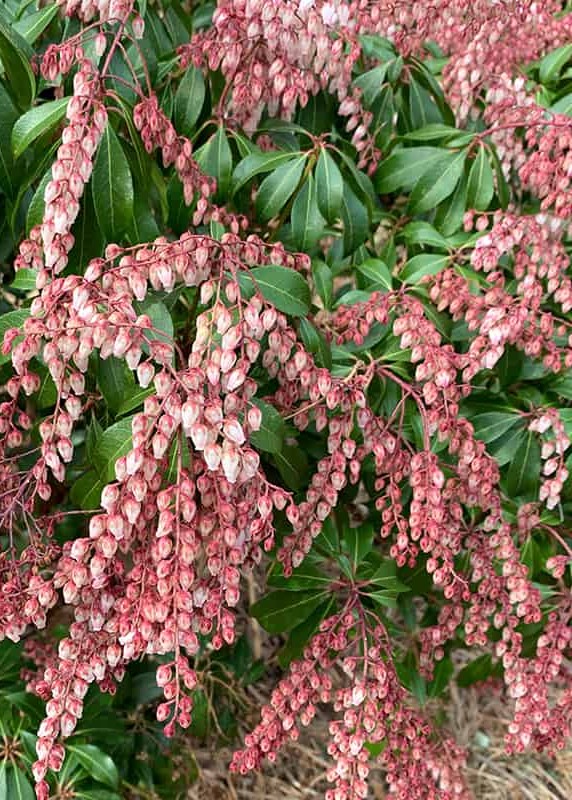
The plant has woody branches and alternate, simple, leathery leaves that often appear crowded near shoot tips. Mature leaves are glossy dark green and commonly oblong, elliptic, oblanceolate, or lance-shaped, with finely serrated margins. New foliage frequently emerges red, copper, bronze, pink, or burgundy before gradually becoming green. These brightly colored young leaves are one of the shrub’s most recognizable features and may attract animals investigating fresh spring growth.
The flowers are small, urn-shaped, and usually white, cream, pale pink, or deeper pink. They hang in branched drooping clusters from stem ends and resemble strands of small bells. After flowering, the shrub forms dry, rounded, woody seed capsules rather than the orange-red berries produced by true Lily of the Valley. Old capsules and flower buds may remain visible for long periods and assist identification when the plant is not actively blooming.
Evergreen Exposure
Because its leaves remain on the shrub throughout the year, Japanese Pieris can poison animals during winter when other green vegetation is scarce. Hungry livestock, browsing goats, newly introduced zoo animals, animals confined to small paddocks, and pets with access to limited yards may be more likely to sample the foliage during periods of reduced forage. Snow, storms, wind, and pruning can bring branches within reach. Evergreen status also means that dried and fallen leaves may accumulate beneath the plant.
New Growth and Flowers
Young leaves and hanging flower clusters are concentrated near branch tips and may be easier to reach than older interior foliage. Red, pink, bronze, or copper new growth is not a separate nontoxic tissue. Fallen flowers, broken clusters, and storm-damaged shoots remain poisonous after detaching from the shrub. Animals should not be allowed to play with, chew, or groom against flowering branches.
All Parts Are Poisonous
Mature leaves, new growth, flower buds, flowers, nectar, pollen, twigs, bark, seed capsules, seeds, roots, sap, pruned branches, dried foliage, and water contaminated with plant debris should all be treated as potentially toxic. No part should be used as forage, browse, bedding, nesting material, enrichment, a chew branch, or decoration inside an animal enclosure. A lack of flowers does not make the evergreen foliage safe. Uprooted shrubs and exposed roots should also remain inaccessible.
Dogs
Dogs may chew low branches, pull leaves through a fence, shred fresh clippings, dig around an uprooted shrub, investigate nursery plants, or raid brush piles. A pile of cut branches provides repeated access to a much larger plant mass than one low branch on a standing shrub. Puppies may tear and carry foliage as play material. A dog that vomits after chewing Pieris still requires professional guidance because cardiovascular and neurologic effects can follow the gastrointestinal signs.
Preserve both old green leaves and reddish new growth whenever possible because either may assist identification. Inspect the area for Rhododendron, Azalea, Mountain Laurel, pesticides, fertilizer, mushrooms, mulch, and foreign material. The presence of Pieris does not exclude a mixed exposure. Photographs of the shrub before removal can be especially useful.
Cats
Cats may bat at hanging flower clusters, nibble young foliage, climb beneath or through the shrub, drink water containing cut stems, or groom pollen and fragments from the coat. A cat may conceal early weakness by hiding or becoming unusually still. Vomiting, food refusal, reduced jumping, poor coordination, weakness, or open-mouth breathing following possible exposure requires prompt assessment. Plant debris on the coat should be removed to prevent continued grooming exposure.
Horses
Horse exposure commonly results from shrubs planted beside paddocks, branches extending through or across fences, landscaping around barns, or garden waste thrown into an enclosure. The plant’s usual lack of palatability does not protect a hungry, curious, confined, or forage-deprived horse. Fresh clippings can be consumed even when the standing shrub was previously ignored. Salivation, colic, weakness, an abnormal pulse, ataxia, or recumbency requires immediate large-animal veterinary attention.
Goats and Sheep
Goats are especially vulnerable because they browse woody vegetation and investigate newly available plant material. Published poisoning has followed escaped access to ornamental shrubs, feeding of branches, clippings left within reach, and landscaping debris. Sheep may also be poisoned when foliage is deliberately offered, mixed with feed, or available during forage shortage. A group exposure should be assumed when several animals shared the same area.
Regurgitation, ruminal stasis, bloat, recumbency, and aspiration complicate treatment. One animal’s recovery does not establish that every exposed animal is safe because intake and onset vary. The entire group should be removed from the source and monitored. Preserve plant and feed samples before disposal.
Cattle
Cattle are less likely to seek out an isolated shrub when adequate forage is present, but they may consume leaves mixed with clippings, hay, brush, feed, or discarded landscaping material. Retention within the rumen may prolong exposure. Reduced motility and impaired eructation can cause bloat, while regurgitation increases aspiration risk. Weak or bloated cattle should not be drenched.
Alpacas and Llamas
Camelids may encounter Pieris in zoo exhibits, hobby-farm landscaping, public displays, newly constructed paddocks, or discarded branches. The fatal 2025 alpaca case followed entry into a newly constructed enclosure containing Japanese Pieris shrubs with evidence of browsing. Familiarity with safe forage does not guarantee avoidance of an unfamiliar ornamental plant. Every new enclosure should be inspected by someone capable of identifying toxic landscaping.
Pigs
Pet pigs and miniature pigs may root beneath shrubs, pull down branches, or consume leaves during exploratory feeding. Two published miniature-pig cases analytically confirmed grayanotoxin I in the ingested plant and throughout multiple tissues and body fluids. This evidence demonstrates systemic absorption rather than a local gastrointestinal reaction alone. Pale mucous membranes, tachycardia, tremors, ataxia, and lateral recumbency were prominent findings.
Rabbits and Small Herbivores
Japanese Pieris should never be offered to rabbits, guinea pigs, or other small herbivores as browse, bedding, enrichment, or a chew branch. The amount consumed relative to body size can become substantial quickly. Appetite loss, reduced fecal production, abdominal discomfort, diarrhea, weakness, tremors, or abnormal behavior requires prompt veterinary evaluation. Gastrointestinal stasis may compound the direct toxic effects.
Tortoises and Other Reptiles
Reptiles should not be assumed resistant to grayanotoxin-containing plants. The African spurred tortoise case demonstrated severe gastrointestinal pain, hypersalivation, distention, absent motility, superficial ulceration, depression, and prolonged anorexia after Japanese Pieris ingestion. Plant material remained within the gastrointestinal tract, and recovery took considerably longer than the short course often described in uncomplicated human mad-honey poisoning. Reptile enclosures should be inspected as carefully as mammal habitats.
Grayanotoxin Mechanism
Voltage-gated sodium channels open briefly to initiate electrical activity in nerves and muscles and normally inactivate rapidly so the cell can reset. Grayanotoxins interfere with this inactivation and leave affected cells persistently depolarized. The resulting dysfunction involves the gastrointestinal tract, autonomic nervous system, sensory and motor nerves, skeletal muscle, heart, respiratory system, and central nervous system. Recovery occurs as active toxin concentrations decline rather than because the channels are permanently destroyed.
Cardiovascular Effects
Increased vagal influence and direct sodium-channel effects can produce sinus bradycardia, nodal rhythm, junctional rhythm, atrioventricular block, and hypotension. Other animals develop tachycardia, premature complexes, or ventricular arrhythmias. A rapid heart rate is not necessarily safer than a slow one, and the rhythm may change during the same case. Blood pressure, perfusion, and ECG findings must be evaluated together.
Wolff-Parkinson-White Confusion
Wolff-Parkinson-White syndrome is a congenital accessory-pathway disorder. Japanese Pieris poisoning does not create that structural pathway. Toxic conduction disturbance may transiently resemble pre-excitation or produce an unusual ECG pattern, but the tracing must be interpreted according to its actual features. Treatment should not be selected from the resemblance alone.
Oral Sensations
People exposed to grayanotoxins have described burning, tingling, numbness, dizziness, and other abnormal sensations. Animals cannot describe paresthesia directly. Face rubbing, pawing, head shaking, unusual licking, sudden agitation, or abrupt refusal to continue chewing may indicate nausea, oral discomfort, dizziness, or altered sensory nerve activity. These behaviors are suggestive rather than diagnostic.
Arbutin
Arbutin is a hydroquinone glucoside associated with several Ericaceae plants and is sometimes discussed in broad heath-family phytochemistry. It is not the best-supported explanation for the rapid salivation, vomiting, hypotension, arrhythmia, weakness, tremors, and coma characteristic of Japanese Pieris poisoning. Those acute effects are attributed principally to grayanotoxins and related diterpenoids. The presence of secondary compounds does not change the primary emergency priorities.
Not Chemically Similar to Turpentine
Grayanotoxins are non-nitrogenous polyhydroxylated diterpenoids. Turpentine is a volatile mixture obtained from conifer resin and has a different chemical composition and poisoning mechanism. Japanese Pieris should not be described as burning an animal’s mouth because its toxin is “like turpentine.” Oral behaviors may reflect nausea, abnormal sensation, or plant contact, but sodium-channel toxicity defines the systemic syndrome.
Mad Honey
Bees can transfer grayanotoxins from the nectar of certain Ericaceae plants into honey. Most documented mad-honey poisoning is associated with particular *Rhododendron* species rather than Japanese Pieris. The broader honey literature remains useful for understanding bradycardia, hypotension, dizziness, vomiting, and sodium-channel effects, but it is not direct proof that every Pieris flower produces dangerously contaminated honey. Honey should never be used as a home remedy during an animal poisoning event.
Xenophon’s Historical Account
“The number of bee hives was extraordinary, and all of the soldiers that ate of the honey combs lost their senses, vomited and were affected with purging, and none of them was able to stand upright; such as had eaten only a little were like men greatly intoxicated, and such as had eaten much were like mad men and some like persons at the point of death. They lay upon the ground, in consequence, in great numbers, as if there had been a defeat; and there was general dejection. The next day, no one of them was found dead; and they recovered their senses about the same hour they had lost them on the preceding day.”
The account describes toxic honey consumed near the Black Sea and is commonly associated with *Rhododendron* nectar. It illustrates the ancient grayanotoxin syndrome of vomiting, purging, altered awareness, and inability to stand. It is not a recorded poisoning caused specifically by Japanese Pieris and should not be presented as exact-species evidence.
1978 and 1992 Goat Reports
A 1978 report described one fatal and one nonfatal case of Japanese Pieris poisoning in goats and experimentally reproduced clinical illness by feeding the plant to a healthy goat. Colic and nausea were observed, while inhalation pneumonia was the principal necropsy finding, highlighting aspiration as an important complication. A separate 1992 diagnostic report described Japanese Pieris toxicosis in a herd of pygmy goats. Together, these reports established the shrub as a genuine livestock poison rather than merely a plant presumed dangerous from family relationships.
Pregnancy and Fetal Mummification
A 1979 veterinary report described fetal mummification in a goat associated with maternal Japanese Pieris poisoning. The report supports careful reproductive monitoring after severe exposure in a pregnant animal. It does not establish fetal mummification, abortion, or pregnancy loss as an inevitable outcome of every ingestion. Maternal hypotension, systemic illness, reduced intake, and other complications may contribute to fetal risk.
2014 Goat and Ram Incident
Seven goats and one ram developed regurgitation, obtundation, appetite loss, apparent pain, and bloat after escaping and eating Japanese Pieris leaves. Some animals recovered with supportive care, while others died during the early course. Three goats with prolonged appetite loss later received intravenous lipid emulsion and appeared to improve, although one subsequently died from aspiration pneumonia. The report suggests a possible adjunctive role for lipid therapy but cannot prove efficacy from an uncontrolled small case series.
Intravenous lipid emulsion is not a household treatment or established universal antidote. It can alter laboratory tests, contribute to fat overload or other complications, and does not replace airway protection, bloat management, fluid support, ECG monitoring, or treatment of aspiration. Its use should remain selective and veterinarian-directed. Apparent improvement after administration does not prove that the lipid caused recovery.
2018 Pet-Pig Cases
Two miniature pet pigs developed pale oral mucous membranes, tachycardia, tachypnea, hypersalivation, tremors, and ataxia progressing to lateral recumbency after eating Japanese Pieris. Grayanotoxin I was detected in the ingested plant, gastrointestinal contents, blood, liver, bile, kidneys, urine, lungs, and skeletal muscle. The analytical findings confirmed absorption and widespread tissue distribution. The cases provide particularly strong exact-species toxicologic evidence.
2005 Tortoise Case
A young African spurred tortoise reportedly consumed a large quantity of Japanese Pieris leaves and developed severe abdominal pain, vocalization, hypersalivation, straining, and distress. Imaging and endoscopy identified gastric distention, a large mass of retained plant material, absent motility, vascular congestion, and superficial gastric ulceration. The tortoise remained depressed and anorexic after the acute pain improved. Gastrointestinal contents moved gradually, and normal eating resumed approximately ten days after exposure.
2025 Fatal Alpaca Case
A zoo-housed alpaca was found recumbent with profuse frothy salivation and inability to stand shortly after entering a newly constructed enclosure containing Japanese Pieris. Despite intravenous fluids, oral charcoal, attempted lavage, oxygen, and resuscitative care, the animal developed vomiting, paddling, opisthotonus, abnormal breathing, and died approximately four hours after signs were first observed. Necropsy revealed severe pulmonary congestion and edema, gastrointestinal hemorrhages, congestion of several organs, and identifiable Pieris leaves in the stomach.
The report diagnosed acute Japanese Pieris poisoning from the clinical signs, plant identification, browsed shrubs, gastrointestinal leaves, and pathologic findings. Grayanotoxin was not analytically confirmed in the animal, so the case is best described as strongly suspected rather than chemically proven. The total quantity consumed was unknown even though ten intact leaves were identified. The case demonstrates why a visible leaf count cannot be converted into a universal fatal dose.
Aspiration Risk
Grayanotoxin poisoning commonly causes vomiting, regurgitation, salivation, weakness, altered awareness, and recumbency. This combination creates a major aspiration hazard before, during, and after treatment. Forced water, oil, food, charcoal, and oral medication further increase risk when swallowing is impaired. Aspiration pneumonia may become apparent only after the cardiovascular or neurologic effects begin improving.
Pulmonary Congestion and Edema
Severe pulmonary congestion and edema were prominent in the fatal alpaca case and have also been investigated experimentally with Pieris-associated toxins. Respiratory distress may therefore reflect direct or indirect pulmonary vascular injury, cardiac dysfunction, severe hypotension, aspiration, or several mechanisms together. Lung sounds, oxygenation, blood gases, and imaging may be necessary. Breathing difficulty should never be attributed automatically to anxiety or weakness.
Lily-of-the-Valley Bush Is Not Lily of the Valley
True Lily of the Valley is Convallaria majalis, a low herbaceous perennial with broad basal leaves, a separate flower stalk, small white bells, orange-red fruit, and spreading rhizomes. It contains cardenolide cardiac glycosides such as convallatoxin that inhibit sodium-potassium ATPase. Japanese Pieris is a woody evergreen shrub containing grayanotoxins that alter voltage-gated sodium-channel inactivation. Both are serious poisons, but their cellular targets and some treatment priorities differ.
Japanese Pieris and Rhododendron
Rhododendrons and Azaleas belong to the same family and contain related grayanotoxins, producing a similar syndrome of salivation, vomiting, hypotension, bradycardia, conduction abnormalities, weakness, tremors, and collapse. Japanese Pieris generally has smaller urn-shaped flowers in long hanging clusters and often produces vividly colored new foliage. Rhododendron flowers are usually larger and commonly form broader terminal clusters. Uncertain identification between these plants does not create a safe exposure.
Japanese Pieris and Mountain Laurel
Mountain Laurel, Kalmia latifolia, also contains grayanotoxins. Its flowers are open, shallow cups with fused petals and distinctive pockets holding the stamens, while Japanese Pieris has numerous small hanging urn-shaped flowers. Both plants may cause vomiting, hypotension, bradycardia, weakness, ataxia, seizures, and collapse. Preserve the complete flowering branch and leaves rather than relying on the common name Laurel or Andromeda.
Japanese Pieris and Sheep Laurel
Sheep Laurel, Kalmia angustifolia, is another grayanotoxin-containing Ericaceae shrub. It generally has smaller pink to reddish flowers and a different low-growing form. Shared toxin chemistry means that uncertainty between the two plants does not lower the urgency. Species identification remains useful for exposure documentation and ecological context.
Japanese Pieris and Fetterbush
Fetterbush is used for Japanese Pieris, native Pieris floribunda, and several species of Lyonia. Some *Lyonia* species also contain grayanotoxins. The scientific name or a complete specimen is therefore needed for species-level identification. A nursery tag reading only Fetterbush does not establish which plant was ingested.
Japanese Pieris and Bog Rosemary
Bog Rosemary is Andromeda polifolia, a separate Ericaceae shrub with narrow rosemary-like leaves. Confusion arises because Japanese Pieris was historically named Andromeda japonica. Bog Rosemary is also potentially poisonous and should not be considered safe merely because it is not *Pieris japonica*. Growth form, leaf width, habitat, and flowers help distinguish them.
Japanese Pieris and Mountain Andromeda
Mountain Andromeda or Mountain Fetterbush commonly refers to Pieris floribunda, a North American species. It is not a synonym for Japanese Pieris. Other *Pieris* species and hybrids should be treated cautiously because grayanane diterpenoids occur within the genus. A different geographic origin does not establish safety.
Cultivars and Hybrids
Japanese Pieris is sold under many cultivar names, including Mountain Fire, Flaming Silver, Cavatine, Prelude, Dorothy Wyckoff, Katsura, Valley Valentine, Temple Bells, and Little Heath. Some plants sold as Forest Flame are hybrids rather than pure *P. japonica*. Red foliage, variegated leaves, dwarf stature, pink flowers, white flowers, and named hybrid status do not establish reduced toxicity. Every ornamental Pieris should remain inaccessible to animals.
Diagnosis
Diagnosis relies on plant identification, amount and form consumed, time of exposure, gastrointestinal signs, heart rate and rhythm, blood pressure, neurologic findings, respiratory condition, and exclusion of similar toxins. Preserve mature leaves, colored new foliage, flower clusters, seed capsules, stems, nursery tags, cultivar labels, vomited fragments, hay or feed samples, and photographs of the original shrub. The surrounding area should be inspected for related Ericaceae, pesticides, mushrooms, medication, and other toxic plants.
Veterinary Evaluation
Veterinary evaluation may include repeated heart-rate and blood-pressure measurements, continuous or repeated ECG monitoring, complete blood count, electrolytes, glucose, kidney and liver measurements, blood gases, acid-base status, urinalysis, neurologic examination, and respiratory assessment. Pulse quality, gum color, capillary refill, limb temperature, awareness, and urine production help determine perfusion. Chest imaging may be required after vomiting, regurgitation, coughing, or respiratory distress.
Abdominal imaging or endoscopy may be considered when a large plant mass remains in the stomach or when gastrointestinal motility is impaired. Ruminants may require assessment and treatment of bloat and ruminal stasis. Reptiles may retain leaves for a prolonged period and require species-specific imaging or endoscopic management. There is no routine clinical blood test that confirms Japanese Pieris exposure in most patients.
Differential Diagnosis
Other causes of salivation, vomiting, weakness, hypotension, tremors, and arrhythmias include Rhododendron, Azalea, Mountain Laurel, Sheep Laurel, Fetterbush, Aconite, False Hellebore, Yew, nicotine, organophosphate or carbamate pesticides, mushrooms, medication, and primary cardiac disease. Lily of the Valley, Foxglove, Oleander, Kalanchoe, and other cardiac-glycoside plants can also cause vomiting and arrhythmia but act through sodium-potassium ATPase rather than grayanotoxin-modified sodium channels.
Severe cholinergic signs may suggest pesticides, while marked oral pain can indicate a corrosive or insoluble-calcium-oxalate plant. Rapid fatal collapse may also result from Yew or Aconite. One visible Pieris shrub does not prove that it is the only exposure. Diagnosis should remain broad when signs are atypical or disproportionately severe.
Prognosis
The prognosis is generally good when a limited exposure is recognized early and signs remain confined to gastrointestinal upset, mild weakness, or transient depression. The outlook becomes guarded with severe hypotension, sustained bradycardia, heart block, ventricular arrhythmia, repeated seizures, coma, pulmonary edema, aspiration, bloat, prolonged recumbency, or respiratory failure. Reptiles and animals retaining plant material may have a longer recovery. Advanced respiratory and cardiovascular support can materially affect outcome.
Prevention
Keep Japanese Pieris outside dog runs, cat enclosures, rabbit exercise areas, horse paddocks, livestock pasture, pig pens, tortoise habitats, aviaries, and zoo enclosures. Inspect new landscaping before animals enter, and prevent branches from growing through or falling across fences. Nursery plants should remain secured before installation. Fallen flowers, storm debris, and pruned branches should be collected immediately.
Never throw Pieris branches or uprooted shrubs into an animal area, manure pile, open compost, hay storage, or brush pile accessible to livestock or pets. Place every branch, leaf, root, flower cluster, and seed capsule directly into a closed or otherwise inaccessible container. Inspect hay, bedding, and feed when clippings may have been mixed accidentally. Preserve a representative specimen before disposal if an exposure is suspected.
Immediate Response
- Stop further exposure: Remove the animal from the shrub, leaves, flowers, branches, clippings, nursery plant, compost, contaminated hay, feed, bedding, or enclosure containing Japanese Pieris.
- Contact a professional immediately: Obtain veterinary or animal poison-control guidance after any credible ingestion because cardiovascular, neurologic, and respiratory effects may develop after vomiting begins.
- Preserve the plant: Save mature green leaves, red or bronze new foliage, flower clusters, stems, seed capsules, roots, nursery tags, cultivar labels, vomited or regurgitated fragments, and photographs of the original shrub.
- Estimate the maximum possible amount: Report the greatest number of leaves or branches that could be missing, the time of exposure, the animal’s weight, and whether symptoms have begun.
- Identify concentrated exposure routes: Report access to fresh clippings, storm debris, hay, browse, uprooted shrubs, nursery waste, compost, or branches extending into an enclosure.
- Report other possible toxins: Identify Rhododendron, Azalea, Mountain Laurel, Fetterbush, Yew, Aconite, pesticides, fertilizer, mushrooms, medication, and other plants available in the same area.
Do Not Wait for Heart or Neurologic Signs
- Expect gastrointestinal signs first: Drooling, vomiting, regurgitation, abdominal pain, or diarrhea may precede bradycardia, hypotension, heart block, tremors, or collapse.
- Do not rely on a home pulse check: A normal-feeling pulse does not exclude intermittent arrhythmia, developing hypotension, or early sodium-channel dysfunction.
- Do not assume vomiting solved the exposure: Grayanotoxins may already have been absorbed, and leaves may remain in the stomach, rumen, or intestinal tract.
- Do not rely on temporary improvement: Rhythm, blood pressure, breathing, or neurologic status may worsen after the animal initially appears calmer.
- Arrange professional monitoring: A veterinarian may recommend ECG, blood-pressure, respiratory, and neurologic observation through the period in which delayed effects can develop.
The earliest visible sign does not reliably predict the eventual severity. An animal that only vomits may remain stable, but the same early presentation can precede profound weakness, conduction disturbance, or respiratory compromise. Prompt assessment allows decontamination to be considered while the animal is still alert and able to protect the airway. Waiting for fainting, tremors, or an abnormal pulse can eliminate safer treatment options.
Remove Material from the Mouth and Coat
- Wear gloves: Protect yourself and remember that a nauseated, frightened, painful, or neurologically abnormal animal may bite unexpectedly.
- Remove only visible loose pieces: Carefully take leaves or stems from the lips and front of the mouth when this can be done safely.
- Avoid blind finger sweeps: Do not reach deeply into the throat or push plant material toward the airway or esophagus.
- Wipe accessible residue: A damp cloth may remove loose plant fragments from the lips and front of the mouth in a fully alert animal.
- Do not force rinsing: Pouring or syringing water into the mouth can cause aspiration when vomiting, weakness, tremors, or poor swallowing is present.
- Wash contaminated fur: Remove plant fragments and wash the coat with lukewarm water and mild pet-safe shampoo when crushed leaves, pollen, or sap are present.
- Prevent grooming: Keep the animal from licking the coat until plant debris has been removed.
Do Not Induce Vomiting at Home
- Do not give hydrogen peroxide automatically: Whether vomiting is appropriate depends on species, timing, symptoms, neurologic condition, breathing, plant mass, and aspiration risk.
- Never give peroxide to a cat: Hydrogen peroxide is not a safe feline emetic and can cause severe gastric and esophageal injury.
- Do not use household emetics: Salt, mustard, ipecac, oil, syrup, dish soap, detergent, manual gagging, and fingers in the throat are unsafe.
- Never induce vomiting after signs begin: Do not attempt emesis in an animal that is drooling heavily, vomiting, regurgitating, weak, ataxic, trembling, seizuring, collapsed, breathing abnormally, or swallowing poorly.
- Never induce vomiting in horses, rabbits, or guinea pigs: These species cannot vomit and must not receive an emetic.
- Reserve emesis for professional direction: A veterinarian may consider controlled emesis after a recent ingestion only when the patient remains fully alert, stable, asymptomatic, breathing normally, and able to protect the airway.
Once weakness, altered awareness, tremors, or respiratory abnormalities begin, aspiration and cardiovascular instability become more urgent than attempting to empty the stomach. Large masses of leaves may remain in the stomach or forestomach even after spontaneous vomiting or regurgitation. Ruminants and horses require different decontamination approaches from dogs. The decision must be individualized by species and clinical condition.
Activated Charcoal
- Use activated charcoal only under veterinary direction: A veterinarian may administer it after an appropriate recent exposure when the airway and gastrointestinal tract are suitable.
- Never force charcoal: Do not give it to an animal that is vomiting, regurgitating, weak, recumbent, trembling, seizuring, sedated, breathing abnormally, or swallowing poorly.
- Protect the airway: A symptomatic patient may require endotracheal intubation before gastrointestinal decontamination.
- Do not use household charcoal: Barbecue briquettes, fireplace ash, burned food, and homemade carbon are not veterinary activated charcoal.
- Do not repeat doses at home: Repeated administration can worsen dehydration, constipation, electrolyte disturbance, and aspiration risk.
- Do not treat charcoal as an antidote: It may reduce absorption under selected conditions but does not reverse toxin already affecting sodium channels.
Repeated charcoal is not a routine owner procedure and is not automatically necessary in every case. The veterinarian must consider gastrointestinal motility, hydration, species, aspiration risk, and the amount likely to remain. Ruminants with regurgitation or bloat and reptiles with gastrointestinal stasis require particular caution. Cardiovascular and respiratory stabilization takes priority over aggressive decontamination.
Do Not Give Household Remedies
- Do not give milk, yogurt, bread, or oil: These products do not neutralize grayanotoxins or prevent sodium-channel effects.
- Do not give honey, corn syrup, or thick liquids: They do not bind the toxin and may be aspirated by a weak or vomiting animal.
- Do not give human antacids: Antacids do not correct sodium-channel dysfunction and may contain inappropriate ingredients.
- Do not give antidiarrheal products: Loperamide, bismuth, kaolin-pectin products, and other owner-selected remedies may be unsafe or delay recognition of severe poisoning.
- Do not give human pain medication: Ibuprofen, naproxen, acetaminophen, and aspirin can cause additional poisoning.
- Do not give stimulants: Caffeine, decongestants, energy products, and similar substances can worsen tachycardia, arrhythmia, agitation, and oxygen demand.
- Do not give herbal remedies: Teas, tinctures, supplements, essential oils, and additional plant products can add another active exposure.
- Do not use leftover veterinary medication: Prescription drugs must be selected according to the animal’s species, ECG, blood pressure, neurologic status, and respiratory condition.
Do Not Give Cardiac or Electrolyte Medication at Home
- Do not give atropine: A veterinarian may use it for selected clinically important bradycardias, but it can be inappropriate for another rhythm.
- Do not give lidocaine: Lidocaine is used only for selected ventricular arrhythmias identified on an ECG.
- Do not give procainamide or quinidine: Antiarrhythmic selection requires rhythm-specific veterinary dosing and monitoring.
- Do not give isoproterenol or other rate stimulants: Increasing cardiac rate can worsen particular tachyarrhythmias or myocardial oxygen demand.
- Do not give potassium, calcium, magnesium, or electrolyte mixtures: Electrolyte treatment must be based on measured abnormalities and the current ECG.
- Do not give human blood-pressure medication: Vasopressors and cardiovascular drugs require continuous professional monitoring.
Grayanotoxin poisoning can cause slow, rapid, irregular, nodal, blocked, or ventricular rhythms. Medication appropriate for one tracing may worsen another. Blood pressure and perfusion must also be considered because suppressing an arrhythmia does not guarantee adequate circulation. Treatment should follow repeated ECG findings rather than the plant name alone.
Food and Water
- Do not force food: A nauseated, weak, recumbent, trembling, or neurologically impaired animal may vomit, regurgitate, or aspirate.
- Offer water only when safe: Small amounts of fresh water may remain available only when the animal is fully alert, swallowing normally, and not vomiting repeatedly.
- Do not force oral fluids: Syringed or poured water cannot correct significant dehydration or hypotension and may enter the lungs.
- Remove contaminated water: Prevent access to containers holding cut branches, plant debris, floral preservatives, or runoff from the shrub.
- Follow veterinary feeding instructions: Food may be withheld temporarily or reintroduced gradually according to vomiting, motility, bloat, aspiration risk, and neurologic condition.
Recognize a Cardiovascular Emergency
- Watch for profound weakness: Repeated lying down, inability to stand, fainting, or collapse can indicate inadequate blood pressure or cardiac output.
- Check gum color: Pale, gray, or blue-tinged mucous membranes require immediate emergency treatment.
- Observe the pulse: A markedly slow, rapid, irregular, weak, or intermittently absent pulse may indicate a dangerous rhythm.
- Feel the extremities: Cold ears, feet, or limbs can accompany poor peripheral perfusion.
- Watch awareness: Disorientation, reduced responsiveness, stupor, or coma may result from poor cerebral perfusion or severe neurologic toxicity.
- Monitor urination: Reduced output can accompany dehydration, hypotension, or poor kidney perfusion.
- Watch breathing: Rapid, labored, irregular, gasping, or weak respiration requires immediate transportation.
Do not attempt to distinguish ordinary tiredness from cardiovascular depression at home. An animal that lies quietly after vomiting may be hypotensive or bradycardic. Pale gums, cold extremities, weak pulses, and altered awareness strengthen concern, but their absence does not rule out a developing problem. Veterinary blood-pressure measurement and ECG are required.
Vomiting, Regurgitation, Diarrhea, and Bloat
- Track every episode: Record vomiting, regurgitation, retching, diarrhea, and visible plant fragments, mucus, red blood, or dark material.
- Save representative fragments: Place leaves, flowers, stems, or feed material recovered from vomit, regurgitated contents, or stool in a sealed disposable container.
- Watch for dehydration: Dry or tacky gums, reduced urination, worsening weakness, cold extremities, or inability to retain water requires veterinary treatment.
- Watch for aspiration: Coughing, nasal discharge, fever, rapid breathing, or renewed depression may indicate aspiration pneumonia.
- Watch for bloat: Left-sided abdominal enlargement, respiratory difficulty, repeated lying down, or inability to eructate in a ruminant requires immediate veterinary assessment.
- Report persistent signs: Repeated vomiting, regurgitation, blood, severe abdominal pain, enlargement, or progressive weakness requires emergency evaluation.
Gastrointestinal signs can coexist with dangerous rhythm and blood-pressure abnormalities. Controlling nausea does not replace cardiovascular monitoring. Ruminant bloat can rapidly worsen breathing and circulation and may require emergency decompression or other veterinarian-selected treatment. Repeated regurgitation and recumbency increase aspiration risk substantially.
Tremors, Seizures, and Neurologic Deterioration
- Do not put anything in the mouth: Keep hands, food, water, cloth, spoons, and medication away during a seizure.
- Do not hold the tongue: Dogs and cats do not swallow their tongues, and attempting to hold it can cause serious injury.
- Protect without pinning: Clear nearby objects and use folded blankets as barriers without restraining the limbs.
- Reduce stimulation: Lower light and noise when possible without delaying emergency transport.
- Time the episode: Record when tremors or seizures begin and end and whether normal awareness returns.
- Seek immediate care: Continuous tremors, any seizure, repeated seizures, collapse, or loss of consciousness is an emergency.
Neurologic signs can reflect direct sodium-channel effects, poor cerebral perfusion, hypoxia, metabolic abnormalities, or another toxin. Treatment must address circulation, oxygenation, glucose, temperature, electrolytes, and seizure activity together. Oral products become unsafe when awareness or swallowing declines. Prolonged tremors and seizures increase heat production, acidosis, and oxygen demand.
Safe Transportation
- Keep the animal quiet: Limit walking, excitement, struggling, barking, handling, and heat because exertion can worsen hypotension, weakness, and arrhythmias.
- Prevent falls: Keep an ataxic animal away from stairs, pools, traffic, furniture edges, and hard obstacles.
- Carry when safe: Use a carrier, stretcher, rigid board, or blanket rather than forcing a weak animal to walk.
- Do not muzzle a vomiting animal: A muzzle can obstruct breathing and prevent vomit from leaving the mouth.
- Position carefully: Maintain a natural neck position and avoid compressing the chest or abdomen.
- Call ahead: Tell the emergency clinic that Japanese Pieris grayanotoxin poisoning with possible hypotension, arrhythmia, tremors, aspiration, or pulmonary edema is suspected.
- Bring all evidence: Take plant samples, labels, photographs, clippings, feed or hay samples, and recovered gastrointestinal material.
Veterinary Examination
- Monitor the ECG: Continuous or repeated electrocardiography may identify bradycardia, tachycardia, nodal rhythm, atrioventricular block, premature complexes, or ventricular arrhythmia.
- Measure blood pressure repeatedly: Serial values show whether circulation is adequate and whether fluids or cardiovascular medication are working.
- Assess perfusion: Pulse quality, gum color, capillary refill, limb temperature, awareness, and urine output help establish cardiovascular severity.
- Check laboratory values: Electrolytes, glucose, acid-base status, kidney and liver measurements, blood gases, complete blood count, and urinalysis may identify complications or another diagnosis.
- Evaluate respiration: Oxygen saturation, lung sounds, blood gases, and chest imaging may be needed after vomiting, regurgitation, coughing, pulmonary edema, or respiratory distress.
- Assess neurologic function: Alertness, gait, muscle strength, tremors, reflexes, pupils, and seizure activity help guide treatment.
- Evaluate gastrointestinal retention: Imaging, endoscopy, rumen assessment, or reptile-specific evaluation may be needed when a large leaf mass or prolonged stasis is suspected.
Veterinary Decontamination
A veterinarian may consider controlled emesis after an appropriate recent ingestion in a dog that remains alert, stable, asymptomatic, breathing normally, and capable of protecting the airway. Emesis is inappropriate after substantial drooling, repeated vomiting, weakness, ataxia, tremors, altered awareness, respiratory compromise, or cardiovascular instability. Horses, rabbits, and guinea pigs cannot vomit. Ruminants, pigs, camelids, and reptiles require species-specific decontamination decisions.
Activated charcoal may be administered when the expected benefit exceeds aspiration and gastrointestinal risks. Endotracheal intubation may be necessary when neurologic status or swallowing is impaired. Gastric lavage or endoscopic removal may be considered in selected patients with a large retained plant mass, but stabilization comes first. Attempts to lavage an unstable or poorly protected patient can worsen aspiration and cardiovascular collapse.
Veterinary Treatment of Vomiting, Dehydration, and Hypotension
Veterinarian-selected anti-nausea medication may reduce fluid loss and aspiration risk after decontamination decisions are complete. Intravenous crystalloids can correct dehydration and support blood pressure and organ perfusion. Fluid administration must be adjusted according to heart rhythm, blood pressure, urine production, respiratory condition, species, and gastrointestinal losses. Excessive fluid can be dangerous when pulmonary edema or impaired cardiac function is present.
Persistent clinically important hypotension may require veterinarian-selected vasopressor support after appropriate circulating-volume deficits have been addressed. Vasopressors require blood-pressure and ECG monitoring and should not be treated as substitutes for necessary fluid resuscitation. The choice depends on rhythm, vascular response, respiratory condition, and concurrent disease. Human decongestants or stimulants must never be used as improvised treatment.
Veterinary Treatment of Bradycardia and Arrhythmias
Atropine may be used for selected clinically important bradycardias when the ECG and perfusion findings support increased vagal influence as a treatable mechanism. It is not appropriate for every rhythm and may fail when conduction disturbance or another mechanism predominates. Response should be assessed with ECG and blood pressure rather than heart rate alone. Glycopyrrolate or another intervention may be considered according to the patient.
Ventricular arrhythmias require rhythm-specific treatment. Lidocaine, procainamide, or another antiarrhythmic may be selected according to ECG morphology, ventricular rate, blood pressure, perfusion, and response. A medication appropriate for ventricular ectopy may worsen hypotension or a conduction defect. The rhythm can change during treatment, making repeated reassessment necessary.
Veterinary Treatment of Tremors, Seizures, and Respiratory Failure
Methocarbamol or another veterinarian-selected muscle relaxant may be used for significant tremoring when appropriate for the species and cardiovascular condition. Standard anticonvulsants, sedatives, or anesthetic support may be required for seizures. Treatment should occur alongside correction of hypoxia, glucose abnormalities, acid-base disturbance, temperature, perfusion, and electrolytes. Persistent neurologic signs should broaden the investigation to other toxins.
Oxygen, airway suctioning, intubation, or assisted ventilation may be needed for aspiration, pulmonary edema, severe weakness, seizure activity, shock, or central respiratory depression. Chest imaging and repeated respiratory assessment may be required because pulmonary complications can emerge later. Antibiotics are selected for documented or strongly suspected aspiration pneumonia rather than administered automatically for every ingestion. Recumbent animals require careful positioning and nursing support.
Intravenous Lipid Emulsion
Intravenous lipid emulsion was associated with apparent improvement in a small uncontrolled goat case series after prolonged clinical illness. Grayanotoxins are lipophilic enough to provide a theoretical basis for lipid sequestration, but the reported animals also received other treatment, some recovered without lipid, and one treated goat later died from aspiration pneumonia. The evidence does not establish a universal antidotal effect. Spontaneous recovery and supportive care cannot be separated reliably from the lipid’s contribution.
Lipid emulsion should therefore remain a selective adjunct considered by a veterinarian or toxicologist in a severe case. It does not replace decontamination, airway protection, fluids, bloat management, ECG-guided treatment, oxygen, or seizure control. Administration can interfere with laboratory testing and carries metabolic and infusion-related risks. It must never be attempted outside a veterinary facility.
Horses and Livestock
- Remove the source: Prevent further access to shrubs, fence-line branches, landscaping debris, clippings, contaminated hay, browse, feed, bedding, and discarded nursery plants.
- Do not force exercise: An animal with hypotension, weakness, or an unstable rhythm may collapse when driven, chased, or loaded unnecessarily.
- Do not attempt vomiting: Horses cannot vomit, and household emetics are unsafe for livestock.
- Do not drench a symptomatic animal: Weak, salivating, regurgitating, bloated, recumbent, or poorly swallowing animals can aspirate water, oil, charcoal, or medication.
- Address bloat promptly: Ruminal distention can rapidly worsen respiratory and cardiovascular compromise.
- Keep weak ruminants sternal when safe: Lateral recumbency can worsen bloat and aspiration risk.
- Examine the entire group: Other exposed animals may develop signs at different times and should be removed from the source and assessed.
- Retain representative samples: Preserve branches, leaves, feed, hay, rumen contents, and photographs of the exposure area.
Large-animal care may include intravenous fluids, blood-pressure support, ECG monitoring, bloat treatment, control of regurgitation and aspiration, neurologic support, and respiratory care. The treatment plan depends on the animal’s species and measured abnormalities rather than an assumed leaf dose. Pregnant animals may require additional fetal or reproductive monitoring. Do not return recovering animals to an area where branches or clippings remain accessible.
Monitoring and Recovery
- Continue cardiovascular observation: Heart rate, ECG, blood pressure, pulse quality, and perfusion should remain stable before discharge after a meaningful exposure.
- Monitor eating and drinking: Persistent nausea, appetite loss, regurgitation, or inability to drink may indicate ongoing gastrointestinal dysfunction.
- Monitor strength and coordination: Worsening weakness, ataxia, fainting, tremors, or inability to rise requires immediate reassessment.
- Watch for delayed aspiration: Coughing, fever, nasal discharge, rapid breathing, or renewed lethargy may develop after initial signs improve.
- Monitor gastrointestinal motility: Ruminants, rabbits, and reptiles may require continued observation for bloat, stasis, reduced fecal output, or retained plant material.
- Restrict activity: Keep recovering animals quiet until strength, coordination, hydration, blood pressure, respiration, and heart rhythm are normal.
- Report recurrent signs: Renewed vomiting, regurgitation, weakness, fainting, abnormal pulse, tremors, seizures, breathing difficulty, or collapse requires immediate reassessment.
Prevention and Prognosis
- Exclude the shrub from animal areas: Do not place Japanese Pieris in dog runs, cat enclosures, rabbit areas, horse paddocks, livestock pasture, pig pens, tortoise habitats, aviaries, or zoo enclosures.
- Secure fresh clippings: Place every branch, leaf, flower cluster, root, and uprooted plant directly into a closed or otherwise inaccessible container.
- Inspect fence lines: Prevent branches from growing through or falling across fences into animal-use areas.
- Inspect new enclosures: Identify every ornamental plant before animals are introduced to a newly landscaped habitat.
- Protect feed and bedding: Prevent leaves and branches from contaminating hay, browse, troughs, food dishes, water, or bedding.
- Typical prognosis: Limited exposures recognized early generally have a good prognosis when severe cardiovascular, respiratory, or neurologic signs do not develop.
- Guarded prognosis: Severe hypotension, heart block, ventricular arrhythmia, pulmonary edema, aspiration, repeated seizures, coma, prolonged recumbency, or respiratory failure creates a guarded-to-poor outlook.
Frequently Asked Questions About Lily-of-the-Valley Bush and Animal Poisoning
Can only a few Japanese Pieris leaves cause serious poisoning?
Serious poisoning can follow a relatively limited ingestion, especially in a small animal, but no dependable number of dangerous or safe leaves has been established. Leaf size, toxin concentration, species, body weight, health, and amount retained after vomiting all affect the outcome.
The ten intact leaves found in the fatal alpaca case do not establish a universal fatal dose because the total amount consumed was unknown. Any credible ingestion deserves prompt professional assessment rather than a leaf-count calculation.
Which grayanotoxins have actually been found in Japanese Pieris?
Exact-species studies have isolated grayanotoxin III, grayanotoxin II, asebotoxins, pieristoxins, deacylated derivatives, and many additional grayanane diterpenoids. Modern research continues to identify previously undescribed compounds from the leaves.
The profile is a mixture rather than one standardized toxin. One plant should not be assumed to contain every compound at the same concentration reported from another research specimen.
Are andromedotoxin, rhodotoxin, and asebotoxin different poisons?
Some of these terms were historically used for grayanotoxin I or closely related toxic material before chemical nomenclature became standardized. Asebotoxin also appears in names assigned to specific *Pieris japonica* diterpenoids.
The names should not be treated automatically as separate unrelated toxin classes. Modern descriptions are clearer when they identify the broader grayanotoxin or grayanane-diterpenoid group and name individual compounds when exact evidence exists.
Why can Japanese Pieris cause either a slow or fast heartbeat?
Grayanotoxins disturb sodium-channel inactivation and autonomic regulation. Increased vagal influence and conduction impairment can cause bradycardia or heart block, while abnormal automaticity, hypotension, dehydration, pain, and stress can cause tachycardia or ventricular rhythms.
The rhythm may change during one poisoning episode. Continuous or repeated ECG assessment is more reliable than one home pulse reading.
Can Japanese Pieris cause Wolff-Parkinson-White syndrome?
No. True Wolff-Parkinson-White syndrome results from a congenital accessory electrical pathway. Eating Japanese Pieris does not create that structural pathway.
Toxic conduction changes may sometimes produce a transient ECG pattern that resembles pre-excitation. The tracing must be interpreted according to its actual features before treatment is selected.
Does vomiting mean the grayanotoxin has been removed?
No. Grayanotoxins may already have been absorbed, and additional foliage can remain in the stomach, rumen, or intestinal tract. Vomiting or regurgitation also increases the risk of dehydration and aspiration.
Cardiovascular or neurologic signs can develop after the initial gastrointestinal signs. The animal still requires professional guidance after a credible ingestion.
Why is aspiration such an important complication?
Japanese Pieris commonly causes drooling, vomiting or regurgitation, weakness, altered awareness, and recumbency. These signs make it easier for plant material, saliva, charcoal, food, water, or rumen contents to enter the lungs.
Aspiration pneumonia may not become obvious until after the original poisoning begins improving. Coughing, fever, nasal discharge, rapid breathing, or renewed depression requires prompt reassessment.
Can Japanese Pieris directly cause pulmonary edema?
Severe pulmonary congestion and edema were prominent findings in the fatal alpaca case and have also been investigated experimentally with Pieris-associated toxins. Respiratory distress cannot therefore be attributed automatically to aspiration alone.
Cardiac dysfunction, vascular effects, profound hypotension, aspiration, and pulmonary edema may occur together. Oxygenation, lung sounds, imaging, and blood gases may be needed to determine the cause.
Is intravenous lipid emulsion an antidote for Japanese Pieris?
No established specific antidote exists. Intravenous lipid emulsion was associated with apparent improvement in a small uncontrolled goat case series, but the animals also received other treatment and one treated goat later died from aspiration pneumonia.
Lipid therapy remains a veterinarian-directed adjunct rather than a proven universal antidote. It does not replace airway care, fluids, bloat treatment, ECG monitoring, oxygen, or neurologic support.
Why should atropine not be given automatically?
Atropine may help selected clinically important bradycardias associated with increased vagal influence. It is not appropriate for every rhythm and may not correct conduction defects or ventricular abnormalities.
The veterinarian must identify the actual ECG pattern and assess blood pressure and perfusion before selecting treatment. Owner administration can delay appropriate care or worsen instability.
Are lidocaine or procainamide standard treatments?
They may be selected for particular documented arrhythmias. Lidocaine is commonly considered for certain ventricular rhythms, while procainamide has different electrophysiologic effects.
Neither drug is a general Pieris antidote. Treatment must match the ECG, blood pressure, species, and clinical response.
Are the red new leaves more poisonous than mature green leaves?
Red, pink, bronze, or copper new foliage should be treated as poisonous, but no dependable comparative dose has established that every young leaf is more toxic than every mature leaf. Tissue chemistry can vary with age and growing conditions.
The bright new growth may create greater practical exposure because it is soft, prominent, and positioned at branch tips. Color cannot be used to calculate risk.
Are pink-flowered or variegated Pieris cultivars safer?
No. Pink flowers, red new growth, cream-edged leaves, dwarf growth, and cultivar names do not establish reduced grayanotoxin content. Ornamental breeding has not created a verified pet-safe Japanese Pieris.
Mountain Fire, Flaming Silver, Cavatine, Prelude, Katsura, Dorothy Wyckoff, Valley Valentine, Temple Bells, and similar cultivars should receive the same precautions.
Is Forest Flame a pure Japanese Pieris?
Plants sold as Forest Flame may be ornamental *Pieris* hybrids rather than pure *Pieris japonica*. Exact parentage may vary with nursery labeling and horticultural treatment.
Hybrid status does not establish safety. Other *Pieris* species contain related grayanane diterpenoids and should also remain inaccessible to animals.
Is dried Japanese Pieris still poisonous?
Yes. Drying, wilting, freezing, and aging do not reliably destroy the grayanotoxins. Dried leaves or branches mixed into hay, bedding, browse, compost, or brush piles remain dangerous.
Dried material can also be difficult to identify after fragmentation. Preserve representative samples from the source whenever contaminated feed or bedding is suspected.
Why are fresh clippings especially dangerous?
A pile of cut branches allows an animal to consume repeated mouthfuls without browsing a standing shrub. Branches may also be softer, freshly exposed, or placed directly inside a paddock, pen, or yard.
Fresh clippings are a common livestock exposure route and should be placed immediately into a closed or otherwise inaccessible disposal container.
Can Japanese Pieris contaminate hay or feed?
Yes. Leaves and branches mixed into hay, browse, bedding, or feed remain potentially poisonous and may be harder to recognize after drying. Ruminant retention can prolong exposure.
Remove the affected material, inspect the entire batch, preserve samples, and evaluate every animal with access. Do not feed the questionable material to another species as a test.
Is Lily-of-the-Valley Bush the same as true Lily of the Valley?
No. Lily-of-the-Valley Bush is the woody evergreen shrub *Pieris japonica* and contains grayanotoxins that alter sodium channels. True Lily of the Valley is *Convallaria majalis*, a low herbaceous plant containing cardiac glycosides such as convallatoxin.
Both plants can cause vomiting, cardiovascular instability, collapse, and death, but their cellular mechanisms and some treatment considerations differ.
Is Japanese Pieris the same as Rhododendron or Azalea?
No. They are separate genera in Ericaceae, but all can contain grayanotoxins and cause a similar syndrome. Uncertain identification among them does not create a low-risk exposure.
Japanese Pieris has many small urn-shaped flowers in hanging clusters and often has red or bronze new foliage. Rhododendron and Azalea flowers are generally larger and arranged differently.
Is Japanese Pieris the same as Mountain Laurel?
No. Mountain Laurel is Kalmia latifolia. Both contain grayanotoxins, but Mountain Laurel has open cup-shaped flowers with characteristic stamen pockets, while Japanese Pieris has hanging urn-shaped flowers.
Both require urgent veterinary assessment after ingestion. Botanical distinction does not make either plant safe.
Can Japanese Pieris poison pigs, alpacas, or tortoises?
Yes. Grayanotoxin I was analytically confirmed in two poisoned miniature pigs, severe prolonged gastrointestinal disease was reported in an African spurred tortoise, and a fatal suspected Japanese Pieris exposure was reported in a zoo-housed alpaca.
These cases demonstrate that the hazard is not limited to traditional grazing livestock. Every animal enclosure should be inspected for toxic ornamental plants.
Should I make my dog vomit after it eats Japanese Pieris?
Do not induce vomiting unless a veterinarian or animal poison-control specialist specifically directs it after evaluating the dog. Timing, amount, symptoms, breathing, neurologic status, and aspiration risk all affect the decision.
Never give peroxide to a cat, and never attempt vomiting in an animal that is already drooling heavily, vomiting, weak, ataxic, trembling, seizuring, collapsed, breathing abnormally, or swallowing poorly.
What findings require immediate emergency care?
Repeated vomiting or regurgitation, profound weakness, pale or gray gums, weak pulses, fainting, a markedly slow, rapid, or irregular heartbeat, severe bloat, continuous tremors, any seizure, breathing difficulty, collapse, or reduced responsiveness requires immediate emergency care.
Coughing, fever, nasal discharge, or rapid breathing after vomiting may indicate aspiration. Do not delay transport while attempting home cardiac treatment, oral medication, or repeated decontamination.