Emerald Feather Berry Ingestion and Contact Dermatitis
Is Emerald Feather Poisonous to Dogs, Cats, Horses, and Other Animals?
Yes—Emerald Feather, Asparagus densiflorus, is mildly poisonous to dogs, cats, horses, and other animals that eat it. Its red berries are the principal ingestion concern and can cause vomiting, diarrhea, nausea, appetite loss, and abdominal pain. Chewed foliage may also cause gastrointestinal upset, while repeated contact with sap or plant material can produce itching, redness, and allergic or irritant dermatitis. Life-threatening systemic poisoning is not expected from an ordinary exposure, but persistent vomiting, dehydration, significant dermatitis, or ingestion of numerous berries requires veterinary assessment.
About this guide: This page provides general pet-poisoning information and cannot diagnose or treat an individual animal. For any suspected exposure, contact a veterinarian or animal poison-control service immediately. Do not induce vomiting, give medication, or attempt home decontamination unless directed by a veterinary professional.
Emerald Feather
Asparagus densiflorus (Kunth) Jessop
Important botanical synonyms and former scientific names include:
Asparagopsis densiflora Kunth
Asparagus sarmentosus var. densiflorus (Kunth) Baker
Protasparagus densiflorus (Kunth) Oberm.
Asparagus myriocladus Baker
Asparagus sarmentosus var. comatus Baker
Asparagus sprengeri Regel
Asparagus sprengeri var. variegatus Sander
The name Asparagus densiflorus ‘Sprengeri’ has also been used extensively in horticulture. Some current horticultural authorities identify the familiar spreading Sprengeri Asparagus Fern instead as Asparagus aethiopicus ‘Sprengeri.’ The exact plant should therefore be identified from its form and nursery label rather than from “Sprengeri Fern” alone.
Asparagaceae Juss. — Asparagus Family
Subfamily: Asparagoideae
Order: Asparagales
Older botanical and veterinary references frequently place asparagus ferns in Liliaceae. That historical placement explains why Liliaceae still appears in some poison-control lists, but Asparagaceae is the accepted modern family.
Emerald Feather, Emerald Feather Asparagus, Emerald Fern, Asparagus Fern, Plume Asparagus, Foxtail Fern, Foxtail Asparagus, Cat’s Tail Asparagus, Meyers Asparagus Fern, Myers Asparagus Fern, Asparagus densiflorus, Asparagus densiflorus ‘Myersii,’ Asparagus densiflorus ‘Meyersii,’ Asparagus meyeri, Asparagus myersii, Protasparagus densiflorus, Asparagopsis densiflora
Foxtail Fern most often refers to the upright, densely plume-shaped cultivar Asparagus densiflorus ‘Myersii,’ also spelled ‘Meyersii’ and sometimes sold under the invalid nursery names Asparagus meyeri or Asparagus myersii.
Sprenger’s Asparagus Fern, Sprengeri Fern, and Sprenger Fern commonly refer to the arching plant now identified by many horticultural authorities as Asparagus aethiopicus ‘Sprengeri.’ Older references and nursery labels may instead use Asparagus densiflorus ‘Sprengeri’ or Asparagus sprengeri.
Plumosa Fern, Lace Fern, Climbing Asparagus Fern, and Ferny Asparagus usually refer to Asparagus setaceus, formerly Asparagus plumosus. Shatavari and Racemose Asparagus properly refer to Asparagus racemosus. These related species may share gastrointestinal or skin-irritation concerns but are not exact synonyms for Emerald Feather.
Sapogenins and Steroidal Saponin-Related Compounds
Veterinary poison references identify sapogenins as the principal toxic components associated with asparagus-fern plants. A sapogenin is the non-sugar portion of a saponin molecule. Steroidal saponins and their sapogenins can irritate biological membranes, particularly those lining the stomach and intestines.
The individual toxic molecules and their concentrations have not been characterized adequately in Emerald Feather berries, cladodes, stems, roots, or named cultivars. It is therefore more accurate to describe the plant as containing sapogenin or steroidal-saponin-related irritants than to claim that one specific compound has been proved responsible for every exposure.
The supported veterinary syndrome is mild gastrointestinal irritation rather than systemic saponin poisoning. There is no established association between ordinary Emerald Feather ingestion and hemolysis, severe cardiovascular collapse, progressive neurologic disease, liver failure, or kidney failure.
Why the Berries Are the Principal Ingestion Concern
Asparagus-fern plants may produce small fleshy fruits that change from green to red or reddish orange as they mature. Each berry can contain one or more hard dark seeds surrounded by moist fruit tissue.
Veterinary plant references consistently emphasize berry ingestion because the fleshy fruit contains the irritant constituents in a form that can be swallowed rapidly. A pet may eat several fallen berries before the owner notices, whereas wiry stems and fine cladodes are less likely to be consumed in one concentrated meal.
Berry ingestion may cause nausea, vomiting, abdominal discomfort, diarrhea, drooling, appetite reduction, and mild depression. No dependable number of berries or dose per kilogram has been established for dogs, cats, horses, rabbits, birds, or other animals.
Foliage, Cladodes, Stems, and Sap
The soft fern-like structures are not true leaves. They are modified branchlets called cladodes that perform much of the plant’s photosynthesis. The true leaves are reduced to small scales at the stem nodes.
Chewing cladodes or stems may expose the mouth and gastrointestinal tract to sap, bitter plant compounds, fibrous tissue, and small quantities of saponin-related irritants. Foliage ingestion is generally less strongly associated with illness than berry ingestion, but vomiting, drooling, soft stool, diarrhea, or appetite reduction can still occur.
The stems may be wiry, stiff, and armed with small spines. Mechanical puncture or abrasion of the lips, gums, tongue, paws, or skin can occur independently of chemical toxicity. A retained stem fragment may also cause continued gagging or irritation after the plant itself is removed.
Repeated Contact and Dermatitis
Repeated contact with the plant can produce allergic dermatitis in susceptible animals. Sap, crushed cladodes, berry residue, or repeated rubbing against the stems may expose the muzzle, paws, abdomen, eyelids, or other sparsely haired areas.
The reaction may include redness, itching, licking, rubbing, small raised lesions, or a localized rash. Repeated exposure can make an immune-mediated reaction more noticeable because the animal may become sensitized over time.
Not every skin reaction is allergic. Direct sap irritation, spine punctures, soil, fertilizer, pesticide residue, mites, or another plant in a mixed container may cause a similar appearance. The distinction matters because washing away residue is important in both cases, while medication depends on the type and severity of the reaction.
Related Asparagus-Fern Species
Emerald Feather, Sprengeri Fern, Foxtail Fern, Plumosa Fern, and Lace Fern are often grouped together in pet-poison lists, but the names may refer to different species or cultivars. Closely related plants can contain overlapping classes of steroidal saponins without having identical chemical profiles.
Research on other Asparagus species, including Asparagus racemosus, has identified numerous steroidal saponins. Those studies support the chemical plausibility of saponin-related irritation across the genus, but they do not establish that Emerald Feather contains the same molecules or concentrations as medicinal Shatavari roots.
Laboratory findings involving isolated saponins, extracts, cancer cells, antimicrobial activity, or experimental pharmacology should not be translated directly into claims of severe pet poisoning from an ornamental plant. The clinically established animal effects remain gastrointestinal irritation and repeated-contact dermatitis.
Amount, Animal Size, and Evidence Limitations
A small foliage nibble may produce no signs, while ingestion of numerous berries can cause more pronounced gastrointestinal illness. Severity also depends on animal size, age, sensitivity, existing digestive disease, hydration, and whether vomiting or diarrhea continues.
Puppies, kittens, toy-breed dogs, elderly animals, and medically fragile pets can become dehydrated more quickly than a large healthy adult animal. Rabbits, guinea pigs, rodents, and birds may receive a relatively larger exposure for body size and may be harmed significantly by appetite loss even when the plant itself is not a major systemic poison.
A precise toxic dose has not been established. Severe neurologic signs, marked cardiovascular abnormalities, significant organ failure, prolonged coma, or progressive multisystem illness should prompt investigation for another plant, pesticide, medication, concentrated extract, foreign body, or unrelated disease.
Expected Gastrointestinal Signs
The most likely signs after Emerald Feather ingestion are nausea, vomiting, diarrhea, drooling, appetite reduction, abdominal discomfort, and mild lethargy. Signs may begin within several hours, although the exact onset depends on the plant part and amount swallowed.
A small foliage nibble may cause no visible illness or one brief vomiting episode. Eating several berries is more likely to produce repeated vomiting, loose stool, diarrhea, or abdominal pain because the animal receives a more concentrated exposure to the fleshy fruit and its irritant compounds.
The animal may lick its lips, swallow repeatedly, eat grass, refuse a meal, assume a tense posture, or appear restless before vomiting. These signs reflect nausea and gastrointestinal irritation rather than a characteristic neurologic poison.
Persistent Vomiting, Diarrhea, and Dehydration
The principal complication is continued fluid loss. Repeated vomiting or diarrhea can cause dehydration, electrolyte abnormalities, weakness, poor circulation, and prolonged appetite loss even when the original plant toxicity is mild.
Dry or tacky gums, reduced urination, sunken eyes, loss of skin elasticity, weakness, cool extremities, or collapse indicates that the exposure is no longer appropriately managed by simple observation. Small and medically fragile animals may deteriorate more quickly.
Blood in vomit, substantial red blood in stool, black tarry stool, severe abdominal distention, repeated unproductive retching, or pronounced focal pain is not expected after an ordinary berry or foliage exposure. Those findings may indicate erosive gastrointestinal injury, obstruction, a foreign body, pancreatitis, hemorrhagic disease, another toxin, or unrelated illness.
Dermatitis and Repeated Skin Exposure
Repeated contact may cause redness, itching, licking, rubbing, scaling, small bumps, or a localized rash. The paws, lips, muzzle, eyelids, lower abdomen, and other sparsely haired areas may be affected after the animal brushes against the plant, lies in clippings, or contacts crushed berries.
A mild reaction may improve after the plant residue is removed and the skin is washed. Continued itching can create abrasions, hair loss, moist dermatitis, and secondary bacterial or yeast infection even after the original exposure has ended.
Marked facial swelling, widespread hives, breathing difficulty, weak pulses, collapse, or sudden severe gastrointestinal signs may indicate an uncommon hypersensitivity reaction or a different exposure. These findings require emergency care rather than routine dermatitis treatment.
Mechanical Injury from Wiry or Spiny Stems
Emerald Feather stems may be stiff, arching, and armed with small spines. An animal pulling at the plant can develop scratches or punctures of the lips, gums, tongue, nose, eyelids, paws, or skin.
Continued gagging, repeated swallowing, blood in saliva, or reluctance to close the mouth may indicate a retained stem fragment rather than simple sapogenin irritation. Eye pain after contact may result from a scratch, embedded plant debris, or soil contamination.
Dogs and Cats
Dogs may eat fallen berries, pull trailing stems from a hanging basket, or investigate discarded floral greenery. Puppies may chew the tuberous root mass, container contents, or plant label after overturning a pot.
Cats may bat at dangling stems, chew cladodes, climb into the container, or groom berry residue from the paws and coat. Repeated vomiting or appetite refusal is especially important in cats because prolonged poor food intake can create complications beyond the original mild plant exposure.
Horses and Grazing Animals
Horses are not expected to develop a characteristic life-threatening Emerald Feather syndrome. Exposure is most likely through discarded houseplants, landscaping, floral waste, or mixed ornamental clippings rather than normal pasture grazing.
Because horses cannot vomit, signs may include reduced appetite, mild colic, soft manure, diarrhea, depression, or changes in gastrointestinal sounds. Persistent colic, substantial diarrhea, dehydration, or group illness requires investigation of all plants and materials in the discarded waste.
Rabbits, Rodents, Birds, and Other Pets
Published species-specific evidence is limited. Rabbits and guinea pigs cannot vomit and may instead develop appetite reduction, decreased fecal output, abdominal discomfort, diarrhea, or gastrointestinal stasis after eating berries or fibrous plant material.
Birds may pluck cladodes or swallow small berries, while rodents may gnaw stems, roots, or container material. Abnormal droppings, regurgitation, fluffed posture, reduced food intake, weakness, or altered behavior should prompt species-appropriate veterinary advice.
Expected Course and Signs Suggesting Another Cause
Most uncomplicated gastrointestinal signs should begin improving within several hours to one or two days after access ends. Mild contact irritation should also lessen after the plant residue is removed, although allergic dermatitis may persist longer.
Tremors, seizures, pronounced loss of coordination, markedly abnormal heart rate, severe breathing difficulty, kidney failure, liver failure, coma, or progressive multiple-organ dysfunction is not characteristic of ordinary Emerald Feather poisoning.
A mild or isolated increase in a liver enzyme may occur nonspecifically during illness, dehydration, medication exposure, or an unrelated condition. Liver injury should not be presented as an expected direct effect of one small asparagus-fern exposure without additional clinical evidence.
Emerald Feather Is Not a True Fern
Emerald Feather has fine, feathery growth that resembles fern foliage, but it is a flowering plant in the genus Asparagus. It is more closely related to edible garden asparagus than to Boston Fern, Maidenhair Fern, Bird’s-Nest Fern, or other true ferns.
This distinction affects animal safety. A plant should not be assumed pet-safe merely because a nursery tag includes the word “fern.” Asparagus-fern plants can produce irritating berries, sap, wiry stems, and contact dermatitis.
The visible fern-like structures are cladodes rather than true leaves. Small scale-like leaves occur at the stem nodes, where short spines may also develop.
How to Recognize Emerald Feather and Foxtail Forms
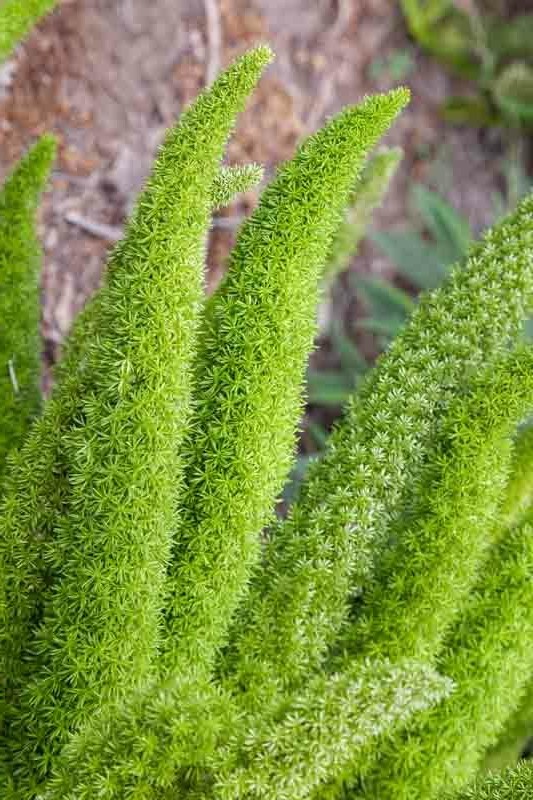
Asparagus densiflorus grows from fibrous and tuberous roots and produces numerous green stems covered with narrow cladodes. Depending on the cultivar, the stems may arch outward or form dense upright plumes.
The form commonly called Foxtail Fern, usually ‘Myersii’ or ‘Meyersii,’ produces erect cylindrical sprays that resemble green fox tails. Small white flowers may be followed by round fruits that become red when mature.
Species plants and spreading forms may be looser and more arching. Photographs for poison identification should show the complete plant, stem arrangement, cladode clusters, berries, spines, root structure when exposed, and nursery label.
Sprengeri, Plumosa, Lace Fern, and Shatavari Confusion
Sprengeri Asparagus Fern has long arching or trailing stems and is commonly grown in hanging baskets, raised containers, and landscape beds. Although frequently labeled Asparagus densiflorus ‘Sprengeri,’ many current horticultural authorities identify this plant as Asparagus aethiopicus ‘Sprengeri.’
Plumosa Fern and Lace Fern generally refer to Asparagus setaceus, a climbing species with extremely fine triangular sprays. Shatavari and Racemose Asparagus refer to Asparagus racemosus, a medicinal species with a different growth form and chemical literature.
These names should not be presented as exact botanical synonyms. They remain relevant to pet owners because nurseries, florists, veterinary lists, and older plant books frequently group them under the broad name “asparagus fern.”
Houseplant and Hanging-Basket Exposure
Emerald Feather is commonly kept in pots, hanging baskets, raised planters, sunrooms, patios, porches, offices, lobbies, and mixed indoor displays. Cats may climb to reach the foliage, and trailing stems can hang within reach even when the basket itself is high.
Dogs may chew stems extending below a container or eat berries that fall onto the floor. A fallen berry can roll under furniture and remain accessible after the owner believes the plant has been cleaned up.
An overturned pot creates additional hazards from fertilizer, systemic pesticide, decorative stones, water-retaining crystals, moldy substrate, plastic labels, wire hangers, and broken ceramic material.
Floral Arrangements and Discarded Greenery
Asparagus-fern stems are widely used as floral greenery because their fine texture fills space around larger flowers. A pet may pull the greenery from a bouquet, chew stems protruding from a vase, or investigate discarded arrangements in an open trash container.
The remaining flowers must also be identified. A mixed arrangement containing a true lily or daylily creates a life-threatening feline kidney emergency that is far more serious than asparagus-fern irritation.
Floral wire, ribbon, string, foam, wooden picks, preservative solution, and broken vase material may cause separate toxicologic or foreign-body problems. Continuing vomiting should not automatically be attributed to Emerald Feather when these materials were accessible.
Berries, Flowers, and Fallen Plant Material
Small white or pale flowers may be followed by fleshy fruits that mature to red. Berry production varies with plant maturity, cultivar, pollination, and growing conditions. Foxtail forms may produce fewer fruits than spreading forms, but any visible berries should be removed from pet-accessible areas.
Fallen berries are especially relevant to dogs, puppies, birds, and small mammals because they can be swallowed whole. The hard seeds and fruit tissue may add mechanical gastrointestinal irritation to the effects of the plant compounds.
Pruned stems, root divisions, berries, and repotting debris should be secured immediately. Wilted or dried material remains fibrous and unsuitable for animal consumption even if its irritant potency has declined.
Skin Contact, Spines, and Repeated Exposure
An animal may develop skin irritation after repeatedly brushing against the plant, lying beneath a hanging basket, walking through clippings, or contacting crushed berries. Sap and plant residue should be washed from the coat before the animal grooms.
Small stem spines can scratch the muzzle, eyelids, paws, and abdomen. Repeated contact combines mechanical injury with potential sap irritation and may make a localized skin reaction more persistent.
A pet with recurrent dermatitis that improves away from the plant and returns after contact should be kept completely separated from Emerald Feather rather than treated repeatedly while the exposure continues.
Dogs, Cats, Horses, and Other Animals
Dogs and cats are the animals most commonly exposed in homes. Berry ingestion is more likely to produce gastrointestinal signs, while repeated contact with stems or sap is more relevant to dermatitis.
Horses and livestock rarely select the plant as forage but may encounter discarded houseplants or landscape clippings. Severe herd poisoning is not expected from Emerald Feather alone, and group illness should prompt investigation for other plants, chemicals, contaminated feed, or foreign material.
Published evidence for rabbits, guinea pigs, hamsters, gerbils, birds, reptiles, and other exotic pets is limited. Because small animals may dehydrate or stop eating rapidly, persistent signs deserve attention even though severe systemic toxicity has not been established.
Diagnosis and Veterinary Assessment
No laboratory test confirms Emerald Feather ingestion or measures a specific sapogenin. Diagnosis depends on plant identification, missing berries or foliage, witnessed chewing, plant material in vomit or stool, skin contact, and a compatible gastrointestinal or dermatologic syndrome.
Blood testing is usually unnecessary after a minor exposure in an animal that remains normal or improves promptly. Persistent vomiting, diarrhea, dehydration, weakness, blood loss, or unexpected systemic signs may justify a complete blood count, serum chemistry, electrolytes, urinalysis, fecal testing, or imaging.
Radiographs or ultrasound may be needed when the animal swallowed a large quantity of wiry stems, hard seeds, floral wire, ribbon, stones, pot fragments, or another foreign material. A retained stem in the mouth or pharynx may require a careful oral examination.
Prognosis and Prevention
The prognosis is good to excellent for most ordinary Emerald Feather exposures. Mild gastrointestinal signs usually resolve with removal of the plant and supportive care, while uncomplicated skin irritation improves after washing and preventing further contact.
Prevent exposure by removing berries before they fall, keeping trailing stems beyond reach, securing hanging baskets, cleaning up clippings, and placing discarded bouquets in a closed trash container.
In a home with a persistent plant-chewing cat, puppy, rabbit, or bird, replacing Emerald Feather with verified pet-safer greenery is more dependable than relying on height, bitter taste, or repeated supervision.
Immediate Steps After Emerald Feather Exposure
- Stop further exposure. Move the animal away from the plant, berries, fallen fruit, stems, roots, clippings, hanging basket, floral arrangement, and spilled container material.
- Determine whether berries were swallowed. Count remaining berries when possible and look for fallen fruit, berry stains, chewed stems, or plant material in vomit. Multiple berries generally create more concern than a brief foliage nibble.
- Remove only loose visible material. If the animal is calm and cooperative, lift away berries, cladodes, or stems resting at the lips or front of the mouth. Do not force the jaws open or probe the throat.
- Gently wipe accessible residue. Use a soft cloth dampened with water to remove berry pulp, sap, or plant fragments from the lips and muzzle. Avoid forceful mouth flushing.
- Allow voluntary access to fresh water. An alert animal that swallows normally and is not vomiting repeatedly may drink on its own. Do not syringe or pour water into the mouth.
- Preserve identification material. Save the plant label, photographs, a representative stem with berries, florist information, and packaging from any concentrated product.
- Check for secondary hazards. Identify fertilizer, pesticide, floral preservative, ribbon, string, wire, foam, decorative stones, plant labels, and other flowers that were accessible.
After Skin, Coat, or Eye Contact
Wear gloves and wash exposed paws, muzzle, abdomen, or coat with lukewarm water and a mild species-appropriate cleanser. Rinse thoroughly and prevent grooming until sap, berry pulp, and plant residue have been removed.
Inspect the skin for small spine punctures, scratches, broken cladodes, and retained stem fragments. A superficial scratch may need gentle cleaning, while a deep puncture, swollen wound, or fragment near the eye requires veterinary attention.
If sap, berry residue, soil, or plant material enters an eye, irrigate gently with sterile saline or clean room-temperature water and prevent rubbing. Persistent squinting, tearing, discharge, cloudiness, swelling, or apparent visual difficulty requires examination and may justify fluorescein staining to identify a corneal abrasion or ulcer.
Do Not Attempt Unsupervised Home Treatment
- Do not induce vomiting with hydrogen peroxide, salt, mustard, syrup of ipecac, or manual gagging. Most exposures are mild, while home emesis can cause gastric injury, aspiration, sodium poisoning, or more serious illness than the plant itself.
- Do not forcefully rinse the mouth. Pouring or spraying liquid toward the throat can cause aspiration in a frightened, nauseated, weak, or uncooperative animal.
- Do not administer activated charcoal routinely. The exact berry irritants and charcoal-binding benefit have not been established. Charcoal may be aspirated and can worsen dehydration or gastrointestinal discomfort.
- Do not give milk, yogurt, oil, food, electrolyte products, or herbal remedies as antidotes. They do not neutralize sapogenins and may provoke additional vomiting.
- Do not give Kapectolin, Kaopectate, bismuth products, loperamide, or another antidiarrheal medication at home. Formulations vary by product and species, and reducing intestinal movement may be inappropriate when foreign material or another toxin is involved.
- Do not give sucralfate, omeprazole, famotidine, antacids, or leftover stomach medication automatically. These agents are unnecessary after most mild exposures and should be selected according to documented gastrointestinal injury.
- Do not give antihistamines or corticosteroids as universal antidotes. Direct irritation, spine injury, and allergic dermatitis are not identical conditions. Medication can cause sedation, mask progression, or be unsafe for the individual animal.
- Do not give human pain relievers or leftover prescriptions. Ibuprofen, naproxen, acetaminophen, aspirin, and many other medications can create a substantially more dangerous secondary poisoning.
When Veterinary Examination Is Especially Important
- Persistent gastrointestinal illness: Repeated vomiting, inability to retain water, frequent watery diarrhea, blood in vomit or stool, black stool, severe abdominal pain, or continued appetite refusal requires examination.
- Dehydration or weakness: Dry or tacky gums, reduced urination, sunken eyes, weakness, cool extremities, poor pulse quality, inability to stand, or collapse indicates significant fluid loss or another serious problem.
- Numerous berries or a concentrated product: Ingestion of multiple berries, a large quantity of plant material, an extract, tincture, herbal preparation, or essential-oil product requires individual poison assessment.
- Significant dermatitis: Widespread rash, marked swelling, blistering, open sores, continued self-trauma, facial swelling, or persistent inflammation warrants treatment.
- Eye or puncture injury: Continuing eye pain, visual changes, a retained stem, deep spine puncture, or swelling around a wound needs prompt examination.
- High-risk patient: Very young, elderly, pregnant, extremely small, medically fragile, or chronically ill animals may tolerate vomiting, diarrhea, appetite loss, and dehydration poorly.
- Unexpected systemic signs: Tremors, seizures, severe incoordination, markedly abnormal heart rate, breathing difficulty, coma, or progressive organ dysfunction suggests another toxin, mixed exposure, or unrelated emergency.
Veterinary Examination and Diagnostic Priorities
The veterinarian will determine whether the animal has uncomplicated irritant gastroenteritis, dehydration, allergic or irritant dermatitis, spine injury, a retained plant fragment, foreign-body ingestion, or exposure to another toxic substance.
The history should include the exact plant label, berry number, amount of foliage missing, time since exposure, vomiting or diarrhea frequency, skin contact, other bouquet components, and every medication or home remedy already given.
Testing is often unnecessary when signs are mild and improving. Continued vomiting, substantial diarrhea, weakness, blood loss, abnormal examination findings, or uncertain plant identity may justify bloodwork, electrolyte measurement, urinalysis, abdominal imaging, fecal testing, or other targeted evaluation.
No rapid plant-specific diagnostic test exists. Laboratory and imaging studies reveal complications and help exclude more dangerous explanations for the illness.
Professional Gastrointestinal Decontamination
Most ordinary foliage or berry exposures do not require induced vomiting. The expected syndrome is generally mild, and the plant may already cause spontaneous vomiting.
A veterinarian may consider clinic-induced emesis when a dog has very recently swallowed numerous berries or a substantial amount of plant material, remains alert, can protect the airway, and has no contraindication. Emesis should not be attempted in a weak, sedated, neurologically abnormal, repeatedly vomiting, dysphagic, or respiratory-compromised patient.
Professional emesis in cats is also an individual clinical decision and should never be attempted with household hydrogen peroxide. The expected low severity often makes aggressive decontamination less appropriate than observation and supportive care.
Activated charcoal is rarely indicated because severe systemic absorption is not expected and the benefit for the suspected irritants is uncertain. Gastric lavage would be extraordinary and limited to an unusual, substantial recent ingestion in an anesthetized and intubated patient when the expected benefit outweighs aspiration and procedural risks.
Vomiting, Diarrhea, and Gastrointestinal Treatment
A veterinarian may use an antiemetic such as maropitant or ondansetron when vomiting persists or nausea prevents drinking and eating. Medication selection depends on the animal’s species, age, hydration, medical history, and whether obstruction or another toxin has been excluded.
Sucralfate may be considered when repeated vomiting has caused painful esophagitis, hematemesis, erosive gastritis, or another documented mucosal injury. It forms a protective barrier rather than neutralizing plant toxins and can interfere with absorption of other medications.
Acid suppression with omeprazole, famotidine, or another agent is not routine after a simple berry or foliage exposure. It may be selected when there is evidence of esophagitis, gastrointestinal bleeding, erosive gastritis, or another acid-related complication.
Veterinary management of diarrhea generally prioritizes hydration, electrolyte balance, diet, and exclusion of obstruction, infection, hemorrhagic disease, parasites, or another toxin. Antimotility medication can be counterproductive when intestinal clearance of irritating material is desirable.
Fluid, Electrolyte, and Nutritional Support
An animal with no signs or one mild vomiting episode may need only monitoring and voluntary access to water. Oral, subcutaneous, or intravenous fluids may be selected when examination identifies dehydration, poor intake, continuing vomiting, diarrhea, or impaired circulation.
Fluid therapy is based on measured dehydration, body weight, maintenance needs, continuing losses, urine production, and heart and kidney function. One fixed fluid volume is not appropriate for every patient.
Electrolytes, kidney values, glucose, acid-base status, and liver enzymes may be checked when gastrointestinal losses are prolonged or the animal has unexpected systemic illness. Abnormal results should be interpreted in context rather than assumed to represent a characteristic Emerald Feather organ toxicity.
Food may be reintroduced gradually after vomiting stops and the animal shows voluntary interest. Force-feeding a nauseated, vomiting, sedated, painful, or neurologically abnormal animal creates aspiration risk.
Dermatitis and Allergic Reactions
Mild direct irritation may require only thorough washing and prevention of licking or scratching. Veterinary treatment may include species-appropriate itch control, pain relief, wound care, or treatment of secondary infection when self-trauma has damaged the skin.
An antihistamine may be useful when hives or another histamine-mediated reaction is suspected, but it does not remove sap or replace washing. Corticosteroids may be considered for selected allergic or inflammatory reactions after infection, ulceration, patient age, and concurrent disease have been assessed.
True anaphylaxis is not an expected routine effect. Facial swelling accompanied by difficulty breathing, collapse, weak pulses, or profound gastrointestinal signs requires emergency treatment that may include epinephrine, oxygen, airway protection, intravenous crystalloids, and blood-pressure support.
Horses and Grazing Animals
Remove horses and livestock from discarded houseplants, floral waste, and ornamental clippings. Inspect the material for more dangerous plants, fertilizers, pesticides, wire, ribbon, and plastic.
Horses cannot vomit, so treatment focuses on appetite, hydration, colic, gastrointestinal motility, manure production, and diarrhea. Nasogastric evaluation, fluid therapy, analgesia, or laboratory testing may be considered after substantial ingestion or persistent signs.
Several animals becoming ill together should prompt examination of the complete clipping pile, feed source, pesticide records, and neighboring plants rather than attributing all illness automatically to Emerald Feather.
Rabbits, Rodents, Birds, and Other Pets
Rabbits and guinea pigs cannot vomit. Reduced appetite, declining fecal production, abdominal distention, diarrhea, or lethargy requires prompt veterinary care because gastrointestinal stasis and dehydration may become more serious than the original irritant exposure.
Birds and small rodents should be monitored for altered droppings, regurgitation, reduced food intake, fluffed posture, weakness, or behavioral change. Medication and fluid treatment must be species-specific; products intended for dogs or cats should not be improvised for small animals.
Prognosis and Recovery
The prognosis is good to excellent for most ordinary Emerald Feather exposures. Animals with no signs or brief mild gastrointestinal upset generally recover completely after access ends and hydration and appetite remain adequate.
Improvement should include cessation of vomiting, firmer stool, normal interest in food and water, normal activity, adequate urination, and decreasing skin redness or itching. Mild gastrointestinal signs often resolve within one to two days.
Recovery may be delayed by numerous berry ingestion, dehydration, prolonged appetite loss, significant dermatitis, corneal injury, retained stem material, preexisting disease, or another component of a mixed exposure.
Frequently Asked Questions About Emerald Feather and Animal Poisoning
Is Emerald Feather a true fern?
No. Emerald Feather is a flowering plant in the genus Asparagus. Its fine cladodes resemble fern leaves, but it belongs to Asparagaceae rather than a true-fern family. The word “fern” in its common name should not be interpreted as proof that it is pet-safe.
Are the red berries more poisonous than the foliage?
The berries are the principal ingestion concern and are more consistently associated with vomiting, abdominal pain, and diarrhea. Foliage chewing may still cause nausea or gastrointestinal upset, while repeated contact with sap and stems is more strongly associated with dermatitis.
What toxin is in Emerald Feather?
Veterinary poison references identify sapogenins, which are steroid-related components of saponins. The exact molecules and concentrations in each berry, plant part, and cultivar have not been established, so a precise toxic dose cannot be given.
Are Sprengeri Fern and Emerald Feather the same plant?
The names have often been grouped together, but they are not always botanically identical. Emerald Feather may refer to Asparagus densiflorus, while many current horticultural sources identify the common cascading Sprengeri Fern as Asparagus aethiopicus ‘Sprengeri.’ Both should be kept away from chewing pets.
Are Foxtail Fern, Plumosa Fern, Lace Fern, and Shatavari synonyms?
No. Foxtail Fern usually refers to Asparagus densiflorus ‘Myersii.’ Plumosa Fern and Lace Fern generally refer to Asparagus setaceus, while Shatavari is Asparagus racemosus. They are related asparagus plants but should not be presented as one botanical species.
What happens when a dog or cat eats Emerald Feather berries?
The animal may develop nausea, vomiting, diarrhea, drooling, reduced appetite, abdominal discomfort, or mild lethargy. A single berry may cause no signs, while numerous berries create a greater risk of repeated gastrointestinal illness and dehydration.
Can Emerald Feather cause a skin rash?
Yes. Repeated contact may produce allergic dermatitis, while sap, berry residue, spines, soil, or crushed plant material may cause direct irritation. Wash the contacted skin or coat and obtain veterinary care for persistent itching, swelling, open sores, or widespread inflammation.
Should I make my dog vomit after it eats the berries?
No home vomiting method should be used. Hydrogen peroxide, salt, mustard, ipecac, and manual gagging can cause gastric injury, aspiration, or electrolyte poisoning. A veterinarian may consider clinic-induced vomiting only after an unusual, substantial, recent ingestion in a suitable patient.
Does an animal need activated charcoal after eating Asparagus Fern?
Activated charcoal is rarely justified after an ordinary berry or foliage exposure. Severe systemic absorption is not expected, and the charcoal-binding benefit for the suspected irritants has not been established. It can also be aspirated or worsen dehydration.
How long do Emerald Feather symptoms usually last?
Mild gastrointestinal signs commonly improve within several hours to one or two days after access ends. Dermatitis may persist longer, particularly after repeated exposure or continued licking and scratching. Ongoing vomiting, diarrhea, appetite loss, or skin inflammation requires examination.
Is Emerald Feather dangerous to horses?
It is listed as toxic to horses, but a severe characteristic equine syndrome is not expected. Exposure may cause appetite reduction, mild colic, soft manure, or diarrhea. Persistent colic, substantial diarrhea, dehydration, or illness in several animals requires investigation of all discarded plants and chemicals.
What about rabbits, guinea pigs, birds, and other small pets?
Published species-specific evidence is limited, but these animals should not eat the berries or foliage. Rabbits and guinea pigs can develop serious appetite loss or gastrointestinal stasis, while birds and rodents may receive a relatively large exposure for body size. Persistent appetite, droppings, or behavior changes warrant species-appropriate veterinary care.
Could severe neurologic or organ signs mean another toxin was involved?
Yes. Seizures, severe incoordination, markedly abnormal heart rate, breathing difficulty, kidney or liver failure, coma, or progressive multiple-organ illness is not expected from uncomplicated Emerald Feather ingestion. Recheck every plant, pesticide, medication, floral material, and foreign object that was accessible.