Exotica Dieffenbachia Toxicity and Raphide-Associated Oral Injury
Is Exotica Poisonous to Dogs, Cats, Horses, and Livestock?
Yes—Exotica, Dieffenbachia ‘Exotica,’ is poisonous and intensely irritating when chewed by dogs, cats, horses, livestock, rabbits, birds, or other animals. Crushing a leaf, petiole, root, or thick cane releases calcium oxalate raphides and a complex mixture of inflammatory plant-juice constituents. These can cause immediate oral pain, profuse drooling, pawing at the mouth, vomiting, tongue or throat swelling, difficulty swallowing, and altered vocalization.
Most brief leaf nibbles remain localized and resolve with timely supportive care. Prolonged chewing of a thick sap-rich cane can deliver far more plant juice and has caused severe canine oropharyngeal edema, airway obstruction, and rare fatal asphyxiation. Sap in an eye can also cause corneal abrasion and crystalline keratopathy.
About this guide: This page provides general pet-poisoning information and cannot diagnose or treat an individual animal. For any suspected exposure, contact a veterinarian or animal poison-control service immediately. Do not induce vomiting, give medication, or attempt home decontamination unless directed by a veterinary professional.
Exotica
Dieffenbachia ‘Exotica’
Historically published or sold as:
Dieffenbachia exotica
Dieffenbachia amoena ‘Exotica’
Dieffenbachia amoena W.Bull is currently treated as a botanical synonym of Dieffenbachia seguine (Jacq.) Schott. Because older horticultural and toxicological sources do not consistently document Exotica as a formally registered cultivar of one accepted species, Dieffenbachia ‘Exotica’ is the most defensible cultivar presentation.
Araceae
Exotica; Exotica Dieffenbachia; Dieffenbachia Exotica; Dieffenbachia ‘Exotica’; Dumb Cane; Dumbcane; Exotica Dumb Cane; older labels and research names include Dieffenbachia exotica and Dieffenbachia amoena ‘Exotica’
Arvida is associated with Exotica in some older horticultural references, but the relationship and naming are not applied consistently enough to treat every plant labeled Arvida as the identical cultivar.
Exotica Perfection, Tropic Snow, Camille, Perfection, Giant Dumb Cane, Charming Dieffenbachia, and Spotted Dumb Cane are separate cultivar names, historical group names, or broad common names used for more than one Dieffenbachia. They should not be treated as exact botanical synonyms of Exotica without a reliable plant label or propagation record.
“Mother-in-law Plant” and “Mother-in-law’s Tongue” have sometimes been applied historically to Dieffenbachia but are highly ambiguous. Mother-in-law’s Tongue now usually refers to Dracaena trifasciata, formerly Sansevieria trifasciata, which has a different toxic profile.
Calcium Oxalate Raphides and Their Delivery Cells
Exotica contains insoluble calcium oxalate crystals, including long needle-shaped raphides stored in specialized plant cells called idioblasts. When an animal crushes a leaf, petiole, root, or cane, mechanical pressure ruptures or activates these cells and releases bundles of microscopic crystals into the surrounding sap and damaged tissue.
The raphides penetrate exposed lips, gums, tongue, oral mucosa, pharynx, esophagus, skin, and ocular surfaces. Their grooves and sharp points increase contact with tissue and create numerous microscopic wounds. This permits plant juice to enter more deeply than it would through an intact mucosal surface and provides an efficient delivery route for additional inflammatory constituents.
An anatomical investigation of Dieffenbachia seguine found calcium oxalate idioblasts and several crystal forms distributed through vegetative and reproductive organs. The exact crystal complement differed among plant parts and locations within the tissue. This supports treating leaves, petioles, stems, roots, flowers, fruits, and propagation pieces as irritating rather than assuming that only the leaf blade contains hazardous crystals.
Exact Exotica Research and the Protein-Like Toxic Fraction
A 1969 investigation directly tested plant juice identified as Dieffenbachia exotica as well as Dieffenbachia picta. Instillation of the juice into rat mouths produced edema, vascular congestion, basement-membrane degeneration, and an acute inflammatory reaction resembling accidental oral exposure. Blood histamine increased after treatment with plant juice.
The investigators reported oxalic-acid measurements of approximately 0.37% in the whole Exotica plant and 0.15% in its expressed juice. Those measurements confirmed oxalate chemistry but did not establish that dissolved oxalic acid alone caused the reaction or that the percentages represented a pet-toxic dose.
Trypsin digestion of the juice reduced its oral toxicity, supporting the presence of a labile protein-like inflammatory component. Pretreatment with diphenhydramine provided partial histologic protection in rats, while cortisone mainly delayed the reaction. These were controlled experimental observations, not evidence that owners should administer antihistamines or corticosteroids at home.
Why Raphides and Protease Do Not Explain Everything
A later experiment separated crude Dieffenbachia stem juice into several fractions and injected them into mouse and rat paws. Crude juice produced marked edema, with the treated mouse paw reaching approximately twice its control weight near four hours. The insoluble fraction containing numerous crystals also caused substantial swelling, while the soluble fraction with trypsin-like proteolytic activity produced a smaller response.
Purified calcium oxalate needles at the concentration measured in crude juice produced only minimal edema, and combining those isolated needles with the proteolytic fraction did not recreate the full activity of whole juice. The investigators concluded that neither isolated raphides nor the measured trypsin-like protease was by itself the principal edema-producing substance.
Pharmacologic results implicated histamine or serotonin in the early inflammatory response and prostaglandins during the later plateau phase. The study also detected a purified proteolytic fraction capable of releasing a bradykinin-like substance in vitro, but the authors did not establish that this pathway explained the complete clinical syndrome.
The most defensible model is therefore multifactorial. Raphides create mechanical injury and promote delivery of plant juice; protein-like constituents and proteolytic activity may amplify inflammation; and endogenous mediators such as histamine, serotonin, prostaglandins, and possibly kinins contribute to pain, vascular leakage, and edema. Other active components may remain unidentified.
Related-Aroid Evidence and the Synergy Concept
Research in other raphide-containing aroids has shown that purified calcium oxalate needles can dramatically increase the oral irritancy of a coexisting cysteine protease. This related-family evidence demonstrates how crystals may act as microscopic delivery devices rather than functioning only as inert splinters.
That study did not use Exotica and should not be treated as proof that Exotica contains the identical protease or toxin concentration. It does, however, support the broader biological principle that crystal injury and soluble inflammatory compounds may act synergistically.
Insoluble Oxalate Injury Is Not Systemic Soluble-Oxalate Poisoning
Exotica’s calcium oxalate crystals are poorly soluble and act primarily at the point of contact. They are toxicologically different from the soluble oxalates in plants that can be absorbed in large quantities, bind circulating calcium, cause hypocalcemia, and precipitate within renal tubules.
An ordinary Exotica chewing exposure is therefore not expected to cause systemic calcium depletion, widespread oxalate deposition, or primary oxalate nephrosis. Kidney values may become abnormal secondarily if an animal develops prolonged vomiting, dehydration, hypotension, hypoxia, or another concurrent disease, but renal failure is not the defining direct syndrome.
Likewise, seizures, major cardiac arrhythmias, liver failure, coma, and generalized neurologic deterioration are not expected primary consequences of a routine raphide exposure. Their presence should trigger investigation for another toxin, mistaken plant identity, severe hypoxia, aspiration, medication exposure, metabolic disease, or concurrent illness.
Leaves, Thick Canes, Roots, Cuttings, and Dried Material
Every part of the plant should be considered capable of causing local injury, but exposure circumstances strongly affect severity. A quick bite of a leaf edge usually releases a limited amount of juice and often stops immediately because the animal experiences intense pain. A dog that repeatedly crushes a thick cane can squeeze a much larger volume of sap into the mouth and pharynx before dropping the plant.
This difference is supported by canine case evidence. The rare fatal dog reportedly chewed a thick Dieffenbachia stem intensely before developing severe ulcerative glossitis, glottic edema, and asphyxiation. Another dog had extensive plant material in the stomach and developed marked oropharyngeal swelling severe enough to require temporary tracheostomy.
Roots, divided crowns, cane sections, and propagation cuttings are practical household hazards because they are handled during repotting and may be left on floors, counters, potting benches, or in open waste containers. Even when sap has partly dried, mineral crystals remain within the plant tissue. Wilting or drying does not convert a cutting into a safe chew item.
No dependable leaf count, cane length, sap volume, gram-per-kilogram dose, or universally safe amount has been established for dogs, cats, rabbits, birds, horses, or livestock. Severity depends on the plant part, duration and force of chewing, amount of juice released, tissue contacted, animal size, swallowing ability, and speed of intervention.
Immediate Oral Pain and Defensive Behavior
Clinical signs generally begin during chewing or within minutes. A dog or cat may abruptly drop the plant, jerk the head away, vocalize, run from the area, rub the face, paw at the mouth, shake the head, lick the lips repeatedly, or press the muzzle against the floor. Profuse stringy drool may soak the chin, chest, forelegs, or surrounding floor.
The lips, gums, tongue, and oral mucosa may become red, painful, or visibly swollen. Small erosions, punctate hemorrhage, blister-like lesions, ulcers, or retained plant fibers may be present. An animal may resist examination because touching the mouth worsens the pain.
The dramatic immediate response often limits the amount swallowed. This explains why many exposures remain mild despite the plant’s intense local irritancy. It does not guarantee safety after prolonged chewing, particularly when a thick cane was crushed.
Gagging, Vomiting, and Difficulty Swallowing
Gagging, retching, coughing, repeated swallowing, nausea, vomiting, and refusal of food or water may follow oral exposure. Vomiting can result from swallowed plant material, pharyngeal irritation, gagging, or gastric contact with plant juice. Diarrhea and abdominal discomfort are possible but are generally less important than the oral and upper-airway effects.
Painful swallowing may cause an animal to approach food or water, attempt to take it, and then drop it. Dysphagia may appear as coughing while drinking, repeated neck extension, food falling from the mouth, prolonged chewing, abnormal tongue movement, regurgitation, or nasal discharge containing food or water.
A hoarse bark, weak meow, altered cry, muted vocalization, or reluctance to vocalize may reflect painful tongue movement, pharyngeal swelling, or laryngeal involvement. The historical name Dumb Cane refers to temporary speech impairment in people after comparable oral injury.
Progressive Oropharyngeal and Laryngeal Edema
Visible tongue or lip swelling may progress during the hours after exposure as inflammatory mediators increase vascular permeability. The animal may initially breathe normally despite substantial oral pain and later develop stertor, stridor, harsh inspiration, repeated gagging, excessive salivation, difficulty handling secretions, or panic.
Airway obstruction is uncommon relative to the number of ordinary household exposures, but it is a genuine veterinary emergency rather than a theoretical warning. An affected dog may extend the head and neck, breathe with the mouth open, abduct the elbows, become cyanotic, collapse, or lose consciousness as airflow decreases.
One documented Labrador Retriever developed severe oropharyngeal swelling that complicated intubation and required a temporary tracheostomy. A Poodle with extensive erosive and ulcerative glossitis died from asphyxiation caused by glottic edema. These cases followed substantial plant exposure and do not mean that every leaf nibble will obstruct the airway.
Skin, Paw, and Fur Exposure
Fresh sap on the skin may cause burning, redness, localized swelling, itching, or irritant dermatitis. Animals with sap on the paws or coat may transfer the material to the mouth during grooming or to an eye while rubbing the face.
Persistent licking, chewing at the paws, facial rubbing, or redness between the toes may be the first sign when the original plant damage was not witnessed. Secondary self-trauma can produce abrasions or moist dermatitis even after the initial sap has been removed.
Eye Pain and Crystalline Keratopathy
Sap or crushed tissue entering an eye can cause immediate or delayed pain, tearing, redness, eyelid spasm, conjunctival swelling, light sensitivity, cloudiness, and reduced vision. Calcium oxalate crystals may lodge within the corneal epithelium and migrate into the stroma, where they appear as numerous fine needle-like or blue-white crystalline deposits.
Corneal epithelial defects, abrasions, keratoconjunctivitis, stromal edema, and crystalline keratopathy have been documented after Dieffenbachia exposure. Crystals may remain visible for days or weeks even when pain and vision improve. Prompt irrigation reduces the amount of sap and loose crystal material available to penetrate the cornea.
Most reported ocular cases recovered without permanent corneal opacity when treated appropriately. Persistent squinting, cloudiness, discharge, unequal pupils, apparent blindness, or continued rubbing requires veterinary examination because corneal ulceration can worsen without obvious external plant debris.
Esophageal, Gastric, and Aspiration Complications
Most exposures remain confined to the mouth, but swallowed material may irritate the esophagus and stomach. Severe odynophagia, repeated regurgitation, blood-stained saliva or vomit, refusal to swallow, or pain extending beyond the oral cavity warrants investigation for esophagitis or deeper mucosal injury.
Large pieces of fibrous cane, bedding, potting material, or other foreign material swallowed during destructive chewing can create obstruction independently of the plant toxin. Persistent vomiting, abdominal enlargement, repeated unproductive retching, reduced stool, or continued abdominal pain is not adequately explained by oral raphide irritation alone.
Aspiration may occur when an animal inhales saliva, water, food, vomit, charcoal, or an attempted home remedy while swallowing is impaired. Coughing, fever, nasal discharge, rapid breathing, abnormal lung sounds, low oxygen saturation, or worsening lethargy may develop hours to days later.
Expected Course and Findings That Suggest Another Cause
Mild drooling, pawing, and oral discomfort often begin improving within several hours once exposure stops. Appetite and normal drinking may take longer to return after substantial inflammation. Visible ulcers, severe tongue swelling, esophageal injury, aspiration, or corneal damage can extend recovery over several days or longer.
Kidney failure, profound hypocalcemia, persistent muscle fasciculations, sustained seizures, major arrhythmias, widespread hemorrhage, jaundice, or prolonged coma are not the expected direct presentation of ordinary Exotica exposure. These findings require broader diagnostic testing rather than attributing every abnormality to insoluble calcium oxalate.
The prognosis is good to excellent when pain and swelling remain localized and the animal can breathe and swallow normally. It becomes guarded when swelling is progressing, secretions cannot be handled, aspiration develops, a corneal ulcer is present, or emergency airway support is required.
Exotica Is a Cultivated Dieffenbachia, Not a Wild Species Name
Exotica is a horticultural Dieffenbachia selected for broad, heavily variegated leaves. It has appeared in older literature as Dieffenbachia exotica, Dieffenbachia amoena ‘Exotica,’ and Dieffenbachia ‘Exotica.’ Modern botanical authorities treat Dieffenbachia amoena as a synonym of Dieffenbachia seguine, but this does not automatically prove that every historic or commercially propagated Exotica plant has a completely documented species pedigree.
The page should therefore retain the established title Exotica while presenting the cultivar conservatively as Dieffenbachia ‘Exotica.’ This also avoids pretending that similarly variegated plants sold without records can be identified to cultivar from one photograph.
Names Commonly Confused with Exotica
Dieffenbachia cultivar names have been reused, shortened, combined, and confused in nursery catalogs and pet-poison lists. Exotica Perfection, Perfection, Camille, Tropic Snow, Compacta, and other selections may share pale central variegation but are not dependable exact synonyms of Exotica.
The broad terms Dumb Cane, Giant Dumb Cane, Spotted Dumb Cane, Charming Dieffenbachia, and Dieffenbachia may describe several species and cultivars. From a first-aid standpoint, an unidentified cane-form Dieffenbachia with oral-irritating sap should be treated cautiously even when the exact cultivar cannot be confirmed.
Mother-in-law’s Tongue usually refers to Snake Plant, Dracaena trifasciata, in modern horticulture. Snake Plant contains saponins and generally produces a different gastrointestinal syndrome. The shared historical nickname should not be used as botanical proof.
Identification Features Relevant to Exposure
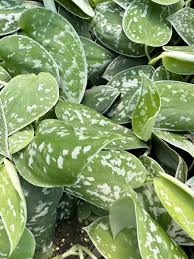
Exotica is generally described as having broad pointed leaves dominated by an ivory, cream, or pale central area broken by numerous irregular green splashes. A comparatively narrow green margin remains around much of the leaf, and the midrib is often cream or pale green.
The plant grows upright from thick, fleshy, cane-like stems rather than trailing as a vine. Older plants may have bare lower cane sections marked by leaf scars with a crown of leaves near the top. New shoots or suckers can arise near the base after pruning.
Leaf pattern alone is unreliable because variegation changes with plant age, light, nutrition, mutation, propagation, and nursery labeling. A damaged specimen may be identifiable only to the genus, which remains sufficient to recognize the likely raphide-associated syndrome.
Origin, Cultivation, and Where Animals Encounter It
Dieffenbachia species are native to the tropical Americas. Exotica itself is a cultivated ornamental encountered primarily as a potted houseplant, office plant, greenhouse specimen, conservatory plant, or warm-climate landscape planting rather than as a naturally occurring wild population.
Dogs most often reach floor plants, fallen leaves, pots placed beside furniture, or discarded cane sections. Puppies may treat a thick stem as a chew stick. A knocked-over container may create simultaneous exposure to plant sap, potting medium, fertilizer granules, slow-release fertilizer pellets, insecticide, decorative stones, and pieces of the pot.
Cats may bite leaf margins, climb into the pot, rub against broken stems, walk through sap, or groom contaminated fur and paws. Rabbits and guinea pigs may consume cut foliage offered accidentally as greens. Companion birds may shred leaves or canes, exposing the mouth, tongue, face, and eyes to sap.
Horses and livestock rarely encounter Exotica as forage, but exposure is possible when houseplants, greenhouse waste, landscaping debris, or frost-damaged ornamental material is discarded into paddocks, stalls, pens, or manure piles accessible to animals.
Why the Thick Cane Is a Special Hazard
The cane is not proven to contain a universally higher toxin concentration than every leaf. Its practical importance comes from structure and exposure mechanics. A large dog can grip, crush, and repeatedly compress a thick stem, releasing a substantial volume of juice directly into the oral cavity and pharynx.
This pattern differs from a brief leaf-tip bite in which immediate pain often stops further chewing. The severe and fatal canine reports both support taking prolonged stem or cane chewing more seriously than a quick exploratory nibble.
Propagation and Pruning Exposure
Dieffenbachia is commonly propagated by cutting a mature cane into sections. Each section may contain active tissue, sap, idioblasts, and calcium oxalate crystals. A cutting remains hazardous after separation from the parent plant and should not be left on the floor, counter, windowsill, potting bench, or open compost pile.
Pruning tools, gloves, towels, counters, plant stands, floors, and the outside of a pot may carry fresh sap. A pet can be exposed later by licking a contaminated surface, grooming a paw, or rubbing an eye.
Wilted or partially dried pieces should not be assumed safe. Loss of moisture may reduce free sap, but it does not dissolve or eliminate mineral raphides embedded in the tissue.
Diagnosis
There is no routine blood test that confirms Exotica exposure. Diagnosis relies on a damaged plant, plant material in the mouth or vomit, rapid onset of local oral signs, examination of the lips, tongue, pharynx, and airway, and exclusion of other causes.
The veterinarian should ask whether the animal chewed a leaf or cane, how long it had access, whether sap entered an eye, whether plant material was swallowed with bedding or pot contents, and whether any home remedy was given. Photographs, nursery labels, cane and leaf samples, and the entire damaged plant may be useful.
Oral examination may require sedation or anesthesia when pain prevents safe visualization beneath the tongue or into the pharynx. Laryngoscopy can assess glottic and laryngeal swelling. Endoscopy may be considered when persistent dysphagia, regurgitation, bleeding, or esophageal injury is suspected.
Bloodwork helps assess dehydration, aspiration, concurrent disease, and consequences of prolonged vomiting but is not expected to reveal a characteristic oxalate pattern. Marked hypocalcemia or renal failure should prompt investigation for soluble oxalate exposure, ethylene glycol, another nephrotoxin, severe dehydration, or unrelated disease.
Eye examination may include eyelid eversion, copious irrigation, fluorescein staining, slit-lamp or magnified corneal examination, intraocular-pressure measurement when appropriate, and repeated assessment of epithelial defects. Fine stromal crystals may remain after loose surface contamination has been removed.
Prognosis and Prevention
Most animals recover fully when exposure is brief, the airway remains open, oral pain is controlled, and hydration is maintained. Cane-chewing cases deserve closer observation because swelling may progress after the plant is dropped.
Prevention requires more than placing the pot one shelf higher. Large leaves may arch into reach, fallen leaves may remain on the floor, cats may climb furniture, and propagation pieces may be carried into another room. Homes with persistent plant-chewing animals are safest when Exotica is removed entirely or kept in a genuinely inaccessible closed area.
Wear gloves and eye protection when cutting thick canes. Bag waste immediately, clean tools and surfaces, wash hands and forearms, and prevent pets from entering the work area until sap and fragments have been removed.
Immediate Steps After Exotica Exposure
- Stop further contact. Move the animal away from the plant, fallen leaves, broken cane, roots, propagation pieces, sap, potting debris, and contaminated tools or surfaces.
- Determine whether a leaf or thick cane was chewed. Prolonged crushing of a sap-rich stem deserves more concern than a quick bite of a leaf tip.
- Remove only loose visible material. If the animal is calm, alert, breathing normally, and able to swallow, use gloves, damp gauze, or a damp cloth to lift plant pieces resting at the lips or front of the mouth. Do not reach blindly into the throat.
- Wipe accessible oral surfaces gently. A damp cloth may be used on the lips, front gums, and front of the tongue when this can be done without force. Do not spray or pour water toward the throat.
- Prevent grooming. Keep the animal from licking sap-covered paws, fur, or skin until those areas have been washed.
- Preserve the plant. Save the nursery label and photograph the whole plant, damaged cane, leaves, and pot contents. Keep all samples sealed and away from animals.
- Watch the airway continuously. Swelling can progress after chewing stops. Do not leave an animal unattended when drooling, tongue swelling, gagging, or altered breathing is present.
Do Not Give Home Antidotes or Induce Vomiting
- Do not induce vomiting. Hydrogen peroxide, salt, mustard, syrup of ipecac, detergent, dish soap, manual gagging, and fingers in the throat can worsen mucosal injury and cause aspiration.
- Do not give activated charcoal at home. Charcoal does not extract raphides embedded in tissue and can be inhaled when swallowing is painful or impaired.
- Do not force water. Pouring or syringing liquid into the mouth can enter the lungs of a drooling, gagging, swollen, weak, sedated, or poorly swallowing animal.
- Do not give milk, yogurt, cottage cheese, ice cream, oil, bread, or food as an antidote. These do not neutralize the inflammatory plant juice or remove embedded crystals and may be aspirated if dysphagia is developing.
- Do not give owner-selected antihistamines or corticosteroids. These medications do not neutralize raphides, may delay emergency examination, and require species-appropriate selection and airway assessment.
- Do not give antacids, anti-diarrheal medication, sucralfate, pain relievers, or leftover prescriptions without veterinary direction. They do not replace oral and airway evaluation and may create additional complications.
When Emergency Examination Is Required
- Breathing is changing. Stridor, stertor, harsh inspiration, open-mouth breathing, neck extension, rapid shallow breathing, abdominal effort, blue-gray gums, panic, weakness, or collapse requires immediate emergency care.
- Swelling is increasing. Progressive enlargement of the tongue, lips, floor of the mouth, throat, or face can precede airway obstruction.
- Secretions cannot be swallowed. Continuous drooling, repeated gagging, coughing while swallowing, or saliva pooling from the mouth indicates clinically important dysphagia.
- A thick cane was chewed repeatedly. This exposure can deliver a large volume of sap and has been associated with severe canine airway cases.
- Vomiting or regurgitation persists. Repeated episodes increase dehydration and aspiration risk and may indicate esophageal injury or swallowed foreign material.
- The eye remains painful. Squinting, cloudiness, tearing, redness, discharge, apparent visual difficulty, or continued rubbing after irrigation requires prompt examination.
- The animal becomes weak or neurologically abnormal. Profound depression, tremors, seizures, collapse, or coma is not expected after a trivial localized exposure and requires investigation for hypoxia or another cause.
Skin, Paw, and Fur Decontamination
Wear gloves and prevent the animal from grooming. Wash contaminated skin, paws, and fur with mild liquid soap and generous lukewarm water. Work away from the eyes and mouth and rinse thoroughly so loosened sap and crystals are removed rather than spread to another surface.
Repeat washing may be necessary when sap remains sticky or oily. Remove contaminated collars, harnesses, bedding, or towels until they have been cleaned. Persistent redness, swelling, pain, blistering, or self-trauma warrants veterinary examination.
Eye Exposure
Begin irrigation immediately with sterile saline or clean lukewarm water. Flush gently and continuously for at least 15–20 minutes while allowing fluid to drain away from the opposite eye and mouth. Do not use milk, contact-lens cleaner, peroxide, soap, ointment, or a neutralizing chemical in the eye.
Do not rub the eye or attempt to remove embedded crystals with fingers, tweezers, or a cotton swab. Prevent pawing with an Elizabethan collar when one is readily available and can be applied without delaying irrigation or emergency transport.
Continued pain, squinting, cloudiness, tearing, redness, eyelid swelling, discharge, unequal pupils, or apparent loss of vision requires prompt veterinary examination even when irrigation has already been performed.
Veterinary Oral and Airway Assessment
The veterinarian will assess respiratory effort, oxygenation, mucous-membrane color, ability to handle saliva, tongue and pharyngeal swelling, voice changes, lung sounds, hydration, and evidence of aspiration. The mouth should be examined for retained leaf or cane fragments, erosions, ulcers, and tissue damage beneath the tongue.
Animals with progressive swelling may require oxygen, intravenous access, continuous pulse-oximetry and respiratory monitoring, sedation selected to preserve airway control, and preparation for rapid intubation. Severe oropharyngeal edema can make ordinary intubation difficult, so equipment and personnel for advanced airway management should be available before deterioration occurs.
Endotracheal intubation protects the airway in many cases. A temporary tracheostomy may be necessary when swelling obstructs the upper airway or prevents safe passage of an endotracheal tube. The successful documented canine case required temporary tracheostomy and prolonged hospital support.
Antihistamines, corticosteroids, or epinephrine may be selected when the veterinarian identifies clinically important mediator-driven edema or true anaphylaxis. Their use is individualized. None physically removes calcium oxalate crystals, and apparent medication response must not replace continued airway observation.
Pain, Nausea, Hydration, and Mucosal Injury
Veterinary analgesia may be needed because oral pain can prevent drinking, eating, and rest. Medication selection must account for hydration, gastrointestinal injury, kidney function, species, and the ability to swallow safely.
Persistent vomiting or retching may be treated with a veterinarian-selected antiemetic after obstruction and retained plant material have been considered. Intravenous fluids may be required when the animal cannot drink safely, vomits repeatedly, or becomes dehydrated.
Gastroprotective medication may be considered when hematemesis, melena, painful swallowing, erosive gastritis, or esophagitis is documented or strongly suspected. Sucralfate and acid-suppressing medications are not routine antidotes and should not be administered blindly before swallowing safety is known.
Food and water should be withheld temporarily when dysphagia, repeated gagging, severe swelling, sedation, or airway instability makes oral intake unsafe. Once swallowing is normal and pain is controlled, water and an appropriate soft diet may be reintroduced gradually under veterinary guidance.
Professional Gastrointestinal Evaluation
Routine emesis, activated charcoal, and gastric lavage are usually inappropriate because the principal injury occurs during oral contact and the plant’s immediate pain often limits ingestion. These procedures may re-expose injured tissue and increase aspiration risk.
Imaging, endoscopy, or surgery may nevertheless be needed when a dog swallowed large cane pieces, potting debris, bedding, stones, fertilizer packaging, or another foreign material. The documented Labrador case had a stomach distended with foreign material and underwent gastrotomy before severe oropharyngeal swelling became apparent.
Persistent regurgitation, bleeding, severe odynophagia, chest discomfort, or inability to swallow may justify esophageal examination. Rare severe human reports demonstrate that prolonged mucosal injury can extend beyond the oral cavity, although such complications are not expected after an ordinary pet nibble.
Veterinary Eye Treatment
The eye should be irrigated further as needed and examined under magnification. Fluorescein staining can reveal corneal epithelial defects, while slit-lamp or comparable examination may identify fine calcium oxalate crystals within the epithelium or stroma.
Treatment may include veterinarian-selected ocular analgesia, lubrication, topical antimicrobial medication when an epithelial defect creates infection risk, an Elizabethan collar, and repeated corneal examinations. Topical corticosteroids require ophthalmic judgment and should not be used when an untreated corneal ulcer, infection, or impaired healing makes them unsafe.
Fine stromal crystals may remain visible after pain and redness begin improving. Continued follow-up is important until the epithelial defect has healed, inflammation is controlled, and vision remains normal.
Horses, Livestock, Rabbits, and Birds
Horses and livestock should be removed from discarded houseplants, greenhouse debris, ornamental cuttings, or landscaping waste immediately. Horses cannot vomit, and no attempt should be made to induce emesis. Oral swelling, salivation, feed refusal, dysphagia, respiratory noise, or breathing difficulty requires large-animal veterinary evaluation.
Rabbits and guinea pigs should not receive any Dieffenbachia material as forage. Drooling, reduced appetite, tooth grinding, reduced fecal production, or respiratory difficulty is urgent because pain and anorexia can rapidly produce gastrointestinal stasis.
Birds may shred cane tissue and expose the tongue, choana, glottis, face, and eyes. Oral swelling or respiratory effort can become critical in a small avian airway. Keep the bird quiet, do not force-feed or syringe water, and obtain avian veterinary care promptly.
Prognosis and Recovery
Most mild leaf-nibbling cases have a good to excellent prognosis and begin improving within hours. Oral discomfort and reduced appetite may continue into the next day after more substantial exposure.
Animals requiring airway protection may still recover fully when swelling is recognized early and oxygenation is maintained. Prognosis becomes guarded with delayed airway control, severe aspiration, prolonged hypoxia, extensive ulceration, or concurrent foreign-body complications.
The documented fatal dog demonstrates that death from glottic edema and asphyxiation is rare but possible after intense cane chewing. An animal with progressive tongue swelling, stridor, or inability to handle saliva should never be monitored casually at home.
Frequently Asked Questions About Exotica and Animal Poisoning
Is Exotica a species, a cultivar, or a trade name?
Exotica is best treated as a cultivated Dieffenbachia rather than as a currently accepted wild species. Older scientific and horticultural sources used Dieffenbachia exotica, Dieffenbachia amoena ‘Exotica,’ or Dieffenbachia ‘Exotica.’ Because D. amoena is now treated as a synonym of D. seguine but the cultivar’s historical pedigree is not consistently documented, Dieffenbachia ‘Exotica’ avoids claiming more taxonomic precision than the records support.
Are Exotica, Exotica Perfection, Tropic Snow, and Camille the same plant?
No. The names have been grouped together repeatedly in commercial poison lists, but they refer to different cultivars, cultivar histories, or broadly labeled Dieffenbachia forms. Camille is commonly described as a sport associated with Exotica Perfection, while Tropic Snow is another large variegated selection. Their toxicological management is similar because they are Dieffenbachia, but one cultivar name should not be substituted for another during botanical identification.
Why can purified calcium oxalate needles be less inflammatory than whole Dieffenbachia juice?
Whole juice contains more than mineral crystals. Experimental separation showed that isolated raphides produced little edema compared with crude juice, while a soluble trypsin-like protease also produced only part of the reaction. The intact juice can deliver mechanical injury, protein-like constituents, proteolytic activity, and inflammatory triggers together. Raphides may be especially important as microscopic penetrating and delivery structures even when they are not the only edema-producing agent.
Does the 1969 study prove that Exotica toxicity is an allergic reaction?
No. The study found increased histamine and partial experimental protection from diphenhydramine, but the tissue injury also included mechanical penetration, vascular congestion, basement-membrane damage, and other inflammatory pathways. A true allergy requires an immune sensitization mechanism and may involve findings such as generalized hives, facial edema distant from the contact site, hypotension, or bronchospasm. Ordinary Dieffenbachia injury is primarily an irritant and inflammatory toxicosis, not automatically an allergy.
Why might a dog worsen after initially appearing able to breathe?
Inflammatory edema can continue developing after the plant is dropped because vascular leakage and mediator release do not stop instantly. A dog may begin with drooling and tongue pain, then develop deeper pharyngeal or laryngeal swelling as the reaction progresses. Human and canine reports describe serious airway deterioration after an initially brief or apparently limited exposure. Progressive salivation, altered breathing noise, difficulty swallowing, or increasing tongue size warrants emergency care even when the animal was breathing normally earlier.
Why is chewing the cane more dangerous than biting a leaf edge?
The difference is primarily the volume and placement of sap rather than proof that every cane has a higher toxin concentration. A thick fleshy stem can be gripped and compressed repeatedly, releasing substantial juice deep into the mouth. A leaf-edge bite usually produces immediate pain and is dropped quickly. The fatal canine report involved intense chewing of a thick stem, while the successfully treated airway-obstruction case also involved a substantial amount of plant material.
Do antihistamines or corticosteroids prevent the need for airway treatment?
No. They may be selected by a veterinarian to reduce particular inflammatory components, but experimental evidence shows incomplete or delayed effects, and severe swelling has progressed despite medical treatment. These drugs do not remove raphides or physically reopen an obstructed airway. Oxygen, controlled intubation, or temporary tracheostomy may still be required when airflow or secretion handling is compromised.
Why are milk and yogurt no longer recommended as first aid?
They do not neutralize Dieffenbachia juice or extract crystals embedded in tissue. An animal with painful swallowing, tongue enlargement, gagging, or pharyngeal edema may aspirate any food or liquid offered by mouth. Removing loose visible plant fragments, preventing further contact, monitoring the airway, and obtaining veterinary guidance are safer than attempting to coat the mouth with dairy products.
Can a blood calcium test determine how severe the exposure is?
No. Exotica contains primarily insoluble calcium oxalate crystals that produce local tissue injury rather than the classic systemic calcium binding caused by soluble oxalates. Blood calcium is generally not a severity marker for ordinary Dieffenbachia exposure. A markedly abnormal calcium concentration suggests another process and should not be used to dismiss obvious oral or airway swelling when the value is normal.
Can Dieffenbachia crystals remain in the cornea after the eye looks better?
Yes. Fine calcium oxalate crystals can penetrate the corneal epithelium and migrate into the stromal layers. Pain, redness, and tearing may improve before every crystal disappears, and published patients have retained visible deposits for weeks. Veterinary follow-up is needed until any epithelial defect heals and corneal clarity, comfort, and vision remain stable.
Can dried Exotica cuttings still injure an animal?
Yes. Drying may reduce the amount of free liquid sap, but calcium oxalate is a mineral crystal and does not disappear simply because a cutting wilts. A dog, rabbit, or bird crushing a dried cane or leaf can still release irritating crystal-bearing tissue. Old propagation sections and pruning waste should therefore remain inaccessible until securely discarded.
Does a normal mouth examination rule out serious exposure?
No. Early external swelling may be limited while edema develops more deeply in the pharynx or around the larynx. Plant fragments may also be hidden beneath the tongue, and pain may prevent a complete awake examination. Persistent drooling, voice change, dysphagia, stridor, or increasing respiratory effort can justify sedated oral examination, laryngoscopy, or advanced airway preparation despite relatively modest visible lip swelling.