False Bittersweet Toxicity and Poorly Characterized Celastrus Poisoning
Is False Bittersweet Poisonous to Dogs, Cats, Horses, and Livestock?
Yes—False Bittersweet or American Bittersweet, Celastrus scandens, should be treated as poisonous to dogs, cats, horses, livestock, and other animals. The exact species-specific toxic mixture and toxic dose have not been established. Ingestion is most consistently associated with vomiting, diarrhea, abdominal discomfort, reduced appetite, lethargy, and weakness, while convulsions and other severe systemic signs are listed much less commonly.
The orange capsules and scarlet seed coverings create the greatest practical exposure because they persist outdoors and are frequently brought indoors in wreaths and dried arrangements. A small accidental taste is not equivalent to oleander poisoning, but numerous fruits, chewed roots or bark, an unknown amount, or any developing neurologic or cardiovascular abnormality warrants veterinary assessment.
About this guide: This page provides general pet-poisoning information and cannot diagnose or treat an individual animal. For any suspected exposure, contact a veterinarian or animal poison-control service immediately. Do not induce vomiting, give medication, or attempt home decontamination unless directed by a veterinary professional.
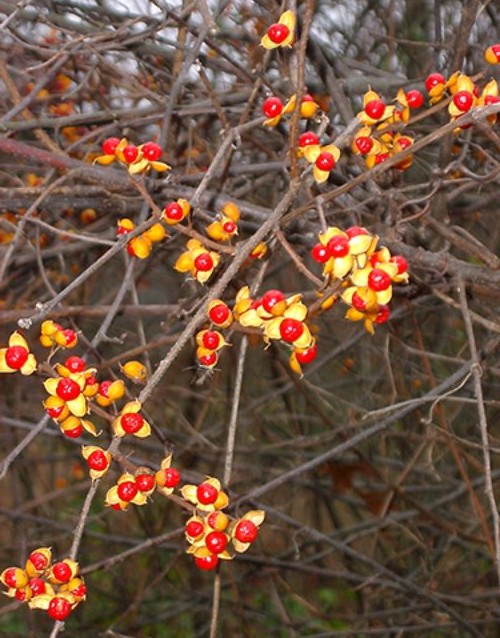
False Bittersweet
Celastrus scandens L.
Relevant botanical synonyms and historical combinations include:
Celastrus bullatus L.
Euonymus scandens (L.) E.H.L.Krause
Evonymoides scandens (L.) Medik.
Celastraceae
False Bittersweet; American Bittersweet; American Bitter-sweet; Climbing Bittersweet; False Climbing Bittersweet; Shrubby Bittersweet; Waxwork; Staff Vine; Staff-Vine; American Staff Vine; American Stafftree; Climbing Orange-Root; Orange-Root; Yellow-Root; Fever-Twig; Fever-Twitch; Jacob’s-Ladder; Celastrus scandens; Celastrus bullatus; Euonymus scandens; Evonymoides scandens
“Bittersweet” is highly ambiguous. Oriental Bittersweet, Asian Bittersweet, Chinese Bittersweet, and Round-leaved Bittersweet generally refer to Celastrus orbiculatus, a separate invasive Asian species. European Bittersweet, Woody Nightshade, and Bittersweet Nightshade generally refer to Solanum dulcamara, an unrelated nightshade with a different toxin profile.
Commercial plants labeled American Bittersweet may be Oriental Bittersweet, a hybrid, or a horticultural selection with atypical identifying features. A nursery label alone should not be treated as conclusive identification.
What Exact-Species Research Has Confirmed
False Bittersweet contains biologically active secondary chemistry, but no single compound has been established as the definitive cause of natural poisoning in dogs, cats, horses, or livestock. Exact-species investigations have examined the root bark, leaves, seeds, and seed oil of Celastrus scandens. These studies confirm that the plant is chemically complex, but they do not provide a dependable pet-toxic dose or identify one constituent as the complete explanation for the clinical warnings attached to the species.
Root-bark research identified celastrol, a deeply colored quinone-methide triterpenoid. Celastrol is a reactive and pharmacologically active molecule that has since been studied extensively for effects on inflammatory signaling, cellular stress pathways, proteins, and cell survival. Its isolation from American Bittersweet root bark proves that the species contains potent bioactive chemistry. It does not establish that celastrol is present at the same concentration in berries or leaves or that it is responsible for routine vomiting after a pet eats fruit.
Early leaf studies separated several extractive fractions and investigated nonsaponifiable material, sterol-like constituents, and resin-alcohol chemistry. Seed research also characterized the fatty oil contained within American Bittersweet seeds. Those investigations were phytochemical rather than veterinary toxic-dose studies. They did not determine how many fruits would poison a dog, whether a horse would absorb the same constituents, or which compounds survive digestion in a clinically meaningful amount.
The Cardenolide Claim Requires Qualification
American Bittersweet is frequently listed in veterinary and horticultural references as containing cardenolides. Cardenolides are cardiac glycosides that, when present in sufficient concentration, inhibit sodium-potassium ATPase and can disturb gastrointestinal function, cardiac conduction, automaticity, potassium balance, and blood pressure.
A named, quantified cardenolide from a defined part of Celastrus scandens was not established in the exact-species primary literature used for this page. No controlled American Bittersweet study has defined an oleander-like dose-response relationship, and the published clinical profile does not support treating every fruit ingestion as predictable digitalis-type cardiotoxicity.
This distinction does not make the plant safe. It means the cardenolide label should be treated as a toxicological warning that remains incompletely characterized rather than proof that one berry produces heart block or that digoxin-specific treatment will be necessary. Electrocardiography and electrolyte testing are reasonable when a symptomatic animal has an abnormal pulse, collapse, substantial exposure, or uncertain plant identity, but not every minor ingestion requires management as severe cardiac-glycoside poisoning.
Sesquiterpene Alkaloids and Genus-Level Extrapolation
Celapanine, celastrine, paniculatine, and related sesquiterpene pyridine alkaloids or dihydroagarofuran derivatives occur within the broader genus Celastrus and family Celastraceae. Much of the named chemistry comes from Asian medicinal species such as Celastrus paniculatus or from other related plants rather than from direct analysis of American Bittersweet.
Those compounds should not be presented as though each has been isolated from Celastrus scandens fruit and proven to cause its veterinary syndrome. Same-genus evidence supports caution because related plants manufacture powerful defensive compounds, but it cannot establish identical chemistry, concentration, organ distribution, absorption, or prognosis across species.
The term euonymin or euonymin-like toxin also appears in poison-plant summaries because American Bittersweet is related to Euonymus. That historical or family-level terminology does not identify a measured American Bittersweet constituent or establish a usable toxic dose.
Celastrol Is Confirmed but Is Not a Proven Pet-Poison Marker
Celastrol’s presence in root bark is one of the strongest exact-species chemical findings. Quinone-methide triterpenoids can interact with cellular proteins and exert anti-inflammatory, cytotoxic, metabolic, and other effects depending on dose and experimental context. Purified-compound experiments demonstrate biological potency but do not recreate a dog chewing a fruit capsule or a horse browsing several leaves.
Roots and root bark may create a more unusual but potentially concentrated exposure when a dog digs up a vine, a landscaping project leaves root crowns accessible, or discarded root material enters a livestock pen. It remains inappropriate to state that roots are the most poisonous part without comparative testing of equal samples from roots, bark, leaves, capsules, arils, and seeds.
Fruits, Seeds, Arils, and Other Plant Parts
The orange structure is a dry capsule rather than a berry. When it opens, it exposes seeds covered by bright scarlet fleshy arils. The vivid display attracts wildlife and creates the most likely pet exposure, especially when mature fruit falls beneath a vine or is brought indoors in a dried arrangement.
Fruits and seeds deserve particular practical caution because an animal may swallow several in rapid succession. That does not prove they contain the highest concentration of every active constituent. Leaves, stems, bark, roots, flowers, sap, seedlings, and pruning debris should also be treated as unsafe because their chemistry has not been compared sufficiently to establish a safe plant part.
Woody vine pieces, capsules, seeds, wreath wire, florist picks, glue, ribbon, preservatives, paint, glitter, and artificial snow can create mechanical or chemical hazards independent of the plant’s natural constituents. Vomiting or obstruction after chewing a decoration may therefore have more than one cause.
Fresh, Dried, and Stored Material
No validated drying, freezing, weathering, or storage process has been shown to make American Bittersweet safe for animals. Dried decorative branches retain capsules and seeds for months, while woody pieces become rigid and capable of splintering. Loose fruit may fall beneath furniture long after an arrangement is placed indoors.
Drying can change moisture content and the relative concentration or stability of individual chemicals, but it does not demonstrate detoxification. Dried wreath material, stored branches, hedge clippings, compost, and discarded vines should remain inaccessible to pets and livestock.
Toxic Dose and Evidence Limits
No dependable safe berry count, seed count, plant weight, sap volume, forage percentage, or gram-per-kilogram dose has been established for dogs, cats, horses, cattle, sheep, goats, rabbits, or birds. The amount of active chemistry may vary with plant part, sex of the vine, fruit maturity, season, genetics, environment, and whether the specimen is pure American Bittersweet, Oriental Bittersweet, or a hybrid.
The evidence supports a proportionate conclusion: False Bittersweet is a poisonous vine with an incompletely defined toxic mechanism. Gastrointestinal illness is the most credible expected presentation. Weakness or convulsions are recognized severe warnings, but the absence of a robust exact-species case literature means unusual cardiac, neurologic, or multisystem disease must not be attributed automatically to this plant without confirming the exposure and excluding other causes.
Expected Gastrointestinal Illness
The most proportionate expected presentation after American Bittersweet ingestion is gastrointestinal irritation. A dog or cat may drool, lick the lips, swallow repeatedly, appear nauseated, refuse food, retch, vomit, or develop soft stool or diarrhea. Abdominal discomfort may cause restlessness, stretching, a hunched posture, whining, guarding of the abdomen, or reluctance to settle.
The onset and duration have not been defined in a controlled exact-species study. Signs may begin within several hours of ingestion, but the timing depends on the plant part, amount swallowed, whether seeds were crushed, stomach contents, concurrent decorative materials, and individual susceptibility. The absence of immediate illness does not prove that a substantial ingestion was harmless.
Most limited exposures are expected to remain mild. Repeated vomiting or diarrhea can nevertheless cause dehydration, sodium and potassium abnormalities, weakness, reduced urination, and poor circulation, particularly in puppies, kittens, small animals, older pets, and animals with pre-existing kidney, gastrointestinal, or cardiac disease.
Weakness and Rare Neurologic Warnings
Weakness and convulsions appear repeatedly in secondary veterinary descriptions of American Bittersweet poisoning, but detailed botanically confirmed case reports are lacking. Trembling, incoordination, altered awareness, collapse, or seizures should therefore be treated as serious findings without assuming that a routine low-dose syndrome has been established.
Weakness may arise from the plant’s direct effects, dehydration, low blood pressure, abnormal glucose or electrolytes, prolonged vomiting, aspiration, or another toxicant. An animal that staggers, cannot stand, trembles continuously, collapses, becomes unresponsive, or has a seizure requires emergency veterinary care.
Severe neurologic signs after an apparently tiny exposure should prompt immediate re-examination of the identification and surrounding environment. Bittersweet Nightshade, yew, cardiac-glycoside plants, mushrooms, pesticides, medications, mold toxins, lead, and other hazards may be present in the same yard, pasture, wreath, or discarded vegetation.
Cardiovascular Findings
An ordinary American Bittersweet exposure has not been shown to produce the predictable, high-potency cardiac-glycoside syndrome associated with oleander, foxglove, or lily of the valley. A normal home pulse does not prove that an animal is unaffected, but serious rhythm disturbances should not be described as routine.
A weak, unusually slow, rapid, irregular, or difficult-to-detect pulse; pale or gray gums; cold extremities; fainting; severe lethargy; or collapse requires examination. These findings may reflect dehydration, shock, electrolyte disturbance, pain, primary cardiac disease, mistaken plant identity, or a biologically significant cardioactive exposure.
Cardiac-glycoside poisoning can produce either slow conduction abnormalities or rapid ventricular rhythms, so treatment cannot be selected from the plant name alone. Electrocardiography, blood pressure, perfusion, and electrolyte results are needed before antiarrhythmic therapy is considered.
Horses and Grazing Animals
Horses cannot vomit. A horse that consumes American Bittersweet may instead show feed refusal, salivation, colic, pawing, flank watching, sweating, diarrhea, reduced manure production, depression, weakness, tremors, incoordination, or recumbency. The exact amount required and the frequency of genuine equine cases have not been established.
Cattle, sheep, goats, pigs, and other livestock may browse vines growing through fencing or consume branches placed in a paddock as landscape waste. Group illness should trigger removal from the shared pasture, clipping pile, bedding, hay, feed, and water source while representative plant and forage samples are preserved.
Severe colic, progressive weakness, an abnormal pulse, tremors, convulsions, inability to stand, or several affected animals requires urgent large-animal veterinary investigation rather than waiting for spontaneous recovery.
Mechanical and Decorative-Material Complications
A pet chewing a dried arrangement may swallow more than plant tissue. Woody stems can splinter, seeds and capsules can lodge in the throat, and florist wire, hooks, ribbon, glue, foam, preservatives, paint, artificial snow, or ornaments can cause choking, oral injury, obstruction, perforation, or a separate poisoning.
Repeated unproductive retching, difficulty swallowing, abdominal enlargement, persistent vomiting, reduced stool, blood in vomit or feces, or continuing abdominal pain is not adequately explained by mild plant irritation and warrants imaging or endoscopic evaluation.
Findings That Require a Broader Diagnosis
Persistent seizures, profound coma, marked heart block, sustained ventricular arrhythmias, severe respiratory distress, jaundice, acute kidney failure, widespread bleeding, or rapid death are not established as the expected course of an ordinary American Bittersweet exposure. These findings should prompt confirmation of the plant and testing for another toxicant or disease.
Important alternatives include Oriental Bittersweet or a hybrid, Bittersweet Nightshade, yew, oleander, foxglove, lily of the valley, pesticides, medications, ethylene glycol, toxic mushrooms, cyanogenic plants, mold-contaminated feed, infectious gastroenteritis, pancreatitis, intestinal obstruction, and primary neurologic or cardiac disease.
Duration and Prognosis
An animal with a small exposure and signs confined to one or two episodes of vomiting or mild diarrhea generally has a good prognosis when further access is prevented and hydration remains adequate. Improvement should be progressive rather than followed by increasing weakness or neurologic abnormalities.
The prognosis becomes more guarded with persistent fluid loss, bloody gastrointestinal signs, inability to retain water, abnormal heart rhythm, altered consciousness, seizures, aspiration, obstruction, or an uncertain mixed-plant exposure. Recovery time depends on the complication rather than on a proven standard duration for American Bittersweet poisoning.
Plant Identity and Accepted Taxonomy
False Bittersweet and American Bittersweet are common names for the same species, Celastrus scandens L., a deciduous twining woody vine in Celastraceae. Historical botanical literature may list the plant as Celastrus bullatus, Euonymus scandens, or Evonymoides scandens.
The plant is native to central and eastern North America, extending through southern portions of Canada and much of the central and eastern United States. It occurs along woodland edges, thickets, stream margins, rocky slopes, bluffs, roadsides, fence rows, old fields, and other areas where its stems can climb surrounding vegetation.
Why the Name Bittersweet Causes Dangerous Confusion
American Bittersweet is not Bittersweet Nightshade. Bittersweet Nightshade, European Bittersweet, or Woody Nightshade is Solanum dulcamara, a member of Solanaceae with purple star-shaped flowers and red berries. Its steroidal glycoalkaloids create a different toxicological problem.
Oriental Bittersweet is Celastrus orbiculatus, an invasive Asian relative of American Bittersweet. The species are related and visually similar, but one species’ compound concentrations and clinical effects cannot automatically be assigned to the other.
The title False Bittersweet should therefore remain connected explicitly to Celastrus scandens. A common name without a complete plant specimen is not enough for confident poisoning assessment.
Growth Form, Leaves, Flowers, and Roots
American Bittersweet develops persistent woody, clockwise-twining stems that climb shrubs, fences, trellises, and trees or sprawl when support is absent. Mature vines may extend many feet into a canopy and develop thick woody bases.
The leaves are alternate, deciduous, finely toothed, and usually oval to elliptic with a tapered point. They turn yellow in autumn. Leaf shape is useful but variable and is less dependable for identification than a combination of flowers, fruit position, capsules, and seeds.
The small greenish flowers appear in branched clusters near the ends of shoots. Plants are usually functionally male or female, although reproductive expression can be more complicated than a simple two-category description. A fruiting female ordinarily requires compatible pollen nearby.
Roots and older root bark may show orange or yellow-orange coloration, which contributed to names such as Climbing Orange-Root and Yellow-Root. Root suckering allows established vines to persist and spread locally after the aboveground stems are cut.
Capsules, Arils, and Seeds
The fruit is a dehiscent capsule, not a botanical berry. Capsules mature from green to yellow-orange or orange and split open to expose vivid scarlet arils surrounding the seeds. American Bittersweet commonly has four to eight seeds per fruit, although individual fruits vary.
The colorful arils remain visible after leaf fall and may persist through winter. This seasonal persistence increases exposure to wildlife and to pets investigating fallen fruit beneath the vine.
Birds, grouse, pheasants, squirrels, rabbits, and other wildlife may consume or disperse the fruit. Wildlife feeding does not establish safety for dogs, cats, horses, or people because species differ in metabolism, gut anatomy, dose, seed handling, and susceptibility.
American Versus Oriental Bittersweet
American Bittersweet generally produces flowers and fruits in terminal clusters at the ends of branches. Oriental Bittersweet generally produces smaller clusters from leaf axils along the stem. Terminal versus axillary fruit placement is one of the most useful field distinctions when mature fruiting material is available.
American Bittersweet fruit tends to be larger and may contain more seeds, while Oriental Bittersweet often has rounder leaves and shorter leaf tips. Research comparing naturally growing plants found that fruit volume and seed number discriminate the species more reliably than leaf traits alone.
No single feature is infallible. Pruning can remove branch tips, young vines may not fruit, leaves vary within each species, and dried decorations may lack enough intact structure for a confident identification.
Hybridization and Commercial Mislabeling
American and Oriental Bittersweet can hybridize. Genetic research has documented hybrids and predominantly unidirectional pollen flow from Oriental Bittersweet males to American Bittersweet females. Hybrid plants may combine terminal and axillary flowering, intermediate capsule colors, atypical leaves, or other mixed features.
Commercial labeling is also unreliable. A study of plants marketed as American Bittersweet found that 54% of the purchased specimens were actually Oriental Bittersweet. Plants had been sold under several cultivar names as well as without cultivar identification.
For poisoning assessment, a nursery tag is useful evidence but not absolute proof. A complete fruiting branch, photographs of the entire vine, fruit position, capsule color, seeds, leaves, and—when necessary—expert botanical or genetic examination provide a stronger identification.
Where Dogs and Cats Encounter the Plant
Dogs may swallow fallen capsules and seeds, chew a woody stem, dig up roots, or investigate pruning debris. Puppies may strip fruit from a branch or chew a dried arrangement left on the floor.
Cats may bat at hanging fruit clusters, pull berries from wreaths, chew leaves, or find loose seeds beneath furniture. Indoor exposure can continue for months as dried capsules detach gradually from arrangements.
Compost piles and brush piles create another risk. The plant may be mixed with other poisonous vines or discarded ornamental material, making later identification much more difficult.
Horses, Livestock, Rabbits, and Birds
Horses and livestock may encounter American Bittersweet along pasture fencing, woodland margins, hedgerows, drainage corridors, or areas where vines grow into accessible shrubs and trees. Landscape or wreath-making waste should never be thrown into paddocks, cattle lots, goat pens, sheep fields, pig enclosures, or poultry yards.
Rabbits and guinea pigs should not receive the leaves or vines as forage. Companion birds should not be allowed to shred fruiting branches or dried decorations because their small size, direct oral exposure, and tendency to open seeds may create a different risk from that of wild fruit-eating birds.
Dried Wreaths and Seasonal Arrangements
American Bittersweet is widely used in autumn and winter wreaths, centerpieces, garlands, and dried floral arrangements. This brings capsules and seeds from an outdoor vine into rooms where pets can reach them.
Dried material should not be considered detoxified. Loose fruit should be collected immediately, and arrangements should be inspected for wire, pins, hooks, floral foam, glue, ribbons, paint, glitter, preservatives, and artificial snow. These additions may cause a more serious emergency than a small amount of plant tissue.
Historical Food and Medicinal Use
Ethnobotanical records attribute preparations of American Bittersweet bark, inner bark, roots, and other tissues to Menominee, Ojibwe, Potawatomi, Cherokee, and other Indigenous traditions. Reported uses include processed emergency food and preparations for cough, intestinal complaints, rheumatic pain, childbirth-related pain, gynecologic conditions, skin ulcers, and toothache.
Those records describe culturally specific preparation and use, not uncontrolled consumption of raw plant material by an animal. Historical emetic, bowel-active, or medicinal use supports the conclusion that the plant is biologically active; it does not provide a safe veterinary dose or justify using the vine as a laxative, dewormer, pain remedy, or herbal treatment.
Toxic Parts and Evidence Strength
Leaves, flowers, capsules, arils, seeds, stems, bark, roots, sap, seedlings, and dried material should all be treated as unsafe. Fruits and seeds create the greatest practical exposure because they are colorful, persistent, detachable, and commonly used in decorations.
The strongest exact-species chemistry concerns root-bark celastrol, seed oil, and older leaf fractions. The strongest pet-safety conclusion is broader and less chemically precise: ingestion can produce gastrointestinal illness, while weakness and convulsions are uncommon but recognized serious warnings. No plant part has been assigned a dependable safe amount.
Diagnosis
There is no routine veterinary test that confirms American Bittersweet poisoning. Diagnosis depends on plant identification, the amount and part eaten, the time course, the animal’s clinical signs, and exclusion of other toxicants and diseases.
Owners should preserve a branch showing leaves and the position of fruit clusters, intact capsules, arils, seeds, nursery labels, photographs of the entire vine, and representative material from a wreath or clipping pile. Vomit or manure containing recognizable plant material may also assist identification.
Testing may include hydration and perfusion assessment, complete blood count, serum chemistry, glucose, electrolytes, kidney and liver-associated values, urinalysis, blood pressure, and electrocardiography when weakness, collapse, or an abnormal pulse is present. Imaging may be required when woody material, wire, hooks, or another foreign body could have been swallowed.
Prognosis and Prevention
The prognosis is generally good after a limited exposure with mild gastrointestinal signs. It becomes more guarded when vomiting or diarrhea is persistent, dehydration develops, the amount is large or unknown, the plant identity is uncertain, or neurologic or cardiovascular abnormalities occur.
Collect fallen capsules and seeds from pet areas, keep fruiting branches above animal reach, prevent vines from growing through livestock fencing, and bag pruning debris securely. Store wreaths and arrangements in inaccessible rooms rather than relying on height alone, because loose seeds may roll beneath furniture.
American Bittersweet is a native species with wildlife and conservation value. Pet safety does not require indiscriminate destruction of correctly identified native populations. Exclusion, fruit cleanup, secure disposal of decorative branches, and careful placement can reduce exposure while avoiding unnecessary removal of native vines.
Immediate Steps After False Bittersweet Exposure
- Stop further ingestion. Remove the animal from the vine, fallen capsules, arils, seeds, roots, clippings, wreath, centerpiece, compost, or brush pile.
- Determine what was eaten. Record whether the exposure involved one fruit, numerous capsules, crushed seeds, leaves, bark, roots, dried branches, or an entire decorative arrangement.
- Check for nonplant hazards. Look for missing florist wire, hooks, ribbon, pins, glue, foam, artificial snow, paint, ornaments, or pieces of a container.
- Remove only loose visible material. If the animal is calm, alert, breathing normally, and swallowing normally, lift away berries, seeds, leaves, or wood resting at the lips or front of the mouth. Do not reach blindly into the throat.
- Preserve identification evidence. Save an intact fruiting branch, capsules, seeds, nursery tags, and photographs showing where fruit clusters occur along the stem.
- Keep other animals away from vomit. Recovered seeds, plant fragments, wire, or other decorative material may still create a hazard.
- Contact a veterinarian promptly. Obtain guidance after numerous fruits or seeds, a chewed root, a large or unknown exposure, a mixed wreath exposure, any meaningful horse or livestock ingestion, or the development of symptoms.
Do Not Attempt Unsupervised Home Treatment
- Do not induce vomiting. Do not give hydrogen peroxide, salt, mustard, syrup of ipecac, dish soap, detergent, or use manual gagging or fingers in the throat.
- Do not force water or food. Syringing or pouring liquid into a nauseated, weak, trembling, seizuring, or poorly swallowing animal can cause aspiration.
- Do not administer activated charcoal yourself. Charcoal may be aspirated and can worsen dehydration, sodium abnormalities, constipation, or intestinal dysfunction.
- Do not give laxatives, oil, milk, yogurt, bread, or another improvised antidote. None has been shown to neutralize American Bittersweet constituents.
- Do not give anti-diarrheal or stomach medication automatically. These products do not treat neurologic or cardiac complications and may obscure bleeding, obstruction, or ileus.
- Do not give heart medication, antihistamines, corticosteroids, anticonvulsants, pain relievers, calcium, potassium, or leftover prescriptions. Treatment must be selected for the animal’s actual findings.
When Emergency Examination Is Especially Important
- Vomiting or diarrhea is persistent. Repeated fluid loss, inability to retain water, bloody vomit, bloody diarrhea, or black stool requires examination.
- Weakness is progressing. Marked lethargy, inability to stand, pale gums, cold extremities, fainting, or collapse may indicate dehydration, shock, another toxin, or systemic involvement.
- Movement or awareness is abnormal. Trembling, staggering, falling, disorientation, loss of consciousness, convulsions, or seizures is an emergency.
- The pulse is abnormal. A very slow, rapid, weak, or irregular pulse requires electrocardiographic and electrolyte assessment rather than home medication.
- A foreign body may have been swallowed. Repeated unproductive retching, abdominal enlargement, severe pain, reduced stool, persistent vomiting, or missing wire or hooks warrants urgent imaging.
- A horse or livestock animal ate the vine. Grazing animals may consume a larger amount than household pets, and horses cannot vomit.
- Several animals are ill. Remove the group from the shared pasture, clipping pile, hay, bedding, feed, water, or decorative material and preserve representative samples.
Veterinary Examination and Diagnostic Priorities
The veterinarian will assess hydration, mucous-membrane color, capillary refill, abdominal pain, temperature, heart rate and rhythm, pulse quality, blood pressure, respiratory function, mental status, coordination, and evidence of another toxin or swallowed foreign material.
No rapid assay identifies every American Bittersweet constituent. Testing is directed at the animal’s physiologic condition and important alternatives. It may include a complete blood count, serum chemistry, glucose, sodium, potassium, chloride, magnesium, calcium, kidney and liver-associated values, total protein, acid-base measurements, urinalysis, electrocardiography, and repeated blood-pressure monitoring.
A digoxin immunoassay has not been validated for Celastrus scandens. A negative result would not exclude exposure, while a positive or weakly reactive result would not prove that American Bittersweet caused the illness without appropriate clinical and exposure evidence.
Abdominal radiographs, ultrasound, endoscopy, or surgery may be required when a woody stem, seed mass, florist wire, hook, foam, or another foreign body is suspected. Neurologic disease, pesticides, medications, nightshade, yew, mushrooms, and other plant exposures may require separate testing.
Professional Gastrointestinal Decontamination
A veterinarian may consider clinic-induced vomiting in an appropriate dog or cat after a recent and meaningful ingestion when the patient is fully alert, neurologically normal, breathing normally, not already vomiting repeatedly, and able to protect the airway.
Emesis is inappropriate after weakness, collapse, tremors, seizures, respiratory abnormality, impaired swallowing, significant sedation, severe cardiovascular disturbance, or repeated spontaneous vomiting develops. Horses, rabbits, guinea pigs, and other species incapable of vomiting must never be treated with an emetic.
Activated charcoal may be considered after a substantial recent fruit, seed, bark, or root ingestion when the veterinarian judges that binding an incompletely characterized organic toxin mixture is likely to outweigh the risks. Evidence specific to American Bittersweet is lacking, and charcoal is not automatically required after every small exposure.
Repeated charcoal treatment is not established for this plant and should not be carried over automatically from toxins known to undergo enterohepatic recirculation. Gastric lavage is reserved for unusual, serious, recent ingestions in an anesthetized and intubated patient when the anticipated benefit outweighs aspiration, trauma, anesthesia, and circulatory risks.
Vomiting, Diarrhea, and Fluid Loss
Persistent vomiting may be treated with a veterinarian-selected antiemetic after useful decontamination has been completed and obstruction or retained decorative material has been considered.
Intravenous balanced crystalloids may be needed to correct dehydration, restore appropriate circulating volume, replace ongoing gastrointestinal losses, and support perfusion. Fluid treatment should be adjusted for body weight, blood pressure, electrolyte results, urine production, cardiac function, and continuing losses.
Gastrointestinal protectants may be considered when repeated vomiting, hematemesis, melena, painful swallowing, erosive gastritis, or esophagitis is documented or strongly suspected. They are not plant antidotes and should not be given automatically at home.
Food can be reintroduced gradually when vomiting is controlled, swallowing is normal, hydration and circulation are stable, and the animal shows voluntary interest. Force-feeding a nauseated, weak, sedated, painful, or poorly swallowing animal creates aspiration risk.
Cardiovascular Monitoring
Continuous or repeated electrocardiography may be appropriate after a large or uncertain ingestion when the animal has weakness, collapse, an abnormal pulse, poor perfusion, or a clinically important potassium disturbance.
Treatment must follow the rhythm actually present. Slow conduction disturbances, rapid rhythms, premature complexes, shock-related tachycardia, and electrolyte-mediated abnormalities require different management. No antiarrhythmic should be selected solely because a secondary plant list mentions cardenolides.
Hypotension associated with fluid loss should first be evaluated for appropriate intravenous volume correction. A veterinarian-selected vasopressor may be required when clinically important hypotension persists after needed circulating volume has been restored and rhythm, temperature, acid-base status, and other causes have been addressed.
Digoxin-specific antibody fragments are not an established American Bittersweet antidote. Their use would require convincing evidence of life-threatening cardiac-glycoside-type poisoning and specialist consultation rather than plant-name association alone.
Tremors, Seizures, and Altered Awareness
Tremors may require veterinarian-selected muscle relaxation, while seizures may require benzodiazepines and additional anticonvulsant therapy according to their severity and response.
Glucose, sodium, calcium, magnesium, oxygenation, temperature, blood pressure, acid-base status, and kidney and liver function should be evaluated because metabolic and circulatory abnormalities can produce or worsen neurologic signs.
Quiet padded confinement, protection from stairs and water, temperature control, and repeated neurologic assessment are important. Persistent seizures or profound neurologic disease should prompt aggressive investigation for another toxin or primary neurologic disorder.
Horses and Livestock
Remove horses, cattle, sheep, goats, pigs, and other grazing animals immediately from the vine, fence line, brush pile, wreath waste, clippings, and any potentially contaminated forage.
Large-animal evaluation may include gastrointestinal-motility assessment, manure production, hydration, rumen or gastric examination, neurologic testing, blood chemistry, electrolytes, electrocardiography, and inspection of the shared pasture and feed source.
Activated charcoal, nasogastric treatment, rumen evacuation, or another professional decontamination procedure may be considered after a substantial recent ingestion when the patient is stable and the anticipated benefit exceeds the procedural risk.
When several animals share access, preserve leaves, stems, roots, capsules, seeds, hay, feed, water, manure, and rumen or stomach material when available. Do not discard all evidence before the plants have been identified.
Mixed Wreath and Decoration Exposure
Veterinary staff should be told whether the arrangement contained other plants such as yew, holly, ivy, mistletoe, eucalyptus, lilies, pine, cedar, or unidentified berries. Mixed arrangements can produce a syndrome that differs substantially from American Bittersweet alone.
Missing wire, hooks, floral picks, foam, ornaments, glue, ribbon, desiccants, batteries, paint, glitter, and artificial snow should be reported. Imaging or endoscopy may be more important than toxicologic treatment when a mechanical hazard was swallowed.
Prognosis and Recovery
Dogs and cats with a limited exposure and mild gastrointestinal signs generally have a good prognosis when access is stopped and hydration is maintained.
Recovery may take longer when vomiting or diarrhea is severe, blood is present, a foreign body was swallowed, aspiration develops, or electrolytes remain abnormal. Before routine home monitoring is appropriate, the animal should retain water, urinate normally, walk without weakness, show improving appetite and stool, and remain free of collapse or neurologic abnormalities.
The prognosis becomes guarded with shock, sustained cardiac abnormalities, persistent seizures, coma, aspiration pneumonia, obstruction, perforation, or an unidentified mixed-plant exposure.
Frequently Asked Questions About False Bittersweet and Animal Poisoning
Have cardenolides been conclusively identified as the principal toxins in American Bittersweet?
No named and quantified cardenolide has been established as the principal pet-poisoning compound in the exact-species literature used for this page. Veterinary references repeatedly classify the plant under cardenolides and alkaloids, so the possibility of cardioactive chemistry should not be ignored. The evidence does not support treating every fruit ingestion as predictable digitalis poisoning or assuming that American Bittersweet has the same potency as oleander.
Is celastrol the compound that makes False Bittersweet poisonous to pets?
Celastrol is directly confirmed in the root bark of Celastrus scandens and is a potent bioactive quinone-methide triterpenoid. It is therefore an important exact-species finding. No study has shown that celastrol alone causes the typical pet presentation, established its concentration in every fruit or leaf, or defined a toxic dose for dogs, cats, or horses. It should be described as confirmed chemistry with plausible toxicological importance, not as a proven single-cause explanation.
Are celapanine, celastrine, and paniculatine proven American Bittersweet toxins?
Not as a complete species-specific list. Those compounds and related sesquiterpene alkaloids are well known from the broader genus, especially Celastrus paniculatus and other Asian species. Genus-level chemistry supports caution but does not prove that every compound occurs in C. scandens, in the same plant part, or at a concentration capable of poisoning a pet. Their names should not be copied into an American Bittersweet article without that limitation.
Can a plant sold as American Bittersweet actually be Oriental Bittersweet?
Yes. A horticultural study found that 54% of purchased plants marketed as American Bittersweet were actually Oriental Bittersweet. Mislabeled plants were sold under several cultivar names and as unnamed stock. A nursery label remains useful, but fruit position, capsule and seed characters, the complete plant, and sometimes expert or genetic examination provide stronger identification.
Does a terminal fruit cluster prove that the vine is pure American Bittersweet?
It is strong evidence but not absolute proof. American Bittersweet usually bears fruit in terminal clusters, while Oriental Bittersweet usually bears axillary clusters along the stem. Pruning, incomplete specimens, atypical plants, horticultural selections, and hybrids can complicate the pattern. Fruit size and seed number can add useful evidence, while leaf shape alone is less reliable.
Can American and Oriental Bittersweet hybrids affect a poisoning diagnosis?
Yes. Genetic studies confirm hybridization, especially when Oriental Bittersweet pollen fertilizes American Bittersweet flowers. A hybrid may display intermediate or mixed identification features, and its exact toxin profile has not been defined. Clinically, an animal should be treated according to the material eaten and the signs present rather than assuming that a visually intermediate vine has the chemistry of one parent only.
Would a digoxin blood test confirm False Bittersweet poisoning?
No validated digoxin-assay interpretation exists for Celastrus scandens. Plant cardiac glycosides can cross-react unpredictably with some commercial assays, but no reliable sensitivity or specificity has been established for American Bittersweet constituents. A negative result cannot exclude exposure, and a positive result would require interpretation alongside the ECG, potassium, blood pressure, plant identification, and clinical course.
Why should seizures or major arrhythmias trigger a search for another poison?
Weakness and rare convulsions are included in veterinary warnings, but botanically confirmed case descriptions are extremely limited. Severe neurologic or cardiac disease may result from another plant, pesticide, medication, mushroom, foreign body complication, electrolyte disturbance, or primary illness. Bittersweet Nightshade, yew, oleander, foxglove, and mixed decorative plants are particularly important alternatives when the identification is incomplete.
Is a dried American Bittersweet wreath safer than a fresh vine?
No validated drying process has been shown to detoxify the plant. Capsules and seeds remain detachable, and mineral, triterpenoid, alkaloid, or glycoside chemistry cannot be assumed to disappear merely because the branch is dry. Wreaths may also contain wire, pins, hooks, glue, foam, preservatives, paint, glitter, artificial snow, and other plants, making the complete exposure potentially more dangerous than the bittersweet alone.
Must a native American Bittersweet vine be destroyed to protect pets?
Not necessarily. American Bittersweet is a native species with wildlife and conservation value, unlike invasive Oriental Bittersweet. Pet risk can often be controlled by restricting animal access, collecting fallen fruit, keeping fruiting branches out of kennels and paddocks, securing decorations, and disposing of pruning debris immediately. Removal may be reasonable where exposure cannot be prevented, but identification should come before destroying a potentially valuable native vine.