PAWS Pet Poison Plant Guide
Is Chinese Forget-Me-Not Poisonous to Dogs, Cats, Horses, and Livestock?
Yes. Chinese Forget-Me-Not, Cynoglossum amabile, should be kept away from dogs, cats, horses, livestock, rabbits, poultry, and other animals because the plant contains 1,2-unsaturated pyrrolizidine alkaloids capable of metabolic activation and liver injury. Direct chemical studies confirm these alkaloids in the species, although published veterinary poisoning cases involving authenticated C. amabile have not been located. The greatest concern is substantial or repeated ingestion, especially through contaminated forage, dried plant material, discarded bouquets, or continued access to garden plants. Liver injury may be cumulative and signs can be delayed for weeks or months.
About this guide: This page provides general pet-poisoning information and cannot diagnose or treat an individual animal. For any suspected exposure, contact a veterinarian or animal poison-control service immediately. Do not induce vomiting, give medication, or attempt home decontamination unless directed by a veterinary professional.
Chinese Forget-Me-Not
Cynoglossum amabile Stapf & J.R.Drumm.
Boraginaceae — Borage or Forget-Me-Not Family
Chinese Hound’s-Tongue; Chinese Houndstongue; Hound’s-Tongue; Houndstongue; Lovely Hound’s-Tongue; Chinese Forget-Me-Not; Daotihu
“Blue Showers” and “Firmament” are cultivated selections of Cynoglossum amabile rather than separate botanical names for the species.
Plain “Houndstongue” is ambiguous and commonly refers to Cynoglossum officinale, the separate Eurasian pasture weed responsible for many of the best-documented livestock poisonings.
Pyrrolizidine Alkaloids Confirmed in Chinese Forget-Me-Not
Chinese Forget-Me-Not contains pyrrolizidine alkaloids, a large family of plant-defense chemicals found in numerous members of Boraginaceae, Asteraceae, and Fabaceae.
Direct research on authenticated Cynoglossum amabile initially isolated the unsaturated pyrrolizidine alkaloids amabiline and echinatine. Later gas-chromatographic and mass-spectrometric analysis recorded supinine, amabiline, rinderine, echinatine, and an acetylechinatine derivative from the species.
Additional analytical screening has confirmed toxic pyrrolizidine alkaloids in C. amabile. The exact profile reported by an individual study can vary with plant source, tissue, developmental stage, extraction method, analytical standard, and whether free alkaloids or their N-oxides were measured.
The Important Structural Feature
Not every pyrrolizidine alkaloid has the same toxic potential. The principal concern is the presence of alkaloids with an unsaturated necine base capable of metabolic conversion into reactive dehydropyrrolizidine compounds, often called reactive pyrroles.
These compounds are not necessarily highly destructive in their original plant form. Toxicity develops after absorption and metabolic activation, principally by enzyme systems in the liver.
Alkaloid N-oxides may also contribute to exposure because they can be converted within the digestive tract or body into corresponding free alkaloids.
Metabolic Activation in the Liver
After absorption from the gastrointestinal tract, pyrrolizidine alkaloids travel through the portal circulation to the liver. Hepatic enzymes may convert susceptible alkaloids into short-lived reactive metabolites.
These metabolites can bind to cellular proteins, form protein cross-links, damage DNA, disrupt normal enzyme function, and interfere with cell division.
The resulting injury is not simply a temporary stomach upset. Hepatocytes may die or become greatly enlarged because they can no longer divide normally. Surviving tissue may be replaced gradually by fibrosis and abnormal regenerative nodules.
Megalocytosis, Fibrosis, and Loss of Liver Function
A characteristic lesion of chronic pyrrolizidine alkaloidosis is megalocytosis, in which hepatocytes become abnormally enlarged because DNA replication continues while successful cell division fails.
Other expected changes may include individual-cell necrosis, bile-duct proliferation, portal and bridging fibrosis, nodular regeneration, distortion of normal liver architecture, and progressive loss of functional hepatic tissue.
Once extensive fibrosis and megalocytic change are established, removing the plant stops additional exposure but does not necessarily reverse the existing structural damage.
Cumulative and Delayed Poisoning
Pyrrolizidine-alkaloid injury is often cumulative. Repeated smaller ingestions may produce serious disease even when no single meal causes immediate illness.
An animal may continue appearing normal while functional liver reserve declines. Clinical signs may not become visible until weeks or months after the plant was eaten, and illness may first appear after the original garden plant, hay, or feed source is no longer present.
This delay makes exposure history especially important. A normal appearance immediately after ingestion does not prove that a meaningful repeated exposure was harmless.
Exact-Species Veterinary Evidence Is Limited
The presence of potentially hepatotoxic pyrrolizidine alkaloids in Cynoglossum amabile is supported directly by chemical studies. Published veterinary poisoning cases and controlled feeding studies involving authenticated Chinese Forget-Me-Not have not been located.
The expected animal syndrome is therefore based on the plant’s confirmed chemistry, established pyrrolizidine-alkaloid mechanisms, and poisoning documented with related plants—particularly common houndstongue, Cynoglossum officinale.
Common houndstongue has caused fatal liver disease in horses through contaminated hay, and controlled feeding reproduced liver fibrosis and bile-duct proliferation. Those findings demonstrate the veterinary hazard of pyrrolizidine-alkaloid-containing Cynoglossum, but its measured concentrations and feeding amounts must not be copied directly onto C. amabile.
No Established Toxic Dose
No validated safe dose, toxic dose, lethal dose, plant count, flower count, seed count, or percentage of contaminated hay has been established specifically for dogs, cats, horses, cattle, sheep, goats, pigs, rabbits, poultry, or other animals consuming Cynoglossum amabile.
Risk depends on the total alkaloid concentration, the proportion of toxic unsaturated structures, plant tissue, plant age, repeated intake, animal species, body size, liver-enzyme activity, nutritional status, age, pregnancy, and preexisting liver disease.
A single exploratory bite is not equivalent to eating complete plants repeatedly or consuming contaminated forage over many days. Nevertheless, the absence of a defined dose means that meaningful or repeated exposure should be evaluated rather than dismissed.
Fresh, Dried, and Processed Plant Material
Drying does not reliably destroy pyrrolizidine alkaloids. Fresh garden plants, pulled weeds, dried stems, cut flowers, seed heads, bouquets, hay, silage, pellets, bedding, compost, and feed contaminated with plant fragments should all be treated as possible exposure sources.
Stored forage can be especially hazardous because drying reduces the animal’s ability to recognize and avoid an otherwise unpalatable weed. Cutting and processing may also distribute small fragments throughout a bale or feed batch.
One clean-looking handful does not clear an entire hay load because contamination may be uneven between bales and within individual flakes.
Plant Parts
Leaves, stems, flowers, roots, seedlings, developing fruits, mature hooked nutlets, and dried fragments should be kept away from animals.
Published exact-species studies do not provide a complete tissue-by-tissue veterinary hazard ranking. No portion should therefore be advertised as safe forage or pet enrichment merely because another tissue has been studied more extensively.
Species Susceptibility
Horses and cattle are highly susceptible to chronic pyrrolizidine-alkaloid liver injury. Pigs and poultry can also be affected, and pigs may develop renal lesions in addition to hepatic damage after exposure to some pyrrolizidine-alkaloid plants.
Sheep and goats are often more resistant because rumen microorganisms and hepatic metabolism can reduce their effective exposure to certain alkaloids. Resistance is relative and does not make contaminated forage acceptable.
Published poisoning cases involving dogs and cats eating Cynoglossum amabile are lacking. Both species can nevertheless develop liver injury from hepatotoxic compounds, and their absence from the case literature does not establish a safe household dose.
Genotoxic and Carcinogenic Potential
Reactive pyrrolizidine metabolites can damage DNA and form persistent cellular adducts. Some pyrrolizidine alkaloids have produced tumors in experimental systems after sufficient or repeated exposure.
This long-term concern does not mean that one accidental nibble will inevitably cause cancer. It does reinforce the need to prevent repeated ingestion and to avoid using Chinese Forget-Me-Not as food, tea, forage, bedding, a homemade supplement, or an unregulated veterinary remedy.
Pyrrolizidine-alkaloid poisoning is often delayed. An animal may appear completely normal after eating the plant and may not develop recognizable signs until weeks or months later.
Early or nonspecific signs may include reduced appetite, complete appetite loss, lethargy, dullness, decreased activity, reduced performance, weakness, poor growth, progressive weight loss, and loss of normal body condition.
Gastrointestinal signs may include constipation, diarrhea, straining to defecate, blood-stained feces, abdominal discomfort, or colic. Cattle with severe tenesmus may develop rectal prolapse.
Jaundice may cause yellow discoloration of the gums, whites of the eyes, inner ears, vulva, prepuce, or other normally pale tissues. Jaundice is not present in every case and may be less obvious in animals with pigmented skin or mucous membranes.
Chronic liver failure may cause a swollen or pear-shaped abdomen from ascites, fluid accumulation beneath the jaw or along the lower body, poor hair coat, muscle wasting, weakness, and reduced exercise tolerance.
Secondary photosensitization may cause excessive tearing, squinting, light avoidance, redness, swelling, blistering, crusting, or sloughing of unpigmented skin exposed to sunlight. White facial markings, pale muzzles, white legs, and other lightly pigmented areas may be affected first.
Horses with hepatic encephalopathy may yawn repeatedly, press the head against walls or fences, wander aimlessly, circle, appear blind, bump into objects, stand with the head lowered, become abnormally quiet, or show unpredictable agitation.
Advanced neurologic signs may include stumbling, loss of coordination, dragging the toes, weakness of the hindquarters, compulsive walking, abnormal vocalization, frenzy, aggression, uncontrollable running, recumbency, stupor, seizures, or hepatic coma.
Rare pharyngeal or laryngeal dysfunction may cause feed dropping, difficulty chewing or swallowing, coughing during eating, nasal discharge containing food, noisy inhalation, or breathing difficulty.
Severe hepatic insufficiency may cause low blood glucose, clotting abnormalities, spontaneous bleeding, dark or tarry stool, prolonged bleeding after injections or minor injuries, and sudden deterioration.
Acute massive exposure may rarely produce sudden hemorrhagic liver necrosis, internal bleeding, shock, collapse, and death before the more familiar chronic signs become obvious.
Pigs may develop kidney involvement in addition to liver disease. The exact frequency and presentation of kidney injury after Cynoglossum amabile exposure have not been established.
Dogs and cats with clinically important pyrrolizidine-alkaloid liver injury could develop appetite loss, vomiting, diarrhea, lethargy, weight loss, jaundice, abdominal swelling, increased thirst or urination, abnormal bleeding, disorientation, head pressing, pacing, seizures, or collapse. A species-specific companion-animal syndrome for this exact plant has not been defined.
Oral ulcers, anemia, and red or copper-colored urine are not defining signs of Chinese Forget-Me-Not poisoning. Their presence should prompt investigation for another toxin, hemolysis, urinary disease, severe liver dysfunction, or an unrelated illness.
Plant Identity
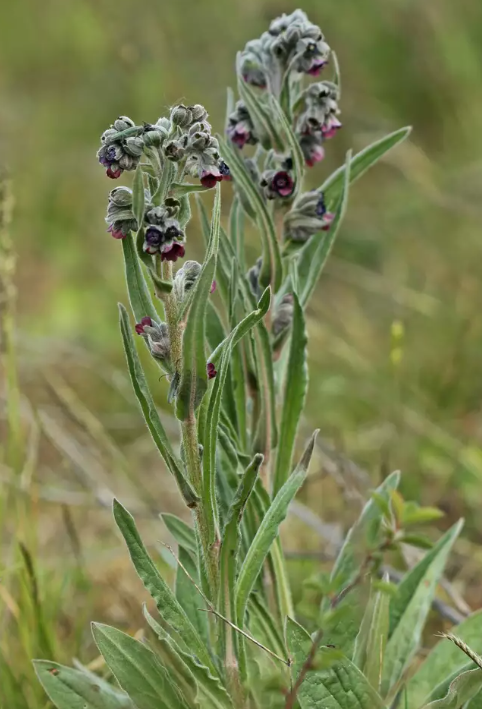
Chinese Forget-Me-Not, Cynoglossum amabile, is a hairy ornamental member of the borage family grown for loose sprays of small, vivid blue flowers.
The plant forms gray-green to green lance-shaped leaves and upright branching stems covered with coarse hairs. Lower leaves are generally larger and stalked, while upper leaves are smaller and attach more directly to the stem.
The flowers normally have five rounded blue lobes and are borne in open branching clusters. White and pink cultivated forms also occur, so flower color alone should not be used to declare a plant harmless.
Chinese Houndstongue and Common Houndstongue Are Different Species
Chinese Hound’s-Tongue is a legitimate alternate name for Cynoglossum amabile. The shorter name “Houndstongue,” however, commonly refers to Cynoglossum officinale, a separate Eurasian species responsible for many documented horse and livestock poisonings.
Common houndstongue typically forms a coarse basal rosette followed by tall stems bearing dull reddish-purple or maroon flowers. Chinese Forget-Me-Not generally has smaller, brighter blue flowers arranged in lighter, more open sprays.
Scientific names must be checked before transferring a toxic dose, case history, photograph, or feeding study from one species to the other.
Not the Same as a Traditional Garden Forget-Me-Not
Many familiar woodland and garden forget-me-nots belong to the genus Myosotis. Chinese Forget-Me-Not belongs to Cynoglossum.
The flowers may look similar, and both genera belong to Boraginaceae, but they differ in growth habit, fruit structure, documented alkaloid chemistry, and veterinary evidence.
A seed packet, nursery label, photograph of the complete plant, and mature fruit are more useful for identification than the common name “forget-me-not” alone.
Where Animals Encounter It
Dogs and cats may chew garden plants, fallen leaves, cut stems, dried bouquets, or flowers brought indoors. Rabbits, guinea pigs, tortoises, poultry, and pet birds may be offered unidentified garden clippings or gain access while roaming.
Horses and livestock may encounter Chinese Forget-Me-Not in ornamental beds near fences, discarded garden waste, naturalized patches, contaminated hayfields, cut forage, bedding, compost, or plant debris dumped into paddocks.
The greatest large-animal concern is repeated exposure or contaminated stored feed rather than one brief taste followed immediately by dramatic illness.
Dried Plants and Hay
Pyrrolizidine alkaloids can remain hazardous after the plant has dried. Hay, silage, pellets, dried flower arrangements, seed heads, and dead garden debris should not be assumed safe.
Drying can make identification more difficult and may prevent livestock from sorting the plant away from desirable forage. Contamination can also be uneven, with one bale or section of a bale containing substantially more plant material than another.
Suspect hay should be isolated and sampled rather than diluted into clean forage.
Hooked Nutlets
After flowering, the plant develops four small nutlets bearing hooked projections. These fruits attach readily to fur, manes, tails, wool, feathers, clothing, gloves, and equipment.
The hooked nutlets create a mechanical grooming problem in addition to the ingestion concern. They should be removed carefully before becoming tightly matted against the skin.
Animals should not be allowed to chew removed nutlets or grooming debris.
Exact-Species Evidence and Veterinary Interpretation
Direct studies establish that Cynoglossum amabile contains unsaturated pyrrolizidine alkaloids. They do not establish an animal-specific clinical dose or prove that every exposed animal will develop liver disease.
Most detailed veterinary knowledge comes from common houndstongue and other pyrrolizidine-alkaloid plants. That evidence supports precaution and delayed liver monitoring while requiring clear acknowledgment that the exact ornamental species has a much smaller veterinary case record.
Diagnosis
No routine clinic test proves that an animal ate Chinese Forget-Me-Not. Diagnosis begins with plant identification, the duration and quantity of possible exposure, feed history, compatible liver abnormalities, and exclusion of other causes.
Preserve complete plants, roots, leaves, flowers, mature nutlets, seed packets, photographs, hay samples, feed labels, bale information, and delivery records.
Testing may include a complete blood count, serum chemistry, bilirubin, glucose, albumin, liver-associated enzymes, clotting tests, bile-acid testing, urinalysis, abdominal ultrasound, and liver biopsy.
Compatible biopsy findings may include megalocytosis, fibrosis, hepatocyte loss, bile-duct proliferation, and nodular architectural change. Specialized laboratories may test blood or tissues for pyrrolic metabolites or protein or DNA adducts when confirmation is important.
Important Differential Diagnoses
Weight loss, jaundice, photosensitivity, ascites, abnormal behavior, head pressing, circling, or seizures can also result from aflatoxin, copper-associated liver disease, other hepatotoxic plants, medications, infectious hepatitis, biliary obstruction, portosystemic disease, metabolic disorders, and severe gastrointestinal illness.
Plant exposure should therefore be investigated alongside the complete medical and feed history rather than assumed to explain every abnormality automatically.
Prevention
Do not grow Chinese Forget-Me-Not within reach of plant-chewing pets, livestock, rabbits, poultry, or other animals. Remove escaped plants before hooked nutlets mature and spread.
Bag pulled plants, seed heads, cut stems, and bouquets. Do not throw them into paddocks, poultry yards, rabbit enclosures, kennels, open compost, or livestock feeding areas.
Inspect purchased hay and stored forage for hairy stems, blue-flowered weeds, hooked nutlets, and unidentified dried plant material. Know the field, cutting, supplier, delivery date, and bale lot whenever practical.
Provide adequate safe forage so grazing animals are not forced to consume unfamiliar or unpalatable plants when pasture is sparse.
Immediate Response After Known Ingestion
- Stop Further Exposure: Remove the animal from the flower bed, pasture, hay, dried arrangement, feed, or other source immediately.
- Preserve the Plant: Collect roots, basal leaves, flowering stems, flowers, hooked nutlets, seed packaging, and clear photographs of the entire plant.
- Document the Timeline: Record the earliest and latest possible exposure dates because pyrrolizidine-alkaloid injury may follow repeated ingestion and may not produce immediate signs.
- Estimate the Amount: Determine whether the animal took one exploratory bite, ate a complete plant, grazed repeatedly, or consumed hay containing an unknown percentage of plant material.
- Contact Veterinary Help: Call a veterinarian promptly after substantial ingestion, repeated exposure, contaminated forage, or exposure involving a young, pregnant, medically fragile, or liver-compromised animal.
Emergency Signs
- Neurologic Emergency: Head pressing, aimless wandering, circling, apparent blindness, frenzy, aggression, severe incoordination, seizures, recumbency, or coma requires immediate veterinary treatment.
- Liver-Failure Emergency: Jaundice, abdominal swelling, spontaneous bleeding, profound weakness, collapse, or black or bloody stool requires urgent evaluation.
- Breathing Emergency: Noisy inhalation, repeated choking, difficulty swallowing, feed or water coming from the nose, blue-gray gums, or labored breathing is an emergency.
- Photosensitivity Emergency: Severe facial swelling, blistering, skin sloughing, eye pain, or extensive sun injury requires prompt shelter from light and veterinary care.
- Do Not Delay: Advanced signs indicate that substantial liver dysfunction may already be present and are not appropriate for home monitoring.
Vomiting and Early Decontamination
- Do Not Automatically Induce Vomiting: The decision depends on species, amount, time since ingestion, symptoms, aspiration risk, and whether the exposure was one recent meal or repeated over days or weeks.
- Dogs Require Professional Direction: Vomiting may be considered only after a recent meaningful ingestion when a veterinarian or animal poison-control professional confirms that the dog is fully alert, stable, breathing normally, able to swallow, and free of neurologic signs.
- Cats Must Not Receive Peroxide: Never use hydrogen peroxide or another home method to make a cat vomit.
- Symptomatic Animals Must Not Vomit: Never attempt vomiting in an animal that is weak, jaundiced, disoriented, circling, head pressing, collapsed, seizuring, breathing abnormally, or unable to swallow normally.
- Activated Charcoal Is Veterinary-Directed: A veterinarian may consider charcoal after a substantial recent exposure, but its benefit is time-dependent and it cannot reverse alkaloid already absorbed or established liver injury.
- Protect the Airway: Never force charcoal into a sedated, vomiting, weak, neurologically abnormal, or poorly swallowing animal.
- Gastric Lavage Is Veterinary-Only: Lavage may be considered only in a selected serious recent exposure under anesthesia with airway protection.
Dogs and Cats
- Do Not Rely on Immediate Appearance: A dog or cat may look normal after ingestion even though pyrrolizidine-alkaloid injury can be delayed.
- Request Baseline Testing: After a meaningful or repeated exposure, the veterinarian may recommend a physical examination, complete blood count, chemistry panel, bilirubin, liver-enzyme testing, glucose, albumin, clotting tests, urinalysis, or bile-acid assessment.
- Schedule Follow-Up: One normal blood panel immediately after exposure may not exclude later injury, so repeat testing may be recommended according to the exposure history.
- Monitor at Home: Report appetite loss, vomiting, diarrhea, lethargy, weight loss, yellow gums or eyes, abdominal enlargement, unusual bleeding, pacing, disorientation, head pressing, seizures, or collapse.
- Avoid Unapproved Supplements: Do not give milk thistle, SAMe, methionine, vitamins, herbal products, or human liver medication without veterinary direction.
Horse and Livestock Exposure
- Remove the Entire Group: Move all animals away from the suspected pasture, hay, silage, pellets, grain, garden debris, or bedding until the source has been evaluated.
- Quarantine Suspect Feed: Mark and retain representative bales, feed bags, lot numbers, delivery records, and samples rather than discarding all evidence before examination.
- Inspect Every Animal: Animals sharing one feed source may consume different amounts and develop signs weeks or months apart.
- Contact a Large-Animal Veterinarian: Arrange herd-level evaluation when contaminated hay or repeated grazing is possible, even if no animal is currently jaundiced or neurologically abnormal.
- Do Not Force Exercise: Weak, disoriented, photosensitive, circling, or poorly coordinated animals should not be driven, ridden, or repeatedly walked.
- Do Not Drench: Never force oil, charcoal, water, supplements, or medication into an animal with impaired swallowing, pharyngeal dysfunction, or hepatic encephalopathy.
- Protect from Sunlight: Move photosensitive animals into deep shade or indoor housing while veterinary treatment is arranged.
Delayed Liver Monitoring
- Expect Delayed Risk: Clinical disease may develop after the animal has stopped eating the plant and after the original pasture or hay has been changed.
- Track Body Condition: Record appetite, weight, muscle mass, manure, activity, milk production, exercise tolerance, and behavior over the following weeks and months.
- Watch Mucous Membranes: Check the gums, whites of the eyes, and other pale tissues for yellow discoloration.
- Watch the Abdomen: Progressive abdominal enlargement, dependent swelling, or reduced muscle mass may indicate chronic hepatic dysfunction.
- Watch Behavior: Yawning, head pressing, aimless walking, circling, staring, aggression, unusual quietness, or apparent blindness may indicate hepatic encephalopathy.
- Follow the Testing Plan: Repeat biochemical testing, clotting evaluation, ultrasound, or liver biopsy may be recommended even when initial results are inconclusive.
Veterinary Diagnosis
- Exposure History: Diagnosis begins with identifying the plant and establishing whether exposure was recent, repeated, or through contaminated stored feed.
- Blood Testing: The veterinarian may evaluate bilirubin, albumin, glucose, liver-associated enzymes, electrolytes, blood-cell counts, fibrinogen, and clotting times.
- Liver-Function Testing: Bile-acid or other function testing may provide information that routine enzyme measurements alone cannot supply.
- Ultrasound Examination: Imaging may identify a small fibrotic liver, nodular change, abdominal fluid, gallbladder abnormalities, or another cause of liver disease.
- Liver Biopsy: Histopathology may reveal megalocytosis, fibrosis, individual-cell necrosis, or bile-duct proliferation compatible with pyrrolizidine alkaloidosis.
- Specialized Toxicology: Selected laboratories may test blood or tissue for pyrrolic metabolites, protein adducts, or DNA adducts when confirmation is important.
- Consider Other Causes: Copper toxicity, aflatoxin, infectious liver disease, other hepatotoxic plants, medications, and metabolic disorders may produce overlapping signs.
Veterinary Treatment
- No Specific Antidote: No treatment reliably neutralizes reactive pyrroles or reverses established fibrosis and megalocytic liver damage.
- Stop Continued Injury: Complete removal of the plant or contaminated feed is the most important first step.
- Support Hydration: Intravenous fluids and electrolyte management may be required for dehydration, poor intake, circulatory weakness, or accompanying gastrointestinal losses.
- Manage Blood Glucose: Animals with severe hepatic insufficiency may require glucose monitoring and carefully selected energy support.
- Manage Encephalopathy: Veterinary treatment may address intestinal ammonia production, constipation, dehydration, infection, gastrointestinal bleeding, and other factors that worsen neurologic signs.
- Manage Ascites: Abdominal fluid may require dietary, fluid, medication, and monitoring decisions tailored to the individual animal.
- Manage Photosensitization: Treatment may include strict light avoidance, wound care, pain control, fly control, and therapy for secondary skin infection.
- Manage Coagulopathy: Abnormal bleeding may require clotting assessment, vitamin support when appropriate, plasma products, transfusion, or other hospital care.
Nutrition and Medication Warnings
- Do Not Restrict Protein Automatically: Indiscriminate protein restriction can worsen muscle loss and inadequate nutrition, especially in an animal already losing weight.
- Modify Protein Only When Indicated: A veterinarian may adjust protein amount or source when hepatic encephalopathy or documented protein intolerance is present.
- Maintain Adequate Calories: Liver patients need a palatable, digestible, carefully balanced diet rather than a homemade ration consisting mainly of sugar or starch.
- No Fixed Supplement Protocol: Methionine, branched-chain amino acids, milk thistle, SAMe, vitamin E, vitamin C, zinc, and other supplements do not constitute a proven antidote and must be evaluated for the individual patient.
- Avoid Human Medication: Do not give acetaminophen, ibuprofen, naproxen, aspirin, sedatives, or other human products to an animal with possible liver injury.
- Review Existing Drugs: Tell the veterinarian about every prescription, supplement, dewormer, topical product, and feed additive because liver dysfunction may change drug handling and safety.
Hay, Pasture, and Feed Investigation
- Open Multiple Bales: Contamination may be uneven, so examining one clean-looking handful does not clear an entire load of hay.
- Check Hooked Nutlets: Look for small burs attached to twine, gloves, animal hair, hay flakes, equipment, and clothing.
- Inspect the Field: Walk the pasture and hayfield during the rosette, flowering, and fruiting stages because identification may be difficult after mowing.
- Trace the Lot: Record the supplier, cutting, field, delivery date, lot number, and animals that received each feed source.
- Do Not Dilute Suspect Hay: Mixing contaminated forage with clean hay does not remove the alkaloids or establish a safe concentration.
- Use Expert Identification: A county agricultural agent, extension specialist, botanist, veterinarian, or diagnostic laboratory may be needed to distinguish C. amabile from C. officinale and other hairy blue-flowered plants.
Prevention and Prognosis
- Prevent Repeated Access: Remove or fence off plants before animals can graze them repeatedly or before mature nutlets spread through the property.
- Collect Garden Debris: Bag flower arrangements, pulled plants, seed heads, and trimmings rather than throwing them into a pasture, poultry yard, rabbit enclosure, kennel, or compost pile accessible to animals.
- Inspect Purchased Hay: Know the hay source and reject forage containing suspicious weeds, burs, or unidentified dried stems.
- Provide Adequate Forage: Hungry animals are more likely to consume unpalatable plants when acceptable feed is scarce.
- Do Not Assume Resistance: Sheep and goats may tolerate more plant material than cattle or horses, but repeated grazing still carries risk.
- Early-Exposure Outlook: An animal identified before signs develop may remain healthy, but delayed monitoring is important because there is no immediate test that guarantees no future injury.
- Clinical-Disease Outlook: The prognosis becomes guarded once chronic liver dysfunction is evident and poor to grave when hepatic encephalopathy, advanced fibrosis, severe ascites, coagulopathy, or coma develops.
Frequently Asked Questions About Chinese Forget-Me-Not and Animal Poisoning
Is Chinese Forget-Me-Not poisonous to dogs and cats?
It should be treated as poisonous. Direct chemical studies confirm unsaturated pyrrolizidine alkaloids in Cynoglossum amabile, although published dog and cat poisoning cases involving this exact ornamental species are lacking. The primary concern is cumulative liver injury after a meaningful or repeated exposure.
Is Chinese Forget-Me-Not poisonous to horses and livestock?
Yes. Horses and cattle are especially susceptible to pyrrolizidine-alkaloid liver injury. Sheep and goats may be more resistant, but they are not immune. Chinese Forget-Me-Not should not be permitted in pasture, hay, silage, pellets, bedding, or discarded garden waste.
Has Chinese Forget-Me-Not itself caused documented animal poisonings?
The plant’s pyrrolizidine alkaloids have been confirmed directly, but published veterinary case reports or controlled feeding trials involving authenticated Cynoglossum amabile have not been located. Much of the clinical guidance comes from common houndstongue, Cynoglossum officinale, and other pyrrolizidine-alkaloid plants.
Is Chinese Forget-Me-Not the same as common houndstongue?
No. Chinese Forget-Me-Not is Cynoglossum amabile. Common houndstongue is Cynoglossum officinale, a separate coarse pasture weed responsible for well-documented horse poisonings. The shared common name does not make the plants botanically identical.
Is Chinese Forget-Me-Not the same as a regular forget-me-not?
No. Traditional garden and woodland forget-me-nots usually belong to Myosotis. Chinese Forget-Me-Not belongs to Cynoglossum. Similar blue flowers do not establish identical chemistry or toxicity.
Can one small bite cause liver failure?
One brief exploratory bite is not equivalent to repeated grazing or eating contaminated hay over many days. A single small taste may produce no illness, but no exact safe amount has been established. Substantial or repeated exposure should be reported to a veterinarian.
Why can signs be delayed?
Reactive pyrrolizidine metabolites injure liver cells and interfere with normal cell division. The liver may continue functioning while damage accumulates, so weight loss, jaundice, abdominal swelling, photosensitivity, abnormal behavior, or seizures may not appear until weeks or months after exposure.
Is dried Chinese Forget-Me-Not still dangerous?
Yes. Drying does not reliably destroy pyrrolizidine alkaloids. Hay, silage, pellets, dried bouquets, dead stems, mature nutlets, and garden debris should remain inaccessible.
Which parts should animals avoid?
Leaves, stems, roots, flowers, seedlings, developing fruit, mature hooked nutlets, and dried fragments should all be treated as unsafe. No plant part has an established animal-safe dose.
What symptoms require emergency care?
Jaundice, abdominal swelling, photosensitive skin injury, spontaneous bleeding, head pressing, circling, apparent blindness, aggression, severe incoordination, difficulty swallowing, seizures, collapse, or coma requires immediate veterinary treatment.
Can a normal blood test immediately after exposure rule out poisoning?
No. Early results may be normal before enough liver injury has developed to alter routine measurements. A veterinarian may recommend baseline testing followed by repeat liver chemistry, function testing, clotting evaluation, ultrasound, or other monitoring based on the exposure history.
Is there an antidote?
No specific antidote reverses reactive pyrrole binding, megalocytosis, or established liver fibrosis. Treatment focuses on ending exposure, reducing absorption when still appropriate, maintaining hydration and nutrition, managing encephalopathy and photosensitivity, supporting clotting and blood glucose, and treating complications.
Should an exposed animal automatically receive a low-protein diet or liver supplements?
No. Indiscriminate protein restriction can worsen muscle loss and malnutrition. Milk thistle, SAMe, methionine, vitamins, and other products are not proven antidotes. Diet and supplements should be selected for the individual animal by the treating veterinarian.
What is the prognosis?
An animal identified before clinical disease may remain healthy, although delayed monitoring may still be warranted. The prognosis becomes guarded once chronic liver dysfunction is evident and poor to grave with advanced fibrosis, hepatic encephalopathy, severe ascites, coagulopathy, repeated seizures, or coma.