Jade Plant Gastrointestinal and Neurologic Toxicosis of Unknown Mechanism
Is Jade Plant Poisonous to Dogs, Cats, Horses, and Livestock?
Yes—Jade Plant, Crassula ovata, is poisonous to dogs and cats and should remain inaccessible to horses, livestock, rabbits, birds, and other animals. The most consistently recognized signs are vomiting, appetite loss, depression, lethargy, weakness, and incoordination. Diarrhea, abnormal quietness, muscle tremors, dilated pupils, or changes in heart rate have also been reported, particularly after more substantial or uncertain exposures.
The compound responsible for Jade Plant poisoning has not been identified. Direct phytochemical studies have detected several broad classes of plant constituents, but none has been proven to produce the characteristic veterinary syndrome. Bufadienolide cardiac glycosides occur in certain related Crassulaceae, especially Kalanchoe, Cotyledon, and Tylecodon, but they have not been established as the Jade Plant toxin and should not be transferred to Crassula ovata without direct evidence.
Most limited exposures are expected to cause no signs or a mild-to-moderate gastrointestinal or depressive illness rather than rapid fatal poisoning. No safe number of leaves, stem pieces, flowers, roots, or bites has been established, however, and a small animal that consumes several thick succulent leaves may swallow a meaningful plant mass. Repeated vomiting, worsening depression, inability to stand normally, marked tremors, abnormal breathing, collapse, or a persistent heart-rate abnormality requires prompt veterinary examination.
Jade Plant is frequently confused with Elephant Bush, Silver Jade, Kalanchoe, Peperomia, ZZ Plant, and several unrelated plants called Money Plant or Money Tree. Exact identification matters because some look-alikes have substantially different toxins and treatment priorities.
About this guide: This page provides general pet-poisoning information and cannot diagnose or treat an individual animal. For any suspected exposure, contact a veterinarian or animal poison-control service immediately. Do not induce vomiting, give medication, or attempt home decontamination unless directed by a veterinary professional.
Jade Plant
Crassula ovata (Mill.) Druce
Philip Miller originally described the species as Cotyledon ovata in 1768. George Claridge Druce transferred it to the genus Crassula, publishing the accepted combination Crassula ovata in 1917. The author construction “(Mill.) Druce” preserves Miller’s authorship of the original species name while crediting Druce for the later combination.
Important accepted taxonomic and historical search names include:
- Cotyledon ovata Mill., the basionym
- Toelkenia ovata (Mill.) P.V.Heath, a later homotypic combination
- Crassula argentea Thunb.
- Crassula obliqua Aiton
- Crassula portulacea Lam.
- Crassula articulata Zuccagni
- Crassula nitida Schönland
- Crassula lucens Gram
- Cotyledon lutea Lam., an illegitimate later homonym
Crassula argentea remains especially important because it appears in many veterinary poison lists, nursery labels, older books, and online plant-safety records. Those records generally refer to the same accepted Jade Plant species now called Crassula ovata.
Gollum Jade, Hobbit Jade, Finger Jade, Trumpet Jade, Hummel’s Sunset, Crosby’s Compact, Tricolor, Variegata, Minima, and related cultivated forms are usually treated as cultivars or horticultural selections of Crassula ovata. Their altered leaf shape, size, or coloration does not establish a separate pet-safe toxicological species.
Silver Jade, Crassula arborescens, is a separate species. Elephant Bush, Portulacaria afra, is also separate despite being sold as Dwarf Jade or Miniature Jade. These plants should not be entered as scientific synonyms of Crassula ovata.
Crassulaceae — Stonecrop and Succulent Family
Jade Plant; Jade Tree; Jade Bush; Common Jade; Green Jade; Money Plant; Money Tree; Lucky Plant; Friendship Plant; Friendship Tree; Dollar Plant; Dollar Tree; Chinese Rubber Plant; Japanese Rubber Plant; Dwarf Rubber Plant; Baby Jade; Tree Jade; Succulent Jade; Jade Bonsai
Historical and botanical search names include Crassula argentea, Crassula obliqua, Crassula portulacea, Cotyledon ovata, and Toelkenia ovata.
Cultivar and trade names include Gollum Jade, Hobbit Jade, Finger Jade, Trumpet Jade, Ogre’s Ears, Shrek Ears, E.T.’s Fingers, Spoon Jade, Hummel’s Sunset, Sunset Jade, Tricolor Jade, Variegated Jade, Crosby’s Compact, Crosby’s Red, Red Dwarf Jade, Botany Bay Jade, Minima Jade, and Lemon and Lime Jade.
Baby Jade, Dwarf Jade, Miniature Jade, and Small-Leaf Jade are ambiguous names. They may refer to Crassula ovata cultivars, Elephant Bush or Portulacaria afra, Crassula arborescens, or another succulent. Chinese Jade and Silver Jade are also used for Crassula arborescens and should not be treated automatically as exact synonyms.
Money Plant and Money Tree may refer to Pachira aquatica, Pilea peperomioides, Epipremnum aureum, Zamioculcas zamiifolia, or other unrelated houseplants. Rubber Plant may refer to Ficus elastica, while Baby Rubber Plant generally refers to Peperomia obtusifolia. Exact scientific identification is essential because these plants have different toxicological profiles.
The Toxic Principle Remains Unidentified
Jade Plant is recognized as a poisonous houseplant because ingestion has been associated repeatedly with vomiting, appetite loss, depression, lethargy, weakness, and incoordination in dogs and cats. The plant’s responsible toxin has not been isolated, named, quantified, or linked experimentally to that complete clinical syndrome. There is no validated mechanism that explains every gastrointestinal, neurologic, and cardiovascular observation.
This uncertainty is medically important. “Unknown toxic principle” does not mean that the reported illness is imaginary, but it prevents the page from assigning Jade Plant automatically to a familiar toxin class. Statements that the plant definitely contains cardiac glycosides, oxalate crystals, cyanogenic glycosides, alkaloids, or one particular saponin require exact-species analytical evidence that is presently lacking.
The safest evidence-based description is that Crassula ovata contains an incompletely characterized mixture capable of producing gastrointestinal irritation and a depressive or incoordination syndrome in susceptible animals. Treatment must follow the patient’s clinical findings rather than a presumed antidote for an unproven compound.
Clinical Association Versus Chemical Proof
Veterinary poison listings and reviews consistently associate Jade Plant exposure with vomiting, depression, weakness, and ataxia. Diarrhea, appetite loss, lethargy, muscle tremors, dilated pupils, and heart-rate changes have also been described. These observations help define the expected syndrome but do not identify the molecule responsible.
Clinical reports compiled through poison services may contain incomplete plant identification, uncertain amounts, mixed exposures, and animals evaluated only by telephone. A chewed succulent identified as Jade Plant from one photograph may instead be Kalanchoe, Silver Jade, Elephant Bush, an Aeonium, or another species. Severe or mechanistically unusual cases therefore require botanical confirmation and investigation of other substances.
Exact-Species Phytochemical Screening
Qualitative phytochemical screening of aqueous and methanolic Crassula ovata leaf extracts has reported saponins, phenols, phytosterols, steroids, terpenoids, flavonoids, carbohydrates, and proteins. Another extract-based investigation reported triterpenoids, flavonoids, phenols, steroids, proteins, and carbohydrates. These findings demonstrate that Jade Plant is chemically active and more complex than a mass of stored water and cellulose.
The studies were designed to investigate antimicrobial, antioxidant, or other laboratory bioactivities rather than natural animal poisoning. A positive color reaction or precipitation test identifies a broad chemical class under the extraction conditions; it does not isolate a compound, quantify its concentration in a fresh leaf, establish absorption, or reproduce the veterinary syndrome.
Different solvents also produced different screening results. In one investigation, saponin screening was positive in the water extract but negative in the methanol extract, while phytosterol detection showed the opposite pattern. Extraction-dependent results cannot be converted into a universal statement that every Jade Plant leaf contains a known toxic dose of one class.
Saponins Have Not Been Proven to Be the Jade Plant Toxin
A qualitative positive test for saponins in one aqueous leaf extract has led some secondary discussions to propose saponins as the toxic principle. That conclusion is premature. No exact-species study has isolated a particular Jade Plant saponin, measured its concentration in clinically relevant tissues, administered it to dogs or cats, and reproduced vomiting with depression and ataxia.
Saponins can irritate gastrointestinal membranes and can display foaming, membrane, cytotoxic, or hemolytic activity under laboratory conditions. Those general properties provide a possible explanation for vomiting but do not establish that saponins cause the plant’s neurologic signs. Jade Plant should therefore not be described as a confirmed saponin toxicosis.
Phenols, Flavonoids, Sterols, and Terpenoids
Phenolic compounds, flavonoids, phytosterols, steroids, triterpenoids, and terpenoids have been detected through broad screening of Jade Plant extracts. These are large chemical categories containing compounds with widely different structures and biological activities. Their presence alone does not identify a poison.
Antioxidant, antimicrobial, α-amylase-inhibiting, or cytotoxic effects observed in test systems do not prove that a pet experiences the same effect after swallowing intact leaves. Extract concentration, solvent, laboratory target, exposure route, metabolism, and dose differ substantially from natural ingestion.
The public safety conclusion should remain narrow: Jade Plant possesses extractable bioactive constituents, but none has been validated as the substance responsible for veterinary poisoning. Medicinal or antimicrobial research should not be converted into owner-administered treatment.
Elemental Composition Is Not a Toxin Identification
An exact-species elemental analysis detected at least nineteen elements in Jade Plant leaves, with potassium, silicon, and calcium among the quantitatively prominent mineral components. These findings describe the mineral composition of the tested plant material. They do not demonstrate that potassium, calcium, or silicon causes the recognized vomiting and ataxia syndrome.
High total calcium in a leaf analysis does not prove the presence of insoluble calcium-oxalate raphides or soluble oxalate poisoning. Jade Plant should not be described automatically as an aroid-like oral-burning plant, nor should a total mineral measurement be used to predict hypocalcemia or kidney injury.
Bufadienolides and the Crassulaceae Evidence Boundary
Crassulaceae includes several genera with well-established bufadienolide cardiac glycosides. Important examples occur in Kalanchoe, Cotyledon, and Tylecodon, where ingestion can inhibit sodium-potassium ATPase, disrupt cardiac conduction, and produce gastrointestinal, cardiovascular, and neurologic disease. Some species cause fatal livestock poisoning or chronic paretic syndromes.
That family-level evidence cannot be transferred silently to Crassula ovata. Bufadienolides have not been established as the toxic principle responsible for ordinary Jade Plant cases. A plant’s membership in Crassulaceae does not prove that it contains the same compounds, concentrations, tissue distribution, or clinical risk as Kalanchoe.
This distinction is particularly important when an animal develops bradycardia, tachycardia, arrhythmia, collapse, or severe weakness. The plant may have been misidentified, another succulent may have been swallowed, or a separate cardiac, metabolic, medication, or pesticide exposure may be present. ECG monitoring can still be medically appropriate without claiming that Jade Plant contains proven digitalis-like glycosides.
Gastrointestinal Irritation
Vomiting is the most consistently reported finding after Jade Plant ingestion. Thick leaves can release a large amount of watery succulent tissue when chewed, and the unidentified chemical mixture may irritate the stomach and intestine. Nausea, appetite loss, abdominal discomfort, and diarrhea may accompany or follow vomiting.
Repeated vomiting carries plant material and stomach acid back through the esophagus. Secondary esophagitis, superficial blood streaking, dehydration, electrolyte abnormalities, weakness, and aspiration may become more important than the original plant dose. A pet that cannot retain water requires assessment even when the initial toxicant usually causes limited illness.
Depression, Weakness, and Ataxia
Depression and incoordination distinguish the recognized Jade Plant syndrome from simple dietary indiscretion. Affected animals may hide, sleep excessively, appear mentally dull, walk with a wide stance, sway, stumble, misjudge jumps, or resist standing. Muscle tremors have been described less consistently.
The mechanism remains unknown. Direct central-nervous-system activity is possible, but dehydration, electrolyte imbalance, hypoglycemia, hypotension, nausea, concurrent medication, pesticide exposure, or incorrect plant identification can also produce weakness and ataxia. No laboratory study has isolated a Jade Plant compound and demonstrated a defined neurologic receptor or ion-channel effect in pets.
Profound stupor, coma, repeated seizures, progressive paralysis, or rapidly worsening ataxia is not a routine mild presentation. Those findings require immediate investigation for a more dangerous toxin or medical disorder.
Heart-Rate Observations and Mechanistic Limits
Both slow and fast heart rates appear in secondary descriptions of Jade Plant exposure, and a veterinary houseplant review notes tachycardia among possible findings in cats. These observations are not supported by a validated exact-species cardiac mechanism. Heart rate can change because of stress, dehydration, pain, hypothermia, hypotension, electrolyte disturbance, medication, or another toxicant.
A normal home pulse does not prove that an exposed animal is safe, and an abnormal pulse does not prove cardiac-glycoside poisoning. Persistent bradycardia, marked tachycardia, weak pulses, fainting, or an irregular rhythm warrants ECG, blood-pressure measurement, electrolyte assessment, and evaluation for other causes.
Plant Juice, Skin, and Eye Contact
Jade Plant does not release the copious caustic white latex characteristic of many Euphorbia species. Broken leaves and stems release clear watery succulent juice, and exact-species evidence for severe contact dermatitis is limited. Nevertheless, plant juice, soil, pesticide residue, and mechanical debris can irritate damaged skin or eyes.
Animals may groom juice from the paws or coat and convert an external exposure into ingestion. Eye contact can also include potting grit, leaf fragments, fertilizer, or pesticide rather than plant juice alone. Persistent redness, squinting, swelling, discharge, or skin inflammation requires assessment based on the actual lesion.
Leaves, Stems, Flowers, and Roots
Leaves are the most common exposure because they are thick, brittle, easily detached, and accessible throughout the year. One mature leaf can represent a greater wet plant mass than a similarly sized thin houseplant leaf. Dogs may swallow several fallen leaves quickly, while cats may bite leaf margins repeatedly without detaching the entire leaf.
Succulent stems, older branches, flowers, roots, cuttings, and propagation leaves should also remain inaccessible. No comparative toxicology study establishes that one tissue is consistently the most poisonous. Flowers may be less frequently encountered indoors, but flowering does not make the plant safe.
Root-ball ingestion creates additional concerns involving soil, fertilizer, insecticide, mold, stones, drainage material, plastic labels, and pot fragments. Bonsai wire may create a penetrating or obstructive foreign body.
Fresh, Wilted, and Dried Material
Fresh leaves provide the largest amount of succulent juice and are the form most commonly chewed. Wilted or detached leaves remain capable of retaining water and chemical constituents for a considerable period. Leaves used for propagation may stay plump and viable while lying on soil, shelves, or windowsills.
Drying has not been demonstrated to neutralize the unknown toxic principle. Dried leaves, stems, bonsai trimmings, pressed specimens, craft material, and discarded plants should remain inaccessible. Dry material may also be contaminated with dust, pesticide, paint, adhesive, or decorative products.
Cultivars and Variegated Forms
Common Crassula ovata cultivars include Gollum, Hobbit, Hummel’s Sunset, Tricolor, Variegata, Crosby’s Compact, Minima, and numerous tubular- or spoon-leaved forms. These plants remain closely associated with the accepted species despite dramatic differences in leaf shape, size, and color.
No controlled evidence establishes a nontoxic Jade Plant cultivar. Variegation, red leaf margins, yellow coloration, compact growth, or tubular leaves should not be interpreted as proof that the unidentified toxic principle is absent. Initial safety precautions should remain the same unless botanical identification shows that the plant is actually another species.
Extracts, Teas, and Traditional Preparations
Jade Plant has been used in traditional or experimental preparations for wounds, warts, diabetes, diarrhea, and other conditions. Laboratory studies have examined aqueous, methanolic, ethanolic, and other extracts for antimicrobial, antioxidant, or metabolic activity. These preparations concentrate or selectively recover compounds differently from chewing one intact leaf.
No Jade Plant tea, juice, tincture, poultice, powder, capsule, extract, or homemade remedy should be given to an animal without direct veterinary instruction. Additional ingredients, extraction solvents, sweeteners, alcohol, oils, medications, or other herbs may alter the risk substantially.
Pesticide Residues and Treated Plants
Jade Plant leaves can retain and distribute applied pesticide residues. Analytical research has used living Crassula ovata leaves specifically to study pesticide sampling and distribution. A nursery, greenhouse, office, or landscape plant may therefore create a mixed exposure even when its intrinsic toxin remains unidentified.
Marked salivation, tremors, seizures, respiratory abnormalities, unusual pupil changes, or rapid systemic decline may reflect insecticide, miticide, fungicide, fertilizer, or cleaning-product exposure. Preserve labels and ask the grower, nursery, property manager, or plant owner about recent applications.
Toxic-Dose and Evidence Limitations
No validated toxic dose exists for Jade Plant in dogs, cats, horses, cattle, sheep, goats, rabbits, guinea pigs, birds, or other animals. No safe number of leaves, stem pieces, flowers, roots, or bites has been established. The unknown toxic principle prevents meaningful dose calculations based on a presumed concentration.
Risk depends on plant mass, animal size, repeated access, underlying disease, hydration, exact botanical identity, and associated products. Most limited exposures are expected to cause no signs or mild-to-moderate illness, but an animal’s condition must take priority over assumptions based on the number of visible bite marks.
Expected Onset and Evidence Limits
Vomiting, appetite loss, depression, weakness, or incoordination may begin within the first several hours after Jade Plant ingestion, but no controlled exact-species onset range has been established. Repeated access can make the true exposure time uncertain, especially when fallen leaves disappear gradually or a cat bites the plant overnight.
A large number of published descriptions ultimately trace back to poison-service observations rather than controlled feeding trials. The expected syndrome is clinically useful, but exact frequencies, dose relationships, onset intervals, and recovery times remain incompletely defined.
Early Oral and Gastrointestinal Signs
Some animals may lip lick, swallow repeatedly, drool, gag, or stop chewing after biting a thick leaf. Prominent immediate mouth burning, severe tongue swelling, or extensive oral blistering is not the characteristic Jade Plant syndrome and should raise concern for an aroid, corrosive chemical, caustic sap plant, allergy, or oral foreign body.
Nausea may appear as restlessness, repeated swallowing, drooling, licking surfaces, approaching food and turning away, or eating grass. Vomiting may contain thick green leaf fragments, clear plant pulp, food, foam, bile, mucus, soil, or potting material.
Vomiting and Appetite Loss
Vomiting is the most consistently recognized effect. An animal may vomit once and remain alert, or may develop repeated episodes with progressive quietness and appetite loss. The number and frequency of episodes matter more clinically than the mere presence of one vomited leaf fragment.
Continued nausea or refusal to eat can persist after vomiting stops. Oral discomfort, gastritis, dehydration, esophagitis, pancreatitis, foreign material, or another toxin may be responsible when appetite does not return as expected.
Diarrhea and Abdominal Discomfort
Diarrhea is reported less consistently than vomiting but may occur after a larger ingestion. Stool may become soft, watery, mucus-covered, or occasionally blood-streaked if gastrointestinal irritation is substantial. Frequent vomiting and diarrhea together increase dehydration and electrolyte loss.
Abdominal discomfort may appear as a hunched posture, prayer position, repeated stretching, restlessness, guarding, vocalization, or reluctance to lie down. Severe abdominal enlargement, repeated unproductive retching, persistent pain, straining, or reduced stool suggests obstruction, gastric dilatation, swallowed stones, plastic, bonsai wire, or another process rather than uncomplicated plant irritation.
Depression and Lethargy
Depression may be more pronounced than would be expected after one minor vomiting episode. An affected animal may hide, sleep excessively, respond slowly, avoid interaction, stop grooming, or remain reluctant to move. Owners may describe the pet as dull, dazed, unusually quiet, or “not itself.”
Depression can reflect a direct unidentified plant effect, nausea, dehydration, electrolyte disturbance, low blood pressure, hypoglycemia, or a mixed exposure. Reduced responsiveness, inability to remain awake, or progressive mental deterioration requires emergency evaluation.
Weakness and Incoordination
Ataxia or incoordination is one of the defining reported Jade Plant findings. An animal may sway, stumble, cross the limbs, miss a jump, walk with a wide stance, fall, or appear weak when rising. Mild weakness caused by nausea or dehydration can resemble neurologic ataxia.
Progressive incoordination, inability to stand, repeated falling, muscle rigidity, or paralysis is not a finding to monitor casually at home. Neurologic examination, glucose and electrolyte testing, blood-pressure assessment, and evaluation for medication, pesticide, cannabis, mushroom, or another plant exposure may be necessary.
Muscle Tremors and Seizures
Muscle tremors have been described in some Jade Plant exposures, but they are not documented as a routine effect of every ingestion. Fine trembling may also accompany fear, pain, nausea, hypoglycemia, hypothermia, fever, pesticide exposure, or medication toxicity.
Generalized tremors, repeated jerking, rigidity, or seizures require immediate emergency care. These signs should broaden the differential diagnosis rather than being accepted automatically as proof of severe Jade Plant poisoning.
Pupil and Heart-Rate Changes
Dilated pupils and tachycardia have been reported as possible findings in cats, while some secondary sources describe slow heart rate. The inconsistency reflects limited clinical documentation and the absence of an established mechanism. Stress, dehydration, blood-pressure change, body temperature, medications, or another toxicant can alter both pupils and heart rate.
Persistent bradycardia, marked tachycardia, an irregular pulse, fainting, weak pulses, or pale gums requires ECG and blood-pressure assessment. These findings should not be used to declare bufadienolide or cardiac-glycoside poisoning without direct evidence.
Dehydration and Secondary Circulatory Effects
Repeated vomiting or diarrhea can cause tacky gums, reduced skin elasticity, sunken eyes, reduced urination, weakness, rapid heart rate, cool extremities, and low blood pressure. Small animals, elderly patients, and animals with kidney, cardiac, endocrine, or gastrointestinal disease may deteriorate more rapidly.
Severe weakness, collapse, pale or gray gums, prolonged capillary refill, or reduced responsiveness can indicate inadequate circulation. Those findings require professional fluid and cardiovascular assessment rather than forced oral water.
Aspiration and Respiratory Complications
Coughing during or after vomiting may indicate throat irritation, inhaled plant material, or aspiration. Continued coughing, nasal discharge, fever, rapid breathing, increased respiratory effort, or renewed lethargy after gastrointestinal improvement may indicate aspiration pneumonia.
Abnormal breathing is not an expected uncomplicated Jade Plant sign. It may also result from another plant, pesticide, allergy, airway obstruction, heart disease, or a severe metabolic problem. Open-mouth breathing in a cat, blue-gray gums, neck extension, or collapse requires immediate care.
Skin and Eye Findings
Direct exact-species evidence for severe Jade Plant dermatitis is limited, but broken tissue, potting products, and pesticide residue can irritate skin or eyes. Redness, itching, face rubbing, tearing, blinking, squinting, or eyelid swelling may follow contact.
Persistent ocular pain, cloudiness, discharge, inability to open the eye, spreading dermatitis, blistering, or facial swelling requires examination. A person cleaning the animal should wear gloves when pesticide treatment or another succulent species remains possible.
Dogs
Dogs may swallow fallen leaves, pull down a potted plant, chew bonsai branches, raid propagation trays, or dig into the root ball. Vomiting, appetite loss, depression, weakness, and incoordination are the principal concerns. Large dogs may consume a substantial number of thick leaves before the damage is noticed.
Repeated vomiting, severe lethargy, inability to walk normally, abnormal pulse, tremors, coughing, or collapse requires examination. Missing stones, wire, pot fragments, fertilizer, or plastic changes the case from plant ingestion to a possible mixed toxic or foreign-body exposure.
Cats
Cats may bite leaf edges, knock detached leaves onto the floor, climb into pots, or repeatedly chew one accessible branch. Signs may include quiet drooling, vomiting, food refusal, hiding, reduced grooming, depression, dilated pupils, weakness, or ataxia.
Continued anorexia deserves particular attention because prolonged inadequate intake can produce serious secondary metabolic disease in cats. Open-mouth breathing, profound depression, tremors, inability to jump or walk normally, collapse, or a persistent heart-rate abnormality requires urgent veterinary care.
Horses
Horse exposure is uncommon but possible when large landscape plants, greenhouse material, nursery waste, or discarded houseplants are placed near a stall or paddock. Horses cannot vomit, so feed refusal, salivation, depression, colic, diarrhea, weakness, abnormal gait, or altered behavior may predominate.
There is no validated equine toxic dose or well-characterized natural Jade Plant syndrome. A symptomatic horse should not be drenched, and severe weakness, ataxia, cardiac abnormality, or colic requires large-animal veterinary assessment and investigation of other plants or chemicals.
Cattle, Sheep, and Goats
Livestock may encounter Jade Plant where it grows outdoors in warm climates or when greenhouse and landscape waste is discarded into an enclosure. Goats may sample succulent branches readily, while cattle or sheep may eat the plant when it is mixed with more desirable forage.
Because bufadienolide-containing Kalanchoe, Cotyledon, and Tylecodon species occur in the same family and regions, exact identification is especially important. Marked cardiac abnormalities, sudden death, persistent recumbency, or a chronic paretic syndrome should not be attributed to Crassula ovata without excluding those more established livestock toxins.
Rabbits and Guinea Pigs
Rabbits and guinea pigs cannot vomit. Appetite loss, salivation, reduced fecal production, diarrhea, abdominal discomfort, tooth grinding, hiding, weakness, or incoordination may therefore be the important findings.
Even a mild irritant exposure can become clinically important when normal feeding stops. A small herbivore that eats less, produces fewer feces, appears painful, or becomes weak requires prompt species-experienced veterinary guidance.
Birds
Pet birds may shred thick leaves and stems, exposing the beak, mouth, eyes, feet, feathers, and gastrointestinal tract. Regurgitation, diarrhea, food refusal, weakness, altered balance, tremors, respiratory change, or unusual quietness requires avian veterinary advice.
There is little direct avian Jade Plant toxicology. A small bird can receive a substantial relative exposure, and pesticide residue on foliage may be more dangerous than the plant’s unidentified intrinsic toxin.
Severe or Atypical Findings
Repeated seizures, coma, jaundice, acute kidney failure, severe hypocalcemia, persistent arrhythmia, extensive oral burning, progressive paralysis, or rapid unexplained collapse is not the expected uncomplicated presentation after a limited Jade Plant ingestion. These findings require investigation for another or additional cause.
Important alternatives include Kalanchoe, oleander, yew, sago palm, calcium-oxalate plants, pesticides, cannabis, xylitol, medication, nicotine, toxic mushrooms, antifreeze, hypoglycemia, foreign-body obstruction, and primary neurologic or cardiovascular disease.
Duration and Prognosis
Most uncomplicated cases are expected to improve within several hours to one or two days after exposure ends, vomiting is controlled, hydration remains adequate, and normal coordination and appetite return. A precise recovery period has not been established in controlled Jade Plant studies.
The prognosis is generally good after a limited exposure producing mild gastrointestinal signs or transient depression. Persistent ataxia, severe dehydration, aspiration, prolonged food refusal, obstruction, abnormal cardiac findings, or an unidentified mixed exposure creates a more guarded situation.
Plant Identity
Jade Plant, Crassula ovata, is a long-lived evergreen succulent shrub in Crassulaceae. It develops a dense, repeatedly branching form with thick stems and paired fleshy leaves, and an older specimen can resemble a small tree rather than a typical soft houseplant. It is cultivated as an indoor plant, patio specimen, warm-climate landscape shrub, propagation plant, greenhouse crop, and succulent bonsai. Each use creates a different route by which an animal may reach the plant.
The species is one member of a large and morphologically diverse genus of predominantly succulent plants. The common name jade is applied loosely to several unrelated or only distantly related succulents, including plants with substantially different toxicology. A label reading Jade, Mini Jade, Dwarf Jade, Jade Tree, Money Plant, or Money Tree is therefore useful evidence but not definitive identification.
Complete photographs should include the full plant, leaf arrangement, both surfaces of several leaves, young and mature stems, flowers when present, roots, pot, nursery tag, and any neighboring succulents. One detached leaf is often insufficient because cultivars, bonsai pruning, drought stress, and similar-looking species can alter the plant’s usual appearance.
Accepted Taxonomy
The accepted name is Crassula ovata (Mill.) Druce. Philip Miller originally published the species as Cotyledon ovata in 1768, and George Claridge Druce later transferred it to Crassula. The parenthetical authorship preserves Miller’s original description, while Druce is credited with the accepted combination.
Crassula argentea remains the most important older name for poison-page research because it appears in veterinary databases, nursery literature, historical houseplant books, and earlier toxicology summaries. Other relevant search names include Crassula obliqua, Crassula portulacea, Crassula articulata, Crassula nitida, Crassula lucens, and Toelkenia ovata.
These names represent nomenclatural history rather than several chemically distinct forms of Jade Plant poisoning. Botanical synonymy can broaden literature retrieval, but it cannot correct a specimen that was misidentified during the original exposure. Records using only Dwarf Jade, Chinese Jade, or Miniature Jade require particular caution because those names are also applied to other species.
Evolutionary Placement
Modern phylogenetic research places Crassula within an old southern African lineage of drought-adapted leaf succulents. The genus diversified into annual herbs, low mats, compact rosettes, aquatic or seasonally wet species, and large perennial shrubs such as Crassula ovata. That diversity reflects a long evolutionary history rather than one uniform chemistry shared by every member of the genus.
This distinction matters directly to toxicology. Crassula ovata, Kalanchoe, Cotyledon, and Tylecodon belong to Crassulaceae, but family membership does not prove that they contain the same bufadienolides, toxin concentrations, plant-part distribution, or poisoning syndrome. Relatedness can guide research questions; it cannot substitute for exact-species chemical evidence.
Native Range and Poisoning-Relevant Habitat
Jade Plant is native from southeastern Mozambique through KwaZulu-Natal and the Cape Provinces of South Africa. It occurs in warm rocky country, valley thicket, scrub, slopes, and other seasonally dry habitats where succulent stems and leaves provide a substantial water reserve. Wild plants may become much larger and more structurally complex than a young retail houseplant.
In its native vegetation, the species grows among numerous other southern African succulents and shrubs. This becomes important when livestock, free-ranging dogs, or outdoor cats encounter an unidentified succulent rather than a labeled potted specimen. Several visually similar regional plants possess better-established cardiac or neurologic toxins, so photographs should include neighboring vegetation and the plant’s complete growth habit.
Outside its native range, Crassula ovata is cultivated worldwide and can persist outdoors in frost-free or mild climates. Animals may encounter established landscape shrubs beside homes, patios, hotels, offices, apartment complexes, botanical gardens, commercial properties, veterinary clinics, schools, cemeteries, and public walkways. Pruned branches, uprooted plants, storm-damaged material, and discarded containers may create a much larger exposure than the few bites usually associated with an indoor windowsill plant.
Growth Form and Stems
Mature Jade Plants form strongly branched succulent shrubs that can become substantially larger than the compact specimens sold in small pots. Young stems are green, smooth, and fleshy, while older stems become brown or gray and develop a bark-like surface. That woody appearance may cause an owner to describe the plant as a small tree or bonsai rather than a succulent.
Branches can become heavy and brittle, especially when the crown is dense. A cat climbing through the plant or a dog pulling one branch may break off a much larger section than the amount initially chewed. Older branches may also carry bonsai wire, clips, decorative cord, pesticide residue, or material from previous pruning and training.
Leaves
Leaves are arranged in opposite pairs and are thick, smooth, succulent, and generally oval to obovate. They are usually glossy medium to dark green, although margins may become red under intense light, drought stress, cool conditions, or cultivar-specific coloration. Variegated forms may contain yellow, cream, pale green, or nearly white sectors.
Leaves detach readily when bumped, pruned, overwatered, transported, or handled during propagation. A detached leaf may remain firm, moist, and viable for weeks, allowing it to remain available beneath furniture, behind a pot, inside a shipping box, or on a propagation tray long after the owner assumes it is dead.
The thick succulent structure complicates visual dose estimates. One mature Jade Plant leaf may represent considerably more wet plant mass than a thin leaf of similar surface area, and a bite can remove a deep crescent without detaching the leaf. Estimate exposure from the greatest volume that could be missing rather than the number of intact leaves still attached.
Flowers and Reproductive Growth
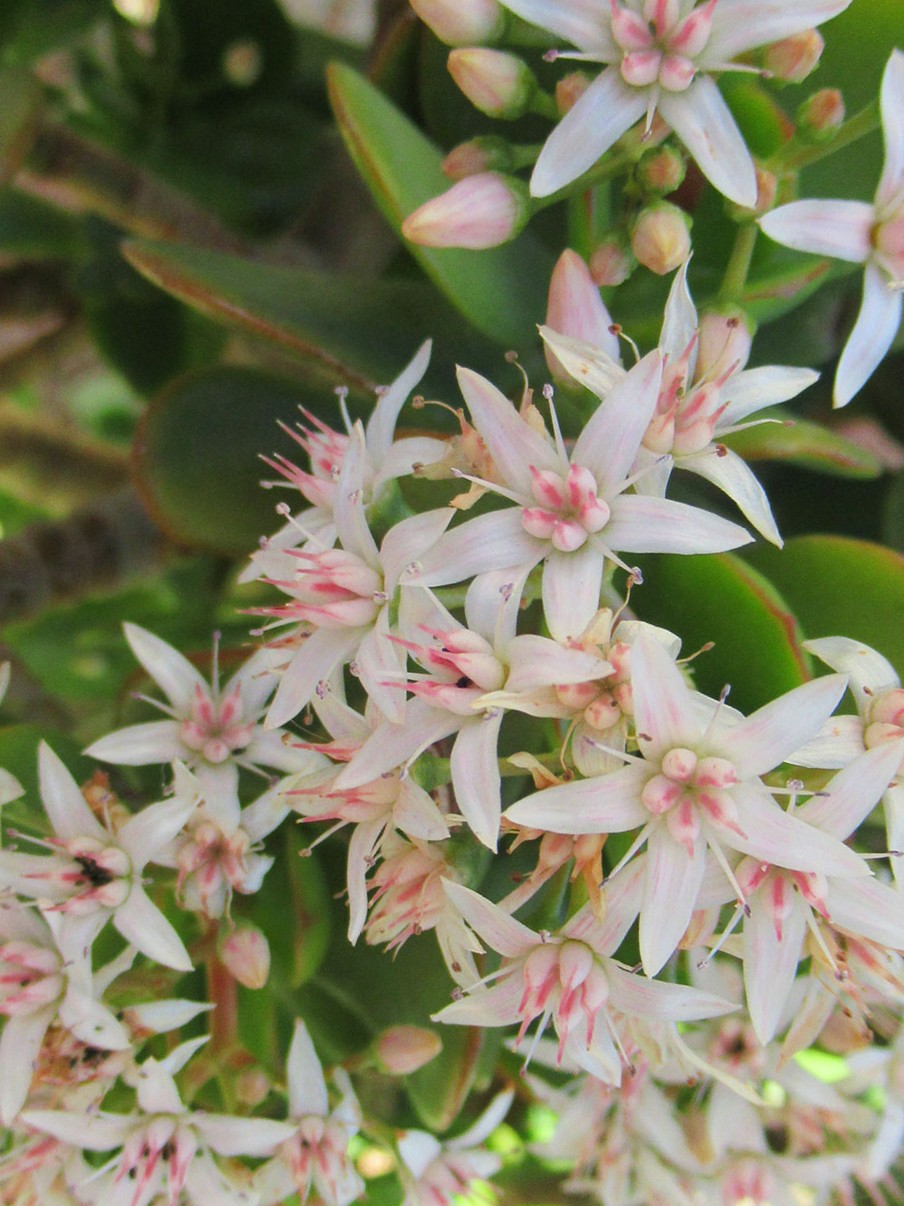
Mature Jade Plants may produce branched clusters of small star-shaped white to pale pink flowers, usually under favorable combinations of plant age, light, cooler nights, and seasonal conditions. Indoor plants often flower irregularly, so lack of blooms does not argue against identification. Flowering stems may rise above the main foliage and become especially accessible to cats or companion birds.
Flowers, buds, stalks, fruiting structures, and seeds have not been demonstrated to be safe for animals. No comparative toxicology study establishes that reproductive tissues contain either more or less of the unidentified toxic principle than leaves and stems. Fallen flowers may also carry pollen, mold, pesticide residue, or decorative spray.
Crassulacean Acid Metabolism
Jade Plant uses Crassulacean acid metabolism, commonly abbreviated CAM, to conserve water. The plant opens its stomata primarily at night, fixes carbon into organic acids, and then releases that stored carbon internally for daytime photosynthesis while the stomata remain more tightly closed.
CAM is not a recognized poisoning mechanism. Nighttime accumulation of malic and related organic acids should not be converted into a claim that Jade Plant causes corrosive acid injury, metabolic acidosis, or a predictable increase in toxicity after dark. Exposure timing matters because it helps establish onset and duration, not because an hourly toxic cycle has been proven.
Poisonous Parts
Leaves, stems, branches, plant juice, flowers, roots, fresh cuttings, propagation leaves, wilted material, and dried debris should all remain inaccessible. No tissue has been demonstrated to be reliably safe for dogs, cats, horses, livestock, rabbits, guinea pigs, birds, reptiles, or other animals.
Leaves are the most common source because they are abundant, brittle, and easy to detach. Stems and branches can create a larger exposure when an animal knocks down a plant or chews a bonsai. Roots and lower stems become relevant after digging, repotting, disposal, or an overturned container.
The plant itself may not be the only hazard associated with a particular part. Roots carry soil and treatment residues, old stems may contain wire, and flowers may hold pesticide, pollen, or decorative products. Every missing plant part should therefore be considered alongside the material physically attached to or surrounding it.
Seasonal and Growth-Stage Exposure Patterns
Jade Plant remains evergreen under ordinary indoor conditions, so exposure can occur throughout the year. Unlike a woodland perennial that disappears seasonally, the leaves generally remain available during winter when pets spend more time indoors. Holiday rearranging, plant gifts, houseguests, and moving containers to brighter windows may place a previously inaccessible plant within reach.
Spring and summer often bring repotting, outdoor acclimation, pruning, fertilizing, pesticide treatment, and propagation. These activities create loose leaves, cut branches, exposed roots, open soil bags, chemical containers, and trays of plant material at floor level. Outdoor pets may also reach plants moved to patios or porches.
Autumn cooling often prompts owners to bring patio plants indoors. Insects discovered during that move may lead to pesticide application shortly before a pet encounters the plant. Flowering, when it occurs, may add fallen blossoms and raised stems that attract cats or birds, but flowering does not create a known separate toxin cycle.
Cultivars and Monstrose Forms
Gollum, Hobbit, Finger Jade, Trumpet Jade, Ogre’s Ears, Hummel’s Sunset, Tricolor, Crosby’s Compact, Minima, and related cultivars are sold widely. Tubular, folded, spoon-shaped, variegated, miniature, and strongly red-colored leaves may make these forms appear unrelated to ordinary Jade Plant. Nursery labels may also use fictional or marketing names that vary among sellers.
No cultivar has been established as nontoxic. Initial exposure management should treat a correctly identified Crassula ovata cultivar with the same caution as the ordinary green form. The label should still be preserved because some plants sold under Jade cultivar names are hybrids or entirely different succulents.
Jade Plant and Elephant Bush
Elephant Bush is Portulacaria afra, a separate southern African succulent commonly sold as Dwarf Jade, Miniature Jade, Small-Leaf Jade, or Spekboom. It usually has smaller, rounder leaves, more delicate branching, and stems that may be reddish even when young. Mature plants can nevertheless develop a tree-like silhouette very similar to a pruned Jade Plant.
The confusion becomes more difficult when either species is trained as bonsai. Repeated pruning reduces leaf and internode size, while wiring and container restriction can make two unrelated specimens look nearly identical in photographs. One detached leaf is therefore weak evidence unless its arrangement, stem attachment, thickness, and parent plant are also visible.
Elephant Bush should not be entered as a synonym of Crassula ovata, and toxicological conclusions for one species should not be transferred automatically to the other. When the animal is symptomatic and identification remains uncertain, preserve the full pot and representative branches rather than discarding the specimen after taking one photograph.
Jade Plant and Silver Jade
Silver Jade is Crassula arborescens, a separate accepted species. It generally produces rounder blue-gray or silvery leaves with reddish margins and may also grow into a substantial woody-looking succulent shrub. Some cultivars have undulating or spoon-shaped leaves that further complicate identification.
Silver Jade has appeared in poisonous-plant discussions, but its exact chemistry and clinical evidence should be evaluated separately. A label reading Chinese Jade, Silver Dollar Plant, or Blue Jade does not establish Crassula ovata. Retain the scientific label and several plant parts whenever clinical conclusions depend on the species.
Jade Plant and Kalanchoe
Kalanchoe species are related succulents in Crassulaceae and may have thick opposite leaves, branching stems, and conspicuous flower clusters. Several contain well-established bufadienolide cardiac glycosides capable of causing vomiting, diarrhea, bradycardia, conduction disturbances, ventricular arrhythmias, weakness, collapse, and death after sufficient exposure. Some produce small plantlets along their leaf margins, a feature not typical of ordinary Jade Plant.
The toxicology of Kalanchoe must not be transferred automatically to Crassula ovata. Jade Plant’s toxic principle remains unidentified, and its recognized syndrome centers on vomiting, depression, weakness, and incoordination rather than a proven digitalis-like mechanism.
The reverse error is equally dangerous. A toxic Kalanchoe should not be dismissed as mildly toxic Jade Plant because both have succulent leaves or were sold in the same dish garden. Flowering material, scalloped margins, marginal plantlets, nursery labels, and the complete growth habit may be essential for identification.
Persistent bradycardia, marked tachycardia, irregular rhythm, weak pulses, fainting, or collapse justifies ECG and blood-pressure monitoring regardless of the preliminary plant name. Those findings may reflect a misclassified Kalanchoe, another cardiac-glycoside plant, medication exposure, electrolyte disorder, or primary heart disease.
Jade Plant and Baby Rubber Plant
Baby Rubber Plant is usually Peperomia obtusifolia, an unrelated member of Piperaceae. It has thick glossy leaves and may be called Baby Jade, American Rubber Plant, or Pepper Face, creating substantial common-name confusion. Its softer green stems and different leaf attachment can help separate it from mature Crassula ovata.
True Rubber Plant, Ficus elastica, and Weeping Fig, Ficus benjamina, are also unrelated and release irritating latex when damaged. A pet exposed to white sap, marked mouth irritation, or dermatitis may not have encountered Jade Plant at all. Scientific names and complete plant photographs should guide assessment rather than the words rubber or jade.
Money Plant and Money Tree Confusion
Money Plant or Money Tree may refer to Jade Plant, Pachira aquatica, Chinese Money Plant or Pilea peperomioides, Golden Pothos or Epipremnum aureum, ZZ Plant or Zamioculcas zamiifolia, or another culturally symbolic plant. Regional naming, gift traditions, feng shui marketing, and retail labels all contribute to the overlap.
These species have different toxic mechanisms. Pothos and ZZ Plant contain insoluble calcium-oxalate crystals and commonly cause immediate oral pain, pawing, drooling, gagging, and swelling, while Crassula ovata is associated more characteristically with vomiting, depression, weakness, and ataxia.
The clinical pattern can expose an identification error but should not replace botany. Severe immediate mouth pain after a supposed Jade Plant bite should prompt examination of the specimen for an aroid or caustic sap plant rather than forcing the case into the Jade Plant syndrome.
How Dogs Gain Access
Dogs may swallow fallen leaves beneath a windowsill or office desk, pull a pot down by its branches, chew a bonsai trunk, raid a propagation tray, dig into an outdoor shrub, or investigate clippings left after pruning. Puppies and habitual plant chewers may consume several thick leaves before anyone notices damage. A large dog can also overturn a substantial container and gain access to roots, fertilizer, soil, stones, plastic labels, and irrigation water.
Chewing may occur from boredom, curiosity, teething, scavenging, attraction to moist plant tissue, or investigation of newly moved furniture and plants. Dogs may carry detached branches away from the original location, so fragments found in another room or yard may be the first evidence of exposure.
Outdoor dogs may reach Jade Plant in patio containers, landscaping, greenhouse waste, curbside plant disposal, compost piles, apartment trash areas, or storm-damaged shrubs. Pruning debris is particularly important because it places numerous freshly cut leaves and stems at ground level.
A dog presented for repeated vomiting, depression, weakness, or abnormal gait should also be assessed for swallowed bonsai wire, gravel, pot shards, fertilizer, pesticide, or another plant in the same container. The fact that Jade Plant was chewed does not prove it was the only exposure.
How Cats Gain Access
Cats may bite leaf margins repeatedly, climb into the pot, knock detached leaves onto the floor, bat propagation material across a room, drink from the saucer, or rub against branches before grooming plant residue from the coat. A shelf considered inaccessible to a dog may be easily reached from a chair, windowsill, bookcase, curtain, or nearby appliance.
Some cats chew the same accessible leaf over several nights, producing a cumulative exposure that is difficult to estimate from one bite mark. Others break a branch while climbing and then investigate fallen material at floor level. Thick leaves can remain available beneath furniture long after the parent plant has been moved.
Clinical signs may be subtle. A cat may hide, stop grooming, approach food and turn away, vomit once, become unusually quiet, or hesitate before jumping. Continued food refusal deserves particular attention because prolonged inadequate intake can lead to serious secondary metabolic disease.
Open-mouth breathing, collapse, pronounced ataxia, tremors, persistent pupil abnormalities, or a markedly abnormal heart rate should not be assumed to be routine Jade Plant effects. Pesticide, cannabis, medication, Kalanchoe, another poisonous plant, trauma, or unrelated disease must be considered.
Horses and Equine Exposure
Horse exposure is uncommon in ordinary pasture but can occur where Jade Plant is grown as a warm-climate landscape shrub, maintained in a greenhouse, displayed around barns or event facilities, or discarded near a paddock. Horses may also encounter trimmings in wheelbarrows, brush piles, compost, stall-cleaning areas, or mixed ornamental debris.
Horses cannot vomit. Salivation, feed refusal, depression, abdominal pain, diarrhea, weakness, incoordination, or altered behavior may therefore be more important than vomiting. A horse with abnormal swallowing or neurologic weakness should not be drenched because oral fluid or charcoal may be aspirated.
No validated equine toxic dose or well-characterized natural Jade Plant syndrome has been established. Exact identification is essential because related southern African succulents and unrelated cardiac-glycoside plants can produce much more serious disease. Preserve whole branches, leaves, roots, photographs, and every plant found in the discarded material.
Cattle, Sheep, Goats, and Other Livestock
Livestock exposure is most likely when greenhouse waste, landscape trimmings, uprooted shrubs, unsold nursery plants, houseplants, or mixed garden debris are thrown into a pasture, dry lot, pen, or feeding area. Material may also become mixed with hay, silage, bedding, brush, or mechanically collected vegetation during land clearing.
Goats may browse unfamiliar succulent branches readily and should not be used deliberately to clear an unidentified Jade Plant or mixed succulent planting. Cattle and sheep may consume ornamental debris when normal forage is scarce, when clippings are mixed with palatable feed, or when curiosity draws them to newly dumped vegetation.
Group exposure should be assessed even when only one animal shows signs. Different animals may consume different amounts, and the first symptomatic animal may not have received the largest dose. Remove the source, inspect the entire group, preserve feed and plant samples, and identify every succulent in the waste pile.
Marked arrhythmia, sudden death, persistent recumbency, severe salivation, or a chronic paretic syndrome should not be attributed automatically to Crassula ovata. Kalanchoe, Cotyledon, Tylecodon, cardiac-glycoside plants, pesticides, contaminated feed, and metabolic disease require investigation.
Rabbits, Guinea Pigs, Birds, and Other Exotic Animals
Rabbits and guinea pigs may reach fallen leaves during indoor exercise, pull foliage through enclosure bars, or receive trimmings mistakenly offered as succulent forage. They cannot vomit, so appetite reduction, salivation, reduced fecal production, diarrhea, abdominal discomfort, tooth grinding, weakness, or altered posture may be the principal findings.
A small herbivore that stops eating can deteriorate even when the original plant produces only moderate irritation. Gastrointestinal stasis, dehydration, and secondary metabolic complications can become more important than the initial amount swallowed. Jade Plant should not be used as bedding, nesting material, forage, or enrichment.
Companion birds may shred leaves and stems without leaving clear evidence of how much was swallowed. Plant juice, fragments, soil, fertilizer, and pesticide may contact the beak, mouth, eyes, feet, feathers, and respiratory tract. Contaminated feathers create continued exposure during preening.
Reptiles and other exotic animals may encounter Jade Plant in planted enclosures or outdoor exercise areas. Limited species-specific evidence does not establish safety. Live plants placed in an enclosure should be identified precisely and kept free of pesticides, fertilizers, decorative stones, wire, and treated soil.
Household and Office Exposure
Jade Plants are frequently placed on desks, windowsills, counters, bookshelves, reception areas, restaurants, retail counters, classrooms, studios, clinics, and waiting rooms. Their reputation as durable, low-maintenance plants makes them common in shared spaces where no one person knows the pesticide history or botanical label. Fallen leaves may collect beneath furniture or behind containers where an owner never sees the original breakage.
Shared workplaces introduce additional uncertainty. Cleaning sprays, leaf-shine products, systemic insecticides, fertilizer sticks, decorative gravel, and office medications may all be present near the plant. Ask who owns and maintains the specimen rather than assuming it was untreated because the animal’s owner did not apply a chemical.
A heavy plant or ceramic container may also fall onto an animal. Pain, reluctance to walk, rapid breathing, or collapse after an overturned plant may result from trauma, internal injury, or shock rather than poisoning alone.
Outdoor Landscape, Greenhouse, and Disposal Exposure
Outdoor Jade Plants may be pruned into hedges, grown beside walkways, maintained in commercial landscapes, or kept in large patio containers. Lawn crews and gardeners may leave cut branches temporarily on the ground, load them into open trailers, or place them in piles accessible to dogs, livestock, or wildlife.
Greenhouses and nurseries generate broken leaves, pruning waste, rejected plants, pesticide-treated stock, spilled fertilizer, and discarded soil. Animals living near or visiting these areas may encounter a concentrated mixture rather than one clean household plant. Treatment history may be recorded under a production lot rather than on the retail tag.
Curbside disposal, apartment dumpsters, compost piles, yard-waste bins, and post-holiday cleanup can place whole root balls and large shrubs within reach. A discarded plant should never be thrown into a pasture or animal pen. Wilted appearance does not establish detoxification, and the attached soil and chemicals may remain clinically important.
Bonsai and Decorative Displays
Jade Plant is commonly trained as an indoor bonsai because it develops a thick trunk-like base, tolerates pruning, and readily produces new branches. The finished display may include aluminum or copper wire, drainage mesh, clips, tie-downs, moss, gravel, decorative stones, miniature figures, glue, and a shallow ceramic container.
Wire may be wrapped tightly around branches or passed through drainage holes and buried beneath the root ball. A missing section may not be visible until the plant is removed from its pot. Wire can injure the mouth, lodge in the esophagus, perforate the stomach or intestine, or create a linear foreign body when attached to mesh or decoration.
Persistent vomiting, abdominal pain, repeated unproductive retching, straining, reduced stool, blood, or reluctance to move requires imaging when bonsai material may be missing. Bring the entire display or detailed photographs of its construction so the veterinary team knows what objects to search for.
Potting Soil, Fertilizer, and Pesticides
An overturned Jade Plant may expose an animal to cactus mix, perlite, bark, peat, coir, sand, gravel, fertilizer pellets, systemic insecticide, fungicide, mold, algae, plastic tags, ceramic fragments, and standing saucer water. These materials differ widely in toxicity. A mouthful of ordinary potting mix is not equivalent to swallowing a fertilizer spike, pesticide granule, sharp pot shard, or mold-contaminated root ball.
Slow-release fertilizer beads may resemble food, eggs, or small toys. Concentrated fertilizer can cause salivation, vomiting, diarrhea, abdominal pain, and electrolyte disturbance, while some products contain iron or other components requiring separate assessment. Product name, nutrient analysis, amount missing, and packaging are essential.
Systemic insecticides and other pesticides may be incorporated into soil, sprayed onto foliage, or transported within plant tissues. Analytical research has used living Crassula ovata leaves to study pesticide-residue distribution, demonstrating that an apparently clean leaf can still be part of a chemically treated exposure. Severe salivation, tremors, seizures, respiratory change, marked pupil abnormalities, or rapid deterioration should prompt immediate investigation of applied products.
Preserve labels and contact the nursery, greenhouse, office manager, landscaper, or previous owner when treatment history is unknown. The chemical history may explain signs that do not fit ordinary Jade Plant poisoning.
Cuttings and Propagation Material
Jade Plants are propagated readily from individual leaves and stem cuttings. Leaves may be removed deliberately, allowed to callus on a shelf, placed across soil, or collected in trays containing dozens of loose pieces. A propagation station can therefore provide a much larger accessible plant mass than one intact decorative specimen.
Cuttings and pruned branches should be placed directly into a closed or otherwise inaccessible container. Do not leave them beside a trash bin, greenhouse bench, patio, compost pile, animal enclosure, potting table, or windowsill where an animal can return repeatedly. Count propagation material after a suspected exposure because the parent plant may show no obvious damage.
Fresh, Wilted, and Dried Risk
Fresh leaves contain abundant succulent tissue, while detached leaves may remain viable and moist for weeks. A leaf that appears merely fallen can still root and form a new plant, illustrating how long its tissues remain biologically intact. Wilting therefore does not establish detoxification.
Dry material has not been tested sufficiently to declare it harmless. Old bonsai trimmings, pressed leaves, craft material, dried stems, and dead plants should remain inaccessible. Drying may change texture and water content without eliminating every unidentified active compound.
Older material may also carry persistent pesticide residue, fertilizer dust, paint, glue, wire, mold, or decorative treatment. Mechanical and chemical contaminants may become the dominant hazard after the succulent tissue itself has dried.
Diagnosis
No routine blood, urine, saliva, or stomach-content assay confirms Jade Plant poisoning or identifies its unknown toxin. Diagnosis relies on reliable botanical identification, the greatest amount that could be missing, the timing of access, compatible gastrointestinal or neurologic signs, and exclusion of other causes. The absence of a definitive toxin test makes exposure reconstruction particularly important.
Preserve complete leaves, stems, flowers, roots, nursery labels, photographs of the undamaged plant, vomited fragments, and all associated products. A leaf fragment in vomit supports ingestion but may not distinguish Jade Plant from another succulent. Photograph both surfaces of the leaf and the point where it joins the stem.
The investigation should document how the animal reached the plant. A cat that repeatedly visited a windowsill may have consumed material over several days, while a dog beside an overturned bonsai may have swallowed leaves, wire, stones, and fertilizer in one event. Livestock near discarded greenhouse waste may have encountered several plant species and pesticide-treated soil.
A chewed plant does not prove that it caused every abnormality. Pets often have access to several houseplants, medications, food, pesticides, and foreign materials during the same unsupervised period. Severe oral pain, persistent arrhythmia, seizures, kidney injury, liver injury, jaundice, or progressive paralysis requires a broader investigation because those findings are not adequately explained by the ordinary Jade Plant pattern.
Clinical progression also contributes to diagnosis. A patient whose vomiting and mild ataxia resolve with supportive care may fit the expected syndrome, while continued deterioration despite removal of the plant suggests another toxicant, a complication, or an underlying disease. Diagnosis should remain revisable as new evidence emerges.
Veterinary Evaluation
The initial examination may include hydration, temperature, gum color, capillary refill, heart rate, pulse quality, blood pressure, respiratory pattern, abdominal comfort, oral inspection, gait, posture, reflexes, pupil size, and mental status. These observations help separate isolated vomiting from a combined gastrointestinal and neurologic syndrome. Serial examinations are often more informative than one brief observation because ataxia, dehydration, and depression may progress or improve over several hours.
Repeated vomiting, diarrhea, or significant depression may justify a complete blood count, electrolyte panel, blood glucose, serum chemistry, acid-base assessment, and urinalysis. These tests do not identify a Jade Plant toxin, but they can detect dehydration, hypoglycemia, electrolyte disturbance, reduced kidney perfusion, concurrent organ disease, or another toxic process. Results guide fluid therapy and help explain weakness or incoordination.
Persistent ataxia, tremors, unusual pupil size, or altered responsiveness requires a structured neurologic examination. The veterinarian may need a detailed history of cannabis, sedatives, anticonvulsants, antidepressants, pain medication, pesticides, mushrooms, nicotine, xylitol, and trauma. Video of the animal walking before transport can be useful when the gait changes by the time of examination.
An abnormal pulse, collapse, fainting, or persistent slow, rapid, or irregular heart rate may justify ECG monitoring, blood-pressure measurement, electrolyte evaluation, and cardiac imaging or biomarkers according to the case. These tests are appropriate because the patient has a cardiovascular abnormality, not because bufadienolides have been proven in Crassula ovata.
Coughing, low oxygen, fever, or breathing difficulty after vomiting may require chest imaging and aspiration assessment. Persistent abdominal pain, vomiting, reduced stool, or missing stones, wire, mesh, plastic, fertilizer packets, or pot fragments may require radiographs, ultrasound, contrast studies, endoscopy, or surgery. Eye pain may require irrigation, eyelid examination, and fluorescein staining when soil or plant debris entered the eye.
Differential Diagnosis
Vomiting and depression are nonspecific and may result from dietary indiscretion, spoiled food, infection, parasites, pancreatitis, medication, foreign-body obstruction, kidney disease, liver disease, endocrine disease, or many poisonous plants. The Jade Plant diagnosis becomes stronger when exposure is well documented and the clinical course matches the recognized gastrointestinal and coordination abnormalities. It becomes weaker when major organ injury or a radically different syndrome dominates.
Ataxia may result from cannabis, sedatives, anticonvulsants, antidepressants, pesticides, toxic mushrooms, alcohol, hypoglycemia, vestibular disease, spinal or head trauma, and primary neurologic illness. A pet that appears merely sleepy should still be observed walking safely because depression and incoordination are not interchangeable. Progressive falling, head tilt, nystagmus, asymmetric weakness, or seizures may redirect the diagnostic investigation.
Cardiac-glycoside plants such as Kalanchoe, oleander, foxglove, and lily of the valley require different monitoring and treatment. Calcium-oxalate plants such as Pothos and ZZ Plant generally produce more immediate oral pain, drooling, gagging, and swelling. Sago palm, true lilies, yew, and autumn crocus create more serious hepatic, renal, cardiovascular, or multisystem risks than the expected Jade Plant course.
Foreign material must remain in the differential whenever the pot or display was disturbed. Bonsai wire, stones, ceramic shards, mesh, plastic tags, fertilizer packaging, and roots can produce persistent vomiting or abdominal pain independently of plant chemistry. Correct identification of both the plant and the nonplant material is therefore clinically essential.
Prognosis
The prognosis is generally good after a limited Jade Plant exposure producing mild vomiting, appetite loss, depression, weakness, or transient incoordination. Favorable progression includes decreasing vomiting, normal hydration, renewed interest in food, improved awareness, stable walking, and normal urination and stool production. A patient should improve consistently rather than cycle between apparent recovery and recurrent neurologic or gastrointestinal signs.
The prognosis becomes more guarded when severe dehydration, aspiration, prolonged anorexia, persistent ataxia, seizures, collapse, abnormal cardiac findings, or gastrointestinal obstruction develops. Very young animals, small species, elderly patients, and animals with kidney, heart, endocrine, or neurologic disease may tolerate fluid loss and depression poorly.
Failure to improve should trigger diagnostic reassessment rather than continued attribution to a minor plant nibble. An incorrect plant identification, pesticide, medication, foreign body, or unrelated disease may ultimately determine the outcome. Prognosis in a mixed exposure belongs to the most serious confirmed component, not automatically to the Jade Plant.
Prevention
Keep Jade Plants outside areas accessible to climbing cats, curious dogs, small herbivores, birds, horses, and livestock. A high shelf is not sufficient when leaves can fall, the pot can be knocked down, or a cat can reach the location from nearby furniture. Floor-level fallen leaves should be collected promptly.
Secure propagation material separately from decorative plants. Loose leaves, cuttings, callusing stems, and divided plants should remain in closed rooms, covered trays, or cabinets that animals cannot enter. Count material after pruning so a missing leaf is recognized before symptoms appear.
Bonsai displays require control of wire, mesh, stones, clips, fertilizer, miniature ornaments, and shallow pots as well as the plant. Retain nursery labels and treatment records, and ask about pesticides before placing a newly purchased specimen in an animal-accessible area. Do not assume a rinsed leaf is free of systemic treatment.
Never discard Jade Plant, mixed succulents, greenhouse waste, or landscaping debris into a pasture, paddock, rabbit exercise area, bird enclosure, compost pile accessible to animals, or open brush pile. Bag or contain the complete plant, roots, loose leaves, and treatment materials during disposal.
Verify the scientific identity of any plant sold as Jade, Money Plant, Money Tree, Dwarf Jade, Baby Jade, or Rubber Plant. Mixed succulent bowls should be evaluated species by species because they may combine Jade Plant with Kalanchoe, Euphorbia, Aloe, or other plants with distinct hazards. Prevention depends on identifying and securing the complete display rather than managing one familiar common name.
Immediate Response
- Stop further exposure: Move the animal away from the Jade Plant, fallen leaves, cuttings, propagation tray, bonsai display, root ball, potting products, or contaminated area.
- Preserve the complete plant: Save intact and damaged leaves, stems, flowers, roots, nursery tags, photographs, and representative vomited fragments.
- Estimate the maximum amount: Report the greatest number of leaves, stems, or other parts that could be missing rather than only the amount witnessed.
- Record the exposure window: Note the earliest and latest possible access and when vomiting, appetite loss, depression, weakness, ataxia, tremors, or other signs began.
- Record the animal’s information: Provide species, weight, age, medications, medical conditions, and recent flea, tick, pesticide, or recreational-drug exposure.
- Contact a professional: Obtain veterinary or animal poison-control guidance when more than a brief nibble occurred, the amount is uncertain, the animal is small, or any sign develops.
A normal animal after one small bite may be managed differently from a cat that swallowed several leaves or a dog that overturned an entire bonsai. Early risk assessment is especially important because the toxin is unknown and the plant may have been misidentified or chemically treated.
Confirm the Plant and Check for Mixed Exposures
- Verify the scientific identity: Distinguish Crassula ovata from Elephant Bush, Silver Jade, Kalanchoe, Peperomia, Pothos, ZZ Plant, and other plants called Jade or Money Plant.
- Inspect the pot: Account for fertilizer pellets, pesticide granules, decorative stones, perlite, bark, plastic tags, ceramic fragments, and standing water.
- Inspect a bonsai display: Determine whether wire, mesh, hooks, clips, miniature ornaments, moss, adhesive, or gravel is missing.
- Check applied chemicals: Save labels for insecticide, fungicide, miticide, fertilizer, cleaning spray, leaf shine, and systemic plant treatment.
- Check nearby toxins: Report accessible medications, cannabis, nicotine, xylitol, mushrooms, rodenticide, antifreeze, and other plants.
- Preserve every possible plant: Mixed succulent arrangements may contain Kalanchoe, Aloe, Euphorbia, or other species with different toxins.
Atypical or severe signs often reflect mixed exposure or incorrect identification. A plant sold as Mini Jade may be Elephant Bush, while a flowering succulent beside it may be a bufadienolide-containing Kalanchoe. Preserve the entire arrangement until identification is complete.
Remove Loose Plant Material
- Remove visible fragments: Carefully take loose leaf or stem pieces from the lips and front of the mouth when this can be done safely.
- Avoid blind finger sweeps: Do not reach deeply into the throat or push material toward the airway or esophagus.
- Wipe accessible residue: A damp cloth may be used on the lips and front of the mouth of a fully alert animal.
- Rinse only when safe: A gentle mouth rinse is appropriate only when breathing and swallowing are normal and the animal can protect the airway.
- Stop if coughing or gagging begins: Difficulty handling a rinse means further oral decontamination is unsafe without veterinary assistance.
- Save representative pieces: Retain enough material for identification rather than discarding every fragment.
Mouth cleaning removes loose material but does not reverse nausea or an unidentified toxin already swallowed. Persistent gagging, coughing, regurgitation, or painful swallowing requires examination for retained material or another plant.
Do Not Induce Vomiting at Home
- Do not give hydrogen peroxide automatically: Unnecessary emesis can worsen gastritis, esophagitis, dehydration, and aspiration risk.
- Never give peroxide to a cat: Hydrogen peroxide can cause serious feline gastric and esophageal injury.
- Never use household emetics: Salt, mustard, dish soap, oil, ipecac, manual gagging, and fingers in the throat are unsafe.
- Do not induce vomiting after signs begin: Vomiting, depression, weakness, ataxia, tremors, coughing, abnormal breathing, or poor swallowing makes emesis unsafe.
- Do not induce vomiting after foreign-material ingestion: Wire, stones, pot fragments, plastic, mesh, and sharp material may cause further injury while returning through the esophagus.
- Reserve emesis for professional selection: A veterinarian may consider controlled emesis in a recently exposed, fully alert, asymptomatic dog when the plant and airway status are appropriate.
The unknown toxin does not justify indiscriminate stomach emptying. Once neurologic depression, incoordination, repeated vomiting, or respiratory change develops, stabilization and airway safety take priority.
Activated Charcoal
- Do not administer charcoal at home: Its benefit for Jade Plant’s unidentified toxin has not been established.
- Never force charcoal: A vomiting, depressed, weak, ataxic, trembling, sedated, or poorly swallowing animal can aspirate it.
- Do not use household charcoal: Fireplace ash, burned food, and barbecue briquettes are not medical activated charcoal.
- Avoid owner-administered cathartics: Sorbitol products can worsen diarrhea, dehydration, and electrolyte disturbance.
- Allow case-specific veterinary use: A veterinarian may consider charcoal after a substantial recent ingestion or a mixed absorbable toxic exposure when airway protection is adequate.
Activated charcoal cannot treat dehydration, ataxia, aspiration, skin contamination, or swallowed bonsai wire. The uncertain benefit must be weighed against the potentially severe consequence of pulmonary aspiration.
Do Not Give Household Remedies or Improvised Medication
- Do not give milk or dairy: Milk, yogurt, cream, cheese, and ice cream do not neutralize the unidentified toxin.
- Do not give oils: Cooking oil, mineral oil, butter, and other fats do not bind the plant and may be aspirated.
- Do not give bread or forced food: Food does not detoxify Jade Plant and may trigger more vomiting.
- Do not give antidiarrheal drugs: Loperamide, bismuth products, and similar medications may be inappropriate or obscure deterioration.
- Do not give human pain medication: Ibuprofen, naproxen, acetaminophen, aspirin, and similar drugs can cause an additional poisoning.
- Do not give heart or neurologic medication: Atropine, beta blockers, sedatives, anticonvulsants, electrolyte supplements, and leftover prescriptions require professional diagnosis and monitoring.
No home antidote exists for Jade Plant. Treating an assumed heart problem or neurologic problem without an ECG, blood pressure, glucose, electrolyte values, and examination can worsen the patient.
Food and Water
- Do not force food: A nauseated, vomiting, depressed, coughing, weak, or ataxic animal may aspirate.
- Do not force water: Syringed or poured fluid cannot correct meaningful dehydration and may enter the lungs.
- Offer water cautiously: Small amounts may remain available only when the animal is fully alert, swallowing normally, and not vomiting repeatedly.
- Prevent rapid drinking: Gulping a large volume may trigger additional vomiting.
- Remove saucer water: It may contain fertilizer, pesticide, mold, bacteria, soil runoff, or plant material.
- Follow veterinary feeding guidance: Food should be reintroduced according to nausea, hydration, coordination, species, and underlying disease.
Continued food refusal requires earlier reassessment in cats, rabbits, guinea pigs, birds, very young animals, and patients with chronic disease. Assisted feeding is unsafe until nausea, swallowing, awareness, and obstruction risk have been evaluated.
Skin and Coat Exposure
- Remove plant debris: Pick visible leaf, soil, and potting material from the coat without spreading contamination.
- Wear gloves when chemicals are possible: Nursery pesticides and another succulent’s sap may be present.
- Wash ordinary plant residue: Use lukewarm water and mild pet-safe shampoo when the animal is stable.
- Prevent grooming: Stop the animal from licking contaminated fur until washing is complete.
- Clean equipment: Wash collars, harnesses, bedding, carriers, grooming tools, and contaminated surfaces.
- Monitor the skin: Persistent redness, swelling, itching, blistering, or pain requires veterinary examination.
Do not use bleach, alcohol, solvents, essential oils, concentrated detergent, or human rash products. A depressed, trembling, seizing, overheated, or respiratory-compromised animal should be stabilized before stressful bathing unless a veterinary professional directs immediate decontamination.
Eye Exposure
- Begin irrigation promptly: Flush the eye with sterile saline or clean lukewarm water for approximately 15 to 20 minutes.
- Flush gently: Allow fluid to pass across the ocular surface and beneath the eyelids without high pressure.
- Prevent rubbing: Stop the animal from scratching the eye or rubbing it against furniture, bedding, carpet, or the ground.
- Do not use tools: Tweezers, cotton swabs, cloth, and fingernails can worsen corneal injury.
- Do not apply human eye medication: Redness drops, anesthetic drops, steroid products, ointments, and leftover prescriptions may worsen injury or obscure findings.
- Obtain examination for persistent signs: Continued squinting, cloudiness, discharge, marked redness, swelling, or inability to open the eye requires veterinary care.
Eye exposure may involve soil, perlite, fertilizer, pesticide, or another succulent’s sap rather than Jade Plant juice alone. Fluorescein staining and examination beneath the eyelids may be necessary.
Vomiting and Diarrhea
- Track every episode: Record the time, frequency, and progression of vomiting and diarrhea.
- Inspect recovered material: Note leaves, stems, roots, stones, wire, plastic, soil, blood, dark material, or pesticide odor.
- Save representative fragments: Preserve plant and foreign material in a sealed disposable container.
- Watch hydration: Tacky gums, reduced urination, sunken eyes, inability to retain water, or worsening weakness requires care.
- Watch for aspiration: Coughing, fever, nasal discharge, rapid breathing, or renewed lethargy may indicate aspiration pneumonia.
- Watch for obstruction: Persistent vomiting, abdominal enlargement, pain, straining, or reduced stool may indicate swallowed wire, stones, or pot material.
One brief vomiting episode is different from progressive gastroenteritis. Repeated fluid loss may require veterinary anti-nausea medication, fluid therapy, electrolyte correction, pain control, and diagnostic imaging.
Depression, Ataxia, and Tremors
- Restrict movement: Keep an uncoordinated animal away from stairs, furniture, pools, balconies, and hard edges.
- Prevent falls: Use a padded carrier, crate, or confined floor-level area while arranging transport.
- Reduce stimulation: Keep the environment quiet and avoid repeated walking tests.
- Check for other toxins: Preserve medications, cannabis products, pesticides, mushrooms, flea products, and other plants that were accessible.
- Do not give stimulants or sedatives: Caffeine, human medication, and leftover veterinary drugs can worsen the condition or obscure examination.
- Treat progression as urgent: Inability to stand, repeated falling, severe tremors, seizures, or reduced responsiveness requires immediate care.
Ataxia may reflect direct plant activity, dehydration, electrolyte disturbance, hypoglycemia, hypotension, medication, or another toxin. Veterinary examination is needed to distinguish these possibilities and select appropriate treatment.
Recognize an Emergency
- Repeated vomiting: Continued episodes, inability to retain water, severe weakness, or reduced urination requires examination.
- Progressive neurologic signs: Marked incoordination, inability to stand, tremors, seizures, stupor, or coma requires immediate care.
- Abnormal breathing: Rapid, labored, open-mouth, irregular, gasping, or weak breathing requires emergency transportation.
- Cardiovascular concerns: Fainting, collapse, weak pulses, very slow or rapid heart rate, pale gums, or gray gums requires urgent assessment.
- Significant bleeding: Repeated blood, coffee-ground vomit, black stool, or collapse requires prompt care.
- Possible obstruction: Severe abdominal pain, enlargement, repeated unproductive retching, or missing wire, stone, plastic, or pot fragments requires emergency assessment.
Do not delay transportation while attempting several oral remedies. Aspiration, shock, seizures, cardiac instability, and gastrointestinal obstruction cannot be treated safely at home.
Safe Transportation
- Keep the animal quiet: Reduce activity, noise, jumping, and unnecessary handling.
- Prevent falls: Use a padded carrier, crate, stretcher, rigid board, or blanket when weakness or incoordination is present.
- Do not muzzle a vomiting animal: A muzzle can trap vomit and interfere with breathing.
- Allow the easiest breathing position: Do not force a respiratory patient flat when it breathes more comfortably upright.
- Protect during seizures: Remove nearby objects, keep hands away from the mouth, and do not restrain the jaws.
- Call ahead: Report suspected Jade Plant exposure, neurologic signs, abnormal pulse, foreign material, or pesticide involvement.
Veterinary Examination
- Assess hydration and circulation: Gum moisture, pulse quality, heart rate, blood pressure, body weight, capillary refill, and urine output help measure fluid loss.
- Perform a neurologic examination: Gait, posture, reflexes, awareness, pupil size, tremor pattern, and coordination help characterize the syndrome.
- Measure glucose and electrolytes: Hypoglycemia, sodium disturbance, potassium disturbance, and dehydration may contribute to weakness or ataxia.
- Evaluate the heart: Persistent slow, rapid, or irregular rhythm may require ECG and continued monitoring.
- Assess the lungs: Coughing or respiratory change after vomiting may require oxygen measurement and chest imaging.
- Assess the abdomen: Persistent pain, distention, vomiting, or missing foreign material may justify radiographs, ultrasound, or endoscopy.
- Investigate atypical signs: Severe oral injury, kidney failure, liver injury, seizures, or progressive paralysis requires a broader toxicologic and medical workup.
No routine assay confirms the unknown Jade Plant toxin. Laboratory and diagnostic testing are used to measure complications, identify treatable abnormalities, and exclude more dangerous causes.
Veterinary Treatment
Veterinarian-selected anti-nausea medication may reduce vomiting, discomfort, fluid loss, and aspiration risk. Intravenous or subcutaneous fluids may be used according to hydration, circulation, electrolyte values, vomiting, species, and underlying disease. Electrolyte or glucose abnormalities are corrected according to measured results rather than presumed from the plant name.
Gastrointestinal mucosal protection, acid suppression, and analgesia may be selected when persistent gastritis, esophagitis, hematemesis, or abdominal pain is present. There is no specific antidote because the Jade Plant toxic principle remains unidentified.
Significant ataxia, tremors, or seizures may require hospitalization, padded confinement, temperature monitoring, oxygen, intravenous access, and veterinarian-selected tremor or seizure control. Persistent depression may require repeated neurologic assessment and investigation for other toxicants.
ECG and blood-pressure monitoring may be used when bradycardia, tachycardia, an irregular rhythm, weak pulses, or collapse occurs. Antiarrhythmic treatment must be selected for the documented rhythm and hemodynamic effect; no one heart medication is a universal Jade Plant treatment.
Oxygen, airway suctioning, intubation, ventilation, and aspiration treatment may be necessary when vomiting or neurologic depression compromises breathing. Endoscopy or surgery may be required when bonsai wire, stones, plastic, mesh, ceramic fragments, or another object obstructs or injures the gastrointestinal tract.
Horses and Livestock
- Remove the source: Prevent further access to landscape plants, greenhouse waste, trimmings, discarded pots, and contaminated forage.
- Do not attempt vomiting: Horses and ruminants must never receive household emetics.
- Do not drench a symptomatic animal: Salivation, weakness, depression, incoordination, coughing, or abnormal swallowing increases aspiration risk.
- Examine the group: Other animals may have consumed the same material and may develop signs at different times.
- Preserve complete specimens: Retain leaves, stems, flowers, roots, forage, photographs, and all chemical containers.
- Exclude related toxic succulents: Kalanchoe, Cotyledon, and Tylecodon require particular consideration when cardiac or paretic signs occur.
Large-animal treatment may include oral and neurologic examination, fluid support, colic and diarrhea management, ECG monitoring, and toxin-specific treatment when another plant is identified. Unaffected animals should never be used to test whether discarded material is safe.
Rabbits, Guinea Pigs, and Birds
- Do not attempt vomiting: Rabbits and guinea pigs cannot vomit, and household emesis is unsafe for birds.
- Monitor eating closely: Reduced intake may become clinically important before dramatic neurologic signs appear.
- Monitor fecal output: Reduced feces, diarrhea, abdominal pain, or abnormal posture requires prompt guidance.
- Prevent grooming or preening: Remove plant and pesticide residue from fur, feet, feathers, and beak-accessible surfaces.
- Watch balance and respiration: Weakness, altered perching, falling, tremors, or abnormal breathing requires urgent species-experienced care.
- Do not use Jade Plant as enrichment: Leaves, stems, flowers, dried material, and cuttings should not enter cages or exercise areas.
Monitoring and Recovery
- Monitor vomiting and diarrhea: Episodes should decrease rather than become more frequent, painful, or bloody.
- Monitor hydration: Normal drinking, urination, gum moisture, strength, and activity should return.
- Monitor appetite: Continued food refusal may indicate nausea, dehydration, esophagitis, obstruction, or another illness.
- Monitor coordination: Walking, jumping, standing, and awareness should improve rather than deteriorate.
- Monitor breathing: Coughing, fever, rapid breathing, nasal discharge, or renewed lethargy may indicate aspiration.
- Monitor pulse and responsiveness: Collapse, fainting, weak pulses, or progressive depression requires immediate reassessment.
- Watch for obstruction: Recurrent vomiting, abdominal pain, straining, or reduced stool requires imaging.
Recovery means that the animal retains water, resumes appropriate eating, urinates and defecates normally, walks without swaying, remains alert, breathes comfortably, and returns to ordinary behavior. The absence of vomiting alone does not prove that neurologic signs or aspiration have resolved.
Prevention and Prognosis
- Secure the whole plant: Account for climbing cats, falling leaves, large dogs, and pots that can be pulled down.
- Secure propagation material: Keep loose leaves and cuttings in closed or inaccessible work areas.
- Secure bonsai accessories: Prevent access to wire, gravel, mesh, clips, fertilizer, and miniature decorations.
- Retain treatment records: Keep nursery, pesticide, fertilizer, and plant-identification information while the plant is in the home.
- Typical prognosis: Most limited exposures have a good prognosis with appropriate observation and supportive care.
- Guarded circumstances: Persistent ataxia, severe dehydration, aspiration, seizures, collapse, obstruction, or an unidentified mixed exposure requires intensive treatment.
Frequently Asked Questions About Jade Plant and Animal Poisoning
Is Jade Plant poisonous to dogs?
Yes. Dogs that eat Crassula ovata may develop vomiting, appetite loss, depression, lethargy, weakness, or incoordination, although many limited exposures cause only mild illness. Repeated vomiting, inability to retain water, severe quietness, abnormal walking, tremors, collapse, or an abnormal pulse requires veterinary examination. Check the scene for fertilizer, pesticide, decorative stones, bonsai wire, plastic, and other plants because those materials may change the risk substantially.
Is Jade Plant poisonous to cats?
Yes. Cats may vomit, stop eating, hide, become unusually quiet, appear weak, develop dilated pupils, or walk unsteadily after chewing Jade Plant. Persistent food refusal is particularly important because prolonged inadequate intake can cause serious secondary metabolic disease in cats. Marked ataxia, tremors, collapse, open-mouth breathing, or a persistent heart-rate abnormality requires prompt veterinary care and investigation for other toxins.
Is Jade Plant poisonous to horses and livestock?
Jade Plant should not be offered to horses, cattle, sheep, goats, or other livestock, although exact dose-response information for these species is lacking. Exposure may occur when landscape plants, greenhouse waste, cuttings, or discarded houseplants are placed near an enclosure. Depression, feed refusal, colic, diarrhea, weakness, or incoordination warrants veterinary assessment. Significant cardiac or paretic disease should also prompt identification of related bufadienolide-containing Kalanchoe, Cotyledon, or Tylecodon species.
Is Jade Plant dangerous to rabbits, guinea pigs, or pet birds?
It should remain inaccessible to these animals. Rabbits and guinea pigs cannot vomit, so appetite loss, reduced fecal production, diarrhea, abdominal pain, weakness, or abnormal posture may be the most important findings. Birds may shred thick leaves and expose the mouth, eyes, feet, feathers, and gastrointestinal tract to plant material or pesticide residue. Reduced eating, altered balance, tremors, regurgitation, diarrhea, or abnormal breathing requires species-experienced veterinary guidance.
Which parts of Jade Plant are poisonous?
Leaves, stems, branches, plant juice, flowers, roots, fresh cuttings, propagation leaves, wilted material, and dried debris should all remain inaccessible. Leaves are the most common exposure because they detach easily, remain plump for long periods, and contain a substantial mass of succulent tissue. No controlled study has established a harmless plant part or proved that one tissue contains the highest toxin concentration. Root-ball exposure may also involve fertilizer, pesticide, potting soil, stones, mesh, or plastic.
Can one Jade Plant leaf poison a dog or cat?
One small leaf is more likely to cause no signs or limited vomiting than severe poisoning in most animals, but no safe number of leaves has been established. A mature Jade Plant leaf can contain considerably more plant mass than a thin houseplant leaf, and risk changes with animal size, repeated access, and individual susceptibility. A small cat or puppy that swallows several thick leaves may receive a meaningful exposure. The animal’s symptoms and the greatest amount that could be missing should guide urgency.
How quickly do Jade Plant poisoning symptoms begin?
Vomiting, appetite loss, depression, weakness, or incoordination may begin during the first several hours, but no controlled exact onset range has been established. An animal that repeatedly visits the plant may have been exposed earlier than the owner realizes. Pesticides, fertilizer, medications, another succulent, or foreign material can produce a different timeline. Continue monitoring according to veterinary guidance even when the animal initially appears normal.
What toxin is in Jade Plant?
The responsible toxin has not been identified. Exact-species studies have detected broad groups such as saponins, phenols, phytosterols, steroids, terpenoids, flavonoids, and triterpenoids in laboratory extracts, but none has been proven to cause the complete veterinary syndrome. A qualitative chemical screen is not equivalent to isolating and dosing a toxin. The accurate description remains Jade Plant toxicosis of unknown mechanism.
Do saponins cause Jade Plant poisoning?
Saponins were detected qualitatively in one aqueous Jade Plant leaf extract, but they have not been established as the toxic principle. No particular Jade Plant saponin has been isolated, quantified in fresh tissues, and shown to reproduce vomiting, depression, and ataxia in dogs or cats. Saponins could contribute to gastrointestinal irritation, but that remains a hypothesis rather than a completed mechanism. The plant should not be described as a confirmed saponin toxicosis.
Does Jade Plant contain bufadienolide cardiac glycosides?
Bufadienolides have not been established as the toxic principle of Crassula ovata. These cardiac glycosides are well documented in certain related Kalanchoe, Cotyledon, and Tylecodon species, but sharing the Crassulaceae family does not prove identical chemistry. A Jade Plant exposure should not be treated automatically as cardiac-glycoside poisoning. Significant arrhythmia or collapse requires ECG monitoring, botanical confirmation, and investigation for another plant or toxicant.
Why can Jade Plant cause depression or incoordination?
The mechanism has not been determined. A direct effect of an unidentified plant constituent is possible, but nausea, dehydration, electrolyte disturbance, low blood pressure, hypoglycemia, medication, pesticide, or another toxin can also cause lethargy and ataxia. Mild weakness should improve as gastrointestinal illness resolves. Progressive swaying, repeated falling, inability to stand, tremors, or reduced responsiveness requires immediate examination rather than assumption that the plant alone explains everything.
Can Jade Plant affect an animal’s heart rate?
Changes in heart rate have been described inconsistently, with some reports mentioning tachycardia and others slow heart rate. No validated Jade Plant cardiac mechanism explains those observations, and heart rate may change because of stress, dehydration, blood pressure, temperature, electrolyte imbalance, medication, or another toxin. A normal pulse does not exclude illness, and an abnormal pulse does not prove cardiac-glycoside poisoning. Persistent bradycardia, marked tachycardia, fainting, weak pulses, or an irregular rhythm requires ECG and blood-pressure assessment.
Are Gollum Jade and Hobbit Jade poisonous too?
They should be treated with the same precautions as ordinary Jade Plant. Gollum, Hobbit, Finger Jade, Trumpet Jade, Ogre’s Ears, and similar forms are usually cultivars or horticultural selections associated with Crassula ovata. Tubular or folded leaves do not establish that the unidentified toxic principle has disappeared. Preserve the nursery label because some plants carrying those trade names may be mislabeled or hybridized.
Are variegated or miniature Jade Plants safer?
No variegated, red-edged, yellow, compact, or miniature Crassula ovata cultivar has been demonstrated to be pet-safe. Color and growth habit reflect genetics, light exposure, stress, or horticultural selection rather than proven absence of toxicity. Crosby’s Compact, Minima, Hummel’s Sunset, Tricolor, and similar plants should remain inaccessible. A plant sold as Mini Jade may also be another species, so exact identification remains important.
Is dried Jade Plant still poisonous?
Drying has not been demonstrated to neutralize the unknown toxic principle. Detached leaves may remain plump and biologically active for weeks, while fully dried stems and leaves may still contain persistent plant compounds. Dried bonsai trimmings, pressed leaves, craft material, and discarded plants should remain inaccessible. Dry material may also carry pesticide, fertilizer, paint, glue, wire, or other contaminants.
Are Jade Plant flowers poisonous?
Flowers and flower stalks should be treated as potentially poisonous because no plant part has been established as reliably safe. Jade Plants produce clusters of small white or pale pink star-shaped flowers under suitable conditions, although many indoor plants rarely bloom. No comparative study proves that flowers contain either more or less of the unidentified toxin than leaves. Preserve flowering material when exact identification is needed.
Can Jade Plant juice irritate skin or eyes?
Broken Jade Plant tissue releases clear succulent juice rather than the caustic white latex produced by many Euphorbia species. Severe exact-species contact injury is not well documented, but juice, plant fragments, soil, fertilizer, and pesticide residue can irritate damaged skin or eyes. Wash ordinary coat contamination with lukewarm water and mild pet-safe shampoo, and irrigate an exposed eye promptly. Persistent redness, swelling, squinting, cloudiness, discharge, or pain requires veterinary examination.
Is Jade Plant the same as Elephant Bush or Dwarf Jade?
No. Elephant Bush is Portulacaria afra, a separate species frequently sold as Dwarf Jade, Miniature Jade, Small-Leaf Jade, or Spekboom. It usually has smaller round leaves and often reddish, more delicate stems, but bonsai pruning can make the two plants look similar. Elephant Bush must not be entered as a synonym of Crassula ovata. Preserve complete stems, leaves, flowers, and the nursery label when identification affects poison assessment.
Is Jade Plant the same as Silver Jade?
No. Silver Jade is generally Crassula arborescens, a separate species with blue-gray or silvery rounded leaves and reddish margins. It may also be called Chinese Jade or Silver Dollar Plant, creating confusion with Crassula ovata. Toxicological information for one species should not be transferred automatically to the other. Treat an unidentified chewed succulent cautiously until the species is confirmed.
Is Jade Plant the same as Kalanchoe?
No. Kalanchoe species are related Crassulaceae succulents, but several contain proven bufadienolide cardiac glycosides capable of producing arrhythmias and severe poisoning. Jade Plant has an unidentified toxic principle and a more commonly reported syndrome of vomiting, depression, and ataxia. Similar thick leaves or membership in the same family does not make the plants chemically interchangeable. A flowering or plantlet-producing succulent should be preserved for expert identification.
Is every plant called Money Plant or Money Tree a Jade Plant?
No. Money Plant or Money Tree may refer to Crassula ovata, Pachira aquatica, Pilea peperomioides, Golden Pothos, ZZ Plant, or another species. These plants have different structures and toxicological risks. Golden Pothos and ZZ Plant, for example, contain insoluble calcium-oxalate crystals and generally produce more immediate oral pain and drooling. Use the scientific name and whole-plant photographs rather than the common name alone.
Are Jade bonsai trees poisonous to pets?
A Jade bonsai remains Crassula ovata unless it is actually another species trained in bonsai form. The shallow pot may add wire, mesh, gravel, decorative stones, clips, fertilizer, moss, and miniature ornaments to the exposure. Missing wire or stones can cause gastrointestinal injury or obstruction independently of the plant’s toxicity. Preserve the complete bonsai setup and seek examination for persistent vomiting, abdominal pain, reduced stool, or repeated retching.
Can potting soil or fertilizer make a Jade Plant exposure worse?
Yes. An overturned pot may expose an animal to fertilizer pellets, systemic insecticide, fungicide, mold, perlite, bark, stones, plastic labels, ceramic fragments, and contaminated saucer water. These products can produce symptoms that do not match ordinary Jade Plant ingestion. Preserve the packages and report recent plant treatments. Severe tremors, seizures, respiratory signs, or rapid decline should prompt immediate investigation of applied chemicals.
Are Jade Plant teas, extracts, or traditional remedies safe for pets?
No Jade Plant tea, leaf juice, tincture, extract, powder, poultice, or homemade remedy should be given without direct veterinary instruction. Laboratory extracts are chemically different from an intact leaf and may concentrate selected constituents. Preparations may also contain alcohol, sweeteners, oils, medication, or additional herbs. Traditional human use does not establish a veterinary dose or prove safety for dogs, cats, horses, rabbits, or birds.
Should vomiting be induced after a pet eats Jade Plant?
Do not induce vomiting at home. Hydrogen peroxide, salt, mustard, dish soap, oil, ipecac, manual gagging, and fingers in the throat can cause additional injury or aspiration. Never attempt household emesis in cats, horses, rabbits, guinea pigs, birds, or an animal that is already vomiting, depressed, weak, ataxic, trembling, coughing, breathing abnormally, or swallowing poorly. A veterinarian may consider controlled emesis in a suitable asymptomatic dog only after evaluating the exact exposure.
Does activated charcoal help after Jade Plant ingestion?
The benefit is uncertain because the toxic principle and its charcoal-binding properties are unknown. Activated charcoal does not correct dehydration, ataxia, aspiration, or a swallowed foreign body. Do not administer it at home because a vomiting, depressed, weak, uncoordinated, or poorly swallowing animal can aspirate it. A veterinarian may consider charcoal after a substantial recent ingestion or another absorbable toxin when airway protection is adequate.
Is there an antidote for Jade Plant poisoning?
No specific antidote exists because the responsible toxin has not been identified. Veterinary treatment is directed toward the actual problems and may include anti-nausea medication, fluids, electrolyte or glucose correction, gastrointestinal protection, neurologic monitoring, tremor or seizure control, oxygen, ECG monitoring, and treatment of aspiration. Endoscopy or surgery may be required when wire, stones, plastic, or pot fragments were swallowed. Persistent or atypical signs require reassessment for another cause.
Is there a blood or urine test for Jade Plant poisoning?
No routine clinical test confirms Jade Plant exposure or detects its unidentified toxin. Diagnosis depends on reliable plant identification, amount missing, timing, compatible signs, and exclusion of other toxins and diseases. Blood tests can still measure dehydration, glucose, electrolytes, kidney and liver values, and other abnormalities that contribute to weakness or ataxia. ECG, blood-pressure measurement, imaging, or neurologic testing may be selected according to the patient’s findings.
Which signs require immediate emergency care?
Repeated vomiting with inability to retain water, profound depression, inability to stand, progressive incoordination, marked tremors, seizures, abnormal breathing, fainting, collapse, pale or gray gums, or reduced responsiveness requires immediate care. Persistent very slow, rapid, or irregular heart rate also warrants urgent assessment. Severe abdominal enlargement, repeated unproductive retching, significant bleeding, or missing wire, stones, plastic, or pot fragments raises concern for a separate emergency. Bring the plant, labels, photographs, chemical containers, and recovered material.
How long does Jade Plant poisoning last?
Most uncomplicated cases are expected to improve within several hours to one or two days after exposure ends, vomiting is controlled, hydration remains adequate, and coordination and appetite return. No controlled study establishes one exact recovery period for every animal or dose. Aspiration, severe dehydration, prolonged food refusal, persistent ataxia, or obstruction can extend recovery substantially. Failure to improve as expected requires veterinary reassessment.
What is the prognosis after Jade Plant exposure?
The prognosis is generally good after a limited ingestion producing mild vomiting, appetite loss, depression, or temporary incoordination. Recovery should include normal drinking, eating, awareness, walking, urination, and stool production. The outlook becomes more guarded with persistent neurologic abnormalities, severe dehydration, aspiration pneumonia, seizures, collapse, gastrointestinal obstruction, or an unidentified mixed exposure. Prognosis in those cases is determined by the complication rather than by the plant name alone.