Maidens Breath Triterpenoid Saponins and Mild Gastrointestinal Irritation
Is Maidens Breath Poisonous to Dogs, Cats, Horses, and Livestock?
Yes—Maidens Breath, Gypsophila elegans, should be treated as a mildly poisonous gastrointestinal irritant for dogs, cats, horses, livestock, rabbits, guinea pigs, birds, and other animals. Exact-species research confirms triterpenoid saponins in its roots and seeds, including the bidesmosidic saponin gypsophilosid A. Eating sufficient plant material may cause nausea, vomiting, diarrhea, abdominal discomfort, appetite loss, or temporary lethargy, although a brief exploratory nibble is unlikely to produce severe systemic poisoning.
The direct chemical evidence is strongest for roots and seeds rather than for the cut flowers and slender leafy stems most often reached by pets. Veterinary experience with Baby’s Breath also includes other species, particularly Common Baby’s Breath, Gypsophila paniculata. The expected practical syndrome remains short-lived gastrointestinal irritation, but no validated safe amount or toxic dose has been established specifically for G. elegans.
Fresh or dried floral material can create hazards beyond the plant’s saponins. A bouquet may contain true Lilies, Daylilies, Eucalyptus, Chrysanthemums, decorative berries, pesticides, preservatives, floral foam, wire, ribbon, string, plastic picks, mold, or contaminated vase water. These accompanying exposures may be more dangerous than Maidens Breath and can change the required treatment completely.
Marked weakness, inability to stand, tremors, seizures, severe respiratory distress, dangerous heart-rhythm abnormalities, jaundice, kidney failure, coma, or rapid collapse is not the expected presentation after an uncomplicated Maidens-Breath nibble. Such findings require immediate investigation for another bouquet plant, pesticide, medication, foreign body, aspiration, metabolic disorder, or unrelated emergency.
About this guide: This page provides general pet-poisoning information and cannot diagnose or treat an individual animal. For any suspected exposure, contact a veterinarian or animal poison-control service immediately. Do not induce vomiting, give medication, or attempt home decontamination unless directed by a veterinary professional.
Maidens Breath
Gypsophila elegans M.Bieb.
The accepted scientific name was published by Friedrich August Marschall von Bieberstein in 1808. The species remains accepted within Gypsophila and is distinct from the perennial florist species Gypsophila paniculata.
Taxonomic and historical names useful when searching botanical records include:
- Gypsophila elegans var. elegans
- Gypsophila elegans var. latipetala Barkoudah
- Gypsophila producta Stapf
- Gypsophila ceballosii Pau & C.Vicioso
- Gypsophila carminea hort. ex R.H.Pearson
- Silene elegans E.H.L.Krause
- Arenaria pulchella Hoffm., as treated in some synonymic databases
Common or Perennial Baby’s Breath, Gypsophila paniculata L., is not a synonym. Creeping Baby’s Breath, Gypsophila repens L., is also a separate species. Cushion Baby’s Breath may refer to Psammophiliella muralis, formerly classified as Gypsophila muralis.
Caryophyllaceae — Carnation or Pink Family
Maiden’s Breath; Maidens Breath; Baby’s Breath; Baby Breath; Annual Baby’s Breath; Annual Baby's-Breath; Showy Baby’s Breath; Showy Baby's-Breath; Elegant Baby’s Breath; Elegant Gypsophila; Annual Gypsophila; Showy Gypsophila; Florists’ Baby’s-Breath; Florist’s Gyp; Gyp; Cloud Flower; White Baby’s Breath; Pink Baby’s Breath; Carmine Baby’s Breath; Covent Garden Baby’s Breath; Nube; Flor de Nube; Flor de Ilusión; Gasa
“Baby’s Breath” and “Gyp” are broad florist and nursery names rather than precise species identifications. Commercial bouquets are especially likely to contain Common Baby’s Breath, Gypsophila paniculata, although G. elegans is also grown for cut flowers. The plant, label, and complete floral arrangement should be preserved whenever exact identification affects poison assessment.
“Soapwort” and “Soap Wort” normally refer to Saponaria officinalis, a separate member of Caryophyllaceae with its own saponin chemistry and toxicology. Those names should not be treated as exact synonyms for Gypsophila elegans.
Historical or taxonomic search variations include Gypsophila elegans var. latipetala, Gypsophila producta, Gypsophila ceballosii, Gypsophila carminea, Silene elegans, and Arenaria pulchella.
Exact-Species Evidence and the Clinical Evidence Boundary
Maidens Breath contains biologically active triterpenoid saponins, but the exact-species evidence must be separated from the broader veterinary reputation of plants called Baby’s Breath. Direct studies of Gypsophila elegans have examined cultured roots, harvested roots, and seeds. They have not produced a complete quantitative comparison of flowers, leaves, stems, capsules, roots, and seeds from ordinary florist or garden plants.
In vitro root-culture research detected complex saponin profiles in G. elegans and reported concentrations as high as 65 milligrams per gram of root dry weight. Those measurements establish that the species can synthesize substantial quantities of triterpenoid saponins under the studied culture conditions. They do not establish that a fresh flower, one narrow leaf, or every garden root contains the same concentration.
Later bioassay-guided research examined root and seed extracts and isolated a previously uncharacterized bidesmosidic triterpenoid saponin called gypsophilosid A. The compound was identified through chromatography, mass spectrometry, and one- and two-dimensional nuclear magnetic resonance methods. More recent metabolic-engineering work has further demonstrated active triterpenoid-saponin biosynthetic capacity in G. elegans hairy-root cultures.
Natural veterinary case series involving botanically confirmed G. elegans remain lacking. The ordinary expectation of vomiting, diarrhea, nausea, appetite loss, and transient lethargy therefore rests on exact-species chemistry combined with genus-level poison experience, especially experience involving G. paniculata. This supports practical caution without justifying claims that every exposure causes illness or that one flower is predictably dangerous.
Gypsophilosid A
Gypsophilosid A is the best-characterized named saponin isolated directly from Gypsophila elegans. It is a bidesmosidic triterpenoid saponin, meaning that sugar chains are attached at two positions on the non-sugar triterpenoid portion of the molecule. Its complex carbohydrate pattern and amphiphilic structure allow it to interact with biological membranes.
The compound was investigated because certain Gypsophila and Soapwort saponins can enhance the release of therapeutic cargo from intracellular endosomes. In cultured neuroblastoma cells, gypsophilosid A increased gene-nanoplex transfection efficiency from approximately two percent in the untreated control system to as much as eighty percent under the experimental conditions.
This cellular delivery result demonstrates membrane activity; it is not a toxic-dose study in dogs, cats, horses, or livestock. A purified compound placed into a controlled cell system is fundamentally different from an animal chewing a dilute mixture of flowers and stems. The experiment should therefore explain biochemical plausibility rather than be converted into a prediction of severe natural poisoning.
Gypsogenin-Related GOTCAB Saponins
Many saponins from Gypsophila belong to a chemically complex group described as glucuronide oleanane-type triterpenoid carboxylic-acid 3,28-O-bidesmosides, often abbreviated GOTCAB saponins. Their triterpenoid aglycones commonly include gypsogenin, gypsogenic acid, quillaic acid, or structurally related oleanane compounds. The number, identity, attachment position, and modification of the sugar chains can substantially change membrane activity, hemolysis, cytotoxicity, and pharmacologic behavior.
Gypsogenin is also known as githagenin, gypsophilasapogenin, and albsapogenin. Those are alternate names for the same aglycone rather than four independent toxins. An aglycone or sapogenin is the non-sugar portion remaining when a saponin’s carbohydrate groups are removed.
Gypsogenin-related chemistry is strongly represented throughout the genus, but the presence of one saponin backbone does not mean that every Gypsophila species or tissue has an identical profile. Root chemistry is especially well studied. Claims that flowers are the most toxic part, roots are the only toxic part, or all aerial tissues contain the root concentration require comparative measurements that are not available for ordinary G. elegans plants.
“Gyposenin” as a Veterinary Shorthand
The name gyposenin appears frequently in veterinary and pet-poison summaries as the gastrointestinal-irritating saponin in Baby’s Breath. It is useful as a recognizable poison-reference label, but it should not be presented as though it were one fully characterized compound that has been isolated, structurally resolved, and quantified uniformly in every Gypsophila elegans tissue.
The exact-species literature instead describes a mixture of triterpenoid saponins and identifies gypsophilosid A as one directly isolated compound. A scientifically accurate page can acknowledge the traditional gyposenin name while explaining that the plant’s toxicology is based on a variable saponin mixture rather than one fixed-dose substance.
Membrane Activity and Gastrointestinal Irritation
Saponins consist of a lipid-interacting triterpenoid or steroidal region attached to one or more water-soluble sugar chains. This amphiphilic arrangement gives many saponins soap-like foaming properties and enables interaction with membrane lipids and sterols. Activity differs greatly among structures; the word saponin does not describe one uniform level of toxicity.
After plant material is swallowed, poorly absorbed saponins may remain in contact with the gastrointestinal lumen. Sufficient exposure can irritate the stomach and intestine, increase membrane permeability, and contribute to nausea, vomiting, abdominal discomfort, diarrhea, appetite loss, and temporary depression. The effects expected after ordinary Baby’s-Breath ingestion are predominantly local gastrointestinal effects rather than progressive failure of the nervous system, heart, liver, or kidneys.
Repeated vomiting and diarrhea can create secondary illness through dehydration, electrolyte disturbance, esophageal irritation, aspiration, weakness, or inadequate food intake. Those complications can become clinically significant even when the plant’s primary chemical effect is classified as mild.
Laboratory Hemolysis Versus Natural Ingestion
Many saponins can disrupt red-blood-cell membranes under laboratory conditions. Hemolytic activity depends on molecular structure, concentration, membrane cholesterol, serum proteins, exposure time, and whether purified material contacts cells directly. A positive laboratory hemolysis result does not prove that an animal chewing flowers will develop clinically important intravascular hemolysis.
Hemolytic anemia is not an established routine presentation of natural Maidens-Breath ingestion. A small streak of blood after forceful vomiting is more likely to reflect irritation or a superficial mucosal tear than systemic destruction of red blood cells. Pale gums, jaundice, red or brown urine, rapid breathing, severe weakness, or collapse requires investigation for blood loss, immune-mediated disease, oxidative toxins, zinc, onions, garlic, medication, infection, or another diagnosis.
Gypsophilin-S and Type-I Ribosome-Inactivating Protein
Seeds of Gypsophila elegans contain a type-I ribosome-inactivating protein named gypsophilin-S. Ribosome-inactivating proteins remove a specific adenine residue from ribosomal RNA and thereby inhibit protein synthesis in susceptible cells. This mechanism is scientifically important but must be interpreted within the actual exposure route and molecular structure.
Type-I proteins consist principally of the enzymatic ribosome-inactivating domain. They lack the separate carbohydrate-binding lectin chain that enables highly efficient cell entry by type-II toxins such as ricin. Type-I proteins may enter cells poorly unless another agent, including certain saponins, assists endosomal escape.
The isolation of gypsophilin-S from seeds does not establish a companion-animal syndrome equivalent to castor-bean poisoning. No validated oral toxic dose, natural veterinary case series, absorption study, or clinicopathologic pattern has shown that ordinary ingestion of a small number of G. elegans flowers or seeds causes severe systemic ribosomal poisoning. Seed ingestion should still be prevented, but laboratory mechanism must not be inflated into an unsupported ricin comparison.
Plant Parts and Concentration Differences
Roots and seeds have the strongest direct exact-species chemical evidence. Leaves, stems, flowers, buds, pollen-bearing structures, capsules, and dried floral sprays may also be swallowed, but their complete saponin and protein profiles have not been quantified comparatively across cultivars and developmental stages.
A compact root or large quantity of seed can create a greater practical dose because it concentrates material in a small mass. That does not prove that roots or seeds always possess the highest toxin concentration in every plant. Growing conditions, cultivar, age, tissue type, stress, harvest stage, storage, and extraction method can all affect the detected profile.
No above-ground part should be offered as forage or enrichment merely because the strongest laboratory data involve roots and seeds. Conversely, one flower should not be portrayed as equivalent to a concentrated root extract or purified saponin.
Fresh, Wilted, and Dried Material
Drying removes water and changes texture but does not reliably eliminate all saponins, seed proteins, pollen, microbial contamination, pesticide residue, or floral preservatives. Dried Baby’s Breath remains capable of causing gastrointestinal irritation if enough is swallowed and can release fine plant dust when crushed or handled.
Dry stems are brittle and may create mechanical irritation, gagging, painful swallowing, or foreign-body concerns. Dried arrangements may also contain wire, pins, ribbon, string, adhesives, foam, plastic supports, glitter, painted material, or other dried plants.
Concentrated extracts, powders, experimental root preparations, and saponin-rich products are not equivalent to decorative flowers. Extraction can remove the physical limits imposed by chewing and substantially increase the amount delivered in a small volume.
Contact and Respiratory Allergy
Repeated occupational exposure to fresh and dried Gypsophila paniculata has produced IgE-mediated rhinitis, conjunctivitis, asthma, contact urticaria, and dermatitis in sensitized floral workers. Bronchial challenge testing and allergen-specific immune findings have confirmed genuine allergy in reported cases.
Those reports involve repeated high-level human exposure and largely concern G. paniculata, not botanically confirmed G. elegans pet poisoning. They support washing sap, pollen, and floral dust from an animal’s coat and taking persistent respiratory or skin signs seriously, but they do not establish asthma as the routine result of one pet nibble.
Eye exposure may cause tearing, blinking, redness, squinting, or rubbing through sap, pollen, dust, preservative, mold, or physical particles. Coughing after a bouquet exposure may reflect inhaled dust, aspiration of vomit, a lodged stem, floral chemical exposure, another plant, or an unrelated respiratory disorder.
Mixed Bouquet and Floral-Product Hazards
Maidens Breath is frequently combined with other flowers and decorative materials. True Lilies and Daylilies create an acute kidney-failure emergency for cats. Tulips and Daffodils may cause more substantial gastrointestinal effects, particularly from bulbs. Chrysanthemums, Eucalyptus, Hydrangeas, decorative berries, Mistletoe, Holly, Yew, and other plants introduce different toxic mechanisms.
Floral wire can puncture tissue. Ribbon and string can become linear gastrointestinal foreign bodies. Foam, plastic picks, tape, clips, mesh, artificial berries, and packaging can obstruct or injure the digestive tract. Vase water may contain preservatives, fertilizer ingredients, sap from multiple plants, bacteria, mold, or concentrated chemical residue.
Severe drooling, tremors, marked weakness, abnormal pupils, seizures, collapse, profound respiratory distress, renal abnormalities, or persistent cardiovascular findings should not be attributed automatically to the mild saponin profile expected from Maidens Breath. The entire exposure scene must be evaluated.
Toxic-Dose and Evidence Limitations
No validated toxic dose exists for Gypsophila elegans in dogs, cats, horses, cattle, sheep, goats, rabbits, guinea pigs, birds, or other animals. No dependable number of flowers, leaves, stems, capsules, seeds, or root pieces can be declared universally safe or predictably toxic.
A brief nibble is unlikely to produce serious illness. The chance of gastrointestinal signs rises when an animal eats many stems, repeatedly returns to the plant, consumes seed or root material, swallows a concentrated preparation, or ingests other bouquet components at the same time.
There is no specific antidote for the ordinary saponin-related syndrome. Treatment is directed toward controlling vomiting, maintaining hydration, protecting the airway, managing gastrointestinal discomfort, treating skin or eye exposure, and identifying any more dangerous plant, chemical, or foreign material involved.
Expected Syndrome and Onset
Many animals that take one brief bite of Maidens Breath remain completely normal. When illness occurs, the most defensible expected syndrome is mild gastrointestinal irritation characterized by nausea, vomiting, soft stool or diarrhea, abdominal discomfort, reduced appetite, and temporary lethargy.
Signs may begin within the first several hours after ingestion, but no controlled animal study has established a precise onset interval specifically for Gypsophila elegans. The true exposure time may also be uncertain when a pet repeatedly visits a bouquet, garden bed, dried arrangement, or trash container.
Roots, seeds, concentrated extracts, contaminated vase water, pesticides, preservatives, and mixed bouquets can produce a different timeline and severity from one bite of an open flower. Exact botanical identification and the complete exposure history remain important.
Early Nausea and Oral Findings
Nausea may appear as lip licking, repeated swallowing, drooling, grass eating, restlessness, hiding, reduced grooming, refusal of treats, or walking away from food. Mild drooling may accompany nausea or contact with plant particles, but pronounced mouth pain and immediate severe oral swelling are not characteristic of the ordinary saponin syndrome.
Gagging, repeated coughing, painful swallowing, or persistent mouth pawing raises concern for a stem, wire, thorn, plastic pick, ribbon, or another irritating plant. Calcium-oxalate houseplants can cause much more intense oral pain and swelling than expected from Maidens Breath.
Vomiting, Diarrhea, and Abdominal Discomfort
Vomiting is one of the principal reported effects associated with plants called Baby’s Breath. Vomit may contain narrow leaf pieces, petals, flower clusters, stems, food, foam, bile, or mucus. One isolated episode in an otherwise bright animal may resolve without further illness.
Repeated vomiting can cause dehydration, electrolyte disturbance, esophageal irritation, weakness, and aspiration. Blood-streaked vomit may follow forceful retching, but repeated fresh blood, clots, dark coffee-ground material, pale gums, or progressive weakness requires prompt examination.
Diarrhea may range from one soft stool to repeated watery bowel movements after a larger ingestion. Persistent diarrhea adds further fluid and electrolyte loss, especially in young, elderly, very small, or medically fragile animals. Blood, black stool, severe straining, or continued abdominal pain is not expected after a trivial exposure.
Abdominal discomfort may appear as restlessness, repeated stretching, a hunched posture, guarding, prayer position, vocalization, reluctance to lie down, or resistance to being picked up. Persistent pain also raises concern for pancreatitis, intestinal obstruction, another toxin, infection, or unrelated gastrointestinal disease.
Appetite Loss, Lethargy, and Dehydration
Reduced appetite may continue after vomiting stops because nausea, gastritis, esophageal irritation, or abdominal discomfort remains. Mild lethargy can accompany fluid loss and reduced caloric intake without representing direct depression of the nervous system.
Signs of dehydration include tacky gums, reduced urination, sunken eyes, reduced skin elasticity, worsening weakness, rapid heart rate, and inability to retain water. Significant dehydration can become more important clinically than the original plant exposure.
Collapse, profound weakness, cold extremities, gray or blue gums, severely altered awareness, or inability to stand is inconsistent with an uncomplicated minor ingestion and requires emergency assessment.
Dogs
Dogs may pull a bouquet from a table, raid a delivery box, eat discarded wedding or cemetery flowers, dig up garden plants, chew wildflower-seed growth, or swallow dried arrangements. Most affected dogs develop no signs or limited vomiting, diarrhea, nausea, appetite reduction, or temporary lethargy.
Dogs are particularly likely to swallow long stems, foam, ribbon, plastic, wire, or multiple plant species while shredding an arrangement. Persistent retching, painful swallowing, abdominal enlargement, repeated vomiting, reduced stool, or severe pain can indicate a physical foreign body rather than uncomplicated saponin irritation.
Cats
Cats may bat at moving sprays, chew stem tips, climb beside a vase, drink floral water, or groom plant dust and pollen from their coat. They may hide, stop grooming, vomit quietly, refuse food, or become less interactive rather than displaying dramatic distress.
Continued food refusal is particularly important in cats. Prolonged inadequate intake can cause serious secondary metabolic disease, especially in overweight cats. A cat that will not eat, vomits repeatedly, or becomes markedly lethargic requires veterinary guidance even when the original plant is considered low risk.
Any possibility that a bouquet contained a true Lily or Daylily overrides the mild Maidens-Breath assessment. Cats can develop acute kidney failure after ingesting a small amount of lily leaf, petal, pollen, or contaminated vase water, and treatment must begin before kidney-related symptoms appear.
Horses and Livestock
Maidens Breath is not recognized as a major systemic poison for horses, cattle, sheep, or goats. Substantial consumption of garden waste, wildflower growth, seed-producing plants, or contaminated forage may nevertheless cause feed refusal, diarrhea, mild colic, ruminal disturbance, depression, or reduced water intake.
Horses cannot vomit. Colic, persistent diarrhea, painful swallowing, depression, weakness, or respiratory change therefore requires large-animal assessment rather than an attempt to induce vomiting or administer an unsupervised drench.
Marked neurologic abnormalities, seizures, severe photosensitization, dangerous arrhythmias, rapid collapse, or major liver or kidney injury is not the expected Maidens-Breath syndrome. The forage, pasture, garden waste, pesticides, and other accessible plants must be investigated.
Rabbits and Guinea Pigs
Rabbits and guinea pigs may develop reduced appetite, drooling, abdominal discomfort, diarrhea, reduced fecal production, weakness, or abnormal posture after eating an irritating or unfamiliar plant. They cannot vomit, and appetite interruption can contribute to gastrointestinal stasis.
Maidens Breath should not be offered as forage, bedding, nesting material, or enrichment. A small herbivore that stops eating or producing normal feces deserves prompt species-experienced veterinary guidance rather than waiting for dramatic poisoning signs.
Birds
Companion birds may shred fresh or dried flowers, stems, capsules, seeds, wire supports, and decorative material. Regurgitation, abnormal droppings, appetite loss, unusual quietness, weakness, altered balance, eye irritation, or respiratory change warrants avian veterinary advice.
A small bird can receive a relatively large exposure from one seed head or concentrated piece of plant. The direct discovery of gypsophilin-S in seeds supports keeping seed capsules inaccessible, although severe natural ribosome-inactivating poisoning has not been documented as the routine result of seed chewing.
Skin, Eye, and Respiratory Findings
Sap, pollen, and floral dust may produce localized redness, itching, bumps, swelling, or rash in a sensitive animal or person. Species-specific evidence for routine G. elegans pet dermatitis is limited, and the strongest allergy literature concerns repeated occupational exposure to G. paniculata.
Eye contact may cause blinking, tearing, squinting, redness, eyelid swelling, or rubbing. Persistent discomfort can also reflect a retained particle, corneal abrasion, floral preservative, pesticide, mold, or another plant.
Sneezing, coughing, nasal irritation, wheezing, and conjunctivitis are documented occupational allergy findings in sensitized florists handling fresh or dried Baby’s Breath. In a pet, coughing or respiratory distress also requires evaluation for aspiration, airway obstruction, another bouquet ingredient, chemical exposure, infection, or unrelated respiratory disease.
Severe and Atypical Findings
Seizures, profound incoordination, coma, dangerous bradycardia, persistent arrhythmia, severe hypotension, jaundice, acute kidney failure, progressive paralysis, or rapid systemic collapse is not characteristic of an ordinary Maidens-Breath nibble. Such findings require immediate investigation beyond the visible flower.
Potential alternative explanations include true Lilies, pesticides, nicotine, cannabis, human medication, rodenticide, toxic mushrooms, hypoglycemia, cardiovascular disease, aspiration, intestinal obstruction, spoiled floral water, another poisonous plant, or incorrect botanical identification.
Facial swelling, inability to swallow saliva, blue-gray gums, open-mouth breathing, noisy respiration, collapse, or rapidly worsening weakness is an emergency regardless of whether the reaction is allergic, obstructive, chemical, or unrelated to the plant.
Duration and Prognosis
Most uncomplicated cases improve within several hours to approximately one day after access ends, vomiting stops, hydration remains adequate, and appetite returns. A mild loose stool may persist briefly after the animal otherwise appears normal.
Symptoms continuing beyond twenty-four hours, worsening vomiting or diarrhea, continued food refusal, blood, coughing, fever, reduced stool, or recurrent abdominal pain requires reassessment for dehydration, aspiration, foreign material, another bouquet plant, infection, or unrelated disease.
The prognosis is excellent after a limited exposure causing no signs or mild temporary gastrointestinal upset. The outlook depends on the actual complication when severe dehydration, aspiration, prolonged anorexia, corneal injury, foreign-body obstruction, pesticide exposure, or another toxic flower is involved.
Plant Identity and Accepted Taxonomy
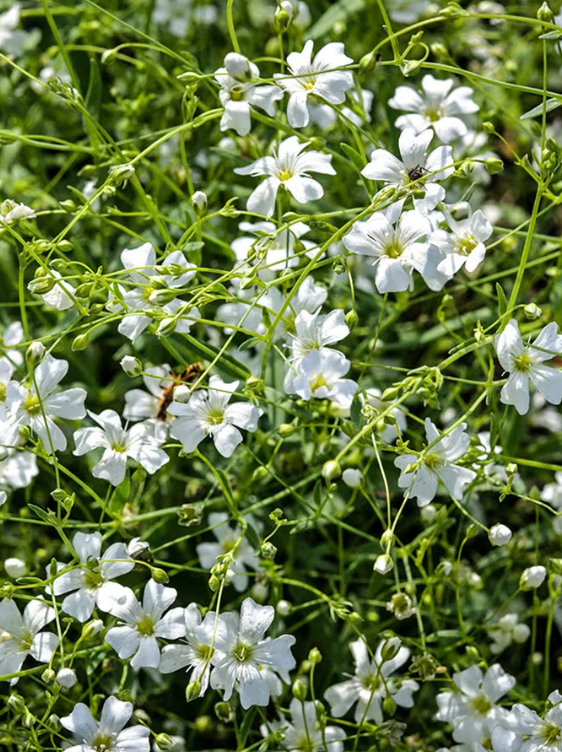
Maidens Breath, Gypsophila elegans M.Bieb., is a slender annual flowering plant in Caryophyllaceae, the carnation or pink family. It produces an open, airy mass of branching stems and relatively large white, pale-pink, rose, or carmine flowers. The cloud-like floral effect accounts for the broad common name Baby’s Breath.
The species was formally published in 1808 and remains accepted within Gypsophila. It should not be confused taxonomically with Common or Perennial Baby’s Breath, Gypsophila paniculata, which is the species most familiar from large commercial floral displays.
Historical names appearing in synonymic records include Gypsophila producta, Gypsophila ceballosii, Gypsophila carminea, Gypsophila elegans var. latipetala, Silene elegans, and Arenaria pulchella. These names may be useful when examining older herbarium, nursery, or botanical records.
Native Range and Introduced Occurrence
The native range extends from southern Ukraine and Crimea through the North Caucasus, Transcaucasia, Türkiye, and western and northern Iran. It grows primarily in temperate environments and is associated with open, disturbed, rocky, sandy, or steppe-like sites within its broader range.
Outside its native range, pets may encounter the plant in gardens, wildflower mixtures, roadside plantings, revegetated land, cut-flower production, seed packets, vacant lots, and escaped ornamental populations. It has become sporadically naturalized in parts of North America and elsewhere through cultivation and seed distribution.
Wildflower mixtures deserve particular attention because the packet may contain several species, treated seed, fertilizer, or unidentified plant material. Preserve the original package after an animal eats seedlings, mature plants, or spilled seed.
Growth Form and Leaves
Gypsophila elegans is an upright, highly branched annual commonly growing from approximately six inches to two feet tall, although size varies with cultivar and environment. The stems are slender and may spread outward as the inflorescence expands.
Leaves occur opposite one another along the stems. They are simple, narrow, entire-edged, and generally linear-lanceolate to oblong-lanceolate. Their gray-green or blue-green appearance and small size can make fragments difficult to recognize after chewing or vomiting.
The annual growth habit helps distinguish Maidens Breath from the substantial perennial crown and root system of mature G. paniculata. One detached flowering spray, however, may not provide enough information for dependable species identification.
Flowers, Capsules, and Seeds
The flowers are carried on slender stalks in loose branching clusters. Each normally has five broad petals that may be white, pale pink, rose, or carmine depending on the strain. Petals may have a shallow notch at the outer edge.
Compared with Common Baby’s Breath, the individual flowers of G. elegans are generally larger, flatter, more open, and less densely packed. Double or semi-double horticultural forms may obscure the ordinary five-petaled appearance.
After flowering, the plant forms small dry capsules containing multiple dark, roughened, often kidney-shaped seeds. Roots and seeds have the strongest direct exact-species evidence for saponins and seed-associated gypsophilin-S. Capsules and seeds should therefore remain inaccessible even though no natural companion-animal toxic dose has been established.
Which Parts Require Caution?
Leaves, stems, flowers, buds, pollen-bearing material, capsules, seeds, roots, fresh cuttings, wilted plants, dried floral sprays, powders, extracts, and contaminated vase water should all remain inaccessible. Sufficient plant material may cause gastrointestinal irritation, and concentrated or mixed exposures introduce additional risk.
The strongest chemical studies have examined roots and seeds. This does not prove that the aerial portions are free of active compounds, but it prevents a scientifically unsupported claim that flowers and roots contain identical concentrations.
No individual part has been shown to cause predictable fatal systemic poisoning after an ordinary exposure. The practical risk from decorative flowers remains mild digestive upset combined with the hazards of the other plants and materials present.
Maidens Breath and Common Baby’s Breath
Common or Perennial Baby’s Breath is Gypsophila paniculata. It is a long-lived branching perennial with a substantial root system and large panicles containing numerous smaller flowers. It is the species most commonly associated with commercial florist “Gyp,” occupational allergy reports, and extensive Gypsophila root-saponin research.
Maidens Breath is Gypsophila elegans, an annual with generally larger, flatter, more open flowers and a less massive root system. Both may be sold simply as Baby’s Breath and both warrant similar initial precautions after ingestion, but chemical findings from one should not be represented automatically as direct measurements of the other.
Other Plants Called Baby’s Breath
Creeping Baby’s Breath is generally Gypsophila repens, a low-growing perennial that forms mats or trailing growth. Cushion or Low Baby’s Breath may refer to Psammophiliella muralis, formerly classified as Gypsophila muralis. Numerous additional Gypsophila species and hybrids circulate in horticulture.
Soapwort normally refers to Saponaria officinalis. It is another saponin-containing member of Caryophyllaceae but is not a precise synonym for Maidens Breath. Confusing the two plants can distort the poison assessment because their chemistry, growth form, and concentration patterns are not identical.
“Florist’s Gyp” identifies a commercial category rather than a guaranteed species. A florist’s ingredient list, delivery record, nursery label, and complete photographs may be more reliable than the common name used by the owner.
Fresh and Dried Floral Arrangements
Maidens Breath is used in bouquets, wedding arrangements, wreaths, centerpieces, funeral displays, corsages, dried crafts, garlands, and decorative backdrops. Both fresh and dried material can be swallowed, and drying does not reliably remove every saponin, seed protein, pollen particle, pesticide residue, or allergen.
Dried sprays become brittle and may break into sharp or fibrous fragments. Cats may bat at moving stems, dogs may carry entire arrangements, and birds may shred flowers and capsules. An old arrangement can also contain mold, dust, degraded wire coverings, adhesives, paint, glitter, or fragrance products.
Mixed Bouquets and True Lilies
Baby’s Breath is commonly combined with roses, carnations, Chrysanthemums, Hydrangeas, Eucalyptus, ferns, Tulips, Daffodils, Lilies, seasonal greenery, and decorative berries. Maidens Breath may be one of the least dangerous biological components in the arrangement.
True Lilies in the genus Lilium and Daylilies in the genus Hemerocallis create an immediate emergency for cats. Small exposures to petals, leaves, pollen, or contaminated vase water can cause acute kidney failure. A visible Baby’s-Breath stem must not distract from a possible lily exposure.
Severe drooling and oral pain may point toward an insoluble-calcium-oxalate plant. Tremors, seizures, marked weakness, abnormal pupils, or collapse may indicate pesticide, medication, another poisonous plant, or chemical contamination rather than ordinary Gypsophila irritation.
Vase Water and Preservatives
Vase water may contain sugars, acidifiers, disinfectants, fertilizer ingredients, bacterial growth, mold, decaying plant tissue, and sap from every plant in the container. A small drink of dilute, recently prepared floral water often causes no major illness, but concentrated packets or heavily contaminated water can cause gastrointestinal or other toxic effects.
Preserve the packet, ingredient label, remaining water, and florist information when concentrate may have been chewed or swallowed. Do not assume that “flower food” is harmless merely because the final diluted solution is intended for a vase.
Floral Foam, Wire, Ribbon, and Decorative Material
Floral foam can cause gagging, vomiting, mouth irritation, or gastrointestinal obstruction. Small pieces may crumble and become difficult to identify after a pet shreds a centerpiece.
Floral wire and pins can puncture the mouth, esophagus, stomach, or intestine. Ribbon, string, and decorative mesh can form dangerous linear foreign bodies, especially in cats. Plastic picks, clips, tape, card holders, artificial berries, wrapping, and delivery-box material can also be swallowed.
Persistent retching, painful swallowing, repeated vomiting, abdominal enlargement, reduced stool, or worsening pain requires imaging or endoscopic assessment rather than continued home observation.
Pesticides, Postharvest Treatments, and Mold
Commercial flowers may carry fungicide, insecticide, dye, fragrance, glitter spray, leaf shine, preservative, or other postharvest residue. Garden plants may have been treated with herbicide, fertilizer, horticultural oil, or pest-control products.
Marked drooling, muscle twitching, tremors, weakness, pupil changes, seizures, respiratory difficulty, or rapid deterioration is inconsistent with uncomplicated Maidens-Breath ingestion and may reflect chemical exposure.
Old vase water, moldy dried arrangements, decomposing stems, and discarded floral waste may contain bacteria, fungi, and irritant decomposition products. The plant’s low intrinsic toxicity does not make rotten or chemically treated material safe.
Contact and Occupational Allergy
Fresh and dried Gypsophila paniculata has caused IgE-mediated rhinitis, conjunctivitis, asthma, contact urticaria, and dermatitis in repeatedly exposed floral workers. Specific inhalation challenges and immune testing have confirmed true occupational allergy in published cases.
Comparable reactions are not established as a routine pet syndrome after a brief G. elegans exposure. Nevertheless, pollen, sap, and floral dust should be washed from the coat to prevent grooming and continued contact. People with known floral allergy should wear gloves and minimize dust during cleanup.
Animal Exposure Patterns
Dogs most often reach bouquets on tables, discarded wedding or cemetery arrangements, delivery boxes, garden waste, wildflower plots, or open trash containers. Cats may chew moving sprays, climb near a vase, drink floral water, or groom pollen and dust from the coat.
Horses and livestock are more likely to encounter garden waste, wildflower growth, discarded cut plants, contaminated forage, or seed-producing stands. Rabbits and guinea pigs may be exposed when owners offer unidentified garden material as forage or enrichment.
Pet birds can shred both fresh and dried flowers and may reach seeds, wire, foam, ribbon, or glitter within an arrangement. The small body size of a bird makes careful identification and early avian veterinary advice important when signs appear.
Diagnosis
Diagnosis depends on identifying the plant, estimating the maximum amount eaten, documenting the timing and progression of gastrointestinal signs, and excluding a more dangerous plant, chemical, or foreign body. No routine blood or urine test confirms Maidens-Breath poisoning.
Preserve a complete flowering stem with leaves, flowers, capsules, and roots when available. Save photographs of the intact growth habit, seed or nursery labels, bouquet tags, delivery paperwork, preservative packets, pesticide containers, and material recovered from vomit or stool.
A damaged Maidens-Breath stem supports exposure but does not prove that it caused every abnormality. Severe neurologic, respiratory, cardiovascular, renal, hepatic, or hematologic findings require a broader investigation.
Veterinary Evaluation and Differential Diagnosis
Most minor asymptomatic exposures require no laboratory testing. Repeated vomiting, prolonged diarrhea, blood, dehydration, abdominal pain, weakness, persistent anorexia, respiratory signs, or possible foreign material may justify a physical examination and targeted diagnostic testing.
Blood glucose, electrolytes, complete blood count, serum chemistry, acid-base status, and urinalysis can assess dehydration, metabolic disturbance, bleeding, organ function, and alternative diagnoses. Radiographs, ultrasound, endoscopy, chest imaging, ocular examination, or additional testing may be selected according to the actual findings.
Differential diagnoses include another bouquet plant, true-Lily exposure in a cat, floral preservative, pesticide, spoiled food, infection, parasites, pancreatitis, medication, gastrointestinal obstruction, aspiration, metabolic disease, and unrelated illness. Marked oral pain may suggest an oxalate-containing plant, while severe neurologic signs should trigger investigation for an entirely different toxin.
Prognosis and Prevention
The prognosis is excellent after a limited ingestion causing no signs or mild temporary vomiting, diarrhea, nausea, appetite loss, or lethargy. Improvement should include cessation of vomiting, normal hydration, renewed appetite, normal stool, comfortable breathing, and return of usual behavior.
Severe dehydration, aspiration, prolonged food refusal, corneal injury, foreign-body obstruction, pesticide exposure, or another poisonous flower changes the prognosis according to that complication rather than according to Maidens Breath alone.
Keep bouquets, vase water, seed packets, garden plants, dried arrangements, floral foam, wire, ribbon, and preservative packets outside animal-accessible areas. Discard old arrangements directly into a closed container rather than an open trash can, compost pile, pasture, or barn area.
Immediate Response
- Stop further exposure: Move the animal away from the plant, bouquet, dried arrangement, seed packet, vase water, floral foam, garden bed, or discarded material.
- Preserve the plant: Save a complete stem with leaves and flowers, capsules or seeds when present, roots when dug up, photographs, bouquet labels, seed packets, and nursery information.
- Estimate the maximum amount: Determine the greatest number of stems, flowers, capsules, seeds, root pieces, or amount of vase water that could be missing rather than only the bite witnessed.
- Record the exposure window: Note the earliest and latest possible access and when vomiting, diarrhea, drooling, coughing, appetite loss, or behavioral change began.
- Record the animal’s information: Provide species, current weight, age, medical conditions, medications, and whether the animal is pregnant, elderly, very young, or medically fragile.
- Contact a professional when needed: Obtain veterinary or animal poison-control guidance when a large amount, roots, seeds, concentrated material, an unidentified bouquet, a chemical product, or foreign material is involved, or when any clinical sign develops.
A single small flower eaten by an alert animal is unlikely to produce severe poisoning. The assessment changes when many stems are missing, the animal repeatedly returned to the arrangement, a cat may have contacted a Lily, or wire, ribbon, foam, pesticide, preservative, mold, or another plant may also have been swallowed.
Identify the Entire Exposure
- Check every flower: Identify true Lilies, Daylilies, Tulips, Daffodils, Chrysanthemums, Hydrangeas, Eucalyptus, ferns, decorative berries, and all other plant material.
- Prioritize cat Lily exposure: Any possible true-Lily or Daylily exposure in a cat requires immediate veterinary treatment even when Maidens Breath appears to be the visibly damaged plant.
- Check floral preservatives: Save packets, product labels, remaining concentrate, and vase water information.
- Check for foreign material: Account for floral wire, pins, ribbon, string, tape, mesh, foam, plastic picks, clips, artificial berries, wrapping, and delivery-box material.
- Check for chemicals: Report pesticides, fungicides, herbicides, fertilizer, leaf shine, dye, glitter spray, fragrance, and cleaning products.
- Check for decomposition: Report mold, decaying stems, foul-smelling water, and scavenging from discarded floral waste.
Mixed exposure is the most important reason not to treat every event as mild Baby’s-Breath ingestion. A bouquet can contain one low-risk filler flower and one plant capable of causing kidney failure, dangerous cardiovascular effects, severe oral injury, or neurologic poisoning.
Remove Loose Material Safely
- Remove visible pieces: Carefully take loose flowers, leaves, seeds, and stem fragments from the lips and front of the mouth when this can be done without being bitten.
- Avoid blind finger sweeps: Do not reach deeply into the throat or push a stem, wire, ribbon, or plant fragment toward the airway or esophagus.
- Wipe accessible residue: Use a damp cloth to remove loose pollen and plant material from the lips and front of the mouth in a fully alert animal.
- Do not force rinsing: Do not pour or syringe water into the mouth of an animal that is nauseated, coughing, weak, sedated, vomiting, or swallowing abnormally.
- Preserve recovered material: Place representative plant and foreign material in a sealed disposable container for identification.
Removing loose material does not neutralize saponins already in the stomach or intestine. Repeated invasive mouth handling can increase stress, cause injury, or move a foreign object farther backward.
Do Not Induce Vomiting at Home
- Do not give hydrogen peroxide automatically: The expected plant toxicity is usually mild, while unnecessary emesis can worsen gastric irritation, dehydration, and aspiration risk.
- Never give peroxide to a cat: Hydrogen peroxide can cause serious feline gastric and esophageal injury.
- Never attempt emesis after signs begin: Do not induce vomiting in an animal that is drooling, vomiting, coughing, weak, lethargic, trembling, ataxic, collapsed, breathing abnormally, or swallowing poorly.
- Do not induce vomiting after foreign-material ingestion: Wire, pins, long stems, ribbon, string, plastic, foam, and sharp fragments can cause additional injury while returning through the esophagus.
- Do not use household emetics: Salt, mustard, ipecac, dish soap, oil, manual gagging, and fingers in the throat are unsafe.
- Reserve controlled emesis for professionals: A veterinarian or poison-control professional may consider it in a dog only when the exposure, timing, clinical condition, and airway status make the expected benefit greater than the risk.
Horses, rabbits, guinea pigs, and many other species cannot vomit. No household emetic should be used in those animals. Stabilization and correct identification take priority over attempting to empty the stomach.
Activated Charcoal
- Do not give charcoal routinely: It is generally unnecessary after an uncomplicated Maidens-Breath flower or stem ingestion.
- Use only under veterinary direction: A veterinarian may consider charcoal when another absorbable toxin, pesticide, medication, or major mixed exposure is suspected.
- Never force charcoal: Do not administer it to a vomiting, drooling, coughing, weak, sedated, neurologically abnormal, or poorly swallowing animal.
- Protect the airway: Charcoal aspiration can produce severe and potentially fatal lung injury.
- Do not use household charcoal: Barbecue briquettes, burned food, fireplace ash, and homemade carbon are not medical activated charcoal.
- Do not add a cathartic at home: Sorbitol and other laxatives can worsen diarrhea, dehydration, and electrolyte disturbance.
Activated charcoal does not reverse gastrointestinal irritation already present and does not treat a physical foreign body. Its value depends on the other substances involved, the exposure time, gastrointestinal function, and airway safety.
Do Not Give Household Remedies or Owner-Selected Medication
- Do not give milk or dairy: Milk, yogurt, cheese, cream, and ice cream do not neutralize triterpenoid saponins.
- Do not give oil: Cooking oil, mineral oil, and other fats do not bind the irritants and may be aspirated.
- Do not give antacids automatically: Human antacids do not neutralize the plant and may contain inappropriate ingredients.
- Do not give anti-diarrheal medication: Loperamide, bismuth products, kaolin mixtures, and similar products should not be owner-selected.
- Do not give sucralfate without direction: Its need, formulation, timing, and suitability depend on veterinary assessment.
- Do not give human pain medication: Ibuprofen, naproxen, acetaminophen, aspirin, and similar drugs can cause serious additional poisoning.
- Do not give leftover veterinary medication: Antiemetics, antibiotics, sedatives, steroids, gastrointestinal drugs, and other prescriptions must be selected for the current patient.
No household remedy functions as an antidote. Adding food, oil, medication, or large volumes of liquid to a nauseated animal may provoke further vomiting or aspiration and can complicate professional treatment.
Do Not Give Antihistamines Automatically
- Do not give diphenhydramine without direction: It does not neutralize saponins, remove a foreign body, or treat gastrointestinal irritation.
- Do not treat vomiting as allergy: Local digestive irritation is more likely than a dangerous allergic reaction after ordinary ingestion.
- Do not delay airway care: Rapid facial swelling, throat swelling, abnormal breathing, weakness, or collapse requires emergency examination rather than waiting for an oral antihistamine.
- Avoid combination products: Human cold, sleep, allergy, and sinus products may contain decongestants, acetaminophen, caffeine, alcohol, or xylitol.
- Allow veterinary selection: A veterinarian may choose an antihistamine or anti-inflammatory treatment when a genuine allergic component is present.
Published Baby’s-Breath allergy reports involve sensitized people with repeated occupational exposure. An antihistamine may be appropriate for a particular allergic reaction, but it is not a universal plant-poison antidote and should not replace airway, circulatory, or diagnostic care.
Food and Water
- Do not force food: A nauseated, vomiting, weak, coughing, or poorly swallowing animal may vomit or aspirate.
- Offer water cautiously: Small amounts may remain available only when the animal is alert, swallowing normally, and not vomiting repeatedly.
- Do not force fluids: Syringed or poured water can enter the lungs and cannot correct meaningful dehydration.
- Prevent rapid drinking: Gulping a large volume immediately after vomiting may trigger another episode.
- Remove vase water: Prevent additional access to sap, preservatives, bacteria, mold, and toxins from other plants.
- Follow veterinary feeding instructions: Food may be withheld briefly or reintroduced gradually according to species, vomiting, hydration, appetite, and medical history.
Cats, rabbits, and guinea pigs require particular attention when appetite does not return. Prolonged food refusal can create secondary metabolic or gastrointestinal disease even after the original plant irritation has subsided.
Vomiting, Diarrhea, and Appetite Monitoring
- Track every episode: Record vomiting and diarrhea and note petals, leaves, seeds, stems, foam, mucus, blood, wire, ribbon, plastic, or other material.
- Save representative material: Preserve unusual plant and foreign material recovered from vomit or stool.
- Watch for dehydration: Tacky gums, reduced urination, sunken eyes, worsening weakness, or inability to retain water requires veterinary care.
- Watch for blood: Repeated fresh blood, coffee-ground vomit, black stool, pale gums, or collapse requires urgent assessment.
- Watch for aspiration: Coughing, fever, nasal discharge, rapid breathing, or renewed lethargy after vomiting may indicate aspiration pneumonia.
- Watch for obstruction: Repeated retching, abdominal enlargement, persistent pain, reduced stool, or ongoing vomiting may indicate swallowed stems or floral material.
- Monitor eating: Record when the animal last ate normally and whether food interest returns as nausea resolves.
One isolated vomiting episode is not equivalent to persistent gastroenteritis. Continued fluid loss may require veterinary anti-nausea treatment and fluid support. Symptoms that do not follow the expected short course should prompt reassessment for another plant, foreign body, toxin, or illness.
Skin and Coat Exposure
- Wear gloves: Protect your own skin when removing sap, pollen, mold, preservative, or pesticide residue.
- Remove floral material: Pick visible flowers, stems, seeds, and dried fragments from the coat without crushing them further.
- Wash the coat: Rinse affected fur and skin thoroughly with lukewarm water and mild pet-safe shampoo.
- Prevent grooming: Stop the animal from licking contaminated fur until residue has been removed.
- Clean equipment: Wash collars, harnesses, bedding, carriers, grooming tools, and contaminated surfaces.
- Monitor for delayed irritation: Redness, itching, swelling, bumps, crusting, or rash may appear after exposure.
Do not apply bleach, solvents, essential oils, alcohol, concentrated detergent, or human rash creams. Persistent itching, facial involvement, open sores, spreading redness, pain, or infection requires veterinary treatment.
Eye Exposure
- Begin irrigation: Flush the affected eye with sterile saline or clean lukewarm water for at least fifteen to twenty minutes.
- Flush beneath the eyelids: Allow fluid to reach the corners and beneath the lids without scraping the ocular surface.
- Prevent rubbing: Stop the animal from scratching the eye or rubbing it against furniture, carpet, or the ground.
- Do not use tools: Tweezers, fingernails, cotton swabs, and cloth can worsen corneal injury.
- Do not apply human eye medication: Redness drops, topical anesthetics, ointments, and leftover prescriptions may delay healing or obscure examination findings.
- Obtain prompt examination: Continued squinting, cloudiness, swelling, discharge, pain, or inability to open the eye requires veterinary care.
Irrigation removes loose pollen, sap, dust, and preservative but cannot rule out a corneal abrasion or retained material beneath an eyelid. Fluorescein staining and magnified examination may be required.
Recognize an Emergency
- Watch breathing: Rapid, noisy, labored, irregular, gasping, open-mouth, or weak breathing requires immediate care.
- Watch swallowing: Inability to swallow saliva, repeated choking, painful swallowing, or coughing whenever water is offered suggests airway, throat, or foreign-body involvement.
- Watch coordination: Severe staggering, tremors, inability to stand, or seizures is not expected after a mild plant nibble.
- Watch mental status: Profound depression, confusion, collapse, stupor, or failure to respond normally requires emergency assessment.
- Check gum color: Pale, gray, blue, yellow, or very dark-red gums indicate a potentially serious complication.
- Watch the abdomen: Severe enlargement, repeated unproductive retching, persistent pain, or reduced stool may indicate obstruction or another emergency.
- Prioritize possible Lily exposure: A cat exposed to a bouquet containing true Lilies or Daylilies requires immediate treatment even before symptoms begin.
Do not delay transportation while attempting additional oral remedies. Severe signs may represent a more dangerous plant, pesticide, medication, aspiration, foreign body, metabolic disorder, or unrelated emergency.
Safe Transportation
- Keep the animal quiet: Reduce activity, excitement, jumping, and struggling.
- Use a secure carrier: Transport cats, birds, rabbits, guinea pigs, and small dogs in an appropriate padded carrier.
- Prevent falls: Support weak or uncoordinated animals and keep them away from stairs, traffic, water, and slippery surfaces.
- Do not muzzle a vomiting animal: A muzzle can interfere with breathing and prevent vomit from leaving the mouth.
- Position for breathing: Allow a respiratory patient to maintain the posture that provides the easiest airflow.
- Bring the evidence: Take plant samples, bouquet labels, seed packets, preservative packets, chemical containers, photographs, and recovered material.
- Call ahead: Tell the clinic that a possible mixed-bouquet, Lily, chemical, or floral foreign-body exposure is involved.
Veterinary Examination
- Assess hydration and circulation: Gum moisture, pulse quality, heart rate, blood pressure, body weight, temperature, and urine production help determine fluid loss and perfusion.
- Inspect the mouth and throat: Persistent gagging, coughing, drooling, or painful swallowing may require a sedated examination and airway preparation.
- Examine the abdomen: Persistent pain, repeated vomiting, distention, or missing decorative material may justify radiographs, ultrasound, or endoscopy.
- Evaluate the lungs: Coughing, fever, low oxygen, or increased respiratory effort after vomiting may require chest imaging and aspiration treatment.
- Assess the eyes and skin: Persistent ocular pain may require fluorescein staining, while dermatitis must be distinguished from chemical burns, infection, and allergy.
- Identify every plant: Photographs, labels, florist records, and complete samples may be required to exclude a more dangerous species.
- Check laboratory values when needed: Electrolytes, glucose, complete blood count, serum chemistry, acid-base status, and urinalysis may be selected for persistent or severe illness.
No routine clinical test confirms Maidens-Breath saponin or gypsophilin exposure. Diagnostic testing evaluates dehydration, bleeding, organ function, metabolic disturbance, and competing diagnoses rather than proving one specific plant compound.
Veterinary Treatment
Veterinarian-selected anti-nausea medication may reduce continued vomiting, discomfort, fluid loss, and aspiration risk. Subcutaneous or intravenous fluids may be chosen according to dehydration, blood pressure, electrolyte status, vomiting, diarrhea, species, and underlying disease.
Prescription gastrointestinal protection or acid suppression may be considered when persistent esophageal or gastric irritation, hematemesis, or ulceration is documented. Medication selection depends on the actual lesion and the animal’s swallowing ability; there is no universal antidote that neutralizes the complete saponin mixture.
Oxygen, airway suctioning, intubation, ventilation, chest imaging, and aspiration treatment may be required when vomit or plant material enters the respiratory tract. Endoscopy or surgery may be necessary to remove wire, ribbon, string, foam, plastic picks, long stems, or other obstructive material.
A confirmed Lily exposure in a cat, pesticide poisoning, corrosive preservative, medication exposure, or another toxic plant requires its own treatment protocol. The mild reputation of Maidens Breath must not delay toxin-specific care for the actual exposure.
Horses, Livestock, Rabbits, Guinea Pigs, and Birds
- Remove the source: Prevent access to wildflower stands, garden waste, contaminated forage, seed mixtures, discarded arrangements, and vase products.
- Do not attempt vomiting: Horses, rabbits, guinea pigs, and many other species cannot vomit, and ruminants should never receive household emetics.
- Do not drench a symptomatic animal: Weak, salivating, coughing, depressed, or poorly swallowing animals can aspirate water, oil, charcoal, or medication.
- Check every exposed animal: Herd, flock, or group members may have eaten different quantities and may develop signs at different times.
- Retain samples: Preserve complete plants, roots, seed packets, forage, floral waste, chemical labels, and photographs of the exposure area.
- Monitor eating and feces: Appetite loss and reduced fecal production are especially important in rabbits and guinea pigs.
- Obtain species-appropriate care: Persistent diarrhea, colic, feed refusal, regurgitation, weakness, respiratory change, or abnormal balance requires veterinary assessment.
Monitoring, Recovery, and Prevention
- Monitor vomiting: Episodes should stop rather than become more frequent, painful, or bloody.
- Monitor stool: Diarrhea should improve and should not progress to repeated watery or bloody stool.
- Monitor hydration: Normal drinking, urination, gum moisture, and activity should return.
- Monitor appetite: Food interest should return, with particular attention to cats, rabbits, guinea pigs, and birds.
- Watch for delayed aspiration: Coughing, fever, rapid breathing, nasal discharge, or renewed lethargy may appear after vomiting.
- Watch for obstruction: Recurrent vomiting, abdominal pain, reduced stool, or persistent retching requires reassessment.
- Secure floral material: Keep bouquets, dried flowers, vase water, foam, wire, ribbon, seed packets, and garden waste outside animal-accessible areas.
- Typical prognosis: Most limited exposures have an excellent prognosis when no more dangerous plant, chemical, or foreign body is involved.
Recovery means that the animal can retain water, resume appropriate eating, urinate and defecate normally, breathe comfortably, and return to ordinary behavior. Failure to improve within the expected short course warrants diagnostic reassessment rather than continued attribution to a harmless flower nibble.
Frequently Asked Questions About Maidens Breath and Animal Poisoning
Is Maidens Breath poisonous to dogs?
Yes, but it is considered a mild gastrointestinal irritant rather than a dangerous systemic dog poison. A dog that eats enough Gypsophila elegans may develop nausea, vomiting, diarrhea, abdominal discomfort, appetite loss, or temporary lethargy.
The greater risk may come from the rest of the bouquet. Floral wire, ribbon, foam, pesticides, preservatives, true Lilies, decorative berries, and other flowers can produce more serious injury or poisoning. Repeated vomiting, blood, inability to retain water, marked weakness, coughing, breathing difficulty, abdominal enlargement, or collapse requires veterinary care.
Is Maidens Breath poisonous to cats?
Yes. Cats may vomit, develop diarrhea, drool from nausea, refuse food, hide, stop grooming, or appear unusually quiet after eating sufficient material. Severe systemic poisoning is not expected from an uncomplicated small exposure.
Continued food refusal is important because prolonged inadequate intake can cause serious secondary metabolic disease in cats. Any possibility that the bouquet contained a true Lily or Daylily requires immediate veterinary treatment even when the Baby’s Breath appears to be the flower chewed.
Is Gypsophila elegans poisonous to horses and livestock?
It is not recognized as a major systemic poison for horses, cattle, sheep, or goats. A substantial ingestion of garden waste, wildflower growth, seed-producing plants, or contaminated forage may cause feed refusal, diarrhea, mild colic, ruminal disturbance, depression, or reduced water intake.
Horses and livestock should not receive household emetics or unsupervised drenches. Persistent colic, severe diarrhea, painful swallowing, weakness, respiratory change, neurologic abnormalities, or collapse requires large-animal veterinary assessment and investigation for other plants or chemicals.
Why do some sources call Baby’s Breath nontoxic while others call it mildly toxic?
The two descriptions use the word toxic differently. Maidens Breath is not expected to cause organ failure, paralysis, dangerous arrhythmias, or death after an ordinary limited exposure, so some authorities place it in a nontoxic or low-risk category.
The plant can still contain gastrointestinally active triterpenoid saponins and may cause temporary vomiting or diarrhea after sufficient ingestion. “Mildly poisonous gastrointestinal irritant” communicates both facts more accurately than either “completely harmless” or “dangerously toxic.”
Which toxins have been confirmed directly in Maidens Breath?
Exact-species research confirms a complex mixture of triterpenoid saponins in Gypsophila elegans roots and seeds. Cultured roots accumulated substantial saponin concentrations, and later work isolated and structurally characterized the bidesmosidic saponin gypsophilosid A.
The seeds also contain gypsophilin-S, a type-I ribosome-inactivating protein. These findings establish real biochemical activity but do not establish a severe natural poisoning syndrome after one flower or a small bouquet nibble.
What is gyposenin?
Gyposenin is a toxin name commonly repeated in veterinary summaries of Baby’s-Breath exposure. It is generally described as a gastrointestinally irritating saponin associated with the genus Gypsophila.
It should be treated as a practical veterinary shorthand rather than as one fully resolved compound measured at a fixed concentration in every G. elegans flower, leaf, stem, seed, and root. The exact-species literature instead documents a variable saponin mixture and identifies gypsophilosid A directly.
What is gypsophilosid A?
Gypsophilosid A is a bidesmosidic triterpenoid saponin isolated directly from Gypsophila elegans. Its structure was characterized through chromatography, mass spectrometry, and detailed nuclear magnetic resonance analysis.
It displayed strong membrane-related activity in a cultured-cell gene-delivery system. That experiment demonstrates biochemical activity but does not define a toxic oral dose or predict severe natural poisoning in pets.
What are gypsogenin and githagenin?
Gypsogenin and githagenin are alternate names for the same oleanane-type triterpenoid sapogenin. Gypsophilasapogenin and albsapogenin are additional synonyms.
A sapogenin is the non-sugar portion of a saponin molecule. Gypsogenin-related structures are common in Gypsophila chemistry, but gypsogenin should not be described as the sole toxin in every part of Maidens Breath.
What is gypsophilin-S?
Gypsophilin-S is a type-I ribosome-inactivating protein isolated from Gypsophila elegans seeds. It can remove an essential adenine from ribosomal RNA and inhibit protein synthesis under suitable laboratory conditions.
Type-I proteins lack the separate lectin chain found in type-II toxins such as ricin. No natural veterinary case series establishes that an ordinary Maidens-Breath exposure produces ricin-like systemic poisoning. Seed ingestion should still be prevented, but the laboratory finding must not be overstated.
Does gypsophilin-S make Maidens Breath as dangerous as castor beans?
No. Castor beans contain ricin, a type-II ribosome-inactivating toxin with a lectin chain that facilitates entry into cells. Gypsophilin-S is a type-I protein without that separate cell-binding chain.
Natural toxicity also depends on concentration, release from the seed, digestion, absorption, cell entry, and the amount consumed. No evidence supports treating one Maidens-Breath flower or seed as equivalent to castor-bean poisoning.
Which parts of Maidens Breath can cause illness?
Leaves, stems, flowers, buds, pollen-bearing material, capsules, seeds, roots, fresh clippings, wilted plants, and dried floral sprays should all remain inaccessible. Roots and seeds have the strongest direct exact-species chemical evidence.
The aerial parts have not been quantified comprehensively enough to declare a precise concentration or safe threshold. Sufficient material may cause gastrointestinal irritation, and fibrous stems or decorative materials can create mechanical injury independently of the plant’s chemistry.
Are Maidens-Breath flowers, stems, leaves, seeds, and roots equally toxic?
No comparative study has demonstrated equal toxin concentrations in every part. Roots and seeds have received the most direct exact-species investigation, while ordinary pet exposures more commonly involve flowers and slender stems.
A compact root or quantity of seed may deliver more material in a smaller mass, but that does not prove a fixed plant-part ranking for every cultivar and growing condition. All parts should remain inaccessible without pretending that the available measurements are identical.
Can one Maidens-Breath flower poison a dog or cat?
One small flower is unlikely to cause serious illness. Many animals remain normal after a brief exploratory bite, although individual sensitivity varies and mild vomiting or diarrhea is possible.
The entire exposure must be considered. A single visible flower may come from a bouquet containing a true Lily, pesticide, preservative, wire, ribbon, or another toxic plant. The maximum amount that could be missing is more useful than the amount witnessed.
How much Maidens Breath is toxic?
No validated toxic dose exists for dogs, cats, horses, livestock, rabbits, guinea pigs, or birds. The chance of gastrointestinal illness increases with the amount eaten, repeated access, root or seed ingestion, individual sensitivity, and concentrated products.
No exact number of flowers, stems, or seeds can be guaranteed safe. The animal’s symptoms, size, medical history, and all accompanying bouquet hazards should guide the response.
How quickly do symptoms begin?
Nausea, vomiting, or diarrhea may begin within the first several hours, but no precise onset range has been established specifically for Gypsophila elegans. Repeated access can make the true exposure time difficult to determine.
A concentrated product, chemical residue, foreign body, contaminated vase water, or another poisonous plant may produce a different timeline from one brief flower nibble.
What symptoms should I expect?
The expected signs are lip licking, repeated swallowing, nausea, vomiting, soft stool or diarrhea, abdominal discomfort, reduced appetite, and mild temporary lethargy. Many limited exposures produce no symptoms.
Repeated vomiting, blood, inability to retain water, prolonged appetite loss, severe weakness, coughing, abnormal breathing, abdominal enlargement, or collapse requires veterinary evaluation for complications or another exposure.
Can Maidens Breath cause dehydration?
The plant does not directly remove water from the body, but repeated vomiting or diarrhea can cause dehydration and electrolyte disturbance. Small, young, elderly, or medically fragile animals may deteriorate more quickly.
Tacky gums, reduced urination, sunken eyes, worsening weakness, or inability to retain water requires veterinary care rather than forced oral fluids.
Can Maidens Breath cause seizures, heart problems, kidney failure, or liver failure?
Those are not expected effects of an uncomplicated limited exposure. Severe neurologic, cardiovascular, renal, or hepatic abnormalities should trigger immediate investigation for another bouquet plant, pesticide, medication, foreign body, aspiration, metabolic disorder, or unrelated disease.
A visible Maidens-Breath stem should not become the automatic explanation for every severe abnormality when the known clinical pattern does not match.
Can Maidens Breath kill a dog or cat?
Fatal systemic poisoning from an uncomplicated ornamental exposure is not expected. The usual syndrome is absent or mild gastrointestinal illness.
A more serious outcome can result from severe dehydration, aspiration, prolonged feline food refusal, floral wire, ribbon, obstruction, pesticide residue, contaminated vase water, or another poisonous plant in the same arrangement.
Is dried Baby’s Breath still capable of causing illness?
Yes. Drying does not reliably remove every saponin, seed protein, pollen particle, pesticide residue, allergen, or contaminant. Eating enough dried material may still cause vomiting or diarrhea.
Dried stems also become brittle and may create gagging, painful swallowing, or foreign-body concerns. Old arrangements may contain mold, wire, pins, adhesives, glitter, paint, or other dried plants.
Can Baby’s Breath cause contact dermatitis or asthma?
Fresh and dried Gypsophila paniculata has caused IgE-mediated rhinitis, conjunctivitis, asthma, contact urticaria, and dermatitis in sensitized floral workers with repeated exposure. These reactions were confirmed in published occupational cases.
The evidence does not establish respiratory allergy as a routine pet-poisoning syndrome after one G. elegans nibble. Persistent rash, eye irritation, coughing, wheezing, or breathing difficulty still deserves assessment for plant dust, mold, preservative, pesticide, aspiration, or another allergen.
Is Maidens Breath the same as Common Baby’s Breath?
No. Maidens Breath on this page is Gypsophila elegans, an annual species with generally larger, flatter, more open flowers. Common or Perennial Baby’s Breath is Gypsophila paniculata, a long-lived perennial with many smaller flowers in extensive panicles.
Both may be sold under the same broad florist name and may cause gastrointestinal irritation, but they remain separate species and should not be assumed to have identical chemical concentrations.
How can I identify Gypsophila elegans?
Look for a slender, upright, highly branched annual with opposite narrow gray-green or blue-green leaves and loose airy clusters of relatively large, open, five-petaled white, pale-pink, rose, or carmine flowers. Petals may have a shallow notch.
A complete plant, seed label, and growth habit provide better identification than one detached spray. Double-flowered cultivars and florist handling can obscure the normal features.
Is Showy Baby’s Breath the same as Maidens Breath?
Yes. Showy Baby’s Breath and Annual Baby’s Breath are standard common names for Gypsophila elegans. Maidens Breath and Maiden’s Breath are spelling variants used for the same page species.
Is Soapwort another name for Maidens Breath?
No. Soapwort normally refers to Saponaria officinalis, a separate plant in the same family. It has its own concentrated saponin chemistry, botanical features, medicinal history, and toxicology.
Using Soapwort as an exact synonym for Gypsophila elegans can lead to incorrect identification and an inaccurate assessment of the amount and type of plant consumed.
Is florist’s Gyp always Gypsophila elegans?
No. “Gyp” is a commercial florist term applied to several Baby’s-Breath species and cultivars, particularly Gypsophila paniculata. The florist’s ingredient list, delivery record, nursery label, and complete plant photographs should be preserved.
Are white, pink, carmine, or double-flowered cultivars safer?
No dependable toxicity difference has been established on the basis of flower color or petal number. A horticultural selection should not be considered saponin-free merely because it has pink flowers, double blooms, or a named cultivar label.
Is Baby’s-Breath vase water safe for pets?
It should not be used as drinking water. Vase water may contain plant sap, preservatives, fertilizer ingredients, bacteria, mold, pesticide residue, and toxins released by every plant in the arrangement.
A small drink of dilute fresh water may cause no serious illness, but concentrated preservative, decaying water, or a bouquet containing true Lilies creates a different risk. Preserve the packet and bouquet information after exposure.
Are floral preservative packets dangerous?
Ingredients and concentrations vary. Undiluted packets may cause gastrointestinal irritation or other effects and should be assessed from the exact product label rather than from the name flower food.
Do not induce vomiting or give household remedies after a packet exposure without professional direction. Save the packaging and estimate the maximum amount missing.
Can floral foam, wire, or ribbon be more dangerous than Maidens Breath?
Yes. Foam can cause gagging, vomiting, or obstruction. Wire and pins can puncture the mouth, esophagus, stomach, or intestine. Ribbon and string can create a dangerous linear gastrointestinal foreign body, particularly in cats.
Persistent retching, painful swallowing, repeated vomiting, abdominal enlargement, reduced stool, or worsening pain requires veterinary imaging or endoscopic assessment.
What should I do if a cat chewed Baby’s Breath from a bouquet containing Lilies?
Treat the possible Lily exposure as an immediate emergency. Do not wait for vomiting, increased thirst, reduced urination, or kidney-related laboratory changes.
Bring the complete bouquet, photographs, florist information, and any plant material recovered from the cat. Early treatment offers the best opportunity to prevent acute kidney failure.
Can pesticides, mold, or old floral water cause additional illness?
Yes. Commercial and garden flowers may carry insecticide, fungicide, fertilizer, dye, fragrance, or postharvest residue. Old arrangements may contain mold, bacteria, and decomposition products.
Tremors, marked drooling, weakness, pupil changes, seizures, severe respiratory signs, or rapid deterioration is inconsistent with uncomplicated Maidens-Breath ingestion and may indicate a chemical or mixed exposure.
How is Maidens-Breath poisoning diagnosed?
Diagnosis uses plant identification, the maximum amount and plant part involved, exposure timing, compatible gastrointestinal signs, and exclusion of another plant, chemical, foreign body, or disease.
Preserve a complete flowering stem, roots or capsules when available, bouquet or seed labels, photographs, preservative packets, chemical containers, and material recovered from vomit or stool.
Is there a blood or urine test for Maidens-Breath poisoning?
No routine clinical assay confirms exposure to the plant’s complete saponin or protein mixture. Most minor cases do not need laboratory testing.
Blood tests and urinalysis may still be useful when vomiting or diarrhea is persistent, blood is present, dehydration develops, appetite does not return, or another toxic plant or disease is suspected.
Is there an antidote?
No specific antidote is needed for the usual mild gastrointestinal syndrome. Veterinary treatment controls vomiting, restores hydration, manages discomfort, protects the airway, and treats complications.
A more dangerous bouquet plant, pesticide, preservative, medication, or foreign body may require an entirely different and sometimes toxin-specific treatment plan.
Should I make my dog vomit after eating Maidens Breath?
Do not induce vomiting unless a veterinarian or animal poison-control professional specifically directs it. The expected plant toxicity is usually mild, and forced vomiting can cause gastric injury, prolonged vomiting, dehydration, or aspiration.
Vomiting is especially unsafe after symptoms begin or when wire, ribbon, long stems, foam, another plant, weakness, coughing, abnormal breathing, or poor swallowing is involved.
Is hydrogen peroxide safe for a cat that ate Baby’s Breath?
No. Hydrogen peroxide must never be used to induce vomiting in a cat because it can cause serious stomach and esophageal injury. Cats with repeated vomiting, prolonged food refusal, marked lethargy, or possible Lily exposure require veterinary care.
Does activated charcoal help?
Activated charcoal is generally unnecessary after an uncomplicated Maidens-Breath flower or stem ingestion. It does not reverse irritation already present and can be aspirated if given to a vomiting, weak, coughing, sedated, or poorly swallowing animal.
A veterinarian may consider charcoal when another absorbable toxin or major mixed exposure is involved. It should not be administered by an owner without direct professional instruction.
Should I give Benadryl, antacids, sucralfate, or anti-diarrheal medication?
Do not give owner-selected medication. Diphenhydramine does not neutralize saponins and is not routine treatment for vomiting or diarrhea. Human antacids and anti-diarrheal products may contain unsuitable ingredients, while sucralfate is a prescription drug whose need and timing depend on veterinary assessment.
Rapid facial swelling, breathing difficulty, collapse, or severe skin disease requires examination rather than delayed treatment with a household medication.
How long does Maidens-Breath illness last?
Most uncomplicated signs improve within several hours to approximately one day once access ends, vomiting stops, hydration remains adequate, and appetite returns.
Symptoms lasting beyond twenty-four hours, worsening illness, repeated vomiting, blood, prolonged food refusal, coughing, abdominal pain, or failure to retain water requires reassessment for dehydration, aspiration, another flower, a foreign body, or unrelated disease.
What should I do after my pet eats Maidens Breath?
Stop access, preserve the complete plant and bouquet, identify every flower and decorative material involved, estimate the maximum amount missing, and record the exposure time. Remove only loose visible material from the front of the mouth when safe.
Do not induce vomiting or give peroxide, charcoal, milk, oil, food, forced water, antihistamines, antacids, anti-diarrheal medication, sucralfate, or other human or leftover veterinary medication unless specifically directed. Contact a veterinarian or animal poison-control service for repeated vomiting, persistent diarrhea, blood, inability to retain water, prolonged appetite loss, marked weakness, coughing, breathing difficulty, collapse, or any possible true-Lily exposure in a cat.