Orange Day Lily Feline Nephrotoxicity, Acute Tubular Injury, Kidney Failure, and Pollen Exposure
Is Orange Day Lily Poisonous to Dogs, Cats, Horses, and Livestock?
Yes—Orange Day Lily, Hemerocallis fulva (L.) L., is extremely poisonous to cats and can cause fatal acute kidney injury after a small exposure. Leaves, flowers, buds, tepals, stamens, pollen, flowering stalks, roots, rhizomes, sap, plant fragments, and water that has contacted the plant should all be treated as dangerous to cats. A cat may be exposed by chewing the plant, swallowing fallen material, licking pollen from its coat or paws, or drinking from a vase, bucket, garden container, or other water source holding cut daylily material.
The exact nephrotoxic compound has not been identified. Evidence from feline lily research indicates that the active toxicity is associated with a water-soluble plant fraction that is absorbed rapidly and targets renal tubular epithelial cells. Initial tubular injury can prevent the kidneys from concentrating urine, causing increased urination and dehydration before progressive injury reduces urine production and advances to oliguric or anuric kidney failure.
Early signs may include vomiting, drooling, lip licking, appetite loss, hiding, lethargy, and depression. Those signs may improve temporarily even while kidney damage continues. Increased thirst, increased or dilute urine, dehydration, rising creatinine and phosphorus, reduced urine production, complete failure to produce urine, persistent vomiting, profound weakness, oral ulceration, neurologic deterioration, seizures, coma, and death can follow.
Dogs that chew Orange Day Lily may develop nonspecific vomiting, diarrhea, or appetite reduction, but the characteristic feline renal tubular syndrome has not been established as the expected canine outcome. Comparable Orange Day Lily–associated kidney failure has not been established in horses, cattle, sheep, goats, or other ordinary livestock. Illness in those species still requires evaluation because the plant may have been misidentified or accompanied by pesticide, fertilizer, another poisonous plant, contaminated water, or unrelated disease.
About this guide: This page provides general pet-poisoning information and cannot diagnose or treat an individual animal. For any suspected exposure, contact a veterinarian or animal poison-control service immediately. Do not induce vomiting, give medication, or attempt home decontamination unless directed by a veterinary professional.
Orange Day Lily
Hemerocallis fulva (L.) L.
- Hemerocallis lilioasphodelus var. fulva L. — basionym and homotypic synonym
- Hemerocallis crocea Lam. — illegitimate superfluous historical name
- Hemerocallis fulva var. fulva — accepted nominate variety widely naturalized in North America and Europe
- Hemerocallis fulva var. angustifolia Baker — accepted East Asian variety with narrower foliage
- Hemerocallis fulva var. aurantiaca (Baker) M.Hotta — accepted variety associated with orange-flowered East Asian material
- Hemerocallis fulva var. littorea (Makino) M.Hotta — accepted coastal East Asian variety
- Hemerocallis fulva var. longituba (Miq.) Maxim. — accepted long-tubed variety
- Hemerocallis fulva var. pauciflora M.Hotta & M.Matsuoka — accepted few-flowered variety
- Hemerocallis fulva var. sempervirens (Araki) M.Hotta — accepted evergreen or semi-evergreen variety
- Lilium lancifolium Thunb. — Tiger Lily; a separate true lily that is also highly nephrotoxic to cats
Asphodelaceae — Asphodel Family; subfamily Hemerocallidoideae
Older botanical, horticultural, medical, and veterinary references may place Hemerocallis in Liliaceae, the Lily Family, or recognize Hemerocallidaceae as a separate Daylily Family.
Orange Daylily; Orange Day Lily; Tawny Daylily; Tawny Day Lily; Common Daylily; Common Orange Daylily; Ditch Lily; Ditch Daylily; Tiger Daylily; Fulvous Daylily; Roadside Daylily; Railroad Daylily; Track Lily; Outhouse Lily; Wash-House Lily; Fourth of July Lily; Corn Lily
Historical and taxonomic search variations include Hemerocallis lilioasphodelus var. fulva L., Hemerocallis crocea Lam., Hemerocallis fulva var. fulva, Hemerocallis fulva var. angustifolia, Hemerocallis fulva var. aurantiaca, Hemerocallis fulva var. littorea, Hemerocallis fulva var. longituba, Hemerocallis fulva var. pauciflora, Hemerocallis fulva var. sempervirens, and horticultural searches for Hemerocallis fulva ‘Kwanso’ or Hemerocallis fulva var. kwanso.
Tiger Daylily is an ambiguous name and may be confused with Tiger Lily, Lilium lancifolium, a true lily with spotted recurved orange tepals, leaves along an upright stem, and often dark bulbils in the leaf axils. Corn Lily may also refer to poisonous Veratrum species, while the broad name Lily may refer to Peace Lily, Calla Lily, Lily of the Valley, Peruvian Lily, or many unrelated plants with different toxic syndromes. The scientific name, basal fans of strap-shaped leaves, separate mostly leafless flowering scapes, tawny-orange flowers, rhizomatous colony growth, and complete plant should be used for identification.
An Unidentified Feline Nephrotoxin
The substance responsible for Orange Day Lily poisoning in cats has not been identified as one named alkaloid, glycoside, oxalate, saponin, essential oil, protein, amino acid, or other single compound. No routine clinical assay measures the daylily toxin in blood, urine, stomach contents, or plant material. Diagnosis therefore depends on exposure evidence, plant identification, clinical progression, urinalysis, kidney measurements, and urine output.
Research involving nephrotoxic lilies indicates that the damaging activity is associated with a water-soluble plant fraction. That evidence helps explain why water holding flowers or cut stems is treated as a potential exposure source, but it does not establish one safe dilution or identify the active molecule. The water-soluble-fraction evidence is strongest in broader Lilium research and is applied cautiously to the clinically similar Hemerocallis syndrome.
Species-Selective Toxicity
Domestic cats display an extraordinary susceptibility to nephrotoxic lilies and daylilies. The characteristic syndrome is acute degeneration and necrosis of renal tubular epithelial cells, followed by impaired concentrating ability and potentially fatal acute kidney failure. Cats may develop severe disease after an exposure that would not be expected to produce the same renal syndrome in most other domestic species.
The reason for this species selectivity remains unresolved. Proposed explanations include feline differences in absorption, metabolism, detoxification, transport, renal tubular uptake, or susceptibility of specific nephron segments. No single feline metabolic defect has been proved to explain Orange Day Lily nephrotoxicity.
Species selectivity does not mean that daylily material is suitable food for dogs, horses, livestock, rabbits, birds, or reptiles. It means that the distinctive, repeatedly documented acute renal tubular syndrome is established primarily in cats. Other animals may develop gastrointestinal upset, encounter pesticides or fertilizer on the plant, or ingest a different species misidentified as a daylily.
Exact-Species and Broader Lily Evidence
A retrospective study evaluated 22 confirmed feline daylily exposures producing toxicosis and included several Hemerocallis species, including Hemerocallis fulva. That study directly supports treating Orange Day Lily as nephrotoxic to cats. Broader case reports and experimental work involving Easter Lily, Asiatic lilies, Tiger Lily, and other Lilium plants establish the renal tubular pathology, clinical sequence, and treatment urgency shared across the feline lily syndrome.
Evidence from one lily species should not be represented as exact phytochemical proof for another. Lilium and Hemerocallis are botanically distinct genera now placed in different families, yet both can produce clinically similar feline acute kidney injury. Their shared toxic endpoint does not prove that they contain the same molecular toxin.
Leaves, Flowers, Buds, and Flowering Stalks
Leaves, tepals, buds, stamens, anthers, pollen-bearing structures, and flowering scapes should all be treated as dangerous to cats. A cat may bite only the leaf tip or remove a small piece from the margin, leaving limited visible damage. Spent flowers and unopened buds can fall to the floor or ground and remain accessible after the main arrangement has been removed.
Flowers may be particularly attractive because they project above the foliage and are frequently carried indoors. A single bloom can deposit pollen on furniture, tablecloths, counters, clothing, fur, or nearby water. There is no validated safe petal fraction, bud size, leaf length, or number of bites.
Pollen Exposure
Pollen is a concern when it is swallowed. A cat brushing against anthers may collect yellow, orange, or brown pollen on the face, whiskers, chest, legs, paws, or coat and then ingest it during grooming. Pollen can also fall onto surfaces and be transferred to paws or fur later.
Contact with intact skin is not known to cause the renal syndrome by dermal absorption alone. The emergency arises because cats groom meticulously and may swallow an unmeasured amount. Visible pollen should be removed promptly while veterinary transportation is arranged, but bathing does not reverse material already swallowed.
Roots, Rhizomes, and Garden Debris
Underground rhizomes, thickened roots, crown divisions, and attached soil should remain inaccessible to cats during transplanting and removal. Exact comparative concentrations across flowers, leaves, scapes, roots, and rhizomes have not been established well enough to declare one portion safe. Pulled plants may remain succulent and accessible in buckets, wheelbarrows, compost, bags, or yard-waste piles.
Root divisions are often shared between gardeners or stored temporarily before replanting. Cats may chew protruding root tissue or drink from containers in which roots have soaked. Every fragment should be collected because Orange Day Lily can regrow from persistent underground material.
Plant Water and Vase Water
Water that has held cut Hemerocallis material should be treated as potentially dangerous to cats. The plant’s nephrotoxic activity is associated with a water-soluble fraction, and water may contain sap, pollen, detached cells, or small pieces of plant tissue. No safe concentration or drinking volume has been established.
Potential sources include vases, buckets, florist containers, garden tubs, sinks, wheelbarrows, watering cans, and rainwater collected around cut plant debris. The water should be preserved when an exposure has occurred, then discarded through an inaccessible drain after veterinary instructions are obtained. Spills must be cleaned before the cat can walk through and groom contaminated paws.
Rapid Absorption and Early Gastrointestinal Signs
The rapid appearance of vomiting and salivation suggests that toxic material can be absorbed quickly. Early gastrointestinal signs do not establish that the kidneys are already failing, but they may mark the beginning of systemic exposure. Vomiting may remove some plant matter while leaving enough absorbed toxin to cause renal injury.
A cat that vomits once and then appears more comfortable is not cleared. The gastrointestinal phase may improve before creatinine rises or urine output changes. Waiting for measurable azotemia sacrifices the period during which decontamination and kidney-supportive treatment are most protective.
Renal Tubular Epithelial Injury
The primary target is the renal tubular epithelium. Tubular cells reabsorb water, electrolytes, glucose, amino acids, and other filtered substances and help concentrate urine. Degeneration and necrosis disrupt these functions before the kidney necessarily loses all filtration capacity.
Early tubular dysfunction may produce dilute urine, increased urine volume, glucose in urine despite a normal blood glucose concentration, protein loss, renal epithelial cells, or granular casts. The cat may drink more and become dehydrated because the damaged kidneys cannot conserve water effectively.
As injury progresses, tubular obstruction, cellular swelling, debris, inflammation, altered blood flow, and declining filtration can reduce urine output. Severe cases become oliguric or anuric. Once the cat cannot excrete water, acids, potassium, phosphorus, urea, creatinine, and other wastes, fluid and metabolic complications become life-threatening.
Polyuric, Oliguric, and Anuric Phases
Polyuria means abnormally high urine production. During an early polyuric phase, a cat can lose large amounts of water and become dehydrated despite drinking. Fluid therapy must account for dehydration, maintenance requirements, and measured ongoing urine and gastrointestinal losses.
Oliguria means abnormally low urine production, while anuria means essentially no urine production. These findings indicate advanced kidney dysfunction and require a very different fluid strategy. Continuing high-rate fluids without measuring urine output can produce fluid overload, pulmonary edema, hypertension, body-cavity effusion, cerebral complications, and death.
Uremia and Metabolic Waste Accumulation
When filtration fails, urea, creatinine, phosphorus, acids, potassium, and other metabolic waste products accumulate. Uremia can cause persistent nausea, vomiting, oral ulceration, ammonia-like or chemical-smelling breath, food refusal, profound depression, weakness, altered awareness, and neurologic deterioration. Acid-base and electrolyte disturbances can affect cardiac rhythm, respiration, muscles, and brain function.
Severe uremia can be fatal even if the original plant material is no longer present in the gastrointestinal tract. Treatment then shifts from preventing absorption toward controlling fluid, electrolyte, acid-base, nutritional, gastrointestinal, neurologic, and blood-pressure complications while supporting or replacing kidney function.
Pancreatic and Other Reported Lesions
Experimental Easter Lily research has documented pancreatic degeneration in addition to renal tubular necrosis. Pancreatitis and pancreatic injury have also been discussed in feline lily poisoning literature. These findings belong to the broader Lilium evidence base and have not been established as a defining exact-species lesion in every Orange Day Lily case.
Neurologic signs, facial or paw edema, cardiac rhythm abnormalities, and other systemic findings have been reported in severely affected cats. Many are secondary to uremia, electrolyte imbalance, fluid overload, hypertension, poor perfusion, or another complication rather than evidence that the plant acts as a primary neurotoxin.
Wilting, Drying, Cooking, and Composting
Wilting, drying, freezing, cutting, mowing, ordinary cooking, or leaving flowers in water should not be assumed to eliminate feline nephrotoxicity. No household process has been validated to detoxify Orange Day Lily for cats. Dried fragments may become smaller and harder to identify while remaining available on floors, counters, clothing, garden tools, or compost.
Human culinary use does not establish feline safety. Daylily flowers and buds have histories of use as vegetables and flavoring ingredients, but cats possess a species-specific vulnerability that human food practices do not predict. Cooked or commercially prepared daylily products must remain inaccessible.
No Safe Dose
No safe number of pollen grains, petals, tepals, leaves, bites, buds, roots, or sips of plant water has been established. Published lily literature describes severe disease after small exposures, but exact dose reconstruction is often impossible because owners discover chewed plants after the event or cannot measure pollen swallowed during grooming.
Treatment should not be delayed while attempting to calculate whether a bite was too small to matter. A cat’s body size, plant tissue, cultivar, toxin concentration, chewing, elapsed time, hydration, concurrent disease, and individual susceptibility can change the outcome. Every credible feline exposure deserves immediate professional assessment.
The Cat May Initially Appear Normal
A cat may show no immediate abnormality after chewing Orange Day Lily, swallowing a flower fragment, licking pollen, or drinking plant water. The absence of early signs does not demonstrate that no toxin was absorbed. Kidney measurements may also remain within reference intervals during the first examination because cellular injury can precede measurable azotemia.
This clinically quiet period is one reason lily exposure is so dangerous. Waiting for vomiting, abnormal creatinine, or altered urine output can allow preventable tubular injury to progress. Exposure history alone is sufficient to justify urgent veterinary assessment.
Early Gastrointestinal Phase
Vomiting, salivation, lip licking, repeated swallowing, nausea, appetite loss, hiding, lethargy, and depression commonly begin within several hours. Some cats develop diarrhea or abdominal discomfort. Vomit may contain leaf, tepal, bud, stamen, pollen, root, or other plant fragments, but recognizable material may be absent.
Vomiting may be brief and stop without treatment. That apparent improvement is deceptive because absorbed toxic material may already be reaching the kidneys. A cat should not be considered safe because it vomited once, resumed grooming, or rested quietly afterward.
Early Tubular Dysfunction and Polyuria
During the next several hours to approximately one day, tubular injury may impair urine concentration. The cat may drink more, visit the litter box more often, or produce larger and more dilute clumps. Polyuria can cause substantial ongoing water loss.
A cat may become dehydrated despite increased drinking. Tacky gums, reduced skin elasticity, sunken eyes, weakness, rapid heart rate, poor peripheral circulation, and weight loss may develop. Continued vomiting compounds the fluid deficit.
Laboratory Evidence of Tubular Injury
Early urine findings may include low urine concentration, glucose despite normal blood glucose, protein, renal epithelial cells, granular casts, or other sediment abnormalities. These findings can precede substantial increases in creatinine or urea nitrogen. A normal first urinalysis does not eliminate risk when exposure was recent.
Blood abnormalities may include rising creatinine, urea nitrogen, phosphorus, potassium, or other electrolytes; acid-base disturbance; and changes related to dehydration. Serial trends are more useful than one isolated value. Body weight, hydration, blood pressure, and urine production must be interpreted alongside laboratory results.
Azotemic Acute Kidney Injury
As renal filtration declines, creatinine and urea nitrogen rise. The cat may become increasingly nauseated, stop eating completely, vomit repeatedly, hide, resist handling, or become profoundly lethargic. Kidney enlargement or renal pain may contribute to abdominal discomfort.
Some cats remain polyuric while azotemic, while others progress toward lower urine production. The creatinine concentration alone does not establish whether aggressive fluid administration is safe. Urine output and evidence of fluid retention are essential.
Oliguria and Anuria
Oliguric cats produce abnormally little urine. Owners may notice smaller litter clumps, fewer trips to the box, straining, or prolonged squatting with little output. These signs can be confused with urinary obstruction, and both conditions require immediate evaluation.
Anuria means that the kidneys are producing essentially no urine. This is an advanced, life-threatening stage with a poor prognosis without renal-replacement therapy. It must never be used as the threshold for first seeking treatment.
A urinary catheter may be needed to distinguish true low production from urine passed unnoticed, bladder-outlet obstruction, or inaccurate litter-box observation. Continuing unmeasured high-rate fluids in an oliguric or anuric cat can cause fatal fluid overload.
Progressive Uremia
Accumulating metabolic waste can cause persistent vomiting, severe nausea, complete food refusal, oral ulceration, foul or chemical-smelling breath, profound depression, weakness, abnormal posture, and reduced interaction. The cat may become recumbent or unable to maintain normal body temperature.
Uremic gastrointestinal injury may produce drooling, mouth pain, blood, dark stool, or worsening appetite loss. Prolonged anorexia creates a separate risk of hepatic lipidosis in cats. Nutritional planning becomes part of intensive treatment once the immediate decontamination period has passed.
Electrolyte and Acid-Base Complications
Potassium may become low during marked polyuria or high during oliguric and anuric failure. Either extreme can cause weakness and cardiac rhythm abnormalities. Phosphorus commonly rises as filtration declines, and acid accumulation may produce metabolic acidosis and altered breathing.
Sodium, calcium, glucose, bicarbonate, and other measurements may also change. Treatment must respond to measured abnormalities rather than a standard home remedy. Owner-administered potassium, calcium, sodium bicarbonate, diuretics, or electrolyte solutions can be dangerous.
Neurologic Signs
Severe uremia, electrolyte disturbance, hypertension, hypoglycemia, acid-base imbalance, or cerebral complications can produce confusion, ataxia, head pressing, tremors, altered responsiveness, seizures, stupor, and coma. Neurologic findings generally indicate advanced systemic disease rather than an isolated early gastrointestinal exposure.
Seizures require immediate airway protection, anticonvulsant treatment, glucose and electrolyte evaluation, blood-pressure measurement, and assessment for fluid overload. Primary neurologic disease and other toxins remain differential diagnoses when the plant identity or exposure is uncertain.
Breathing Abnormalities and Fluid Overload
Rapid or labored breathing may result from dehydration, acid-base disturbance, aspiration after vomiting, pain, severe uremia, pulmonary edema, pleural fluid, or fluid overload. An oliguric or anuric cat cannot excrete an excessive fluid load. Body weight may rise rapidly as fluid accumulates.
Increased resting respiratory rate, effort, open-mouth breathing, crackles, blue-gray gums, or frothy fluid is an emergency. Fluid treatment must be reduced or changed while oxygenation, thoracic imaging, blood pressure, body weight, and renal-replacement options are evaluated.
Dogs
Dogs are not known to develop the characteristic feline acute renal tubular syndrome after ordinary Orange Day Lily ingestion. Chewing fibrous foliage, flowers, or roots may cause nausea, vomiting, diarrhea, abdominal discomfort, or reduced appetite. A large mass can also create a mechanical gastrointestinal problem.
Serious systemic illness in a dog should prompt investigation for another plant, pesticide, fertilizer, herbicide, contaminated water, foreign material, or unrelated disease. A vague statement that the dog ate a lily is insufficient because Lily of the Valley, Yellow Oleander, Peace Lily, Calla Lily, true lilies, and Corn Lily have very different toxicological profiles.
Horses and Livestock
The feline-type renal tubular syndrome has not been established as the expected effect of Orange Day Lily in horses, cattle, sheep, goats, pigs, or camelids. Incidental browsing may cause no illness or nonspecific gastrointestinal disturbance. The plant should nevertheless not be deliberately fed as forage when identity, pesticide treatment, and quantity are uncertain.
Colic, diarrhea, salivation, weakness, tremors, recumbency, abnormal breathing, reduced urination, or group illness requires investigation for another plant or environmental exposure. Corn Lily may refer to toxic Veratrum species, and Tiger Lily may refer to a true Lilium, making common-name identification particularly unreliable.
Rabbits, Guinea Pigs, Birds, and Other Exotics
Exact species-specific risk information is limited. Orange Day Lily should not be offered as browse, cage greens, perches, nesting material, or enrichment simply because the feline syndrome is species-selective. Small animals may receive a substantial relative dose, and pesticides or fertilizer may be present.
Food refusal, reduced fecal production, diarrhea, regurgitation, weakness, abnormal posture, tremors, respiratory changes, inability to perch, or collapse requires species-experienced veterinary care. Mammalian feline treatment assumptions should not be transferred automatically to birds, reptiles, or small herbivores.
Expected Clinical Timeline
Gastrointestinal signs often begin within several hours. Tubular dysfunction and urine-concentrating abnormalities may develop during the first day, while measurable azotemia can become more obvious during the next one to three days. Oliguria, anuria, severe uremia, neurologic complications, coma, and death may follow over several days without effective treatment.
The timeline varies with exposure, treatment, individual susceptibility, hydration, and concurrent disease. Early normal values are not permission to stop monitoring. A delayed cat should still be assessed for advanced supportive care and renal-replacement therapy rather than presumed unsalvageable.
Prognostic Patterns
Cats evaluated promptly and treated before clinically important kidney injury often have an excellent outcome. Favorable findings include continued urine production, stable or improving kidney values, controlled vomiting, maintained hydration, normal blood pressure, and no evidence of fluid overload.
Rising azotemia, persistent vomiting, severe dehydration, electrolyte disturbance, oliguria, anuria, hypertension, pulmonary edema, seizures, or coma worsens the prognosis. Anuria is particularly serious, but recovery may still be possible with dialysis or other renal-replacement therapy while renal tubules regenerate.
Exact Botanical Identity
Orange Day Lily is Hemerocallis fulva (L.) L., a rhizomatous herbaceous perennial in Asphodelaceae. Linnaeus first described the taxon as Hemerocallis lilioasphodelus var. fulva in 1753 and later recognized it at species rank in 1762. The genus name combines Greek words referring to beauty and day, describing the short life of each individual flower.
Older references commonly place the genus in Liliaceae or Hemerocallidaceae. Modern classification places it in Asphodelaceae, subfamily Hemerocallidoideae. This botanical reassignment does not alter the veterinary emergency: Hemerocallis daylilies and Lilium true lilies can both cause fatal acute kidney injury in cats.
Native and Introduced Range
Current Kew treatment considers the species native from China through temperate East Asia, including Japan, Korea, the Nansei Islands, and Taiwan. It has been introduced widely across Europe, North America, the Caribbean, Central America, portions of South America, New Zealand, and additional temperate regions.
Orange Day Lily persists long after cultivation ends and frequently marks old homesites, abandoned gardens, former dumping areas, cemeteries, railways, and road corridors. Outdoor cats may encounter naturalized colonies far from an actively maintained garden. Florists and gardeners can also carry flowers or leaves indoors.
Colony Growth and Underground Spread
The plant forms dense clumps through rhizomes, thickened roots, crown divisions, and vegetative spread. Many naturalized populations produce limited viable seed and expand primarily underground. Mowing the leaves does not remove the crown or rhizomes.
Digging can scatter root and rhizome fragments across soil, tools, walkways, bags, and compost. Cats should remain away from the work area until every fragment, root ball, flower, leaf, and soil-covered division has been collected. Repeated follow-up may be required when regrowth emerges.
Leaves
Leaves arise from the base in fan-shaped groups rather than along a woody or leafy aerial stem. They are long, narrow, arching, strap-like, and usually bright to medium green. Dense colonies may resemble ornamental grass when not flowering.
A cat may remove only the tip or edge of a leaf, leaving little visible evidence. Count and inspect damaged leaves without delaying treatment. Basal fan growth helps distinguish daylilies from true lilies, which usually bear leaves along upright stems.
Flowering Scapes, Buds, and Flowers
Upright flowering stalks, called scapes, rise above the basal leaves and usually lack ordinary foliage. Branches near the top carry several buds that open in succession. The presence of many unopened buds allows the clump to flower over an extended period even though each bloom lasts only about one day.
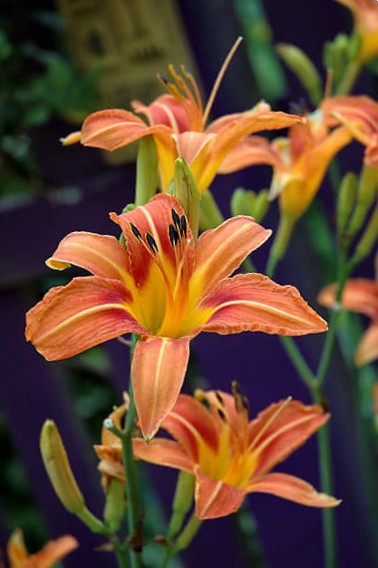
Flowers are funnel-shaped and usually have six tawny-orange tepals. A lighter median stripe commonly runs along each segment, and the throat may appear yellow-orange. The flowers are generally unscented or only faintly scented.
Spent flowers collapse and may drop to the ground, where a cat can mouth or carry them. Buds, flowers, stamens, pollen, and scapes should all be collected during pruning. Flower color and lack of fragrance do not indicate safety.
Roots and Rhizomes
Orange Day Lily develops fleshy fibrous roots and spreading rhizomes that allow persistent colony formation. These underground tissues are often exposed during division, transplanting, utility work, ditch cleaning, and garden renovation. Rooted clumps may remain alive for extended periods after removal.
Store divisions in sealed cat-inaccessible containers and do not soak them in accessible buckets. Soil attached to roots can contain fertilizer, herbicide, pesticide, slug bait, or other materials that complicate an exposure. Preserve the root crown when botanical identification is uncertain.
Roadside and Ditch Exposure
The names Ditch Lily, Roadside Daylily, Railroad Daylily, and Track Lily reflect the plant’s ability to persist along transportation corridors and disturbed ground. Colonies may grow beside sidewalks, alleys, field edges, drainage areas, vacant lots, stream margins, and roads where outdoor cats roam.
Roadside plants may carry herbicide, road salt, fuel residue, or other contaminants. A cat becoming ill after chewing roadside vegetation may have a mixed exposure. The daylily emergency should be treated while environmental chemicals and other plants are investigated.
Indoor Floral Exposure
Orange Day Lily flowers may be cut from gardens and brought indoors alone or within mixed arrangements. A bouquet label may say only “lily,” “summer flowers,” or “garden assortment.” Detached blooms and pollen can fall outside the vase.
High shelves do not provide reliable protection because cats climb, pollen falls, and water can spill. A single toxic flower placed among otherwise safe flowers makes the entire arrangement unsuitable for a cat household. The safest policy is complete exclusion of Hemerocallis and Lilium.
Pollen Transfer Through Grooming
A cat may brush the face, chest, flank, or tail against a flower without visibly biting it. Pollen then adheres to fur and is swallowed during grooming. Paw contamination can occur after walking through fallen pollen on a table, counter, floor, windowsill, patio, or vehicle.
Visible pollen should be removed with a damp disposable cloth or careful washing while preventing grooming. Dry brushing can distribute pollen farther through the coat. Decontaminating the fur reduces continued exposure but does not treat toxin already swallowed.
Plant Water
Vase water, florist buckets, garden pails, sinks, wheelbarrows, and other containers holding daylily material must remain inaccessible. The nephrotoxic activity associated with lilies is water-soluble, and water may also contain pollen, sap, detached cells, or fragments. No safe soaking time, dilution, or volume has been established.
Spill cleanup should include the floor, container exterior, nearby furniture, and the cat’s paws or coat. Do not place a contaminated container in a sink or bathtub accessible to the cat before cleaning. Preserve exposure water when requested by a veterinarian or poison-control service.
Orange Day Lily Versus True Lilies
True lilies belong to Lilium, generally grow from bulbs, and bear leaves along an upright stem. Their flowers occur near the upper stem. Orange Day Lily grows as basal leaf fans with separate, mostly leafless scapes rising from a rhizomatous crown.
The distinction is botanically important but does not change feline urgency. Both groups can cause acute renal tubular injury and death. A veterinarian does not need to delay treatment while deciding whether the plant is a true lily or a daylily when either remains plausible.
Tiger Daylily Versus Tiger Lily
Tiger Daylily is a common name for Hemerocallis fulva. Tiger Lily usually refers to Lilium lancifolium, which has recurved orange tepals marked with dark spots, leaves along the upright stem, and often dark bulbils in the leaf axils. Orange Day Lily flowers are typically unspotted and arise on separate scapes.
Both are highly dangerous to cats. Dark spots, bulbils, or a leafy stem are not required for a plant to cause fatal lily-associated kidney injury. Preserve the complete growth form rather than one detached orange flower.
Peace Lily and Calla Lily
Peace Lily belongs to Spathiphyllum, while Calla Lily belongs to Zantedeschia. Both are members of Araceae and contain insoluble calcium oxalate crystals. Their typical syndrome is immediate mouth pain, drooling, pawing at the mouth, and swallowing discomfort rather than primary feline renal tubular necrosis.
Their usually different toxicological pattern must not be applied to a plant identified only as “a lily.” Severe mouth irritation does not prove daylily exposure, and the absence of mouth pain does not make Orange Day Lily safe. Botanical identification and clinical treatment should proceed together.
Lily of the Valley
Lily of the Valley is Convallaria majalis. It produces small nodding bell-shaped flowers above broad leaves and contains cardenolide cardiac glycosides. Poisoning can cause vomiting, weakness, slow or irregular rhythms, seizures, collapse, and death.
It does not cause the characteristic primary daylily renal tubular syndrome. The plant is still an emergency, but ECG monitoring and cardiac-glycoside management become central. A common-name label cannot determine the treatment plan.
Corn Lily and Veratrum
Corn Lily is an especially hazardous ambiguous name because it may refer to Orange Day Lily or to Veratrum species such as False Hellebore. Veratrum contains steroidal alkaloids capable of causing severe salivation, vomiting, weakness, hypotension, slow heart rate, neurologic abnormalities, and congenital defects after livestock exposure.
Veratrum typically forms robust pleated leaves arranged along a stem rather than smooth strap-shaped basal daylily fans. Preserve roots, stems, leaves, and flowers whenever Corn Lily is reported. The scientific name must be established before applying species-specific guidance.
Human Culinary Use
Daylily flowers, buds, young shoots, and other tissues have histories of human culinary use in parts of East Asia and in modern foraging literature. Processing practices, cultivated forms, individual intolerance, and botanical identification vary. Human food use does not establish feline safety.
Cats have a species-selective susceptibility to the unidentified nephrotoxic principle. Cooked buds, dried flowers, prepared ingredients, leftovers, and cooking water must remain inaccessible. A package labeled edible daylily is not pet-safe.
Dogs
Dogs may chew foliage, dig up roots, carry flower stalks, or eat garden debris. Mild vomiting, diarrhea, or appetite loss may follow ingestion of unfamiliar fibrous material. The distinctive feline acute renal tubular failure syndrome has not been established in dogs.
A dog with severe kidney injury, tremors, cardiovascular abnormalities, or group illness requires a broader investigation. Possible causes include another plant, grapes or raisins, ethylene glycol, medications, pesticides, fertilizer, contaminated water, infection, or primary renal disease. Preserve every possible source.
Horses and Livestock
Orange Day Lily commonly grows along field edges, roadsides, ditches, old farmsteads, and fence lines. Horses, cattle, sheep, goats, pigs, and camelids may browse it or encounter pulled clumps in green waste. The feline nephrotoxic syndrome has not been established as the expected livestock response.
Do not dump garden divisions or clippings into pastures. Material called Corn Lily may be toxic Veratrum, and mixed yard waste may contain yew, Oleander, azalea, rhododendron, Sago Palm, pesticide, or fertilizer. Several affected animals demand a complete environmental and feed investigation.
Rabbits, Guinea Pigs, Birds, Reptiles, and Other Exotics
Orange Day Lily should not be offered deliberately to exotic animals merely because exact renal evidence is lacking. Rabbits and guinea pigs may experience gastrointestinal disturbance or reduced normal hay intake. Birds may shred flowers and contact pollen, pesticide, or fertilizer. Herbivorous reptiles may consume the plant or attached soil.
Exact toxicokinetic information is insufficient to assign a safe feeding dose. Food refusal, reduced fecal output, diarrhea, regurgitation, weakness, tremors, abnormal posture, breathing difficulty, or collapse warrants specialized care. Preserve the exact plant and treatment history.
Published Daylily Case Review
The 2003 retrospective study evaluated 22 confirmed feline daylily exposures producing toxicosis. The affected plants included several Hemerocallis species, including H. fulva. Gastrointestinal distress and acute renal failure were central findings, and early decontamination with aggressive veterinary fluid therapy was associated with successful outcomes.
The study remains particularly important because it documents daylily rather than only true-lily exposure. It does not identify the responsible molecule or establish one safe dose. It supports the current emergency recommendation for every credible feline Orange Day Lily exposure.
Broader Lily Case Series
Six-cat and 25-cat clinical series involving toxic lilies documented acute renal failure risk and favorable outcomes when decontamination and fluid therapy began promptly. In the 25-cat series, all cats survived after gastrointestinal decontamination, intravenous fluid therapy, supportive care, or a combination, although the ideal decontamination method and fluid duration remained uncertain.
Those studies included Lilium and Hemerocallis exposures rather than Orange Day Lily alone. They support the treatment framework while leaving exact species, dose, and toxin questions unresolved. Their strongest message is that early care can markedly change the outcome.
Recent Inpatient and Outpatient Evidence
A 2025 study reviewed 112 cats treated after suspected or known lily exposure, including 96 managed as inpatients and 16 managed as outpatients. Acute kidney injury occurred in both groups. Inpatient cats had superior survival, while carefully selected outpatient cats still had favorable overall outcomes.
The retrospective design does not establish equivalent treatment or prove that outpatient care is appropriate for every exposure. Selection bias is unavoidable because clinicians may have hospitalized cats considered higher risk while choosing outpatient care for particular circumstances. The outpatient group was also much smaller.
Outpatient care means veterinarian-directed examination, decontamination decisions, prescribed treatment, and strict scheduled laboratory follow-up. It does not mean leaving an exposed cat untreated at home or administering leftover subcutaneous fluids without measuring kidney function and urine production.
Diagnosis
No routine test identifies the Orange Day Lily toxin. Diagnosis uses the exposure history, exact plant identification, vomiting or salivation, hydration, serial creatinine and urea nitrogen, phosphorus and electrolytes, urinalysis, blood pressure, body weight, urine output, and exclusion of other acute kidney injuries.
Useful evidence includes the entire rooted plant, flowers, buds, pollen-bearing structures, leaves, scapes, roots, nursery labels, bouquet tags, photographs, vomited fragments, water, and information about pesticide or fertilizer use. Keep clean plant material separate from biological samples.
Baseline Testing
Initial evaluation commonly includes body weight, temperature, heart rate, breathing, hydration, abdominal comfort, blood pressure when available, complete blood count, serum chemistry, electrolytes, and urinalysis. Baseline creatinine can be normal while renal tubular injury is beginning.
A baseline result is valuable because subsequent change can be identified. Urine concentration, glucose, protein, renal epithelial cells, and casts may reveal tubular dysfunction before severe azotemia develops. One normal panel cannot clear a recent credible exposure.
Serial Monitoring
Kidney values, phosphorus, potassium, acid-base status, hydration, body weight, blood pressure, respiratory rate, and urine findings may require repeated assessment during the primary risk period. Frequency depends on exposure timing, treatment setting, initial values, and clinical progression.
Serial urine-output measurement is particularly important. Litter-box observation may be inadequate in hospitalized or severely ill cats. A urinary catheter and closed collection system may be used when precise measurement is needed.
Veterinary Decontamination
A veterinarian may induce vomiting after a recent exposure when the cat remains alert, neurologically appropriate, breathing normally, and able to protect its airway. Spontaneous vomiting does not guarantee complete removal. Profound lethargy, weakness, active vomiting, seizures, or abnormal swallowing may make emesis unsafe.
Activated charcoal may be considered after emesis or when the clinician believes it may reduce further absorption. Its effectiveness against the unidentified lily toxin has not been defined precisely. Charcoal must not delay renal monitoring and can be aspirated when airway protection is inadequate.
Individualized Fluid Therapy
Intravenous fluids are commonly used to correct dehydration, support renal perfusion, and replace excessive urinary losses while kidney function is monitored. Historical practice frequently describes 48–72 hours of hospitalization, but the appropriate duration and rate must be individualized rather than applied mechanically.
Polyuric cats may require replacement of substantial measured losses. Oliguric or anuric cats require restriction to avoid fluid overload. Body weight, hydration, blood pressure, urine output, respiratory status, electrolytes, and cardiovascular health guide adjustment.
More fluid is not automatically more protective. Once the kidneys cannot excrete the administered volume, continued high-rate fluid therapy can cause pulmonary edema, pleural effusion, hypertension, tissue edema, and worsening respiratory distress. Frequent reassessment is essential.
Antiemetics and Gastrointestinal Support
Veterinarian-selected antiemetic medication can control vomiting, reduce dehydration, improve comfort, and lower aspiration risk after decontamination decisions are complete. Gastrointestinal protection may be needed when uremia causes oral, gastric, or intestinal injury.
Prolonged anorexia must be addressed because cats are vulnerable to hepatic lipidosis. Nutritional support should follow stabilization and assessment of nausea, vomiting, hydration, electrolytes, swallowing, and aspiration risk. Owner-forced feeding during active vomiting is unsafe.
Oliguria, Anuria, and Renal-Replacement Therapy
Oliguria or anuria indicates severe kidney dysfunction and demands immediate review of fluid administration, urinary obstruction, hydration, blood pressure, and laboratory values. Diuretics may be considered by the veterinarian in selected cases, but a response cannot be guaranteed and public home-dosing instructions are inappropriate.
Intermittent hemodialysis, continuous renal-replacement therapy, or peritoneal dialysis can control fluid volume, potassium, acid-base abnormalities, uremic toxins, and other complications while renal tubules have an opportunity to recover. Referral should be considered early because transfer becomes more difficult after severe fluid overload, respiratory distress, or neurologic deterioration.
Reported Recovery from Oligo-Anuric Injury
A 2023 case report documented resolution of oligo-anuric acute kidney injury after lily toxicosis in a cat managed with intensive monitoring and veterinarian-directed treatment that included a diuretic. The cat’s hyperkalemia and azotemia resolved, and no persistent abnormality was identified at follow-up.
One successful case does not establish a universal diuretic protocol or replace dialysis when indicated. Response depends on remaining tubular function, perfusion, obstruction status, fluid balance, and the severity of injury. The case demonstrates that severe low-output injury is not automatically hopeless.
Differential Diagnosis
Other causes of feline acute kidney injury include ethylene glycol, grapes or raisins, medications, nonsteroidal anti-inflammatory drugs, aminoglycosides, hypotension, sepsis, urinary obstruction, pyelonephritis, leptospirosis in relevant regions, anesthesia complications, and other nephrotoxins. Calcium oxalate crystals do not establish lily poisoning and their absence does not exclude ethylene glycol.
Peace Lily and Calla Lily generally cause oral calcium-oxalate irritation, while Lily of the Valley causes cardiac-glycoside poisoning. Corn Lily may identify Veratrum. The veterinarian should stabilize the patient according to the observed syndrome while plant identification proceeds.
Prognosis
Cats treated promptly before substantial renal injury commonly recover completely. Continued urine production, stable or improving creatinine, normalizing phosphorus and potassium, controlled vomiting, maintained body weight, and absence of fluid overload are favorable findings.
The prognosis becomes guarded as azotemia progresses and poor with sustained oliguria or anuria without renal-replacement therapy. Severe hyperkalemia, acidosis, hypertension, pulmonary edema, seizures, coma, or delayed presentation worsens the outlook. Advanced cases should still be evaluated for dialysis or transfer rather than abandoned automatically.
Prevention
The safest policy is to keep all Hemerocallis daylilies and Lilium true lilies completely out of homes with cats. Do not rely on high shelves, closed-looking buds, one supervised room, or flower removal after pollen has already spread. Tell florists explicitly that no true lilies or daylilies may be included.
Inspect yards, neighboring beds, road edges, naturalized colonies, cemeteries, vacant lots, and yard-waste piles accessible to outdoor cats. Remove plants carefully, collect every flower, leaf, scape, root, and rhizome, clean tools and surfaces, and keep cats away until disposal is complete.
Immediate Response After Possible Feline Exposure
- Treat the exposure as an emergency: Contact a veterinarian or animal poison-control service immediately after any credible Orange Day Lily contact.
- Do not wait for symptoms: The cat may appear completely normal while toxic material is being absorbed and renal tubular injury is beginning.
- Remove the plant: Secure flowers, leaves, buds, scapes, pollen, roots, rhizomes, clippings, plant water, and contaminated trash.
- Prevent grooming: Stop the cat from licking visible pollen, sap, plant residue, or contaminated water from its coat and paws.
- Preserve identification evidence: Bring the complete plant or clear photographs showing flowers, basal leaves, scapes, roots, and growth form.
- Record the exposure: Note the earliest and latest possible time, material missing, vomiting history, pollen contact, water access, and every treatment already attempted.
Pollen on the Coat or Paws
- Prevent licking immediately: Use a properly fitted Elizabethan collar when one is readily available and can be applied without delaying transport.
- Remove visible pollen gently: Use a damp disposable cloth while wearing gloves.
- Do not dry-brush the coat: Brushing can distribute pollen deeper through the fur and onto surrounding surfaces.
- Wash contaminated fur when safe: Use lukewarm water and mild pet-safe shampoo if this can be done quickly without delaying veterinary care.
- Clean contaminated paws: Pollen and plant water can be swallowed later during grooming.
- Continue to the veterinarian: External decontamination does not remove toxin that has already been swallowed.
Plant Water and Surface Contamination
- Remove access to the water: Secure vases, buckets, sinks, garden containers, florist tubs, and spills.
- Preserve a sample when requested: The veterinarian or poison-control service may want exposure details even though no routine toxin assay exists.
- Clean spills completely: Wipe floors, furniture, counters, container exteriors, and the cat’s paws before grooming can occur.
- Do not reuse the container immediately: Wash it thoroughly before it holds pet water, food, or household items.
- Do not assume clear water is safe: Dissolved plant material and microscopic fragments may not be visible.
Do Not Attempt Home-Induced Vomiting
- Do not give hydrogen peroxide: Hydrogen peroxide is not a safe feline emetic and can cause serious gastric and esophageal injury.
- Do not use salt, mustard, oil, syrup, detergent, fingers, or manual gagging: These methods can cause additional poisoning, trauma, aspiration, or dangerous delay.
- Do not wait for natural vomiting: A cat that has not vomited may still absorb toxin, and a cat that has vomited may still develop kidney failure.
- Do not induce vomiting in a compromised cat: Weakness, profound lethargy, active vomiting, seizures, abnormal breathing, or impaired swallowing makes aspiration more likely.
- Allow veterinary case selection: A veterinarian may induce emesis using feline-appropriate medication after a recent exposure when the cat can protect its airway.
Do Not Give Unsupervised Charcoal, Fluids, Food, or Medication
- Do not force activated charcoal: It may be considered professionally but can be aspirated when administered improperly.
- Do not force water: Oral water does not flush the toxin from the kidneys and may be aspirated by a vomiting or lethargic cat.
- Do not give subcutaneous fluids at home: Fluid choice, volume, route, and timing must match hydration, urine output, body weight, and kidney function.
- Do not give milk, oil, food, or herbal remedies: No household substance neutralizes the unidentified toxin.
- Do not give human medication: Pain relievers, antacids, antiemetics, antibiotics, diuretics, electrolyte products, and other owner-selected drugs may worsen the case.
- Do not use leftover veterinary medication: A drug prescribed previously may be inappropriate during acute kidney injury.
Safe Transportation
- Call ahead: Tell the clinic that a cat has been exposed to a nephrotoxic Hemerocallis daylily.
- Use a secure carrier: Prevent escape and reduce stress during transport.
- Bring the plant: Place samples in a sealed container the cat cannot access.
- Bring photographs: Include the complete clump, leaves, flowering scape, flower, and roots when available.
- Bring exposure details: Report pollen, vase water, garden water, vomiting, amount missing, and any cleanup or treatment already performed.
- Do not delay for perfect identification: Treatment can begin while the plant is being confirmed.
Veterinary Decontamination
Early gastrointestinal decontamination may reduce absorption. A veterinarian may induce vomiting after a recent exposure when the cat remains stable, alert, neurologically appropriate, breathing normally, and able to protect its airway. Plant material recovered from vomit should be preserved for identification.
- Controlled emesis: Feline-appropriate medication may be selected according to timing and patient condition.
- Activated charcoal: A professionally administered dose may be considered after emesis or when the clinician believes it may reduce further absorption.
- Airway protection: Charcoal is inappropriate when vomiting, profound weakness, altered awareness, or poor swallowing creates aspiration risk.
- Antiemetic timing: Veterinarian-selected antiemetic medication may be used after decontamination decisions are complete.
- No false reassurance: Successful vomiting or charcoal administration does not eliminate the need for kidney monitoring.
Baseline Evaluation
- Document body weight: Accurate weight is essential for hydration and fluid-balance monitoring.
- Assess hydration: Gum moisture, skin elasticity, pulse quality, heart rate, and body weight help define the starting deficit.
- Perform blood testing: Baseline creatinine, urea nitrogen, phosphorus, potassium, glucose, electrolytes, and other chemistry values allow later comparison.
- Perform urinalysis: Urine concentration, glucose, protein, epithelial cells, sediment, and casts may reveal tubular dysfunction.
- Measure blood pressure: Acute kidney injury and fluid imbalance can cause hypertension or poor perfusion.
- Establish urine output: Accurate production is central to every subsequent fluid decision.
Normal initial creatinine and urea nitrogen do not clear the exposure. Detectable azotemia can lag behind cellular injury. Baseline values are valuable primarily because they allow serial change to be recognized.
Serial Kidney and Urine Monitoring
- Repeat kidney values: Creatinine, urea nitrogen, phosphorus, electrolytes, and acid-base status may change during the first several days.
- Repeat urinalysis: Dilute urine, glucose, protein, epithelial cells, or casts may emerge before severe azotemia.
- Measure urine production: Increased, declining, or absent output changes the treatment plan immediately.
- Monitor body weight: Weight loss may reflect dehydration, while unexpected gain may indicate fluid retention.
- Monitor breathing: Increasing resting respiratory rate or effort may indicate fluid overload or aspiration.
- Monitor blood pressure: Hypertension and hypotension both require attention.
Intravenous Fluid Treatment
Hospitalized cats are commonly treated with intravenous fluids to correct dehydration, maintain appropriate renal perfusion, and replace excessive urinary or gastrointestinal losses while renal function is monitored. The treatment is intended to support the kidneys during the period when injury may still be evolving; it does not chemically neutralize the toxin.
- Individualize the plan: Fluid therapy must reflect body weight, dehydration, urine output, vomiting, cardiovascular status, blood pressure, and laboratory values.
- Replace measured losses: Polyuric cats may require careful replacement of large ongoing urine volumes.
- Reassess frequently: The appropriate rate can change rapidly as urine production falls or rises.
- Avoid automatic fixed-duration treatment: A commonly used 48–72-hour monitoring period must still be adjusted to the individual case.
- Do not assume more is better: Excess fluid becomes dangerous when the kidneys cannot excrete it.
Outpatient Treatment
Recent retrospective evidence suggests that some carefully selected cats may have favorable outcomes with veterinarian-managed outpatient treatment. Outpatient management may include examination, decontamination, prescribed subcutaneous fluids, documented instructions, and strict scheduled laboratory rechecks. It is not equivalent to doing nothing at home.
- Require veterinary selection: Exposure circumstances, elapsed time, examination, baseline laboratory findings, urine production, temperament, owner reliability, and emergency access must support the plan.
- Recognize the survival difference: Inpatient cats had superior survival in the recent comparison.
- Follow the schedule exactly: Kidney injury may develop after an initially normal visit.
- Return immediately for change: Vomiting, lethargy, appetite loss, increased thirst, altered urination, weakness, or breathing changes requires urgent reassessment.
- Do not use leftover fluids: Unmeasured home fluid administration is dangerous when urine output is declining.
Vomiting, Nausea, and Nutrition
- Control persistent vomiting: Veterinarian-selected antiemetic medication can reduce dehydration and aspiration risk.
- Monitor appetite: Complete food refusal may reflect nausea, pain, or developing uremia.
- Do not force-feed an actively vomiting cat: This increases stress and aspiration risk.
- Address prolonged anorexia: Veterinarian-directed nutritional support may be needed to reduce the risk of hepatic lipidosis.
- Assess the mouth: Uremia may cause oral pain or ulceration during advanced disease.
When Acute Kidney Injury Develops
- Track azotemia: Rising creatinine and urea nitrogen indicate declining filtration.
- Track phosphorus and potassium: Severe abnormalities can affect muscles, heart rhythm, and neurologic function.
- Assess acid-base status: Metabolic acidosis can worsen weakness and breathing abnormalities.
- Monitor blood pressure: Hypertension can injure the eyes, brain, heart, and kidneys.
- Monitor hydration and circulation: Dehydration and fluid overload require opposite responses.
- Reassess differential diagnoses: Ethylene glycol, urinary obstruction, infection, medication, and other causes may coexist or mimic the syndrome.
Oliguria and Anuria
- Confirm urine production accurately: A urinary catheter and closed collection system may be needed.
- Exclude urinary obstruction: Straining with little output may reflect obstruction rather than or in addition to renal failure.
- Stop automatic high-rate fluids: A cat producing little or no urine can develop life-threatening fluid overload.
- Monitor body weight and breathing closely: Rapid gain and increased respiratory effort may indicate retained fluid.
- Evaluate electrolyte emergencies: Hyperkalemia, acidosis, and severe phosphorus elevation may require immediate treatment.
- Discuss referral early: Renal-replacement options are easier to arrange before profound respiratory or neurologic deterioration.
Renal-Replacement Therapy
Intermittent hemodialysis, continuous renal-replacement therapy, or peritoneal dialysis may temporarily replace critical kidney functions while injured renal tubules recover. These treatments can remove metabolic waste, control potassium and acid-base abnormalities, and manage fluid in cats unable to produce adequate urine.
- Consider transfer before crisis: Referral becomes more difficult after severe pulmonary edema, seizures, or circulatory instability develops.
- Recognize availability limits: Dialysis is not offered at every veterinary hospital and may require transfer to a specialty center.
- Continue supportive care: Antiemetics, nutrition, blood-pressure treatment, and monitoring remain necessary.
- Do not assume delayed cases are hopeless: Severe acute tubular injury can sometimes recover when complications are controlled long enough.
Dogs
- Remove access: Prevent further chewing of leaves, flowers, scapes, roots, and garden debris.
- Preserve the plant: Common names can conceal a different and more dangerous species.
- Monitor gastrointestinal signs: Vomiting, diarrhea, abdominal discomfort, or appetite loss may follow plant ingestion.
- Seek care for persistent or severe illness: Kidney injury, tremors, collapse, or group illness requires investigation beyond ordinary daylily irritation.
- Check for accompanying products: Fertilizer, pesticide, herbicide, slug bait, and contaminated water may be more important than the plant itself.
Horses and Livestock
- Remove garden waste: Do not leave pulled daylilies, roots, clippings, or mixed ornamental debris in pastures or pens.
- Confirm the plant: Corn Lily may refer to dangerous Veratrum, and Tiger Lily may refer to a true Lilium.
- Inspect mixed debris: Oleander, yew, azalea, rhododendron, Sago Palm, pesticides, and fertilizer may accompany the daylily.
- Seek care for systemic signs: Colic, salivation, diarrhea, weakness, tremors, recumbency, breathing difficulty, or reduced urination requires veterinary examination.
- Evaluate the whole group: Several sick animals indicate a shared feed, water, chemical, or mixed-plant source.
Rabbits, Guinea Pigs, Birds, and Other Exotics
- Do not attempt vomiting: Household emesis is unsafe or impossible in these species.
- Remove access: Do not offer daylily as browse, greens, perches, enrichment, or nesting material.
- Monitor food intake and feces: Reduced eating or droppings requires prompt exotic-animal guidance.
- Do not force-feed a compromised animal: Weakness, bloat, regurgitation, obstruction, or abnormal swallowing must be assessed first.
- Seek specialized care: Tremors, abnormal posture, inability to perch, breathing difficulty, recumbency, or collapse is an emergency.
Monitoring and Recovery
- Monitor through the primary risk period: Kidney abnormalities can develop after the cat appears clinically improved.
- Repeat blood and urine testing: Follow-up may be needed after discharge even when initial values remained normal.
- Watch urination closely: Increased, declining, absent, or painful urination must be reported immediately.
- Watch appetite and activity: Renewed vomiting, hiding, lethargy, or food refusal may indicate continuing renal injury.
- Watch breathing and body weight: Fluid overload can emerge during treatment.
- Expected early-treatment prognosis: Cats treated before significant renal injury often recover completely.
- Advanced-disease prognosis: Severe azotemia, oliguria, anuria, fluid overload, seizures, or coma substantially worsens the outlook.
Prevention
- Keep daylilies out of cat homes: Do not rely on high shelves, closed buds, or temporary supervision.
- Inspect every floral arrangement: Florist bouquets may contain unlabeled true lilies, daylilies, or loose pollen.
- Remove outdoor plants completely: Dig out crowns and rhizomes and collect every fragment.
- Secure disposal: Use a closed cat-inaccessible container rather than compost, open bags, or yard piles.
- Clean tools and surfaces: Pollen, sap, root fragments, and plant water can remain after the visible plant is gone.
- Warn everyone in the household: Visitors, florists, gardeners, landscapers, and family members must understand the feline emergency.
Frequently Asked Questions About Orange Day Lily and Feline Kidney Failure
My cat bit an Orange Day Lily leaf but I recovered the leaf. Does the damage matter?
Inspect the leaf for missing edges, punctures, shredded tissue, and saliva, but do not delay veterinary care while measuring the bite. A superficially marked complete leaf creates less uncertainty than one with missing tissue, yet sap and microscopic material may still have been swallowed. No safe bite size has been established. Preserve the leaf and the entire plant and seek immediate professional guidance.
My cat brushed against a flower but did not chew it. Is that an emergency?
It can be when pollen is present on the coat, face, or paws because the cat may swallow it during grooming. Prevent licking, remove visible pollen gently with a damp disposable cloth, and wash contaminated fur when this can be done quickly without delaying transport. The concern is ingestion rather than proven dermal absorption. Contact a veterinarian immediately because the swallowed amount cannot be estimated reliably.
Is one sip of daylily vase water dangerous?
No safe volume or concentration has been established. Lily nephrotoxicity is associated with a water-soluble plant fraction, and vase water may contain sap, pollen, detached cells, or tiny plant fragments. Remove access, preserve the arrangement and exposure details, and seek immediate veterinary advice. Clear appearance or brief plant contact does not certify the water as safe.
Can the cat be safe because it vomited the flower immediately?
No. Vomiting may remove some material but cannot prove that all toxic plant matter was recovered before absorption. The cat may also have swallowed pollen, sap, or additional fragments that are not visible in the vomit. Early gastrointestinal signs can stop while kidney injury continues. Decontamination and serial renal monitoring remain necessary.
Why might the first creatinine result be normal?
Creatinine rises only after renal filtration has declined sufficiently and enough time has passed for the concentration to accumulate. Tubular cells may already be injured while filtration and blood values still appear normal. Urine concentration, urine glucose, epithelial cells, casts, body weight, hydration, and serial trends can reveal earlier change. One normal initial chemistry panel does not clear a recent exposure.
Which urine changes can appear before severe kidney failure?
The urine may become inappropriately dilute as damaged tubules lose concentrating ability. Glucose or protein may appear despite normal corresponding blood values, and renal epithelial cells or granular casts may be present. The cat may also produce unusually large volumes of urine. These findings support tubular injury but are not unique to lily poisoning.
Why can a cat urinate more before it stops urinating?
Early tubular damage prevents normal water reabsorption, causing dilute polyuria and dehydration. As degeneration, necrosis, tubular debris, altered blood flow, and declining filtration progress, urine production may fall. The cat can therefore move from excessive urine to oliguria or anuria. Fluid treatment must change as that transition occurs.
Why is measuring urine output so important?
Fluid requirements differ completely between a polyuric cat losing large volumes and an anuric cat unable to excrete administered fluid. Without accurate measurement, dehydration may be undertreated or fluid overload may be created. Litter-box observation can be unreliable in hospitalized cats. A urinary catheter and closed collection system may be required in serious cases.
Can too much intravenous fluid harm a lily-poisoned cat?
Yes. Appropriate fluid therapy is highly protective early, but once urine production becomes inadequate, excessive fluid can accumulate in the lungs, chest, tissues, and circulation. Rapid weight gain, increased respiratory rate, hypertension, edema, or breathing difficulty may develop. Fluids must be adjusted repeatedly to hydration, urine output, body weight, blood pressure, and respiratory findings.
Does every exposed cat require hospitalization?
Hospitalization with intravenous fluids and close monitoring remains the strongest protective approach for confirmed, uncertain, delayed, or higher-risk exposures. Recent retrospective evidence suggests that carefully selected cats may sometimes be treated as veterinary outpatients with prescribed therapy and strict repeat testing. Inpatient survival was superior in that study. The findings do not make untreated home observation safe or establish outpatient care as equivalent for every cat.
What does outpatient treatment actually require?
It requires veterinary examination, exposure assessment, decontamination decisions, baseline testing, a prescribed treatment plan, and scheduled laboratory reassessment. The owner must be able to monitor appetite, vomiting, activity, urination, breathing, and return immediately for any change. Emergency and inpatient care must remain accessible. It does not mean using leftover fluids or waiting several days for symptoms.
Why was acute kidney injury found in many cats even with treatment?
The newer study used formal acute-kidney-injury grading and serial creatinine changes, allowing mild nonazotemic or low-grade injury to be recognized. Some cats may have absorbed toxin before presentation even when treatment began relatively early. Many affected cats had stable or improving grades and survived. Detecting an AKI does not mean that irreversible failure is inevitable.
Can a cat recover after becoming oliguric or anuric?
Recovery is possible but the prognosis is substantially worse. Dialysis or another renal-replacement method may control fluid, potassium, acid-base abnormalities, and uremic waste while damaged tubules regenerate. A published cat recovered from severe low-output kidney injury after intensive veterinarian-directed care. Delayed or advanced cases should be evaluated for referral rather than declared hopeless automatically.
Does furosemide cure daylily kidney failure?
No. A case report described recovery after veterinarian-directed treatment that included furosemide, but one response does not establish a universal protocol. A diuretic cannot restore irreversibly destroyed nephrons, and an unresponsive cat may still require dialysis. Fluid balance, blood pressure, obstruction, remaining tubular function, electrolytes, and overall condition must be assessed before any diuretic is used.
Is activated charcoal proven to prevent daylily kidney failure?
Activated charcoal is used in some veterinary decontamination protocols, but the unidentified toxin and limited controlled evidence prevent a precise statement about its effectiveness. It may be considered after emesis or when the clinician believes additional toxin remains available for binding. It cannot replace kidney monitoring and fluid management. Forcing charcoal into a vomiting or poorly swallowing cat creates aspiration risk.
How is Orange Day Lily poisoning distinguished from ethylene glycol?
Both can cause vomiting, depression, acute kidney injury, oliguria, and death. Ethylene glycol may produce neurologic intoxication, acid-base abnormalities, and calcium oxalate crystals, although crystals may be absent. Orange Day Lily diagnosis depends heavily on credible plant exposure and tubular injury. When uncertainty remains, the veterinarian must investigate both because early ethylene-glycol antidotal treatment is time-sensitive.
Does the absence of calcium oxalate crystals rule out another toxin?
No. Calcium oxalate crystalluria is not required for ethylene glycol poisoning and is not the defining lesion of daylily nephrotoxicity. Crystals may be absent, transient, missed, or unrelated. Diagnosis should integrate exposure history, acid-base findings, kidney values, urinalysis, imaging, toxin testing when available, and clinical progression.
Why is Peace Lily usually different from Orange Day Lily?
Peace Lily is a Spathiphyllum containing insoluble calcium oxalate crystals. Chewing typically causes immediate mouth pain, drooling, pawing at the face, and swallowing discomfort. Orange Day Lily causes little or no immediate oral burning but can produce delayed renal tubular failure in cats. A common-name label using only “lily” is not adequate for treatment decisions.
How is Tiger Daylily different from Tiger Lily?
Tiger Daylily commonly refers to Hemerocallis fulva, which has basal strap-shaped leaves and separate leafless flowering scapes. Tiger Lily is Lilium lancifolium, with leaves along an upright stem, recurved spotted flowers, and often dark bulbils. They are botanically different but both are nephrotoxic emergencies for cats. Treatment should not wait for the distinction.
Why is Corn Lily an unsafe identification?
Corn Lily may refer to Orange Day Lily or to Veratrum species such as False Hellebore. Veratrum contains steroidal alkaloids that can cause salivation, vomiting, weakness, hypotension, slow heart rate, neurologic abnormalities, and livestock reproductive injury. The complete plant, especially the pleated leaves and stem arrangement, is needed. A scientific name should be obtained whenever possible.
Are double Orange Daylilies such as ‘Kwanso’ also dangerous?
They should be treated as dangerous to cats. ‘Kwanso’ and related double-flowered forms belong within the Hemerocallis fulva complex and may have extra petal-like flower parts. A double flower does not remove the nephrotoxic risk. Leaves, pollen-bearing structures, scapes, roots, and plant water remain relevant exposures.
Can cooking make daylily flowers safe around cats?
No household cooking method has been validated to eliminate feline nephrotoxicity. Human culinary use is not evidence of cat safety because cats have a species-selective susceptibility. Cooked buds, dried flowers, food scraps, soaking water, and prepared ingredients should remain inaccessible. A cat eating human daylily food still requires immediate professional guidance.
Should a cat be treated after exposure to roots or rhizomes rather than flowers?
Yes. Comparative toxin concentrations across all Orange Day Lily tissues have not been established well enough to declare the underground parts safe. Roots and rhizomes may release sap or plant material into the mouth or soaking water. Preserve the rooted specimen and seek immediate veterinary advice. Soil additives and pesticides should also be identified.
How long should kidney values be monitored?
Monitoring commonly covers the first several days, when tubular injury and azotemia may emerge or progress. The exact schedule depends on exposure timing, decontamination, initial laboratory results, urine output, treatment setting, and clinical course. Some cats require follow-up testing after discharge. One normal result shortly after exposure is insufficient.
What findings support discharge after hospitalization?
Discharge decisions generally require sustained clinical stability, adequate voluntary eating or a safe nutrition plan, controlled vomiting, appropriate hydration, continued urine production, stable or improving kidney values, acceptable electrolytes and blood pressure, and no evidence of fluid overload. The owner must understand urine, appetite, vomiting, activity, and breathing monitoring. Follow-up testing may still be required.
How should an Orange Day Lily be removed from a cat-accessible yard?
Keep the cat indoors or securely away from the site. Dig out the entire crown, roots, and rhizomes, collect flowers and leaves before digging, and place every fragment directly into a closed container. Clean tools, shoes, gloves, pavement, and spilled soil before the cat returns. Monitor for regrowth because underground fragments can produce new shoots.
What should be done if the plant cannot be identified immediately?
Treat the exposure as nephrotoxic when Hemerocallis or Lilium remains plausible. Bring the entire plant, including basal leaves, stem or scape, flower, roots or bulb, and photographs of the growth habit. Do not delay decontamination and baseline testing while waiting for a botanist. Treatment can be adjusted after identification is refined.
What research gaps remain for Orange Day Lily poisoning?
The principal nephrotoxic molecule or mixture still needs to be isolated and characterized from authenticated Hemerocallis fulva tissues. Comparative studies should measure activity in flowers, leaves, pollen, scapes, roots, rhizomes, cultivars, and plant water and define absorption, metabolism, and feline tubular uptake. Prospective treatment studies are also needed to compare decontamination, fluid strategies, biomarkers, outpatient selection, diuretics, and renal-replacement timing without withholding necessary care.