Pigtail Plant Insoluble Calcium Oxalate Raphides, Immediate Oral Injury, Painful Swelling, and Airway Risk
Is Pigtail Plant Poisonous to Dogs, Cats, Horses, and Livestock?
Yes—Pigtail Plant, Anthurium scherzerianum Schott, is poisonous to dogs, cats, horses, cattle, sheep, goats, pigs, rabbits, guinea pigs, birds, reptiles, and other animals that chew or crush it. Leaves, petioles, short stems, roots, sap, flower stalks, colorful spathes, curled spadices, tiny true flowers, developing berries, fruit pulp, seeds, cuttings, wilted material, dried floral debris, and discarded propagation material should all be treated as irritating. The plant’s principal hazard is insoluble calcium oxalate stored as microscopic needle-shaped crystals called raphides.
Chewing, tearing, cutting, or crushing the plant damages specialized crystal-containing cells called idioblasts and releases bundles of raphides into contacting tissue. The crystals puncture and abrade the lips, gums, tongue, palate, throat, and esophagus, producing immediate burning or stinging pain, intense drooling, lip licking, head shaking, pawing or rubbing at the mouth, gagging, coughing, painful swallowing, and localized swelling. Most animals release the plant quickly, but persistent chewing, a large mouthful, or concentrated exposure can produce more extensive injury.
Swallowed material may carry crystals into the esophagus, stomach, and intestinal tract, causing nausea, retching, vomiting in species capable of vomiting, abdominal discomfort, appetite loss, and diarrhea. Persistent gastrointestinal losses can lead to dehydration, weakness, reduced urination, and electrolyte abnormalities. Thick stalks, root masses, wire, plant ties, labels, decorative moss, stones, and container fragments may create separate choking or gastrointestinal foreign-body emergencies that outlast the original mouth irritation.
Most uncomplicated exposures remain localized and improve substantially within several hours, but rapidly increasing tongue, pharyngeal, or laryngeal swelling can interfere with breathing. Eye exposure may cause severe pain, tearing, eyelid spasm, corneal abrasion, ulceration, or persistent keratitis. Systemic hypocalcemia, calcium-oxalate kidney failure, liver failure, seizures, coma, and major cardiac abnormalities are not expected direct effects of an uncomplicated exposure to correctly identified Anthurium scherzerianum.
About this guide: This page provides general pet-poisoning information and cannot diagnose or treat an individual animal. For any suspected exposure, contact a veterinarian or animal poison-control service immediately. Do not induce vomiting, give medication, or attempt home decontamination unless directed by a veterinary professional.
Pigtail Plant
Anthurium scherzerianum Schott
- Anthurium rothschildianum (Pynaert) Pynaert — historical horticultural synonym
- Anthurium scherzerianum var. rothschildianum Pynaert — earlier infraspecific name underlying Anthurium rothschildianum
- Anthurium williamsii (B.S.Williams) Anon. — historical horticultural synonym
- Anthurium scherzerianum var. williamsii B.S.Williams and Anthurium scherzerianum williamsii (B.S.Williams) Van Geert — related historical infraspecific forms
- Anthurium scherzeranum — frequently encountered misspelling in horticultural catalogs, poison-reference material, and copied plant lists; not the accepted botanical spelling
Araceae — Arum or Aroid Family
Pigtail Plant; Pig-Tail Plant; Pigtail Anthurium; Pig-Tail Anthurium; Flamingo Plant; Flamingo Flower; Flamingo Lily; Scherzer’s Flamingo Flower; Scherzer Flamingo Flower; Tailflower; Tail Flower; Oilcloth Flower; Painter’s Palette; Painter's Palette; Curly Flamingo Flower; Corkscrew Anthurium; Corkscrew Flamingo Flower
Historical and taxonomic search variations include Anthurium rothschildianum (Pynaert) Pynaert, Anthurium scherzerianum var. rothschildianum Pynaert, Anthurium williamsii (B.S.Williams) Anon., Anthurium scherzerianum var. williamsii B.S.Williams, Anthurium scherzerianum williamsii (B.S.Williams) Van Geert, and the frequent misspelling Anthurium scherzeranum.
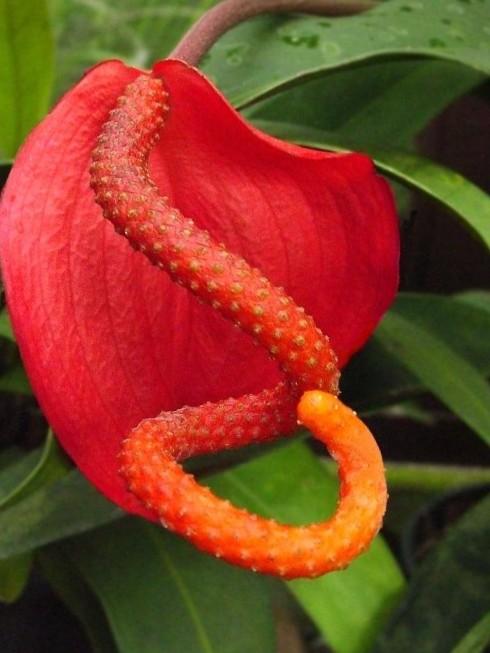
Flamingo Flower, Flamingo Lily, Tailflower, Oilcloth Flower, and Painter’s Palette are ambiguous names widely used for Anthurium andraeanum and commercial Anthurium hybrids, while “Painter’s Pallet” is a recurring misspelling of Painter’s Palette. Anthurium scherzerianum is best identified by its compact clumping habit, relatively narrow glossy leaves, waxy oval spathe, and usually curled, twisted, or corkscrew-shaped orange-to-red spadix; A. andraeanum generally has broader heart-shaped leaves and a comparatively straight spadix, although hybrid plants can blur these distinctions.
Insoluble Calcium Oxalate Raphides
The principal established toxic material in Pigtail Plant is insoluble calcium oxalate arranged as microscopic needle-shaped crystals called raphides. Calcium oxalate occurs in several plant-crystal forms, including raphides, druses, prisms, styloids, and crystal sand, but the long narrow shape of raphides makes them especially effective at penetrating wet mucosal surfaces. The toxic effect depends more on the crystals’ physical architecture and location than on calcium oxalate acting as a freely circulating chemical poison.
Research across Araceae demonstrates that raphides can be characteristically grooved, pointed, and organized into tightly or loosely packed bundles. Crystal size and morphology differ among species and tissues, and a plant may contain raphides together with other crystal forms. Exact quantitative crystal counts have not been mapped across every leaf, root, spathe, spadix, berry, and commercial cultivar of Anthurium scherzerianum, so no tissue should be declared safe merely because it is less thoroughly studied.
Insoluble calcium oxalate should not be confused with soluble oxalate salts found in plants such as certain sorrels, docks, rhubarb leaves, and oxalate-accumulating forage species. Soluble oxalates can dissolve, enter the circulation, bind calcium, and contribute to systemic hypocalcemia and renal crystal injury. Pigtail Plant raphides act primarily at the mouth, pharynx, esophagus, gastrointestinal tract, eyes, or skin they physically contact.
Severe dehydration, aspiration, hypoxia, prolonged food refusal, or another swallowed substance can produce systemic complications after an Anthurium exposure. Those secondary problems should not be mislabeled as direct soluble-oxalate poisoning. Kidney failure, marked hypocalcemia, seizures, coma, liver failure, or major arrhythmias require a broader investigation rather than automatic attribution to embedded raphides.
Idioblasts, Biforine-Like Cells, and Crystal Release
Raphides develop within specialized plant cells called idioblasts. These cells isolate bundles of calcium oxalate from surrounding tissue and often differ markedly from neighboring cells in size, internal structure, wall characteristics, and vacuolar contents. Studies of Araceae demonstrate that crystal-producing idioblasts can occur in leaves, petioles, stems, roots, spathes, anthers, ovaries, fruiting structures, and other organs.
Some aroids contain biforines or biforine-like idioblasts capable of forcefully expelling raphides through specialized ends when the cells are compressed or damaged. Other idioblasts rupture and release their bundles less actively. In either case, biting, tearing, cutting, crushing, or grinding the tissue places sharp crystals directly against vulnerable mucosa.
Chewing also mixes crystals with saliva and plant sap and spreads them across the lips, gums, tongue, palate, floor of the mouth, pharynx, and esophagus. Persistent chewing can crush multiple cells and release many bundles over a broad area. A bird’s beak, rabbit’s incisors, puppy’s repeated mouthing, or mechanical blender used for an herbal preparation may disrupt substantially more tissue than one exploratory bite.
The older description that the plant fires “millions of microscopic needles” communicates the painful character of the exposure but should not be treated as a measured crystal count. Clinical severity depends on the amount and location of damaged tissue, the density and form of the crystals, chewing persistence, and whether swelling affects swallowing or breathing. No validated raphide number predicts an individual animal’s outcome.
The Needle Effect and Possible Co-Irritants
Raphides puncture epithelial surfaces and activate pain and inflammatory pathways immediately. Experimental research has demonstrated a “needle effect” in which sharp crystals create microscopic breaches that allow other defensive substances to penetrate biological barriers more effectively. The crystals can therefore contribute mechanically while also intensifying exposure to compounds carried in plant sap.
Experimental work combining purified raphides with cysteine protease produced stronger defensive effects than either component alone. That result supports a general mechanism by which crystal injury and proteinaceous compounds may act synergistically. It does not prove that bromelain, a specific cysteine protease, or another named enzyme is present at a clinically important concentration in every Anthurium scherzerianum.
Chemical analysis of raphide-associated material from three other Araceae species did not identify a unique secondary metabolite that explained their mucosal irritation and instead supported the importance of the needle shape itself. These findings caution against presenting an unverified “proteinase toxin” as equal in certainty to calcium oxalate raphides. Possible sap proteins and inflammatory co-factors may increase pain and edema, but insoluble raphides remain the confirmed primary hazard.
Mechanical and Inflammatory Injury
Raphide penetration activates nociceptors and produces immediate burning, stinging, or prickling pain. Redness, swelling, hypersalivation, head shaking, pawing or rubbing at the mouth, gagging, and painful swallowing follow as tissue becomes inflamed. The rapid discomfort often limits the amount swallowed because the animal drops the plant and refuses another bite.
Local injury may extend from the mouth into the pharynx, tissues surrounding the larynx, and esophagus. Most swelling remains localized and self-limiting, but strategically placed edema can interfere with swallowing or narrow the airway. Repeated choking, inability to handle saliva, harsh inspiratory noise, open-mouth breathing, an extended head and neck, panic, blue-gray mucous membranes, weakness, or collapse indicates an airway emergency.
Swallowed crystals can irritate the esophagus, stomach, and intestines, producing nausea, retching, vomiting, abdominal discomfort, appetite loss, and diarrhea. Insoluble crystals generally remain within the gastrointestinal lumen and contacting tissue rather than entering systemic circulation in the manner of soluble oxalates. Dehydration, weakness, and electrolyte abnormalities usually arise secondarily from persistent vomiting, diarrhea, drooling, or inadequate intake.
Mechanical injury from the plant must be distinguished from a separate foreign body. A thick flower stalk, fibrous root mass, support wire, plastic plant tie, nursery label, decorative stone, moss, bark chip, or container fragment may lodge in the pharynx, esophagus, stomach, or intestine. Continuing gagging, vomiting, abdominal pain, distension, or reduced stool after oral pain improves requires imaging or endoscopic investigation.
Eye, Skin, Fur, and Secondary Grooming Exposure
Sap and crushed plant tissue can cause stinging, redness, itching, tenderness, or localized dermatitis, especially when residue remains beneath a collar, harness, clothing, bandage, or matted coat. Contact injury is usually local, but ongoing exposure continues until the residue is removed. Paws, feathers, fur, and facial hair can transfer crystals and sap to the mouth or eyes during grooming.
Eye exposure is potentially more serious than ordinary skin contact because crystals and sap can damage the corneal epithelium. Pain, profuse tearing, squinting, eyelid spasm, redness, light sensitivity, discharge, rubbing, corneal abrasion, ulceration, or cloudiness may occur. Immediate prolonged irrigation reduces retained material, but persistent pain or visual abnormality requires fluorescein staining and veterinary ophthalmic examination.
A published human case involving sap from the related aroid Epipremnum aureum progressed from bilateral epithelial injury to stromal necrosis, prolonged nonhealing defects, and corneal scarring. That unusually severe case should not be presented as the routine outcome of Pigtail Plant exposure. It demonstrates why persistent aroid-sap eye pain or cloudiness should not be dismissed after a brief rinse.
All Plant Parts, Cut Flowers, and Persistent Crystal Risk
Leaves, petioles, short stems, roots, sap, flower stalks, colorful spathes, curled spadices, tiny true flowers, developing berries, pulp, and seeds should all be treated as irritating. Araceae research documents crystal-containing idioblasts in numerous vegetative and reproductive organs, although distribution varies by species and tissue. No exact A. scherzerianum study has established a safe plant part for animal consumption.
Drying, wilting, aging, frost injury, or cutting does not prove that the mineral crystals have disappeared. Fallen leaves, old inflorescences, dried bouquet material, discarded roots, and propagation debris can still release crystals when chewed. Mineral needles do not become harmless merely because the tissue is no longer fresh or attractive.
Commercial cut Anthurium inflorescences may remain decorative in water for weeks and can be encountered in bouquets, hotel arrangements, event decorations, offices, funeral displays, and veterinary-clinic reception areas. Floral water may also contain preservative chemicals, bacterial growth, fertilizer residues, or material from another species. Every plant and accessory within a disturbed arrangement should be identified.
Repotting and plant division expose roots, cut petioles, sap, labels, wire, clips, moss, bark, perlite, fertilizer pellets, and pot fragments simultaneously. A dog that pulls over a container may swallow more than plant tissue alone. The complete disturbed area should be preserved and examined rather than assuming raphides explain every later symptom.
No Validated Safe Dose
No dependable safe number of bites, leaves, flowers, berries, seeds, or grams exists for every animal. The severity of local injury depends on the amount of tissue crushed, crystal density, location of contact, animal size, chewing persistence, and whether material becomes lodged. A small bite may produce dramatic drooling because the mouth is highly sensitive even when the total swallowed dose is limited.
Most exposures are self-limiting because immediate pain discourages continued chewing. Puppies, habitual plant-chewing cats, parrots, rabbits, guinea pigs, tortoises, and animals confined with discarded vegetation may continue despite the irritation. Ground, blended, or chopped plant material can bypass normal visual and texture-based avoidance and distribute crystals through a larger mouthful.
Absence of a validated fatal dose should not be converted into either extreme that every bite is life-threatening or that no Anthurium exposure can become serious. Airway location, aspiration, eye injury, dehydration, prolonged anorexia, and foreign material can transform a limited local toxicosis into a medical emergency. Risk assessment must follow the actual animal, exposure, and progression.
Immediate Oral Pain and Local Inflammation
Signs usually begin immediately or within minutes because raphides injure tissue at the moment the plant is bitten or crushed. The animal may suddenly release the plant, cry out, shake its head, lick its lips, rub its face, or paw repeatedly at the mouth. The lips, gums, tongue, palate, and visible oral tissues may become red, abraded, tender, or swollen.
Excessive drooling is especially characteristic and may be thick, stringy, foamy, or occasionally blood-tinged. Repeated swallowing, tongue movement, jaw movement, or an unwillingness to close the mouth may reflect pain and swelling. Plant fragments can remain between the teeth, beneath the tongue, against the palate, or near the back of the mouth.
An animal may approach food or water repeatedly and then pull away because swallowing is painful. A hoarse bark, meow, squeak, or other altered vocalization can accompany pharyngeal or laryngeal irritation. Apparent thirst with refusal or inability to drink should not be interpreted as simple dehydration without checking swallowing and airway function.
Throat Swelling, Dysphagia, and Airway Risk
Most swelling remains confined to the lips, tongue, and mouth and improves as inflammation subsides. More extensive exposure can involve the pharynx and tissues surrounding the larynx. The clinical importance depends more on swelling location than on its appearance at the front of the mouth.
Repeated gagging, coughing, choking, neck stretching, inability to swallow saliva, drool pooling from the mouth, or food and water returning through the nose suggests deeper oral or pharyngeal involvement. A weak or hoarse voice may indicate laryngeal irritation. Nothing should be forced by mouth when swallowing is abnormal.
Rapidly increasing tongue or throat swelling, harsh or high-pitched inhalation, open-mouth breathing, an extended head and neck, panic, blue-gray mucous membranes, severe weakness, collapse, or reduced responsiveness indicates a potentially life-threatening airway emergency. Respiratory deterioration can occur even when the visible lips do not appear dramatically swollen. Immediate oxygen, airway assessment, and possible intubation may be required.
Gastrointestinal Irritation and Foreign-Body Complications
Dogs, cats, pigs, birds, and other animals capable of vomiting or regurgitating may develop nausea, retching, vomiting, abdominal discomfort, appetite loss, depression, and diarrhea after swallowing plant material. Vomit may contain foam, mucus, leaf fragments, colorful spathe tissue, or pieces of the curled spadix. Persistent vomiting increases aspiration risk and carries crystals back across already irritated tissue.
Repeated vomiting or diarrhea can produce tacky gums, sunken eyes, reduced urination, worsening lethargy, weakness, and electrolyte abnormalities. Those complications reflect fluid loss and inadequate intake rather than systemic circulation of insoluble crystals. Small animals, juveniles, and patients with existing kidney or cardiovascular disease may dehydrate more rapidly.
A thick flower stalk, root mass, support wire, string, ribbon, plant tie, plastic label, moss, bark chip, decorative stone, or container fragment may create a separate choking or gastrointestinal foreign body. Continued gagging, repeated vomiting, progressive abdominal pain, abdominal enlargement, or reduced fecal output after mouth irritation improves is not the expected uncomplicated course. Radiographs, ultrasound, endoscopy, or surgery may be required depending on the object.
Skin and Eye Findings
Sap on the skin or coat may cause localized stinging, itching, redness, tenderness, or dermatitis. Residue trapped beneath a collar, harness, bandage, clothing, or matted fur can prolong contact. Grooming can transfer crystals from the coat or feet to the mouth and eyes.
Eye exposure can produce immediate pain, tearing, squinting, eyelid spasm, redness, swelling, light sensitivity, discharge, and persistent rubbing. Corneal abrasion or ulceration can cause cloudiness, visible surface defects, or apparent loss of vision. Continued signs after thorough irrigation require prompt examination and fluorescein staining.
Severe or prolonged keratitis has been documented after sap exposure from another raphide-containing aroid, demonstrating that culture-negative nonhealing corneal injury can follow plant contact. That outcome is unusual and not specific proof for Pigtail Plant, but persistent eye pain should never be managed solely with observation or human redness-relief drops. Steroid-containing eye medication can worsen an unrecognized ulcer and must not be used without examination.
Species-Specific Presentations and Exposure Pathways
Dogs may pull the entire plant from a low stand, chew fallen leaves, raid a wastebasket, or swallow roots, potting media, labels, ties, stones, and container fragments together. Cats commonly bite a leaf edge, spathe, or spadix and may later groom sap from the paws and coat. Drooling, pawing at the mouth, gagging, vomiting, food refusal, and localized swelling are the principal expected signs in both species.
Continued food refusal is especially important in cats because prolonged inadequate intake can contribute to hepatic lipidosis even after the original mouth pain begins resolving. Repeated vomiting, inability to drink, coughing, increasing swelling, or breathing difficulty requires immediate care. A cat hiding quietly after exposure may still be painful or unable to swallow.
Horses cannot vomit and may instead develop profuse salivation, repeated swallowing, coughing, oral pain, feed refusal, pharyngeal swelling, colic, diarrhea, or respiratory noise. Cattle, sheep, goats, camelids, and pigs may show similar oral irritation, reduced feed intake, gagging, diarrhea, weakness, or breathing difficulty after exposure to greenhouse plants, florist waste, discarded houseplants, or mixed ornamental clippings. Several animals sharing one waste source should be removed even when only one is visibly affected.
Rabbits and guinea pigs may stop eating abruptly because of oral pain. Reduced intake can progress to decreased fecal production, gastrointestinal stasis, abdominal distension, dehydration, weakness, and worsening pain. These species cannot vomit and should not be force-fed until oral injury, swallowing, gastrointestinal movement, and obstruction have been assessed.
Parrots and other companion birds can shred leaves, spathes, spadices, and flower stalks efficiently with their beaks. Sap and crystals may spread over the tongue, oral cavity, face, feet, and feathers. Beak wiping, face rubbing, regurgitation, food refusal, weakness, oral swelling, inability to perch, or open-mouth breathing requires avian veterinary attention.
Herbivorous reptiles may encounter the plant in indoor displays, conservatories, tortoise yards, or collected vegetation. Exact reptile toxicology is sparse, and a reptile may express pain through reduced feeding, repeated mouth movements, face rubbing, altered posture, or reduced activity rather than obvious vocalization. Temperature, dehydration, husbandry, pesticide exposure, and other plants in the enclosure must also be considered.
Findings That Do Not Fit Routine Pigtail Plant Irritation
Systemic hypocalcemia, calcium-oxalate nephropathy, persistent renal failure, severe liver injury, major arrhythmias, seizures, coma, profound neurologic depression, or widespread organ failure are not expected direct effects of an uncomplicated exposure to correctly identified Pigtail Plant. These findings should trigger immediate investigation for soluble oxalates, ethylene glycol, another poisonous plant, medication, pesticide, metabolic disease, severe oxygen deprivation, or an unrelated medical emergency.
Continued signs lasting many days or weeks also require reconsideration. Retained plant material, a corneal ulcer, severe pharyngeal or esophageal injury, aspiration pneumonia, dehydration, gastrointestinal obstruction, prolonged feline anorexia, or another diagnosis may be responsible. The initial Anthurium exposure may be real while failing to explain the entire later illness.
An unknown plant called Flamingo Flower, Flamingo Lily, or Painter’s Palette may be A. scherzerianum, A. andraeanum, a commercial hybrid, or another ornamental. A mixed bouquet may additionally contain true lilies, Oleander, eucalyptus, chrysanthemums, or floral preservatives with different hazards. Preserve the complete exposure source rather than stopping after one probable identification.
Duration and Prognosis
Most limited uncomplicated cases improve substantially within several hours as crystals are cleared and inflammation subsides. Drooling, pain, swelling, appetite, swallowing, and willingness to drink should improve steadily and commonly resolve within approximately twenty-four hours. Mild residual tenderness may persist briefly after the most dramatic salivation stops.
Worsening or recurrent signs are not expected. Increasing swelling, repeated vomiting, dehydration, coughing, fever, eye pain, cloudiness, continued food refusal, abdominal enlargement, or reduced fecal production indicates a complication or another diagnosis. Temporary reduction in drooling does not prove that the airway, cornea, esophagus, or gastrointestinal tract is normal.
The prognosis is generally good to excellent when injury remains limited to temporary oral irritation and mild gastrointestinal upset. It becomes more guarded with airway obstruction, aspiration, severe dehydration, corneal ulceration, extensive esophageal injury, prolonged anorexia, gastrointestinal stasis, or a foreign body. Prompt recognition and avoidance of unsafe home treatment substantially reduce preventable complications.
Botanical Identity, Taxonomy, Native Range, and Habitat
Pigtail Plant is Anthurium scherzerianum Schott, an accepted species in Araceae, the Arum or Aroid Family. Heinrich Wilhelm Schott published the name in 1857. The species epithet is correctly spelled scherzerianum; the frequently copied form scherzeranum omits an “i” and is not the accepted spelling.
Kew currently records 34 heterotypic synonyms, most of which are historical horticultural varieties describing differences in spathe color, spotting, size, or form. Search-relevant names include Anthurium rothschildianum, Anthurium williamsii, A. scherzerianum var. rothschildianum, and A. scherzerianum var. williamsii. A complete nomenclatural catalogue is unnecessary for poison identification, but important older names should remain searchable.
The accepted native range is Costa Rica. Wild plants occur in wet premontane, lower montane, and montane rainforest on the Atlantic slopes of the Cordillera Central and Cordillera de Talamanca, particularly at elevations around 1,300–2,100 meters. The species can grow terrestrially in moist organic material or epiphytically on trees and other supports.
Natural plants have short stems, numerous relatively thin roots, and spreading leaves held on petioles from a compact crown. Their habitat provides filtered light, high humidity, regular moisture, and aerated root conditions. Cultivation has spread the species worldwide as a houseplant, greenhouse crop, botanical-collection plant, and cut-flower source.
Growth Form, Leaves, Spathe, Spadix, Berries, and Seeds
Pigtail Plant is a compact evergreen clumping subshrub or herbaceous aroid rather than a long climbing vine. Cultivated plants commonly remain around 30–60 centimeters tall, although cultivar, container, and growing conditions affect size. This compact habit places most leaves and inflorescences within easy reach when the plant is displayed on a low table, windowsill, greenhouse bench, plant stand, or floor.
Leaves arise on distinct petioles and are generally linear, lanceolate, narrowly oblong, or elliptic. They are leathery, medium to dark green, and semi-glossy to glossy, with a relatively narrow form that helps separate the species from broader heart-leaved commercial Anthuriums. New leaves and exposed roots may be particularly attractive during repotting and propagation.
The colorful red, orange, pink, white, cream, or patterned structure commonly called the flower is a modified leaf called a spathe. It is not a petal, and it contains the same irritating plant tissues that make the leaves unsafe. Its waxy or oilcloth-like surface explains the common names Oilcloth Flower and Painter’s Palette.
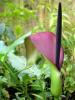
The central spadix bears numerous tiny true flowers arranged along its surface. In A. scherzerianum, it is usually orange to red and characteristically coiled, twisted, curved, or corkscrew-shaped, producing the pigtail appearance. Wild and cultivated plants vary from a loose curve to a pronounced spiral.
Successful pollination can produce orange-to-red berries developing along the spadix. Fruiting is uncommon on many indoor plants but may occur in greenhouses, botanical collections, breeding programs, or homes where pollination has been performed deliberately. Bright fruit may attract animals that ignore the foliage, so berries, pulp, seeds, and remaining spadix tissue must remain inaccessible.
Common-Name Confusion and Identification of Similar Aroids
Flamingo Flower, Flamingo Lily, Tailflower, Oilcloth Flower, and Painter’s Palette are widely applied to Anthurium andraeanum and commercial hybrids as well as Pigtail Plant. A. andraeanum generally has broader heart-shaped leaves, a broad heart-shaped spathe, and a relatively straight or gently curved spadix. A. scherzerianum generally has narrower foliage, a more compact habit, and a conspicuously curled spadix.
Commercial hybridization can blur those distinctions. A trailing, spotted, white-flowered, or unusually shaped plant may not match a simple textbook comparison, and nursery labels may list only Anthurium or Flamingo Flower. Both principal cultivated species and their hybrids are managed as raphide-containing aroids, so uncertainty does not create a safe exposure.
Peace Lily belongs to Spathiphyllum and usually has a white sail-shaped spathe surrounding a cream-colored straight spadix. Calla Lily belongs to Zantedeschia and generally has an arrow-shaped leaf and a larger funnel-shaped spathe surrounding a straight spadix. Both contain irritating insoluble calcium oxalate and are not true lilies.
True lilies belong to Lilium and Hemerocallis and present a fundamentally different feline hazard involving potentially fatal kidney injury. A mixed bouquet containing an Anthurium and a true lily must be treated according to the more serious lily exposure as well as the local aroid injury. Complete bouquet identification is therefore essential.
Household, Office, Florist, Greenhouse, and Landscape Exposure
Household exposure commonly occurs when a cat bites a leaf margin or spathe, a puppy pulls the plant from a stand, a bird shreds the curled spadix, or an animal investigates roots and cuttings during repotting. Falling inflorescences and leaves may remain beneath furniture or inside open wastebaskets. A plant placed high above the floor can still shed reachable material.
Offices, hotels, hospitals, restaurants, schools, reception areas, veterinary clinics, and apartment common spaces frequently use Anthuriums because the foliage is durable and the inflorescences remain decorative for long periods. An animal may encounter a plant while accompanying an owner, visiting a clinic, staying in pet-friendly lodging, or entering a workplace. Facility staff may know only a trade name.
Florists use whole plants and cut Anthurium stalks in bouquets, funeral arrangements, wedding displays, hotel decorations, and event installations. Mixed arrangements may contain true lilies, eucalyptus, chrysanthemums, Oleander, decorative berries, wire, ribbons, pins, foam, fertilizer, and preservative solution. Every biological and nonbiological component must be considered after an arrangement is disturbed.
Greenhouse and nursery exposures involve larger quantities of plants, discarded roots, propagation trays, sap-covered tools, potting media, fertilizer, pesticides, plastic tags, clips, and irrigation water. Workers may place damaged plants temporarily beside a door, dumpster, barn, or loading area where animals can reach them. Commercial waste must never be diverted to livestock or used as animal-accessible compost.
Outdoor cultivation is possible in warm humid climates, protected courtyards, conservatories, and botanical gardens. Storm debris, landscape renovation, frost damage, and seasonal removal can place entire plants at ground level. Dried or wilted tissue still contains mineral crystals and should be collected promptly.
Exposure Pathways in Dogs, Cats, Horses, Livestock, and Exotics
Dogs may chew leaves or flower stalks, carry cut stems, pull over a pot, dig through roots, or swallow decorative material with the plant. Puppies may continue mouthing despite pain and receive more extensive oral injury. Vomit and drool containing plant fragments should remain inaccessible to other animals.
Cats often create small crescent-shaped bites along a leaf edge or spathe and may not be seen during the exposure. Sap and crystals can remain on the paws, muzzle, chest, or coat after a container is knocked over. Grooming then creates continuing oral and ocular contact until the residue is washed away.
Horses, cattle, sheep, goats, camelids, and pigs are unlikely to encounter the plant as ordinary pasture vegetation outside tropical cultivation. Their principal pathways are greenhouse waste, florist debris, discarded houseplants, municipal landscaping material, conservatory access, and mixed ornamental clippings. The material must never be placed in feed, hay, bedding, silage, browse piles, or open compost.
Rabbits and guinea pigs may be given unidentified houseplant leaves accidentally as greens or may reach fallen material from a plant stand. Oral pain can initiate a dangerous cycle of reduced intake and gastrointestinal stasis. Safe familiar forage should replace access, but force-feeding should wait until swallowing and gastrointestinal function are assessed.
Parrots and other birds can use powerful beaks to crush a spathe, spadix, or leaf and release crystals across a small oral surface. They may then spread sap to the face, feet, cage bars, perches, and feathers. The cage and nearby surfaces require cleaning so secondary grooming exposure does not continue.
Tortoises and other herbivorous reptiles may encounter Anthurium in conservatories, indoor planted enclosures, or mixed collected vegetation. Exact reptile case evidence for this species is sparse, but raphide injury is mechanical and does not depend on mammalian metabolism. The plant should not be used in animal enclosures or edible landscape collections.
Diagnosis, Testing, and Differential Diagnosis
Diagnosis is usually based on exact plant identification, witnessed or credible chewing, rapid onset, and the characteristic combination of oral pain, drooling, head shaking, mouth rubbing, gagging, and localized swelling. Preserve the complete plant, pot, label, leaves, curled spadix, spathe, fruit, roots, and every species in a mixed display. Photographs should show the full growth habit rather than only the damaged edge.
A careful oral examination may identify retained fibers, fragments beneath the tongue, abrasions, ulceration, swelling, or a lodged stalk. Sedation may be required when pain prevents safe examination, but respiratory status and airway protection determine how the examination is performed. Deep blind probing or forceful pulling can worsen injury.
There is no routine blood assay that confirms Pigtail Plant exposure. Laboratory testing is selected for dehydration, electrolyte loss, existing disease, prolonged anorexia, unexpected systemic findings, or suspected alternative poisons. Normal bloodwork does not exclude painful local injury, while severe hypocalcemia or kidney abnormalities should broaden the diagnosis.
Eye exposure may require fluorescein staining, tear assessment, magnified examination, and repeated evaluation of healing. Persistent coughing or abnormal breathing may require thoracic imaging for aspiration. Continued vomiting, pain, abdominal enlargement, or reduced stool may justify radiography, ultrasound, contrast imaging, endoscopy, or surgery for a foreign body.
Differential diagnoses include Dieffenbachia, Peace Lily, Calla Lily, Philodendron, Pothos, Alocasia, Colocasia, Monstera, true lilies, chemical burns, electrical-cord injury, caustic cleaners, insect stings, snakebite, pharyngeal foreign bodies, allergic reactions, and infectious or traumatic oral disease. The presence of one Anthurium does not exclude another simultaneous exposure.
Veterinary Treatment and Prognosis
There is no specific antidote. Veterinary treatment is directed toward removing retained material, reducing pain and vomiting, maintaining hydration and nutrition, protecting the airway, evaluating the eyes, and identifying complications. Most uncomplicated patients require only local care and short-term supportive treatment.
The mouth and pharynx may require careful irrigation and removal of accessible plant fragments. Veterinarian-selected systemic analgesics can improve willingness to eat and drink without suppressing protective swallowing reflexes in the manner of indiscriminate topical anesthetic use. Antiemetics and fluid therapy may be used when vomiting, drooling, diarrhea, or food refusal causes dehydration.
Increasing pharyngeal or laryngeal swelling requires oxygen, close respiratory observation, and readiness for endotracheal intubation or emergency airway management. Antihistamines or anti-inflammatory medication may be selected in some patients, but neither removes embedded crystals nor replaces airway control. Response to medication should never delay escalation when breathing worsens.
Eye injury may require irrigation, fluorescein staining, prescribed lubricants, antibiotics when indicated, pain control, and ulcer-specific ophthalmic treatment. Persistent respiratory signs require treatment for aspiration or another pulmonary complication. Foreign plant stalks, roots, labels, ties, wire, or container pieces may require endoscopic or surgical removal.
Prognosis is generally good to excellent when signs remain limited to temporary oral irritation and mild gastrointestinal upset. The outlook becomes more guarded with airway obstruction, aspiration, severe dehydration, extensive esophageal injury, corneal ulceration, prolonged feline anorexia, gastrointestinal stasis, or obstruction. Unexpected systemic organ failure depends on the actual alternative or additional diagnosis.
Prevention
Keep Pigtail Plants in an animal-inaccessible room rather than relying only on height. Cats climb, birds fly, dogs knock over stands, and leaves or inflorescences fall. Closed-door separation is more reliable than a high shelf in a shared room.
Collect fallen leaves, berries, and old inflorescences promptly. Wear gloves during pruning, propagation, and repotting, wash tools and work surfaces, and remove sap from exposed skin. Place every cutting, root section, berry, seed, label, tie, wire, and piece of floral foam directly into a closed animal-inaccessible container.
Inspect bouquets and event arrangements before bringing them into a home or animal facility. Ask florists for the scientific identity of every plant and remember that true lilies create an entirely different emergency for cats. Bouquet water, preservatives, ribbons, wire, and foam should remain inaccessible.
Do not place discarded Anthuriums or greenhouse waste in livestock feed, bedding, open compost, poultry runs, rabbit areas, or tortoise enclosures. Inform family members, gardeners, greenhouse workers, florists, pet sitters, and facility staff about the risk. Retaining the nursery label makes later identification faster and more accurate.
Immediate Actions After Exposure
Remove the animal from the plant and prevent further access to leaves, roots, sap, spathes, curled spadices, berries, potting material, cuttings, floral arrangements, contaminated surfaces, and fallen debris. Preserve the entire exposure source because several Anthurium species and hybrids share the same common names and mixed planters may contain plants with different hazards. Check breathing and swallowing before attempting mouth cleaning.
- Assess the airway first: Rapidly increasing tongue or throat swelling, harsh inhalation, open-mouth breathing, an extended head and neck, blue-gray gums, panic, weakness, or collapse requires immediate emergency transport.
- Remove only loose visible pieces: Carefully take away material at the lips or front of the mouth without reaching blindly toward the throat.
- Do not pull an anchored object: A long stalk, root, string, ribbon, wire, or plant tie may be lodged or extend farther into the gastrointestinal tract.
- Wipe gently: Use a damp cloth to remove visible sap and fragments from accessible lips, gums, and the front of the tongue without scrubbing damaged tissue.
- Rinse only when safe: A gentle cool-water rinse may be used when the animal is fully alert, breathing normally, and swallowing normally; position the head so water drains from the mouth.
- Preserve evidence: Save the complete plant, label, pot, bouquet, chewed fragments, and safely collected vomit or regurgitated material.
- Contact professional help: Obtain veterinary or animal poison-control guidance when more than a trivial bite occurred, signs persist, or identification is uncertain.
Do Not Induce Vomiting or Force Oral Treatment
Vomiting does not remove raphides already embedded in the mouth or throat. It carries irritating plant material back across injured tissue and can lead to aspiration when swallowing is painful or swelling is developing. Home emesis offers little benefit and can create an additional esophageal or gastric injury.
- Do not give hydrogen peroxide: It can cause uncontrolled vomiting, gastric injury, dehydration, and aspiration and must never be used automatically.
- Do not use salt, mustard, detergent, oil, syrup, fingers, or manual gagging: These methods can create another poisoning or physical injury.
- Do not force activated charcoal: Charcoal does not remove embedded crystals and may be inhaled by a drooling, vomiting, weak, or poorly swallowing animal.
- Do not force food, milk, oil, or water: None neutralizes the crystals, and forced swallowing can worsen choking or aspiration.
- Do not syringe liquids: Painful swallowing, gagging, coughing, weakness, or abnormal breathing makes syringe administration unsafe.
- Do not attempt emesis in horses, rabbits, guinea pigs, birds, reptiles, or ruminants: Household vomiting methods are unsafe, ineffective, or anatomically impossible in these species.
Do Not Give Unsupervised Medication
Medication cannot physically remove crystals lodged in tissue. Some drugs may reduce selected symptoms after veterinary assessment, but they do not replace airway control, removal of retained material, hydration, or diagnosis of a foreign body. Sedation can also make swallowing and respiratory assessment more difficult.
- Do not give antihistamines automatically: They do not remove raphides or secure a narrowing airway, and sedation may obscure deterioration.
- Do not give anti-diarrheal medication: It does not treat the primary injury and may be unsafe when foreign material or ileus is possible.
- Do not give sucralfate without direction: It does not treat oral or airway crystals and can interfere with other medications.
- Do not apply numbing gels or sprays: Human benzocaine, lidocaine, and related products may be toxic and can impair protective swallowing.
- Do not give human pain medication: Ibuprofen, naproxen, acetaminophen, aspirin, and similar drugs can cause an additional poisoning.
- Do not use human eye drops: Redness-relief, anesthetic, antibiotic, or steroid preparations may be inappropriate or dangerous without corneal examination.
Skin, Fur, Feather, and Eye Decontamination
Wear gloves and remove sap promptly so it does not continue irritating tissue or become swallowed during grooming. Remove collars, harnesses, clothing, bandages, or bedding that hold residue against the body. Wash skin, paws, fur, or feathers carefully while preventing chilling and aspiration.
- Wash skin and fur: Use lukewarm water and mild pet-safe shampoo, rinse thoroughly, and prevent grooming until residue is removed.
- Clean the paws and face: These areas commonly transfer crystals to the mouth and eyes.
- Flush an exposed eye immediately: Use sterile saline or clean lukewarm water for at least fifteen to twenty minutes, directing fluid from the inner corner outward.
- Prevent rubbing: Use safe restraint or an Elizabethan collar when available and tolerated.
- Seek prompt eye examination: Continued squinting, redness, tearing, cloudiness, discharge, swelling, apparent visual loss, or inability to open the eye requires veterinary care.
Emergency Findings Requiring Immediate Examination
- Airway or swallowing difficulty: Increasing swelling, choking, harsh breathing, repeated neck stretching, inability to swallow saliva, blue-gray gums, panic, weakness, or collapse.
- Persistent gastrointestinal illness: Repeated vomiting or diarrhea, blood, severe abdominal pain, inability to retain water, or progressive abdominal enlargement.
- Dehydration: Tacky gums, sunken eyes, reduced urination, severe lethargy, weakness, or inability to drink.
- Possible aspiration: Coughing after vomiting, rapid breathing, fever, nasal discharge, abnormal respiratory effort, or renewed depression.
- Possible foreign material: A missing stalk, root mass, wire, tie, label, stone, moss, ribbon, floral foam, or container fragment.
- Food refusal: Continued inability or refusal to eat, especially in cats, rabbits, guinea pigs, birds, juveniles, and animals with existing disease.
- Eye injury: Persistent pain, squinting, cloudiness, discharge, apparent loss of vision, or inability to open the eye.
- Unexpected systemic signs: Seizures, coma, profound depression, major arrhythmias, severe hypocalcemia, liver failure, or markedly reduced kidney function requires investigation for another cause.
Safe Transportation
- Call ahead: Report suspected raphide-containing Anthurium exposure and any breathing, swallowing, eye, or foreign-body concern.
- Do not muzzle a vomiting or respiratory patient: A tight muzzle can prevent drainage and worsen breathing.
- Use a carrier or stretcher: Transport weak or distressed animals without forcing unnecessary walking.
- Position for drainage: Allow saliva and vomit to leave the mouth without compressing the chest or neck.
- Bring all evidence: Transport the plant, label, bouquet, photographs, pot contents, accessories, and safely contained gastrointestinal material.
Veterinary Examination and Treatment
There is no specific antidote. Veterinary care is based on the location and extent of tissue injury, ability to breathe and swallow, hydration, eye condition, and presence of another swallowed object. A painful patient may require sedation for examination, but airway assessment and protection remain the first priorities.
The mouth and pharynx may be irrigated and examined for retained leaves, fibers, stalks, roots, or foreign material. Veterinarian-selected systemic analgesics can control pain without relying on topical anesthetics that interfere with protective sensation and swallowing. Antiemetics can reduce continued vomiting and aspiration risk, while subcutaneous or intravenous fluids may be needed after prolonged drooling, vomiting, diarrhea, or inability to drink.
Severe pharyngeal or laryngeal swelling may require oxygen, continuous observation, anti-inflammatory treatment selected for the patient, endotracheal intubation, or emergency airway management. Antihistamines may be used in selected cases but do not remove crystals and should not be treated as a substitute for airway control. Deteriorating respiratory effort requires immediate escalation regardless of medication already given.
Persistent coughing or abnormal breathing may require thoracic imaging and treatment for aspiration pneumonia. Continued vomiting, abdominal pain, enlargement, or reduced stool may require radiographs, ultrasound, contrast imaging, endoscopy, or surgery to locate a stalk, root, label, wire, tie, stone, or other foreign object. Eye injury may require fluorescein staining, prescribed lubrication, pain control, antimicrobial treatment when indicated, and ulcer-specific ophthalmic therapy.
Species-Specific Support
Dogs and cats should be monitored for continued swallowing difficulty, vomiting, coughing, hydration, appetite, and eye pain after visible drooling begins improving. Cats that remain anorexic require prompt nutritional planning because prolonged food refusal can produce secondary hepatic lipidosis. Food should not be forced while nausea, obstruction, ileus, or swallowing dysfunction remains possible.
Horses and livestock should be removed from greenhouse waste, florist debris, clippings, and contaminated bedding immediately. Horses cannot vomit and may express deeper injury through salivation, coughing, feed refusal, colic, or respiratory noise. Drenching is unsafe when oral pain, pharyngeal swelling, coughing, or impaired swallowing is present.
Rabbits and guinea pigs require monitoring of food intake, fecal production, abdominal size, hydration, and behavior. Reduced eating can progress to gastrointestinal stasis even after oral inflammation begins resolving. Force-feeding should wait until the airway, swallowing, gastrointestinal movement, and obstruction risk have been evaluated.
Birds require examination of the tongue, choana, oral cavity, crop function, breathing, and ability to perch. Sap must be removed from feathers, feet, perches, and cage surfaces to prevent repeated grooming exposure. Reptiles require species-appropriate temperature and hydration support in addition to oral assessment, because poor husbandry can worsen recovery.
Recovery, Prognosis, and Prevention
Most limited exposures improve markedly within several hours and resolve within approximately twenty-four hours. Drooling, swelling, pain, vomiting, appetite, drinking, and swallowing should improve steadily rather than briefly improve and then worsen. Persistent or recurrent signs require reassessment for retained material, aspiration, eye injury, dehydration, obstruction, or another diagnosis.
- Monitor the airway: Breathing should remain quiet and effortless while tongue and throat swelling decrease.
- Monitor swallowing: The animal should handle saliva and voluntary water without coughing, gagging, or nasal discharge.
- Monitor hydration: Gum moisture, urination, energy, and voluntary drinking should return toward normal.
- Monitor appetite and stool: Food intake and fecal production are especially important in cats, rabbits, guinea pigs, and birds.
- Monitor the eyes: Squinting, tearing, cloudiness, and rubbing should not persist after irrigation.
The prognosis is generally good to excellent after uncomplicated oral irritation. It becomes more guarded with airway obstruction, aspiration, severe dehydration, extensive esophageal injury, corneal ulceration, prolonged food refusal, gastrointestinal stasis, or obstruction. Prevent recurrence through closed-room plant separation, prompt collection of fallen material, safe repotting practices, bouquet inspection, surface cleaning, and closed disposal of every cutting and floral accessory.
Frequently Asked Questions About Pigtail Plant and Animal Poisoning
Is Pigtail Plant poisonous to dogs and cats?
Yes. Anthurium scherzerianum contains insoluble calcium oxalate raphides that cause immediate oral burning, pain, drooling, mouth rubbing, gagging, swelling, vomiting, and difficulty swallowing. Most limited exposures remain localized and improve rapidly, but increasing throat swelling, aspiration, dehydration, eye injury, or a swallowed foreign object can create an emergency. Cats also require attention to prolonged food refusal after the immediate pain improves.
Is Pigtail Plant poisonous to horses and livestock?
Yes. Horses, cattle, sheep, goats, pigs, camelids, and other livestock should not consume it. Their principal exposure pathways are greenhouse waste, florist debris, discarded houseplants, conservatory access, and mixed ornamental clippings. Horses cannot vomit and may develop salivation, coughing, feed refusal, painful swallowing, colic, diarrhea, or respiratory noise instead.
What is the correct scientific spelling?
The accepted name is Anthurium scherzerianum Schott. The frequently encountered spelling Anthurium scherzeranum omits an “i” and is not the accepted botanical form. Historical search names include Anthurium rothschildianum, Anthurium williamsii, and related older varieties. The species was formally published by Heinrich Wilhelm Schott in 1857.
Why is it called Pigtail Plant?
The name refers to the central spadix, which is commonly curled, twisted, or corkscrew-shaped like a pig’s tail. Numerous tiny true flowers are arranged along the spadix. The degree of curling varies from a pronounced spiral to a looser curve. This feature is the most useful visual distinction from many straight-spadixed commercial Anthuriums.
Is the colorful structure a flower petal?
No. The red, orange, pink, white, cream, or patterned waxy structure is a modified leaf called a spathe. The tiny true flowers are arranged along the curled spadix. Both the spathe and spadix contain irritating plant tissue and should remain inaccessible. A faded or dried inflorescence does not become safe.
Is Pigtail Plant the same as the common Flamingo Flower?
Pigtail Plant is Anthurium scherzerianum, while the plant most often sold as Flamingo Flower or Painter’s Palette is Anthurium andraeanum or a commercial hybrid. Pigtail Plant generally has narrower leaves and a curled spadix, while A. andraeanum generally has broad heart-shaped leaves and a straighter spadix. Both are managed as raphide-containing poisonous aroids.
Which parts of Pigtail Plant are poisonous?
Leaves, petioles, stems, roots, sap, flower stalks, spathes, curled spadices, tiny flowers, berries, pulp, and seeds should all be treated as irritating. Raphide distribution varies among organs and cultivars, but no plant part has been established as safe animal food. Cut, wilted, dried, or discarded material can still release mineral crystals when chewed.
What happens when an animal chews the plant?
Chewing damages specialized cells called idioblasts and releases bundles of microscopic calcium oxalate needles. The raphides puncture and abrade the lips, gums, tongue, palate, throat, and esophagus. Pain, inflammation, excessive salivation, head shaking, mouth rubbing, gagging, and painful swallowing begin rapidly. Swallowed material may also irritate the stomach and intestines.
Does Pigtail Plant contain a second proteinase toxin?
Some raphide-containing plants possess proteinaceous compounds that can intensify inflammation after crystals breach tissue barriers. Experimental research supports synergy between sharp raphides and certain proteases. No single proteolytic enzyme has been confirmed as a universal clinically important second toxin in every Anthurium scherzerianum. Insoluble calcium oxalate raphides remain the established primary hazard.
Can the plant cause throat swelling or breathing difficulty?
Yes. Most swelling remains localized, but inflammation can involve the pharynx and tissues surrounding the larynx. Rapidly increasing tongue or throat swelling, harsh inhalation, open-mouth breathing, inability to swallow saliva, blue-gray gums, panic, weakness, or collapse requires immediate emergency care. Antihistamines do not replace airway monitoring or intubation when breathing is deteriorating.
Can Pigtail Plant cause kidney failure or low blood calcium?
It does not ordinarily cause the systemic hypocalcemia and calcium-oxalate kidney injury associated with soluble oxalate plants. Its insoluble raphides remain primarily within contacting tissue and the gastrointestinal tract. Kidney abnormalities may develop secondarily from severe dehydration or may indicate antifreeze, another plant, medication, or unrelated disease. Major hypocalcemia or renal failure requires a broader investigation.
Can it cause seizures, coma, liver failure, or major heart abnormalities?
Those are not expected direct effects of an uncomplicated exposure to correctly identified Pigtail Plant. Severe oxygen deprivation from airway obstruction, profound dehydration, aspiration, or another poison could produce systemic deterioration. Seizures, coma, liver failure, major arrhythmias, or widespread organ injury requires immediate investigation for another or additional cause. The plant’s presence should not stop the diagnostic search.
How quickly do symptoms begin?
Oral pain, drooling, head shaking, and mouth rubbing usually begin immediately or within minutes because the crystals injure tissue as soon as the plant is chewed. Gagging, painful swallowing, vomiting, abdominal discomfort, food refusal, or diarrhea may follow. A delayed illness beginning much later without early oral signs is less typical and should broaden the differential diagnosis.
Can symptoms last for several weeks?
That is not the expected course of an uncomplicated exposure. Most limited cases improve substantially within several hours and resolve within approximately one day. Persistent pain, drooling, swelling, vomiting, coughing, food refusal, eye irritation, or abdominal signs may indicate retained material, severe tissue injury, aspiration, corneal damage, dehydration, a foreign body, or another diagnosis. The animal should be re-examined rather than assumed to have prolonged routine raphide irritation.
Can the sap injure an animal’s eyes?
Yes. Sap and crystals can cause intense pain, tearing, squinting, redness, eyelid spasm, light sensitivity, corneal abrasion, ulceration, or cloudiness. Flush the eye immediately with sterile saline or clean lukewarm water for at least fifteen to twenty minutes. Persistent pain, rubbing, cloudiness, discharge, or visual difficulty requires prompt veterinary examination and fluorescein staining.
Should I make my dog or cat vomit?
No home emesis should be attempted unless a veterinarian or animal poison-control professional specifically directs it after assessing the case. Vomiting does not remove crystals already embedded in oral tissue and carries irritating material back across the esophagus. Hydrogen peroxide can cause additional stomach and esophageal injury and increase aspiration risk. It should never be used automatically and is particularly inappropriate in cats.
Should I give activated charcoal or Benadryl?
Do not give either automatically. Activated charcoal cannot extract crystals embedded in tissue and can be inhaled by a drooling, vomiting, weak, or poorly swallowing animal. Diphenhydramine does not remove the raphides or secure a narrowing airway, and its sedating effect may complicate swallowing and respiratory assessment. A veterinarian may select medication for a particular patient after examination.
Could the animal have swallowed something besides the plant?
Yes. An overturned planter may expose roots, potting media, fertilizer pellets, pesticides, support wire, plant ties, plastic labels, stones, moss, bark, floral foam, and container fragments. Continued gagging, repeated vomiting, abdominal pain, enlargement, or reduced stool after oral irritation improves may indicate a foreign body. Preserve the entire disturbed area and report every missing object.
How do veterinarians treat Pigtail Plant exposure?
There is no specific antidote. Treatment may include oral and pharyngeal examination, irrigation, removal of retained fragments, systemic pain control, antiemetics, fluid and electrolyte support, airway monitoring, oxygen, intubation for severe swelling, eye treatment, and management of aspiration. Imaging, endoscopy, or surgery may be needed when a stalk, root, wire, label, or another object was swallowed.
What is the prognosis?
The prognosis is generally good to excellent after a limited uncomplicated exposure. Most animals improve rapidly once plant access ends and local inflammation subsides. The outlook becomes more guarded with airway obstruction, aspiration, severe dehydration, corneal ulceration, extensive esophageal injury, prolonged food refusal, gastrointestinal stasis, or obstruction. Unexpected systemic organ failure depends on the actual additional diagnosis.