PAWS Pet Poison Plant Guide
Is Winterberry Poisonous to Dogs, Cats, Horses, and Livestock?
Yes, winterberry, Ilex verticillata, is mildly poisonous to dogs, cats, horses, and potentially other animals when enough leaves, bark, or fruit are eaten. The best-supported toxic principles are irritating saponins and related triterpenoid compounds rather than theobromine or a cyanide-releasing glycoside. Most exposures cause salivation, nausea, vomiting in species capable of vomiting, diarrhea, abdominal discomfort, appetite loss, lethargy, or depression. Serious poisoning is uncommon, but a large fruit ingestion can cause repeated vomiting, substantial diarrhea, dehydration, electrolyte disturbance, and weakness.
About this guide: This page provides general pet-poisoning information and cannot diagnose or treat an individual animal. For any suspected exposure, contact a veterinarian or animal poison-control service immediately. Do not induce vomiting, give medication, or attempt home decontamination unless directed by a veterinary professional.
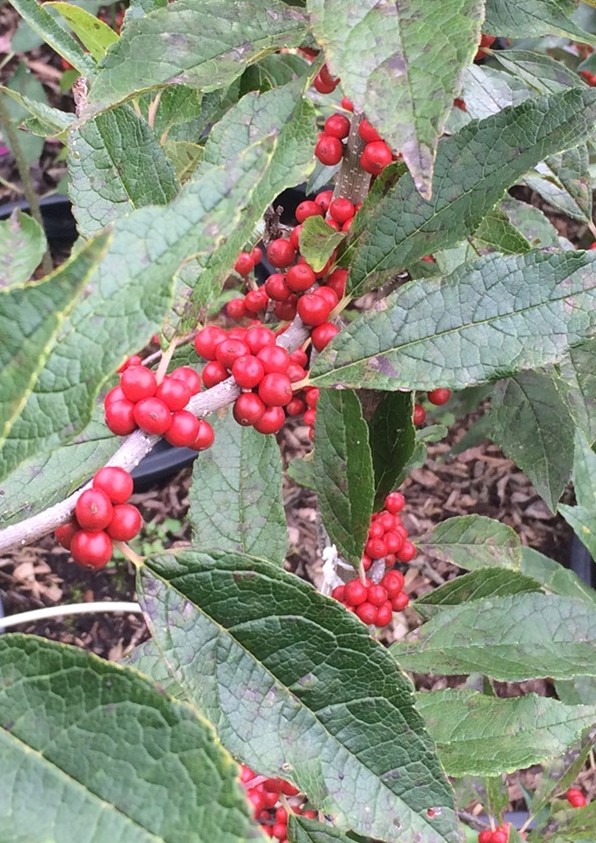
Winterberry
Ilex verticillata (L.) A.Gray
The original name is Prinos verticillatus L.
Important botanical synonyms include:
Ilex bronxensis Britton
Ilex fastigiata E.P.Bicknell
Ilex verticillata var. aurantiaca Moldenke
Ilex verticillata f. aurantiaca (Moldenke) Rehder
Ilex verticillata f. chrysocarpa B.L.Rob.
Ilex verticillata var. cyclophylla B.L.Rob.
Ilex verticillata var. fastigiata (E.P.Bicknell) Fernald
Ilex verticillata f. fructuosa Loes.
Ilex verticillata var. padifolia (Willd.) Torr. & A.Gray ex S.Watson
Ilex verticillata var. tenuifolia (Torr.) S.Watson
Ilex verticillata subsp. tenuifolia (Torr.) A.E.Murray
Prinos confertus Moench
Prinos gronovii Michx.
Prinos padifolius Willd.
Prinos prunifolius Desf.
Prinos verticillatus var. dubius DC.
Prinos verticillatus var. tenuifolius Torr.
Aquifoliaceae
Commonly called the Holly family.
Winterberry, Winter Berry, Common Winterberry, Common Winterberry Holly, Winterberry Holly, American Winterberry, Deciduous Holly, Deciduous Winterberry, Canada Holly, Canadian Holly, Michigan Holly, Northern Holly, Swamp Holly, Black Alder, Black-Alder, Black Alder Winterberry, Brook Alder, False Alder, Coralberry, Coral Berry, Christmas Berry, Feverbush, Fever Bush, Virginian Winterberry, Ilex verticillata, Prinos verticillatus
“Black alder” is ambiguous and is also used for true alders, including Alnus glutinosa and other Alnus species. “Coralberry” is also commonly applied to Symphoricarpos orbiculatus. “Winterberry” may be used loosely for other fruiting shrubs and other Ilex species, so the scientific name is important.
The best-supported toxic principles in winterberry are saponins and related triterpenoid compounds. Saponins are glycosides containing one or more sugar chains attached to a non-sugar triterpene or steroidal core. Their structure allows them to interact with fats, water, and cell membranes, which is why many saponin-rich plant extracts foam when shaken in water and irritate the lining of the digestive tract.
A detailed 1990 chemical investigation found that Ilex verticillata contained a substantial amount of extractable material. The plant material analyzed yielded predominantly triglycerides in its oil fraction, together with triterpene fatty-acid esters. The more polar fraction contained sugars, sugar esters of fatty acids, triterpene acids, and a large crude saponin fraction representing approximately 18.9% of the dry weight of the analyzed material.
That 18.9% figure describes a chemically extracted crude fraction under laboratory conditions. It is not a measure of pure toxin, a concentration in every leaf or fruit, or a toxic dose for a dog, cat, horse, cow, or person. The fraction included a mixture of compounds, and the plant part, collection conditions, extraction process, and definition of “saponin fraction” all affect the result.
Saponins can bind with membrane sterols and alter membrane permeability. In the mouth and gastrointestinal tract, this action can produce salivation, nausea, vomiting, diarrhea, abdominal cramping, appetite loss, and depression. Because many plant saponins are absorbed poorly through an intact digestive tract, local irritation is much more common than widespread organ damage after ordinary holly ingestion.
Some saponins can rupture red blood cells in laboratory preparations, but test-tube hemolysis does not prove that eating winterberry produces clinically important hemolytic anemia. No consistent veterinary syndrome of pallor, jaundice, massive red-cell destruction, or hemoglobinuria has been established for ordinary *I. verticillata* exposure. The principal recognized syndrome remains gastrointestinal irritation.
Ursolic acid is one triterpenoid specifically documented in winterberry fruit. It is a pentacyclic triterpene acid found in many fruits and plants and has been investigated for numerous biological effects. Its presence in a plant does not automatically make it the sole poison, and the concentration required to reproduce winterberry’s veterinary symptoms has not been established.
Oleanolic acid and alpha-amyrin have also been associated with winterberry or broader Ilex chemical surveys. Alpha-amyrin is a pentacyclic triterpene alcohol, while oleanolic acid is closely related structurally to ursolic acid. These compounds, their esters, and related saponins help demonstrate the plant’s substantial triterpenoid chemistry, but their individual contribution to vomiting and diarrhea after natural animal exposure remains unresolved.
The legacy compound list included cyanidin-3-xylosylglucoside and pelargonidin-3-glucoside as winterberry-fruit pigments. Anthocyanins are red, purple, or blue flavonoid pigments rather than the principal gastrointestinal toxins of holly. Modern fruit-color research confirms that winterberry cultivars contain a complex anthocyanin system and that pelargonidin derivatives contribute to red fruit coloration. However, some older compound lists appear to combine data from several Ilex species, so each exact pigment name should not be treated as a proven toxicant without its original species-specific analysis.
The supplied list also named ilex lactone, ergosterol, and beta-sitosterol. Beta-sitosterol is a common plant sterol and may occur in fruit lipid fractions. “Ilex lactone” has been used inconsistently in older secondary compilations and is not established as the principal cause of winterberry poisoning. Ergosterol is principally associated with fungi and may reflect fungal material, an analytical identification problem, or a copied genus-level record rather than a defining winterberry constituent. These compounds are preserved here because they formed part of the historical chemical record, but none should replace saponins as the best-supported veterinary toxic principle.
Theobromine is not adequately supported as the primary toxin of *Ilex verticillata*. Theobromine, caffeine, and related methylxanthines are genuinely important in several caffeinated hollies. Yaupon holly, Ilex vomitoria, and yerba mate, Ilex paraguariensis, have documented caffeine and theobromine chemistry and have long been prepared as stimulating beverages. That evidence cannot be transferred automatically to winterberry merely because it belongs to the same large genus.
Accordingly, the caffeine-like syndrome expected after chocolate, coffee, tea, caffeine-tablet, yaupon, or yerba-mate exposure—marked restlessness, pronounced rapid heartbeat, tremors, hyperthermia, arrhythmias, and seizures—is not the characteristic syndrome of ordinary winterberry ingestion. If an animal develops strong stimulation after supposedly eating winterberry, the veterinarian should investigate plant misidentification, chocolate, caffeine, stimulant medication, pesticides, or another exposure.
The legacy toxin list also included the proposed cyanogenic glucoside “2 beta-D-glucopyranosyloxy-p-hydroxy-6,7-dihydromandelonitrile.” That chemical did not originate from a study of *Ilex verticillata*. It was reported from ripe fruits of European holly, Ilex aquifolium, and later structural investigation showed that the original identification was wrong. The compound was revised to menisdaurin, a noncyanogenic nitrile glucoside.
That correction is important. Winterberry should not be described as a cyanide-releasing plant based on that compound, and ordinary winterberry poisoning is not expected to cause the sudden oxygen-starvation syndrome associated with cyanide. Bright-red mucous membranes, gasping, very rapid collapse, seizures, and sudden death would require immediate investigation for cyanogenic plants or another cause rather than being blamed automatically on winterberry.
Leaves, stems, bark, roots, and fruits should all be treated as potentially irritating, but the colorful fruits create the most common practical exposure. The fruits are technically drupes rather than true berries. Each contains hard seed-bearing structures surrounded by fleshy tissue, and eating a large number can produce both chemical irritation and a substantial load of indigestible plant material.
Most winterberry exposures produce either no visible illness or a self-limiting gastrointestinal syndrome. The amount eaten, plant part, animal’s size, existing disease, and whether the material was mixed with another plant or chemical determine the outcome. The leaves and fruits are generally categorized as low toxicity, not nontoxic.
Dogs and cats may initially lick their lips, drool, swallow repeatedly, appear nauseated, or refuse food. Vomiting and diarrhea are the most consistently recognized signs. Abdominal discomfort may appear as restlessness, stretching, hunching, guarding the belly, whining, hiding, or resistance to being picked up.
Depression or lethargy may follow the gastrointestinal upset. An animal that has vomited several times may appear quiet simply because it is nauseated, tired, mildly dehydrated, or experiencing abdominal pain. This should not be confused automatically with direct depression of the brain or a methylxanthine stimulant-and-crash syndrome.
A large fruit ingestion can cause repeated vomiting and profuse diarrhea. Continued fluid loss may produce tacky gums, sunken eyes, weakness, reduced urination, rapid heart rate, and electrolyte abnormalities. Puppies, kittens, toy-breed dogs, geriatric animals, and patients with kidney, heart, endocrine, or gastrointestinal disease can become clinically dehydrated faster than a healthy large adult animal.
Fruit skins, pulp, seeds, small twigs, and decorative material can also create mechanical problems. A large quantity may aggravate gastritis or, less commonly, contribute to constipation or obstruction. Persistent vomiting, a painful or enlarged abdomen, repeated unproductive retching, reduced fecal production, or worsening depression after the initial stomach upset requires imaging and veterinary reassessment.
Horses cannot vomit. Equine exposure is more likely to produce salivation, feed refusal, depression, abdominal discomfort, altered intestinal sounds, soft manure, or diarrhea. Pawing, flank watching, stretching, repeated lying down, rolling, sweating, abdominal distention, or an increasing pulse indicates colic that should not be dismissed as a harmless effect of low-toxicity berries.
Cattle, sheep, goats, and other ruminants may develop salivation, reduced appetite, abdominal discomfort, altered rumen activity, or diarrhea after unusually large ingestion. Direct winterberry livestock case evidence is limited, and ordinary browse intake by wildlife or livestock should not be converted into a precise toxic-dose claim.
Pronounced caffeine-like stimulation is not expected from correctly identified *I. verticillata*. Severe agitation, sustained tachycardia, tremors, hyperthermia, arrhythmias, or seizures would be unusual for uncomplicated winterberry exposure and should prompt investigation for true coffee, chocolate, caffeine medication, yaupon, yerba mate, pesticides, mold, another toxic plant, or an unrelated neurologic emergency.
Likewise, a cyanide-type syndrome is not characteristic. Sudden gasping, bright-red mucous membranes, profound weakness, collapse, seizures, or death within minutes would require emergency treatment and investigation of cyanogenic forage, smoke exposure, hydrogen sulfide, carbon monoxide, or another rapidly acting toxicant.
Serious systemic intoxication and fatality are not characteristic of the available holly-poisoning record. Severe vomiting can still become dangerous through dehydration, aspiration, electrolyte imbalance, or worsening of an existing disease. The absence of a recognized fatal syndrome is not a reason to ignore persistent signs or allow unrestricted access to the plant.
Winterberry Is a Deciduous Holly
Ilex verticillata is a woody deciduous shrub in Aquifoliaceae, the holly family. Unlike the evergreen English and American hollies commonly pictured on Christmas cards, winterberry sheds its leaves in autumn. The bare branches remain covered with densely clustered red, orange-red, or occasionally yellow-orange fruit through much of the winter.
This exposed fruit display makes the plant easy to recognize and highly attractive in landscaping, rain gardens, native plantings, wetland restoration, and cut winter arrangements. It also makes the fruits conspicuous and accessible to curious dogs, children, caged animals offered decorative branches, and livestock standing beside a planted fence line.
The Genus Ilex
Winterberry is one member of one of the largest woody-plant genera. Older references commonly describe more than 400 holly species. Current botanical treatment recognizes approximately 571 accepted species of Ilex, distributed through temperate, subtropical, and tropical regions around the world.
The genus includes deciduous and evergreen shrubs, trees, and occasional climbing forms. Species grow from wet lowlands and swamps to mountain forests above 2,000 meters, or approximately 6,600 feet. The chemistry of such a large genus is not uniform. Some hollies contain meaningful caffeine, some are used medicinally, some are browsed by wildlife, and many contain saponins and triterpenes. Evidence from one cannot be assigned automatically to all 570-plus species.
Accepted Name and Botanical Synonyms
The accepted name is Ilex verticillata (L.) A.Gray. Linnaeus originally described it as Prinos verticillatus. The name was later transferred to Ilex, and numerous regional forms, varieties, and apparent variants accumulated their own names before being included within the modern species concept.
The epithet verticillata refers to the apparently whorled arrangement of fruits along the branches. The fruits do not arise from one true botanical whorl; closely spaced fruits in the leaf axils create the visual effect of red rings or clusters around the stem.
Native Range
Winterberry is native to eastern Canada and the central and eastern United States. Its documented native range extends through Newfoundland, Nova Scotia, Prince Edward Island, New Brunswick, Quebec, and Ontario and south through the Great Lakes, New England, the Mid-Atlantic, the southeastern states, and portions of Texas.
The broad native range explains why the plant is familiar under so many regional names, including Canada holly, Michigan holly, swamp holly, black alder, feverbush, and common winterberry. It should not be described as native throughout tropical North America or the entire world simply because the genus Ilex has an almost worldwide distribution.
Habitat and Animal Exposure
Winterberry is strongly associated with moist to wet acidic ground. It grows in swamps, bog margins, damp thickets, low woods, stream banks, pond margins, lake shores, wet meadows, marsh edges, floodplains, and poorly drained depressions.
The shrub tolerates seasonal flooding, clay, saturated soil, and other conditions that exclude many ornamental shrubs. It is therefore planted commonly in rain gardens, drainage areas, beside ponds, along waterways, and in low portions of animal properties.
Dogs may encounter wild or cultivated winterberry on streamside walks, around ponds, in wet woodland, or in yards. Horses and livestock may browse shrubs growing at the edge of wet pasture or may receive cut branches and landscape debris thrown over a fence.
Growth Form and Identification
Winterberry usually grows approximately five to fifteen feet tall, although many cultivated forms remain shorter. It develops an upright, rounded, spreading crown and often sends up suckers, gradually creating colonies or dense thickets in wet ground.
The bark is smooth and gray to dark gray or nearly black, marked by pale or knobby lenticels. Young branches may grow in a subtle zigzag pattern. The alternate leaves are usually two to four inches long, elliptical, oval, or obovate, with pointed tips and finely to coarsely toothed margins.
The leaves are thinner and less glossy than those of many evergreen hollies and do not have the large sharp spines associated with English holly. Their undersides may be paler or slightly hairy along the veins. Autumn foliage commonly turns yellow and may develop bronze, orange, red, or maroon coloration before falling.
Small greenish-white flowers appear in late spring or early summer. They are easy to overlook among the foliage but attract small bees and flies. Winterberry is dioecious: male and female flowers occur on separate plants. Only pollinated female shrubs produce the ornamental fruit.
The fruits are round drupes approximately one-quarter inch across. They ripen from late summer through autumn and frequently remain attached after the leaves fall. Cultivars produce fruit in shades ranging from yellow and orange through brilliant scarlet and deep red.
Male Plants Do Not Produce Fruit
A male winterberry supplies pollen but does not produce the colorful fruit that creates most household exposures. Female cultivars require a compatible male whose flowering time overlaps theirs. One male may pollinate several female shrubs when planted within effective pollinator range.
A fruitless male plant still contains leaves, bark, stems, roots, saponins, and triterpenoids. It should not be labeled completely nontoxic, but it removes the most tempting and easily swallowed part of the plant from the landscape.
Why “Black Alder” Can Cause Confusion
Black alder is a genuine historical name for winterberry, probably reflecting the shrub’s wet habitat and dark bark. It is also a name for true alders, particularly Alnus glutinosa, and may be used regionally for additional Alnus species.
Alder and winterberry are unrelated. True alders belong to Betulaceae and produce catkins and small woody cone-like structures rather than red holly drupes. The common name should never be used alone when identifying material from an animal’s stomach or a contaminated pasture.
Why “Feverbush” Became a Common Name
The name feverbush reflects historical medicinal use. Preparations of winterberry bark, roots, leaves, or fruit were used in some Native American and later herbal traditions for fever, diarrhea, malaria-like illness, sores, skin problems, and other conditions.
Historical medicinal use is important ethnobotanical evidence, but it does not mean the raw plant can be eaten safely by pets or livestock. Traditional preparations may have used a selected plant part, a controlled quantity, boiling, extraction, external application, or a purpose very different from an animal swallowing a pile of fruit.
Holly Toxicity Is Frequently Overstated
Holly has acquired a reputation in popular plant lists as a deadly holiday poison. The available medical and veterinary literature does not support treating ordinary holly-berry ingestion like yew, water hemlock, oleander, or true lily exposure.
Most holly cases cause no signs or gastrointestinal irritation. Human reports involving a substantial handful of berries demonstrate that severe repetitive vomiting and drowsiness can occur, but the great majority of accidental childhood exposures have not produced life-threatening poisoning.
The scientifically accurate description is low toxicity with the potential for clinically important gastrointestinal illness after a large ingestion. Calling the plant harmless would ignore repeated vomiting, diarrhea, dehydration, and the veterinary classification of hollies as toxic. Calling a few fruits predictably deadly is equally inaccurate.
No Confirmed Pattern of Fatal Pet Poisoning
No dependable veterinary record was found establishing a characteristic series of dog or cat deaths caused solely by correctly identified *Ilex verticillata*. That does not prove that a fatal outcome is impossible under every circumstance. A small animal can die from severe dehydration, aspiration, gastrointestinal obstruction, or another complication even when the plant is not directly lethal at an ordinary dose.
Reports copied between plant databases sometimes add stimulant signs, cyanide poisoning, coma, or death because chemistry from caffeinated hollies, European holly, or unrelated berry-producing plants has been merged into one generic “holly” account. Species identification and source tracing matter.
The 1990 Winterberry Saponin Study
Thomas P. Abbott and colleagues investigated *Ilex verticillata* as a possible renewable source of oils, industrial chemicals, and biodegradable surfactants. Their goal was not to establish a veterinary lethal dose, but the work provides unusually direct information about the species’ chemical composition.
The analyzed material contained approximately 41.5% total extractable matter on a dry-weight basis. Oil fractions consisted predominantly of triglycerides with some triterpene fatty-acid esters. The more polar fraction contained sugars, sugar esters of fatty acids, triterpene acids, and material better characterized as a crude saponin fraction.
The crude saponin fraction represented approximately 18.9% of dry weight in the analyzed winterberry material and showed emulsifying properties. This is strong species-specific support for placing saponins at the center of the plant’s toxicology. It does not mean 18.9% of a fresh berry is one pure poisonous saponin.
Ursolic Acid from Winterberry Fruit
Ursolic acid was isolated and studied as a cytotoxic component of *Ilex verticillata* fruit. “Cytotoxic” in a laboratory paper means that a purified compound affected cultured cells or a bioassay under experimental conditions. It does not mean that one winterberry fruit causes tissue destruction throughout a dog or horse.
Ursolic acid occurs widely in apple peels, cranberries, herbs, and numerous other plants. Dose, formulation, absorption, and route determine biological effects. Within winterberry it is one component of a much larger triterpenoid and saponin mixture.
Alpha-Amyrin, Oleanolic Acid, and Related Triterpenes
Alpha-amyrin is a triterpene alcohol. Oleanolic acid and ursolic acid are closely related pentacyclic triterpene acids. These compounds may occur freely, as fatty-acid esters, or as the non-sugar core of more complex glycosides.
Older chemical lists assign alpha-amyrin to winterberry bark, leaves, and fruit; ursolic acid to leaves and fruit; and oleanolic acid to leaves. These assignments are chemically plausible and partly consistent with modern extraction studies, but not every tissue-by-tissue statement can be traced readily to a complete accessible primary analysis.
Preserving these compounds is important because they show that winterberry chemistry is not accurately summarized as “theobromine.” Their direct contribution to pet gastrointestinal irritation, however, has not been separated from the effects of the complete saponin-rich plant mixture.
Fruit Pigments Are Not the Main Poisons
Cyanidin and pelargonidin glycosides are anthocyanins responsible for red, purple, and orange plant coloration. The supplied list named cyanidin-3-xylosylglucoside and pelargonidin-3-glucoside in winterberry fruit.
Modern winterberry fruit research confirms a diverse anthocyanin profile and indicates that pelargonidin derivatives help distinguish red-fruited cultivars from yellow- or orange-fruited forms. These pigments are valuable for explaining fruit color but are not recognized as the primary cause of vomiting and diarrhea.
Some exact anthocyanin names in older Ilex compilations originated from yaupon, yerba mate, or another holly. The compounds have therefore been retained as part of the historical chemical discussion without claiming that each is a proven winterberry veterinary toxin.
Theobromine and Caffeine Belong to Particular Hollies
Theobromine is a methylxanthine related to caffeine. In sufficiently high doses, methylxanthines stimulate the central nervous system and heart, producing restlessness, vomiting, tachycardia, tremors, hyperthermia, dysrhythmias, seizures, and death.
Yaupon holly, Ilex vomitoria, was used historically to prepare the ceremonial black drink and later as a regional tea and coffee substitute. During periods when imported coffee and tea were scarce, including the American Civil War, yaupon leaves were used by some southerners as a caffeinated beverage.
Yerba mate is prepared from Ilex paraguariensis and remains one of the world’s major caffeinated herbal beverages. Guayusa, Ilex guayusa, is another caffeinated holly. These examples demonstrate that methylxanthines occur in the genus; they do not establish theobromine as the primary poison of *I. verticillata*.
A correctly identified winterberry exposure should be expected to cause gastrointestinal irritation, not the pronounced stimulant syndrome of chocolate or caffeine poisoning. Strong stimulation warrants a broader toxicologic investigation.
The Alleged Cyanogenic Glucoside
The legacy record gave the compound name “2 beta-D-glucopyranosyloxy-p-hydroxy-6,7-dihydromande-lonitrile” and attributed it to winterberry fruit, leaves, and bark. The chemical history behind that statement is both interesting and important.
Michael Willems originally reported a proposed dihydromandelonitrile glucoside from European holly, Ilex aquifolium. The study did not involve *Ilex verticillata*. Adolf Nahrstedt and Victor Wray later re-examined the compound and revised its structure to menisdaurin.
Menisdaurin contains a nitrile group but is not the originally proposed cyanide-releasing glycoside. Later chemical reviews explicitly describe the European-holly compound as noncyanogenic. The old compound name should therefore remain in the scientific history of the page, but it cannot be used as evidence that winterberry releases hydrogen cyanide.
Other Listed Compounds
The older winterberry record also named ilex lactone, ergosterol, and beta-sitosterol. Beta-sitosterol is a widespread plant sterol and could occur naturally within fruit or lipid extracts. It is not known as a principal cause of acute winterberry gastroenteritis.
“Ilex lactone” is an imprecise common chemical label that has appeared in secondary plant compilations. Without a complete structure, primary isolation paper, tissue source, and species confirmation, it should not be elevated into a named toxin.
Ergosterol is primarily the characteristic membrane sterol of fungi rather than higher plants. A reported ergosterol finding in leaves could reflect fungal colonization, endophytic fungi, contamination, or an older analytical assignment. It should not be described as a defining active principle of winterberry without stronger evidence.
Medicinal and Beverage Uses Elsewhere in the Genus
The genus Ilex has a long history of human use. In addition to yaupon and yerba mate, several Asian hollies are used in traditional beverages and herbal preparations. Chinese holly, Ilex cornuta, and other regional species have been used in traditional medicine for tonic, cardiovascular, inflammatory, hepatic, or renal complaints.
These uses show that the genus is chemically diverse and that not every holly is acutely deadly. They do not prove that raw ornamental winterberry fruits are food or medicine for pets. Traditional preparations, cultivars, processing, dose, and human metabolism differ from an animal chewing an unidentified shrub.
The Full Burrows and Tyrl Veterinary Passage
Toxic Plants of North America by George E. Burrows and Ronald J. Tyrl summarized the practical veterinary evidence as follows:
Rarely, digestive tract problems are reported for horses or other animal species (Finance 1987). Effects in pets are usually limited to apparent irritation of the gastrointestinal tract with salivation, vomiting, and perhaps diarrhea in some cases (Volmer 2002). Feeding trials in young calves fed frozen I. myrtifolia (myrtle holly) every third day over 16 days or daily for 35 days produced no adverse clinical or pathologic effects (Pence et al. 2001).
This passage is important because it directly addresses the tendency to overstate holly poisoning. It supports gastrointestinal irritation as the expected pet syndrome and demonstrates that substantial exposure to one holly species failed to reproduce a suspected cattle disease.
The final sentence must still be interpreted correctly. The calves were fed myrtle holly, Ilex myrtifolia, not winterberry, *Ilex verticillata*. A negative feeding trial in one species does not prove that every holly, plant part, preparation, or quantity is harmless.
The Pence and Colleagues Calf Study
The study followed an apparent field association between the deaths of 11 beef cows and access to myrtle-leaf holly. Researchers harvested *Ilex myrtifolia* material and performed two controlled feeding trials.
The first trial involved intermittent feeding to approximately four-month-old calves for two weeks. The second involved continuous feeding to approximately two-month-old calves for 35 days. The researchers did not reproduce the original herd’s clinical disease and found no significant clinical pathology, gross lesions, or histologic lesions attributable to the plant.
The results weakened the claim that myrtle holly had killed the original cows. They also illustrate an essential toxicology principle: finding a plant in a pasture does not prove causation. Controlled exposure, pathology, chemistry, dose, and exclusion of other causes matter.
Wildlife Consumption Does Not Prove Pet Safety
Winterberry fruit is an important late-autumn and winter food for wildlife. USDA material reports use by more than 48 bird species, and the fruit is also consumed by small mammals. Deer, moose, cottontail rabbits, and snowshoe hares may browse stems or foliage, although winterberry is not generally considered preferred browse.
Birds disperse the seeds and may tolerate fruit chemistry differently because of their digestive anatomy, body physiology, rapid intestinal passage, seasonal adaptation, and the quantity consumed at one time. A robin eating winterberries does not establish a safe number for a dog, cat, horse, or child.
Wildlife also balances many foods and may delay winterberry consumption until freezing, weathering, or scarcity changes palatability. Domestic animals can consume an unnaturally large concentrated amount from fallen fruit, cut branches, buckets, decorations, or prunings.
Dogs
Dogs are the domestic animals most likely to swallow numerous fruits. The round red drupes fall beneath shrubs, become accessible on cut branches, and can resemble small edible berries or toys. Puppies may also chew stems and bark.
A few fruits often cause no signs or brief stomach upset. A larger ingestion can cause drooling, repeated vomiting, diarrhea, abdominal discomfort, appetite loss, depression, and dehydration. The actual number required to cause illness varies with fruit size, cultivar, ripeness, dog size, stomach contents, and individual sensitivity.
The hard seed-bearing structures and pieces of twig also matter. Persistent signs after the expected irritation should prompt evaluation for retained plant material, obstruction, another toxic berry, pesticide exposure, or an unrelated gastrointestinal disease.
Cats
Cats are less likely to gorge on outdoor berries but may chew cut winterberry branches brought indoors for decoration. Fallen fruit can be batted, punctured, swallowed, or carried to another room.
Vomiting, diarrhea, appetite loss, drooling, hiding, and depression are the principal concerns. Cats that refuse food for a prolonged period deserve particular attention because sustained anorexia can produce serious metabolic complications independent of the original plant exposure.
Horses
Direct horse reports are uncommon, which is consistent with winterberry’s generally low toxicity and limited palatability. Exposure may occur when shrubs grow along wet pasture margins or when landscape cuttings are dumped over a fence.
Horses cannot vomit. Salivation, feed refusal, depression, soft manure, diarrhea, altered gut sounds, or colic are more appropriate expected signs. A horse with persistent pain, distention, rapid pulse, sweating, reduced manure, or repeated rolling requires a complete colic examination.
Cattle, Sheep, and Goats
Winterberry is not recognized as a major cause of livestock death. Cattle, sheep, and goats may browse woody plants when pasture is sparse, but direct controlled winterberry dose information is lacking.
Large consumption could produce salivation, reduced appetite, abdominal discomfort, abnormal rumen motility, or diarrhea through saponin irritation. A severe herd outbreak should prompt investigation of other plants, feed contamination, nitrate, pesticides, infectious disease, and water quality rather than assuming that nearby winterberry is responsible.
Cut Branches and Holiday Decorations
Winterberry branches are sold widely for autumn and winter arrangements because the bright fruit remains attached after leaf fall. Indoor cuttings may create more pet access than the living outdoor shrub.
Fruit can fall onto floors, tables, bedding, or water bowls as branches dry. Floral wire, tape, preservative, glitter, artificial snow, ribbon, and other decoration materials may create additional ingestion or obstruction hazards.
Owners should identify whether an arrangement contains only winterberry or includes mistletoe, yew, bittersweet, lilies, or another more dangerous plant. A mixed arrangement cannot be assessed safely from one recognizable red fruit.
Diagnosis
Diagnosis begins with plant identification and a credible exposure. A complete sample should include leaves when available, bark, stems, fruit, and the nursery or florist label. Photographs should show the entire shrub, branching pattern, fruit attachment, habitat, and any other plants growing beside it.
Most uncomplicated cases do not produce one diagnostic laboratory abnormality. Repeated vomiting or diarrhea may justify assessment of hydration, packed-cell volume, electrolytes, glucose, kidney values, and acid-base status.
Abdominal radiographs or ultrasound may be needed when a dog swallowed a large amount of fruit, twigs, floral material, wire, or ribbon. Strong stimulant signs require investigation for methylxanthines, while a rapid oxygen-starvation syndrome requires evaluation for cyanide, carbon monoxide, methemoglobinemia, or another cause.
Important Differential Diagnoses
Other shrubs called winterberry, coralberry, black alder, or holly may contain different compounds. American holly, English holly, inkberry, possumhaw, yaupon, dahoon, and Japanese holly all belong to Ilex but are separate species.
Red-fruited plants that may create more dangerous or different syndromes include yew, American bittersweet, European bittersweet, Jerusalem cherry, nandina, pokeweed, honeysuckle, cotoneaster, pyracantha, mountain ash, and certain viburnums.
Vomiting and diarrhea may also result from spoiled food, infectious gastroenteritis, intestinal parasites, pancreatitis, foreign bodies, medications, household chemicals, mushrooms, and many unrelated plants. Finding winterberry fragments does not eliminate those possibilities.
Veterinary Treatment
There is no specific antidote because the expected syndrome is local gastrointestinal irritation rather than one receptor-specific systemic poison. Treatment depends on the amount eaten, time since ingestion, current symptoms, hydration, and the possibility of foreign material.
A veterinarian may consider induced vomiting after a recent substantial fruit ingestion in an alert dog that has no aspiration risk. That decision belongs to the veterinarian or poison specialist. Hydrogen peroxide can cause severe gastritis, prolonged vomiting, aspiration, and esophageal injury and should not be administered automatically at home.
Activated charcoal is not a universal antidote. Its benefit for saponin-rich gastrointestinal irritants is uncertain, and a vomiting, depressed, drooling, or poorly swallowing animal can inhale it. Professional use may be considered in an unusual mixed or uncertain exposure after the airway and clinical condition are assessed.
Supportive care may include veterinarian-selected antiemetics, fluids, electrolyte correction, pain control, nutritional support, and gastrointestinal protectants. Medication should be chosen according to the animal’s species, size, kidney function, hydration, concurrent drugs, and actual clinical findings.
Persistent pain, vomiting, retching, abdominal enlargement, or reduced stool production may require imaging, endoscopy, or surgery for an obstruction. A large quantity of fruit and twigs cannot be treated simply as dissolved plant toxin.
Prognosis
The prognosis is generally excellent when ingestion is limited and the animal develops only mild gastrointestinal signs. Many patients recover within several hours to a few days after access ends and hydration is maintained.
The prognosis becomes more guarded when repeated vomiting or diarrhea causes substantial dehydration, when aspiration occurs, when a foreign body develops, or when the plant was misidentified or contaminated with another substance.
Profound neurologic, cardiovascular, or respiratory signs are not characteristic of uncomplicated winterberry exposure. Their presence should trigger aggressive investigation for another toxicant or medical disorder rather than a false assumption that winterberry normally causes such a severe syndrome.
Prevention
Plant winterberry where fallen fruit can be collected and where dogs, horses, and livestock cannot gorge on it. Male cultivars provide the growth form without fruit, although their foliage and bark remain potentially irritating.
Pick up fallen fruit around patios, kennels, play areas, and animal paths. Do not throw pruning debris into paddocks, pens, chicken runs, rabbit enclosures, or accessible compost piles.
Keep cut winterberry arrangements beyond the reach of cats and dogs and remove fallen fruit daily. Discard floral water and decorative materials where animals cannot reach them.
Label landscape shrubs with the scientific name. Black alder, coralberry, feverbush, and winterberry are all ambiguous enough to delay identification during an emergency.
Immediate Steps After Exposure
- Stop further ingestion. Remove the animal from the shrub, fallen fruit, cut arrangement, pruning pile, or contaminated enclosure and prevent other animals from reaching the material.
- Identify the plant accurately. Save leaves, fruit, stems, the nursery label, and clear photographs. Determine whether winterberry was mixed with yew, mistletoe, bittersweet, lilies, floral preservatives, wire, ribbon, or another decoration.
- Contact a veterinarian or animal poison-control service. Report the animal’s species, body weight, estimated number of fruits or amount of foliage, time of exposure, and current signs.
- Remove loose mouth material safely. If the animal is alert and cooperative, clear visible fruit or leaf pieces from the front of the mouth. Do not reach deeply into the throat.
- Observe vomiting, diarrhea, urination, and behavior. Record the number of episodes and whether the animal can swallow and retain small voluntary drinks normally.
Do Not Attempt Unsupervised Home Treatment
- Do not induce vomiting. Hydrogen peroxide, salt, mustard, and manual gagging can cause additional gastrointestinal injury or aspiration. Horses, rabbits, rodents, and several other species cannot vomit.
- Do not force food or fluids. A nauseated, vomiting, depressed, gagging, or poorly swallowing animal may inhale the material into its lungs.
- Do not give activated charcoal automatically. Its usefulness for holly saponins is uncertain, and aspiration can be more dangerous than the original exposure.
- Do not administer Kapectolin, Kaopectate, sucralfate, antacids, or antidiarrheal medication without veterinary direction. These products have species-specific risks and do not treat dehydration, obstruction, aspiration, or another unidentified toxin.
- Do not assume that spontaneous vomiting ended the exposure. Fruit stones, twigs, ribbon, wire, or other decorative material may remain in the stomach or intestine.
- Do not diagnose caffeine or cyanide poisoning from the old compound list. Theobromine is not established as winterberry’s primary toxin, and the historical alleged cyanogenic glucoside originated from another holly and was later identified as noncyanogenic menisdaurin.
When Emergency Examination Is Especially Important
- Vomiting or diarrhea is repeated. Inability to retain water, tacky gums, sunken eyes, weakness, or reduced urination indicates dehydration.
- Abdominal pain is severe or persistent. A tense or swollen abdomen, repeated unproductive retching, continuing appetite loss, or reduced fecal production may indicate obstruction or another gastrointestinal emergency.
- The animal becomes profoundly depressed or collapses. Severe weakness is not an expected trivial effect and may indicate dehydration, aspiration, another toxin, or unrelated disease.
- Marked stimulation develops. Sustained restlessness, rapid or irregular heartbeat, hyperthermia, tremors, or seizures suggests caffeine, chocolate, a caffeinated holly, pesticide, or another exposure rather than uncomplicated winterberry irritation.
- Breathing becomes difficult. Coughing after vomiting, rapid breathing, blue or gray gums, or respiratory distress may indicate aspiration or another serious problem.
- A horse develops persistent colic. Repeated lying down, rolling, sweating, abdominal distention, rapid pulse, or reduced manure requires immediate equine examination.
- The arrangement contained several plants. Treat an unidentified mixed holiday or floral exposure according to the most dangerous possible plant until every component is identified.
Veterinary Evaluation and Treatment
The veterinarian may assess hydration, abdominal pain, intestinal sounds, heart rate, respiratory status, neurologic condition, and the possibility of retained fruit, stems, wire, ribbon, or other foreign material. Blood testing may be used when vomiting or diarrhea is persistent or the signs do not match uncomplicated holly irritation.
Treatment may include veterinarian-selected antiemetics, carefully calculated fluid therapy, electrolyte correction, pain control, nutritional support, and gastrointestinal protection. A patient with aspiration requires respiratory assessment and treatment separate from the original plant exposure.
Radiographs, ultrasound, endoscopy, or surgery may be necessary when obstruction is suspected. Activated charcoal or professional gastric decontamination is reserved for cases in which the potential benefit outweighs the risk and should not be treated as routine holly first aid.
Recovery and Prognosis
Most animals with limited winterberry ingestion recover fully within several hours to a few days. Appetite and energy should improve as nausea, vomiting, diarrhea, and abdominal irritation resolve.
Continued vomiting, persistent diarrhea, inability to eat or drink, abdominal enlargement, reduced stool production, or worsening depression requires reassessment. Recovery may take longer when dehydration, aspiration, a foreign body, or exposure to another plant complicates the case.
Frequently Asked Questions About Winterberry and Animal Poisoning
Is Winterberry highly poisonous to dogs and cats?
Winterberry is considered poisonous but generally low in toxicity. Most dogs and cats develop no signs or temporary gastrointestinal irritation characterized by drooling, vomiting, diarrhea, abdominal discomfort, appetite loss, and depression. Large ingestions can cause repeated fluid loss and clinically important dehydration.
Which parts of Winterberry are poisonous?
Leaves, stems, bark, roots, and fruits should all be treated as potentially irritating. The bright fruits create the most common exposure because they are conspicuous, numerous, and easy to swallow. Male shrubs do not produce fruit but still contain saponins and related triterpenoids in their vegetative tissues.
What is the best-supported toxin in Ilex verticillata?
Saponins and related triterpenoid compounds provide the strongest species-specific explanation. A chemical study found a substantial crude saponin fraction in analyzed winterberry material, together with triterpene acids and esters. These compounds can irritate the gastrointestinal tract and cause salivation, vomiting, diarrhea, and abdominal pain.
Is Theobromine really the primary Winterberry toxin?
No reliable species-specific evidence establishes theobromine as winterberry’s primary toxin. Theobromine and caffeine occur in caffeinated hollies such as yaupon and yerba mate. Winterberry poisoning is expected to cause gastrointestinal irritation rather than the pronounced stimulant syndrome associated with chocolate or caffeine.
Does Winterberry contain a Cyanogenic Glucoside?
The long cyanogenic-glucoside name repeated in older winterberry lists came from a study of European holly, not Ilex verticillata. The compound’s structure was later revised to menisdaurin, which is noncyanogenic. Winterberry should therefore not be expected to produce ordinary cyanide poisoning from that compound.
What do Ursolic Acid and Oleanolic Acid have to do with Winterberry?
They are closely related pentacyclic triterpene acids. Ursolic acid has been isolated from winterberry fruit, and oleanolic-acid-related material occurs in broader winterberry or holly chemical studies. They form part of the plant’s complex triterpenoid chemistry but have not been proven individually to cause the complete veterinary syndrome.
How many Winterberry fruits can poison a dog?
No dependable universal number has been established. Risk depends on the dog’s size, the fruit size and cultivar, stomach contents, amount of foliage or twig material swallowed, and individual sensitivity. A few fruits often cause no signs, but a concentrated ingestion can produce repeated vomiting and diarrhea.
Why can birds eat Winterberry fruits?
More than 48 bird species and several mammals use winterberry as food. Wildlife differs in digestive anatomy, metabolism, seasonal adaptation, and the quantity eaten at one time. A bird’s ability to consume the fruit does not establish a safe dose for a dog, cat, horse, or child.
Has Winterberry been confirmed to kill pets?
A characteristic pattern of fatal dog or cat poisoning caused solely by correctly identified Ilex verticillata is not well documented. Serious direct toxicity appears uncommon. Persistent vomiting can still cause dangerous dehydration or aspiration, and stems, fruit stones, wire, or ribbon can create an obstruction.
What did the calf-feeding study prove?
The study involved myrtle holly, Ilex myrtifolia, rather than winterberry. Calves fed the plant intermittently for 16 days or daily for 35 days did not develop the disease originally blamed on the shrub. The study shows that holly toxicity can be overstated, but it does not prove every Ilex species or quantity is harmless.
Is Winterberry the same as Yaupon Holly or Yerba Mate?
No. Winterberry is Ilex verticillata. Yaupon is Ilex vomitoria, and yerba mate is Ilex paraguariensis. Yaupon and yerba mate are caffeinated hollies used as beverages. Their methylxanthine chemistry should not be assigned automatically to winterberry.
Is Black Alder the same plant as Winterberry?
Black alder is one historical name for winterberry, but it is also applied to true alders in the genus Alnus. The plants are unrelated. A winterberry has red holly fruits and small greenish-white flowers, while a true alder produces catkins and woody cone-like fruiting structures.
Are cut Winterberry branches dangerous to pets?
They can be. Fruit falls from drying arrangements and may be swallowed by dogs or played with by cats. Floral wire, ribbon, preservative, artificial snow, and other plants in the arrangement may create greater risks than winterberry itself. Fallen fruit should be collected promptly.
Should I make my dog vomit after eating Winterberry?
Do not induce vomiting at home. Hydrogen peroxide can cause severe gastritis, prolonged vomiting, esophageal injury, and aspiration. A veterinarian or poison specialist may consider emesis after a recent substantial ingestion in a suitable alert dog, but the decision depends on the amount, timing, current signs, and other material swallowed.
Should Activated Charcoal be given?
Do not force activated charcoal at home. Its value for a predominantly saponin-related gastrointestinal irritant is uncertain, and it can enter the lungs of a vomiting, depressed, or poorly swallowing animal. Professional use is reserved for selected cases after the airway and complete exposure are assessed.
What symptoms suggest that something besides Winterberry was eaten?
Pronounced stimulation, sustained rapid heartbeat, hyperthermia, strong tremors, seizures, sudden respiratory collapse, bright-red mucous membranes, severe neurologic dysfunction, or major organ injury is not typical of uncomplicated winterberry ingestion. Those signs require immediate investigation for caffeine, chocolate, cyanogenic plants, pesticides, yew, another toxic berry, or unrelated disease.
Can an animal recover from Winterberry poisoning?
Yes. The prognosis is generally excellent when the exposure causes only temporary gastrointestinal irritation and dehydration is prevented or corrected. Recovery becomes more complicated when vomiting is severe, aspiration occurs, the animal stops eating for a prolonged period, or fruit, stems, wire, or ribbon creates an obstruction.
How can Winterberry poisoning be prevented?
Collect fallen fruit, keep cut arrangements beyond the reach of pets, and never throw winterberry trimmings into animal enclosures. Consider male fruitless cultivars near high-risk dogs, label shrubs with the scientific name, and identify every plant included in decorative arrangements.