Dog Daycare Franchise Control, Approved Vendors, Supplier Restrictions, Forced Upgrades, Inspections, Remodel Rules, Signage Rules, Marketing Approval, Software Control, and Contract Teeth
Dog Daycare Franchise Control: Approved Vendors, Forced Upgrades, Inspections, and Corporate Rules
A franchise is not just help. It is help with a leash attached: standards, inspections, approved vendors, remodel rules, signage rules, marketing approval, software rules, and contract teeth.
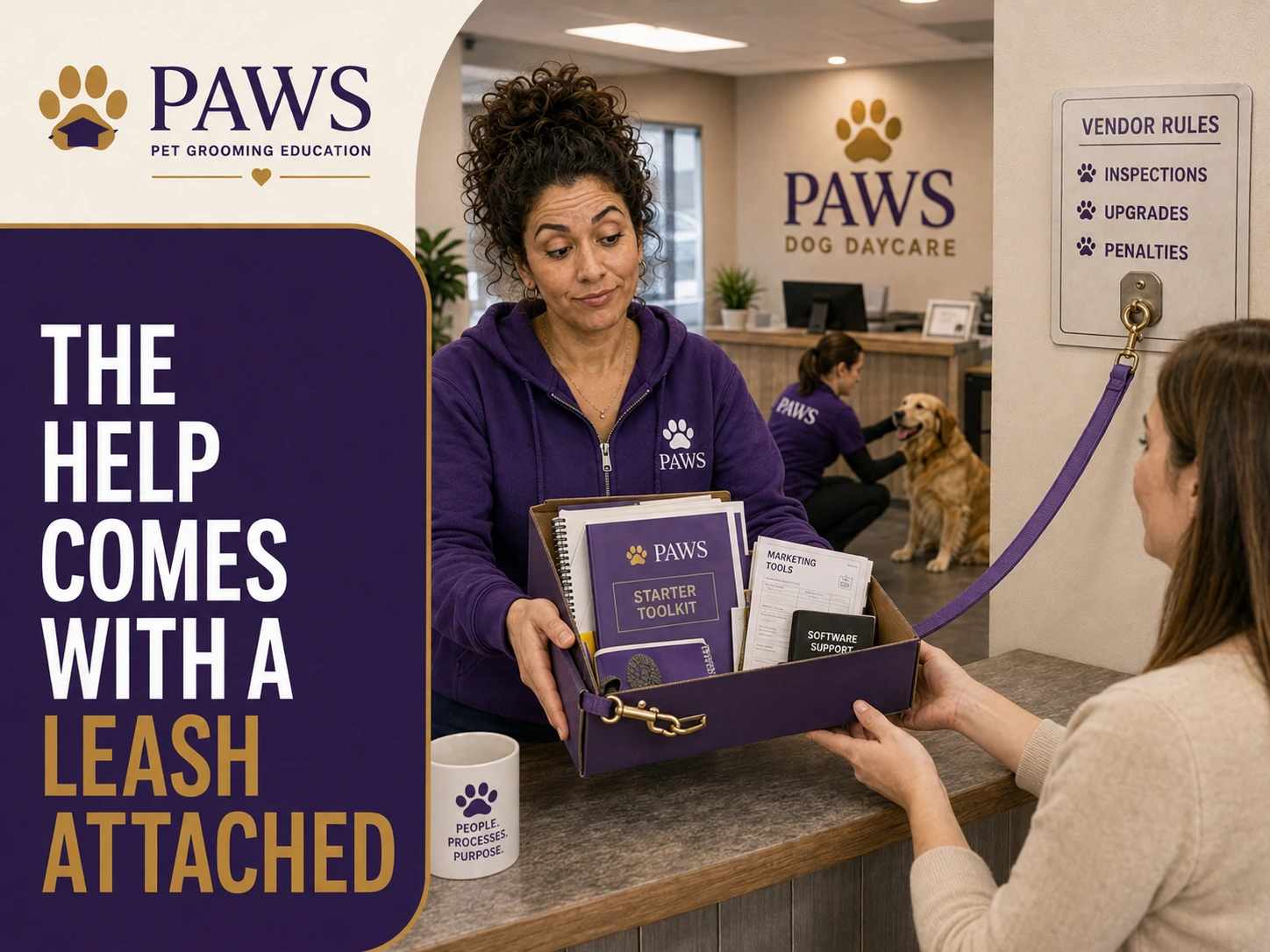
Franchise control is not automatically bad. But buyers need to know exactly where the leash is tied before they sign.
A good dog daycare franchise needs standards. It should care about safety, cleanliness, customer experience, dog handling, branding, signage, software, training, and operating consistency. Nobody should buy into a franchise system and then be shocked that the franchisor has rules.
The problem is not that rules exist. The problem is when the rules become expensive, vague, one-sided, changeable, slow, or more useful to corporate control than to the person paying rent, payroll, insurance, utilities, debt, and local marketing.
Approved vendors may protect quality. They may also block cheaper or better local options. Remodel standards may protect the brand. They may also create surprise spending. Software rules may improve reporting. They may also control customer data. Marketing approval may prevent bad ads. It may also slow down local hustle.
This page is about that line: when franchise control helps the business, when it protects the system, and when it becomes a leash with invoices attached.
⚠️
Operator warning: franchise control is usually sold as consistency.
Sometimes that is true. Sometimes “consistency” means safer playrooms, cleaner facilities, better customer experience, and stronger brand standards. Other times it means you need permission to buy, change, advertise, remodel, improve, rebrand, switch software, add services, or solve a local problem in a way that makes sense.
🔒
What Franchise Control Actually Means
The franchise system does not just hand you help. It also keeps authority over parts of the business.
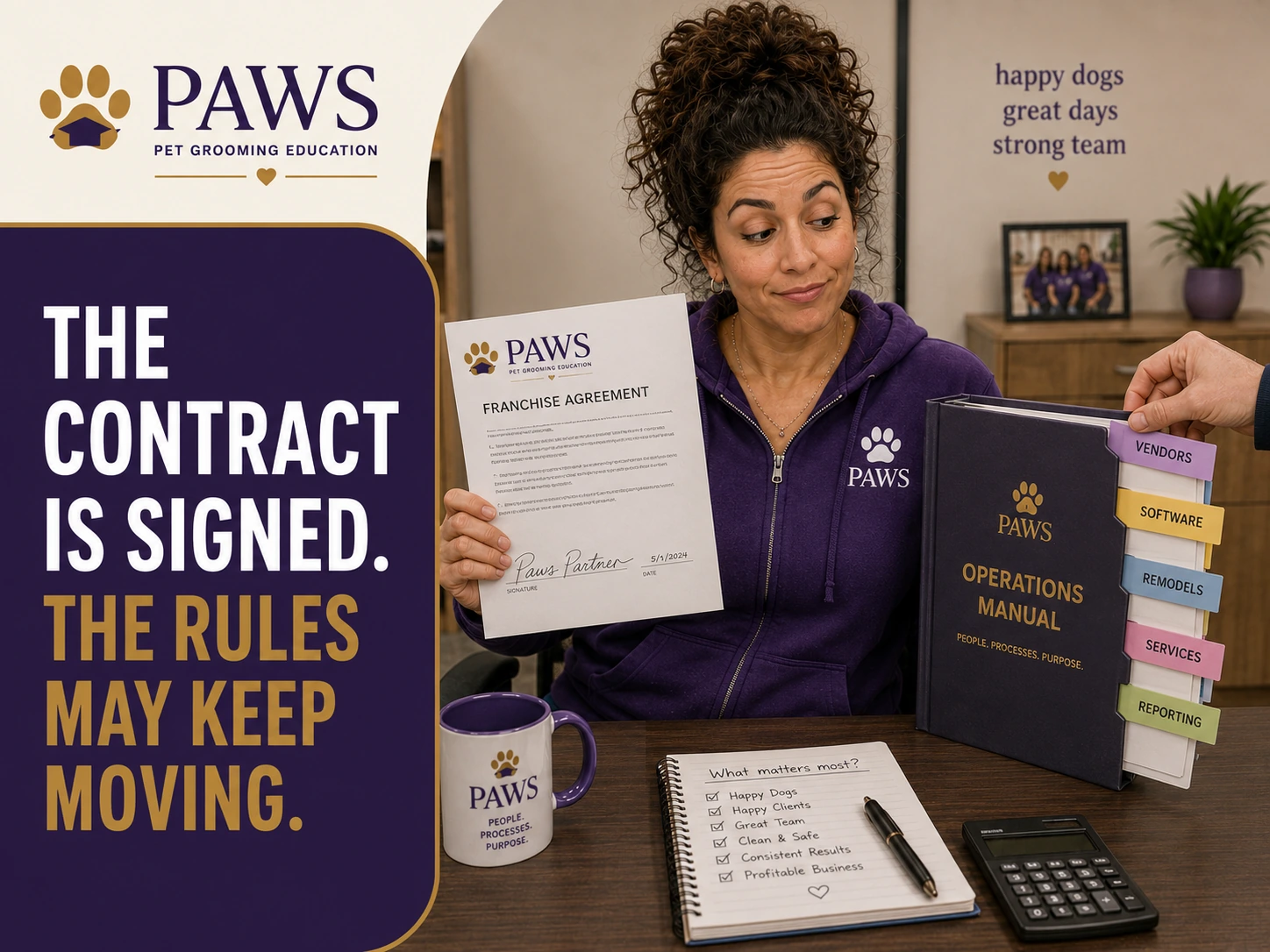
When you buy a dog daycare franchise, you are not buying total freedom. You are buying the right to operate under someone else’s brand and system. That means the franchisor will usually control or influence how the business looks, operates, markets, reports, buys, trains, remodels, upgrades, and presents itself to customers.
Some of that control is reasonable. A franchisor should not let one sloppy location damage the brand for everyone. If one owner runs dirty playrooms, ignores dog safety, uses cheap signage, sells random services, mishandles customers, or creates a bad local reputation, the system has a reason to care.
But the buyer needs to know where control ends and ownership begins. If you are signing the lease, guaranteeing the debt, paying the build-out, hiring the staff, buying the equipment, paying the royalty, and taking the local risk, you need to know what decisions are actually yours.
Control should be inventoried by decision, cost, timing, and remedy. A buyer needs to know not only who approves a choice, but also how long approval takes, what evidence is required, who pays for delay, and what happens when corporate and the local operator disagree.
The most important authority is often future authority. A current rule may seem reasonable while the agreement still permits later changes to vendors, software, services, reporting, design, inspections, or required spending.
📌
The control question
If I am paying for the building, staff, equipment, local marketing, and operating risk, which decisions can I make without asking permission?
🧮
The Real Control Audit: What Am I Giving Up?
The question is not just what help you receive. The question is what decision rights you give away in return.
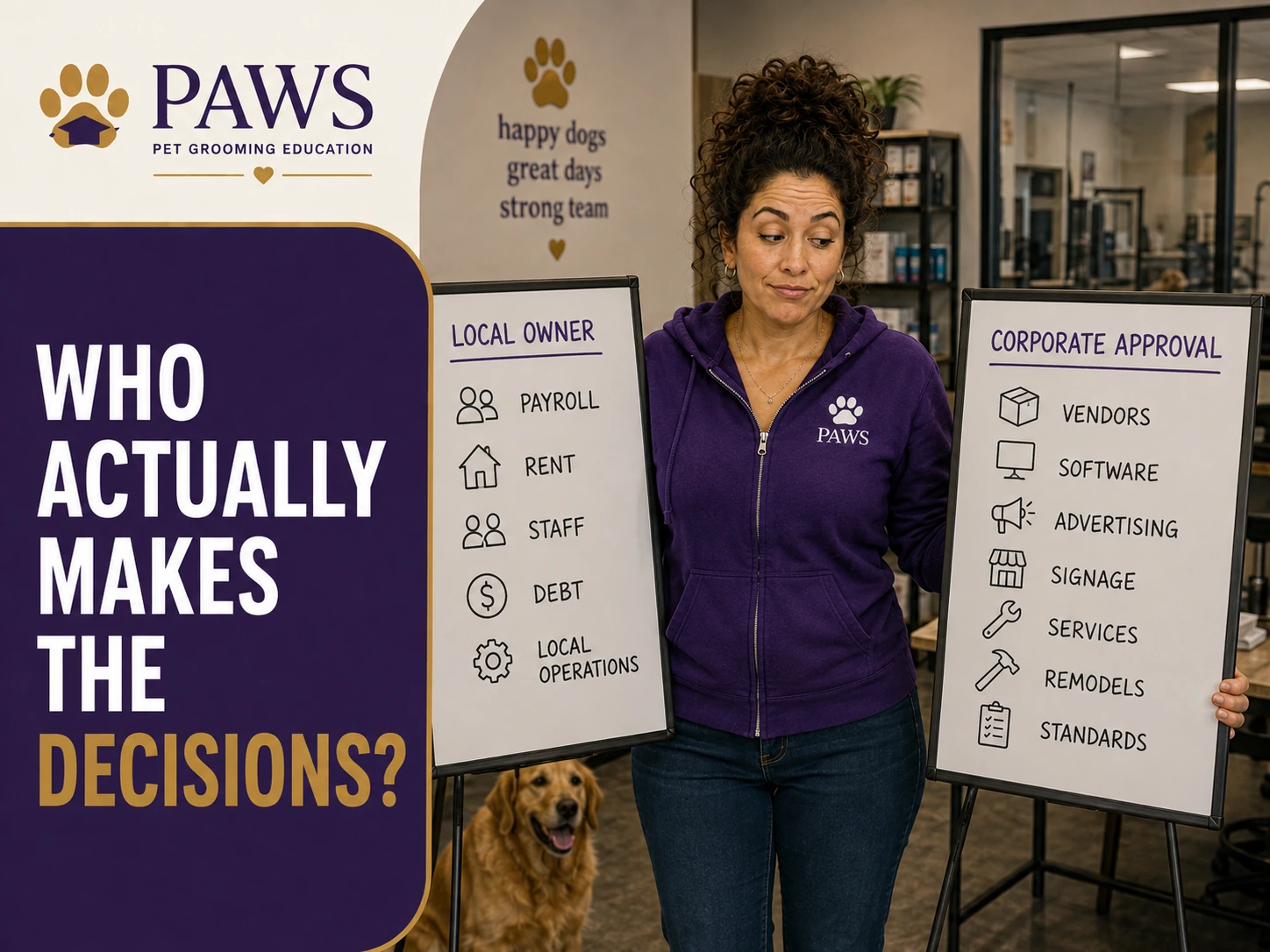
A franchise is a trade. You may receive a brand, system, training, procedures, vendor guidance, software, support, marketing materials, and a more organized start. In exchange, you may give up control over parts of the business you would otherwise own outright as an independent operator.
That does not automatically make the franchise bad. Some buyers want the guardrails. Some systems are genuinely useful. Some standards protect dogs, customers, staff, and the brand.
But before signing, the buyer needs to make a control inventory. What decisions are mine? What decisions are theirs? What decisions require approval? What can they change later? What costs can they force later? What happens if I disagree? What happens if I want to sell, renew, rebrand, or leave?
That is the real control question. You are not only buying help. You are accepting a long-term rule structure. Make sure the help is worth the control.
Put every material decision into one of four columns: local decision, corporate decision, joint approval, or future discretionary authority. That prevents scattered contract provisions from looking like unrelated details.
Then price the lost flexibility. Slow approval, blocked vendors, delayed repairs, rejected promotions, restricted services, and mandatory upgrades can create operating costs even when no separate fee appears on an invoice.
| Control Question | What You Need to Know | Why It Matters |
|---|---|---|
| What can I decide alone? | Which local decisions do not require approval? | Shows whether you are an owner with room to operate or mostly an implementer of corporate decisions. |
| What requires approval? | Vendors, ads, pricing, services, software, signage, remodels, staff roles, website content, and promotions. | Approval can protect the brand, but it can also slow local action and block common-sense decisions. |
| What can they change later? | Manual rules, standards, software, vendors, signage, uniforms, required services, reporting, inspections, and remodel requirements. | The most dangerous control is often future control you agreed to before knowing what it would cost. |
| Who pays when they change it? | Whether required updates are capped, grandfathered, delayed, financed, optional, or entirely your bill. | A corporate decision can become your invoice. |
| What happens if I disagree? | Cure periods, appeal rights, default language, fines, retraining, legal fees, inspection costs, renewal impact, and termination risk. | Rules matter most when the contract explains what happens if you push back. |
| What happens when I want out? | Transfer approval, right of first refusal, purchase options, renewal conditions, de-identification, non-competes, customer data, phone numbers, and websites. | Control can affect resale value, exit options, and whether you can keep operating in pet care. |
🗺️
Dog Daycare Franchise Control Map
Control hides in more places than the logo.
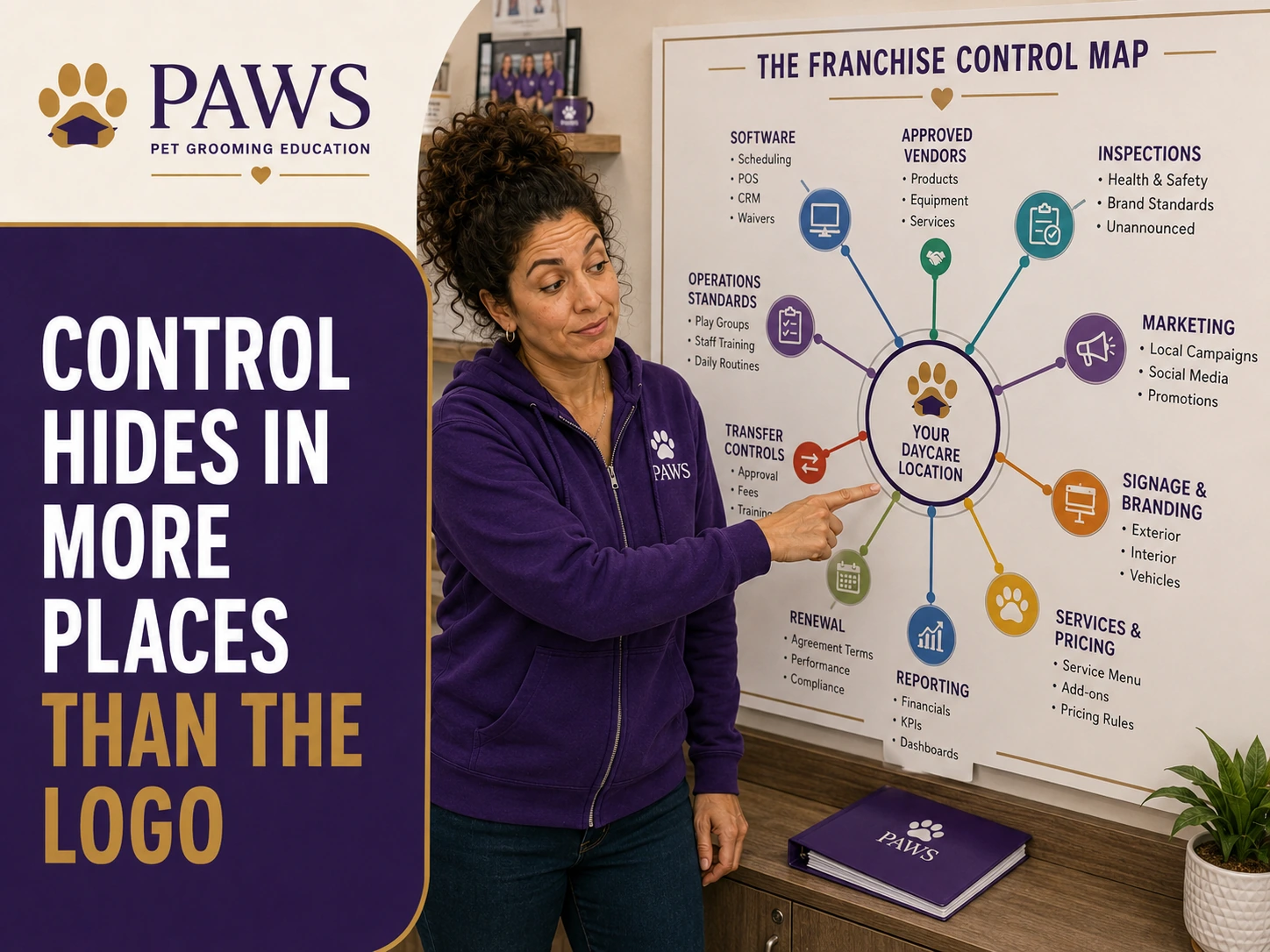
Use the map as a cross-reference worksheet. For every control area, identify the FDD item, agreement section, manual provision, approval process, cost exposure, appeal right, and franchisees who can explain how the rule works in practice.
Control areas interact. Software can affect marketing, customer data, reporting, pricing, and exit, while vendor rules can affect construction, repairs, cleaning, safety, and profitability.
| Control Area | Why It May Be Legitimate | Where It Can Bite You |
|---|---|---|
| Approved Vendors | Protects quality, safety, consistency, and brand standards. | May block cheaper or better local options and may benefit the franchisor or affiliates. |
| Construction and Build-Out | Helps create a consistent, safe, durable facility. | Can require expensive flooring, drainage, signage, fencing, lobby design, grooming equipment, or remodel work. |
| Software | Standardizes reservations, billing, vaccinations, reports, packages, and customer communication. | Can create fees, data-control issues, reporting access, required upgrades, and exit problems. |
| Signage and Branding | Keeps the brand recognizable and professional. | Brand refreshes, required signage, color changes, uniforms, or remodels can create surprise costs. |
| Services Offered | Keeps the system consistent and avoids off-brand services. | May block grooming, training, cat boarding, transportation, retail, enrichment, or local add-ons. |
| Marketing Approval | Prevents bad ads, false claims, ugly graphics, and brand damage. | Can slow local marketing, reject practical campaigns, and leave the owner paying for ads that corporate controls. |
| Inspections | Can improve safety, cleanliness, compliance, and customer experience. | Can become enforcement-heavy, expensive, subjective, or used to create default pressure. |
| Operations Manual | Keeps procedures consistent and updated. | Can become a moving rulebook that adds future obligations after you sign. |
| Reporting Requirements | Helps track sales, performance, compliance, and system health. | Can increase admin burden and give corporate deep visibility into local customer and financial data. |
| Renewal and Transfer Rules | Protects brand continuity and buyer quality. | Can restrict your exit, force upgrades, require releases, delay sale approval, or reduce resale value. |
⚖️
What the Franchisor Will Say — and What You Should Ask Back
Good franchisors can justify control. Weak franchisors hide behind it.
| Franchisor Says | Fair Point | Buyer Pushback |
|---|---|---|
| “We need approved vendors for consistency.” | Sometimes true. Bad materials, bad gates, bad software, and bad cleaning products can hurt the business. | Are prices competitive? Can equal or better local vendors be approved? Do you or affiliates make money from required purchases? |
| “We need inspections to protect the brand.” | Fair. Dirty or unsafe locations hurt everyone. | Are inspections clear, consistent, safety-focused, and appealable, or can they become subjective default pressure? |
| “We need marketing approval.” | Fair. Bad ads and false claims can damage the system. | How fast is approval? Can I move quickly in my local market? Do you block common-sense local promotions? |
| “We need required software.” | Fair. Software can standardize records, billing, vaccination tracking, reports, and customer communication. | Who controls the data, booking links, phone numbers, websites, reports, and customer relationship if I leave? |
| “We update standards to improve the system.” | Good systems should improve. | Who pays? Are there caps? How much notice? Are franchisees consulted? Can expensive changes be challenged? |
| “We restrict services to protect the brand.” | Fair if services create safety, quality, or brand risks. | Can I add grooming, training, cat boarding, transportation, enrichment, retail, or local services if customers want them? |
| “This is standard franchise language.” | It may be common. | Common does not mean harmless. What does it allow you to do, what does it cost me, and what happens if I disagree? |
🛒
Approved Vendors: Quality Control or Toll Booth?
“Approved vendor” sounds harmless until you are forced to buy something overpriced, delayed, or worse than your local option.
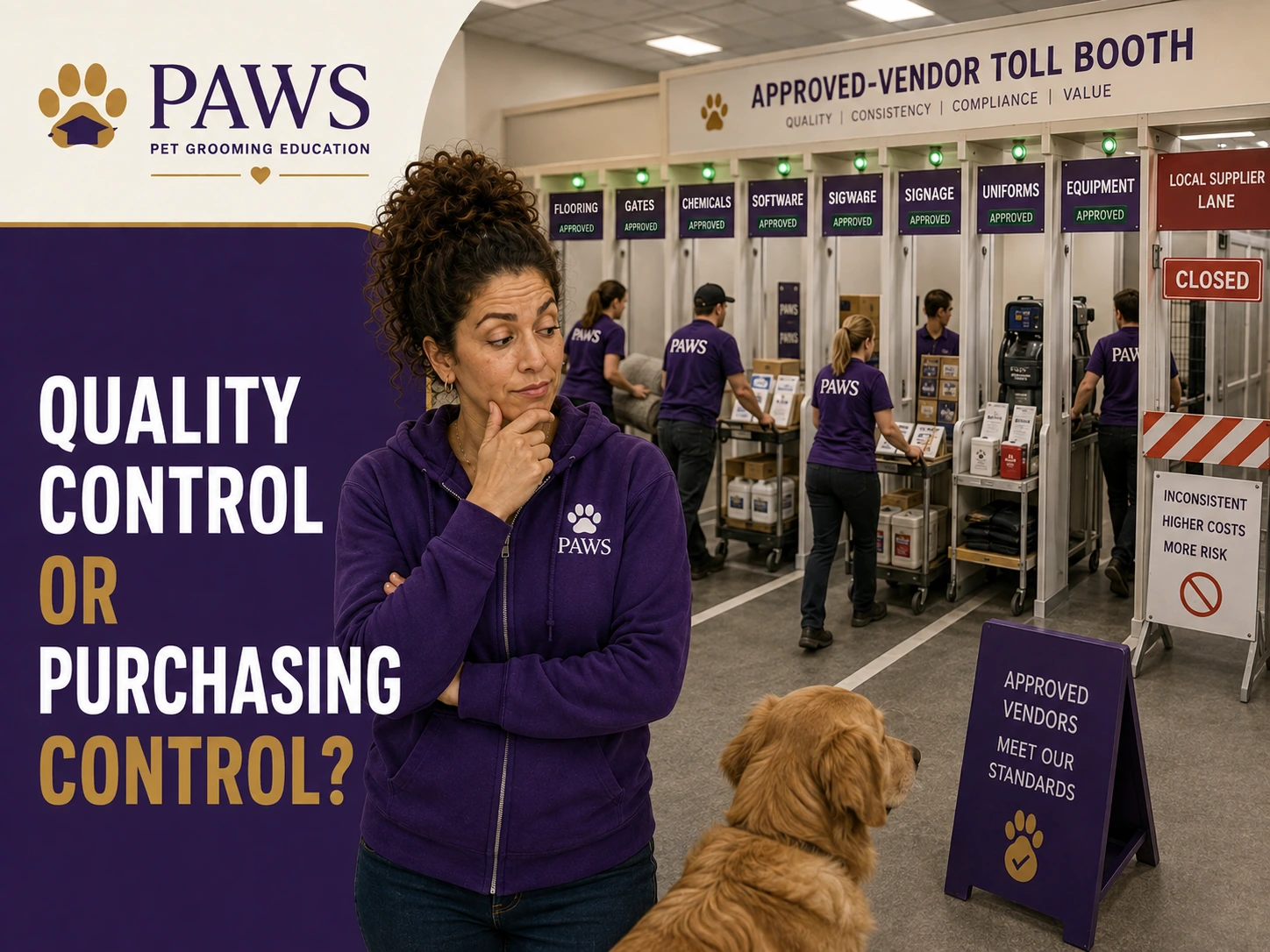
Approved vendors are not automatically bad. Dog daycare is hard on materials and equipment. Cheap flooring can fail. Bad gates can become safety problems. Wrong cleaning products can create odor, disease-control, or surface-damage issues. Weak software can wreck billing and records. Bad signage can make a location look cheap.
A good franchisor may have learned which products work and which products fail. That has value. If they have already tested flooring, disinfectants, gates, kennels, play equipment, cameras, software, uniforms, signs, grooming equipment, and cleaning systems, that may save you from expensive trial and error.
The problem is when approved vendor rules become a one-way purchasing lane. You may find a better local supplier, a cheaper equal product, a faster contractor, a stronger gate, a better floor, a more practical grooming dryer, or a cleaning product that works better in your building — and still be told no.
The buyer needs to know whether approved vendors are about quality, safety, and performance, or whether they also create revenue streams, rebates, markups, commissions, referral fees, private-label margins, or affiliate income for someone else.
The alternate-vendor process should be usable, not merely theoretical. Ask what specifications apply, what documentation is required, who evaluates the request, how long it takes, whether fees apply, and how many alternatives have actually been approved.
Compare total delivered value rather than unit price alone. Freight, installation, warranties, repair response, replacement time, local service, product compatibility, downtime, and required quantities all matter.
⚠️
Follow the money.
Ask whether the franchisor, affiliate, owner, officer, preferred supplier, or related company receives any financial benefit from required purchases. If the answer is vague, keep asking.
❓
Approved Vendor Questions to Ask Before Signing
Do not wait until after the lease is signed to learn you cannot shop price.
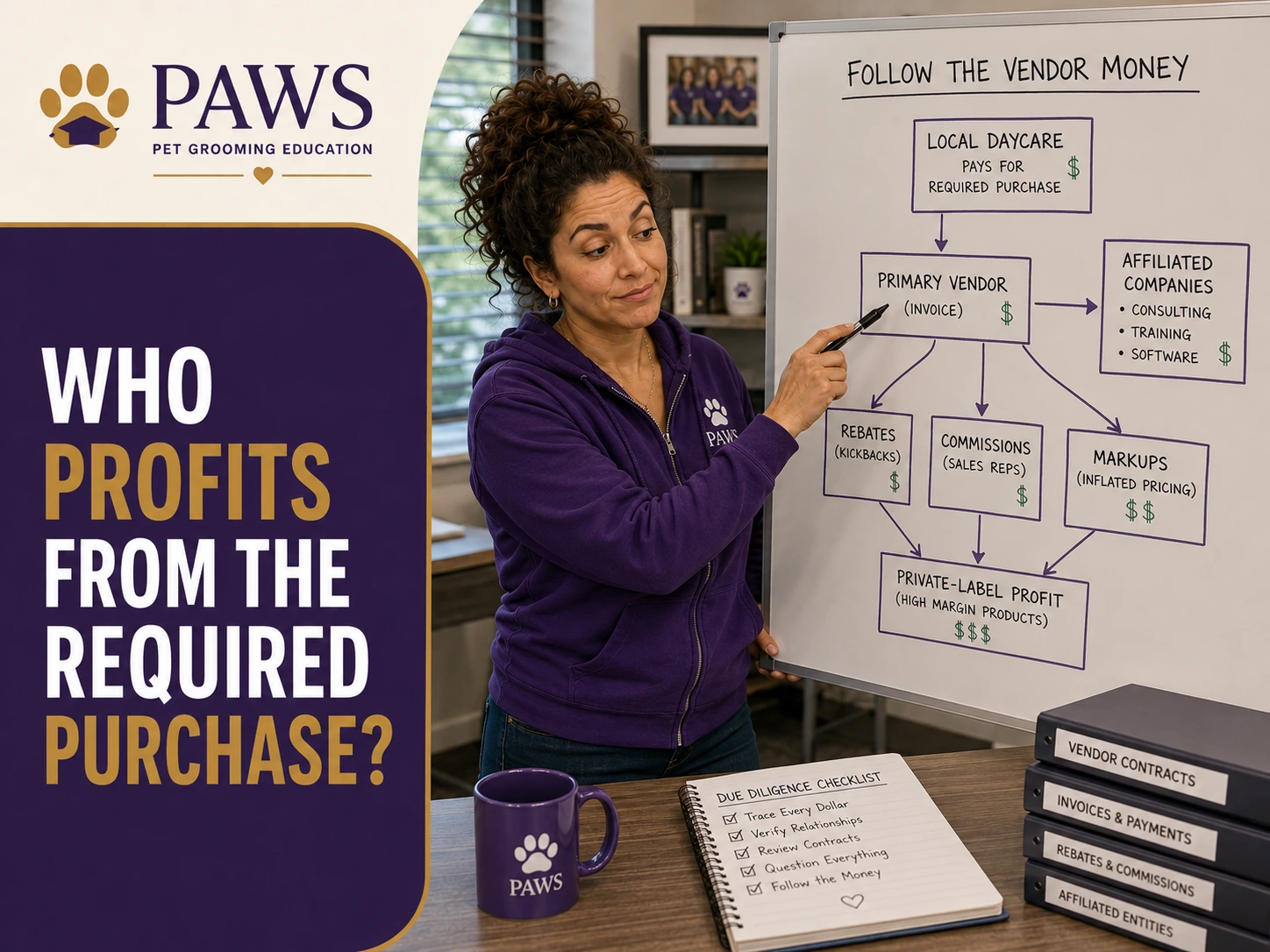
Request a complete list of required and approved purchasing relationships before signing. Mark which parties are affiliates, which arrangements produce revenue or benefits, and which categories allow competitive alternatives.
Ask current franchisees for recent invoices. Actual pricing, freight, backorders, warranty response, and replacement experience provide stronger evidence than a general statement that vendors are negotiated for the system.
- What products and services must be purchased from approved, designated, or required vendors?
- Are there required suppliers for flooring, turf, gates, kennels, suites, cleaning products, uniforms, signage, cameras, software, grooming equipment, retail products, food, insurance, construction materials, or marketing?
- Can I request approval of an alternate vendor?
- What standards must an alternate vendor meet?
- How long does vendor approval take?
- Can approval be denied in the franchisor’s discretion?
- Are required vendor prices competitive with local options?
- Does the franchisor or affiliate receive rebates, commissions, markups, referral fees, private-label profit, or other benefits?
- What happens if a required vendor is delayed, backordered, unavailable, overpriced, or poor quality?
- Can vendor rules change after opening?
- What required purchases have changed in the last three years?
- Have current franchisees found better local alternatives that corporate rejected?
🐕
Dog Daycare Vendor Risk Is Not Theoretical
This business beats up materials, equipment, software, and supplies every single day.
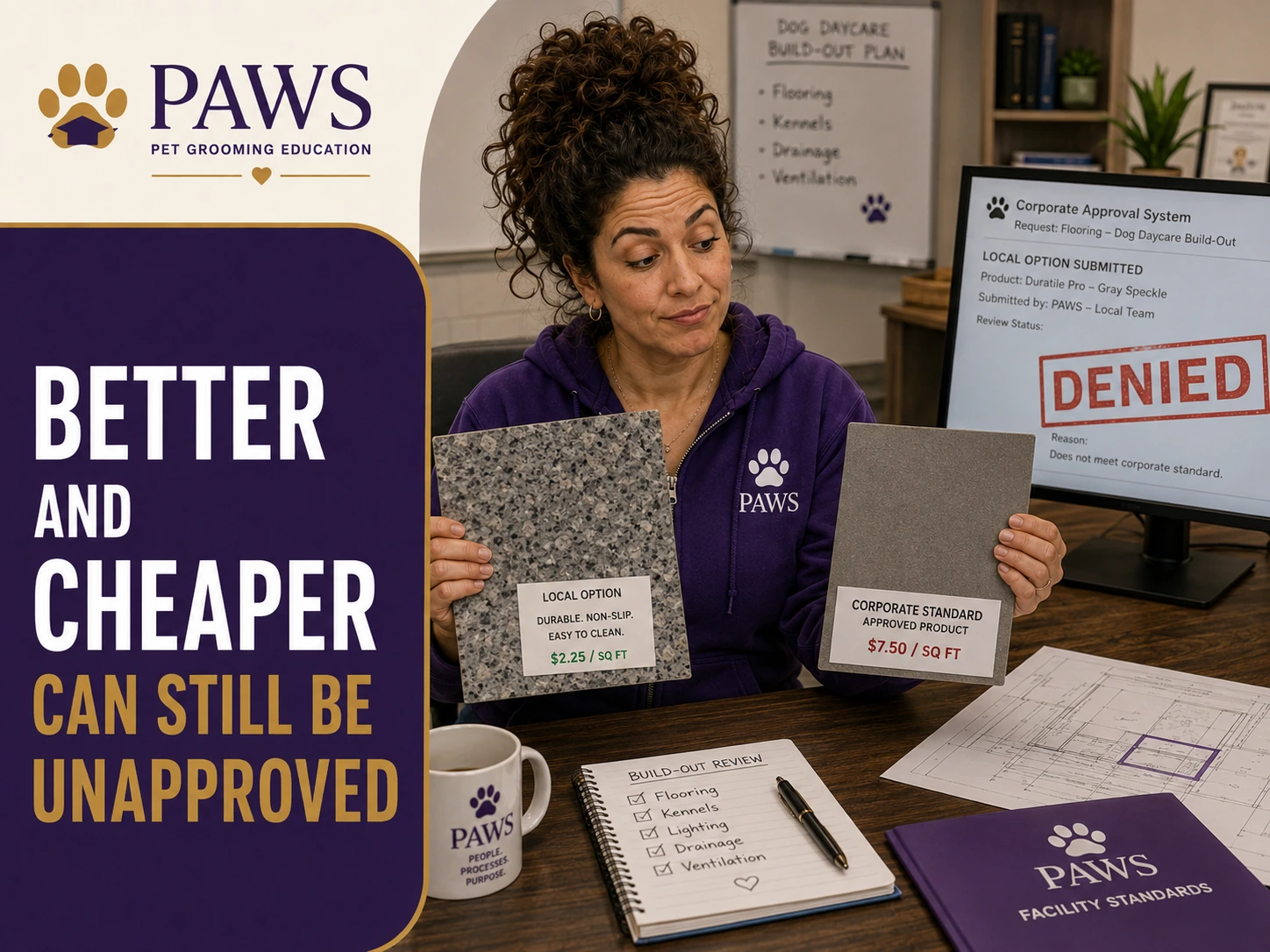
Dog daycare is not a desk business. Dogs scratch floors, chew edges, hit gates, pee on surfaces, slam doors, drag leashes, destroy beds, rub against walls, clog drains, shed into equipment, and turn “durable” products into expensive jokes.
That is why vendor choice matters. Flooring must survive urine, cleaning chemicals, claws, traction needs, odor, water, and staff cleaning habits. Gates and fencing must hold dogs safely. Cleaning products must work without destroying surfaces or creating unsafe exposure. Grooming equipment must match the actual service volume. Software must handle real customer flow, not just look good in a demo.
If the franchise system has truly tested vendors in real facilities, that can be useful. If vendor control is mostly about appearance, markup, or corporate preference, the franchisee may be stuck paying for products that do not match the local building, volume, climate, service mix, or budget.
Test products against the actual building and operating conditions. Climate, water quality, cleaning chemicals, dog volume, floor slope, drain placement, grooming volume, outdoor exposure, and staff routines can make a systemwide product a poor local fit.
Document failures and near failures. Flooring delamination, gate movement, surface damage, odor retention, software disruption, equipment downtime, or cleaning-product incompatibility should trigger review of the approved specification.
🏢
Site and Lease Control Can Shape the Whole Business
You may sign the lease, but the franchisor may still control whether the site, layout, signs, and build-out are acceptable.
Dog daycare is brutally location-sensitive. Parking, traffic, zoning, noise, outdoor space, drains, HVAC, flooring, odor, plumbing, fire code, landlord restrictions, neighbors, signage, and build-out condition can make or break the business.
A franchisor may require site approval, lease approval, layout approval, signage approval, build-out approval, contractor approval, design approval, and opening approval. Some of that can protect you from bad decisions. A good franchisor should not let a new buyer sign a terrible dog daycare lease if the problems are obvious.
But the buyer needs to know whether site control actually protects the franchisee or mostly protects the franchisor. If you are the one personally guaranteeing the lease, paying rent, paying contractors, fighting zoning, and living with the building every day, you need clear answers before the lease is signed.
Site approval should not be confused with a guarantee. The buyer still needs independent zoning, lease, construction, environmental, insurance, code, and financial review because the local owner bears the consequences when a location does not work.
Track every approval dependency before committing to rent. Delays involving layout, signs, contractors, materials, software, inspection, or opening authorization can create months of occupancy cost without operating revenue.
- Does the franchisor approve the site before I sign the lease?
- Does the franchisor review the lease or only the location?
- What happens if the franchisor approves a site that later has zoning, permitting, HVAC, drainage, noise, parking, or landlord problems?
- Can the franchisor require lease language, lease addenda, assignment rights, step-in rights, or landlord notices?
- Can the franchisor control layout, signage, contractor choice, materials, outdoor areas, grooming rooms, boarding suites, or lobby design?
- Who pays if required design standards do not fit the building well?
- Can opening be delayed because corporate has not approved build-out, signage, software, or inspection items?
🔧
Forced Upgrades and Brand Refreshes
A required update may sound small at corporate. It may not feel small when the invoice lands on your desk.
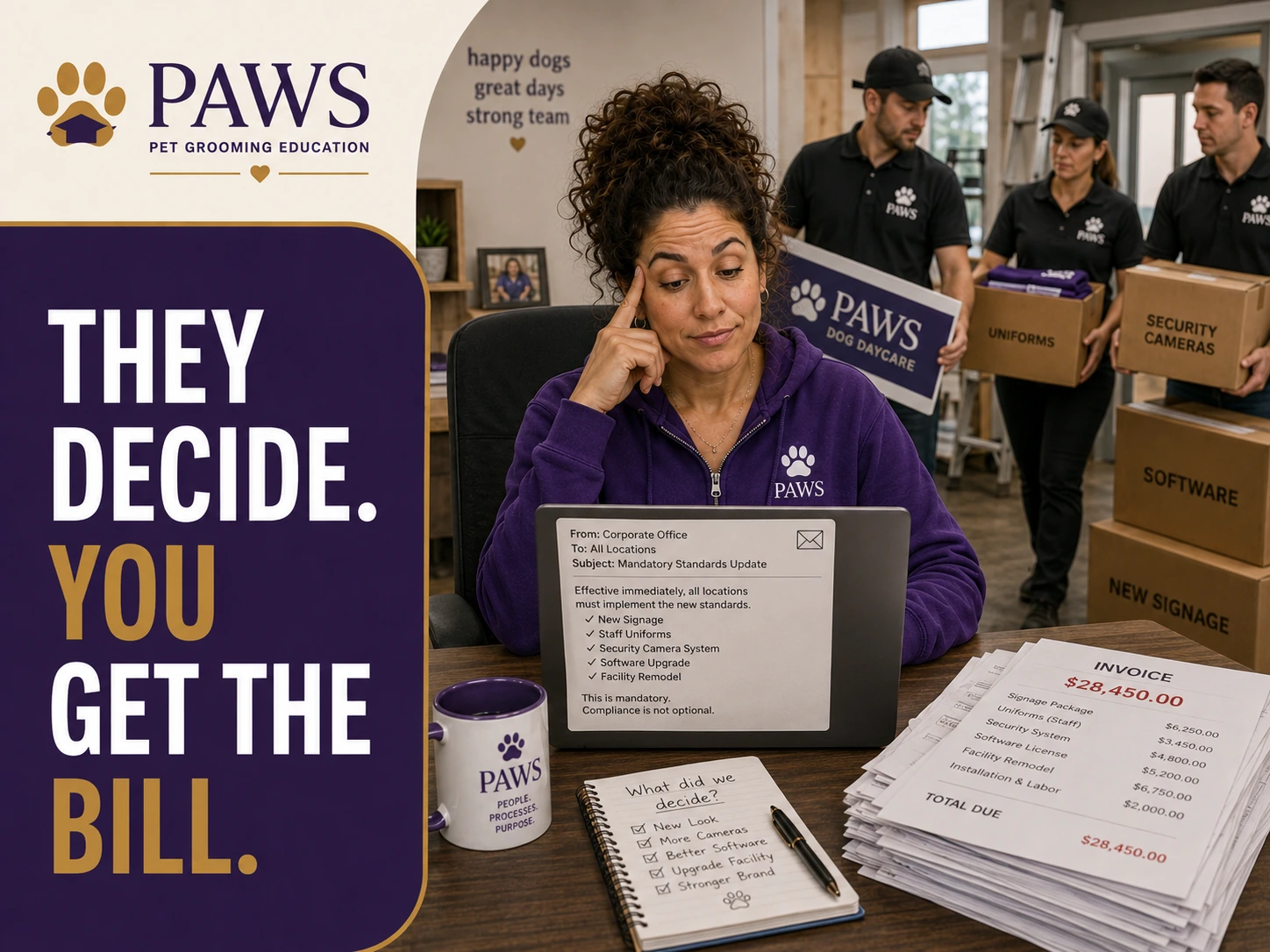
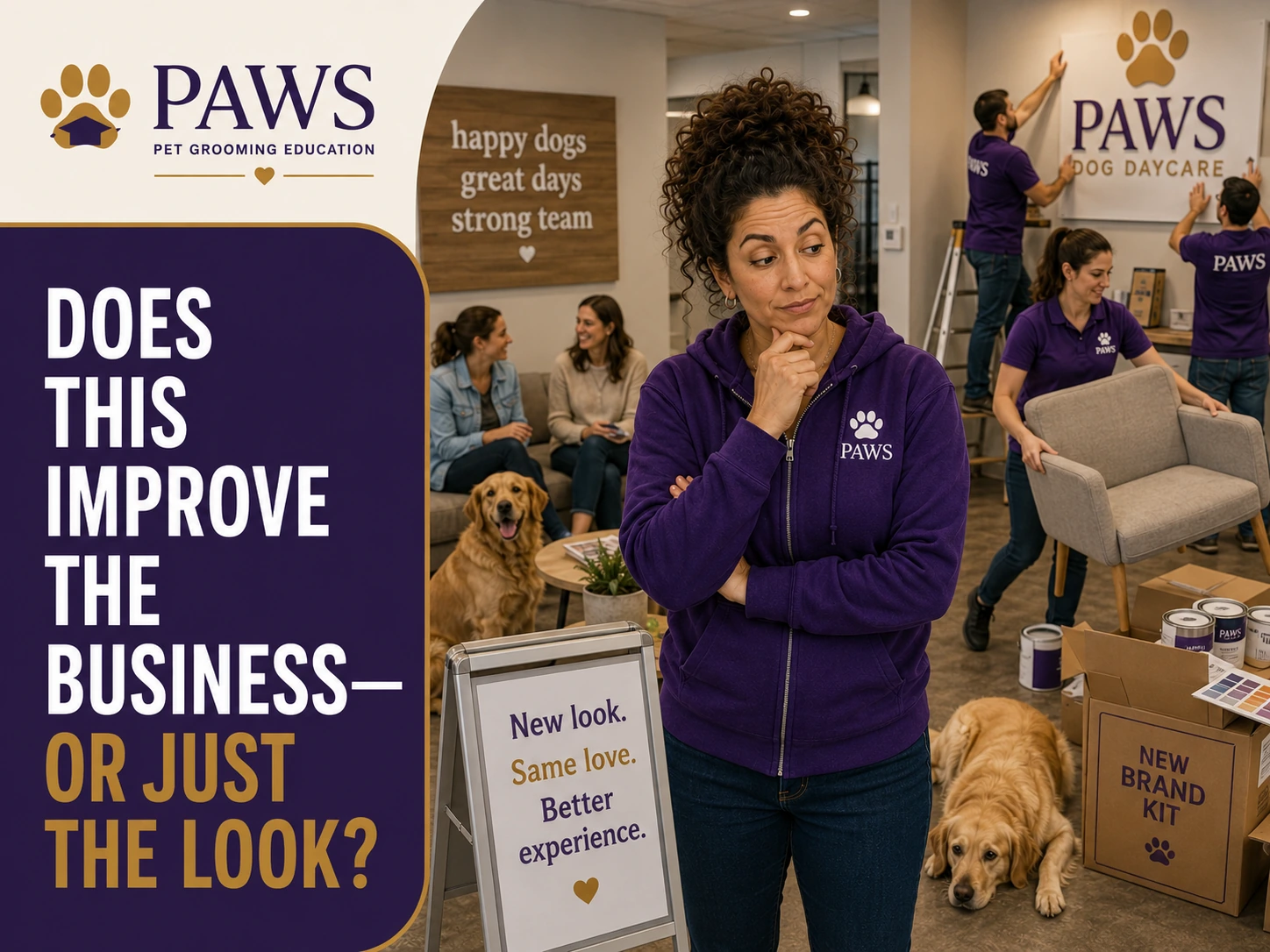
Franchise systems change. Logos change. Software changes. Signs change. Décor changes. Website systems change. Equipment standards change. Cleaning products change. Uniforms change. Cameras change. Room standards change. Grooming standards change. Customer-experience rules change.
Some upgrades are legitimate. A system should improve. If a better cleaning protocol reduces disease risk, if safer gates prevent escapes, if better software reduces billing errors, or if improved brand standards help customer trust, that can be reasonable.
But forced upgrades can also become expensive surprises. A buyer needs to know whether the franchisor can require remodels, new signs, new uniforms, new furniture, new software, new hardware, new cameras, new equipment, new flooring, new turf, new lobby design, new grooming fixtures, or new service standards after the location is already open.
The question is not whether upgrades can happen. The question is who decides, who pays, how much notice you get, whether there are cost limits, whether older locations are grandfathered, and whether the change actually helps local operators.
Ask for a history of required changes, including the reason, cost range, notice period, implementation time, and whether operators believed the change improved safety, revenue, efficiency, or customer trust.
Separate urgent operational improvements from cosmetic refreshes. A gate correction or disease-control update may justify quick action; a lobby redesign, furniture package, logo change, or decorative standard may deserve longer notice or spending limits.
- Can the franchisor require remodels or brand refreshes during the term?
- Can upgrades be required at renewal?
- Are there spending caps on required changes?
- How much notice is required before upgrades become mandatory?
- Can older locations be grandfathered?
- Can required upgrades include flooring, signage, paint, furniture, software, hardware, cameras, grooming equipment, kennels, suites, gates, turf, or lobby changes?
- What required upgrades have franchisees paid for in the last three years?
- What was the most expensive forced upgrade current franchisees had to complete?
- Can failure to complete upgrades trigger default?
🔍
Inspections: Safety Help or Enforcement Tool?
A good inspection improves the business. A bad inspection just looks for ways to tighten the leash.
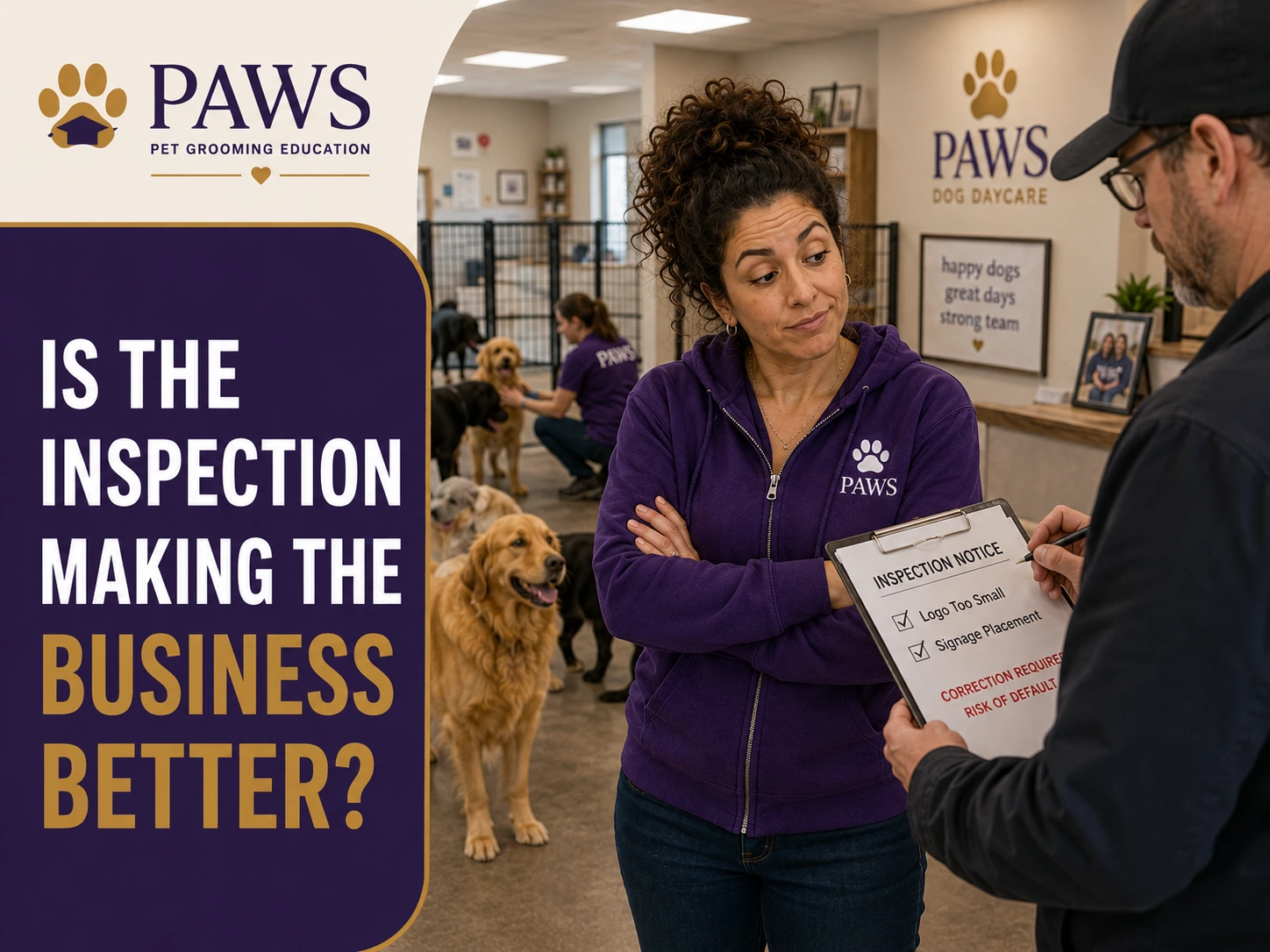
Franchise inspections can be useful. A fresh set of eyes may catch cleaning problems, gate risks, poor signage, staff drift, sloppy customer handling, weak documentation, unsafe dog movement, messy boarding procedures, or brand problems that the local owner has stopped seeing.
But inspections can also become enforcement tools. If standards are vague, inspectors are inconsistent, deadlines are unrealistic, or correction requirements are expensive, inspections may feel less like support and more like a default factory.
Dog daycare inspections should not just care whether the lobby looks pretty. They should care whether dogs are safe, playgroups are managed, rooms are clean, odors are controlled, gates work, staff are trained, incidents are documented, boarding routines are followed, grooming areas are safe, and customers are being handled professionally.
The inspection form should show the priority of each finding. Immediate dog-safety risks, health issues, and failed equipment should not be treated as equivalent to a minor sign, paint, uniform, or logo-placement issue.
A fair process includes written standards, evidence, reasonable correction time, a reinspection procedure, consistent scoring, and a way to challenge factual errors.
📌
The inspection test
Ask current franchisees whether inspections make them better operators or mostly create stress, correction lists, and surprise spending.
- How often can inspections occur?
- Are inspections scheduled, surprise, remote, software-based, camera-based, or mystery-shopper based?
- Can the franchisor access cameras, software reports, customer records, sales data, or reviews?
- Are inspection standards written clearly?
- Who conducts inspections?
- Is there an appeal process?
- How much time do franchisees get to correct issues?
- Can inspection failures create default, fines, mandatory retraining, or termination risk?
- Do inspections focus on safety and operations, or mostly branding and appearance?
📣
Marketing Approval Can Slow Local Hustle
Brand protection is fair. But local marketing cannot wait three weeks for someone at corporate to approve common sense.
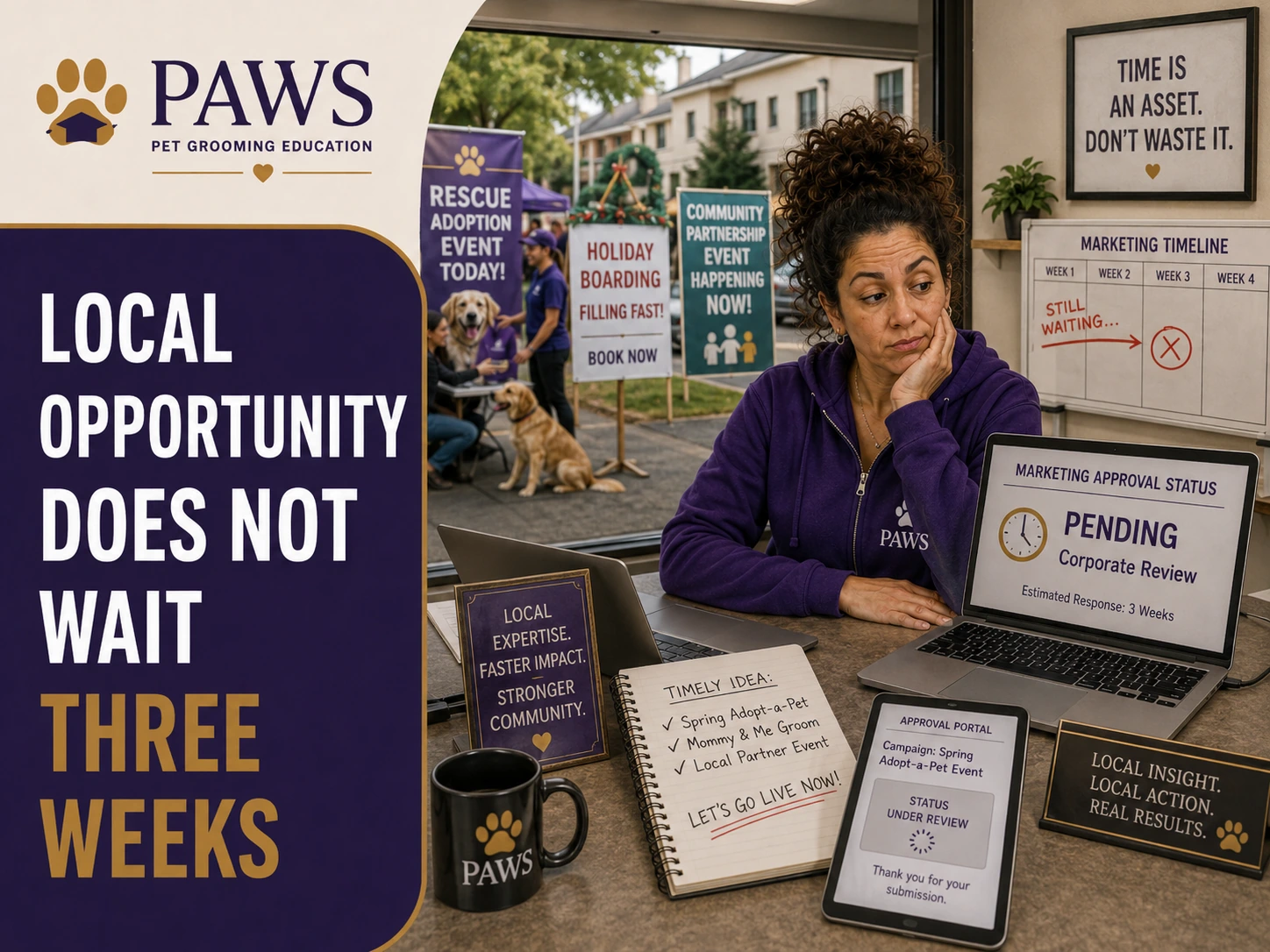
Franchisors often require approval for ads, flyers, emails, social posts, local promotions, signs, sponsorships, coupons, website language, videos, graphics, and claims. That can be reasonable. Bad marketing can damage the brand and create legal or customer-expectation problems.
But local dog daycare marketing is often fast, practical, and relationship-driven. Vet offices, apartment complexes, rescue events, groomer relationships, local Facebook groups, community sponsorships, Google reviews, seasonal boarding pushes, daycare package promotions, and neighborhood events do not always fit a slow corporate approval process.
If the franchisor controls marketing but the local owner still pays for local leads, the buyer needs to know how much freedom exists. Can you move fast? Can you run local promotions? Can you adjust offers? Can you fix bad Google Business Profile issues? Can you create local content? Can you respond to competitors? Or are you waiting for approval while the independent daycare down the road is already running the ad?
Create an approval-service standard before signing. Define response time, emergency or seasonal review, pre-approved templates, who has final authority, and what happens when corporate silence causes the local opportunity to expire.
Local demand moves faster than annual brand planning. Rescue events, employer partnerships, apartment openings, weather events, holiday boarding, school schedules, competitor changes, and community sponsorships may require action in days rather than weeks.
- What marketing materials require approval?
- How long does approval usually take?
- Are there pre-approved local templates?
- Can I create local SEO content?
- Who controls the website, Google Business Profile, local landing pages, social media pages, review responses, phone tracking, and booking links?
- Can I run local promotions, daycare package offers, boarding specials, grooming promotions, or event sponsorships?
- Can corporate reject ads for broad reasons?
- Does the ad fund help my local market, or am I still buying most of my own leads?
💻
Software Control Is Business Control
The software is not just a tool. It may control reservations, payments, reports, customers, and exit.
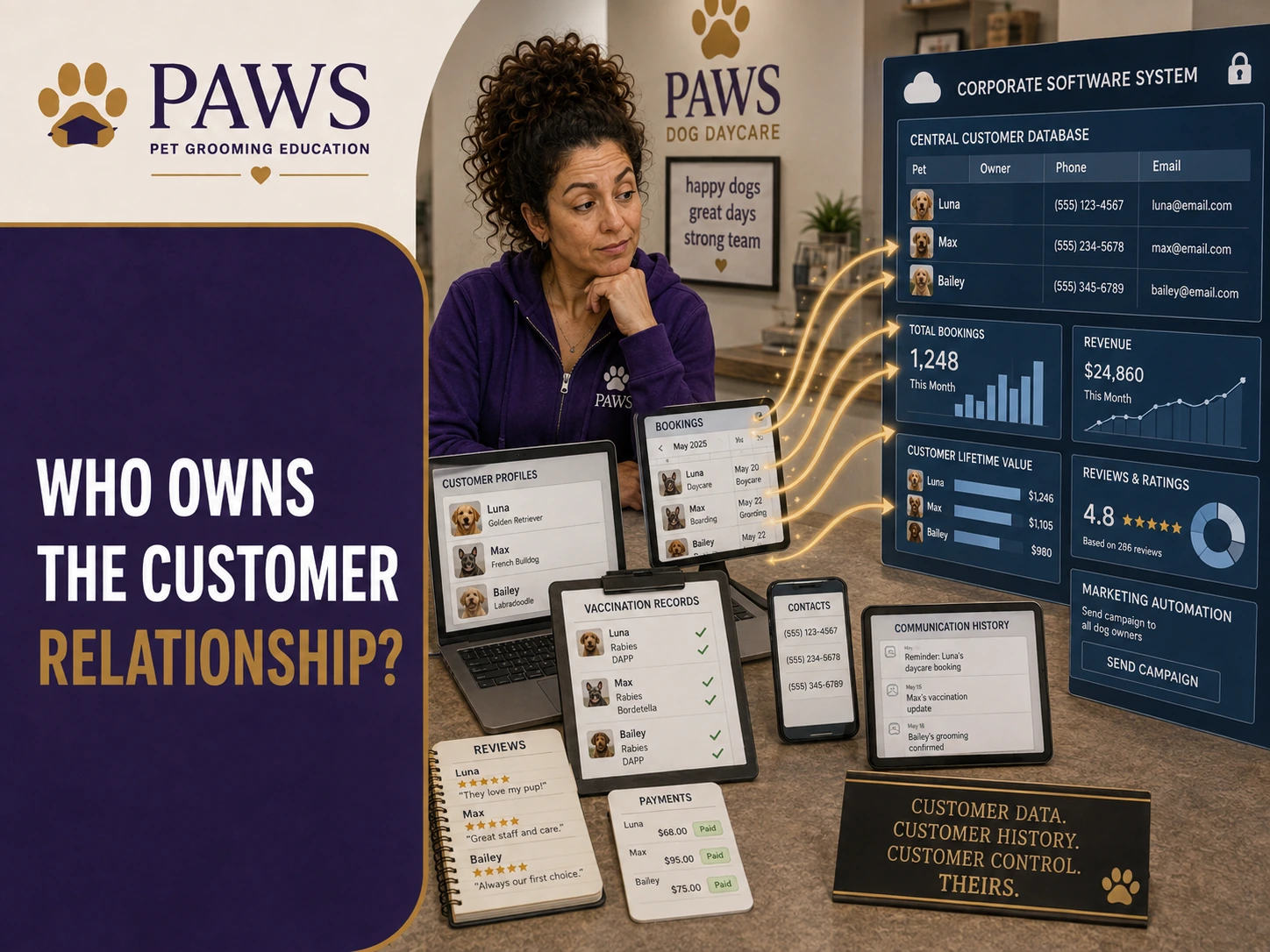
Dog daycare software can be a real advantage. It tracks vaccinations, packages, reservations, boarding stays, grooming appointments, notes, billing, customer messages, capacity, staff workflow, reports, and revenue. Good software makes the business easier to run.
But required software can also become a control point. The franchisor may require a specific system, require upgrades, access reports, monitor sales, control customer communication, control booking pages, control websites, or control customer data.
That matters because customer records are part of the business value. Names, emails, phone numbers, vaccination records, purchase history, boarding habits, grooming notes, daycare packages, and communication history are not minor details. That is the local customer relationship.
Request a complete data-export demonstration. Confirm whether customer, dog, vaccination, reservation, transaction, package, note, grooming, boarding, medication, incident, communication, and review-related information can be retained in a usable form.
Also identify every digital asset and credential: domain names, local pages, phone numbers, text numbers, email accounts, Google Business Profile access, social accounts, ad accounts, analytics, review systems, and booking links.
⚠️
Exit question
If the franchise relationship ends, what happens to the software, customer records, booking links, websites, phone numbers, email lists, review systems, and local pages?
🐾
Service Control Can Limit Local Opportunity
The services you are allowed to sell may matter as much as the services you want to sell.
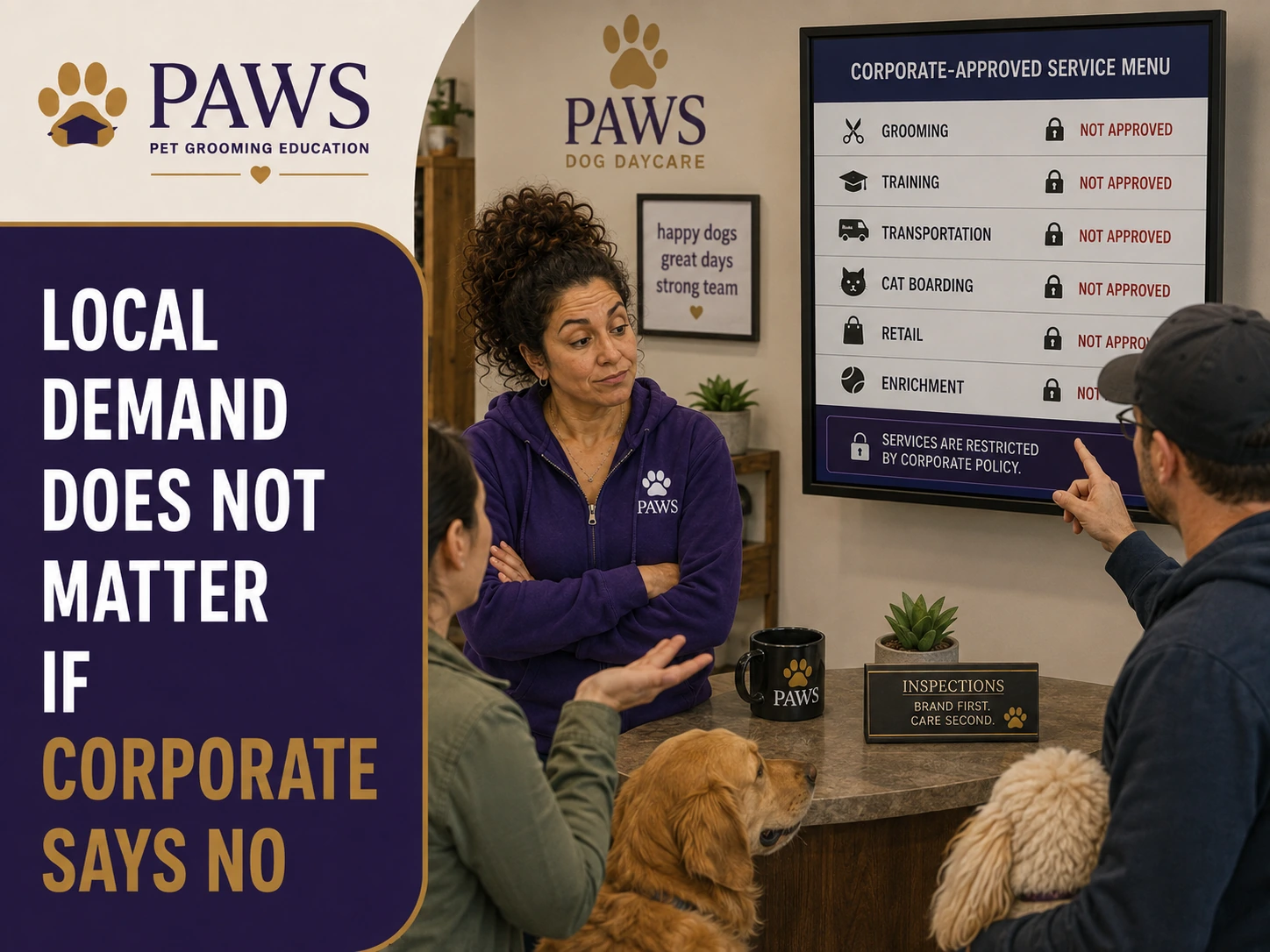
Dog daycare businesses often grow by adding or improving related services. Daycare may lead to boarding. Boarding may lead to baths. Baths may lead to grooming. Grooming may lead to retail. Customers may ask for training, transportation, enrichment, memberships, cat boarding, cat grooming, or special events.
A franchise system may control what services you can sell. That may protect the brand, but it may also stop you from following local demand. If the market wants cat boarding and the system says no, that is not a small issue. If grooming demand is strong but corporate limits how you offer it, that affects revenue.
The buyer should ask whether the franchise gives room to build a local pet-care business or only allows the approved version of one.
Create a local opportunity list before signing. Include services customers already request, services competitors offer, and services the building could support. Then identify which require approval, which are prohibited, and whether corporate can require new services later.
A service restriction has both revenue and strategic cost. It may prevent the business from using spare space, retaining customers, smoothing seasonal demand, employing specialists, or responding when the local market changes.
- What services are required?
- What services are prohibited?
- Can I add grooming, bathing, boarding, training, cat boarding, cat grooming, transportation, memberships, enrichment, or retail?
- Can the franchisor require new services later?
- Can the franchisor remove or restrict services later?
- Who approves pricing, packages, memberships, and promotions?
- Can I test a local service before it becomes systemwide?
🦷
Contract Teeth: What Happens If You Do Not Comply?
Rules matter because the contract tells you what happens when you break them.
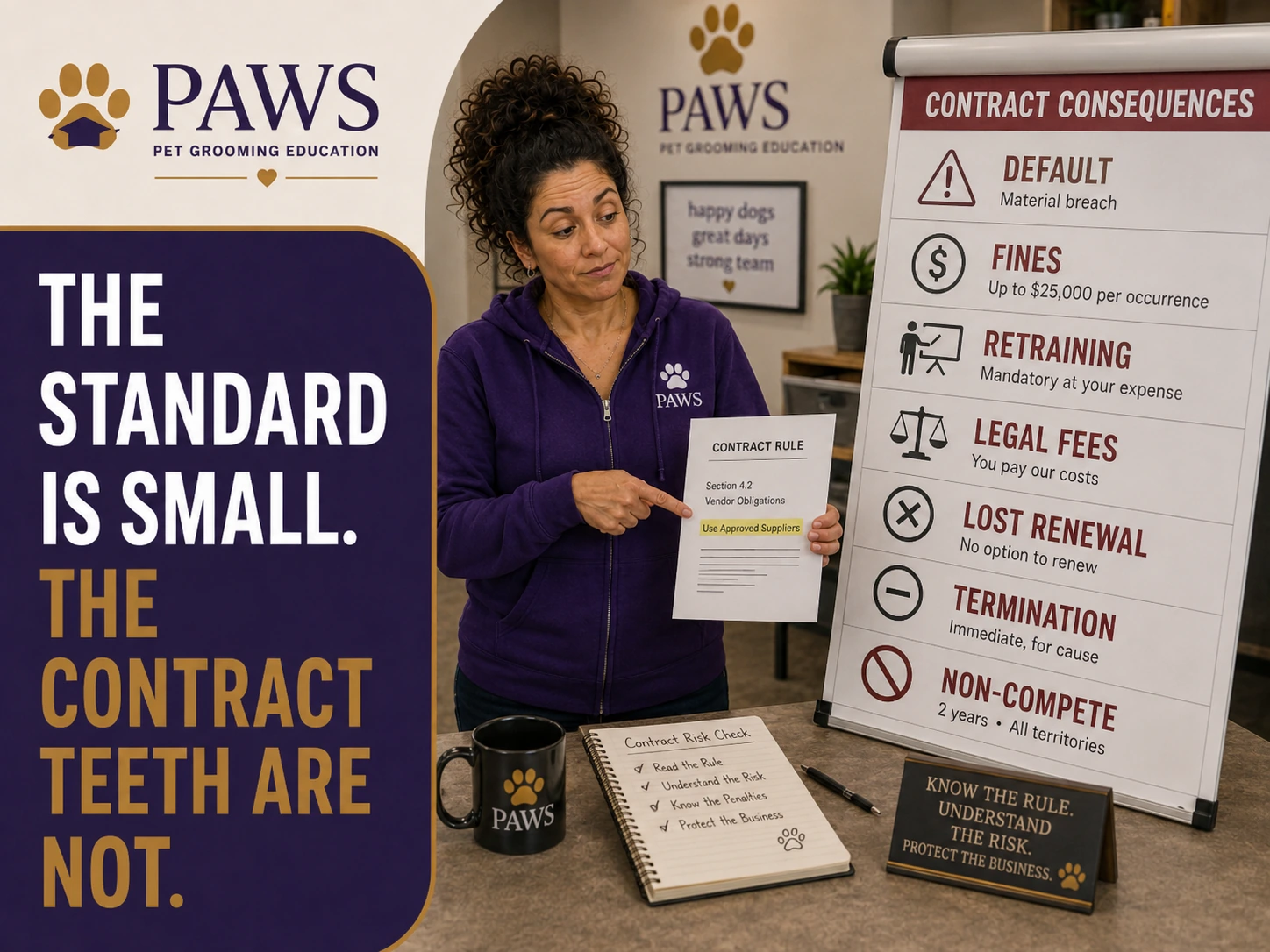
Vendor rules, software rules, signage rules, marketing rules, operating standards, inspection requirements, reporting duties, service restrictions, remodel obligations, and upgrade requirements are not just suggestions if the franchise agreement gives them contract teeth.
The buyer needs to know what happens if they miss a report, use an unapproved vendor, delay a required upgrade, fail an inspection, run an unapproved ad, offer an unapproved service, fall behind on fees, or refuse a system change they believe is unreasonable.
The scary part is not one rule. The scary part is default language. A rule that sounds small can become serious if the agreement allows notices of default, fines, mandatory retraining, audit costs, suspension of rights, loss of renewal rights, termination, legal fees, or post-termination restrictions.
Build a rule-to-remedy chart. For every material standard, identify notice requirements, cure periods, fines, retraining, reinspection, legal fees, suspension, renewal consequences, termination exposure, and post-termination restrictions.
Repeated-minor-default language deserves special attention. Several small disagreements over vendors, reports, marketing, appearance, or updates can become much more serious when the agreement allows them to be combined.
- What actions trigger default?
- What defaults can be cured?
- What defaults cannot be cured?
- How much time do I get to fix problems?
- Can noncompliance with manual updates trigger default?
- Can failure to use approved vendors trigger default?
- Can unapproved marketing trigger default?
- Can delayed upgrades or remodels affect renewal?
- What control rights survive termination, expiration, non-renewal, or transfer?
- Can I continue operating a pet-care business under a different name after termination, expiration, or non-renewal?
- Do post-termination restrictions affect my ability to keep staff, customers, phone numbers, websites, customer records, or local goodwill?
- Are legal fees, audit fees, inspection fees, or retraining fees charged back to me?
- Can repeated minor issues become a major problem?
📌
Read the rule and the penalty together
A standard tells you what they want. The default section tells you what they can do if they say you failed.
📄
Where This Shows Up in the FDD
Franchise control does not live in one neat paragraph.
| FDD Area | What to Look For | Control Issue |
|---|---|---|
| Item 8 | Required suppliers, approved vendors, specifications, alternate supplier process, supplier benefits. | Purchasing control and possible vendor profit. |
| Item 9 | Franchisee obligation table. | Cross-reference map to what you must do. |
| Item 11 | Assistance, advertising, computer systems, training, manuals, operating standards. | Support promises, software control, manual updates, required systems. |
| Item 12 | Territory and reserved rights. | Limits on what area or channels are actually protected. |
| Item 16 | Restrictions on what the franchisee may sell. | Service-menu control. |
| Item 17 | Renewal, termination, transfer, defaults, dispute resolution. | Contract teeth and exit restrictions. |
| Item 22 | Franchise agreement, guarantees, software agreements, supplier agreements, lease addenda, other contracts. | Binding documents that control the relationship. |
❓
Questions to Ask the Franchisor About Control
Make the leash visible before you sign.
- What decisions can I make locally without approval?
- What decisions require approval?
- What vendors, suppliers, products, services, software, equipment, and materials are required?
- Do you or any affiliate receive money, rebates, commissions, markups, referral fees, or other benefits from required vendors?
- Can I use alternate vendors if they meet the same standards?
- Can the operations manual, brand standards, software requirements, vendor lists, or service standards change after I open?
- Who pays when standards change?
- What forced upgrades have franchisees paid for in the last three years?
- What is the most expensive required change franchisees have had to complete?
- What inspections can occur, and what happens if I fail one?
- How long does marketing approval take?
- Who controls customer data, websites, phone numbers, booking pages, Google Business Profile access, and review responses?
- What happens to my phone number, local website, booking links, customer records, reviews, email lists, and Google Business Profile if I leave the system?
- What services can I add locally without approval?
- What happens if I disagree with a vendor change, software change, remodel rule, service restriction, or marketing decision?
- What specific control decisions have franchisees disagreed with corporate about in the last three years?
- Has any franchisee ever successfully challenged a required vendor, standard change, inspection result, software change, service restriction, or upgrade requirement?
- If a franchisee challenges a control decision, who reviews it and what is the appeal process?
- Can current franchisees confirm that the control is reasonable in practice?
☎️
Questions to Ask Current and Former Franchisees
The FDD tells you what the franchisor can require. Franchisees tell you what they actually require.
Ask the same questions across a broad sample and record specific examples, costs, dates, approval times, correction periods, and outcomes. Patterns are more useful than general statements that corporate is easy or difficult to work with.
Include owners who challenged a decision, failed an inspection, requested an alternate vendor, changed software, completed a remodel, transferred a location, or left the system.
- Have approved vendors saved you money, cost you money, or both?
- Have you ever found a better or cheaper local vendor that corporate would not approve?
- Have required vendors been delayed, overpriced, or difficult to work with?
- Have you had to complete forced upgrades, remodels, signage changes, software changes, or equipment changes?
- What was the most expensive required change after opening?
- Do inspections feel helpful or mostly enforcement-focused?
- Have inspections led to expensive corrections?
- Does corporate approval slow down local marketing?
- Can you respond quickly to local competitors?
- Does the software help your business or mainly help corporate monitor it?
- Do you feel like you own your local customer relationship?
- What local business decision did you wish you could make but could not?
- Has control increased, decreased, or stayed the same since you opened?
- Would you sign again knowing the level of control?
📋
Franchise Control Scorecard
Standards are not the enemy. Unclear, expensive, one-sided control is.
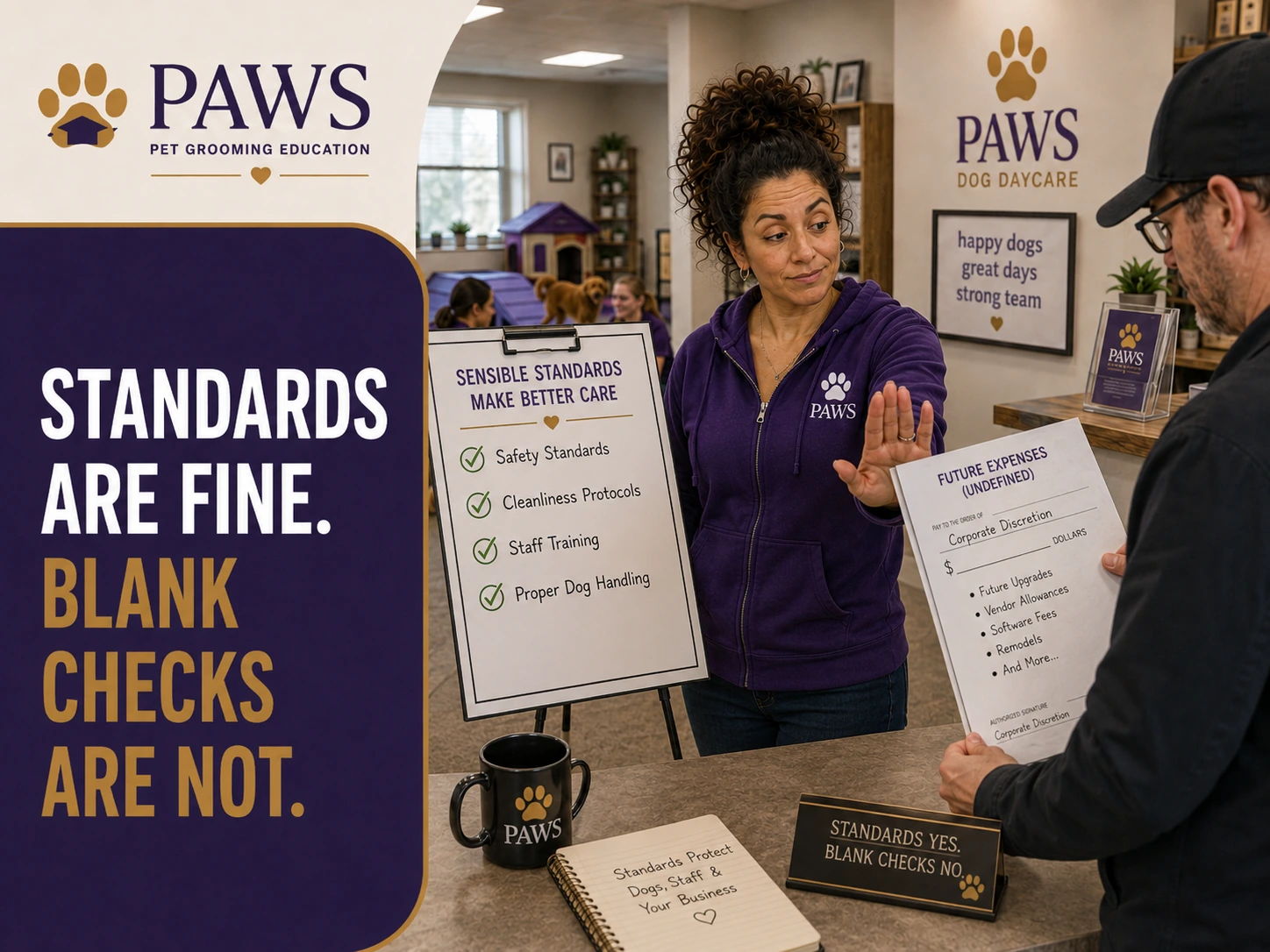
Score both the stated rule and the process used to administer it. A reasonable standard can still become harmful when approval is slow, evidence is hidden, enforcement is inconsistent, costs are open-ended, or appeals are meaningless.
Use franchisee examples to support every score. Written language shows authority; operator history shows how frequently and aggressively that authority is used.
| Score Area | Strong Sign | Warning Sign |
|---|---|---|
| Vendor Rules | Vendors are tested, fairly priced, explainable, and alternatives can be approved. | Vendors are expensive, slow, required, and financially tied to the franchisor. |
| Upgrade Rules | Upgrades are reasonable, useful, capped, planned, and communicated early. | Upgrades are open-ended, expensive, frequent, or required with little notice. |
| Inspections | Inspections improve safety, cleanliness, training, and operations. | Inspections feel subjective, punitive, or mostly brand-enforcement focused. |
| Marketing Approval | Approval is fast, practical, and supported with useful local templates. | Approval is slow, vague, restrictive, or blocks common-sense local marketing. |
| Software Control | Software helps operations and protects local customer data access. | Software is expensive, hard to leave, corporate-controlled, or data-restrictive. |
| Local Flexibility | Smart local decisions are allowed within brand and safety standards. | Common-sense local improvements require slow approval or are blocked. |
| Contract Teeth | Cure periods are fair and enforcement is consistent. | Minor issues can create default pressure, fees, or termination risk. |
🗂️
Keep Reading Before You Sign
Control is only one part of the franchise decision.
📚
Franchise Operating System
Manuals, procedures, training, software, and checklists can help, but the system needs to justify its long-term cost.
🧾
Franchise Royalties
Control feels different when royalties, ad fund, software fees, and required spending all hit the same business.
📄
Franchise FDD
Vendor restrictions, standards, software, service limits, renewal rules, and contract teeth should show up in the FDD and attached agreements.
💵
Franchise Costs
Approved vendors and forced upgrades can change the real cost of opening and operating.
🍟
Golden Arches Test
If the logo came off the building tomorrow, what would you really lose besides restrictions?
🧠
Consultant vs. Franchise
A consultant may help you build systems without controlling your vendors, services, software, signage, and exit.
❓
Dog Daycare Franchise Control and Approved Vendors FAQ
Detailed answers about approved vendors, alternate suppliers, affiliate profit, forced upgrades, inspections, marketing approval, software and data control, service restrictions, and contract remedies.
What does franchise control mean in a dog daycare business?
It means the franchisor retains authority over parts of how the location looks, buys, operates, advertises, reports, uses software, offers services, completes upgrades, handles inspections, renews, transfers, and exits.
Are approved vendors automatically a bad thing?
No. Tested vendors can protect safety, durability, consistency, cleaning compatibility, warranties, and purchasing power. The concern is whether prices are fair, alternatives are realistic, service is dependable, and related parties profit.
How can I tell whether vendor rules protect quality or control purchasing?
Review specifications, the alternate-vendor procedure, approval history, price comparisons, affiliate relationships, rebates, commissions, markups, freight, warranties, replacement times, and emergency exceptions.
Can a better and cheaper local product still be rejected?
Yes. A local product may be denied because it does not meet a specification, corporate has not evaluated it, or discretion is broad. Ask how many alternatives have actually been approved.
What financial benefits may be connected to required vendors?
Possible benefits include rebates, commissions, referral fees, volume incentives, markups, private-label margin, software revenue, affiliate profit, or other consideration.
What happens when an approved vendor is delayed or unavailable?
Identify emergency purchasing rights, alternate sources, approval timing, warranty responsibility, and whether local substitutions are permitted for repairs, cleaning products, HVAC parts, software, gates, and safety equipment.
Can the franchisor require upgrades after the location opens?
The source page explains that systems may require new signs, uniforms, furniture, software, hardware, cameras, equipment, flooring, turf, lobby design, grooming fixtures, services, or remodel work.
How should I evaluate a required upgrade?
Ask what operating problem it solves, whether it improves safety, efficiency, revenue, or customer trust, what it costs, how much notice exists, whether older locations are grandfathered, and what operators report.
Why can the operations manual function like a moving contract?
The agreement may incorporate manuals, brand standards, approved-vendor lists, software rules, inspection standards, and later updates. Binding changes can require spending or create default risk.
What makes a franchise inspection useful?
A useful inspection identifies real safety, cleaning, equipment, staff, documentation, boarding, grooming, customer-service, and facility problems and provides clear evidence and correction guidance.
What are signs that inspections have become enforcement theater?
Warning signs include disproportionate attention to minor branding, inconsistent inspectors, vague standards, short deadlines, repeated fees, surprise spending, default notices, and weak attention to actual dog safety.
How can marketing approval hurt a local daycare?
Slow approval can cause the location to miss rescue events, holiday demand, apartment partnerships, sponsorships, competitor responses, weather opportunities, and timely local promotions.
Why is software control a business-control issue?
Software may contain reservations, payments, contacts, vaccination records, packages, grooming and boarding history, notes, incidents, communications, reports, and booking links, affecting daily operations and exit.
What data should I confirm can be exported?
Confirm usable exports for customer contacts, dog records, vaccinations, purchases, packages, reservations, grooming, boarding, medications, notes, incidents, communications, and financial history.
Can a franchise prevent me from adding locally requested services?
Yes. The service menu may restrict grooming, training, transportation, cat boarding, retail, enrichment, memberships, events, or other add-ons.
What are contract teeth?
Contract teeth are the remedies attached to rules: notices of default, cure periods, fines, retraining, reinspection, audit or legal fees, suspension, lost renewal, termination, transfer restrictions, and post-termination obligations.
Can several small compliance issues become a larger problem?
They may, depending on repeated-default or cumulative-breach language. Ask whether minor issues can be grouped and whether cure rights change after repetition.
What should I ask current and former franchisees about control?
Ask for specific examples involving rejected vendors, required purchases, upgrade costs, inspection findings, approval delays, software and data, blocked services, marketing restrictions, appeals, renewal, transfer, and exit.
What should a franchise control audit contain?
It should identify each decision right, approval process, future change authority, likely cost, franchisor justification, contractual remedy, appeal right, franchisee experience, and independent alternative.
What is the bottom-line test for franchise standards?
Ask whether the standard measurably improves dog safety, cleanliness, staff training, customer experience, operational performance, or brand value—and whether cost, timing, discretion, and enforcement are proportionate.
🐾
The Bottom Line: Standards Are Fine. Blank Checks Are Not.
Franchise control should protect the business, not quietly turn the owner into a passenger.
A dog daycare franchise needs standards. Clean rooms, safe dog handling, professional signage, good software, trained staff, consistent customer experience, and strong brand rules can all matter.
But the buyer needs to understand every place the franchisor keeps control: approved vendors, required suppliers, software, inspections, marketing approval, signage, uniforms, remodels, upgrades, service restrictions, reporting, manual updates, renewal terms, transfer rules, and default language.
Good control protects dogs, customers, staff, and the brand. Bad control creates surprise spending, slow decisions, blocked local opportunity, vendor lock-in, software dependence, marketing delays, and contract pressure.
Before signing, make the franchisor explain the leash. Where is it attached? Who can tighten it? What does it cost? What happens if you disagree? And what freedom do you still have after you buy the business?
The final due-diligence memo should list every major control right, the claimed business benefit, the realistic cost, the evidence from franchisees, the contractual remedy, and the independent alternative.
Standards deserve respect when they measurably protect dogs, customers, staff, operations, and the brand. Open-ended discretion deserves skepticism when the local owner carries the cost and risk without meaningful limits.