Dog Daycare Franchise Manuals, Procedures, Training, Safety Systems, Software, Staff Standards, Cleaning Rules, and Daily Operating Checklists
Dog Daycare Franchise Operating System: Useful Playbook or Expensive Rulebook?
Manuals, procedures, training, safety systems, cleaning rules, software, staff standards, and daily operating checklists can help. But is the rulebook still worth paying for after you learn the business?

A dog daycare franchise operating system can be valuable. The question is whether it stays valuable after the opening chaos is over.
A good franchise system should help a new operator avoid dumb mistakes. It should organize intake, temperament screening, playgroup structure, cleaning, boarding routines, staff training, customer communication, incident documentation, software, pricing, marketing, and daily management.
That kind of help has real value, especially in year one when the buyer is staring at a lease, a build-out, barking dogs, payroll, nervous staff, nervous customers, and a lobby that suddenly feels smaller than it looked on the floor plan.
But here is the hard question: after you learn the business, train the staff, build local trust, earn reviews, stabilize the schedule, and understand the daily routine, what is the operating system still worth every month?
This page is not saying manuals, training, checklists, software, and procedures are useless. They are not useless. The question is whether you are buying a living support system or paying long-term royalties for a rulebook you already absorbed.
⚠️
Operator warning: systems are only valuable if they solve real operating problems.
A binder, software login, training week, and checklist packet can help. But the buyer needs to ask whether the system handles the ugly parts of dog daycare or just makes the business look organized on paper.
📚
What a Dog Daycare Franchise Operating System Actually Is
The operating system is supposed to be the playbook, not just a pile of branded paperwork.
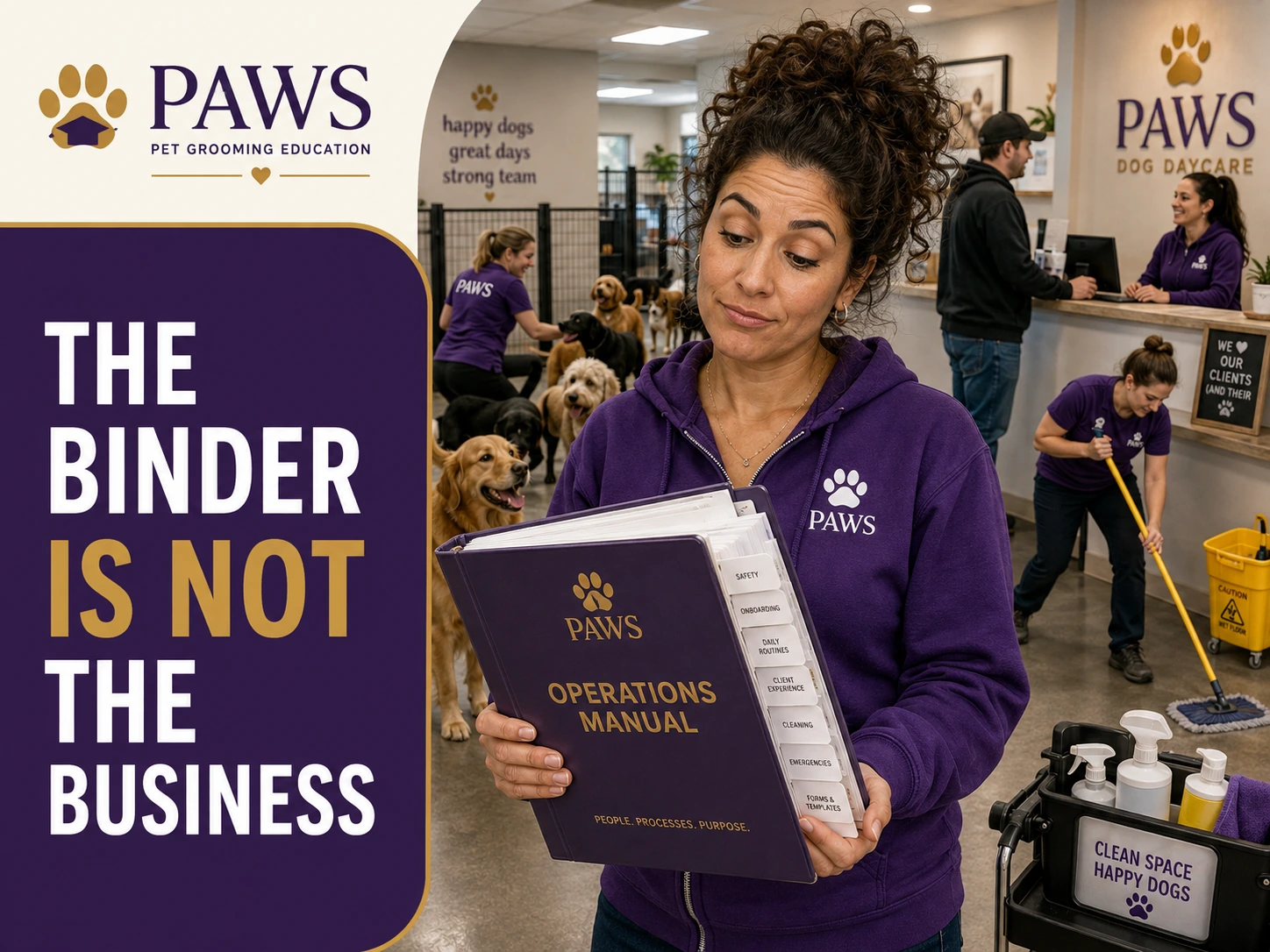
A dog daycare franchise operating system is the collection of standards, procedures, manuals, software, training, checklists, forms, policies, brand rules, staff requirements, reporting systems, and daily routines the franchisor expects the franchisee to follow.
In theory, that system should help a new owner avoid making every mistake from scratch. It should give structure to the parts of the business that can get messy fast: dog intake, playgroup decisions, cleaning, disease control, staff training, incident handling, customer expectations, boarding routines, grooming add-ons, pricing, reporting, and local marketing.
A good operating system can save time. A weak operating system can create the illusion of support while leaving the owner to figure out the real business alone. A controlling operating system can help protect consistency, but it can also make common-sense local decisions harder than they need to be.
That is why the buyer needs to ask two separate questions: does the system help me open, and does it keep helping me after I know what I am doing?
A useful operating system should define decisions, not merely describe ideals. Staff need to know who may accept a dog, who can stop play, how illness is escalated, when a customer is called, what requires manager approval, and how the event is documented.
The buyer should also ask how version control works. Procedures that change without dates, training, acknowledgment, and replacement of old forms create several operating systems inside the same building.
🧾
The “Justify Yourself” Test
If the operating system is the reason for the royalty, make the franchisor prove the system still earns it.
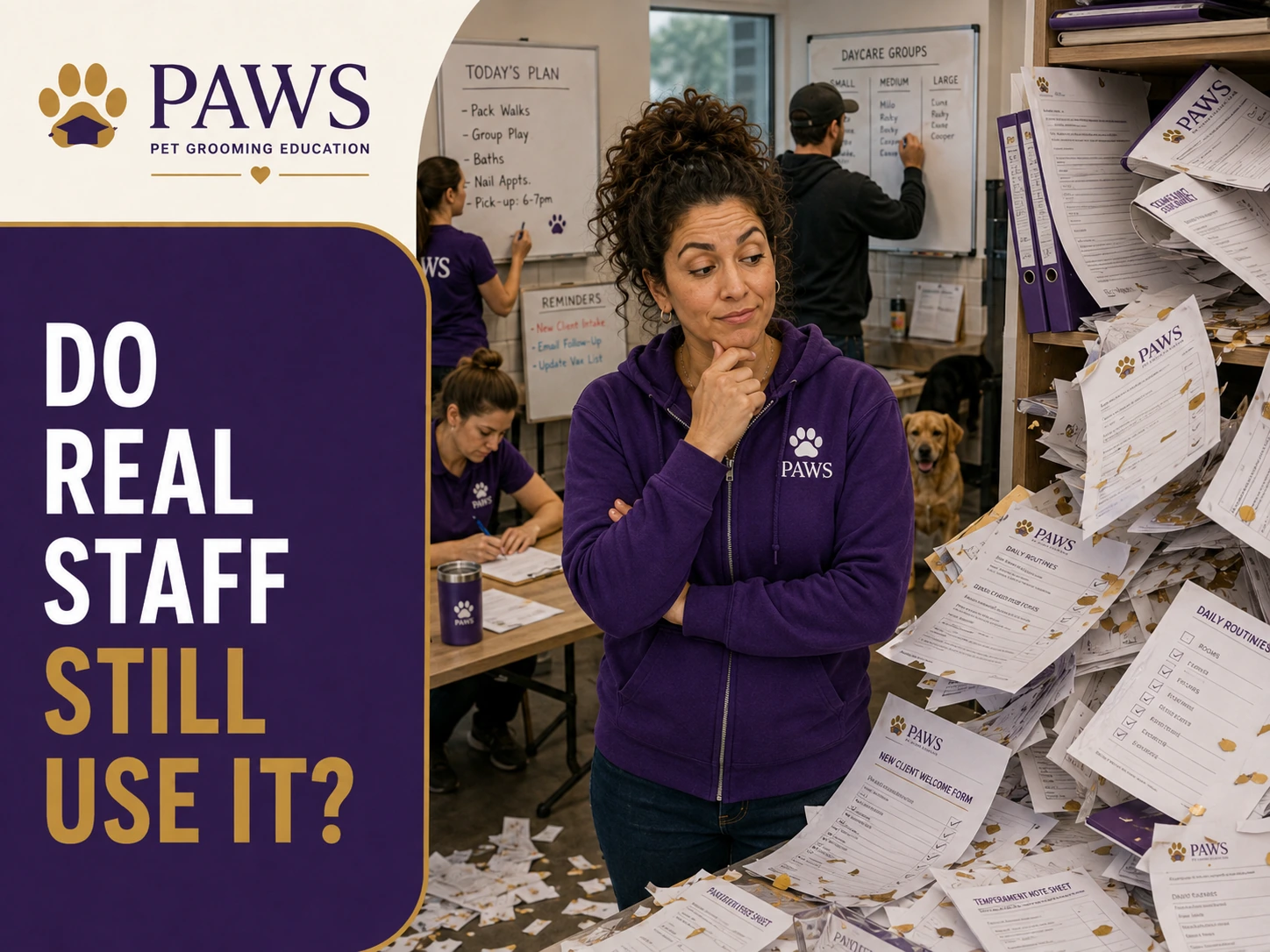
This is the section where the franchisor has to justify itself. Not emotionally. Not with brochure language. Not with “we have a proven system.” With details.
A franchisor may say the operating system prevents mistakes, creates consistency, protects the brand, trains staff, supports owners, improves safety, gives better software, provides marketing tools, and keeps franchisees from having to figure everything out alone.
Fine. Those are fair claims. Now prove them.
The buyer needs to ask what parts of the system are required, what parts are optional, what parts cost extra, what parts current franchisees still use, what parts experienced operators ignore, what parts have been updated recently, and what parts actually solve dog daycare problems after the opening period is over.
The operating system is not automatically valuable because it exists. A binder exists. A login exists. A checklist exists. The question is whether those things save money, reduce risk, train staff, improve safety, create customers, protect dogs, help managers, and make the business stronger after the buyer has learned the basics.
Measure adoption, not page count. A procedure has value when managers teach it, staff can explain it, the required form is actually completed, and the result can be seen in safer handling, cleaner rooms, faster training, better records, or fewer repeated mistakes.
Ask for examples of a recent operating problem the system identified and corrected across the network. A living system should learn from incidents, franchisee experience, software data, inspections, customer complaints, and changing dog-care practice.
⚠️
The buyer question
If I am still paying royalties in year five, what operating-system value am I receiving in year five that I could not reasonably replace with my own procedures, better software, a consultant, a manual, experienced staff, local marketing, and professional advisors?
✅
What a Strong Dog Daycare Operating System Should Include
If they are selling a system, make them show the system.
The strongest system areas work together. Intake affects playgroups, playgroups affect staffing, staffing affects cleaning and incident response, and software affects whether those decisions are visible to the next shift.
Pressure-test the handoffs between departments. A policy is weak when reception, playroom staff, boarding staff, groomers, managers, and owners each understand a different version of the same dog, customer promise, medication instruction, or incident.
The buyer should ask which measures show that each system area works. Completion of a checklist is not the same as a safe room, trained employee, accurate medication record, retained customer, or profitable service.
| System Area | What You Should Expect | What to Pressure-Test |
|---|---|---|
| Dog Intake | Application, vaccination rules, evaluation process, temperament screening, customer disclosures, and decline policies. | Does it help staff say no to bad-fit dogs, or does it push volume over safety? |
| Playgroup Management | Dog grouping rules, handler ratios, rotation plans, escalation procedures, and incident response. | Is it practical in a loud real playroom, or only pretty in a manual? |
| Cleaning and Disease Control | Cleaning schedules, disinfectants, isolation procedures, kennel cough response, laundry rules, and odor control. | Does it reduce real health risk, or just say “clean frequently” in nicer words? |
| Boarding Routines | Feeding, medication, rest, monitoring, overnight procedures, owner communication, and incident documentation. | Does it handle the fact that boarding dogs can stress, get sick, fight, escape, or decline fast? |
| Grooming Add-Ons | Scheduling, safety, grooming release forms, groomer standards, bath procedures, blade/tool rules, and customer expectations. | Does the system understand grooming economics and staffing, or treat grooming like an easy add-on? |
| Staff Training | Onboarding, dog behavior basics, cleaning, customer service, incident reports, playroom supervision, and management training. | Who trains replacements after the first crew quits? |
| Software | Reservations, vaccinations, billing, reporting, customer communication, forms, incident notes, and capacity tracking. | Does the software help operations, or mainly help corporate collect reports and fees? |
| Local Marketing | Grand opening plan, local SEO, reviews, vet outreach, apartments, events, social media, and tour conversion. | Does it create local customers, or just provide templates? |
| Daily Checklists | Opening, closing, cleaning, feeding, medication, room checks, staff assignments, and management review. | Are they used by real staff, or do they become binder confetti after month three? |
| Incident Systems | Bite reports, illness reports, injury reports, customer communication, documentation, follow-up, and insurance awareness. | Does the system protect dogs, staff, customers, and the business when something goes sideways? |
📖
Manuals Are Useful. Manuals Are Not Magic.
A manual can help you learn the business. It cannot make staff care, dogs behave, payroll work, or experience appear on command.
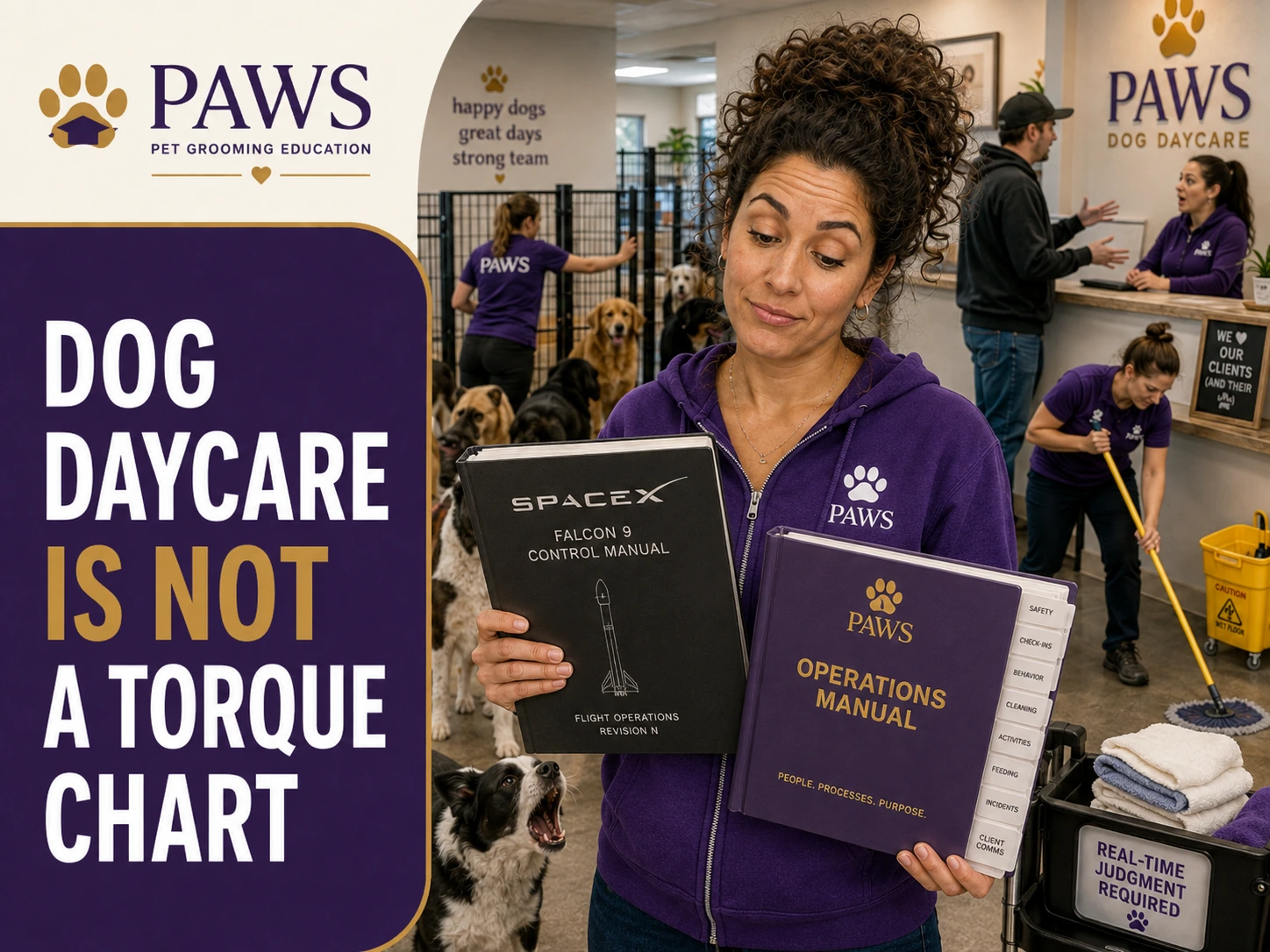
Manuals matter. A good manual can organize the business, reduce guessing, train staff faster, create consistency, document expectations, and keep the owner from reinventing every form, checklist, and policy from scratch.
That early structure has value. Before opening, a manual gives the buyer something to study. It makes the business feel more organized before the business is actually alive. During the first couple of months, when something odd happens, it can be useful to look up how the franchisor wants that situation handled and say, “Okay, this is their process.”
Franchise sales conversations can make the operating manual sound like a magical answer book. Customer says this? Turn to Chapter 3. Google listing problem? Chapter 4. Staff issue? Chapter 5. Dog fight? Chapter 6. Software issue? Chapter 7. Grooming problem? Chapter 8. Like every messy dog daycare situation is waiting in a binder with a clean little answer and a branded footer.
That is not how this business usually works.
But a manual is not the business. A manual does not supervise the playroom. It does not notice a nervous dog stiffening up. It does not smell a drainage problem. It does not calm a customer after a scratch. It does not fix staff drama. It does not make a weak location strong. It does not make rent cheaper.
Once you have checked in thousands of dogs, handled the kennel software every day, dealt with billing issues, watched the reports, fixed customer accounts, managed packages, answered complaints, scheduled grooming, handled boarding routines, and lived through the daily rhythm, you are not usually running to the operating manual every ten minutes.
You know the business because you have been in it. You know the kennel software because you have lived inside it. You know the customers because you have answered the phone. You know the dogs because you have watched them. You know the staff problems because they have already found you. You know what a bad playgroup looks like before the manual has time to open.
The buyer needs to see whether the manual reflects real dog daycare experience or generic franchise paperwork. Does it sound like someone has actually operated a loud, wet, hairy, unpredictable pet-care business? Or does it sound like someone made a clean PDF after visiting a facility for an afternoon?
This is not SpaceX. You are not rebuilding a jet engine in a military hangar with a torque chart and a clipboard. Dog daycare needs procedures, yes. It needs standards, yes. It needs training, documentation, safety rules, cleaning systems, and accountability. But it is also a fluid live-animal business where judgment, repetition, staff habits, and experience become the real operating system.
A manual is valuable when it captures real operating judgment. It is less valuable when it turns common sense into branded page count.
That is why the buyer needs to be careful when a franchisor prices the operating manual like it is the secret sauce. The manual may be useful pre-opening reading and early-stage support. It may help the business feel less chaotic before the doors open. But unless it keeps improving, keeps solving real problems, keeps training replacement staff, keeps reducing risk, and keeps helping experienced operators, it may be startup training wheels with a long-term royalty attached.
The useful part of a manual is the judgment embedded inside it. Strong manuals explain why the rule exists, what signs require escalation, who owns the decision, what exceptions are permitted, and what record must remain after the moment passes.
A manual also needs a maintenance process. Dog-care procedures, disinfectants, software, employment practices, customer expectations, and facility equipment change, so the buyer should know who updates the material and how staff are retrained.
📌
The manual reality test
Ask to review the table of contents. Ask what sections are updated most often. Ask current franchisees how often they actually open the operating manual after the first year. Ask which sections they still use weekly, which sections they used only during opening, and which sections have not been touched since the business stabilized.
📖
Manuals Are Useful. Manuals Are Not Magic.
A manual can help you learn the business. It cannot make staff care, dogs behave, payroll work, or experience appear on command.
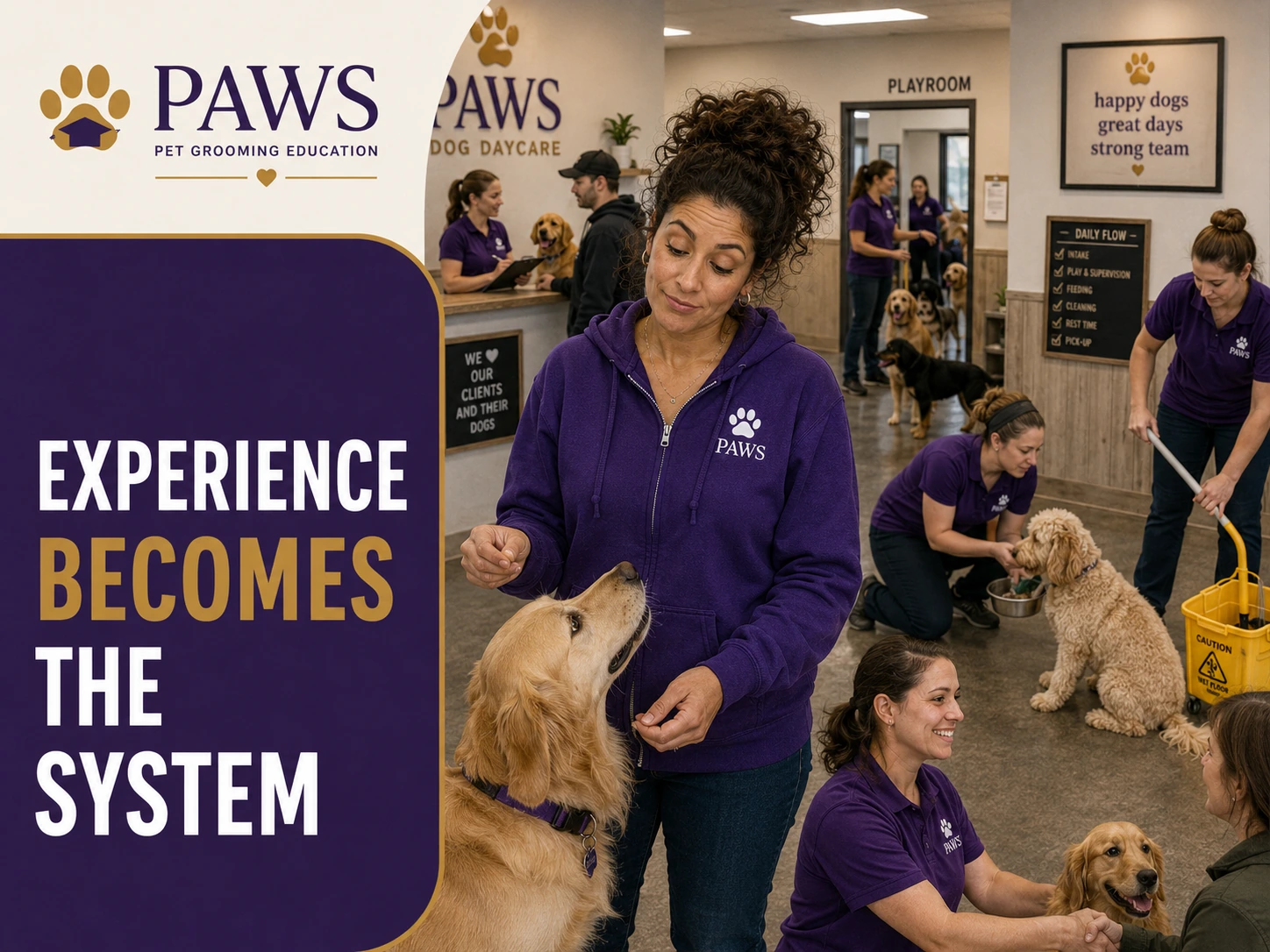
Manuals matter. A good manual can organize the business, reduce guessing, train staff faster, create consistency, document expectations, and keep the owner from reinventing every form, checklist, and policy from scratch.
A good operating manual can absolutely help in the beginning. It can organize forms, intake policies, cleaning schedules, vaccination requirements, customer communication, opening procedures, software workflows, incident reports, staff expectations, and daily routines. For a new owner, that structure can save time and reduce guessing.
In that early stage, the manual may even feel more valuable than it really is. Before opening, it gives the buyer something to study. It makes the business feel organized before the business is actually alive. During the first couple of months, when something odd happens, it can be useful to look up how the franchisor wants that situation handled and say, “Okay, this is their process.”
That has value. I am not dismissing it. Early structure can calm a new owner down and keep them from making every decision from scratch.
Franchise sales conversations can make the operating manual sound like a magical answer book. Customer says this? Turn to Chapter 3. Google listing problem? Chapter 4. Staff issue? Chapter 5. Dog fight? Chapter 6. Software issue? Chapter 7. Grooming problem? Chapter 8. Like every messy dog daycare situation is waiting in a binder with a clean little answer and a branded footer.
That is not how this business usually works.
A manual is not the business. A manual does not supervise the playroom. It does not notice a nervous dog stiffening up. It does not smell a drainage problem. It does not calm a customer after a scratch. It does not fix staff drama. It does not make a weak location strong. It does not make rent cheaper.
That value usually changes fast. Once you understand the kennel software, check in thousands of dogs, handle billing problems, fix customer accounts, schedule grooming, manage boarding routines, answer complaints, supervise staff, and live through the same procedures day after day, the operating manual is not running the business anymore. Your experience is.
You know the business because you have been in it. You know the kennel software because you have lived inside it. You know the customers because you have answered the phone. You know the dogs because you have watched them. You know the staff problems because they have already found you. You know what a bad playgroup looks like before the manual has time to open.
At that point, a lot of operating manuals become shelf material. They may still matter for system standards, inspections, updates, training references, and franchise compliance, but the owner is not flipping through the book every time a dog moves from the lobby to a playroom. The routine is in your head, your staff training, your software habits, your checklists, and your daily operating rhythm.
The buyer needs to see whether the manual reflects real dog daycare experience or generic franchise paperwork. Does it sound like someone has actually operated a loud, wet, hairy, unpredictable pet-care business? Or does it sound like someone made a clean PDF that tries to neatly categorize the general mayhem of working with 60-plus daycare dogs, 30 grooming dogs, and 40-plus boarding dogs in the same operating day?
If you are just thinking about getting into this business, those numbers can sound intimidating. Forty boarding dogs at 6 in the morning on a Sunday may sound like a nightmare when they have been inside all night, need to potty, want breakfast, and are ready to explode into the day.
But after you have done it enough times, it becomes flow. To an experienced operator, that Sunday-morning boarding routine may be an hour and a half of work: dogs out, rooms cleaned, water checked, food handled, potty areas cleaned, notes watched, and everybody moving through the routine without turning the place into a rodeo.
Why? Because you have done it a thousand times. You know how to move the furry children. You know which dogs need space, which dogs can wait, which dogs are trying to rush the gate, which rooms need attention first, and what the dogs are doing while you are working. You are not flipping through a chapter reference to figure out how to survive the morning. You are using experience, routine, judgment, software habits, staff training, and facility flow.
That is the point. A manual may describe the process, and that can help early on. But repetition is what makes the process usable. At some stage, the real operating system is not the binder. It is the operator, the trained staff, the routine, and the facility rhythm built from doing the work over and over.
This is not SpaceX. You are not rebuilding a jet engine in a military hangar with a torque chart and a clipboard. Dog daycare needs procedures, yes. It needs standards, yes. It needs training, documentation, safety rules, cleaning systems, and accountability. But it is also a fluid live-animal business where judgment, repetition, staff habits, and experience become the real operating system.
A manual is valuable when it captures real operating judgment. It is less valuable when it turns common sense into branded page count.
That is why the buyer needs to be careful when a franchisor prices the operating manual like it is the secret sauce. The manual may be useful pre-opening reading and early-stage support. It may help the business feel less chaotic before the doors open. But unless it keeps improving, keeps solving real problems, keeps training replacement staff, keeps reducing risk, and keeps helping experienced operators, it may be startup training wheels with a long-term royalty attached.
Experienced operators should not have to choose between blind compliance and silent workarounds. A mature system needs a channel for local knowledge to improve the shared procedures without turning every facility into a different brand.
The franchisor should be able to show how a field observation becomes a tested change, how the change is communicated, and how obsolete instructions are removed. Otherwise experience grows locally while the official system stays frozen.
📌
The manual reality test
Ask to review the table of contents. Ask what sections are updated most often. Ask current franchisees how often they actually open the operating manual after the first year. Ask which sections they still use weekly, which sections they used only during opening, and which sections have not been touched since the business stabilized.
🎓
Training Has Value — If It Trains for the Real Business
A training week is not the same thing as operator competence.
Initial training can be one of the real benefits of a franchise. A buyer who has never run a dog daycare may need structure, vocabulary, procedures, staffing expectations, software training, opening steps, customer scripts, and basic operating standards.
But training needs to be judged by what it prepares you to handle. Dog daycare is not just “love dogs and sell packages.” It is evaluating dogs, reading behavior, managing noise, separating play styles, cleaning constantly, dealing with illness, handling bites, documenting incidents, managing staff, answering anxious customers, and making judgment calls when the room is not behaving.
A classroom can help. A staged facility can help. Shadowing can help. But ask how much training happens in real dog rooms with real chaos. Ask who trains future employees. Ask what happens when your original trained manager leaves and the new one needs help.
Training should include demonstrated competence, not attendance alone. Staff should be observed performing room entry, dog movement, cleaning, medication documentation, customer handoff, incident response, and escalation before they are treated as fully trained.
The replacement-staff plan matters more than the opening class. Turnover can erase the original training investment quickly, so the system needs repeatable onboarding, trainer standards, refreshers, manager development, and proof that local trainers are teaching the current procedure.
- How many days of training are required?
- Is training classroom-based, facility-based, online, live, recorded, or mixed?
- Does training include dog behavior, group play, bite prevention, disease control, cleaning, boarding, grooming, customer conflict, and incident reporting?
- Who pays for travel, lodging, wages, and additional training?
- Who trains replacement managers and new staff after opening?
- Does training continue after year one?
- What do current franchisees say training failed to prepare them for?
💻
Software Can Help — Or Become Another Control Point
Required software should make the business easier to run, not just easier to monitor.
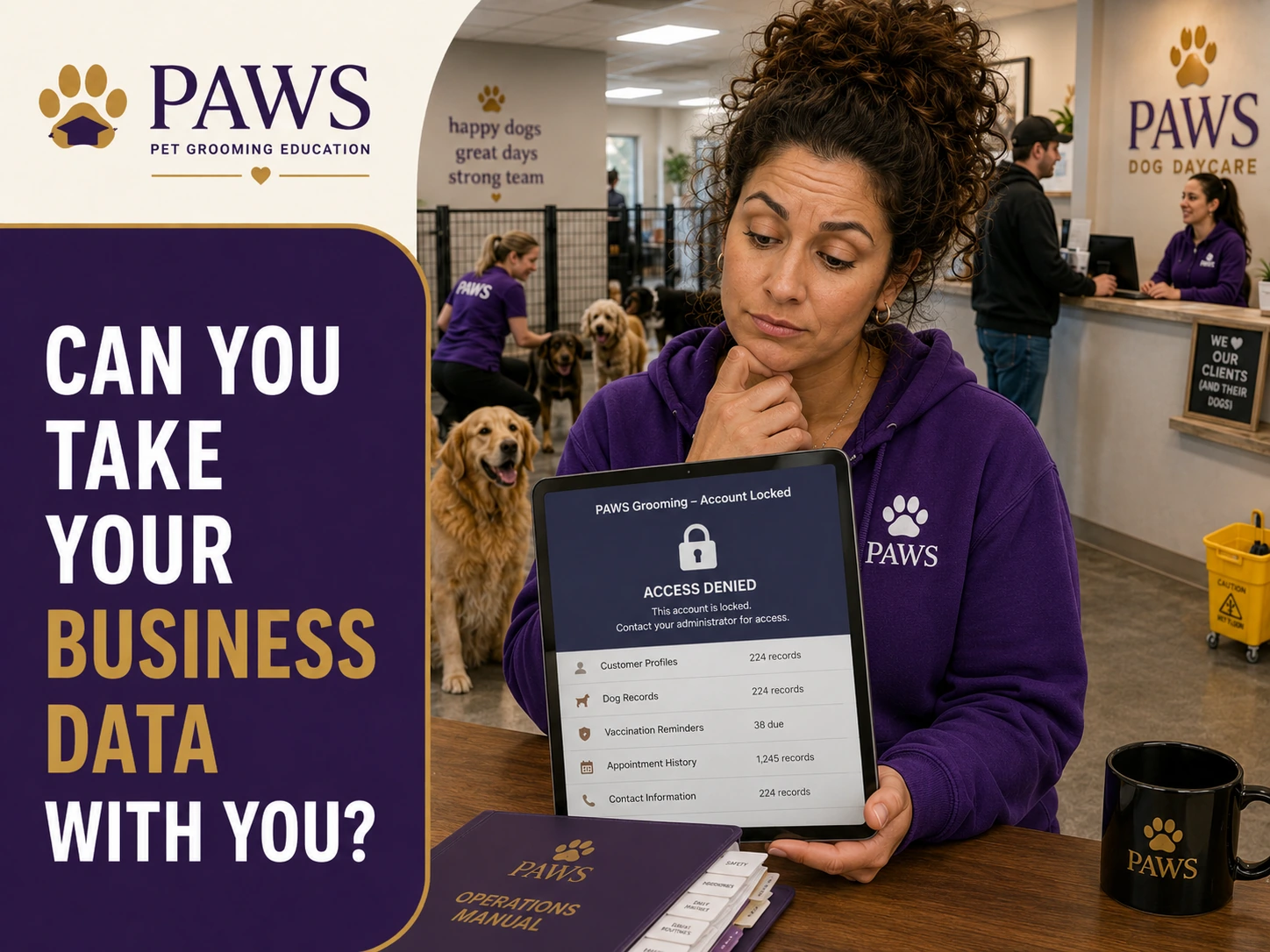
Dog daycare software can be extremely useful. It can manage reservations, packages, vaccination records, boarding stays, grooming appointments, customer notes, billing, texts, emails, capacity, report cards, incident notes, and staff workflow.
But required software can also become a long-term dependency. The buyer needs to know who owns the customer data, who controls access, what happens if the franchise relationship ends, whether phone numbers and booking pages are controlled by the franchisor, whether fees can increase, and whether software upgrades can be required at the franchisee’s expense.
The software question is not just “Is the system good?” The question is “Who controls the customer relationship if the relationship with the franchisor ever changes?”
Request a real export before signing. The buyer should see what customer, dog, vaccination, purchase, reservation, note, medication, incident, communication, and accounting data can be downloaded, in what format, and whether the records remain usable outside the required platform.
Also test the failure plan. Internet outages, vendor outages, payment failures, locked accounts, software conversion, and termination should not erase the facility’s ability to identify dogs, contact owners, verify care instructions, document incidents, or continue operating.
⚠️
Data is not a small issue.
Customer names, emails, phone numbers, vaccination records, purchase history, booking habits, grooming notes, boarding history, and review systems are part of the local business value. Do not treat software access like a minor tech detail.
- What software is required?
- Who owns or controls customer data?
- Can fees increase?
- Can software or hardware upgrades be required?
- Can the franchisor access reports, sales data, customer lists, and operational data?
- What happens to data, websites, booking pages, phone numbers, and customer communication if the franchise relationship ends?
- Can you export your customer data in a usable format?
🧼
Safety and Cleaning Systems Are Where the Rubber Meets the Dog Hair
Pretty branding does not help much if the rooms are unsafe, dirty, loud, or poorly supervised.
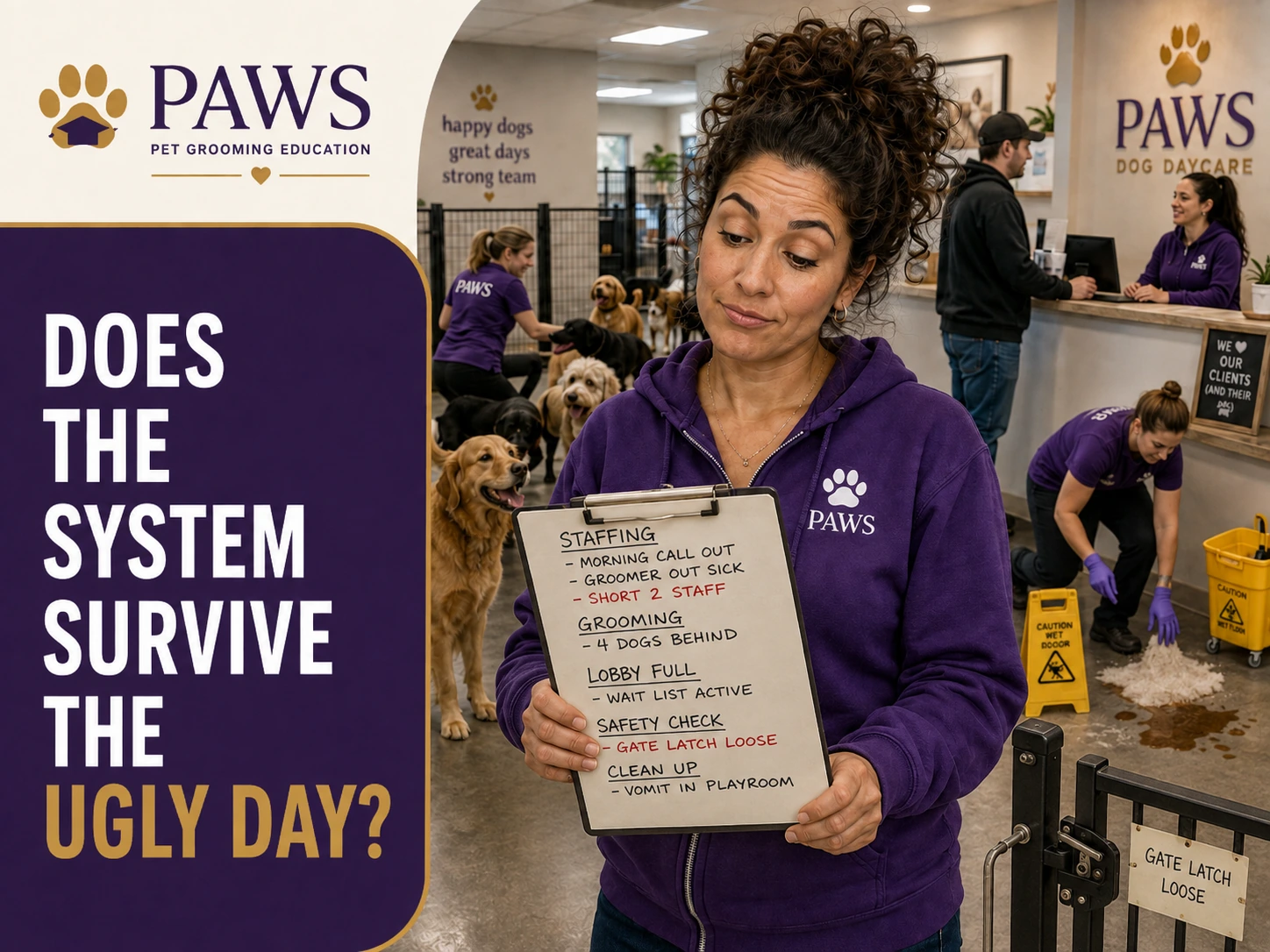
A strong dog daycare operating system should take safety and cleaning seriously. This is not optional polish. This is the part of the business that protects dogs, staff, customers, reviews, insurance, and survival.
The system should address dog evaluations, vaccination rules, illness procedures, cleaning schedules, disinfectant use, laundry, odor control, waste handling, room checks, staff ratios, dog grouping, play breaks, feeding, medication, boarding monitoring, bite reports, injury reports, and customer notification.
The system should also be realistic. A checklist that looks great in a clean franchise binder may collapse when three employees call out, the lobby is full, a dog vomits in boarding, a groomer is behind, and someone just noticed a gate latch is loose.
Ask current franchisees whether the safety and cleaning procedures actually work during busy weeks. Not during discovery day. Not during the tour. During the week when the business smells like wet dog, bleach, and regret.
Stress-test the system against short staffing, full boarding, late pickups, a contagious-disease concern, a grooming backlog, equipment failure, and an active incident at the same time. The procedure must identify priorities when every checklist cannot be completed in perfect order.
Managers need authority to reduce capacity, close a room, stop admissions, separate dogs, call owners, seek veterinary care, or change staffing when the operating conditions become unsafe. A system that only works at full volume is not a safety system.
🔒
Standards vs. Control
Good standards protect the business. Bad control treats the owner like a renter in their own build-out.
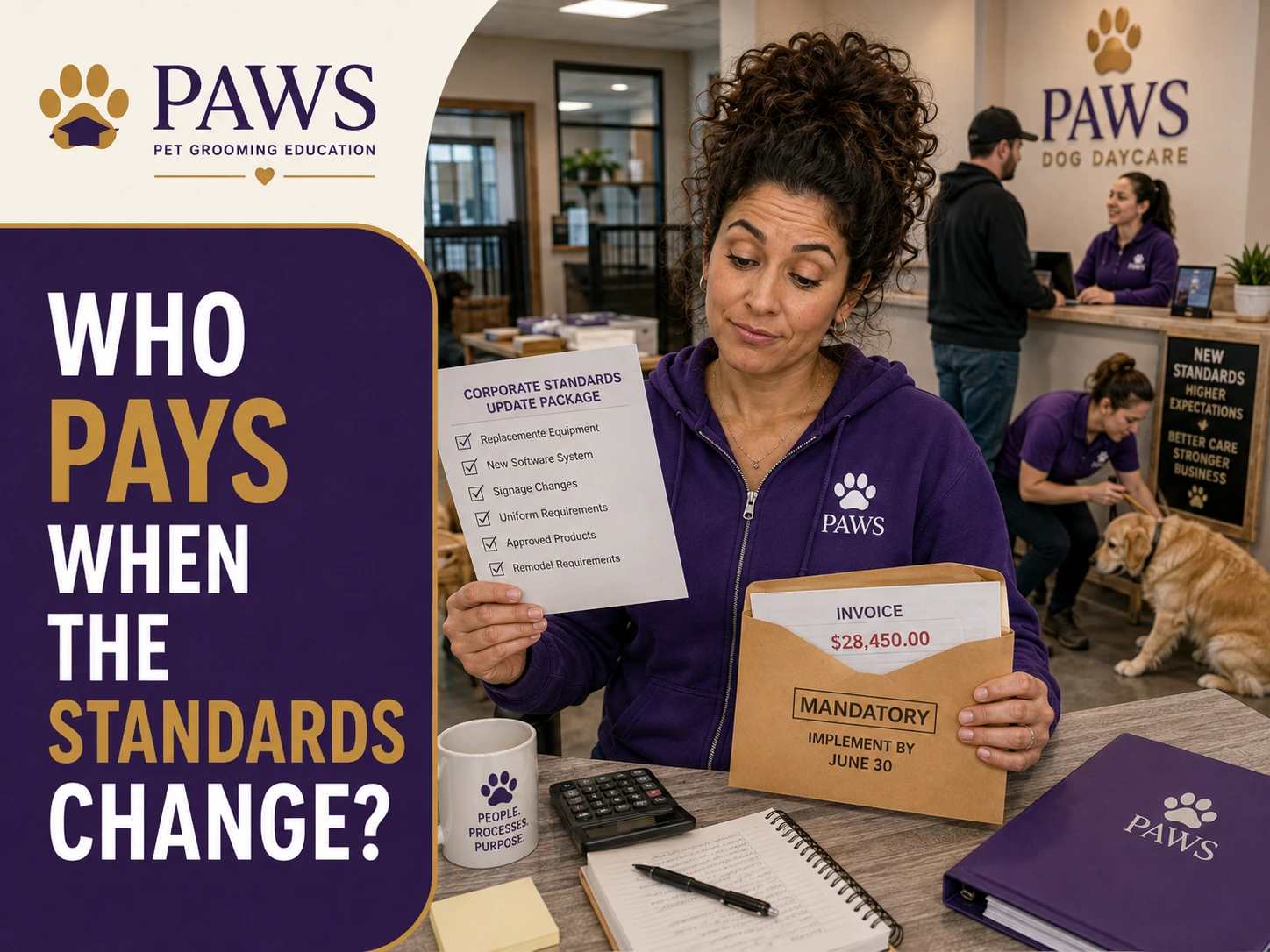
Franchise standards are not automatically bad. Consistency matters. Safety matters. Brand trust matters. A franchisor should have rules about cleanliness, customer handling, signage, software, uniforms, staff training, services, and operating procedures.
The problem is when “standards” become a blank check for future control. Watch language that allows the franchisor to change system standards, vendor requirements, software, signage, remodel requirements, service requirements, advertising rules, staffing standards, and reporting obligations after you have already signed the lease and spent the money.
A buyer should ask: which standards are fixed, which can change, who pays when they change, how much notice is required, whether there are spending caps, whether franchisees get input, and whether changes are realistic for small operators.
Create a change-control budget before signing. Model how much annual spending the franchisee could absorb for software, equipment, signs, uniforms, training, vendor changes, and remodel requirements without damaging payroll, reserves, or maintenance.
The process matters as much as the standard. Strong systems pilot expensive changes, gather operator feedback, explain the operating reason, provide realistic notice, and distinguish urgent safety corrections from cosmetic brand preferences.
- Can the operations manual be changed during the franchise term?
- Can new standards require new equipment, software, signage, uniforms, vendors, or remodels?
- Who pays for required changes?
- Are there spending limits or reasonableness limits?
- How much notice must the franchisor give?
- Do franchisees get input before systemwide changes?
- Can failure to follow updated standards trigger default?
🔪
Where the Knife Hides: The Manual as a Moving Rulebook
The franchise agreement may be fixed. The operating manual may not be.
One of the biggest operating-system issues is whether the franchisor can change the rules after you sign. The franchise agreement may point to the operations manual, system standards, brand standards, software rules, approved suppliers, required services, reporting systems, and updated procedures.
That sounds normal because franchises need consistency. But it can also create future control. A franchisor may be able to update the manual and require new software, new reports, new cleaning products, new uniforms, new signage, new training, new equipment, new vendors, new services, new pricing methods, new room standards, new remodel requirements, or new inspection rules.
Some updates may be smart and necessary. Dog daycare changes. Safety improves. Software improves. Cleaning standards improve. A good franchisor should improve the system.
The problem is when the buyer has no practical protection against expensive or unrealistic changes. If the franchisor can change the rulebook, require spending, and then treat noncompliance as a default, the manual is not just guidance. It is a moving leash.
Keep a dated archive of every manual and standards update. The franchisee needs to know what rule applied, when it changed, what spending it required, who acknowledged it, and whether the change conflicts with the agreement or another operating document.
Major manual changes should be reviewed with the same seriousness as a new contract obligation. The practical question is whether the change improves operations enough to justify its cost and whether the franchise agreement gives the owner any meaningful protection.
- Can the operations manual be changed at any time?
- Are manual changes automatically binding?
- Can manual changes require new spending?
- Are there spending caps or reasonableness limits?
- Can new vendors, software, equipment, signage, uniforms, or remodel standards be required?
- Can new services be required even if they do not fit your local market?
- Can failure to follow updated standards trigger default?
- How much notice does the franchisee get before changes become mandatory?
- Do franchisees get a vote, advisory input, or appeal process before major system changes?
⚠️
Read Item 11, Item 17, Item 22, and the franchise agreement together.
The operating-system promises may appear in one place, but the power to change, enforce, inspect, default, terminate, or require spending may live somewhere else.
⏳
Year One Help vs. Year Five Value
The operating system may be most valuable before you know what you are doing.
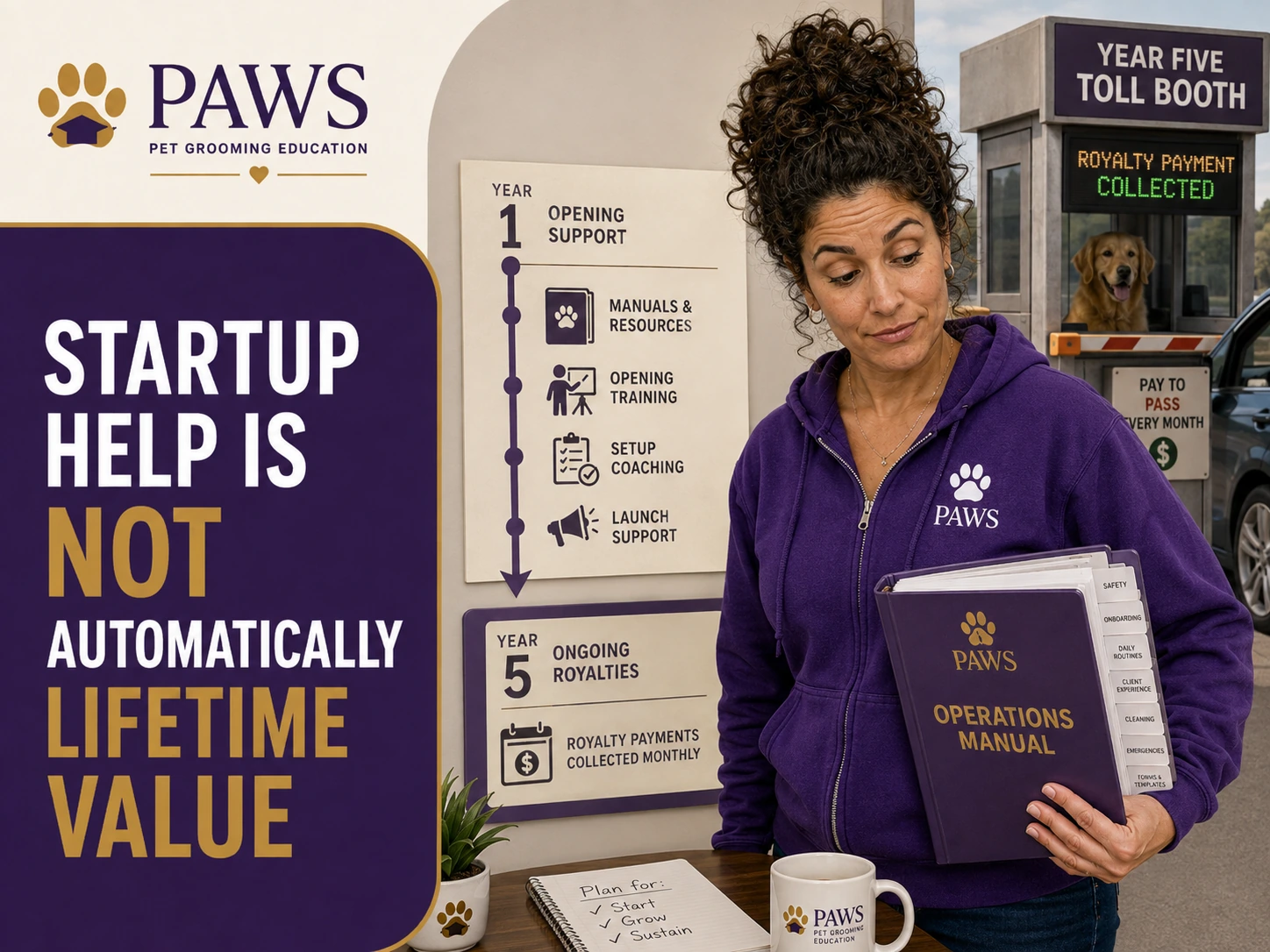
In year one, the operating system may feel extremely valuable. You need forms, policies, software, training, opening checklists, customer scripts, cleaning systems, staff standards, pricing guidance, and someone to tell you what to do next.
By year five, the question changes. You have probably learned your local market. You know your customers. You know your staff problems. You know which dogs fit and which dogs do not. You know what services sell. You know where the building is weak. You know which parts of the manual matter and which parts nobody has opened since the first Christmas rush.
That does not mean the franchise system has no value after year one. It may still provide updates, training, marketing, peer support, compliance tools, software improvements, purchasing help, operating guidance, brand development, and crisis support.
But the buyer should ask this before signing: if most of the value is front-loaded, why does the fee continue forever or for the full term? What do I get in year five that I could not replace with my own procedures, a consultant, better software, a local marketing plan, and experienced staff?
Run an annual value audit. List the training, software improvements, vendor savings, crisis help, marketing tools, operational updates, benchmarking, manager support, and other system benefits actually used during the year.
Then separate value created by the franchisor from value created locally by experienced staff, reviews, customer relationships, local marketing, and procedures the franchisee built. That comparison shows whether the continuing fee still matches the continuing contribution.
📌
The royalty question
If the system keeps solving real problems, the royalty may be easier to justify. If the system mainly helped you open and then became a rulebook, the buyer needs to know that before signing.
👍
When the Operating System May Be Worth It
Some buyers need structure. That is not an insult. It is a real business consideration.
A dog daycare franchise operating system may be worth it when the buyer is inexperienced, the franchisor has real pet-care operating depth, training is strong, software is useful, standards are realistic, support continues after opening, and the system prevents mistakes that would cost more than the royalties.
Some buyers do not want to build forms, policies, software workflows, operating procedures, staff standards, cleaning checklists, and training systems from scratch. Some buyers want the guardrails. Some buyers want a known process. Some buyers are better at following a system than building one.
That is a legitimate reason to consider a franchise. The point is to price the value honestly.
Price avoided mistakes realistically. A strong system may prevent a poor lease decision, unsafe playgroup practice, disease-control failure, payroll mistake, weak opening, software conversion, or customer-handling problem that would cost more than years of fees.
The evidence should come from operators with similar markets, facility sizes, service mixes, and experience levels. A system that rescues an inexperienced owner may create less incremental value for a buyer who already understands pet-care operations.
- The buyer is new to dog daycare and needs strong structure.
- The franchisor has real pet-care operating experience, not just franchise sales experience.
- The manuals are practical and used by current operators.
- Training prepares staff for real dog-care situations.
- Software makes the location easier to run.
- Ongoing support continues after opening.
- Current franchisees say the system still helps years later.
- The cost of mistakes avoided is greater than the cost of the system.
👎
When the Rulebook Starts Looking Expensive
A system that stops helping but keeps charging needs a hard look.
The operating system starts looking expensive when the manuals are generic, support is vague, training is shallow, software is clunky, local marketing still falls on you, current franchisees stop using the system, and the franchisor mostly appears when fees are due or standards are being enforced.
The worst version is paying royalties for a system you outgrow while still being restricted by it. You know your market wants a service, but the system will not allow it. You find a better vendor, but approval drags. You want to improve local advertising, but corporate approval slows it down. You know your staff needs different training, but the manual says the old way.
At that point, the buyer needs to ask whether the franchise operating system is still a tool or has become a leash with a monthly invoice.
Shadow systems are a warning sign. When franchisees maintain separate spreadsheets, unofficial procedures, private vendor lists, outside training, alternate marketing, and local forms because the official system does not work, the buyer may be paying for two operating systems.
The cost is not only the royalty. Staff confusion, duplicate work, slower decisions, blocked local improvement, required spending, and fear of noncompliance can make a weak system more expensive than its visible fees.
⚠️
Blunt operator test
If experienced franchisees quietly build their own forms, their own staff training, their own local marketing, their own vendor workarounds, and their own management systems, ask what the franchisor’s operating system is still doing.
📦
Ask for the Operating System Proof Packet
Do not let “we have support” float around the room without evidence attached to it.
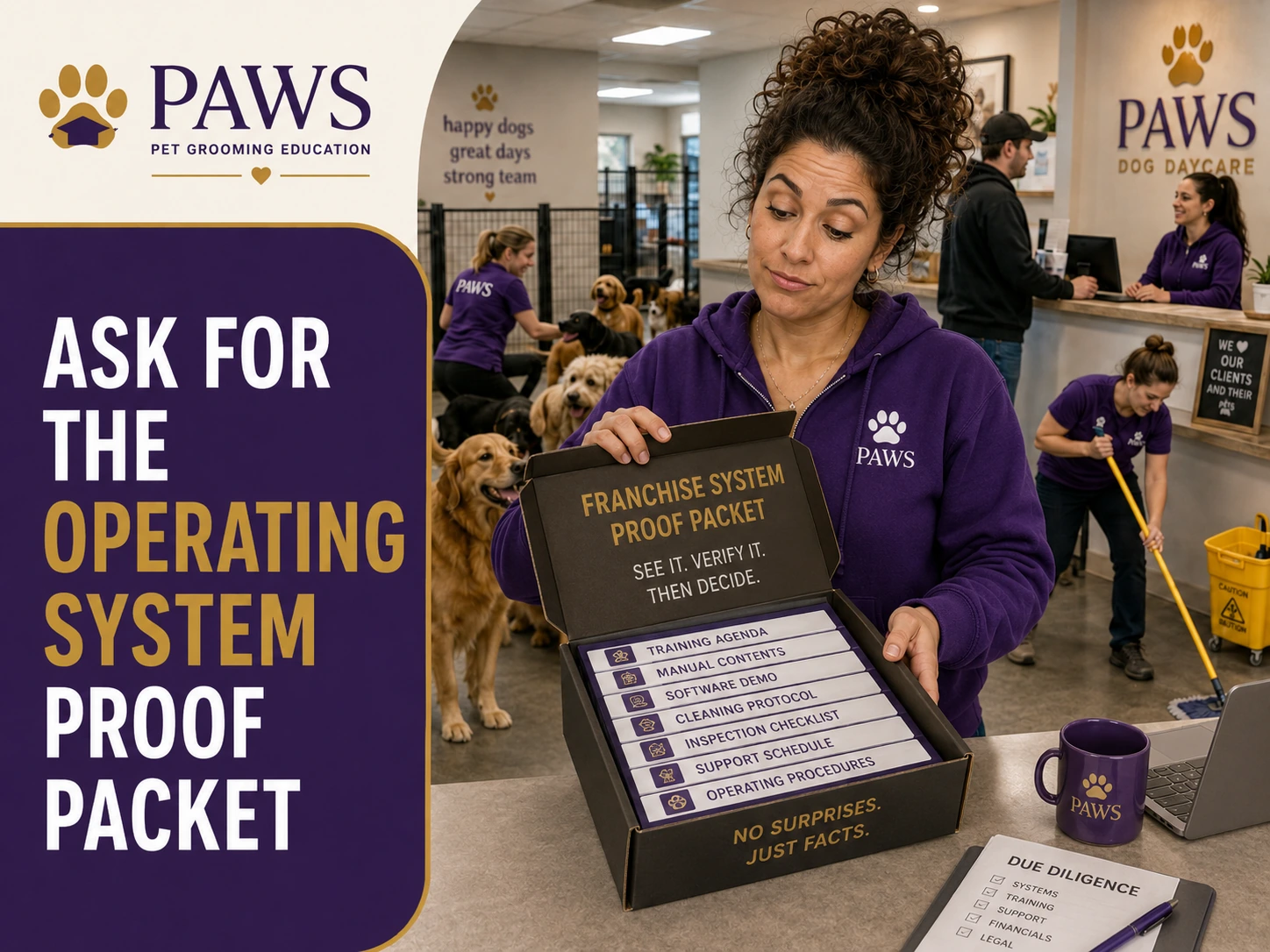
A serious franchisor should be able to show enough of the system for a buyer to understand what is being purchased without handing over every confidential detail. If they cannot show anything useful before signing, the buyer is being asked to trust a black box.
You may not get the full operations manual before signing. That can be normal because manuals may contain confidential system information. But you should still ask for proof of substance: the table of contents, training agenda, opening timeline, sample checklist, sample inspection form, software demo, support schedule, required reports, and examples of how the system handles real dog daycare problems.
The goal is not to steal their system. The goal is to verify that the system is real, practical, current, dog-care-specific, and still useful after opening.
Ask that every proof-packet item include a date, owner, current version, and example of actual use. A polished sample from years ago does not prove the system is current or used across the network.
Compare the packet with franchisee interviews. The franchisor may show the intended process; operators can explain what is practical, what is ignored, what costs extra, what corporate enforces, and what they had to build themselves.
| Ask to See | Why It Matters | What a Weak Answer Sounds Like |
|---|---|---|
| Operations manual table of contents | Shows whether the manual covers real dog daycare operations or just generic business topics. | “You will see all that after you sign.” |
| Training agenda | Shows how much time is spent on dog behavior, cleaning, staff, boarding, grooming, customer conflict, and incidents. | “Training covers everything you need.” |
| Opening checklist | Shows whether they understand site approval, lease timing, build-out, permits, hiring, software, marketing, and pre-opening chaos. | “Our team walks you through it.” |
| Cleaning and disease-control protocol | Shows whether the system handles kennel cough, isolation, disinfectants, laundry, odor, waste, and room turnover. | “We have high cleaning standards.” |
| Incident response protocol | Shows whether the system handles bites, injuries, escapes, illness, customer calls, documentation, and insurance awareness. | “Our franchisees are trained to handle incidents.” |
| Software demo | Shows whether the software helps operations or mainly helps corporate collect reports and fees. | “It is easy once you learn it.” |
| Support schedule or support process | Shows what support happens after opening and whether it is required, included, optional, or extra. | “We are always here for you.” |
| Inspection or audit form | Shows whether inspections are built to improve safety or mostly enforce brand control. | “It is just standard quality control.” |
| Recent system update examples | Shows whether the system is living and improving or stale and decorative. | “We update things as needed.” |
| Franchisee advisory process | Shows whether operators have meaningful input before standards, software, vendors, or procedures change. | “Corporate makes final decisions.” |
❓
Questions to Ask the Franchisor About the Operating System
Make them explain the system without hiding behind “support.”
- Can I review the operations manual table of contents before signing?
- Which parts of the manual are updated most often?
- Who writes and updates the dog-care procedures?
- Who on the team has actually operated dog daycare, boarding, grooming, or pet-care facilities?
- What training happens before opening?
- What training happens after opening?
- Who trains replacement managers and new staff?
- What support is required, included, and ongoing?
- What support is optional or costs extra?
- What software is required?
- Who owns or controls customer data?
- Can system standards change after I open?
- Can changes require new equipment, vendors, software, signage, remodels, or services?
- Who pays when standards change?
- What happens if I find a better local way to solve a problem?
- How do franchisees suggest improvements to the system?
- Can franchisee-created improvements be used systemwide?
- What parts of the system do experienced franchisees still rely on in year five?
- What parts of the operating system are required by contract, and what parts are merely recommended?
- What support are you legally obligated to provide after opening?
- What support is discretionary, optional, or available only for an extra fee?
- Can I see the training agenda before signing?
- Can I see sample opening, cleaning, incident, staffing, and inspection checklists?
- What dog daycare crisis has the system handled recently, and how did corporate support franchisees through it?
- How does the system handle kennel cough, bite incidents, escapes, employee injuries, bad reviews, and licensing inspections?
- What parts of the system have been updated in the last 12 months?
- What required changes have cost franchisees money in the last three years?
- What is the most expensive operating-system change franchisees have been required to make?
- What happens if I disagree with a required standard, software change, vendor change, or remodel requirement?
- Can I speak with franchisees who have been open five years or more specifically about whether the operating system is still worth the royalty?
☎️
Questions to Ask Current and Former Franchisees
The franchisor sells the system. Franchisees live inside it.
Current and former franchisees are where the operating system gets tested. Ask newer owners what helped them open. Ask experienced owners what still helps after several years. Ask former owners what they wish they had known before signing.
Do not only ask, “Are you happy?” That question is too soft. Ask what they still use, what they ignore, what costs extra, what corporate controls, what local decisions are blocked, and whether the system still earns its fees after the learning curve is over.
Use the same core questions with every owner and record the answers. A consistent interview form makes patterns in support, training, software, updates, costs, local flexibility, and year-five value easier to see.
Include franchisees who opened recently, have operated for several years, transferred a location, struggled, expanded, or left the system. The operating system may feel completely different at each stage.
- Which parts of the operating system helped you most before opening?
- Which parts still help you today?
- Which parts looked useful but did not survive real operations?
- Was training enough for dog handling, staffing, customer conflict, disease control, and incidents?
- Did the opening support solve real problems?
- How often do you actually use the operations manual?
- What did you have to build yourself anyway?
- Does corporate support still respond when you need help?
- Is the software good, tolerable, or a hostage situation with a login screen?
- Have system changes required spending money you did not expect?
- What did corporate support actually do for you after opening month was over?
- When you had a real crisis, did the franchisor help or mostly protect the brand?
- Have inspections felt helpful, fair, and safety-focused, or mostly enforcement-focused?
- Have manual updates or standard changes cost you unexpected money?
- Have you ever been required to buy software, equipment, supplies, signage, uniforms, remodel work, or services you did not think were necessary?
- If you had to rebuild your operating system independently today, which franchise pieces would you actually keep?
- What do you use every week from the franchise system?
- What have you not touched since opening?
- What did you have to create yourself because the franchise system did not cover it well enough?
- In year five, is the system still support, or mostly rules?
- Do you feel the system is still worth the royalty?
- Would you choose the same franchise again?
📋
Operating System Scorecard
Use this before signing. The prettier the sales deck, the harder you should score the actual system.
| Score Area | Strong Sign | Warning Sign |
|---|---|---|
| Dog-Care Depth | Procedures reflect real dog behavior, safety, cleaning, boarding, grooming, and staff realities. | Procedures sound generic or written by people who have not operated a busy facility. |
| Training | Training is specific, practical, ongoing, and useful for replacement staff. | Training is mostly pre-opening, short, generic, or focused more on brand than operations. |
| Manuals | Manuals are current, practical, and used by franchisees. | Manuals are large, polished, and mostly ignored after opening. |
| Software | Software improves reservations, billing, vaccination tracking, communication, reporting, and capacity. | Software is expensive, clunky, controlling, or mainly useful for corporate reporting. |
| Ongoing Support | Experienced franchisees still use and value the support. | Support fades after opening, while royalties continue. |
| System Updates | Updates are reasonable, tested, communicated, and financially realistic. | Updates create surprise costs, required vendors, remodels, software changes, or service changes. |
| Local Flexibility | The system allows smart local adaptation within safety and brand standards. | The system blocks local services, vendors, marketing, or improvements without a strong reason. |
| Year-Five Value | Franchisees say the system still earns its fees after they know the business. | Franchisees say most value was front-loaded and the rest is control. |
🗂️
Keep Reading Before You Sign
The operating system is only one part of the franchise decision.
💵
Dog Daycare Franchise Costs
The operating system may help, but it does not erase build-out, rent, payroll, HVAC, flooring, drains, equipment, and working capital.
🧾
Franchise Royalties
If the operating system is the reason for the royalty, ask what it still provides after the opening learning curve.
🔒
Control and Approved Vendors
Operating systems often create vendor rules, software rules, remodel rules, signage rules, and service restrictions.
📄
Franchise FDD
The operating system promises should show up in the FDD, franchise agreement, training language, software terms, and operations manual references.
🍟
Golden Arches Test
If the franchise system disappeared tomorrow, what parts of the business would you truly lose?
🧠
Consultant vs. Franchise
A consultant can help you build your own system without keeping a long-term claim on gross sales.
❓
Dog Daycare Franchise Operating System FAQ
Detailed answers about manuals, training, software, data control, safety systems, staff adoption, changing standards, year-five value, proof packets, and franchisee interviews.
What is a dog daycare franchise operating system?
It is the combined set of manuals, procedures, training, software, forms, checklists, brand standards, staff requirements, reporting rules, safety systems, cleaning protocols, and daily routines the franchisor expects the location to use.
What should a strong operating system accomplish?
It should reduce avoidable mistakes, define decision authority, train replacement staff, improve safety and cleaning, preserve useful records, support managers, create consistent customer communication, and help the location operate better than it reasonably could without the system.
How can I tell whether the system is real or just polished paperwork?
Ask for the manual table of contents, training agenda, sample procedures, opening checklist, incident form, inspection form, software demonstration, support process, and recent update examples. Then ask franchisees which materials they actually use during normal operations.
Are franchise operating manuals valuable?
They can be valuable when they capture real operating judgment, explain escalation, define responsibility, remain current, and help train staff. Their value falls when they are generic, outdated, difficult to use, or treated as page count rather than a working management tool.
Why is a binder not the same thing as a business system?
A binder cannot supervise a playroom, notice a stressed dog, correct an employee, clean a room, calm a customer, or make a capacity decision. The real system exists only when trained people consistently execute useful procedures in the actual facility.
What does it mean when experience becomes the system?
Repetition gives operators and staff practical judgment about dogs, customers, software, staffing, facility flow, boarding routines, and incidents. A strong franchise captures that field experience and improves the shared system instead of allowing the official manual to become disconnected from real work.
How should franchise training be evaluated?
Evaluate what employees can perform, not merely how many hours they attended. Training should cover dog behavior, room supervision, cleaning, disease control, boarding, customer conflict, documentation, software, emergencies, and the specific responsibilities of managers and replacement staff.
Who trains employees hired after the opening team leaves?
The system should identify local trainers, required materials, competency checks, refresher schedules, manager-development requirements, and corporate support. Opening training has limited long-term value when later employees receive only informal instruction from whoever is available.
What should I ask about required software?
Ask what the platform does, what it costs, how fees can change, what reports corporate receives, who controls customer data, what can be exported, how outages are handled, and what happens to records, booking pages, phone numbers, and communication tools if the relationship ends.
Can I take customer and dog data with me?
Do not assume so. Request a demonstration of the actual export, including customer contacts, dog records, vaccination data, notes, reservations, purchases, medications, incidents, and communications. Confirm the format, timing, cost, and contractual rights before signing.
What makes a safety and cleaning system practical?
It must work during short staffing, full boarding, illness concerns, equipment failure, customer pressure, and active incidents. It should establish priorities, escalation authority, documentation, capacity reduction, room closure, owner notification, and follow-up rather than assuming every shift is fully staffed and calm.
Can the franchisor change operating standards after opening?
The source page warns that manuals and system standards may be updated. Buyers should identify what can change, how changes become binding, how much notice is given, whether franchisees provide input, what spending may be required, and whether noncompliance can create default.
Who pays when standards, software, or equipment change?
The documents should answer that directly. Buyers should model possible spending for software, hardware, signs, uniforms, training, vendors, equipment, new services, and remodels and determine whether contractual caps, timing protections, or reasonableness limits exist.
What is the manual-as-a-moving-rulebook problem?
The franchise agreement may remain fixed while the operations manual, approved-vendor list, software requirements, forms, and system standards keep changing. When later changes require spending or create default risk, the manual functions as more than guidance.
What is the year-one versus year-five test?
Year one may deliver opening procedures, training, forms, software setup, and basic structure. By year five, the buyer should identify the ongoing training, updates, savings, crisis help, benchmarking, marketing tools, software improvements, and manager support that still justify continuing fees.
When may the operating system justify the royalty?
It may justify the fee when it continues preventing costly mistakes, improving safety, training employees, supporting managers, producing useful updates, solving crises, reducing costs, improving local performance, and creating value that would be difficult or expensive to replace independently.
What are signs that the system has become an expensive rulebook?
Warning signs include generic manuals, shallow training, weak support, clumsy software, surprise upgrade costs, blocked local decisions, required vendors without clear value, franchisees building parallel systems, and corporate attention focused more on compliance and fees than operating improvement.
What belongs in an operating-system proof packet?
Useful evidence includes the manual table of contents, training agenda, opening timeline, cleaning and disease-control procedures, incident protocol, software demonstration, support schedule, inspection form, recent system updates, and the franchisee advisory process.
Why should I interview current and former franchisees?
They can explain what helped before opening, what remains useful, what became shelf material, what costs extra, how standards change, whether data and software create problems, what they built themselves, and whether the system still earns its fees after several years.
What should I have before deciding the system is worth buying?
You should have documentary proof of the system, broad franchisee interviews, a clear list of ongoing deliverables, software and data answers, realistic change-cost scenarios, professional review of contract authority, and a comparison with the cost of building an independent system using consultants, software, training, and experienced staff.
🐾
The Bottom Line: A System Is Worth Paying For Only If It Keeps Solving Problems
A useful operating system is an asset. A stale rulebook is a toll booth.
A dog daycare franchise operating system can be a real advantage. Manuals, procedures, training, software, safety systems, cleaning rules, staff standards, marketing systems, and daily checklists can help a new owner open faster and avoid expensive mistakes.
But the buyer has to separate startup value from long-term value. If the system keeps improving, keeps supporting operators, keeps training staff, keeps solving problems, and keeps making the business stronger, then the royalty may be easier to justify.
If the system mostly helps you open, then becomes a pile of rules, approvals, required vendors, software fees, and “then-current standards,” ask whether you are paying forever for help you only needed once.
The question is not whether systems matter. Systems absolutely matter. The question is whether this particular franchise system is strong enough, practical enough, and useful enough to deserve a long-term claim on your gross sales.
The final comparison should assign a realistic replacement cost to the pieces that matter: manuals, consulting, software, legal forms, safety training, manager development, marketing systems, inspections, peer support, and crisis help.
Then compare that replacement plan with the franchise’s fees, restrictions, data control, required vendors, change authority, and exit obligations. The right answer depends on the value of the whole relationship, not the thickness of the binder.