Dog Grooming • Automatic Shampoo Machines • Enclosed Tank Systems • Prima-Style Shampoo Machine • Premixed Product • Flea Dip • Mobile Grooming
Enclosed Shampoo Machines: Prima-Style Tank Systems, Premixed Product, Refill Hassle, and the Flea Dip Use That Actually Made Sense
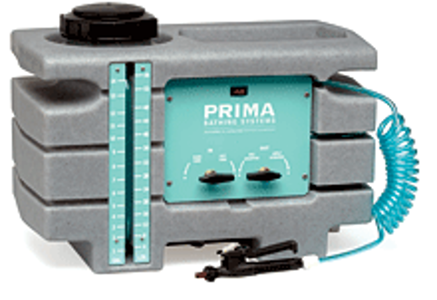
Enclosed shampoo machines differ from Venturi-style vacuum draw machines because they do not rely on building water pressure and weak suction to pull product into a water stream.
Instead, a set volume of shampoo solution is premixed, held inside a closed container, and then dispensed through a wand by an electric pump.
This type of machine is easy to use and fairly reliable, so long as the shampoo is mixed correctly and the machine is cleaned often enough.
That last part matters. These machines are not hard to understand, but they do not reward laziness. Premixed shampoo sitting around too long, too much product in the tank, poor cleaning, clogged filters, and staff treating the machine like a magical wet trash can will eventually turn a useful piece of equipment into a pump-powered headache.
My take on these machines is mixed. I used a Prima-style enclosed machine successfully when my grooming volume was smaller. Later, once the shop got busier, I upgraded to a wall-mounted vacuum draw machine for shampoo and found a better role for the enclosed unit: dedicated flea dip delivery.
⚠️
Operator rule
An enclosed shampoo machine can be useful, but it is not my favorite high-volume shampoo system. It shines more in small shops, mobile grooming, low-to-mid-volume work, specialty product use, and dedicated one-product jobs like flea dip when handled safely and correctly.
🗺️
Use This Page Like an Enclosed Shampoo Machine Reality Check
These machines are simple, useful, and easy to understand. The question is whether the tank, refill schedule, cleaning demand, and product role fit the shop.
🛢️
How They Work
Premixed shampoo solution sits inside a closed tank and is dispensed through a wand by an electric pump.
🧴
Dilution and Mixing
These machines often work better with more dilution than the shampoo bottle suggests. Too much product can make the system struggle.
➕
Auxiliary Line
The auxiliary line can pull premixed product from another container, but it will not magically draw thick unmixed shampoo.
💦
Spray Pressure
The pump and hand valve can provide strong, controllable spray pressure for getting product into thick coats.
🪲
Flea Dip Use
In my larger shop, the best use I found was dedicating the Prima-style machine to flea dip instead of normal shampoo.
✅
Operator Verdict
Useful for small, mobile, specialty, or dedicated-product work. Less attractive as the main shampoo system in a large high-volume shop.
🖼️
Enclosed Shampoo Machine Examples
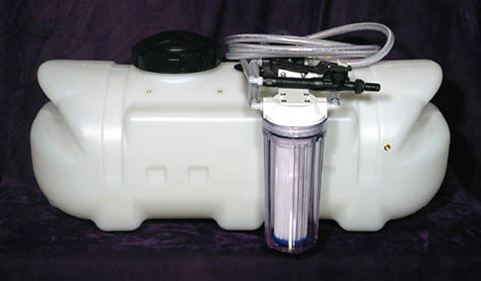
These examples show the tank-style machine category used for premixed shampoo solution, specialty product, and dedicated product dispensing.
🛢️
How Enclosed Shampoo Machines Work
The machine holds a premixed solution, circulates it, and pumps it out through a wand.
Enclosed shampoo machines differ from Venturi-type machines in that a set volume of shampoo solution is premixed and held inside a closed container.
That solution is then dispensed through an electric pump and spray wand.
Unlike vacuum draw machines, enclosed shampoo machines are designed to use ordinary grooming shampoo. You do not need the machine to create suction strong enough to pull product out of a bottle while water passes through an injector.
You simply fill the machine with water, typically around fifteen gallons depending on the unit, and then add the desired amount of shampoo to reach the dilution ratio you want.
Once the shampoo is added, you turn the selector knob to mix. The machine circulates the shampoo-water mixture through the pump and back into the container, effectively mixing the solution.
That makes this kind of machine very easy to understand.
Water and shampoo go in. The machine mixes it. The pump pushes it out. The bather sprays the dog.
Simple is good, but simple does not mean maintenance-free.
📌
Operator translation
An enclosed shampoo machine is basically a premix tank with a pump and wand. It is easy to use, but the tank volume, product mix, cleaning routine, and refill schedule decide whether the room loves it or curses at it.
🧴
Dilution and Mixing: Do Not Make Shampoo Soup
These machines often work better with more dilution, not less.
From experience with the Prima, I found that the dilution ratio suggested by the shampoo manufacturer could typically be multiplied by two or more.
If the shampoo container states that it can be diluted four-to-one, the Prima could often handle eight-to-one or even twelve-to-one with no problem.
In fact, it usually worked better at the higher dilution ratio.
That may sound backwards to someone who believes more shampoo automatically means a cleaner dog, but that is how people end up with foam, clogged equipment, wasted product, and extra rinse time.
These machines can have issues mixing or dispensing product if too much shampoo is added.
Too much product can make the solution heavier, thicker, foamier, harder to circulate, harder to spray, and harder to rinse.
The goal is not to impress the dog with how much shampoo you own.
The goal is to get the correct amount of product into the coat, clean the dog, rinse thoroughly, and move on without turning the machine into a sticky science project.
⚠️
Dilution warning
More shampoo is not automatically better. With enclosed machines, too much product can make the machine work worse, waste money, and leave staff fighting foam and residue.
➕
The Auxiliary Line: Useful, But It Still Wants Premixed Product
The auxiliary line can pull from another container, but it is not a magic straw for thick shampoo.
The Prima also offers an auxiliary line that can be placed into another container of premixed product.
You turn the knob to auxiliary, and the machine draws product from that container into the pump and dispenses it through the wand.
That is useful, but there is a catch.
It will not draw unmixed product through the auxiliary line because unmixed product is too thick.
When I used this feature, I typically premixed another product in an old five-gallon shampoo container and placed the auxiliary line in that.
That worked, but the auxiliary container does not mix itself.
If the product sits unused for a while, settling can become an issue. As a result, it has to be manually agitated every so often to keep the product in suspension.
Whether using the main tank or an auxiliary container, I recommend mixing no more product than can be used in about two days.
Premixed shampoo will begin to spoil and sour if left unused too long.
Leave it sitting long enough and you can end up spraying dogs with a solution that smells like old feet and sour milk.
That smell is not a brand experience. That is a cleaning failure wearing a nozzle.
📌
Auxiliary rule
The auxiliary line is for premixed product. It is not for pulling thick concentrate straight from a jug and hoping the pump has a spiritual breakthrough.
💦
Spray Pressure and Control Are the Strong Points
The pump and hand valve give these machines useful coat penetration and good control around sensitive areas.
These machines dispense product with the aid of a pump and a hand-operated spray valve.
The pressure coming from the nozzle is relatively high and more than adequate to penetrate even thick coats.
That is one of the things I liked about the Prima-style unit.
The spray valve is operated by squeezing the handle, so the amount of product delivered and the pressure at which it is delivered can be regulated by how much the handle is depressed.
That gives the bather excellent control over how hard and how much product is dispensed.
This matters around sensitive areas such as ears, eyes, face, belly, privates, and any area where blasting full pressure like a lunatic is not the plan.
A vacuum draw system may be more convenient for high-volume shampoo switching, but the enclosed pump machine gives a very direct, controllable spray.
That spray control is one reason it worked so well for dedicated flea dip use in my shop.
📌
Where it feels good
The hand valve gives real control. Light squeeze for sensitive areas, stronger spray for thick coat and undercoat. That is useful equipment behavior.
🏪
Where Enclosed Machines Fit Best
Small shop, mobile groomer, low-to-mid-volume room, or specialty product job. That is where they make the most sense.
My take on this type of machine is mixed depending on how it is used and the size of the grooming shop using it.
In a smaller low-to-mid-volume grooming shop, it can be a very effective cost and labor saving piece of equipment.
For a mobile groomer, where an infinite supply of water is not an option, I can definitely see this being valuable.
It is compact, relatively lightweight compared with building a full plumbing system, and allows the mobile groomer to premix the product they expect to use that day.
For a smaller grooming shop, one full tank can often bathe fifteen or twenty dogs depending on size, coat texture, how the solution is mixed, and how staff use the wand.
That sounds fine until the shop gets bigger.
In a larger shop grooming fifteen or more dogs a day and bathing another fifteen or twenty more, the contents of the machine can run down quickly.
Then the machine has to be refilled. Sometimes more than once a day.
That is where the convenience starts to fade.
The bigger the room gets, the more annoying constant refilling becomes. Staff are busy. Dogs are wet. The tub is moving. Nobody wants the shampoo system to stop production because the tank is empty again.
🧽
Cleaning Is Not Optional
Premixed shampoo and pumps do not forgive long-term neglect.
With larger shops, it can be a hassle to constantly refill the machine and get staff to reliably clean the shampoo machine after every so many fills.
If the machine is not cleaned reliably, shampoo can begin to leave a gel-like residue inside the machine.
That residue can eventually clog filters, clog the spray nozzle, gum up hoses, or bog down the pump.
This is not a complicated failure.
Shampoo sits. Shampoo dries. Product separates. Residue builds. The machine starts acting weak, clogged, or stupid.
Then someone blames the machine even though the machine has been sitting there full of old product and neglect like a swamp with a power cord.
Premixed shampoo should be treated like something with a shelf life, not like immortal bath juice.
⚠️
Cleaning rule
Mix only what the shop can use quickly, flush and clean the system, and do not let premixed product sit until it smells like old feet and sour milk.
🚿
The Rinse Problem
This machine dispenses product well. That does not make it a practical rinse system.
Another drawback to this type of shampoo machine is that it does not offer a practical rinse feature.
Yes, in theory, you could use the auxiliary line with clean water.
In real use, the volume of water dispensed from the sprayer is too little to thoroughly rinse a dog efficiently.
It can take nearly the entire contents of a five-gallon container to rinse only a couple of dogs properly, depending on dog size and coat.
That is not a rinse plan.
For a mobile groomer, this becomes even more obvious. Unless someone wants to drag around a fifty-five-gallon drum of water weighing hundreds of pounds along with the machine, using it as the primary rinse source is not practical.
Use the enclosed machine for product application. Use a real water source for rinsing.
A dog that is shampooed well and rinsed badly is still a bad bath.
📌
Rinse rule
Do not confuse product spray with rinse capacity. This machine can apply product well, but the dog still needs a proper fresh-water rinse.
🪲
The Best Use I Found: Dedicated Flea Dip Delivery
In a larger shop, I liked the Prima-style machine better as a one-product flea dip dispenser than as the main shampoo system.
I used the Prima to great success when I was initially building my grooming business and only had a smaller volume of dogs to bathe.
Once I built a larger clientele and had to deal with constantly refilling the machine, I upgraded to a Venturi-style vacuum draw shampoo machine plumbed into the building water supply.
That upgrade let me select multiple types of shampoo with the turn of a knob and eliminated the need to constantly refill the shampoo machine.
At that point, I found a better use for the Prima.
I repurposed it to hold flea and tick dip.
That is where the machine actually made sense in a larger shop.
We would sell a normal bath or grooming service, and then if the dog needed it, we could sell the customer an additional flea dip. At the time, that was an extra $15.
That number matters.
A vague “add-on service” sounds like brochure fluff. Fifteen dollars for a flea dip that can be applied quickly is real grooming-room math.
With the Prima, you could mix up two or three gallons of flea dip and have it ready. Because the machine dispensed through a pump with good pressure, it sprayed the flea dip into the coat, undercoat, legs, belly, tail, chest, and all the places fleas like to pretend they are paying rent.
On many dogs, you could apply the dip in under forty-five seconds.
On a big thick-coated dog, maybe it took two minutes to work it through properly.
That is the difference between an add-on that sounds nice and an add-on that actually makes operational sense. If the shop charges $15 and the application takes under a minute or two, the time-to-money relationship is obvious.
Ten flea dips in a week at $15 each is $150 in gross add-on revenue. Fifty in a month is $750. That is not imaginary money. That is money tied to a service the machine helps deliver quickly and consistently.
Flea dip product is also expensive. Concentrated product can cost well over $100 per gallon. For example, Permethrin SFR 36.8% is around $118 per gallon and not something I want staff sloshing around by hand like they are seasoning soup.
That is another reason the enclosed machine made sense for this job.
It let me premix a controlled amount of expensive product, keep it in a dedicated vessel, and dispense it with pressure instead of constantly handling concentrate, pouring little batches, spilling, overmixing, under-mixing, or wasting product during transfer.
In a large grooming shop, I found this to be the best use for an enclosed shampoo machine. Not as the main shampoo system. Not exactly as a backup. More like a dedicated one-product machine for a specific paid service.
The wall-mounted vacuum draw machine handled normal shampoo. The Prima handled flea dip. Each machine had a job, and nobody had to pretend the tank machine was something it was not.
⚠️
Pesticide safety rule
Flea dip is not shampoo. Use only products legally appropriate for the animal, follow the label, mix correctly, clearly label the machine, prevent cross-use, protect staff, and do not casually spray pesticide around the room like it is lavender water.
🧰
My Two-Machine Setup Between the Tubs
This is where the enclosed machine made sense after the shop outgrew it as the main shampoo system.
In my larger setup, I had two shampoo systems working different jobs.
The wall-mounted vacuum draw machine was mounted between the two grooming tubs and handled the normal shampoo work.
That machine was better for high-volume shampoo because it was plumbed into the building water supply and could switch between multiple products.
Then I had the Prima-style enclosed machine sitting on a wall-built shelf underneath that area between the tubs.
The Prima was not trying to be the main shampoo machine anymore.
It was dedicated to flea dip.
That arrangement made sense because the normal shampoo system handled daily bath flow, while the enclosed machine stayed ready for a specific add-on service.
That is the kind of equipment use I like. Each machine has a job. Nobody is pretending the tank machine is perfect for high-volume shampoo, and nobody is wasting the pump pressure that makes it useful for a specialty product.
📌
Operator setup
Vacuum draw machine for normal high-volume shampoo. Enclosed machine underneath or nearby for dedicated flea dip. That is how the Prima-style machine earned its space after the main shampoo workload outgrew it.
💰
Price Reality: Useful Machine, Annoying Price
My issue is not that the machine cannot work. My issue is what it costs compared with what it does.
The main drawback to this type of unit is price.
In my opinion, these machines can feel overpriced when you consider the somewhat limited capabilities and the niche they are designed to fill.
The machine is useful. I am not arguing that.
But when the unit is mainly a tank, pump, wand, hose, filter, selector, and housing, the price can feel high compared with competing machines that offer more capability in a fixed shop.
For a small shop or mobile groomer, the price may still make sense because the machine solves a specific workflow problem.
For a high-volume fixed grooming room, I would rather put the money toward a properly installed vacuum draw system for normal shampoo work and keep the enclosed machine only if it has a dedicated use.
That is why my opinion is mixed.
Useful does not automatically mean best first choice for every room.
🔧
Replacement Parts: Search the Part Number Before Paying the Shampoo Machine Tax
The manufacturer did not personally invent every pump, wand, hose, filter, and switch inside the machine.
One of my biggest tips with these systems is to avoid automatically buying replacement parts from the shampoo machine manufacturer.
Items like the spray wand, pump, hoses, filters, switches, and fittings can often be purchased online from the actual component manufacturer by searching the model number of the part.
In doing so, you may pay far less than what the shampoo machine company would charge for the same part.
The shampoo machine company often purchases parts from other vendors, integrates them into the machine, and then sells the finished system.
That is fine. That is business.
But when a pump or wand fails, that does not mean you have to pay whatever marked-up replacement price shows up in the shampoo machine company’s parts department.
I learned this lesson when the pump went out on the machine we were using.
I called the shampoo machine manufacturer and was quoted a replacement price that was pretty shocking.
Instead, I searched the model number online and purchased from the actual pump source for quite a bit less.
Same part. Less money. Fewer feelings of being mugged by a parts catalog.
📌
Parts rule
Before buying branded replacement parts, look for the model number on the pump, wand, hose, filter, switch, or fitting. The same part may be available directly for less.
⚖️
Enclosed Shampoo Machine Fit Table
This machine can be useful or annoying depending on the job you give it.
Swipe left/right to see the full table.
| Use Case | Fit | Operator Reason |
|---|---|---|
| Mobile groomer | Strong possible fit. | Product can be premixed for the day without depending on a fixed building water supply. |
| Small low-volume grooming shop | Good fit. | One tank may handle a practical number of dogs before refilling becomes annoying. |
| Mid-volume shop | Maybe. | Useful if refill and cleaning habits are good. Annoying if the room outgrows the tank. |
| Large high-volume shampoo work | Not my first choice. | Refilling and cleaning become too frequent compared with a plumbed vacuum draw system. |
| Dedicated flea dip or specialty product | Strong fit. | Pump pressure and controlled delivery make it useful for one specific premixed product. |
| Primary rinse system | Poor fit. | The water volume is not practical for properly rinsing dogs. |
| Backup shampoo support | Useful. | Can keep the tub moving if the main shampoo system is down or a special product is needed. |
✅
Enclosed Shampoo Machine Buying Checklist
Before buying, make the machine survive these questions.
- How many dogs will this machine realistically bathe before needing a refill?
- Is this machine being used for normal shampoo, specialty product, flea dip, mobile grooming, or backup use?
- Can staff mix product accurately without overloading the tank with too much shampoo?
- How long will premixed product sit before being used?
- Will staff clean the machine often enough to prevent residue, clogged filters, clogged nozzles, and pump strain?
- Does the spray pressure give enough coat penetration for the dogs you bathe?
- Is there a proper fresh-water rinse plan separate from this machine?
- If using the auxiliary line, will the auxiliary product be premixed and manually agitated as needed?
- If using for flea dip or pesticide, is the machine clearly labeled and restricted to that product?
- Are staff trained on product safety, dilution, PPE, label directions, and cross-contamination prevention?
- Are replacement parts identifiable by model number so you are not trapped paying branded parts markup?
- Is the machine priced fairly compared with what it will actually do in your specific grooming room?
🚫
Common Enclosed Shampoo Machine Mistakes
Most problems come from bad mixing, too much product, old solution, poor cleaning, or using the machine for the wrong job.
Swipe left/right to see the full table.
| Mistake | Why It Hurts | Better Move |
|---|---|---|
| Mixing too much shampoo | Can cause poor mixing, poor spray performance, foam, residue, clogging, and wasted product. | Start with higher dilution and adjust based on results. |
| Letting premixed product sit too long | Product can sour, separate, settle, smell terrible, and become unpleasant or unsafe to use. | Mix only what can be used quickly and clean the machine. |
| Expecting the auxiliary line to pull concentrate | Thick unmixed product may not draw and can strain or clog the system. | Use premixed product in the auxiliary container. |
| Using the machine as the main shampoo system after the shop outgrows it | Constant refilling slows production and annoys staff. | Upgrade to a plumbed vacuum draw system for high-volume shampoo work. |
| Treating it like a rinse system | The volume is usually not practical for thorough rinsing. | Use the machine for product delivery and rinse with a proper fresh-water source. |
| Failing to clean filters, nozzles, hoses, and the tank | Residue can clog the machine and bog down the pump. | Build cleaning into the bathing routine. |
| Using flea dip without tight controls | Pesticide products require correct dilution, labeling, handling, animal selection, and cross-contamination control. | Dedicate the system, label it clearly, and follow the product label and safety rules. |
| Buying branded replacement parts without checking model numbers | You may pay much more for the same pump, wand, hose, filter, or switch. | Search the actual part number before paying the shampoo machine company’s markup. |
✅
My Operator Verdict on Enclosed Shampoo Machines
Useful machine. Wrong main role in a large shop. Strong specialty-product tool when used right.
My verdict is mixed, but not because these machines are bad.
They are easy to use, fairly reliable, and they spray premixed product with good pressure and good control.
For a mobile groomer, small shop, or low-to-mid-volume grooming room, an enclosed shampoo machine can make sense.
For a high-volume shop, I do not like it as the main shampoo system because the tank runs down too quickly, refilling becomes annoying, and cleaning discipline becomes one more thing staff can ignore until the pump starts complaining.
In my own shop, I used the Prima successfully early on. Once volume increased, I upgraded to a wall-mounted vacuum draw machine for normal shampoo work.
That was the right move.
But I did not throw the Prima away or treat it like useless equipment.
I repurposed it as a dedicated flea dip machine, and that is where I found its best use in a larger shop.
The pump pressure was strong enough to spray product into the coat and undercoat quickly, the machine could hold a practical amount of premixed flea dip, and it made a paid add-on service easier to perform consistently.
That is the real operator take.
Do not ask this machine to be everything. Give it the job it is actually good at.
⚠️
Final take
An enclosed shampoo machine is useful when volume, product, refill schedule, cleaning habits, and purpose all line up. It is not my favorite main shampoo system for a large busy shop, but as a mobile, small-shop, backup, specialty, or flea dip dispenser, it can earn its keep.
❓
Enclosed Shampoo Machine FAQ
Straight answers about premixed tanks, dilution, auxiliary lines, refill problems, flea dip use, and replacement parts.
What is an enclosed shampoo machine?
It is a tank-style grooming shampoo machine that holds premixed shampoo solution and dispenses it through a wand using an electric pump.
How is it different from a vacuum draw shampoo machine?
A vacuum draw machine uses water flow and a Venturi injector to pull product into the water stream. An enclosed machine stores premixed product in a tank and pumps it out directly.
Can enclosed shampoo machines use regular grooming shampoo?
Yes, that is one of their advantages. You can usually use ordinary grooming shampoo as long as it is diluted properly and the machine is cleaned.
Should I follow the shampoo bottle dilution exactly?
Not always. In my experience with the Prima, the machine often worked better with more dilution than the bottle suggested. Too much shampoo can cause mixing, spraying, residue, and clogging problems.
What is the auxiliary line for?
The auxiliary line can draw from another container of premixed product. It is not meant to draw thick unmixed concentrate.
Can premixed shampoo sit in the machine for a long time?
I do not recommend it. Premixed shampoo can sour, separate, settle, smell bad, and contribute to residue. Mix only what can be used quickly.
Are enclosed machines good for high-volume shops?
Not as my first choice for the main shampoo system. In a large shop, the tank can run down quickly and refilling becomes annoying. A plumbed vacuum draw system usually makes more sense for normal shampoo work.
Are they good for mobile grooming?
Yes, they can be useful for mobile grooming because the groomer can premix product for the day and does not need a fixed wall-mounted plumbing setup.
Can an enclosed shampoo machine rinse dogs?
Not practically in most cases. The water volume and spray setup are not a good substitute for proper fresh-water rinsing.
What was the best use I found for the Prima?
In a larger shop, I liked it best as a dedicated flea dip dispenser. The pressure helped spray product into the coat and undercoat quickly, and the machine worked well as a one-product specialty system.
Should I buy replacement parts from the shampoo machine company?
Not automatically. Check the model number on the pump, wand, hose, filter, switch, or fitting. The same part may be available from the actual part manufacturer for less money.
🐾
Bottom Line: Good Tank Machine, But Give It the Right Job
Enclosed shampoo machines work. They just do not belong in every role.
Enclosed shampoo machines are easy to understand and can be useful equipment.
They hold premixed product, pump it through a wand, provide good spray pressure, and give the bather control over product application.
They make sense for mobile groomers, small shops, low-to-mid-volume rooms, backup use, and specialty product work.
They make less sense as the main shampoo system in a busy high-volume shop because refilling, cleaning, sour product, residue, and tank capacity become daily annoyances.
In my own operation, the Prima-style unit was useful early and then became more useful later as a dedicated flea dip dispenser after I upgraded normal shampoo work to a plumbed vacuum draw machine.
That is the correct way to think about this equipment.
Do not ask it to be the wrong machine. Use it where the tank, pump, wand, and premixed product actually make sense.