Grooming Tubs • Plastic Grooming Tubs • HMWPE Grooming Tubs • Tub Weight • Connection Points • Commercial Durability
Plastic / HMWPE Grooming Tubs: Lightweight, Marketed Hard, and Not My First Choice for Professional Use
-grooming-tub.png)
Plastic and high molecular weight polyethylene grooming tubs can look attractive on paper because they are often marketed as lightweight, lower-cost, sturdy, and easier to handle.
My problem is that grooming tubs are not decorative plastic bins. They are wet-dog workstations that have to deal with large dogs, nervous dogs, bath fighters, water, shampoo, restraint pressure, staff use, legs, hinges, shelves, ramps, connection points, and years of daily abuse.
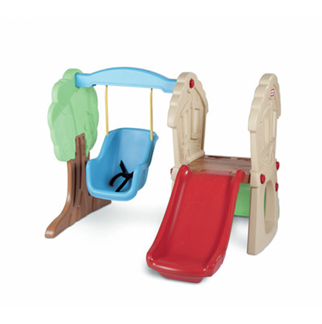
While it may be an unfair association, the majority of tubs within this category make me think they should have been built by Little Tikes. That being said, Little Tikes does make a good outdoor swing set for children under five.
The issue is not that impact-resistant plastic cannot be useful. The issue is whether I want my professional grooming tub to feel lightweight, hollow, flexible, or connection-point sensitive when a large wet dog in the tub says “hell no” to the bath.
⚠️
Operator rule
Lightweight is not automatically a benefit in a grooming tub. Sometimes weight is stability, and stability matters when the dog in the tub is wet, strong, scared, and voting against the entire bathing process.
🗺️
Use This Page Like a Plastic Tub Reality Check
Plastic tubs may have a place, but I would not buy one for professional use without looking hard at weight, flex, attachment points, and stability.
🧸
The Little Tikes Feeling
The category gives me children’s playset energy, which is not exactly what I want from a professional bathing station.
📣
Marketing Language
When the sales copy works too hard, I start looking for the weakness it is trying to distract me from.
🔩
Connection Points
Legs, hinges, shelves, bolts, screws, and attachments are where flexible materials can start showing weakness.
⚖️
Weight and Stability
A tub that is too light can move, wobble, or need serious anchoring when a large dog fights the bath.
🏪
High-Volume Shops
I rarely see these tubs in serious high-volume grooming shops, and that tells me something.
✅
Operator Verdict
Maybe some are better than others, but this is not the tub category I personally want for professional use.
🖼️
Plastic / HMWPE Grooming Tub Examples
These images show the kind of lightweight plastic tub design that makes me look closely at connection points, weight, and long-term commercial abuse.
-grooming-tub1.png)
-grooming-tub2.png)
-grooming-tub3.png)
🧸
The Little Tikes Feeling
It may be an unfair association, but it is the first thing this tub category makes me think about.
While it may be an unfair association, the majority of tubs within this category make me think they should have been built by Little Tikes.
That being said, Little Tikes does make a good outdoor swing set for children under five. Many of those products are made with impact-resistant plastic similar in general concept to what is used in some plastic grooming tubs.
The problem, in my humble opinion, is that I cannot really think of many large, high-use grooming room items made from plastic that have withstood the test of time in the same way as stainless steel or a properly built custom station.
As a kid, my Big Wheel bit the dust pretty quickly after I wore the plastic tires square sliding it around corners and doing kiddy burnouts in the circle in front of my home.
That childhood engineering experiment is not exactly scientific research, but it does explain my bias. Plastic can be tough, but repeated abuse at stress points tells the truth eventually.
📌
The real concern
I am not saying all plastic is junk. I am saying a professional grooming tub lives a harder life than the product photos usually admit.
📣
When the Marketing Copy Works Too Hard
Sell words do not automatically mean a product is bad, but they do make me look closer.
It strikes me as a bit suspect when the companies responsible for manufacturing or marketing these tubs overuse sell words in an attempt to overcome obvious shortcomings.
Phrases like “exceptional tubs at significantly lower prices,” “this sturdy plastic tub,” and “new lightweight design” all sound nice, but they also make me ask what problem those phrases are trying to smooth over.
Lightweight can be convenient during shipping and setup. Lower cost can help a startup budget. Sturdy can be true depending on construction.
But none of those words answer the real grooming-room questions.
What happens at the legs? What happens at the hinge? What happens where shelves, ramps, doors, plumbing, restraints, or wall anchors attach? What happens when a large dog shifts its weight sideways and the tub has to hold steady?
Sales copy is allowed to be excited. Operators still have to be suspicious.
⚠️
Buying warning
Do not let “lightweight,” “sturdy,” or “lower cost” distract you from connection points, wall anchoring, wobble, tub weight, and what happens when the dog fights the bath.
🔩
Connection Points Are My Primary Concern
Legs, hinges, shelves, screws, bolts, and attachments are where tubs start telling the truth.
Of primary concern to me would be connection points, if applicable, and weight.
By connection points, I am referring to areas where legs, hinges, shelves, ramps, doors, brackets, or other attachments are affixed.
No offense intended to the plastic item makers of the world, but plastic in general does not have the greatest reputation for longevity and sturdiness at connection points.
Plastic by its nature, unless exceptionally thick and properly reinforced, is usually malleable to some degree. Bolt holes can elongate under stress. Screws can strip. Attached pieces can loosen. Flex can slowly turn a tight part into a sloppy part.
That is probably one reason I rarely see this type of tub in high-volume grooming shops.
A tub basin that looks fine by itself is only part of the story. The professional-use question is whether the whole tub system stays solid after months and years of dogs climbing, shifting, fighting, leaning, shaking, and trying to leave.
Swipe left/right to see the full table.
| Connection Point | What I Would Inspect | What Can Go Wrong |
|---|---|---|
| Legs or base | Thickness, reinforcement, attachment method, movement under load. | Wobble, flex, loosening, or stress around fasteners. |
| Hinges or doors | Hardware quality, fastener bite, flex around the hinge area. | Sagging, stripped screws, poor alignment, leaking, or loose entry points. |
| Shelves or accessories | How attachments are supported and whether the plastic flexes. | Cracking, elongation, weak support, or constant adjustment. |
| Wall anchoring | Whether the tub can be safely secured without crushing or deforming plastic. | Sliding, flexing, cracked attachment points, or false confidence. |
| Restraint points | How noose eyelets or restraint hardware are mounted and reinforced. | Unsafe restraint, stress damage, or attachment failure under dog movement. |
⚖️
Weight and Stability Matter More Than the Sales Sheet Admits
In a grooming tub, being light is not always a virtue.
Of equal concern to me would be weight.
I do not know about you, but I prefer a fuller-figured grooming tub with some meat on its bones.
At the very least, I would like the tub to match weight with many of the dogs it is expected to hold so it does not get wobbled and tossed around when the dog in the tub says “hell no” to the bath.
After coming across one of these tubs on display at a grooming expo, it felt weight-wise comparable to what I would expect from a similarly sized children’s plastic swing set.
While the material looked to be the better part of half an inch thick, it felt hollow. That would concern me greatly if I needed to secure it to a wall to prevent it from sliding around when occupied by a large, difficult dog.
A light tub may be easier to ship and move. That is nice for the delivery guy. I am more interested in how the tub behaves when a wet dog with opinions starts throwing weight around.
⚠️
Stability warning
A tub that is easy to move before installation may also be easier for a large dog to move after installation unless the base, anchoring, and structure are seriously handled.
🏪
Why I Rarely See These in High-Volume Grooming Shops
Real shops have a way of filtering out equipment that looks better in marketing than it behaves under daily abuse.
It may be that the example I came across, even though it was manufactured by a well-known name in grooming products, was a bad representation of the class as a whole.
It may also be true that other companies make a better product.
I am open to that.
But based on what I have seen and handled, this is not a tub category I would be eager to purchase for professional use.
High-volume grooming shops tend to be practical. They use what survives. If a category rarely shows up in serious daily-use environments, I pay attention.
I am not saying no plastic tub can ever work. I am saying I would need to be convinced by the actual build quality, not the brochure.
✅
When a Plastic / HMWPE Grooming Tub Might Make Sense
There may be narrow use cases where weight, cost, or mobility matter more than heavy commercial abuse.
I can see a plastic or HMWPE grooming tub making more sense in a lower-volume environment, a startup with a very specific budget limitation, a mobile or temporary setup, or a situation where the tub will mostly handle smaller dogs and lighter use.
It may also make sense if the tub is genuinely well-reinforced, has strong attachment points, has a stable base, can be properly anchored, includes safe restraint points, and does not feel like it is pretending to be stronger than it is.
But I would inspect it harder than I would inspect a standard stainless unit.
With plastic tubs, the question is not only whether the basin holds water. The question is whether the whole structure behaves like professional equipment after real grooming-room abuse.
🚫
When I Would Not Buy One
The more serious the grooming room, the less I want a tub that makes me worry about flex, weight, and attachment points.
I would not buy a lightweight plastic grooming tub for a high-volume professional shop without seeing serious evidence that the tub can survive the work.
I would not buy one if the legs, hinges, restraint points, shelves, or accessories looked lightly attached.
I would not buy one if the tub felt hollow, wobbly, or too easy to shift around.
I would not buy one if I expected a steady diet of large dogs, bath fighters, heavy daily use, and staff who need the equipment to stay boringly reliable.
In that kind of room, I would rather spend the money on stainless steel, fiberglass, or a properly planned custom station.
✅
My Operator Verdict on Plastic / HMWPE Grooming Tubs
Maybe some are better than others, but this is not the category I personally want for professional use.
My verdict is that plastic and HMWPE grooming tubs are not my first choice for professional grooming use.
Maybe my concerns are influenced by personal preference. Maybe the example I handled was not the best example of the category. Maybe some manufacturers build a better version.
That said, my concerns are real.
I worry about connection points. I worry about weight. I worry about wobble. I worry about bolt holes elongating, screws stripping, legs loosening, restraints stressing the material, and the tub not having enough mass to stay planted when a large wet dog objects.
I rarely see this type of tub in serious high-volume grooming shops, and I am unlikely to purchase one for professional use unless the build quality clearly overcomes those concerns.
For most professional grooming rooms, I would rather look at stainless steel first, fiberglass second depending on the project, or a custom station when the room and budget justify it.
⚠️
Final take
Lightweight plastic tubs may look convenient, but professional grooming rooms punish weak connection points, low weight, and shaky construction. I would need more than happy sales copy before trusting one as a main commercial tub.
❓
Plastic / HMWPE Grooming Tub FAQ
Straight answers about lightweight plastic tubs, connection points, stability, and professional grooming-room use.
What is a plastic / HMWPE grooming tub?
It is a grooming tub made from plastic or high molecular weight polyethylene material instead of stainless steel, fiberglass, or a built custom station.
Why am I skeptical of this tub category?
My concerns are connection points, weight, stability, flex, attachment strength, and long-term durability in a high-volume professional grooming room.
Is plastic always bad for grooming tubs?
No. Plastic can be useful and impact resistant. My issue is whether a specific tub is built heavily enough and reinforced well enough for professional bathing abuse.
What connection points matter most?
Legs, hinges, ramps, doors, shelves, wall anchors, restraint points, plumbing attachments, and any area where bolts, screws, or brackets attach to the plastic.
Why does tub weight matter?
A heavier tub often feels more stable. A very light tub may be easier to move, but that can become a problem when a large wet dog starts shifting, pulling, or fighting the bath.
Would I use one in a high-volume grooming shop?
Not as my first choice. I would need to see very strong build quality, good reinforcement, safe restraint points, and real stability before trusting one as a main commercial tub.
When might one make sense?
It may make sense in lower-volume use, smaller-dog use, temporary setups, budget-limited situations, or where the specific tub is unusually well built and properly anchored.
What would I choose instead?
For most professional grooming rooms, I would look first at stainless steel, then fiberglass or a properly planned custom station depending on the room, budget, and design goals.
🐾
Bottom Line: I Need More Than Lightweight and Lower Cost
A grooming tub has to survive the work, not just look acceptable in a product photo.
Plastic and HMWPE grooming tubs may have a place, but they are not my preferred professional tub category.
The repeated concerns are weight, wobble, flex, connection points, attachment strength, wall anchoring, restraint points, and how the tub behaves when a large wet dog decides the bath is a terrible idea.
Maybe some manufacturers build strong versions. Maybe some shops use them successfully in lighter-duty environments. I am not declaring the entire category useless.
But for serious professional grooming use, this is not where I would start.
I want a tub with some weight, some stiffness, some proven durability, and enough structural confidence that I am not thinking about a children’s playset while trying to bathe a dog.