Grooming Tubs • Stainless Steel Grooming Tubs • 304 Stainless • Gauge Thickness • Ramps • Professional Bathing Stations
Stainless Steel Grooming Tubs: My Default Professional Choice, but Gauge and Ramp Design Matter
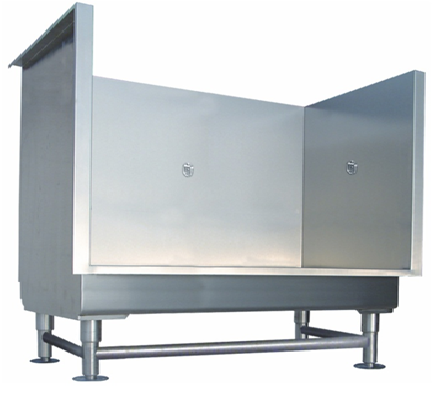
Stainless steel grooming tubs come in a variety of shapes, sizes, heights, entry styles, ramp options, plumbing layouts, and price points.
The one thing they all tend to have in common is durability.
Tubs in this category are typically excellent for professional use and will withstand the rigors and abuse that a busy grooming shop demands.
The only real complexity is learning how to read the sales copy. A stainless tub ad may say “20-gauge 304-type stainless steel,” and that sounds informative, but the average dog groomer or shop owner may have no idea what that means in terms of tub quality, thickness, weight, seams, or durability.
Once you understand stainless grade, gauge thickness, seams, ramps, doors, and plumbing location, the stainless tub decision gets much easier.
⚠️
Operator rule
Stainless steel is my default professional tub recommendation, but do not buy by the word “stainless” alone. Gauge, seams, door design, ramp design, restraint points, drain location, and install method still matter.
🗺️
Use This Page Like a Stainless Tub Buying Check
Stainless steel is usually the safe professional bet, but the details decide whether you bought a good tub or an expensive wet box.
🔩
Why Stainless Works
Stainless steel tubs are durable, professional-looking, serviceable, and built for serious grooming-room abuse.
📣
Reading the Ad Copy
“20-gauge 304 stainless” sounds useful only if you know what 20-gauge and 304 actually mean.
📏
Gauge Thickness
Lower gauge means thicker stainless. Thicker usually means heavier, stronger, and more expensive.
🚪
Ramp or No Ramp
Ramps sound helpful, but many dogs refuse them and they can become storage, shin, and trip hazards.
🧱
Custom Surround Use
Stainless tubs can be drilled, bolted, framed in, and built into a custom surround when planned correctly.
✅
Operator Verdict
For a professional grooming shop serving numerous client dogs, stainless steel is probably the way to go.
🖼️
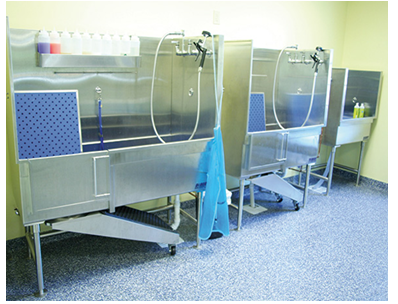
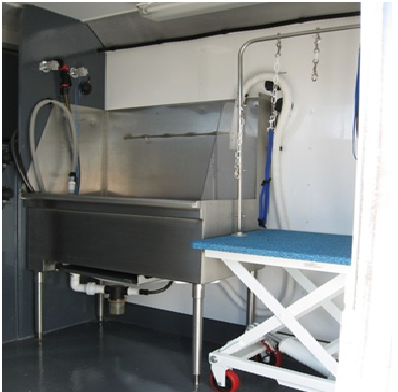
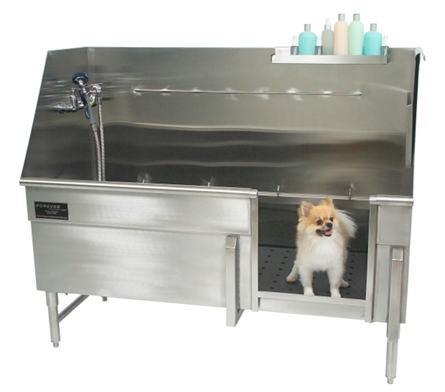
Stainless Steel Grooming Tub Examples
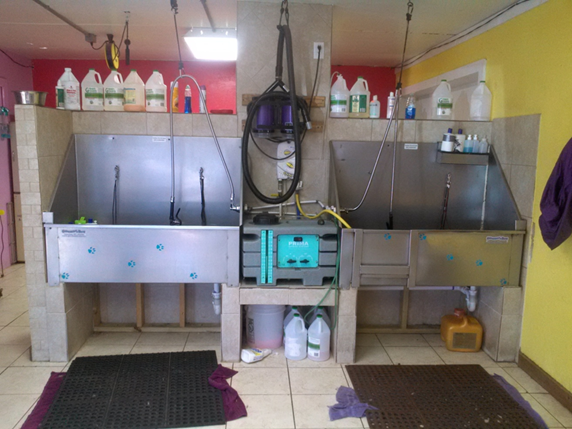
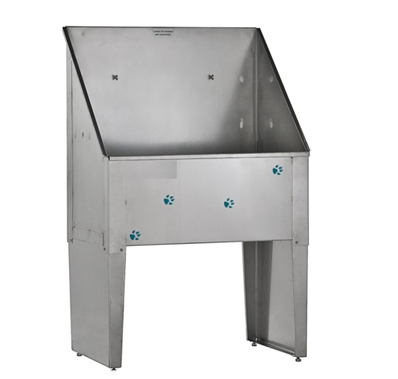
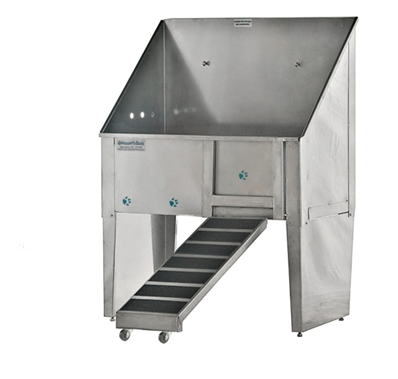
These examples show the range of stainless tub designs, from standard tubs to ramped and built-in configurations.

🔩
Why Stainless Steel Grooming Tubs Work
They are durable, common, professional-looking, and built for the abuse of a busy grooming room.
Stainless tubs come in many shapes and sizes, but the one thing they tend to have in common is durability.
Tubs in this category are typically excellent for professional use and will easily withstand the rigors and abuse that a busy grooming shop demands.
That is why stainless steel is my default recommendation for most professional grooming shops.
Stainless is not perfect. It can dent, scratch, need seams re-caulked, cost more when thicker gauge is used, and still needs to be installed correctly.
But compared with lightweight plastic tubs, oddball repurposed setups, or custom builds that were not planned correctly, stainless steel is boring in the best possible way.
A grooming tub should be boring. It should sit there, hold water, hold dogs, clean up, survive abuse, look professional, and not become the daily reason the bather mutters threats at the equipment.
📌
Main advantage
Stainless steel grooming tubs are practical commercial equipment. They are not usually the prettiest custom option or the cheapest possible option, but they are often the safest professional default.
📣
Deciphering Stainless Tub Sales Copy
The words sound technical, but you need to know what they mean before they help you.
The only real complexity when trying to decide which stainless grooming tub to buy is deciphering the quality and construction of the tub from a print or online advertisement.
Other than that, it is mostly a matter of settling on which options you want: ramp, no ramp, front entry, side entry, plumbing location, drain location, tub length, door style, leg height, restraint system, and whether the tub will sit on factory legs or be built into a custom surround.
In nearly every advertisement for a stainless steel grooming tub, you will find reference to the material type and thickness.
Most ads read something like this: “Made of 20-gauge 304-type stainless steel, the XYZ bathing tub is a stainless steel, rust-resistant grooming tub that is durable enough to service any high-volume shop for many years.”
That may sound informative, but a layperson to metal working — also known as your average dog groomer or shop owner — may have no idea what “20-gauge 304-type stainless steel” means in terms of quality and durability.
The two parts to understand are grade and gauge. Grade tells you what kind of stainless steel is being used. Gauge tells you how thick the metal is.
⚠️
Buying warning
Do not let technical language make the tub sound better than it is. Ask what gauge it is, where it is welded or sealed, how the door works, how the ramp stores, where the drain lands, and how the tub will be restrained or secured.
🧪
Stainless Steel Grades: 304, 316, and 410
In grooming tub ads, 304 stainless is the grade you are most likely to see.
The three common stainless steel grades you may hear about in sheet metal conversations are 304, 316, and 410.
Grade 304 is the most common of the three. It offers good corrosion resistance while maintaining formability and weldability.
Grade 316 has more corrosion resistance and strength at elevated temperatures than 304. It is commonly used in marine, chemical, pump, valve, and similar environments where corrosion resistance matters heavily.
Grade 410 is heat treatable, but it has lower corrosion resistance than 304 and 316. It is commonly associated with cutlery and applications where hardness matters more than corrosion resistance.
When considering the type of stainless steel used in a grooming tub, you are usually going to see 304-type stainless steel.
Manufacturers include “304 stainless” in ad copy because it sounds technical and useful. It is useful, but it is not the whole decision.
Once you know the tub is 304 stainless, the next practical question is gauge thickness and construction quality.
📌
Operator translation
For grooming tubs, 304 stainless is normal. The bigger shopping difference is usually whether the tub is 20-gauge, 18-gauge, 16-gauge, or 14-gauge, and how the seams, legs, doors, ramps, and restraints are built.
📏
Gauge Thickness: Lower Number Means Thicker Stainless
This is the part of the ad copy that actually helps once you know how to read it.
Gauge is a reference to material thickness.
The lower the gauge number, the thicker the sheet metal used to construct the tub.
In my experience, stainless grooming tubs commonly come in 20, 18, 16, or 14 gauge material.
Twenty gauge is the thinnest, lightest, and very common. Fourteen gauge is the thickest, heaviest, and less common.
It is important to remember that thicker stainless costs more because more stainless steel is used in the tub. It is also heavier, stronger, and more likely to have more expensive construction details.
Swipe left/right to see the full table.
| Gauge | Approx. Inches Thick | Approx. MM Thickness | Operator Meaning |
|---|---|---|---|
| 20 gauge | .0375 inches | .953 mm | Thin, light, common, usually lower-cost. |
| 18 gauge | .0500 inches | 1.27 mm | Good practical commercial middle ground in many shops. |
| 16 gauge | .0625 inches | 1.59 mm | Heavier, stronger, more expensive. |
| 14 gauge | .0781 inches | 1.98 mm | Thick, heavy, premium, and usually a higher-cost tub. |
⚠️
Gauge warning
Do not confuse gauge with quality by itself. A thicker tub can still have poor door design, bad ramp storage, weak seals, awkward plumbing, or bad restraint placement. Gauge matters, but it is not the only thing that matters.
💵
Current 2026 Market Snapshot
Stainless tub prices still vary heavily by size, gauge, ramp, door, plumbing, and brand.
Current stainless grooming tub pricing is all over the place because the category includes basic stationary tubs, imported tubs, salon-grade tubs, walk-in tubs, ramped tubs, specialty tubs, and heavy 14-gauge units.
As a practical buying range, basic 18-gauge stainless tubs can still show up around the high hundreds to low thousands depending on brand and size. Common salon tubs in 18- or 20-gauge stainless may land around the low-to-mid thousands. Walk-in, ramped, heavier-duty, or premium stainless units can push into the $2,000 to $3,000+ range.
That does not mean the most expensive tub is automatically the smartest tub.
The right question is whether the extra money buys you something useful: thicker gauge, better welds, better seams, better door design, better ramp storage, better restraint points, better drain location, better legs, or better compatibility with your room.
A cheap tub that leaks, dents, wobbles, or annoys the bather every day is not cheap. A premium tub that solves no actual problem is just expensive metal.
✅
Why 18 Gauge Has Worked Fine for Me
Thicker is nice, but 18 gauge can be a very practical commercial choice.
A tub constructed from 14-gauge stainless steel is a little over twice as thick and heavy as a tub constructed from 20-gauge stainless steel.
Price wise, heavier gauge tubs will usually cost more as well.
In my experience, I have found 18-gauge tubs work just fine, whether mounted on the standard legs that come with them or built into a custom surround.
I have had 18-gauge tubs, some in excess of ten years old, that minus basic wear and tear still looked basically the same as they did when they arrived brand new.
That is the kind of boring equipment performance I like.
Fourteen gauge is heavier and stronger, but that does not mean every shop needs to pay for it. For many professional grooming rooms, a well-built 18-gauge tub is the practical middle ground.
📌
Operator take
I like 18 gauge as a practical professional choice. I would rather buy a well-designed 18-gauge tub than a thicker tub with a bad ramp, bad door, bad drain location, or bad workflow.
🧴
Welded Seams, Caulked Corners, and Maintenance Reality
The heavier tubs often have better seam construction, but maintenance is part of tub ownership either way.
One advantage to the thicker varieties is that they often have more welded seam construction.
That can reduce how often you need to re-caulk inside corners or deal with seam maintenance.
On lighter or more basic tubs, seam caulking may eventually need attention. For me, that is usually a minor inconvenience if the tub saved a meaningful amount of money and otherwise works well.
Modern polyurethane and professional-grade sealants can last a long time when applied correctly, but no sealant fixes a bad tub design, poor preparation, or constant movement at the seam.
The important point is to look at the tub like a piece of wet commercial equipment. Ask how the corners are sealed, how the backsplash is joined, how the door seals, how the drain is installed, and how easy it will be to re-seal or repair if needed.
⚠️
Maintenance warning
A stainless tub is durable, but it is not magic. Seams, caulk, doors, drains, ramps, and restraint points still need inspection and maintenance.
🚪
Ramp or No Ramp?
Ramped tubs sound better than they often work in real life.
In terms of tub options, the two main types are with a ramp or without a ramp.
In shops that have multiple tubs, you may find both. Rarely will you find multiple ramped tubs in a single grooming shop because it is unlikely that multiple bathers need a ramp at the exact same time, and ramped versions are usually more expensive.
That being said, it has been my experience that most dogs do not like to use the narrow little ramp supplied with the tub.
Many dogs will try to jump off either side of it, freeze, fight it, or have to be dragged up the ramp and into the tub.
So even with a ramped tub, many dogs still need to be physically picked up and placed in the tub.
I have also found that the ramp can create a storage problem, shin-bump problem, trip hazard, and all-around nuisance when not in use. Unless it folds under the tub, which may eliminate storage space for other things, it has to be removed and placed out of the way.
About the most useful feature of ramped tubs is often the removable door where the ramp attaches. With really large dogs, you can place the dog’s front paws in the tub through the door and then lift the rear end into the tub.
That door can be more useful than the ramp itself.
Swipe left/right to see the full table.
| Tub Access Option | Advantage | What Goes Wrong | Operator Take |
|---|---|---|---|
| No ramp | Simpler, usually cheaper, fewer moving parts, less clutter. | Large dogs may require lifting or staff assistance. | Good default when staff can safely manage dog entry. |
| Clip-on or removable ramp | Can help some dogs enter the tub without full lifting. | Many dogs refuse it, jump off it, or need dragging anyway. | Useful sometimes, but often oversold. |
| Fold-under ramp | Better storage than a loose removable ramp. | May reduce under-tub storage and still may not solve dog refusal. | Better ramp design, but still not magic. |
| Removable door | Lets large dogs step front feet into the tub before rear-lift. | Door seal and latch quality matter. | Often the most useful part of the ramped tub design. |
⚠️
Ramp warning
Do not assume a ramp eliminates lifting. Many dogs treat narrow tub ramps like suspicious bridges built by enemies.
🧱
Stainless Tubs Can Be Built Into Custom Surrounds
This is one reason stainless tubs are useful beyond the factory-leg setup.
Another advantage of stainless tubs is that they can be drilled through or bolted to existing framework in the wall when a custom surround is used.
In one setup, the factory legs were removed and a frame was built for the tubs to rest on. The tub basin was then bolted to the wall to secure it in place.
That kind of installation can give you some of the benefits of a custom bathing station while still using a prefabricated stainless tub basin.
This can be a smart hybrid approach. You get a durable stainless tub, but you still control the final height, surround, wall finish, storage, restraint points, and finished appearance.
Just remember that bolting, framing, and custom surround work should be planned correctly. You still need to think about drain access, water supply access, cleaning, seams, wall protection, and how the tub will be removed or serviced later if something goes wrong.
📌
Hybrid option
A stainless tub built into a custom surround can be a strong middle ground between buying a standard tub and building an entire custom fiberglass or tile bathing station from scratch.
✅
Stainless Steel Grooming Tub Buying Checklist
Before buying, make the tub survive these questions.
- What gauge is the stainless steel: 20, 18, 16, or 14?
- Is it 304-type stainless steel, and does the manufacturer clearly state it?
- Are the seams welded, sealed, double-sealed, caulked, or some combination?
- What is the actual tub size, and will it handle the dogs you expect to bathe?
- Does the tub come with a ramp, door, side entry, front entry, or no entry feature?
- If there is a ramp, where does it store when not in use?
- If there is a removable door, how well does it seal and latch?
- Where are the drain and plumbing ports located, and do they match your room?
- Does the tub have proper restraint points, and are they located where bathers can actually use them?
- Are the legs stable, adjustable, and strong enough for daily commercial use?
- Can the tub be bolted, framed, or secured if being used in a custom surround?
- Can the tub be cleaned, re-caulked, repaired, serviced, and accessed without making everyone regret the purchase?
⚖️
Practical Stainless Tub Comparison
The best tub depends on the dogs, the room, the bather, and whether the extra features actually help.
Swipe left/right to see the full table.
| Tub Type | Best Fit | Main Advantage | Main Concern |
|---|---|---|---|
| Basic stationary stainless tub | Most grooming rooms needing durable daily bathing equipment. | Simple, durable, professional, and usually cost-effective. | Dogs may need to be lifted into the tub. |
| 18-gauge stainless tub | Strong everyday professional use. | Good balance of durability, weight, and price. | May still need seam maintenance depending on construction. |
| 14-gauge stainless tub | Heavier-duty buyers who want thick stainless and premium construction. | Thick, heavy, strong, often better welded construction. | Higher cost and heavier installation. |
| Ramped stainless tub | Shops handling large dogs where entry assistance may help. | Can reduce lifting for some dogs and often includes a useful door. | Many dogs refuse ramps, and ramps can become storage or trip hazards. |
| Stainless tub built into surround | Shops wanting a custom look with a prefabricated stainless basin. | Combines durability with custom height, framing, and appearance. | Requires planning for drain access, plumbing, anchoring, and service. |
✅
My Operator Verdict on Stainless Steel Grooming Tubs
For a professional grooming shop serving numerous client dogs, stainless steel is probably the way to go.
My summary is simple.
If your intent is to open a professional grooming shop servicing the dogs of numerous clients, then a stainless steel grooming tub is probably the way to go.
The prices are reasonable compared with the useful life, especially when you buy a tub that actually fits the room and the work.
Once installed, you can expect years of service life with little maintenance beyond basic cleaning, inspection, caulk or seam attention when needed, and normal wear-and-tear items.
They also look nice.
My personal sweet spot is often a well-built 18-gauge stainless tub. I have had them last for years and still look basically the same as when they arrived, minus the normal realities of a working grooming room.
Fourteen gauge is stronger and heavier. Twenty gauge can still be useful depending on the tub and use case. But do not get trapped into thinking one number tells the whole story.
Gauge matters. Construction matters. Seams matter. Door design matters. Ramp storage matters. Drain location matters. Restraint points matter. Room fit matters.
Stainless steel is my default choice, but it still has to be the right stainless tub.
⚠️
Final take
Stainless is the professional default for a reason. Just read past the shiny metal and buy the tub that fits the dogs, the bather, the room, the plumbing, and the daily abuse.
❓
Stainless Steel Grooming Tub FAQ
Straight answers about 304 stainless, gauge thickness, ramps, doors, seams, and professional use.
Are stainless steel grooming tubs good for professional use?
Yes. Stainless steel grooming tubs are typically excellent for professional use because they are durable, clean-looking, serviceable, and common in commercial grooming rooms.
What does 304 stainless steel mean?
Grade 304 stainless is a common stainless steel grade with good corrosion resistance, formability, and weldability. It is the grade most often advertised in grooming tubs.
What does gauge mean on a stainless grooming tub?
Gauge refers to metal thickness. The lower the gauge number, the thicker the stainless sheet. A 14-gauge tub is thicker and heavier than a 20-gauge tub.
What gauge stainless grooming tub would I choose?
I have had good experience with 18-gauge stainless tubs. They can be a practical middle ground between durability, weight, and cost.
Is 14 gauge better than 18 gauge?
Fourteen gauge is thicker and heavier, which can be better in some builds, but it also usually costs more. It is not automatically the better purchase if the 18-gauge tub is well built and fits the room.
Are tub ramps worth it?
Sometimes, but many dogs do not like narrow tub ramps. Ramps can also become storage problems, shin-bumpers, trip hazards, and general nuisances when not in use.
What is the best part of a ramped tub?
Often the removable door is more useful than the ramp. With large dogs, you can place the dog’s front paws into the tub through the door and then lift the rear end in.
Can stainless tubs be built into custom surrounds?
Yes. Stainless tubs can often be drilled, bolted, framed in, or secured into a custom surround when planned correctly.
What is the main buying lesson?
Stainless steel is usually the professional default, but you still need to evaluate gauge, seams, door design, ramp storage, drain location, restraint points, installation, and room fit.
🐾
Bottom Line: Stainless Is the Safe Professional Default
Durable, practical, professional-looking, and usually worth the money.
Stainless steel grooming tubs are probably the way to go for most professional grooming shops.
They are durable enough for daily use, clean enough to look professional, and flexible enough to work as standard equipment or as part of a custom surround.
The key is understanding the details. Learn what 304 stainless means. Learn what gauge means. Know the difference between 20, 18, 16, and 14 gauge. Think hard before paying extra for a ramp. Look at the door, drain, seams, legs, restraint points, and how the tub fits the room.
My default practical recommendation is a well-built stainless tub, often 18 gauge, with the right plumbing location and access style for the actual grooming room.
Buy the tub like an operator, not like someone impressed by shiny metal.