PAWS Pet Poison Plant Guide
Is Angelica Tree Poisonous to Dogs, Cats, Horses, and Livestock?
Yes—Angelica Tree, better known as Devil’s Walkingstick, Aralia spinosa, is considered poisonous to dogs, cats, horses, livestock, and other animals, although most ordinary exposures are expected to cause mild oral or gastrointestinal illness rather than life-threatening systemic poisoning. Raw bark, roots, and unripe green fruit are the best-established poisonous portions and are associated with mouth irritation, excessive drooling, nausea, vomiting, abdominal discomfort, and diarrhea. Modern chemical research has also identified the cyanogenic glycoside triglochinin in some leaves and developing flower clusters, with its presence varying by tissue, season, and stage of development. This does not make severe cyanide poisoning the expected outcome of every exposure, but a meaningful ingestion of fresh leaves, flower buds, or other uncertain plant material deserves professional assessment.
The plant’s stout prickles may create a more immediate emergency than its chemical toxicity. Stems, branches, and leaf stalks can puncture the lips, gums, tongue, throat, paws, skin, eyelids, or cornea, while swallowed wood may lodge in the mouth or esophagus or cause gastrointestinal obstruction.
About this guide: This page provides general pet-poisoning information and cannot diagnose or treat an individual animal. For any suspected exposure, contact a veterinarian or animal poison-control service immediately. Do not induce vomiting, give medication, or attempt home decontamination unless directed by a veterinary professional.
Angelica Tree
Aralia spinosa L.
Accepted botanical synonyms include:
Chaerophyllum arborescens L.
Myrrhis arborescens (L.) Spreng.
Aralia georgica Miq.
Aralia leroana K.Koch
Aralia spinosa var. glabra Nutt.
Aralia spinosa var. inermis Pursh
Aralia spinosa var. subinermis K.Koch
Aralia spinosa f. subinermis Moldenke
Araliaceae — Ginseng or Aralia Family
Angelica Tree; Angelica-Tree; Devil’s Walkingstick; Devil’s Walking Stick; Devil’s-Walkingstick; Devil’s Walking-Stick; Hercules’ Club; Hercules Club; Hercules’s Club; Hercules’s-Club; Prickly Elder; Prickly Ash; Toothache Tree; Pick Tree; Shotbush
Chaerophyllum arborescens, Myrrhis arborescens, Aralia georgica, and Aralia leroana are historical botanical names for Aralia spinosa.
Hercules’ Club, Prickly Ash, and Toothache Tree are also used for Zanthoxylum clava-herculis and other Zanthoxylum species. Those plants belong to the Rue family, have strongly aromatic tissues, and can produce a numbing or tingling sensation when chewed. They are not botanical synonyms for Aralia spinosa.
Japanese Angelica Tree refers to Aralia elata, a separate Asian species that has become invasive in portions of North America and can closely resemble Aralia spinosa.
Angelica usually refers to species of the genus Angelica in the Carrot or Parsley family. Those herbaceous plants are not the same as Angelica Tree.
Prickly Elder should not be confused with true elderberries in the genus Sambucus. Aralia spinosa fruit and elderberry fruit can appear superficially similar from a distance, but the plants have different structures and toxicology.
Araliin Is a Historical Term, but the Plant’s Chemistry Is Better Defined
Veterinary poison references traditionally identify araliin as the toxic principle in Angelica Tree. The name is associated with the plant’s irritant, saliva-producing, emetic, and purgative effects, but it has not been characterized as one purified modern compound with an established molecular structure, mechanism, tissue distribution, diagnostic test, or veterinary toxic dose.
Araliin is therefore best retained as a historical toxicology term rather than presented as the complete chemical explanation for Aralia spinosa poisoning. The reliable clinical conclusion is that certain tissues can irritate the mouth and gastrointestinal tract, producing excessive salivation, nausea, vomiting, abdominal discomfort, and diarrhea.
Modern exact-species research demonstrates that the chemistry is substantially more complex. Analyses have identified triterpenoid saponins, phenolic acids, flavonoids, volatile terpenes, a cyanogenic glycoside, and bioactive fruit constituents in Aralia spinosa. No single one of these compounds has been proved to account for every naturally occurring animal exposure.
Direct Evidence of Triterpenoid Saponins
A detailed 2024 analysis examined methanolic extracts from aerial and underground tissues of Aralia spinosa plantlets raised in controlled in vitro culture. The investigators identified 94 metabolites, including 41 triterpenoid saponins, 17 flavonoids, and 36 phenolic acids.
Araloside A was reported directly from Aralia spinosa for the first time and was found in the underground organs. The cultured shoots had higher overall phenolic, flavonoid, and saponin content than the roots, demonstrating that saponins are not limited to bark or underground tissue.
This research makes it unnecessary to infer the presence of saponins solely from related members of Araliaceae. It directly establishes a diverse saponin profile in the species.
The study does not establish that araloside A or any one detected saponin causes the recognized drooling, vomiting, and diarrhea syndrome. It used concentrated laboratory extracts from cultivated plantlets rather than naturally browsing dogs, cats, horses, or livestock. Its analytical results cannot be converted into a safe leaf count, root weight, or toxic dose.
Triterpenoid saponins can interact with biological membranes and may contribute to oral and gastrointestinal irritation. The effects traditionally attributed to araliin may therefore reflect a chemically mixed plant preparation containing saponins and other constituents rather than one isolated toxin.
Triglochinin and Seasonally Variable Cyanogenesis
Modern chemical research has demonstrated that Aralia spinosa can be cyanogenic. The identified cyanogenic glycoside is triglochinin, an unusual tyrosine-derived compound capable of releasing hydrogen cyanide after enzymatic breakdown.
Cyanogenesis was not constant throughout the plant or growing season. Only about half of the examined samples released measurable hydrogen cyanide, and positive findings were concentrated in leaves and inflorescences at particular developmental stages.
Developing inflorescence buds collected during July contained the highest reported triglochinin concentration, just under 0.2 percent of dry weight. Two minor chromatographic isomers were also detected, but triglochinin was the only cyanogenic glycoside identified.
This variability is clinically important. The absence of illness after one mature-leaf exposure does not prove that every leaf, flower bud, colony, or season has the same chemistry. Conversely, detecting a cyanogenic glycoside does not establish that ordinary Angelica Tree exposures routinely cause rapid fatal cyanide poisoning.
No dependable animal-feeding study, veterinary case series, or species-specific lethal threshold has established severe cyanide toxicosis as the expected syndrome of Aralia spinosa. The best-documented ordinary effects remain oral irritation, salivation, vomiting, abdominal discomfort, and diarrhea.
How Triglochinin Can Release Hydrogen Cyanide
Within intact plant tissue, a cyanogenic glycoside and the enzymes capable of degrading it may be stored separately. Chewing, crushing, maceration, freezing, wilting, digestion, or other tissue injury can bring them together and permit enzymatic release of hydrogen cyanide.
Cyanide binds to cytochrome c oxidase within mitochondria and prevents cells from using oxygen effectively. Blood may continue carrying oxygen, but affected tissues cannot complete normal aerobic energy production. The brain and heart are especially vulnerable during a substantial exposure because of their high energy requirements.
Possible signs of clinically important cyanide poisoning include sudden anxiety, rapid or labored breathing, profound weakness, muscle tremors, incoordination, seizures, collapse, reduced responsiveness, and unusually bright-red mucous membranes or blood.
These are not the usual signs documented after an ordinary Angelica Tree ingestion. They should also prompt immediate investigation for another cyanogenic plant, smoke exposure, industrial chemicals, pesticides, medication, contaminated feed or water, fertilizer, or another fast-acting toxin.
The amount of cyanide potentially released depends on tissue concentration, developmental stage, season, degree of chewing, enzymatic activity, digestive conditions, degradation during storage, and the animal species involved. Fresh, wilted, frozen, or dried material cannot be declared safe or dangerous from appearance alone.
Leaf Essential Oils and Other Volatile Compounds
Exact-species research has also characterized essential oils from Aralia spinosa leaves collected from three habitats in northern Alabama.
The principal compounds varied among locations. Major constituents included germacrene D, (E)-caryophyllene, alpha-humulene, myrcene, and the fatty-acid derivative (2E)-hexenal. Some samples contained comparatively greater amounts of monoterpenes and fatty-acid derivatives, while others were dominated by sesquiterpenes.
These findings demonstrate additional chemical variation among plants and growing sites. They do not establish that the volatile oil causes cyanide-like collapse or that an individual named terpene is responsible for every gastrointestinal sign.
Hydrodistilled essential oil is also much more concentrated than one bite of fresh foliage. A distilled oil, tincture, solvent extract, or homemade medicinal preparation should therefore be assessed as a different exposure from naturally chewed plant tissue.
Bark, Roots, and Unripe Fruit
Raw bark, roots, and unripe green fruit are the portions most consistently identified in veterinary and extension references as poisonous. Fresh bark and root preparations were historically described as strongly saliva-producing, emetic, and purgative, corresponding closely with the expected drooling, vomiting, abdominal discomfort, and diarrhea.
The underground tissues are now also known to contain triterpenoid saponins, including araloside A in the material examined during modern phytochemical research. Bark and root exposures may involve concentrated plant tissue as well as splinters, soil, fertilizer, pesticide, or other contaminants.
Green fruit should remain inaccessible. Its chemistry and maturity differ from that of fully ripe purple-black fruit, and there is no established safe unripe-fruit count for an animal.
Leaves and developing flower structures require a more nuanced description than older poison lists provide. They may contain saponins and volatile compounds, and some developmental stages can contain triglochinin. No green tissue should be intentionally fed merely because bark, roots, and unripe fruit are emphasized in older toxicity references.
Ripe Fruit and Petroselinic Acid
Fully ripe purple-black fruit is consumed by birds, bears, raccoons, opossums, foxes, and other wildlife and is generally regarded as a lower practical poisoning risk than raw bark, roots, green fruit, or cyanogenic flower buds.
Lower practical risk does not mean chemically inactive or guaranteed safe. Activity-directed fractionation of a concentrated 95-percent ethanol extract prepared from ripe Aralia spinosa berries isolated cis-6-octadecenoic acid, commonly called petroselinic acid, as the major bioactive compound.
That study was a laboratory extraction and compound-isolation investigation rather than an oral feeding trial in dogs, cats, horses, or livestock. It does not establish that one ripe fruit produces poisoning or that natural fruit pulp delivers the same exposure as a concentrated ethanol extract.
It nevertheless provides direct evidence that ripe fruit contains biologically active chemistry and should not be described as completely nontoxic. A pet may also consume numerous fruits, partially green tissue, seeds, stems, mold, pesticide residue, herbicide, or roadside contamination.
No dependable safe amount of ripe fruit or isolated petroselinic acid has been established for a domestic animal. Completely ripe fruit is best described as lower risk than the traditionally poisonous tissues but unsuitable as pet food.
Contact Irritation and Allergic Dermatitis
Damaged bark, roots, sap, and crushed plant tissue may cause temporary irritant or allergic dermatitis. Redness, itching, swelling, burning, or discomfort can develop where residue remains in contact with sensitive skin.
An animal may transfer material from a contaminated paw to the lips, nose, eyelids, or eyes. Continued licking and rubbing can intensify irritation and make a puncture wound or retained prickle difficult to distinguish from chemical dermatitis.
Most simple contact reactions are expected to improve after thorough washing. Persistent swelling, blistering, discharge, ulceration, marked pain, heat, or spreading redness suggests a deeper puncture, retained foreign material, secondary infection, another irritant, or a more substantial allergic reaction.
Prickles and Wood May Be More Dangerous Than the Chemical Exposure
The trunk, branches, young stems, leaf stalks, and portions of the compound-leaf framework may carry stout sharp prickles. These structures do not inject a known venom, but they can penetrate the lips, gums, tongue, palate, pharynx, paw pads, skin, eyelids, conjunctiva, or cornea.
Small prickles can break beneath the skin and remain difficult to see. A puncture may carry soil, plant residue, bacteria, and organic debris into deeper tissue, causing delayed swelling, pain, drainage, cellulitis, abscess formation, or infection near a joint.
Woody fragments may splinter or lodge between teeth, beneath the tongue, across the palate, in the pharynx, or in the esophagus. Swallowed sticks can irritate, perforate, or obstruct the stomach and intestines.
Persistent drooling, gagging, painful swallowing, limping, squinting, swelling, discharge, reduced stool, recurrent vomiting, or pain returning after apparent improvement may reflect retained plant material rather than continuing toxin absorption.
No Dependable Safe Dose
No safe bark weight, root amount, ripe- or unripe-fruit count, leaf quantity, flower-bud amount, saponin concentration, petroselinic-acid dose, triglochinin concentration, releasable-cyanide dose, araliin dose, or lethal threshold has been established for an individual dog, cat, horse, livestock animal, rabbit, bird, reptile, or other pet.
Risk depends on the plant part, developmental stage, season, amount swallowed, animal size and health, degree of chewing, duration of vomiting or diarrhea, and whether soil, pesticide, fertilizer, mold, mushrooms, another plant, or woody foreign material was consumed.
Laboratory extract concentrations, cultured-plantlet chemistry, isolated compounds, and essential-oil percentages cannot be converted directly into a safe amount of fresh plant material.
The available evidence supports a plant that most often causes low-severity oral and gastrointestinal irritation, presents major mechanical injury hazards, and has genuine but variable cyanogenic potential. It does not support dismissing every exposure as harmless or treating every ingestion as inevitable severe cyanide poisoning.
Expected Oral and Gastrointestinal Signs
The most likely effects are irritation of the mouth and gastrointestinal tract. Signs may begin within several hours and include lip licking, repeated swallowing, excessive drooling, pawing at the mouth, nausea, vomiting, abdominal discomfort, soft or watery diarrhea, reduced appetite, and temporary lethargy.
A dog may eat grass, pace, repeatedly stretch, assume a hunched posture, whine, or resist abdominal handling. A cat may hide, crouch, drool, vomit, stop grooming, approach food and turn away, or become less interactive.
Raw bark, roots, and green fruit deserve particular concern. A very small exposure to completely ripe fruit is less likely to cause clinically important illness, although no universal fruit count guarantees safety.
Vomiting, Diarrhea, and Dehydration
Vomiting may occur once or recur after a larger ingestion. Diarrhea may be accompanied by urgency, mucus, straining, intestinal cramping, or repeated attempts to defecate.
Persistent gastrointestinal losses can cause dry or tacky gums, sunken eyes, increased thirst, reduced urination, cool extremities, weakness, rapid heart rate, poor circulation, and electrolyte abnormalities.
An animal that vomits every time it drinks cannot correct meaningful dehydration through unrestricted water access alone. Injectable anti-nausea medication and professionally directed fluids may be needed.
Repeated bloody vomiting, coffee-ground material, black stool, substantial bloody diarrhea, marked abdominal enlargement, repeated unproductive retching, or severe focal pain is not expected after an uncomplicated minor exposure. These findings may indicate another toxin, a swallowed woody object, gastrointestinal injury, pancreatitis, infection, or unrelated disease.
Mouth, Throat, Paw, and Skin Injuries
Prickle injuries may cause immediate crying, head shaking, pawing at the face, drooling, bleeding, painful swallowing, food refusal, limping, licking one paw, localized swelling, or resistance when the affected area is touched.
A prickle may lodge between the toes, beneath a paw pad, behind the lips, under the tongue, across the palate, in the pharynx, or within a joint-adjacent area. Small retained fragments may produce delayed swelling or drainage after the original puncture appears to have closed.
Contact with damaged bark or roots may cause redness, itching, mild swelling, or dermatitis. Persistent pain, heat, discharge, blistering, extensive swelling, fever, or spreading redness suggests retained material, infection, another irritant, or a more serious reaction.
Severe facial or throat swelling is not the expected routine Angelica Tree syndrome and should raise concern for an insect sting, allergic reaction, caustic chemical, insoluble-oxalate plant, penetrating injury, or another exposure.
Eye Injuries
A sharp prickle or woody fragment can scratch or penetrate the eyelid, conjunctiva, or cornea. Signs include sudden tearing, blinking, squinting, redness, eyelid swelling, discharge, cloudiness, blood, light sensitivity, or inability to open the eye.
A small corneal injury may be intensely painful while remaining invisible without magnification and fluorescein staining. Plant debris can also become trapped beneath an eyelid and continue abrading the eye.
Continued squinting, cloudiness, bleeding, discharge, apparent visual difficulty, or pain after irrigation requires prompt veterinary examination. Penetrating objects should not be removed at home.
Possible Cyanogenic Signs
Modern research confirms that some leaves and developing flower clusters can contain the cyanogenic glycoside triglochinin. Severe cyanide-like illness has not been established as the ordinary veterinary presentation of Angelica Tree, but rapid respiratory or neurologic deterioration after a substantial fresh-tissue ingestion must be treated seriously.
Possible warning signs include sudden anxiety, rapid or labored breathing, weakness, muscle tremors, loss of coordination, seizures, collapse, reduced responsiveness, or unusually bright-red mucous membranes or blood.
These signs may also result from another cyanogenic plant, smoke inhalation, pesticides, medication, contaminated feed, carbon monoxide, fertilizer, industrial chemicals, or another acute poison. Plant presence alone does not establish the diagnosis.
Blue-gray gums, gasping, open-mouth breathing in a cat, inability to stand, seizures, or collapse is an emergency regardless of the exact toxin.
Horses, Livestock, and Small Animals
Horses cannot vomit and may instead develop salivation, feed refusal, abdominal discomfort, loose manure, diarrhea, depression, or weakness. Mouth punctures may cause quidding, dropping feed, painful chewing, or resistance to the bit.
Cattle, sheep, and goats may show reduced appetite, salivation, gastrointestinal discomfort, diarrhea, weakness, or localized puncture injuries after browsing or accessing cut debris. Detailed severe livestock-poisoning reports involving this species remain sparse.
Several sick animals, severe colic, recumbency, breathing abnormalities, tremors, seizures, or sudden death should prompt examination of every available plant, forage source, fertilizer, pesticide, chemical, and water supply.
Rabbits and guinea pigs may develop drooling, food refusal, fewer droppings, diarrhea, tooth grinding, abdominal enlargement, weakness, or gastrointestinal stasis. Companion birds may show regurgitation, altered droppings, appetite reduction, weakness, or fluffed posture.
Expected Course and Atypical Illness
Most uncomplicated irritant exposures improve within several hours to approximately one or two days once access stops and hydration is maintained.
Puncture wounds, retained prickles, corneal scratches, secondary infection, and swallowed wood may continue causing signs after the chemical irritation should have resolved.
Persistent vomiting, inability to retain water, continued food refusal, bloody stool, severe abdominal pain, painful swallowing, worsening limping, fever, pus, eye pain, or increasing swelling requires veterinary evaluation.
Profound neurologic depression, major heart abnormalities, organ failure, prolonged seizures, or rapid multisystem deterioration is not characteristic of an ordinary Angelica Tree exposure and requires an immediate broader investigation.
Identity, Native Range, and Poisoning-Relevant Habitat
Angelica Tree, Aralia spinosa, is a native North American deciduous shrub or small tree in the Ginseng Family. Devil’s Walkingstick is its most distinctive common name. Despite the names Angelica Tree, Hercules’ Club, Prickly Ash, and Toothache Tree, it is neither a true Angelica nor a member of the unrelated prickly-ash genus Zanthoxylum.
The accepted native range covers the central and eastern United States, from portions of the Mid-Atlantic and Midwest south through Florida and west to Texas and Oklahoma. Introduced or naturalized populations occur farther north, although many northeastern records once assigned to native Aralia spinosa have proved to be the introduced Japanese Angelica Tree, Aralia elata.
Animals encounter Devil’s Walkingstick in disturbed woodland, forest openings, thickets, stream margins, bottomlands, old home sites, road edges, fence lines, parks, rural yards, wooded pasture margins, recently cleared land, and brush piles. Mowing, cutting, soil disturbance, and construction may stimulate new shoots from the spreading underground system and create thorny growth where no visible stem stood previously.
Identification and the Mechanical Exposure Hazard
The plant often appears as one or more tall, sparsely branched poles crowned by enormous compound leaves. A single leaf may be several feet long and divided two or three times into many toothed oval leaflets, making the leaf itself resemble an entire branch.
Trunks, stems, branches, leaf stalks, and portions of the compound-leaf framework may carry sharp prickles. Younger shoots and petioles can be especially heavily armed. These prickles are not venomous, but they can puncture the mouth, paws, skin, eyelids, or eyes and may break beneath the tissue.
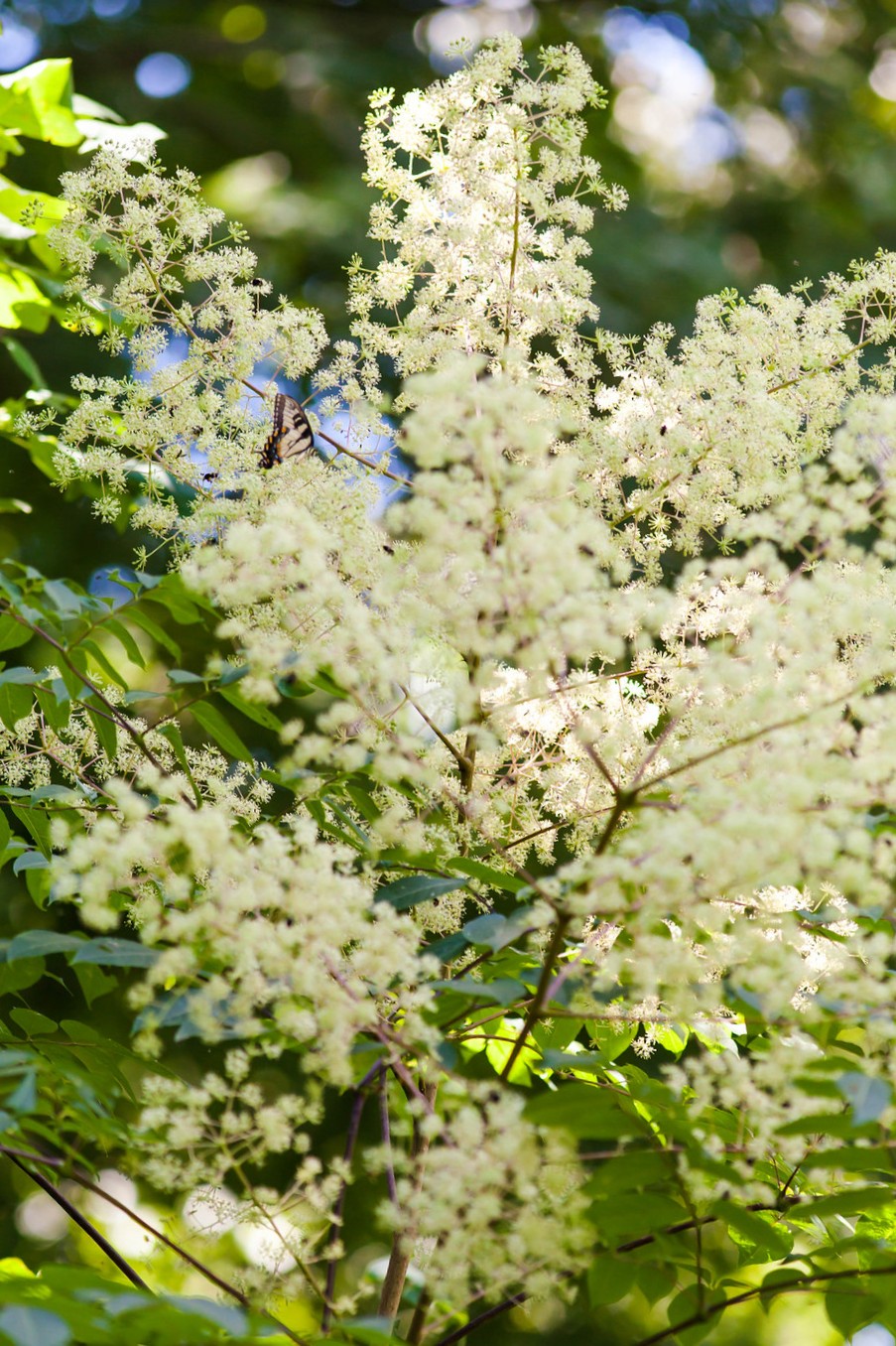
Large airy clusters of small cream-white flowers appear near the tops of mature stems during summer. The fruit develops in rounded branching clusters, changing from green to purple-black as it ripens.
A complete branch showing the compound leaves, prickled stem, flower or fruit structure, and overall growth form is far more reliable for identification than fruit color or a shared common name.
Seasonal Exposure and Hidden Colony Growth
New suckers and bronze-green foliage emerge during spring. Young shoots are lower, softer, and more accessible than mature trunks and may be encountered along dog runs, paths, fences, and pasture edges.
Leaves and flower structures develop during summer, when cyanogenic chemistry may vary with developmental stage. Research found the greatest triglochinin concentration in developing inflorescence buds collected in July, although many samples collected throughout the season were not cyanogenic.
Green unripe fruit becomes available during late summer before ripening to purple-black. Fallen ripe fruit attracts wildlife and may also draw the attention of dogs and captive birds.
Cutting stems does not necessarily remove the exposure. The underground system can produce additional suckers, while digging, grading, erosion, or removal work exposes roots and bark—the tissues most consistently associated with the traditional emetic and irritant syndrome.
Ripe Fruit, Wildlife, and Poisoning Interpretation
Fully ripe dark fruit is consumed by songbirds, bears, foxes, raccoons, opossums, and other wildlife and is substantially lower in recognized toxicity than green fruit, raw bark, or roots.
Wildlife consumption helps demonstrate that ripe fruit is not a powerful universal poison. It does not establish a safe quantity for a dog, cat, rabbit, horse, livestock animal, or companion bird.
A pet may eat fruit before it is fully ripe, consume a large cluster, chew seeds and stems, or ingest fruit contaminated with herbicide, pesticide, mold, vehicle residue, or roadside debris.
The correct distinction is not “berries poisonous” versus “berries safe.” Green unripe fruit is a recognized poisonous portion; completely ripe dark fruit is lower risk but remains unsuitable as pet food.
Important Look-Alikes and Shared Common Names
Japanese Angelica Tree, Aralia elata, is an Asian relative that has naturalized widely in portions of the Northeast and Midwest. It also has prickled stems, enormous compound leaves, terminal flower clusters, and dark fruit. Geographic location, leaflet details, inflorescence structure, prickles, and a complete specimen may be needed for confident separation.
Hercules’ Club, Prickly Ash, and Toothache Tree are also standard names for Zanthoxylum clava-herculis and other Zanthoxylum species. Those plants belong to the Rue Family and have aromatic tissues that produce a characteristic tingling or numbing sensation. They are not botanical synonyms for Aralia spinosa.
Dark fruit clusters can be mistaken for elderberries when branches have been cut. True elderberries belong to Sambucus and lack the huge repeatedly divided leaves and heavily prickled stems of Devil’s Walkingstick.
Devil’s Club, Oplopanax horridus, is another prickly member of Araliaceae but occurs primarily in western North America and bears broad maple-like leaves rather than giant feather-divided compound leaves.
True Angelica species belong to Apiaceae and are herbaceous plants with different growth forms and chemistry. The common name Angelica Tree does not place Aralia spinosa in the carrot family.
Historical Pharmacology and Why the Plant Causes Drooling and Vomiting
The plant’s medicinal history is relevant because it explains the symptoms carried forward into modern poison references. Selected bark, root, and fruit preparations were used historically for rheumatism, fever, pain, skin disorders, and other conditions, while fresh bark and root preparations were sometimes used deliberately to provoke salivation, vomiting, or purging.
Older materia medica described fresh bark as strongly emetic and both purgative and sialagogue. King’s American Dispensatory called the plant “a powerful sialagogue.” Those descriptions document biologic activity and support the expected hypersalivation, vomiting, and diarrhea; they do not establish a safe animal dose or justify administering the plant as medicine.
Historical toothache use requires particular caution because Toothache Tree and Hercules’ Club were also applied to Zanthoxylum, whose aromatic bark and fruit genuinely cause tingling and numbness. Some older accounts may have blended two unrelated plants.
Raw bark, homemade tinctures, powders, teas, extracts, and root preparations should never be given to an animal. Processing may alter the mixture and concentration of active constituents without creating a veterinary-approved product.
Animal Exposure, Diagnosis, Prognosis, and Prevention
Dogs are most likely to chew suckers, bark, exposed roots, sticks, or low fruit clusters. After stem chewing, punctures, splinters, broken teeth, and swallowed wood may become more important than the chemical exposure.
Cats may brush against low prickled growth, chew new shoots, or transfer sap from the paws to the mouth and eyes during grooming. Horses and livestock encounter the plant along woodland margins, fences, disturbed ground, or within piles of cut brush.
Diagnosis depends on identification of the plant and tissue involved, fruit maturity, estimated amount, compatible oral or gastrointestinal signs, and careful examination for retained prickles. No routine clinical test identifies araliin, and triglochinin or cyanide testing is not ordinarily available rapidly enough to guide initial care.
Useful evidence includes a complete leafy branch, bark, roots, fruit at its current stage of ripeness, photographs of the colony, nursery labels, vomited material, and records of pesticide or herbicide use. Severe respiratory or neurologic signs may justify blood-gas, lactate, acid-base, oxygenation, and cyanide-focused evaluation while other toxins are investigated.
The prognosis is good to excellent after most limited exposures. Recovery may take longer when vomiting causes dehydration, a thorn remains embedded, a puncture becomes infected, the cornea is injured, or a woody fragment causes choking or obstruction.
Prevention centers on keeping thorny colonies and new suckers outside animal travel areas, removing roots and cut stems during land work, collecting green fruit and pruning debris, and placing all material directly into a secured container rather than an accessible brush or compost pile.
Immediate Steps After Exposure
- Stop further access. Move the animal away from the plant, new suckers, exposed roots, green fruit, fallen flower clusters, cut stems, brush piles, clippings, and disturbed soil.
- Preserve identification evidence. Save a complete leafy branch, bark, roots, fruit at its current color and maturity, photographs of the colony, and any material found in vomit.
- Determine what happened. Establish whether the animal swallowed bark, roots, unripe green fruit, ripe dark fruit, leaves, flower buds, flowers, or a thorny woody stem.
- Estimate the amount and timing. Record what appears to be missing, when exposure occurred, the animal’s weight, current signs, and whether pesticides or herbicides were used nearby.
- Inspect for injury. Examine the lips, gums, tongue, palate, muzzle, paws, spaces between the toes, visible skin, eyelids, and eyes for bleeding, punctures, or embedded prickles.
- Remove only loose visible material. Carefully lift plant pieces or superficial prickles that are plainly visible and easily grasped. Do not dig into tissue or perform a blind finger sweep.
- Contact veterinary help when warranted. Root or bark ingestion, numerous unripe fruits, substantial leaves or flower buds, repeated symptoms, an uncertain exposure, eye injury, or a suspected retained prickle requires professional guidance.
Do Not Attempt Unsupervised Home Treatment
- Do not induce vomiting at home. The expected chemical toxicity is usually limited, while a thorny stem, bark fragment, or wooden splinter can injure the throat and esophagus during vomiting.
- Do not give hydrogen peroxide. It can cause gastric and esophageal injury, is unsafe as a feline emetic, and may worsen aspiration risk.
- Do not use salt, mustard, syrup of ipecac, detergent, oil, fingers in the throat, or manual gagging. These methods can cause sodium poisoning, aspiration, or traumatic injury.
- Never attempt to induce vomiting in a horse. Horses cannot vomit.
- Do not administer activated charcoal at home. It is generally unnecessary after this low-severity irritant exposure and may be dangerous when wood, prickles, vomiting, weakness, or impaired swallowing is involved.
- Do not force water, milk, broth, food, oil, or electrolyte products. They do not neutralize the plant compounds or cyanogenic glycoside and may be aspirated.
- Do not give antidiarrheals, antacids, bismuth products, sucralfate, pain relievers, antihistamines, steroids, antibiotics, or leftover prescriptions. Medication should be selected from the animal’s actual examination and injuries.
Mouth, Throat, Paw, and Skin Care
Remove only a superficial prickle that can be grasped easily without causing significant pain, bleeding, or tissue movement. Do not cut the skin or dig for a fragment.
Prickles near the eye, beneath the tongue, deep in the mouth or throat, between sensitive foot structures, near a joint, or adjacent to a major blood vessel should be removed professionally.
Persistent drooling, gagging, coughing, painful swallowing, blood, refusal to eat, or inability to close the mouth may indicate a retained prickle, splinter, or stem fragment.
Wear gloves when handling damaged bark, roots, sap-covered fur, or vomited material. Wash contaminated skin and coat with lukewarm water and a mild species-appropriate cleanser, rinse thoroughly, and prevent grooming until residue has been removed.
Continued redness, swelling, blistering, heat, pain, discharge, limping, or fever requires examination for dermatitis, a retained foreign body, or infection.
Eye Exposure and Injury
If loose sap, soil, or plant residue enters the eye and no object is embedded, begin gentle irrigation with sterile saline or clean lukewarm water.
Do not use tweezers, cotton swabs, cloth, fingers, human redness drops, or leftover eye medication on the eye surface. Do not remove a prickle or wood fragment that appears to penetrate the eyelid or eye.
Prevent rubbing by using safe restraint or an appropriate protective collar when available. Continued squinting, tearing, redness, cloudiness, swelling, blood, discharge, or apparent visual difficulty requires prompt veterinary examination.
The veterinarian may use fluorescein staining, magnification, topical anesthesia, imaging, or sedation to locate and remove retained material and assess the cornea.
When Emergency Examination Is Required
- Choking or swallowing difficulty: Continuous gagging, frantic pawing, inability to swallow saliva, noisy breathing, blue-gray gums, gasping, or collapse requires immediate care.
- Persistent gastrointestinal illness: Repeated vomiting, inability to retain water, frequent watery diarrhea, blood, black stool, or severe abdominal pain requires examination.
- Dehydration: Dry or tacky gums, sunken eyes, reduced urination, cool extremities, marked weakness, or collapse requires fluid assessment.
- Deep puncture or retained prickle: Continued bleeding, increasing swelling, severe pain, limping, discharge, fever, or injury near an eye, joint, mouth, or throat requires professional removal and wound care.
- Possible obstruction: Recurrent vomiting, abdominal enlargement, reduced stool, worsening pain, or signs returning after initial improvement may indicate swallowed wood.
- Possible cyanide or another acute toxin: Rapid labored breathing, unusually bright-red mucous membranes, severe weakness, tremors, seizures, collapse, or reduced responsiveness requires emergency investigation.
Veterinary Examination and Treatment
There is no established antidote for the traditional araliin-associated irritant syndrome. Treatment is supportive and directed toward gastrointestinal losses, mouth and eye injury, punctures, retained foreign material, and any evidence of a different or more serious toxin.
Veterinarian-selected antiemetics such as maropitant or ondansetron may control continuing nausea and vomiting. Subcutaneous or intravenous fluids may correct dehydration and measured electrolyte abnormalities.
Sucralfate may be considered only when repeated vomiting, hematemesis, painful swallowing, esophagitis, erosive gastritis, or documented mucosal injury indicates a need for barrier protection. It is not an Angelica Tree antidote and may interfere with absorption of other medication.
Embedded prickles may require local anesthesia, sedation, magnification, imaging, enlargement of the wound tract, or surgical removal. Antibiotics are not automatic after every puncture but may be appropriate for a contaminated deep wound, abscess, cellulitis, joint involvement, or established infection.
Radiographs, ultrasound, endoscopy, or surgery may be required when a woody fragment is lodged in the esophagus or has caused gastrointestinal obstruction or perforation.
Eye injuries may require removal of plant material, topical antimicrobial medication, pain control, lubrication, and repeated corneal examinations.
If rapid respiratory and neurologic deterioration creates a credible suspicion of cyanide exposure, the veterinarian may evaluate oxygenation, acid-base status, lactate, blood appearance, exposure history, and available plant material. Hydroxocobalamin and sodium thiosulfate are professional cyanide treatments that may be considered when the diagnosis and clinical severity justify them; they are not routine treatments for ordinary Angelica Tree ingestion. Nitrite-containing cyanide protocols require particular caution because intentionally producing methemoglobin can worsen oxygen delivery.
Horses, Livestock, Rabbits, and Birds
Remove every exposed animal from the plants, roots, brush piles, cut branches, disturbed soil, and suspect forage. Examine all animals sharing access for salivation, feed refusal, diarrhea, colic, puncture wounds, weakness, and breathing abnormalities.
Do not drench or force oil, charcoal, feed, water, or medication into a weak, bloated, coughing, recumbent, or poorly swallowing animal.
Group illness, severe colic, tremors, breathing difficulty, recumbency, or sudden death requires examination of every plant, forage source, water supply, fertilizer, pesticide, and chemical available to the group.
Rabbits and guinea pigs require prompt care for appetite loss, reduced fecal output, diarrhea, tooth grinding, abdominal enlargement, or lethargy because gastrointestinal stasis can become more serious than the original irritation.
Companion birds and other exotic animals require species-specific advice. Wildlife consumption of ripe fruit does not justify offering it to captive animals.
Prognosis, Recovery, and Prevention
The prognosis is good to excellent after most uncomplicated exposures. Mild drooling, vomiting, or diarrhea usually improves within several hours to approximately one or two days.
Recovery may take longer when a prickle remains embedded, a puncture becomes infected, the cornea is scratched, vomiting produces dehydration, or a woody fragment requires removal.
Block access to mature stems and newly emerging suckers, particularly along narrow paths, dog runs, fence lines, and areas where animals move quickly.
Collect roots, bark, green fruit, flower clusters, thorny stems, and pruning debris immediately and place them in a secured container rather than an accessible brush pile, paddock, kennel, hutch, coop, or compost area.
Frequently Asked Questions About Angelica Tree and Animal Poisoning
How poisonous is Angelica Tree to dogs and cats?
It is generally considered a low-severity poisonous plant. Raw bark, roots, and unripe fruit can cause mouth irritation, excessive drooling, vomiting, abdominal discomfort, and diarrhea. Modern research also found seasonally variable cyanogenic chemistry in some leaves and flower clusters, but severe cyanide poisoning has not been established as the ordinary pet syndrome.
What is araliin?
Araliin is the traditional name used by veterinary and extension databases for the toxic principle in Aralia spinosa. It remains poorly characterized as a modern chemical entity. It is most accurate to treat it as a historical label associated with the plant’s irritant, saliva-producing, emetic, and purgative effects rather than as one fully defined toxin with a known dose.
Does Angelica Tree contain a cyanogenic glycoside?
Yes. Modern analysis identified triglochinin, a cyanogenic glycoside capable of releasing hydrogen cyanide. It was detected in some leaves and inflorescences, with its presence varying by season and developmental stage. Developing flower buds collected during July contained the highest measured concentration.
Does that mean Angelica Tree routinely causes cyanide poisoning?
No. Only about half of the studied plant samples showed cyanogenesis, and no dependable veterinary toxic dose or case series establishes rapid cyanide toxicosis as the normal outcome. Oral irritation, drooling, vomiting, and diarrhea remain the best-documented expected signs. Rapid breathing difficulty, bright-red mucous membranes, seizures, or collapse requires emergency investigation for cyanide or another acute toxin.
Which parts of Devil’s Walkingstick are poisonous?
Raw bark, roots, and unripe green fruit are the best-established poisonous portions. Some leaves and developing flower clusters can also contain triglochinin. Fully ripe purple-black fruit is substantially lower risk but should not be offered to pets. Every thorny stem also presents a mechanical injury and foreign-body hazard.
Are ripe Angelica Tree fruits poisonous?
Completely ripe dark fruit is considered much lower in toxicity than green fruit, bark, or roots and is consumed by wildlife. It is not dependable pet food because ripeness can be misjudged, several fruits may cause gastrointestinal upset, and roadside or ornamental fruit may carry pesticide, herbicide, mold, or environmental contamination.
What happens if a dog eats one ripe fruit?
One completely ripe fruit is unlikely to cause serious illness in a healthy medium or large dog. Monitor for drooling, vomiting, diarrhea, appetite loss, or unusual quietness. Risk is greater for a very small animal, several fruits, green fruit, or an exposure that also involved bark, roots, leaves, flower buds, or thorny stems.
What symptoms are most likely?
The expected signs are lip licking, excessive drooling, repeated swallowing, nausea, vomiting, abdominal discomfort, diarrhea, appetite reduction, and temporary lethargy. Painful swallowing, bleeding, limping, swelling, squinting, or persistent pawing at the face suggests a prickle or woody-fragment injury.
Are the prickles poisonous?
The prickles are not known to inject venom. Their danger is mechanical: they can puncture the mouth, paws, skin, eyelids, or cornea and carry soil, plant debris, and bacteria into the wound. A retained fragment or infection may become more serious than the plant’s ordinary chemical toxicity.
What signs suggest that a prickle is still embedded?
Persistent drooling, gagging, painful swallowing, pawing at the face, limping, licking one location, swelling, bleeding, discharge, squinting, food refusal, or pain that returns after apparent improvement can indicate retained material. Deep or difficult-to-see prickles should be removed professionally.
Can Angelica Tree injure a pet’s eye?
Yes. A prickle or woody fragment may scratch or penetrate the cornea or eyelid. Tearing, blinking, squinting, redness, cloudiness, discharge, blood, or inability to open the eye requires prompt veterinary examination. Do not pull out an object that appears embedded in the eye.
Can the bark or roots cause skin irritation?
Yes. Damaged bark and roots may cause temporary irritant or allergic dermatitis. Wash residue from the skin and coat and prevent grooming. Continued redness, blistering, swelling, discharge, intense itching, or pain may indicate a stronger reaction, retained prickle, or infection.
Can Angelica Tree cause severe or fatal poisoning?
Serious systemic poisoning appears uncommon. Persistent vomiting can still cause dehydration, and punctures or swallowed wood can create significant injury. Rapid respiratory distress, tremors, seizures, collapse, or profound neurologic abnormalities requires emergency care and a search for cyanide, another poisonous plant, chemical, medication, or foreign object.
Is Angelica Tree poisonous to horses and livestock?
It is listed as toxic to horses, although detailed livestock case reports are sparse. Salivation, feed refusal, abdominal discomfort, and diarrhea are plausible effects. Severe colic, recumbency, breathing difficulty, neurologic abnormalities, group illness, or death requires investigation of every pasture plant, forage source, pesticide, fertilizer, and water supply.
Why was the bark historically used to provoke vomiting?
Older medical sources described fresh bark and roots as strongly emetic, purgative, and saliva-producing. King’s American Dispensatory called the plant “a powerful sialagogue.” That historical record supports the modern drooling, vomiting, and diarrhea warnings but does not establish a safe animal dose or justify medicinal use.
Is Angelica Tree the same as Japanese Angelica Tree?
No. Japanese Angelica Tree is Aralia elata, an introduced Asian relative that closely resembles Aralia spinosa and has become invasive in parts of North America. A complete specimen and geographic context may be needed because the two have similar thorny stems, compound leaves, flowers, and fruit.
Is Hercules’ Club or Toothache Tree always Aralia spinosa?
No. Those names are also widely used for Zanthoxylum clava-herculis and related prickly-ash species. Zanthoxylum belongs to the Rue Family and has aromatic tissues that produce tingling or numbness. Shared common names make a complete branch and scientific identification important.
Why can birds, bears, and other wildlife eat the fruit?
Wildlife commonly consumes fully ripe dark fruit and disperses the seeds. This supports the conclusion that ripe fruit is relatively low in toxicity, but species differ in metabolism, diet, feeding pattern, and amount consumed. Wildlife use does not make green fruit, bark, roots, leaves, or large quantities of ripe fruit safe for pets.
Should I induce vomiting or give activated charcoal?
No home vomiting should be attempted. Thorny stems, bark, and wood can injure the throat during vomiting, and hydrogen peroxide can damage the stomach and esophagus. Activated charcoal is generally unnecessary for this low-severity exposure and may be dangerous when vomiting, weakness, impaired swallowing, or a foreign object is involved.
How is Angelica Tree poisoning or injury treated?
There is no routine plant-specific antidote. Treatment may include removal of retained prickles or wood, mouth and eye examination, anti-nausea medication, fluids, wound care, pain control, treatment of infection, corneal medication, and imaging or endoscopy for swallowed fragments. Cyanide-specific testing and antidotal treatment are reserved for a credible severe cyanogenic syndrome rather than ordinary drooling or vomiting.
What is the prognosis, and how can exposure be prevented?
The prognosis is good to excellent after most uncomplicated exposures. Recovery takes longer with dehydration, retained prickles, infection, corneal injury, or gastrointestinal obstruction. Keep colonies and new suckers outside animal traffic areas, collect green fruit and cut debris promptly, and place bark, roots, and thorny stems directly into secured waste containers.