PAWS Pet Poison Plant Guide
Is Buckeye Poisonous to Dogs, Cats, Horses, and Livestock?
Yes—Buckeye, Aesculus glabra, is poisonous to dogs, cats, horses, cattle, sheep, goats, pigs, poultry, and other animals. Exact-species research confirms a complex mixture of triterpenoid saponins in the seeds and additional coumarin glycosides, phenolics, procyanidins, and related compounds in other tissues. Poisoning can cause salivation, vomiting, diarrhea, abdominal pain, depression or excitement, dilated pupils, weakness, incoordination, muscle twitching, tremors, paralysis, convulsions, coma, and potentially death.
Seeds, seedlings, young shoots, leaves, bark, flowers, roots, and other tissues should remain inaccessible. Fallen glossy seeds are especially important for dogs because chewing releases plant constituents, while swallowing an intact seed creates a separate choking, esophageal-obstruction, or gastrointestinal foreign-body risk. No dependable safe seed count, leaf count, or raw-plant dose has been established.
About this guide: This page provides general pet-poisoning information and cannot diagnose or treat an individual animal. For any suspected exposure, contact a veterinarian or animal poison-control service immediately. Do not induce vomiting, give medication, or attempt home decontamination unless directed by a veterinary professional.
Buckeye
Aesculus glabra Willd.
Relevant botanical synonym:
Nebropsis glabra (Willd.) Raf.
Accepted infraspecific taxa:
Aesculus glabra var. glabra
Aesculus glabra var. arguta (Buckley) Rob.
Relevant historical name associated with the western or narrow-leaved variety:
Aesculus arguta Buckley
Aesculus hippocastanum is the separate European Horse Chestnut species and is not a synonym of Aesculus glabra.
Sapindaceae — Soapberry Family
Historical family placement: Hippocastanaceae — Horse-Chestnut Family
Aesculus is placed within the order Sapindales and is commonly classified in subfamily Hippocastanoideae. Older botanical and veterinary sources frequently retain Hippocastanaceae as a separate family.
Buckeye, Ohio Buckeye, Ohio Buck-Eye, American Buckeye, Fetid Buckeye, Fetid Buck-Eye, Stinking Buckeye, Stinking Buck-Eye, Ohio Horse Chestnut, Ohio Horse-Chestnut, Horse Chestnut, Horse-Chestnut, Aesculus, Aesculus glabra
“Horse Chestnut” without another qualifier more commonly refers to the separate European species Aesculus hippocastanum. “Texas Buckeye” or “Western Buckeye” may be applied regionally to Aesculus glabra var. arguta, but these names are also used inconsistently for other plants.
Ohio Buckeye Contains a Complex Chemical Mixture
Ohio Buckeye poisoning should not be attributed to one uniform compound. Exact-species research has identified numerous triterpenoid saponins in the seeds, phenolic and flavonoid compounds in the leaves, and coumarin glycosides, procyanidins, flavanols, and other constituents in the bark.
Some of these compounds have membrane-active, cytotoxic, vascular, or other experimental biological effects. None has been demonstrated by itself to reproduce every gastrointestinal, neurologic, and neuromuscular sign reported in naturally poisoned animals.
The most defensible conclusion is that poisoning results from a variable whole-plant mixture whose composition changes with tissue, tree, location, maturity, season, moisture, storage, and preparation.
Directly Confirmed Seed Saponins
Modern exact-species chemical research isolated 24 acylated polyhydroxyoleanene saponins from Aesculus glabra seeds. Sixteen were newly characterized and named aesculiosides G1 through G16, while eight were previously known aesculiosides.
These compounds are complex triterpenoid glycosides with polyhydroxylated oleanane structures, sugar chains, and acyl substitutions. Their amphipathic structure allows interaction with biological membranes and helps explain why concentrated saponin fractions can be irritating or cytotoxic.
The isolated aesculiosides were tested against cultured human cancer-cell lines. Several showed cytotoxic activity at the tested concentrations. A cell-culture result confirms biological activity but does not establish the absorbed dose, clinical syndrome, or lethal raw-seed amount in a dog, cat, horse, cow, sheep, pig, or bird.
Earlier Exact-Species Sapogenin Research
An earlier investigation extracted the saponin fraction from coarsely ground Aesculus glabra seeds and subjected it to enzymatic and acid hydrolysis. The researchers characterized several triterpene sapogenins, which are the non-sugar structural cores produced when the glycosidic portions of saponins are removed.
Together, the early sapogenin work and the later isolation of aesculiosides establish that Ohio Buckeye seeds contain their own diverse saponin profile. They do not justify assigning every saponin reported from another Aesculus species automatically to Ohio Buckeye.
Aescin or Escin Requires Species-Specific Qualification
Aescin, also spelled escin, is not one pure molecule. It is a collective name used for a mixture of closely related triterpenoid saponins, most prominently those extracted from European Horse Chestnut, Aesculus hippocastanum.
Ohio Buckeye belongs to the same genus and clearly contains structurally related triterpenoid saponins. The strongest exact-species evidence, however, identifies aesculiosides and associated sapogenins rather than proving that every Ohio Buckeye seed contains the same α-aescin and β-aescin profile or concentration reported for European Horse Chestnut.
It is therefore reasonable to describe the principal confirmed toxin class as triterpenoid saponins. It is less accurate to state without qualification that standardized European Horse Chestnut aescin is the single established Ohio Buckeye toxin.
Aesculin and Fraxin Are Often Overstated
Aesculin is a coumarin glycoside composed of the aglycone aesculetin joined to glucose. Fraxin is a related coumarin glycoside whose aglycone is fraxetin. Neither compound is a saponin despite the frequent description of aesculin as a “glycosidic saponin.”
Aesculin and fraxin are well known from European Horse Chestnut and have been repeated widely in genus-level poisonous-plant accounts. Modern exact-species Ohio Buckeye research provides a more nuanced picture.
A 2024 investigation of Aesculus glabra bark isolated aesculin 6-rutinoside and isoscopoletin-β-D-glucoside along with procyanidin A2, epicatechin, eriocaffeate, a long-chain alcohol, and a ferulate ester. Liquid-chromatography analysis also detected broader groups of coumarin glucosides, flavonoid glycosides, flavans, fatty acids, and carbohydrates.
This confirms coumarin-glycoside chemistry in Ohio Buckeye bark but does not establish free aesculin and fraxin as the two principal neurotoxins or prove that they cause the entire veterinary syndrome.
Aesculin should not be described as a saponin. It is a coumarin glycoside, while the directly characterized saponins of Aesculus glabra seeds are complex polyhydroxyoleanene triterpenoid glycosides, including numerous aesculiosides. The similar names aesculin, aescin, and aesculioside describe chemically different substances and should not be used interchangeably.
Claims that Ohio Buckeye poisoning predictably raises blood potassium are not supported by direct exact-species toxicology. Hyperkalemia may occur secondarily in a critically ill animal because of severe muscle activity, acidosis, tissue injury, impaired kidney function, or another concurrent disorder, but no primary study has demonstrated that aesculin or a confirmed Ohio Buckeye alkaloid directly produces a characteristic potassium elevation.
Older descriptions of a “narcotic alkaloid” remain an unverified historical explanation rather than an identified toxic principle. No purified alkaloid from Aesculus glabra has been characterized adequately as the established cause of weakness, incoordination, paralysis, coma, or death. Exact-species research provides much stronger chemical evidence for diverse seed saponins and additional coumarin glycosides, procyanidins, flavonoids, and phenolic compounds in other tissues.
Even that detailed chemistry does not establish that aesculiosides alone produce the entire poisoning syndrome. They provide a plausible basis for gastrointestinal membrane irritation and other biological effects, but the compounds responsible for the reported central nervous system and neuromuscular abnormalities remain incompletely resolved.
Exact-Species Leaf Chemistry
A direct study of Ohio Buckeye leaves identified and quantified 28 phenolic compounds belonging principally to hydroxycinnamic-acid, flavan-3-ol, procyanidin, and flavonol groups.
Those compounds are involved in plant defense, pigmentation, oxidative processes, and interactions with herbivores and insects. Their detection does not make every phenolic a clinically important pet poison.
The leaf study was phytochemical rather than a feeding experiment. It confirms that foliage contains a chemically complex mixture but does not establish which compound produces weakness, tremors, paralysis, or coma in livestock.
The Historical “Narcotic Alkaloid” Claim
Older veterinary and agricultural literature frequently attributes Ohio Buckeye neurotoxicity to a “narcotic alkaloid.” A 1963 poultry investigation repeated that historical explanation and described the proposed toxin as acting on the central nervous system to cause weakness, poor coordination, coma, and death.
No purified Ohio Buckeye alkaloid has since been characterized adequately as the definitive cause of that syndrome. The historical term should therefore be retained only as an unresolved hypothesis rather than presented as a confirmed named toxin.
The possibility of additional unidentified neuroactive constituents remains important because the exact mechanism of the naturally occurring neurologic syndrome has not been resolved fully by the modern saponin, phenolic, or bark-isolation studies.
How Saponins May Produce Gastrointestinal Injury
Triterpenoid saponins contain a lipid-compatible aglycone and one or more water-compatible sugar chains. This structure gives them surfactant-like properties and allows interaction with membrane sterols.
Within the mouth, stomach, and intestines, sufficient exposure may irritate epithelial tissue, alter membrane permeability, stimulate secretion and motility, and contribute to salivation, nausea, vomiting, abdominal pain, and diarrhea.
Continuing vomiting or diarrhea can produce dehydration, electrolyte abnormalities, acid-base disturbance, reduced perfusion, weakness, and secondary neurologic deterioration.
Hemolysis and Cell Injury Should Not Be Overstated
Many saponins can damage red-cell membranes or cultured cells under sufficiently concentrated experimental conditions. Ohio Buckeye seed saponins also have demonstrated cytotoxic activity in laboratory cell systems.
Natural Ohio Buckeye poisoning is not defined by one consistent hemolytic anemia or generalized cell-destruction syndrome. A laboratory membrane or cancer-cell assay cannot be converted directly into a prediction that every poisoned animal will develop red-cell rupture, organ failure, or tissue necrosis.
Blood-cell counts, packed cell volume, urine color, kidney values, and other tests may be monitored when clinically indicated, but treatment must follow the animal’s measured abnormalities rather than an assumed universal mechanism.
Direct Animal Experiments Produced Different Results
In 1963, ground Ohio Buckeye seeds were incorporated into a chick ration at ten percent of the feed. The material was severely detrimental to chick growth, although the experiment did not reproduce a clearly defined dramatic neurologic syndrome in every bird.
A 1984 investigation compared seed material from European Horse Chestnut, Ohio Buckeye, and Yellow Buckeye. Water-soluble alcoholic European Horse Chestnut seed extracts caused depression, muscular incoordination, paralysis, coma, and death in chicks and hamsters.
Under that study’s particular conditions, Ohio Buckeye seed extract produced no toxicity in chicks or hamsters at the highest tested level. That negative experimental result applies to the tested extract, plant collection, dose form, and animal models. It does not invalidate field intoxication in cattle or establish that intact seeds, seedlings, shoots, leaves, and bark are safe.
The difference between studies demonstrates why a toxic dose from one extract or another Aesculus species should not be applied mechanically to household pets or grazing animals.
Neurologic Mechanism Remains Incompletely Defined
Reported neurologic effects include depression, excitement, dilated pupils, muscle twitching, tremors, incoordination, weakness, paralysis, convulsions, coma, and death.
No single Ohio Buckeye compound has been shown to produce this entire sequence through one established receptor. Possible contributors include direct neuroactive plant constituents, saponin-mediated membrane effects, gastrointestinal fluid loss, electrolyte abnormalities, reduced perfusion, hypoglycemia, aspiration, and secondary physiologic stress.
A normal electrolyte panel does not exclude direct plant neurotoxicity, while an abnormal panel does not prove that one Buckeye constituent caused every neurologic finding.
All Plant Parts Should Remain Inaccessible
Seeds, fruit capsules, seedlings, young shoots, newly emerged leaves, mature leaves, flowers, twigs, bark, inner bark, roots, sap, and pruning debris should all be treated as potentially poisonous.
Exact chemical profiles are not available for every tissue. Seeds have the strongest direct saponin research, leaves have detailed phenolic analysis, and bark has confirmed coumarin glycosides and other biologically active constituents.
Young sprouts and leaves are especially important in spring livestock exposure because Buckeye may become available before abundant pasture forage develops. Fallen capsules and seeds become important later in the year.
Fresh, Wilted, Dried, and Stored Material
Fresh plant material is unsafe, and wilting or drying should not be relied upon to make it harmless. The 1963 chick investigation used seeds that had been dried and ground, while modern saponin isolation also began with processed seed material.
Storm-damaged branches, pruning debris, pulled seedlings, dried leaves, decorative seeds, yard waste, and Buckeye fragments mixed into hay or bedding should remain inaccessible.
Processing may alter moisture, palatability, extraction, and concentration without destroying every biologically active compound. Boiling, roasting, soaking, weathering, or drying an unidentified Buckeye seed should never be treated as a home detoxification method for animals.
The Seed Is Also a Mechanical Hazard
A mature Buckeye seed is large, hard, smooth, and attractive to dogs that carry stones, balls, nuts, or other objects. Chewing can release plant material and increase chemical exposure.
An intact seed may lodge in the throat or esophagus, remain in the stomach, obstruct the gastric outflow, or enter a narrower intestinal segment. That mechanical risk is separate from the plant’s chemical toxicity.
No study has established that every swallowed seed will obstruct. Risk depends on seed diameter, animal size, chewing, gastrointestinal anatomy, stomach contents, and the seed’s location and movement.
This mechanical hazard is independent of absorbable plant toxins. A seed may cause choking or esophageal obstruction before appreciable chemical absorption occurs, or it may remain in the stomach and later obstruct the gastric outflow or intestine. The risk depends on the seed’s size and location, whether it was chewed, and the animal’s anatomy; not every swallowed seed will obstruct, but an intact seed cannot be declared safe merely because toxic signs are absent.
No Dependable Safe Dose
No validated safe seed count, leaf count, shoot weight, or raw-plant dose exists for dogs, cats, horses, cattle, sheep, goats, pigs, rabbits, poultry, or other animals.
Historical dose claims often combine different Aesculus species, preparations, animal models, and secondary sources. The finding that one Ohio Buckeye extract failed to poison chicks or hamsters at a high experimental exposure must not be converted into a safe pet dose.
A whole swallowed seed can require intervention because of obstruction even when the absorbed chemical dose is uncertain. Any credible seed ingestion, substantial browsing exposure, unknown amount, or developing gastrointestinal or neurologic illness warrants veterinary assessment.
Ohio Buckeye Contains a Complex Chemical Mixture
Ohio Buckeye poisoning should not be attributed to one uniform compound. Exact-species research has identified numerous triterpenoid saponins in the seeds, phenolic and flavonoid compounds in the leaves, and coumarin glycosides, procyanidins, flavanols, and other constituents in the bark.
Some of these compounds have membrane-active, cytotoxic, vascular, or other experimental biological effects. None has been demonstrated by itself to reproduce every gastrointestinal, neurologic, and neuromuscular sign reported in naturally poisoned animals.
The most defensible conclusion is that poisoning results from a variable whole-plant mixture whose composition changes with tissue, tree, location, maturity, season, moisture, storage, and preparation.
Directly Confirmed Seed Saponins
Modern exact-species chemical research isolated 24 acylated polyhydroxyoleanene saponins from Aesculus glabra seeds. Sixteen were newly characterized and named aesculiosides G1 through G16, while eight were previously known aesculiosides.
These compounds are complex triterpenoid glycosides with polyhydroxylated oleanane structures, sugar chains, and acyl substitutions. Their amphipathic structure allows interaction with biological membranes and helps explain why concentrated saponin fractions can be irritating or cytotoxic.
The isolated aesculiosides were tested against cultured human cancer-cell lines. Several showed cytotoxic activity at the tested concentrations. A cell-culture result confirms biological activity but does not establish the absorbed dose, clinical syndrome, or lethal raw-seed amount in a dog, cat, horse, cow, sheep, pig, or bird.
Earlier Exact-Species Sapogenin Research
An earlier investigation extracted the saponin fraction from coarsely ground Aesculus glabra seeds and subjected it to enzymatic and acid hydrolysis. The researchers characterized several triterpene sapogenins, which are the non-sugar structural cores produced when the glycosidic portions of saponins are removed.
Together, the early sapogenin work and the later isolation of aesculiosides establish that Ohio Buckeye seeds contain their own diverse saponin profile. They do not justify assigning every saponin reported from another Aesculus species automatically to Ohio Buckeye.
Aescin or Escin Requires Species-Specific Qualification
Aescin, also spelled escin, is not one pure molecule. It is a collective name used for a mixture of closely related triterpenoid saponins, most prominently those extracted from European Horse Chestnut, Aesculus hippocastanum.
Ohio Buckeye belongs to the same genus and clearly contains structurally related triterpenoid saponins. The strongest exact-species evidence, however, identifies aesculiosides and associated sapogenins rather than proving that every Ohio Buckeye seed contains the same α-aescin and β-aescin profile or concentration reported for European Horse Chestnut.
It is therefore reasonable to describe the principal confirmed toxin class as triterpenoid saponins. It is less accurate to state without qualification that standardized European Horse Chestnut aescin is the single established Ohio Buckeye toxin.
Aesculin and Fraxin Are Often Overstated
Aesculin is a coumarin glycoside composed of the aglycone aesculetin joined to glucose. Fraxin is a related coumarin glycoside whose aglycone is fraxetin. Neither compound is a saponin despite the frequent description of aesculin as a “glycosidic saponin.”
Aesculin and fraxin are well known from European Horse Chestnut and have been repeated widely in genus-level poisonous-plant accounts. Modern exact-species Ohio Buckeye research provides a more nuanced picture.
A 2024 investigation of Aesculus glabra bark isolated aesculin 6-rutinoside and isoscopoletin-β-D-glucoside along with procyanidin A2, epicatechin, eriocaffeate, a long-chain alcohol, and a ferulate ester. Liquid-chromatography analysis also detected broader groups of coumarin glucosides, flavonoid glycosides, flavans, fatty acids, and carbohydrates.
This confirms coumarin-glycoside chemistry in Ohio Buckeye bark but does not establish free aesculin and fraxin as the two principal neurotoxins or prove that they cause the entire veterinary syndrome.
Exact-Species Leaf Chemistry
A direct study of Ohio Buckeye leaves identified and quantified 28 phenolic compounds belonging principally to hydroxycinnamic-acid, flavan-3-ol, procyanidin, and flavonol groups.
Those compounds are involved in plant defense, pigmentation, oxidative processes, and interactions with herbivores and insects. Their detection does not make every phenolic a clinically important pet poison.
The leaf study was phytochemical rather than a feeding experiment. It confirms that foliage contains a chemically complex mixture but does not establish which compound produces weakness, tremors, paralysis, or coma in livestock.
The Historical “Narcotic Alkaloid” Claim
Older veterinary and agricultural literature frequently attributes Ohio Buckeye neurotoxicity to a “narcotic alkaloid.” A 1963 poultry investigation repeated that historical explanation and described the proposed toxin as acting on the central nervous system to cause weakness, poor coordination, coma, and death.
No purified Ohio Buckeye alkaloid has since been characterized adequately as the definitive cause of that syndrome. The historical term should therefore be retained only as an unresolved hypothesis rather than presented as a confirmed named toxin.
The possibility of additional unidentified neuroactive constituents remains important because the exact mechanism of the naturally occurring neurologic syndrome has not been resolved fully by the modern saponin, phenolic, or bark-isolation studies.
How Saponins May Produce Gastrointestinal Injury
Triterpenoid saponins contain a lipid-compatible aglycone and one or more water-compatible sugar chains. This structure gives them surfactant-like properties and allows interaction with membrane sterols.
Within the mouth, stomach, and intestines, sufficient exposure may irritate epithelial tissue, alter membrane permeability, stimulate secretion and motility, and contribute to salivation, nausea, vomiting, abdominal pain, and diarrhea.
Continuing vomiting or diarrhea can produce dehydration, electrolyte abnormalities, acid-base disturbance, reduced perfusion, weakness, and secondary neurologic deterioration.
Hemolysis and Cell Injury Should Not Be Overstated
Many saponins can damage red-cell membranes or cultured cells under sufficiently concentrated experimental conditions. Ohio Buckeye seed saponins also have demonstrated cytotoxic activity in laboratory cell systems.
Natural Ohio Buckeye poisoning is not defined by one consistent hemolytic anemia or generalized cell-destruction syndrome. A laboratory membrane or cancer-cell assay cannot be converted directly into a prediction that every poisoned animal will develop red-cell rupture, organ failure, or tissue necrosis.
Blood-cell counts, packed cell volume, urine color, kidney values, and other tests may be monitored when clinically indicated, but treatment must follow the animal’s measured abnormalities rather than an assumed universal mechanism.
Direct Animal Experiments Produced Different Results
In 1963, ground Ohio Buckeye seeds were incorporated into a chick ration at ten percent of the feed. The material was severely detrimental to chick growth, although the experiment did not reproduce a clearly defined dramatic neurologic syndrome in every bird.
A 1984 investigation compared seed material from European Horse Chestnut, Ohio Buckeye, and Yellow Buckeye. Water-soluble alcoholic European Horse Chestnut seed extracts caused depression, muscular incoordination, paralysis, coma, and death in chicks and hamsters.
Under that study’s particular conditions, Ohio Buckeye seed extract produced no toxicity in chicks or hamsters at the highest tested level. That negative experimental result applies to the tested extract, plant collection, dose form, and animal models. It does not invalidate field intoxication in cattle or establish that intact seeds, seedlings, shoots, leaves, and bark are safe.
The difference between studies demonstrates why a toxic dose from one extract or another Aesculus species should not be applied mechanically to household pets or grazing animals.
Neurologic Mechanism Remains Incompletely Defined
Reported neurologic effects include depression, excitement, dilated pupils, muscle twitching, tremors, incoordination, weakness, paralysis, convulsions, coma, and death.
No single Ohio Buckeye compound has been shown to produce this entire sequence through one established receptor. Possible contributors include direct neuroactive plant constituents, saponin-mediated membrane effects, gastrointestinal fluid loss, electrolyte abnormalities, reduced perfusion, hypoglycemia, aspiration, and secondary physiologic stress.
A normal electrolyte panel does not exclude direct plant neurotoxicity, while an abnormal panel does not prove that one Buckeye constituent caused every neurologic finding.
All Plant Parts Should Remain Inaccessible
Seeds, fruit capsules, seedlings, young shoots, newly emerged leaves, mature leaves, flowers, twigs, bark, inner bark, roots, sap, and pruning debris should all be treated as potentially poisonous.
Exact chemical profiles are not available for every tissue. Seeds have the strongest direct saponin research, leaves have detailed phenolic analysis, and bark has confirmed coumarin glycosides and other biologically active constituents.
Young sprouts and leaves are especially important in spring livestock exposure because Buckeye may become available before abundant pasture forage develops. Fallen capsules and seeds become important later in the year.
Fresh, Wilted, Dried, and Stored Material
Fresh plant material is unsafe, and wilting or drying should not be relied upon to make it harmless. The 1963 chick investigation used seeds that had been dried and ground, while modern saponin isolation also began with processed seed material.
Storm-damaged branches, pruning debris, pulled seedlings, dried leaves, decorative seeds, yard waste, and Buckeye fragments mixed into hay or bedding should remain inaccessible.
Processing may alter moisture, palatability, extraction, and concentration without destroying every biologically active compound. Boiling, roasting, soaking, weathering, or drying an unidentified Buckeye seed should never be treated as a home detoxification method for animals.
The Seed Is Also a Mechanical Hazard
A mature Buckeye seed is large, hard, smooth, and attractive to dogs that carry stones, balls, nuts, or other objects. Chewing can release plant material and increase chemical exposure.
An intact seed may lodge in the throat or esophagus, remain in the stomach, obstruct the gastric outflow, or enter a narrower intestinal segment. That mechanical risk is separate from the plant’s chemical toxicity.
No study has established that every swallowed seed will obstruct. Risk depends on seed diameter, animal size, chewing, gastrointestinal anatomy, stomach contents, and the seed’s location and movement.
No Dependable Safe Dose
No validated safe seed count, leaf count, shoot weight, or raw-plant dose exists for dogs, cats, horses, cattle, sheep, goats, pigs, rabbits, poultry, or other animals.
Historical dose claims often combine different Aesculus species, preparations, animal models, and secondary sources. The finding that one Ohio Buckeye extract failed to poison chicks or hamsters at a high experimental exposure must not be converted into a safe pet dose.
A whole swallowed seed can require intervention because of obstruction even when the absorbed chemical dose is uncertain. Any credible seed ingestion, substantial browsing exposure, unknown amount, or developing gastrointestinal or neurologic illness warrants veterinary assessment.
Plant Identity and Accepted Taxonomy
Aesculus glabra Willd. is an accepted deciduous tree in Sapindaceae, the soapberry family. Older botanical, forestry, and veterinary references often place Aesculus in Hippocastanaceae, the historical horse-chestnut family.
The species includes Aesculus glabra var. glabra and Aesculus glabra var. arguta. The latter was originally described as Aesculus arguta and generally represents narrower-leaved western populations.
Nebropsis glabra (Willd.) Raf. is a relevant historical combination. European Horse Chestnut, Aesculus hippocastanum, is a separate species rather than a synonym.
Native Range and Habitat
Ohio Buckeye is native from southeastern Canada through the central and eastern United States. Its distribution centers on the Ohio and Mississippi Valley regions and extends westward into portions of the Great Plains and southward into parts of the southeastern United States and Texas.
The tree occurs most often in moist or mesic woodland, rich valleys, stream banks, river bottoms, ravines, lower slopes, floodplain margins, bluff bases, thickets, and fence rows. Many populations occur on fertile or calcareous soils.
It is also planted as a native ornamental, shade tree, park tree, school-ground specimen, and state-symbol tree, placing seeds within reach of dogs far beyond pasture settings.
How to Recognize Ohio Buckeye
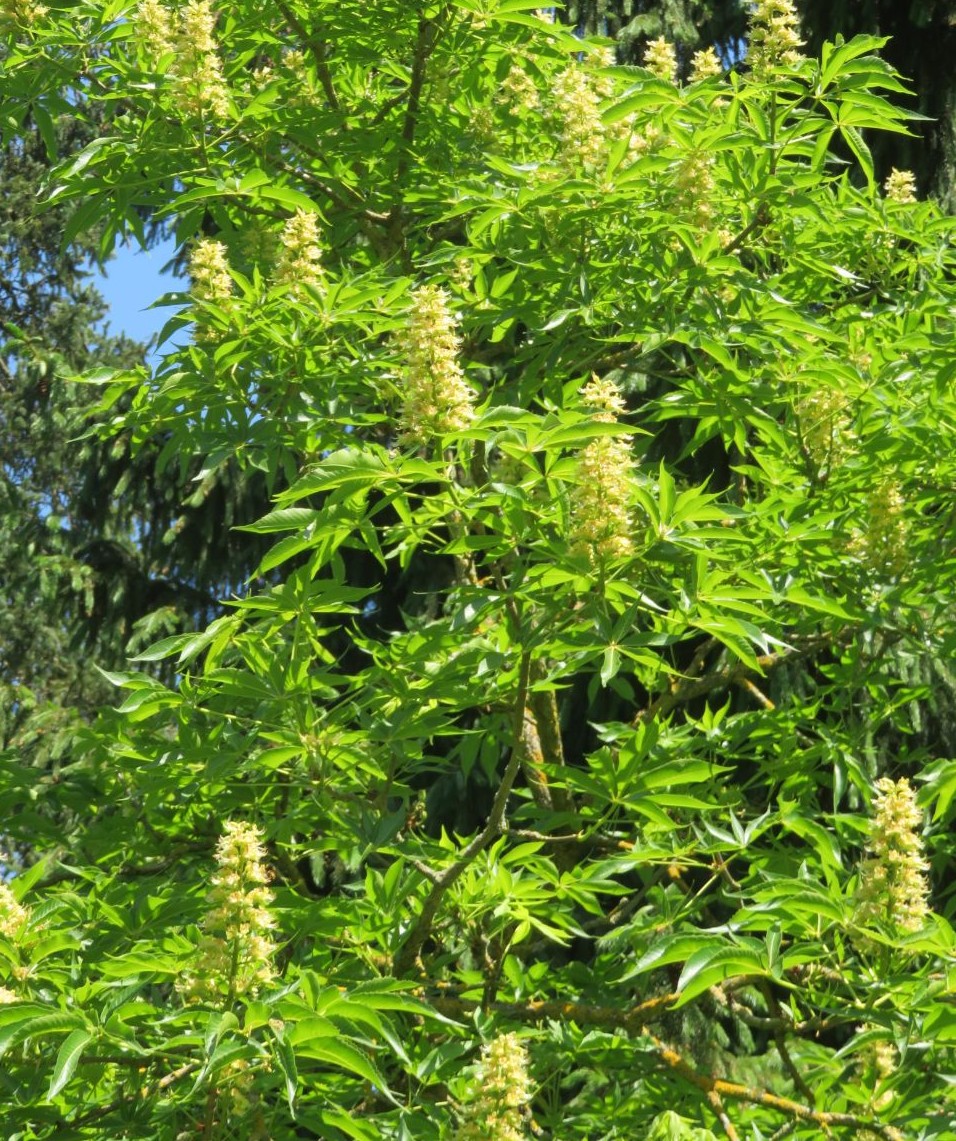
Ohio Buckeye is generally a small to medium deciduous tree with opposite leaves and a rounded crown.
Each leaf is palmately compound, usually with five toothed leaflets radiating from one point. The terminal leaflet is commonly the largest. Plants of var. arguta may have more numerous, narrower leaflets.
Crushed leaves, bark, and twigs produce a strong unpleasant odor responsible for the names Fetid Buckeye and Stinking Buckeye.
The flowers occur in upright terminal clusters and are generally yellow-green to creamy yellow, often with reddish or orange markings.
The fruit is a rounded leathery capsule with a warty or short-prickled surface. It contains one or more glossy brown seeds with large pale circular scars resembling the eye of a deer.
Buckeye Is Not an Edible Chestnut
Ohio Buckeye seeds resemble chestnuts superficially, but Buckeyes belong to Aesculus in Sapindaceae. Edible chestnuts belong to Castanea in Fagaceae.
Edible chestnuts generally develop in burs densely covered with long sharp spines and have nuts with more distinctly pointed tips. Buckeye capsules are warty or bear shorter blunt prickles, and the seeds have a broad pale scar.
A loose polished brown seed should not be identified as edible from color and shape alone. Leaves, buds, capsule, and source tree should be examined.
Ohio Buckeye and European Horse Chestnut
European Horse Chestnut, Aesculus hippocastanum, is native to southeastern Europe and commonly has seven large leaflets, sticky buds, showier white flowers with colored markings, and sharply spined capsules.
Ohio Buckeye usually has five leaflets, less sticky buds, yellow-green flowers, a disagreeable odor when bruised, and capsules with shorter or blunter surface projections.
Both species are poisonous, but their chemical profiles and experimental toxicity are not interchangeable. European Horse Chestnut seed extract was substantially more toxic than Ohio Buckeye seed extract in one chick-and-hamster experiment.
Exact-Species Research Versus Genus-Level Assumptions
Ohio Buckeye has direct seed, leaf, bark, poultry, and cattle evidence, but the exact veterinary toxin remains incompletely characterized.
Seed studies confirm numerous aesculioside saponins and related sapogenins. Leaf research identified a broad phenolic profile, while bark research isolated coumarin glycosides, procyanidins, flavanols, and other constituents.
Those studies do not justify copying every toxin, concentration, therapeutic property, or lethal dose reported for European, Asian, or other North American Aesculus species onto Aesculus glabra.
Why the Animal Experiments Look Contradictory
A 1963 investigation used dried, finely ground Ohio Buckeye seeds mixed into chick feed and found a substantial adverse effect on growth.
A 1984 study used water-soluble portions of alcoholic seed extracts and found no toxicity from the tested Ohio Buckeye extract in chicks or hamsters at the highest exposure, while European Horse Chestnut extract caused marked neurologic depression, paralysis, coma, and death.
The studies used different seed collections, processing methods, preparations, feeding designs, and endpoints. A water-soluble extract can omit or alter compounds present in an intact chewed seed, and chicks or hamsters do not model every aspect of cattle, horse, dog, or cat exposure.
The responsible interpretation is not that one study proves toxicity and the other proves safety. Together they show that potency and experimental outcome depend heavily on the tested material and animal model.
Where Dogs and Cats Encounter It
Dogs encounter Buckeye seeds beneath trees in yards, parks, school grounds, cemeteries, walking trails, wooded areas, apartment landscaping, and native gardens.
Puppies and object-carrying dogs may treat the glossy seeds like balls or nuts. Digging dogs may expose seedlings, roots, and sprouting seeds.
Cats may encounter leaves, seedlings, floral branches, or seeds brought indoors for decorations, crafts, school projects, or collections.
Where Horses and Livestock Encounter It
Horses and livestock are exposed where Buckeye trees grow within pasture, along fences, near water, at woodland margins, or where branches extend into an enclosure.
Spring exposure often involves seedlings, young sprouts, and newly emerged leaves before abundant pasture forage is available.
Autumn exposure centers on fallen capsules and seeds. Risk increases with poor forage, drought, overgrazing, confinement, curiosity, discarded branches, storm damage, or contamination of hay and bedding.
Poisonous Parts
Seeds, capsules, seedlings, young shoots, leaves, flowers, twigs, bark, inner bark, roots, sap, and pruning debris should all be treated as potentially poisonous.
Seeds have the strongest exact-species saponin evidence. Leaves and bark also contain complex mixtures of biologically active compounds, but no dependable comparison proves one tissue is always the most chemically toxic in every season and tree.
Young shoots and seeds create the greatest practical livestock concern because they may be consumed in substantial quantities. Seeds create an additional mechanical hazard for dogs.
Fresh, Dried, and Processed Material
Fresh, wilted, dried, ground, or stored Buckeye material should not be offered to animals. Drying and grinding did not eliminate biologic effects in experimental seed studies.
Storm debris, pruning waste, craft seeds, seasonal decorations, pulled seedlings, dried branches, and contaminated forage should remain inaccessible.
Historical human processing methods involving prolonged heating and leaching do not provide a safe or practical animal-feeding method. No owner should attempt to detoxify Buckeye for a pet or livestock animal.
Wildlife Use Does Not Establish Safety
Squirrels and other wildlife may carry, cache, or consume Buckeye seeds. Wildlife behavior does not establish safety for a dog, cat, horse, cow, pig, rabbit, or bird.
Species differ in food selection, preparation, gastrointestinal physiology, metabolism, body size, and tolerance.
A dog may also swallow the seed whole, creating an obstruction hazard unrelated to whether another species can nibble or process it.
Diagnosis
There is no routine clinic test that confirms total Ohio Buckeye toxin exposure or measures a treatment-guiding concentration of all its saponins, glycosides, phenolics, and unidentified neuroactive constituents.
Diagnosis depends on reliable plant identification, evidence of access, plant part, estimated amount, clinical findings, and exclusion of other causes.
Owners should preserve a branch with opposite compound leaves, flowers or capsules when available, intact seeds, photographs of the source tree, samples of forage or bedding, and safely collected vomited material.
A loose brown seed alone can be confused with another tree seed or nut. A complete specimen and photographs of the tree are more useful.
Important Differential Diagnoses
Possible alternatives include European Horse Chestnut, Yellow Buckeye, Red Buckeye, edible chestnuts, acorns, black walnuts, fruit pits, moldy nuts, tremorgenic mycotoxins, pesticides, medications, poisonous mushrooms, infectious gastroenteritis, pancreatitis, hypoglycemia, electrolyte disorders, and other neurotoxic plants.
Persistent vomiting or abdominal pain also requires investigation for a seed or another object causing gastrointestinal obstruction.
Several grazing animals becoming ill together suggests a shared plant, feed, water, pesticide, mineral, or environmental exposure.
Veterinary Evaluation
Evaluation may include swallowing assessment, oral and throat examination, hydration, abdominal palpation, mucous-membrane color, capillary refill, pupil size, coordination, muscle tone, pulse quality, ECG, blood pressure, temperature, respiratory function, and neurologic status.
Laboratory testing may include glucose, electrolytes, kidney and liver values, packed cell volume, total protein, creatine kinase, acid-base status, lactate, and urinalysis.
Radiographs, abdominal ultrasound, endoscopy, serial imaging, or surgery may be needed when a whole seed was swallowed or obstruction is suspected.
Prognosis
The prognosis is generally good after a limited exposure when gastrointestinal signs remain mild, hydration is maintained, and no seed obstruction develops.
The outlook becomes more guarded with gastrointestinal bleeding, severe dehydration, aspiration, persistent obstruction, paralysis, repeated seizures, respiratory compromise, coma, or delayed treatment.
A normal initial examination does not always eliminate the foreign-body risk because a seed can remain in the stomach before moving into a narrower intestinal segment.
Prevention
Collect fallen capsules and seeds repeatedly throughout fruiting season, especially in yards used by puppies or dogs that swallow non-food objects.
Keep Buckeye trees outside livestock enclosures and prevent branches from extending over pasture fencing. Remove seedlings and sprouts where animals graze and maintain adequate forage.
Inspect paddocks, kennels, runs, hay areas, and animal-accessible yards after storms, landscaping, and pruning.
Do not use Buckeye seeds as toys, craft objects, seasonal decorations, chew items, or animal enrichment.
Immediate Steps After Exposure
- Stop further access: Remove the animal from the tree, fallen capsules, seeds, seedlings, shoots, leaves, bark, flowers, branches, clippings, hay, bedding, or contaminated forage. Search beneath leaves, mulch, and grass for additional seeds.
- Identify the plant part: Determine whether the animal mouthed a leaf, browsed shoots, cracked a seed, swallowed seed fragments, swallowed a whole seed, or had prolonged access to fallen material.
- Assess chemical and mechanical risks separately: A chewed seed may release plant constituents, while an intact seed may lodge in the throat, esophagus, stomach, or intestine.
- Remove only loose visible material: If the animal is calm and this can be done safely, remove plant pieces resting at the lips or front of the mouth. Do not reach blindly toward the throat.
- Do not force anything by mouth: An alert animal swallowing normally may have voluntary access to fresh water. Do not pour, spray, syringe, drench, or force food, water, milk, oil, or another substance.
- Account for every possible seed: Determine how many seeds were available and how many remain. Vomiting one seed does not prove that another seed was not swallowed.
- Preserve evidence: Save an intact capsule, seed, leaves, flowers, twigs, photographs of the tree, nursery information, forage samples, and safely collected vomited material.
- Contact a veterinarian promptly: Professional guidance is appropriate after any suspected whole-seed ingestion, substantial chewed-seed exposure, an unknown amount, a small-animal exposure, livestock browsing, or any developing gastrointestinal or neurologic sign.
Do Not Attempt Unsupervised Home Treatment
- Do not induce vomiting: Hydrogen peroxide, salt, mustard, syrup of ipecac, detergent, oil, manual gagging, and fingers in the throat can cause gastric injury, uncontrolled vomiting, aspiration, or dangerous delay.
- Do not induce vomiting in horses, rabbits, or guinea pigs: These species cannot vomit.
- Do not force mouth flushing: Liquid may push material farther toward the throat or enter the lungs when the animal is gagging, drooling, vomiting, weak, uncoordinated, sedated, or swallowing abnormally.
- Do not give activated charcoal at home: Charcoal may be aspirated and cannot remove an intact seed causing a mechanical obstruction.
- Do not give laxatives, mineral oil, butter, bread, or bulky food: These substances cannot guarantee seed passage and may worsen vomiting, diarrhea, aspiration, or an existing obstruction.
- Do not give owner-selected stomach or diarrhea medication: Loperamide, bismuth products, antacids, acid suppressants, sucralfate, and leftover prescriptions do not neutralize Buckeye constituents.
- Do not give human pain medication: Ibuprofen, naproxen, aspirin, acetaminophen, and similar drugs can create a second poisoning and may worsen gastrointestinal, kidney, or liver injury.
- Do not give leftover sedatives or seizure medication: Neurologic treatment requires professional drug selection, respiratory monitoring, glucose and electrolyte assessment, and escalation according to the patient’s response.
When Emergency Examination Is Especially Important
- A whole seed may have been swallowed: A seed can lodge in the throat, esophagus, stomach outflow, or intestine before systemic toxicity becomes apparent.
- Gagging, repeated swallowing, drooling, regurgitation, or neck extension occurs: These signs may indicate an oral, pharyngeal, or esophageal obstruction.
- Breathing becomes difficult: Airway obstruction, aspiration, neurologic depression, or respiratory-muscle weakness may be developing.
- Vomiting persists or water cannot be retained: Dehydration, electrolyte abnormalities, mucosal injury, or obstruction may be present.
- Severe abdominal pain, bloating, straining, or reduced stool develops: A seed or capsule may be causing partial or complete gastrointestinal obstruction.
- Blood appears in vomit or stool: Significant gastrointestinal injury or another serious disorder may be present.
- Weakness, wobbliness, twitching, tremors, or stiffness develops: Neurologic or neuromuscular poisoning may be progressing.
- Pupils dilate or behavior changes: Disorientation, excitement, profound depression, or altered awareness indicates central nervous system involvement.
- The animal cannot stand, becomes paralyzed, seizes, collapses, or becomes unresponsive: These are immediately life-threatening findings.
- A horse or livestock animal consumed Buckeye: The quantity may be difficult to estimate, horses cannot vomit, and several animals may share the same exposure.
Veterinary Examination and Diagnostic Priorities
The veterinarian must determine whether the primary problem is gastrointestinal irritation, systemic toxicosis, choking, esophageal obstruction, a gastric or intestinal foreign body, or a combination of these problems.
The initial examination may include swallowing ability, oral and throat examination, abdominal pain, hydration, mucous-membrane color, capillary refill, pupils, coordination, muscle tone, pulse quality, heart rhythm, blood pressure, temperature, respiration, and level of awareness.
Laboratory testing may include a complete blood count, serum chemistry profile, glucose, sodium, potassium, chloride, calcium, magnesium, kidney and liver values, creatine kinase, total protein, acid-base measurements, lactate, and urinalysis.
These tests do not confirm one Buckeye toxin but can identify dehydration, electrolyte disturbance, reduced perfusion, muscle injury, organ stress, and alternative causes of illness.
Foreign-Body Imaging and Retrieval
A whole-seed history may justify radiographs, abdominal ultrasound, endoscopy, or serial imaging even when the animal initially appears normal.
Some plant seeds may not be clearly visible on every radiograph. Their effect on stomach contents, gas patterns, intestinal diameter, motility, and fluid accumulation may still provide evidence of obstruction.
Endoscopic retrieval may be considered when an intact seed remains in the esophagus or stomach and can be removed before entering the intestine.
Surgery may be required when the seed causes obstruction, cannot be retrieved endoscopically, damages the gastrointestinal tract, remains stationary, or is associated with continuing vomiting, pain, or deterioration.
Professional Emesis
A veterinarian may consider medically induced vomiting after a recent ingestion when a dog remains fully alert, neurologically normal, not already vomiting repeatedly, breathing normally, and able to protect the airway.
A whole Buckeye seed changes the decision. The veterinarian must consider the seed’s size, shape, location, and the patient’s esophageal diameter before attempting to bring it back through the esophagus.
Emesis is inappropriate when the animal is weak, uncoordinated, trembling, seizing, collapsed, breathing abnormally, swallowing poorly, or already vomiting repeatedly.
Gastric Lavage and Activated Charcoal
Gastric lavage is reserved for selected substantial exposures and generally requires anesthesia with a protected airway. It may remove chewed plant fragments but may not retrieve every large intact seed.
A veterinarian or veterinary toxicologist may consider activated charcoal after substantial chewed-seed, leaf, shoot, or bark ingestion when the patient is stable and can protect the airway.
Charcoal is not mandatory merely because Buckeye was eaten. It has limited value when the principal remaining problem is an intact foreign body rather than absorbable plant material.
Repeated charcoal is not routinely justified because clinically important enterohepatic recycling of the principal Ohio Buckeye constituents has not been established.
Control of Vomiting and Gastrointestinal Injury
Persistent vomiting should be controlled after useful decontamination has been completed and obstruction has been evaluated.
Veterinarian-selected antiemetics such as maropitant or ondansetron may be used according to the patient’s species, medical history, hydration, cardiovascular status, and route requirements.
Gastrointestinal protectants may be considered when painful swallowing, repeated vomiting, blood in vomit, black stool, esophagitis, or erosive gastric injury is present. These medications do not neutralize Buckeye saponins or other plant constituents.
Acid suppression is selected when a specific acid-related complication is suspected or documented rather than given automatically after every exposure.
Drugs that reduce intestinal movement may be dangerous when obstruction, ileus, hemorrhagic disease, or continuing retention of plant material has not been excluded.
Fluid and Electrolyte Support
Intravenous crystalloids may be required when vomiting, diarrhea, poor intake, gastrointestinal bleeding, hypotension, or systemic illness causes clinically important dehydration or poor perfusion.
Fluid treatment is adjusted according to body size, hydration, blood pressure, heart function, kidney function, urine production, respiratory findings, electrolytes, and continuing losses.
Sodium, potassium, chloride, calcium, magnesium, glucose, and acid-base abnormalities should be corrected according to measured values rather than presumed from outward signs.
A vasopressor may be added when clinically important hypotension persists after appropriate circulating volume has been restored and other reversible causes have been addressed.
Neurologic and Seizure Treatment
Tremors, rigidity, paralysis, seizures, or altered awareness require a quiet treatment environment, airway assessment, oxygen monitoring, blood-glucose testing, temperature control, and electrolyte evaluation.
Benzodiazepines such as diazepam or midazolam may be selected for seizures. Methocarbamol may be considered when severe tremors or muscular rigidity predominate.
Recurrent or refractory seizures may require phenobarbital, levetiracetam, propofol, or inhalant anesthesia according to the patient’s response.
Deep sedation and anesthesia can suppress breathing and blood pressure. Severe cases may require endotracheal intubation, oxygen, assisted ventilation, continuous ECG, repeated blood-pressure measurement, and acid-base monitoring.
Aspiration and Respiratory Support
Coughing, fever, nasal discharge, abnormal lung sounds, reduced oxygenation, or worsening respiratory effort after vomiting or regurgitation may indicate aspiration pneumonitis or pneumonia.
Evaluation may include pulse oximetry, blood gases, chest imaging, and assessment of airway protection.
Treatment may include oxygen, airway suctioning, nebulization, physiotherapy, fluid support, intubation, or mechanical ventilation. Antibiotics are used when bacterial aspiration pneumonia is suspected or documented, not automatically after every vomiting episode.
Horses and Livestock
Remove every animal from the Buckeye tree, seedlings, overhanging branches, fallen seeds, hay, bedding, and contaminated feed.
Do not drench, force-feed, or tube an animal that is weak, recumbent, trembling, convulsing, coughing, breathing abnormally, or swallowing poorly without professional assessment.
Horses cannot vomit, and ruminants may retain plant material within the forestomachs. Veterinary management may include nasogastric evaluation in horses, rumen examination in cattle, fluid and electrolyte treatment, gastrointestinal support, selected professional adsorbent treatment, pain control, and neurologic monitoring.
When several animals are affected, preserve seedlings, leaves, branches, capsules, seeds, hay, feed, water, stomach or rumen contents, feces, and photographs of the exposure area.
Recovery and Prognosis
Dogs and cats with limited exposure and signs confined to mild gastrointestinal irritation generally have a good prognosis.
A swallowed seed creates a continuing risk until it has been retrieved, documented to have passed, or determined by the veterinarian to be unlikely to obstruct.
Before discharge or routine home monitoring is appropriate, the animal should retain water and food, pass stool, urinate normally, walk without weakness or incoordination, breathe comfortably, and remain free of recurring tremors or seizures.
The prognosis becomes guarded with gastrointestinal bleeding, severe dehydration, aspiration pneumonia, persistent obstruction, paralysis, repeated seizures, respiratory compromise, coma, or delayed treatment.
Frequently Asked Questions About Buckeye and Animal Poisoning
Is Ohio Buckeye poisonous to dogs and cats?
Yes. Possible signs include salivation, vomiting, diarrhea, abdominal pain, appetite loss, depression or excitement, dilated pupils, weakness, wobbliness, muscle twitching, tremors, paralysis, seizures, coma, or collapse. An intact swallowed seed creates a separate choking or gastrointestinal-obstruction risk.
Is Ohio Buckeye the same as European Horse Chestnut?
No. Ohio Buckeye is Aesculus glabra, a North American species. European Horse Chestnut is Aesculus hippocastanum. Both are poisonous, but their seed chemistry and experimental potency are not identical, and one species’ toxin concentration or dose should not be applied automatically to the other.
Is a Buckeye seed an edible chestnut?
No. Edible chestnuts belong to Castanea in the beech family. Buckeyes belong to Aesculus in the soapberry family. A loose glossy brown seed should never be identified as edible without examining its capsule, leaves, buds, and source tree.
What toxins are directly confirmed in Ohio Buckeye?
Exact-species research confirms numerous triterpenoid saponins in the seeds, including aesculiosides G1 through G16 and several previously known aesculiosides. Additional studies have identified triterpene sapogenins in seeds, 28 phenolic compounds in leaves, and coumarin glycosides, procyanidins, flavanols, and other compounds in bark.
Is aescin the main Ohio Buckeye toxin?
Ohio Buckeye contains related triterpenoid saponins, but aescin or escin is a collective term most closely associated with the characterized saponin mixture of European Horse Chestnut. Direct Ohio Buckeye studies identify aesculiosides and related sapogenins. It is more accurate to describe the confirmed class as triterpenoid saponins than to assign the complete European Horse Chestnut aescin profile automatically to Ohio Buckeye.
Is aesculin a saponin?
No. Aesculin is a coumarin glycoside. Saponins are a different chemical class. Ohio Buckeye bark research has identified aesculin 6-rutinoside and other coumarin glycosides, but free aesculin and fraxin have not been proven to be the two compounds responsible for the entire neurologic syndrome.
Does Ohio Buckeye contain a narcotic alkaloid?
Older literature proposed an unidentified “narcotic alkaloid” as the cause of weakness, incoordination, coma, and death. That compound has not been isolated and characterized adequately as the definitive Ohio Buckeye toxin. Additional unidentified neuroactive constituents may exist, but the historical alkaloid claim should not be presented as settled chemistry.
Why did one Ohio Buckeye seed experiment show toxicity while another did not?
The studies used different plant collections, processing methods, preparations, doses, animal models, and endpoints. Ground seed mixed into feed impaired chick growth, while a particular water-soluble alcoholic seed extract caused no toxicity in chicks or hamsters at the highest tested exposure. A negative extract study does not prove that an intact chewed seed, sprout, leaf, or bark is safe.
Which parts of Ohio Buckeye are poisonous?
Seeds, capsules, seedlings, young shoots, leaves, flowers, twigs, bark, inner bark, roots, sap, and pruning debris should all remain inaccessible. Seeds have the strongest exact-species saponin evidence, but other tissues contain additional biologically active compounds.
Is dried Buckeye still poisonous?
It should be treated as potentially poisonous. Drying and grinding did not eliminate biological effects in experimental seed studies, and modern chemical isolation commonly begins with dried or processed plant material. Wilted leaves, stored seeds, dried branches, hay contamination, and craft seeds are not safe animal exposures.
Can one Buckeye seed poison a dog?
No dependable safe seed count exists. Risk depends on the dog’s size, whether the seed was chewed, the chemistry of the individual tree, and how much was swallowed. One intact seed may also obstruct a small dog’s esophagus or intestine even when the absorbed toxic dose is uncertain.
What signs suggest that a swallowed seed is lodged in the esophagus?
Repeated swallowing, heavy drooling, gagging, regurgitation, coughing, neck extension, refusal or inability to swallow water, distress, and breathing changes may indicate an oral, throat, or esophageal obstruction. This requires immediate examination.
What signs suggest an intestinal obstruction?
Persistent vomiting, inability to retain water, abdominal pain, bloating, appetite loss, reduced or absent stool, straining, and progressive lethargy may indicate obstruction. Signs can be delayed if a seed remains in the stomach before entering a narrower intestinal segment.
Is Buckeye poisonous to horses and livestock?
Yes. Ohio Buckeye sprouts, young leaves, bark, and seeds have been associated with illness or death in cattle, sheep, pigs, horses, and other animals. Possible signs include colic, diarrhea, feed refusal, uneasiness, weakness, an abnormal or staggering gait, trembling, dilated pupils, recumbency, coma, or death.
When is livestock exposure most likely?
Spring exposure often involves seedlings, young shoots, and early leaves when other forage is scarce. Autumn exposure involves fallen capsules and seeds. Drought, overgrazing, poor pasture, storm damage, overhanging branches, and discarded pruning debris increase risk.
Does the fact that squirrels handle Buckeyes mean they are safe?
No. Wildlife species differ in feeding behavior, dose selection, digestion, metabolism, body size, and tolerance. A dog may also swallow the entire seed and develop an obstruction, which is unrelated to whether a squirrel can nibble or cache it.
Should I make my dog vomit after it swallows a Buckeye?
Do not induce vomiting at home. A large smooth seed may lodge during vomiting, and hydrogen peroxide or another home emetic can cause gastric injury or aspiration. A veterinarian must consider the dog’s size, the seed’s size and location, current symptoms, and whether endoscopic retrieval is safer.
Should I give activated charcoal?
Do not give charcoal at home. A veterinarian may consider it after substantial chewed-plant exposure when the patient is stable and can protect the airway. Charcoal cannot retrieve an intact seed and may be dangerous in an animal that is vomiting, weak, uncoordinated, sedated, or swallowing abnormally.
How is Buckeye poisoning treated?
Treatment may include professional decontamination, anti-nausea medication, intravenous fluids, electrolyte correction, gastrointestinal protection, blood-pressure and ECG monitoring, oxygen, tremor or seizure control, and aspiration treatment. A whole seed may require imaging, endoscopic retrieval, or surgery.
Is there a specific antidote?
No Ohio Buckeye-specific antidote has been established. Treatment is based on the animal’s actual gastrointestinal, neurologic, circulatory, respiratory, and foreign-body complications.
What is the prognosis after Buckeye ingestion?
The prognosis is generally good after limited exposure when vomiting and diarrhea remain mild and no obstruction occurs. It becomes more guarded with gastrointestinal bleeding, severe dehydration, aspiration, persistent obstruction, paralysis, seizures, respiratory compromise, coma, or delayed treatment.