Elephant Ear Oral Injury, Swelling, and Airway Risk
Are Elephant Ears Poisonous to Dogs, Cats, Horses, and Livestock?
Yes—Elephant Ears or taro, Colocasia esculenta, is poisonous to dogs, cats, horses, and other animals that chew the raw plant. Its leaves, petioles, stems, flowers, sap, roots, corms, and cormels contain insoluble calcium oxalate raphides that puncture contacted tissues. Signs usually begin immediately and may include intense mouth pain, drooling, head shaking, pawing at the mouth, gagging, vomiting, tongue or lip swelling, difficulty swallowing, and appetite refusal. Most exposures remain localized, but substantial throat swelling can rarely interfere with breathing.
About this guide: This page provides general pet-poisoning information and cannot diagnose or treat an individual animal. For any suspected exposure, contact a veterinarian or animal poison-control service immediately. Do not induce vomiting, give medication, or attempt home decontamination unless directed by a veterinary professional.
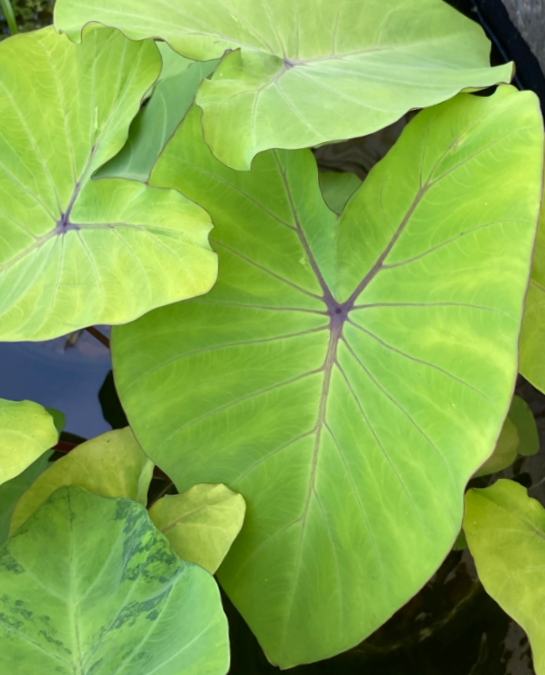
Elephant Ears
Colocasia esculenta (L.) Schott
Important botanical synonyms and former scientific names include:
- Arum esculentum L.
- Caladium esculentum (L.) Vent.
- Colocasia antiquorum Schott
- Colocasia antiquorum var. esculenta (L.) Schott
- Leucocasia esculenta (L.) Nakai
- Arum colocasia L.
- Colocasia esculenta var. antiquorum (Schott) F.T.Hubb. & Rehder
- Colocasia esculenta var. aquatilis Hassk.
The common name Elephant Ear is also used for species in Alocasia, Caladium, and Xanthosoma. Those plants require separate botanical identification even though many share the same insoluble-calcium-oxalate hazard.
Araceae Juss. — Arum or Aroid Family
Order: Alismatales
Elephant Ear, Elephant Ears, Elephant’s Ear, Taro, Taro Plant, Taro Root, Dasheen, Eddoe, Eddo, Cocoyam, Old Cocoyam, Wild Taro, Colocasia, Kalo, Gabi, Satoimo, Arbi, Arvi, Arum Root, Poi Taro, Egyptian Taro, True Taro, Common Taro, Black Taro, Green Taro, Dasheen Taro, Colocasia esculenta, Arum esculentum, Caladium esculentum, Colocasia antiquorum, Leucocasia esculenta
Commercial ornamental cultivars include ‘Black Magic,’ ‘Black Coral,’ ‘Illustris,’ ‘Mojito,’ ‘Coffee Cups,’ ‘Blue Hawaii,’ ‘Hawaiian Punch,’ ‘Tea Cup,’ ‘Diamond Head,’ ‘Lime Aide,’ and numerous food-crop and ornamental selections. Leaf color, variegation, compact growth, or cultivar name does not remove the raw raphide hazard.
“Malanga,” “new cocoyam,” and “tannia” often refer to Xanthosoma species rather than true taro. “Caladium” properly refers to the genus Caladium, although it is sometimes used loosely for other elephant-ear plants. These names are related search terms and nursery names, not dependable botanical synonyms for every Colocasia esculenta plant.
Insoluble Calcium Oxalate Raphides
The principal toxic structures in raw Elephant Ear are insoluble calcium oxalate crystals called raphides. These microscopic needles are stored in bundles inside specialized plant cells known as crystal idioblasts. When a leaf, petiole, stem, corm, root, or other tissue is bitten, crushed, cut, or torn, raphides are released into the sap and surrounding tissues.
The crystals injure by direct contact. They puncture and abrade the lips, gums, tongue, palate, pharynx, esophagus, skin, and eyes without first being absorbed, metabolized, or converted into another toxin. This explains why signs commonly begin during chewing or within minutes rather than after a long symptom-free period.
Raphides occur in multiple parts of taro. Microscopic studies have documented needle-shaped calcium oxalate in leaf blades, petioles, corm peels, and flowers. The concentration and arrangement can vary with plant tissue, cultivar, growing conditions, and maturity, but no raw part should be considered dependable pet food.
Crystal Release from Specialized Cells
Idioblasts differ from neighboring plant cells because they accumulate bundles of mineral crystals within a specialized cellular environment. Mechanical pressure from chewing disrupts the tissue and exposes or ejects the raphides into the animal’s mouth.
The sharp shape is medically important. Calcium oxalate as a chemical name does not by itself explain the immediate severity of the reaction; the physical form of the needle-shaped crystals allows them to penetrate soft mucosal tissue. A thick, juicy petiole or freshly cut corm can expose the animal to both abundant plant sap and numerous crystals.
Some descriptions portray every idioblast as firing crystals like a projectile. The exact release mechanics vary among aroid tissues, and not every crystal cell behaves identically. The clinically established point is that crushing raw tissue frees sharp raphides capable of immediate mechanical injury.
Inflammatory Proteins and Raphide-Associated Compounds
Raphide injury may be intensified by proteins or other plant constituents carried with the crystals. Research in raphide-containing plants has demonstrated that sharp crystals can work synergistically with proteases by creating microscopic pathways through tissue. Taro raphides are also associated with proteins involved in crystal development and plant defense.
The precise contribution of each protein, enzyme, volatile constituent, or inflammatory mediator to naturally occurring pet poisoning has not been established. It is therefore more accurate to identify insoluble calcium oxalate raphides as the confirmed toxic principle and describe other sap constituents as possible contributors to pain, edema, and inflammation.
Much of the visible swelling is a direct response to mechanical and chemical tissue injury. It should not automatically be labeled an allergy. Histamine-related inflammation may contribute in some patients, but antihistamines cannot remove embedded crystals or substitute for examination of the tongue, throat, swallowing function, and airway.
Raw Taro Is Not Equivalent to Prepared Food
Colocasia esculenta is an important human food crop, but its edible use depends on selecting appropriate cultivars and applying established preparation methods. The species name esculenta, food-market labels such as taro root, and the historical use of corms or leaves do not make raw garden plants safe for animals.
Cooking studies show that heat and processing can alter raphide size, sharpness, distribution, and soluble oxalate content. In taro flowers, prolonged steaming shortened and blunted many needle-shaped crystals, but total calcium oxalate remained largely unchanged. Other studies of leaves and corms have found that boiling, soaking, baking, and other preparation methods do not affect every oxalate fraction in the same way.
Pet owners should not attempt to convert an ornamental Elephant Ear into pet food. Cultivar identity, plant part, processing method, residual crystals, seasonings, fats, salt, and other ingredients all matter. A cooked household dish also may contain onion, garlic, dairy, oil, or seasoning that creates a separate animal-health concern.
Local Injury Rather Than Soluble-Oxalate Poisoning
Elephant Ear raphides are predominantly insoluble calcium oxalate. They remain concentrated at contacted surfaces and are not readily absorbed in a form that removes large amounts of calcium from the bloodstream.
This differs from soluble-oxalate plants, which can permit absorbed oxalate to bind circulating calcium and contribute to hypocalcemia and renal tubular crystal injury. Profound low blood calcium, tetany, widespread muscle tremors, primary acute kidney failure, and systemic oxalate deposition are not expected consequences of an ordinary Colocasia esculenta chewing exposure.
Severe dehydration after persistent vomiting or diarrhea can still compromise kidney perfusion, especially in a small, elderly, or medically fragile animal. That is a secondary complication of fluid loss rather than the expected direct raphide mechanism.
Skin, Coat, and Eye Exposure
Sap and crushed tissue can cause burning, redness, itching, or irritant dermatitis on the lips, muzzle, paws, eyelids, abdomen, damaged skin, and sparsely haired areas. Plant residue on the coat creates a secondary ingestion risk because the animal may swallow it during grooming.
Raphides or plant debris introduced into an eye can produce immediate pain, blinking, tearing, conjunctival redness, eyelid swelling, and corneal injury. A contaminated paw may transfer crystals from the plant or soil directly to the ocular surface.
No dependable toxic dose, corm weight, leaf area, petiole length, or sap volume has been established for dogs, cats, horses, livestock, rabbits, birds, or other pets. Severity depends more on the tissue crushed, amount retained in the mouth, duration of contact, swallowing ability, airway involvement, and continuing gastrointestinal losses than on one universal numerical threshold.
Immediate Oral Pain and Irritation
Signs usually begin while the animal is chewing or within minutes. A dog or cat may suddenly drop the plant, cry out, shake the head, rub the muzzle, paw at the mouth, or resist examination. The lips, gums, tongue, palate, and inner cheeks may become red, painful, and swollen.
A light bite into a leaf margin may produce brief discomfort, while prolonged chewing of a thick petiole or raw corm can release more sap and raphide-containing tissue. The visible bite mark may appear small even when the animal’s mouth received substantial exposure.
The pain often limits the amount eaten, which is why serious systemic illness is uncommon. That natural deterrent is not complete protection: puppies, persistent chewers, animals playing with uprooted corms, and animals with reduced oral sensation may continue chewing.
Drooling, Gagging, and Difficulty Swallowing
Heavy salivation is one of the most characteristic signs. Saliva may drip continuously, form long ropes, or become foamy around the lips. The animal may swallow repeatedly, gag, retch, extend the neck, or make choking motions because inflammation involves the rear of the mouth or pharynx.
Difficulty swallowing may appear as approaching food or water and then pulling away, dropping food from the mouth, coughing after drinking, regurgitation, or inability to handle saliva. Horses cannot vomit and may show salivation, abnormal chewing, feed refusal, repeated swallowing, coughing, or dysphagia instead.
Hoarse barking, a weak meow, painful vocalization, or temporary reluctance to vocalize may accompany oral or throat inflammation. A pronounced voice change combined with continuous gagging, respiratory noise, or inability to swallow deserves immediate examination.
Vomiting and Gastrointestinal Irritation
Dogs and cats may vomit after swallowing crystals, sap, fibrous leaves, petioles, or corm fragments. Nausea, appetite reduction, abdominal discomfort, depression, and diarrhea may follow. Some animals vomit spontaneously soon after ingestion because the raw tissue is intensely irritating.
One brief vomiting episode may resolve as the oral irritation subsides. Repeated vomiting, frequent diarrhea, refusal to drink, or painful swallowing can lead to dehydration and electrolyte abnormalities. Small animals and patients with preexisting kidney, heart, endocrine, or gastrointestinal disease may tolerate those losses poorly.
Substantial blood in vomit, black stool, severe abdominal distention, repeated unproductive retching, persistent focal abdominal pain, or illness continuing after the mouth improves is not expected from a minor raphide exposure. Those findings require investigation for mucosal injury, obstruction, fertilizer, pesticide, another plant, or unrelated disease.
Mouth, Tongue, and Throat Swelling
The lips, muzzle, tongue, floor of the mouth, and pharyngeal tissues may swell where sap and crystals made direct contact. The tongue can become enlarged, painful to move, or partially protrude from the mouth.
Most swelling remains uncomfortable rather than life-threatening. Progressive swelling is more concerning than stable mild puffiness, particularly when the animal cannot close the mouth normally, retract the tongue, swallow saliva, or drink without coughing.
Direct raphide injury is not synonymous with anaphylaxis. Widespread hives, profound weakness, weak pulses, vomiting accompanied by collapse, or sudden generalized facial swelling may indicate a true hypersensitivity reaction or another exposure and requires emergency treatment.
Rare Upper-Airway Compromise
Severe pharyngeal, epiglottic, or laryngeal edema is uncommon but potentially fatal. Noisy inspiration, open-mouth breathing, rapid shallow respiration, exaggerated chest or abdominal effort, blue-gray mucous membranes, gasping, or collapse indicates impaired airflow.
Inability to swallow saliva may precede obvious respiratory distress. An animal that is continuously gagging, extending the neck, producing an abnormal voice, or accumulating saliva should not be forced to drink or eat.
Respiratory abnormalities after vomiting also raise concern for aspiration. Coughing, nasal discharge, fever, abnormal lung sounds, or worsening effort may develop if saliva, vomit, liquid, or plant fragments enter the lungs.
Skin and Eye Signs
Sap on the skin or coat may cause localized burning, redness, itching, swelling, licking, or rubbing. Damaged skin, paw webs, eyelids, the muzzle, lower abdomen, and other thinly haired areas may be more reactive.
Eye exposure can cause sudden blinking, squinting, tearing, conjunctival redness, eyelid swelling, discharge, light sensitivity, corneal cloudiness, or apparent visual difficulty. Persistent pain after irrigation may indicate retained debris, epithelial erosion, ulceration, or embedded crystalline material.
Species Differences and Expected Course
Dogs and cats develop the classic immediate oral syndrome. Horses and grazing animals may show salivation, abnormal chewing, feed refusal, dysphagia, coughing, colic-like discomfort, or diarrhea. Published plant-specific evidence for rabbits, guinea pigs, rodents, birds, and reptiles is limited, but small animals may deteriorate rapidly after appetite loss or dehydration.
Mild mouth pain, drooling, and localized swelling often begin improving within several hours. Appetite and vocalization may take longer to normalize if swallowing remains uncomfortable. Recovery may require one or more days after prolonged corm chewing, extensive pharyngeal irritation, repeated vomiting, dehydration, dermatitis, eye injury, or aspiration.
Profound hypocalcemia, primary kidney failure, generalized seizures, persistent arrhythmias, coma, or progressive multiple-organ failure is not characteristic of uncomplicated Elephant Ear poisoning. Those findings require investigation for a soluble-oxalate plant, pesticide, medication, another toxic ornamental, severe hypoxia, dehydration, or unrelated disease.
Plant Identity
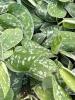
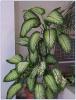
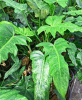
Elephant Ear is a large, tuberous aroid with broad heart-shaped or shield-shaped leaves carried on long, thick petioles. In Colocasia esculenta, the petiole usually attaches to the underside of the leaf blade inward from the basal notch, creating a peltate leaf. The blades commonly angle or droop downward rather than remaining rigidly upright.
Plants spread from a central corm and may produce smaller side cormels, offsets, and stolon-like growth. Leaves range from green to nearly black, purple, blue-green, chartreuse, or variegated depending on cultivar. The flowers consist of a fleshy spadix enclosed by a pale spathe, but flowering is less conspicuous than the foliage and is not required for identification.
Photographs used for poison identification should show the complete plant, upper and lower leaf surfaces, the point where the petiole joins the blade, the base of the plant, any corm or cormel, the nursery label, and the damaged tissue.
Why “Elephant Ear” Is Not a Precise Botanical Name
The common name Elephant Ear is shared by large-leaved aroids in Colocasia, Alocasia, Caladium, and Xanthosoma. These plants are not botanically interchangeable, and food uses that apply to one identified cultivar should never be transferred casually to another.
Colocasia leaves commonly point outward or downward, with the petiole attached beneath the blade. Many Alocasia leaves are more rigid and upright, with the petiole meeting the leaf at or near the basal notch. Caladium plants usually have thinner, smaller, brightly patterned leaves, while many Xanthosoma species have arrow-shaped leaves and different corm structures.
All four genera may contain insoluble calcium oxalate raphides, so emergency first response is similar when the exact elephant-ear plant is unknown. Accurate identification still matters because species, plant parts, food uses, associated compounds, and exposure severity can differ.
Taro, Malanga, Cocoyam, and Food-Name Confusion
True taro generally refers to Colocasia esculenta. Dasheen and eddoe describe important cultivated taro groups or market forms, although usage varies among regions. Kalo is a Hawaiian name associated with taro and poi production.
Malanga, tannia, and new cocoyam frequently refer to Xanthosoma species rather than Colocasia esculenta. Cocoyam may be used broadly for either genus. A grocery label or common food name therefore may not provide a dependable botanical identification.
Properly prepared taro is consumed by people in many cultures, but raw leaves, petioles, corm peels, flowers, and corm tissue can be intensely acrid. A pet digging up a garden corm, chewing an ornamental cultivar, eating discarded peelings, or licking uncooked residue is not receiving a safely identified and traditionally prepared food.
Where Animals Encounter Elephant Ears
Elephant Ears are commonly planted at pond edges, drainage areas, wet garden beds, tropical borders, pool enclosures, patios, courtyards, and large entrance containers. Their leaves and petioles begin near ground level, making them accessible to dogs, puppies, rabbits, tortoises, and other animals.
Cats may chew a leaf margin, rub against a broken petiole, climb into a container, or groom sap from a contaminated paw. Dogs may pull on a petiole, shred a fallen leaf, drink from a container containing damaged plant tissue, or dig around the base.
In colder climates, corms are often lifted, divided, dried, and stored indoors for winter. Storage boxes, garages, sheds, basements, potting benches, and open bags can place raw corms directly within reach of dogs that treat them like roots, balls, or chew objects.
Garden Work and Corm Exposure
Planting, dividing, pruning, frost cleanup, and overwintering generate sap-rich petioles, leaf blades, roots, cormels, and cut corm surfaces. Freshly cut tissue can transfer sap to gloves, tools, floors, clothing, wheelbarrows, containers, towels, and animal coats.
Pets should be confined away from the work area until plant debris is secured and contacted surfaces are cleaned. Corms and cormels should be stored in closed, pet-inaccessible containers rather than open boxes or paper bags.
Discarded Elephant Ear material should not be placed in paddocks, livestock pens, open compost piles, or yard-waste heaps accessible to animals. Mixed landscape debris may contain more dangerous plants, pesticides, fertilizer, wire, plastic labels, or sharp pot fragments.
Dogs, Cats, Horses, and Other Animals
ASPCA classifications identify Elephant Ear as toxic to dogs, cats, and horses. Dogs and cats typically develop immediate mouth pain, drooling, vomiting, and difficulty swallowing. Horses cannot vomit and may instead salivate, refuse feed, chew abnormally, cough, or show colic-like discomfort.
Livestock are unlikely to select substantial amounts when normal forage is available because raw tissue is irritating. Exposure becomes more plausible when ornamental clippings are dumped into a pasture, feed is scarce, a curious animal investigates an uprooted corm, or several plants are mixed together.
Published Colocasia esculenta-specific evidence for rabbits, guinea pigs, hamsters, gerbils, birds, reptiles, and other exotic pets is limited. Rabbits and rodents may gnaw the corm or petiole, and parrots may shred leaves during play. Appetite loss, reduced fecal production, regurgitation, diarrhea, or dehydration can be medically important in these species even when systemic oxalate poisoning is not expected.
Diagnosis and Differential Diagnosis
No routine laboratory test confirms Elephant Ear ingestion. Diagnosis depends on plant identification, witnessed chewing, bite damage, sap exposure, fragments in the mouth or vomit, and the rapid appearance of compatible oral signs.
Blood testing is usually unnecessary after a mild localized exposure that improves promptly. Persistent vomiting, dehydration, weakness, respiratory abnormalities, abnormal urination, seizures, or kidney changes may justify serum chemistry, electrolytes, blood-gas analysis, urinalysis, imaging, and investigation of another toxin.
Soluble-oxalate plants, ethylene glycol, caustic chemicals, electrical burns, insect stings, foreign bodies, bones, string, and other aroids can produce overlapping signs. A retained petiole fiber or corm fragment should be considered when gagging or vomiting continues after oral swelling improves.
Prognosis and Prevention
The prognosis is good to excellent for most ordinary Elephant Ear exposures. Immediate pain commonly limits the amount swallowed, and uncomplicated mouth irritation generally resolves with removal of the plant, supportive care, and time.
Prognosis becomes more guarded when swelling compromises swallowing or breathing, a large corm was chewed, vomiting or diarrhea causes dehydration, aspiration occurs, or the eye is injured. Mixed exposure to fertilizer, pesticide, another plant, or foreign material can change the expected outcome substantially.
Prevent exposure by excluding Elephant Ears from areas used by persistent plant chewers, fencing pond-margin plantings, removing fallen leaves promptly, supervising garden work, securing stored corms, and replacing accessible plants with verified pet-safer ornamentals when barriers repeatedly fail.
Immediate Steps After Elephant Ear Exposure
- Stop further exposure. Move the animal away from the plant, leaves, petioles, roots, flowers, corms, cormels, peelings, clippings, potting material, pond-margin debris, and stored planting stock.
- Assess breathing before examining the mouth. Noisy breathing, open-mouth breathing, gasping, blue-gray gums, severe respiratory effort, or collapse takes priority over oral cleaning and requires immediate emergency transport.
- Remove only loose visible fragments. If the animal is calm, alert, breathing normally, and able to swallow, lift away plant material resting at the lips or front of the mouth. Do not scrape the tongue, probe the throat, or force the jaws open.
- Gently wipe accessible residue. Use a soft cloth dampened with water to remove visible sap and plant material from the lips, muzzle, tongue tip, and accessible gums. Avoid vigorous rubbing that could deepen microscopic injury.
- Allow voluntary water only when swallowing is normal. An alert animal that handles saliva normally and is not gagging or vomiting repeatedly may drink fresh water on its own. Do not syringe, pour, or spray water toward the throat.
- Wash contaminated skin and coat. Wear gloves and use lukewarm water with a mild species-appropriate cleanser. Rinse thoroughly and prevent grooming until visible sap and plant residue are gone.
- Irrigate an exposed eye. Use sterile saline or clean room-temperature water and prevent rubbing. Persistent pain, squinting, discharge, cloudiness, or visual difficulty requires veterinary examination.
- Preserve identification evidence. Save photographs, the nursery label, a representative leaf and petiole, cultivar information, corm material, and any fragments found in vomit.
Do Not Attempt Unsupervised Home Treatment
- Do not induce vomiting. The principal injury occurs during chewing, and vomiting can drag abrasive plant material through an already inflamed pharynx and esophagus.
- Do not use hydrogen peroxide, salt, mustard, syrup of ipecac, or manual gagging. These methods can cause gastric injury, aspiration, sodium poisoning, airway trauma, and unnecessary delay.
- Do not forcefully flush the mouth. Pouring or spraying water toward the throat can carry liquid, saliva, and plant fibers into the lungs when swallowing is painful or impaired.
- Do not force milk, yogurt, cheese, food, oil, butter, or another coating remedy. These substances do not reliably remove embedded raphides and may be aspirated by an animal with dysphagia or pharyngeal swelling.
- Do not administer activated charcoal routinely. Charcoal cannot remove crystals embedded in oral tissue and offers little benefit for the primary mechanical injury. It may be aspirated by a drooling, vomiting, weak, or poorly swallowing patient.
- Do not give antihistamines or corticosteroids automatically. Most swelling results from direct crystal and sap injury rather than a simple allergic reaction. Medication can also cause sedation or delay airway assessment.
- Do not give Kapectolin, Kaopectate, bismuth, loperamide, sucralfate, antacids, or acid suppressants at home. Their usefulness depends on the actual gastrointestinal injury, hydration, species, and whether another toxin or foreign body is present.
- Do not give human pain medicine or leftover prescriptions. Ibuprofen, naproxen, acetaminophen, aspirin, and many other drugs can create a more dangerous secondary poisoning.
When Immediate Emergency Care Is Required
- Airway warning signs: Increasing tongue or throat swelling, inability to close the mouth, inability to swallow saliva, noisy inspiration, open-mouth breathing, blue-gray gums, gasping, or increasing respiratory effort requires immediate emergency care.
- Significant pharyngeal injury: Continuous gagging, pronounced voice change, neck extension, repeated regurgitation, blood in saliva, coughing after drinking, or complete refusal to swallow may indicate deeper throat or esophageal involvement.
- Persistent gastrointestinal illness: Repeated vomiting, inability to retain water, substantial diarrhea, severe abdominal pain, dry gums, reduced urination, weakness, or collapse requires treatment for dehydration or another complication.
- Eye injury: Continuing squinting, tearing, redness, discharge, corneal cloudiness, or apparent visual difficulty after irrigation needs prompt examination.
- Large corm or mixed exposure: Chewing a substantial corm, swallowing large fibrous pieces, or accessing fertilizer, pesticide, stones, plant labels, wire, water-retaining crystals, or another toxic plant may require separate treatment or imaging.
- Unexpected systemic abnormalities: Seizures, profound weakness, persistent arrhythmias, marked hypocalcemia, kidney failure, coma, or multiple-organ dysfunction is not typical of uncomplicated insoluble-oxalate injury and requires investigation for another cause.
Veterinary Examination and Diagnostic Priorities
The veterinarian will first assess airway patency, breathing, oxygenation, tongue and throat swelling, swallowing ability, secretion handling, hydration, circulation, pain, and progression of signs. The exposure history should identify whether the animal bit a leaf edge, thick petiole, freshly cut corm, stored cormel, prepared food, or an unidentified elephant-ear plant.
The lips, tongue, gums, palate, floor of the mouth, pharynx, and visible laryngeal area may require examination. Significant oral pain may make restraint difficult, and controlled sedation must be chosen cautiously when swallowing or airway function is uncertain.
No rapid test confirms Colocasia esculenta raphide exposure. Laboratory testing is directed toward complications such as dehydration, electrolyte loss, poor perfusion, aspiration, or an alternative diagnosis. Imaging or endoscopic evaluation may be appropriate when retained fibers, foreign material, esophageal injury, or airway swelling is suspected.
Veterinary Oral and Gastrointestinal Decontamination
Professional management focuses on gentle wiping or irrigation of accessible oral surfaces and removal of retained leaf, petiole, or corm fragments under appropriate restraint. Aggressive scraping is avoided because raphides may already be embedded and additional abrasion can intensify pain and inflammation.
Induced vomiting is generally unnecessary and may be contraindicated because the plant commonly causes spontaneous vomiting and re-exposure of the esophagus and pharynx can worsen irritation. Emesis should not be performed in an animal with oral swelling, dysphagia, respiratory difficulty, repeated vomiting, weakness, sedation, or neurologic abnormalities.
Activated charcoal is not routinely useful for isolated insoluble-calcium-oxalate exposure because the principal injury is local and mechanical. A veterinarian may consider charcoal only when a clinically important mixed ingestion is suspected and the animal can protect its airway.
Gastric lavage is not expected after ordinary chewing. It would be reserved for an exceptional, substantial recent ingestion in an anesthetized, intubated patient when retained material poses greater risk than the procedure itself.
Pain, Nausea, and Gastrointestinal Protection
Substantial oral or pharyngeal pain may require veterinarian-selected analgesia. Medication and route depend on the animal’s species, swallowing ability, respiratory status, hydration, age, and concurrent disease. Heavy sedation is not a substitute for evaluating an unstable airway.
Persistent nausea or vomiting may be treated with an antiemetic such as maropitant or ondansetron after obstruction, retained plant material, and another toxin have been considered. These drugs improve comfort and reduce fluid loss but do not remove raphides.
Sucralfate may be considered when repeated vomiting, painful swallowing, hematemesis, esophagitis, or documented erosive injury indicates a need for mucosal protection. It creates a protective barrier rather than neutralizing calcium oxalate and may interfere with absorption of other medications.
Acid suppression with omeprazole, famotidine, or another agent is not routine for direct raphide irritation. It may be appropriate when there is evidence of esophagitis, erosive gastritis, gastrointestinal bleeding, or another acid-related complication.
Fluid, Electrolyte, and Nutritional Support
Oral, subcutaneous, or intravenous fluids may be needed when drooling, vomiting, diarrhea, painful swallowing, or refusal to drink causes measurable dehydration. Intravenous crystalloids are used first when poor perfusion or hypovolemic shock is present.
Fluid therapy is based on physical examination, body weight, measured dehydration, maintenance requirements, continuing losses, urine production, and heart and kidney function. One fixed volume is not suitable for every patient.
Electrolytes, kidney values, glucose, acid-base status, and urine output may require serial monitoring after prolonged gastrointestinal illness. Kidney abnormalities should prompt consideration of dehydration, preexisting disease, a soluble-oxalate plant, another toxin, or uncertain identification rather than being attributed automatically to insoluble raphides.
Food can be reintroduced gradually when swallowing is comfortable, vomiting has stopped, and the animal shows voluntary interest. Force-feeding a nauseated, dysphagic, sedated, or vomiting animal is unsafe.
Swelling and Airway Management
Antihistamines may be considered when hives or another histamine-mediated component is suspected. Corticosteroids or another anti-inflammatory treatment may be selected for substantial edema in an individual patient, but neither medication can be relied upon to protect a narrowing airway.
Progressive pharyngeal or laryngeal swelling requires direct airway planning. Treatment may include supplemental oxygen, continuous oxygen monitoring, controlled sedation or anesthesia, endotracheal intubation, suction of secretions, and mechanical ventilation when respiratory effort is inadequate.
An emergency temporary tracheostomy may be required if severe upper-airway swelling prevents oral intubation. Genuine anaphylaxis, although not the expected routine mechanism, may require epinephrine, oxygen, airway protection, intravenous crystalloids, and blood-pressure support.
Eye Examination and Treatment
Persistent ocular signs require examination of the eyelids, conjunctiva, cornea, and tissue beneath the third eyelid. Fluorescein staining may identify corneal epithelial damage or ulceration, while magnified examination may reveal retained plant material or crystalline deposits.
Treatment may include continued sterile irrigation, removal of retained debris, lubrication, veterinarian-selected pain control, and topical antimicrobial medication when the corneal surface is damaged.
Steroid-containing eye medication should not be used before a corneal ulcer has been excluded because it can delay healing and worsen infection.
Aspiration and Respiratory Complications
Gagging, vomiting, impaired swallowing, heavy salivation, weakness, forceful home rinsing, and sedation can increase aspiration risk. Coughing, nasal discharge, fever, abnormal lung sounds, falling oxygen levels, or worsening respiratory effort may justify thoracic imaging and respiratory support.
Antimicrobial medication is appropriate when bacterial aspiration pneumonia is established or strongly suspected rather than automatically after every vomiting episode. Oxygen, nebulization, airway suction, intubation, or ventilation may be required according to respiratory severity.
Horses, Livestock, and Small Herbivores
Remove horses and livestock from Elephant Ear plantings and discarded ornamental material. Horses cannot vomit, so veterinary assessment focuses on oral pain, swallowing, upper-airway function, hydration, gastrointestinal motility, colic, and manure production.
Nasogastric evaluation, upper-airway endoscopy, fluid therapy, analgesia, and forage or plant identification may be appropriate after substantial ingestion. Several animals becoming ill together should prompt examination of the complete clipping pile, feed source, pesticides, fertilizer, and neighboring plants.
Rabbits and guinea pigs also cannot vomit. Reduced appetite, declining fecal production, abdominal distention, diarrhea, or lethargy requires prompt veterinary care because gastrointestinal stasis and dehydration may become more serious than the original localized irritation.
Prognosis and Recovery
The prognosis is good to excellent for most ordinary Elephant Ear exposures. Mild mouth pain, drooling, gagging, appetite reduction, and localized swelling commonly improve substantially within several hours.
Recovery may require one or more days after extensive petiole or corm chewing, esophageal irritation, persistent vomiting, dehydration, dermatitis, eye injury, or aspiration. Improvement should include easier swallowing, decreasing salivation and swelling, normal breathing, voluntary drinking and eating, and normal activity.
The prognosis becomes more guarded when airway swelling cannot be controlled, prolonged hypoxia occurs, aspiration pneumonia develops, substantial dehydration or shock is present, or a mixed exposure causes additional systemic injury.
Frequently Asked Questions About Elephant Ears and Animal Poisoning
Are Elephant Ears and taro the same plant?
Colocasia esculenta is true taro and is commonly called Elephant Ear. However, Elephant Ear is also used for plants in Alocasia, Caladium, and Xanthosoma. These plants are not botanically identical, although many contain the same type of irritating insoluble calcium oxalate crystals.
Why is taro food for people but poisonous raw to pets?
Human food use depends on an identified food cultivar and established preparation methods that reduce acridity and alter the raphides or soluble oxalates. A pet chewing a raw garden corm, leaf, or petiole is exposed directly to sharp crystals. Ornamental plants and casually cooked material should not be treated as pet food.
Which part of an Elephant Ear is most dangerous?
Leaves, petioles, sap, flowers, roots, corms, and cormels should all be considered irritating when raw. Thick petioles and corms may create substantial exposures because they contain abundant moist tissue and may be chewed longer than a thin leaf edge. No harmless raw plant part has been established.
Can Elephant Ear stop a dog or cat from breathing?
Most exposures do not obstruct the airway, but severe swelling of the tongue, pharynx, or larynx can rarely reduce airflow. Inability to swallow saliva, increasing tongue size, noisy inspiration, open-mouth breathing, blue-gray gums, gasping, or collapse requires immediate emergency care.
Can Elephant Ear cause kidney failure or dangerously low calcium?
Ordinary Elephant Ear poisoning involves insoluble calcium oxalate raphides that injure contacted tissues. It does not produce the expected systemic hypocalcemia or renal crystal syndrome of soluble-oxalate plants. Kidney abnormalities should prompt investigation for dehydration, another plant, ethylene glycol, medication, or unrelated disease.
Should I make my dog vomit after it chews Elephant Ear?
No. The primary injury occurs during chewing, and vomiting can return abrasive plant tissue through an already inflamed throat and esophagus. Remove only loose visible fragments, gently wipe accessible residue, monitor swallowing and breathing, and obtain veterinary guidance when signs are more than mild.
Do milk, yogurt, or calcium products neutralize Elephant Ear crystals?
No home remedy reliably removes raphides already embedded in tissue. Forcing dairy products or liquids can cause aspiration when swallowing is impaired. An alert animal that swallows normally may drink water voluntarily, while veterinary treatment should be based on pain, swelling, hydration, and airway findings.
Is activated charcoal useful for Elephant Ear poisoning?
Activated charcoal does not remove crystals embedded in the mouth and has little value for the primary mechanical injury. It may also be aspirated by a drooling, vomiting, weak, or dysphagic animal. A veterinarian may consider it only when another ingested toxin creates a separate indication.
Are dried leaves or stored Elephant Ear corms still dangerous?
Yes. Wilted or dried plant material may retain crystals and fibrous tissue, while stored corms remain raw and can be attractive chew objects for dogs. Corms, cormels, cut petioles, and garden debris should be secured immediately.
What is the difference between Colocasia and Alocasia Elephant Ears?
Colocasia leaves commonly angle downward and have the petiole attached to the underside of the blade. Many Alocasia leaves are more rigid and upright, with the petiole joining near the basal notch. Both genera may contain insoluble calcium oxalate raphides and should be kept away from chewing animals.
How long do Elephant Ear symptoms usually last?
Mild mouth pain, drooling, and localized swelling often improve considerably within several hours. Recovery may take longer after extensive petiole or corm chewing, persistent vomiting, esophageal irritation, dehydration, eye injury, aspiration, or substantial throat swelling.
Is Elephant Ear dangerous to horses and livestock?
Yes, raw Elephant Ear can cause oral pain, salivation, feed refusal, dysphagia, coughing, colic-like discomfort, or diarrhea. Horses cannot vomit. Substantial exposure, persistent swallowing difficulty, respiratory noise, colic, or group illness after dumped clippings requires veterinary investigation.
What about rabbits, guinea pigs, birds, and reptiles?
Published species-specific evidence is limited, but these animals should not chew raw Elephant Ear tissue. Rabbits and guinea pigs can develop dangerous appetite loss or gastrointestinal stasis, while birds may receive a substantial exposure when shredding a leaf or petiole. Any persistent oral pain, appetite loss, abnormal droppings, weakness, or breathing change warrants species-appropriate veterinary advice.