Heavenly Bamboo Toxicity and Rapid Cyanide Poisoning
Is Heavenly Bamboo Poisonous to Dogs, Cats, Horses, and Livestock?
Yes—Heavenly Bamboo, Nandina domestica, can cause potentially fatal cyanide poisoning in dogs, cats, horses, livestock, birds, and other animals. Its damaged leaves, fruits, and other cyanogenic tissues can release hydrogen cyanide after crushing, chewing, or digestion. The leaves remain strongly cyanogenic throughout the year, and green unripe fruits are strongly and rapidly cyanogenic. Ripe red fruits vary considerably and become most dangerous when an animal or flock consumes many in a short period.
Severe poisoning may begin with anxiety, excitement, rapid breathing, salivation, weakness, or staggering and progress rapidly to tremors, seizures, collapse, coma, respiratory arrest, cardiac arrest, and death. An animal may initially have oxygen in its blood while its cells are unable to use that oxygen normally.
About this guide: This page provides general pet-poisoning information and cannot diagnose or treat an individual animal. For any suspected exposure, contact a veterinarian or animal poison-control service immediately. Do not induce vomiting, give medication, or attempt home decontamination unless directed by a veterinary professional.
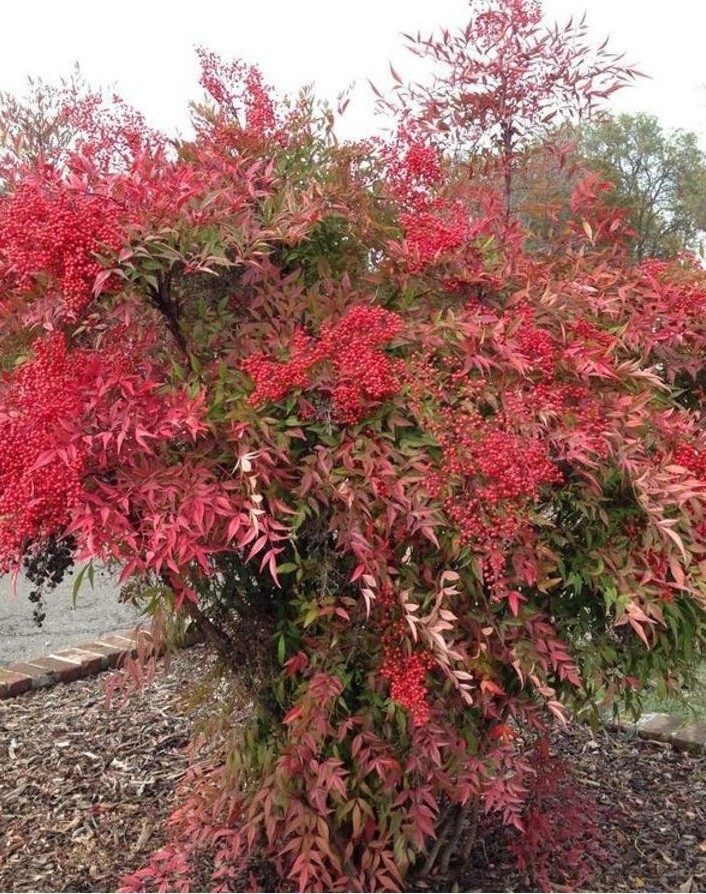
Heavenly Bamboo
Nandina domestica Thunb.
Nandina domestica is the only currently accepted species in the genus Nandina.
Relevant botanical synonyms and historical names include:
- Nandina denudata Lavallée
- Nandina domestica f. alba (W.B.Clarke) Rehder
- Nandina domestica f. gigantea Beecher
- Nandina domestica f. longifolia (Dippel) Rehder
- Nandina domestica var. linearifolia C.Y.Wu ex S.Y.Bao
These names do not identify separate Heavenly Bamboo species with different poisoning profiles.
Berberidaceae
Heavenly Bamboo; Sacred Bamboo; Chinese Sacred Bamboo; Japanese Sacred Bamboo; Nandina; Common Nandina; Nanten; Nan-Ten; Nantian Zhu; Southern Heavenly Bamboo; Bamboo Bush; Domesticated Nandina; Nandina domestica; Nandina denudata
Heavenly Bamboo is not a true bamboo. Nandina domestica is a woody shrub in the Berberidaceae, while true bamboos are grasses in the Poaceae.
Japanese Sacred Bamboo is a historical and horticultural common name. Current taxonomic treatment considers the species native to China and introduced into Japan, where it has been cultivated for centuries.
Firepower, Gulf Stream, Harbour Dwarf, Lemon Lime, Obsession, Flirt, Blush Pink, Murasaki, Seika, Twilight, and similar names identify cultivars rather than exact synonyms for the species.
A cultivar described as sterile, fruitless, nonfruiting, or low-fruiting may reduce berry exposure and seed dispersal, but its foliage must still be treated as potentially cyanogenic.
Confirmed Cyanogenic Compounds
The defining toxicants in Heavenly Bamboo are cyanogenic compounds capable of releasing hydrogen cyanide. Exact-species chemical research identified a cyanogenic glucoside described as p-glucosyloxymandelonitrile in young Nandina domestica shoots. In the experimental material, the cyanogen represented a substantial proportion of young-shoot dry weight.
Separate research isolated nandinin from the leaves. Nandinin is an acylated cyanogenic compound containing a cyanohydrin structure capable of contributing to hydrogen-cyanide release when plant tissue is damaged and metabolized.
These discoveries confirm that the plant’s cyanogenic potential is based on identifiable chemistry rather than on the presence of red pigment, bitter flavor, or a general association with the barberry family.
How Damaged Plant Tissue Releases Cyanide
Plants generally keep cyanogenic substrates and the enzymes capable of degrading them separated within intact cells or tissues. Crushing, chewing, grinding, freezing, wilting, maceration, digestion, and other cellular damage can bring those components together.
Beta-glucosidase activity removes a sugar group from a cyanogenic glycoside and produces an unstable cyanohydrin. That intermediate can break down spontaneously or enzymatically and release hydrogen cyanide.
The rate and amount released depend on the plant compound, tissue, maturity, clone, degree of damage, digestive conditions, and time. A cut branch is not made safe merely because it is no longer attached to the shrub.
Leaves Remain Strongly Cyanogenic
A twelve-month study found that Heavenly Bamboo leaves remained strongly cyanogenic throughout the year. Seasonal foliage color—green, red, bronze, orange, burgundy, or purple—did not create a dependable nontoxic period.
Leaves may be consumed directly from low branches, pulled through a fence, incorporated into pruning debris, or dumped into an animal enclosure. Horses and livestock may consume cut landscaping waste more readily than the standing shrub, especially when ordinary forage is limited.
No dwarf, compact, red-leaved, bronze-leaved, or low-fruiting cultivar has been shown to possess pet-safe foliage.
Green Fruit and Variable Ripe Berries
Green unripe fruits are strongly and rapidly cyanogenic. Their color indicates immaturity rather than safety and makes them an important concern when pets, livestock, or birds reach developing fruit clusters.
Ripe red fruits are much more variable. Most tested ripe fruits released cyanide more slowly and less strongly than leaves or green fruit, while some tested negative under the study conditions. Cyanogenic potential differed among clones and stages of fruit maturity.
This variation does not create a safe red berry count. A different shrub, cultivar, harvest date, degree of chewing, or feeding event may produce a different exposure. A bird or animal consuming dozens or hundreds of fruits can receive a dangerous cumulative dose even when each individual ripe fruit is less cyanogenic than an unripe one.
Fruits generally became less cyanogenic the longer they remained on the shrub, but visual age and red coloration cannot reveal the cyanide-releasing potential of a particular cluster.
Other Plant Parts
Direct quantitative evidence is strongest for young shoots, leaves, and fruits. Stems, seeds, flowers, roots, and mixed pruning debris have not all been compared through a complete organ-by-organ veterinary dose study.
Those unquantified tissues should not be declared harmless. An animal chewing a stem, uprooted shrub, flower cluster, seed-containing fruit, or discarded branch is likely to consume more than one tissue and may also crush strongly cyanogenic leaves or immature fruits during the same exposure.
Cyanide Blocks Cellular Oxygen Use
Absorbed cyanide binds to the ferric iron of mitochondrial cytochrome-c oxidase, also called complex IV of the electron-transport chain. This blocks normal transfer of electrons to oxygen and sharply reduces aerobic production of adenosine triphosphate.
The bloodstream may continue carrying oxygen, but exposed cells cannot use it efficiently. This condition is called histotoxic hypoxia or histotoxic anoxia.
The brain and heart are especially vulnerable because they require continuous aerobic energy. Rapid breathing and increased heart rate may initially compensate, but they cannot correct a block in intracellular oxygen use.
Blood and Mucous-Membrane Color
Venous blood may appear unusually bright or cherry red because tissues fail to extract oxygen normally. The gums and other mucous membranes may also appear bright pink or brick red early in some severe cases.
These findings are inconsistent and short-lived. Terminal respiratory and circulatory failure may instead produce blue-gray, pale, or otherwise abnormal mucous membranes. Normal-looking blood or gums does not exclude cyanide poisoning.
Chocolate-brown blood is more characteristic of nitrate- or nitrite-induced methemoglobinemia. Cyanide and nitrate poisoning require different antidotal decisions despite both interfering with effective tissue oxygenation.
Other Nandina Compounds
Heavenly Bamboo also contains isoquinoline alkaloids, flavonoids, lignans, pigments, phenolic compounds, volatile constituents, and other metabolites. Nantenine, higenamine, and numerous additional compounds have been isolated for pharmacological research.
Those constituents should not be listed as though each independently causes the characteristic rapid respiratory and neurologic poisoning syndrome. Cyanide release remains the best-established mechanism for acute life-threatening Heavenly Bamboo poisoning.
No Established Safe Berry or Leaf Dose
No dependable number of leaves, green fruits, ripe berries, seeds, or grams per kilogram can be published as safe for dogs, cats, horses, livestock, poultry, companion birds, or wildlife.
Risk depends on the plant clone, tissue, maturity, cyanogenic concentration, degree of chewing, amount consumed, animal size, digestive physiology, speed of absorption, and time to treatment. A previous harmless ingestion from one shrub does not predict the outcome of a later exposure.
Rapid Onset and Early Excitement
Signs may begin within minutes to several hours after a toxic exposure. Rapid progression is most concerning after strongly cyanogenic leaves, green fruits, or a large amount of crushed fruit.
Early findings may include sudden anxiety, apprehension, restlessness, excitement, panic, salivation, tearing, urination, defecation, nausea, vomiting, or abdominal discomfort. An animal may initially appear unusually alert before becoming weak or depressed.
The absence of immediate signs does not establish safety. Cyanide may already be forming or absorbing while the animal still appears outwardly normal.
Respiratory and Cardiovascular Failure
Rapid breathing, hyperventilation, open-mouth breathing, gasping, neck extension, and apparent air hunger may occur as the body responds to severe cellular oxygen deprivation.
The heart rate may increase early. Weak pulses, abnormal rhythms, low blood pressure, poor circulation, cardiovascular collapse, and terminal slowing may follow as cellular energy production fails.
Respiration may become shallow, irregular, or slow immediately before respiratory arrest. Cardiac arrest can follow rapidly without effective treatment.
Weakness and Neurologic Deterioration
Animals may become weak, depressed, sleepy, disoriented, or uncoordinated. Stumbling, swaying, crossing the limbs, falling, recumbency, or inability to stand indicates advancing neurologic and muscular dysfunction.
Muscle twitching, fasciculations, tremors, stiffness, generalized spasms, and seizures may develop. Severe cases can progress to stupor, coma, respiratory arrest, and death.
Seizures increase oxygen demand at a time when the cells are already unable to use oxygen efficiently, accelerating brain, heart, and muscle injury.
Blood and Mucous-Membrane Findings
Bright pink, brick-red, or cherry-red mucous membranes and unusually bright venous blood may occur because oxygen remains in the circulation rather than being extracted by tissues.
These findings are not present in every case and may fade quickly. Poor circulation and terminal respiratory failure may produce pale or blue-gray mucous membranes instead.
A bitter-almond odor may occasionally be present around the breath, vomit, stomach contents, or rumen material. Many people are genetically unable to detect that odor, and attempting to smell contaminated material can expose the handler.
Dogs and Cats
Dogs and cats are less likely than grazing livestock or flock-feeding birds to consume a large mass, but meaningful leaf, green-fruit, or berry ingestion can still cause severe poisoning.
Initial pet signs may include drooling, vomiting, anxiety, rapid breathing, weakness, staggering, trembling, altered awareness, or collapse. A small fruit taste may produce no signs or only gastrointestinal upset, but the outcome cannot be predicted from berry color alone.
Severe breathing changes, tremors, seizures, inability to stand, or loss of responsiveness requires immediate emergency care rather than home observation.
Horses and Livestock
Horses and livestock may be exposed by browsing hedges, reaching branches through fences, or eating clippings, storm debris, pulled shrubs, or landscape waste discarded into a pasture.
Salivation, anxiety, rapid breathing, weakness, staggering, tremors, seizures, recumbency, and sudden collapse may occur. An animal may be found dead before obvious illness is observed because cyanide poisoning can progress rapidly.
Members of the same herd may consume different amounts and develop signs at different times. Every exposed animal should be assessed rather than focusing only on the first visibly ill individual.
Birds and Flock-Feeding Risk
Birds may become weak, unable to perch or fly normally, uncoordinated, trembling, seizuring, recumbent, or suddenly dead after consuming a toxic quantity of fruit.
Cedar Waxwings are especially vulnerable because they feed communally and may gorge rapidly. In the documented Georgia mortality event, affected birds had digestive tracts filled with intact and partly digested Heavenly Bamboo fruits and developed extensive pulmonary and systemic congestion and hemorrhage.
The case does not establish that one red berry kills every bird. The greatest documented danger is rapid consumption of many fruits during one feeding event.
Cyanide Versus Nitrate Poisoning
Both cyanide and nitrate poisoning can produce respiratory distress, weakness, tremors, collapse, and death. Their mechanisms and antidotal risks differ.
Nitrate or nitrite poisoning converts hemoglobin into methemoglobin and commonly produces chocolate-brown blood. Cyanide blocks mitochondrial oxygen use and may leave venous blood unusually bright red.
Blood color alone cannot provide a dependable diagnosis. Fertilizer, contaminated forage, another plant, and mixed exposures must be considered before nitrite-based cyanide treatment is selected.
Expected Course and Prognosis
A small exposure may cause no illness or limited gastrointestinal signs. Severe acute cyanide poisoning can progress from apparently mild excitement or fast breathing to seizures, collapse, and respiratory arrest within a short period.
The untreated prognosis is poor once major respiratory, cardiovascular, or neurologic signs develop. Prompt oxygen, antidotal treatment, seizure control, and airway support can permit dramatic improvement when prolonged brain and heart hypoxia has not already occurred.
Survival through the early critical period with improving breathing, circulation, awareness, and coordination is encouraging. Aspiration, prolonged seizures, cardiac arrest, and extended unconsciousness worsen the prognosis.
Identity, Range, and Bamboo Confusion
Heavenly Bamboo is Nandina domestica Thunb., the only accepted species in the genus Nandina. It is an evergreen to semi-evergreen woody shrub in the Berberidaceae.
Current taxonomic treatment places its native range in north-central, south-central, and southeastern China. It has been cultivated for centuries and introduced into Japan, Korea, parts of South Asia, Europe, Australia, the Pacific, and North America.
The common names Heavenly Bamboo, Sacred Bamboo, and Chinese Sacred Bamboo refer to the plant’s upright cane-like stems and finely divided foliage. It is not a true bamboo. True bamboos are grasses in the Poaceae.
Leaves, Stems, Flowers, and Fruit
Multiple upright stems emerge from the crown and form a dense colony with age. Standard plants commonly reach approximately four to eight feet, while dwarf cultivars may remain considerably shorter.
The large alternate leaves are divided two or three times into numerous smooth-edged leaflets. New foliage may emerge pink, red, bronze, or copper before becoming green, and cool weather or bright light may produce red, orange, burgundy, or purple coloration.
Small white to cream flowers develop in upright branching clusters. Pollinated flowers produce rounded fruits that mature from green through intermediate stages to bright red.
The fruits often remain through autumn and winter, extending exposure for pets and wildlife. Fallen fruit may accumulate beneath shrubs, on patios and sidewalks, or inside fenced animal areas.
Exact Cyanogenic Chemistry
Research on young shoots identified a cyanogenic glucoside described as p-glucosyloxymandelonitrile. Biosynthetic experiments demonstrated incorporation of labeled tyrosine into the compound’s aldehyde and nitrile portions.
Later research isolated nandinin from Heavenly Bamboo leaves. Nandinin is an acylated cyanogenic compound that further confirms the species’ capacity to store chemically distinct cyanide-releasing material.
The plant also contains numerous alkaloids, flavonoids, pigments, lignans, terpenoids, and phenolic compounds. Those additional constituents may have pharmacological activity but have not replaced cyanide as the established explanation for the rapid life-threatening syndrome.
Why Leaves, Green Fruit, and Red Fruit Differ
A yearlong study found strong leaf cyanogenicity in every season. Green fruit was also strongly and rapidly cyanogenic.
Ripe fruit differed considerably among clones and with time on the plant. Most ripe fruits were weakly and slowly cyanogenic compared with green fruit, some remained meaningfully cyanogenic, and some tested negative under the study conditions.
The longer fruits remained on the shrub, the more their cyanogenic potential generally declined. That trend cannot be used to judge an individual cluster by sight, and it does not protect an animal or bird that consumes a large quantity rapidly.
Cedar Waxwing Mortality
Dozens of Cedar Waxwings were found dead in Thomas County, Georgia, after feeding on Heavenly Bamboo fruit. Five examined birds had intact and partially digested fruits as the only identified gastrointestinal contents.
Gross and microscopic examination found marked pulmonary, tracheal, mediastinal, and systemic congestion and hemorrhage. The feeding history, stomach contents, and lesions were considered consistent with cyanide toxicity.
Cedar Waxwings are social fruit-eaters capable of consuming many berries during one feeding bout. Their behavior creates a concentrated dose that may not occur when another bird samples one or two fruits.
Small Accidental Exposures and Evidence Limits
A Texas poison-center study recorded hundreds of young-child Heavenly Bamboo ingestions, most involving one berry or an unknown small number. Most were managed outside a healthcare facility and serious outcomes were uncommon.
Those human data show that one accidental ripe-fruit taste does not invariably cause catastrophic poisoning. They do not establish a safe berry count for dogs, cats, birds, horses, or livestock, whose size, feeding behavior, metabolism, and exposure amount differ.
Direct companion-animal case literature remains limited. A credible substantial exposure should be assessed from the plant part, amount, animal size, symptoms, and time rather than from an unsupported universal dose.
Fruitless and Low-Fruiting Cultivars
Heavenly Bamboo cultivars differ substantially in flowering, fruit production, and seed viability. Controlled landscape studies have identified selections producing little or no fruit under particular test conditions.
A fruit-reduced or sterile cultivar lowers the risk of berry ingestion and wildlife seed dispersal. It does not remove the year-round cyanogenic foliage.
Fruit production may also vary by climate, pollination, location, plant age, and nearby cultivars. A plant marketed as low-fruiting should be observed rather than assumed permanently berry-free.
Household, Landscape, and Livestock Exposure
Dogs may eat fallen berries, chew low branches, or reach pruned material. Cats may sample compound leaves or bat fruit clusters from a container or floral arrangement.
Horses and livestock may browse shrubs extending through fences or consume branches after hedge trimming, storm damage, excavation, or landscape removal. Cut material should never be dumped into a pasture, paddock, poultry run, rabbit enclosure, or kennel.
Commercial landscapes may also expose animals to fertilizer, herbicide, pesticide, mulch, slug bait, or another toxic ornamental. Signs inconsistent with cyanide poisoning require evaluation for a mixed exposure.
Diagnosis and Sample Handling
Severe cyanide poisoning may progress faster than laboratory confirmation. The veterinarian may initially rely on known plant access, rapid respiratory and neurologic signs, cardiovascular collapse, unusually bright venous blood, metabolic acidosis, increased lactate, and exclusion of competing causes.
Fresh plant material, vomit, stomach contents, rumen contents, blood, liver, muscle, and other tissues may be submitted for analysis. Cyanide is volatile and unstable, so airtight containment, rapid chilling or freezing, and laboratory-specific instructions are important.
Vomit, stomach contents, and rumen material may continue releasing hydrogen cyanide. Samples should not be opened or deliberately smelled by owners.
Prevention and Replacement
Remove fruit clusters before animals or flock-feeding birds can reach them, but remember that pruning does not remove the foliage hazard. Bag leaves, berries, stems, and roots immediately.
Do not place Heavenly Bamboo in open compost accessible to animals, and do not discard viable fruit or roots in natural areas. The species has escaped cultivation and can form invasive populations in parts of the southeastern United States.
Complete removal and replacement with an appropriate noninvasive plant eliminates both fruit exposure and cyanogenic foliage. Follow-up may be necessary because established shrubs can resprout and seeds may remain in the surrounding area.
Immediate Steps After Heavenly Bamboo Exposure
- Stop further access. Move the animal away from leaves, flowers, green fruits, ripe berries, seeds, stems, roots, clippings, and fallen material.
- Call immediately after a meaningful exposure. Contact a veterinarian, emergency veterinary hospital, or animal poison-control professional rather than waiting for rapid breathing, weakness, or seizures.
- Identify the plant part. Determine whether the exposure involved strongly cyanogenic leaves or green fruit, ripe berries, mixed branches, or landscape waste.
- Estimate the amount and time. Record missing berries, foliage quantity, the animal’s body size, and the earliest and latest possible exposure.
- Remove only loose visible material. When safe, lift plant pieces or fruit from the lips or front of the mouth.
- Do not reach into the throat. Avoid placing fingers near the mouth of an animal that is panicked, trembling, seizuring, collapsed, or breathing abnormally.
- Keep the animal quiet. Prevent running, forced walking, struggling, excitement, and unnecessary handling because increased activity raises tissue oxygen demand.
- Preserve samples. Save leaves, green fruit, ripe fruit, stems, photographs, vomited material, and any landscape-chemical packaging in sealed containers.
- Warn the clinic about possible cyanide. Advance notice permits preparation of oxygen, airway equipment, antidotes, monitoring, and hazardous-sample precautions.
Do Not Attempt Unsupervised Home Decontamination
Do not automatically induce vomiting. Cyanide may be released and absorbed rapidly, and any animal developing neurologic or respiratory signs may be unable to protect its airway.
- Do not use hydrogen peroxide, salt, mustard, ipecac, detergent, dish soap, manual gagging, or fingers in the throat.
- Never use hydrogen peroxide as a feline emetic.
- Do not induce vomiting in horses, livestock species unable to vomit, rabbits, guinea pigs, birds, or other unsuitable species.
- Do not induce vomiting in a symptomatic animal. Weakness, trembling, incoordination, repeated vomiting, abnormal breathing, seizures, collapse, or impaired swallowing creates severe aspiration risk.
- Do not force activated charcoal. Charcoal does not rapidly neutralize released cyanide and may enter the lungs.
- Do not give vinegar, milk, oil, bread, salt, herbs, vitamins, household charcoal, fertilizer products, or another supposed antidote.
- Do not administer sodium nitrite, sodium thiosulfate, hydroxocobalamin, methylene blue, or another cyanide treatment at home.
Emergency Respiratory and Neurologic Signs
- Abnormal breathing: Rapid breathing, gasping, open-mouth breathing, neck extension, shallow respiration, or respiratory slowing requires immediate emergency care.
- Loss of coordination: Weakness, swaying, staggering, falling, or inability to stand may indicate advancing cellular hypoxia.
- Tremors or seizures: Twitching, stiffness, generalized trembling, or convulsions indicates severe poisoning.
- Altered awareness: Sudden panic, confusion, stupor, coma, or loss of responsiveness requires immediate treatment.
- Abnormal mucous membranes: Bright pink, brick-red, cherry-red, blue-gray, or unusually pale gums are all concerning in a symptomatic animal.
- Collapse: Carry or support the animal when possible rather than forcing it to walk.
Safe Seizure and Collapse Response
Move furniture, tools, water containers, and other hazards away from a seizuring animal when this can be done safely. Do not hold the animal down or place hands or objects in its mouth.
When safe, position a collapsed animal on its chest or side with the head arranged so saliva or vomit can drain. Remove only loose visible material from the front of the mouth.
Keep the airway accessible and transport immediately. Seizure control does not replace cyanide antidotes, oxygen, ventilation, and cardiovascular support.
Contaminated Vomit and Rumen Material
Fresh vomit, stomach contents, and rumen material may continue releasing hydrogen cyanide. Move unaffected animals and people away from contaminated material in a poorly ventilated area.
Wear gloves, avoid placing the face over the material, and do not attempt to smell for bitter almonds. Seal representative samples only as directed by the veterinarian or diagnostic laboratory.
Ventilate the area and follow professional instructions for cleanup and disposal.
Veterinary Airway and Oxygen Support
High-concentration oxygen is administered promptly while antidotal treatment is prepared. Oxygen does not remove cyanide by itself but can support partially functioning tissue and improve oxygen availability during treatment.
Animals with altered consciousness, respiratory failure, severe seizures, or loss of protective reflexes may require endotracheal intubation and assisted or mechanical ventilation.
Pulse oximetry may appear less abnormal than the animal’s condition suggests because cyanide prevents tissue oxygen use rather than simply preventing oxygen from entering the blood. Blood gases, lactate, acid-base status, circulation, and neurologic function provide additional information.
Hydroxocobalamin
Hydroxocobalamin binds cyanide and forms cyanocobalamin, which can be eliminated from the body. It does not intentionally convert normal hemoglobin into methemoglobin.
Controlled canine research found that hydroxocobalamin substantially improved survival after otherwise lethal cyanide exposure. It is commonly favored when available, particularly when the diagnosis is credible but nitrate-induced methemoglobinemia has not been completely excluded.
Treatment may produce red discoloration of urine, plasma, mucous membranes, and other body fluids and may interfere with some laboratory measurements. Those effects are secondary to treating the life-threatening poisoning.
Sodium Thiosulfate and Nitrite-Based Treatment
Sodium thiosulfate supplies sulfur used in the conversion of cyanide into the less toxic compound thiocyanate. Canine pharmacokinetic research demonstrated a major increase in cyanide conversion after thiosulfate treatment.
Sodium nitrite may be combined with thiosulfate in selected cases. Nitrite creates a controlled amount of methemoglobin that can bind cyanide and draw it away from mitochondrial enzymes.
Too much methemoglobin also prevents effective oxygen transport. Nitrite must therefore be administered only by a veterinarian who has considered the diagnosis, species, oxygenation, cardiovascular status, and possibility of nitrate or nitrite poisoning.
Experimental sheep research supports nitrite-and-thiosulfate antidotal activity but also demonstrates why treatment requires species-specific judgment and monitoring.
Additional Veterinary Care
Intravenous access, fluid support, blood-pressure management, heart-rhythm monitoring, temperature management, correction of severe acidosis, and cardiopulmonary resuscitation may be required.
Persistent seizures require veterinarian-administered anticonvulsants. Severe agitation and muscle activity must be controlled because they increase oxygen and energy demand.
Gastric lavage may be considered after a serious recent exposure only under anesthesia with a protected airway and appropriate precautions. Activated charcoal has limited ability to address rapidly liberated cyanide and is not the central treatment.
Dogs and Cats
Keep an exposed pet indoors in a quiet temperature-controlled area while arranging immediate care. Do not encourage exercise or repeatedly walk the animal.
Give nothing by mouth to a pet with weakness, tremors, vomiting, abnormal breathing, altered awareness, or difficulty swallowing.
Check whether fertilizer, herbicide, insecticide, mulch, slug bait, or another landscape product may have been consumed during the same event.
Horses and Livestock
Remove the entire group from standing shrubs, branches extending through fences, clippings, uprooted plants, and contaminated forage. Provide safe uncontaminated feed without forcing intake.
Do not drive, chase, or force a symptomatic animal to walk. Gathering, loading, restraint, noise, and herd pressure increase oxygen demand and may hasten collapse.
Do not force drenches, charcoal, oil, or an improvised antidote into weak, trembling, recumbent, or neurologically abnormal livestock.
Rumen decontamination and administration of antidotal material into the digestive tract are veterinary procedures requiring airway, dose, and diagnostic control.
Birds
Remove all fruit immediately where companion birds, poultry, or wild flocks are feeding. Affected birds should be placed in a dark, quiet, ventilated carrier and handled as little as possible.
Do not force water, food, charcoal, or medication into a weak, trembling, recumbent, or neurologically abnormal bird. Aspiration can occur easily.
Multiple dead or neurologically abnormal wild birds near fruiting Heavenly Bamboo should be reported to a wildlife rehabilitator, veterinarian, diagnostic laboratory, or state wildlife authority.
Prognosis and Monitoring
Untreated severe cyanide poisoning has a poor-to-grave prognosis because respiratory and cardiac failure may develop rapidly.
An animal receiving oxygen and an effective antidote before prolonged brain and heart hypoxia may improve dramatically and recover fully.
Survivors may require continued observation for aspiration, recurrent neurologic signs, metabolic abnormalities, cardiac injury, and complications of seizures or collapse.
Frequently Asked Questions About Heavenly Bamboo and Cyanide Poisoning
If some ripe red berries test negative for cyanide, why are they still considered poisonous?
Ripe-fruit cyanogenicity differs among plant clones, fruit clusters, and stages of maturity. Some tested fruits released little or no detectable cyanide, while others remained cyanogenic. An owner cannot identify the chemical content by berry color, size, taste, or the outcome of a previous exposure. Rapid consumption of many weakly cyanogenic fruits may also produce a dangerous cumulative dose.
Are Heavenly Bamboo leaves more dangerous than ripe berries?
The strongest comparative evidence shows that leaves remain strongly cyanogenic throughout the year and green fruits are strongly and rapidly cyanogenic. Most ripe fruits are weaker and slower, but highly variable. A substantial leaf or green-fruit ingestion therefore deserves particular urgency, while mass ingestion of ripe berries can still be fatal.
Is there a safe number of red berries for a dog, cat, or bird?
No dependable safe count exists. Risk changes with the individual shrub, cultivar, ripeness, fruit age, degree of chewing, animal size, species, stomach conditions, and speed of consumption. One accidental berry does not invariably cause severe poisoning, but a universal number cannot be applied safely to every exposure.
Why are Cedar Waxwings particularly vulnerable?
Cedar Waxwings travel and feed in social flocks and may gorge on large numbers of fruit during one feeding bout. In the documented mortality event, Heavenly Bamboo fruits filled the examined birds’ digestive tracts. Their rapid group-feeding behavior can deliver a concentrated dose that differs from a bird sampling one or two fruits.
Does cutting or wilting Heavenly Bamboo make it safe?
No. Cutting, crushing, freezing, wilting, chewing, and digestion damage cells and can bring cyanogenic compounds together with the enzymes that release hydrogen cyanide. Cut branches and pulled shrubs should be contained immediately and never discarded in a pasture, poultry run, kennel, rabbit enclosure, or accessible compost pile.
Is a sterile or fruitless Nandina cultivar safe for pets?
No. Reduced fruit production lowers the berry and seed-dispersal hazard, but the leaves remain potentially cyanogenic. Fruit production can also differ with climate, location, maturity, and cultivar performance. A low-fruiting plant should not be placed where animals can browse the foliage.
Why is cherry-red blood associated with cyanide poisoning?
Normally, tissues remove oxygen from arterial blood, making venous blood darker. Cyanide blocks mitochondrial oxygen use, so venous blood may remain unusually oxygen-rich and bright. The finding is temporary and inconsistent, and normal-looking blood does not rule out poisoning.
Why is the bitter-almond odor an unreliable warning?
Many people genetically cannot detect hydrogen cyanide’s almond-like odor. The smell may also be absent, weak, masked by plant or stomach contents, or dangerous to investigate closely. Owners should never smell vomit or rumen material to decide whether an animal needs treatment.
How does cyanide poisoning differ from nitrate poisoning?
Cyanide prevents mitochondria from using oxygen and may leave venous blood unusually bright red. Nitrate or nitrite poisoning converts hemoglobin into methemoglobin and commonly produces chocolate-brown blood. The syndromes overlap clinically, but treatment decisions differ because nitrite used in some cyanide protocols could worsen existing methemoglobinemia.
What antidote may a veterinarian use?
Hydroxocobalamin binds cyanide without intentionally reducing normal hemoglobin’s oxygen-carrying capacity and is commonly favored when available. Sodium thiosulfate supports conversion of cyanide into thiocyanate. Sodium nitrite may be combined with thiosulfate in selected cases but requires careful control because excessive methemoglobin also impairs oxygen transport.
Should I wait for symptoms if the animal currently looks normal?
Not after a substantial leaf, green-fruit, or mass berry ingestion. Cyanide can be released and absorbed rapidly, and severe signs may progress faster than laboratory confirmation or transport. Immediate professional assessment allows early decontamination decisions and preparation of oxygen, airway support, and antidotes before collapse occurs.