Mayapple Podophyllotoxin Poisoning, Gastrointestinal Injury, Neurotoxicity, and Delayed Cytotoxic Complications
Is Mayapple Poisonous to Dogs, Cats, Horses, and Livestock?
Yes—Mayapple, Podophyllum peltatum, is poisonous to dogs, cats, horses, cattle, sheep, goats, pigs, rabbits, guinea pigs, birds, reptiles, and other animals. Its leaves, petioles, stems, flowers, green fruit, seeds, sap, roots, and spreading rhizomes contain podophyllotoxin and related aryltetralin lignans. Ingestion most often causes drooling, nausea, vomiting, diarrhea, abdominal pain, appetite loss, dehydration, depression, and weakness.
Mayapple toxicity is not limited to one uniformly concentrated plant part. Direct analyses of wild and cultivated American Mayapple found major chemical variation among individual populations: some leaves contained little detectable podophyllotoxin, while others contained substantially more than the rhizomes tested from the same species. Leaves, underground tissue, unripe fruit, seeds, dried material, and extracted preparations must therefore all be treated seriously rather than relying on a fixed “roots are toxic but leaves are mild” rule.
Larger ingestions and concentrated podophyllin, podophyllotoxin, herbal, or wart-treatment products can produce a much more serious cytotoxic syndrome. Podophyllotoxin interferes with tubulin and microtubule assembly, disrupting cell division and cellular transport. Severe exposure may cause gastrointestinal ulceration, neurologic dysfunction, hepatic or renal abnormalities, shock, and delayed suppression of white blood cells, red blood cells, or platelets.
The fully yellow, soft fruit pulp is sometimes described as edible to people after careful removal from the seeds and surrounding plant. That traditional exception is not proof that a whole fruit is safe for animals. Pets and livestock usually bite or swallow the pulp, rind, seeds, and attached tissue together, ripeness can be misjudged, and no validated veterinary safe amount exists.
About this guide: This page provides general pet-poisoning information and cannot diagnose or treat an individual animal. For any suspected exposure, contact a veterinarian or animal poison-control service immediately. Do not induce vomiting, give medication, or attempt home decontamination unless directed by a veterinary professional.
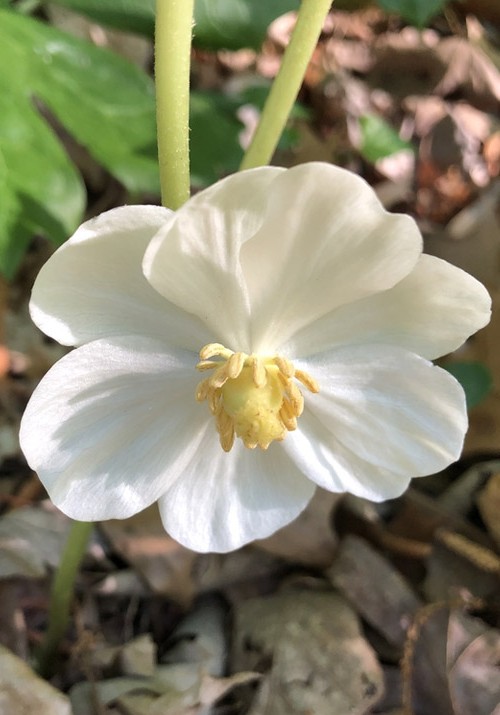
Mayapple
Podophyllum peltatum L.
Carl Linnaeus published Podophyllum peltatum in 1753. It remains the accepted scientific name for the eastern North American Mayapple.
Important botanical synonyms and former names include:
- Anapodophyllum peltatum Moench
- Podophyllum callicarpum Raf.
- Podophyllum montanum Raf.
- Podophyllum peltatum var. annulare J.M.H.Shaw
- Podophyllum peltatum f. aphyllum Plitt
- Podophyllum peltatum f. biltmoreanum Steyerm.
- Podophyllum peltatum f. callicarpum (Raf.) J.M.H.Shaw
- Podophyllum peltatum f. deamii Raymond
The species should not be confused with True or European Mandrake in the genus Mandragora. It is also distinct from Asian mayapples historically placed broadly in Podophyllum, including the Himalayan medicinal species now commonly treated as Sinopodophyllum hexandrum.
Berberidaceae — Barberry Family
Mayapple; May Apple; May-Apple; American Mayapple; American Mandrake; Wild Mandrake; Mandrake; Indian Apple; Indian Apple Root; Hog Apple; Hogapple; Devil’s Apple; Duck’s Foot; Duckfoot; Raccoonberry; Raccoon Berry; Wild Lemon; Ground Lemon; Umbrella Leaf; Umbrella Plant; Wild Jalap; Vegetable Calomel; Mayflower; Podophyllum peltatum
Historical botanical and literature-search names include Anapodophyllum peltatum, Podophyllum callicarpum, and Podophyllum montanum.
“American Mandrake” is a traditional name for Mayapple but is botanically and toxicologically misleading when shortened to “Mandrake.” True Mandrakes are Mandragora species in Solanaceae and contain antimuscarinic tropane alkaloids such as hyoscyamine and, in some species, scopolamine. Mayapple belongs to Berberidaceae and contains cytotoxic aryltetralin lignans dominated by podophyllotoxin-related compounds.
“Umbrella Plant” is also used for unrelated plants including Schefflera, Heptapleurum, Cyperus, and Darmera. “Indian Apple” can likewise refer to unrelated fruiting or medicinal plants. The scientific name is necessary whenever a common name could change the expected toxin mechanism.
Podophyllotoxin and the Aryltetralin Lignans
The principal toxic compound in Mayapple is podophyllotoxin, a highly biologically active aryltetralin lignan. American Mayapple also contains related lignans, including α-peltatin, β-peltatin, podophyllotoxin glucosides, and other chemically related constituents whose proportions vary among populations and plant tissues.
Podophyllotoxin is not an alkaloid. It should not be grouped chemically with the tropane alkaloids in True Mandrake, the isoquinoline alkaloids in Bloodroot, or the cardiac glycosides in Lily of the Valley. Those unrelated plants can share common names or produce overlapping vomiting and weakness, but their receptor targets, organ risks, and treatment priorities differ.
Podophyllin Is a Resinous Mixture, Not One Pure Toxin
Older veterinary and medical references often list “podophyllin” as Mayapple’s toxic principle. Podophyllin, also called podophyllum resin, is a concentrated resinous extract traditionally prepared from dried underground tissue of Podophyllum species. It is not chemically identical to pure podophyllotoxin.
The resin contains podophyllotoxin together with α-peltatin, β-peltatin, related lignans, resin acids, pigments, and other extracted material. Its exact composition varies with botanical species, geographic source, harvesting, extraction method, storage, and product manufacturing. Concentrated podophyllin therefore cannot be assigned the same risk per gram as one fresh Mayapple leaf.
This distinction matters when interpreting case reports. Severe coma, marrow suppression, hepatic dysfunction, persistent neuropathy, and fatal multiorgan poisoning have been documented after ingestion, extensive topical application, or mucosal absorption of concentrated podophyllin. Those cases establish the systemic potential of the toxin family, but they do not prove that every minor natural-plant exposure will follow that course.
Exact-Species Leaf and Rhizome Chemistry
American Mayapple is chemically variable enough that visual identification alone cannot predict concentration. A survey of 28 accessions found leaf podophyllotoxin ranging from undetectable to 2.52% of dry tissue, while rhizomes ranged from 0.14% to 0.42%. There was no dependable correlation showing that a plant with a high rhizome concentration necessarily had high leaves or that underground tissue always exceeded the foliage.
Another exact-species study demonstrated that Mayapple leaves contain substantial stored lignan glucosides. Rehydration allowed the plant’s own β-glucosidases to convert those glucosides into free aglycones before extraction, producing more than 52 milligrams of podophyllotoxin per gram of dry leaf material in the tested specimens. This finding is important toxicologically because an apparently ordinary leaf can carry a meaningful lignan burden, and processing can alter how much active aglycone becomes available.
Geographic accession, sunlight, shade, soil conditions, plant genetics, maturity, season, physical damage, drying, storage, and extraction all influence the measured profile. No universal concentration should be assigned to “a Mayapple leaf” or “a Mayapple root.”
Tubulin Binding and Microtubule Disruption
Podophyllotoxin binds tubulin and prevents normal assembly of tubulin subunits into microtubules. Microtubules form part of the cell’s internal skeleton, help transport material through the cytoplasm, support axons, maintain cell shape, and construct the mitotic spindle that separates chromosomes during cell division.
When microtubule assembly is disrupted, actively dividing cells can arrest during mitosis. This is why podophyllotoxin is described as an antimitotic or spindle poison and why its effects are often compared mechanistically with colchicine, although the compounds are not identical.
Microtubule disruption also helps explain neurologic toxicity. Long peripheral nerves depend on microtubule-based axonal transport to move proteins, organelles, and signaling material over great distances. Severe concentrated exposure can therefore produce delayed sensory, motor, and autonomic neuropathy that persists after vomiting, coma, and blood abnormalities have begun to resolve.
Podophyllotoxin Is Not Etoposide
Podophyllotoxin is used as a chemical precursor for semisynthetic drugs such as etoposide and teniposide. Those pharmaceutical derivatives are structurally related but do not act exactly like raw podophyllotoxin. Etoposide and teniposide primarily interfere with topoisomerase II and DNA processing, whereas podophyllotoxin itself is principally a microtubule-assembly inhibitor.
The presence of etoposide in oncology does not mean that chewing Mayapple delivers a therapeutic anticancer drug, and adverse effects from clinical etoposide should not be copied automatically into a plant-poisoning page. The relationship is chemically important but must be described accurately.
Gastrointestinal Irritation and Cathartic Effects
The first clinically apparent effect of natural Mayapple ingestion is usually gastrointestinal. Resinous lignans and other plant constituents irritate the mouth, esophagus, stomach, and intestines, producing drooling, nausea, vomiting, abdominal cramping, diarrhea, tenesmus, and appetite loss.
Podophyllum resin was historically used as a powerful cathartic and emetic, which reflects the same irritant toxicity now regarded as unsafe and unpredictable. Profuse diarrhea can cause rapid loss of water, sodium, potassium, bicarbonate, and circulating volume. Vomiting adds dehydration and aspiration risk.
At higher exposure levels, injury is not merely a transient secretory diarrhea. Antimitotic damage to rapidly renewing gastrointestinal epithelium may contribute to persistent inflammation, erosions, ulceration, bleeding, loss of intestinal barrier integrity, and secondary infection.
Bone-Marrow Suppression
Bone marrow continually produces erythrocytes, leukocytes, and platelets from rapidly dividing precursor cells. A sufficiently absorbed antimitotic toxin can interrupt that process and produce anemia, leukopenia or neutropenia, and thrombocytopenia.
Published systemic podophyllin cases have documented hypocellular marrow, abnormal precursor cells, transient aregenerative anemia, low white-cell counts, and low platelets. These abnormalities may emerge or become most obvious after the initial gastrointestinal illness, creating a dangerous period in which an animal appears to be improving while blood-cell production is declining.
The strongest evidence comes from concentrated human podophyllin exposures rather than documented pet ingestion of one natural Mayapple leaf. Serial complete blood counts are therefore most justified after rhizome, extract, resin, medicinal-product, large whole-plant, repeated, or uncertain exposure—not automatically after every brief exploratory bite.
Neurologic Toxicity
Neurologic effects may involve both the central and peripheral nervous systems. Acute concentrated poisoning has caused agitation, confusion, hallucination-like behavior, reduced reflexes, tremors, incoordination, seizures, stupor, and coma. Later peripheral neuropathy may produce weakness, sensory dysfunction, autonomic abnormalities, reduced reflexes, difficulty standing, and prolonged gait disturbance.
Natural-plant veterinary evidence is limited, so mild lethargy after vomiting should not be equated automatically with severe podophyllin neuropathy. Staggering, tremors, paralysis-like weakness, abnormal reflexes, seizures, or reduced responsiveness after Mayapple exposure warrants a broad evaluation for substantial absorption, dehydration, electrolyte disturbance, hypoglycemia, another toxic plant, pesticide, medication, mushroom, or neurologic disease.
Liver and Kidney Effects
Hepatic and renal abnormalities have been reported in severe systemic podophyllin poisoning. Potential contributors include direct cytotoxicity, prolonged hypotension, dehydration, shock, hemolysis or marrow effects, rhabdomyolysis, and impaired tissue perfusion.
Reduced urination, dark urine, rising kidney values, jaundice, increasing liver enzymes, persistent vomiting, marked weakness, or worsening metabolic acidosis requires continued monitoring. These are not the expected outcome of every small leaf exposure, but they are plausible after major or concentrated ingestion.
Local Skin and Mucosal Injury
Fresh sap, crushed tissue, and concentrated resin can irritate skin and mucous membranes. Exposure may cause redness, burning, swelling, blistering, erosions, or ulcerative lesions. The risk increases when plant material remains trapped beneath a collar, harness, saddle, bandage, diaper, dense coat, or bedding.
An animal that paws at an irritated mouth may transfer sap to its muzzle and eyelids. A cat, rabbit, or bird may then groom residue from the coat or feathers and create a second oral exposure.
Eye Exposure
Mayapple sap, resin, or plant fragments entering an eye can cause pain, tearing, eyelid swelling, conjunctival redness, squinting, cloudiness, and persistent rubbing. Mechanical plant debris and concentrated resin may injure the corneal surface.
Immediate irrigation removes loose material, but continuing pain requires examination for an abrasion, ulcer, retained fragment, chemical injury, or secondary inflammation. Human redness drops, anesthetic drops, and leftover eye medication should not be used without veterinary direction.
The Ripe-Fruit Question
The fully yellow, soft pulp of ripe Mayapple fruit has a long history of limited human food use. That tradition has generated the frequently repeated statement that every part of the plant is poisonous “except the ripe fruit.” It is safer and more accurate to describe ripe pulp as a reported lower-risk human-use exception rather than as a proven nontoxic animal food.
Modern exact-species research has concentrated mainly on leaves and rhizomes, not on controlled comparisons of green fruit, yellow pulp, rind, seeds, and attached tissue across ripening stages. No validated feeding study establishes a safe amount for dogs, cats, horses, pigs, rabbits, birds, or reptiles.
Animals normally swallow the whole fruit. Seeds may be crushed, rind and stem tissue remain attached, partially yellow fruit may not be fully ripe, and fallen fruit can be fermented, moldy, contaminated, or consumed in quantity. Mayapple fruit should therefore not be intentionally offered to animals.
Unripe Fruit and Seeds
Green and partly ripe fruit should be considered poisonous. A fruit beginning to soften or turn yellow cannot be assumed to have reached the narrow condition described in human foraging traditions.
The seeds are not part of a demonstrated veterinary-safe exception. They may be swallowed whole or crushed during chewing, and the animal may also consume surrounding placental tissue, rind, and fragments of the toxic stem. No number of seeds should be advertised as harmless.
Roots, Rhizomes, and Dormant Tissue
Mayapple spreads through thick horizontal rhizomes beneath the soil. These structures connect many visible shoots, allowing one genetic plant to form a broad woodland colony. Roots arise from the rhizomes and may remain accessible after digging, grading, erosion, landscaping, or attempted plant removal.
Underground tissue has historically been harvested for podophyllum resin and remains an important exposure source. Dogs may dig it up, pigs may root through colonies, and gardeners may leave freshly pulled rhizomes in open piles. Dormant underground tissue remains poisonous after the leaves disappear.
Dried Material, Powders, Extracts, and Medicinal Products
Drying does not reliably destroy podophyllotoxin-related lignans. Dried roots, powdered leaves, herbal products, tinctures, extracts, and collector specimens may remain toxic. Grinding increases surface area and can make a large plant dose easier to swallow.
Human wart preparations containing podophyllin resin or podophyllotoxin are especially concerning because they are concentrated and may use alcohol, benzoin tincture, solvents, salicylic acid, or other active ingredients. A spilled bottle, chewed applicator, contaminated bandage, or treated skin area can expose an animal without any recognizable plant material.
Product strength and formulation must be preserved exactly. The clinical risk from licking a concentrated medical solution is not comparable with briefly mouthing one woodland leaf.
Toxic-Dose Limitations
No validated toxic dose exists for dogs, cats, horses, cattle, sheep, goats, pigs, rabbits, guinea pigs, birds, or reptiles. Risk depends on chemotype, plant part, maturity, amount, degree of crushing, preparation, extraction, animal size, gastrointestinal contents, health status, and concurrent toxins.
Old medicinal doses, human fatal-dose estimates, or laboratory doses cannot be converted safely into an owner-facing pet threshold. Every meaningful rhizome, root, green-fruit, multiple-plant, extract, resin, or medicinal-product exposure deserves professional assessment.
No Specific Antidote
No routinely available antidote neutralizes absorbed podophyllotoxin. Treatment focuses on limiting further absorption when safe, controlling gastrointestinal losses and pain, protecting the airway, restoring circulation, correcting electrolytes and glucose, controlling seizures, and monitoring neurologic, hepatic, renal, gastrointestinal, and hematologic complications.
Onset and Clinical Course
Gastrointestinal signs may begin within a few hours, although exact onset varies with the plant part, amount, stomach contents, product form, and degree of extraction. Concentrated liquid or resin may be absorbed differently from intact leaf or rhizome material. A symptom-free first hour does not establish safety.
Natural-plant exposure usually begins with oral or gastrointestinal irritation. Severe systemic podophyllin cases may have delayed neurologic, marrow, hepatic, or renal findings, and one fatal concentrated ingestion did not produce symptoms until approximately ten hours after exposure. An animal with a significant exposure may therefore require observation beyond the point when vomiting temporarily stops.
Drooling, Mouth Irritation, and Appetite Loss
Early signs may include lip licking, repeated swallowing, drooling, head shaking, pawing at the mouth, face rubbing, reluctance to chew, and refusal of food. Direct irritation can affect the lips, gums, tongue, throat, and esophagus.
Profuse salivation is not required. Some animals show nausea primarily through lip licking, restlessness, hiding, repeated swallowing, or turning away from food. Continued inability to eat may become clinically important even when vomiting is limited.
Vomiting and Diarrhea
Vomiting and diarrhea are the most expected findings in dogs and cats. Episodes may become frequent, forceful, or prolonged. Stool can range from soft to watery and may contain mucus or blood when intestinal inflammation becomes severe.
Repeated gastrointestinal loss can cause tacky gums, sunken eyes, weakness, reduced urination, electrolyte abnormalities, acid-base disturbance, poor circulation, and shock. Small animals, young animals, and patients with kidney, cardiac, or endocrine disease may deteriorate quickly.
Blood in vomit, bright-red stool, black tarry stool, unrelenting retching, severe abdominal guarding, or inability to retain water requires immediate examination. Those findings may reflect erosive gastrointestinal injury, coagulopathy, foreign material, another poison, or severe dehydration.
Abdominal Pain and Intestinal Dysfunction
Animals may hunch, tense the abdomen, assume a prayer posture, look repeatedly at the flank, kick at the belly, stretch, grind the teeth, vocalize, or refuse to lie down. Horses may show pawing, flank watching, rolling attempts, altered intestinal sounds, and reduced manure.
Profuse diarrhea is characteristic of strong podophyllum-resin exposure, but later intestinal slowing can occur with severe systemic illness, dehydration, neurologic dysfunction, or another ingested object. Abdominal distension and repeated unproductive retching require evaluation for obstruction or bloat rather than assuming simple plant irritation.
Dehydration, Electrolyte Loss, and Shock
Fluid loss may become the dominant immediate threat before direct cytotoxic organ injury can be demonstrated. Pale or gray gums, delayed capillary refill, weak pulses, cold extremities, rapid or weak breathing, collapse, and reduced awareness indicate poor perfusion.
Potassium, sodium, chloride, bicarbonate, glucose, and acid-base abnormalities can worsen weakness, tremors, cardiac function, intestinal motility, and neurologic status. These complications require measured correction rather than household electrolyte drinks.
Neurologic Signs
More substantial exposures may cause agitation, unusual excitement, depression, weakness, incoordination, reduced reflexes, tremors, or inability to stand. Severe intoxication may progress to seizures, stupor, coma, and respiratory compromise.
Peripheral neuropathy can emerge after acute systemic disturbances begin to resolve. Published concentrated podophyllin cases describe persistent sensory, motor, and autonomic dysfunction lasting much longer than the original gastrointestinal illness.
Neurologic findings in an animal should be interpreted cautiously because dehydration, hypoglycemia, electrolyte disturbance, shock, pesticides, mushrooms, medications, trauma, and other poisonous plants can produce the same signs. A natural Mayapple exposure does not eliminate those alternatives.
Delayed Bone-Marrow Effects
Marrow suppression may reduce white blood cells, red blood cells, and platelets after a sufficiently absorbed cytotoxic dose. Possible warning signs include fever, unusual susceptibility to infection, pale gums, exercise intolerance, bruising, pinpoint red spots, nosebleeds, bloody urine, gastrointestinal bleeding, or continuing profound weakness.
An animal can appear brighter after fluids and anti-nausea treatment while cell counts are still declining. Significant root, rhizome, resin, extract, medicinal-product, large whole-plant, or uncertain exposure may justify baseline and repeat complete blood counts.
Liver and Kidney Findings
Severe systemic poisoning may produce increased liver enzymes, jaundice, metabolic abnormalities, reduced kidney filtration, or declining urine output. Dehydration and shock can cause secondary organ injury even when direct podophyllotoxin damage is uncertain.
Dark urine, markedly reduced urination, yellow gums or eyes, persistent appetite loss, abdominal swelling, or worsening lethargy requires reassessment. Organ injury is not expected after every minor nibble, but it should not be omitted from a substantial-exposure monitoring plan.
Skin and Facial Injury
Sap or crushed plant material may produce redness, burning, swelling, blistering, erosions, and ulcerative dermatitis. Facial swelling may result from direct irritant contact rather than allergy, particularly when an animal paws at its mouth and transfers resin to the muzzle and eyelids.
Material trapped beneath equipment can create sharply outlined lesions. Remove contaminated collars, harnesses, saddles, blankets, bandages, diapers, or bedding before washing the coat.
Eye Signs
Ocular contamination may cause tearing, squinting, eyelid swelling, conjunctival redness, discharge, cloudiness, and persistent rubbing. Pain continuing after irrigation raises concern for corneal injury or retained plant material.
Dogs
Dogs may eat leaves during woodland walks, tear through a colony while playing, swallow fallen fruit, dig up rhizomes, or access herbal and wart-treatment products. Common findings are drooling, vomiting, diarrhea, abdominal pain, appetite loss, lethargy, and dehydration.
Puppies and destructive chewers can consume several shoots before signs begin. Root or medicinal-product exposure deserves more intensive concern than an observed brief bite, but exact-species leaf studies show that foliage itself can contain high podophyllotoxin concentrations.
Cats
Outdoor cats may encounter young shoots or contaminated fur while hunting beneath a colony. Indoor exposure can follow native-plant arrangements, dried roots, herbal material, or medication spills. Cats may hide, drool, vomit, stop eating, develop diarrhea, become weak, or show poor coordination.
Hydrogen peroxide must never be used to induce vomiting in cats. Persistent anorexia also deserves attention because prolonged inadequate intake can produce serious secondary metabolic complications.
Horses
Horses may develop salivation, feed refusal, colic, diarrhea, depression, dehydration, weakness, tremors, incoordination, or recumbency. They cannot vomit, so abdominal pain, intestinal sounds, manure production, fluid losses, and circulation become especially important.
Mayapple is most likely to enter an equine exposure through wooded paddocks, cut vegetation, landscaping waste, trail access, or contaminated forage. A weak, colicky, or poorly swallowing horse should not be drenched.
Cattle, Sheep, Goats, and Pigs
Livestock may encounter Mayapple along woodland pasture margins, shaded fence lines, forested paddocks, or in cut brush. Cattle, sheep, and goats may show salivation, diarrhea, abdominal pain, straining, reduced appetite, depression, weakness, staggering, or collapse.
Pigs deserve particular attention because rooting behavior can expose the underground rhizomes. They may also consume fallen fruit and entire disturbed plants. Feed scarcity, clearing operations, and disposal of woodland vegetation increase the opportunity for intake.
Rabbits and Guinea Pigs
Small herbivores may develop drooling, tooth grinding, abdominal discomfort, diarrhea, reduced appetite, weakness, dehydration, or reduced fecal output. Rabbits and guinea pigs cannot vomit.
Food refusal and gastrointestinal stasis can become secondary emergencies even when the initial toxin dose is limited. Forced oral feeding is unsafe before swallowing, obstruction, abdominal pain, and neurologic status have been assessed.
Birds
Birds may shred leaves, fruit, seeds, or dried material and develop regurgitation, diarrhea, reduced appetite, weakness, poor balance, tremors, altered droppings, or neurologic depression. Small body size makes concentrated powder, extract, or medication residue particularly concerning.
Reptiles and Tortoises
Reliable species-specific reports are limited. Possible signs include food refusal, regurgitation, diarrhea, weakness, abnormal gait, tremors, reduced responsiveness, or altered respiration. Environmental temperature can influence onset, metabolism, and recovery.
Mayapple should not be planted in grazing enclosures or offered as browse. Forced oral decontamination is dangerous in a weak, regurgitating, or poorly swallowing reptile.
Aspiration and Respiratory Complications
Vomiting, profound weakness, seizures, owner-administered liquids, or charcoal can lead to aspiration. Coughing, nasal discharge, fever, rapid breathing, increased effort, oxygen difficulty, or renewed lethargy after gastrointestinal signs improve may indicate aspiration pneumonia.
Abnormal breathing can also result from shock, severe acidosis, neurologic depression, seizures, or another toxin. Respiratory signs should never be dismissed as ordinary Mayapple stomach upset.
Findings Requiring a Broader Differential
Immediate paralysis, severe salivation with pinpoint pupils and bronchial secretions, violent continuous seizures, marked cardiac dysrhythmia, profound hypoglycemia, or rapidly progressive liver failure is not a uniquely diagnostic Mayapple pattern. These findings may indicate pesticide exposure, mushrooms, Autumn Crocus, Castor Bean, Pokeweed, Bloodroot, medications, caustics, or mixed poisoning.
Duration and Prognosis
Mild gastrointestinal irritation may improve within one or two days after exposure stops and hydration is restored. A fixed recovery promise is inappropriate because plant chemistry and dose vary.
Root, rhizome, resin, extract, medicinal-product, severe gastrointestinal, neurologic, hepatic, renal, or marrow exposure may require several days of hospitalization and later laboratory rechecks. Persistent neuropathy after concentrated exposure can last substantially longer.
The prognosis is generally good after a small natural-plant exposure producing only temporary gastrointestinal signs. It becomes guarded with profound dehydration, shock, gastrointestinal bleeding, seizures, coma, aspiration, organ injury, marrow suppression, concentrated products, or delayed treatment.
Accepted Identity
Mayapple is Podophyllum peltatum, an eastern North American perennial in Berberidaceae. It is a member of the barberry family despite bearing little visual resemblance to woody barberries.
The species was named by Linnaeus in 1753. “Peltatum” refers to the peltate or shield-like attachment of the leaf stalk toward the interior of the blade rather than at its margin. That central attachment helps create the plant’s umbrella-like appearance.
A Colony Is Often One Connected Plant
Mayapple spreads vigorously through horizontal underground rhizomes. What appears to be a patch of many independent plants may consist largely of connected shoots from one clone.
This growth habit has practical poisoning consequences. Pulling one shoot rarely removes the entire plant, and broken rhizomes left in the ground can regenerate. Digging, erosion, grading, pigs, dogs, and landscaping equipment can expose long sections of toxic underground tissue well beyond the visible stems.
When a colony is cleared, every rhizome, root piece, leaf, flower, fruit, and soil pile should be kept away from animals until final disposal is complete.
One-Leaf and Two-Leaf Shoots
An upright Mayapple shoot generally bears either one large leaf or divides near the top to bear two leaves. Single-leaved shoots are usually nonflowering. A two-leaved reproductive shoot commonly carries one nodding flower from the fork between the leaves.
This distinction helps identify the plant when flowers are hidden. A broad colony may contain many sterile one-leaf shoots and relatively few flowering two-leaf shoots.
The Umbrella-Shaped Leaves
Leaves are large, round to broadly shield-shaped, deeply divided into broad lobes, and carried above the ground like umbrellas. Veins radiate outward from the petiole attachment. Mature leaves may approach a foot or more in width and can form a nearly continuous spring canopy over the forest floor.
The leaf is not a harmless shade structure. Exact-species research found dramatic variation among populations, including leaves with high podophyllotoxin and peltatin concentrations. Sun exposure, genetics, year, and growing conditions affect the lignan profile.
Flowers Hidden Beneath the Canopy
The solitary flower usually hangs beneath the paired leaves, where it may be invisible from above. It is generally white, waxy, and composed of several petals surrounding yellow stamens.
Flowers should be treated as poisonous because no veterinary-safe flower dose has been established. They may be included unintentionally in native floral arrangements or carried indoors with cut leaves.
Fruit Development and Ripening
The fruit begins green, enlarges through late spring and early summer, and may become yellow, soft, fragrant, and oval or lemon-shaped when mature. Its position beneath the foliage can hide it from owners while leaving it accessible to dogs, wildlife, pigs, tortoises, and ground-feeding birds.
Green fruit and fruit only beginning to yellow should be treated as poisonous. Visual color varies with lighting, genetics, damage, and decomposition, so an owner should not attempt to determine pet safety from a photograph of partially ripened fruit.
The ripe-pulp tradition is narrow: people who use it typically select fully mature fruit and separate the pulp from seeds, rind, and plant tissue. Animals do not perform that preparation. They may swallow multiple fruits whole, crush seeds, ingest attached stem, or consume fallen material that is fermented or moldy.
For a veterinary page, the appropriate recommendation is not “ripe fruit is safe.” It is that ripe pulp has been used as human food, but whole fruit should remain inaccessible because no controlled animal safety threshold exists.
Seasonal Exposure
New shoots emerge early in spring before the deciduous forest canopy closes. Flowering commonly occurs in spring, followed by green fruit and later yellow fruit. By mid- or late summer, foliage may yellow and disappear.
The risk does not end when the leaves vanish. Living rhizomes remain beneath the soil through dormancy, and dried leaves, fruit remnants, roots, or pulled plants may persist in brush piles and compost.
Native Range
The accepted native range extends from southeastern Canada through much of the central and eastern United States. It occurs from parts of Québec and Ontario through the Great Lakes, New England, the Mid-Atlantic, Appalachians, Midwest, lower Mississippi region, portions of the Great Plains, Texas, and the Southeast.
Outdoor animal exposure is therefore geographically broad. Dogs and horses may encounter native colonies during ordinary trail use, farm access, woodland exercise, hunting, and field work rather than only in cultivated gardens.
Habitat
Mayapple favors deciduous woods, floodplains, rich ravines, streambanks, wooded slopes, shaded roadsides, forest edges, old fields, and moist pasture margins. It also appears in native gardens, restoration plantings, woodland landscaping, and naturalized shade beds.
Colonies often expand in disturbed but shaded soil. Road work, tree removal, trail construction, drainage changes, or clearing can expose rhizomes and deposit plant debris where animals did not previously have access.
Dogs and Outdoor Recreation
Dogs may bite leaves during woodland walks, chase wildlife through colonies, dig near rhizomes, or pick up green and yellow fruit beneath the canopy. Off-leash dogs can consume material before the owner recognizes the plant.
Photograph the colony and collect a complete specimen only when this can be done safely and legally. A leaf without its attachment and growth form may be harder to distinguish from other lobed woodland plants.
Cats
Outdoor cats may hunt and rest beneath Mayapple leaves, contact broken sap, or bite young shoots. Indoor cats may encounter cut native foliage, dried roots, herbal products, or plant material carried inside on clothing and equipment.
Contaminated paws and coat should be washed before grooming produces a second exposure. Continued anorexia, vomiting, diarrhea, weakness, or abnormal coordination requires examination.
Horses and Livestock
Mayapple is not generally preferred forage, but bitterness and irritation do not provide dependable protection. Hungry animals, animals with limited pasture, curious young stock, and pigs rooting through woodland soil may ingest meaningful amounts.
Exposure also occurs when people throw woodland clippings, uprooted colonies, garden waste, or fruiting plants into a paddock. Cut or wilted material can be harder for livestock to identify and may become mixed with acceptable forage.
Fence dense colonies where practical, especially near feeding areas and shaded pasture margins. Plant removal should be followed by secure disposal rather than leaving rhizomes in an accessible pile.
Rabbits, Guinea Pigs, and Other Small Herbivores
Mayapple should never be offered as wild forage, browse, enrichment, bedding, or a decorative enclosure plant. A single leaf can represent a large amount of plant tissue relative to a small animal’s body weight.
Because rabbits and guinea pigs cannot vomit, toxicity may appear as drooling, food refusal, diarrhea, abdominal pain, reduced fecal output, weakness, and gastrointestinal stasis. Early professional guidance is preferable to waiting for severe dehydration or complete cessation of feces.
Birds and Reptiles
Birds may shred leaves and fruit, while tortoises or other herbivorous reptiles may graze on low growth. Neither group has a validated safe dose. Small body size, inability to describe pain, and species-specific metabolism make concentrated powders or extracts especially concerning.
Mayapple and True Mandrake
True Mandrake belongs to Mandragora in Solanaceae. It usually forms a basal rosette, produces yellow or orange berries, and contains antimuscarinic tropane alkaloids. Poisoning can cause mydriasis, dry mucous membranes, tachycardia, hyperthermia, urinary retention, ileus, delirium, and seizures.
Mayapple grows as an upright woodland shoot with one or two umbrella-like leaves and a hidden white flower. Its podophyllotoxin-related lignans principally produce gastrointestinal, cytotoxic, dermatologic, and neurologic injury. The two pages should never share toxin or first-aid language merely because both are called Mandrake.
American Mayapple and Asian Mayapples
Asian plants historically grouped with Mayapple include Himalayan and Chinese species now distributed among genera such as Sinopodophyllum and Dysosma in some modern classifications. Their rhizomes are important sources of podophyllotoxin, and several have caused serious human herbal poisonings.
Evidence from those species is useful for understanding the toxin family but must be labeled as related-species evidence. A case involving an Asian medicinal rhizome does not establish the concentration of one American Mayapple leaf.
Mayapple and Bloodroot
Bloodroot, Sanguinaria canadensis, is another eastern spring woodland plant with a white flower and lobed leaf. It releases conspicuous orange-red sap when broken and contains benzophenanthridine alkaloids such as sanguinarine rather than podophyllotoxin-dominant resin.
Bloodroot often emerges with one leaf wrapped around the flower stalk. Mayapple forms a larger umbrella-like leaf canopy and hides its flower beneath paired leaves. Both are poisonous, so uncertain identification does not justify home observation without professional guidance.
Other Woodland Look-Alikes
Canadian Waterleaf, Hydrophyllum canadense, has broad lobed leaves but lacks Mayapple’s strongly peltate umbrella structure and solitary hidden flower. Indian Cucumber-Root, Medeola virginiana, carries whorled leaves on a slender stem. Umbrella Leaf, Diphylleia cymosa, is a related Berberidaceae plant of Appalachian mountain habitats with clustered flowers and blue fruit rather than one hidden flower and one yellow fruit.
Young plants, damaged specimens, and photographs without the stem base can be misidentified. Preserve the whole aboveground structure and the exposure location rather than relying on one detached lobe.
Medicinal and Wart-Treatment Exposure
Podophyllin resin and purified podophyllotoxin have been used in human wart treatments. These preparations can be absorbed after extensive topical application and have caused severe systemic poisoning. Pets may lick treated skin, chew an applicator, contact a discarded bandage, or spill a bottle.
Bring the complete medication container. Concentration, solvent, additional active ingredients, total missing volume, treated skin area, and time since exposure materially affect risk.
Diagnosis
Diagnosis combines plant or product identification with the plant part, estimated amount, onset, gastrointestinal findings, neurologic examination, hydration, skin and eye contact, and laboratory evidence of complications.
Preserve complete leaves, stems, flowers, fruit, seeds, rhizomes, roots, labels, medication bottles, applicators, bandages, packaging, photographs, and representative vomit or stool material. The exact location and season may help distinguish Mayapple from other woodland plants.
No routine rapid veterinary test confirms Mayapple exposure. Specialized chromatographic analysis could identify podophyllotoxin-related compounds, but emergency treatment should not wait for toxicologic confirmation.
Laboratory Monitoring
Initial testing may include packed cell volume, total solids, complete blood count, electrolytes, glucose, blood gases, acid-base status, kidney and liver measurements, urinalysis, coagulation testing, and serial blood pressure. The extent depends on the dose and clinical severity.
A significant concentrated or large exposure may justify repeat blood counts after gastrointestinal signs improve. White-cell and platelet decline may not be apparent on the first sample.
Differential Diagnosis
Pokeweed, Bloodroot, Castor Bean, Autumn Crocus, mushrooms, caustic chemicals, pesticides, medications, contaminated food, bacterial enteritis, pancreatitis, obstruction, parvovirus, and other diseases can cause vomiting, diarrhea, abdominal pain, or weakness.
Marked neurologic dysfunction broadens the differential to tremorgenic mycotoxins, metaldehyde, cannabis products, sedatives, stimulants, organophosphates, carbamates, head trauma, seizures, electrolyte disturbance, and hypoglycemia. Severe bleeding or marrow abnormalities require consideration of anticoagulants, chemotherapy drugs, infectious disease, immune-mediated disease, and other cytotoxic plants or medications.
Prognosis
A small natural-plant exposure causing limited vomiting or diarrhea generally has a favorable prognosis when hydration is maintained and signs resolve progressively.
Root or rhizome ingestion is not automatically worse than every leaf exposure because exact-species concentrations vary, but underground tissue, powders, extracts, resin, and medicinal products often indicate a more deliberate or concentrated intake. Severe dehydration, gastrointestinal bleeding, shock, seizures, aspiration, hepatic or renal injury, marrow suppression, and persistent neuropathy worsen the outlook.
Prevention
Keep dogs on controlled access through dense colonies, remove fruit where animals regularly travel, and prevent digging in disturbed rhizome beds. Do not bring Mayapple leaves, flowers, roots, or fruit into pet-accessible indoor arrangements.
Never dispose of pulled colonies, rhizomes, native-garden cuttings, or fruit in kennels, rabbit areas, pig pens, livestock paddocks, open compost, brush piles, or accessible trash. Store podophyllin, podophyllotoxin, herbal products, and wart treatments in locked animal-proof storage.
Immediate Response
- Stop further exposure: Move the animal away from the Mayapple colony, fruit, roots, rhizomes, cut vegetation, dried material, herbal preparation, resin, or medicinal product.
- Preserve the evidence: Save complete leaves, stems, flowers, fruit, seeds, roots, rhizomes, product labels, applicators, bandages, packaging, photographs, and representative material recovered from vomit or stool.
- Identify the exposure form: Determine whether the animal bit a leaf, swallowed fruit, dug up rhizomes, consumed several plants, licked treated skin, or accessed a concentrated product.
- Estimate the maximum amount: Use the greatest quantity that could be missing rather than the smallest amount directly observed.
- Record the time: Note the earliest and latest possible exposure and when drooling, vomiting, diarrhea, skin irritation, weakness, or neurologic abnormalities began.
- Contact a professional: Call a veterinarian or animal poison-control service after any meaningful ingestion, rhizome exposure, green-fruit exposure, concentrated-product exposure, or persistent sign.
Assess the Animal Before Attempting Oral Cleaning
- Check responsiveness: Profound lethargy, confusion, collapse, stupor, or coma requires immediate emergency transportation.
- Check breathing: Rapid, shallow, labored, gasping, irregular, or weak breathing is an emergency.
- Check coordination: Stumbling, swaying, tremors, inability to stand, or seizures indicates serious illness.
- Check circulation: Pale or gray gums, cold extremities, delayed capillary refill, weak pulses, or collapse may indicate dehydration, shock, bleeding, or systemic toxicity.
- Check the abdomen: Severe guarding, distension, repeated retching, rolling, flank watching, or unrelenting diarrhea requires prompt care.
- Check for blood: Red or coffee-ground vomit, bright-red stool, black stool, bruising, or pinpoint bleeding requires urgent assessment.
Remove Loose Plant Material
- Wear gloves: Sap and resin may irritate human skin and eyes, and a painful or neurologically abnormal animal may bite.
- Remove visible pieces cautiously: Take loose leaf, fruit, seed, root, or rhizome fragments from the lips and front of the mouth only when handling is safe.
- Avoid blind sweeps: Do not reach deeply into the throat or push material toward the airway.
- Wipe accessible residue: Use a damp cloth to remove loose sap and plant material from the lips and front of the mouth in a fully alert animal.
- Rinse only when safe: A gentle low-pressure rinse may be considered only when the animal is conscious, breathing normally, swallowing normally, and able to protect the airway.
- Stop if gagging or coughing occurs: Difficulty handling a rinse means additional oral decontamination is unsafe without veterinary care.
Do Not Induce Vomiting at Home
- Do not give hydrogen peroxide automatically: Mayapple can cause spontaneous vomiting, weakness, neurologic abnormalities, and impaired swallowing that increase aspiration risk.
- Never give peroxide to a cat: Hydrogen peroxide can cause serious feline gastric and esophageal injury.
- Never induce vomiting after signs begin: Do not attempt emesis in an animal that is drooling heavily, vomiting, weak, staggering, trembling, collapsed, seizing, breathing abnormally, or swallowing poorly.
- Do not use salt or household emetics: Salt, mustard, ipecac, dish soap, oil, syrup, fingers in the throat, and manual gagging are unsafe.
- Do not induce vomiting in horses, rabbits, guinea pigs, birds, reptiles, or symptomatic livestock: These animals either cannot vomit normally or face unacceptable risk.
- Reserve controlled emesis for professional direction: A veterinarian or poison-control specialist may consider it after a recent significant exposure in an appropriate, fully alert, stable, asymptomatic dog with a protected airway.
Activated Charcoal
- Do not give charcoal automatically: Its benefit depends on timing, dose, plant part, product form, gastrointestinal function, and airway safety.
- Allow veterinary administration: A veterinarian may use activated charcoal after selected significant ingestions when the patient can protect the airway or the airway has been secured.
- Never force charcoal: Do not administer it to a vomiting, weak, sedated, ataxic, trembling, seizing, recumbent, or poorly swallowing animal.
- Do not repeat doses yourself: Repeated charcoal can worsen dehydration, electrolyte abnormalities, constipation, hypernatremia, aspiration risk, and intestinal obstruction.
- Do not use household charcoal: Barbecue briquettes, fireplace ash, burned food, and homemade carbon are not medical activated charcoal.
Podophyllotoxin and podophyllin undergo complex absorption and elimination, but that does not justify automatic repeated charcoal. Profuse diarrhea, poor intestinal motility, electrolyte loss, and neurologic depression can make additional doses unsafe.
Do Not Give Household Remedies or Owner-Selected Medication
- Do not give milk or dairy: Milk, yogurt, cheese, cream, and ice cream do not neutralize podophyllotoxin.
- Do not give oil: Cooking oil, coconut oil, and mineral oil do not bind the toxin reliably and may worsen nausea or aspiration risk.
- Do not give antacids: Human antacids do not stop antimitotic or cytotoxic injury and may contain inappropriate ingredients.
- Do not give anti-diarrheal medication: Loperamide, bismuth products, kaolin mixtures, and other owner-selected remedies may be unsafe or conceal worsening disease.
- Do not give sucralfate without direction: Sucralfate is a prescription medication whose indication and administration must be determined by a veterinarian.
- Do not give human pain medication: Ibuprofen, naproxen, acetaminophen, aspirin, and similar products can create an additional poisoning.
- Do not give antibiotics or steroids: These do not neutralize the toxin and may complicate diagnosis or immune function.
- Do not force food or water: Forced intake can trigger vomiting or enter the lungs when swallowing and awareness are impaired.
Vomiting, Diarrhea, and Fluid Loss
- Track every episode: Record the frequency, volume, and appearance of vomit and stool.
- Save representative material: Preserve plant fragments, seeds, roots, product residue, blood, or unusual material recovered from vomit or stool.
- Watch for dehydration: Tacky gums, sunken eyes, worsening weakness, reduced urination, or inability to retain water requires veterinary care.
- Watch for shock: Pale gums, cold limbs, weak pulses, collapse, or reduced responsiveness is an emergency.
- Watch for gastrointestinal bleeding: Red vomit, coffee-ground material, bright-red diarrhea, or black tarry stool requires urgent examination.
- Do not muzzle a vomiting animal: A muzzle can trap vomit and interfere with breathing.
Skin Exposure
- Wear gloves: Prevent sap and resin from reaching your own skin, eyes, and mouth.
- Remove contaminated equipment: Take off collars, harnesses, blankets, saddles, bandages, or bedding holding plant material against the body.
- Remove visible debris: Pick plant pieces from the coat without crushing them further.
- Wash the area: Rinse exposed skin and fur thoroughly with lukewarm water and mild pet-safe shampoo.
- Prevent licking: Stop the animal from grooming contaminated fur until all residue has been removed.
- Obtain care for lesions: Blisters, ulcers, marked swelling, persistent pain, or spreading redness requires veterinary examination.
Eye Exposure
- Begin irrigation immediately: Flush the eye with sterile saline or clean lukewarm water for at least fifteen to twenty minutes.
- Use a gentle continuous flow: Allow fluid to cross the eye without scraping the surface or forcing the eyelids open roughly.
- Prevent rubbing: Stop the animal from pawing at the eye or rubbing against furniture, carpet, fencing, or the ground.
- Do not use tools: Tweezers, cotton swabs, cloth, and fingernails can worsen corneal injury.
- Do not apply human eye drops: Redness relievers, anesthetics, and leftover prescriptions may worsen injury or obscure examination findings.
- Seek prompt examination: Continued squinting, redness, cloudiness, swelling, discharge, light sensitivity, or inability to open the eye requires care.
Tremors, Seizures, and Collapse
- Clear the area: Move furniture, tools, fencing, buckets, cords, and sharp objects away from the animal.
- Do not put anything in the mouth: Keep hands, food, water, spoons, cloth, and medication away during a seizure.
- Do not restrain the limbs: Protect the animal from impact without pinning it down.
- Reduce stimulation: Lower light and noise while arranging immediate transportation.
- Time the episode: Record when tremors or seizures begin and end and whether normal awareness returns.
- Seek immediate care: Neurologic abnormalities may reflect major toxin absorption, shock, electrolyte disturbance, hypoglycemia, or another poison.
Safe Transportation
- Call ahead: Tell the clinic that Mayapple, American Mandrake, podophyllotoxin, podophyllin resin, or wart-treatment exposure is suspected.
- Prevent falls: Use a padded carrier, crate, stretcher, rigid board, sling, or blanket for a weak or uncoordinated animal.
- Keep the airway clear: Position the head so saliva and vomit can drain from the mouth.
- Do not compress the abdomen: Handle painful or distended animals gently.
- Bring the evidence: Take the plant, fruit, seeds, rhizomes, medicinal product, applicator, packaging, photographs, and recovered fragments.
- Warn about neurologic or bleeding signs: The receiving team may need immediate seizure, shock, isolation, or transfusion planning.
Veterinary Evaluation
- Assess hydration and circulation: Vomiting and diarrhea can cause major fluid, electrolyte, and acid-base loss.
- Assess abdominal findings: Pain, intestinal sounds, distension, bleeding, and foreign material help determine gastrointestinal severity.
- Assess neurologic function: Weakness, agitation, reflexes, ataxia, tremors, seizures, and awareness help identify systemic involvement.
- Establish a blood-count baseline: A complete blood count may identify early abnormalities and provide comparison for later marrow monitoring.
- Check organ function: Serum chemistry, glucose, electrolytes, blood gases, urinalysis, and urine output help identify hepatic, renal, and metabolic complications.
- Evaluate bleeding: Platelet count, clotting studies, stool appearance, and mucosal examination may be appropriate when bleeding is suspected.
- Examine skin and eyes separately: Ulcerative dermatitis and ocular contamination may require targeted treatment.
Veterinary Decontamination
A veterinarian may consider controlled emesis after a recent significant ingestion in a fully conscious, clinically normal dog with no aspiration risk. Once vomiting, weakness, tremors, ataxia, seizures, reduced responsiveness, or impaired swallowing appears, stabilization and airway protection take priority.
Activated charcoal may be administered when the anticipated benefit exceeds the aspiration and gastrointestinal risks. Gastric lavage is not routine and requires anesthesia and a secured airway in a carefully selected severe exposure. Endoscopic removal may be considered when a discrete root mass, packaging, applicator, or foreign object remains accessible.
Veterinary Supportive Treatment
Intravenous fluids support circulation, correct dehydration, maintain kidney perfusion, and permit controlled electrolyte replacement. Fluid therapy must be individualized for heart, kidney, pulmonary, and shock status rather than delivered as an automatic fixed protocol.
Veterinarian-selected anti-nausea medication may reduce vomiting, discomfort, and aspiration risk. Analgesia may be necessary for abdominal, oral, skin, or ocular pain. Prescription gastrointestinal protectants may be selected when erosive injury or bleeding is suspected, but they do not reverse absorbed cytotoxicity.
Tremors and seizures require appropriate anticonvulsant or muscle-relaxant treatment. Oxygen, suctioning, intubation, ventilation, vasopressor support after appropriate volume correction, and intensive monitoring may be needed in severe cases.
Delayed Cytotoxic Monitoring
- Repeat complete blood counts when indicated: Large plant, rhizome, resin, extract, medicinal-product, or unknown exposure may require serial monitoring.
- Watch white-cell trends: Fever, renewed lethargy, mouth ulcers, or infection can follow neutropenia.
- Watch red-cell trends: Pale gums, weakness, rapid breathing, and exercise intolerance may indicate anemia or bleeding.
- Watch platelet trends: Bruising, petechiae, nosebleeds, bloody urine, black stool, or persistent gastrointestinal bleeding may indicate thrombocytopenia.
- Repeat liver and kidney testing: Organ abnormalities may emerge after the initial gastrointestinal phase.
- Monitor neurologic recovery: Reduced reflexes, weakness, abnormal sensation, gait disturbance, and autonomic dysfunction may persist after other values improve.
Severe marrow suppression may require hospitalization, infection precautions, antimicrobial treatment when clinically justified, blood-product support, nutritional care, and repeated laboratory assessment. There is no home method for detecting a declining neutrophil or platelet count reliably.
Horses and Livestock
- Remove contaminated vegetation: Prevent access to colonies, fruit, roots, rhizomes, woodland clippings, and contaminated feed.
- Examine the entire group: Animals may consume different tissues and amounts and develop signs at different times.
- Do not induce vomiting: Household emesis is inappropriate in horses and ruminants.
- Do not drench weak animals: Salivating, recumbent, neurologically abnormal, or poorly swallowing livestock can aspirate oral fluids and medication.
- Monitor manure and hydration: Profuse diarrhea, colic, reduced manure, weakness, or poor drinking requires large-animal veterinary care.
- Protect pigs from rhizomes: Rooting animals should be removed from disturbed Mayapple colonies and exposed soil.
- Retain feed and plant samples: Preserve representative forage, roots, fruit, and photographs for identification or analysis.
Rabbits, Guinea Pigs, Birds, and Reptiles
- Do not attempt vomiting: Household emesis is inappropriate and dangerous in these species.
- Monitor appetite immediately: Food refusal can become a serious secondary gastrointestinal or metabolic emergency.
- Monitor feces or droppings: Reduced output, diarrhea, abnormal color, blood, or complete cessation requires species-specific advice.
- Do not force feed before assessment: Abdominal obstruction, poor swallowing, neurologic depression, or regurgitation must be excluded.
- Monitor hydration and urine: Small animals can deteriorate rapidly after gastrointestinal loss.
- Use a species-experienced veterinarian: Fluids, temperature support, nutrition, pain control, and medication differ substantially among species.
Monitoring and Recovery
- Monitor gastrointestinal signs: Vomiting, diarrhea, abdominal pain, and appetite should improve progressively rather than recur.
- Monitor hydration and circulation: Gum moisture, pulse quality, urination, awareness, and ability to retain water should normalize.
- Monitor neurologic function: Weakness, excitement, ataxia, tremors, reduced reflexes, or altered awareness should resolve rather than worsen.
- Monitor skin and eyes: Redness, swelling, ulcers, cloudiness, and squinting should improve with treatment.
- Attend laboratory rechecks: Clinical improvement does not always eliminate the need for repeat blood counts and organ testing.
- Watch for infection or bleeding: Fever, bruising, petechiae, bloody urine, black stool, or new weakness after apparent recovery requires immediate reassessment.
Prevention and Prognosis
- Restrict colony access: Keep animals away from dense Mayapple growth, especially during spring emergence and fruiting.
- Secure disturbed rhizomes: Remove underground tissue and soil piles from dogs and rooting livestock during landscaping.
- Control plant waste: Place leaves, fruit, roots, and woodland cuttings directly into closed animal-inaccessible disposal.
- Lock medicinal products away: Secure podophyllin, podophyllotoxin, wart treatments, herbal preparations, applicators, and treated bandages.
- Typical prognosis: Mild natural-plant exposures causing temporary gastrointestinal irritation generally have a good prognosis.
- Guarded prognosis: Shock, severe gastrointestinal injury, neurologic dysfunction, organ damage, marrow suppression, aspiration, concentrated products, or delayed treatment creates a guarded outlook.
Frequently Asked Questions About Mayapple and Animal Poisoning
Is Mayapple poisonous to dogs and cats?
Yes. Mayapple contains podophyllotoxin and related cytotoxic lignans capable of causing drooling, vomiting, diarrhea, abdominal pain, appetite loss, lethargy, dehydration, skin injury, and weakness. More substantial or concentrated exposures can produce neurologic dysfunction, hepatic or renal abnormalities, and delayed bone-marrow suppression. Dogs and cats should not be allowed to chew any part of the plant or access dried roots, extracts, resin, or wart-treatment products.
Which Mayapple parts contain the most toxin?
No single hierarchy applies to every plant. Although rhizomes have historically been harvested for podophyllum resin, exact-species surveys found leaf podophyllotoxin ranging from undetectable to 2.52% and rhizome concentrations from 0.14% to 0.42%. Some accessions had higher leaves and others higher underground tissue. Leaves, roots, rhizomes, green fruit, seeds, and concentrated products must all be treated seriously.
What is the difference between podophyllotoxin and podophyllin?
Podophyllotoxin is a defined aryltetralin lignan. Podophyllin, or podophyllum resin, is a crude concentrated extract containing podophyllotoxin, α-peltatin, β-peltatin, and other resin components. Product composition varies with the plant source and extraction method. Severe systemic case reports involving podophyllin resin should not be equated automatically with one fresh leaf, but they demonstrate the toxin family’s capacity for serious cytotoxic and neurologic injury.
How does podophyllotoxin damage cells?
Podophyllotoxin binds tubulin and interferes with assembly of microtubules. Microtubules help cells maintain structure, transport material, support nerves, and form the spindle used to separate chromosomes during cell division. Disruption can injure rapidly renewing gastrointestinal and bone-marrow cells and can interfere with axonal transport in peripheral nerves. This mechanism explains why severe concentrated poisoning may produce both early gastrointestinal illness and delayed marrow or neurologic complications.
Is Mayapple the plant used to make etoposide?
Podophyllotoxin is an important chemical precursor used in the development and manufacture of semisynthetic drugs such as etoposide and teniposide. Those drugs are not simply purified Mayapple and do not have exactly the same molecular mechanism as raw podophyllotoxin. Etoposide primarily affects topoisomerase II, while podophyllotoxin principally disrupts microtubule assembly. Chewing Mayapple cannot be considered a medicinal exposure.
Is ripe Mayapple fruit safe for pets?
No veterinary study establishes the whole ripe fruit as safe. Fully yellow pulp has a history of limited human use after careful separation from seeds, rind, and surrounding plant tissue, but animals commonly swallow the entire fruit. Ripeness may also be misjudged, and fallen fruit can be fermented, moldy, or eaten in quantity. Pets and livestock should not be intentionally given Mayapple fruit at any stage.
Is green Mayapple fruit poisonous?
Yes. Green and partly ripe fruit should be considered poisonous. A fruit that has begun turning yellow is not necessarily fully mature, and no visual household test establishes a safe toxin concentration. Preserve the fruit and stem when an animal eats one because maturity and identification may influence the assessment. Do not wait for vomiting before calling for guidance.
Can one Mayapple leaf poison a dog?
One brief bite may cause no signs or temporary gastrointestinal irritation, but no leaf count can be advertised as safe. Mayapple leaf chemistry varies dramatically among populations, and some tested leaves contained substantial podophyllotoxin concentrations. Risk also depends on animal size, how thoroughly the leaf was chewed, whether several shoots were damaged, and whether roots, fruit, pesticides, or another plant were consumed. Monitor the animal and obtain professional guidance when the amount is uncertain or signs develop.
Can Mayapple cause bone-marrow suppression?
Yes, after sufficiently absorbed systemic exposure. Concentrated podophyllin poisoning has caused hypocellular marrow, anemia, leukopenia, and thrombocytopenia. The strongest evidence involves resin or medicinal-product exposure rather than ordinary minor pet contact with a living plant. Large, repeated, rhizome, extract, resin, or unknown exposures may justify baseline and repeat complete blood counts even after vomiting and diarrhea improve.
What signs suggest delayed marrow injury?
Possible warning signs include pale gums, unusual fatigue, fever, recurrent infection, bruising, pinpoint red spots, nosebleeds, blood in urine, gastrointestinal bleeding, or new weakness after apparent improvement. These signs are not expected after every Mayapple exposure. They become more relevant after major natural-plant or concentrated-product ingestion. Laboratory testing is required because early white-cell or platelet decline may not be visible at home.
Can Mayapple cause permanent neurologic damage?
Persistent peripheral neuropathy has been reported after severe concentrated podophyllin poisoning. Microtubule disruption can interfere with axonal transport, producing prolonged sensory, motor, reflex, and autonomic abnormalities. This outcome is much less likely after a small natural-plant exposure than after concentrated resin or extract. Staggering, reduced reflexes, tremors, seizures, profound weakness, or continuing gait abnormalities requires veterinary evaluation and follow-up.
How quickly do Mayapple symptoms begin?
Drooling, nausea, vomiting, diarrhea, and abdominal discomfort may begin within several hours, but timing is variable. Concentrated products can behave differently from intact plant material, and severe systemic effects may be delayed. Published fatal concentrated poisoning has included an initially symptom-free period before coma and metabolic deterioration. A normal first hour does not rule out a meaningful exposure.
Can Mayapple cause liver or kidney damage?
Hepatic and renal abnormalities are possible after severe systemic exposure. Direct cytotoxicity, dehydration, shock, metabolic disturbance, and reduced organ perfusion may all contribute. Reduced urination, dark urine, jaundice, persistent vomiting, worsening weakness, or abnormal laboratory results requires continued treatment. Major organ injury is not the expected result of every minor leaf bite but should be considered after large or concentrated exposures.
Can Mayapple sap burn the skin or eyes?
Yes. Sap, crushed plant tissue, and podophyllum resin can cause redness, burning, swelling, blistering, erosions, and ulceration. Eye contact may produce tearing, squinting, conjunctival inflammation, cloudiness, or corneal injury. Wash contaminated fur and skin with lukewarm water and mild pet-safe shampoo, and irrigate an exposed eye for at least fifteen to twenty minutes. Persistent skin or eye pain requires veterinary examination.
Is Mayapple the same as True Mandrake?
No. Mayapple is *Podophyllum peltatum* in Berberidaceae and contains podophyllotoxin-related lignans. True Mandrakes are *Mandragora* species in Solanaceae and contain antimuscarinic tropane alkaloids. True Mandrake poisoning commonly causes dry mouth, dilated pupils, tachycardia, urinary retention, ileus, delirium, and hyperthermia. The shared “Mandrake” name reflects history rather than botanical or toxicologic equivalence.
Where are dogs and livestock most likely to encounter Mayapple?
Mayapple grows in eastern North American deciduous woods, ravines, floodplains, streambanks, shaded roadsides, forest edges, native gardens, and wooded pasture margins. Dogs may encounter leaves, fruit, and rhizomes on trails or during digging. Horses and ruminants may receive cut woodland vegetation, while pigs may expose rhizomes through rooting. Plant-clearing and disposal piles create preventable exposure outside the normal colony.
Are dried Mayapple roots or herbal products still poisonous?
Yes. Drying does not reliably destroy podophyllotoxin-related lignans, and grinding or extraction can make the exposure more concentrated and easier to swallow. Dried roots, powders, tinctures, herbal preparations, podophyllin resin, and podophyllotoxin wart products may be more dangerous than a brief bite of living foliage. Preserve the exact container, concentration, solvent, and amount missing. Treated bandages and applicators also require secure disposal.
Should I make my dog vomit after eating Mayapple?
Do not induce vomiting unless a veterinarian or animal poison-control professional specifically directs it. Mayapple can cause spontaneous vomiting, weakness, tremors, ataxia, seizures, and impaired swallowing, all of which increase aspiration risk. Hydrogen peroxide must never be used in cats, and salt, mustard, oil, dish soap, syrup, and manual gagging are unsafe. Professional emesis may be considered only in an appropriate, fully alert, stable, asymptomatic dog after a recent exposure.
Does activated charcoal help?
A veterinarian may consider activated charcoal after selected significant recent ingestions when the airway and gastrointestinal tract can be managed safely. It must not be forced into an animal that is vomiting, weak, ataxic, trembling, seizing, recumbent, or swallowing poorly. Repeated charcoal can worsen dehydration, electrolyte abnormalities, constipation, high sodium, aspiration risk, or intestinal obstruction. Household charcoal is not a substitute.
How long does Mayapple poisoning last?
Limited gastrointestinal irritation may improve within one or two days once exposure stops and hydration is maintained. Significant rhizome, resin, extract, neurologic, organ, or marrow exposure may require longer hospitalization and repeat testing. Peripheral neuropathy after concentrated poisoning can persist beyond the acute gastrointestinal illness. Recovery should be judged by appetite, hydration, stool, urine, coordination, blood counts, and organ values rather than by a fixed clock.
What findings require immediate emergency care?
Repeated vomiting or profuse diarrhea, blood in vomit or stool, severe abdominal pain, pale or gray gums, cold extremities, reduced urination, worsening weakness, staggering, tremors, seizures, collapse, abnormal breathing, unusual bruising, or reduced responsiveness requires emergency treatment. Root, rhizome, resin, extract, wart-treatment, multiple-plant, or unknown-quantity exposure also raises concern even before every sign appears. Give nothing by mouth when awareness, breathing, or swallowing is abnormal. Bring the complete plant or product evidence to the veterinary facility.