Ohio Buckeye Seed Saponins, Gastrointestinal Irritation, Neuromuscular Poisoning, and Foreign-Body Risk
Is Ohio Buckeye Poisonous to Dogs, Cats, Horses, and Livestock?
Yes—Ohio Buckeye, Aesculus glabra Willd., is poisonous to dogs, cats, horses, cattle, sheep, goats, pigs, rabbits, guinea pigs, birds, and other animals. Seeds, seedlings, young shoots, buds, leaves, flowers, fruit capsules, bark, roots, and discarded tree material should remain inaccessible. The large glossy brown seeds create the greatest household exposure because they fall to the ground, resemble nuts or toys, and may be chewed or swallowed by puppies and other curious animals.
Ohio Buckeye seeds contain a complex mixture of acylated triterpenoid saponins, including numerous aesculiosides. These compounds can irritate gastrointestinal tissue and interact with biological membranes. Bark and other tissues also contain coumarin-related glycosides, proanthocyanidins, flavonoids, and additional metabolites, but the precise contribution of each compound to naturally occurring poisoning has not been resolved.
Poisoning may begin with salivation, nausea, vomiting in species capable of vomiting, diarrhea, abdominal pain, appetite loss, and depression. More serious exposures have been associated with dilated pupils, unusual excitement or profound depression, muscular weakness, twitching, tremors, poor coordination, recumbency, paralysis, seizures, collapse, coma, abnormal breathing, and occasionally death. Exact dog-and-cat case documentation is sparse, so severe or atypical findings also require investigation for pesticides, another plant, medication, spoiled food, or an unrelated neurologic disorder.
A whole or partly chewed seed presents an independent mechanical emergency. It may lodge in the mouth or esophagus, obstruct the stomach or intestine, or be aspirated during vomiting. A seed can therefore require endoscopic or surgical removal even when the absorbed plant dose does not produce the complete neurologic syndrome.
About this guide: This page provides general pet-poisoning information and cannot diagnose or treat an individual animal. For any suspected exposure, contact a veterinarian or animal poison-control service immediately. Do not induce vomiting, give medication, or attempt home decontamination unless directed by a veterinary professional.
Ohio Buckeye
Aesculus glabra Willd.
- Nebropsis glabra (Willd.) Raf. — homotypic synonym and historical placement
- Aesculus glabra var. glabra — accepted nominate variety across much of the species’ central and eastern range
- Aesculus glabra var. arguta (Buckley) Rob. — accepted southwestern variety commonly called Texas Buckeye
- Aesculus hippocastanum L. — European or Common Horse Chestnut; a separate Balkan species with better-characterized aescin chemistry
- Aesculus flava Sol. — Yellow Buckeye; a separate eastern North American species formerly called Aesculus octandra
- Aesculus pavia L. — Red Buckeye; a separate southeastern North American species
- Aesculus californica (Spach) Nutt. — California Buckeye or California Horse Chestnut; a separate western North American species
- Castanea species — true edible chestnuts; unrelated trees with simple leaves and densely spiny burs rather than palmately compound leaves and buckeye capsules
Sapindaceae — Soapberry Family; formerly classified in Hippocastanaceae
Ohio Buckeye; Ohio Buck-Eye; Buckeye; American Buckeye; American Horse-Chestnut; American Horse Chestnut; Ohio Horse-Chestnut; Ohio Horse Chestnut; Fetid Buckeye; Stinking Buckeye; Texas Buckeye
Historical and taxonomic search variations include Nebropsis glabra (Willd.) Raf., Aesculus glabra var. glabra, and Aesculus glabra var. arguta (Buckley) B.L.Rob.
Buckeye is an ambiguous common name and may refer to Yellow Buckeye, Aesculus flava; Red Buckeye, Aesculus pavia; Bottlebrush Buckeye, Aesculus parviflora; California Buckeye, Aesculus californica; or other regional Aesculus species. Horse Chestnut most commonly refers to European Horse Chestnut, Aesculus hippocastanum, while Mexican Buckeye, Ungnadia speciosa, and edible chestnuts in Castanea are different plants. The scientific name, opposite palmately compound leaves, yellow-green flower clusters, rough green capsules, glossy brown seeds with a broad pale eye, bruised-twig odor, and complete tree should be used for identification.
Exact-Species Evidence and Its Limits
Ohio Buckeye has a long-standing reputation as a poisonous tree, and published cattle intoxication reports associate ingestion of leaves and buds with central neuromuscular illness. Exact-species phytochemical research confirms a chemically complex seed and bark. The evidence does not establish one purified compound as the sole cause of every gastrointestinal and neurologic sign in dogs, cats, horses, cattle, or other animals.
Much of the standard buckeye symptom list has been assembled from Ohio Buckeye livestock observations, broader Aesculus toxicology, European Horse Chestnut poisoning, related buckeye species, and general saponin pharmacology. Those sources support treating the plant as poisonous, but they do not prove that every Aesculus species, tissue, extract, and animal produces an identical dose-response relationship.
Ohio Buckeye Seed Saponins
The strongest exact-species chemical evidence concerns the seeds. Researchers isolated 24 acylated polyhydroxyoleanene triterpenoid saponins from Aesculus glabra seeds. Sixteen newly characterized compounds were named aesculiosides G1 through G16, while eight previously known aesculiosides were identified in the same investigation.
These saponins contain polyhydroxylated oleanane-type aglycones joined to complex sugar chains and acyl groups. Their structures differ in sugar composition, acyl substitution, and other molecular features that can alter solubility, membrane interaction, absorption, and biological activity. A list of compounds establishes chemical presence but does not by itself establish which compound produces vomiting, tremors, paralysis, or death in a naturally exposed dog or cow.
Several isolated seed saponins were cytotoxic to cultured human tumor-cell lines at experimental concentrations. Cell-culture cytotoxicity is valuable pharmacologic evidence but is not equivalent to whole-seed oral poisoning. Gastrointestinal digestion, absorption, metabolism, protein binding, dose, and intact-animal physiology differ greatly from direct exposure of cultured cells to purified compounds.
Aescin or Escin Is a Mixture, Not One Pure Molecule
Aescin, also spelled escin, is a collective term for related acylated triterpenoid saponins best characterized in European Horse Chestnut seed extracts. Commercial and pharmacologic literature often divides the mixture into α-aescin, β-aescin, cryptoescins, and related components. The term does not identify one uniform molecule present at one concentration in every buckeye.
Ohio Buckeye seeds contain saponins structurally related to the broader Aesculus group, but their exact documented profile includes aesculiosides G1–G16 and additional known aesculiosides. Calling every Ohio Buckeye seed compound “aescin” obscures important species-specific chemistry. It is more accurate to identify a complex triterpenoid-saponin mixture and name the exact compounds when the evidence permits.
Aesculin Is Not Aescin
Aesculin, also spelled esculin, is a coumarin glucoside rather than a triterpenoid saponin. The similar names have caused repeated confusion in poisoning summaries. Aesculin should not be described as another spelling of aescin, as a glycosidic form of aescin, or as proof that every Ohio Buckeye tissue contains the European Horse Chestnut seed-extract mixture.
Exact Ohio Buckeye bark research has identified an aesculin-related compound, aesculin 6-rutinoside, together with other coumarin and phenolic constituents. Historical Aesculus literature also reports aesculin, fraxin, esculetin, fraxetin, and related compounds in various species and tissues. The concentration and toxicologic importance of each exact compound in naturally occurring Ohio Buckeye animal poisoning remain uncertain.
Seed Sapogenins
Earlier chemical work examined the aglycone portion released from Ohio Buckeye seed saponins through enzymatic and acid hydrolysis. Sapogenins are the nonsugar structural cores of saponins. Their identification helped establish the triterpenoid nature of the seed chemistry before individual intact aesculiosides were characterized.
Hydrolysis products should not be treated as though they occur freely at the same concentration in a swallowed seed. Digestion may transform glycosides, but the rate and products depend on species, gastrointestinal microorganisms, pH, enzymes, and passage time. Ruminants, birds, rodents, dogs, and cats may therefore respond differently to the same plant material.
Bark Phenolics, Proanthocyanidins, and Coumarin Glycosides
Modern Ohio Buckeye bark research isolated procyanidin A2, epicatechin, aesculin 6-rutinoside, an isoscopoletin glucoside, and additional compounds from several chemical classes. Procyanidins and epicatechin contribute to astringency and biological activity. Zebrafish assays showed that selected isolated bark compounds could alter vascular development under experimental conditions.
Those data establish a biologically active bark rather than a veterinary bark-poisoning dose. A zebrafish embryo exposed to an isolated compound is not equivalent to a horse chewing bark or a dog swallowing a twig. The bark should remain inaccessible, but public warnings should not translate anti-angiogenic laboratory activity directly into a predicted pet syndrome.
Leaf Phenolic Compounds
Ohio Buckeye leaves contain a diverse mixture of phenolic acids, flavonoids, and related metabolites. Comparative leaf research has measured compounds such as quercetin and kaempferol derivatives, catechin-related substances, and other phenolics. Their amounts can change with leaf age, season, light exposure, disease, environmental stress, and analytical method.
Phenolic compounds and tannin-like constituents contribute to bitter or astringent taste and may add to gastrointestinal irritation. They are not sufficient to explain the entire neuromuscular syndrome. A chemical detected in leaf tissue should not be labeled a principal toxin unless clinical and mechanistic evidence supports that role.
The Historical “Narcotic Alkaloid” Claim
Older agricultural literature attributed Ohio Buckeye poisoning to a narcotic alkaloid that depressed the central nervous system. The proposed compound was never established convincingly as one defined principal alkaloid responsible for the natural syndrome. Modern exact-species research has focused more strongly on saponins, coumarins, phenolics, and related metabolites.
The historical description remains relevant because weakness, poor coordination, paralysis, depression, and coma were observed or reported. It should not be converted into the statement that a named Ohio Buckeye alkaloid has been isolated and proven to cause those signs. The toxic principle is better described as incompletely resolved and probably multifactorial.
Experimental Animal Evidence Is Not Uniform
A 1963 experiment incorporated ground Ohio Buckeye seed material into chick feed to investigate the tree’s reputed toxicity. A later comparative study tested seeds from European Horse Chestnut, Ohio Buckeye, and Yellow Buckeye in chicks and hamsters. European Horse Chestnut seed produced depression, muscular incoordination, paralysis, coma, and death, while Ohio Buckeye seed extract did not produce toxicity at the high tested exposure in those two models.
That negative result does not prove that fresh Ohio Buckeye seeds, shoots, or leaves are safe for every species. The test used a particular seed collection, extraction method, preparation, dose, and animal model. It does demonstrate that the European Horse Chestnut experimental syndrome cannot be assigned automatically to Ohio Buckeye seeds and that the hazardous plant part in cattle reports may include fresh leaves or buds rather than only mature seed.
Plant-Part Risk
Seeds and young shoots are the most frequently emphasized practical hazards. Seeds contain the best-characterized exact-species saponin mixture and are attractive to dogs and children. Young spring growth may be accessible to hungry livestock before abundant alternative forage develops.
Buds, leaves, flowers, stems, twigs, bark, roots, green capsules, mature husks, seedlings, sprouts, and pruning debris should also remain inaccessible. This precaution does not mean every tissue contains the same compounds at the same concentration. No comprehensive Ohio Buckeye study has compared every tissue across all seasons and growth stages in a clinically relevant animal model.
Fresh, Dried, Weathered, and Processed Material
Drying, weathering, roasting, boiling, grinding, or home leaching should not be assumed to make Ohio Buckeye safe for animals. Historical food-processing practices involved repeated and carefully developed methods intended to remove bitter or toxic constituents. Incomplete processing can leave an unpredictable mixture.
Fallen seeds can remain accessible after the green capsule has disappeared. Dried decorative seeds, necklaces, charms, school crafts, and holiday arrangements remain capable of being chewed and swallowed. A polished seed may also become harder and more likely to lodge as a foreign body.
Mechanical Seed Hazards
A mature Ohio Buckeye seed is large, smooth, rounded, and relatively resistant to digestion. It can obstruct the pharynx or esophagus, remain within the stomach, or pass into the intestine and lodge. A partly chewed seed may break into angular fragments that irritate or abrade tissue.
Mechanical obstruction is independent of chemical poisoning. A dog may show persistent gagging, regurgitation, abdominal pain, repeated vomiting, or reduced stool without developing tremors or paralysis. Conversely, a chewed seed may release more chemical material while leaving no intact object to retrieve.
No Validated Safe Seed Count or Toxic Dose
No dependable safe number of seeds, seed weight, leaf count, shoot length, or bark dose has been established for dogs, cats, horses, cattle, sheep, goats, pigs, rabbits, birds, or other animals. One seed creates a much greater body-weight exposure for a small puppy than for a large adult dog and may obstruct either animal depending on anatomy and seed size.
Risk depends on plant identity, variety, tissue, maturity, chewing, swallowed amount, animal species, body size, health, gastrointestinal retention, and speed of treatment. The absence of a validated dose should lead to case-specific assessment rather than the claim that one seed is always fatal or always harmless.
Evidence-Based Clinical Boundary
Ohio Buckeye poisoning can produce gastrointestinal and neurologic illness, particularly in grazing livestock, but the complete severe syndrome has not been documented equally in every animal species or after every plant part. Exact companion-animal case series are sparse. A dog or cat with severe neurologic signs after access should be treated as an emergency while other toxins and diseases are investigated.
Signs may develop within several hours, but no exact onset interval applies to every exposure. A chewed seed may release constituents more rapidly than a swallowed whole seed, while a lodged seed may produce delayed mechanical signs. Leaves or young shoots eaten gradually by livestock can create a different timeline from a puppy crushing a fallen seed.
Oral and Gastrointestinal Irritation
Early signs may include lip licking, repeated swallowing, drooling, nausea, gagging, retching, vomiting, diarrhea, abdominal cramping, appetite loss, and lethargy. The mouth and throat may become irritated by bitter plant material or rough seed fragments. Vomiting and diarrhea may be mild and self-limiting or may become repeated and severe.
Abdominal pain may appear as pacing, restlessness, whining, a hunched posture, repeated stretching, guarding, kicking at the abdomen, or reluctance to lie down. Profuse vomiting or diarrhea can produce dehydration, electrolyte disturbance, weak pulses, rapid heart rate, reduced urination, and shock. Blood or black material requires prompt examination.
Excitation and Depression
Neurologic behavior may include nervousness, unusual alertness, restlessness, agitation, vocalization, heightened response to sound or touch, or an inability to settle. Other animals become quiet, depressed, weak, or poorly responsive. Excitation and depression may alternate as the illness progresses.
A quiet animal is not necessarily recovering. Increasing depression, inability to hold up the head, slow responses, or failure to stand can indicate worsening neuromuscular dysfunction, dehydration, aspiration, or another toxin. Mental status should be interpreted with gait, pupils, breathing, circulation, and swallowing.
Dilated Pupils and Visual Behavior
Dilated pupils are included in historical and veterinary descriptions of buckeye and horse-chestnut poisoning. The pupils may respond abnormally to light, and the animal may appear visually disoriented or unusually reactive. Pupil dilation alone is nonspecific and can occur with fear, pain, medications, neurologic disease, or many other poisons.
Dilated pupils accompanied by vomiting, weakness, twitching, ataxia, or altered awareness deserves urgent evaluation. Unequal pupils, blindness, head tilt, or abnormal eye movement broadens the differential and should not be attributed automatically to Ohio Buckeye.
Weakness, Ataxia, and Paralysis
Affected animals may fatigue rapidly, sway, cross the limbs, stumble, knuckle, fall, or become unable to stand. The gait may appear drunken or profoundly weak. Livestock may separate from the group, lie down repeatedly, or resist rising.
Progressive weakness can involve the neck, jaw, pharynx, trunk, and limbs. Poor swallowing increases aspiration risk, while respiratory-muscle weakness can reduce ventilation in a severe case. Recumbent large animals also face pressure injury, bloat, trauma, and difficulty maintaining normal lung function.
Twitching, Tremors, Spasms, and Seizures
Muscle fasciculations, fine tremors, repeated jerking, stiffness, or spasms may precede more severe neurologic dysfunction. Tremors can increase body temperature and oxygen demand. Severe poisoning may progress to generalized convulsions, paddling, loss of consciousness, or coma.
Seizures are not specific to Ohio Buckeye. Metaldehyde, tremorgenic mold, strychnine, pesticides, medications, low blood glucose, electrolyte disorders, liver disease, and primary epilepsy may produce overlapping signs. Emergency stabilization and diagnostic investigation should proceed together.
Respiratory Abnormalities
Breathing may become rapid because of pain, agitation, dehydration, aspiration, fever, seizure activity, or poor circulation. Slow, shallow, irregular, noisy, or labored breathing may occur with profound central depression, neuromuscular weakness, airway obstruction, or aspiration. Blue-gray gums indicate inadequate oxygen delivery.
A whole seed lodged near the airway can cause sudden choking without systemic poisoning. Vomiting during weakness or seizures can introduce plant material and stomach contents into the lungs. Coughing, nasal discharge, fever, or renewed lethargy after vomiting may indicate aspiration pneumonia.
Dogs
Dogs are at greatest household risk during seed fall because the shiny brown objects resemble balls, nuts, or chew toys. A dog may crack a seed, swallow one whole, carry several away, or eat pieces from a lawnmower-damaged seed. Puppies and habitual object eaters require particular supervision.
Possible signs include drooling, vomiting, diarrhea, abdominal pain, lethargy, dilated pupils, agitation, weakness, tremors, ataxia, collapse, seizures, or abnormal breathing. Exact canine Ohio Buckeye case documentation is limited, so severe signs require investigation of pesticides, mushrooms, medications, mold, another plant, and physical obstruction.
Cats
Cats are less likely than dogs to swallow a large intact seed, but they may chew seedlings, leaves, bark, flowers, seed pieces, or decorative buckeyes used in crafts. A cat may also contact plant material carried indoors by a dog or child. Low exposure frequency does not establish resistance.
Drooling, vomiting, diarrhea, hiding, food refusal, weakness, tremors, poor coordination, dilated pupils, or reduced responsiveness requires veterinary guidance. Continued anorexia is important even after vomiting stops. Hydrogen peroxide must never be used as a feline emetic.
Horses
Horses may browse young shoots, buds, seedlings, leaves, bark, or fallen seeds when pasture is sparse or branches are discarded into an enclosure. Horses cannot vomit. Possible signs include salivation, colic, diarrhea, depression, excitement, muscle twitching, tremors, ataxia, weakness, recumbency, paralysis, seizures, and abnormal breathing.
A whole seed may also cause choke. Repeated swallowing, neck extension, coughing, salivation, anxiety, or feed material from the nostrils requires immediate large-animal veterinary care. A neurologically impaired horse should not be forced to walk or drenched.
Cattle, Sheep, Goats, and Other Livestock
Published Ohio Buckeye livestock reports place particular concern on young shoots, buds, leaves, and seeds. Exposure may occur in wooded pastures, along streambanks, beneath storm-damaged trees, or after branches and seedlings are dumped into an enclosure. Hungry animals with limited forage are more likely to browse bitter plant material.
Depression, colic, salivation, diarrhea, twitching, weakness, incoordination, recumbency, paralysis, or coma may occur. Multiple exposed animals should be examined because intake differs and signs may not begin simultaneously. Other pasture toxins, feed errors, pesticides, and infectious neurologic disease must remain in the investigation.
Pigs
Pigs may uncover roots, seedlings, buried seeds, or discarded branches while rooting. A large seed may be chewed extensively, releasing plant material before being swallowed. Possible signs include salivation, vomiting, diarrhea, abdominal discomfort, excitement or depression, tremors, weakness, ataxia, recumbency, and seizures.
Mixed waste is an important differential. Compost or yard debris may contain mold, fertilizer, pesticides, batteries, spoiled food, and several plant species. Preserve the complete exposure site rather than assuming the buckeye is the only hazard.
Rabbits, Guinea Pigs, and Other Small Herbivores
These animals should not receive Ohio Buckeye leaves, twigs, flowers, seeds, or seedlings as browse. Rabbits and guinea pigs cannot vomit, so poisoning may present as salivation, appetite loss, diarrhea, reduced fecal production, abdominal pain, weakness, tremors, abnormal breathing, or recumbency. Small body size increases the relative dose from a seed fragment.
Food refusal and reduced feces can lead to gastrointestinal stasis independently of the plant’s systemic effects. Forced feeding is unsafe when obstruction, severe weakness, bloat, or abnormal swallowing has not been excluded. Species-experienced veterinary care is required.
Birds and Poultry
Experimental evidence demonstrates that susceptibility differs among Aesculus species and seed preparations. European Horse Chestnut seed produced severe toxicity in chicks, while Ohio Buckeye seed extract did not produce toxicity at the tested high exposure in chicks and hamsters. That finding should not be interpreted as permission to feed Ohio Buckeye to birds.
Companion birds and poultry may still encounter leaves, sprouts, seed fragments, pesticides, mold, or mixed tree debris. Regurgitation, diarrhea, weakness, poor balance, inability to perch, tremors, seizures, abnormal breathing, or collapse requires avian veterinary assessment. Exact plant identity and associated materials remain important.
Seed Choking and Esophageal Obstruction
A swallowed seed can obstruct the mouth, pharynx, or esophagus. Signs include panic, pawing at the mouth, repeated gagging, excessive saliva, neck extension, repeated swallowing, regurgitation, coughing, and inability to swallow food or water. Complete airway obstruction causes rapidly worsening respiratory distress and cyanosis.
A deeply lodged seed should not be pushed or pulled blindly. Physical removal may require sedation, endoscopy, or emergency airway management. A visible object can be removed only when it is loose, readily reachable, and safe to grasp without forcing it deeper.
Gastric or Intestinal Foreign Body
A whole seed may remain in the stomach or pass into the intestine and lodge. Persistent or recurrent vomiting, abdominal pain, enlargement, appetite loss, reduced stool, straining, inability to retain water, or recurrence after apparent neurologic improvement raises concern for obstruction. Seed material may not always be clearly visible on routine radiographs.
Ultrasound, contrast imaging, endoscopy, or surgical exploration may be necessary. Chemical and mechanical complications can coexist. Treating tremors or vomiting does not prove that an intact swallowed seed has passed.
Duration and Prognosis
Mild gastrointestinal signs may improve over several hours to one or two days after exposure ends and hydration is maintained. Neurologic cases may require hospitalization until coordination, pupils, mental status, swallowing, breathing, temperature, and muscle activity remain stable. Aspiration or obstruction can prolong illness after the plant’s absorbed effects have begun resolving.
The prognosis is often favorable when exposure is recognized early and serious complications are prevented. It becomes more guarded with prolonged seizures, paralysis, coma, respiratory compromise, aspiration pneumonia, severe dehydration, shock, or gastrointestinal obstruction. No symptom-free interval guarantees that a swallowed whole seed has passed safely.
Botanical Identity and Taxonomy
Ohio Buckeye is Aesculus glabra Willd., a deciduous North American tree in Sapindaceae. Carl Ludwig Willdenow published the species in 1809. Modern classification places buckeyes and horse chestnuts within the soapberry family, while older literature frequently treats them in Hippocastanaceae.
Current taxonomy recognizes two varieties. Aesculus glabra var. glabra occupies most of the central and eastern range, while var. arguta occurs farther southwest and is commonly called Texas Buckeye. The species-level homotypic synonym Nebropsis glabra appears in historical nomenclature.
Native Range
The accepted native range extends from southeastern Canada through central and eastern portions of the United States. It includes Ontario and numerous states from the Great Lakes and Ohio Valley westward into the central plains and southward into Texas, Oklahoma, Arkansas, Tennessee, Georgia, Alabama, and Mississippi. Planted trees may occur beyond the natural range.
The tree is associated strongly with Ohio and the Midwest but is not confined to Ohio. Its occurrence in a yard, park, school, campground, or landscaped property may reflect intentional planting. Accurate identification should rely on leaves, twigs, flowers, capsules, seeds, and the whole tree rather than geography alone.
Habitat
Ohio Buckeye commonly grows in moist, fertile hardwood forests, wooded valleys, streambanks, river bottoms, floodplains, ravines, bluff bases, sheltered slopes, and calcareous woodland. It often occurs where soil remains moist but is not permanently saturated. Seedlings tolerate shade beneath an established canopy.
Trees may survive on drier uplands, clay soils, and exposed sites but often remain smaller or develop scorched foliage. Woodland edges, creeks, livestock access lanes, and shaded paddock margins create practical animal exposure sites. Fallen seeds can be moved by water or carried away from the parent tree.
Growth Form, Trunk, and Bark
Ohio Buckeye commonly grows about 20 to 40 feet tall and may become larger on favorable sites. Open-grown trees often develop a short trunk, low branches, and a broad rounded crown. Woodland specimens may form a straighter trunk while competing for light.
Young bark is gray-brown, tan, corky, smooth, or slightly warty. Older bark becomes rougher, scaly, and divided into irregular plates. Bark, twigs, and leaves may release a strong unpleasant odor when bruised, giving rise to the names Fetid Buckeye and Stinking Buckeye.
Opposite Palmately Compound Leaves
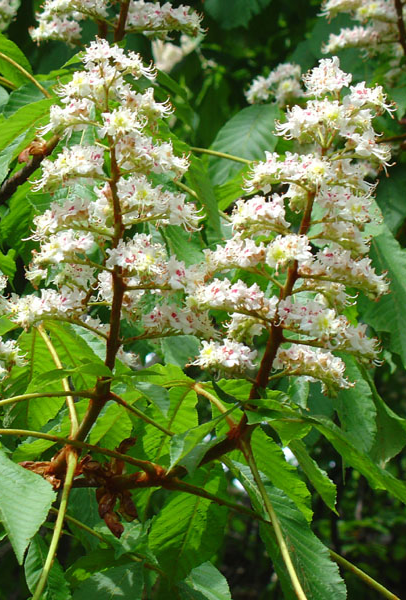
Leaves occur in opposite pairs on the twig, an important identification feature. Each leaf is palmately compound, usually with five leaflets spreading from one point like the fingers of a hand. Leaves with more than five leaflets can occur.
Individual leaflets are pointed, toothed, and generally broader toward the upper half. The central leaflet is commonly the largest. Early spring foliage may be bright green and later becomes darker, while the undersides are often paler.
Leaf blotch, powdery mildew, anthracnose, drought, wind, and heat can cause browning or premature leaf fall. Damaged or discolored foliage does not become proven safe. Diseased leaves may also carry fungicide or other treatment residue.
Flowers
Greenish-yellow to creamy-yellow flowers appear in upright terminal clusters during spring. The flowers generally develop after leaf expansion, with timing varying by latitude and seasonal conditions. Stamens extend beyond the petals, helping distinguish Ohio Buckeye from some related species.
Only a portion of the flowers develops into mature capsules. Fallen flowers and pruned flowering twigs should remain inaccessible. Flower chemistry has not been characterized as completely as seed chemistry, so the absence of a measured flower dose does not establish edibility.
Fruit Capsules and Seeds
The fruit is a rounded leathery capsule that begins green and becomes tan or brown as it matures. Its surface is rough, bumpy, or sparsely covered with short blunt prickles. The capsule splits at maturity and releases one or more large seeds.
Mature seeds are smooth, glossy, dark brown, and marked by a broad pale attachment scar called a hilum. The eye-like pattern inspired the name buckeye. The seed is often called a nut, but botanically it develops within a capsule rather than the densely spiny bur of a true chestnut.
Seed fall generally occurs during late summer and autumn. The exact period varies with location and weather. Repeated cleanup is necessary because capsules do not open simultaneously and wildlife or water may move seeds into kennels, paths, yards, and paddocks.
Seed Germination and Seedling Exposure
Fresh buckeye seeds contain substantial moisture and can lose viability when allowed to dry excessively. Seeds commonly overwinter on or beneath the soil and germinate during spring. Seedlings may appear in lawns, gardens, streambanks, mulch, and animal enclosures away from the original tree.
Young seedlings and shoots are practical livestock concerns because they are low, tender, and accessible when other spring forage is limited. Puppies may dig up germinating seeds or chew the attached seed remains. Volunteer plants should be removed completely from animal areas.
Seasonal Exposure
Spring risk centers on buds, emerging leaves, tender shoots, and seedlings. Summer exposure involves leaves, bark, branches, and storm debris. Autumn creates the greatest dog and child exposure because mature seeds and capsules accumulate on the ground.
Winter exposure remains possible through dried seeds used in crafts, seeds buried beneath leaves or snow, stored decorations, storm-damaged branches, and seedlings emerging during unseasonably warm periods. A seasonal cleanup plan should address more than the weeks of peak seed fall.
Dogs and Yard Exposure
Dogs may retrieve buckeye seeds as toys, crack them while chewing, swallow them during play, or find fragments created by lawn equipment. Puppies and dogs with pica are particularly likely to ingest a whole seed. Several seeds may be carried away and hidden, making the missing amount difficult to determine.
Mowing can scatter wet seed pulp and sharp shell fragments. Rake before mowing beneath a fruiting tree and inspect fenced yards repeatedly. A dog that vomits one seed may still have another remaining in the stomach.
Cats and Indoor Exposure
Cats may encounter Ohio Buckeye through seedlings in pots, leaves or twigs brought indoors, dried craft seeds, floral arrangements, or pieces carried by a dog. A polished buckeye used in a decorative bowl may roll like a toy. String attached to a seed adds a linear foreign-body hazard.
Cats are less likely to consume a whole large seed but can chew the surface or swallow fragments. Indoor exposure should include inspection for adhesives, paint, varnish, wire, string, and other craft materials. Those products may create a mixed poisoning or obstruction.
Horses and Livestock
Livestock exposure occurs when Ohio Buckeye grows within wooded pasture, along streambanks, beneath shade trees, or near fence lines. Young spring growth becomes more important when desirable forage is sparse. Storm-damaged branches, uprooted seedlings, and landscape trimmings can concentrate material within easy reach.
Never dump buckeye branches, leaves, shoots, capsules, or seeds into a paddock or pasture. Remove every animal from a shared source when one becomes ill. Preserve pasture plants, feed, water, and other possible toxins because neurologic livestock disease has a broad differential diagnosis.
Rabbits, Guinea Pigs, Birds, and Other Exotics
Buckeye material should not be offered as browse, chewing material, perches, enrichment, cage greens, or nesting substrate. The absence of exact species-specific dose data for a rabbit, guinea pig, parrot, chicken, or reptile does not establish safety. Small animals can receive a substantial relative dose from a fragment.
Decorative seeds may be coated, drilled, wired, or strung. Birds can remove pieces that a dog cannot, while rabbits may chew wood or bark repeatedly. Any attached metal, paint, sealant, string, or adhesive must be evaluated separately.
Ohio Buckeye and European Horse Chestnut
European Horse Chestnut is Aesculus hippocastanum, a separate species native to southeastern Europe. It commonly becomes a larger tree, often has seven broad leaflets, and produces capsules covered by more numerous prickles. Its seed extracts and aescin chemistry have been studied much more extensively.
European Horse Chestnut poisoning data are relevant to the broader genus but should not be presented as exact Ohio Buckeye results. The comparative chick-and-hamster experiment demonstrated meaningful species differences: the European seed extract was acutely toxic, while the tested Ohio Buckeye extract was not.
Ohio Buckeye and Yellow Buckeye
Yellow Buckeye, Aesculus flava, generally becomes a larger forest tree. Its capsules are usually smoother than those of Ohio Buckeye, and its stamens do not project beyond the petals in the same way. The twigs are less strongly fetid when bruised.
Yellow Buckeye remains poisonous and should not be substituted into an Ohio Buckeye dose assessment. Historical literature may use Aesculus octandra for Yellow Buckeye. Save fruit capsules, leaves, flowers, and twigs when distinguishing the two.
Ohio Buckeye and Red or Bottlebrush Buckeye
Red Buckeye, Aesculus pavia, is commonly a shrub or small tree with red tubular flowers. Bottlebrush Buckeye, Aesculus parviflora, forms a spreading multi-stemmed shrub and produces long upright clusters of white flowers during summer. Both differ from the yellow-green spring flowers and tree form of Ohio Buckeye.
Related species contain their own saponin mixtures and should remain inaccessible. A publication about A. pavia fruit saponins does not establish the exact compounds or dose in A. glabra. Botanical identification and toxicologic interpretation should remain linked.
Ohio Buckeye and California Buckeye
California Buckeye, Aesculus californica, is native to California and has a different growth form, flowers, range, phenology, and saponin profile. It may drop its leaves during the dry season and produces large seeds within thick capsules. Native American processing and fish-stunning accounts involving California Buckeye should not be transferred automatically to Ohio Buckeye.
Both plants should be treated as poisonous. The distinction matters when interpreting seed studies, historical food preparation, veterinary cases, and local exposure. Geographic location is helpful but planted specimens can occur outside their native range.
Ohio Buckeye and Edible Chestnuts
True chestnuts belong to Castanea in Fagaceae. They have simple alternate leaves and edible nuts enclosed within burs densely covered by long needle-like spines. Buckeyes have opposite palmately compound leaves and smoother or sparsely prickled capsules containing glossy seeds with a pale eye.
A loose brown seed without its capsule can be misidentified. Preserve the husk, leaves, and tree photographs. Do not taste a seed to identify it.
Mexican Buckeye
Mexican Buckeye is commonly Ungnadia speciosa, a separate member of Sapindaceae. It has compound leaves, pink flowers, and capsules containing dark seeds but does not belong to Aesculus. Common-name similarity does not establish identical chemistry or treatment.
Mixed landscape plantings may contain both trees. Accurate photographs and complete samples are necessary when an animal encounters unidentified seeds. Treatment should not wait when the patient is symptomatic.
Buckeye Candy, Charms, and Crafts
Buckeye candy is normally a peanut-butter center dipped partly in chocolate to imitate the seed. It contains no Ohio Buckeye plant material unless someone has made an unsafe nonstandard preparation. Chocolate, xylitol-containing peanut butter, wrappers, and other candy ingredients create separate pet risks.
Real buckeye seeds are carried as charms and used in necklaces, wreaths, school projects, bowls, ornaments, and sports decorations. Drying or polishing does not make them dependable pet-safe objects. Drilled seeds may be attached to string, wire, glue, paint, or varnish, creating combined chemical and foreign-body exposures.
Historical Processing and Fish-Stunning Use
Historical Indigenous uses of various buckeye species included prolonged processing intended to remove bitter or harmful constituents and use of crushed seed material to stun fish. Practices varied by community, species, and purpose. They should not be reduced to a simple household recipe or offered as proof that a boiled seed is safe.
Home leaching, roasting, grinding, or soaking cannot be verified visually and may leave an unpredictable residue. No processed Ohio Buckeye preparation should be fed to pets or livestock. Medicinal or ethnobotanical history does not establish modern veterinary dosing.
Direct Experimental Seed Evidence
In 1963, ground Ohio Buckeye seed material was incorporated into chick feed to investigate the tree’s reputed toxicity. The work arose from reports that shoots and seeds poisoned large animals and that the syndrome involved weakness, poor coordination, and terminal coma. The experiment demonstrated the early uncertainty surrounding the responsible principle.
A 1984 comparative study tested European Horse Chestnut, Ohio Buckeye, and Yellow Buckeye seeds in chicks and hamsters. European Horse Chestnut produced clear dose-related toxicity, including depression, muscular incoordination, paralysis, coma, and death. Ohio Buckeye seed extract produced no toxicity at the study’s high tested exposure in either model.
This result is scientifically important. It suggests that Ohio Buckeye seed toxicity may differ from European Horse Chestnut, that fresh shoots or leaves may be more important in some livestock cases, or that the tested extraction and animal models did not reproduce natural susceptibility. It does not justify feeding Ohio Buckeye seeds or declaring them harmless.
Published Cattle Intoxication
A published 1992 veterinary report documented Aesculus glabra intoxication in cattle and associated leaves and buds with central nervous system effects. Earlier agricultural reports likewise described weakness, poor coordination, paralysis, and coma after livestock exposure. Publicly available detail from the brief report is limited, preventing a reliable dose or complete case reconstruction.
The report supports the livestock warning but should not be expanded beyond the evidence. It does not establish a dog dose, prove one isolated toxin, or show that every mature seed produces the same syndrome. Pasture outbreaks require confirmation of the plant and exclusion of other neurologic toxins.
Diagnosis
Diagnosis begins with exact plant identification, the tissue involved, maximum amount missing, chewing, time of exposure, gastrointestinal and neurologic findings, and the possibility of a swallowed seed. There is no routine rapid blood test that confirms Ohio Buckeye poisoning or measures an absorbed aesculioside dose.
Useful evidence includes complete leaves and twigs, flowers, green or mature capsules, seeds, seedlings, photographs of opposite leaf arrangement, vomited fragments, stool, and any craft materials. A seed collected from a lawn may have come from a different tree than the one photographed.
Differential Diagnosis
Vomiting, tremors, weakness, seizures, and ataxia can result from pesticides, metaldehyde, tremorgenic mold, strychnine, mushrooms, nicotine products, cannabis, human medication, toxic algae, low blood glucose, electrolyte disease, liver disease, and numerous poisonous plants. Livestock differentials include hemlock, lupines, locoweeds, botulism, ionophore feed contamination, lead, urea, and mycotoxins.
Persistent gagging, regurgitation, or abdominal pain may reflect a seed foreign body rather than systemic toxicosis. Coughing and fever after vomiting may indicate aspiration. Diagnosis should explain the entire clinical course rather than stopping when a buckeye tree is found nearby.
Veterinary Evaluation
Examination may assess mental status, pupil size and response, gait, muscle activity, swallowing, hydration, abdominal pain, heart rate, blood pressure, temperature, breathing, and airway protection. Repeated vomiting, diarrhea, tremors, seizures, or collapse may justify blood count, electrolytes, glucose, kidney and liver measurements, acid-base testing, and urinalysis.
Imaging is important when a seed may have been swallowed whole. Radiographs, ultrasound, contrast studies, endoscopy, or serial examinations may be needed because plant material is not always clearly radiopaque. Respiratory imaging may be required after aspiration.
Veterinary Treatment
No specific Ohio Buckeye antidote has been established. Treatment is supportive and directed at the patient’s dominant problems. Early veterinarian-controlled emesis may be considered for a recent significant dog exposure only when the patient remains alert, stable, asymptomatic, and able to protect the airway.
Activated charcoal may be considered selectively after substantial chewed-plant exposure, but it should not be forced into a vomiting, weak, tremoring, sedated, seizuring, or poorly swallowing patient. Charcoal cannot remove an intact seed lodged in the esophagus, stomach, or intestine. Gastric lavage requires anesthesia and airway protection and is not routine.
Veterinary care may include antiemetic medication, fluid and electrolyte replacement, gastrointestinal protection, tremor control, anticonvulsants, oxygen, airway protection, assisted ventilation, temperature management, and cardiovascular support. Endoscopy or surgery may be required for a seed foreign body. Aspiration pneumonia and other secondary complications require separate treatment.
Prognosis
Many animals recover when exposure is recognized before profound neurologic depression, uncontrolled seizures, aspiration, severe dehydration, or obstruction develops. Improvement should include normal awareness, pupils, gait, muscle activity, swallowing, breathing, hydration, appetite, urination, and stool production.
The prognosis becomes more guarded with prolonged seizures, paralysis, coma, respiratory compromise, aspiration, shock, or delayed foreign-body removal. A dog can recover from plant-induced tremors and still require surgery for a retained seed. Monitoring must address both hazards.
Prevention
Rake beneath fruiting trees repeatedly during seed fall and inspect fenced yards before puppies are released. Collect capsules, seeds, and mower-damaged fragments. Remove volunteer seedlings from kennels, paddocks, rabbit areas, poultry runs, and play spaces.
Secure pruning and storm debris immediately and never dump it into animal enclosures or accessible compost. Keep real buckeye charms, necklaces, decorative bowls, crafts, and school projects in closed storage. Provide livestock with adequate safe forage so they are not forced to browse spring shoots or fallen tree material.
Immediate Response
- Stop further exposure: Move the animal away from seeds, capsules, seedlings, shoots, leaves, flowers, bark, roots, pruning debris, crafts, and decorative buckeyes.
- Determine what happened to the seed: Establish whether it was merely mouthed, visibly chewed, broken into pieces, or swallowed completely.
- Count what may be missing: Record the greatest possible number of seeds and the amount of foliage or shoot material involved.
- Preserve evidence: Save seeds, capsule pieces, leaves, twigs, seedlings, vomited fragments, stool material, photographs, and craft components.
- Record the timeline: Note when access could have begun and when vomiting, diarrhea, dilated pupils, twitching, weakness, or another sign appeared.
- Contact a professional promptly: Seek veterinary or poison-control guidance after seed ingestion, substantial plant ingestion, repeated gastrointestinal signs, or any neurologic abnormality.
Check for Emergency Findings
- Check breathing: Slow, shallow, irregular, noisy, rapid, or labored breathing requires immediate emergency assessment.
- Check swallowing: Persistent gagging, repeated swallowing, regurgitation, neck extension, or inability to drink may indicate an esophageal obstruction.
- Check coordination: Swaying, stumbling, crossing the limbs, falling, or inability to stand indicates significant neurologic dysfunction.
- Check muscle activity: Twitching, fasciculations, tremors, spasms, stiffness, or repeated jerking may precede seizures.
- Check awareness: Extreme agitation, profound depression, stupor, collapse, or reduced responsiveness requires emergency care.
- Check the abdomen: Severe pain, enlargement, repeated unproductive retching, reduced stool, or inability to retain water may indicate obstruction.
Remove Loose Plant Material
- Remove only visible loose pieces: Carefully clear accessible seed fragments, capsule material, leaves, or bark from the lips and front of the mouth when handling is safe.
- Do not reach deeply: A blind finger sweep can push a seed toward the airway or result in a bite.
- Do not force a lodged seed: Pushing with food, water, fingers, or tools may worsen obstruction or injury.
- Wipe accessible residue: A damp cloth may be used on the lips and front of the mouth in a fully alert and cooperative animal.
- Rinse only when safe: Use a gentle low-pressure rinse only when breathing and swallowing are completely normal.
Do Not Induce Vomiting at Home
- Do not give hydrogen peroxide automatically: The decision depends on the species, amount, time, symptoms, and possibility that a whole seed is lodged.
- Never give peroxide to a cat: It can cause serious gastric and esophageal injury.
- Do not use salt, mustard, ipecac, detergent, oil, fingers, or manual gagging: These methods can produce additional poisoning, trauma, or aspiration.
- Never induce vomiting after symptoms begin: Vomiting, weakness, depression, agitation, tremors, ataxia, seizures, abnormal breathing, or impaired swallowing makes aspiration especially dangerous.
- Do not induce vomiting after suspected obstruction: A seed lodged in the throat or esophagus requires examination and retrieval rather than additional retching.
- Leave case selection to professionals: Controlled emesis may be considered only for a recently exposed, fully alert, stable, asymptomatic dog capable of protecting its airway.
Activated Charcoal and Gastric Decontamination
- Do not force charcoal at home: Buckeye poisoning can produce vomiting, weakness, tremors, seizures, and impaired swallowing.
- Recognize charcoal’s limitation: It cannot remove a whole seed or correct choking, esophageal lodging, or intestinal obstruction.
- Never use household charcoal: Briquettes, fireplace ash, burned food, and homemade carbon are not medical activated charcoal.
- Allow veterinary selection: Medical charcoal may be considered after substantial chewed-plant exposure when the patient is stable and the airway is safe.
- Do not repeat doses yourself: Repeated charcoal can worsen dehydration, constipation, electrolyte abnormalities, and aspiration risk.
- Gastric lavage is veterinary-only: It requires anesthesia, endotracheal airway protection, and careful case selection.
Do Not Give Household Remedies or Owner-Selected Medication
- Do not give milk, oil, bread, food, vinegar, or herbs: These do not neutralize Ohio Buckeye constituents or remove a retained seed.
- Do not give antidiarrheals: Loperamide, bismuth products, and Kaopectate-type products may be inappropriate and can conceal obstruction.
- Do not give antihistamines automatically: Diphenhydramine does not reverse the characteristic gastrointestinal or neuromuscular syndrome.
- Do not give antacids or sucralfate automatically: These require veterinary selection and do not treat neurologic disease or obstruction.
- Do not give human pain medication: Ibuprofen, naproxen, aspirin, acetaminophen, and similar products can create another poisoning.
- Do not give stimulants: Caffeine, nicotine, decongestants, and energy products can worsen neurologic and cardiovascular instability.
- Do not use homemade buckeye preparations: Boiling, soaking, grinding, tincturing, or leaching does not create a dependable antidote.
Food and Water
- Do not force food: Nausea, abnormal swallowing, weakness, or obstruction can make feeding dangerous.
- Do not syringe water: Forced fluid can enter the lungs.
- Allow only voluntary drinking when appropriate: Small drinks may remain available to an alert animal swallowing normally and not vomiting repeatedly.
- Prevent rapid gulping: A large drink immediately after vomiting may trigger another episode.
- Seek care when water will not stay down: Persistent vomiting may require injectable antiemetic medication and fluid therapy.
Vomiting, Diarrhea, and Dehydration
- Record every episode: Note frequency, volume, blood, black material, seed pieces, capsule fragments, leaves, or bark.
- Save recognizable fragments: Place them in a closed disposable container for identification.
- Watch for dehydration: Tacky gums, sunken eyes, reduced urination, rapid heart rate, weakness, or inability to retain water requires treatment.
- Watch for gastrointestinal bleeding: Repeated bloody vomit, coffee-ground material, black stool, or substantial bloody diarrhea requires urgent assessment.
- Watch for aspiration: Coughing, fever, nasal discharge, rapid breathing, or renewed lethargy after vomiting may indicate lung injury.
- Do not muzzle a vomiting animal: Saliva and vomit must drain freely.
Neurologic Signs
- Monitor the pupils: Marked dilation combined with weakness, agitation, depression, or poor coordination requires veterinary assessment.
- Monitor gait: Swaying, stumbling, crossing the limbs, falling, or inability to stand indicates progression.
- Monitor muscle activity: Fasciculations, tremors, spasms, stiffness, or repeated jerking may precede seizures.
- Monitor awareness: Extreme excitement, profound depression, stupor, or failure to respond normally is an emergency.
- Do not force walking: Repeatedly walking an uncoordinated animal increases injury and aspiration risk.
- Keep the patient at floor level: Use padded bedding away from stairs, water, traffic, furniture, and sharp objects.
Tremors and Seizures
- Clear the area: Move furniture, tools, buckets, and sharp objects away.
- Do not place anything in the mouth: Keep hands, spoons, food, water, and medication away during a seizure.
- Do not hold the tongue: Attempting to do so can cause severe injury.
- Protect without pinning: Use barriers or folded blankets when safe and avoid forceful limb restraint.
- Reduce light and noise: Limit stimulation while arranging emergency transportation.
- Time the episode: Record duration, recurrence, breathing, and whether normal awareness returns.
Breathing and Aspiration
- Watch respiratory depth and effort: Shallow, irregular, noisy, slow, or labored breathing requires emergency care.
- Check gum color: Pale or blue-gray gums may indicate poor circulation or inadequate oxygenation.
- Keep the airway clear: Position the head so saliva and vomit can drain without compressing the chest.
- Do not give anything by mouth: A weak, seizuring, poorly responsive, or abnormally breathing animal cannot protect its airway reliably.
- Seek immediate support: Severe respiratory depression may require oxygen, intubation, suctioning, or assisted ventilation.
Seed Choking and Esophageal Obstruction
- Determine whether a whole seed is missing: A recovered seed with surface tooth marks creates a different mechanical concern from one that disappeared completely.
- Watch for choking: Panic, pawing at the mouth, repeated gagging, inability to inhale, or blue-gray gums requires immediate emergency action.
- Watch for esophageal lodging: Excessive saliva, repeated swallowing, neck extension, regurgitation, coughing, or inability to swallow water requires examination.
- Do not push the seed deeper: Never force food, water, fingers, or tools toward a lodged object.
- Expect possible endoscopy: Sedation or anesthesia may be needed to locate and retrieve the seed safely.
Gastric and Intestinal Obstruction
- Watch for recurrent vomiting: Vomiting that continues after tremors or lethargy improve may indicate a retained seed.
- Watch for abdominal pain: Hunching, restlessness, stretching, guarding, whining, or a tense abdomen requires assessment.
- Watch stool production: Reduced or absent stool, straining, or small amounts of liquid stool may occur with obstruction.
- Do not assume the seed dissolved: Ohio Buckeye seeds are large and may remain mechanically intact.
- Expect advanced imaging: Ultrasound, contrast studies, endoscopy, or serial examinations may be needed when routine radiographs are inconclusive.
- Expect surgical removal when necessary: A seed that cannot pass or be retrieved endoscopically may require surgery.
Safe Transportation
- Call ahead: Tell the clinic that Ohio Buckeye poisoning and possible seed obstruction are suspected.
- Prevent falls: Use a padded carrier, crate, stretcher, rigid board, sling, or blanket according to the patient’s size.
- Keep the animal quiet: Excitement can worsen tremors, seizures, overheating, and aspiration risk.
- Position for drainage: Keep the head so saliva and vomit can leave the mouth.
- Do not muzzle a vomiting or breathing-impaired animal: A muzzle can trap vomit or interfere with breathing.
- Bring the evidence: Take the plant material, seed, capsule, photographs, vomited fragments, and matching craft objects.
Horses and Livestock
- Remove the entire group: Prevent further access to shoots, seedlings, leaves, bark, fallen seeds, storm debris, and contaminated forage.
- Provide safe forage: Ensure animals have adequate uncontaminated feed and clean water.
- Do not force movement: Weak, staggering, twitching, or neurologically abnormal animals should not be driven repeatedly.
- Do not drench a compromised animal: Salivation, poor coordination, recumbency, or abnormal swallowing greatly increases aspiration risk.
- Inspect every animal: Group members may consume different amounts and develop signs at different times.
- Preserve pasture evidence: Save shoots, leaves, capsules, seeds, bark, feed, water, and other suspect plants.
Rabbits, Guinea Pigs, Birds, and Other Exotics
- Do not attempt vomiting: Household emesis is unsafe or impossible in these species.
- Minimize handling: Struggling can worsen weakness, respiratory effort, and overheating.
- Monitor food intake and feces: Reduced eating or droppings requires prompt veterinary guidance.
- Do not force-feed a compromised animal: Obstruction, bloat, weakness, regurgitation, or impaired swallowing must be considered first.
- Monitor balance and posture: Inability to perch, abnormal head position, tremors, recumbency, or collapse requires immediate specialized care.
- Preserve craft materials: Wire, string, paint, varnish, glue, and drilled seed fragments may alter the exposure.
Veterinary Evaluation
- Confirm the plant: Distinguish Ohio Buckeye from European Horse Chestnut, Yellow Buckeye, Red Buckeye, California Buckeye, edible chestnuts, and Mexican Buckeye.
- Assess neurologic status: Mental state, pupils, gait, posture, muscle activity, reflexes, and seizure history help define severity.
- Assess the airway and swallowing: A seed may lodge independently of the absorbed toxin.
- Assess hydration and circulation: Repeated vomiting and diarrhea can produce clinically important fluid and electrolyte loss.
- Assess the abdomen: Pain, enlargement, reduced motility, and a missing seed may justify imaging or endoscopy.
- Expand the differential: Severe or atypical neurologic illness requires evaluation for pesticides, medication, mold, mushrooms, metabolic disease, and other toxins.
Veterinary Decontamination
Veterinary decontamination depends on the plant part, amount, chewing, time, symptoms, and airway safety. Controlled emesis may be considered after a recent substantial ingestion in a fully alert, stable, asymptomatic dog. It becomes inappropriate after spontaneous vomiting, tremors, weakness, ataxia, seizures, respiratory abnormalities, sedation, or impaired swallowing.
Activated charcoal may be used selectively when chewed plant material could remain available for absorption and the airway is safe. Endoscopy is more important than charcoal when an intact seed is lodged. Gastric lavage is reserved for selected serious exposures under anesthesia with endotracheal protection.
Veterinary Treatment
No specific antidote neutralizes Ohio Buckeye saponins or the unresolved combination of plant constituents. Veterinarian-selected antiemetic medication may reduce vomiting, fluid loss, and aspiration risk after decontamination and obstruction decisions have been made. Intravenous or subcutaneous fluids may correct dehydration, electrolyte disturbance, and poor circulation.
Tremors or severe muscle activity may require veterinarian-selected muscle relaxants or sedatives, while seizures require anticonvulsant treatment. Oxygen, endotracheal intubation, suctioning, and assisted ventilation may be needed when respiratory function or airway protection fails. Temperature must be monitored because prolonged tremors or seizures can produce dangerous overheating.
Gastrointestinal protectants and pain control may be used when significant mucosal irritation or abdominal pain is present. Endoscopy or surgery may be required for a lodged seed. Aspiration, gastrointestinal bleeding, shock, and secondary infection require separate patient-specific management.
Monitoring and Recovery
- Monitor awareness and pupils: Mental status and visual responses should return to normal.
- Monitor gait and muscle activity: Weakness, tremors, twitching, and ataxia should resolve without recurrence.
- Monitor breathing and swallowing: Coughing, gagging, abnormal effort, or difficulty eating should not develop or worsen.
- Monitor hydration: Gum moisture, urination, pulses, appetite, and ability to retain water should recover.
- Monitor for obstruction: Recurrent vomiting, reduced stool, abdominal pain, or renewed appetite loss requires reassessment.
- Monitor for aspiration: Fever, coughing, nasal discharge, rapid breathing, or renewed lethargy may appear after the initial poisoning improves.
Prevention and Prognosis
- Collect fallen seeds repeatedly: Rake beneath fruiting trees throughout the entire seed-drop period.
- Supervise puppies: Do not allow object-eating dogs to play unsupervised beneath a fruiting buckeye.
- Remove seedlings and sprouts: Control volunteer growth in kennels, paddocks, rabbit areas, poultry runs, and play yards.
- Secure pruning debris: Remove branches, bark, leaves, flowers, capsules, and seeds immediately.
- Store decorative seeds safely: Keep charms, necklaces, bowls, wreaths, and school crafts in closed animal-inaccessible storage.
- Typical prognosis: Many animals recover completely with early care before profound neurologic, respiratory, or mechanical complications develop.
- Guarded prognosis: Prolonged seizures, paralysis, coma, aspiration, severe dehydration, respiratory compromise, or gastrointestinal obstruction creates a more serious outlook.
Frequently Asked Questions About Ohio Buckeye and Animal Poisoning
My dog picked up a buckeye seed but I recovered it. How do tooth marks change the assessment?
Superficial marks on an otherwise complete recovered seed suggest less exposure than a seed that was crushed, opened, or swallowed. Examine the seed for missing shell, pulp, and fragments and inspect the ground for additional seeds. Even limited chewing can release bitter plant material and cause gastrointestinal signs, but the foreign-body concern is lower when the complete seed is recovered. Continued vomiting, tremors, weakness, or abnormal behavior still warrants veterinary guidance.
What if one whole seed is missing but my dog still appears normal?
Contact a veterinarian promptly. The dog may develop chemical signs after absorption, and the intact seed may lodge in the esophagus, stomach, or intestine. Waiting for repeated vomiting or abdominal pain can reduce the opportunity for easier endoscopic retrieval. Preserve a matching seed so the veterinarian can see its approximate size and shape.
Can one Ohio Buckeye seed poison a dog?
No validated seed count predicts the outcome. One seed represents a much larger body-weight exposure for a small puppy than for a large dog, and chewing may release more material than swallowing it whole. A whole seed can also cause choking or obstruction regardless of the absorbed chemical dose. The case should be assessed from the dog’s size, seed condition, amount missing, symptoms, and imaging needs rather than a universal one-seed rule.
Why can squirrels handle buckeye seeds when they are unsafe for pets?
Wildlife species differ in food selection, gastrointestinal processing, metabolism, microbial activity, dose, and tolerance. A squirrel may also discard parts of a seed or consume it in a way that is not apparent to an observer. Wildlife use does not establish safety for dogs, cats, horses, cattle, birds, or people. The same reasoning applies to insects or other animals feeding on leaves or flowers.
Does the bitter taste prevent serious exposure?
No. Bitter leaves may discourage prolonged browsing when better forage is available, but puppies often pick up seeds during play rather than for taste. A seed may be swallowed quickly before bitterness limits intake. Hungry livestock may browse shoots or seedlings when desirable forage is sparse. Palatability reduces some exposures but cannot be used as prevention.
Are dried or polished buckeyes used in decorations still dangerous?
Yes. Drying and polishing do not establish detoxification, and a hardened seed remains a choking and gastrointestinal foreign-body hazard. Decorative seeds may also contain drilled holes, wire, string, paint, glue, varnish, or other materials. Keep charms, necklaces, wreaths, bowls, and school projects in closed storage away from animals.
Can boiling, roasting, or soaking make Ohio Buckeye safe for pets?
No household process has been validated as a safe veterinary preparation. Historical food-processing methods were species- and culture-specific and often involved repeated treatment intended to remove bitter compounds. Incomplete processing leaves an unpredictable residue. Raw or home-processed buckeye should never be offered as food, medicine, or enrichment.
Are aescin and aesculin the same chemical?
No. Aescin or escin is a collective name for mixtures of related triterpenoid saponins, especially those characterized from European Horse Chestnut. Aesculin is a coumarin glucoside. The names sound similar but describe different chemical classes. Ohio Buckeye also contains its own documented aesculiosides and aesculin-related bark compounds, so the terminology should remain precise.
What are aesculiosides G1 through G16?
They are 16 acylated polyhydroxyoleanene triterpenoid saponins first characterized from Ohio Buckeye seeds. The same investigation isolated eight additional known saponins, producing a total of 24 identified seed saponins. Their discovery establishes complex exact-species seed chemistry. It does not identify one aesculioside as the proven cause of every naturally occurring veterinary sign.
Does laboratory cytotoxicity prove that the seed destroys a pet’s organs?
No. Several isolated Ohio Buckeye saponins damaged or inhibited cultured tumor cells at experimental concentrations. Cultured cells are exposed directly to purified compounds without normal digestion, absorption, distribution, metabolism, and elimination. The results demonstrate biological activity and help compare molecular structures, but they do not establish that one swallowed seed causes generalized organ destruction in a dog or horse.
Was a narcotic alkaloid proven to be the Ohio Buckeye toxin?
No single alkaloid has been established conclusively as the principal Ohio Buckeye toxin. Older agricultural accounts used the term to explain weakness, incoordination, paralysis, and coma. Modern exact-species research has documented numerous seed saponins, bark coumarin glycosides, proanthocyanidins, flavonoids, and related compounds. The natural toxic syndrome is better described as incompletely resolved and probably multifactorial.
Why did an experimental study find Ohio Buckeye seed extract non-toxic to chicks and hamsters?
Susceptibility depends on species, plant tissue, seed collection, extraction, preparation, dose, and route. In the comparative experiment, European Horse Chestnut seed caused a clear paralytic syndrome, while Ohio Buckeye seed extract did not cause toxicity at the tested high exposure. The result suggests real species differences or that the experimental preparation did not reproduce the livestock hazard associated with fresh leaves, buds, or other material. It does not establish that Ohio Buckeye is safe to feed.
How strong is the evidence for Ohio Buckeye poisoning in cattle?
A published veterinary report documents Aesculus glabra intoxication in cattle, and agricultural literature repeatedly associates leaves, buds, shoots, and seeds with neuromuscular illness. The brief report supports a genuine livestock hazard but provides limited publicly accessible detail for dose reconstruction. It should not be expanded into a universal dose, one-compound mechanism, or precise dog-and-cat prognosis.
Is European Horse Chestnut poisoning evidence applicable to Ohio Buckeye?
It is relevant to the broader genus and helps identify possible gastrointestinal and neuromuscular effects, but it is not exact-species proof. European Horse Chestnut contains a better-characterized aescin mixture and produced greater experimental seed toxicity than Ohio Buckeye in a comparative study. Public copy should distinguish the two trees whenever discussing compounds, doses, experimental results, or case reports.
Can Ohio Buckeye cause obstruction without causing neurologic poisoning?
Yes. A whole seed may lodge in the esophagus, remain in the stomach, or obstruct the intestine while releasing relatively little absorbed plant material. Persistent gagging, regurgitation, abdominal pain, vomiting, reduced stool, or inability to retain water may therefore occur without tremors or seizures. Imaging or endoscopy may be required even when the animal appears mentally normal.
Why might a swallowed seed be difficult to see on an ordinary radiograph?
Plant material does not always contrast strongly with surrounding soft tissue or stomach contents. The seed’s size and outline may be visible indirectly through gas patterns, stomach distension, or obstruction, but a normal plain radiograph does not guarantee passage. Ultrasound, contrast imaging, endoscopy, serial examinations, and clinical progression may be needed.
When is activated charcoal less important than seed retrieval?
Retrieval takes priority when a whole seed is lodged in the esophagus, retained in the stomach, or producing obstruction. Charcoal cannot move or dissolve the object. It also becomes dangerous when the patient is vomiting, weak, tremoring, seizuring, sedated, or swallowing poorly. Charcoal may be considered for selected chewed-plant exposures only after airway and mechanical risks are assessed.
How should a veterinarian approach severe neurologic signs after suspected exposure?
Stabilization should include airway, breathing, circulation, glucose, temperature, seizure control, hydration, and protection from injury. The examination should document pupils, mental status, gait, muscle activity, swallowing, blood pressure, and possible aspiration. Because exact canine and feline Ohio Buckeye evidence is limited, pesticides, medication, tremorgenic mold, mushrooms, metaldehyde, strychnine, metabolic disease, and other plants should remain active differentials.
Can a pet appear recovered while a seed remains inside?
Yes. Vomiting, tremors, or lethargy may resolve while an intact seed remains in the stomach or progresses into the intestine. Recurrent vomiting, appetite loss, abdominal pain, reduced stool, or inability to retain water after an apparently normal interval requires re-examination. Recovery from systemic signs does not document foreign-body passage.
What evidence should an owner bring to the clinic?
Bring the recovered seed or matching seeds, green or mature capsule, leaves attached to a twig, seedlings, photographs of the entire tree, vomited fragments, and any decorative material. Record the greatest number of missing seeds and whether mowing or chewing may have fragmented them. Keep clean plant samples separate from vomit and stool. Complete material helps distinguish Ohio Buckeye from other Aesculus species and edible chestnuts.
What research is still needed to define Ohio Buckeye risk accurately?
Authenticated plants should be sampled across both accepted varieties, seasons, growth stages, and tissues. Seeds, shoots, buds, leaves, flowers, bark, roots, capsules, and seedlings should be quantified for intact saponins, sapogenins, coumarin glycosides, phenolics, and unresolved metabolites. Prospective veterinary reports should document species identity, plant part, measured intake, animal species, clinical course, imaging, treatment, and outcome. Comparative toxicokinetic work is needed to explain why cattle reports, chick studies, hamster studies, and European Horse Chestnut results differ.