Indian Tobacco Toxicity, Lobelia Alkaloids, and Respiratory Failure
Is Indian Tobacco Poisonous to Dogs, Cats, Horses, and Livestock?
Yes—Indian Tobacco, Lobelia inflata, is poisonous to dogs, cats, horses, livestock, rabbits, birds, and other animals that eat it. The plant contains a complex mixture of piperidine alkaloids led by lobeline. These compounds can irritate the mouth and gastrointestinal tract while disturbing nicotinic acetylcholine receptors, autonomic signaling, monoamine transport, neuromuscular function, circulation, and breathing.
Early poisoning may cause a bitter or burning oral sensation, drooling, foaming, nausea, vomiting, diarrhea, abdominal pain, nasal discharge, dilated pupils, restlessness, or depression. A larger plant ingestion, contaminated hay exposure, repeated consumption, or concentrated tincture, powder, tea, capsule, extract, or smoking preparation can cause profound weakness, loss of coordination, tremors, abnormal heart rate, low blood pressure, impaired swallowing, respiratory depression, paralysis, seizures, collapse, coma, or death.
About this guide: This page provides general pet-poisoning information and cannot diagnose or treat an individual animal. For any suspected exposure, contact a veterinarian or animal poison-control service immediately. Do not induce vomiting, give medication, or attempt home decontamination unless directed by a veterinary professional.
Indian-tobacco
Lobelia inflata L.
Important homotypic synonyms and former combinations include:
- Dortmanna inflata (L.) Kuntze
- Rapuntium inflatum (L.) Mill.
Relevant heterotypic synonyms and named forms include:
- Lobelia michauxii Nutt.
- Rapuntium michauxii (Nutt.) C.Presl
- Lobelia inflata var. simplex Millsp.
- Lobelia inflata f. albiflora Moldenke
Important botanical distinctions:
- Lobelia inflata is not cultivated tobacco, Nicotiana tabacum, and does not contain nicotine as its principal alkaloid.
- Indian Hemp, another overlapping common name, may refer to Apocynum cannabinum, an unrelated cardiac-glycoside plant.
- Pale-Spiked Lobelia, Lobelia spicata, is a separate species whose fruit does not become conspicuously inflated.
- Cardinal Flower, Lobelia cardinalis, and Great Blue Lobelia, Lobelia siphilitica, are separate perennial species and should not be identified from this record alone.
Campanulaceae — Bellflower Family; subfamily Lobelioideae
Indian Tobacco; Indian-Tobacco; Pukeweed; Puke Weed; Puke Root; Gagroot; Gag Root; Emetic Herb; Emetic Weed; Vomitwort; Asthma Weed; Bladderpod; Bladder-Podded Lobelia; Wild Tobacco; Field Lobelia; Eyebright; Lobelia inflata; Dortmanna inflata; Rapuntium inflatum; Lobelia michauxii
Pukeweed, Gagroot, Emetic Herb, and Vomitwort refer to the severe nausea and vomiting historically produced by medicinal preparations of the plant.
Indian Tobacco and Wild Tobacco are misleading botanically because Lobelia inflata is not a true tobacco in the genus Nicotiana. Cultivated Tobacco, Nicotiana tabacum, and Tree Tobacco, Nicotiana glauca, contain different principal alkaloids and require separate poisoning assessments.
Eyebright, Bladderpod, and Indian Tobacco are also used for unrelated plants. The scientific name and an intact specimen should be preserved whenever identification affects veterinary treatment.
A Complex Mixture of Piperidine Alkaloids
Indian Tobacco contains a chemically diverse mixture of piperidine alkaloids rather than one isolated toxin. Lobeline is the best-known and most extensively investigated constituent, but exact-species analytical research has identified lobelanine, lobelanidine, norlobeline, norlobelanine, lobelane, related esters, methyl-, ethyl-, and propyl-homologue compounds, hydroxypiperidine derivatives, and many additional structures.
A modern high-performance liquid chromatography and tandem mass-spectrometry investigation identified 52 alkaloids in an aqueous-methanolic extract of Lobelia inflata, compared with approximately 20 compounds recognized previously. Identification of a compound within an extract does not mean that every one has been proved equally important in natural animal poisoning. It does show that describing the plant simply as “containing lobeline” understates its chemical complexity.
The mixture can vary according to genetic population, plant age, organ, environmental conditions, cultivation, harvest time, storage, and extraction method. A laboratory extract, commercial tincture, dried flowering herb, mature capsule, and young living rosette may therefore deliver substantially different alkaloid profiles.
Lobeline Is Not Merely Plant Nicotine
Lobeline has often been described as nicotine-like because both compounds interact with neuronal nicotinic acetylcholine receptors. That shorthand is useful only to a point. Lobeline has a distinct pharmacological profile and does not act as a straightforward nicotine substitute or as a uniform receptor stimulant at every concentration.
Experimental work demonstrates affinity for several nicotinic receptor populations, with agonist-like, partial-agonist, desensitizing, and antagonist-like effects depending on receptor subtype, tissue, concentration, exposure duration, and experimental system. Lobeline can initially stimulate selected autonomic, sensory, or respiratory pathways while later impairing nicotinic signaling as concentration and receptor exposure increase.
This changing effect helps explain why poisoning may not remain in one phase. An animal can initially develop restlessness, increased secretions, vomiting, altered pulse, or rapid breathing and later become weak, depressed, uncoordinated, poorly responsive, or unable to breathe effectively.
Monoamine Transport and Central Nervous System Effects
Lobeline also interacts with vesicular monoamine transporter 2 and with processes controlling dopamine storage and release. Experimental studies found that it can alter vesicular monoamine handling and inhibit several effects of amphetamine and methamphetamine.
These actions show that the alkaloid’s central pharmacology extends beyond nicotinic receptors. They do not prove that dopamine transport alone causes the clinical syndrome after an animal eats Indian Tobacco. Natural poisoning involves lobeline together with numerous related alkaloids, gastrointestinal irritation, autonomic changes, fluid losses, and possible respiratory or cardiovascular compromise.
The complete neurologic presentation may therefore reflect several overlapping mechanisms rather than a single receptor being switched on or off.
From Respiratory Stimulation to Respiratory Depression
Lobeline was investigated historically as a respiratory stimulant because selected doses can activate peripheral sensory and respiratory pathways. Experimental administration in animals can increase respiratory rate and ventilation, and respiratory stimulation was once used to justify pharmaceutical and emergency applications.
A pharmacological respiratory stimulant is not automatically safe during plant poisoning. Dose, isomer composition, route, formulation, cardiovascular condition, receptor desensitization, vomiting, and neuromuscular function all influence the outcome. Experimental work also demonstrates that different lobeline isomers can produce materially different respiratory effects.
With significant exposure, early stimulation may give way to depression, weakness, impaired coordination, reduced airway protection, and failure of the muscles required for effective ventilation. Repeated vomiting can add aspiration to the respiratory emergency. Historical respiratory use must therefore never be interpreted as evidence that Indian Tobacco treats an animal’s breathing difficulty or another poison.
Gastrointestinal and Emetic Effects
Nausea and vomiting are among the plant’s most recognizable effects. Historical common names such as Pukeweed, Gagroot, Emetic Herb, and Vomitwort reflect deliberate medicinal use of the plant to induce emesis and purging.
The vomiting response appears to involve gastrointestinal irritation together with neural and autonomic effects. Salivation, foaming, gagging, retching, vomiting, diarrhea, cramping, and appetite loss can begin before more obvious neuromuscular or respiratory abnormalities develop.
Vomiting does not reliably protect an exposed animal. Plant material may already have passed into the intestine or released absorbed alkaloids, and a weak or neurologically impaired patient can aspirate vomit into the lungs.
Developmental and Plant-Part Variation
Indian Tobacco remains chemically active throughout its life cycle. Young plants begin as low basal rosettes, later elongate and branch, then produce flowers and the inflated capsules responsible for the species name. Alkaloid percentage and total alkaloid yield change substantially during those stages.
USDA research reported an average whole-plant lobeline concentration of approximately 1.95% in juvenile rosettes, 1.46% in elongating plants, and 0.76% in mature flowering plants. The lower percentage in mature plants did not mean that they contained less total lobeline. Their much greater biomass allowed them to produce a larger total alkaloid yield.
Separate analysis of mature organs reported approximately 3.03% lobeline in flowers, compared with approximately 0.38% in leaves and 0.58% in stems. These historical analytical values describe the particular cultivated material and methods examined; they should not be treated as guaranteed concentrations for every wild plant.
The findings defeat two unsafe assumptions at once. Young rosettes are not harmless merely because they lack flowers, and mature leaves or stems are not safe merely because the flowers in one study had a higher percentage.
Seeds, Capsules, Roots, Sap, and Dried Material
All plant parts should remain inaccessible, including fibrous roots, basal rosettes, stems, leaves, milky sap, flowers, inflated fruiting capsules, seeds, seedlings, dried flowering herb, and discarded plant debris.
The rounded inflated capsule develops after the small flower fades and eventually releases numerous tiny seeds. The capsule and seeds were part of historically harvested medicinal material and should not be treated as inert reproductive tissue.
Roots and fresh sap have not been quantified as completely as every aboveground organ, but lack of a precise concentration does not establish safety. Digging animals can consume roots with soil, fertilizer, pesticide, or unrelated plant material during the same event.
Drying does not reliably eliminate the alkaloids. Indian Tobacco can remain hazardous in hay, dried herbal products, smoking mixtures, bedding, capsules, powders, teas, and old plant debris. Dried material may be harder for owners and livestock handlers to identify than the living plant.
Tinctures, Extracts, Smoking Products, and Herbal Preparations
Tinctures, fluid extracts, teas, powders, capsules, concentrated lobeline products, herbal smoking mixtures, and homemade remedies can deliver a much greater dose in a smaller volume than a brief bite from a living plant.
Product preparation changes the exposure. Alcohol-based tinctures add ethanol; smoking mixtures may include tobacco, Cannabis, essential oils, or unrelated herbs; capsules may contain extracts from several plants; and homemade preparations rarely provide dependable alkaloid standardization.
An animal that chews a bottle, drinks a tincture, eats multiple capsules, or consumes discarded extracted herb requires product-specific assessment. The complete label and remaining material are more useful than reporting only that the product contained Lobelia.
Historical Livestock Toxicity and Evidence Limitations
Indian Tobacco has long been listed as a livestock poison, with historical descriptions of salivation, nasal discharge, gastrointestinal illness, dilated pupils, weakness, incoordination, oral injury, respiratory impairment, coma, and death. These accounts support a genuine hazard to grazing animals and are consistent with known lobeline pharmacology.
Modern controlled feeding studies and authenticated clinical series involving Lobelia inflata in dogs, cats, horses, cattle, sheep, goats, rabbits, or birds remain sparse. Some published “Lobelia-like” livestock poisonings involve uncertain or different plant identities and cannot be used as exact-species evidence.
The often-repeated sheep quantity of 0.5% of body weight comes from a historical secondary source. It is not a validated no-effect threshold, a guaranteed toxic dose, or a value that should be scaled to a dog or cat.
No Established Safe or Lethal Dose
No dependable safe leaf count, flower count, capsule count, seed number, root weight, dried-herb amount, tincture volume, toxic dose, or lethal dose has been established for natural Indian Tobacco exposure in companion animals or livestock.
Risk depends on the animal species, body size, plant part, developmental stage, alkaloid concentration, amount swallowed, degree of chewing, fresh or dried condition, accompanying ingredients, repeated access, and speed of treatment.
Onset and Early Oral Signs
Signs may begin within minutes to several hours after a meaningful ingestion. Concentrated tinctures, extracts, powders, or capsules may act more rapidly than casual browsing because active constituents are already released from the plant tissue.
The bitter or acrid taste may cause abrupt withdrawal, head shaking, lip licking, repeated swallowing, pawing at the mouth, gagging, coughing, or retching. Salivation can progress from mild drooling to heavy foaming, and nasal discharge or tearing may accompany generalized secretory stimulation.
Fresh sap, crushed tissue, dried powder, or concentrated extract can irritate the lips, gums, tongue, mouth, throat, and esophagus. Redness, pain, inflammation, visible erosions, food dropping, neck extension, or refusal to swallow requires veterinary examination.
Nausea, Vomiting, Diarrhea, and Abdominal Pain
Vomiting and diarrhea are among the most expected findings. Vomiting may occur once after limited exposure or become repeated and exhausting after a larger ingestion. Diarrhea may be watery, mucoid, or accompanied by significant intestinal cramping.
Dogs may whine, stretch repeatedly, assume a hunched or prayer posture, resist abdominal handling, or appear unable to settle. Horses and livestock may paw, look at the flank, sweat, roll, kick at the abdomen, stop eating, or develop diarrhea.
Repeated gastrointestinal losses can cause dehydration, electrolyte disturbance, low blood pressure, weakness, reduced urination, and shock. A patient that is vomiting while weak, uncoordinated, or poorly responsive is also at substantial risk of aspiration.
Autonomic and Pupillary Changes
Lobelia alkaloids can disturb autonomic signaling, producing a changing combination of secretions, pupil dilation, altered heart rate, gastrointestinal activity, vascular effects, sweating in species capable of visible whole-body sweating, and abnormal temperature regulation.
Dilated pupils may occur with altered visual responses or apparent difficulty navigating. Pupillary dilation alone is nonspecific and may also accompany fear, pain, medication exposure, another poison, or neurologic disease.
Early restlessness, nervousness, or hyperactivity may be followed by depression and reduced responsiveness. This progression is compatible with an exposure that initially stimulates selected receptor pathways and later impairs neural or neuromuscular function.
Weakness, Ataxia, and Neuromuscular Failure
Systemic poisoning can cause fatigue, reduced activity, generalized weakness, swaying, crossing the limbs, stumbling, repeated falls, prolonged recumbency, or inability to stand. Livestock accounts also describe drooping ears and sustained extension of the head and neck.
Muscle twitching, fasciculations, trembling, generalized tremors, stiffness, or abnormal posturing may precede more severe weakness. Partial paralysis can affect the limbs, neck, swallowing muscles, and respiratory musculature.
Progressive weakness must not be mistaken for an animal becoming calm after an earlier agitated phase. Inability to lift the head, manage saliva, swallow water, remain standing, or breathe normally indicates advanced poisoning.
Respiratory Effects
Respiratory changes can include an early increase in rate or depth followed by shallow, irregular, labored, or depressed breathing as poisoning advances. The pattern depends on dose, alkaloid mixture, autonomic effects, neuromuscular function, circulation, and concurrent aspiration.
Warning signs include open-mouth breathing, abdominal effort, pronounced neck extension, gasping, respiratory pauses, weak chest movement, blue-gray mucous membranes, and inability to remain conscious. Severe respiratory-muscle weakness can progress to respiratory arrest.
Vomiting, hypersalivation, depressed awareness, and impaired swallowing create an additional pulmonary hazard. Aspiration pneumonia may become apparent through coughing, fever, rapid breathing, abnormal lung sounds, or worsening oxygenation after the initial toxicosis appears to improve.
Heart Rate, Rhythm, and Circulation
The pulse may become rapid, slow, weak, irregular, or intermittently difficult to detect. The cardiovascular response is not uniform because nicotinic, autonomic, gastrointestinal, hydration, and respiratory effects can act simultaneously.
Low blood pressure may result from vascular disturbance, dehydration, impaired cardiac function, or advanced shock. Pale, gray, or blue gums, cool extremities, prolonged capillary refill, weak pulses, fainting, or collapse requires immediate cardiovascular and respiratory assessment.
No single heart medication is appropriate for every presentation. Treatment must be based on the measured rhythm, blood pressure, perfusion, hydration, temperature, and respiratory status.
Tremors, Seizures, Stupor, and Coma
A serious exposure may produce persistent tremors, seizure activity, severe depression, stupor, coma, respiratory arrest, or cardiac arrest. These findings are not expected after every small taste but are genuine emergency endpoints of substantial alkaloid poisoning.
Seizures and profound altered awareness also require investigation for nicotine, anabasine, pesticide, medication, toxic mushroom, metabolic disease, hypoglycemia, electrolyte disturbance, or another plant consumed at the same time.
An unconscious or convulsing animal must not receive food, water, charcoal, medication, or any other material by mouth.
Oral, Ocular, and Intestinal Lesions
Historical livestock descriptions include inflammation or ulceration of the mouth, conjunctival swelling, corneal injury, intestinal irritation, and gastrointestinal hemorrhage. These reports usually involve meaningful pasture or forage exposures rather than one incidental bite.
Eye contamination from sap, powder, or transferred plant material may cause pain, tearing, squinting, redness, eyelid swelling, rubbing, corneal irritation, cloudiness, or apparent vision loss.
Blood in vomit or diarrhea, black stool, visible oral ulceration, eye cloudiness, or persistent pain requires prompt examination. Another corrosive substance, caustic plant, pesticide, or foreign body should be considered when tissue injury is unusually severe.
Dogs and Cats
Dogs may browse the living plant, dig up roots, carry dried stalks, eat seed capsules, consume contaminated hay or bedding, or chew herbal-product containers. Puppies can receive a comparatively large dose from a small amount because of their lower body weight.
Cats may chew foliage, contact dried powders, lick tincture from a surface, or groom plant residue from the paws and coat. A cat that becomes weak, tremorous, open-mouth breathing, poorly responsive, or unable to stand requires immediate emergency care.
Modern authenticated dog and cat case series involving natural Lobelia inflata are lacking. The expected syndrome is therefore based on exact-species chemistry, lobeline pharmacology, historical animal reports, and broader nicotinic-alkaloid toxicology rather than a validated companion-animal dose-response study.
Horses and Livestock
Livestock generally avoid Indian Tobacco when abundant palatable forage is available. Exposure becomes more likely in drought, overgrazed pasture, heavily infested fields, contaminated hay, garden waste, or when hungry animals are confined with limited choices.
Possible findings include salivation, nasal discharge, appetite loss, colic, diarrhea, dilated pupils, weakness, drooping ears, staggering, recumbency, abnormal pulse, respiratory difficulty, tremors, convulsions, coma, or death.
Horses cannot vomit and may show salivation, feed refusal, colic, diarrhea, weakness, incoordination, or respiratory compromise instead. Every animal sharing contaminated forage should be inspected because consumption and onset may differ substantially within the group.
Expected Course and Emergency Warning Signs
A limited exposure confined to mild nausea or gastrointestinal irritation may improve within several hours to a day. Significant weakness, aspiration, respiratory impairment, cardiovascular instability, concentrated-product ingestion, or severe dehydration can require prolonged hospitalization.
Emergency warning signs include repeated vomiting, inability to swallow, progressive weakness, stumbling, tremors, paralysis, a very slow, rapid, weak, or irregular pulse, labored or shallow breathing, blue-gray gums, seizures, collapse, stupor, coma, or declining responsiveness.
Plant Identity and Classification
Indian Tobacco is Lobelia inflata L., an annual or occasional biennial herb in Campanulaceae. It belongs to the lobelioid branch of the bellflower family, whose members commonly have irregular two-lipped flowers and may produce milky latex.
The plant is much less showy than Cardinal Flower or Great Blue Lobelia. Its small pale flowers can be overlooked, but the conspicuously swollen fruiting capsule provides a strong field-identification feature.
Indian Tobacco is not cultivated tobacco and does not belong to Solanaceae. The shared common name reflects its historical use as a smoking material and the partially overlapping pharmacology of lobeline and nicotine rather than close botanical relationship.
Native Range and Exposure-Relevant Habitat
The native range extends from eastern Canada through much of the north-central and eastern United States. It grows in open woods, forest edges, clearings, meadows, old fields, pastures, roadsides, railroad corridors, gardens, stream margins, and disturbed ground.
Unlike several ornamental or wetland lobelias, Indian Tobacco is not confined to saturated soil. It may occur in comparatively dry open woodland or disturbed upland habitat as well as moist sites.
Pet exposure can occur along trails, in naturalized yards, around disturbed soil, or through harvested herbal material. Livestock risk is greatest where the plant enters hay or becomes one of the few remaining green plants in depleted pasture.
Annual and Biennial Development
Most plants complete their life cycle within one growing season. Seeds germinate, a basal rosette develops, the stem elongates, flowers and capsules form, and the plant dies after seed production.
Some plants overwinter as low rosettes and flower during the following year. The young rosette may look unlike the tall branched flowering plant and can be mistaken for an unrelated weed.
Young growth should not be considered chemically immature or safe. Exact-species developmental research found a high percentage concentration of lobeline in juvenile rosettes, even though mature plants produced more total alkaloid because they were much larger.
Stems, Leaves, and Milky Sap
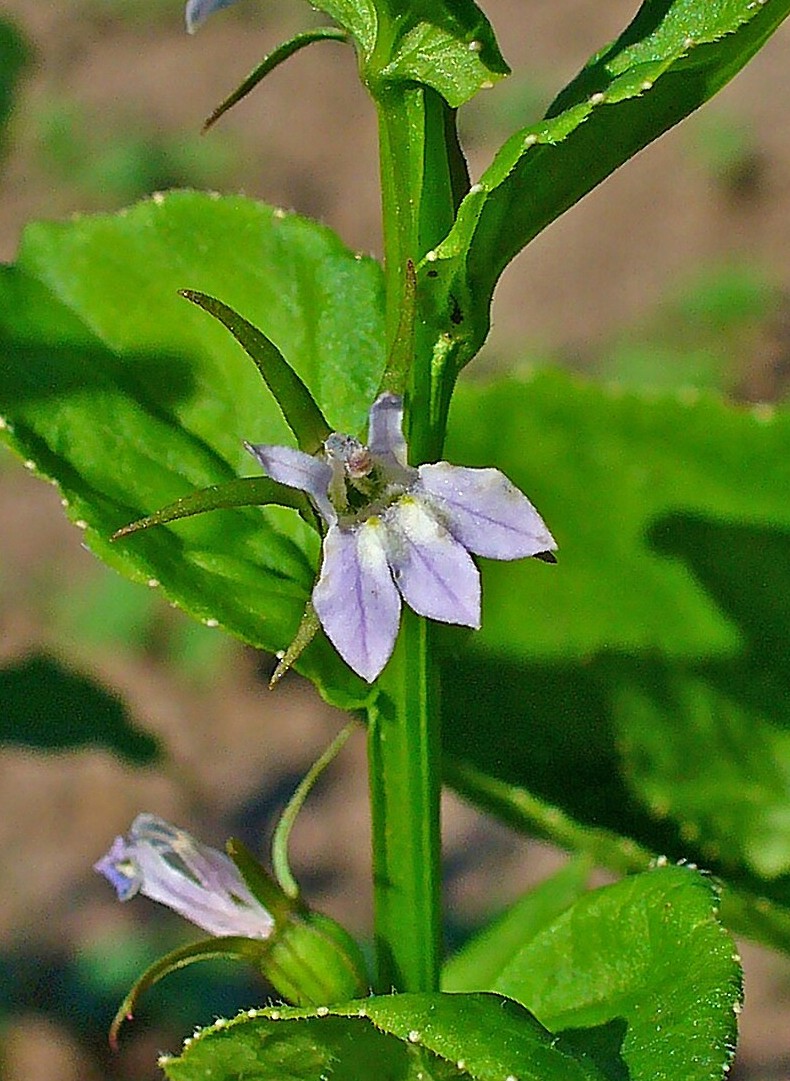
The erect stem is green, angular or ridged, and usually finely hairy. It may remain relatively simple when crowded or develop numerous ascending branches, particularly in its upper portion.
Leaves are alternate and toothed. Lower leaves generally have short petioles, while upper leaves become smaller and nearly sessile as they approach the flower clusters. Shapes range from ovate or oblong to broadly lanceolate.
Broken stems and leaves may release pale milky sap. The sap is living plant material containing extractable constituents and should not be treated as harmless moisture or allowed to remain on an animal’s coat.
Small Flowers and Inflated Capsules
The flowers are pale blue, lavender, violet, or nearly white, often with lighter or yellowish markings. Each has a small two-lipped corolla with two upper lobes and three lower lobes.
After flowering, the lower floral structure expands into a rounded, bladder-like capsule. This inflated fruit gives the species its name and separates it from several similar pale-flowered lobelias.
A single branch may carry flowers, developing green capsules, and mature brown capsules at the same time. Dry capsules split and release numerous tiny seeds capable of settling into disturbed soil.
Exact-Species Alkaloid Variation
Indian Tobacco chemistry changes with development and organ. USDA investigators studied the plant specifically to determine how cultivation and harvest timing affected commercial lobeline production.
They reported average whole-plant lobeline concentrations of approximately 1.95% in juvenile rosettes, 1.46% in elongating plants, and 0.76% in mature flowering plants. Mature plants nevertheless yielded more total lobeline because their dry weight had increased dramatically.
Within mature plants, flowers yielded approximately 3.03% in the examined material, compared with approximately 0.38% in leaves and 0.58% in stems. These values are valuable exact-species evidence but should not be converted into a universal toxic dose. Wild populations, environmental conditions, analytical methods, and harvested material may differ.
Later mass-spectrometric research greatly expanded the known alkaloid profile, identifying 52 compounds in the examined extract. This complexity reinforces why natural toxicity cannot be predicted from lobeline concentration alone.
Historical Livestock Evidence
Indian Tobacco appears in longstanding North American livestock-poisoning literature. The historical statement most often repeated is:
“Indian tobacco is toxic to sheep at 0.5 percent of the animal’s weight.”
The associated historical account described salivation, nasal discharge, oral ulceration, and coma. Later livestock summaries described dilated pupils, nausea, vomiting, diarrhea, ocular injury, intestinal irritation, weakness, and coma.
The quoted percentage should not be treated as a modern feeding trial, a guaranteed threshold, or a safe-versus-toxic boundary. The original supporting experimental detail is not adequate for converting the number into a dose for dogs, cats, horses, cattle, goats, rabbits, or birds.
The report remains useful as historical evidence that substantial ingestion can produce severe illness. It is not an invitation to wait until a calculated quantity has been consumed before seeking care.
Comparison with Cultivated and Tree Tobacco
Cultivated Tobacco, Nicotiana tabacum, contains nicotine as a major toxic alkaloid. Tree Tobacco, Nicotiana glauca, is particularly associated with anabasine and can cause severe nicotinic neuromuscular poisoning.
Indian Tobacco contains lobeline and a complex mixture of related Lobelia alkaloids. The syndromes overlap because each can disturb nicotinic signaling: salivation, vomiting, weakness, tremors, altered pulse, paralysis, respiratory failure, and collapse may occur.
They are not chemically interchangeable. Correct plant or product identification remains important, especially when nicotine liquid, tobacco products, or Tree Tobacco may have been involved.
Traditional Indigenous Uses
Indian Tobacco has an extensive ethnobotanical history among Indigenous peoples of North America. Recorded uses varied by community, plant part, preparation, route, and cultural purpose.
Iroquois records include root or leaf preparations used for sores, ulcers, venereal disease, abscesses, and illnesses understood within specific cultural traditions. Cherokee records include poultices or rubbed plant material for body aches, sores, stiff necks, and chapped skin. Penobscot use helped establish the Indian Tobacco name through smoking and respiratory applications, while Crow records include ceremonial use.
These histories should be preserved accurately and respectfully. They do not establish a standardized preparation, universal practice, or safe household dose for people or animals.
Samuel Thomson and the Emetic Tradition
Indian Tobacco became central to the nineteenth-century botanical medical system developed by Samuel Thomson. Lobelia was promoted as his principal emetic and was commonly described as the “Number One” remedy.
Thomsonian practice used Lobelia with steam, cayenne, and other preparations intended to induce vomiting, sweating, and restoration of a perceived internal balance. Its powerful effects made it one of the most controversial botanical drugs of the era.
The history explains common names such as Pukeweed and Emetic Herb. It also demonstrates why historical medicinal use cannot be separated from poisoning risk: the desired treatment effect often depended on nausea, vomiting, and substantial physiological disturbance.
Asthma, Respiratory Stimulation, and Smoking-Cessation Research
Lobelia and isolated lobeline were investigated for asthma, cough, bronchitis, respiratory stimulation, expectoration, and tobacco-use cessation. Commercial cultivation research sought plant material with predictable lobeline yield for pharmaceutical manufacturing.
Lobeline’s respiratory effects depend on dose, route, isomer composition, and physiological state. Experimental respiratory stimulation does not mean that crude plant material safely treats asthma, smoke exposure, opioid poisoning, respiratory weakness, or another emergency.
Clinical smoking-cessation evidence did not establish Lobeline as a consistently effective treatment, and nausea, vomiting, throat irritation, dizziness, and other adverse effects limited its usefulness.
Indian Tobacco should never be smoked around animals or administered to a pet for coughing, asthma, nicotine exposure, or breathing difficulty.
Similar Lobelia Species
Pale-Spiked Lobelia, Lobelia spicata, produces slender spikes of pale-blue or nearly white flowers, but its fruiting structure does not expand into the characteristic rounded bladder of Indian Tobacco.
Great Blue Lobelia, Lobelia siphilitica, is a robust perennial with much larger blue or violet flowers and a strong association with moist ground. Cardinal Flower, Lobelia cardinalis, is a tall wetland perennial with brilliant scarlet flowers adapted to hummingbird pollination.
Edging Lobelia, commonly Lobelia erinus, is a low ornamental grown in pots and borders. Shared genus membership may indicate related chemistry, but a toxic dose or clinical record from one Lobelia species should not be assigned automatically to another.
Diagnosis
No routine blood test confirms Indian Tobacco poisoning. Diagnosis depends on identification of the plant or product, amount and plant part involved, exposure timing, clinical progression, and exclusion of nicotine, anabasine, pesticide, medication, toxic mushroom, or another plant.
Useful evidence includes the complete plant with roots, rosette leaves, flowering stems, flowers, inflated capsules, seeds, dried herb, hay samples, vomited fragments, photographs of the exposure site, and all product packaging.
Laboratory evaluation may include blood glucose, electrolytes, kidney and liver values, blood count, acid-base status, blood gases, urinalysis, and markers of perfusion. ECG, blood-pressure measurement, oxygen monitoring, chest imaging, and repeated neurologic assessment may be necessary in serious cases.
Prognosis
The prognosis is generally good when exposure is limited, treatment is prompt, and signs remain confined to mild oral or gastrointestinal irritation.
The outlook becomes more guarded with profound weakness, paralysis, impaired swallowing, aspiration, respiratory depression, severe hypotension, persistent arrhythmia, seizures, coma, concentrated-product exposure, or delayed treatment.
Advanced poisoning is dangerous but not automatically hopeless. Airway protection, ventilation, circulation support, and intensive nursing can sustain an animal while absorbed alkaloids are metabolized and eliminated.
Prevention
Maintain adequate pasture forage and remove Indian Tobacco from hay or feed. Animals are more likely to consume bitter toxic plants when ordinary forage is scarce or contaminated material is already cut and mixed into palatable hay.
Collect roots, stems, flowers, capsules, seeds, and dried debris after gardening, harvesting, or seed collection. Do not place them in paddocks, poultry runs, rabbit enclosures, kennels, or accessible compost piles.
Store Lobelia tinctures, powders, capsules, teas, extracts, smoking mixtures, and historical herbal preparations as securely as prescription medication.
Immediate Steps After Indian Tobacco Exposure
- Stop further access: Move the animal away from living plants, roots, rosettes, leaves, flowers, inflated capsules, seeds, dried herb, contaminated hay, smoking mixtures, tinctures, powders, teas, and extracts.
- Identify the material: Confirm whether the exposure involved Lobelia inflata, cultivated tobacco, Tree Tobacco, Pale-Spiked Lobelia, another Lobelia, or an herbal product containing multiple ingredients.
- Preserve a complete sample: Save roots, lower leaves, flowering stems, flowers, capsules, seeds, hay, photographs, nursery labels, and product containers.
- Estimate the exposure: Record the animal’s weight, material involved, amount missing, fresh or dried condition, earliest and latest possible ingestion time, and when signs began.
- Remove only loose visible pieces: When the animal is fully alert, breathing normally, and unlikely to bite, remove material resting at the lips or front of the mouth. Do not reach blindly toward the throat.
- Contact a veterinarian promptly: Seek advice after substantial, repeated, root, capsule, seed, dried-herb, hay, concentrated-product, or uncertain exposure.
Do Not Attempt Unsupervised Home Treatment
- Do not induce vomiting: Do not use hydrogen peroxide, salt, mustard, ipecac, dish soap, detergent, fingers, or tools to trigger gagging.
- Never give peroxide to a cat: Hydrogen peroxide is not a safe feline emetic.
- Do not force activated charcoal: A drooling, vomiting, weak, uncoordinated, tremorous, sedated, or poorly swallowing animal may aspirate it.
- Do not give historical alkaloid treatments: Tannic acid and potassium permanganate are not appropriate owner first aid and may cause additional tissue injury or treatment delay.
- Do not force food or liquid: Milk, oil, bread, water, broth, antacids, or food does not neutralize Lobelia alkaloids and may enter the lungs.
- Do not administer atropine or heart medication: The correct cardiovascular treatment depends on the measured rhythm, blood pressure, secretions, gastrointestinal activity, and respiratory status.
- Do not give sedatives or human medication: These may worsen respiratory depression, alter cardiovascular function, or obscure neurologic progression.
Mouth Cleaning and Swallowing Safety
Use a damp disposable cloth to lift visible residue from the lips, front gums, and accessible tongue. Do not scrub inflamed or ulcerated tissue.
A gentle rinse may be used only when the animal is fully alert, breathing normally, and swallowing normally. Allow the water to drain outward rather than directing it toward the throat.
Stop immediately if the animal coughs, gags, struggles, becomes weak, or cannot manage saliva. Persistent drooling, neck extension, food dropping, voice change, or refusal of water requires examination.
Veterinary Emesis and Gastric Decontamination
A veterinarian may consider medically controlled vomiting after a recent meaningful ingestion in a dog that remains fully alert, neurologically normal, breathing normally, swallowing normally, and free from significant salivation, vomiting, weakness, tremors, or cardiovascular abnormalities.
Emesis is inappropriate once clinical signs begin. It must not be attempted in cats with household methods or in horses, rabbits, guinea pigs, rodents, birds, or other animals unable to vomit safely.
Activated charcoal may be considered in a selected stable patient when gastrointestinal adsorption is expected to help and the airway can be protected. It does not reverse alkaloid already absorbed.
Gastric lavage is reserved for selected serious recent exposures under anesthesia with a protected airway and cardiovascular monitoring. Potassium permanganate, tannic acid, and improvised lavage mixtures should not be used.
Vomiting, Diarrhea, and Abdominal Pain
- Track every episode: Record the timing and appearance of vomit and stool, including plant fragments, capsules, seeds, foam, mucus, fresh blood, dark material, or charcoal.
- Watch abdominal comfort: Hunching, repeated stretching, prayer posture, whining, pawing, flank watching, rolling, or a tense abdomen requires assessment.
- Permit water only when safe: An alert animal that has stopped vomiting and swallows normally may have voluntary access to small amounts of fresh water.
- Never force fluids: A weak, coughing, gagging, ataxic, or poorly responsive animal may inhale them.
- Watch for dehydration: Tacky gums, sunken eyes, reduced urination, weakness, rapid or weak pulse, cool extremities, or worsening depression requires treatment.
- Report blood promptly: Bloody vomit, black stool, bloody diarrhea, pale gums, or collapse is an emergency.
Neurologic and Neuromuscular Warning Signs
- Keep the animal at floor level: Move a weak or uncoordinated patient away from stairs, furniture edges, pools, traffic, and hard objects.
- Do not force walking: Carry or support the animal when this can be done safely.
- Watch for progression: Stumbling, repeated falls, inability to lift the head, tremors, paralysis, altered awareness, or inability to stand indicates systemic poisoning.
- Protect during seizures: Clear surrounding hazards without restraining the jaws or placing anything in the mouth.
- Seek emergency care: Tremors, seizures, stupor, coma, or collapse requires immediate transportation.
Respiratory Emergency
Shallow breathing, respiratory pauses, abdominal effort, gasping, pronounced neck extension, blue-gray gums, inability to swallow saliva, or declining responsiveness requires immediate emergency treatment.
Remove only loose vomit or plant material visible at the front of the mouth. Do not sweep blindly toward the throat or pour liquid into the mouth.
Keep the animal quiet and minimize exertion. Loosen tight collars or restraint that compresses the throat or chest while maintaining safe control.
Call the receiving clinic before arrival and report possible Lobelia alkaloid exposure with respiratory or neuromuscular weakness. Oxygen, intubation, manual ventilation, or mechanical ventilation may be required until effective breathing returns.
Safe Emergency Transportation
- Use floor-level transport: Prevent falls from seats, steps, doors, and open windows.
- Allow a natural breathing position: Let the animal maintain the head and neck posture that makes breathing easiest.
- Minimize stimulation: Avoid forceful walking, struggling, barking, and unnecessary restraint.
- Bring another adult when possible: One person can drive while another observes breathing, responsiveness, vomiting, and seizure activity.
- Bring the evidence: Transport the plant and products in a sealed container without deliberately smelling, tasting, or handling them bare-handed.
Veterinary Examination and Monitoring
The veterinarian may assess the mouth, eyes, pupils, hydration, abdominal comfort, body temperature, muscle strength, coordination, reflexes, mental status, breathing pattern, pulse quality, heart rhythm, blood pressure, oxygenation, and swallowing ability.
Blood testing may include glucose, electrolytes, kidney and liver values, blood count, acid-base status, and blood gases. Urinalysis, chest imaging, and repeated neurologic or respiratory assessment may be appropriate in severe cases.
ECG monitoring is warranted when the pulse is slow, rapid, weak, irregular, or accompanied by collapse. Cardiovascular treatment must be based on the actual rhythm and perfusion rather than on a presumed universal Lobelia pattern.
Veterinary Supportive Treatment
There is no established Indian Tobacco-specific antidote. Treatment supports breathing, circulation, hydration, gastrointestinal function, temperature, and neurologic stability while absorbed alkaloids are metabolized and eliminated.
Intravenous crystalloids may be used for dehydration, gastrointestinal losses, hypotension, or shock. Fluid selection and volume must account for cardiovascular function, urine production, electrolyte status, and respiratory condition.
Veterinarian-selected anti-nausea medication may reduce vomiting and aspiration risk after decontamination decisions are complete. Gastrointestinal protectants and pain control may be used when significant mucosal injury is present.
Oxygen supports patients with respiratory distress, poor circulation, aspiration, or neurologic depression. Loss of protective reflexes or respiratory-muscle weakness may require intubation and assisted ventilation.
Persistent tremors or seizures may require injectable medication, temperature monitoring, glucose assessment, oxygen, and airway protection.
Atropine Is Selective Supportive Therapy, Not an Antidote
A veterinarian may consider atropine when excessive secretions, gastrointestinal hyperactivity, or a particular clinically important slow-heart-rate pattern justifies antimuscarinic treatment.
Atropine does not bind, destroy, or remove lobeline. It does not reverse nicotinic neuromuscular blockade or restore paralyzed respiratory muscles.
It may be inappropriate when the patient already has tachycardia, impaired gastrointestinal motility, overheating, another toxin, or a rhythm that requires different treatment. It must not be administered by an owner as a presumed universal antidote.
Skin and Eye Exposure
Wear gloves when handling crushed plant material, sap, vomit, contaminated fur, tinctures, extracts, or dried powder. Remove contaminated collars, harnesses, clothing, and bedding.
Wash affected skin and fur with lukewarm water and a mild pet-safe cleanser, then rinse thoroughly. Prevent licking until cleanup is complete.
Flush an exposed eye immediately with sterile saline or clean lukewarm water for approximately 15 to 20 minutes. Direct a gentle stream across the eye and beneath the eyelids rather than forcefully at the cornea.
Continued pain, squinting, tearing, swelling, redness, cloudiness, discharge, or apparent vision difficulty requires prompt veterinary examination.
Horse and Livestock Exposure
Remove the entire group from living plants, contaminated hay, pasture infestations, dried stalks, herbal waste, and garden debris. Provide uncontaminated forage and clean water while veterinary assistance is arranged.
Inspect every animal sharing access. Monitor salivation, nasal discharge, pupil size, appetite, manure production, colic, sweating, weakness, coordination, pulse quality, breathing, and awareness.
Horses cannot vomit and must never receive an emetic. Do not drench a weak, colicky, uncoordinated, recumbent, coughing, or poorly swallowing animal with water, oil, charcoal, feed, tannic acid, potassium permanganate, or medication.
Shallow breathing, tremors, convulsions, paralysis, recumbency, weak pulse, abnormal rhythm, or coma requires immediate large-animal veterinary care.
Recovery and Prognosis
Limited exposures producing only mild oral or gastrointestinal signs generally have a favorable prognosis when access ends and hydration is maintained.
Paralysis, respiratory weakness, aspiration, severe hypotension, persistent arrhythmia, seizures, coma, concentrated-product exposure, or delayed treatment creates a guarded to grave outlook.
Improvement should include normal breathing, stable circulation, controlled vomiting and diarrhea, normal swallowing and coordination, adequate hydration, improving appetite, and return of ordinary awareness. Coughing, fever, recurrent weakness, altered breathing, or renewed neurologic signs after apparent improvement requires immediate re-examination.
Frequently Asked Questions About Indian Tobacco and Animal Poisoning
Is lobeline the only toxic alkaloid in Indian Tobacco?
No. Lobeline is the best-known constituent, but mass-spectrometric analysis identified 52 alkaloids in an exact-species extract. The plant also contains lobelanine, lobelanidine, norlobeline, norlobelanine, lobelane, related esters, homologues, and hydroxypiperidine derivatives. The clinical contribution of every compound has not been determined individually.
Does lobeline act exactly like nicotine?
No. Lobeline and nicotine both interact with neuronal nicotinic acetylcholine receptors, but lobeline has a distinct profile involving partial agonism, desensitization or functional antagonism in some systems, and effects on vesicular monoamine transport. The toxic syndromes overlap without being chemically identical.
Can Indian Tobacco stimulate breathing and still cause respiratory failure?
Yes. Selected experimental lobeline doses can stimulate respiratory pathways, but the response changes with dose, formulation, isomer composition, receptor exposure, circulation, and neuromuscular function. Significant poisoning can progress from stimulation to weakness, impaired swallowing, respiratory depression, and failure of effective ventilation.
Which growth stage contains the most lobeline?
There is no single answer covering every organ and every way of measuring the plant. USDA research found a high percentage concentration in juvenile rosettes and a lower whole-plant percentage in mature flowering plants, but mature plants produced more total lobeline because they had much greater biomass. Among the mature organs examined, flowers had the highest reported percentage.
Are young rosettes safer because they have not flowered?
No. Juvenile rosettes had a higher average whole-plant lobeline percentage than the mature flowering plants in the USDA developmental study. Their smaller size reduced total yield, but they remained chemically active and should not be treated as pet forage.
Does the 3.03% flower result apply to every Indian Tobacco flower?
No. That value came from particular plant material examined with an older analytical method. Population, development, cultivation, weather, harvest time, storage, and analysis can change the result. It proves that flowers can contain substantial lobeline; it does not establish a universal concentration or toxic flower count.
Is 0.5% of body weight a dependable toxic dose for sheep?
No. The figure is a historical statement attributed to older livestock literature. It lacks the detail required to define a modern threshold, does not establish that a smaller quantity is safe, and must not be converted mathematically into a dog, cat, horse, goat, rabbit, or bird dose.
Why can contaminated hay be more dangerous than a living plant?
Living Indian Tobacco is bitter and may be avoided when better forage is available. Drying and mixing it into palatable hay makes the plant harder to identify and more difficult for an animal to separate from ordinary feed. Drying does not reliably eliminate its alkaloids.
How do the inflated capsules help identify Indian Tobacco?
After the small pale flower fades, the lower floral structure expands into a rounded bladder-like capsule. This conspicuous inflation helps separate Lobelia inflata from Pale-Spiked Lobelia and several other small-flowered species whose fruiting structures remain narrower.
Is Indian Tobacco the same plant as Tree Tobacco?
No. Indian Tobacco is Lobelia inflata in Campanulaceae. Tree Tobacco is Nicotiana glauca in Solanaceae and is strongly associated with anabasine poisoning. Both can cause gastrointestinal, neuromuscular, cardiovascular, and respiratory signs, but they are separate plants with different principal alkaloids.
Can dried Lobelia tincture or powder be more dangerous than one leaf?
Yes. Extracts, tinctures, powders, capsules, and concentrated preparations can deliver released alkaloids in a much smaller volume. Alcohol, additional herbs, tobacco, essential oils, or other ingredients may create separate toxic effects.
Why is atropine not considered a Lobelia antidote?
Atropine blocks muscarinic acetylcholine receptors and may help selected secretory, gastrointestinal, or bradycardic signs. Lobelia poisoning also involves nicotinic receptors, monoamine transport, neuromuscular function, and other mechanisms. Atropine does not neutralize the alkaloids or reverse respiratory-muscle paralysis.
Why are tannic acid and potassium permanganate no longer owner first aid?
They appear in older alkaloid-poisoning recommendations, but uncontrolled preparation can cause chemical injury, ineffective treatment, aspiration, or dangerous delay. Modern decontamination depends on the individual patient’s species, timing, symptoms, airway protection, and cardiovascular stability.
Can a small ingestion cause severe paralysis?
Severe paralysis is more plausible after a substantial plant exposure, contaminated forage, repeated consumption, or concentrated preparation than after one brief taste. No validated pet dose exists, however, and any progressive weakness, impaired swallowing, or breathing change requires immediate care.
What should be suspected when the animal deteriorates unusually fast?
The amount may be underestimated, a concentrated product may be involved, or the plant may have been misidentified. Nicotine liquid, Tree Tobacco, pesticide, medication, toxic mushroom, another neurologic plant, aspiration, hypoglycemia, and metabolic disease should be investigated.
Can historical medicinal use establish a safe dose?
No. Historical preparations varied in plant material, concentration, route, and intended effect. Vomiting and intense physiological disturbance were often considered part of treatment. Ethnobotanical and medical history is valuable evidence of human use, not a validated veterinary dosing guide.