Larkspur Norditerpenoid Alkaloids and Neuromuscular Paralysis
Is Larkspur Poisonous to Dogs, Cats, Horses, and Livestock?
Yes—Larkspur plants in the genus Delphinium are poisonous to dogs, cats, horses, cattle, sheep, goats, and other animals because they contain norditerpenoid alkaloids that block nicotinic acetylcholine receptors. These receptors normally carry signals from motor nerves to skeletal muscles. As receptor blockade increases, the animal loses the muscular strength needed to stand, swallow, protect the airway, and ventilate normally.
Early illness may include drooling, repeated swallowing, nausea, vomiting, abdominal discomfort, constipation or reduced gastrointestinal movement, nervousness, trembling, stiffness, weakness, or an awkward gait. Severe poisoning can progress to repeated collapse, profound paralysis, bloat in ruminants, aspiration, abnormal heart rate or rhythm, shallow breathing, respiratory-muscle failure, seizures, coma, and death.
Risk cannot be predicted from flower color, plant height, maturity, or the common name printed on a seed packet. Larkspur species and populations differ greatly in their alkaloid mixtures. Young shoots and seeds often contain substantial alkaloid concentrations, while flowers and developing pods may remain dangerous after concentrations in some leaves and stems begin declining.
About this guide: This page provides general pet-poisoning information and cannot diagnose or treat an individual animal. For any suspected exposure, contact a veterinarian or animal poison-control service immediately. Do not induce vomiting, give medication, or attempt home decontamination unless directed by a veterinary professional.
Larkspur
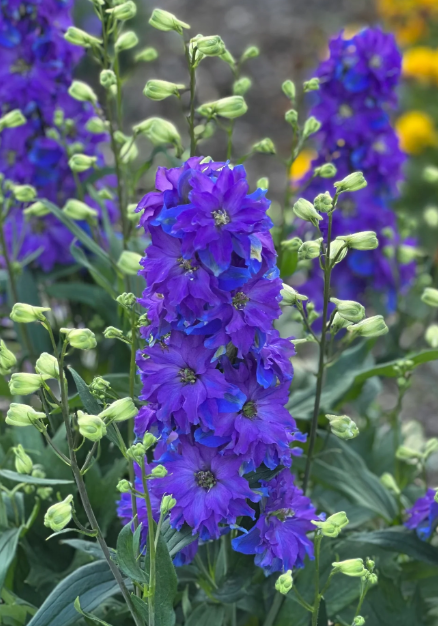
Delphinium spp.
This page intentionally remains at genus level because “Larkspur” refers to numerous annual, biennial, and perennial Delphinium species, wild populations, cultivated hybrids, and plants sold under historical Consolida names.
Important North American poisonous range species include:
- Delphinium barbeyi Huth — Barbey’s Larkspur or Tall Larkspur
- Delphinium occidentale S.Watson — Duncecap Larkspur or Western Larkspur
- Delphinium glaucum S.Watson — Sierra Larkspur or Tall Larkspur
- Delphinium andersonii A.Gray — Anderson’s Larkspur
- Delphinium nuttallianum Pritz. ex Walp. — Low Larkspur or Two-Lobe Larkspur
- Delphinium geyeri Greene — Plains Larkspur
- Delphinium tricorne Michx. — Dwarf Larkspur or Staggerweed
Annual ornamental and field larkspurs formerly placed in the genus Consolida are now included within a broad Delphinium by molecular and nomenclatural treatments. Important names encountered in horticulture and older literature include:
- Delphinium ajacis L., often labeled Consolida ajacis or Consolida ambigua — Rocket Larkspur or Garden Larkspur
- Delphinium consolida L., often labeled Consolida regalis — Field Larkspur, Forking Larkspur, or Royal Larkspur
The older genus name Consolida remains common on seed packets, cut-flower lists, nursery labels, garden references, herbarium records, and poison literature. A label reading Consolida does not identify a nontoxic alternative to Delphinium.
Many cultivated perennial Delphiniums are complex hybrids and may be labeled only with a cultivar or horticultural group name. A cultivar name does not establish alkaloid concentration or animal safety.
Ranunculaceae — Buttercup Family
Larkspur; Delphinium; Tall Larkspur; Low Larkspur; Plains Larkspur; Upland Larkspur; Duncecap Larkspur; Waxy Larkspur; Dwarf Larkspur; Spring Larkspur; Sierra Larkspur; Western Larkspur; Barbey’s Larkspur; Anderson’s Larkspur; Two-Lobe Larkspur; Garden Delphinium; Garden Larkspur; Annual Larkspur; Perennial Larkspur; Rocket Larkspur; Field Larkspur; Forking Larkspur; Royal Larkspur; Giant Imperial Larkspur; Staggerweed; Stagger Weed; Poison Weed; Cow Poison; Peco; Lark’s Heel; Lark’s Claw; Knight’s-Spur; Delphinium species; Consolida species
Tall Larkspur is a range-management category rather than one unique species. Depending on location, it may refer to Delphinium barbeyi, Delphinium occidentale, Delphinium glaucum, or another tall perennial species.
Low Larkspur similarly refers to several shorter spring-growing species, including Delphinium nuttallianum, Delphinium andersonii, and related regional plants. Plains Larkspur commonly refers to Delphinium geyeri and allied plants of plains and foothill ranges.
Rocket Larkspur, Garden Larkspur, Annual Larkspur, Field Larkspur, Forking Larkspur, and Royal Larkspur frequently refer to annual plants historically classified as Consolida ajacis or Consolida regalis. Current broad taxonomy places those annual lineages within Delphinium, but commercial naming remains inconsistent.
Staggerweed and Poison Weed are highly ambiguous names also used for unrelated poisonous plants. Scientific identification should be based on a complete flowering or fruiting specimen rather than the common name alone.
Larkspur is not true Hellebore, False Hellebore, or Monkshood. True Hellebores belong to Helleborus, False Hellebores belong to Veratrum, and Monkshoods belong to Aconitum. These plants can all be dangerous but contain different principal toxins and may require different clinical interpretation.
Norditerpenoid Alkaloids and the Most Dangerous MSAL Compounds
Larkspur toxicity is caused principally by mixtures of norditerpenoid alkaloids. The most potent group is commonly described as the N-(methylsuccinimido) anthranoyllycoctonine group, abbreviated MSAL-type alkaloids.
Important MSAL-type compounds include methyllycaconitine, 14-deacetylnudicauline, and nudicauline. These compounds possess structural features that allow strong antagonism of nicotinic acetylcholine receptors. Methyllycaconitine is especially important because it occurs in numerous toxic tall, low, and plains Larkspur populations and has been used extensively in receptor, toxicokinetic, analytical, and cattle-dose research.
A plant rich in MSAL-type alkaloids can be far more dangerous than a visually identical plant containing little or no MSAL material. The term “total alkaloids” can therefore conceal clinically important differences in composition.
Larkspur alkaloids are not cardiac glycosides. The plant does not produce the same toxin mechanism as Foxglove, Oleander, Lily-of-the-Valley, or other digitalis-like plants. Cardiac abnormalities in Larkspur poisoning arise from nicotinic-receptor blockade, autonomic disruption, respiratory compromise, hypoxia, stress, and secondary physiologic changes.
MDL-Type Alkaloids Can Intensify an MSAL Exposure
Larkspurs also contain less potent 7,8-methylenedioxylycoctonine compounds, often abbreviated MDL-type or non-MSAL alkaloids. Deltaline is one of the best-known examples.
MDL-type alkaloids are substantially less toxic when considered alone, but controlled mouse and cattle experiments demonstrate that they can exacerbate the toxicity of MSAL-type compounds. The overall mixture may therefore be more dangerous than an assessment based solely on the measured methyllycaconitine concentration.
The ratio of MDL-type to MSAL-type compounds helps explain why two populations with the same nominal MSAL dose can produce different degrees of weakness. Later cattle chemotype studies confirmed that alkaloid composition materially influences the clinical response.
This interaction is clinically important because an unidentified garden or range plant may contain more than a dozen related alkaloids. No household observation can determine the chemotype.
Competitive Nicotinic Acetylcholine-Receptor Blockade
A motor nerve activates skeletal muscle by releasing acetylcholine into the neuromuscular junction. Acetylcholine binds nicotinic receptors on the muscle membrane, opens their ion channels, and initiates the electrical response that produces contraction.
Larkspur alkaloids occupy or antagonize those receptors without producing the normal effective response. As enough receptors become blocked, acetylcholine released by the nerve can no longer activate the muscle adequately.
The result resembles nondepolarizing or curare-like neuromuscular blockade. The muscle itself may remain structurally intact, but the signal from the nerve cannot produce sufficient contraction. Early partial blockade causes exercise intolerance, trembling, an awkward gait, and intermittent collapse. Greater blockade causes recumbency, inability to hold up the head, impaired swallowing, and paralysis.
The diaphragm and intercostal muscles depend on the same type of neuromuscular transmission. When those muscles cannot contract strongly enough, ventilation becomes shallow and carbon dioxide rises. Death can occur from respiratory-muscle paralysis even when the lungs were initially free of primary disease.
Nicotinic receptors also function within autonomic ganglia and portions of the nervous system. Their disruption can alter heart rate, rhythm, gastrointestinal motility, vascular function, arousal, and other autonomic processes.
Chemotype, Species, Population, and Animal Susceptibility
Toxicity varies among Larkspur species, among geographically separated populations of one species, among individual plants within one population, and among years. Alkaloid concentration and composition are influenced by genetics, growth stage, plant tissue, weather, elevation, moisture, temperature, soil, injury, and other environmental factors.
Research on Duncecap Larkspur has identified populations containing abundant MSAL-type alkaloids and other populations containing predominantly less toxic compounds. Cattle exposed to different chemotypes developed markedly different responses even when the plants looked botanically similar.
Individual animals also differ. Cattle studies have documented susceptible and comparatively resistant animals, breeds, or lines, while mouse studies have demonstrated genetic variation in methyllycaconitine susceptibility. Resistance is relative rather than absolute and cannot be judged from an animal’s size, breed appearance, or prior uneventful exposure.
Sheep and goats are generally more resistant than cattle, but they are not immune. A high-potency plant, large ingestion, abrupt exposure, individual susceptibility, or forced exertion can still produce recumbency, respiratory distress, and death.
Dogs, cats, and horses usually do not consume the same plant mass as grazing cattle, but a small body size, seed ingestion, concentrated garden waste, dried bouquets, contaminated hay, or an unknown alkaloid profile can create serious exposure.
Plant Parts, Maturity, Drying, and Herbicide Treatment
Every part of an unidentified Larkspur should be treated as poisonous, including young shoots, leaves, stems, flowers, developing pods, mature follicles, seeds, roots, crowns, sap-bearing cut surfaces, cuttings, dried specimens, contaminated hay, bouquets, and discarded garden waste.
Young growth commonly contains substantial toxic alkaloid concentrations. In some species, concentrations in leaves and stems decline as plants mature, but this pattern is not universal. Certain tall Larkspur populations retain important MSAL concentrations through flowering, pod development, and seed shatter.
Flowers, pods, and seeds can remain dangerous after vegetative tissues decline. Mature seed heads are therefore not a safe stage, and removing petals while leaving pods accessible does not eliminate risk.
Drying does not reliably neutralize the alkaloids. Dried and finely ground Larkspur has repeatedly produced poisoning in controlled cattle studies. Hay contamination, dried floral arrangements, pressed botanical specimens, and old composted stems should remain inaccessible.
Herbicide treatment does not immediately make Larkspur safe. Research has shown that some treatments do not reduce toxic alkaloid concentrations and may temporarily increase palatability or alter alkaloid levels. Recently sprayed plants also create a combined plant-and-herbicide exposure.
Experimental Cattle Doses and Why They Are Not Pet Calculators
In one controlled study using toxic alkaloids extracted from Delphinium barbeyi, the mean total toxic-alkaloid dose producing collapse and sternal recumbency in steers was 11.2 mg/kg. The investigators proposed that the cattle oral median lethal dose might lie between approximately 25 and 40 mg/kg of the tested total toxic alkaloids.
Those figures describe cattle, a particular alkaloid preparation, and particular experimental conditions. They do not identify the plant mass required when a shrub contains a different concentration or chemotype, and they cannot be converted into a safe dog, cat, horse, sheep, or goat dose.
Plant material can contain several milligrams of MSAL-type alkaloids per gram of dry matter, but concentration varies sharply. Two mouthfuls of plants from different populations may deliver very different receptor-blocking doses.
No dependable pet-safe flower count, leaf count, pod count, seed count, stem length, root weight, plant mass, or vase-water volume has been established. Every meaningful or uncertain companion-animal ingestion deserves professional assessment.
Compounds That Should Not Be Assigned to Larkspur
Hellebrin, helleborin, helleborein, and related cardiac-active compounds are associated principally with true Hellebores rather than the characteristic Larkspur syndrome.
Protoanemonin can be generated from ranunculin in several members of Ranunculaceae and contributes irritant effects in some buttercups. It is not the principal explanation for the profound neuromuscular paralysis caused by toxic Delphinium alkaloids.
False Hellebore contains Veratrum steroidal alkaloids that alter voltage-gated sodium channels. Monkshood contains aconitine-type sodium-channel activators. Those mechanisms differ from the competitive nicotinic-receptor blockade central to Larkspur poisoning.
Early Gastrointestinal and Autonomic Signs
Clinical onset depends on the species, chemotype, plant part, amount eaten, rate of ingestion, animal species, body size, stomach contents, and activity after exposure. Signs may begin within a few hours, but an exact onset period cannot be predicted for an unidentified plant or companion animal.
Early findings may include drooling, lip licking, repeated swallowing, nausea, retching, vomiting, abdominal discomfort, colic, reduced appetite, depression, lethargy, nervousness, restlessness, or an unusual reluctance to move.
Gastrointestinal motility may slow. Dogs, cats, horses, and livestock may develop reduced stool production, constipation, diminished gut sounds, abdominal distention, or apparent straining. Diarrhea can occur, particularly with nonspecific gastrointestinal irritation, but reduced movement and constipation are historically prominent in livestock Larkspur poisoning.
Vomiting or regurgitation creates aspiration risk when weakness develops. Ruminants may regurgitate forestomach contents, while horses cannot vomit and may instead show salivation, repeated swallowing, colic, reduced gut sounds, or abdominal enlargement.
Trembling, Stiffness, Ataxia, and Intermittent Collapse
Partial nicotinic-receptor blockade can first appear as muscle twitching, fasciculations, shivering, trembling, stiffness, or a shortened awkward gait. The animal may stand with the feet spread widely, drag the toes, misjudge steps, sway, stumble, or appear suddenly exhausted.
Weakness may seem inconsistent. An animal can look stronger after resting and collapse when it attempts to walk. This occurs because the remaining functional neuromuscular transmission may support quiet posture but cannot meet the higher demand of movement.
Cattle may fall abruptly when started or driven and then attempt to rise with rigid or kicking movements. Historical descriptions caution that these movements can resemble convulsions even when they largely represent repeated attempts to regain footing.
Dogs may climb partway up stairs and collapse, while cats may fail to jump, crouch low, drag the hind limbs, or remain unusually still. Horses may develop a stiff, short-strided gait before becoming recumbent.
Progressive Paralysis and Respiratory Failure
As receptor blockade increases, the animal may repeatedly rise and fall, remain in sternal recumbency, lose the ability to hold up the head, or fall laterally and become unable to stand.
Swallowing and cough strength may decline. Saliva, vomit, regurgitated feed, or water can enter the airway. A mentally aware animal may still be unable to lift its head, clear the throat, or generate an effective cough.
Respiratory findings include rapid breathing, shallow ventilation, abdominal effort, open-mouth breathing, neck extension, flared nostrils, weak chest movement, irregular respiration, and progressively reduced respiratory depth.
Respiratory rate may initially increase as the animal attempts to compensate. Later breathing can become slower and weaker as the diaphragm and intercostal muscles fail. Carbon-dioxide retention and hypoxia may develop before unconsciousness.
Respiratory-muscle paralysis is a principal cause of death. Aspiration pneumonia, bloat, traumatic injury, and cardiovascular collapse can worsen the respiratory crisis.
Cardiovascular and Neurologic Complications
Heart rate may become rapid, weak, or irregular because of autonomic ganglion blockade, stress, hypoxia, acid-base change, electrolyte disturbance, pain, and terminal circulatory failure. Dose-related tachycardia has been documented in controlled cattle research.
Bradycardia, hypotension, conduction abnormalities, or intermittent arrhythmia may also occur in some Delphinium exposures. Larkspur should not be expected to produce one universal rhythm.
Pale, gray, or blue-tinged mucous membranes, weak pulses, cold extremities, fainting, and reduced responsiveness indicate inadequate oxygen delivery or circulation.
Nervousness, apparent panic, or hyperreactivity may occur while the animal struggles against weakness. Depression, stupor, syncope, coma, or seizures may follow profound hypoxia, respiratory failure, cardiovascular compromise, trauma, or advanced intoxication.
True generalized seizures are possible but should be distinguished from rigid struggling, paddling, or kicking by a conscious recumbent animal attempting to rise.
Species-Specific Clinical Patterns
Dogs and cats often consume less plant material than grazing livestock and may develop vomiting, gastrointestinal distress, lethargy, or weakness without progressing to paralysis. A companion animal with trembling, stiffness, repeated collapse, abnormal breathing, or inability to stand requires immediate emergency treatment.
Cattle are the livestock species most strongly associated with fatal range poisoning. Signs may include uneasiness, salivation, constipation, trembling, a stiff or straddled gait, rapid irregular pulse, periodic collapse, bloat, lateral recumbency, aspiration, and respiratory death.
Sheep and goats are more resistant than cattle but can still develop weakness, tremors, recumbency, respiratory distress, or death after a sufficiently large or potent ingestion. Resistance must not be interpreted as immunity.
Horses often avoid large amounts when suitable forage is available. Exposure through contaminated hay, garden waste, drought, hunger, or cut branches can produce salivation, colic, reduced motility, stiffness, ataxia, recumbency, seizures, and respiratory paralysis.
Why Exercise and Handling Can Trigger Deterioration
Standing, walking, loading, restraint, and struggling require greater neuromuscular transmission than resting. An animal with partial blockade may retain just enough function to remain upright quietly but collapse when physical demand rises.
Exercise also increases oxygen consumption and ventilation requirements. The poisoned animal may be unable to increase respiratory-muscle contraction enough to meet that demand.
Chasing cattle, repeatedly forcing a horse to rise, walking a weak dog into the hospital, or struggling with a frightened cat can worsen weakness, aspiration risk, heat production, and respiratory failure.
Quiet handling does not neutralize the toxin, but it can prevent avoidable collapse while emergency care is arranged.
Duration, Recovery, and Emergency Warning Signs
Fatal poisoning can progress within hours after a major exposure. Nonfatal weakness may persist while alkaloids continue to be absorbed and eliminated. The course depends on chemotype, dose, respiratory function, gastrointestinal contents, activity, treatment, and complications.
An animal that becomes quieter may be resting, recovering, or entering deeper paralysis. Respiratory depth, head control, swallowing, pulse quality, mucous-membrane color, and ability to remain upright must be reassessed rather than using quiet behavior alone.
Emergency warning signs include repeated collapse, inability to rise, inability to hold up the head, progressive abdominal distention, weak swallowing, pooling saliva, repeated regurgitation, shallow or labored breathing, open-mouth breathing, neck extension, gray or blue gums, a weak or irregular pulse, seizures, coma, or reduced responsiveness.
Coughing, nasal discharge, fever, wet breathing, or increased respiratory effort after apparent neurologic improvement can indicate delayed aspiration injury.
Genus Identity, Annual Larkspurs, and Botanical Variation
Larkspur is the common name for numerous species within Delphinium, one of the largest lineages in the buttercup family. The genus includes annuals, biennials, short-lived perennials, long-lived mountain perennials, cultivated hybrids, and geographically restricted wildflowers.
Molecular research demonstrated that the annual genera historically called Consolida and Aconitella are embedded within Delphinium. A later nomenclatural revision transferred or organized those annual plants within Delphinium subgenus Consolida.
Gardeners and florists still commonly reserve “Delphinium” for tall cultivated perennials and “Larkspur” for annual Consolida-type cut flowers. That horticultural distinction does not create a toxicologic boundary; both groups contain poisonous diterpenoid alkaloids.
The genus-level page is necessary because no single height, flower color, leaf shape, habitat, season, or toxin concentration describes every Larkspur.
Recognizing Leaves, Flowers, Fruit, and Seeds
Larkspur leaves are usually alternate and palmately divided. The blade radiates from a central point into several lobes, and those lobes may divide again into narrow segments. The overall outline may resemble a hand with deeply cut fingers.
Lower leaves often have long petioles, while upper leaves become smaller or less divided. Before flowering, foliage may resemble Monkshood, Geranium, or another deeply lobed plant.
The flower is bilaterally symmetrical and usually appears blue, violet, purple, white, pink, lavender, red-purple, or bicolored. Five showy sepals surround smaller true petals. The upper sepal extends backward into the distinctive spur that gives Larkspur its common name.
Flowers commonly occur in upright racemes or spikes. Cultivated hybrids may have densely packed double flowers that obscure the ordinary floral structure.
After flowering, most perennial Larkspurs produce several dry follicles that split when mature. Annual plants historically placed in Consolida often produce one dominant follicle. Seeds are generally dark, angular, irregular, or rough-surfaced and may contain substantial alkaloid concentrations.
Wild Range Categories and Their Exposure Patterns
Tall Larkspurs are perennial range plants associated with mountain meadows, moist forest openings, stream corridors, snow-retaining slopes, and productive high-elevation sites. Important examples include Delphinium barbeyi, Delphinium occidentale, and Delphinium glaucum.
Cattle often consume more tall Larkspur after flower stalk elongation and during flowering or pod development. Short storms, fog, rain, cold weather, or snow can alter grazing behavior and trigger rapid intake.
Low Larkspurs are shorter spring-growing species of foothills, open woodland, sagebrush, and lower mountain ranges. They may emerge before surrounding grass becomes abundant. Risk is concentrated when plant density is high and cattle consume the early green growth.
Plains Larkspurs occupy high-plains and foothill environments and can grow before the main grass flush. Cool wet conditions may support dense stands, while drought or forage shortage can increase the proportion consumed.
These categories assist range management but are not formal toxin groups. A “low” species can be highly toxic, while one population of a tall species may contain a markedly different chemotype from another.
Garden, Bouquet, Seed, Hay, and Mixed-Chemical Exposures
Dogs may chew young shoots, pull up crowns, carry flower stems, investigate compost, eat fallen pods, or swallow several concentrated cut stems at once. A bouquet or pile of clippings can deliver more plant material than casual investigation of a standing garden specimen.
Cats may nibble leaves and flowers, drink from a vase, walk through fallen petals, or swallow fragments during grooming. Quiet hiding after vomiting can conceal progressive weakness.
Delphinium is widely used as a tall accent flower. Leaves, flowers, stems, fallen petals, pods, dried arrangements, and discarded bouquets remain hazardous. Mixed arrangements may also contain true lilies, Foxglove, Oleander, Autumn Crocus, or other plants with different emergency syndromes.
Vase water should not be offered to animals. It may contain plant sap, fragments, floral preservatives, bacterial growth, and material from every flower in the arrangement. The risk cannot be attributed exclusively to Delphinium without identifying the complete bouquet.
Seed packets, loose seed, dried seed heads, and home-collected seed should be secured. Commercial seed may be coated with fungicide, insecticide, dye, or another treatment. Save the package because the chemical coating may require separate management.
Larkspur mixed into hay remains dangerous because drying does not reliably destroy the alkaloids. Mowing and grinding also prevent livestock from recognizing and avoiding individual plants.
Recently herbicide-treated plants remain poisonous and may become more palatable while wilting. Preserve the herbicide label, application date, active ingredients, and grazing restrictions during any exposure investigation.
Historical and Modern Cattle Research
Federal Larkspur research began in response to major cattle losses on western North American ranges. The 1916 United States Department of Agriculture bulletin Larkspur Poisoning of Livestock provided an extensive technical investigation, while later editions of Larkspur or “Poison Weed” summarized identification, clinical signs, hazardous seasons, treatment practices, and prevention.
The historical bulletin described lack of appetite, uneasiness, a stiff staggering gait, sudden collapse, repeated attempts to rise, constipation, nausea, bloat, aspiration of forestomach contents, and rapid death in severe cases. It specifically warned that hurrying affected animals made signs more severe.
Modern chemistry identified the MSAL and MDL structural groups and demonstrated that methyllycaconitine, 14-deacetylnudicauline, and nudicauline are among the most potent receptor antagonists.
In a controlled *Delphinium barbeyi* study, a mean total toxic-alkaloid dose of 11.2 mg/kg produced collapse and sternal recumbency in steers. Investigators proposed an oral cattle median lethal dose in the approximate range of 25 to 40 mg/kg for that tested alkaloid preparation.
Those values must remain attached to cattle and the specific extract. A fresh plant dose cannot be calculated without knowing dry matter, total alkaloids, MSAL concentration, MDL-to-MSAL ratio, bioavailability, and animal susceptibility.
Neostigmine, Physostigmine, and the Limits of Anticholinesterase Treatment
Anticholinesterase drugs increase the amount or persistence of acetylcholine available at cholinergic synapses. The treatment rationale is that more acetylcholine may compete more successfully with Larkspur alkaloids at nicotinic receptors.
Controlled cattle research found that neostigmine reduced dose-related tachycardia under some conditions and rapidly reversed recumbency in selected experimentally intoxicated animals. Physostigmine affected measured muscle response differently in the same research program.
Response depends on the drug, route, timing, alkaloid dose, receptor population, and patient condition. Reversal may be temporary while absorbed alkaloid remains active. An animal that stands after treatment may collapse again and may worsen if immediately walked or driven.
Neostigmine and physostigmine are not universal antidotes and are not owner treatments. They can cause salivation, gastrointestinal hyperactivity, bradycardia, bronchial secretions, weakness, or other cholinergic effects and require professional monitoring and readiness to protect ventilation.
Species Resistance, Exercise, and Grazing Management
Cattle are particularly vulnerable to Larkspur. Sheep and goats are more resistant, but research and field experience demonstrate that high exposures can still poison them.
Relative resistance reflects differences in receptor sensitivity, absorption, metabolism, elimination, and other animal factors. It does not mean that sheep can be placed indiscriminately into every dense high-potency stand.
Historical and modern research both support minimizing exertion. Exercise tests are used experimentally because partially blocked animals may appear normal at rest and develop pronounced weakness after walking.
Grazing management depends on accurate species and chemotype information, growth stage, plant density, weather, cattle behavior, available forage, and regional guidance. A date-based rule copied from one state or species may be unsafe elsewhere.
Mineral supplementation has altered susceptibility in controlled cattle research but did not eliminate Larkspur consumption and should not be portrayed as an antidote or permission to graze a dangerous stand.
Diagnosis and Specialized Alkaloid Testing
Diagnosis uses access history, plant identification, sudden compatible weakness, exercise-related collapse, gastrointestinal slowing, respiratory impairment, and exclusion of other causes of paralysis.
Photographs should include the complete growth habit, lower and upper leaves, flowers from the front and side, the backward spur, follicles, seeds, roots or crown, damaged portions, and the location where the plant was growing.
Save bouquet labels, seed packets, hay, feed, vomited fragments, rumen or stomach contents collected professionally, and every chemical associated with the site.
Routine bloodwork does not confirm Larkspur poisoning. It may reveal dehydration, hypoxia, acid-base abnormalities, electrolyte disturbance, muscle injury, aspiration complications, or another diagnosis.
Specialized laboratories can measure methyllycaconitine and related alkaloids in plant material, feed, serum, rumen contents, stomach contents, or tissues using chromatographic and mass-spectrometric methods. Results may help confirm the source or characterize grazing risk but should not delay stabilization.
Important Differential Diagnoses
Botulism, tick paralysis, snake envenomation, myasthenia gravis, acute polyradiculoneuritis, organophosphate or carbamate poisoning, nicotine, ionophore exposure, hypocalcemia, hypomagnesemia, hemlock, toxic mushrooms, and several medications can produce weakness or paralysis.
Monkshood may grow with Larkspur and can cause severe sodium-channel-mediated arrhythmia and neurologic disease. Its flowers form a helmet-like hood rather than the open spurred Larkspur flower.
False Hellebore has broad pleated leaves that clasp the stem and contains Veratrum alkaloids. True Hellebore has different floral structure and a different mixture of irritant and cardiac-active constituents.
Severe heat illness, primary cardiac disease, anaphylaxis, trauma, spinal disease, electrolyte disturbance, and respiratory disease must also be considered when the exposure is not witnessed.
Prognosis and Prevention
The prognosis is generally favorable after a small exposure limited to gastrointestinal signs when strength, swallowing, breathing, and cardiovascular measurements remain normal.
The outlook becomes guarded to poor with repeated collapse, inability to remain sternal, lateral recumbency, severe bloat, aspiration, profound weakness, inadequate ventilation, serious arrhythmia, seizures, or delayed treatment.
Keep garden Delphiniums outside pet enclosures and remove fallen flowers, pods, and seeds promptly. Dispose of bouquets and pruning debris in closed containers rather than accessible compost.
Store seed packets and collected seeds securely. Inspect hay and pasture for complete plants, and obtain regionally appropriate grazing advice rather than relying on wilting, maturity, herbicide treatment, or previous safe use.
Immediate Steps After Exposure
- Stop further exposure: Move the animal away from the plant, flower bed, bouquet, vase water, seed packet, hay, pasture, compost, and discarded cuttings.
- Contact a veterinarian immediately: Obtain veterinary or animal poison-control guidance after a meaningful or uncertain ingestion rather than waiting for paralysis or breathing difficulty.
- Preserve the complete plant: Save leaves, flowers, stems, roots or crowns, follicles, seeds, photographs, nursery labels, bouquet information, and material recovered from vomit or feed.
- Estimate the maximum amount: Report the largest quantity that could be missing, plant part involved, earliest and latest possible exposure, and whether vomiting, weakness, or abnormal breathing has begun.
- Report associated products: Preserve seed-treatment, herbicide, pesticide, fertilizer, and floral-preservative labels and identify every plant in a mixed bouquet or pasture.
Keep the Animal Quiet and Watch Ventilation
Minimize walking, chasing, restraint, excitement, barking, struggling, and repeated attempts to force the animal to rise. Partial neuromuscular blockade may be most apparent when muscular demand increases.
Carry a small dog or cat in a secure carrier when possible. Use a rigid board, stretcher, blanket, or other low-stress method for a larger weak animal rather than making it walk.
Watch respiratory depth as well as rate. Rapid but shallow breathing may represent failing ventilation. Neck extension, open-mouth breathing, weak chest movement, irregular breathing, inability to hold up the head, or progressive slowing requires immediate airway and ventilation support.
Pale, gray, blue, or purple mucous membranes indicate inadequate oxygenation or circulation. Do not wait for unconsciousness; an animal may remain aware while losing the muscular strength required to breathe.
Call the emergency facility while traveling and report suspected Delphinium alkaloid poisoning with possible neuromuscular paralysis so intubation and ventilation equipment can be prepared.
Do Not Attempt Unsupervised Home Treatment
Do not give neostigmine or physostigmine. These prescription anticholinesterase drugs require veterinary diagnosis, patient-specific selection, cardiovascular and respiratory monitoring, and management of potentially serious cholinergic adverse effects.
Do not give atropine automatically. Larkspur does not produce the same pathophysiology as organophosphate poisoning, and atropine can worsen tachycardia or complicate interpretation of autonomic abnormalities.
Do not give caffeine, stimulants, decongestants, heart medication, blood-pressure medication, antiarrhythmics, muscle relaxants, myasthenia medication, anticonvulsants, sedatives, antihistamines, corticosteroids, human pain relievers, or leftover veterinary prescriptions.
Do not force food, water, milk, oil, mineral oil, honey, syrup, electrolyte drinks, antacids, demulcents, laxatives, or herbal products. Weakness and impaired swallowing create aspiration risk, and none of these products reverses nicotinic-receptor blockade.
Vomiting and Gastrointestinal Decontamination
Do not induce vomiting automatically. Neuromuscular weakness may develop while plant material is still in the stomach, converting an otherwise uncomplicated emesis attempt into an aspiration emergency.
Hydrogen peroxide must never be used as a feline emetic. Do not give it to a dog without direct veterinary or poison-control instruction.
Never attempt vomiting in an animal that is already vomiting, lethargic, trembling, stiff, weak, uncoordinated, collapsed, seizuring, breathing abnormally, or swallowing poorly.
Do not use salt, mustard, ipecac, detergent, dish soap, oil, syrup, fingers, or manual gagging.
A veterinarian may consider inducing vomiting only after a recent ingestion in a fully alert, asymptomatic, cardiovascularly stable dog that breathes and swallows normally and can protect the airway.
Gastric lavage is a hospital procedure requiring anesthesia, endotracheal intubation, airway protection, suction, and cardiovascular and respiratory monitoring.
Activated Charcoal
Veterinary activated charcoal may be considered after an appropriate recent ingestion when the expected benefit outweighs aspiration and gastrointestinal risks.
Do not force charcoal into an animal that is vomiting, weak, sedated, trembling, collapsed, seizuring, neurologically abnormal, or unable to swallow normally. Developing paralysis may require intubation before any oral or gastric product is used.
Repeated charcoal is not an automatic treatment. It can contribute to aspiration, dehydration, sodium abnormalities, constipation, and gastrointestinal complications.
Barbecue briquettes, fireplace ash, burned food, and homemade carbon are not medical activated charcoal.
Vomiting, Constipation, Collapse, and Seizures
- Track gastrointestinal signs: Record vomiting, regurgitation, diarrhea, constipation, stool absence, colic, and abdominal enlargement.
- Save recognizable material: Secure leaves, flowers, pods, seeds, or other fragments found in vomit or feces.
- Prevent reingestion: Keep all animals away from vomit, regurgitated feed, spilled seed, bouquet debris, and contaminated hay.
- Do not give laxatives: Mineral oil, stimulant laxatives, salt products, and human constipation remedies can be aspirated or worsen dehydration.
- Protect during collapse: Clear stairs, pools, traffic, furniture edges, and hard objects without repeatedly forcing the animal to stand.
- Keep hands away during seizures: Do not place fingers, spoons, cloths, food, liquid, or medication in the mouth or attempt to hold the tongue.
- Time each episode: Record collapse, tremor, rigidity, paddling, seizure duration, and whether normal awareness returns.
Immediate Livestock Response
- Do not chase affected animals: Exercise and stress can convert partial weakness into collapse or respiratory failure.
- Stop further grazing: Exclude the herd from the Larkspur patch while moving animals only as far and as calmly as necessary.
- Keep recumbent ruminants sternal when safe: Positioning on the chest rather than flat on the side can reduce bloat and aspiration risk.
- Support the head and drainage: Position the head and neck to maintain airflow and allow saliva or regurgitated material to leave the mouth.
- Watch for bloat: Increasing left-sided abdominal distention, worsening breathing, or inability to eructate requires immediate veterinary decompression.
- Do not drench: Never force water, oil, charcoal, feed, neostigmine, atropine, or another medication into a weak, recumbent, regurgitating, or poorly swallowing animal.
- Examine the whole group: Other cattle, sheep, goats, or horses may have consumed the same plants and can develop signs later.
- Preserve samples: Collect browsed and intact plants, flowers, pods, roots, hay, feed, chemicals, and requested rumen or postmortem material.
Veterinary Examination and Monitoring
The veterinarian may assess stance, gait, head control, muscle strength, swallowing, cough, gag reflexes, ability to remain sternal, respiratory depth, oxygenation, carbon-dioxide removal, heart rate, ECG rhythm, pulse quality, blood pressure, temperature, hydration, and abdominal distention.
Blood gases and carbon-dioxide measurement are especially useful because an animal can become hypoventilated before cyanosis or unconsciousness develops.
Laboratory testing may include glucose, electrolytes, calcium, magnesium, acid-base status, lactate, kidney and liver values, muscle enzymes, packed cell volume, and tests selected for competing poisons.
Plant, hay, feed, rumen contents, stomach contents, serum, or tissue may be submitted to a specialized laboratory for methyllycaconitine and other norditerpenoid-alkaloid analysis.
Veterinary Stabilization and Treatment
Airway protection and ventilation take priority when respiratory muscles weaken. Treatment may include oxygen, suctioning, endotracheal intubation, assisted ventilation, or mechanical ventilation.
Intravenous access and carefully selected fluids may support circulation and correct dehydration. Fluid therapy must be adjusted for cardiovascular function, lung status, urine production, and the possibility of aspiration or pulmonary edema.
Clinically important arrhythmias require rhythm-specific management rather than an assumed universal cardiac drug. Tachycardia may reflect autonomic blockade, hypoxia, stress, or treatment, while bradycardia or conduction disturbance requires a different assessment.
Veterinarians may consider neostigmine or another anticholinesterase in selected livestock cases. The patient must remain under observation because improvement may be temporary and cholinergic adverse effects or recurrent weakness can occur.
An animal that becomes ambulatory after treatment must not be immediately walked, chased, or returned to grazing. Residual alkaloid may continue blocking receptors after the drug effect diminishes.
Seizures may require veterinarian-selected anticonvulsants while ventilation, oxygenation, glucose, temperature, acid-base balance, and electrolytes are corrected.
Bloat, Aspiration, Trauma, and Recumbency
Ruminant bloat may require passage of a stomach tube, trocarization, or another emergency decompression procedure performed by a veterinarian.
Aspiration pneumonitis or pneumonia may require oxygen, airway suctioning, imaging, antimicrobial treatment when bacterial infection is supported, and continued respiratory monitoring.
Falls can cause fractures, head injury, muscle trauma, or internal injury. Prolonged recumbency can produce pressure damage, nerve injury, muscle ischemia, and impaired circulation.
Padding, repositioning, eye protection, bladder management, safe nutritional support, and physical rehabilitation may be necessary during prolonged recovery.
Recovery and Prevention
Continue respiratory and neuromuscular observation after apparent improvement. Quietness can represent recovery or deeper paralysis, and weakness may return when the animal attempts to stand.
Do not resume exercise until strength, head control, swallowing, ventilation, gait, heart rate, rhythm, and blood pressure remain normal without rescue treatment.
Report renewed trembling, repeated collapse, shallow breathing, coughing, nasal discharge, fever, abdominal distention, inability to rise, or abnormal pulse immediately.
Remove garden Delphiniums from areas used by persistent plant chewers. Collect fallen flowers, follicles, and seeds, secure seed packets, and dispose of bouquets and cuttings in closed containers.
Do not rely on plant maturity, wilting, drying, hay curing, frost, herbicide treatment, or prior safe grazing. Livestock management should use accurate species identification, local alkaloid information when available, plant density, weather, alternative forage, and regionally appropriate recommendations.
Frequently Asked Questions About Larkspur and Animal Poisoning
My dog swallowed one Delphinium flower. Is severe paralysis likely?
One flower is less likely to cause life-threatening paralysis than a large ingestion of shoots, seeds, or concentrated cut stems, but no safe flower count has been established. Flower alkaloid concentration differs among species, cultivars, populations, and growth stages, and the amount actually swallowed may be uncertain.
Preserve the plant and contact a veterinarian or poison-control service with the dog’s weight, exposure time, and maximum amount missing. Monitor for drooling, vomiting, trembling, stiffness, weakness, stumbling, unusual quietness, or altered breathing. Do not induce vomiting without direct professional instruction.
Why can an animal look normal while resting and collapse when it walks?
Partial nicotinic-receptor blockade may leave enough functioning neuromuscular transmission for quiet posture but not enough for sustained movement. Walking requires repeated muscle activation and greater respiratory effort.
Collapse with exertion is therefore a characteristic warning rather than evidence that the animal is pretending, frightened, or merely tired. Stop testing the animal’s ability to walk and arrange emergency care.
Should I repeatedly make the animal stand to see whether weakness is improving?
No. Repeated forced standing can increase muscular and respiratory demand, trigger collapse, worsen falls, and increase aspiration risk. Historical range observations and modern exercise-based research both demonstrate that activity exposes or intensifies Larkspur weakness.
Keep the animal safely positioned and allow the veterinary team to assess strength under controlled conditions with airway and respiratory support available.
The pet is awake but breathing shallowly. Can respiratory paralysis occur without unconsciousness?
Yes. Nicotinic-receptor blockade can weaken the diaphragm and chest muscles while awareness remains partly intact. The animal may know what is happening but be unable to generate an adequate breath.
Shallow ventilation, weak chest movement, neck extension, inability to hold up the head, open-mouth breathing, or progressive slowing requires immediate intubation and ventilation assessment. Do not wait for blue gums or loss of consciousness.
My cat drank from a vase containing Delphinium. Is the flower the only concern?
No. Vase water may contain Delphinium sap and fragments, floral preservative, bacteria, and material from every flower in the arrangement. A mixed bouquet may include true lilies, Foxglove, Oleander, Autumn Crocus, or other plants whose hazards differ substantially.
Preserve the complete bouquet, florist label, preservative packet, and photographs. Report every plant rather than assuming the Delphinium explains the entire exposure.
The seed packet says Consolida rather than Delphinium. Is it a different or safer plant?
No. Annual Larkspurs historically classified as Consolida are embedded within Delphinium under modern broad taxonomy. Seed companies and flower growers still commonly use the older name.
Annual Rocket or Field Larkspur seeds and plants contain toxic diterpenoid alkaloids. Preserve the packet because treated seed may also carry fungicide or insecticide coatings requiring separate evaluation.
A dog opened a packet of coated Larkspur seeds. What information matters?
Report the estimated number of seeds missing and every active ingredient listed on the packet. Seed coatings may contain fungicides, insecticides, dyes, polymers, or other products in addition to the plant’s alkaloids.
Bring the original packaging to the clinic. Do not assume the plant toxin is the only problem and do not induce vomiting once weakness, tremors, altered breathing, or impaired swallowing develops.
Does a normal heart rate rule out serious Larkspur poisoning?
No. The principal lethal problem may be neuromuscular respiratory failure rather than a dramatic rhythm abnormality. An animal can have an apparently acceptable pulse while losing respiratory-muscle strength.
Heart rate also does not reveal blood pressure, pulse deficits, intermittent rhythm changes, oxygenation, or carbon-dioxide retention. Strength, swallowing, respiratory depth, ECG, pulse quality, and blood gases may all be relevant.
Why are the alkaloid names and toxin groups important?
MSAL-type alkaloids such as methyllycaconitine are highly potent receptor antagonists. MDL-type compounds such as deltaline are less potent alone but can intensify an MSAL-containing mixture.
A “total alkaloid” value without the composition may therefore misrepresent practical toxicity. Two plants with similar total concentrations can produce different cattle responses because their chemotypes differ.
Can a mature or seed-producing Larkspur be considered safe?
No. Alkaloid concentrations may decline in some leaves and stems as certain species mature, but the pattern varies by species and population. Flowers, pods, and seeds can remain dangerous, and some tall Larkspurs retain important toxic concentrations late into the season.
Maturity must not be used as a household or pet-safety test. Livestock grazing decisions require local species, chemotype, growth-stage, plant-density, and weather information.
Is dried Larkspur in a bouquet or hay bale still poisonous?
Yes. Drying does not reliably destroy the norditerpenoid alkaloids. Dried and ground plant material has repeatedly produced experimental cattle poisoning.
Hay and dried bouquets may be more hazardous behaviorally because animals cannot identify or avoid intact living plants. Dispose of dried arrangements and suspect forage where animals cannot reach them.
Does spraying Larkspur with herbicide make it safe to graze?
No. Herbicide treatment does not immediately remove toxic alkaloids, and wilted plants may become more palatable. Some research has found little reduction or even increases in toxic alkaloid concentration after particular treatments.
Follow the chemical label and a poisonous-plant management plan. Preserve the herbicide information during any exposure because residue and plant alkaloids may both be relevant.
Why are cattle poisoned more often than sheep?
Cattle are more susceptible to Larkspur alkaloids and may consume flowering or pod-stage plants readily. Sheep and goats generally tolerate greater exposure because of species differences in receptor sensitivity, absorption, metabolism, and elimination.
Greater resistance is not immunity. Dense high-potency plants, large intake, individual susceptibility, or exertion can still poison sheep and goats.
Can sheep safely clear a Larkspur pasture before cattle enter?
Sheep grazing has been used as a range-management strategy in selected settings, but it is not universally safe or effective. Sheep may avoid immature plants, may fail to remove enough material, and can still be poisoned by a high exposure.
The strategy requires local species identification, plant density, growth stage, stocking management, adequate alternative forage, and professional range guidance. It should not be improvised after cattle losses begin.
Is neostigmine an antidote that a producer should keep and give immediately?
Neostigmine has reversed recumbency and altered cardiac effects in selected experimental cattle, but it is not a guaranteed antidote and is not safe for unsupervised administration.
Its effect may be temporary, and excessive cholinergic activity can produce salivation, gastrointestinal hyperactivity, bradycardia, bronchial secretions, or additional weakness. The veterinarian must select the patient, route, timing, and monitoring plan and prepare for respiratory support.
A treated cow stood up quickly after neostigmine. Can it be walked back to the herd?
Not automatically. Anticholinesterase reversal may outlast neither the absorbed alkaloid nor the risk of recurrent weakness. Immediate walking increases neuromuscular demand and may provoke another collapse after the drug effect diminishes.
Keep the animal quiet under veterinary observation until strength, ventilation, swallowing, cardiac measurements, and the ability to remain standing are stable.
How can Larkspur paralysis be distinguished from botulism or tick paralysis?
The syndromes overlap. Plant access, sudden exercise-related collapse, gastrointestinal slowing, Larkspur fragments in feed or stomach contents, alkaloid testing, and the timing of illness can support Delphinium exposure.
Botulism may involve progressive flaccid paralysis and weak tongue or swallowing without plant access. Tick paralysis requires a careful skin examination. Myasthenia, snakebite, ionophores, nicotine, organophosphates, and electrolyte abnormalities must also be considered. Stabilization should begin before every differential is resolved.
Are stiff kicking movements in a fallen cow always seizures?
No. Historical descriptions noted that fallen cattle may kick or move rigidly while attempting to rise. A conscious animal with profound neuromuscular weakness can appear convulsive without having a primary generalized seizure.
True seizures can still occur during severe hypoxia or advanced poisoning. Video recorded safely and veterinary neurologic assessment can help distinguish tremor, struggling, rigidity, paddling, syncope, and seizure activity.
Why should a recumbent cow be kept on its chest rather than flat on its side?
Sternal positioning can support ventilation, facilitate drainage, and reduce the rapid development of bloat compared with prolonged lateral recumbency. A cow lying flat may be unable to eructate normally, and the expanding rumen can compress the diaphragm.
Positioning must be performed safely and without prolonged chasing or struggling. Severe distention may require immediate veterinary decompression rather than positioning alone.
The animal recovered from weakness but began coughing the next day. Could this still be related?
Yes. Vomit, saliva, rumen contents, feed, or water may have entered the airway while swallowing and cough strength were impaired. Aspiration signs can appear after the neuromuscular blockade begins resolving.
Coughing, fever, nasal discharge, wet breathing, lethargy, or increased respiratory effort requires reassessment and possible chest imaging, oxygen support, and treatment for aspiration injury.
What should I bring to the veterinary hospital?
Bring secured leaves, flowers, stems, follicles, seeds, roots or crown material, nursery labels, seed packets, bouquet labels, floral-preservative packets, hay, feed, and photographs of the complete plant and exposure scene.
Write down the earliest and latest possible exposure, maximum amount missing, first symptom, every collapse or tremor episode, breathing changes, vomiting, stool production, medications or home products already given, herbicide or pesticide use, and whether other animals had access.