Virgin’s Bower Protoanemonin Irritation, Fresh Clematis Sap Injury, Mouth Blistering, and Hellebore Name Confusion
Is Virgin’s Bower Poisonous to Dogs, Cats, Horses, and Livestock?
Yes—Virgin’s Bower and other fresh Clematis species are poisonous to dogs, cats, horses, livestock, rabbits, birds, reptiles, and other animals that chew or mouth the plant. In eastern North America, Virgin’s Bower most specifically refers to Clematis virginiana L., but poison-control references often treat the risk at the broader Clematis genus level because ornamental clematis species, leatherflowers, Sweet Autumn Clematis, Traveler’s Joy, and many hybrids share the same basic ranunculin-protoanemonin irritant system. Fresh leaves, stems, flowers, vines, sap, roots, green seed structures, and pruning debris should all be treated as potentially irritating.
When fresh Clematis tissue is bitten, torn, crushed, mowed, chewed, or pruned, the stored glucoside ranunculin is converted into protoanemonin, a bitter, volatile, blistering irritant also called anemonol or ranunculol in older literature. Protoanemonin acts mainly where it contacts tissue. It can cause sudden burning or tingling of the lips, tongue, mouth, throat, esophagus, stomach, intestines, skin, and eyes. Typical signs include head shaking, mouth pawing, drooling, gagging, vomiting, abdominal pain, diarrhea, appetite loss, oral redness, small blisters, reluctance to swallow, and eye or skin irritation after sap contact. Serious poisoning is uncommon because the fresh plant is intensely acrid and most animals stop chewing quickly, but persistent vomiting, extensive oral injury, dehydration, eye pain, swallowing difficulty, breathing difficulty, collapse, or signs suggesting hellebore, Veratrum, yew, oleander, foxglove, pesticide, or another toxin require veterinary care.
About this guide: This page provides general pet-poisoning information and cannot diagnose or treat an individual animal. For any suspected exposure, contact a veterinarian or animal poison-control service immediately. Do not induce vomiting, give medication, or attempt home decontamination unless directed by a veterinary professional.
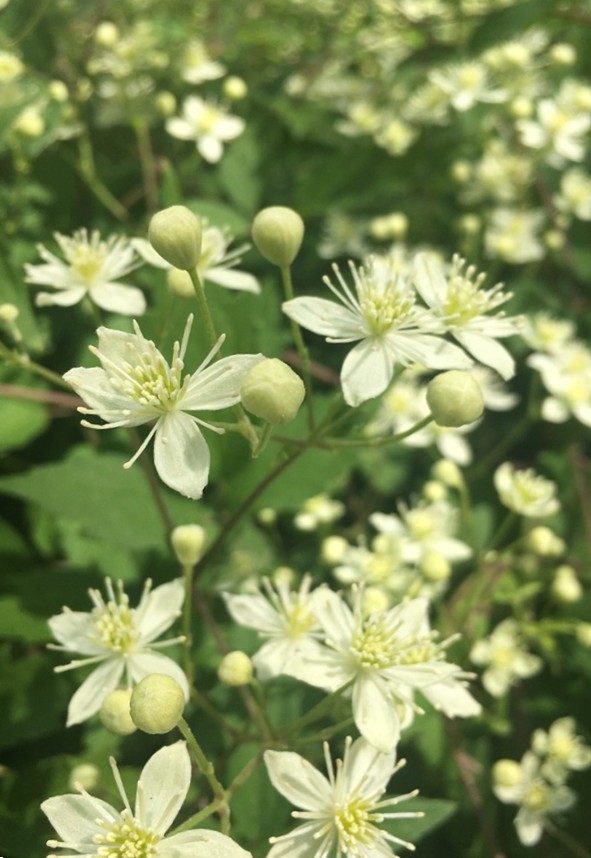
Virgin's Bower
Clematis spp.
In eastern North America, the common name Virgin’s Bower most specifically refers to:
- Clematis virginiana L.
Important historical names and synonym-linked search terms for Clematis virginiana include:
- Clematis canadensis Mill.
- Clematis missouriensis Rydb.
- Clematis virginiana var. missouriensis (Rydb.) Palmer & Steyerm.
- Clematis dioica subsp. virginiana (L.) Kuntze
- Clematis bracteata (Moench) DC.
- Clematis fragrans Salisb.
- Clematitis virginiana (L.) Couret-Vill.
Important Clematis species and groups commonly confused in garden, nursery, invasive-plant, or poison-control contexts include:
- Clematis terniflora DC. — Sweet Autumn Clematis, Japanese Clematis, or Japanese Virgin’s Bower; introduced Asian vine often confused with native C. virginiana
- Clematis vitalba L. — Traveler’s Joy, Old Man’s Beard, or European Virgin’s Bower; invasive in some regions and not the same species as native C. virginiana
- Clematis viorna L. — Leatherflower; bell-flowered North American clematis rather than the white-flowered Virgin’s Bower vine
- Clematis pitcheri Torr. & A.Gray — Purple Leatherflower or Bluebill; another bell-flowered clematis
- Clematis texensis Buckley — Scarlet Leatherflower or Texas Clematis
- Clematis ligusticifolia Nutt. — Western Virgin’s Bower, Western White Clematis, or Old Man’s Beard
- Clematis paniculata J.F.Gmel. — sometimes confused in horticultural trade with Sweet Autumn Clematis names
Important non-synonym confusion names:
- Helleborus species — true hellebores; Ranunculaceae plants with different toxin profiles that may include bufadienolide/cardiac-glycoside concerns
- Veratrum viride Aiton — Green False Hellebore, Indian Poke, or Corn Lily; unrelated Melanthiaceae plant with steroidal alkaloids
- Veratrum album L. — White False Hellebore; unrelated Melanthiaceae plant with Veratrum alkaloids
- Ranunculus species — buttercups; same ranunculin-protoanemonin irritant system but not Clematis
- Digitalis purpurea L., Nerium oleander L., Taxus species, and other cardiac or neurologic poisons — important differentials when signs are not consistent with simple Clematis irritation
Ranunculaceae
Ranunculaceae is also known as the Buttercup Family or Crowfoot Family. It is the current and longstanding family placement used in botanical, horticultural, medical, and veterinary references.
Virgin’s Bower; Virgin's Bower; Virginia Virgin’s Bower; Virginia Virgin's Bower; Virgin Bower; Native Virgin’s Bower; Native Virgin's Bower; Wild Clematis; Clematis; Leatherflower; Woodbine; Wild Hops; Love Vine; Devil’s Darning Needles; Devil's Darning Needles; Devil’s Hair; Devil's Hair; Old Man’s Beard; Old Man's Beard; Traveler’s Joy; Traveller’s Joy.
Scientific and historical search names associated with native eastern North American Virgin’s Bower include Clematis virginiana, Clematis canadensis, Clematis missouriensis, Clematis virginiana var. missouriensis, Clematis dioica subsp. virginiana, Clematis bracteata, Clematis fragrans, and Clematitis virginiana.
“Virgin’s Bower” is applied to more than one Clematis. The native eastern North American species is usually Clematis virginiana. Sweet Autumn Clematis or Japanese Virgin’s Bower usually refers to Clematis terniflora. European Traveler’s Joy or Old Man’s Beard usually refers to Clematis vitalba. Western Virgin’s Bower may refer to Clematis ligusticifolia. “Leatherflower” is used especially for bell-flowered Clematis species such as Clematis viorna, C. pitcheri, C. texensis, and related plants.
Hellebore naming is a separate hazard. True hellebores are Helleborus species, while Green False Hellebore and White False Hellebore may refer to Veratrum species in a different family. Clematis, true hellebore, and false hellebore can all be poisonous, but their toxin profiles are not interchangeable. A slow pulse, severe rhythm abnormality, collapse, paralysis, marked neurologic signs, or group livestock illness after a mixed brush exposure should trigger careful plant identification rather than assuming the vine is the only cause.
The Ranunculin-Protoanemonin System
The principal acute toxic system in Virgin’s Bower and other fresh Clematis is the ranunculin-protoanemonin system shared by many members of Ranunculaceae. Ranunculin is a comparatively stable glucoside stored within intact plant tissue. It is more accurate to call ranunculin the chemical precursor and protoanemonin the active irritant produced after tissue damage.
When an animal bites, tears, crushes, chews, mows, tramples, or macerates a fresh leaf, stem, flower, vine, or other living tissue, plant cells rupture and bring ranunculin into contact with enzymes capable of hydrolyzing it. Ranunculin is split into glucose and protoanemonin. This chemical defense allows the plant to avoid storing large quantities of a highly reactive irritant in its free form while still producing it rapidly exactly where an herbivore attacks.
Protoanemonin is also called anemonol or ranunculol in older chemical, botanical, and toxicological literature. It is an unsaturated lactone with vesicant properties, meaning that it can irritate, inflame, and under sufficient exposure blister living tissue. The burning effect begins at the point of contact rather than requiring absorption and circulation throughout the body. This explains why a dog, cat, horse, rabbit, or goat may react immediately while the vine is still in the mouth.
How Protoanemonin Injures Tissue
The lips, tongue, gums, inner cheeks, palate, pharynx, esophagus, stomach, intestines, skin, and eyes can all be affected if fresh sap or crushed plant tissue contacts them. Protoanemonin reacts with cellular proteins and other biological molecules, disrupts tissue surfaces, and activates pain and inflammatory pathways. The animal’s clinical signs are therefore a combination of direct chemical irritation and the body’s local inflammatory response.
In the mouth, this produces sharp burning, tingling, redness, drooling, mouth pawing, gagging, reluctance to swallow, and sometimes superficial blisters or erosions. In the stomach and intestines, swallowed material can cause nausea, vomiting in species capable of vomiting, abdominal cramping, increased intestinal activity, soft stool, or diarrhea. On skin, it may cause burning, redness, itching, swelling, or blistering, especially where skin is thin, wet, abraded, clipped, inflamed, or repeatedly rubbed. In the eye, it may cause tearing, squinting, eyelid spasm, conjunctival redness, corneal pain, or surface injury from rubbing.
Protoanemonin’s bitterness and burning quality are part of the defense. Most animals stop chewing after a limited exposure, greatly reducing the likelihood of severe poisoning. That self-limiting feature is why Clematis is correctly classified as poisonous but is not generally grouped with the most lethal ornamental plants. It does not make unlimited access safe. Puppies, kittens, goats, rabbits, birds, reptiles, hungry livestock, bored animals, or animals exposed to shredded fresh vines may consume enough material to require veterinary care.
Protoanemonin Concentration Is Real but Variable
Protoanemonin concentration varies considerably among Clematis species, individual plants, tissues, seasons, and handling conditions. A GC-MS study of one Chinese Clematis species and four Australian Clematis taxa found meaningful variation among plants and showed that leaves contained higher protoanemonin concentrations than stems and roots in the material analyzed. Earlier work also isolated protoanemonin from Australian Clematis, supporting the reality of the genus-level hazard.
That evidence supports treating fresh leaves as an important exposure source without claiming that every leaf is always more dangerous than every flower, seed structure, root, or stem in every species and every season. Genetics, plant part, age, growth stage, environmental stress, fresh injury, drying, method of analysis, and the exact amount chewed all affect risk. A livestock case involving fresh cut vines mixed into brush or hay is not the same exposure as a dog taking one bitter bite from a landscaped vine and dropping it immediately.
Fresh, Wilted, Dried, and Hay-Contaminated Material
Fresh plant material is the greatest concern because ranunculin is available and tissue damage can generate protoanemonin at the contact site. Freshly cut vines, mower-chopped material, pulled weeds, pruning piles, brush piles, and vines dragged through an enclosure can remain irritating even after they have wilted. Wilted does not automatically mean detoxified.
Protoanemonin is chemically unstable and readily dimerizes into anemonin, a much less irritating compound, as damaged plant tissue ages and dries. Thoroughly dried Clematis therefore contains predominantly anemonin and is substantially less toxic than fresh crushed vegetation. This is the basis for the common veterinary statement that dried Ranunculaceae material is much less hazardous than fresh material.
The drying distinction should not be turned into feeding advice. “Dried” may be incomplete, uneven, or mislabeled. Hay, bedding, brush piles, or garden debris may contain fresh stems hidden among dried material, pesticide residue, mold, other poisonous plants, or misidentified hellebore, Veratrum, yew, oleander, foxglove, nightshade, or toxic bulbs. No Clematis material should be deliberately fed to dogs, cats, horses, cattle, goats, sheep, rabbits, birds, reptiles, or other animals.
Secondary Clematis Chemistry
Clematis species contain diverse secondary compounds, including triterpenoid saponins, flavonoids, phenolic compounds, lignans, coumarins, volatile constituents, and other metabolites. Triterpenoid saponins have been isolated from several Clematis species, and the genus has been studied extensively in phytochemistry and traditional-medicine contexts. Those compounds matter scientifically, but they should not be used to rewrite the ordinary pet-poisoning syndrome.
The immediate burning, salivation, vomiting, and diarrhea after chewing fresh Clematis is most consistently attributed to ranunculin-derived protoanemonin. Saponins and other constituents may contribute to gastrointestinal irritation or to the biological activity of particular species, roots, extracts, or medicinal preparations, but they are not established as the main explanation for the sudden mouth-burning syndrome in ordinary Virgin’s Bower exposures. A pet chewing a fresh vine should be handled as a protoanemonin irritant exposure unless the clinical picture or plant identification points elsewhere.
Clematis Is Not Hellebore or Veratrum
The cardiac glycosides and bufadienolides associated with true hellebores should not be assigned to Clematis simply because both belong to Ranunculaceae. Helleborus species can contain compounds such as hellebrin, helleborin, helleborein, hellebrigenin, steroidal glycosides, and saponosides depending on species, tissue, and source. Hellebore poisoning may produce gastrointestinal irritation plus digitalis-like cardiac concerns. That toxin profile belongs to hellebore identification, not ordinary Virgin’s Bower poisoning.
Likewise, the alkaloids historically grouped under names such as veratrine, protoveratrine, veratridine, jervine, and veratramine belong to Veratrum species such as White False Hellebore and Green False Hellebore. Modern classification places Veratrum in Melanthiaceae, not Ranunculaceae. These steroidal alkaloids can alter sodium-channel function and produce violent vomiting, salivation, bradycardia, hypotension, weakness, collapse, and neurologic signs. They are not Clematis toxins.
This distinction is not academic when animals are exposed to brush or pasture weeds. A slow pulse, heart block, profound weakness, collapse, paralysis, severe neurologic signs, or group illness after a mixed plant exposure should trigger immediate reconsideration of the identification. Do not diagnose Clematis poisoning simply because a Virgin’s Bower vine is nearby when the signs fit hellebore, Veratrum, yew, oleander, foxglove, lily of the valley, pesticide, contaminated feed, or another more dangerous source.
No Validated Safe Dose
No validated toxic dose has been established for Clematis in dogs, cats, horses, cattle, sheep, goats, pigs, rabbits, guinea pigs, birds, reptiles, or people. Risk depends on the exact species, freshness, plant part, amount chewed, degree of crushing, whether the plant was freshly cut or fully dried, animal size, airway anatomy, preexisting disease, hydration, and whether another poisonous plant or agricultural chemical was involved.
The practical risk question is not “how many leaves are lethal?” Most animals stop after the first painful bite. The better questions are: was the plant fresh, was it definitely Clematis, was it mixed with more dangerous plants, did the animal swallow much material, is the mouth or throat swelling, is the animal vomiting repeatedly, can it drink safely, and are breathing, pulse, mentation, urination, and species-specific eating behavior normal?
Immediate Mouth Pain and Drooling
Clinical signs generally begin while the animal is chewing fresh Clematis or shortly afterward. A dog or cat may abruptly release the plant, shake its head, paw at its mouth, rub its muzzle, lick repeatedly, drool heavily, gag, retch, or appear distressed by an immediate burning or tingling sensation. Horses and livestock may stop eating abruptly, salivate, toss the head, rub the muzzle, or refuse the next mouthful of forage.
The lips, gums, tongue, palate, and oral lining may become red, tender, swollen, or inflamed. With a more substantial exposure, small blisters, erosions, or areas of ulceration may develop. The animal may approach food or water and then pull away because tongue movement and swallowing increase discomfort. Some animals allow saliva to pool or drip from the mouth because swallowing hurts.
Salivation is one of the most consistently documented veterinary signs. Gagging, repeated swallowing, retching, and coughing can occur when plant material or irritating sap reaches the back of the mouth and throat. Hoarse vocalization, neck extension, coughing while trying to drink, or inability to swallow saliva means the case should not be treated as a harmless nibble.
Vomiting, Diarrhea, Abdominal Pain, and Dehydration
Vomiting may follow oral and gastric irritation in species capable of vomiting. The animal may vomit once or repeatedly, and the vomit may contain recognizable leaf, stem, flower, or vine fragments. Repeated vomiting can worsen esophageal irritation because the same acrid plant material and stomach contents pass back across already painful tissues.
Abdominal pain, cramping, increased intestinal movement, soft stool, and diarrhea can develop when enough protoanemonin-containing material reaches the gastrointestinal tract. An affected dog may stretch, hunch, pace, eat grass, whine, look at the abdomen, or repeatedly ask to go outside. A cat may hide, refuse food, drool, vomit, or become unusually quiet. Rabbits and guinea pigs cannot vomit and may instead show food refusal, tooth grinding, decreased fecal output, diarrhea, or abdominal discomfort.
Repeated vomiting or diarrhea can cause dehydration, electrolyte disturbance, weakness, and poor circulation. Tacky gums, sunken eyes, reduced urination, weakness, collapse, inability to retain water, or worsening depression means the case has moved beyond local mouth irritation. Small animals, young animals, geriatric patients, and animals with kidney, heart, gastrointestinal, endocrine, or respiratory disease have less reserve.
Swallowing, Breathing, and Airway Concerns
Most Clematis exposures do not obstruct the airway. The ordinary pattern is painful local irritation that discourages additional chewing. Severe mouth or throat swelling is uncommon, but it can occur after substantial contact, prolonged chewing, hypersensitivity, or exposure to another plant or chemical in the same brush pile.
Warning signs include inability to swallow saliva, saliva continuously running from the mouth, repeated choking, coughing with water, neck extension, noisy breathing, open-mouth breathing, blue-gray mucous membranes, panic, weakness, or collapse. These signs require prompt veterinary evaluation because they may reflect severe pharyngeal irritation, aspiration, laryngeal swelling, an esophageal foreign body, caustic exposure, insect sting, or misidentified plant.
Short-nosed dogs and cats, animals with existing airway disease, and horses with swallowing difficulty may tolerate irritation poorly. Do not force water, milk, oil, honey, or food into an animal that is gagging, coughing, drooling heavily, weak, or swallowing abnormally.
Skin and Eye Signs
Direct sap contact can irritate the skin, especially where skin is thin, wet, abraded, clipped, or already inflamed. Redness, burning, itching, swelling, or blistering may occur. A pet that paws at its painful mouth can smear sap onto the paws, muzzle, eyelids, ears, and coat. A horse, goat, or dog lying in fresh cut vines may develop irritation on less protected skin.
Eye exposure may occur when sap-covered paws or fur contact the eye, when fresh vines are dragged across the face, or when animals rub after mouth pain begins. Tearing, squinting, conjunctival redness, eyelid spasm, swelling, corneal pain, discharge, cloudiness, or refusal to open the eye suggests ocular exposure. Continued rubbing can convert a surface irritant exposure into a corneal abrasion or ulcer.
Extensive skin blistering, facial swelling, generalized hives, wheezing, or respiratory distress is not the expected routine Clematis pattern. Those signs may indicate a substantial sap exposure, hypersensitivity, insect sting, pesticide, another plant, or a more dangerous mixed exposure.
Signs That Do Not Fit Ordinary Clematis Poisoning
Bradycardia, prolonged P-R intervals, heart block, idioventricular rhythms, bundle-branch block, ventricular fibrillation, asystole, hallucinations, delirium, severe aggression, paralysis, and dramatic neurologic collapse are not characteristic Clematis signs. Those findings fit hellebore, Veratrum, foxglove, oleander, lily of the valley, yew, pesticide, medication, electrolyte disorder, primary heart disease, or another neurologic/cardiovascular emergency much better.
Convulsions, coma, respiratory arrest, cardiac arrest, profound weakness, or collapse after suspected Clematis ingestion should trigger an immediate search for another toxin, severe oxygen deprivation, aspiration, shock, profound dehydration, electrolyte disturbance, contaminated feed, or unrelated disease. Do not force a rare severe presentation into a Clematis diagnosis when the signs are inconsistent with local protoanemonin irritation.
Reduced urination may follow serious fluid loss from vomiting or diarrhea, but primary renal failure, oliguria, and anuria are not established direct effects of ordinary Clematis protoanemonin poisoning. Kidney abnormalities require veterinary assessment and consideration of dehydration, another plant, medication, toxin, urinary obstruction, or preexisting disease.
Dogs
Dogs may chew vines growing through a fence, pull down ornamental plants, raid fresh pruning piles, or mouth cut stems during play. Puppies are especially likely to chew leaves and stems even after the first unpleasant taste. Dogs in yards with native plantings, unmanaged fence lines, woodland edges, or invasive Sweet Autumn Clematis may contact vines repeatedly.
Most dog cases involve drooling, mouth pawing, vomiting, appetite loss, and possibly diarrhea. A small taste is unlikely to progress into life-threatening poisoning when the plant is correctly identified and access ends. Repeated vomiting, inability to drink, severe mouth blistering, eye pain, collapse, slow pulse, seizures, paralysis, or abnormal breathing requires reassessment for severity, misidentification, or co-exposure.
Cats
Cats may nibble leaves, flowers, or trailing indoor cuttings. They may also walk through freshly cut vegetation and then groom sap from the paws or coat. Drooling, lip licking, mouth pain, gagging, vomiting, hiding, food refusal, and pawing at the mouth are the most likely signs.
A cat that refuses food beyond the immediate painful period deserves veterinary attention. Although Clematis is not a known direct liver poison in the ordinary protoanemonin sense, prolonged anorexia can create serious secondary problems in cats. Home vomiting attempts are unsafe for cats, and force-feeding a painful or gagging cat can increase aspiration risk.
Horses, Ponies, and Donkeys
Horses cannot vomit. Equine signs may include hypersalivation, head tossing, muzzle rubbing, painful swallowing, feed refusal, repeated swallowing, coughing, nasal reflux, diarrhea, colic-like discomfort, depression, or reduced performance. Horses usually avoid fresh Clematis while good forage is available, but fence-line vines, brush clearing, storm debris, or fresh cuttings thrown into a paddock can create exposure.
Persistent salivation, nasal reflux, repeated swallowing, feed material from the nostrils, coughing, neck extension, rolling, sweating, abdominal distention, reduced manure, or severe pain requires immediate equine assessment. Do not drench a horse with water, oil, charcoal, honey, or home remedies when swallowing, choke, colic, or aspiration is possible.
Cattle, Sheep, Goats, Pigs, and Camelids
Cattle, sheep, and goats ordinarily avoid fresh Clematis because of its bitter, burning effect. Exposure becomes more plausible when animals are hungry, forage is limited, vines are mechanically shredded, or fresh brush is mixed with desirable feed. Goats may browse vines more readily than cattle. Pigs may root through compost or brush piles and swallow plant fragments with soil or other waste. Alpacas and llamas may mouth unfamiliar ornamental trimmings when access is easy.
Signs may include salivation, repeated mouth movements, tongue or lip irritation, feed refusal, reduced rumination, ruminal discomfort, diarrhea, depression, or dehydration. Group illness with severe cardiac, neurologic, or respiratory signs should not be diagnosed as Clematis poisoning solely because a vine grows nearby. Hellebore, Veratrum, yew, oleander, foxglove, pesticides, contaminated feed, and other poisonous plants must be considered.
Rabbits, Guinea Pigs, Birds, Reptiles, and Small Animals
Rabbits and guinea pigs cannot vomit. Fresh Clematis exposure may cause drooling, food refusal, tooth grinding, mouth pawing, soft stool, diarrhea, reduced fecal output, abdominal pain, lethargy, or weakness. Pain-related anorexia and gastrointestinal slowing can become serious quickly in these species. Clematis should not be used as cage greenery, browse, bedding, or enrichment.
Birds may show beak rubbing, regurgitation, reduced appetite, watery droppings, fluffed posture, poor perching, weakness, or eye irritation after chewing fresh plant pieces or contacting sap. Reptiles and tortoises may show reduced appetite, abnormal stool, oral irritation, eye irritation, dehydration, inactivity, or weakness rather than the dog-and-cat vomiting pattern. Species-specific safe doses are not established.
Duration and Prognosis
Most limited exposures improve within several hours after access ends. Mouth soreness, reduced appetite, vomiting, or diarrhea may continue into the following day when more plant material was consumed. Skin or eye irritation may last longer if sap remains on the coat, if the animal continues rubbing, or if a corneal injury develops.
Persistent signs, progressive oral injury, extensive blistering, bloody vomit or stool, marked weakness, abnormal breathing, eye pain, dehydration, reduced urination, slow or irregular pulse, seizures, collapse, or failure to resume eating and drinking warrants veterinary reassessment. The prognosis is generally good to excellent after correctly identified limited Clematis exposure, but signs that extend beyond local irritation should prompt a broader search.
Virgin’s Bower Can Mean One Species or a Clematis Group
The poison-control name Virgin’s Bower is commonly attached to Clematis spp. as a group because cultivated Clematis species and hybrids share the same basic ranunculin-protoanemonin hazard. That genus-level treatment is appropriate when the exact cultivar or species is unknown, when a nursery label says only “Clematis,” or when an animal has eaten a mixed ornamental vine.
In eastern North America, however, Virgin’s Bower most specifically refers to Clematis virginiana L. It is an accepted native species ranging from central and eastern Canada through much of the central and eastern United States. The page therefore retains the genus-level scientific designation for poisoning safety while giving C. virginiana full attention as the plant most likely intended by the title.
How to Identify Native Virgin’s Bower
Clematis virginiana is a vigorous deciduous perennial vine capable of climbing approximately 10 to 20 feet or more by wrapping its leaf stalks around nearby branches, fences, shrubs, trellises, and other supports. It does not produce separate tendrils. In unmanaged locations, it can sprawl across shrubs, climb fence lines, scramble over woodland edges, and cover other vegetation.
The leaves are opposite and compound, usually divided into three leaflets. Each leaflet is coarsely toothed and may be shallowly lobed. Those toothed margins are one of the most useful field distinctions from invasive Sweet Autumn Clematis, whose leaflets are usually glossier and smoother-edged. The vine is not identified safely from white flowers alone because several Clematis species can carry clusters of small pale flowers.
Numerous small white flowers appear in branching clusters during late summer or early fall. What look like four white petals are actually petal-like sepals; Clematis flowers generally lack true petals. Female flowers are followed by masses of silky, silver-gray fruits with persistent feathery styles. These fluffy seed heads explain some of the “old man’s beard” and “devil’s hair” type common names, but those names are also used for other plants.
Native Virgin’s Bower Versus Sweet Autumn Clematis
Sweet Autumn Clematis, Clematis terniflora, is an introduced Asian vine that can resemble C. virginiana closely when both are covered with small white flowers. The two are sometimes mislabeled, confused in gardens, or sold under overlapping common names. Both are Clematis, both can contain the ranunculin-protoanemonin irritant system, and both should be kept away from animals.
The identification matters for ecology and prevention. Native Virgin’s Bower generally has compound leaves with three toothed or lobed leaflets. Sweet Autumn Clematis usually has glossy oval to heart-shaped leaflets with smooth, entire margins. Sweet Autumn Clematis can form dense blankets over shrubs, fences, woodland edges, and disturbed areas. An invasive vine growing through a dog yard or pasture fence creates repeated exposure opportunities even if the owner never planted Clematis intentionally.
Traveler’s Joy, Old Man’s Beard, Leatherflowers, and Other Clematis Names
European Traveler’s Joy or Old Man’s Beard usually refers to Clematis vitalba, a vigorous Old World species that is invasive in some regions. Western Virgin’s Bower may refer to Clematis ligusticifolia. Leatherflower is applied especially to North American Clematis species with thick, nodding, urn-shaped or bell-shaped flowers, including Clematis viorna, C. pitcheri, C. texensis, and related plants.
These plants differ visibly from the cloud-like white flowers of C. virginiana, but poison-control references often group them under the same Clematis toxicity entry. Fresh damaged tissue from an unidentified Clematis should be treated as potentially irritating. Exact species identification remains important for invasive-plant decisions, native planting, conservation, and determining whether another more dangerous plant is present.
How Ranunculin Becomes Protoanemonin
Ranunculin is stored in intact plant tissue as a glucoside precursor. Chewing, cutting, crushing, mowing, or tearing releases plant enzymes that hydrolyze it, removing the glucose component and generating protoanemonin. This is an efficient plant-defense system because the most reactive compound appears where an herbivore damages the vine.
The animal receives an immediate burning warning before it has consumed much material. That warning reduces the likelihood of severe poisoning, but it also explains the dramatic behavior owners see: sudden head shaking, mouth pawing, drooling, gagging, and refusal to eat or drink. The reaction is not psychological. Protoanemonin is a real vesicant irritant contacting living tissue.
Protoanemonin is sometimes called anemonol or ranunculol. These older names appear in historical toxicology and botanical references. Anemonin is a different compound formed when protoanemonin dimerizes as tissue ages and dries.
The Clematis Protoanemonin Studies
The scientific paper “Protoanemonin Content Variation between Clematis spp.: Leaf, Stem and Root” measured protoanemonin by gas chromatography-mass spectrometry in one Chinese species and four Australian Clematis taxa. The investigators found substantial variation among taxa and tissues, with leaves containing higher concentrations than stems and roots in the plants examined.
Earlier work isolated protoanemonin from Australian Clematis and showed that concentrations could be meaningful in fresh material. These studies support the conclusion that Clematis toxicity is real but variable. They do not support assigning one universal concentration, one universal plant-part ranking, or one lethal dose to every ornamental cultivar, leatherflower, Virgin’s Bower, Sweet Autumn Clematis, or wild vine.
Why Fresh Plant Material Is More Irritating Than Dried Material
Protoanemonin readily combines with another protoanemonin molecule to form anemonin. Anemonin is considerably less reactive and much less irritating. As Clematis dries thoroughly, more of its protoanemonin is converted into anemonin, which is why veterinary plant references describe dried Ranunculaceae material as far less toxic than freshly crushed vegetation.
The practical point is that fresh cut vines, freshly wilted clippings, mower-shredded material, pulled vines, and brush piles are still relevant. Conversion is not instantaneous and may be incomplete. A half-dried pile can contain fresh stems, green leaves, sap, pesticides, herbicides, mold, other poisonous plants, and misidentified look-alikes. Do not feed or use dried Clematis as bedding, browse, enrichment, or roughage merely because the fresh plant is more irritating.
Clematis Is Not Hellebore
Clematis and true hellebores both belong to Ranunculaceae, but they are separate genera with materially different toxin profiles. Clematis poisoning is dominated by the ranunculin-protoanemonin irritant system. True hellebores belong to Helleborus, and their toxicological literature includes protoanemonin-type irritation plus steroidal glycosides, bufadienolides, hellebrin, helleborin, helleborein, hellebrigenin, saponosides, and other species-dependent compounds.
Helleborus-related cardiac findings may include bradycardia, conduction abnormalities, ventricular dysrhythmias, weakness, collapse, and digitalis-like concerns in significant exposures. Those findings should remain attached to hellebore identification and not be transferred to a Clematis page merely because both plants are buttercup relatives. A Clematis-exposed animal may have a rapid pulse from pain, fear, dehydration, or vomiting; that is different from a true cardiac-glycoside syndrome.
False Hellebore Is Not Clematis Either
Green Hellebore and White Hellebore are also common names for Veratrum viride and Veratrum album. These plants are not members of Helleborus or Clematis. Modern classification places Veratrum in Melanthiaceae.
Veratrum species contain steroidal alkaloids such as protoveratrine A, protoveratrine B, veratridine, jervine, cevadine, and related compounds. These alkaloids affect sodium-channel physiology and can produce salivation, nausea, violent vomiting, bradycardia, hypotension, weakness, coordination changes, collapse, and severe cardiovascular signs. If an animal has a slow pulse, severe weakness, collapse, paralysis, or major neurologic signs after a pasture or brush exposure, false hellebore and other poisons must be considered.
The word hellebore has therefore been applied to three different toxicological situations: Clematis was mistakenly given hellebore-type cardiac data in some older or derivative material; true Helleborus contains irritants and steroidal glycoside/bufadienolide-type compounds; and false hellebores in Veratrum contain steroidal alkaloids. Correct botanical identification is essential.
Cardiac Glycosides Are Not the Clematis Mechanism
No dependable evidence establishes hellebrin, helleborin, helleborein, or a comparable digitalis-like cardiac-glycoside syndrome as the ordinary toxic mechanism of Virgin’s Bower or cultivated Clematis. A Clematis-exposed animal may drool, vomit, refuse food, develop diarrhea, or become temporarily weak from pain and fluid loss. That does not convert the exposure into foxglove or oleander poisoning.
A genuinely slow or irregular pulse, fainting, collapse, severe weakness, abnormal electrocardiographic conduction, or heart rhythm disturbance demands investigation for another plant, medication, pesticide, electrolyte disorder, or primary heart disease. Do not treat an ordinary Clematis exposure with atropine, heart medication, anti-digoxin therapy, or other cardiac-directed treatment unless a veterinarian has identified a reason beyond the plant name.
Dogs and Cats
Dogs may chew vines growing through a fence, pull down ornamental plants, investigate fresh pruning debris, or mouth vines during play. Puppies are especially likely to chew stems or leaves despite the acrid taste. Cats may nibble leaves, flowers, or trailing indoor cuttings, or they may walk through freshly cut vegetation and then groom sap from the paws or coat.
Most pets stop quickly because the plant is bitter and irritating. Drooling, mouth pawing, vomiting, appetite loss, and diarrhea are the most likely signs. A small taste is unlikely to progress into life-threatening poisoning when the plant was correctly identified and no other toxin is involved. Continued food refusal in cats, repeated vomiting, eye pain, extensive oral blistering, inability to swallow, or breathing changes deserve veterinary care.
Horses and Livestock
Horses and livestock generally avoid fresh Clematis while desirable forage is available. Exposure becomes more likely when vines grow through pasture fencing, brush is mechanically cleared into an enclosure, ornamental trimmings are dumped into a pen, forage is scarce, or fresh plant material becomes mixed with feed or hay. Mower-shredded or brush-hogged material may defeat the plant’s normal “one bitter bite and stop” defense by mixing irritant fragments into otherwise desirable forage.
Horses cannot vomit and may show salivation, oral discomfort, feed refusal, colic-like behavior, diarrhea, or depression. Ruminants may develop salivation, repeated mouth movements, reduced intake, ruminal discomfort, diarrhea, or dehydration after eating enough fresh vine. Goats may browse more aggressively than cattle. Pigs may root through brush piles or compost and swallow mixed material.
A group of animals showing severe cardiac, neurologic, or respiratory signs should not be diagnosed with Clematis poisoning solely because the vine grows nearby. Hellebore, Veratrum, yew, oleander, foxglove, pesticides, contaminated feed, nitrate, toxic bulbs, and other causes must be considered.
Rabbits, Guinea Pigs, Birds, Reptiles, and Other Animals
Rabbits and guinea pigs cannot vomit, and they should not be offered Clematis leaves, vines, flowers, or dried stems as browse. Mouth pain may appear as drooling, tooth grinding, reluctance to eat, or pawing at the mouth. Gastrointestinal distress may appear as reduced fecal output, diarrhea, lethargy, or abdominal discomfort. In small herbivores, pain-related food refusal can become serious quickly.
Birds may chew fresh vine pieces, seed heads, flowers, or enclosure greenery and develop beak rubbing, oral irritation, regurgitation, watery droppings, reduced appetite, weakness, poor perching, or eye irritation. Reptiles and tortoises may show reduced appetite, abnormal stool, quiet behavior, dehydration, oral irritation, or eye signs rather than the dog-and-cat vomiting pattern. Species-specific safe doses are not established.
Skin and Eye Exposure
Fresh sap can irritate human and animal skin. Gloves are appropriate when cutting, pulling, mowing, or shredding Clematis, particularly for people with sensitive skin, existing cuts, wet skin, or repeated exposure. An animal with sap on its paws or coat may transfer the material into its eyes while grooming or rubbing.
Immediate tearing, squinting, redness, swelling, and persistent rubbing suggest ocular exposure. Protoanemonin-related skin irritation is usually localized, but extensive blistering, facial swelling, generalized hives, or breathing difficulty may indicate a substantial exposure, hypersensitivity, another plant, or an additional chemical on the vegetation.
Diagnosis
Diagnosis usually depends on witnessed chewing, rapid development of compatible oral or gastrointestinal signs, and accurate identification of the vine. Photographs should show the whole plant, leaf arrangement, leaflet margins, flowers, seed heads, stems, the exact portion damaged, and whether the vine was fresh, wilted, dried, mowed, or mixed with other brush.
No routine blood test confirms protoanemonin exposure. Laboratory testing may be useful when vomiting or diarrhea is severe, dehydration develops, urination changes, weakness is marked, or the clinical signs suggest something more dangerous than localized irritation. Eye pain requires ocular examination and corneal staining. Abnormal pulse, seizures, paralysis, collapse, or group livestock illness should trigger broader toxicology and plant-identification work.
Important Differential Diagnoses
Other Ranunculaceae irritants include buttercups, anemones, pasqueflowers, and related plants. True hellebores, false hellebores, foxglove, oleander, lily of the valley, yew, nightshade, toxic bulbs, caustic cleaners, batteries, electrical burns, insect stings, caterpillar hairs, esophageal foreign bodies, bones, sticks, pesticides, herbicides, medications, and contaminated feed can overlap with part of the Clematis presentation but require different priorities.
Slow pulse, heart block, severe rhythm abnormalities, collapse, paralysis, profound neurologic signs, kidney failure, hallucination-like behavior, coma, or respiratory arrest should not be accepted as the routine course of Virgin’s Bower poisoning. Those signs are a reason to reconsider the exposure source, not a reason to expand Clematis toxicology beyond the evidence.
Veterinary Treatment and Prognosis
No specific antidote is required in most cases. Treatment focuses on removing loose plant debris, gently cleansing accessible residue, controlling pain and vomiting, maintaining hydration, protecting the eyes, and supporting food intake. A veterinarian may use analgesia, antiemetic treatment, intravenous or subcutaneous fluids, electrolyte correction, gastrointestinal support, nutritional assistance, oral examination, eye irrigation, fluorescein staining, and treatment of corneal injury when needed.
Induction of vomiting is generally unnecessary because Clematis is locally irritating, animals often stop chewing quickly, and spontaneous vomiting may already have occurred. Vomiting can re-expose the mouth and esophagus to irritating plant material. Activated charcoal is not routinely required after a limited exposure. A veterinarian may consider decontamination only after an unusually large or mixed-plant ingestion and only after evaluating swallowing ability, aspiration risk, and whether a more dangerous plant may have been involved.
Electrocardiography, kidney testing, or neurologic investigation is not ordinarily necessary for mild Clematis irritation. Those tests become appropriate when the animal has a slow or irregular pulse, profound weakness, reduced urination, seizures, collapse, or signs suggesting hellebore, Veratrum, cardiac glycosides, pesticides, medication, electrolyte disturbance, or another toxic exposure. The prognosis is generally good to excellent after correctly identified limited Clematis exposure. Recovery may take longer when oral blistering, repeated vomiting, diarrhea, dehydration, eye injury, or prolonged food refusal develops.
Prevention
Keep ornamental Clematis from growing through kennel fencing, livestock enclosures, rabbit runs, chicken yards, tortoise pens, dog yards, or areas where puppies repeatedly chew vegetation. Collect fresh pruning debris immediately. Do not leave cut vines where animals can lie on them, chew them, drag them, or transfer sap into the eyes.
Wear gloves while handling freshly cut Clematis and wash tools, hands, shoes, mower decks, buckets, tarps, and animal-accessible surfaces afterward. Do not compost fresh Clematis where dogs, livestock, poultry, rabbits, or tortoises can browse it. Label native Virgin’s Bower, Sweet Autumn Clematis, leatherflowers, true hellebores, false hellebores, and other toxic ornamentals accurately. Similar common names should never substitute for botanical identification during a poisoning emergency.
Immediate Steps
Stop further ingestion first. Move the animal away from the vine, fresh leaves, flowers, stems, sap, seed heads, roots, pruning debris, brush pile, hay contamination, fence-line growth, or mixed ornamental waste. Remove access for all animals in the area, not only the one currently showing signs.
- Remove loose mouth material safely: If the animal is alert, cooperative, breathing normally, and swallowing normally, take visible pieces from the lips and front of the mouth. Do not reach deeply into the throat or risk being bitten.
- Gently clear visible residue: Wipe the lips, gums, tongue tip, muzzle, paws, coat, feathers, or skin with a clean damp cloth. A small gentle rinse may be used only when breathing and swallowing are clearly normal.
- Prevent eye contamination: Keep sap-covered paws or fur away from the eyes and prevent continued face rubbing, pawing, or grooming.
- Preserve the entire plant: Photograph the vine, leaves, leaflet margins, flowers, seed heads, stems, and damaged section. A complete specimen is especially important because Clematis, hellebore, Veratrum, yew, oleander, and other plants have very different toxicology.
- Preserve co-exposure evidence: Save pesticide, herbicide, fertilizer, brush-killer, hay, compost, mower waste, and mixed plant material labels or samples when relevant.
- Contact a veterinarian or animal poison-control service: Report the species, weight, plant part, freshness, amount, exposure time, symptoms, swallowing ability, breathing, eye exposure, and whether the plant was mixed with other vegetation.
A minor taste from a correctly identified fresh Clematis vine often remains localized and improves after access ends. Bulky ingestion, repeated vomiting, inability to swallow, eye exposure, a small exotic animal that stops eating, or any sign inconsistent with simple mouth and gastrointestinal irritation deserves veterinary guidance.
Do Not Attempt Home Treatment
- Do not induce vomiting: Hydrogen peroxide, salt, mustard, syrup of ipecac, dish soap, detergent, and manual gagging can worsen mouth and esophageal irritation or cause aspiration.
- Do not give activated charcoal automatically: Charcoal is unnecessary for most limited Clematis exposures and can be aspirated by a drooling, vomiting, weak, or poorly swallowing animal.
- Do not force milk, oil, food, water, honey, syrup, glycerin, pectin, bread, or electrolyte solution: These do not neutralize protoanemonin and may enter the lungs if swallowing is impaired.
- Do not give antacids or gastrointestinal medication without veterinary direction: Sucralfate, bismuth products, loperamide, antacids, probiotics, and antiemetics are not universal antidotes.
- Do not give atropine or heart medication: Clematis is not expected to produce hellebore-type digitalis poisoning, and inappropriate medication can create a dangerous cardiovascular problem.
- Do not give pain relievers, corticosteroids, antihistamines, antibiotics, or eye medication without veterinary direction: Treatment depends on the species, swallowing ability, airway status, eye findings, hydration, and whether another toxin is involved.
- Do not drench horses or livestock: Forced oral liquids can be aspirated by an animal that is salivating, coughing, weak, colicky, bloated, or swallowing abnormally.
Skin and Eye Decontamination
Wear gloves when handling fresh Clematis or washing sap from an animal. Wash visible sap from paws, coat, muzzle, feathers, scales, or skin with lukewarm water and a mild pet-safe cleanser when the animal is stable enough. Prevent licking until residue has been removed. Wash collars, halters, leads, bedding, grooming tools, buckets, feed pans, carriers, mower surfaces, and other contaminated items.
If sap or plant debris enters an eye, begin gentle irrigation with sterile saline or clean lukewarm water when this can be done safely. Do not rub the eye, scrape the surface, apply leftover eye medication, or use human redness drops. Persistent squinting, tearing, redness, swelling, cloudiness, discharge, pawing, or apparent vision difficulty requires veterinary examination and corneal staining.
Skin irritation that remains localized may improve after residue is removed. Blistering, raw areas, swelling, intense itching, eyelid involvement, infection, generalized hives, facial swelling, or breathing difficulty requires veterinary assessment because the problem may involve substantial sap exposure, hypersensitivity, another plant, or a chemical contaminant.
Emergency Signs
- Vomiting or diarrhea is repeated: Continuing fluid loss can produce dehydration and electrolyte abnormalities.
- The animal cannot swallow normally: Saliva pooling in the mouth, repeated choking, coughing with water, neck extension, or inability to swallow water requires prompt examination.
- Oral blistering or swelling is extensive: Severe tissue injury may require pain control, hydration, and airway assessment.
- Breathing becomes difficult or noisy: This is not expected after a minor exposure and requires emergency evaluation.
- The eye remains painful: Persistent squinting, tearing, redness, cloudiness, discharge, or refusal to open the eye may indicate corneal injury.
- The pulse is slow or irregular: Cardiac abnormalities suggest hellebore, Veratrum, another poison, an electrolyte disorder, or heart disease rather than uncomplicated Clematis irritation.
- Seizures, collapse, paralysis, coma, or severe weakness develops: These signs require immediate investigation for another toxin or severe secondary complication.
- A cat refuses food beyond the immediate painful period: Prolonged anorexia can create serious secondary illness.
- A rabbit, guinea pig, bird, reptile, or other small animal stops eating: Pain-related food refusal can rapidly become serious.
- Multiple livestock are sick after brush or hay exposure: Remove the group from the source and investigate the entire plant mixture, feed, chemical exposure, and water source.
Veterinary Treatment
The veterinarian will assess oral injury, swallowing, breathing, hydration, abdominal comfort, vomiting and diarrhea frequency, eye exposure, skin injury, and the accuracy of the plant identification. Loose plant debris may be removed and the mouth gently cleansed under controlled conditions. Pain control is often more useful than aggressive decontamination because the clinical problem is local irritant injury.
Supportive care may include veterinarian-selected analgesia, antiemetic treatment, intravenous or subcutaneous fluids, electrolyte correction, gastrointestinal support, and nutritional assistance. Eye exposure may require prolonged irrigation, fluorescein staining, topical medication, and treatment of corneal injury. A cat, rabbit, guinea pig, bird, or reptile that stops eating may require species-specific nutritional or supportive care sooner than a healthy adult dog with a mild mouth exposure.
Induction of vomiting is generally unnecessary because Clematis is locally irritating, animals often stop chewing quickly, and spontaneous vomiting may already have occurred. It may increase re-exposure of the mouth and esophagus to irritating plant material. Activated charcoal is not routinely required after a limited exposure. A veterinarian may consider decontamination only after an unusually large or mixed-plant ingestion and only after evaluating swallowing ability, aspiration risk, and whether a more dangerous plant may have been involved.
Electrocardiography, kidney testing, neurologic investigation, or expanded toxicology work is not ordinarily necessary for mild Clematis irritation. Those tests become appropriate when the animal has a slow or irregular pulse, profound weakness, reduced urination, seizures, collapse, paralysis, coma, or signs suggesting hellebore, Veratrum, cardiac glycosides, pesticides, contaminated feed, medication, electrolyte disturbance, or another toxic exposure.
Dogs and Cats
Dogs should be monitored for drooling, mouth pawing, gagging, vomiting, diarrhea, abdominal pain, appetite loss, eye rubbing, hydration, urination, breathing, and ability to swallow. A dog that chewed fresh pruning debris should also be assessed for herbicide, pesticide, mower waste, sticks, thorns, other poisonous plants, and foreign material.
Cats should be monitored for drooling, hiding, gagging, vomiting, food refusal, pawing, eye irritation, grooming of sap from the coat, and hydration. Home vomiting attempts are unsafe for cats. A cat that will not resume eating after mouth pain begins to improve needs veterinary follow-up rather than several days of waiting.
Horses and Livestock
Horses, ponies, and donkeys should be removed from fence-line vines, fresh clippings, brush piles, and contaminated hay or bedding. They cannot vomit. Salivation, muzzle rubbing, feed refusal, repeated swallowing, coughing, nasal reflux, diarrhea, colic, rolling, sweating, abdominal distention, or reduced manure requires equine veterinary guidance. Do not force water, oil, charcoal, honey, or feed into a horse with mouth pain, abnormal swallowing, choke signs, or colic.
Cattle, sheep, goats, pigs, alpacas, llamas, and other livestock should be removed from fresh Clematis, mixed brush, discarded ornamentals, compost, and contaminated feed. Preserve plant material for identification. Group exposure should be treated as a group event, and severe cardiac or neurologic signs should immediately widen the investigation beyond Clematis.
Birds, Rabbits, Guinea Pigs, Reptiles, and Small Pets
Birds with beak rubbing, regurgitation, watery droppings, fluffed posture, poor perching, weakness, eye irritation, or reduced food intake need avian veterinary guidance. Remove all plant fragments from the cage, perch, food dish, and water dish. Minimize handling stress and do not force food or water.
Rabbits and guinea pigs cannot vomit. Drooling, tooth grinding, food refusal, reduced fecal output, diarrhea, abdominal discomfort, lethargy, or weakness after Clematis exposure requires prompt species-specific care. Reptiles and tortoises should be kept within their appropriate temperature range and evaluated by an exotic-animal veterinarian if ingestion was meaningful or signs develop.
Recovery and Prognosis
The prognosis is generally good to excellent. Most dogs and cats with a limited exposure improve within several hours and recover completely within approximately one day. Appetite and activity should improve as mouth and gastrointestinal irritation settle. Eye discomfort should improve quickly if there is no corneal injury.
Recovery may take longer when oral blistering, repeated vomiting, diarrhea, dehydration, eye injury, skin blistering, or prolonged food refusal develops. Small animals may require treatment sooner because they have less fluid reserve and tolerate anorexia poorly. Cardiac conduction block, kidney failure, delirium, paralysis, coma, and respiratory collapse are not expected from correctly identified limited Clematis exposure; their appearance should prompt immediate reconsideration of the plant identification and investigation for another emergency.
Prevention After the Incident
Keep Clematis vines from growing through dog fencing, kennel runs, horse paddocks, goat pens, cattle lots, rabbit runs, chicken yards, tortoise pens, and play areas where puppies or small animals chew vegetation. Remove fresh pruning debris immediately and dispose of it in closed animal-inaccessible waste. Do not place fresh Clematis in open compost where animals can browse it.
Label native Virgin’s Bower, Sweet Autumn Clematis, leatherflowers, true hellebores, false hellebores, and other toxic ornamentals accurately. Do not rely on common names alone during a poisoning emergency. Wash gloves, tools, buckets, tarps, mower decks, shoes, and surfaces after cutting fresh vines. Keep animals away from recently cut or herbicide-treated vine material until it has been removed completely.
Frequently Asked Questions About Virgin’s Bower and Animal Poisoning
Why is the scientific name listed as Clematis spp.?
Virgin’s Bower, Clematis, Leatherflower, Traveler’s Joy, and Old Man’s Beard are used for numerous Clematis species and cultivated hybrids. Poison-control references therefore often treat the page at genus level as Clematis spp. In eastern North America, the native plant most specifically called Virgin’s Bower is Clematis virginiana L.
What toxin occurs in Clematis?
Fresh Clematis tissue contains ranunculin, a glucoside precursor converted into the blistering irritant protoanemonin when leaves, stems, flowers, vines, or other fresh tissues are chewed or crushed. Protoanemonin causes burning, inflammation, salivation, mouth pain, vomiting, abdominal pain, and diarrhea. It acts mainly at the point of contact rather than as a classic absorbed systemic poison.
Are ranunculin and protoanemonin the same chemical?
No. Ranunculin is the stored glucoside precursor in intact plant tissue. Damage to the plant releases enzymes that split ranunculin and produce protoanemonin. Protoanemonin is the reactive vesicant responsible for most of the immediate toxic effects. As protoanemonin ages and dries, it can dimerize into the much less irritating compound anemonin.
What did the Clematis protoanemonin study find?
A GC-MS study of one Chinese Clematis species and four Australian Clematis taxa found that protoanemonin concentrations varied among taxa and plant parts. Leaves contained more protoanemonin than stems and roots in the material tested. The study supports real but variable Clematis toxicity, not one universal dose for every species, cultivar, tissue, or season.
Is dried Clematis still poisonous?
Protoanemonin dimerizes into the much less irritating compound anemonin as plant material dries thoroughly, so dried Clematis is far less toxic than fresh crushed tissue. Freshly wilted vines, half-dried debris, mixed hay, and incorrectly identified plants should not be assumed safe. Drying is not a reason to feed Clematis to animals.
Does Virgin’s Bower contain hellebrin or helleborein?
Those cardiac glycoside or bufadienolide-type compounds are associated with true hellebores in the genus Helleborus, not with ordinary Clematis poisoning. Clematis and hellebore share Ranunculaceae, but they do not share an identical toxin profile. Virgin’s Bower poisoning is dominated by ranunculin-derived protoanemonin irritation.
Can Clematis cause digitalis-like heart problems?
Bradycardia, prolonged P-R conduction, heart block, ventricular fibrillation, and asystole are not expected features of uncomplicated Clematis exposure. Those signs fit hellebore, foxglove, oleander, lily of the valley, yew, medication, electrolyte disease, or another cardiovascular poison much better. A slow or irregular pulse after a plant exposure needs urgent veterinary evaluation and plant re-identification.
Is Green Hellebore the same plant as Virgin’s Bower?
No. Green Hellebore may refer to Helleborus viridis or to the unrelated false hellebore Veratrum viride. Veratrum contains steroidal alkaloids such as protoveratrines and has a very different cardiovascular mechanism from Clematis. Similar common names should never replace botanical identification during a poisoning emergency.
How quickly do symptoms appear?
Signs usually begin while the fresh plant is being chewed or within a short time afterward. The animal may suddenly release the vine, shake its head, paw at its mouth, drool, gag, vomit, or refuse food because protoanemonin is generated at the site of tissue damage. Delayed severe neurologic or cardiac signs suggest another toxin or complication.
Can Clematis cause kidney failure or stop urine production?
Primary renal failure, oliguria, and anuria are not established direct effects of ordinary Clematis poisoning. Severe vomiting and diarrhea can cause dehydration and reduced urine output secondarily. Kidney abnormalities, markedly reduced urination, or dark urine require veterinary assessment and consideration of another toxin, medication, dehydration, urinary disease, or underlying illness.
Can touching Clematis cause a rash?
Yes. Fresh sap can irritate sensitive, wet, abraded, clipped, or damaged skin and may cause burning, redness, itching, swelling, or blistering. Gloves are sensible when pruning large amounts, and hands should be washed before touching the eyes or mouth. Animals may spread sap from the mouth to the paws, muzzle, eyelids, or coat by rubbing and grooming.
What should I do if Clematis sap gets in my pet’s eye?
Begin gentle irrigation with sterile saline or clean lukewarm water if this can be done safely. Do not rub the eye or apply leftover medication. Persistent squinting, tearing, redness, swelling, cloudiness, discharge, or refusal to open the eye may indicate corneal irritation or injury and requires veterinary examination.
How can native Virgin’s Bower be distinguished from Sweet Autumn Clematis?
Native Clematis virginiana generally has compound leaves with three coarsely toothed or lobed leaflets. Invasive Sweet Autumn Clematis, Clematis terniflora, usually has glossy oval or heart-shaped leaflets with smooth margins. Both produce clusters of small white flowers and fluffy seed heads, and both should be treated as irritating Clematis species if chewed fresh.
Is Traveler’s Joy the same as Virgin’s Bower?
Sometimes the names overlap, but European Traveler’s Joy usually refers to Clematis vitalba, not native eastern North American Clematis virginiana. Both are Clematis species and both can cause protoanemonin irritation when fresh tissue is damaged. Correct identification matters for invasive-plant control and for ruling out other look-alikes.
Is Leatherflower poisonous too?
Leatherflower usually refers to bell-flowered Clematis species such as Clematis viorna, C. pitcheri, C. texensis, and related plants. Fresh damaged tissue from these species should also be treated as potentially irritating. They may look different from white-flowered Virgin’s Bower, but they belong to the same genus-level poisoning category.
Should I make my pet vomit after it eats Clematis?
No. Do not use hydrogen peroxide, salt, mustard, ipecac, dish soap, or manual gagging unless a veterinarian specifically directs treatment. Vomiting can re-expose the mouth and esophagus to the irritant and can cause aspiration. Most Clematis cases are handled with residue removal, pain control, anti-nausea care, hydration support, and observation when needed.
Should activated charcoal be given after Clematis exposure?
Not routinely. Activated charcoal is unnecessary for most limited Clematis exposures and can be aspirated by a drooling, vomiting, weak, or poorly swallowing animal. A veterinarian may consider decontamination only after an unusually large or mixed-plant ingestion and only after checking airway and swallowing safety.
Should milk, honey, syrup, or oil be given?
No. Milk, honey, syrup, oil, bread, and similar remedies do not neutralize protoanemonin. They may be aspirated if the animal is gagging, drooling heavily, coughing, or swallowing abnormally. Gentle wiping or rinsing is appropriate only when the animal is alert and swallowing normally, and veterinary guidance is safest when signs are more than mild.
Is Virgin’s Bower poisonous to horses?
Yes, fresh Clematis should be kept away from horses. Horses cannot vomit and may show salivation, mouth discomfort, feed refusal, repeated swallowing, coughing, nasal reflux, diarrhea, or colic-like signs. Fence-line vines and fresh pruning debris are the most realistic exposures. Do not drench a horse with water, oil, charcoal, or home remedies when swallowing or colic is a concern.
Is Virgin’s Bower poisonous to cattle, sheep, goats, and pigs?
Fresh Clematis should be treated as inappropriate and potentially irritating forage. Cattle, sheep, goats, pigs, alpacas, and llamas may develop salivation, mouth irritation, reduced intake, ruminal discomfort, diarrhea, or depression after unusual access. The risk increases when fresh vines are mixed with brush, clippings, hay, compost, or scarce forage. Severe group illness should trigger investigation for other poisonous plants or chemicals.
Is Virgin’s Bower safe for rabbits and guinea pigs?
No. Rabbits and guinea pigs should not be offered fresh or dried Clematis as browse, forage, bedding, or enrichment. They cannot vomit, and mouth pain may lead to food refusal, tooth grinding, reduced fecal output, diarrhea, gastrointestinal slowing, lethargy, or weakness. Any small herbivore that stops eating after exposure needs species-specific veterinary guidance.
Is Virgin’s Bower safe for birds or reptiles?
No. Clematis vines, flowers, seed heads, and clippings should not be used as bird enrichment, poultry treats, tortoise forage, reptile browse, or enclosure décor. Birds may develop beak rubbing, regurgitation, watery droppings, weakness, poor perching, or eye irritation. Reptiles may show reduced appetite, abnormal stool, inactivity, dehydration, oral irritation, or eye signs.
How do veterinarians diagnose Clematis poisoning?
Diagnosis usually depends on witnessed chewing, rapid onset of compatible mouth and gastrointestinal signs, and accurate plant identification. Useful evidence includes photographs of the whole vine, opposite leaves, leaflet margins, flowers, seed heads, damaged plant part, freshness, pruning pile, and any mixed plants or chemicals. Bloodwork is not routine for every mild exposure but may be needed when vomiting, dehydration, weakness, abnormal urination, or atypical signs occur.
What differentials matter most?
Important differentials include true hellebore, false hellebore, foxglove, oleander, lily of the valley, yew, buttercups, anemones, caustic cleaners, batteries, electrical burns, insect stings, esophageal foreign bodies, pesticides, herbicides, medications, contaminated feed, and other poisonous brush. Slow pulse, collapse, paralysis, seizures, coma, or severe group illness should not be blamed automatically on Clematis.
How do veterinarians treat Virgin’s Bower poisoning?
Treatment is supportive and based on the signs present. It may include gentle oral cleansing, pain control, antiemetic medication, fluids, electrolyte correction, gastrointestinal support, eye irrigation, corneal staining, topical eye treatment, and nutritional support for animals that will not eat. There is no specific antidote. Cardiac or neurologic workup is reserved for atypical signs or suspected mixed exposure.
What is the usual prognosis?
The prognosis is good to excellent after most limited exposures. Immediate burning and bitterness usually prevent a large ingestion. Persistent vomiting, dehydration, extensive oral injury, eye damage, abnormal breathing, slow or irregular pulse, collapse, seizures, paralysis, or signs inconsistent with simple irritation makes the case more serious and should prompt reassessment of the plant identification.
How can Virgin’s Bower poisoning be prevented?
Keep Clematis vines from growing through animal fencing, kennel runs, rabbit runs, chicken yards, tortoise pens, and livestock enclosures. Collect fresh pruning debris immediately, wear gloves while cutting vines, wash tools and surfaces, and do not throw clippings into paddocks, pens, compost, or dog-accessible brush piles. Label Clematis, hellebore, and false hellebore accurately because common names can mislead treatment decisions.