Lenten Rose Irritant Glycosides, Saponins, and Potential Bufadienolide Toxicity
Is Lenten Rose Poisonous to Dogs, Cats, Horses, and Livestock?
Yes—Lenten Rose, Helleborus × hybridus, is poisonous to dogs, cats, horses, cattle, sheep, goats, rabbits, guinea pigs, birds, and other animals. Freshly damaged Hellebore tissue can expose the mouth, skin, eyes, esophagus, stomach, and intestines to irritating ranunculin-derived compounds, including protoanemonin. Hellebores also contain steroidal saponins and, in documented parent or related species, bufadienolide glycosides capable of affecting the heart after a sufficiently large exposure.
The most likely effects after a small fresh-leaf or flower bite are sudden mouth pain, head shaking, lip licking, pawing at the face, excessive drooling, gagging, vomiting, abdominal discomfort, diarrhea, food refusal, and depression. Greater concern is warranted after ingestion of roots, rhizomes, multiple plants, concentrated cuttings, powders, tinctures, extracts, herbal preparations, or an uncertain amount.
Serious poisoning can involve dehydration, electrolyte disturbance, profound weakness, low blood pressure, an abnormally slow, rapid, or irregular heart rhythm, impaired cardiac conduction, tremors, collapse, seizures, aspiration, shock, or death. Modern garden hybrids have complex parentage, so flower color, cultivar name, plant size, and prior uneventful contact cannot predict the chemistry of an individual plant.
About this guide: This page provides general pet-poisoning information and cannot diagnose or treat an individual animal. For any suspected exposure, contact a veterinarian or animal poison-control service immediately. Do not induce vomiting, give medication, or attempt home decontamination unless directed by a veterinary professional.
Lenten Rose
Helleborus × hybridus hort. ex Vilm.
The multiplication sign indicates hybrid origin. In modern horticultural practice, Helleborus × hybridus is the collective name used for complex garden Lenten Roses derived from repeated crosses among Helleborus orientalis and several related acaulescent Hellebore species.
The horticultural group has also appeared under names such as:
- Helleborus orientalis hybrids
- Helleborus orientalis hybridus
- Helleborus hybridus
- Helleborus × hybridus Voss
True Helleborus orientalis Lam. is a separate accepted wild species native from northeastern Greece and Türkiye through the Caucasus. It includes recognized geographic subspecies and contributed substantially to the ancestry of cultivated Lenten Roses.
Modern garden hybrids may also contain ancestry from species such as:
- Helleborus atrorubens
- Helleborus croaticus
- Helleborus cyclophyllus
- Helleborus dumetorum
- Helleborus multifidus
- Helleborus odorus
- Helleborus purpurascens
- Helleborus torquatus
- Helleborus viridis
The exact ancestry of an individual seed-grown plant may be unknown. Cultivars developed from separate interspecific programs can also be sold loosely as Lenten Roses even when they belong to another named hybrid, such as Helleborus × ballardiae, Helleborus × ericsmithii, Helleborus × glandorfensis, Helleborus × iburgensis, or Helleborus × nigercors.
Nursery labels reading only “Helleborus orientalis,” “Oriental Hellebore,” or “Lenten Rose” do not reliably distinguish a true species plant from a complex garden hybrid. Preserve the original tag and a complete specimen during a poisoning investigation.
Ranunculaceae — Buttercup Family
Lenten Rose; Lenten-Rose; Hybrid Lenten Rose; Hybrid Hellebore; Garden Hellebore; Oriental Hellebore; Oriental Hybrid Hellebore; Orientalis Hybrid; Winter Rose; Winter Hellebore; Spring Hellebore; Easter Rose; Hellebore; Garden Helleborus; Helleborus × hybridus; Helleborus hybridus; Helleborus orientalis Hybrid; Helleborus orientalis hybridus
Many nurseries, seed sellers, catalogs, landscapers, and older garden books label modern Lenten Roses as Helleborus orientalis. True Helleborus orientalis is a distinct wild species, while most colorful contemporary garden plants are complex hybrids classified horticulturally as Helleborus × hybridus.
Oriental Hellebore can therefore refer either to true Helleborus orientalis or to a garden hybrid descended partly from that species. The ambiguity does not change the immediate veterinary response because both belong to the poisonous genus Helleborus.
Christmas Rose usually refers to Helleborus niger, a separate species with generally earlier white flowers. Stinking Hellebore is Helleborus foetidus; Green Hellebore is Helleborus viridis; and Corsican Hellebore is Helleborus argutifolius. These are not exact synonyms for Lenten Rose, although related-species chemistry contributes to the broader toxicologic evidence.
False Hellebore, Corn Lily, Indian Poke, and some plants called Green Hellebore belong to Veratrum in the family Melanthiaceae. They contain steroidal alkaloids such as veratridine and protoveratrine and are not botanically or toxicologically equivalent to true Hellebores.
Lenten Rose is not a true rose. Plants of the genus Rosa belong to Rosaceae and do not share the characteristic Hellebore chemistry merely because both common names contain “Rose.”
A Chemically Variable Hybrid Group
Lenten Rose is not one genetically or chemically uniform wild species. The plants sold as Helleborus × hybridus include complex hybrids developed through repeated crossing, selection, and backcrossing among several Hellebore species.
Parentage can influence the relative amounts of ranunculin-derived irritants, protoanemonin, steroidal saponins, bufadienolides, phytoecdysteroids, phenolic compounds, and other secondary metabolites. Plant part, age, season, growth conditions, injury, extraction method, drying, fermentation, and storage can alter the measured profile further.
No study has chemically analyzed every modern Lenten Rose cultivar. A named double, picotee, spotted, yellow, black-flowered, outward-facing, or commercially patented cultivar should not be assigned a precise toxin concentration from its appearance.
The practical veterinary conclusion is that every part of a Lenten Rose should be treated as poisonous, while the expected severity should be assessed from the amount, tissue, preparation, symptoms, and individual animal rather than from the flower color.
Ranunculin, Protoanemonin, and Immediate Tissue Irritation
Ranunculin is a glycosidic precursor distributed through many members of Ranunculaceae. When fresh plant cells are cut, crushed, chewed, bruised, frozen, thawed, ground, or macerated, plant enzymes can convert ranunculin-related precursors into the unstable lactone protoanemonin.
Protoanemonin is electrophilic and strongly irritating. It can react with cellular sulfhydryl groups and disrupt proteins and membrane structures at the point of contact.
Fresh sap or chewed tissue can irritate the lips, gums, tongue, palate, throat, esophagus, stomach, intestines, skin, conjunctiva, and cornea. Possible local effects include burning, redness, swelling, blistering, erosions, ulceration, salivation, gagging, painful swallowing, vomiting, abdominal pain, and diarrhea.
Protoanemonin is unstable and can dimerize into anemonin, which is generally less reactive. This helps explain why thoroughly dried Ranunculaceae material may have less immediate blistering activity than freshly macerated tissue.
Reduced irritancy after drying does not make a dried Hellebore safe. Residual irritants, saponins, steroidal glycosides, concentrated root constituents, mold, preservatives, or other plants in a dried arrangement can remain hazardous.
Evidence Boundaries for Protoanemonin in Garden Lenten Roses
Protoanemonin has been directly measured in extracts of Helleborus niger and Helleborus foetidus, and ranunculin has been analyzed across members of the buttercup family. These studies support a genus-level irritant mechanism.
The two tested Hellebore species did not contain identical amounts. Different preparation methods also produced markedly different protoanemonin and saponin profiles.
That variation is important. Immediate burning and gastrointestinal irritation are reasonable concerns for a modern Lenten Rose, but the exact protoanemonin concentration in a particular hybrid flower, leaf, seedling, or root cannot be inferred from a related species.
Steroidal Saponins
Steroidal saponins form a substantial part of the secondary-metabolite profile in several Hellebore species. Exact *Helleborus orientalis* rhizome studies have isolated numerous spirostanol and furostanol glycosides, including structurally complex hellebosaponins.
Saponins can interact with cellular membranes and contribute to bitter taste, salivation, nausea, vomiting, abdominal cramping, diarrhea, mucosal irritation, weakness, and altered gastrointestinal absorption.
Not every isolated saponin has been shown to produce the same veterinary effect. Laboratory cytotoxicity or membrane activity does not establish an animal toxic dose for the intact plant.
Saponin concentration also differs by species and tissue. The extensive exact-species rhizome evidence supports heightened concern when an animal digs up, chews, or swallows the crown and underground parts.
Bufadienolide Glycosides in Helleborus orientalis
Phytochemical analysis of true Helleborus orientalis rhizomes isolated a bufadienolide glycoside together with spirostanol saponins. Other studies have documented additional steroidal glycosides from the same underground tissue.
This exact-parent-species evidence supports the possibility of cardiac-glycoside-like toxicity after substantial Lenten Rose exposure, particularly when roots, rhizomes, concentrated extracts, medicinal products, or large quantities are involved.
It does not establish that every garden hybrid contains the same bufadienolide at the same concentration. The degree to which each ancestral species contributed to an individual cultivar may be unknown.
Hellebrin, deglucohellebrin, hellebrigenin glycosides, and other bufadienolides have been identified in different Hellebore species. Historical sources sometimes used the terms hellebrin, helleborein, and helleborin imprecisely or for incompletely characterized plant preparations.
The strongest modern wording is therefore that Hellebores can contain cardioactive bufadienolides, but the compound profile and systemic risk of an individual *H. × hybridus* plant are not predictable from its label.
How Bufadienolides Can Affect the Heart
Bufadienolides are steroidal cardiac glycosides that can inhibit sodium-potassium ATPase in cell membranes. Pump inhibition changes intracellular sodium handling and indirectly raises intracellular calcium within cardiac muscle.
Increased intracellular calcium can strengthen contraction, but electrical impulse formation and conduction may become unstable. Extracellular potassium can also rise during serious pump inhibition.
Possible effects of substantial cardiac-glycoside exposure include nausea, vomiting, weakness, sinus bradycardia, tachycardia, premature contractions, delayed atrioventricular conduction, second-degree or complete heart block, junctional rhythms, ventricular arrhythmias, hypotension, hyperkalemia, fainting, collapse, or cardiac arrest.
No single pulse pattern identifies Hellebore poisoning. Pain, dehydration, stress, gastrointestinal losses, electrolyte disturbance, hypoxia, and the specific rhythm can produce a slow, rapid, weak, or irregular pulse during different stages of the same case.
Roots, Rhizomes, Extracts, and Historical Preparations
Roots and rhizomes deserve greater concern than one minor flower or leaf taste. Exact *H. orientalis* research identified bufadienolide and saponin constituents in rhizomes, and underground Hellebore tissue has a long history of use in concentrated purgative and medicinal preparations.
Digging, division, transplanting, disposal, and landscaping can expose a dog to entire crowns or pieces of root that were previously underground. Freshly cut roots may be carried as chew objects.
Powders, tinctures, teas, fermented products, homeopathic mother tinctures, concentrated extracts, traditional remedies, and unlabeled herbal mixtures can deliver a substantially different exposure from one bite of a garden leaf.
Historical medicinal use should never be interpreted as evidence of veterinary safety. Preparations were used because they produced forceful physiologic effects, including vomiting, purging, irritation, and cardiovascular activity.
All Plant Parts and No Dependable Safe Dose
Leaves, petioles, flowering stems, sepals, nectaries, pollen-bearing structures, follicles, seeds, seedlings, crowns, roots, rhizomes, sap, cuttings, wilted material, dried material, powders, extracts, vase water, and contaminated debris should remain inaccessible.
The strongest evidence is not identical for every tissue. Fresh aerial parts present the clearest immediate irritant concern, while rhizomes have the strongest exact *H. orientalis* bufadienolide and steroidal-saponin evidence.
No validated safe or toxic dose exists for dogs, cats, horses, cattle, sheep, goats, rabbits, guinea pigs, birds, or other animals. A dose reported for another Hellebore species, a purified compound, a laboratory extract, or a human preparation cannot be converted into a safe number of Lenten Rose leaves or flowers.
Immediate Oral and Contact Irritation
Fresh Lenten Rose tissue may cause signs within minutes of chewing. An animal may drop or spit out the plant, shake the head, lick the lips repeatedly, paw at the face, rub the muzzle, gag, cough, or retreat abruptly from the plant.
Salivation may range from wet lips to strings of drool or foamy saliva. The lips, gums, tongue, palate, and throat can become red, swollen, painful, blistered, eroded, or ulcerated.
Animals with mouth pain may refuse food or water, chew cautiously, cry while swallowing, or hold the mouth partly open. Blood-streaked saliva, repeated choking, inability to swallow saliva, or noisy breathing requires urgent examination.
Skin exposure can cause redness, itching, burning, swelling, dermatitis, or blistering. Sap trapped beneath a collar, harness, bandage, clothing, or dense coat can prolong contact.
Eye exposure may produce tearing, squinting, conjunctival redness, eyelid swelling, light sensitivity, corneal cloudiness, abrasion, or ulceration. A retained fiber beneath an eyelid can continue damaging the eye after a brief rinse.
Gastrointestinal Progression
Swallowed plant material can cause nausea, repeated swallowing, retching, vomiting, abdominal cramping, diarrhea, purging, colic, depression, and appetite loss.
Vomit or feces may contain recognizable leaf, root, flower, or seed material. Mucus or blood can appear when mucosal inflammation is significant.
Repeated vomiting and diarrhea can produce dehydration, electrolyte abnormalities, reduced circulating volume, weakness, low blood pressure, reduced urine production, and collapse.
Vomiting re-exposes the mouth and esophagus to irritating plant material. Weakness, altered awareness, or painful swallowing also increases the risk that vomit or saliva will enter the airway.
Cardiovascular Warning Signs
Clinically important cardiovascular effects are more concerning after a large ingestion, root or rhizome exposure, concentrated preparation, repeated collapse, marked weakness, or an abnormal pulse.
Possible findings include sinus bradycardia, tachycardia, premature beats, pulse deficits, delayed atrioventricular conduction, junctional rhythms, second-degree or complete heart block, ventricular arrhythmias, hypotension, fainting, and collapse.
Pale or gray mucous membranes, cold extremities, weak pulses, delayed capillary refill, inability to stand, or reduced responsiveness may indicate inadequate cardiac output or severe dehydration.
Hyperkalemia is possible during serious sodium-potassium-pump inhibition and can worsen muscular weakness and cardiac conduction. Potassium concentration cannot be judged from clinical appearance.
Quiet behavior after vomiting should not automatically be interpreted as comfortable recovery. A weak animal may be lying still because blood pressure or cardiac output is inadequate.
Neurologic and Respiratory Complications
Weakness, dizziness, incoordination, twitching, tremors, agitation, confusion, depression, stupor, seizures, or coma can occur during severe systemic illness.
These findings may result from direct toxic effects, severe gastrointestinal losses, electrolyte disturbance, hypotension, reduced cerebral perfusion, aspiration, hypoxia, or another plant or chemical involved in the exposure.
Breathing may become rapid, shallow, irregular, labored, or weak. Respiratory distress can follow aspiration, shock, severe pain, cardiac dysfunction, seizure activity, or altered consciousness.
Open-mouth breathing in a cat, blue-gray mucous membranes, gasping, weak respiratory movement, or inability to protect the airway is an immediate emergency.
Dogs and Cats
Dogs may chew leaves, pull flowering stems, dig up crowns, carry root pieces, shred pruning debris, or investigate compost and discarded container plants.
The most likely initial canine signs are drooling, head shaking, pawing at the mouth, vomiting, diarrhea, abdominal pain, and appetite refusal. Marked weakness, fainting, an abnormal pulse, tremors, collapse, or breathing difficulty indicates a more serious exposure or complication.
Cats may nibble foliage, bat at nodding flowers, contact sap or pollen on the coat, drink vase water, or encounter a temporary indoor flowering container.
A cat may hide, crouch, stop eating, drool, vomit, become unusually still, or fail to jump normally. Because cats often conceal weakness, open-mouth breathing, collapse, or reduced responsiveness requires immediate care.
Horses, Livestock, and Small Herbivores
Horses may encounter Hellebore through ornamental farm plantings, garden waste, nursery debris, cemetery plantings, discarded containers, or contaminated forage. Horses cannot vomit, so exposure may appear as salivation, painful swallowing, feed refusal, colic, diarrhea, sweating, weakness, an abnormal pulse, ataxia, breathing difficulty, or recumbency.
Cattle, sheep, and goats may consume uprooted clumps or fresh cuttings discarded into pasture. Adequate forage and the plant’s acrid taste often limit intake, but hungry animals and browsing goats may consume material other animals reject.
Possible livestock signs include salivation, reduced grazing, abdominal discomfort, diarrhea, depression, weakness, abnormal heart rhythm, labored breathing, staggering, or recumbency.
Rabbits and guinea pigs may drool, refuse food, produce fewer feces, develop diarrhea, sit hunched, grind their teeth, become weak, or show abdominal pain. Even limited appetite loss can contribute to gastrointestinal stasis.
Birds may shred flowers, leaves, roots, or dried arrangements and expose the beak, tongue, eyes, feet, skin, and digestive tract. Beak wiping, regurgitation, diarrhea, loss of balance, open-mouth breathing, eye closure, or unusual quietness requires avian veterinary guidance.
Expected Course and Emergency Findings
Minor oral irritation may improve after exposure ends and loose residue is removed, but visible redness, painful swallowing, vomiting, or food refusal can persist.
Severe gastroenteritis, dehydration, esophageal injury, aspiration, electrolyte disturbance, cardiac instability, seizures, or shock may require hospitalization for one or more days.
Emergency warning signs include inability to swallow saliva, repeated vomiting, blood in saliva or vomit, profound weakness, repeated fainting, a markedly slow, rapid, weak, or irregular pulse, pale or blue-gray gums, severe abdominal pain, reduced urine production, breathing difficulty, tremors, seizures, collapse, coma, or reduced responsiveness.
Plant Identity, Accepted Name, and Natural Background
Lenten Rose is the established horticultural name for a broad group of complex garden Hellebores classified as Helleborus × hybridus. These plants belong to Ranunculaceae, the buttercup family, and are not true roses; the word “Rose” refers only to their attractive, long-lasting flowers and does not indicate a botanical relationship with species of Rosa. The published hybrid name is used horticulturally for seed-grown and clonally propagated plants descended from repeated crosses among Helleborus orientalis and several related acaulescent Hellebore species. Modern cultivars may contain ancestry from Helleborus atrorubens, Helleborus croaticus, Helleborus cyclophyllus, Helleborus dumetorum, Helleborus multifidus, Helleborus odorus, Helleborus purpurascens, Helleborus torquatus, Helleborus viridis, and other closely related taxa.
True Helleborus orientalis remains an accepted wild species rather than merely an obsolete name for the garden hybrid group. It is native from northeastern Greece and Türkiye eastward through portions of the Caucasus, where it occurs in woodland openings, scrub, grassy slopes, forest margins, and rocky areas that support winter and spring growth. The cultivated hybrid group has no single natural native range because it was assembled horticulturally from several ancestral species. Lenten Roses are now grown widely throughout temperate regions of Europe, North America, Asia, Australia, and elsewhere, and established plants may persist for decades around homes, farms, veterinary facilities, cemeteries, parks, commercial landscapes, nurseries, botanical collections, abandoned properties, and former garden sites.
For poisoning assessment, the horticultural distinction matters because an individual plant’s exact parentage and chemical profile may be unknown. A nursery label reading Helleborus orientalis, Helleborus × hybridus, Oriental Hellebore, Hybrid Hellebore, or Lenten Rose should prompt the same initial animal-safety precautions. A true species plant and a complex hybrid may differ in strict taxonomy and constituent concentration, but neither should be treated as a nontoxic Hellebore. Preserve the original nursery tag, cultivar label, and photographs of the intact plant whenever identification may become part of a poisoning investigation.
How to Recognize Lenten Rose
Lenten Rose is an evergreen or semi-evergreen, rhizomatous, clump-forming perennial that commonly reaches approximately one to two feet in height and may spread two feet or more as the crown enlarges and seedlings appear. Its leaves arise on long petioles and divide in a palmate or umbrella-like pattern, with mature leaves commonly bearing seven to nine leathery segments radiating from a central point. Leaflet number, width, serration, glossiness, and color vary with ancestry and cultivar, but the foliage is generally dark green, firm, and visibly veined. Older leaves may become flattened, spotted, tattered, brown-edged, or partly dead during winter while new flowering stems emerge through the clump.
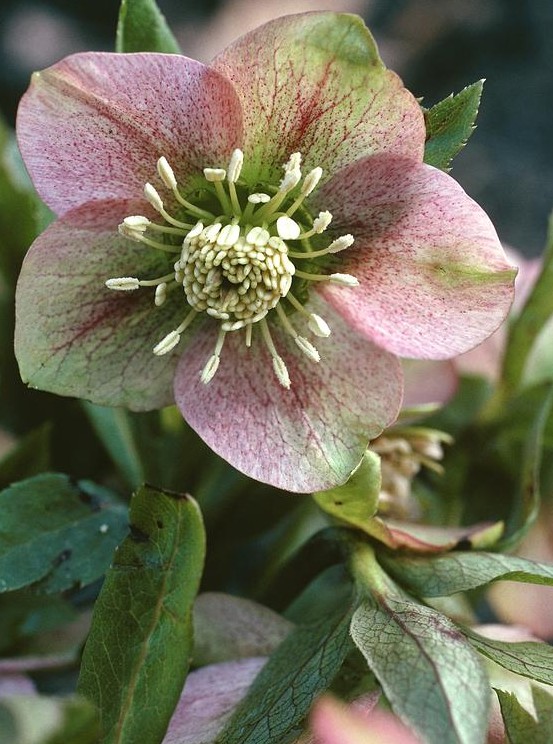
The flowers appear most commonly from late winter through early or mid-spring, although mild climates may see flowering during winter and colder regions may bloom as frozen ground and snow recede. This early seasonal growth can make Lenten Rose unusually conspicuous to animals when little other fresh vegetation is available. The flowers are generally bowl-shaped, saucer-shaped, or bell-shaped and may nod downward or face outward. Five large, persistent, petal-like sepals form most of the visible flower, while the true petals are modified into small tubular nectaries surrounding numerous stamens.
Flower color may be white, cream, pale yellow, green, apricot, blush pink, rose, red-purple, violet, plum, slate, or nearly black. Markings may include freckles, dense spotting, veins, brushed or mottled coloration, contrasting centers, pale reverse surfaces, and picotee edges. Single flowers have one principal row of five sepals, while semi-double and fully double forms contain additional transformed floral structures; anemone-centered cultivars have a ring of enlarged or altered nectaries near the center. Flower darkness, spotting, doubling, rarity, or cultivar price does not indicate toxin concentration.
After pollination, several dry follicles enlarge in the center of the persistent sepals and eventually split to release multiple seeds. Seed-bearing flowers may remain on the plant for months, and fallen seeds can produce numerous seedlings around an established clump, increasing the amount of accessible plant material. The plant grows from a persistent underground crown with fibrous and rhizomatous roots. This compact underground structure matters during exposure investigations because a dog digging up one plant may gain access to a much larger mass of tissue than it could obtain from one exploratory bite of a leaf or flower.
Common-Name Confusion and Important Look-Alikes
Many nurseries, catalogs, and older garden references use Helleborus orientalis for modern Lenten Roses even when the plants are complex hybrids. True Helleborus orientalis is a naturally occurring species, while most colorful contemporary cultivars are more accurately classified horticulturally as Helleborus × hybridus. A plant labeled Oriental Hellebore may therefore be a true species plant, a selected form of that species, or a hybrid containing ancestry from several Hellebores. That uncertainty affects strict botanical identification and chemical certainty, but it does not create a nontoxic category.
Christmas Rose is Helleborus niger, a separate species that generally produces relatively large white flowers that may age pink and often blooms earlier than the broad Lenten Rose group. Stinking Hellebore is Helleborus foetidus, which typically has upright leafy stems, narrow divided leaflets, and clusters of smaller green flowers that may be edged with reddish purple. Green Hellebore is Helleborus viridis, while Corsican Hellebore is Helleborus argutifolius. These plants are not exact synonyms for Lenten Rose, but they are genuine members of the poisonous genus Helleborus and contribute relevant genus-level toxicologic evidence.
False Hellebores belong principally to the genus Veratrum in Melanthiaceae rather than to Helleborus in Ranunculaceae. They commonly have broad, strongly pleated leaves that wrap around an upright stem and contain steroidal alkaloids such as veratridine and protoveratrine that alter voltage-gated sodium channels. Names such as White Hellebore, Green Hellebore, Corn Lily, Indian Poke, and False Hellebore may refer to Veratrum rather than a true Hellebore. Both groups can produce vomiting, weakness, abnormal heart rate, low blood pressure, collapse, or death, but their principal compounds, mechanisms, and some treatment considerations differ.
Lenten Rose should also be distinguished from true roses, Foxglove, Oleander, Lily-of-the-Valley, Kalanchoe, Star-of-Bethlehem, Aconite, Yew, Clematis, Anemone, Buttercup, and insoluble-calcium-oxalate houseplants. Several of these plants can produce oral pain, vomiting, weakness, arrhythmia, or collapse through mechanisms unrelated to Hellebore toxicity. A label containing only “Rose” or “Hellebore” is not sufficient for definitive identification. Preserve the complete growth habit, lower and upper leaves, flower front and side, seed structures, roots when available, nursery tag, cultivar label, and photographs of the plant in place.
Poisonous Parts and the Strength of the Evidence
Leaves, petioles, flowering stems, sepals, nectaries, pollen-bearing structures, developing follicles, seeds, seedlings, crowns, roots, rhizomes, sap, fresh cuttings, wilted debris, dried plant material, powders, tinctures, extracts, vase water, and material contaminated with plant fragments should all be treated as potentially poisonous. The strength of evidence is not identical for every tissue, and no study has quantified every constituent in every modern hybrid cultivar. Fresh aerial material presents the clearest immediate irritant concern, while direct phytochemical evidence from true Helleborus orientalis makes underground tissue especially important. The practical response should account for the plant part and quantity without declaring any part safe.
Fresh leaves, flowers, stems, and sap can expose animals to ranunculin-derived irritants, including protoanemonin, after the tissue is chewed, crushed, cut, frozen, thawed, ground, or otherwise disrupted. Protoanemonin can irritate the skin, conjunctiva, cornea, lips, gums, tongue, palate, pharynx, esophagus, stomach, and intestines. Chewing fresh tissue may therefore cause burning pain, drooling, head shaking, pawing at the mouth, gagging, painful swallowing, vomiting, abdominal discomfort, diarrhea, dermatitis, and eye injury. The immediate bitterness and burning may limit prolonged chewing, but they do not prevent a substantial exposure when an animal consumes cuttings, roots, or a concentrated preparation.
Roots and rhizomes deserve heightened concern because direct phytochemical research on true Helleborus orientalis rhizomes identified a bufadienolide glycoside together with numerous spirostanol and furostanol saponins. These findings establish that an important ancestral species of the Lenten Rose group contains biologically active steroidal glycosides in its underground tissue. The research did not establish an animal toxic dose, compare every aboveground and underground structure, or quantify the same compounds in every garden hybrid. It is therefore appropriate to treat root or crown ingestion as a larger and potentially more consequential exposure without claiming that every Lenten Rose root contains a proven maximum toxin concentration.
Steroidal saponins can contribute to the bitter taste, salivation, nausea, vomiting, abdominal pain, diarrhea, weakness, and mucosal irritation associated with Hellebore exposure. Bufadienolide glycosides can inhibit sodium-potassium ATPase and may produce cardiac-glycoside-like effects after a sufficiently large or concentrated ingestion. Related-species studies have directly measured protoanemonin and saponins in Helleborus niger and Helleborus foetidus, but the tested species differed substantially in their measured profiles. Those findings support a genus-level irritant, saponin, and potential cardiac mechanism rather than proving that every Helleborus × hybridus plant has an identical chemical composition.
No dependable safe or toxic dose has been established for dogs, cats, horses, cattle, sheep, goats, rabbits, guinea pigs, birds, or other animals. A dose involving a purified compound, another Hellebore species, a laboratory extract, or a historical herbal preparation cannot be converted into a safe number of Lenten Rose leaves, flowers, seeds, or root pieces. The amount swallowed, plant part, preparation, individual cultivar, animal size, species, pre-existing disease, vomiting, and development of clinical signs all affect risk. An exploratory taste and ingestion of an entire crown should not be treated as equivalent exposures.
How Dogs and Cats Encounter Lenten Rose
Dogs may chew leaves or flowers while exploring a landscape bed, pull flowering stems, eat seedlings, investigate nursery containers, or consume fresh material collected into a pile. They may also dig up newly planted or recently disturbed crowns, carry loose roots as chew objects, or gain access when plants are removed, transplanted, divided, damaged by construction, overturned by wildlife, pulled from containers, or discarded after landscaping work. Underground pieces may resemble sticks or other familiar chewable material. Yard waste, open compost, bouquets, cemetery flowers, storm-damaged vegetation, discarded container plants, material thrown over a fence, and clippings left beside a walkway or garage create additional canine exposure settings.
Cats may nibble foliage, bat at nodding flowers, hide beneath mature clumps, walk through damaged plants, or collect sap and pollen on the coat. Grooming can then transfer residue into the mouth or eyes even when the cat did not intentionally eat the plant. Flowering Hellebores are sometimes sold in decorative containers during winter and early spring and may be brought indoors temporarily, placing a previously inaccessible plant on a floor, windowsill, low table, porch, or entryway. Cats may also drink from plant saucers or vases, chew fallen sepals, investigate decorative moss, or contact potting soil and fertilizer associated with a container, creating a mixed exposure rather than an isolated plant ingestion.
Small foliage tastes in dogs and cats most often raise concern for oral irritation or gastrointestinal upset, while roots, rhizomes, multiple stems, concentrated cuttings, herbal preparations, or an uncertain amount justify greater concern for cardiovascular and electrolyte abnormalities. A dog that digs up an entire crown may consume far more tissue than an animal that bites one leaf and immediately spits it out. A cat that grooms sap from its coat may have oral, skin, and ocular exposure despite swallowing only a small quantity. The exposure history should include not only what the animal was seen eating but also what plant material was missing, disturbed, carried away, present in vomit, or found on the coat.
How Horses and Livestock Encounter Lenten Rose
Horses are unlikely to seek out a large quantity of intact Lenten Rose when adequate forage is available because the plant is bitter and irritating. Exposure becomes more plausible when ornamental plants, uprooted crowns, fresh clippings, nursery waste, or discarded containers are placed in or beside a paddock. Additional settings include farm entrances, stable landscaping, cemetery plantings, showgrounds, discarded bouquets, contaminated yard waste, debris blown into an enclosure, and ornamental Hellebores growing along a fence line. Because horses cannot vomit, exposure may present as salivation, repeated swallowing, feed refusal, colic, diarrhea, altered gut sounds, depression, sweating, weakness, an abnormal pulse, labored breathing, ataxia, or recumbency rather than expulsion of the plant.
Cattle, sheep, and goats may encounter Lenten Rose when uprooted plants, nursery waste, fresh cuttings, discarded containers, or mixed landscaping debris are placed in pasture, feed areas, bale storage, silage areas, manure piles, or compost. Recently removed plants can expose the group to leaves, flowers, crowns, and roots at the same time, creating a larger practical dose than grazing one intact ornamental plant. Goats and other browsing animals may investigate vegetation that cattle or horses avoid, while hunger, forage shortage, confinement, curiosity, storm damage, or access to a concentrated pile of cut material can overcome the protection provided by the acrid taste. When one livestock animal becomes ill, the complete exposed group should be assessed because individuals may consume different amounts and develop signs at different times.
Hay contamination is not the most common Lenten Rose exposure, but it can occur when ornamental cuttings or uprooted plants become mixed with forage, bedding, yard debris, or material stored near a feeding area. Drying may reduce some immediate protoanemonin-associated irritancy, but it does not prove that saponins, steroidal glycosides, residual irritants, or concentrated root material are harmless. Preserve samples from the hay, feed, pasture edge, waste pile, and any professionally collected gastrointestinal contents. Dried plant material that is difficult to identify visually may need to be compared with fresh plants remaining at the source.
Rabbits, Guinea Pigs, Birds, and Other Small Animals
Lenten Rose should never be offered to rabbits or guinea pigs as forage, bedding, enrichment, or a chew plant. These animals may consume a clinically important amount relative to body weight, and mouth pain or nausea can stop normal eating before obvious systemic signs develop. Drooling, reduced appetite, a hunched posture, tooth grinding, diarrhea, reduced fecal production, weakness, or abdominal distention requires prompt veterinary attention. Appetite loss is especially important because it can contribute to gastrointestinal stasis and may become a separate emergency.
Pet birds may shred leaves, flowers, seed heads, dried arrangements, or exposed roots, allowing sap and powdered material to contact the beak, tongue, eyes, feet, skin, and digestive tract. Beak wiping, food refusal, regurgitation, diarrhea, eye closure, loss of balance, weakness, open-mouth breathing, or unusual quietness requires avian veterinary guidance. Small birds can receive a substantial exposure from material that appears minor beside a dog or horse. Decorative arrangements and dried plant material should therefore remain outside bird-accessible rooms and flight areas.
Rodents, reptiles, poultry, and other animals housed near ornamental landscaping may gain access when leaves, flowers, seeds, or cuttings fall into enclosures, water containers, feeding areas, or bedding. Plant material entering a small pen or cage can create a concentrated exposure even when the standing plant is outside the enclosure. Species-specific clinical reports are limited for many of these animals, but that absence should not be interpreted as proof of safety. Veterinary assessment should be based on the amount, plant part, route of exposure, and observed abnormalities.
Fresh, Wilted, Dried, Powdered, and Extracted Material
Freshly damaged tissue creates the clearest immediate protoanemonin-associated exposure because chewing, cutting, crushing, trampling, freezing, thawing, grinding, or macerating the plant brings precursors and activating enzymes into contact. Wilting does not instantly neutralize the plant, and recently cut foliage, flowers, roots, and crowns remain capable of causing oral, gastrointestinal, skin, and eye irritation. Fresh debris may be more accessible than the intact plant because it is collected into a pile or separated into smaller pieces that can be carried or swallowed. Animals should remain away from damaged plants and loose material until every piece has been removed.
Protoanemonin is chemically unstable and can dimerize into anemonin, which is generally less irritating. Stored or thoroughly dried material may therefore cause less immediate blistering than freshly macerated tissue, but drying does not establish complete detoxification. Steroidal saponins, bufadienolide glycosides, residual irritants, concentrated underground tissue, mold, preservatives, pesticides, and other toxic plants mixed with the material may remain clinically relevant. Dried Hellebore in potpourri, decorative arrangements, herbal products, hay, bedding, or compost should remain inaccessible.
Powders, tinctures, teas, fermented products, extracts, traditional preparations, homeopathic mother tinctures, and unlabeled herbal mixtures deserve heightened concern because they may concentrate plant constituents or deliver them without the fresh plant’s bitter taste limiting intake. A small volume of an extract cannot be compared directly with a small bite of a fresh leaf. Historical Hellebore preparations were used specifically because they produced forceful purgative, emetic, irritant, neurologic, or cardiovascular effects. Their medicinal history documents biological activity rather than safety or an appropriate veterinary home treatment.
Cut Flowers, Vase Water, Compost, and Garden Waste
Lenten Rose flowers are sometimes cut for indoor arrangements, creating exposure to sap-bearing stems, leaves, fallen sepals, pollen-bearing structures, follicles, floral foam, wire, preservative packets, and vase water. Vase water may contain sap, microscopic plant debris, floral preservatives, fertilizer residue, bacteria, and compounds from every other flower in a mixed arrangement. Removing the visible flowers does not make the remaining water an appropriate drinking source. Animals should not be allowed to chew the arrangement, drink the water, or play with fallen floral material.
A bouquet containing Lenten Rose may also contain true Lilies, Foxglove, Oleander, Daffodil, Autumn Crocus, Lily-of-the-Valley, or other plants with different and potentially more urgent toxic syndromes. Identifying only the Hellebore can therefore miss a concurrent exposure that changes the diagnostic and treatment priorities. Preserve the entire arrangement, florist information, plant labels, preservative packet, and photographs when an animal has chewed mixed flowers or drunk vase water. In cats, the presence of true Lily material requires a separate immediate kidney-injury response.
Fresh Hellebore cuttings and uprooted crowns should not be left in an open pile accessible to animals because concentrated debris permits a much larger ingestion than one exploratory bite from a standing plant. Open compost and yard-waste piles may also contain mold toxins, fertilizer, herbicide, pesticide, food scraps, medication, sharp objects, and other poisonous plants. An animal that eats from such a pile may have a mixed poisoning that cannot be explained by Hellebore alone. Loose roots, crown sections, seeds, and seedlings should be removed from areas used by pets, horses, or livestock after plants are damaged or taken out.
Skin, Coat, Mouth, Esophagus, and Eye Exposure
Fresh sap may cause burning, redness, itching, swelling, dermatitis, or blistering, especially when it contacts damaged skin or remains trapped beneath a collar, harness, bandage, clothing, dense coat, or protective equipment. Plant material caught in an animal’s coat can be transferred to the mouth and eyes during grooming. Contaminated fur should be washed, and the animal should be prevented from licking until sap and debris have been removed. Collars, harnesses, bedding, carriers, clothing, tools, and surfaces that contacted fresh sap should also be cleaned.
Oral irritation can extend beyond the visible lips and tongue to the gums, palate, pharynx, and esophagus. An animal may continue gagging, swallowing repeatedly, refusing food, or coughing while drinking after loose plant material has been removed. Regurgitation, blood-streaked saliva, inability to swallow saliva, or persistent pain may indicate deeper tissue injury or a retained plant fiber. These findings require veterinary examination rather than repeated home rinsing or forced oral products.
Eye exposure may cause tearing, squinting, conjunctival redness, eyelid swelling, light sensitivity, corneal cloudiness, abrasion, or ulceration. A fiber trapped beneath an eyelid can continue damaging the cornea after a brief rinse, and an animal may worsen the injury by rubbing the eye against a paw, carpet, furniture, or the ground. Continued squinting, discharge, cloudiness, swelling, rubbing, or inability to open the eye requires prompt examination. Fluorescein staining and careful inspection beneath the eyelids may be necessary to detect corneal injury or retained plant material.
Exact-Species and Related-Species Research
Direct phytochemical investigation of true Helleborus orientalis rhizomes isolated a bufadienolide glycoside together with several steroidal saponins. Later work characterized additional polyoxygenated spirostanol and furostanol glycosides from the same underground tissue. These studies establish that an important parent species within modern Lenten Rose ancestry contains biologically active steroidal glycosides in its rhizomes. They do not establish a dog or cat toxic dose, compare every plant part, or quantify the compounds in every Helleborus × hybridus cultivar.
Research involving Helleborus niger and Helleborus foetidus directly supports the presence of protoanemonin and steroidal saponins elsewhere in the genus. The tested species differed substantially in their measured protoanemonin and saponin profiles, demonstrating that Hellebores are not chemically interchangeable. Freshly prepared extracts contained more measurable protoanemonin than stored preparations because the compound is unstable, while fermentation and processing changed the saponin profile rather than simply removing every active constituent. These findings support the distinction between fresh irritant exposure and the remaining hazards of dried or processed material.
Research on whole Helleborus niger plants has also identified bufadienolides and ecdysteroids. Those compounds support broader genus-level concern for systemic effects, but their presence must not be presented as a direct chemical measurement from an individual Lenten Rose cultivar. Laboratory cytotoxicity and pharmacology studies demonstrate biological activity, yet they do not independently prove the clinical dose, expected syndrome, or prognosis in a dog, cat, horse, or livestock animal consuming intact garden material. The most defensible interpretation combines exact-parent-species chemistry, related-species research, the plant part, preparation, amount, and the animal’s clinical findings.
Historical Hellebore Use and Why It Matters to Exposure Assessment
Plants sold or traded as Hellebore were historically used as purgatives, emetics, diuretics, anthelmintics, snuffs, abortifacients, cardiac preparations, external counterirritants, and supposed treatments for epilepsy, paralysis, gout, mental illness, digestive disease, skin disorders, and numerous other conditions. Historical veterinary remedies also included Hellebore roots and preparations for parasites, skin disease, and digestive problems, and irritating material was sometimes applied deliberately to create inflammation. These practices should not be repeated because roots, powders, tinctures, fermented preparations, extracts, and topical products may cause painful tissue injury, severe gastrointestinal illness, cardiovascular instability, or mixed toxic effects. Historical use reflects potency, not established veterinary safety or effectiveness.
Ancient and historical terms such as Black Hellebore, White Hellebore, Green Hellebore, and Oriental Hellebore did not always correspond precisely with modern botanical species. White Hellebore frequently referred to unrelated Veratrum, while traded medicinal roots could be substituted, contaminated, or mixed. Historical reports of purging, cardiac effects, neurologic signs, abortion, or death should therefore be interpreted at the preparation or broad Hellebore-group level unless the plant was identified reliably. Modern exact-species chemistry and a documented contemporary exposure provide stronger evidence than an ambiguous historical common name.
Diagnosis and Clinical Evaluation
Diagnosis begins with identification of the plant, the structures involved, the largest possible amount missing, the time of exposure, and whether the material was fresh, wilted, dried, powdered, fermented, extracted, or mixed with another plant or chemical. Preserve the complete plant whenever possible, including leaves, flowering stems, sepals, follicles, seeds, crown, roots, rhizomes, nursery tag, cultivar label, herbal package, vomited material, and clear photographs of the plant in place. A single detached leaflet may not distinguish a Lenten Rose from another Hellebore, a deeply divided garden plant, or an unrelated toxic species. Photographs should show the complete growth habit, leaf arrangement, upper and lower leaf surfaces, flower front and side, seed structures, and exposed underground portions.
The veterinarian may examine the lips, oral cavity, pharynx, esophagus, skin, eyes, hydration, abdomen, pulse quality, heart rhythm, blood pressure, respiratory function, temperature, and neurologic status. Testing may include continuous or repeated ECG monitoring, blood-pressure measurement, complete blood count, serum chemistry, potassium, sodium, calcium, magnesium, glucose, kidney and liver values, blood gases, acid-base assessment, and urinalysis. Chest imaging may be required when vomiting, regurgitation, coughing, fever, nasal discharge, or breathing difficulty raises concern for aspiration. Fluorescein staining may be used after eye exposure, while persistent swallowing pain or regurgitation may require further evaluation of the pharynx or esophagus.
A routine digoxin blood test is not a validated confirmation test for Lenten Rose poisoning. Some plant-derived cardiac glycosides or bufadienolides may cross-react variably with particular immunoassays, but a positive result would not identify the plant, establish the compound concentration, or predict clinical severity. A negative result does not exclude Hellebore poisoning because protoanemonin, saponins, poorly cross-reactive bufadienolides, dehydration, and gastrointestinal injury can occur without a measurable digoxin-like result. Test results must therefore be interpreted alongside the plant identification, exposure history, ECG, blood pressure, electrolyte values, and progression of signs.
Published clinical case reports specific to ordinary dog or cat ingestion of Helleborus × hybridus remain limited. Treatment decisions should be based on the identified plant, plant part, preparation, amount, symptoms, ECG findings, electrolyte results, and cardiovascular status rather than an assumed universal cultivar toxin concentration. A small foliage taste with transient drooling and a large root or extract ingestion are not equivalent clinical situations. Evidence limitations should encourage individualized monitoring rather than dismissal of a meaningful exposure or automatic prediction of severe cardiac poisoning.
Differential Diagnoses
Other causes of drooling, oral pain, vomiting, diarrhea, weakness, and abnormal heart rhythm include Foxglove, Oleander, Lily-of-the-Valley, Kalanchoe, Star-of-Bethlehem, Yellow Oleander, Yew, Aconite, False Hellebore, nicotine products, pesticides, medications, electrolyte disease, and primary cardiac disorders. Immediate mouth pain and salivation can also follow Clematis, Anemone, Buttercup, insoluble calcium-oxalate plants, caustic cleaners, electrical burns, caterpillars, dental disease, oral ulcers, and plant or bone foreign material. Severe vomiting and diarrhea may reflect gastroenteritis, dietary indiscretion, infection, pancreatitis, medication, or another poisonous plant rather than Hellebore alone. An apparent Lenten Rose exposure should not prevent investigation of a concurrent illness or mixed poisoning.
Bradycardia, atrioventricular block, ventricular ectopy, syncope, or collapse may also result from primary heart disease, hypothermia, severe electrolyte disturbance, other cardiac glycosides, beta blockers, calcium-channel blockers, or additional medications. Plant identification and the complete clinical pattern are therefore essential because several look-alikes and unrelated toxins can produce overlapping signs while requiring different treatment priorities. An animal found near a Hellebore should not automatically be diagnosed with Hellebore poisoning when the plant shows no evidence of disturbance. Conversely, the absence of recognizable plant fragments in vomit does not exclude exposure when sap, extract, powdered material, or small chewed pieces were involved.
Prognosis and Prevention
The prognosis is generally favorable after a small foliage or flower exposure that produces only transient mouth irritation, limited vomiting, or mild diarrhea and receives prompt supportive care. Mild oral discomfort may improve after the plant is removed and residue is cleared, but persistent swallowing pain, food refusal, vomiting, or diarrhea requires reassessment. The outlook becomes more guarded when the exposure involves roots, rhizomes, an entire crown, multiple plants, concentrated cuttings, powders, tinctures, extracts, or an unknown preparation. These exposures can deliver more material, bypass the fresh plant’s taste deterrent, or involve the tissues with the strongest direct steroidal-glycoside evidence.
Severe dehydration, painful swallowing, esophageal injury, aspiration, hypotension, hyperkalemia, clinically important bradycardia, atrioventricular block, ventricular arrhythmia, seizures, shock, or collapse worsens the prognosis. Continued vomiting and diarrhea can become dangerous even when the original syndrome is primarily irritant because fluid and electrolyte losses can reduce blood pressure and complicate cardiac function. Recovery depends on the amount absorbed, plant part, preparation, speed of treatment, rhythm stability, hydration, electrolyte control, airway protection, and development of complications. Animals with persistent cardiac or respiratory abnormalities may require prolonged monitoring before discharge.
Keep Lenten Rose outside dog runs, cat enclosures, rabbit exercise areas, bird-accessible rooms, horse paddocks, livestock pasture, feed-storage areas, and locations where fallen plant material can enter food or water containers. Seasonal flowering containers, cut arrangements, vase water, nursery plants, decorative moss, and plant saucers should remain inaccessible. Temporarily bringing an outdoor Hellebore indoors can create a new exposure pathway for cats, dogs, birds, and small mammals that never contacted the plant outside. Established plants beside paths, gates, porches, or fence lines should be assessed according to how animals actually use those areas.
Collect loose leaves, flowers, follicles, seeds, seedlings, crowns, roots, and rhizome pieces whenever plants are damaged, removed, divided, overturned, or disturbed. Dispose of the material in a closed or otherwise inaccessible location rather than beside the planting bed, over a pasture fence, in an open compost pile, or near stored hay and bedding. Prevent animals from entering areas where crowns and roots have been exposed, and inspect the ground afterward for loose underground pieces. Clean collars, harnesses, bedding, carriers, tools, clothing, and surfaces contaminated with sap so residue is not transferred later to the mouth, skin, or eyes.
Prevention does not require eliminating every ornamental plant from a property. It requires recognizing Lenten Rose accurately, understanding the plant parts and exposure settings that create practical risk, and preventing access to intact plants, concentrated debris, underground tissue, bouquets, containers, vase water, compost, hay contamination, and processed Hellebore products. Owners should preserve labels and know where Hellebores are planted so an exposure can be identified quickly. The most effective prevention measures are prompt debris removal, secure disposal, separation from animal-use areas, and control of temporary indoor or livestock exposures.
Immediate Steps After Exposure
- Stop further access: Move the animal away from the plant, roots, rhizomes, flowers, seed heads, cuttings, vase water, compost, herbal preparation, and contaminated bedding or food.
- Contact a veterinarian promptly: Obtain veterinary or animal poison-control guidance after a known, meaningful, concentrated, root-related, or uncertain ingestion.
- Preserve identification evidence: Save leaves, flowers, stems, follicles, seeds, crown material, roots, rhizomes, nursery labels, cultivar tags, photographs, and medicinal-product packaging.
- Estimate the maximum amount: Report the largest quantity that could be missing, plant part involved, earliest and latest possible exposure, and whether material was fresh, dried, powdered, fermented, or extracted.
- Identify mixed exposures: Preserve fertilizer, pesticide, floral preservative, potting-soil products, decorative material, medication, and every other plant involved.
Assess the Mouth, Swallowing, and Airway
Check breathing before attempting to clean the mouth. Noisy breathing, open-mouth breathing, gasping, neck extension, blue-gray mucous membranes, weak respiratory movement, or collapse requires immediate emergency transportation.
Wear gloves because fresh sap can irritate human skin and a painful frightened animal may bite unexpectedly.
Remove only loose plant pieces visible at the lips or front of the mouth when this can be done safely. Do not perform a blind finger sweep or push fibers deeper toward the throat.
A damp cloth may be used to wipe residue from the lips and accessible front of the mouth in a fully alert animal.
A gentle mouth rinse may be considered only when the animal is conscious, breathing normally, swallowing normally, and able to allow the water to drain freely. Do not direct water forcefully toward the throat.
Inability to swallow saliva, repeated choking, severe gagging, coughing whenever water is offered, blood-streaked saliva, rapidly increasing swelling, or altered breathing requires urgent examination.
Do Not Induce Vomiting or Give Household Remedies
Do not induce vomiting automatically. Vomiting can re-expose the mouth and esophagus to irritating material and can cause aspiration if weakness or swallowing difficulty develops.
Hydrogen peroxide must never be used as a feline emetic. Do not give it to a dog without direct veterinary or poison-control instruction.
Never attempt vomiting in an animal that is drooling heavily, gagging, already vomiting, weak, trembling, uncoordinated, collapsed, seizuring, breathing abnormally, or swallowing poorly.
Do not use salt, mustard, syrup, dish soap, oil, fingers, or manual gagging.
Do not give milk, yogurt, cream, cheese, honey, corn syrup, glycerin, pectin, bread, cooking oil, mineral oil, antacids, oral numbing products, herbal remedies, essential oils, or human pain medication. These products do not neutralize protoanemonin, saponins, or bufadienolides.
Activated Charcoal and Hospital Decontamination
Activated charcoal is not an automatic owner treatment. A veterinarian may consider it after a substantial recent ingestion, particularly when roots, rhizomes, powder, tincture, extract, or another concentrated preparation was swallowed.
Do not force charcoal into an animal that is drooling heavily, vomiting, sedated, weak, trembling, collapsed, seizuring, breathing abnormally, or unable to swallow normally.
A symptomatic patient may require endotracheal intubation before gastric decontamination. Repeated charcoal can contribute to aspiration, dehydration, constipation, and sodium abnormalities and requires professional monitoring.
Barbecue briquettes, fireplace ash, burned food, and homemade carbon are not medical activated charcoal.
Veterinary emesis or gastric lavage may be considered only after the patient’s airway, neurologic condition, cardiovascular status, and expected benefit have been assessed.
Do Not Give Cardiac or Electrolyte Medication
Do not give atropine. A veterinarian may use it for selected clinically important bradycardias, but it may be inappropriate for another rhythm or for a patient whose primary problem is dehydration or ventricular instability.
Do not give digoxin, beta blockers, calcium-channel blockers, lidocaine, quinidine, decongestants, stimulants, caffeine, or another antiarrhythmic or blood-pressure medication.
Do not give potassium. Severe cardiac-glycoside-like poisoning can produce hyperkalemia, and unsupervised potassium supplementation can worsen conduction disturbance or cause cardiac arrest.
Do not give calcium without laboratory assessment and veterinary direction. Electrolyte and rhythm management must be individualized.
Digoxin-specific antibody fragments are not a routine home or first-line treatment for every Hellebore ingestion. A veterinary toxicologist or critical-care clinician may consider them only in a severe, life-threatening cardiac-glycoside-like syndrome when the likely benefit justifies their use and availability.
Skin, Coat, and Eye Exposure
Wear gloves and remove visible plant fragments from the coat without crushing them further against the skin.
Wash contaminated fur with lukewarm water and mild pet-safe shampoo. Rinse thoroughly and prevent grooming until sap and plant debris have been removed.
Wash collars, harnesses, blankets, carriers, clothing, tools, and surfaces contaminated with fresh sap. Persistent pain, swelling, open sores, or blistering requires examination.
For eye exposure, begin irrigation promptly with sterile saline or clean lukewarm water. Allow the fluid to reach the eye corners and beneath the lids without scraping the surface.
Prevent rubbing and do not apply human redness drops, anesthetic drops, ointments, or leftover prescriptions. Continued squinting, tearing, redness, cloudiness, discharge, swelling, or inability to open the eye requires veterinary care.
Recognize a Cardiac or Systemic Emergency
- Watch for weakness: Sudden inability to stand, repeated fainting, collapse, cold extremities, or extreme quietness can indicate poor circulation.
- Check mucous membranes: Pale, gray, or blue-tinged gums require immediate emergency evaluation.
- Observe the pulse: A markedly slow, rapid, weak, irregular, or intermittently absent pulse may indicate a dangerous rhythm.
- Watch breathing: Rapid, shallow, labored, irregular, gasping, or weak breathing can indicate aspiration, shock, cardiac dysfunction, or neurologic decline.
- Watch mental status: Confusion, reduced responsiveness, stupor, seizures, or coma may reflect poor brain perfusion or severe systemic illness.
- Report urine changes: Reduced urine production can indicate dehydration, hypotension, or kidney stress.
Vomiting, Diarrhea, Seizures, and Safe Transportation
Record every vomiting and diarrhea episode and note plant fragments, mucus, red blood, black material, or unusual odor. Save representative fragments in a sealed disposable container.
Fresh water may remain available in small amounts only when the animal is fully alert, swallowing normally, and not vomiting repeatedly. Do not force water or oral electrolyte products.
During a seizure, clear nearby objects, keep hands and objects away from the mouth, and do not restrain the jaw or hold the tongue. Time the episode and arrange immediate emergency transport.
Keep the animal quiet and minimize walking, excitement, barking, handling, heat, and struggling. Carry a weak animal in a carrier or use a stretcher, rigid board, or blanket rather than forcing it to walk.
Do not muzzle a vomiting or dyspneic animal. Keep the neck in a natural position and avoid compressing the chest during transport.
Call ahead and report suspected true-Hellebore exposure with oral irritation, gastrointestinal illness, or possible cardiac-glycoside-like toxicity.
Veterinary Examination and Stabilization
The veterinarian may inspect the lips, oral cavity, pharynx, esophagus, skin, and eyes for retained material, redness, swelling, erosions, ulceration, or corneal injury.
Cardiovascular assessment may include continuous or repeated ECG, heart rate, pulse quality, blood pressure, perfusion, temperature, and mental status.
Laboratory testing may include a complete blood count, serum chemistry, potassium, sodium, calcium, magnesium, glucose, blood gases, acid-base status, kidney and liver values, and urinalysis.
Chest imaging and oxygen monitoring may be needed after vomiting, coughing, regurgitation, altered consciousness, or suspected aspiration.
Carefully selected intravenous fluids may correct dehydration and support circulation. Fluid delivery must be adjusted to cardiac rhythm, blood pressure, electrolyte status, kidney function, and respiratory condition.
Veterinarian-selected anti-nausea medication may reduce continuing fluid loss and aspiration risk after decontamination decisions have been completed.
Veterinary Cardiac, Respiratory, and Neurologic Treatment
Clinically important bradycardia may be treated with atropine or another selected intervention when the ECG, blood pressure, and perfusion indicate that increasing the rate is appropriate.
Arrhythmias require rhythm-specific treatment. A drug appropriate for ventricular ectopy may be unsuitable for atrioventricular block or profound bradycardia.
Hyperkalemia or another electrolyte disturbance requires repeated laboratory testing and ECG-guided treatment. Potassium concentration should not be inferred from pulse rate alone.
Digoxin-specific antibody fragments may be considered in exceptional severe cardiac-glycoside-like poisoning with life-threatening arrhythmia, cardiovascular instability, or significant hyperkalemia. Evidence specific to modern Lenten Rose hybrids is limited, so specialist consultation is important.
Oxygen, airway suctioning, intubation, assisted ventilation, or aspiration treatment may be required for respiratory compromise.
Veterinarian-selected anticonvulsants or anesthetic support may be needed while circulation, oxygenation, glucose, temperature, and electrolytes are corrected.
Horses, Livestock, Small Herbivores, and Recovery
- Remove the source: Prevent access to ornamental beds, cuttings, uprooted crowns, nursery waste, container plants, contaminated hay, and compost.
- Do not drench: Weak, salivating, regurgitating, dyspneic, or poorly swallowing livestock can aspirate water, oil, charcoal, or medication.
- Keep ruminants sternal when safe: A weak cow, sheep, or goat lying flat on its side may be at greater risk of bloat and aspiration.
- Examine the full group: Other animals may have consumed the same material and can develop signs later.
- Retain representative samples: Preserve roots, foliage, flowers, feed, hay, cuttings, nearby plants, and professionally collected gastrointestinal material.
- Protect appetite in small herbivores: Rabbits and guinea pigs that stop eating or producing feces require prompt species-experienced treatment.
Continue observation until vomiting, swallowing, hydration, heart rate, ECG rhythm, blood pressure, electrolytes, breathing, strength, and food intake are stable.
Watch for delayed coughing, fever, nasal discharge, rapid breathing, persistent mouth pain, food refusal, renewed vomiting, fainting, tremors, or collapse.
The prognosis is generally favorable after a small exposure limited to transient oral or gastrointestinal irritation. Root or extract ingestion, severe dehydration, hyperkalemia, heart block, ventricular arrhythmia, aspiration, seizures, shock, or collapse creates a guarded-to-poor outlook.
Frequently Asked Questions About Lenten Rose and Animal Poisoning
My dog took one bite of a Lenten Rose leaf and spit it out. Is severe poisoning likely?
One small bite that was abandoned immediately is more likely to cause temporary mouth irritation, drooling, vomiting, or no visible illness than a life-threatening arrhythmia. The burning taste often limits continued chewing.
That does not establish complete safety. Inspect the plant for missing material, preserve the label, rinse residue from the accessible lips when safe, and contact a veterinarian or poison-control service with the dog’s weight, plant part, amount, and exposure time. Root, rhizome, extract, or uncertain ingestion requires greater concern.
Why is the plant labeled Helleborus orientalis when this page uses Helleborus × hybridus?
True Helleborus orientalis is a distinct wild species, but its name was applied broadly to colorful garden Hellebores for many years. Most modern Lenten Roses contain ancestry from several species and are classified horticulturally as Helleborus × hybridus.
The labeling difference matters for accurate taxonomy and chemical certainty, but both plants belong to the poisonous genus Helleborus and require the same initial safety response.
Are all Lenten Rose cultivars chemically identical?
No. Hybrid parentage, cultivar genetics, plant tissue, season, growth conditions, injury, and preparation can change the relative amounts of irritants, saponins, bufadienolides, and other compounds.
No study has analyzed every cultivar. A double, spotted, picotee, yellow, white, dark-purple, or nearly black flower cannot be declared safer or more dangerous from appearance alone.
Are the roots more concerning than the flowers or leaves?
Yes, a meaningful root or rhizome ingestion deserves heightened concern. Exact *Helleborus orientalis* studies isolated bufadienolide and steroidal-saponin glycosides from rhizomes, and underground Hellebore tissue has historically been used in concentrated preparations.
A single flower taste is more likely to produce local irritation, while a dog chewing an entire crown or several root pieces can receive a larger and chemically different exposure.
Does fresh Lenten Rose always cause mouth blisters?
No. The severity of local irritation varies with the plant, tissue, amount, duration of contact, and individual animal. Some animals develop only drooling or brief discomfort, while others may develop redness, swelling, erosions, or ulceration.
Persistent gagging, inability to swallow saliva, blood-streaked drool, or continued food refusal warrants examination for deeper oral or esophageal injury.
Can I rinse my pet’s mouth after a bite?
Loose residue may be wiped from the lips and front of the mouth in a fully alert animal. A gentle rinse is reasonable only when breathing and swallowing are normal and water can drain freely from the mouth.
Do not force water toward the throat, perform blind finger sweeps, or rinse an animal that is choking, heavily drooling, weak, vomiting, poorly responsive, or breathing abnormally.
The animal vomited the plant and now appears comfortable. Is the danger over?
Not necessarily. Vomiting may remove some material, but it can also irritate the esophagus again and does not reveal how much toxin was absorbed first.
Continue watching swallowing, pulse, breathing, strength, gum color, hydration, and mental status. Large, root-related, concentrated, or uncertain exposures may require examination even after vomiting stops.
Can Lenten Rose cause a dangerous heart rhythm?
Potentially, especially after a substantial root, rhizome, extract, or concentrated exposure. True *Helleborus orientalis* rhizomes contain a documented bufadienolide glycoside, and bufadienolides can disturb sodium-potassium-pump function and cardiac conduction.
Severe rhythm disturbance is not the expected outcome of every minor leaf bite. Profound weakness, fainting, an abnormal pulse, pale or blue-gray gums, or collapse requires ECG and blood-pressure assessment.
Can a normal pulse at home rule out serious poisoning?
No. An intermittent conduction disturbance or premature rhythm may be missed between checks, and blood pressure can be low despite an apparently acceptable rate.
Owners also may have difficulty distinguishing a weak pulse, pulse deficit, or irregular rhythm. Clinical severity must be judged from the complete examination rather than one home count.
Can a digoxin blood test confirm Lenten Rose poisoning?
No routine digoxin result can confirm the plant or quantify the exposure. Some structurally related plant compounds may cross-react variably with certain assays, while others may not be detected.
A positive result would require cautious interpretation, and a negative result would not exclude protoanemonin, saponin, gastrointestinal, or cardiac effects. Plant identification and clinical monitoring remain more important.
Is digoxin immune Fab an antidote for Lenten Rose?
It is not a routine antidote for every ingestion. Digoxin-specific antibody fragments bind digoxin and some related cardiac glycosides, but published evidence specific to modern Lenten Rose hybrids is limited.
A veterinary toxicologist or critical-care clinician may consider them in a severe, life-threatening cardiac-glycoside-like syndrome involving refractory arrhythmia, cardiovascular instability, or significant hyperkalemia. Supportive care and rhythm-specific treatment remain essential.
Is dried Lenten Rose safe because protoanemonin is unstable?
No. Drying may reduce the fresh plant’s immediate protoanemonin-associated irritancy as the compound changes into less reactive products, but it does not prove complete detoxification.
Saponins, steroidal glycosides, residual irritants, concentrated root constituents, preservatives, mold, and other toxic flowers in a dried arrangement can remain relevant.
Are cut flowers and vase water dangerous?
They should remain inaccessible. Cut stems and flowers contain sap, and fallen sepals or plant fragments can be swallowed. Vase water may contain plant residue, floral preservatives, fertilizer, bacteria, and material from other flowers.
A mixed arrangement may contain true Lilies, Foxglove, Oleander, Daffodils, or Autumn Crocus. Preserve and identify every plant rather than assuming Lenten Rose is the only concern.
What should I do after sap gets on my pet’s coat?
Wear gloves, remove loose pieces, and wash the contaminated fur with lukewarm water and mild pet-safe shampoo. Rinse thoroughly and prevent grooming until the residue is gone.
Persistent redness, pain, swelling, blistering, or open skin requires examination. Wash any collar, harness, bedding, or carrier that trapped sap against the body.
What should I do after sap or pollen gets into an eye?
Begin irrigation promptly with sterile saline or clean lukewarm water and prevent rubbing. Do not apply human redness drops, numbing drops, ointments, or leftover eye medication.
Continued squinting, tearing, redness, swelling, discharge, cloudiness, or inability to open the eye requires veterinary examination for retained material or corneal injury.
Is Lenten Rose especially dangerous to rabbits and guinea pigs?
It can be because small herbivores may consume a meaningful amount relative to body weight, and mouth pain or nausea can stop normal eating.
Drooling, food refusal, reduced fecal production, diarrhea, a hunched posture, tooth grinding, abdominal distention, weakness, or unusual quietness warrants prompt species-experienced veterinary care.
Could a horse or livestock animal be poisoned by garden clippings?
Yes. Natural avoidance is less protective when cut foliage, flowering stems, or uprooted crowns are dumped directly into a paddock or feed area.
Remove the entire group from the source calmly and inspect for salivation, feed refusal, abdominal pain, diarrhea, weakness, abnormal pulse, breathing difficulty, staggering, or recumbency.
Is Lenten Rose the same as False Hellebore?
No. Lenten Rose belongs to *Helleborus* in Ranunculaceae. False Hellebores belong principally to *Veratrum* in Melanthiaceae and contain sodium-channel-active steroidal alkaloids.
The two groups can share vomiting, weakness, bradycardia, or collapse, but their plant structure, compounds, and clinical interpretation differ. Preserve the complete specimen and scientific name.
Why should pruning debris not be left beside the plant?
A standing plant may discourage prolonged chewing because of its bitter, irritating taste. A concentrated pile of freshly cut leaves and roots gives an animal access to much more material at once.
Collect debris immediately and place it in a closed container or disposal area inaccessible to pets and livestock. Open compost piles can add mold, food waste, chemicals, and other poisonous plants to the exposure.
What information should I bring to the veterinary hospital?
Bring secured samples or clear photographs of the complete plant, leaves, flowers, follicles, seeds, crown, roots, rhizomes, nursery label, cultivar tag, herbal package, and any recognizable material from vomit.
Record the earliest and latest possible exposure, maximum amount missing, plant part, preparation, vomiting or diarrhea, swallowing problems, pulse concerns, weakness, breathing changes, medications, home products already given, and every other plant or chemical involved.